
I was glued to the set on August 8, 2008 as I watched in awe of the spectacle that Beijing presented to the thousands of spectators that streamed through the gates of the National Stadium and to millions of others that watched (like me) on television. Amazed at how they could even begin to prepare for this night — the thousands of dancers, drummers, percussionists, martial art performers, musicians and various artists in full regalia, all performing to the hilt. Put aside the performers, I was equally awed at the stunning latticework structure that lit beautifully and was made more arresting when the fireworks exploded in its midst. I knew that one of these days; I will be looking at it up-close and personal.
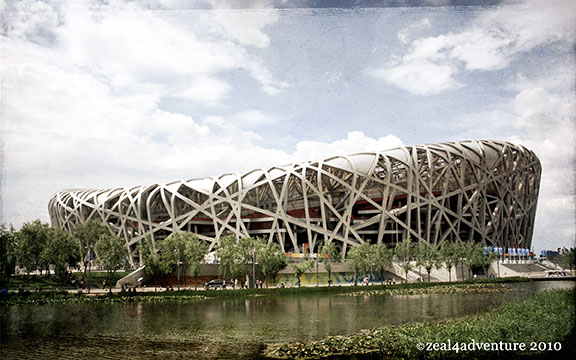
Two years later, we were entering a structure that is a feast to the eyes not only from afar, on TV but up-close as well. This elliptical latticework has become an architectural landmark and an Olympic legacy.
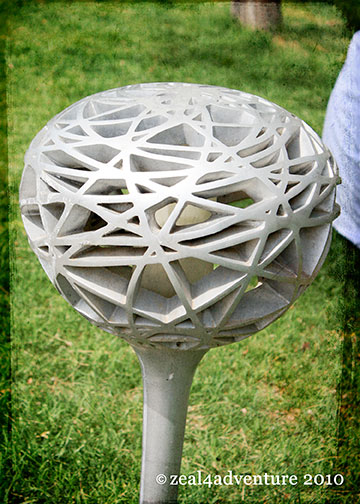 The latticework echoing even to the garden lights.
An aesthetic and engineering marvel. We see as we enter that the grid-like framework serves as both façade and structure merging the walls and roof into one integrated system.
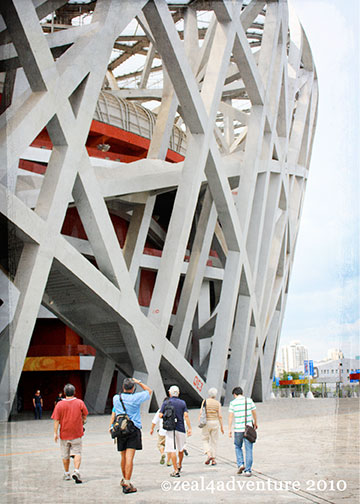
The Bird’s Nest, as it is has been fondly referred to, is the Beijing National Stadium. Designed by Swiss architects Herzog and De Meuron, this futuristic stadium hosted (as the world knows) the 2008 Summer Olympics.
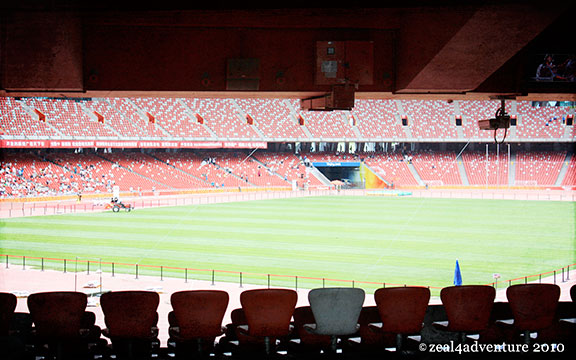
Today, aside from it being a tourist spot, it continues to host sport events and has become a large scale sports and entertainment facility for the Beijing residents.
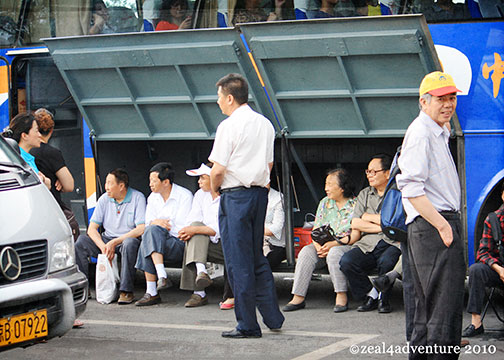 Tired local tourists
There seemed to be a lot of activities going on that day. Aside from the visitors that flock in on a daily basis, there were athletes and other performers either rehearsing or practicing.
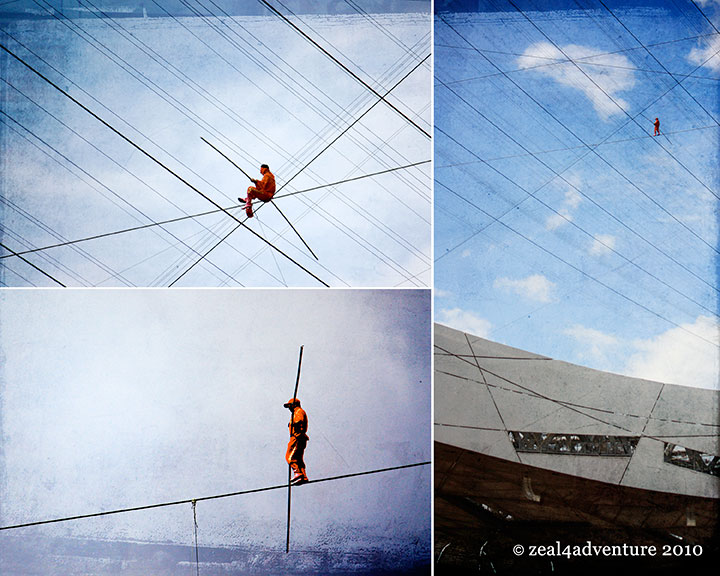
There even was a tightrope walker sans a net for entertainment, I think. As it turned out, the guy hailed from Xinjiang, the Xinjiang Uygur Autonomous Region (Xin for short) located in Northwest China.
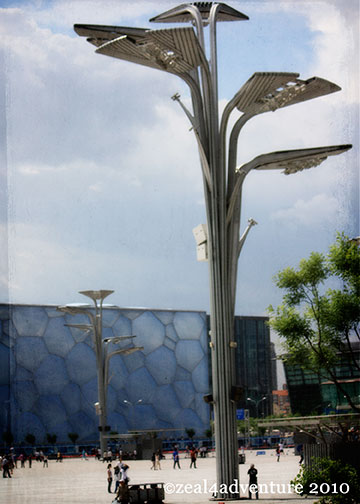
Alongside the Bird’s Nest, an aquatic center was built for the swimming and other water sports competition. Also known as the Water Cube, the unique and inspired design was based on the way soap bubbles come together. Before it closed for renovations after the Olympics, it became a ballet theater to host Swan Lake. Last August, it opened its doors once again to the public, this time transforming into a water park. At the time of my visit, it was still closed for renovations.
 my adventure odyssey