Basco Jaunts: Radar Tukon and its Surroundings

Basco, despite being the smallest province of the Philippines, offers some of the best scenic and cultural landscapes in the country.

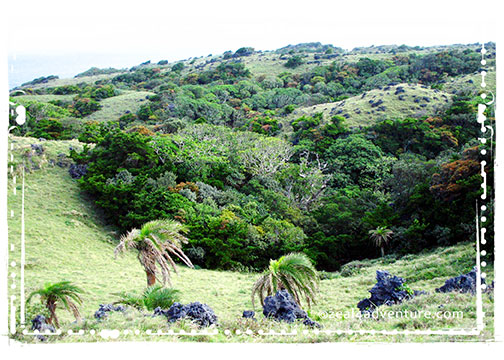
Often touted as the Ireland of Asia, this so-called last frontier is blessed with endless rolling hills, rugged terrain and spectacular views of both the China Sea and the Pacific Ocean.  Perhaps due to its isolation, tradition and culture remain pretty much intact.

Our hired tricycle meandered through the streets of Basco, taking us to some uphill climb through scenic pastureland, the sea and many hills.
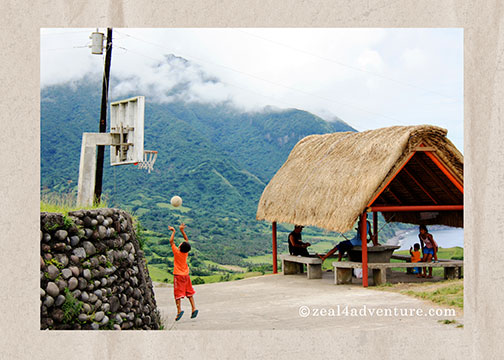
We arrived at Radar Tukon where even the locals still love to hang.

What used to be a weather station in the American era houses Basco’s radar station today.

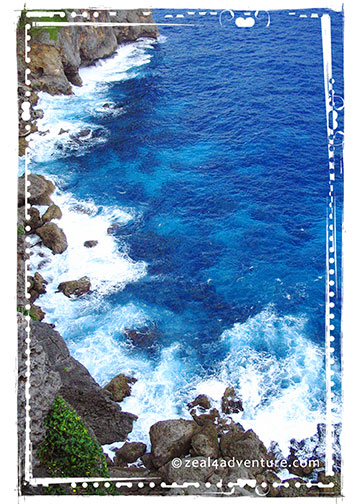
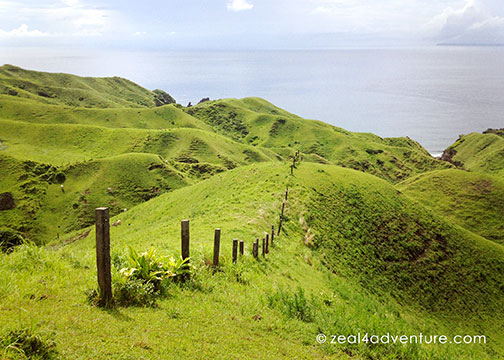
Up in a hill, the 360° view is awesome, perhaps one of the best in the island.

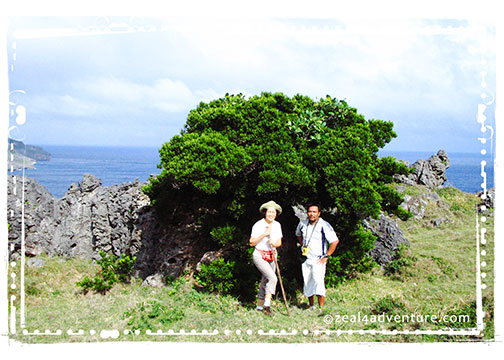
Not only is it a lovely sight and contributes much to the beauty and uniqueness of Batanes,
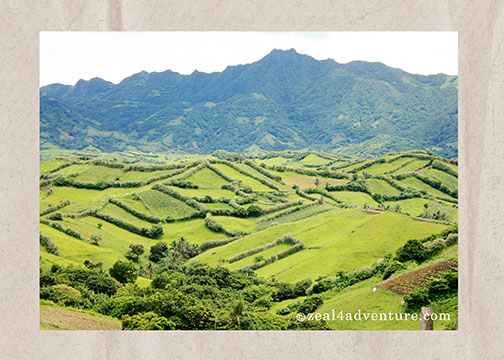
these hedgerows are there with a few more purposes.

They are there as a windbreaker, for land delineation, it prevents soil erosion, and sometimes serves as nesting ground for migratory birds.

The Tukon Church can be seen from the Radar Station.  Although we didn’t get to see it up close, much less enter it, I believe that the interior is as lovely as the exterior.
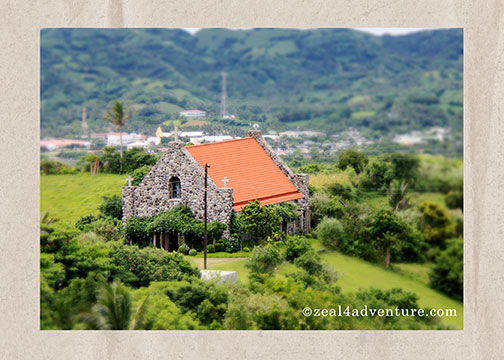
Inspired by the Ivatan stone house, this church was a recent project of the Abads, not only to give the communities nearby a church where they won’t have to walk far, but a wedding gift as well to his daughter who got married there recently.  The church, I read, have beautiful stained-glass windows, a ceiling of angels painted by the students of the late Pacita Abad and the best thing about this church is the spectacular view of both the South China Sea and the Pacific Ocean wherever one is seated.

Not far from Tukon church is a house sitting on top of a hill, overlooking the Pacific Ocean.
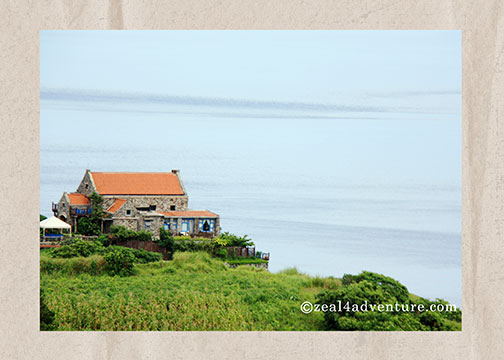
It was once the home-studio of the late Pacita Abad, an internationally acclaimed artist and sister to current Budget Secretary Florencio “Butch” Abad, now turned nature lodge.  Refurbished by Butch in her memory, the lodge is not only a pretty sight from afar.
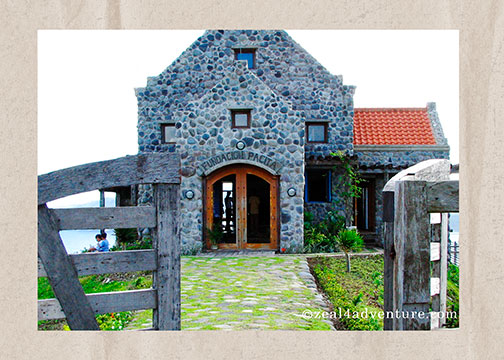
It was in 2006 that I was there, it was still the art and culture center of the Jorge, Aurora and Pacita Abad Foundation.

Her works hanged on the walls and the design of the house, I suspect, characterizes that of the owner.  Today, I read that works of famous Filipino artists and emerging young Ivatan artists grace the walls of the rooms.

The view from the balcony in 2006.

Nature lodge aside, Fundacion Pacita is also the headquarters of the Pacita Abad Center for Arts.  The proceeds earned from the operations supports various projects, one of them is the restoration of Ivantan houses.

More of Basco in upcoming posts.  Stay tuned.
Birding in Basco

“Wanna tag along?”, invites my birder friend, Christian.  “Why not?”, I’ve never seen an owl before.  Not that I’d see it up close, I realized when we were trekking in the woods… at night, obviously, they’re nocturnal creatures.  Duh.  I’ll need binoculars and a strong light, which I am hoping Christian has.  Turns out we didn’t need them because it started to rain.  We took shelter in a house nearby and when it didn’t let up, we decided to call it a night.  Owl watching, day 1 – fail.

Basco is best known for its rolling hills.  It also is the capital of Batanes and where the airport is located.

Aside from the beautiful aerial view of its landscape, the first thing that greets you is its airport.  Small and unassuming but tastefully designed.  It has a charm of its own.  Given that the province is somewhat isolated from the mainland, making use of whatever is available has made the Ivatans quite resourceful.  They have, and I dare say, an eye for beauty… but who wouldn’t if you are surrounded with natural beauty all your life?

These ordinary bucket seats, made attractive with the play of colors, left a lasting impression.

Many accommodations are in Basco, to be close to the airport perhaps.  We stayed at Shanedel’s Inn and Café.  A simple family run inn named after its owner, Dely and her late husband Shane.  Its location plays a big factor in its popularity, particularly among regular visitors.  Even after Shane’s passing, Dely takes the role of excellent host, helping out however she can.

Shanedel’s, albeit on the tired side, still possesses captivating views.

From the veranda, on the right is Naidi Hills with the lighthouse standing tall from a distance.

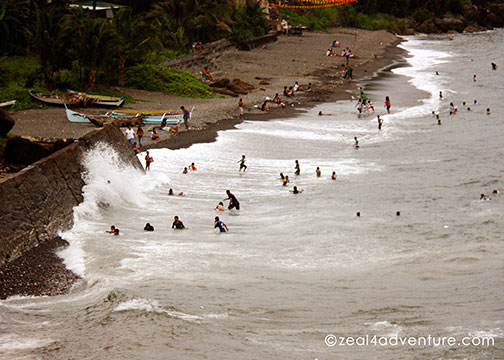
On the left is the beach where locals play in the waves.

So used to it, the kids seemed unfazed but rather enjoyed the big waves.

Japanese Paradise Flycatcher.  That is what C hopes to see on this trip (outside of that owl).  We woke up early to join him on another birding expedition.

The guide brought us to a private lot just 10 minutes away from Shanedel’s.  We had our sights on a bird’s nest perched on a tree, hoping it is our bird’s nest.

Birding is not for me… there was a lot of waiting and this kept me company.

Patience is a virtue.  After an hour or so there they were, first the female and not too long after, the male appeared.

Credits:  Photo courtesy of A. Carag.
My shot sans the bird.  This was a different nest — closer for a shot in my camera.
I didn’t have this.  A preferred lens for birding.

Bird watching, day 2 – success.

And with that, we celebrated with the best organic burgers in Basco. Zantan’s is a small eatery right beside Shanedel’s.

And with the burgers, I had sweet potato fries on the side and finally, halo-halo for dessert.  Stunning landscapes and sceneries up next. Stay tuned.

Useful Info:

Shanedel’s Inn & Cafe
Mobile: +63 920-4470737 
Email:  Shanedels@yahoo.com
Contact: Dely Millan

Torongan Cave: Not To Miss in Itbayat

When asked about the places I have liked the most in my travels, high up there with Africa, my answer would always include Batanes. When I look back at the adventures I had in this northernmost province of the Philippines,

our trek to Torongan cave in Itbayat was a highlight for sure… the state of wonderment, unforgettable.

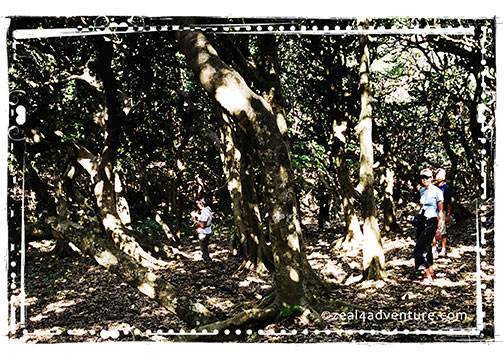
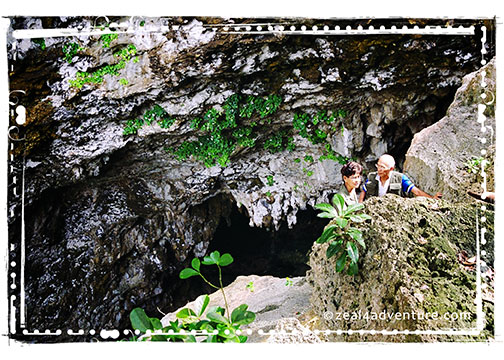
It was a 20-30 minute hike from a gate to the cave entrance, passing through a forest.

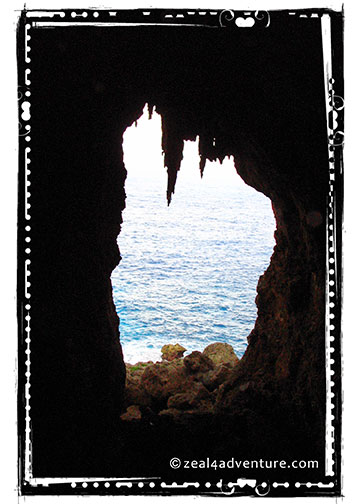
And from this spectacular cave entrance is a relatively easy walk down the large cavern leading to a wall that opens to the sea.

This opening is believed to be the entry point of the Austronesians from Taiwan to the island some 4000 years ago. An excavation done on Torongan cave in 2004 uncovered the oldest artifacts so far found in Batanes.

But it isn’t the cave per se that impressed me.  We exited the cave where we entered,

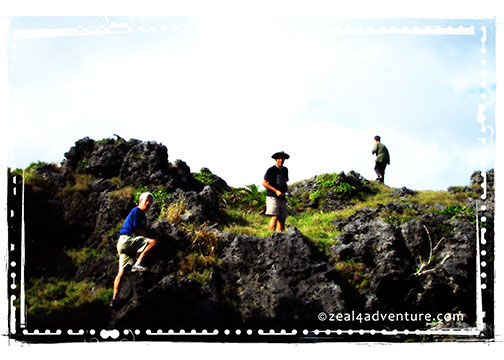
we walked further and found ourselves climbing up some boulders to a rocky pasture land,

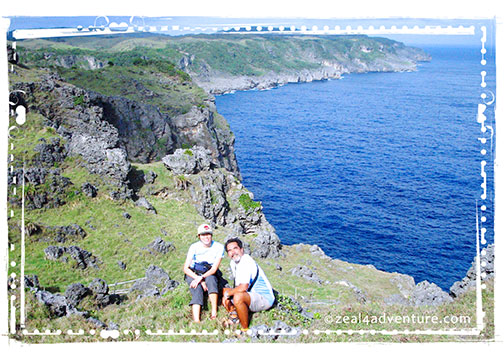
revealing the coast, and Dinem Island in the distance, a view so jaw-dropping beautiful.

The dramatic change in scenery atop the cave was an experience stuck in my memory to this day.

We wandered around in awe.

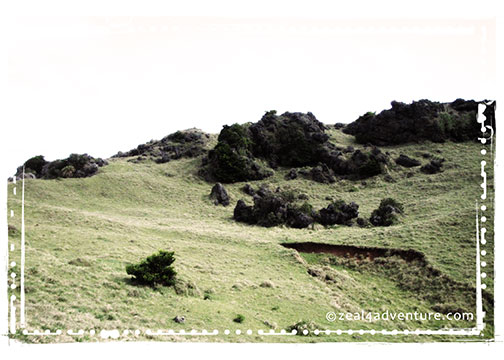
The view majestic at every turn.

Walking back, we passed through several ancient burial grounds shaped like a boat, albeit hard to discern.

If you have limited time in Itbayat, make Torongan cave your first stop and be awed.

Itbayat: On a Hunt for Halo-Halo

It was the middle of May; the blistering heat was rapidly zapping my energy… I wanted halo-halo.  We knocked on Nanay Laura’s house as her canteen was closed.
A keepsake with Nanay Laura.

Her charming Larez Carinderia beside her house was a favorite back then.  Who can forget her cooking?

A retired municipal treasury officer, Nanay Laura is an exceptional cook.

In my opinion, she makes the best Turmeric (or Yellow) Rice  (a Batanes Specialty) in the whole of Batanes.

She whips up creative dishes with the limited ingredients Itbayat has to offer her.  In 2006 and again last May, we were witness to that.

She was in Raele that day and didn’t have halo-halo.  I asked to see the twins instead. I remembered them from 6 years ago and was curious to see how they have turned out.

Now in their “tweens”, they have become beautiful, confident young girls.  We asked where we might find some halo-halo; Eva Marie offered to bring us there.

Each store we went to would apologetically shake their heads.  Ok, what about some ice cream then?  No success in that area too, although there is a store that actually has a soft serve machine but they weren’t serving any that day.

It is, after all, the farthest inhabited island of the north. Supplies don’t come easily, and often, especially if the falowa from Basco don’t come.

This bell is used to tell the town if the boat from Basco has left or not.

In Mayan Centro, Itbayat’s town center, a few trucks would occasionally ply the streets as townsfolk use these as transport to other towns.

There are those also who would go around in bikes, but these are rare.  People walk everywhere, to other towns even, if trucks aren’t available.  Eva Marie mentioned that she walked all the way to Raele yesterday where there was a fiesta.  She said she walked for hours and was so tired and bored.  I asked her how many hours; she shrugged and replied, “hindi ko alam, basta matagal, I don’t know, all I know is it took a long time”.

School break means that the kids are free to play, if not helping out the family.

Some of us even joined (or shall I say disrupted) their game.

Eva Marie likes hanging out with us.

Walking around town, she provided nuggets of information about her town.  Six degrees of separation definitely apply here.  Everyone is an aunt, uncle or a cousin.

She has ten siblings (eight, six years ago). She has been to Basco but has never left Batanes even if her mother works in Manila.

Along with some of her siblings, she stays with her grandmother, Nanay Laura.

Mayan Centro holds its own appeal, set in a bowl between hills.

The town center from the PAGASA tower.

At the centro, a basketball court and an open field play center-stage.

It is perhaps the only form of leisure in Itbayat; children of all ages are often seen playing in the field.

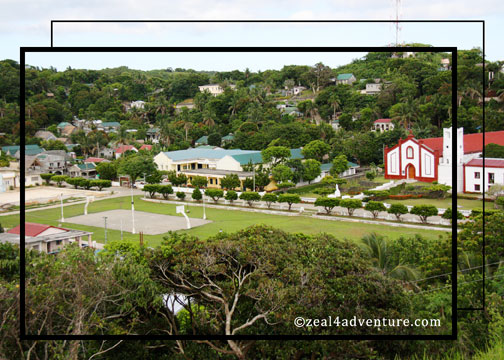
Across Larez Carinderia is an Old Spanish church, Sta. Maria Immaculada and the school beside it.  On one side is the municipal office

and on the opposite end of the field is its guesthouse, where we previously stayed.

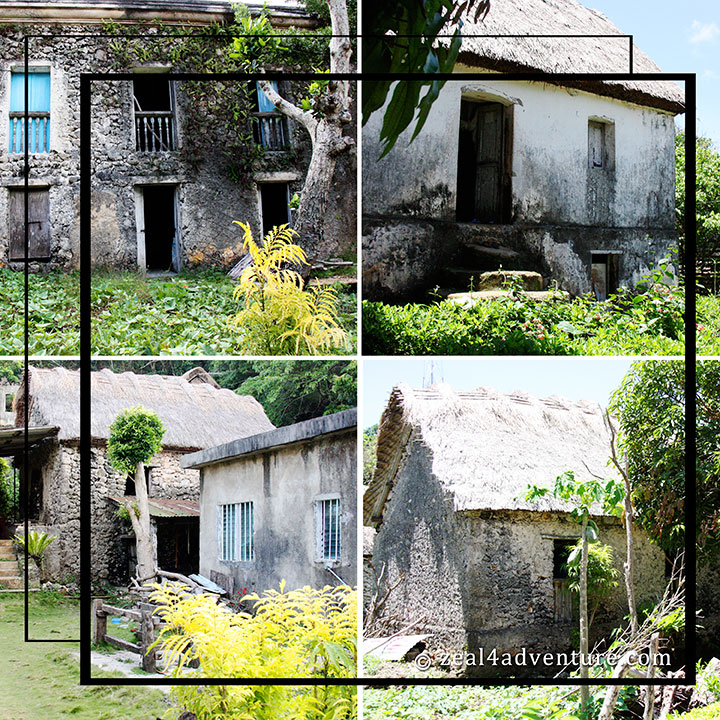
While the town has many traditional Ivatan houses with its cogon roofs, many opted to use galvanized roof.  Cheaper upkeep and it’s less prone to fire, says Nanay Cano.

But the Itbayats love their gardens.

An Arius Tree, indigenous to Batanes. 

No matter the type of house they may have, their gardens are always verdant, some are even quite creative.

We practically roamed the entire town center in search of something cold and alas, we found a heat-quenching treat in some ice candy.