Sagada: Echo Valley, Hanging Coffins et al

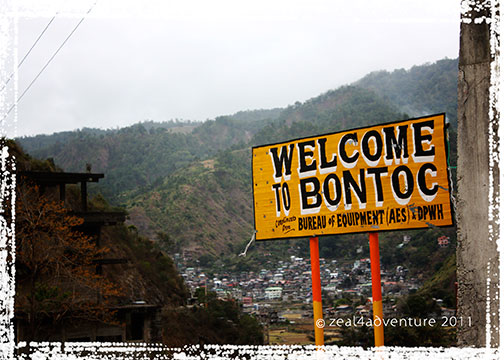
When we passed this sign, my heart skipped a beat because in just another hour or so, I will be re-acquainted with my favorite town.  The town I want to retire in, I always say.

When I need to de-stress, Sagada comes to mind.  Or when I find myself without a place to go on a long weekend, Sagada comes to the rescue.  But truth be told, I don’t really need a reason to go to Sagada… for more than a decade now, I find myself there just because I miss the smell of pine, the food or the bucolic serenity (as shown here, here and here).

I lost my heart to Sagada some 17 years ago.  Although less rustic than it was then while more and more tourists are seen each year, Sagada remains to be a top choice and a go-to to recharge.
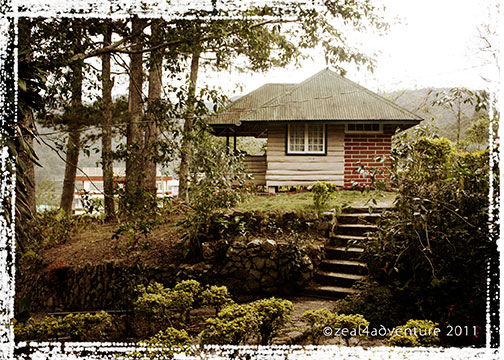
And St. Joseph Inn still is a favorite lodging place. We like the cabins but the rooms are perfectly fine too.

It has become some sort of tradition, if I may call it that, to hangout – finishing a few bottles of wine or beer at the comfort of our cabin.
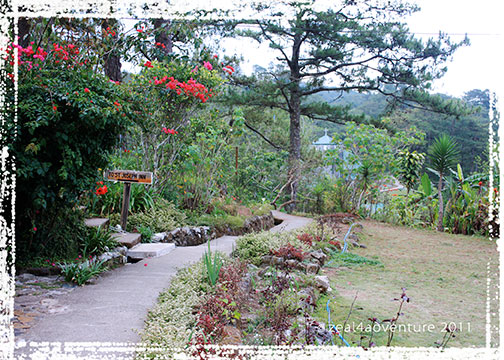
St. Jo is at the center of town and just a stone’s away from St. Mary’s Episcopal Church,

a charming little church with beautiful stained glass windows built by the Anglicans.
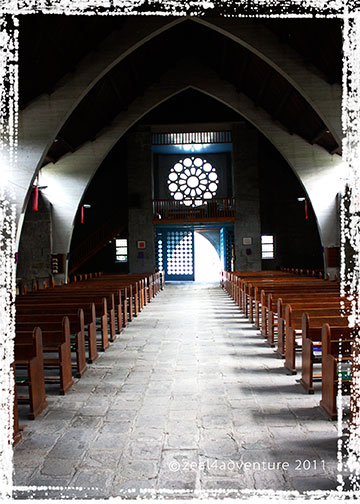
On certain times of the day, the light coming in from these windows makes for a dramatic interior.

Because it takes only a short walk to Echo Valley from St. Jo, we like visiting it as soon as we arrive.
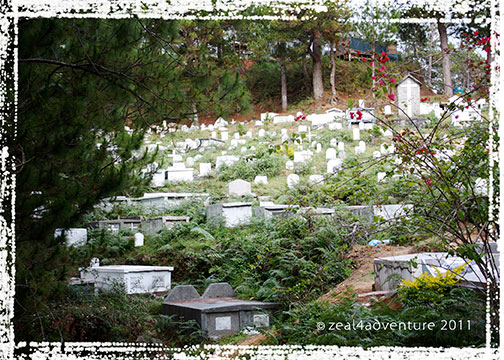
Passed the church is a path that leads to the cemetery
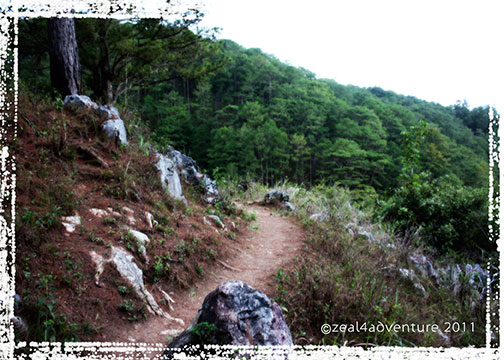
and further along is a dramatic hillside trail to Echo Valley –
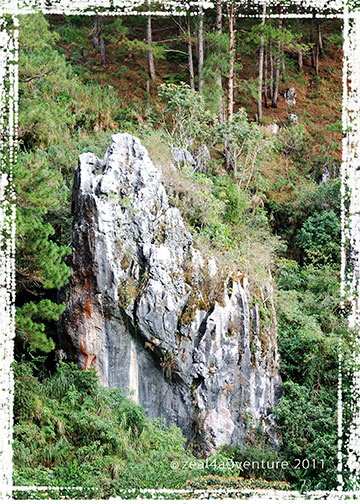
attributable to the weather-beaten limestone formations scattered around the forest.
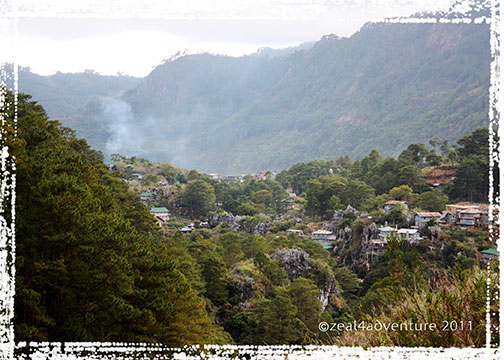
One can hear a very distinct echo at a certain point on the hill hence the name.
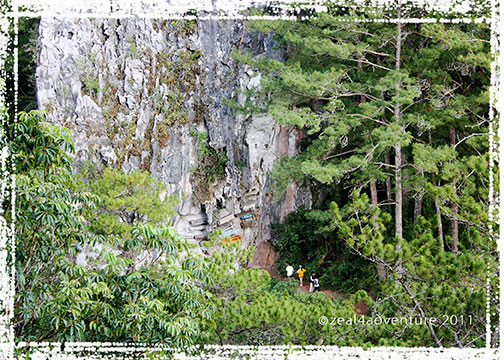
At one point, one can see from a distance, coffins hanging from the limestone walls.
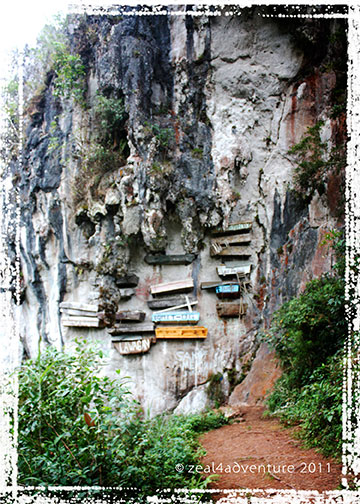
A trail will lead to it up close. It is a good warm-up hike to prepare for a longer and more scenic one the next day.
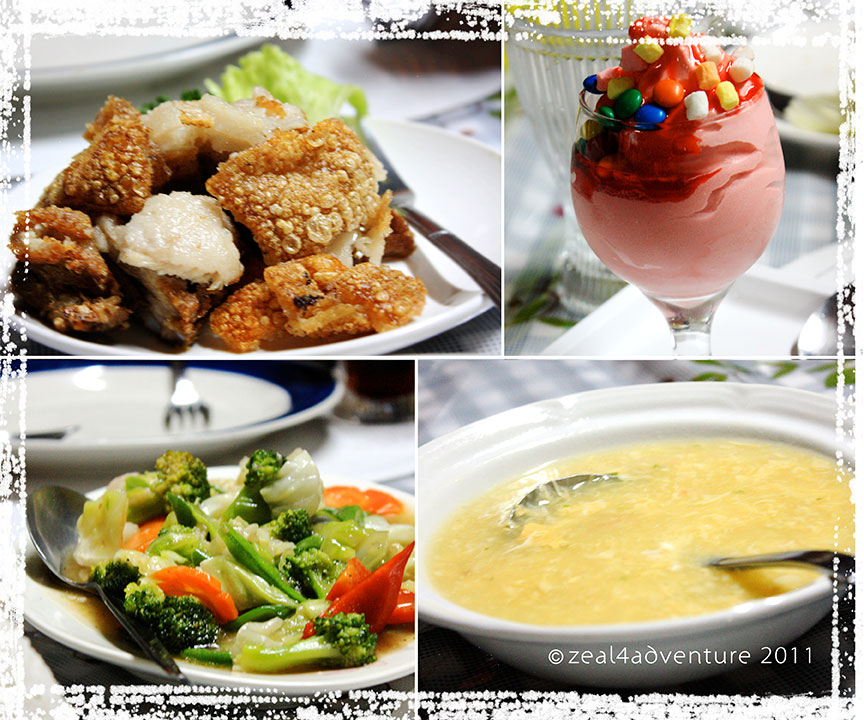
A comforting dinner at Masferré Inn and Restaurant is always a fitting cap to a full day. Named after the owner Monette’s father-in-law, the late Eduardo Masferré – widely regarded as the Philippines’ father of photography.  Half Spanish, half Kankanay, he spent much of his life toiling the farm and photographing the Cordilleras, documenting the now vanishing culture of the ethnic groups of the Ifugao region.
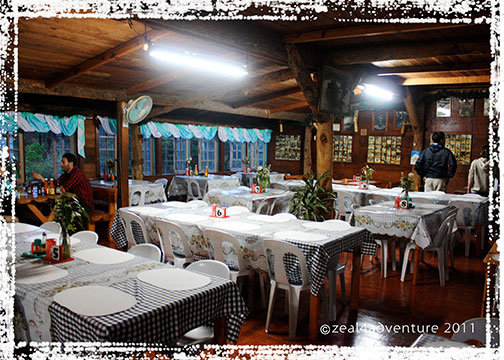
Some of his works are displayed in the dining area.  The Masferré Gallery down the road from St. Theodore’s houses more of his works.

“The description is not the described; I can describe the mountain, but the description is not the mountain, and if you are caught up in the description, as most people are, then you will never see the mountain.”

Jiddu Krishnamurti
Useful Info:

St. Joseph Inn
Contact: Julia Abad
Mobile:  (63) 928-951-7156

Kiangan Side Trip

More like a scrumptious lunch break from the 7+ hours drive from Manila.

It was an eagerly anticipated side trip, a delectable meal guaranteed.

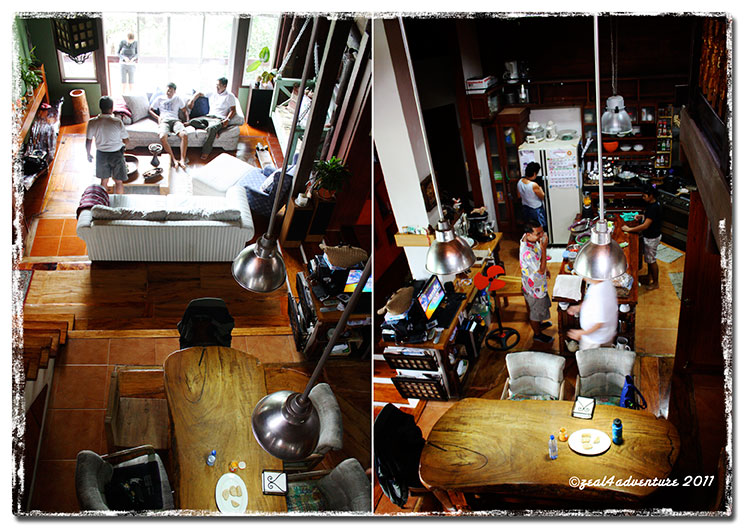
Taken from the 2nd floor:  Left photo — where Dr. Kalugdan entertains while Dra. Kalugdan happily slaves away in her territory that is the kitchen (right photo).

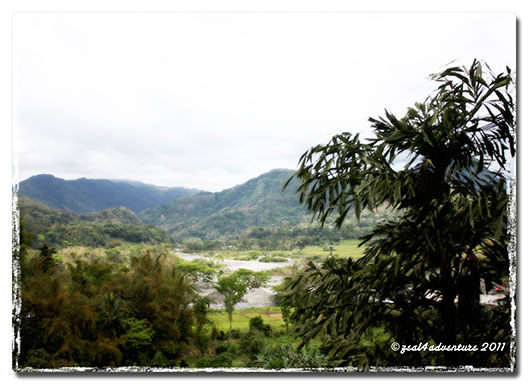
The Kalugdans are perfect hosts.  Their charming house, which they designed themselves, overlooks a fantastic view of the Ibulao River.

We went rafting there once and that was how we got to know them.  Lovely couple.

Kiangan of course is more than rafting and scrumptious meals.  It is also where Nagacadan Rice Terraces, one of the clusters inscribed on the UNESCO World Heritage list, is located.  I have yet to explore this historic town and first on the list is the Philippine War Memorial Shrine – a gigantic memorial shrine commemorating the end of WWII.  It was in Mt. Napuluwan in Kiangan where Gen. Yamashita surrendered so it might be worthwhile to check out the site as well.

Historic town and rice terraces aside, the town boasts of many natural wonders as well.  Ambuwaya Lake is one.  4 km from the town center and is said to be reachable by 4W drive vehicles.  Uttu waterfalls is likewise on my list of must see.   Someday, Kiangan will not be a side trip only.

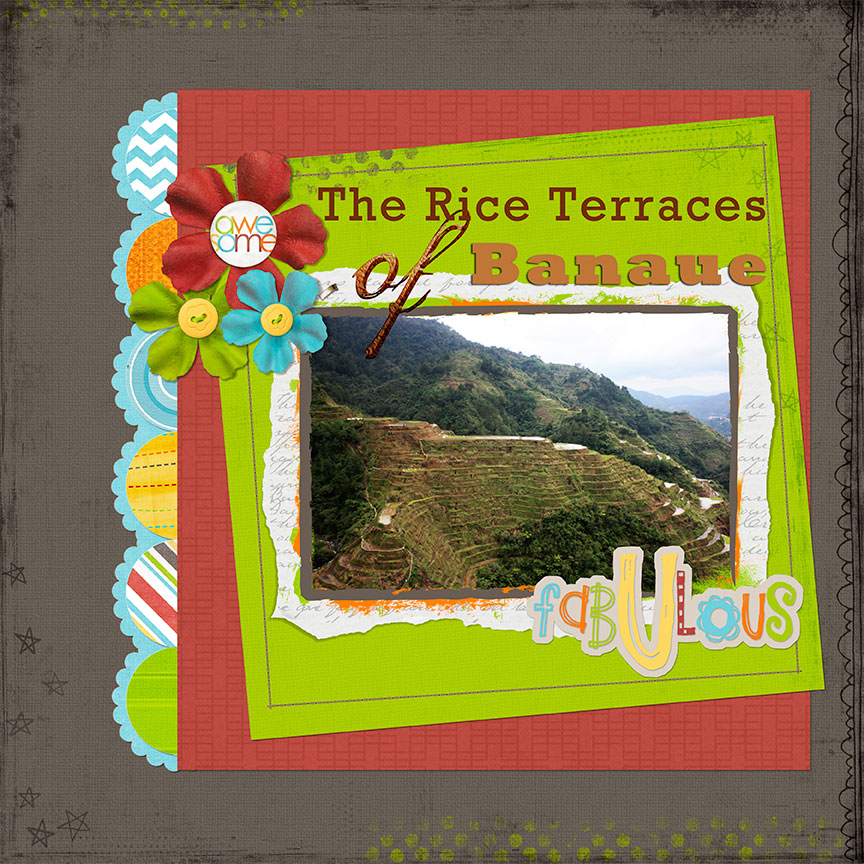
Banaue Rice Terraces

Credits: Quickpage by LCP using the “You are Awsome” collaborative kit created by J Sprague.

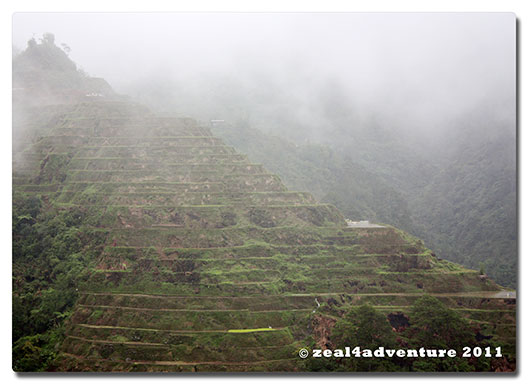
Construction of the terraces is carried out with great care and precision. An underground conduit is placed within the fill for drainage purposes. The groups of terraces blanket the mountainsides, following their contours. Above them, rising to the mountain-tops, is the ring of private woods (muyong), intensively managed in conformity with traditional practices, which recognize a total ecosystem, which assures an adequate water supply to keep the terraces flooded. Water is equitably shared, and no single terrace obstructs the flow on its way down to the next terrace below. There is a complex system, of dams, sluices, channels and bamboo pipes, communally maintained, which drain into a stream at the bottom of the valley. – UNESCO

This is describing a structure built more than 2,000 years ago.  Awesome, isn’t it? Although because of the presence of many modern structures around, the Banaue Rice Terraces was not included on the UNESCO list of “World Heritage in Danger”, it nonetheless holds the same complex trickle-down irrigation system that the UNESCO inscribed clusters have.  And these clusters, all found in the Province of Ifugao, are Nagacadan Terraces in Kiangan, Hungduan Terraces, Central Mayoyao Terraces, Bangaan Terraces and Batad Terraces.

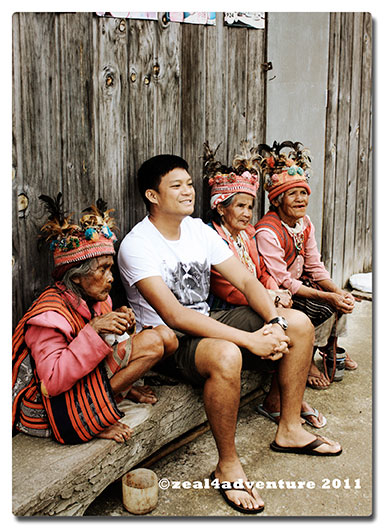
A very touristy thing to do.  For a fee, one gets to be photographed with these Ifugao women.

The Banaue Rice Terraces however, despite the exclusion, remains to be the more popular tourist destination due to its accessibility and proximity to town, which is proving to be both harmful and beneficial to the land.

These stonewalled rice paddies is considered one of mankind’s greatest engineering feats and is every Filipino’s pride.

The terraces as seen on our P1,000 bill.

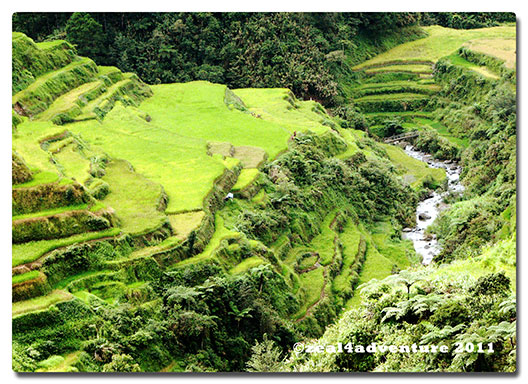
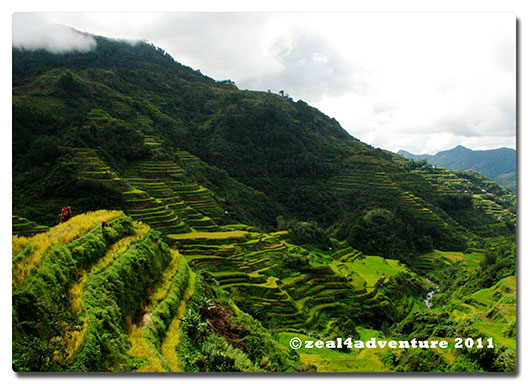
The 8th wonder of the world (as many Filipinos call it) begins at the base of the mountain and extends upland following the contours of the mountain– almost 5,000 feet above sea level.

This is North Luzon’s most famous sight and one of Southeast Asia’s most popular tourist destinations.  Famous not only for its sculpted beauty but for the traditional craftsmanship and cultural landscape dating back many centuries and is preserved to this day.

That said, these terraces are slowly being abandoned and already showing signs of damage and deterioration due to the lack of maintenance.  Many of the new generations would rather pursue work outside of the rice fields, opting to be guides or drivers.

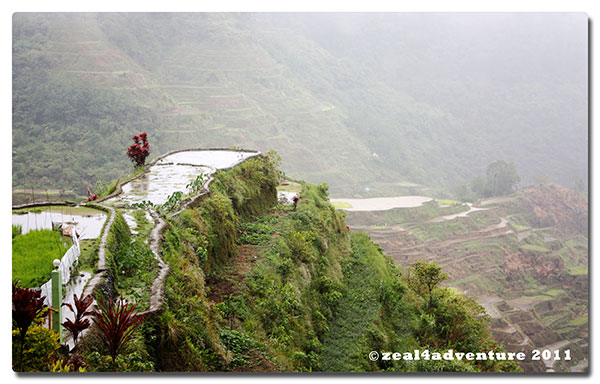
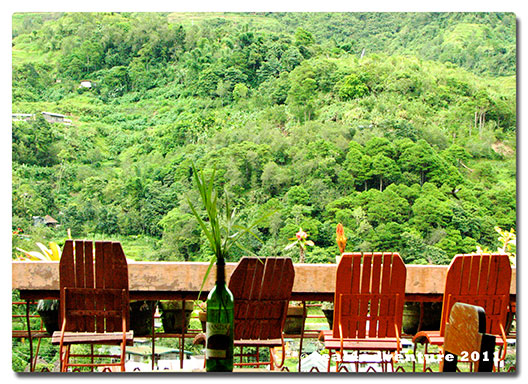
Banaue is some 348 kilometers away from Manila and a good 8-10 hours drive.  It is a small market village sitting about 1,500 feet above sea level.  The town is not exactly enchanting, thanks to poor planning but it has its own appeal, me thinks – how can you go wrong anyway when breakfast comes with a view like this?

At Sanafe Lodge

Useful Info:

Sanafe Lodge and Restaurant
Contact no:  +63 74 386 4085 (Banaue), +63 920 950 4644 (Mobile), +63 722 2110 (Manila)
Email:  sanfelodge@yahoo.com 

Hong Kong: A Mini Dining Escapade

Hong Kong used to mean one thing to me in the past – shopping.  Not anymore.  Today, Hong Kong signifies food – delightful, glorious food.

Credits:  Papers by Nadi Designs, Art of Digital Design and Prairie Woman Design.  Flower by Moninda; Word art by Wimpy Chompers; Alpha by Denise Beatty Originals

Welcome to the culinary capital of Asia.  In this relatively small island, foodies can revel not only in an assortment of Chinese regional delicacies but also in a range of international cuisine – from food stalls to Michelin starred restaurants.  This has been the highlight of a very short trip to Hong Kong early this year.  By the end of this month, I will be back to sample more gastronomic delights so Hong Kong here I come… again.  But before that, allow me to reminisce a bit on that mini dining escapade.

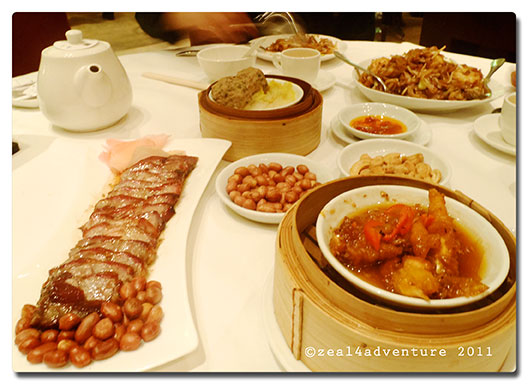
I will begin with the customary dim sum.  How can you be in Hong Kong and not indulge in supposedly “the best dim sum in the world”?

Zen Chinese Cuisine

A long-standing casual Chinese Restaurant in Pacific Place.  Apart from serving a range of Cantonese specialties, they also serve an extensive and intricate range of dim sum for lunch.   Be warned though, they usually have a long line especially during lunchtime so be there early.

Hutong

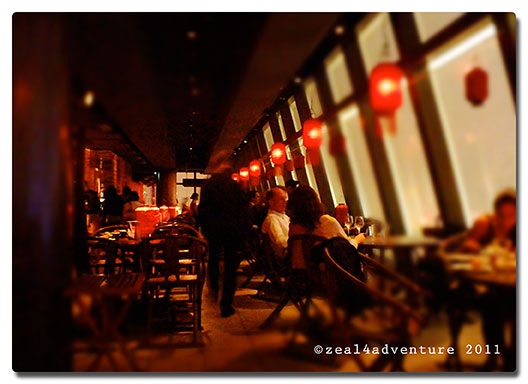
Located on the 28th floor of One Peking in Tsim Sha Tsui.  This stunning restaurant with a fantastic view of the HK harbor serves authentic Northern Chinese cuisine with a contemporary twist.

Red lanterns, hanging birdcages, intricately carved wood panels, Chinese silk curtains — all add charm to the dark, muted interior giving off a traditional Chinese feel.

Clockwise:  “Red Lantern” Crispy chicken w/ Sichuan red chili; Lobsters fried w/ red pepper & sweet chili sauce; Cod fillet tossed with fermented bean & chilis; Chili-spiced bamboo clams

A must-try are their Chili-spiced bamboo clams steeped in Chinese rose wine & chili sauce, Cod fillet tossed with crispy fermented bean & chili, lobsters fried with red pepper & sweet chili sauce, “Red Lantern” Crispy chicken with Sichuan red chili and last but not the least (not in photo) is their Crispy de-boned lam ribs.

Yung Kee Restaurant

My absolute favorite restaurant in Hong Kong and I will almost always pay a visit when I’m in town.

More than Hong Kong’s dimsum, I must have a piece of that lovingly roasted goose.   Juicy, tender, rich meat with skin so crispy… To. Die. For.

Another house specialty that I take home with me is their century eggs oozing with sticky yolk.  Paired with pickled ginger… wicked!

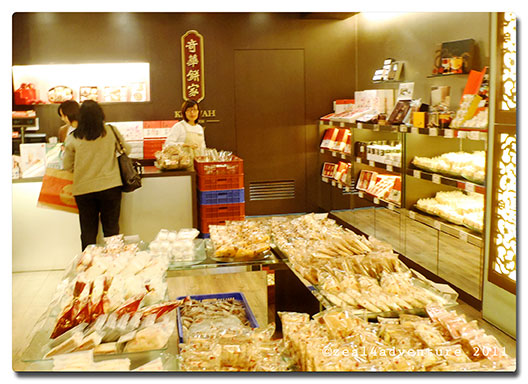
Kee Wah Bakery

Right beside Yung Kee is a bakery called Kee Wah for some beautifully packed Chinese traditional pastries.  Beautiful packaging aside, their egg rolls and pineapple shortcakes are great pasalubongs (gifts) to take home.

Useful Info:

Zen Chinese Cuisine
One Pacific Place Mall
88 Queensway, HK
+852 2845-4555 / 2845-4377
Hutong
28th Floor, One Peking Road,
Tsim Sha Tsui, Kowloon
+852 3428-8342
Yung Kee Restaurant
32-40 Wellington Street
Central, HK
(5 minutes walk from MTR Central station , exit D2)