Meandering Through Old Fes

traditional-moroccan-music

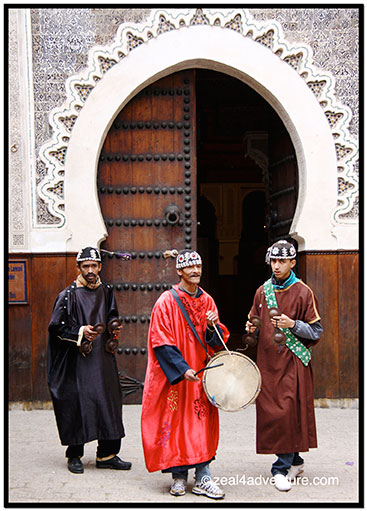
You hear the bangs of coppersmiths in the labyrinth souks combined with the beat and clangs of Moroccan music and the constant calls to prayers,
fruit-vendor

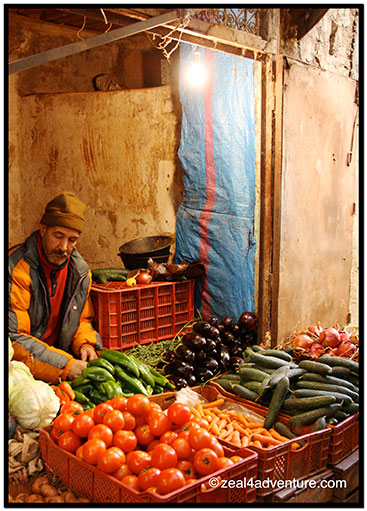
add to that the intoxicating smells of fruits, spices, fresh innards and dung,
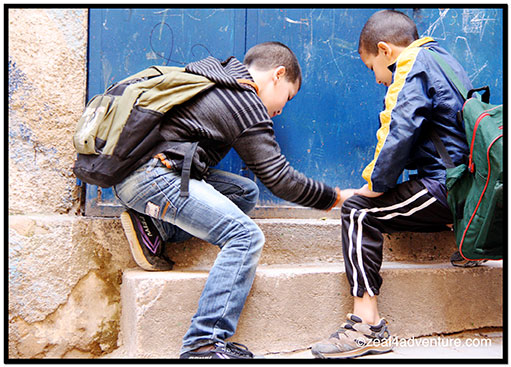
children-playing

then you see the chaos of men pushing wheelbarrows, children playing and
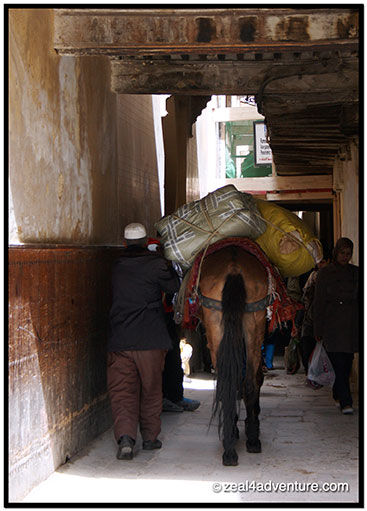
donkey

donkeys transporting people and things, and not to mention the vibrant colors of rugs, potteries, spices… all happening simultaneously.  The old city of Fes stimulates all the senses.

Rashid, our guide picked us up right after breakfast at Dar Labchara.  To discover the city, an official guide is essential.
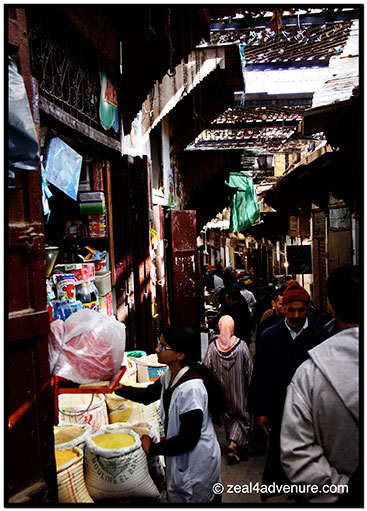
crowded-medina

Ours took us around the medina, passing narrow alleys housing hundreds of merchants and craftsmen selling an assortment of products from dates to musical instruments.

Fes el Bali (Fes the old) is our baptism of fire into an exotic medieval world.  Not much seemed to have changed within this walled city with over 9,000 alleyways.
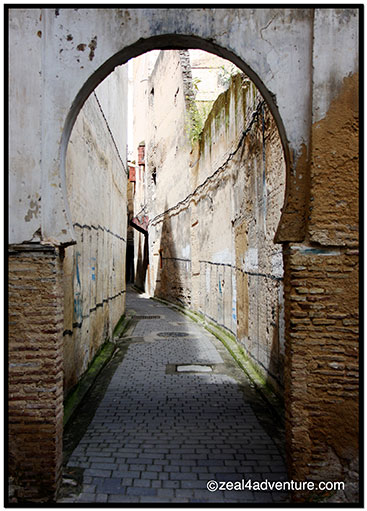
winding-alleyway

Fes el Bali is the old medina where most cultural sights are located; its labyrinth of narrow winding alleys is almost impossible to negotiate without getting lost.
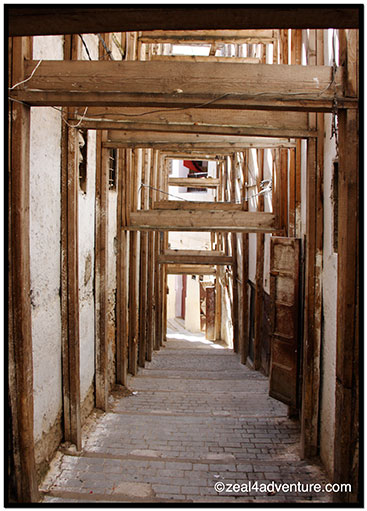
collapsing-walls-with-enforcement

It is a car-free urban space and a UNESCO World Heritage Site that spans 1,300 years of Moroccan heritage.  It is the central business where 150,000 people living inside the wall – a cocktail of Berbers, Arabs, and Africans in hooded djellaba cloaks, red tarboosh hat they call fez and open heel babouche slippers – come and go, much like it was 1,300 years ago.
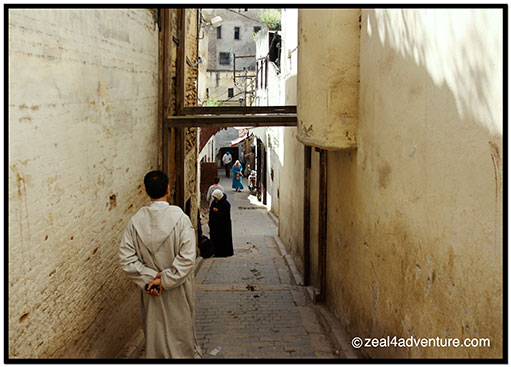
following-rashid

Following Rashid, we found ourselves in the market staring at a camel’s head,
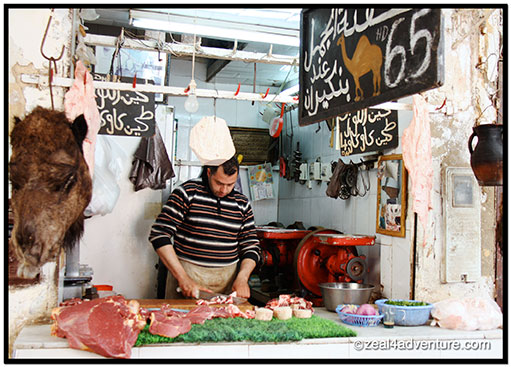
camel-head

preserved-lemon-and-olives

artichoke

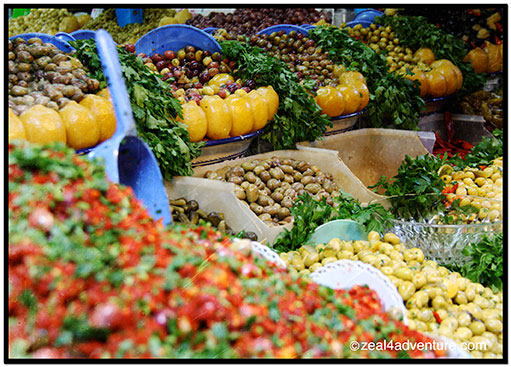
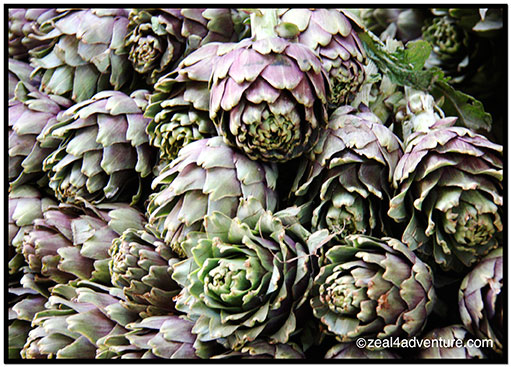
drooling over a variety of Moroccan food specialties, admiring vegetables I don’t get to buy in my part of the world, and devouring some beautiful, crunchy strawberries in season.
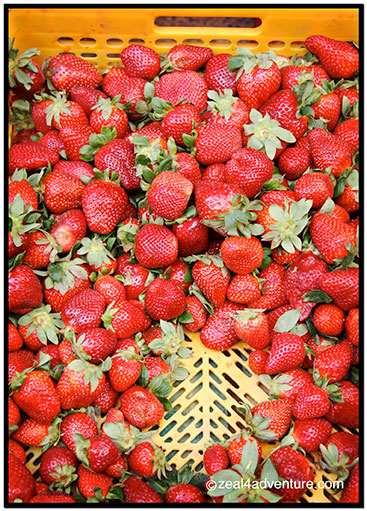
strawberries

Chaotic, overwhelming, stimulating, similar, in a certain way, to our wet market yet distinctly Moroccan in every way.

Morocco is a shopper’s delight and weaving through the maze like narrow lanes led us to various outdoor bazaars called souks.

cheese-vendor

They consist of tiny stalls displaying objects ranging from colorful scarves to buckets of olives.  It is an integral part of the medina.  It is where the locals buy their essentials.
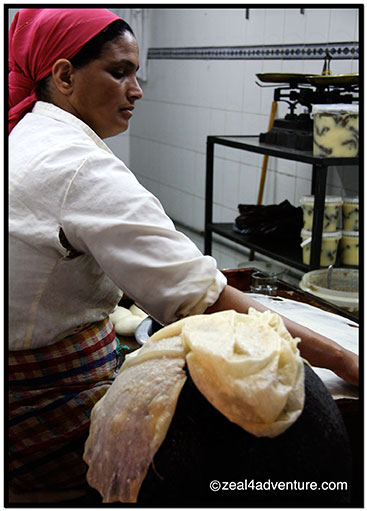
making-breadA stand making bread

Each Moroccan town has its unique souk quarter displaying some of the fine Moroccan ornaments and crafts.  In larger cities like Fes or Marrakech, there are “specialty” souks of all kinds –
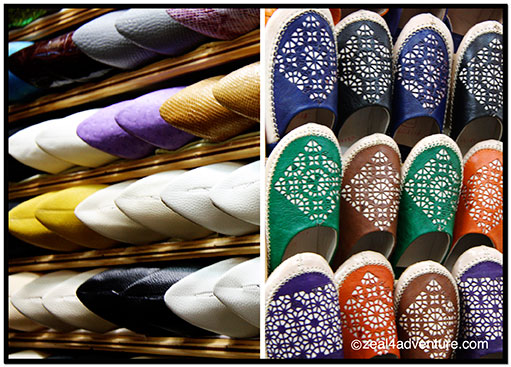
slippers

the spice souk, the carpenter’s souk, the leather souk, the slipper souk, the dyer’s souk… all within a bigger souk.  At every turn, we found ourselves in a new souk typically named after what they are selling.
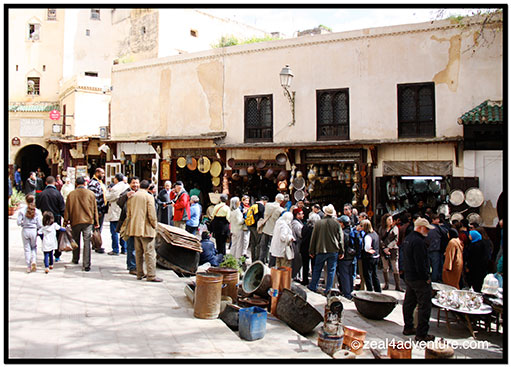
seffarine-square

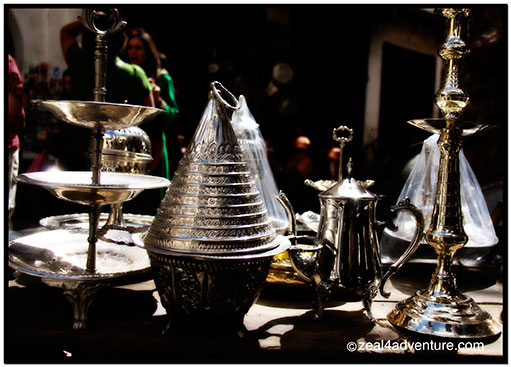
One such souk was at the Seffarine Square.  A delightful square that is the center of Fes’ copperware trade surrounded by artisans hammering sheets of metal into shape:  huge cauldrons, kettles, pots, plates and the likes.
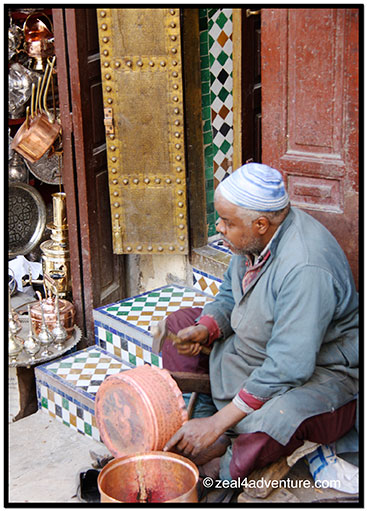
craftsman

metalworks

On one side lay the Kairaouine library, on the other, the Seffarine Madrasa.  The open space is a refreshing break from the confining tight corners of the medina.

Built in AD857, the University of al-Karaouine is perhaps the oldest university in the world.
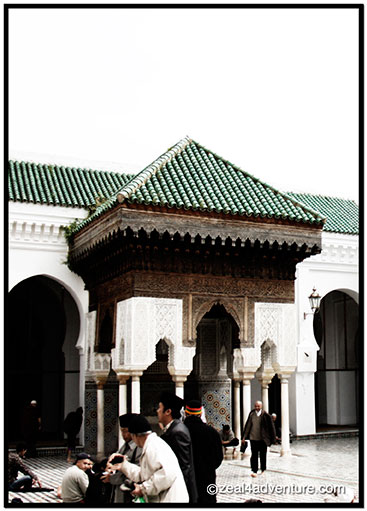
Karaouine-Mosque

Not open to non-muslim, we had to content ourselves with viewing its beautiful architecture from the entrance.  Rashid took a shot from my camera for a peek at one of the dozen horseshoe arches in the mihrab (prayer niche).
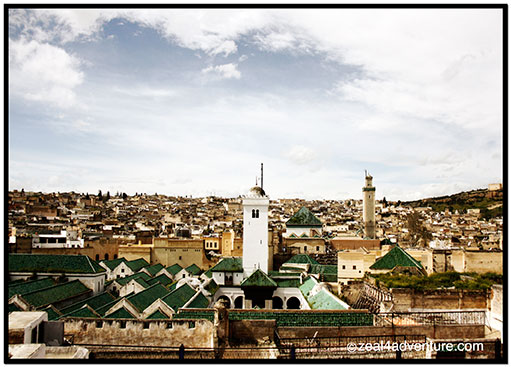
rooftop-view-of-Karaouine

A better view of the university can be had at any rooftop balcony nearby.

Rashid then lead us to another lovely square where you will find the Fondouk el Nejjarine.
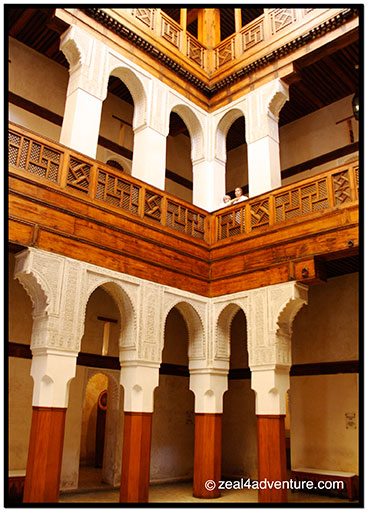
nejjarine-museum

The beautifully restored building used to be a fondouk or a caravanserai, a roadside inn built to shelter men, goods and animals along ancient caravan routes.
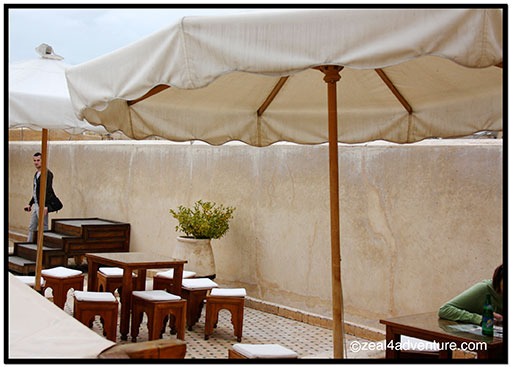
rooftop-cafe

rooftop-cafe-view

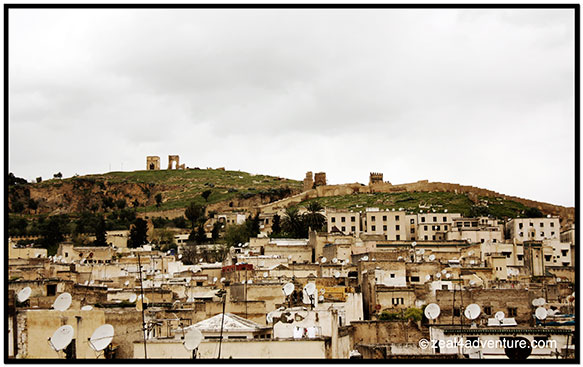
It is today a museum of wooden arts and crafts.  It has a nice little rooftop café boasting of outstanding views of the city.

A visit to Fes will not be complete without seeing a tannery.  And at the Chounara Tannery, the smell of lye, acidic pigeon excrements and dyes drifts around the rooftop balcony, we were given sprigs of mint to mask the stench.
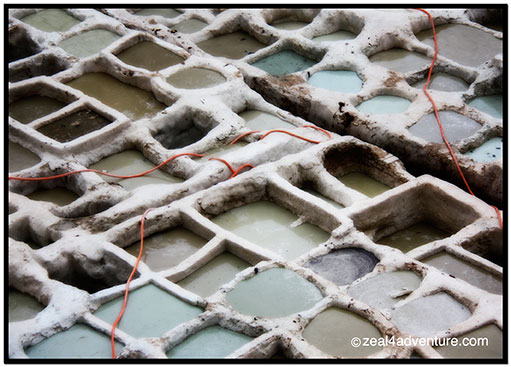
lye-vats

The view from the balcony allows for a site that has not changed since the 11th century –
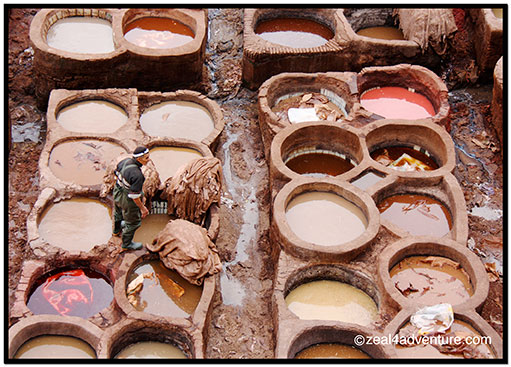
tannery

workers balancing between stone vessels arranged like honeycombs filled with vibrant dyes.  They soak the hides in the acidic solution and then transfers them to another vat containing dyes such as henna, saffron, or mint.

dye-vats

It is a rare visual spectacle and experience not to be missed at any cost.

Now purchasing high quality leather products produced from these tanneries is another thing.  In fact, shopping in Morocco is an entertaining experience worthy of a post all its own.

A Dar in Fes

Dar-LabcharaCredits: Papers by Gwenipooh Designs and Graham Like the Cracker from Scrapmatters’ Life Little Surprises Kit; Elements by Designs by Tater from Scrapmatters’ LLS Kit and journaling snippets by Crystal Wilkerson

Founded 1,200 years ago in the northern part of Morocco, Fes has remained to be the country’s cultural and spiritual capital.  It is home to the oldest university in the world and its medina, a UNESCO World Heritage Site.  Fes has the best-preserved old city in the Arab World and to spend a few nights inside those walls is to, in some way, experience its unique culture.

“When you reach the train station, please call this number”, Said (Sa-eed) advised on his email. “A handsome young man will meet you at the bank outside Bab Boujeloud.” – the main and most attractive point of entry into the medina, Fes el Bali.

A petit taxi outside the train station, he advised, would cost 10 Dh to get us to the main gate.  And true enough; handsome young man introduced himself as Ibrahim.

Decorated with blue (color of Fes) zellij tile on the outside and green (color of Islam) on the other side, the gate leads to the Bab Boujeloud Square.

narrow-alleyway

Meandering through the narrow alleys teeming with people, restaurants and lodgings called riads and dars, provided a perfect primer of Fes.  The passages taper as we marched deeper into the medina, the maze of corridors begin to confuse.  We finally reached a wooden arched door in an uncommonly narrow lane.  Ibrahim unlocked the door and welcomed us into a world bursting with exotic eastern charm.  Dars and riads are traditional homes unique to Morocco.

indoor-patio-2

Entirely closed on the outside, the dar’s foyer serves as gatekeeper that led to an inner courtyard of traditional zellij (small colored tiles) floors, exquisite Moroccan design and furnishings with touches of deep red.

indoor-patio

The courtyard is the center of the house and serves as seating and dining area.  The second floor balcony overlooks it.

A burly man, Ibrahim’s uncle, Said warmly welcomed us to Fes.  He owns Dar Labchara, a lovely house he inherited from his father.  While we sipped tea and recharged from the four-hour journey, he gave us a rundown of what to expect of Fes.

We met a guy on the train also named Said, we told him, exceptionally friendly and extremely eager to help.  “You are the 3rd guests who met him”, he said.  “Does he wear a black leather jacket?” Said asked.  He revealed that one of his guests decided to pay the factory (he said he owned) a visit and found that the Said from the train isn’t quite what he presented himself to be, pretending to own a ceramic factory when he only earns a commission for bringing “tourists” there.  Not exactly harmful, but neither was he truthful.  And with that, he candidly warned of fraudsters roaming the narrow alleyways of the medina.  Warnings of this manner I came across while researching for this trip, I was still shocked, however, to have met one so early in the trip.

dinner

For a traditional Moroccan dinner, Ibrahim pointed us to the nearby Restaurant Palais des Merinides, assigning Mohammed, a staff, to bring and fetch us after.  Beautiful interiors.  As the culinary center of Morocco, my expectations were high.  Maybe too high because the food was actually decent but impressed we were not.  The Pastilla Fassia (chicken pastille) was flavorful and memorable, the play in sweet and savory appealed to me but not to everyone in the group.

Mechoui

The Mechoui (roasted mutton) was not as tender as I wished it to be.  They say that many restaurants like this pay commission for sending guests over, I hope this wasn’t the case with our dar.

Breakfast, however, was a different story. It more than made up for last night’s lackluster effort to wow.

breakfast-bread-2

The variety of breads alone – flatbread (khobz), pan-fried bread (harcha), pan-fried pancakes (msemen), a more traditional looking pancake (meloui)…

breakfast-bread

were enough to overlook the lack of any meat in the morning.  To complement the breads were cheese, butter, jams and honey, fried eggs served in a pool of olive oil seasoned with cumin and salt.

bessara

One morning, we were served a traditional soup called bessara.  It is pureed beans served with olive oil and cumin.  Usually eaten at breakfast and a prefered soup during Ramadan. Tastes like pea soup with a strong olive oil taste that leaves a slight bitter aftertaste, which quite frankly, appealed to me.

door

From the street, the houses in the medina is hidden by a high wall with a door somewhere, giving no clue as to what lays beneath.  But once inside, one is transported into a remarkable intricately decorated palace.  Fes, in a similar fashion, reveals its charm unexpectedly, its mysteries difficult to comprehend but once revealed, opens up to a brilliant world within.  The key is to run straight in.

Useful Info:

Dar Labchara
8 Derb Lebchara, Souiket
Ben Safi Talaa Sghira
Fes, Morocco
Phone: +212 535 741 306
Mobile: +212 662 347 547
Email: contact@darlabchara.com

4 Hours in Casablanca

Hassan-minaret

Towering over me, I felt very small, its minaret standing 210 meters (700 ft) tall, the tallest in the world, in fact. Half of its enormous structure sits on land, and the other over the sea on reclaimed land.

hassan-II-mosque-tour

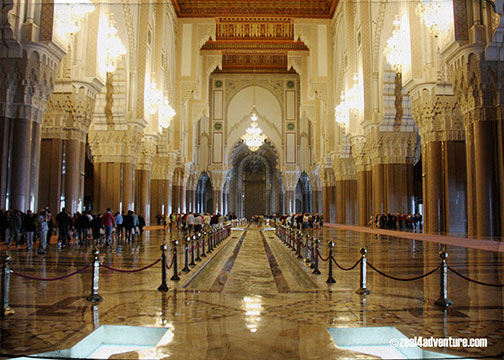
I walked barefoot inside, awed by its intricate beauty and incredible size.

“I can show you around town tomorrow”, our reliable grand taxi driver offered before he dropped us at the hotel the night before.  For 550 Dirham, Aziz endeavored to introduce us to his Casablanca in 4 hours.  First off the agenda was his and the rest of Casa’s pride.  The Grand Hassan II Mosque.

hassan-II-mosque

It is the largest in Morocco and the second largest in the world, the brainchild of the late King Hassan II when he felt that Casablanca was somewhat lacking in traditional sight.

Hassan-grandeur

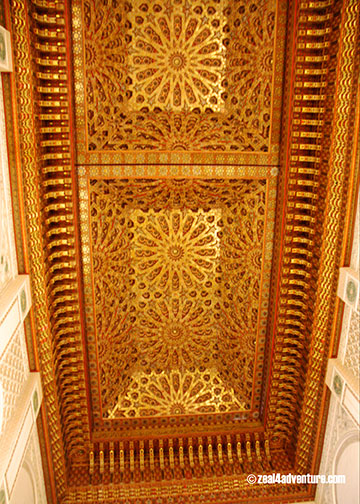
It was not only built to withstand earthquake, but the grand mosque also comes with a sliding roof and a heated floor – a beautiful blend of traditional Moorish Architecture and modern innovation.

hassan-intricate-ceiling

hassan-intricate-ceiling-design

The Hassan II Mosque glistened in the morning light;

zelij

intricate-woodwork

hemmed in beautiful wood carvings, stucco works and ornate traditional Moroccan tile work called zellij.

Aziz wanted to show an old part of Casablanca; he dropped us off at the Marrakech gate of the Old Medina with its imposing clock tower.

Old-medina

We wandered through the labyrinth of narrow streets of the walled city, which includes an 18th century fortress, a jewelry market and a kaleidoscope of other stores – souvenirs, handicrafts, leather goods – all requiring more than a little skill in bargaining.

old-medina-fruit-cart

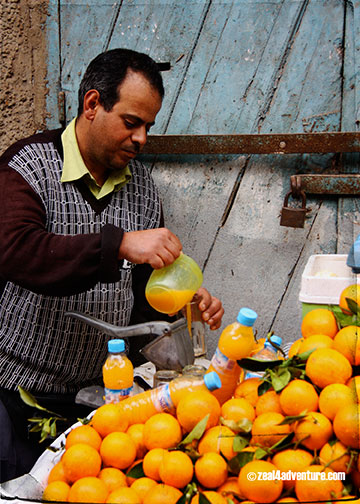
Carts laden with oranges peppered the streets, and a medley of Moorish and Portuguese architectures reflecting its own personality and charm.

old-medina-3

There were children playing and old women filling up at the water station or just sitting at the doorway.

old-medina-2

Not as bustling and quite run down compared to the glories of Fes and Marrakech, the “Ancienne Medina” is a place Moroccans venture to only if there is a need to do so.  It is a part of Casa that predates the French Protectorate, and in many ways, a closed quarter where bikes and cars are restricted.

In the 1930s, the French created the Habous neighborhood just a short ride away from the old walled city, wanting to build a nicer, cleaner medina.

moroccan-ceramics

Also known as the Quartier Habous, the New Medina is home to some excellent shopping opportunities at the Joutiya market, a handicraft market selling top artisan product.

New-medina

Capped with arches, its shops surround a pretty square that lead to a nearby Muslim courthouse, Pasha’s Makhama and on the opposite side of the square is the Mohammed V Mosque

Moulay-Youssef-Mosque

and the Moulay Youssef Mosque.  A pleasant place to while away time.

We weaved through the neighborhood until it was time to be reunited with our luggage and say goodbye to Casa.  A setback that ended in a good way, at the very least it was a delightful introduction to Morocco, a country that can be overwhelming at first.

Useful Info:

Hassan II Mosque
Sour Djedid
Boulevard Sidi Mohammed Ben Abdaliah
Tours:  Guided tours are offered throughout the day to non-muslim visitors.  Be sure to dress modestly and remove your shoes before entering.
 
Old Medina (Ancienne Medina)
Between Boulevard des Almoliades & Place Mohammed V
 
New Medina (Al Habous)
Near Boulevard Victor Hugo

Casablanca: Not the Usual Welcome

Welcome-to-exotic-MoroccoCredits:  4EVER Bloghop Quickpage by Kelly Mobley

Mohamed V International Airport – “No more luggage, finish”, said the porter. “What do you mean? We still don’t have our luggage!” I yelled in frustration. “No anglaise”, he looked at me and shrugged.  A lady, also missing her luggage, told me that the guy is only a porter, and he doesn’t understand me.  I should talk to the people at the baggage service counter.  Valid point.   But not exactly the welcome I expected.

Casablanca.  The bustling port city whose name mean “white house” and made famous by the Humphrey Bogart 1942 classic.  It may not echo the same romantic air the 1942 film brings to mind, but a trip through the city’s swanky lounge and bars can still evoke the spirit of the café from the movie.

Colonial-architecture

Casablanca was a jewel of the French Colonial empire, famous for luscious art deco, neo-classic and a blend of Moorish architecture that is unique to the city.  An architectural style known as Maurasque with trademarks such as wrought iron balconies, staircase and windows; carved facades and exterior corners; floral and geometric design on stuccoed walls.  Boulevard Mohammed V and Place Mohammed V still retains a trace of its unique colonial architecture heritage.

With our luggage arriving on Emirate’s next flight the same time tomorrow, we gained half a day, allowing us to explore more of “Casa” as the locals call it.

“Grand taxi?” a guy approached us as we stepped out of the Gare Casablanca Voyager after purchasing train tickets for tomorrow.  We said no, we wanted a metered taxi. “You’ll need 2”, he said. “A petite taxi can only sit 3, at the most”, he added.

garden-and-train-station-view-from-Ibis

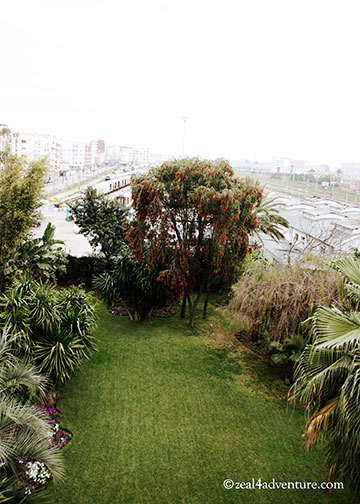
In Ibis Casa Voyageurs next door and our home for a night, the guy at the reception confirmed that the taxi driver was correct and gave us an idea on how much it would cost.  And so our negotiations with Aziz began.  We shook hands at 100 Dirham (US $13).  He would take us to Corniche d’Ain Diab,

corniche-boardwalk

where high-end bars and trendy nightclubs line the area.  “ It’s overlooking the water, where the yuppies go”, the guy on the train from the airport told us.

overlooking-the-water

He suggested that we might want to dine there, but the movie buff in us, out of curiosity, had our eyes set on Rick’s Café,

moroccan-mint-tea

so instead, we walked around the boardwalk and took shelter sipping  “Whiskey Morocco” (Moroccan mint tea)  

outdoor-cafe-by-the-water

in a café when it got too windy.

Dinner, though not our cheapest in Morocco, did not disappoint.

goat-cheese-in-honey

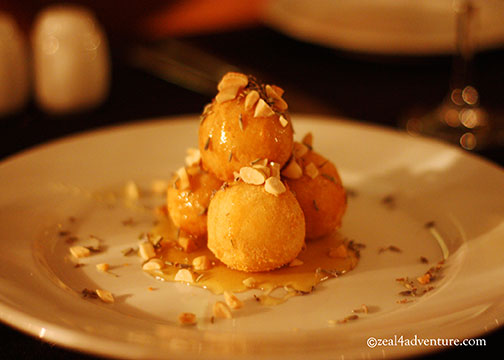
While we found the goat cheese balls drizzled in honey starter and chicken with lemon and olives tagine quite enjoyable,

lamb-chops

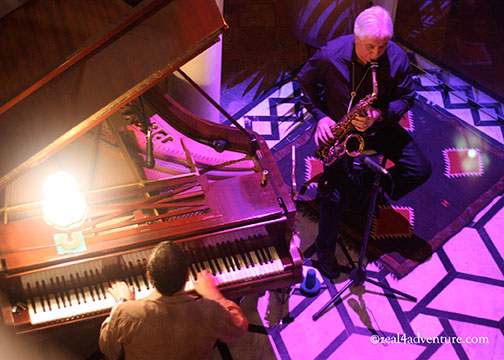
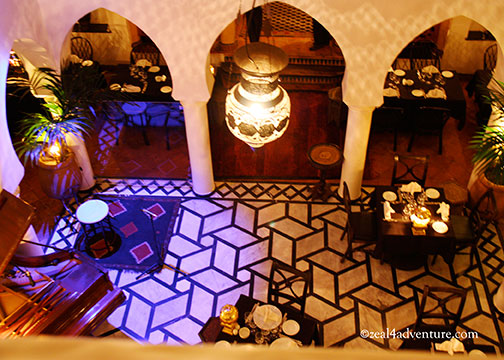
and particularly liked the lamb chops with mint pesto, it is the ambience — down to the piano and the sax player named Issam (close enough to Sam) — that made it one of the best “gin joints” in town.
jazz-music

Founded by a former US diplomat, Kathy Kriger, Rick’s Café opened in 2004.

ornate-moorish-design

With potted palms, ceiling fans, whitewashed walls, low archways, ornate lamps casting shadows everywhere, traditional Moroccan carved and inlaid woodwork, balconies and balustrades, antique brass… all provided the right atmosphere and feel of the 1942 cult classic.

archway

The nostalgia alone is reason enough to come for a visit.

Useful Info:

Rick’s Cafe
248 Bd Sour Jdid, Place du Jardin
Acienne Medina
For Reservations:  +212 522 27 42 07 / +212 522 27 42 08
 
Hotel Ibis Casa Voyageur
Boulevard Bahmad
Place de la Gare Casa-Voyageur
+212 0520 48 00 00

Visiting Xin Xin and Kai Kai

xin-xin

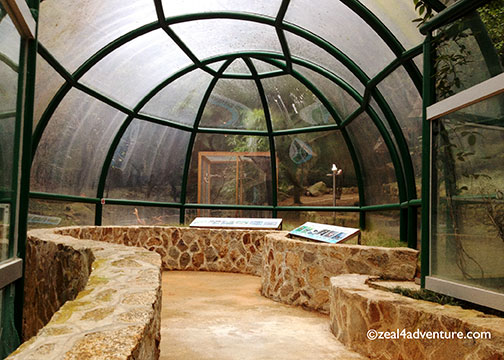
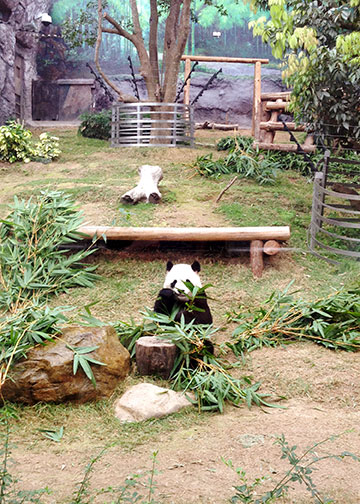
In a simulated indoor garden, Xin Xin munched on bamboo leaves. She seemed unfazed by the crowd, albeit small at 10 in the morning.

kai-kai

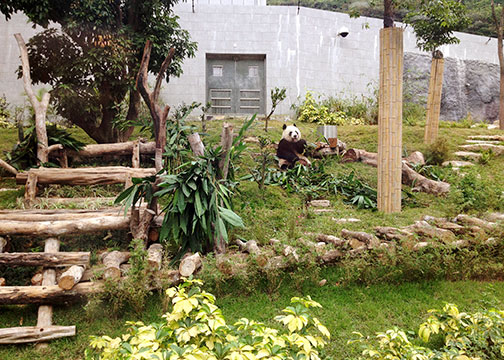
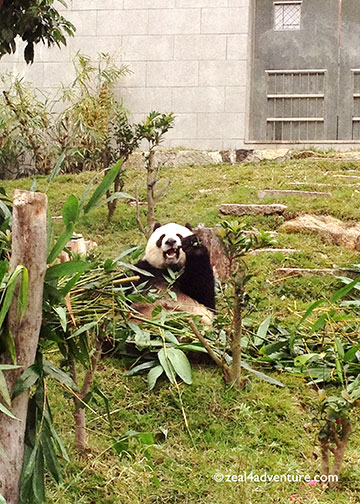
Outside, Kai Kai is the same, although he seemed more playful than his friend.

We took the 26A bus from just across Hotel Lisboa to the Seac Pai Van Park in Coloane to visit a pair of pandas from Chengdu.  Set in the southernmost island, we’ve never been to this part of Macau, and thought we’d visit the city and spend a few hours in the park.  We started early and arrived at the park before it opened, so we hopped on another bus that dropped us off at the Coloane Village Square.

coloane

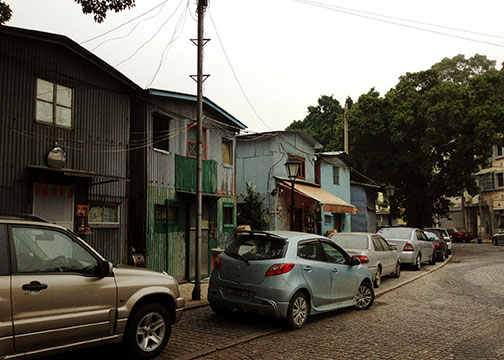
At 9 in the morning, the village was half awake.  We explored a bit of the area but didn’t reach the village center.

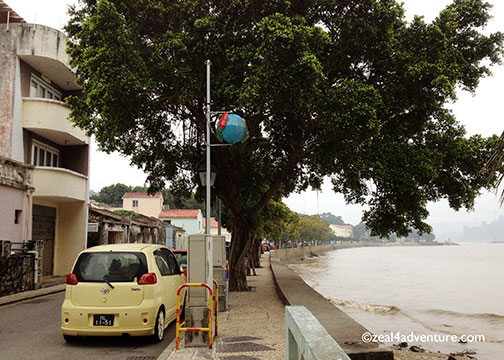
seafront

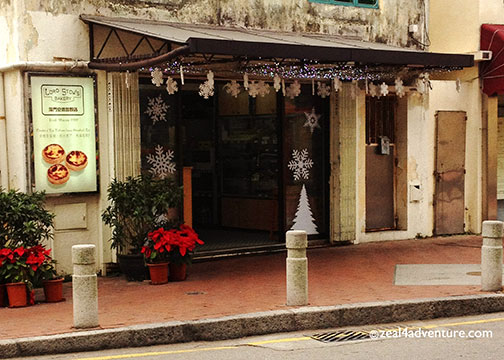
Right next to the square, however, as you walk toward the sea front promenade is Lord Stowe’s Bakery.

lord's-stowe

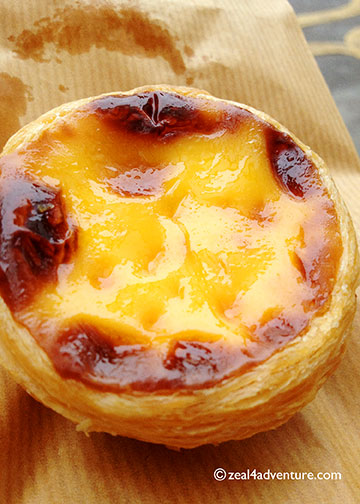
We walked in, bought ourselves a piece of their famous Portuguese egg tart

lord-stowe's-egg-tart

and devoured it while waiting for the bus to take us back to the park.

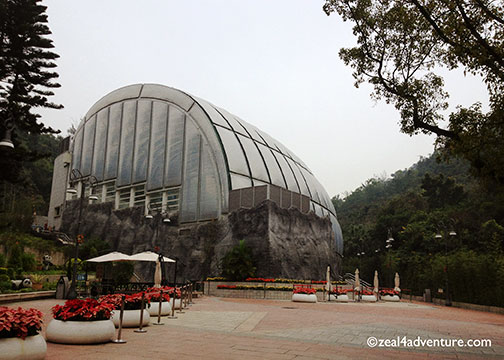
Nestled against the hillside with Alto do Coloane serving as backdrop, Seac Pai Van Park is designed around the terrain.

panda-pavilion

Found within the park is the Giant Panda Pavilion, the pair’s new home, simulating their natural habitat.

kai-kai-2

The multifunctional park, once a farm, is now considered as the largest natural green belt of Macau.

aviary

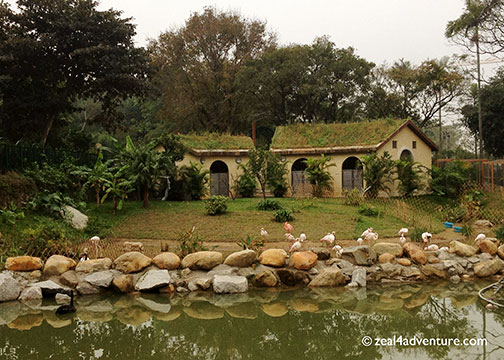
Besides the pavilion, the park has a mini zoo that houses a few animals from macaques to deers, a walkthrough aviary that has a few rare birds,

Flamingoes

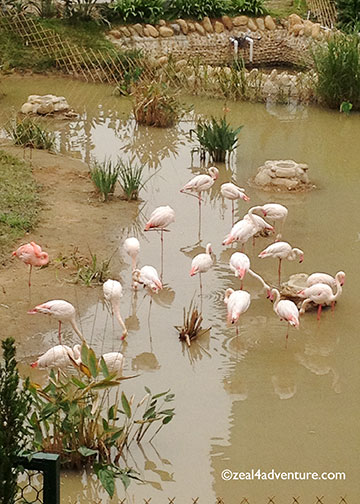
and a pond with a few flamingos and other waterfowl.

pond

The 20-hectare lot is easy to explore in just a few hours. If you are into flora and fauna, this place may disappoint, but for the price (MOP$10) and the pandas, the park is worth the morning.

The village, I believe, though, is worth exploring… on my next visit.

But while in Macau check out the many good eats this island has to offer here, here, here and here.

Useful Info:

Seac Pai Van Park
Estrada de Seac Pai Van
Transport:  21A, 26A, 50
Hours:  9am-6pm (Tues-Sun); Aviary: 9am-5pm (Tues-Sun)

Matsumoto

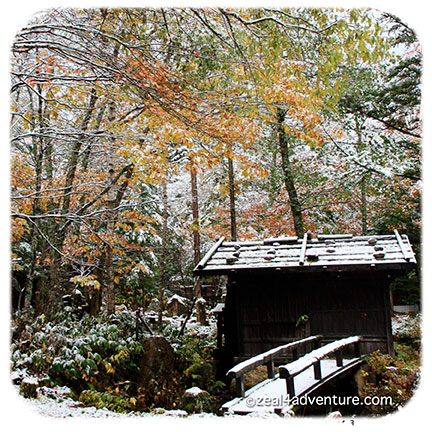
I peered from the balcony of our room, amused by the change of yesterday’s warm hues of autumn.

snow-frm-balcony

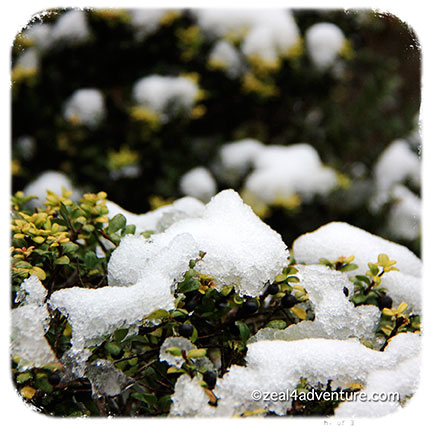
Today, I wake up to the white of winter.

Our agenda for the day was to spend it in the castle town of Matsumoto.

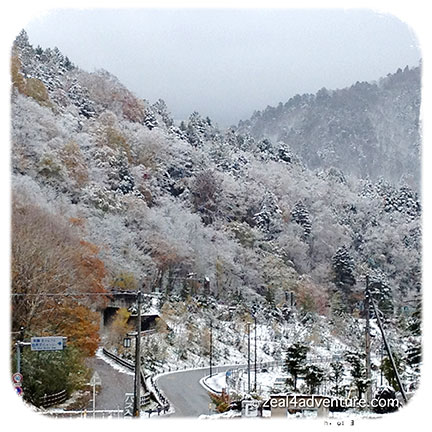
snow-on-the-road

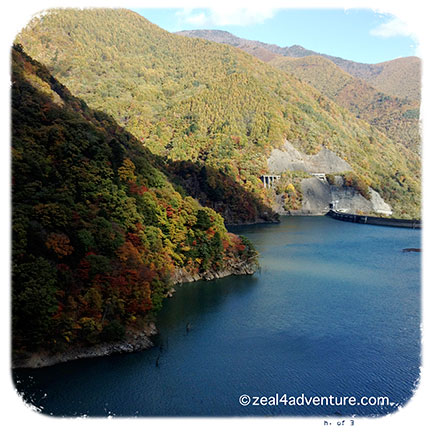
The scenery from the bus, now covered with snow, looked different from yesterday.  Then we entered the tunnel and just like that, we were transported back to autumn – quite magical, really.

scenery-enroute

For a moment, I thought I walked into the wardrobe like the characters of the high fantasy novel by C.S. Lewis, The Chronicles of Narnia.  The wonders of this world continue to amaze me.

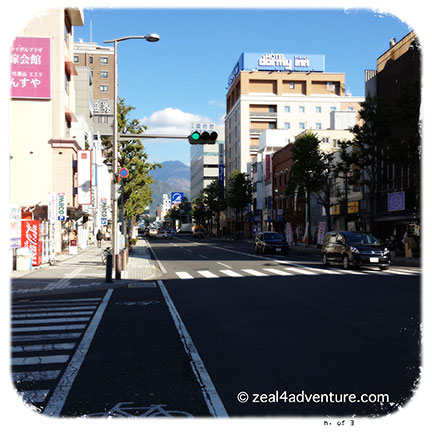
The ride from Hirayu to Matsumoto was a gorgeous one-hour journey.  Compared to Takayama and Hirayu, Matsumoto’s bigger roads and taller buildings exude a much modern feel despite having one of Japan’s premier historic castles in its midst.

cityscape

That and the Japanese Alps are the main pulls of the town.
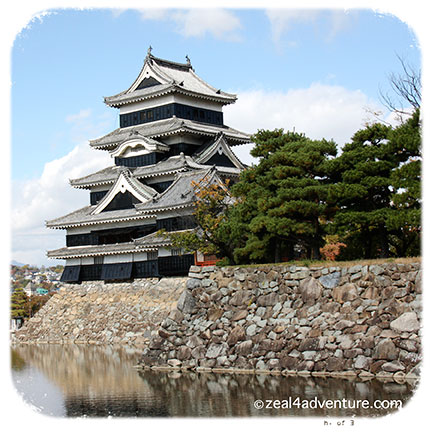
matsumoto-castle-moat

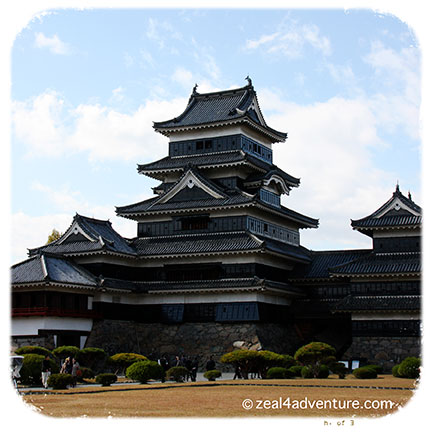
The Matsumoto-jo or Matsumoto Castle, as it is simply known, is one of the most complete and beautiful among Japan’s original castles.

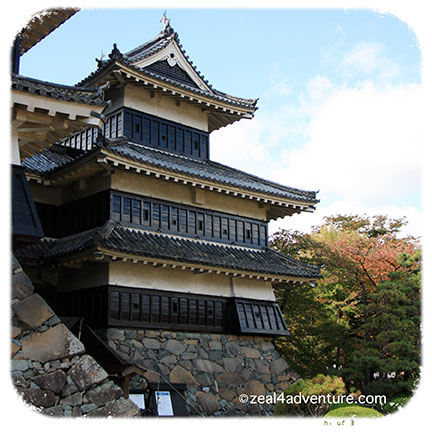
matsumoto-black-walls

The 400-year old castle earned the nickname Karasu-jo, the Crow Castle from its striking black lacquered walls

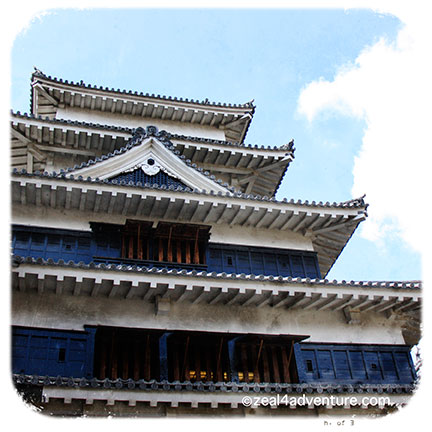
roof

and its roof that resembles wings spread out, boldly standing out against the magnificent backdrop of the Japanese Alps.

view-from-the-topA view of the perimeter of the city from the 5th floor — the strategic office.

The lofty 98-foot structure can be seen from almost anywhere in the central city which makes it easy to find.

Unlike many of the Japanese castles, which is either built on hills or near a river, Matsumoto was built on a plain.  The extraordinarily high strong stonewall, interlinking walls, gatehouses,
view-of-the-moat-from-the-top

and the moat form an extensive system of defense given the lack of natural defenses the castle was built on.  A fascinating design of the castle, which could have been a strategy to keep the floor safe from the enemies, is a floor hidden from the outside.
matsumoto-from-grounds

The 3rd floor has no windows and sometimes called the “dark floor”.  Another feature that could have “defense” in mind is the steep incline and the high rises of the stairs.  This prevents from climbing fast.  In fact, slippery wooden floorboards and socks (as we had to walk around carrying our shoes in a plastic bag) makes for a terrifying climb on those stairs.

Listed as a National Treasure, this well-preserved castle is a good example of a hirajiro, and many of it is still as it was – the moat, the gate, the various bailey and the sub floors minus, however, the furniture and furnishings.  The tenchu or the keep though holds an armory and weapons museum.

It was a nice (warmer) day well spent exploring a well-preserved castle that provided a glimpse of how it was like during Japan’s feudal past,

cityscape-3

walking the streets of this modest size city showcasing a cozy corner of suburban affluence surrounded by mountains,

sushi

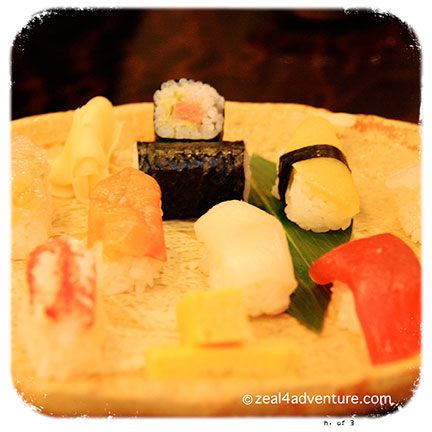
and sampling excellent sushi in between.

snow

And through the same tunnel to Hirayu, we found ourselves back in winter.

Useful Info

Matsumoto Castle
4-1 Marunouchi, Matsumoto City
Opening hours:  8:30-17:00 (entrance closes at 16:30)
Fee:  Adults ¥600; Children: ¥300
* It is a 5 minute bus ride or a 15 minutes walk from the Matsumoto Station

Kamikochi: A glimpse of the Japanese Alps

KamikochiCredits:  Template by Jen Caputo; Papers: Designs by Sarah Bennett, Erica Zane, Gwenipooh Designs. Haynay Designs.

Sometimes a change in plans is a good thing.  We arrived in Hirayu Onsen early.  Our room wasn’t ready yet.  “You may want to go to Kamikochi instead”, the front desk clerk recommended to us after she discouraged a trip to the Shin-Hotaka Ropeway, a two-stage tramway that climbs alongside the Hotaka Mountain Range.  She informed us that it had been raining so the visibility will be bad.  “It will also be very slippery”, she added.  We took her word, left our bags with them and headed to the bus station after lunch.

IMG_0828

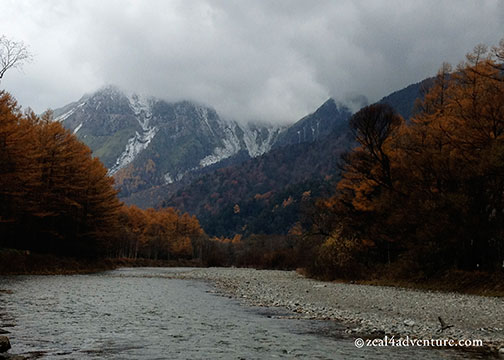
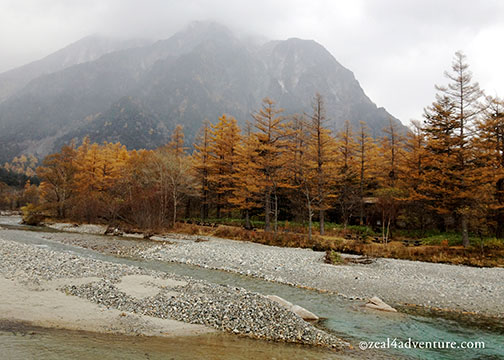
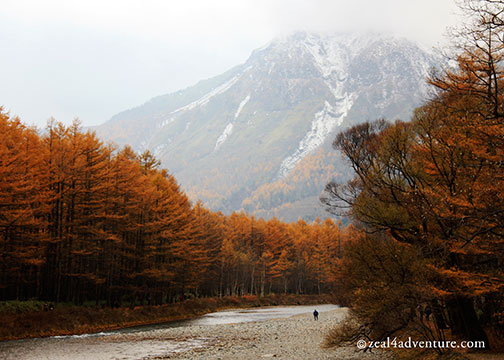
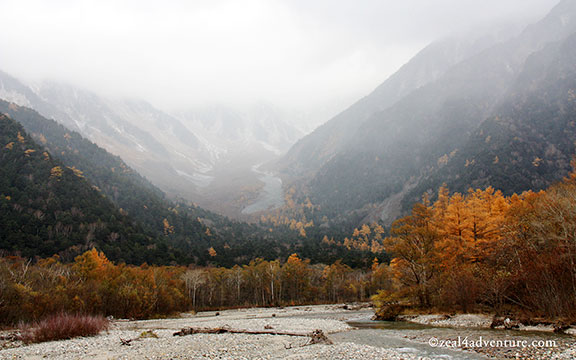
Long dubbed as the Japanese Alps, Kamikochi is a pristine mountain valley in the Nagano Prefecture, seated at the foot of the Hida Mountains, deep in the Chukusangaku National Park where the Azusa River flows some 1,500 meters above sea level.

IMG_0844

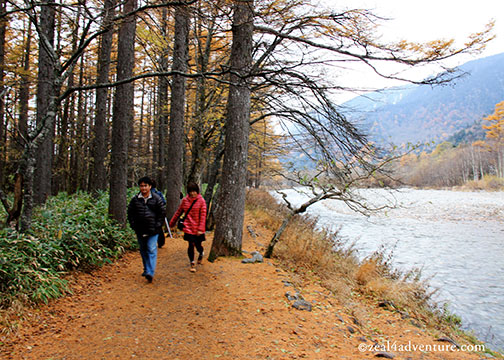
It is known for its splendid landscape and various hiking trails.  As private vehicles have been prohibited in the park since 1996, only buses or taxis are allowed,

IMG_7260

Kamikochi has become one of the best-protected natural areas of Japan despite the droves of tourists and hikers that flock there.

The scenic bus ride from Hirayu Onsen to the Kamikochi parking lot took all of 30 minutes with a brief stop at Taisho Pond for those wanting to hike to the center of Kamikochi. Since it was drizzling and freezing and we weren’t in proper attire, not to mention that we only had half a day, we passed.

trail-from-taisho

It is the best way to enjoy a day in Kamikochi actually, and on hindsight, I am not sure we made the right decision to forego the hike.

trail-to-bridge

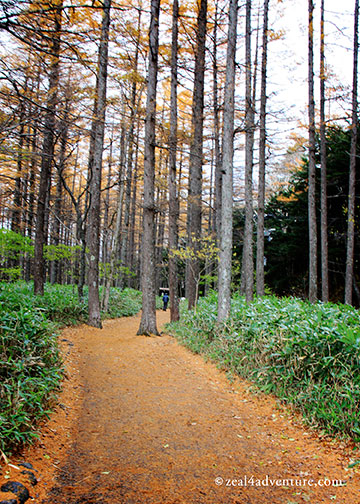
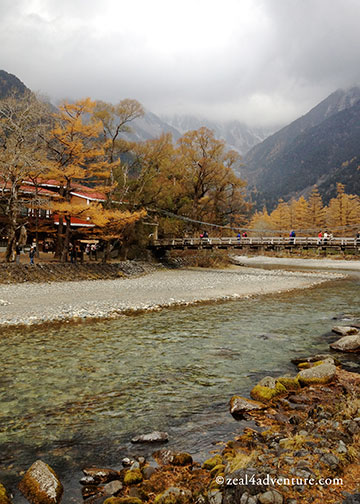
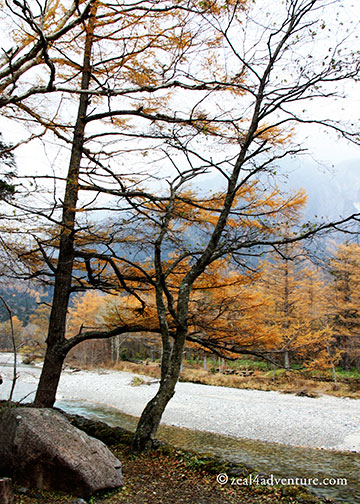
From the parking lot, we took our time and marveled at the wondrous views of some of the tallest peaks of Central Japan’s Northern Alps as we followed the trail to the Kappabashi Bridge.

kappabashi

This wooden suspension bridge is a symbol of Kamikochi with the most gathering of visitors.

IMG_7253

From the bridge, one can see the surrounding mountains, Nishihotakadake, Okuhotakadake, Myojindake, and the active volcano Yakaedake – all towering summits over 3,000 meters above sea level.

coffee-and-dessert

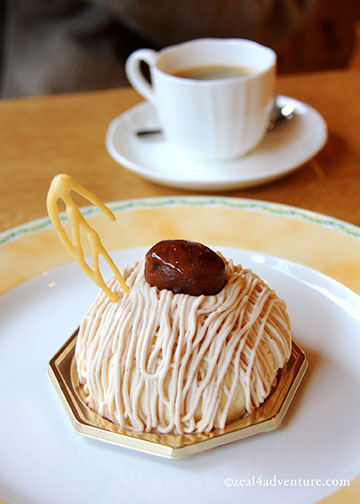
Though we barely scratched the surface with just half a day, less actually if you take out the time we spent indoors to warm ourselves with coffee and dessert, Kamikochi has instantly become a personal favorite, and I wouldn’t mind spending a few days wandering around should there be a next time.

IMG_7251

So sometimes a change in plans is indeed a good thing.

Onsen: A New Found Love

Getting ready for my first outdoor “hot spring” bath, I found myself in a room filled with women of all ages, some soaking in the (indoor) pool and others seated on stools going about the bathing rituals.

I found an empty seat.  Observing their rituals, I started washing and scrubbing until I felt clean enough to share a pool with them (the onsen etiquette dictates that one must be scrubbed clean before entering any pools).  The room was warm but because winter was on its way, the weather has turned cold and windy outside.  I hesitated and soaked in the pool while I mustered the courage to brave the cold, windy afternoon.

With only a hand towel in tow, my friend Stella and I walked into unfamiliar territory.  Outside the bathing room were several (geothermal) pools spread around a gorgeous Japanese garden. As I felt the gush of wind blow straight into my bones, I went straight into the nearest pool.  Unbeknown to us at that time, it was the pool that the source of the spring pours into.  Wrong move.  The farther away the pools are from the source, the gentler (to the body) it becomes.  We settled on alternating between the third and the fourth pool.  The heat can be unbearable at first, but once the body acclimatized, it was soothing, palliative even.  The diversity of minerals relieves a multitude of ailments, they say.  It was the perfect remedy to my sore muscles at least.  Despite a 10°C windy evening, I felt warm to the bones from the hot spring.  When it snowed on the second night, it was surreal.

northern-alps

Hirayu. It is a town surrounded by mountains and active volcanoes on all sides, a town known for its more than 30 natural source hot springs or what is known in Japan as “onsen”.  The oldest and largest of Okuhida’s “onsen towns” is also the region’s transportation hub making it a marvelous base for wandering through nearby areas like Kamikochi, Norikura, Matsumoto, Shin Hotaka and the Hirayu-Otaki waterfalls – famous for its illuminated display of a frozen waterfall during the winter.

hirayu-no-mori-2

Our home for 2 nights, Hirayu No Mori, is conveniently located near the bus terminal.

hirayu-no-mori

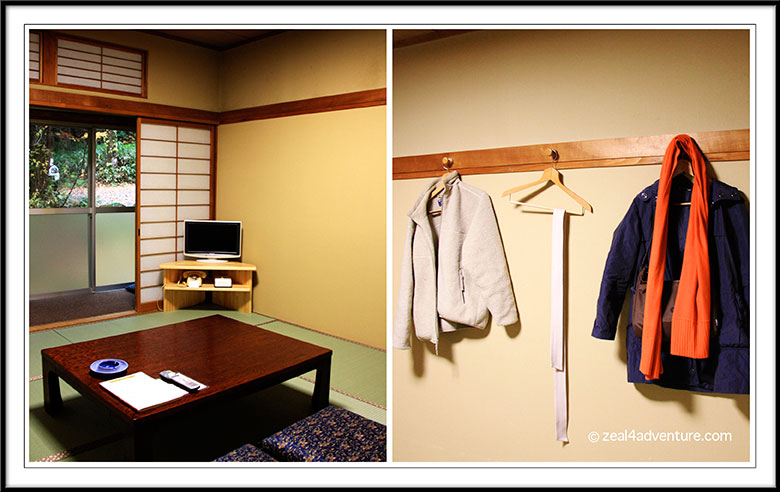
This hot spring resort, primarily a bathhouse, boasts of beautiful grounds, comfortable rooms

traditional-guestroom

and a restaurant serving central Japanese dishes such as Hida Beef and Hoba Miso.

food

It has 3 bath facilities (2 segregated and 1 mix gender) and a total of 16 pools altogether.

And for two nights under the stars, I soothed my exhaustion away in several of the pools and soaked up as much of this quintessential Japanese experience to take home with me.

Useful Info:

There are several rules of etiquette to keep in mind when visiting a onsen.  Click here to know what these are.

Hirayu No Mori
763-1 Hirayu Okuhidaosengo,
Takayama, Gifu Prefecture
Contact:  0578-89-3338

Shirakawa-go

ogimachi-gassho-house

Gassho-zukuri.  We’re not done talking about it yet because there are still some that can be found in typical farming villages, some ordinary folks still call it home, this 250-year old special farmhouses.

omigachi-collage

These villages still exist, and one is just 50 minutes away by bus from Takayama.

ogimachi-tourists

The UNESCO declared World Cultural Heritage Site, Shirakawa-go and its neighboring region Gokayama has been slowly attracting visitor since it was inscribed in 1995.

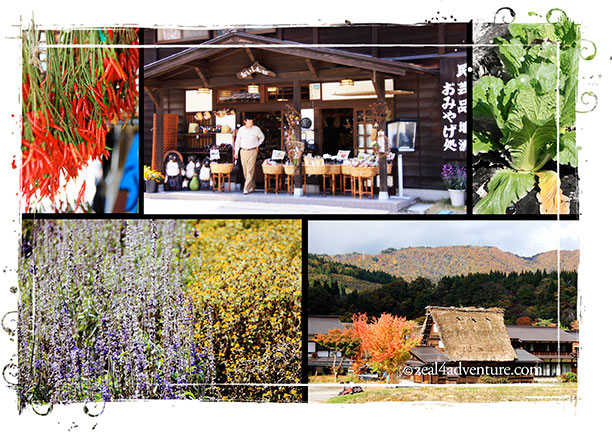
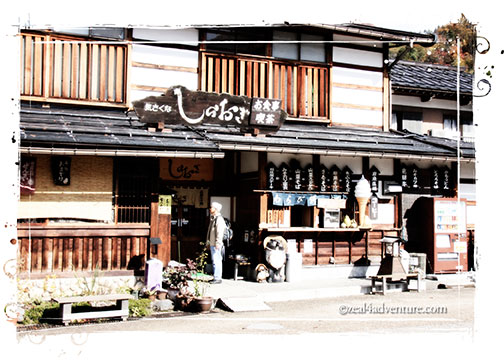
Ogimachi is Shirakawa-go’s largest community.  A charming village, albeit a slightly “touristy” oriented one, lining the Shogowa River valley.

Ogimachi-scenery

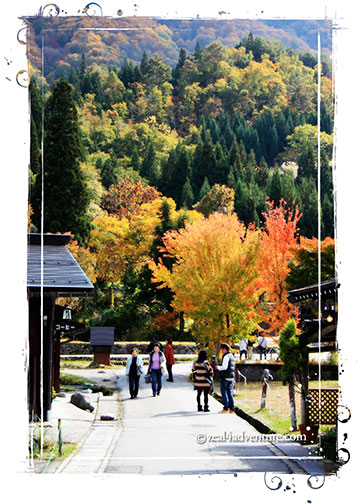
Its beauty lies not only in the scenery, resplendent in shades of autumn at the time of visit, but as well as in its community.  Ogimachi has 2 medical clinics, a primary school and a junior high school.

Ogimachi-fixing-roof

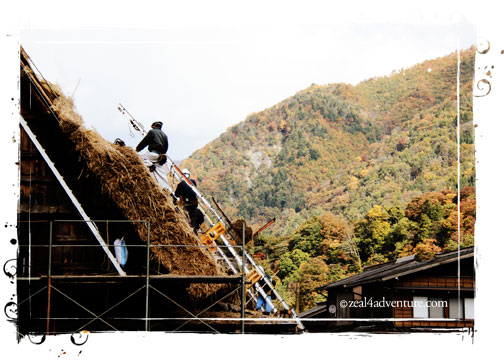
Many still live in a Gassho-zukuri, but many of the well-preserved farmhouses have become museums, restaurants and there are 20 or so of it that has been made into Minshuku (bed and breakfast) guesthouses.

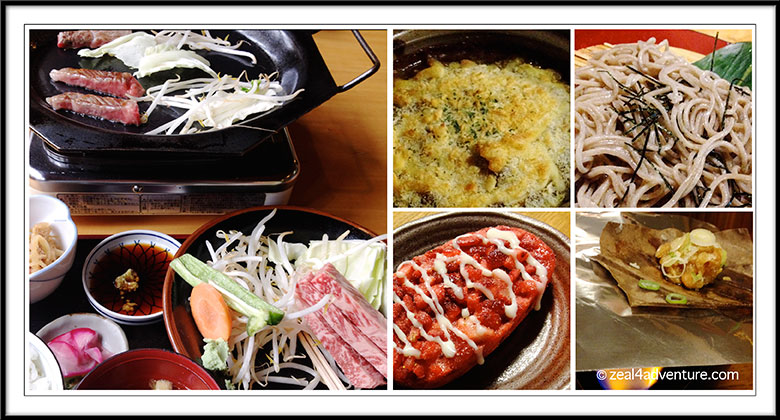
lunch-shiraogi

Time permitting; spending a night there would have been glorious.  Instead, we contented ourselves to a nice hot soba meal before heading back to Takayama.

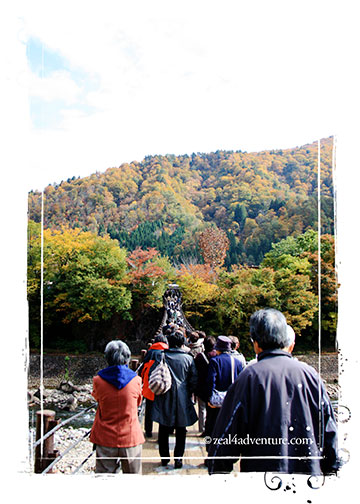
Ogimachi-crossing-the-shogawa-river

Across the bridge, near the bus stop is a well-constructed outdoor heritage museum.

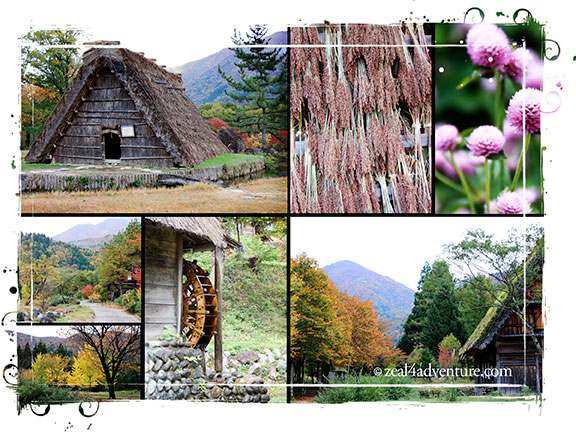
minkaen-collage

The Gassho-zukuri Minkaen features 25 preserved farmhouses.

minkaen-1

Like Hida-No-Sato, it was relocated and rebuilt to emulate a traditional village in the countryside, scenery and landscape of which is simply superb with the mountains lending the perfect backdrop.

minkaen-2

A Feast for the Eyes and Soul

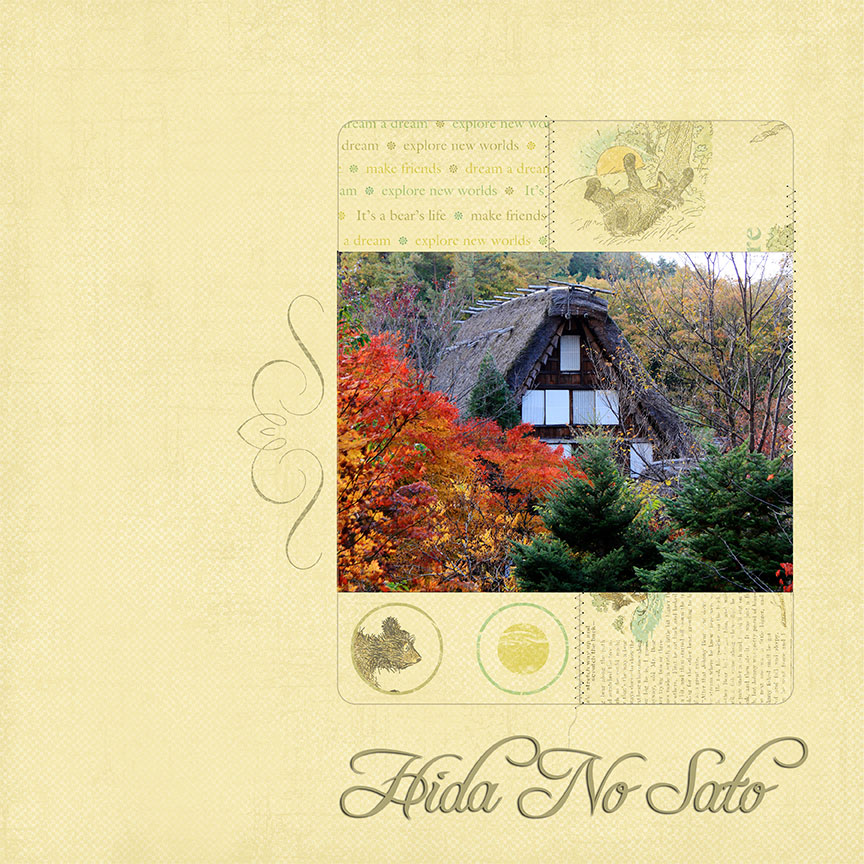
Hida-No-SatoCredits:  Template by K Pertiet (Bears Life)

I love how the Gassho-Zukuri farmhouses stand out against the warm hues of autumn – a stunning contrast, really.  This tall (possibly 3-4 stories high) coffee-colored A-shaped thatched roof farmhouses were first built during the Edo period.

entrance

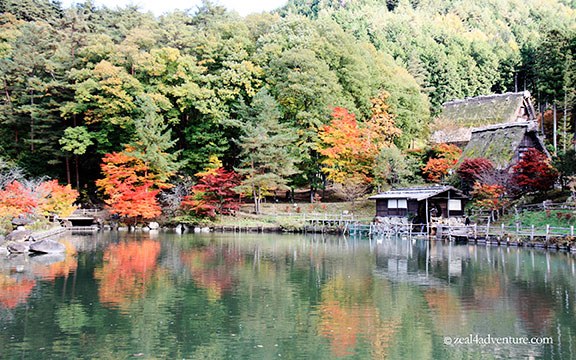
Lush woodland with hints of fall reflects on the stillness of the pond like a mirror.  It reminds me of a Monet artwork except that the setting isn’t France.  This is the first thing your eyes will wander to once you enter Hida No Sato, sometimes also called Hida Folk Village.

gassho

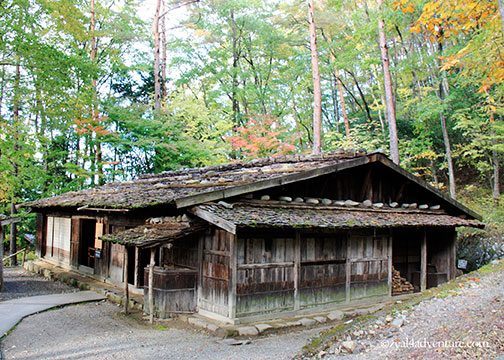
And this is where those Gassho houses were relocated.  It resembles a village of old Japan – it has around 30 well-preserved traditional houses, storehouses and other structures with farming tools and everyday utensils displayed in each house.

Tanaka's-House

This outdoor museum of sort, aside from preserving the structures, strives to keep the culture alive by offering hands-on lessons on the traditional way of life like rice cropping, straw-work and stitching, cypress carving to even storytelling using the local dialect.

interior

A few hours here will boost your appreciation on how life was back then for farmers and craftsmen of the Hida region.

IMG_7176

Life isn’t easy for these people as winter is harsh in this part of Japan.  The steep slanting roof was said to be for the purpose of rain and snow.  It allows both to fall straight off, preventing water from seeping through the roof or heavy snow collapsing the roof.  It also eases the work of cleaning. Isn’t it amazing how a practical need has led to a fascinating and unique style of architecture?

autumn-colors

So when in Takayama, you must go visit this place.  It’s just a 30-minute walk from town or a 10-minute bus ride from the Takayama Station.  It will be a feast for the eyes and the soul.

Useful Info

Hida No Sato
1-590 Kamiokamoto-machi, Takayama City
Opens 7 days a week from 8:30am – 5:00pm
Admission: ¥700
 
How to get there from Takayama:
Take a 10-minute bus ride from the Takayama Station (bus runs every hour); get off at the Hida No Sato bus stop.