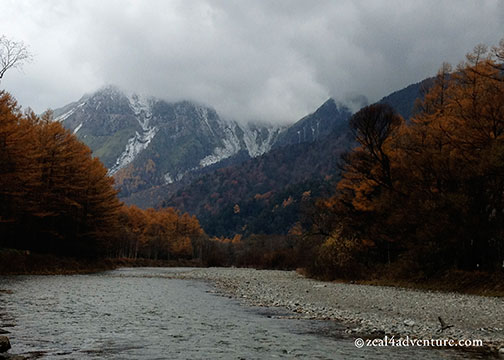
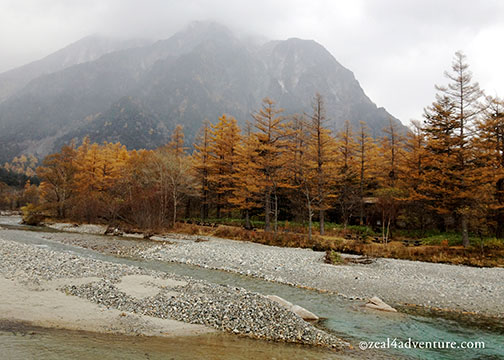
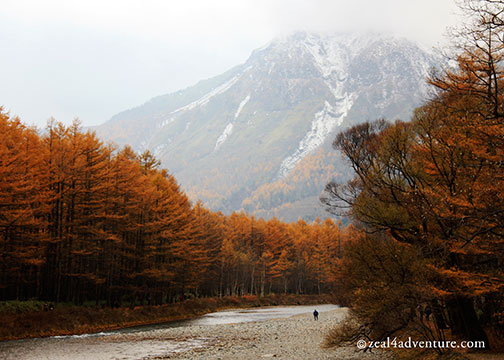
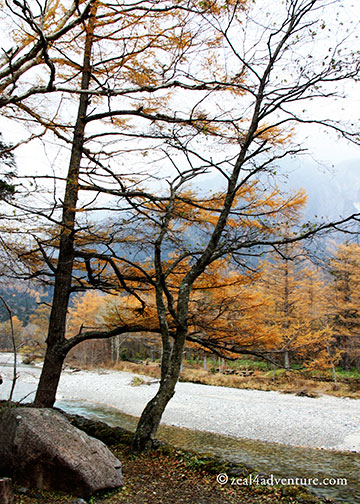
I peered from the balcony of our room, amused by the change of yesterday’s warm hues of autumn.
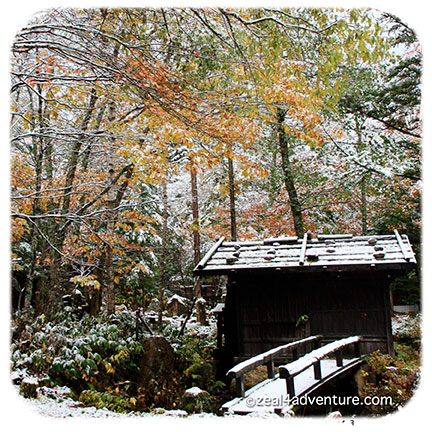
Today, I wake up to the white of winter.
Our agenda for the day was to spend it in the castle town of Matsumoto.
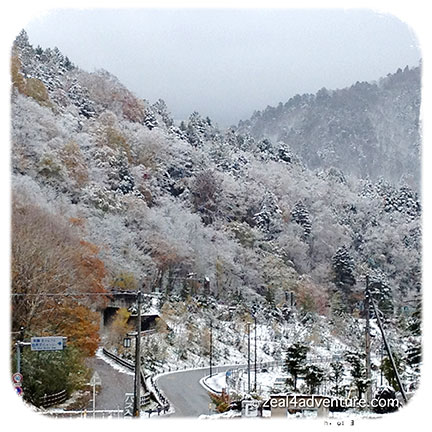
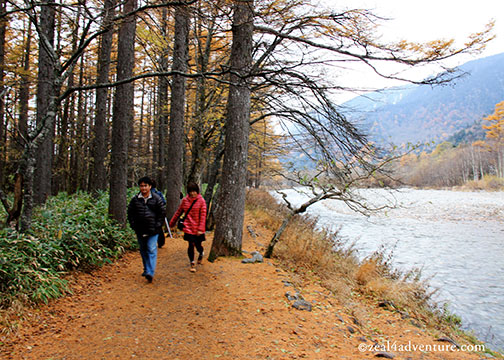
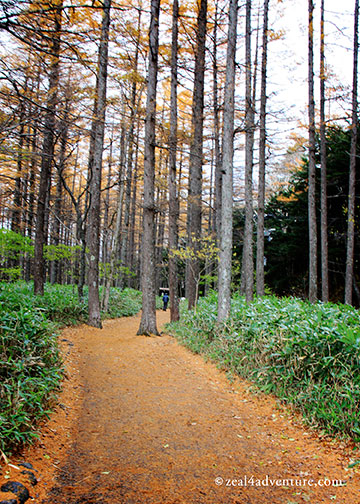
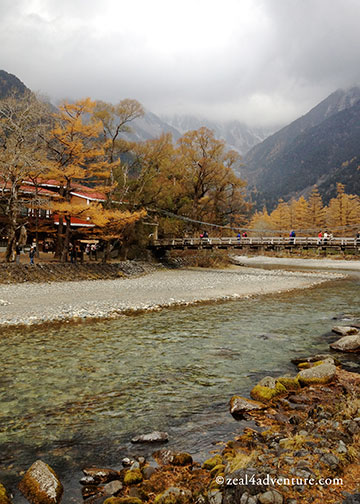
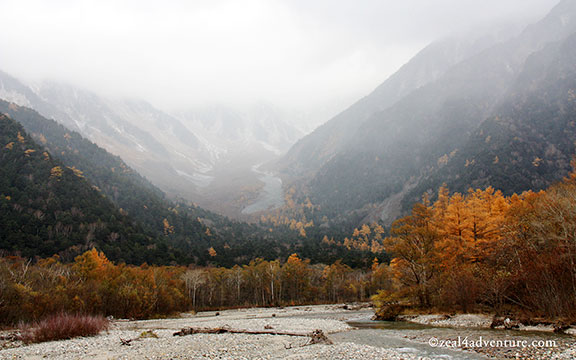
The scenery from the bus, now covered with snow, looked different from yesterday. Then we entered the tunnel and just like that, we were transported back to autumn – quite magical, really.
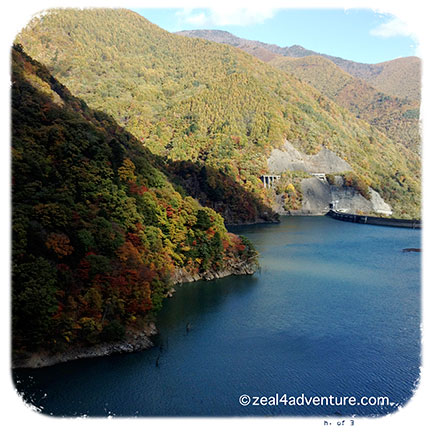
For a moment, I thought I walked into the wardrobe like the characters of the high fantasy novel by C.S. Lewis, The Chronicles of Narnia. The wonders of this world continue to amaze me.
The ride from Hirayu to Matsumoto was a gorgeous one-hour journey. Compared to Takayama and Hirayu, Matsumoto’s bigger roads and taller buildings exude a much modern feel despite having one of Japan’s premier historic castles in its midst.
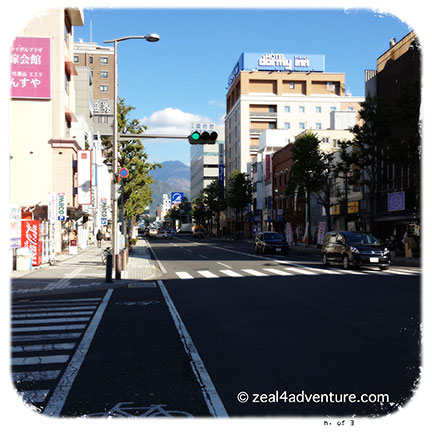
That and the Japanese Alps are the main pulls of the town.
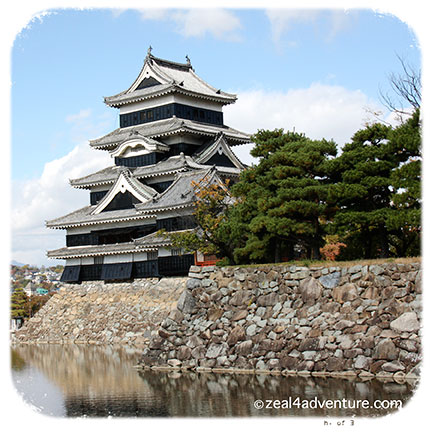
The Matsumoto-jo or Matsumoto Castle, as it is simply known, is one of the most complete and beautiful among Japan’s original castles.
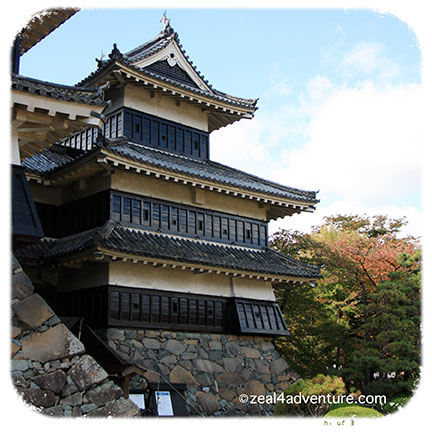
The 400-year old castle earned the nickname Karasu-jo, the Crow Castle from its striking black lacquered walls
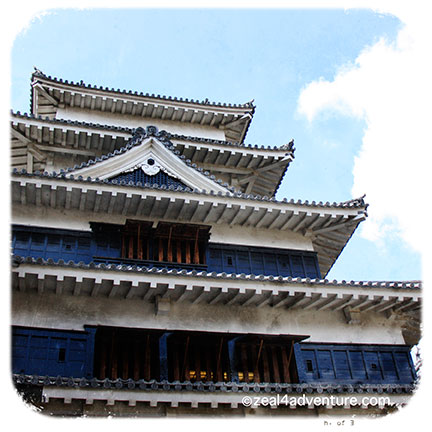
and its roof that resembles wings spread out, boldly standing out against the magnificent backdrop of the Japanese Alps.
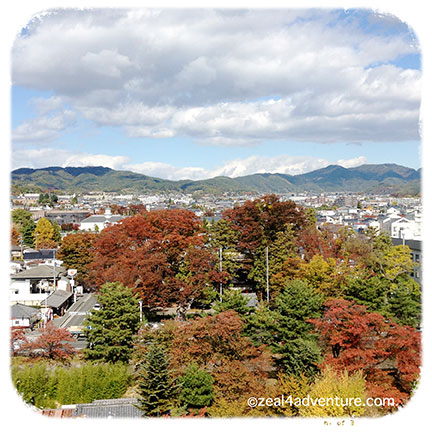 A view of the perimeter of the city from the 5th floor — the strategic office.
The lofty 98-foot structure can be seen from almost anywhere in the central city which makes it easy to find.
Unlike many of the Japanese castles, which is either built on hills or near a river, Matsumoto was built on a plain. The extraordinarily high strong stonewall, interlinking walls, gatehouses,
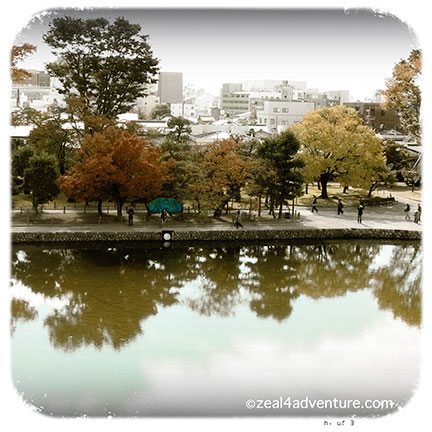
and the moat form an extensive system of defense given the lack of natural defenses the castle was built on. A fascinating design of the castle, which could have been a strategy to keep the floor safe from the enemies, is a floor hidden from the outside.
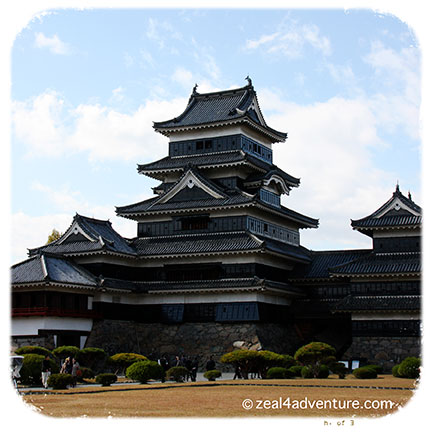
The 3rd floor has no windows and sometimes called the “dark floor”. Another feature that could have “defense” in mind is the steep incline and the high rises of the stairs. This prevents from climbing fast. In fact, slippery wooden floorboards and socks (as we had to walk around carrying our shoes in a plastic bag) makes for a terrifying climb on those stairs.
Listed as a National Treasure, this well-preserved castle is a good example of a hirajiro, and many of it is still as it was – the moat, the gate, the various bailey and the sub floors minus, however, the furniture and furnishings. The tenchu or the keep though holds an armory and weapons museum.
It was a nice (warmer) day well spent exploring a well-preserved castle that provided a glimpse of how it was like during Japan’s feudal past,
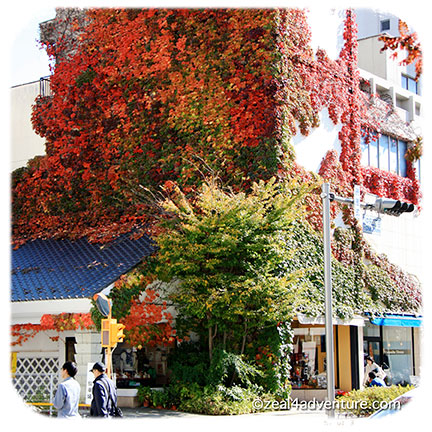
walking the streets of this modest size city showcasing a cozy corner of suburban affluence surrounded by mountains,
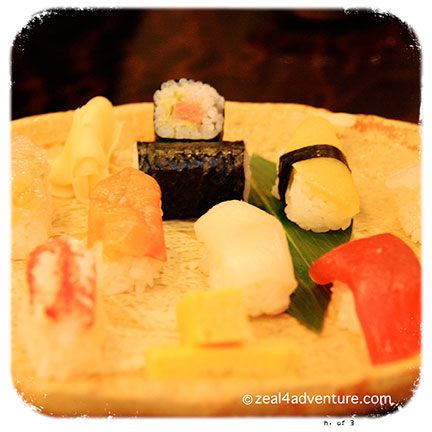
and sampling excellent sushi in between.
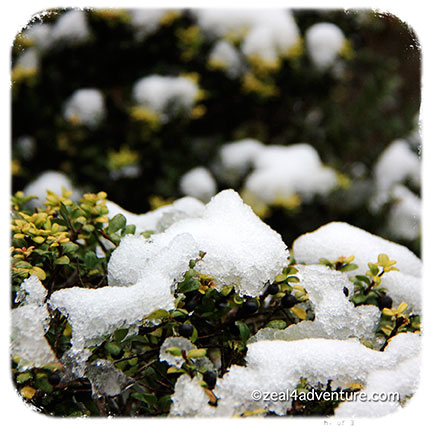
And through the same tunnel to Hirayu, we found ourselves back in winter.

 my adventure odyssey