The Alcazar and Barrio Santa Cruz

CollageCredits:  Template by J Sprague Photo collage; Paper by Scrapmuss Designs
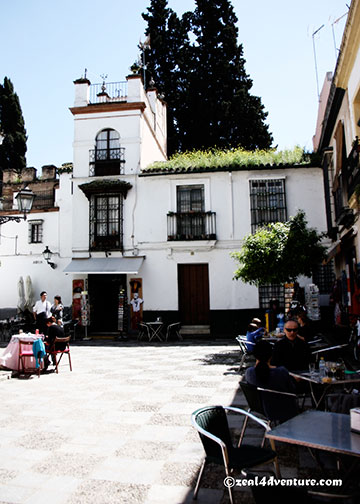
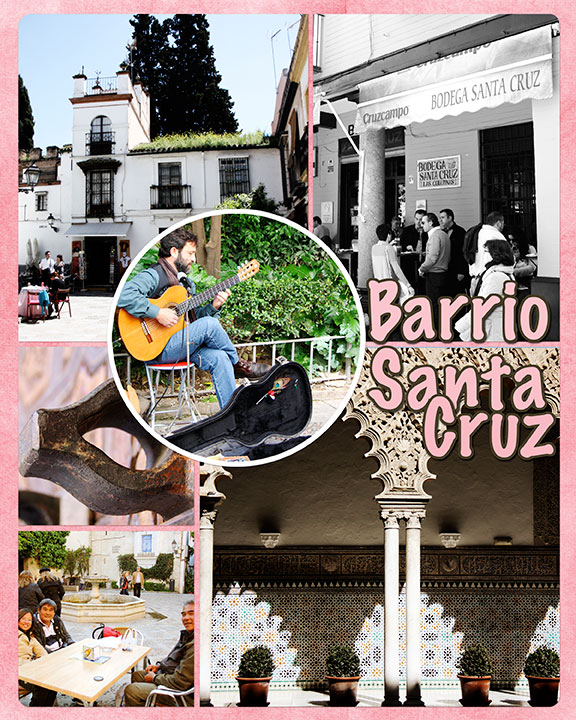
After a night of soulful music and dancing, elated from the cultural assimilation, we were back on the street the next day for more. The Santa Cruz district, also known as Barrio Santa Cruz, the old Jewish quarters, is just a hop away from our hostel.

Best known for its small plazas—Plaza de Santa Cruz, Plaza de los Venerables,
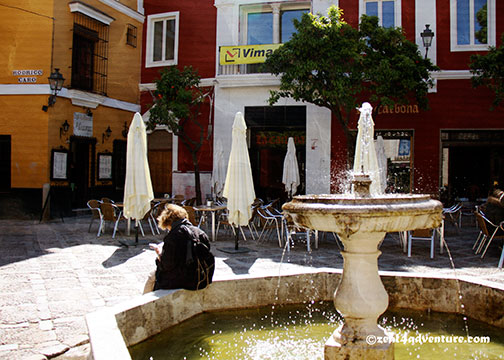
plaza-alianzaPlaza Alianza
plaza dona elviraPlaza Dona Elvira

Plaza Alianza, Plaza de Dona Elvira among others—hidden around the lively labyrinth of narrow streets and alleys awash with shops not only of touristy souvenirs

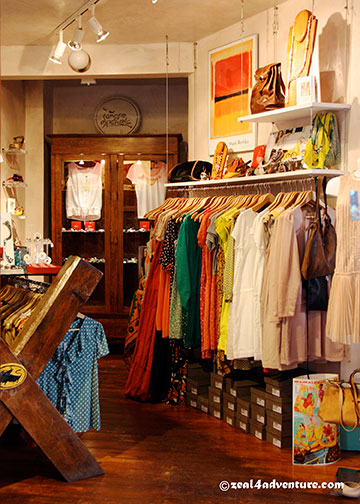
shopSangre Espanola–burnt my MC here.

and bars indulged too by locals,
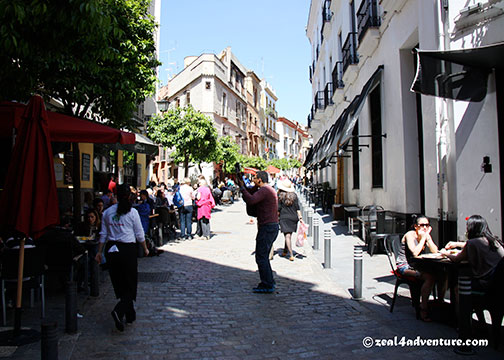
bars

it is a natural gathering of visitors and the community alike. Picturesque lime-washed houses added to its charm.

And in this district stands 3 UNESCO World Heritage sites:

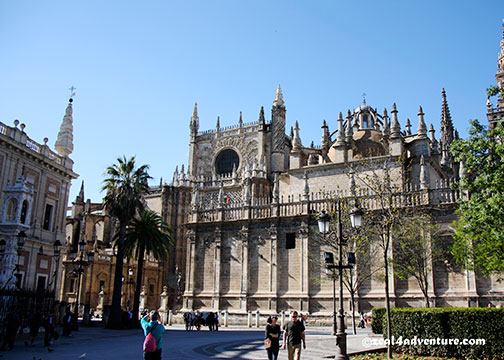
cathedral-from-triunfoThe Cathedral from Plaza del Triunfo

the Cathedral and its Giralda, the Archivo de Indias (which we failed to enter), and the Alcazar.

On the southeast side of the Plaza del Triunfo stands the Real Alcazar, supposedly the oldest European palace still in use.
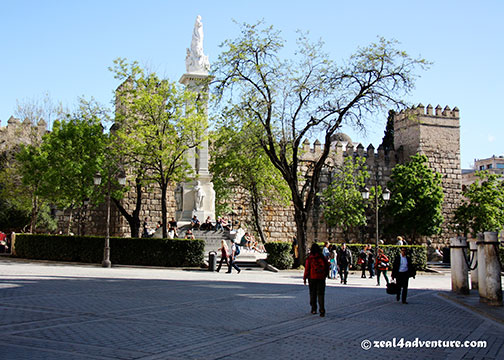
alcazr-from-triunfoThe Alcazar from Plaza del Triunfo

Walking through the Alcazar is like walking through the history of Seville.

alcazar-collage

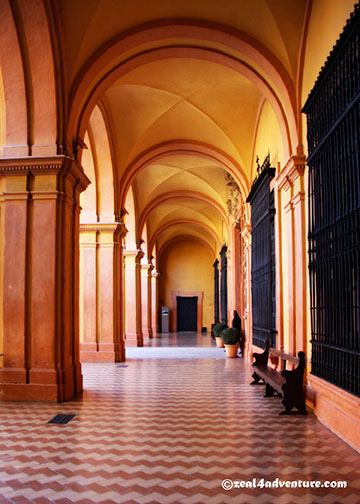
Art and architecture designs throughout the palace are marked by the diversity of cultures starting in Moorish times to the Middle Ages, the Renaissance, Baroque, and the XIX century.

Before it became the royal palace of Christian Kings, it was once a Moorish fortress. Today, it is still used as a part-time residence of the Spanish royal family, although only a few rooms are closed to the public.
alcazar-2

Built by Moorish architecture, the structure standing today still has details of a medieval fortress.

gardens

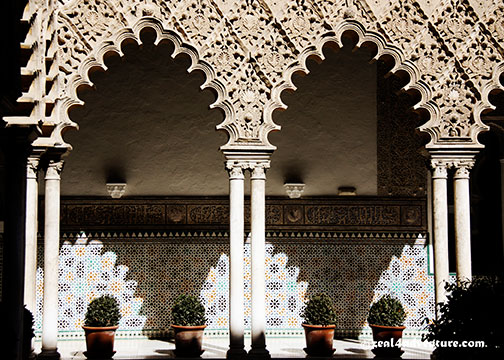
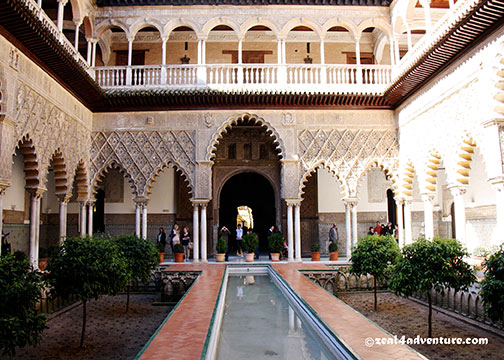
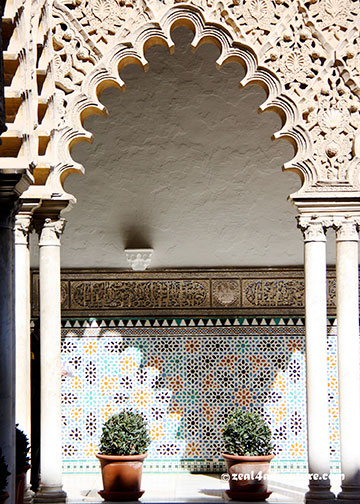
The gardens are outstanding, but I say that the picturesque Patio de las Doncellas, the Ambassador’s Hall,
patio-de-los-doncellas-2

patio-de-las-doncellas

patio-de-los-doncellas-3

with its tranquil pond that reflects the Mudejar plasterwork will transport you to another time. The intricate carvings and mosaic will leave you in awe.

The castle is huge, which took up half of our day. All the walking left us craving for tapas. And my notes tell me that Bodega Santa Cruz is the place to be when in the area.

bodega-santa-cruz

The bar wasn’t swarming with people yet, as it was only half past 11, so we easily found a table at the corner, in plain view of our bartender who wrote our orders down in chalk.

Bodega-sta.-cruz-dishesLeft to right: pringa, berenjenas con miel (fried aubergines with honey and salt), lomo chipiona

One by one, he calls out our orders, pringa, lomo chipiona, alitas de pollo, berenjenas con miel… all good that left us gratified.

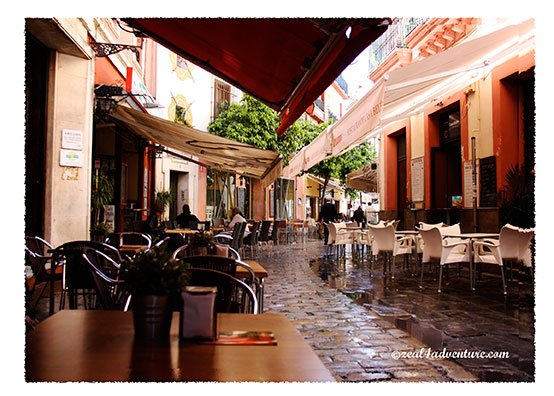
And after wandering through the barrio, we were back for more tapas, al fresco this time.

Cafe-Alianza

We settled for Café Alianza at the plaza of the same name.

Restaurant-Alianza

Satisfying early dinner in a lovely square, a great way to cap the day.
Useful Info:

Bodega Sta. Cruz
Calle Rodrigo Caro, 1A
+35 954 21 32 46
 
Café Restaurante Alianza
Calle de Rodrigo Caro, 9
+34 954 21 76 35
 
Royal Alcazar of Seville
Patio de Banderas
+34 954 50 23 24
 
Sangre Española
Calle Santa Teresa, 4
+34 954 22 72 26

Exploring Seville’s City Center

I found Anton at the front desk chatting with the guy in charge. He seemed impressed that Anton could pretty much carry a conversation in Spanish. Here’s a tip: if you can speak even just a bit of the local language, try to use it to the best of your ability not only to impress but because it is the fastest way to a local’s heart. This was actually how we found our way to Casa Jimio for some interesting tapas.

Calle-Jimio

Front desk guy pointed us there; it is only a short walk from our hostel, La Casa de la Luna and a stone’s throw away from Plaza Nueva. From there, he said, we could hop from one excellent tapas bar to another. Following his lead, we got ourselves a table at La Flor de Toranzo, also known locally as Casa Trifon.

lunchLeft to right: Salmorejo; olives; Jamon Iberico “bellota”

Apparently one of the more famous bars in Seville, it offers a traditional menu with specialty tapas like foie gras, marinated turkey breast, anchovy rolls…

sandwiches-of-La-Flor-de-Toranzo

Anchoas con leche condensada (anchovies with condensed milk) sandwich caught our eye and suffice it to say that we were so blown away with the flavor combination, we got another order even if we were attempting to do a tapas bar crawl, a time-honored tradition that has Spaniards walking, drinking, and nibbling almost daily.

Seville. This beautiful Andalusian capital sitting on the lower reaches of the River Guadalquivir oozes with charm.

The-Adriatico-BuidlingThe Adriatico Building

As with most European cities, historical monuments are scattered around but what sets Seville apart is its seductive atmosphere—starting with the Seville orange trees found in every corner perfuming the air with its blossoms, its passion for flamenco

condetria-fillelia

and its love for food.

One thing Seville does not have little of, is its tapas bars and restaurants. Being a city of eaters and drinkers, tapas joints abound in Seville.

food-lovers

A day for a true Sevillano starts with a pre-breakfast snack (around 7am), then followed by the real breakfast at 10am. A beer or a glass of vino accompanies lunch at 2pm and at 5pm, the Sevillano head to the bars to tide them over till supper at home, usually around 9pm.

With our bellies full from a very satisfying lunch (we only managed 2 bars),

people

we headed to Avenida de la Constitucion, taking in its vibrancy—people of all kinds (locals, tourists, students…)

old-and-new

fill the street, historical monuments and buildings share space with modern shopping malls,

tram

modern trams ply the cobbled avenida, and adding to the gaiety, music filled the air from a guy playing Besame Mucho in his accordion…

accordion-man

madness in a good way is what this major thoroughfare is.

The Cathedral and the Giralda

The-Cathedral-along-Avenida

The largest Gothic building in Europe sits in the heart of the city on Avenida de la Constitucion. The Seville Cathedral, its flamboyance an expression of the city’s wealth during the 15th century.

grandeur

Replacing what was once a grand mosque of the Almohad Dynasty in the 12th century, it dominates the city today with its splendor and size. The astonishingly large building breaks several size records, making it the largest church in the world when measured by volume.

cathedral-interior

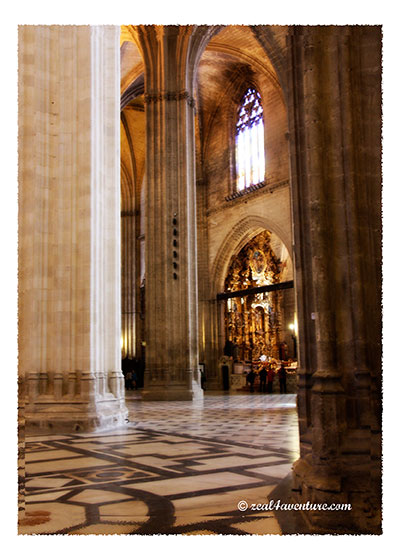
I was filled with awe at the massive size of the cathedral, at its sumptuous simplicity: the ceiling is about 13 stories high (42m) at the central nave and gilded in gold.

high-ceiling

The huge interior has a large collection of artworks from Murillo, Zurbaran, and Goya among others.

Its bell tower is called the Giralda. It was the large and beautiful minaret of the mosque, built to resemble that of the Koutoubia Mosque in Marrakech in Morocco.

giralda-2

Not only is it now the bell tower of the largest church in the world and the tallest landmark in Seville, it is also an excellent example of the cultural blend that molded Spain into what it is today.

giralda

It stands 343 ft. (105m) tall above sea level and instead of steps, a series of ramps were built so that the person calling the faithful to prayer (when it was still a mosque) could easily ride a horse up to the top.

view-from-the-giralda-2

Do make your way up the ramps because when you reach the top, you will be rewarded with panoramic view of Seville.

view-from-the-giralda

view-from-the-giralde

And after walking up the tower, we did as the Sevillanos always do; we found our spot and had an afternoon snack.

afternoon-meriendaUseful Info:

La Casa de la Luna
Calle Mariana de Pineda (near Puerta Jerez)
+34 954-218-389
 
La Flor de Toranzo
Calle Jimio 1-3
+34 954-229-315
 
Seville Cathedral
Avenida de la Constitucion

Experience Historic Marrakech

Alahu Akbar, god is great, come and pray,” an imam calls to the neighborhood over a loud-speaker, a familiar background noise by now.  In a different light, tradesmen standing outside his store enthusiastically calls for attention to sell with “Konichiwa,” “Ni Haw,” or a simple “Hello.”

wider-streets

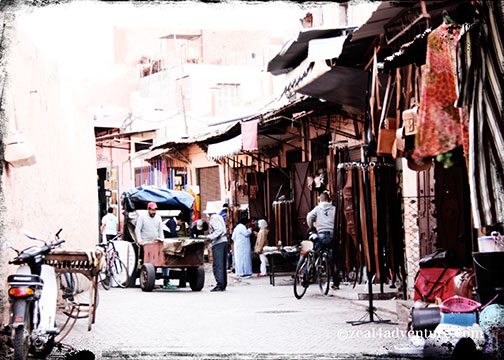
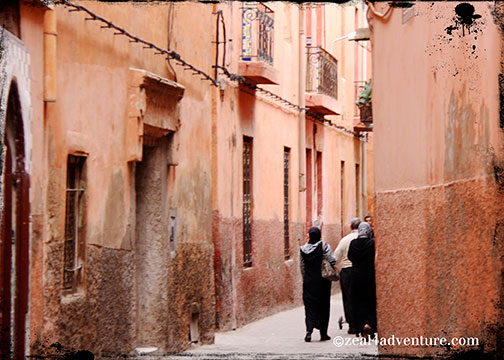
The medina, albeit still a maze, is not as intimidating as the one in Fes.  Weaving through the wider (relative to Fes’) streets,

leather-goods

I breathe in an assortment of aromas, the whiff of floral scent of potpourri; the intense smell of mix spices; the fragrance of shredded wood; the distinct odor of leather.

souks

various-metalworks

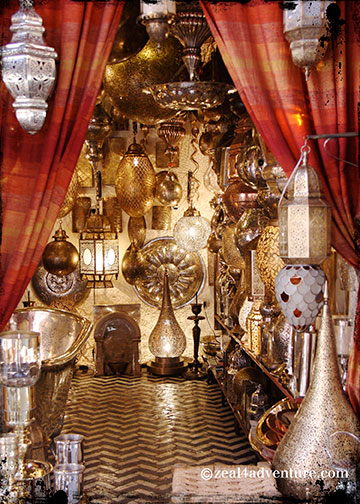
I notice that, in contrast to Fes, the medina is packed with shops intended for tourists.  Though having earned the reputation of being ruthless shopkeepers, I saw them as affable to foreigners often calling out a “Where you from?” and returning an “Ah Philippine, welcome to Morocco!”

woodwork-spectacle

Adding to this are tout craftsmen who invite curious people like us to be entertained, at the very least – I picked up a few of his merchandise.   🙂

Atlas-mountains

Marrakech also known as the “Red City” is a major city of Morocco, north of the foothills of the snow-capped Atlas Mountains.

red-walls

The city surrounded by blush colored walls, initially a fortress and a symbol of power, was constructed in the 12th century, the bricks used is a mixture of red mud and water from the Hazou plains.

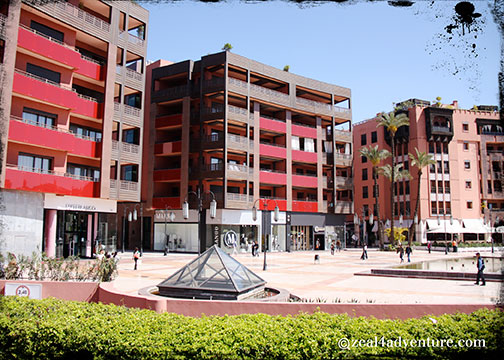
The city is divided into two distinct parts – the medina and the new European modern district called Gueliz or Ville Nouvelle.

guelizShops in Ville Nouvelle

This post will be all about the historic city, its market and its famous square.  Get lost in the narrow, labyrinth streets of this ancient rose-hued city and let it take you back in time.

Djemaa el-Fna

kotoubia

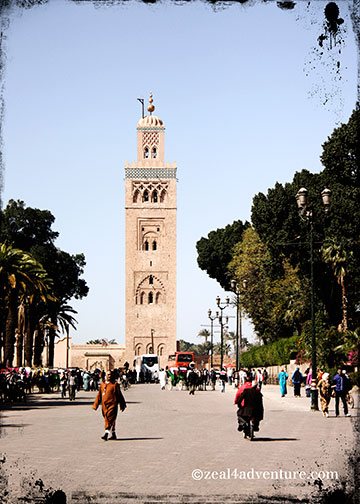
It is said that the minaret of Koutoubia mosque is the heart of Marrakech, but the soul of the city lies just 200 meters away, in the city’s market square and forum that has been in existence since its foundation.

jemaa-el-fna-from-terrace

Part of the UNESCO World Heritage Site, it owes its fame to its size, its unique atmosphere, and for bringing history to life daily.

snake-charmers

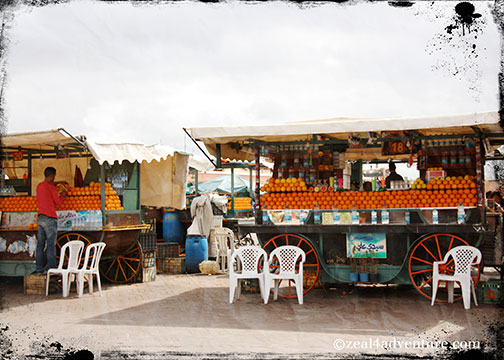
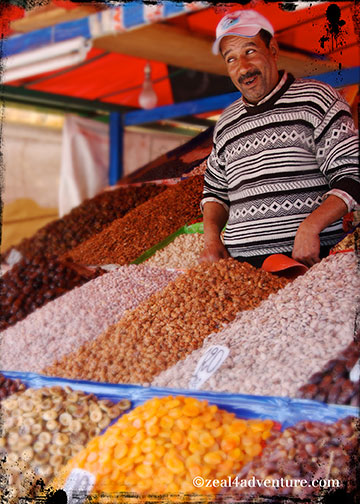
A medieval circus of musicians, dancers, snake charmers, story tellers… share the square with the fruit and juice stands.

juice-stand

dried-fruit-standChaotic yet in tune with the din of drumbeats and enthusiastic hollers.

extort

chilling

The way to experience it is to be among it all but the best way, I found out, is to watch the hustle of activities and be entertained by Djemaa el-Fna’s daily performers from any of the peripheral cafes and restaurants’ upper terrace.

terrace-cafe

It will be a show you don’t want to miss.

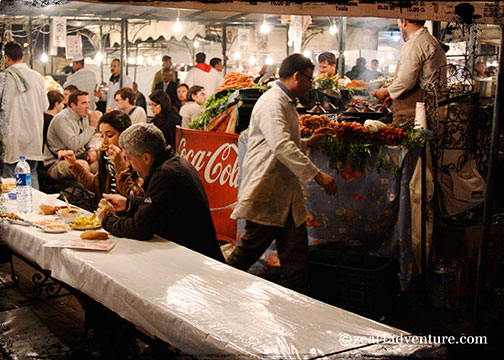
The show doesn’t peak until sundown when the square has a different life.  Rows of street stalls under giant white tents are set up each night not only for the tourists but are, in fact, local food jaunts, as well.

night-stalls

Food is prepared hot and fresh along the countless stalls serving authentic favorites one must have when in Morocco.  Head out one night and eat like the locals do and be serenaded with the sounds of live Moroccan music.  Troupes of Andalusian or Gnaoua musicians perform as part of a dinner show around the square.

bocadios-sandwich

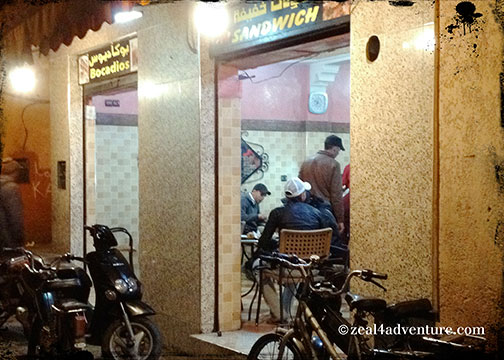
If the confusion seems to be overwhelming, look for small eateries serving these sandwiches they call bocadios.

bocadios

Amazing stuff found in the corners of the medina away from the disarray – it helps though if you can speak Moroccan or French.

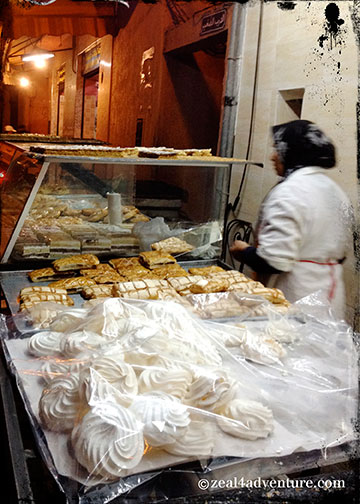
meringue

And just outside, a lady sells wonderful Moroccan sweets.  Perfect for dessert.

belly-dancing

Or escape to an evening of belly dancing, for a different kind of entertainment.

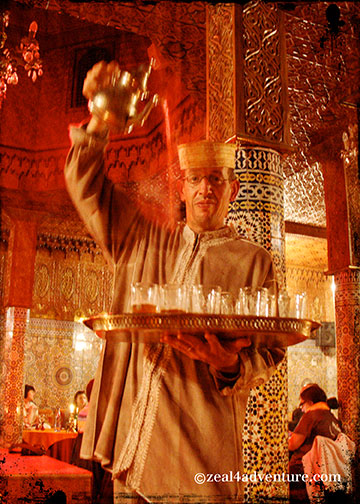
mint-tea-pouringThe proper way to pour Moroccan mint tea, as performed by our very gracious waiter.

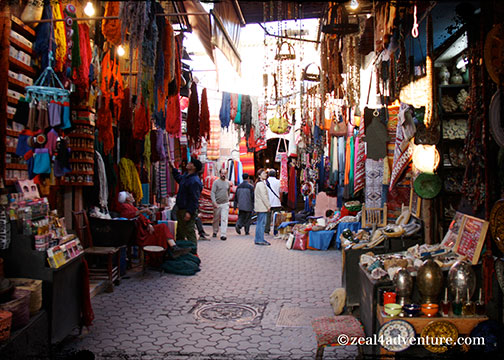
Wander and get lost around the endless maze of souks

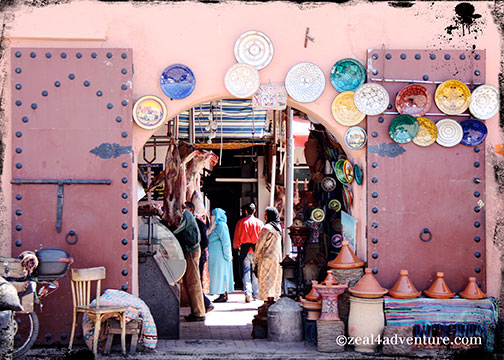
Marrakech has the largest traditional market in Morocco and it is so easy to spend your dirham at the seemingly endless maze of souks inside the medina.

souk-entrance

A network of souks begins on the north edge of Djemaa el-Fna and ends at the Ben Youssef Madrasa, comprising of alleyways of local shops full of character.

lighting-store

choice-boutiques

The further in you venture, the more fascinating they become from souks touting everything to the (more) sedate choice boutiques.

carpets

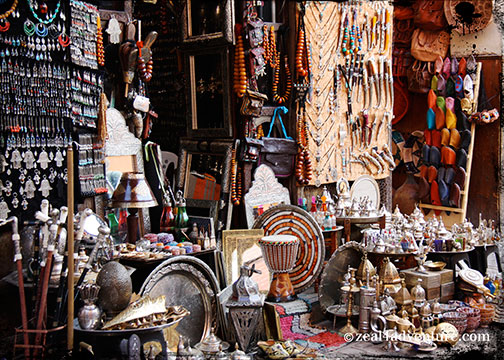
Find Berber carpets, pick up wood carvings, try on djellabas and babouches,

herbolist

or merely listen to herbalists sell you miracle cures for the aging, wander and get lost, then get help from a bunch of boys playing in the street… all these are part of the fun when exploring Marrakech’s medieval souks and winding streets.

Do all these because if you have not gotten lost, if teenagers have not offered to help you find your way out, if they didn’t hassle you for a tip, if you have not been greeted and lured by jovial merchants in five different languages, you have not experienced Marrakech.

Useful Info:

(Belly Dancing Show)
Restaurant Dar Essalam
170 Riad Zitoun Kedim
For Reservations: 212 (0) 5 24 44 35 20
 
Les Terrasses de l’Alhambra
3 Place Jemaa El Fna, Medina
212 (0) 5 24 23 75 70

Meet Adam

Gracious-HostCredits: Quickpage created by Reeta Treat using “4Ever” collaborative kit created for JessicaSprague.com

A stocky young man with glasses, wearing a baseball cap, leather jacket and track pants, Adam is not the typical Moroccan you see walking around the medina.  He talks with an American twang.  It is because although born in Morocco, he and his siblings grew up in Canada, Adam explains as he leads us to a beautiful riad he calls home.  He runs the riad that he renovated with his parents when they decided to go back home to Morocco.

bedroom

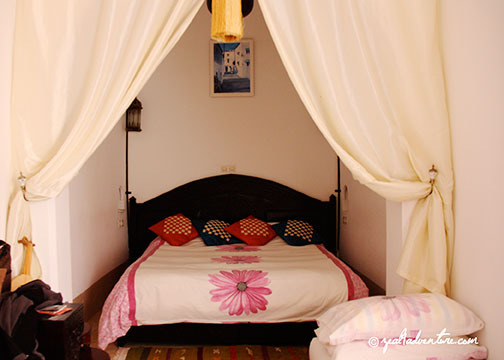
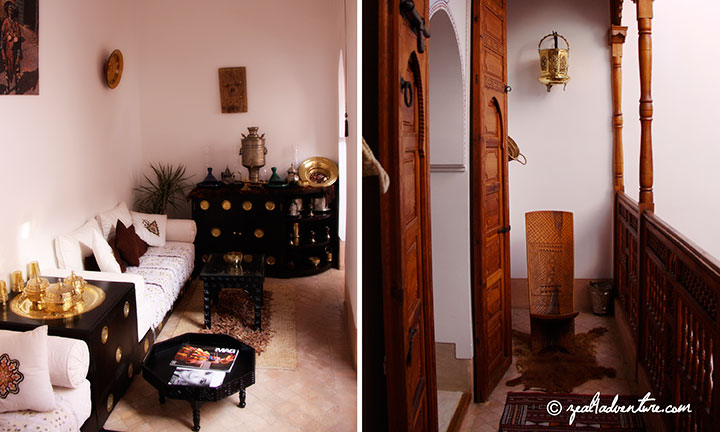
Riad Slawi is cozy with 4 rooms (5 actually if you count Adam’s room on the ground floor) tastefully designed in classic Moroccan fashion.

courtyard

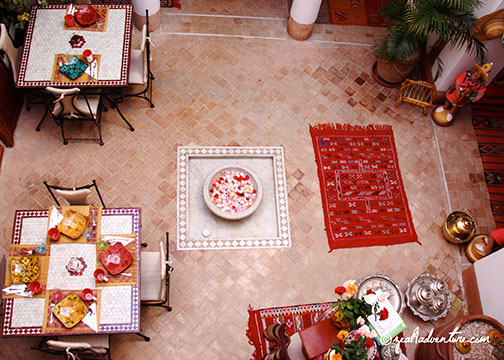
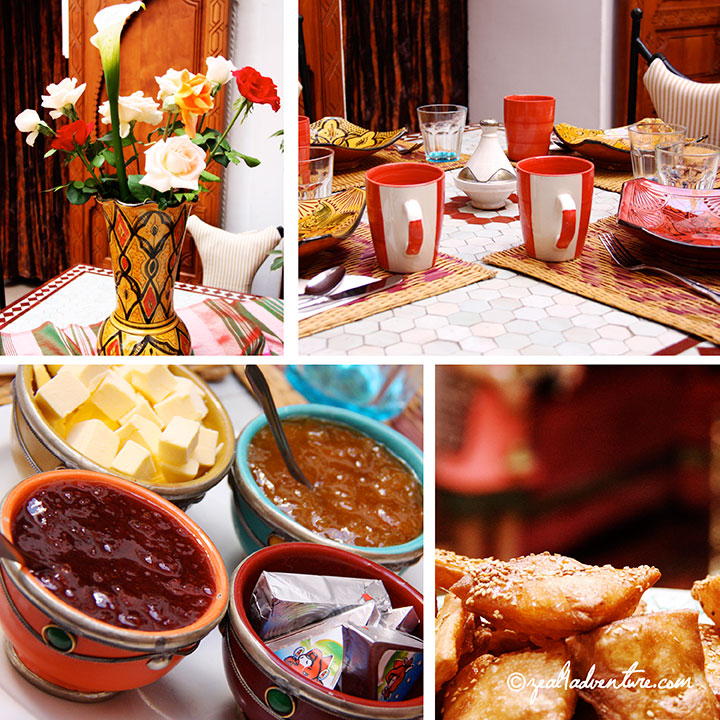
Typical of riads, it has a (well-lit) courtyard where we were served traditional, homemade breakfasts.

breakfast

But what I love best about the house is this stylish yet cozy sitting lounge where I would read and write in my journal on down time.

sitting-lounge

Hands down my favorite home in Morocco.

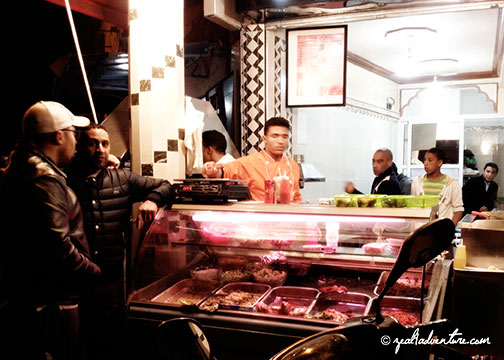
Famished from travelling all day, we asked Adam where we could get some local street food. He walked us back to the entrance of the medina and brought us to a hole in a wall where we had some awesome kebab.

hole-in-a-wall-eatery

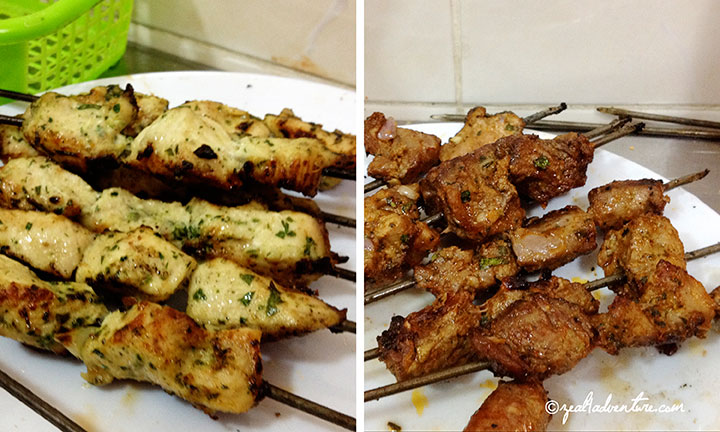
Surrounded by local folks, we sat on stools vacated by a group of teens and heartily ate the grilled beef, lamb and chicken Adam ordered for us.

kebab

This is what I call an awesome welcome to Marrakech.

The guidebooks and people we meet along the way were not remiss in cautioning us of touts, hustlers, scammers, etc.

Adam

Adam, however, more than cleared its reputation.  He graciously offered to buy train tickets to Tangiers for us, even booked us a hotel near the train station, He allowed us to  leave our bags with him while we spent 2 days in Essaouira, and arranged to have us picked up at the bus station when we returned.  His kind certainly makes up for all the Saids of Morocco.  Such a gracious host and a real darling, I must say.

Useful Info

Riad Slawi
92 Derb Almed el Borj
Sidi Ben Slimane, Kaa Sou
+212 524 37 7967

Takayama Morning Markets

It was cold. The warmth of the comforter and the futon was extremely inviting, but I was determined not to give in to the temptation because we are going to the market today.

Jinya-scenic-walk-3

Jinya-scenic-walk

Jinya-scenic-walk-4

So at exactly 6am, we ambled to the morning market nearer to the ryokan, watching the city wake up along the way.

setting-up

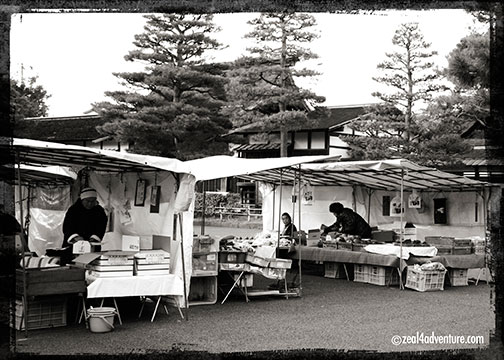
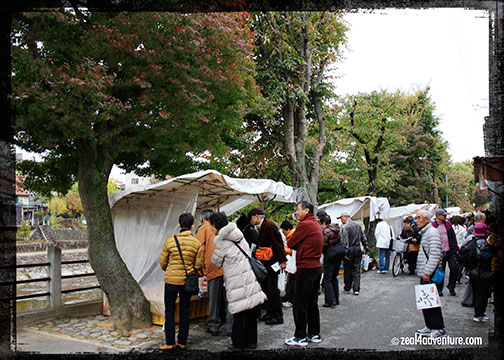
At the Jinya-mae market, we watched it come to life one stall at a time.

Jinya-morning-market

I expected to see a much bigger market than the neighborhood market it really is.

Jinya-produce

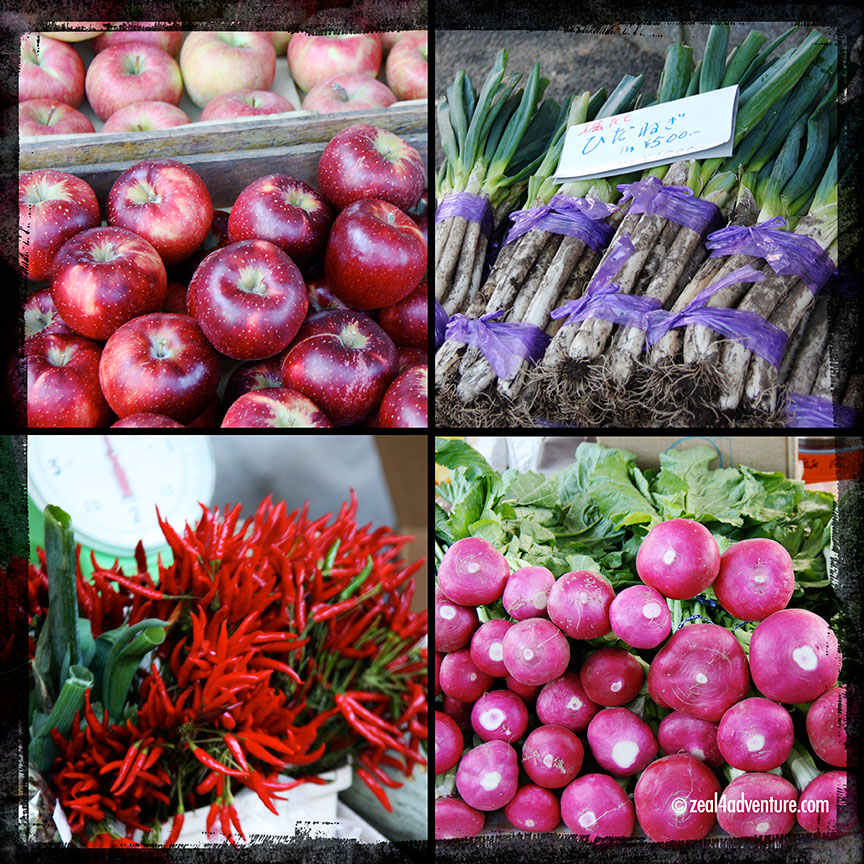
More of a farmer’s market, it sells a lot of foodstuff and produce from gigantic, gorgeous but expensive fresh fruits and vegetables to rice cakes and

Jinya-pickles

pickled vegetables all wanting to be purchased, begging to be noticed at the least. We eventually gave in to this corn – the sweetest and crunchiest I’ve ever had, and that is not an exaggeration.

sweet-corn

If we weren’t heading back to the ryokan for breakfast, I would have feasted on a few more.

breakfast

Thank God for good judgement as breakfast was lavish in Hakuun!

There are two morning markets (Asa-ichi) in Takayama that takes place daily from 6am till noon. The Jinya-mae morning market can be found in front of Takayama Jinya, a historical office building from the Edo Period said to be the only remaining building of its kind.

Not far from the Sanmachi district is Miyagawa morning market.

Miyagawa-morning-market

This market situated along the east bank of the Miyagawa River is bigger and I believe geared more towards the tourists.

Miyagawa-street-food

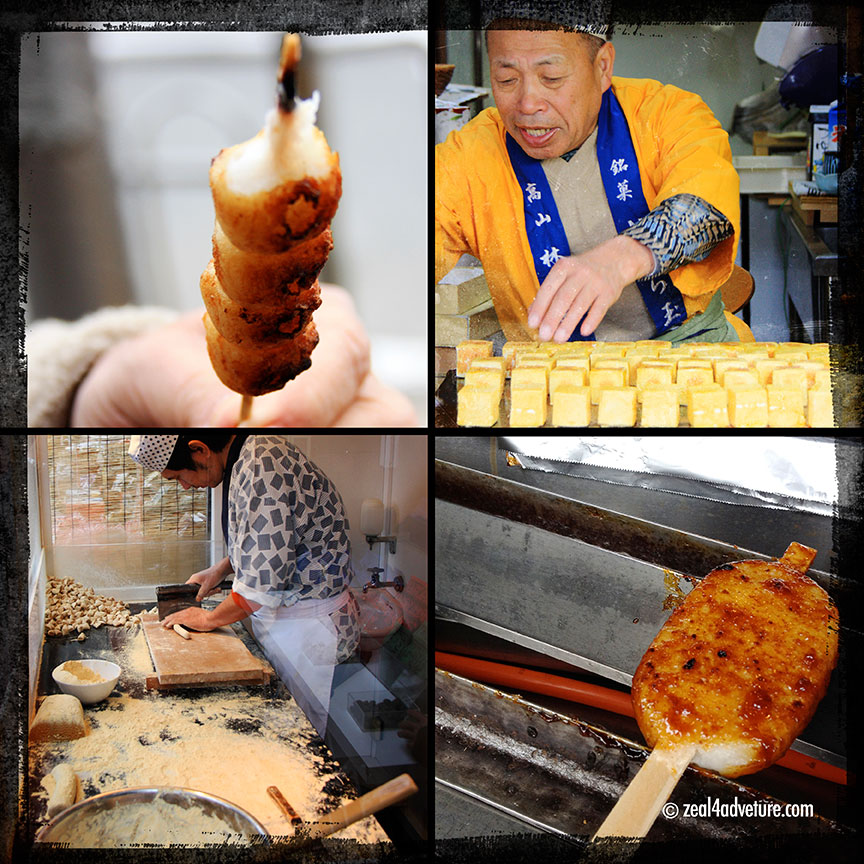
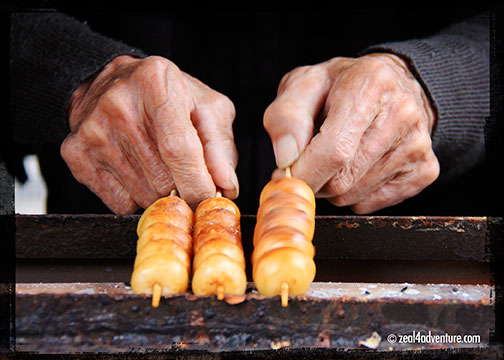
Stalls selling crafts of wood or fabric, souvenirs, street foods are spotted alongside fruits and vegetables stands.

Miyagawa-Sticky-balls

Interesting bites that had us so full but wanting more. So with these bites in tow, we explored the market.

Miyagawa-souvenirs

Here, tourists abound or maybe it was the time of the day – when the city was already fully awake and vibrant with life. Here, the lure to buy is much, much greater. Here, I looked, I tried some, I got a few to take home.

Old Town Splendor

It was close to lunch when we hailed a taxi at the Takayama Station to take us to Futurishizuka Hakuun, our Ryokan.  Not exactly at the center of town but Takayama is small enough to go around on foot anyway.  A leisurely walk to town took us about 15 minutes to Le Midi,

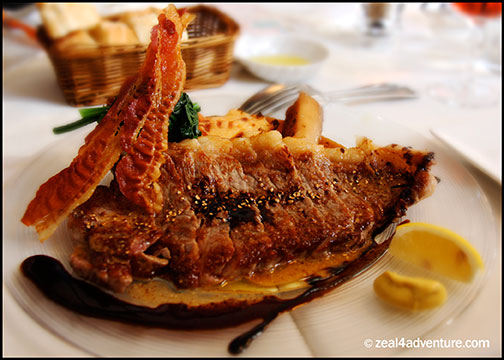
Hida-beef-at-Le-Midi

a French bistro recommended by the Ryokan, for an excellent Hida beef meal.

Lesser known internationally, the Hida region of Gifu Prefecture breeds top quality black cattle.  As a mater of fact, it was given the highest prize by the same award giving body that made Kobe beef what it is today.  And when in Takayama and the surrounding areas around the Hida region, a Hida beef meal should be high on your list.

But more than Hida beef, Takayama is visited for its famous historic townscape.

sanmachi-2

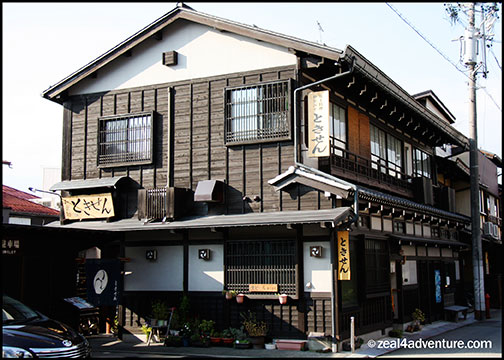
At the center of town, old wooden houses from the Edo period line both sides of the streets of Sanmachi imparting an atmosphere straight from the 19th century.

restaurant-in-traditional-building

Most of these are still private homes while a few are now shops, inns, and restaurants.

shop

Many museums, galleries, and even sake breweries likewise coexist with the old private houses in that quarter.  The three narrow streets that form Sanmachi are “Nationally Recognized Important Historical Preservation Areas”.

Takayama was the center of Japan’s timber industry and was known for its expertise in carpentry.  It is believed that carpenters from this town worked on palaces and temples in Kyoto and Nara hence the well-preserved quarter.

black-houses

The striking black luster of the buildings were the result of rich merchants back then trying to hide the use of the best but prohibited wood by painting their houses with soot, which in my opinion gave the city its character in the end.

traditional-buildings

The old town is where the action is; just a short distance from each other is where most of the attractions are.

scenic-town

And for the remaining portion of the day, we walked around town not exactly aimless but with a loose agenda, and this was where our meanderings took us:

Takayama Matsuri Yatai Kaikan

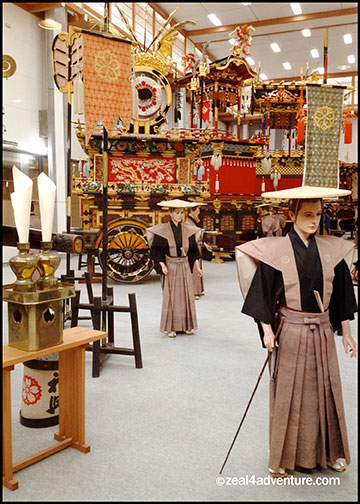
Ranked as one of Japan’s most beautiful festival, the Takayama Matsuri Festival always attracts a large number of spectators.  Magnificent floats are pulled through the streets of Takayama’s old town during the festival held every spring and autumn.

Festival Floats Exhiibit Hall

The Takayama Matsuri Yatai Kaikan or the Festival Floats Exhibition Hall displays on rotation four of the eleven floats used in the festival.  Many of the floats that date back from the 17th century are of gilded wood intricately carved with detailed decorative metalwork.  If not displayed in the hall, they are stored in tall storehouses called yatai-gura scattered quite noticeably around the town.  And these elaborately crafted floats are excellent showcases of the special skills the Hida-Takayama craftsmen are known for.

Sakurayama Hachiman Shrine

Sakurayam-shrine

Just across the exit of the exhibition hall is the shrine where the Matsuri Festival is held every year. It was built during the time of Emperor Nintoku and later made bigger than the original under Lord Kanamori.  It was officially established to protect a part of Takayama,

Sakurayama Nikko Kan

The Nikko Toshogu is a Shinto shrine in Nikko Tochigi Prefecture dedicated to the first shogun of the Edo Shogunate, Tokugawa Ieyasu, a UNESCO World Heritage Site.  The Shogunate spent a fortune and took 15 years to reconstruct the Toshogu.

sakurayama-nikko-kan

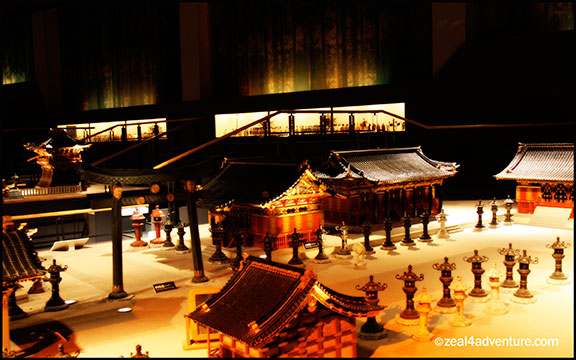
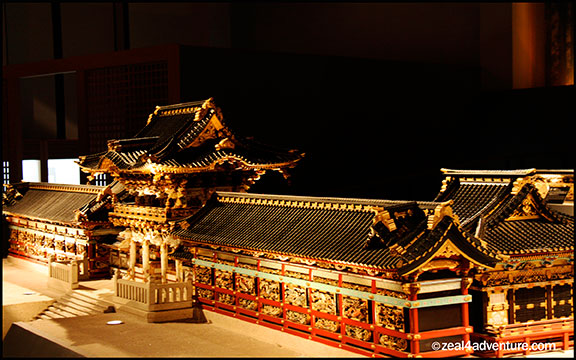
The entrance fee of the Matsuri Yatai Kaikan includes the Sakurayama Nikko Kan, a hall displaying the impressive one-tenth scale replica of the Nikko Toshogu.

sakurayama-nikko-kan-2

The replica, after the war, was shown in the United States and in a few decades later, in Japan.  Today, it has found its home at the Sakurayama Nikko Kan complete with a computerized lighting system programmed to alternate sunrise to sunset.  It is a beautiful exhibit not to be missed.

Yoshijma Heritage House

Built by master carpenter Nishida Isaburo in 1907.  The Yoshijima family was a prosperous merchant engaged in money lending and the production of sake in Takayama.  And it once had a building where sake once brewed and plastered storehouses where sake was stored before being sold.  Unfortunately, most of the structure has been torn down with only a small part remaining.

yoshijima-heritage-house

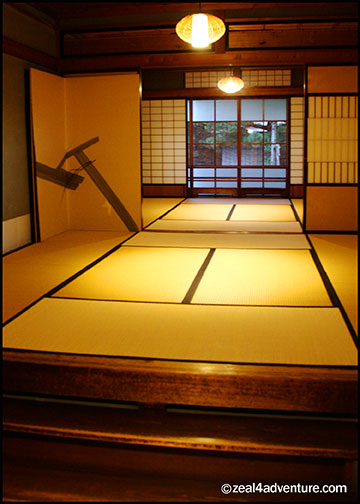
Well maintained, the house has posts and beams polished and smoothened through the years to a rich brown tone delivering a sense of sophistication to an already beautiful old house.  Another a must see.

As we continue to explore the town, we decided on an early dinner of Tonkatsu.

tonkatsu

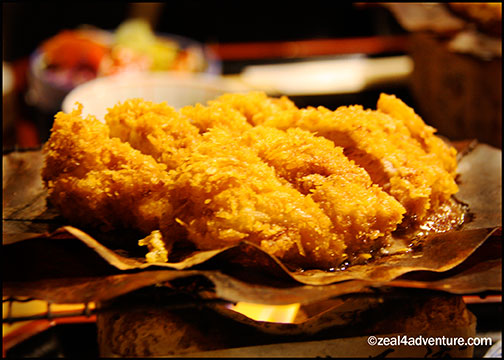
Unlike the ordinary Tonkatsu we know, this deep-fried breaded pork fillet is placed on top of a magnolia leaf with the sweet sauce heating on a dish with fire underneath. Tender and juicy, this meal was the perfect way to end the exploration.

Back in our Ryokan, we reveled at our ante room, put our feet up, and sipped our green teas.  We were in good spirits.

green-tea

I wasn’t planning to, but the hot tub was calling out to me.

Futarishizuka-Hakuun

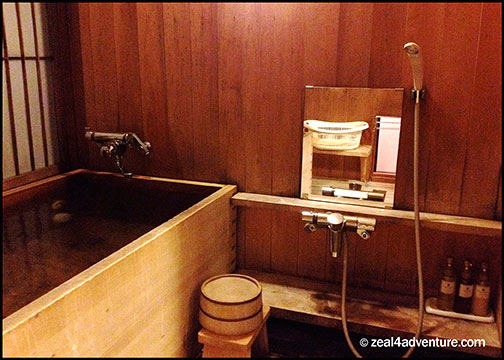
Nestled on a hill, Futurishizuka Hakuun is favored with a wonderful view of the city and mountain.  It has in some rooms a private hot bath.  And our tub has that view – beats having a massage any day.

hot-bath

As I lay down in the tub, I see steam all around, and I feel heat melting the weariness from all the walking done the past few days.  Knowing that there will be more, I welcome this tonight.  And maybe tomorrow too.

Useful Info:

Yoshijima Heritage House
Hours: 9:00AM to 5:00PM (Mar – Nov); 9:00AM to 4:30PM (Dec – Feb)
Closed on Tues (Dec – Feb, when Tue falls on a national holiday, it is open and is closed the following day)
Admission: ¥500
 
 
Festival Floats Exhibition Hall & Sakurayama Nikko Kan
Hours: 8:30AM to 5:00PM (Mar – Nov); 9:00AM to 4:30AM (Dec – Feb)
Admission: ¥820

The Train Station and The Ramen

steel-and-glass

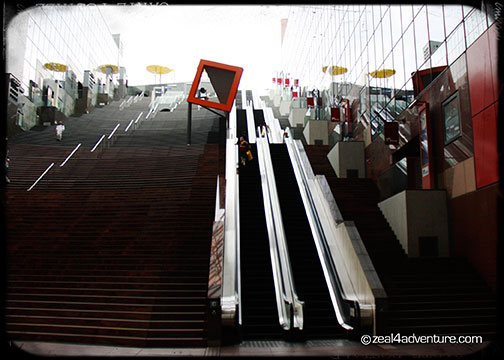
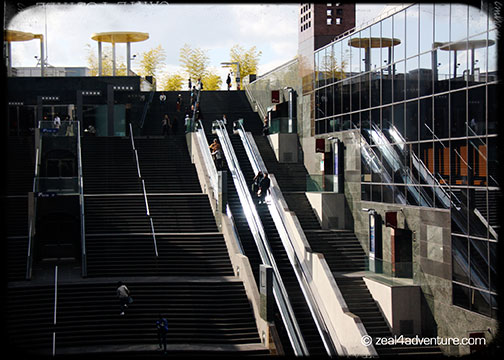
It is a feast of steel and glass with a concave shape interior that opens to the sky, massive with a 60-mile long atrium and 171 steps of stairs.

171-steps

With a hotel, a shopping mall, a movie theater, a department store, a food court and 2 tourist information centers in one roof, the Kyoto Train Station is a splendid example of modern architecture and somewhat controversial when it was built in the mid ‘90s.

hub

It is, nevertheless, a chic way to enter or leave Kyoto.

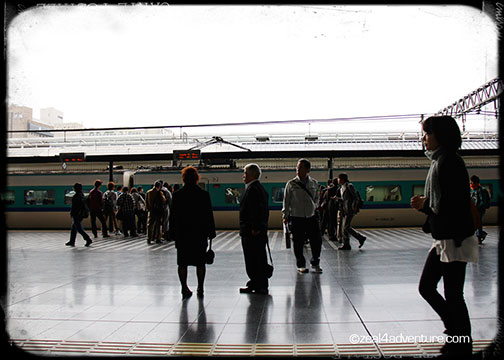
platform

It has an old fashion charm to it, but I am partial to traveling by train because not only is it easier on the budget, it is also less of a hassle and more flexible in terms of schedule.  However, purchasing train tickets and finding your way around stations can be confusing if English is not spoken fluently.  We believe that being there a day before to get the tickets and familiarize ourselves with the place makes it less stressful on the day itself.

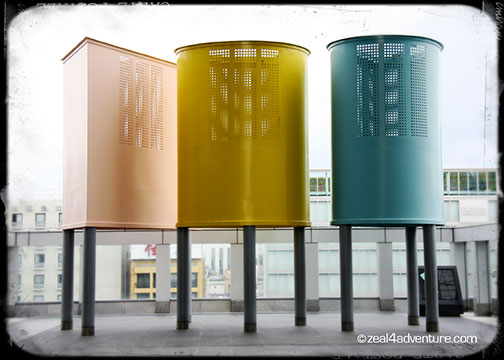
modern-art

And spending the morning at the incredible Kyoto Train Station was enjoyable.  With the essentials done and over with, we explored the building.

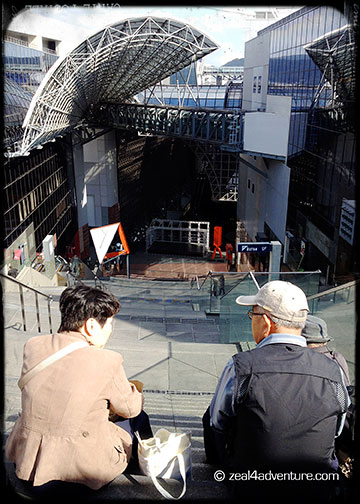
view-from-the-top

stairs

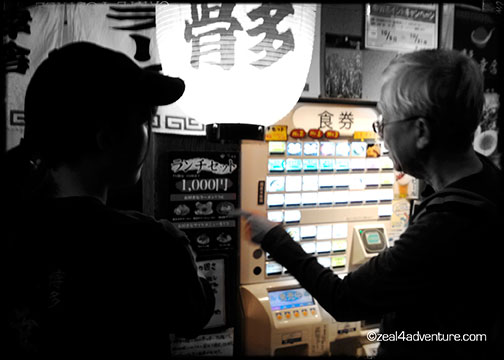
The Cube is a shopping mall that starts at the basement and goes all the way up to the 11th floor.  Kyoto Ramen Koji is on the 10th.  It is a “ramen alley” with seven different ramen shops and a coffee and dessert station.  Choosing a place was a daunting task – never thought ramen could be so complicated.  So we decided to choose the one with the longest line – the popular one, we thought.  The problem was we needed to order through a vending machine, which was all in Japanese.  The restaurant staffs do not speak English and therefore, could not explain the process.  We finally chose Hakata Ikkousha because:

a) girl at the door knew some English.

vending-machine

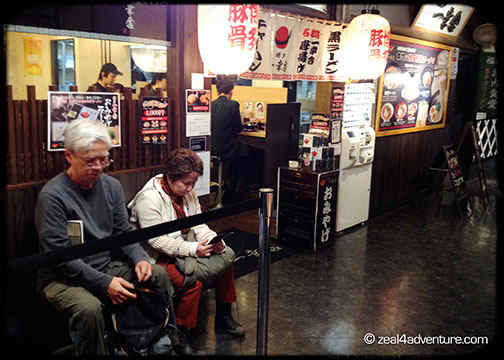
b) they had the 2nd longest line

waiting-in-lineIt was a long line… really!

c) it also has an English name and it promises to make people happy with their dish.

ikkousha

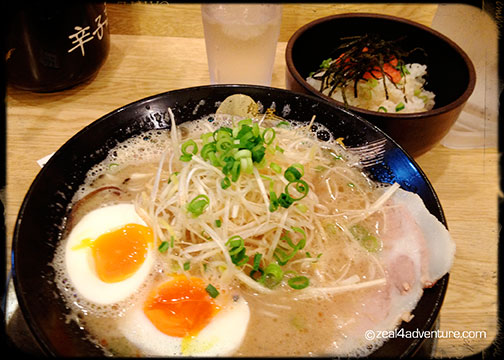
No way of comparing, we decided that the ramen we had was fantastic, though I could go without the rice with fish roe, which came as a set for  ¥1,000.

ramen

The pork literally melts in the mouth; the broth flavorful and the noodles are al dente.  It could be, by far, our cheapest meal in Kyoto.

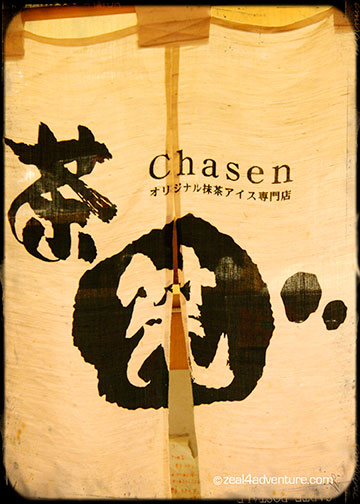
chasen

display

On our way out of ramen alley, I could hear the desserts at the corner ever so softly but persistently calling my name.

green-tea-ice-cream-with-mochi

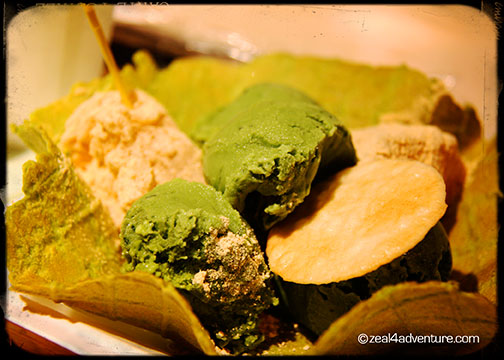
Thank you Chasen, for calling out to me.  You did not disappoint.  The mochi was exceptional.

Useful Info

Kyoto Train Station
901, Higashi-Shiokojicho (JR west)
1-3, Higashi-Shikoji Takakura0cho (JR central)

East of Kyoto: Of Geishas and Wagyu

Their world a mystery to me, my fascination with Geishas is one reason I am walking the streets of Gion.

Gion-Kaikan

To catch a Gion Odori  (a geisha dance performance) at the Gion Kaikan Theater was high on my list of priorities but the timing was off.  So the next best thing is to take the streets where they frequent.

Filled with shops, restaurants and ochoyas (teahouses), Gion is Kyoto’s most celebrated geisha district, Hanami-koji being the most popular.

hanamikoji

The street and side alleys are lined with beautifully preserved traditional wooden townhouses called machiyo.  Many of which have become expensive restaurants, serving Kyoto-style kaiseki ryori (Japanese haute cuisine), some even extend to dance performances by real maiko dancers.

The number of geishas has significantly declined in the last one hundred years and to catch a glimpse, of either a geisha, or a maiko is scarce today.   But despite the dwindling lot, the present “women of art” still practice her skill with the same diligence  as those before her.

More than my fascination with geishas, my obsession with food brought me to Gion.  The best way to get acquainted with the places I visit (in my opinion) is to immerse in the local cuisine.  Japanese food is no exception even if it is arguably among the top in the international cuisine scene these days.  In fact, as I ventured into its different cuisine, I went home with a deeper appreciation and understanding of its food.

shinbanshi-st

The cobbled-stoned Shinbanshi St. is a traditional building preservation area in Gion Shinbanshi.

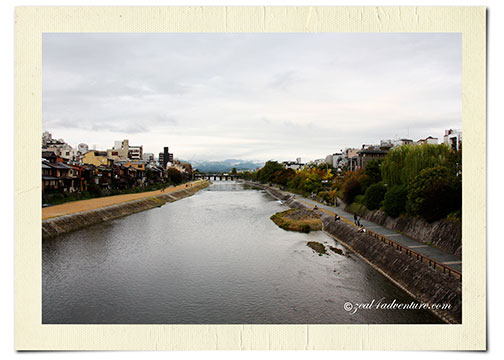
Shirakawa-canal

The street runs along the Shirakawa canal lined with willow trees, making it one beautiful, scenic stroll.

Shinbanshi

On top of that, it is a restaurant row, most of which overlooks the canal.  We walked the strip of high-end restaurants and teahouses partly in search for a place to dine that evening.

Kamo-River

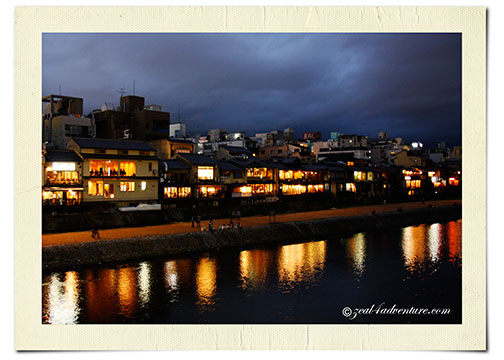
Pontocho-restos-overlooking-KamoPontocho restaurants overlooking the river transform into a spectacular view at night.

Across the Kamogawa river is Pontocho, said to be home to many geisha houses and traditional teahouses.

pontocho-alley-daytime

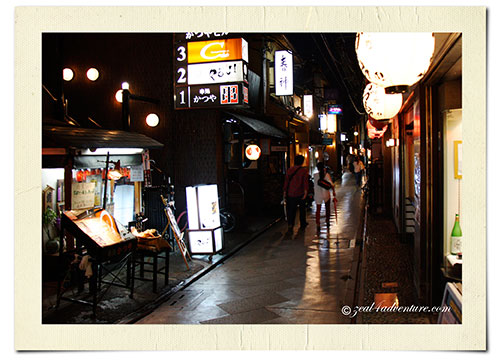
The alley that runs parallel to the Kamo River, once a leading geisha district, is also one of Kyoto’s most atmospheric dining areas.  It is packed with a range of dining options, including affordable Yakitori, traditional Kyoto cuisines and private establishments.

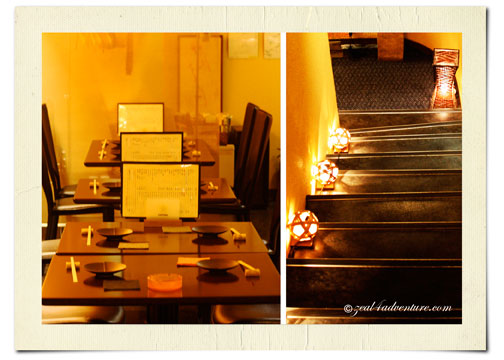
Kyoshikian-interior

In this small alleyway, we found Kyoshikian – a well-appointed teppanyaki-style restaurant that had us at Wagyu.

wagyu-dinner

So relieved that we opted to share, as I could only take so much of the beef sirloin due to its intense marbling.

sides

A side of grilled vegetables and seared tuna was perfect to tone down the richness.

pontocho-alley-at-night

Walking back to Shoji-dori, Gion’s main street, after a truly filling dinner, a woman totally made up and in full kimono regalia walked pass me.

shoji-dori-at-nightShoji-dori at night

“There’s a geisha”, I whispered to my friends.  “She could also be a maiko”, one whispered back.

Useful Info:

Gion Kaikan Theater
Address: 323 Gionmachi Kitagawa, Higashiyama-ku, Kyoto 
Tel: +81 75 561 0160
Transport: Gion Shijo Station
 
Kyoshikian
Address: 227 Nabeyamachi, Pontocho Shijo-dori Agaru, Nakagyo-ku, Kyoto 
Schedules:  click here

Basco Jaunts: Quaint Little Café in Naidi Hills

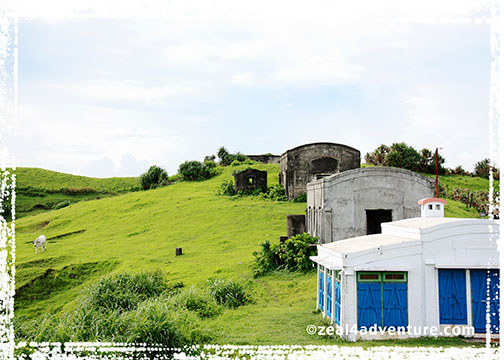
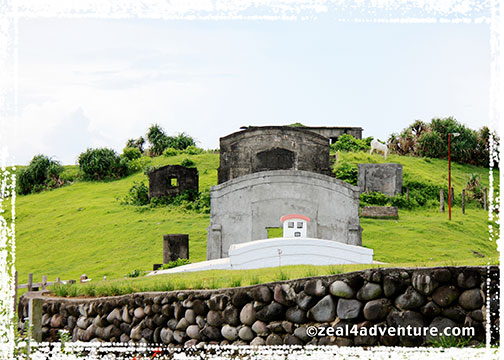
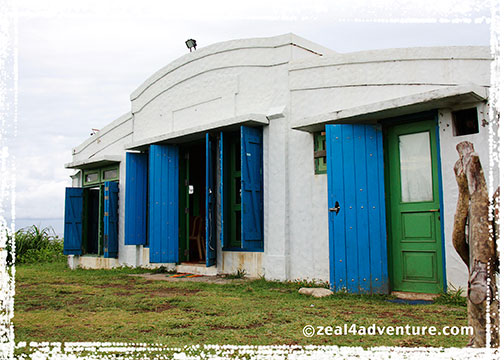
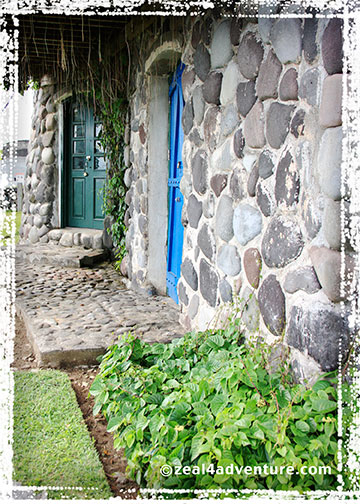
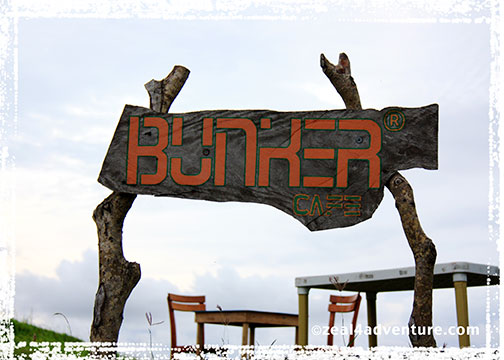
Heard one of the bunkers in Naidi Hills is now a café.  Open only after office hours because the owners have day jobs.  So I noted to self: to have dinner there tonight.

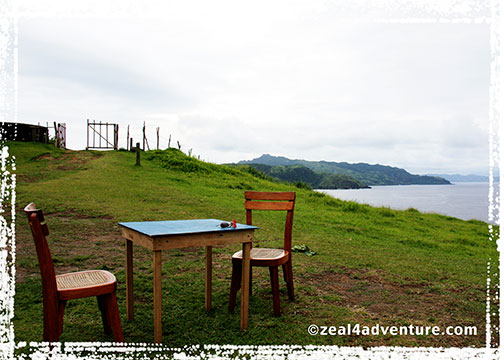
Naidi Hills used to just be a nice spot to chill and to watch the sunset, nothing there really except for the old bunkers.

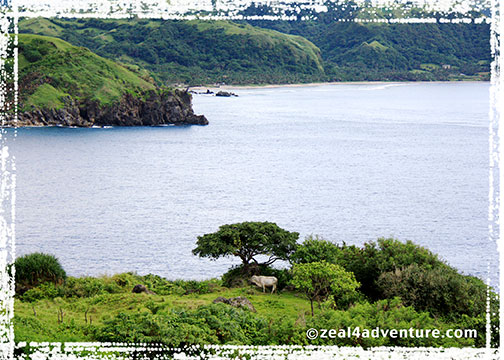
These bunkers, forever a fixture and leaves much to be desired, sits atop stunning rolling hills with equally stunning views of the town, Mt. Iraya and the bay.
They couldn’t have picked a better site for the café, finally making good use of the old bunkers.

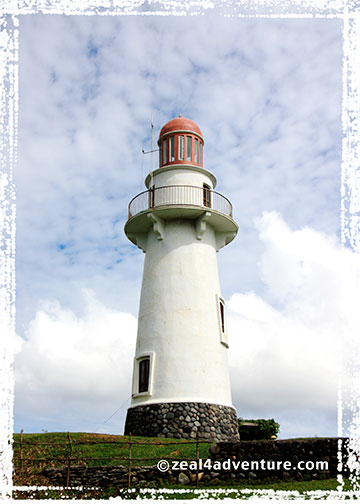
When I returned in 2007, a 6-storey lighthouse with a viewing deck on the 5th level was a new addition to the vicinity, adding to the Naidi Hills charm.

Built next to it is an Ivatan inspired house that was a guesthouse then, a souvenir shop now.  Guess the guesthouse didn’t pan out so well.

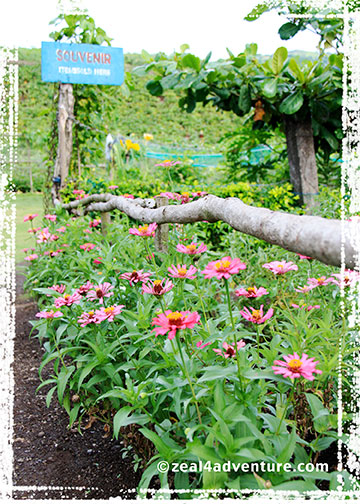
Rows of flowers grown near the house brightens up the already pretty site.
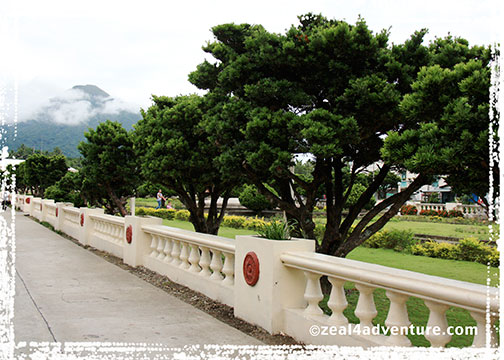
Mt. Iraya peeking out of the clouds as seen from the plaza.

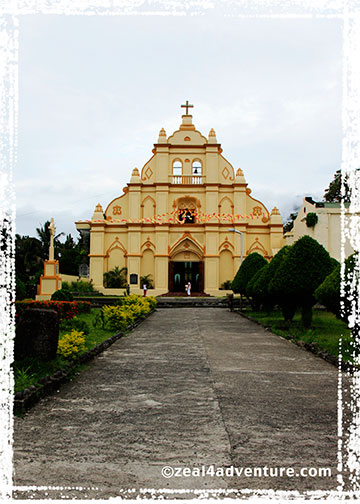
Just a short hike from the town plaza, we walked to dinner passing Sto. Domingo de Basco Church along the way.

Established in 1783, making it the oldest church in Batanes, and perhaps one of the oldest in the Philippines.
Having had our share of coconut crabs in Itbayat already, lobsters were next on our list.

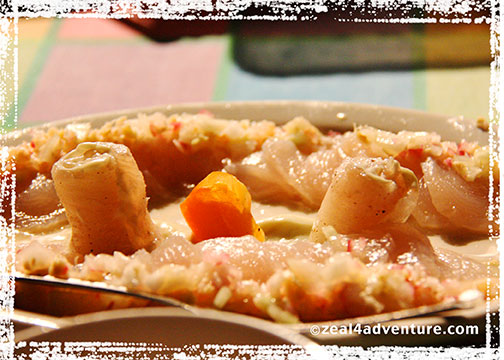
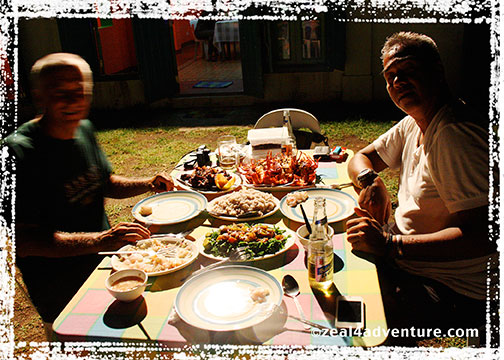
Kinilaw na isda (fish cooked in vinegar), a pako (fiddlehead fern) dish, and inihaw na baboy (grilled pork) complemented the sweet lobsters, steamed to perfection.

When evening came, the mood changed.  The spotlights puts focus on the dinner tables outside and the lighthouse dramatically provides the backdrop, bringing al fresco dining into a whole new level.

Setting ambience aside, Bunker Café is a delight in the food department.  Put pack ambience and the café is definitely a winner.

A must visit when in Batanes.

Rugged Mystique

Credits: Papers from SDynes Christmas Treasures Mini Kit; Frames from Orchbroom Mask and SDynes Christmas Elements; Floral Elements from Sahlin Studio’s Story Telling kit (sc flowers).

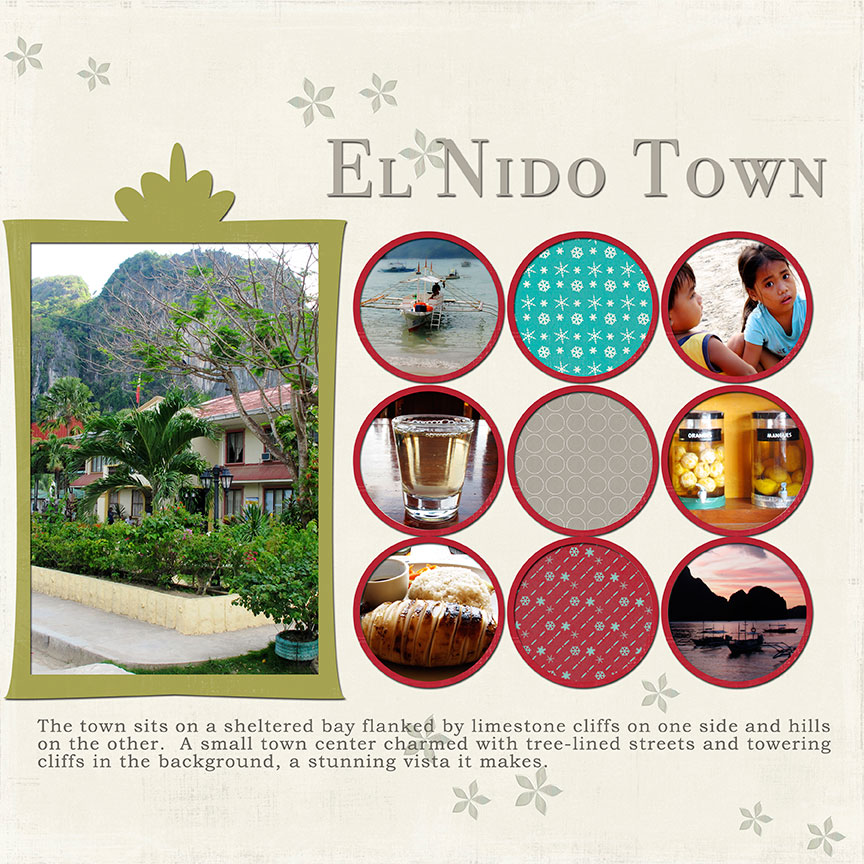
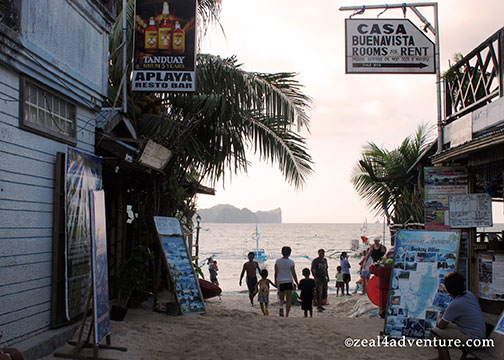
Bewitched.  I can’t seem to put my finger on it but there’s something about the town of El Nido that has left me enchanted from day one.

The town sits on a sheltered bay flanked by limestone cliffs on one side

and hills on the other.

A small town center charmed with tree-lined streets and towering cliffs in the background, a stunning vista it makes.

It still is very much a backpacker’s town really and it is this laid-back backpacking atmosphere that lured me back to many years after.

This charming fishing village in the northernmost tip of the Palawan Island often is referred to as the Last Frontier due to its rugged mystique.

How time flies… it took me 8 years to come back to one of my favorite towns.  I still remember many details of the town like it was yesterday.

El Nido has turned into a touristic town and I see that more exciting places to eat and stay have sprouted everywhere.

Madali ang pera dito kung masipag ka”, says Mang Rudy.

The opportunities are endless with tourism at the forefront here at El Nido and money can indeed be easy if one works hard.

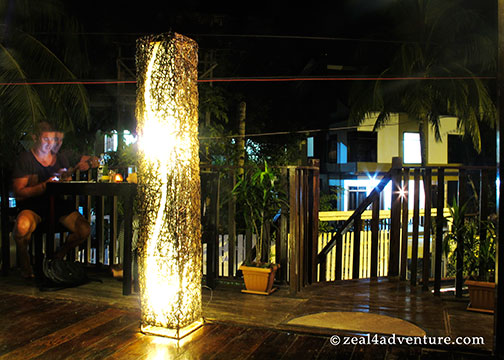
The one place I would have loved to go back to, we heard no longer serve meals on a regular basis.  Walking to town, we unwittingly found the house so we entered the half-opened gate and were told that they don’t accept dinner bookings anymore.  We took it as that.  On hindsight, I am not sure if they meant that they were already full for the holidays or that they weren’t serving because it was a holiday.  Having seen many closed shops and restaurants around Palawan during Easter break, this will not come as a  surprise.  Elm St Café is a cozy dining place set in a beautiful garden amidst a limestone backdrop so beautiful when lit at night.  The owners opened their home along Rizal Ave. and they served meals to those that booked in advance – usually a surprise, depending on what is found in the market that day.  They were the best of the best then, the ambiance and the element of surprise added to the experience and memories.
Not to fret though as there are a whole new lot to choose from, we barely scratched the surface, I think.  And here are some that caught our fancy.
La Salangane – more than the French meals, what had us coming back were the homemade flavored rums.

Ginger, apple, pineapple, pears, oranges, mangoes, even pepper –

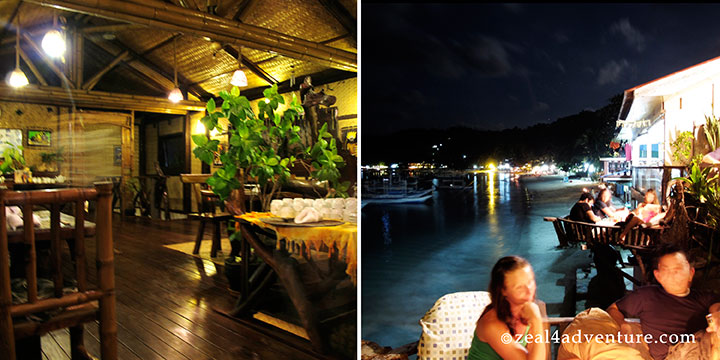
wonderful flavors enjoyed in a relaxed atmosphere overlooking the Cadlao Mountain by the beach.

Made more special over sunset.  This is THE place to get your espresso fix as well.  Many of the places in E Nido, including our inn, do not even serve brewed coffee.

The Alternative Restaurant – mentioned by some French tourists we met on our way to El Nido, we decided to give it a shot.  The place was not easy to find as it does not look like much from the outside and we kept walking pass it.

On the 2nd floor though where the restaurant is, the ambience turned to cozy.  At one side overlooking the sea, a few sunken oval seats resembling a “bird’s nest” overhangs the beach – a cool place to hang out and watch the sunset, me thinks but A wasn’t as confident that the structure would hold us so we got ourselves a table instead.

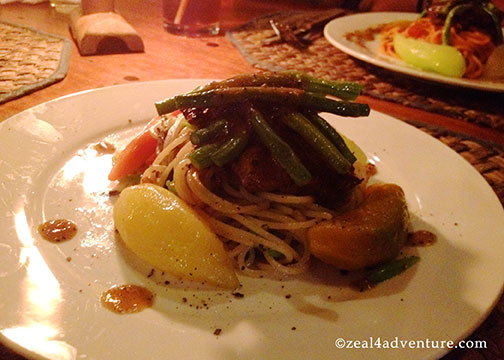
Despite an extensive vegetarian choice, I had a pork dish with pasta – and it was pretty good.  Our French friends though were not as impressed.

Altrové Trattoria – saving the best for last.  This Pizzeria was the best of the lot in my books.

Made of fresh dough and cooked crisp in a brick-oven is perhaps the best pizza in town.  The place, unlike The Alternative, is hard to miss.  Beautiful façade of a place, the brick oven proudly stands at the ground floor.

A nicely decorated second floor is where the dining area is.

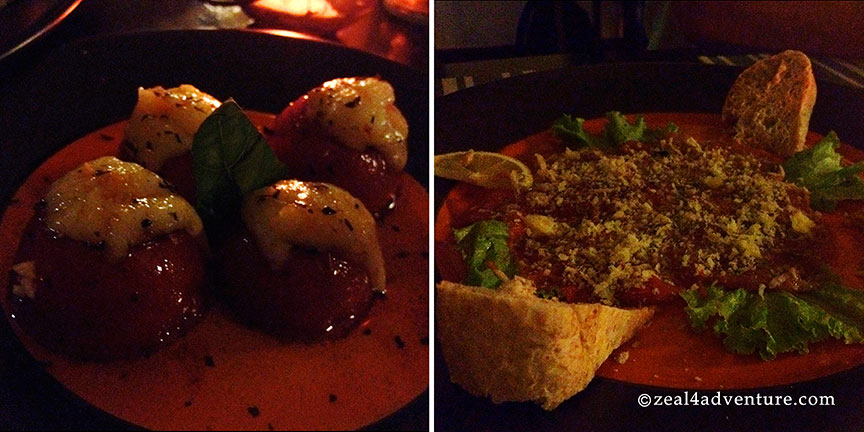
We enjoyed our antipasti of Beef Carpaccio and Baked Tomatoes on Mozzarella.

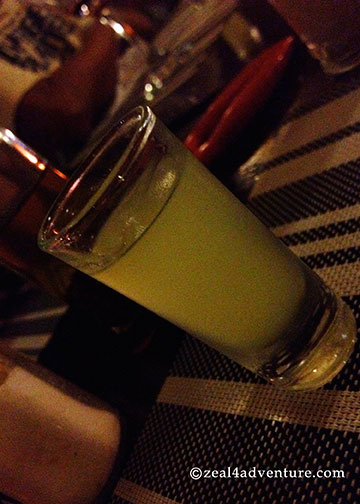
The seafood pasta dish was divine and the pizza, wonderfully crusty.  And to cap the evening… Limóncello, how can I not love this place?

To serve Limóncello in a town like El Nido, where electricity only runs from 2pm-6am, was impressive.  And this, dear friends, has easily landed on the top of my El Nido list, dining-wise.

Useful Info:

La Salangane
Serena Street
Barangay Buena Suerte
Contact:  (63) 916-648-6994
Email:  info@lasalangane.com
 
The Alternative
Serena Street
Barangay Buena Suerte
Contact:  (63) 917-896-3408
 
Altrove Trattoria
Hama Street
Barangay Masagana
Contact:  (63) 927-741-8016