Old Town Splendor

It was close to lunch when we hailed a taxi at the Takayama Station to take us to Futurishizuka Hakuun, our Ryokan.  Not exactly at the center of town but Takayama is small enough to go around on foot anyway.  A leisurely walk to town took us about 15 minutes to Le Midi,
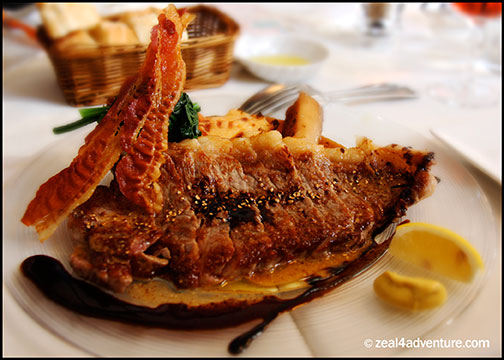
Hida-beef-at-Le-Midi

a French bistro recommended by the Ryokan, for an excellent Hida beef meal.

Lesser known internationally, the Hida region of Gifu Prefecture breeds top quality black cattle.  As a mater of fact, it was given the highest prize by the same award giving body that made Kobe beef what it is today.  And when in Takayama and the surrounding areas around the Hida region, a Hida beef meal should be high on your list.

But more than Hida beef, Takayama is visited for its famous historic townscape.

sanmachi-2

At the center of town, old wooden houses from the Edo period line both sides of the streets of Sanmachi imparting an atmosphere straight from the 19th century.

restaurant-in-traditional-building

Most of these are still private homes while a few are now shops, inns, and restaurants.

shop

Many museums, galleries, and even sake breweries likewise coexist with the old private houses in that quarter.  The three narrow streets that form Sanmachi are “Nationally Recognized Important Historical Preservation Areas”.

Takayama was the center of Japan’s timber industry and was known for its expertise in carpentry.  It is believed that carpenters from this town worked on palaces and temples in Kyoto and Nara hence the well-preserved quarter.
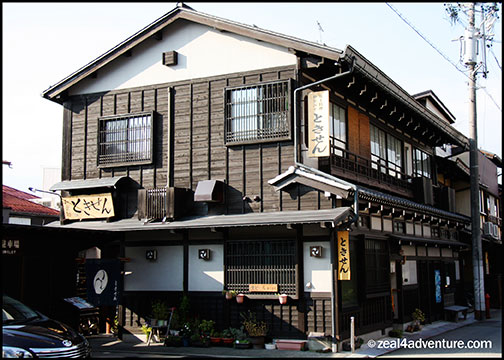
black-houses

The striking black luster of the buildings were the result of rich merchants back then trying to hide the use of the best but prohibited wood by painting their houses with soot, which in my opinion gave the city its character in the end.

traditional-buildings

The old town is where the action is; just a short distance from each other is where most of the attractions are.

scenic-town

And for the remaining portion of the day, we walked around town not exactly aimless but with a loose agenda, and this was where our meanderings took us:

Takayama Matsuri Yatai Kaikan

Ranked as one of Japan’s most beautiful festival, the Takayama Matsuri Festival always attracts a large number of spectators.  Magnificent floats are pulled through the streets of Takayama’s old town during the festival held every spring and autumn.
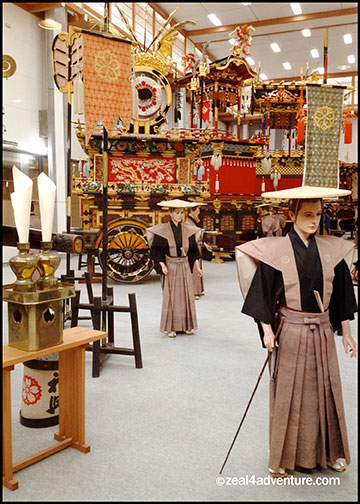
Festival Floats Exhiibit Hall

The Takayama Matsuri Yatai Kaikan or the Festival Floats Exhibition Hall displays on rotation four of the eleven floats used in the festival.  Many of the floats that date back from the 17th century are of gilded wood intricately carved with detailed decorative metalwork.  If not displayed in the hall, they are stored in tall storehouses called yatai-gura scattered quite noticeably around the town.  And these elaborately crafted floats are excellent showcases of the special skills the Hida-Takayama craftsmen are known for.

Sakurayama Hachiman Shrine

Sakurayam-shrine

Just across the exit of the exhibition hall is the shrine where the Matsuri Festival is held every year. It was built during the time of Emperor Nintoku and later made bigger than the original under Lord Kanamori.  It was officially established to protect a part of Takayama,

Sakurayama Nikko Kan

The Nikko Toshogu is a Shinto shrine in Nikko Tochigi Prefecture dedicated to the first shogun of the Edo Shogunate, Tokugawa Ieyasu, a UNESCO World Heritage Site.  The Shogunate spent a fortune and took 15 years to reconstruct the Toshogu.
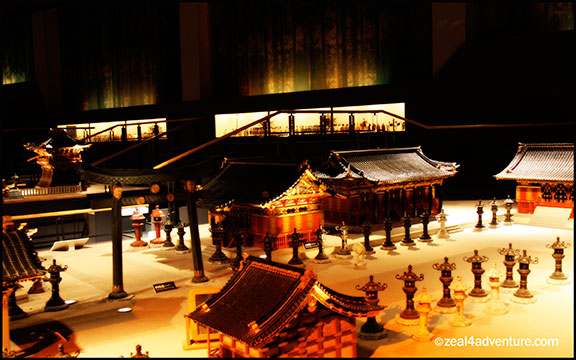
sakurayama-nikko-kan

The entrance fee of the Matsuri Yatai Kaikan includes the Sakurayama Nikko Kan, a hall displaying the impressive one-tenth scale replica of the Nikko Toshogu.
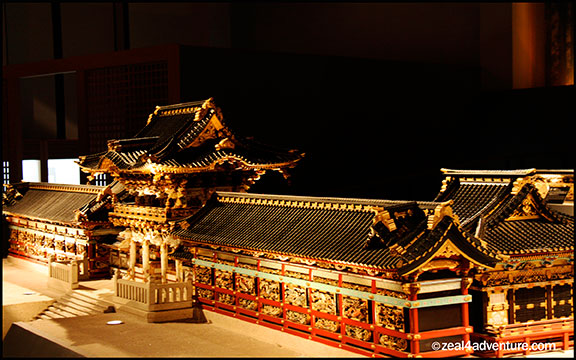
sakurayama-nikko-kan-2

The replica, after the war, was shown in the United States and in a few decades later, in Japan.  Today, it has found its home at the Sakurayama Nikko Kan complete with a computerized lighting system programmed to alternate sunrise to sunset.  It is a beautiful exhibit not to be missed.

Yoshijma Heritage House

Built by master carpenter Nishida Isaburo in 1907.  The Yoshijima family was a prosperous merchant engaged in money lending and the production of sake in Takayama.  And it once had a building where sake once brewed and plastered storehouses where sake was stored before being sold.  Unfortunately, most of the structure has been torn down with only a small part remaining.
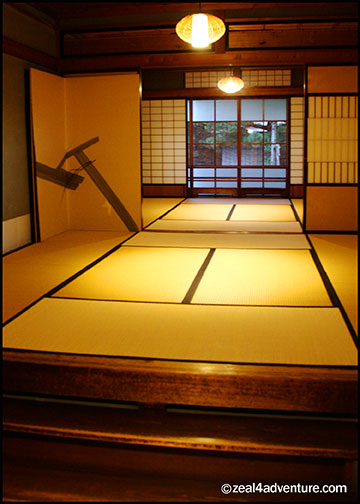
yoshijima-heritage-house

Well maintained, the house has posts and beams polished and smoothened through the years to a rich brown tone delivering a sense of sophistication to an already beautiful old house.  Another a must see.

As we continue to explore the town, we decided on an early dinner of Tonkatsu.
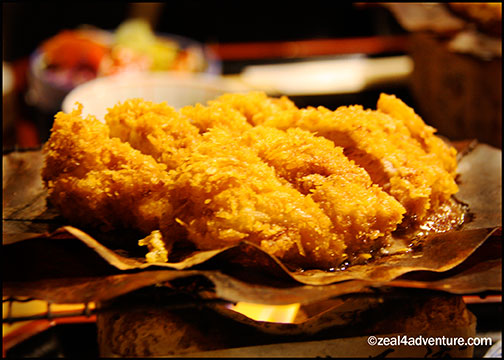
tonkatsu

Unlike the ordinary Tonkatsu we know, this deep-fried breaded pork fillet is placed on top of a magnolia leaf with the sweet sauce heating on a dish with fire underneath. Tender and juicy, this meal was the perfect way to end the exploration.

Back in our Ryokan, we reveled at our ante room, put our feet up, and sipped our green teas.  We were in good spirits.

green-tea

I wasn’t planning to, but the hot tub was calling out to me.

Futarishizuka-Hakuun

Nestled on a hill, Futurishizuka Hakuun is favored with a wonderful view of the city and mountain.  It has in some rooms a private hot bath.  And our tub has that view – beats having a massage any day.
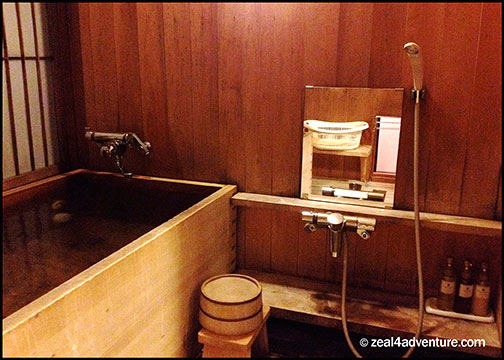
hot-bath

As I lay down in the tub, I see steam all around, and I feel heat melting the weariness from all the walking done the past few days.  Knowing that there will be more, I welcome this tonight.  And maybe tomorrow too.

Useful Info:

Yoshijima Heritage House
Hours: 9:00AM to 5:00PM (Mar – Nov); 9:00AM to 4:30PM (Dec – Feb)
Closed on Tues (Dec – Feb, when Tue falls on a national holiday, it is open and is closed the following day)
Admission: ¥500
 
 
Festival Floats Exhibition Hall & Sakurayama Nikko Kan
Hours: 8:30AM to 5:00PM (Mar – Nov); 9:00AM to 4:30AM (Dec – Feb)
Admission: ¥820

Basco Jaunts: Radar Tukon and its Surroundings

Basco, despite being the smallest province of the Philippines, offers some of the best scenic and cultural landscapes in the country.

Often touted as the Ireland of Asia, this so-called last frontier is blessed with endless rolling hills, rugged terrain and spectacular views of both the China Sea and the Pacific Ocean.  Perhaps due to its isolation, tradition and culture remain pretty much intact.

Our hired tricycle meandered through the streets of Basco, taking us to some uphill climb through scenic pastureland, the sea and many hills.

We arrived at Radar Tukon where even the locals still love to hang.

What used to be a weather station in the American era houses Basco’s radar station today.

Up in a hill, the 360° view is awesome, perhaps one of the best in the island.

Not only is it a lovely sight and contributes much to the beauty and uniqueness of Batanes,

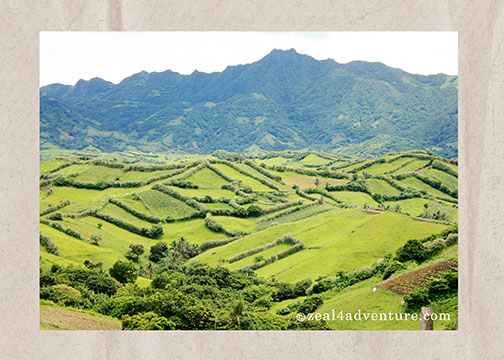
these hedgerows are there with a few more purposes.

They are there as a windbreaker, for land delineation, it prevents soil erosion, and sometimes serves as nesting ground for migratory birds.

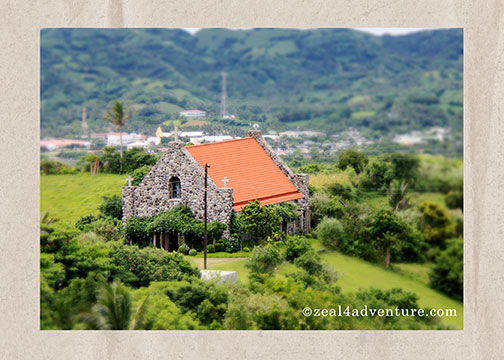
The Tukon Church can be seen from the Radar Station.  Although we didn’t get to see it up close, much less enter it, I believe that the interior is as lovely as the exterior.

Inspired by the Ivatan stone house, this church was a recent project of the Abads, not only to give the communities nearby a church where they won’t have to walk far, but a wedding gift as well to his daughter who got married there recently.  The church, I read, have beautiful stained-glass windows, a ceiling of angels painted by the students of the late Pacita Abad and the best thing about this church is the spectacular view of both the South China Sea and the Pacific Ocean wherever one is seated.

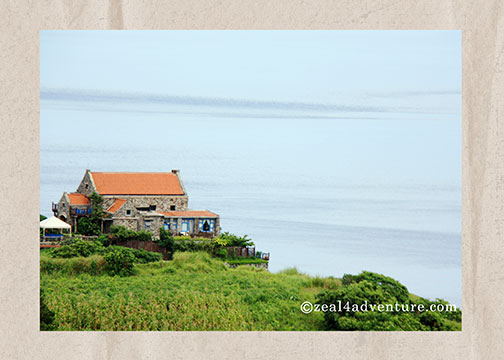
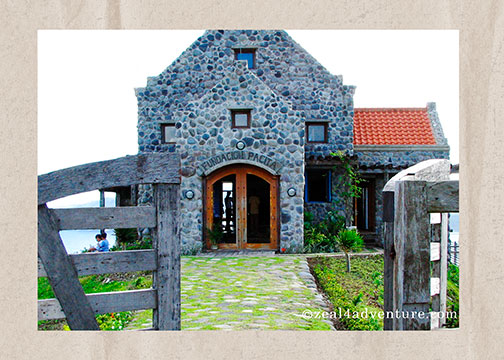
Not far from Tukon church is a house sitting on top of a hill, overlooking the Pacific Ocean.

It was once the home-studio of the late Pacita Abad, an internationally acclaimed artist and sister to current Budget Secretary Florencio “Butch” Abad, now turned nature lodge.  Refurbished by Butch in her memory, the lodge is not only a pretty sight from afar.

It was in 2006 that I was there, it was still the art and culture center of the Jorge, Aurora and Pacita Abad Foundation.

Her works hanged on the walls and the design of the house, I suspect, characterizes that of the owner.  Today, I read that works of famous Filipino artists and emerging young Ivatan artists grace the walls of the rooms.

The view from the balcony in 2006.

Nature lodge aside, Fundacion Pacita is also the headquarters of the Pacita Abad Center for Arts.  The proceeds earned from the operations supports various projects, one of them is the restoration of Ivantan houses.

More of Basco in upcoming posts.  Stay tuned.

Itbayat: On a Hunt for Halo-Halo

It was the middle of May; the blistering heat was rapidly zapping my energy… I wanted halo-halo.  We knocked on Nanay Laura’s house as her canteen was closed.

A keepsake with Nanay Laura.

Her charming Larez Carinderia beside her house was a favorite back then.  Who can forget her cooking?

A retired municipal treasury officer, Nanay Laura is an exceptional cook.

In my opinion, she makes the best Turmeric (or Yellow) Rice  (a Batanes Specialty) in the whole of Batanes.

She whips up creative dishes with the limited ingredients Itbayat has to offer her.  In 2006 and again last May, we were witness to that.

She was in Raele that day and didn’t have halo-halo.  I asked to see the twins instead. I remembered them from 6 years ago and was curious to see how they have turned out.

Now in their “tweens”, they have become beautiful, confident young girls.  We asked where we might find some halo-halo; Eva Marie offered to bring us there.

Each store we went to would apologetically shake their heads.  Ok, what about some ice cream then?  No success in that area too, although there is a store that actually has a soft serve machine but they weren’t serving any that day.

It is, after all, the farthest inhabited island of the north. Supplies don’t come easily, and often, especially if the falowa from Basco don’t come.

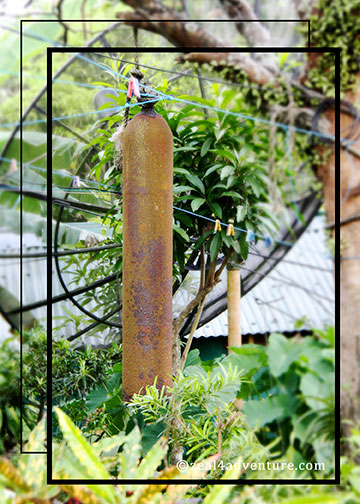
This bell is used to tell the town if the boat from Basco has left or not.

In Mayan Centro, Itbayat’s town center, a few trucks would occasionally ply the streets as townsfolk use these as transport to other towns.

There are those also who would go around in bikes, but these are rare.  People walk everywhere, to other towns even, if trucks aren’t available.  Eva Marie mentioned that she walked all the way to Raele yesterday where there was a fiesta.  She said she walked for hours and was so tired and bored.  I asked her how many hours; she shrugged and replied, “hindi ko alam, basta matagal, I don’t know, all I know is it took a long time”.

School break means that the kids are free to play, if not helping out the family.

Some of us even joined (or shall I say disrupted) their game.

Eva Marie likes hanging out with us.

Walking around town, she provided nuggets of information about her town.  Six degrees of separation definitely apply here.  Everyone is an aunt, uncle or a cousin.

She has ten siblings (eight, six years ago). She has been to Basco but has never left Batanes even if her mother works in Manila.

Along with some of her siblings, she stays with her grandmother, Nanay Laura.

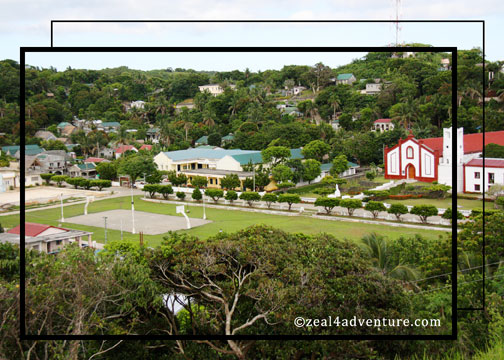
Mayan Centro holds its own appeal, set in a bowl between hills.

The town center from the PAGASA tower.

At the centro, a basketball court and an open field play center-stage.

It is perhaps the only form of leisure in Itbayat; children of all ages are often seen playing in the field.

Across Larez Carinderia is an Old Spanish church, Sta. Maria Immaculada and the school beside it.  On one side is the municipal office

and on the opposite end of the field is its guesthouse, where we previously stayed.

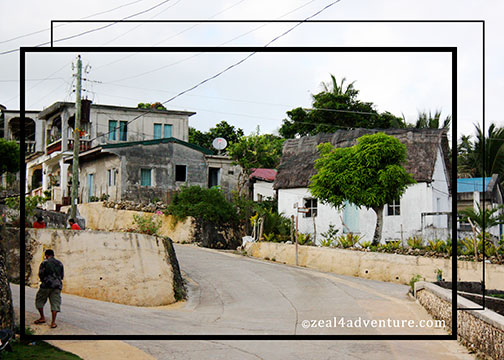
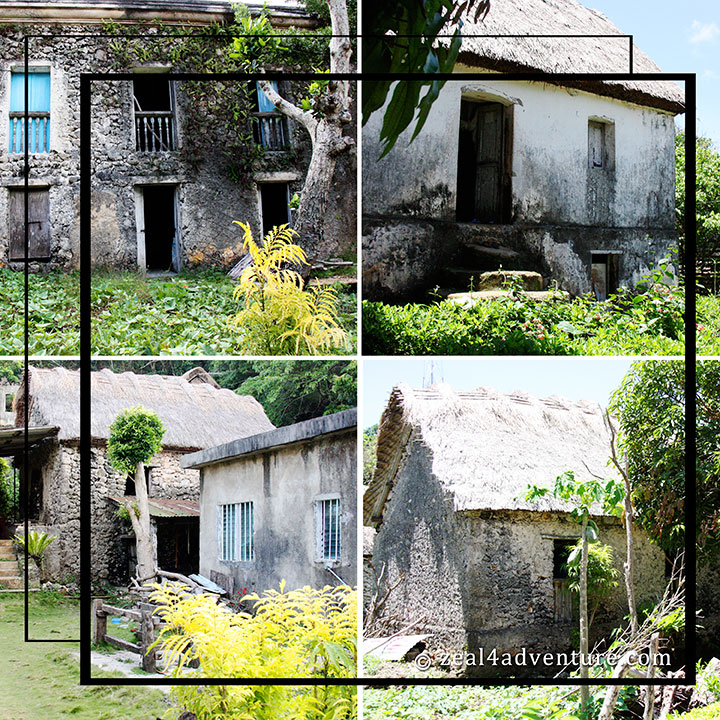
While the town has many traditional Ivatan houses with its cogon roofs, many opted to use galvanized roof.  Cheaper upkeep and it’s less prone to fire, says Nanay Cano.

But the Itbayats love their gardens.

An Arius Tree, indigenous to Batanes. 

No matter the type of house they may have, their gardens are always verdant, some are even quite creative.

We practically roamed the entire town center in search of something cold and alas, we found a heat-quenching treat in some ice candy.

Nanay Cano and Coconut Crabs

Faustina Cano, Tina or simply “Nanay” is the woman to call when you’re headed to Itbayat.  She can arrange almost anything.  We needed a boat to take us to the farthest island of Batanes – an idea out of the ordinary that turned to fruition through Nanay’s help.   A retired teacher, Nanay is now the tourism officer of the island and is perfect for her role.  You’ll soon find out why.

Flying was not always possible for this northernmost inhabited island.  When there was still no airport or when it recently went for a refurbishment, one has no choice but to take a grueling 4-hour boat ride.

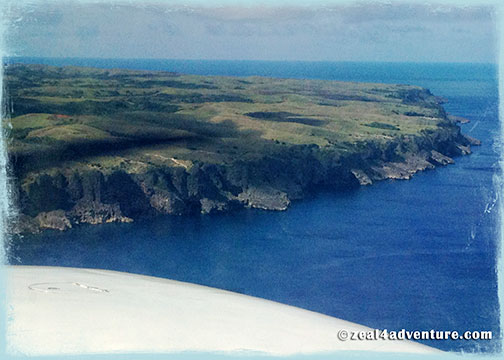
Because it is a giant uplifted coral reef as research claims, it does not have a shoreline to land on.  When the water is rough (which is almost always), getting oneself to the port is a challenge.

Chinalopiran Port, Itbayat

One has to time the boat and jump as it levels with the landing.  Whew!  Glad I never had to do this although it would have been an interesting trip if ever.

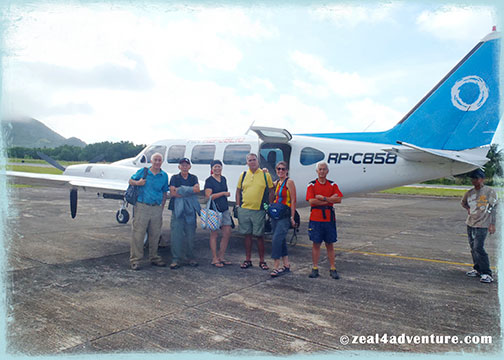
The motley crew on a mission.

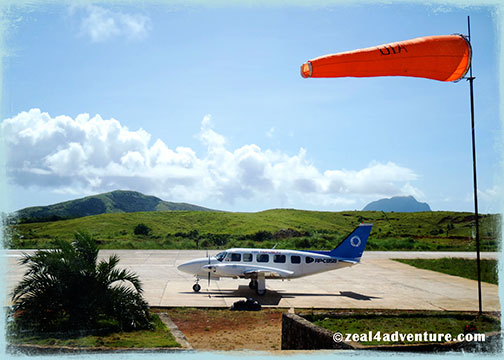
Arriving on an 8-seater plane, we landed at the Itbayat Airport only 12 minutes after we took off from Basco.  The airport is far from town and when I first came in 2007, a truck picked us up and took us to town on bumpy, unpaved roads.  This time, we hitched a ride with the ambulance that was going back after bringing an old woman to the airport.

Road conditions had improved with some roads paved along the way.  Classified as a community airport, it provides one pick-up to take passengers to and from the airport.

Needless to say, we booked our rooms at Nanay Cano’s Homestay.  Our home for the next few days had 5 beds, one bathroom and several fans to keep us cool although it is rendered useless after midnight when the power goes off till 6 the following morning.  On hot summer’s nights in May, we miserably sweltered through the night, truth to tell.  How far do I go for adventure, I often ask myself.

Nanay Cano is an excellent host, she knows the history of the place, and she explains it with so much gusto too.  As soon as we got settled, she called us together to explain the following day’s agenda, the islands we are visiting and its logistics etc.   It is not going to be easy, and again I ask, how far do I go for adventure?

Coconut crabs.  A delicacy and found most in this island.  Walking around town waiting for lunch to be served at Nanay Cano’s, we came across some fishermen selling these crabs and a delicious dinner it made.

The crab is said to climb coconut trees and husks coconuts with their powerful claws hence the name.  It is however not a significant part of their diet.

When cooked, the claws are hard and needs a good bashing to break, the meat sweet and firm.  Although I still prefer Alimango (mud crabs) and Alimasag (blue crabs), Coconut crabs is a priced delicacy and is widely hunted, its population dwindling.  The IUCN has classified them on the red list of threatened species.  This means (as I understand it) that they can only be consumed locally and is not to be sold outside of the island.  Or am I just justifying for having a scrumptious meal?   😉

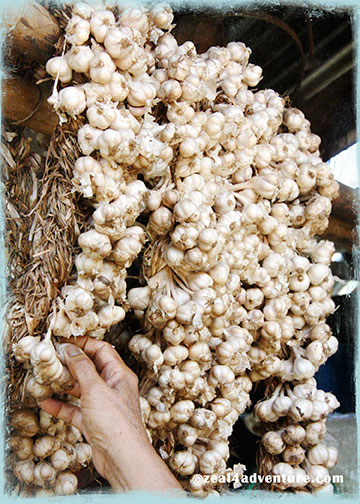
Aside from the coconut crabs, Itbayat produces garlic, a lot of them.  Nanay explains that the different varieties are a result of bartering with Taiwan, who has an extensive production of garlic as well.

Between some of us, we brought home a total of 12 kilo worth – Nanay arranged to have it shipped to Basco lest we go over the weight limit.  These are good garlic, folks.  If you find your way to this corner of the globe, do get yourself some of these.  I am loving it and will miss it once I run out.

With that lovely dinner, we were off to bed early… before the fan shuts down.  A long, challenging day awaits us tomorrow.

Useful Info:

Nanay Faustina Cano: +63 919 300-4787
Air Republique Booking Office: +63 908 120-2548

Rugged Mystique

Credits: Papers from SDynes Christmas Treasures Mini Kit; Frames from Orchbroom Mask and SDynes Christmas Elements; Floral Elements from Sahlin Studio’s Story Telling kit (sc flowers).

Bewitched.  I can’t seem to put my finger on it but there’s something about the town of El Nido that has left me enchanted from day one.

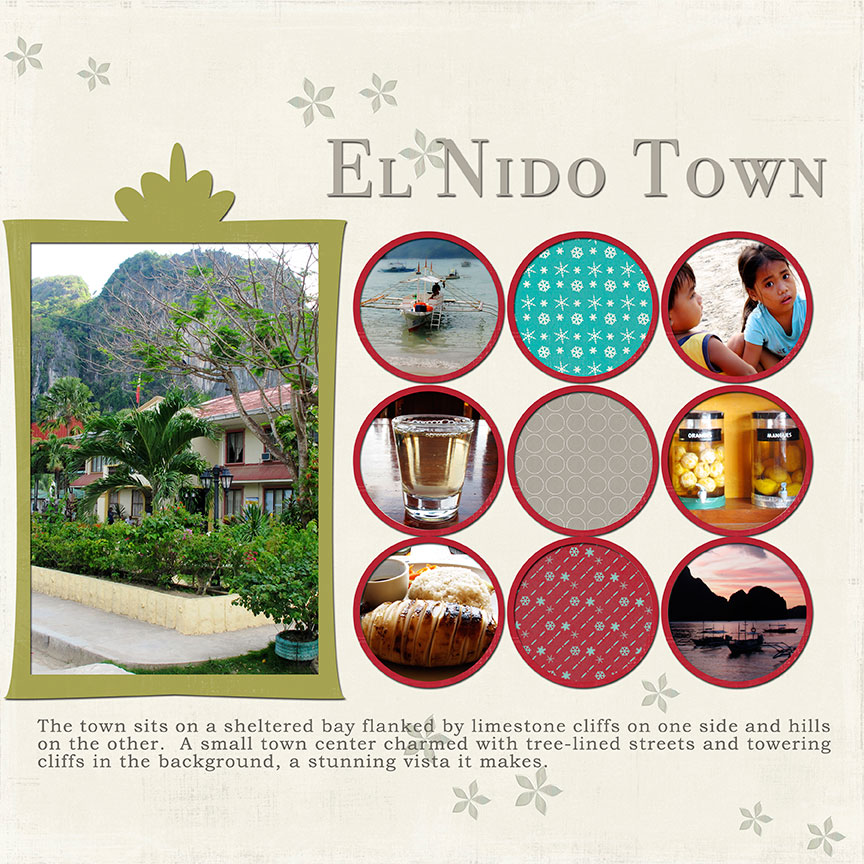
The town sits on a sheltered bay flanked by limestone cliffs on one side

and hills on the other.

A small town center charmed with tree-lined streets and towering cliffs in the background, a stunning vista it makes.

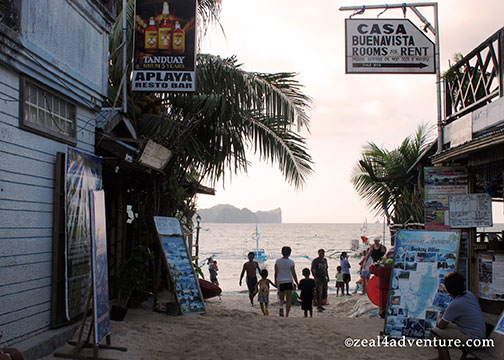
It still is very much a backpacker’s town really and it is this laid-back backpacking atmosphere that lured me back to many years after.

This charming fishing village in the northernmost tip of the Palawan Island often is referred to as the Last Frontier due to its rugged mystique.

How time flies… it took me 8 years to come back to one of my favorite towns.  I still remember many details of the town like it was yesterday.

El Nido has turned into a touristic town and I see that more exciting places to eat and stay have sprouted everywhere.

Madali ang pera dito kung masipag ka”, says Mang Rudy.

The opportunities are endless with tourism at the forefront here at El Nido and money can indeed be easy if one works hard.

The one place I would have loved to go back to, we heard no longer serve meals on a regular basis.  Walking to town, we unwittingly found the house so we entered the half-opened gate and were told that they don’t accept dinner bookings anymore.  We took it as that.  On hindsight, I am not sure if they meant that they were already full for the holidays or that they weren’t serving because it was a holiday.  Having seen many closed shops and restaurants around Palawan during Easter break, this will not come as a  surprise.  Elm St Café is a cozy dining place set in a beautiful garden amidst a limestone backdrop so beautiful when lit at night.  The owners opened their home along Rizal Ave. and they served meals to those that booked in advance – usually a surprise, depending on what is found in the market that day.  They were the best of the best then, the ambiance and the element of surprise added to the experience and memories.

Not to fret though as there are a whole new lot to choose from, we barely scratched the surface, I think.  And here are some that caught our fancy.

La Salangane – more than the French meals, what had us coming back were the homemade flavored rums.

Ginger, apple, pineapple, pears, oranges, mangoes, even pepper –

wonderful flavors enjoyed in a relaxed atmosphere overlooking the Cadlao Mountain by the beach.

Made more special over sunset.  This is THE place to get your espresso fix as well.  Many of the places in E Nido, including our inn, do not even serve brewed coffee.

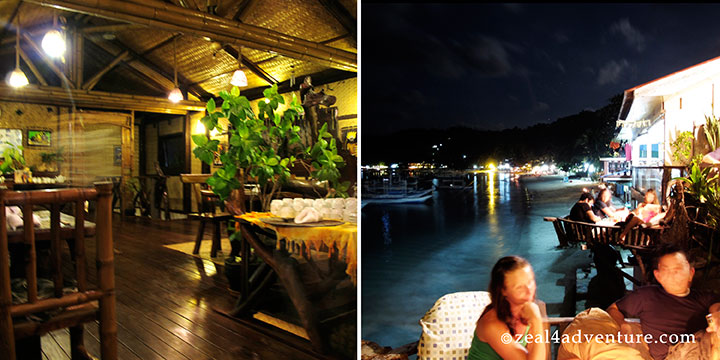
The Alternative Restaurant – mentioned by some French tourists we met on our way to El Nido, we decided to give it a shot.  The place was not easy to find as it does not look like much from the outside and we kept walking pass it.

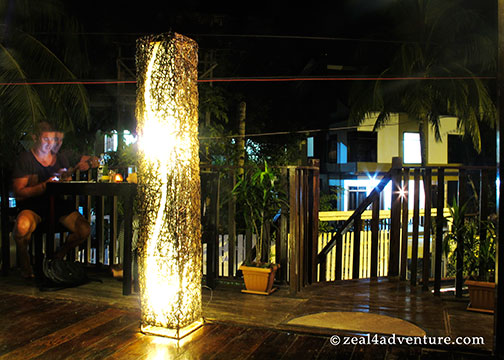
On the 2nd floor though where the restaurant is, the ambience turned to cozy.  At one side overlooking the sea, a few sunken oval seats resembling a “bird’s nest” overhangs the beach – a cool place to hang out and watch the sunset, me thinks but A wasn’t as confident that the structure would hold us so we got ourselves a table instead.

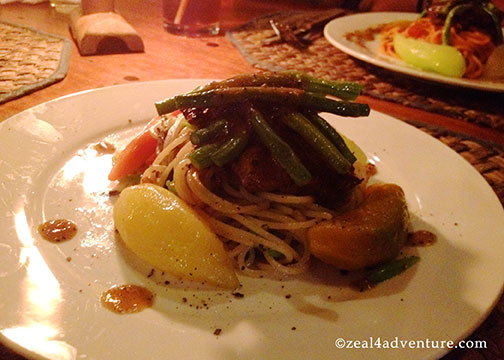
Despite an extensive vegetarian choice, I had a pork dish with pasta – and it was pretty good.  Our French friends though were not as impressed.

Altrové Trattoria – saving the best for last.  This Pizzeria was the best of the lot in my books.

Made of fresh dough and cooked crisp in a brick-oven is perhaps the best pizza in town.  The place, unlike The Alternative, is hard to miss.  Beautiful façade of a place, the brick oven proudly stands at the ground floor.

A nicely decorated second floor is where the dining area is.

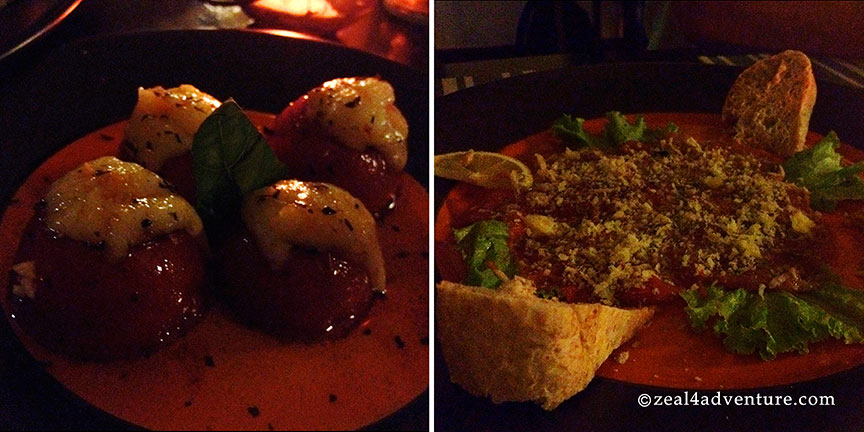
We enjoyed our antipasti of Beef Carpaccio and Baked Tomatoes on Mozzarella.

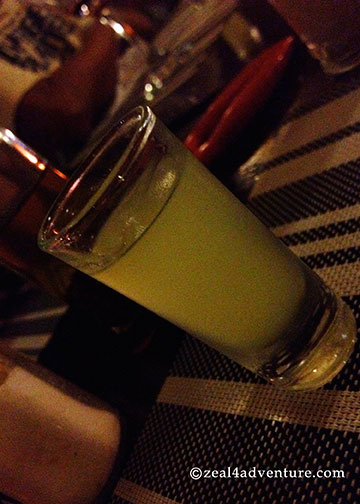
The seafood pasta dish was divine and the pizza, wonderfully crusty.  And to cap the evening… Limóncello, how can I not love this place?

To serve Limóncello in a town like El Nido, where electricity only runs from 2pm-6am, was impressive.  And this, dear friends, has easily landed on the top of my El Nido list, dining-wise.

Useful Info:

La Salangane
Serena Street
Barangay Buena Suerte
Contact:  (63) 916-648-6994
Email:  info@lasalangane.com
 
The Alternative
Serena Street
Barangay Buena Suerte
Contact:  (63) 917-896-3408
 
Altrove Trattoria
Hama Street
Barangay Masagana
Contact:  (63) 927-741-8016 
 

A Leisurely Stroll Through Luang Prabang

Credits: Papers by Sahlin Studio’s Sweet Story Telling papers, Creativity by Crystal’s Room Collection Solids; Elements by Sahlin Studio Sweet Story Telling Kit.

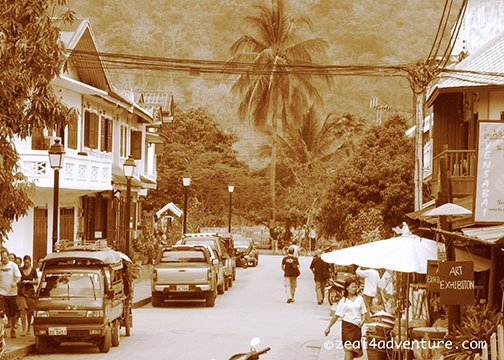
It was a beautiful ordinary day.  No agenda, we just played it by ear, went with the flow.  The plan was to leisurely walk the streets and see where it takes us.

The serene atmosphere of this enchanting city begs for nothing more.  Having strolled down these streets before, it was interesting to see new ventures turning up while many stayed the same.

Luang Prabang lies in the heart of the mountainous region of North Laos.  Also known as the jewel of Indochina, the ancient royal city sits between the junction of the Mekong and the Nam Kahn Rivers.

And our nice little boutique hotel, Villa Deux Rivieres is situated somewhere near the junction in Kingkitsareth Rd.

Monks with their signature umbrellas in Sakkarine St. — a quieter part of town.

Great location as it really is just a short walk away from many places of interest and the main street, Sakkarine,

The busier street of Sisavangvong has more tuk-tuks and motobikes lining the streets.

which turns into Sisavangvong St. if you walk further.  We spent a lot of time in Sakkarine St. browsing, sometimes buying from the many little shops or relaxing in several of the cafes lining the stretch.

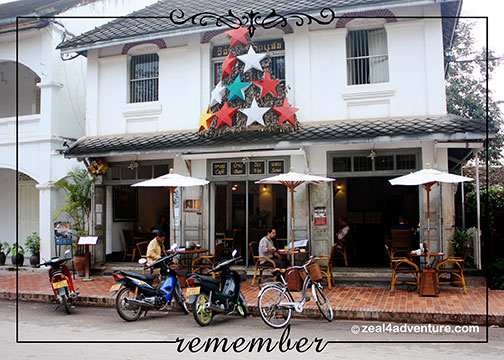
Café Ban Vat Sene across the charming Wat Sene and Le Banneton with its wonderfully crusted breads are our favorites hang-outs.  We sat outdoors and enjoyed the cool air and the easy going vibe of the town.

Those breads lured us to Le Banneton

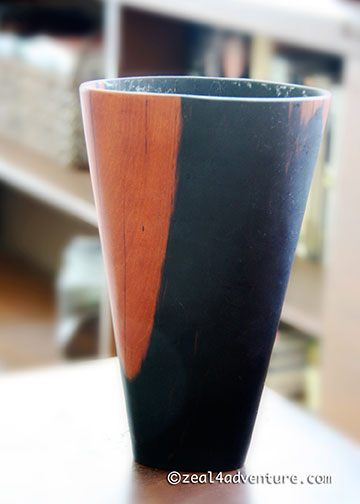
Caruso Lao never fails to lure me in each time we walk pass it.  Beautiful stuff on display, a bit pricey but well worth the workmanship, me think.

And look what I have displayed at home.  There could have been more, if freight wasn’t so ridiculously high.

Comprising this enchanting little city are ancient structures, a Royal Palace, a National Museum,

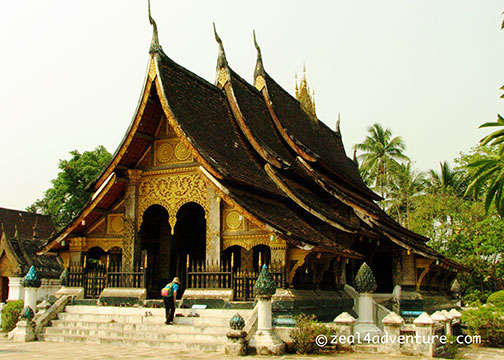
Wat Sene along Sakkarine Rd.

and a concentration of golden temples they call Wats, all thirty-four of which have been listed for preservation.

Luang Prabang, a UNESCO World Heritage Site since 1995, is undoubtedly rich in cultural heritage and has both historical and natural sites to boast.

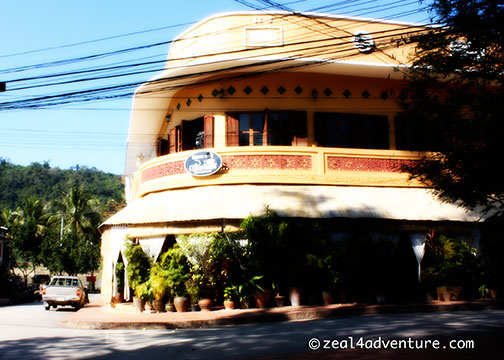
Traditional wooden dwellings and old colonial style houses fused into a distinct cultural tradition with beautiful landscapes that surrounds.  Mount Phousi perched in the middle of town showcases stunning views of the surrounding temples and hills.

It is a city where time seemed to have stood still.  The old town (their historical district) in particular has an old world charm,

reminiscent of the 1940’s where bicycles dominate and colonial style interspersed with traditional houses line the streets with some vintage cars even.

Small enough to explore by foot, we started our stroll at our hotel in Kingkitsarath to the bank where Khan and Mekong meet. The street, as in many in Luang Prabang, becomes Khem Khong or Mekong Rd at some point.

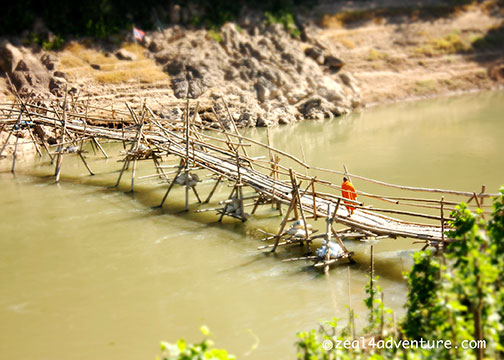
At the confluence, a path led to the river below where a wooden bridge stands.  Across is a handicraft and weaving village that one can explore but we didn’t venture out there anymore.

Instead, we continued on Khem Khong to get to Wat Xieng Thong – perhaps the most magnificent but definitely the most important and impressive of Lao temples.  There is a cluster of  ancient buildings dating back to the mid 16th century.

At the back of Wat Xieng Thong is a tree of life mosaic in colored glass.  Anyone with a keen interest in Lao history should not miss the religious artworks and artifacts housed here.

When it was time for lunch, we went for L’Elephant, an institution in its own right in Luang Prabang.  Menu was mostly French.

For starters we had a refreshing Carrot and Orange Salad and a superb Escargot baked in Garlic and Parsley Butter – cooked the way we like it.  For main, I had the Mekong Perch in Coriander Sauce and A had Stuffed Roasted Boneless Quail.  I say fine dining at its best in Luang Prabang.

The laid back, open-air atmosphere with high ceiling fans half expects you to see Rick Blaine come out and entertain.

In between lunch and a traditional lao massage, we explored more of Khem Kong, definitely a very quiet street where many upscale hotels are located.

Khem Kong facing the Mekong

 One of many roadside restaurants with a view of the Mekong or the Nam Khan

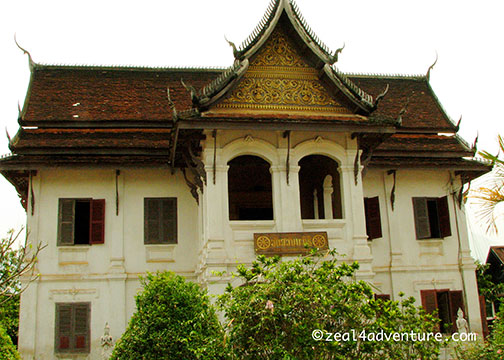
We then visited the Haw Kham, which is now known as the National Museum.

Once the Royal Palace, the building is a fusion of Traditional Lao and French design.  It houses an impressive collection of royal memorabilia and religious artifacts.

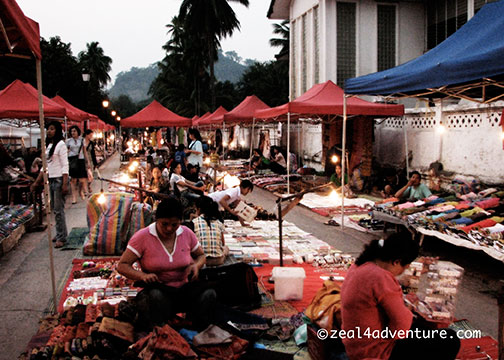
Every night, Hmong people come dowm from their villages in the mountains to sell their hand-made products,

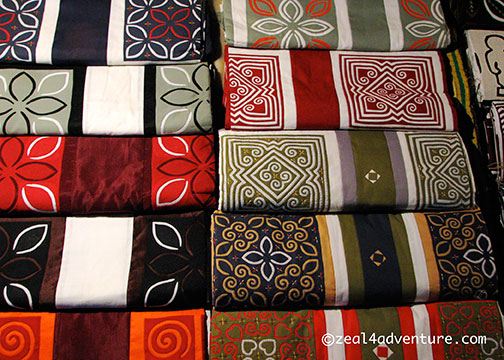
typical Lao arts and crafts that include appliquéd blankets, silver jewelries, embroidered bags and a lot more.

A short walk-through here is more than adequate if a bargain hunter you are not.  They  have interesting and tasteful designs at a bargain, the quality is another thing though. But I guess you get what you pay for.   🙂

Many of the stalls here sell Lao street foods but we had our eyes set on Mango Tree in a quieter part of Sakkarine St.

Suffice it to say that dinner was fabulous.  Superb Lao dishes plated beautifully and served in a casual garden setting.

An extraordinary meal to cap an ordinary day, I must say.

So tell me, how can you not fall in love with Mekong’s jewel, its beautiful people,

its heritage and its shabby chic French fused Lao architecture that is so uniquely Luang Prabang?

Useful Info:

Villa Deux Rivieres
Kingkitsarath Rd., Ban Khily
Luang Prabang, Laos
+856 207737 8575
 
Cafe Ban Vat Sene
Sakkarine Rd.,
Luang Prabang, Laos
+856 71 252 482
 
Le Banneton
46 Sakkarine Rd., (opposite Wat Sop)
Luang Prabang, Laos
+856 21 217 321
 
 
L’Elephant Restaurant
Ban Vat Nong
Luang Prabang, Laos
+856 71 252 482
 
 
Mango Tree
Sakkarine Rd.,
Luang Prabang, Laos
+856 71 253 750

Wat Xieng Thong
Khem Khong Rd.,
Luang Prabang, Laos
Admission: 20,000 kip
 
National Museum
Sisavangvong, Luang Prabang
+856 71 212 122
Admission: 10,000 kip


Early Morning Alms

I am not a morning person and waking up early can be such an effort.  Laos somehow has managed to get me up at the crack of dawn, and for good reasons.  When we snuck out of our hotel’s gate fence one early January morning, the streets were still quiet with only street lamps lighting our way to Old Town, as Luang Prabang’s historic district is called. Here, the day seemed to have started already.

Villagers found their spot, kneeling on mats, waiting with a basket of sticky rice, fruits or sweets.

Vendors likewise positioned themselves near tourists, waiting for an opportunity to sell.

We sat at a corner with our camera watching the day progress.

Every morning, between 5 & 6AM, the monks of Luang Prabang’s 30 or so temples collect alms from the kneeling pilgrims and some early rising tourists.

Barefoot, they parade through the picturesque streets single file from oldest to youngest in their burnt sienna robes carrying alms bowls over their shoulder.

Alms giving have been practiced here every morning as townsfolk provide the monk’s daily sustenance for hundreds of years now.  They say that the monks are only allowed to eat food given to them in the morning of each day hence the daily ritual.

Those that give, they also say, earn merits for the good deed.

Cultural aside, this century old tradition is a spectacle on its own – waves of mandarin clad monks flood the streets contrasting the green trees and traditional white structures.  And as soon as it has started, it is over, and people start going their way.  We head for breakfast.

Café Ban Vat Sene.  We had coffee and dessert here last night and were instantly drawn to the place – the atmosphere relaxed with a Parisian café vibe.  But you see a lot of those as Luang Prabang has a natural laid-back atmosphere with a large French influence from architecture to restaurants and bakeries.  The cool January air summons us to sit outside for breakfast and watch the last of the procession.

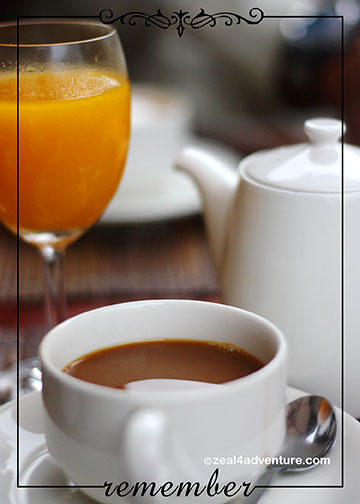
They make wonderful French breads– baguettes, croissants, pain de campagne… with homemade jams

and a freshly brewed pot of coffee – my day has officially started.

Useful Info:

This religious ceremony is one of Luang Prabang’s major attraction, tourists must learn to be courteous and respectful of this tradition.  Please click here to know what and what not to do.

Cafe Ban Vat Sene
Open daily from 6am – 10pm
For reservations, call: +856 71 252 482

Fun and Frolic at the River Namsong

Credits:  Papers by Jessica Sprague (Bright Stripes paper), Carina Gardner (Coqu flirt 16), ITM Tricolor (Red tiny dot), QQ Knotty Girl papers; Elements by Carina Gardner (daisy paper bits)

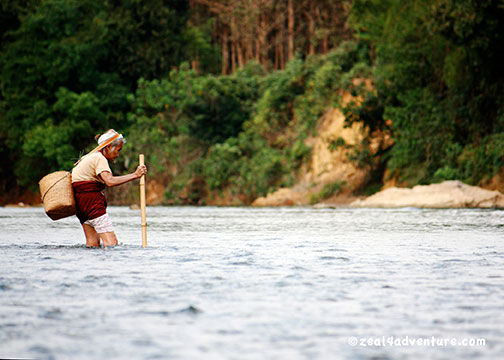
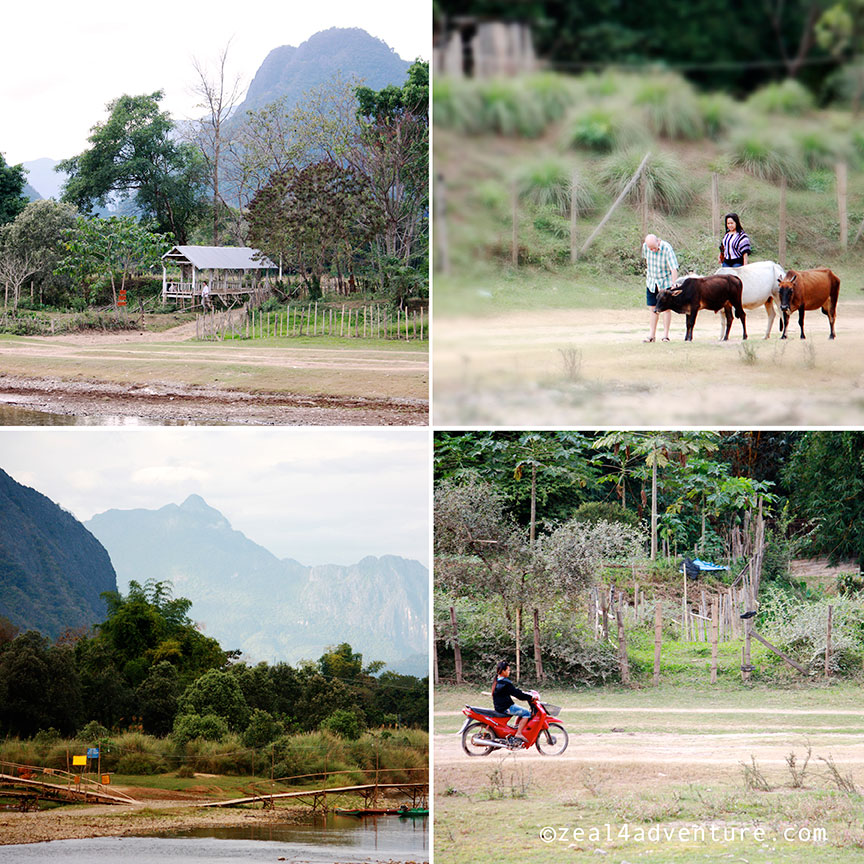
Once a peaceful and quiet town, Vang Vieng used to appeal only to adventure travelers wanting to rock climb, explore caves or to simply enjoy its tranquil surroundings, its people and culture.

Surrounded with striking karst rock formation, the Namsong runs through it contributing to its serene setting.

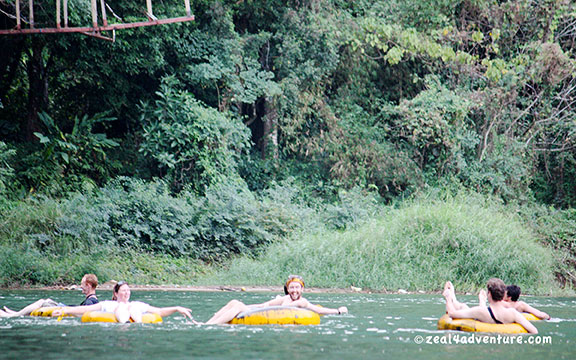
Since the launch of inner tubing in the mid-2000, the quiet town of Vang Vieng has never been quite the same.

The Namsong now appeal to “partying” backpackers.

The town today is most know for “tubing” down the Namsong and with it came

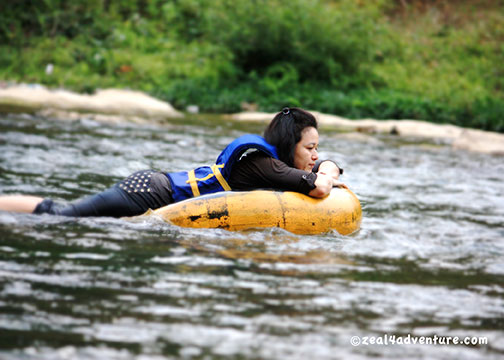
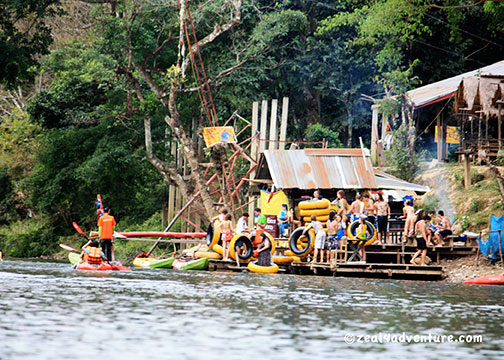
many bars along the riverbanks catering to those floating downstream either in rubber tubes or on a kayak.

The townsfolk once farmers are now owners of bars and guesthouses – predominantly made up of chill-out bars and dance shacks all offering cheap booze,

some offering more thrills in the form of swings and ziplines.

Along with the bars, lodgings of various types line both sides of the riverbanks.

A short afternoon cruise up and down the river on a motorized boat reveal all these.  It is the easiest way to watch the goings on around the river.

Foreigners partying or simply floating down the river dominate local scenes along the river.

The “party” scene may have appealed to me years ago but today, I prefer the relaxed atmosphere of the down river part of the Namsong.

Watching the sunset over cocktails after a long day is my idea of a good time.

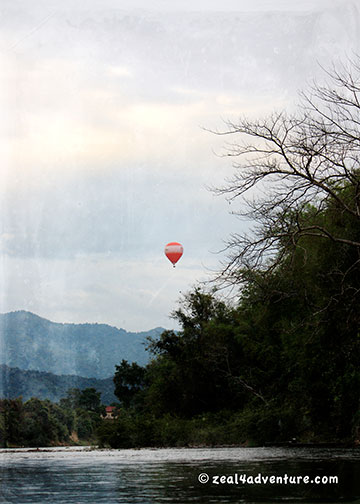
This looks like fun… so we booked a sunrise ride over Vang Vieng on a Hot Air Balloon… on my next post.

Road to Vang Vieng

Credits:  Papers by Crystal Wilkerson’s Room Collection series, Kaboks’ Christmas Treasure Papers; Photomask by Moninda.

A tuk-tuk picked us up at the hotel and brought us to a VIP bus parked along the Mekong River bank opposite Wat Chanh temple.  Before entering, we were asked to take off our shoes and were given a plastic bag to store them in the meantime.  The bus, like most lodgings and households in Laos, is a no-shoes zone.  Although lined with linoleum and seemingly clean enough, I felt strange and a bit grossed out walking barefooted.  But with the current seating, er… bunking arrangement, it was better this way.

The bus had double-decked bunk beds instead of seats.  I reached the end and it was all taken.  What’s going on?  Were we on the wrong bus perhaps?  It seemed like they were out of space, then I heard the conductor shout, “two in a bunk!” Are you kidding me?  These are made for size 0 petites, not the likes of us.  A couple occupying a bunk each gave one up and we thankfully took it.  At first we didn’t know how to go about it until the couple figured it out.  Facing each other, we sat uncomfortably for the next 4 hours.

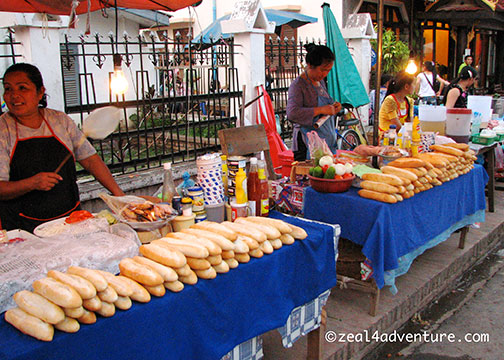
Two hours down, we stopped for lunch.  Choices of sandwiches similar to Vietnam’s Banh Mi  was lunch for us.

I had a simple but pretty good canned tuna with mayo on a baguette.

At the Vang Vieng bus station two hours later, we made sure to get a proper bus particularly since we will be on the road for 6-7 hours.  Pointing to a photo of a bus with seats, we asked if there were seats available for the next day.  The lady nodded and asked, “what time?”  “10AM for the express bus to Luang Prabang, please.”

After the purchase, we got onto a jeep provided by the bus company that brought us to town.

Vang Vieng is a small tourist-oriented town about 150km north of Vientiane in Vientiane Province. It has only 3 streets, a market, a bus station and a few temples.  Before we even know it, we were on the main street in town.  We could have actually walked to town.

Small it may be but Vang Vieng is bursting with natural beauty.  The small town is beside a river and a picturesque backdrop of limestone karst surrounds it.  Mainly a backpacker’s hotspot until the mainstream travelers caught on a few years back.  Many are breaking a 10-hour road trip to Luang Prabang here, staying a couple of days to explore its natural wonders.  We had the same idea but didn’t have enough days to stay longer.  Wish we had.

In a quieter part of the Namsong River, a fair distance down river from the bars famous with the backpackers is The Elephant Crossing Hotel.  It is an easy walk from the main street even with backpacks in tow.

Because it situated on the banks of the Namsong River, the view was spectacular, but I guess anything along the riverbank would boast of the same breathtaking views.

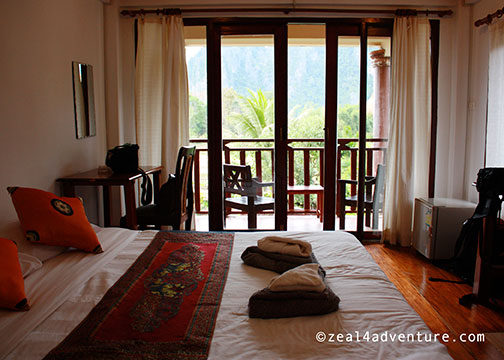
All 31 rooms of the 4-storey boutique hotel were designed to have a private balcony

overlooking Vang Vieng’s famous majestic limestone mountains.

Their riverside restaurant was calling out to us, and there we whiled the time away with some spring rolls, a few bottles of beer and a lot of river actions.

We could sit there and watch the day go by, truth to tell, if only we had more days to spare.

Useful Info:

Buses to Vang Vieng:  Tickets can be purchased at almost every guesthouses, hotels or even travel operators.  This should already include transport to the bus station.  Several types of buses to choose from:
 
Local Buses — slower without air conditioning. Journey takes at least 5 hours.  Cost: 40,000 Kip (US$ 5)
VIP Buses — run by Malany Bus Company (856-23) 51-1633 and Thavonsouk Bus Company.  Departs 10AM and 2PM.  Journey takes about 4 hours.  Cost: 50,000 Kip (US$ 6)
AC Minivans —   Leaves as soon as it is full and is the most convenient and comfortable transport.  Cost: 70,000-80,000 Kip. (US$ 9)
 
 
Elephant Crossing Hotel:
Ban Viengkeo, Vang Vieng District
Vientiane, Lao PDR
(856-23) 51-1232

A Day in Vientiane

Credits: Page from Kayla’s Tin Album by Shabby Miss Jenn.

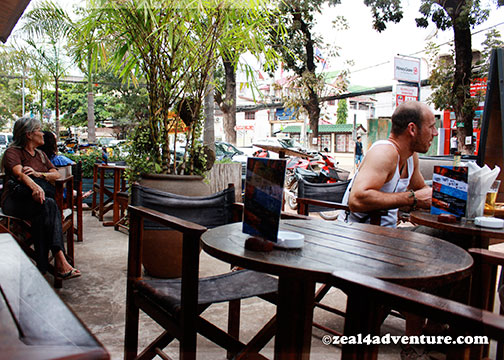
The outdoor seating at Dao Fa Bistro called out to us as we walked pass it.  We were tired from wandering the streets of Vientiane, visiting temples, doing some window-shopping and some real shopping along the way and resting our weary soles seemed like a good idea.

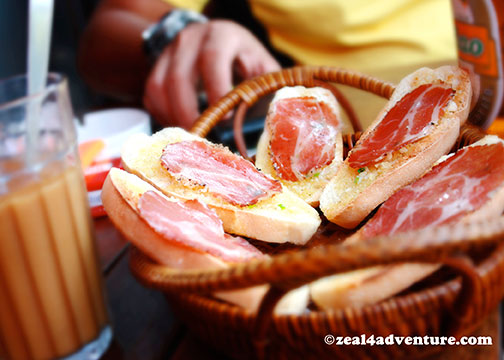
Right beside our table was a couple chatting over a plate of prosciutto on sliced garlic bread.  We decided to order the same.

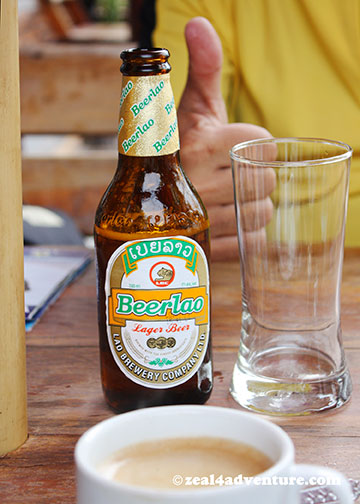
While we watched the people pass by, we devoured our basket of this heavenly tasting cured ham on garlic bread over iced coffee and cold Beer Lao.  How French can you get?  Laos was under French rule from 1893-1953, the influence evident in the many French inspired bistros that line the streets.

Our day started early at the LCCT in Malaysia.  An early morning flight to Vientiane had us arriving in Laos’ capital at around 9AM.  A taxi prearranged with our hotel was waiting for us outside the Wattay International Airport.  “Welcome to Vientiane” the driver greeted us.  A friendly guy wanting to know more – where are we from, how long we’re staying, where else we’re going, so on and so forth.  What a nice start to our Laos adventure, me think!

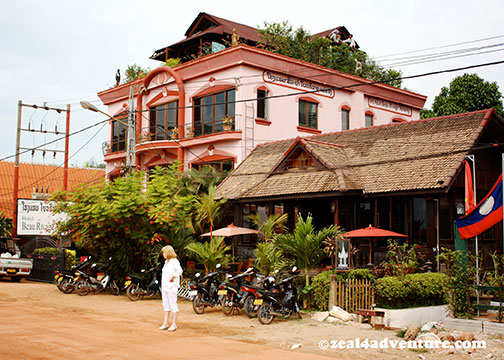
After 15-20 minutes probably (I was so deep in conversation with the taxi driver, I lost track of time), we arrived at what looked like a pink colonial 3-storey building on an unpaved road across the Mekong River.  We thanked the driver and paid him Kip 64,000, equivalent to US$ 8 for the pick up.

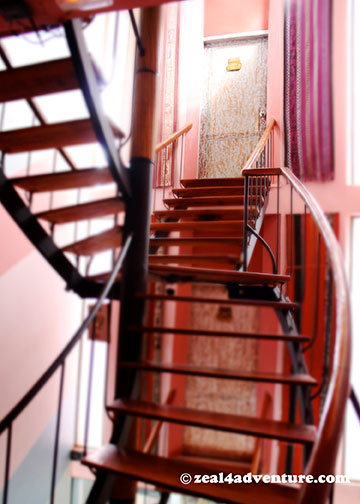
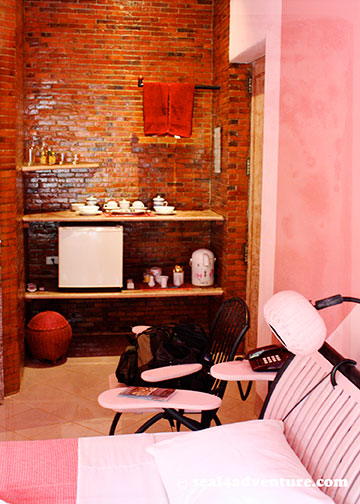
The cool modern design of the interior was a contrast to the colonial style exterior.  The color maintained the same scheme of pink and light blue of the exterior.  We were told to wait as they fix our room and we can wait at The Spirit House, the restaurant next door.

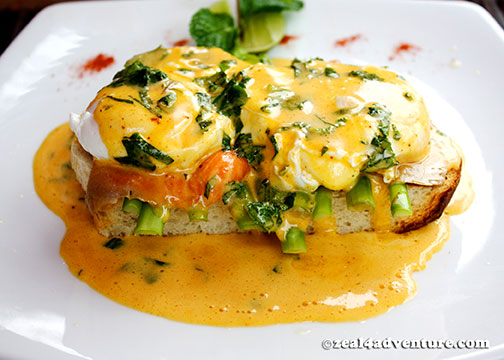
It was 10AM so we opted to share an Egg’s Benedict, just enough to satisfy our hunger but leaving space for lunch.   This was the first of many good meals throughout this trip.  But I was expecting that and would have been disappointed if our meal were anything less than good.  In 2008, when I first visited Laos, I was amazed to find the food here superb – Laotian, French or a fusion of both.  Not leaving out the charm of Laos, the food was one major reason why I went back and writing to you about it.

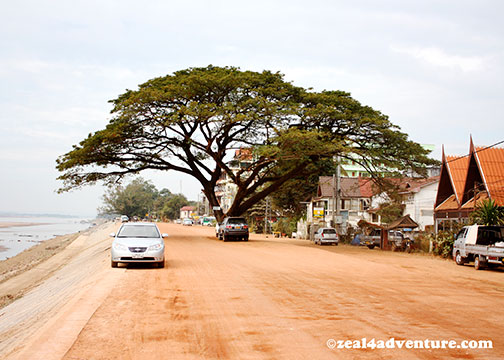
Hotel Beau Rivage Mekong is a boutique hotel sitting on a quieter stretch (road still unpaved) of Fa Ngum Road, a short distance from the center of town where the main “riverside scene” is.

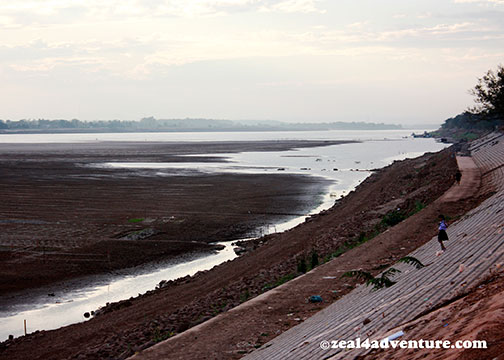
The Mekong River albeit practically dry in January serves as its main charm – great sunsets over cocktails is the main lure of their restaurant, The Spirit House.  A superior room would have the river view

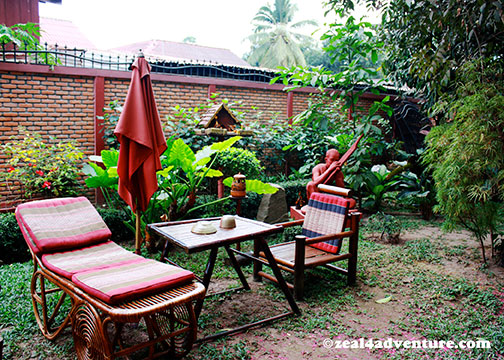
while a standard room at US$ 53, had the garden view.

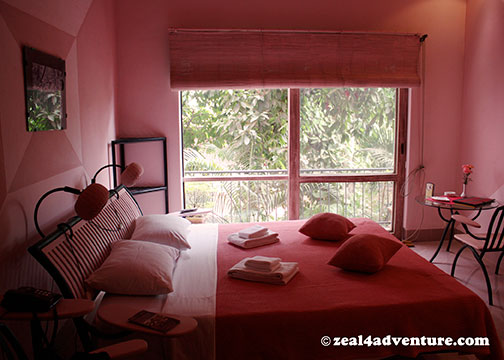
Our room was predictably pink – clean and spacious with a nice corner bar.

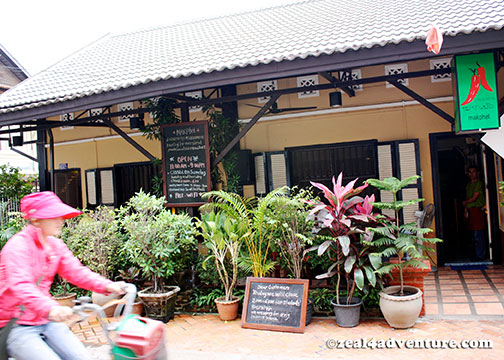
Leisurely walking to the main town, we would wander into streets; exploring shops that would catch our fancy when we happened to walk pass Makphet, a restaurant on the top of our list.

 We decided that lunch was going to be a little early since we were already there.

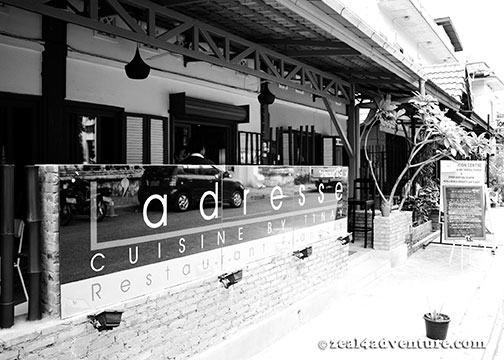
And as luck would have it, L’adresse de Tinay, the other restaurant we were eyeing was right beside so we made dinner reservations before we continued our exploring.

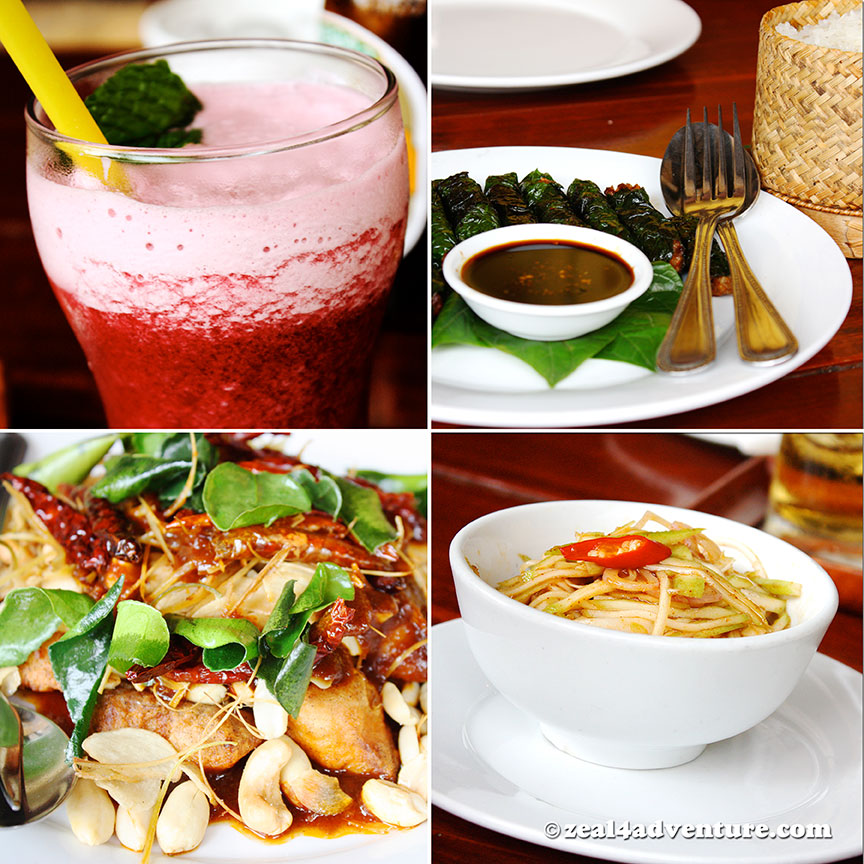
Clockwise: Grilled Beef Filet wrapped in Betel leaves with soy chili sauce, Green Mango Salad, Crispy Fried Mekong Fish with Sweet and Sour Tamarind Sauce, Red Hibiscus & Lime Breeze.

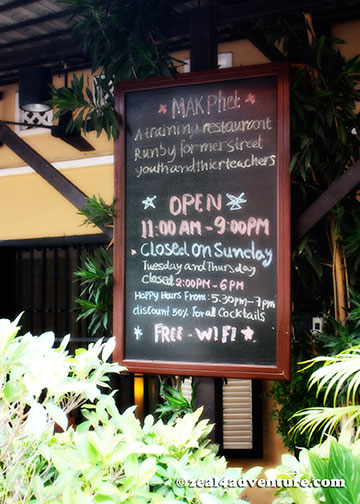
 Ranked by the 2009-2010 Miele Guide as one of the best restaurant in Asia, Makphet is a nice cozy restaurant serving modern Lao cuisine.  Not only do they serve wonderful food here, they are a “training restaurant” as well.

A training restaurant consists of culinary instructors from organizations such as Friends International to train homeless children and youths in the kitchen and in the front of house.  The group now run and support similar projects in Cambodia, Thailand, Indonesia, Honduras, Mexico, Egypt and Myanmar.  Needless to say, the dishes we chose were excellent and service was good.  They taught them well.  Be sure to get there earlier as the place can get packed.

* More on Makphet here.

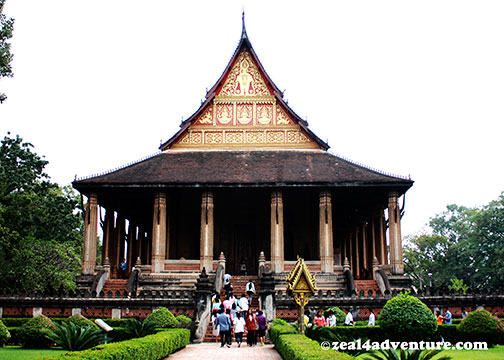
Stuffed yet happy to be ticking off one item off our long list so early in the trip.  We walked to Haw Phra Kaew, once a royal temple of the Laotian monarchy that now houses a decent museum of Laotian art.  Built in 1565 by King Sethathirath as his private sanctuary.  This charming temple used to house the famous Emerald Buddha, which is today housed in Bangkok.

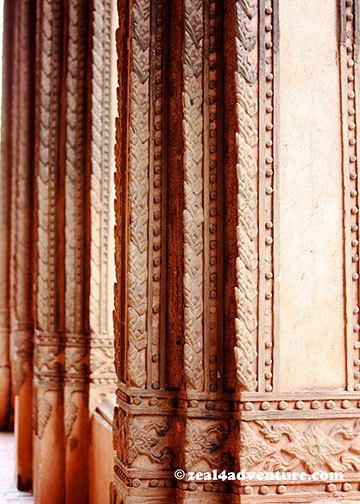
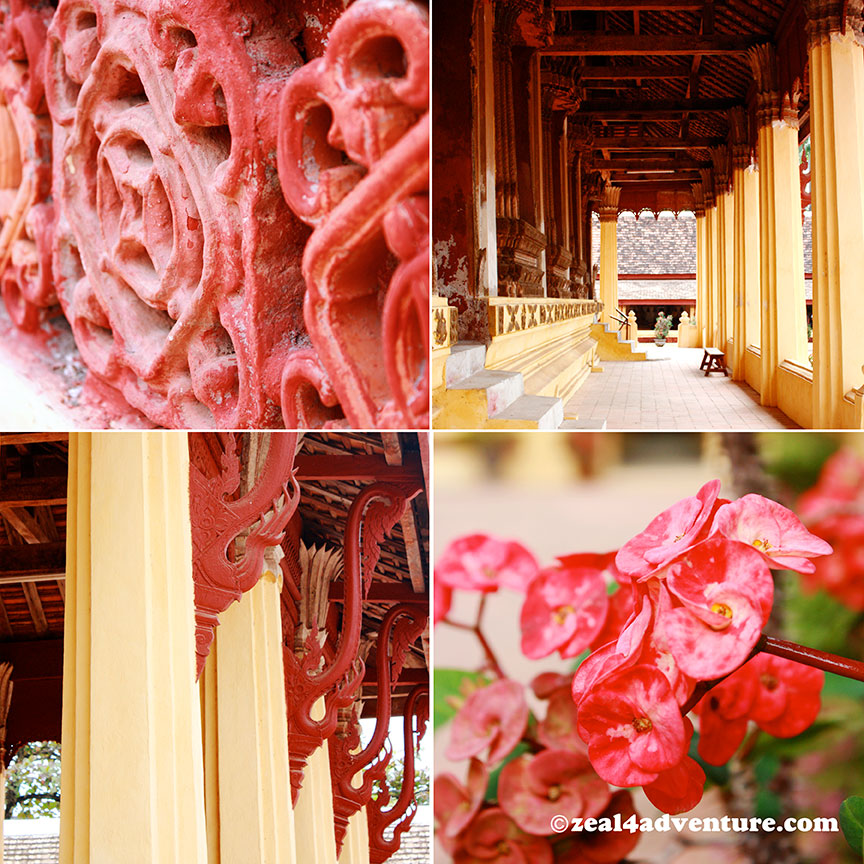
Intricately designed columns surround the temple

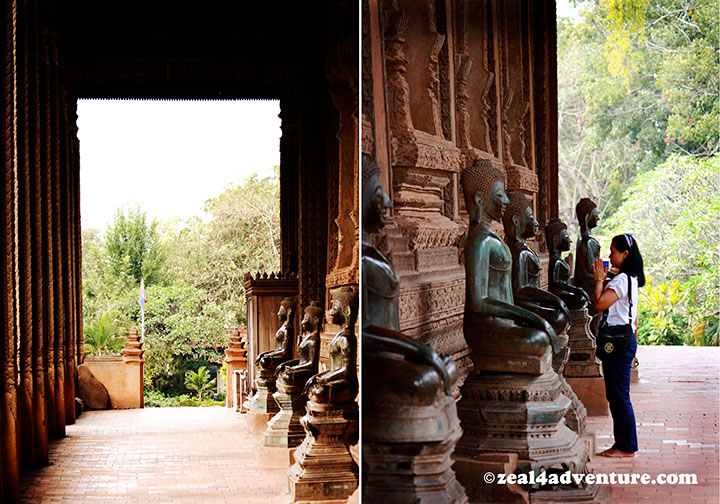
and buddhas grace the hallways where many still worship.

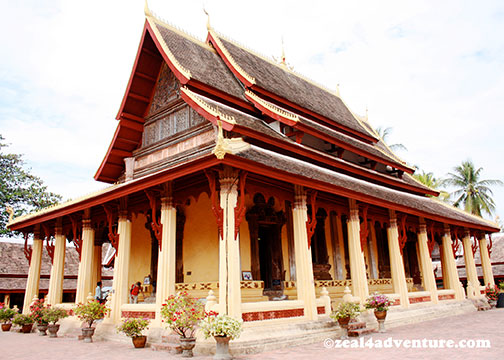
Practically across Haw Phra Kaew on Setthathirath Rd. is Wat Si Saket – a favorite and no doubt one of the most beautiful in Vientiane.  Both are important Buddhist sites but the latter is known to be the oldest temple still standing.

Modernization:  This was what greeted us at the entrance.

Built Siamese (Thai) style rather than Lao style, which could have saved the temple from destruction when the Siamese army destroyed and burned most of Vientiane in 1828.  The French restored the temple in 1924 and again in 1930.  The sim or the ordination halls stands in the middle of a square cloister.

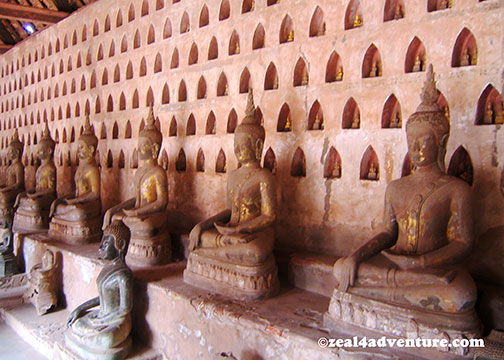
Thousand of small niches were built at the outer walls of the cloister with small Buddha images on each niche.  On shelves in front of the wall are three rows of Buddhas in various shape and size.

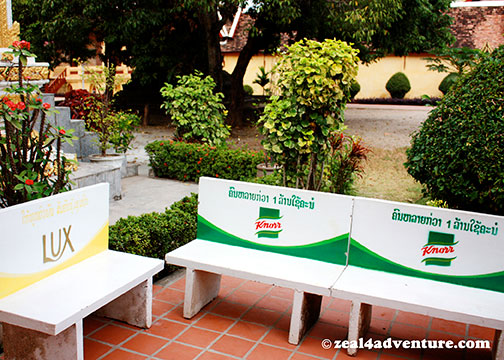
Along the edge of the cloister were potted plants abundantly blooming bringing life to the faded yellow walls and pillars, exuding a tranquil charm all its own.

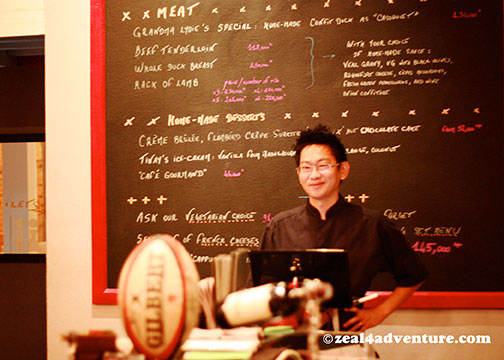
Dinner at L’adresse de Tinay was the perfect cap to our tiring yet beautiful day in Vientiane.  Tomorrow, we journey on to a Vang Vieng.  L’adressee is so to speak the newest kid in town serving outstanding French cuisine.  When we arrived, we were shown to the table we personally picked that afternoon.  A young man in black came out to greet us and get our orders.  Deliberating on what to order, the young man started giving his two cents worth and recommendations, owning up to the dishes when it hit me…  “Are you the chef?” I asked and he smiled and humbly introduced himself as Chef Tinay.

Trained in France, he went back home and opened this gem of a place with the help of his French wife, Delphine.

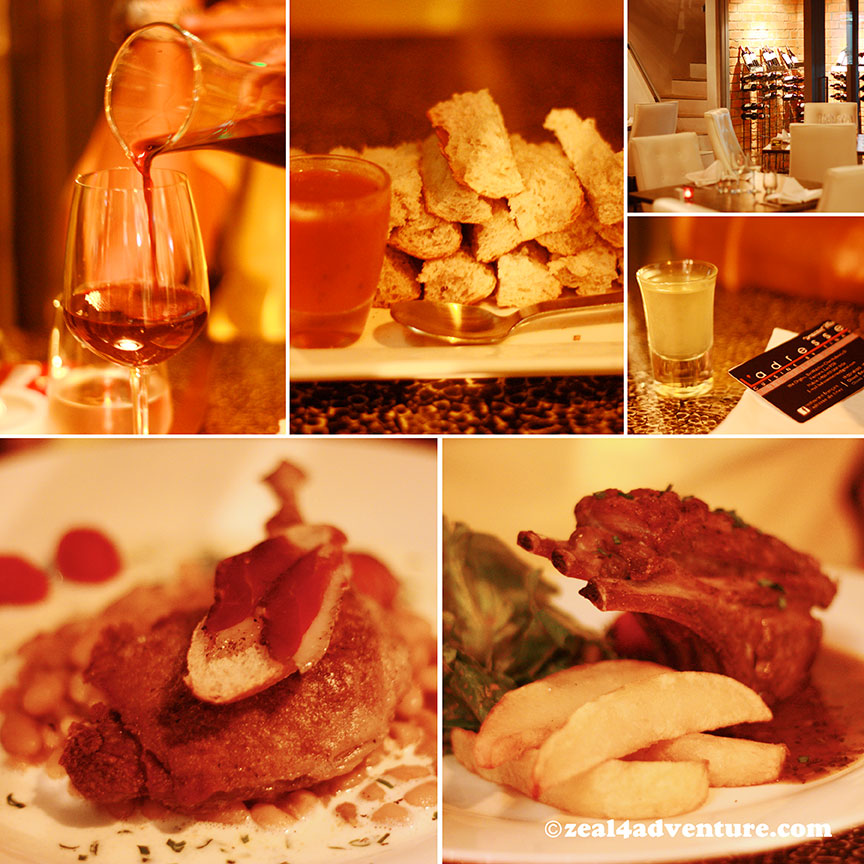
Main dishes: Duck Confit served as a cassoulet with Toulouse Sausage in sweet garlic cream (bottom left); Perfectly cooked Rack of Lamb (bottom right)

Everything we had from start to finish was excellent, ending with Delphine’s Limoncello, which she herself served.  Excellent French meal for US$ 40 per person… can you actually believe that?
* More on L’Adresse de Tinay here.

And with that we went to bed pleased at how well the day went.

Useful Info:

Hotel Beau Rivage Mekong
Fa Ngum Road, 
Ban Seetarn Neua,
Vientiane, Laos
+85621-243-350
Email: contact@hbrm.com
 
Makphet
Behind Wat Ong Teu parallel to Sethathirat Road,
Vientiane, Laos
+85621-260-587
Email: Makphet@friends-international.org
 
L’adresse de Tinay
Behind Wat Ong Teu parallel to Sethathirat Road,
Vientiane, Laos
+85620- 913-434
Email: ladressedetinay@gmail.com