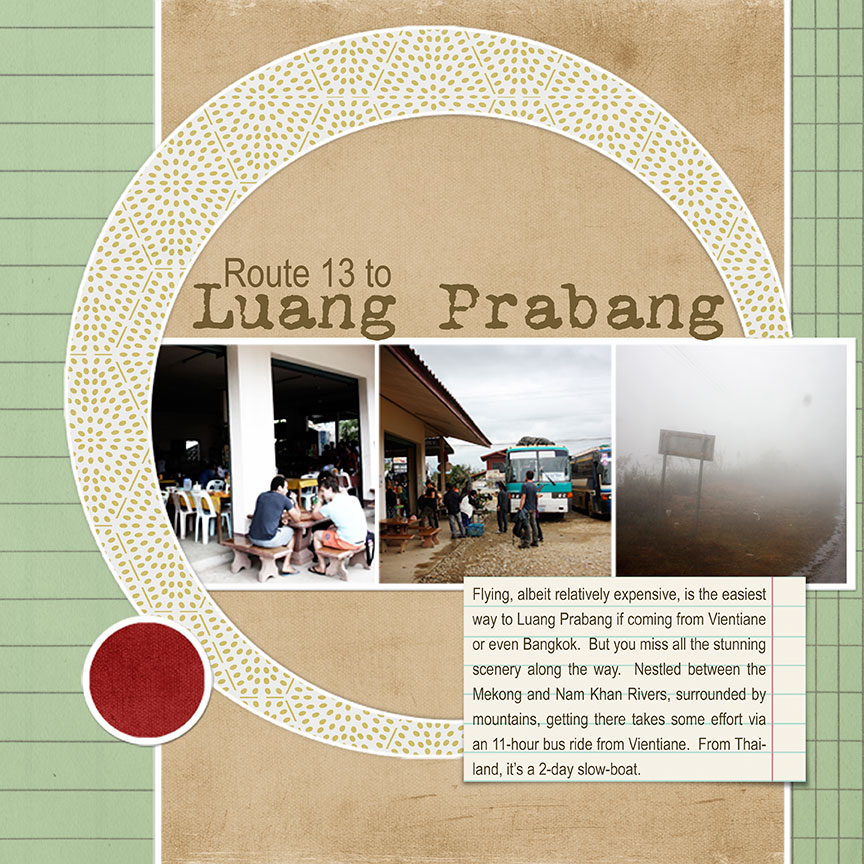
Route 13

Credits:  Papers by Creativity by Crystal’s Room Collection, Art & Soul Papers by Sahlin Studio, Story Telling Paper by Sahlin Studio.

Flying, albeit relatively expensive, is the easiest way to Luang Prabang.  But you miss all the stunning scenery along the way.  Nestled between the Mekong and Nam Khan Rivers, surrounded by mountains, getting there takes some effort via an 11-hour bus ride from Vientiane.  From Thailand, it’s a 2-day slow-boat.

We chose to take Route 13 because it was cheaper, the scenery – stunning and we wanted to stop at Vang Vieng even for just a day (although a day isn’t really enough).  From there, it still takes 7 hours on a meandering, poorly paved road leading to the ancient city, also a UNESCO World Heritage Site.  The remarkable landscape makes the exhausting experience worthwhile.

We break the trip for lunch and there I had my bowl of delightful beef noodle soup as I had planned, remembering how good that bowl of soup was in 2007.  Lining up for that bowl, I watched with interest how they assembled the dish right before us.  First the fresh noodles, then the beef, the vegetables and at the end of the line sits a huge pot of soup ever so gently simmering under a slow fire.  The lady ladled up soup almost to the brim and handed it to me.

I devoured it with gusto.  It was as I remembered it to be, pretty damn good soup.

From that time till we reached Luang Prabang, we stopped a couple of times.  The entire bus tensed up when we realized that it was having problems with its brakes

– made even scarier when the air became dense with fog, which kept me awake and praying the rest of the trip.  We inched our way to the city and finally breathed a sigh of relief when we saw signs of city lights just around the bend.

It took us nine hours… but all is well that ends well.  Luang Prabang is worth it, I promise.

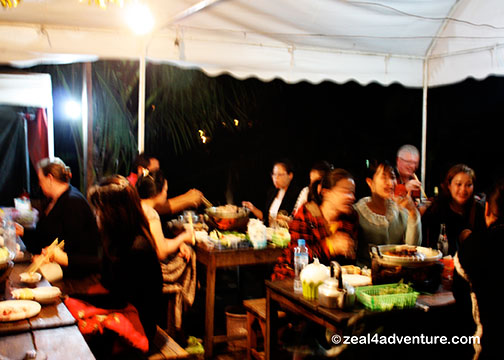
Not far from our nice little boutique hotel, just across The Apsara, is a sidewalk eatery I stumbled upon on my earlier trip.

It serves a mean Laotian-style BBQ that is a much like but not quite shabu-shabu.

It’s a cross between that and a Korean BBQ where the meat is grilled on the griddle while the soup is simmering on the same griddle.  As the meat cooks, the fatty juices drips on to the soup and I don’t have to tell you how divine that soup gets the longer it simmer and the more drippings it gets from the meat.  Brilliant.

And just like that, Luang Prabang has charmed me once more, today’s dreadful last stretch erased.

Getting There:  Click here for more options.

Soaring High in Vang Vieng

With most of Vang Vieng still asleep, we sauntered down before the break of dawn to the hotel lobby half asleep ourselves.  The ride came at 6 in the morning as promised and drove us to an empty lot where another vehicle with the basket and balloon arrived almost the same time.

They flipped the basket sideways, inflated the balloon with a giant fan and simultaneously flames it to give out that required hot air.

“You’re taking the VIP ride”, said a Chinese man in a coat to us.  Essentially, he meant that the basket can fit 4 but with no one else booked, the basket was ours for the next 40 minutes.  With their GPS and radios checked, we were asked to climb in.

By now Vang Vieng was waking up.

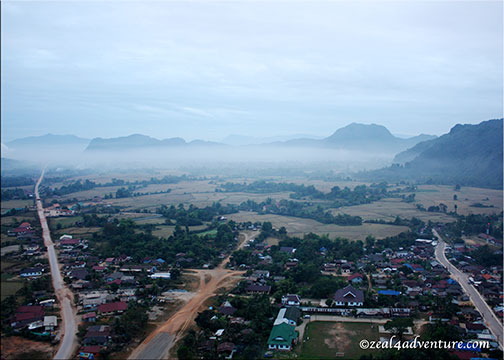
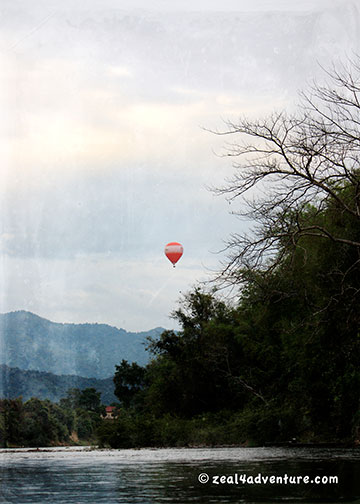
The balloon slowly lifted us up allowing us a bird’s eye view of this picturesque town.

With the air still misty, the mountain peaks looked mystical, like a painting almost.

The rice fields stretches out of the town and into the foothills.

The Namsong River beautifully snakes through Vang Vieng, manifesting its charm even more.

From the top, we see that the empty lot is actually the old airstrip and close to it is the road leading to Luang Prabang.

The beauty of Vang Vieng so captivated me; I forget that I was afraid of heights.  Tranquility fused with a rush of adrenalin was an experience unlike any I’ve had.

Hot Air Ballooning over Vang Vieng seemed to have blown away the cloud looming the town lately.

On the bus to Luang Prabang later that morning, I take one last look and say adieu to a town I have, in less than a day, become enchanted with.

Useful Info:

The Ballooning Company
Ban Vang Vieng, Laos PDR
+856-20-9691-8111
email: info@laoballooning.com
website: http://www.laoballooning.com

Fun and Frolic at the River Namsong

Credits:  Papers by Jessica Sprague (Bright Stripes paper), Carina Gardner (Coqu flirt 16), ITM Tricolor (Red tiny dot), QQ Knotty Girl papers; Elements by Carina Gardner (daisy paper bits)

Once a peaceful and quiet town, Vang Vieng used to appeal only to adventure travelers wanting to rock climb, explore caves or to simply enjoy its tranquil surroundings, its people and culture.

Surrounded with striking karst rock formation, the Namsong runs through it contributing to its serene setting.

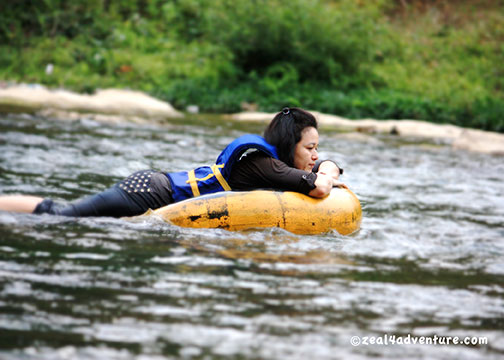
Since the launch of inner tubing in the mid-2000, the quiet town of Vang Vieng has never been quite the same.

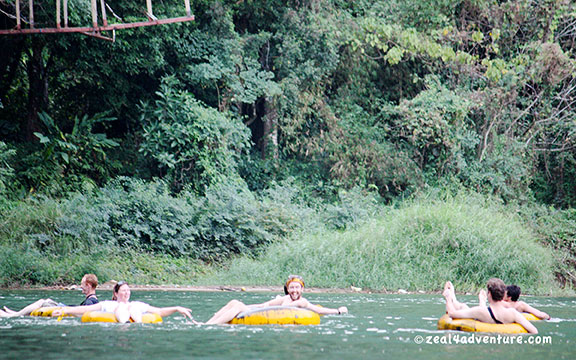
The Namsong now appeal to “partying” backpackers.

The town today is most know for “tubing” down the Namsong and with it came

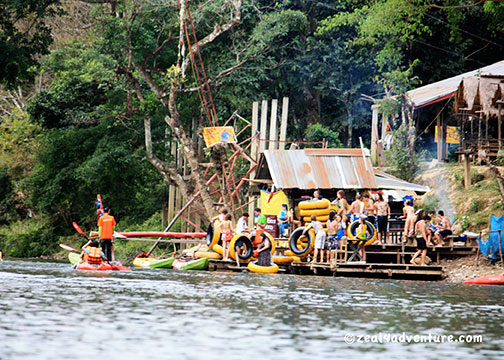
many bars along the riverbanks catering to those floating downstream either in rubber tubes or on a kayak.

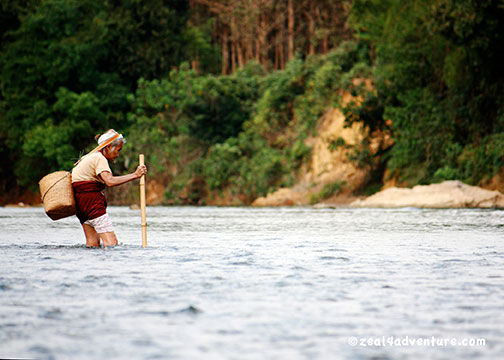
The townsfolk once farmers are now owners of bars and guesthouses – predominantly made up of chill-out bars and dance shacks all offering cheap booze,

some offering more thrills in the form of swings and ziplines.

Along with the bars, lodgings of various types line both sides of the riverbanks.

A short afternoon cruise up and down the river on a motorized boat reveal all these.  It is the easiest way to watch the goings on around the river.

Foreigners partying or simply floating down the river dominate local scenes along the river.

The “party” scene may have appealed to me years ago but today, I prefer the relaxed atmosphere of the down river part of the Namsong.

Watching the sunset over cocktails after a long day is my idea of a good time.

This looks like fun… so we booked a sunrise ride over Vang Vieng on a Hot Air Balloon… on my next post.

Road to Vang Vieng

Credits:  Papers by Crystal Wilkerson’s Room Collection series, Kaboks’ Christmas Treasure Papers; Photomask by Moninda.

A tuk-tuk picked us up at the hotel and brought us to a VIP bus parked along the Mekong River bank opposite Wat Chanh temple.  Before entering, we were asked to take off our shoes and were given a plastic bag to store them in the meantime.  The bus, like most lodgings and households in Laos, is a no-shoes zone.  Although lined with linoleum and seemingly clean enough, I felt strange and a bit grossed out walking barefooted.  But with the current seating, er… bunking arrangement, it was better this way.

The bus had double-decked bunk beds instead of seats.  I reached the end and it was all taken.  What’s going on?  Were we on the wrong bus perhaps?  It seemed like they were out of space, then I heard the conductor shout, “two in a bunk!” Are you kidding me?  These are made for size 0 petites, not the likes of us.  A couple occupying a bunk each gave one up and we thankfully took it.  At first we didn’t know how to go about it until the couple figured it out.  Facing each other, we sat uncomfortably for the next 4 hours.

Two hours down, we stopped for lunch.  Choices of sandwiches similar to Vietnam’s Banh Mi  was lunch for us.

I had a simple but pretty good canned tuna with mayo on a baguette.

At the Vang Vieng bus station two hours later, we made sure to get a proper bus particularly since we will be on the road for 6-7 hours.  Pointing to a photo of a bus with seats, we asked if there were seats available for the next day.  The lady nodded and asked, “what time?”  “10AM for the express bus to Luang Prabang, please.”

After the purchase, we got onto a jeep provided by the bus company that brought us to town.

Vang Vieng is a small tourist-oriented town about 150km north of Vientiane in Vientiane Province. It has only 3 streets, a market, a bus station and a few temples.  Before we even know it, we were on the main street in town.  We could have actually walked to town.

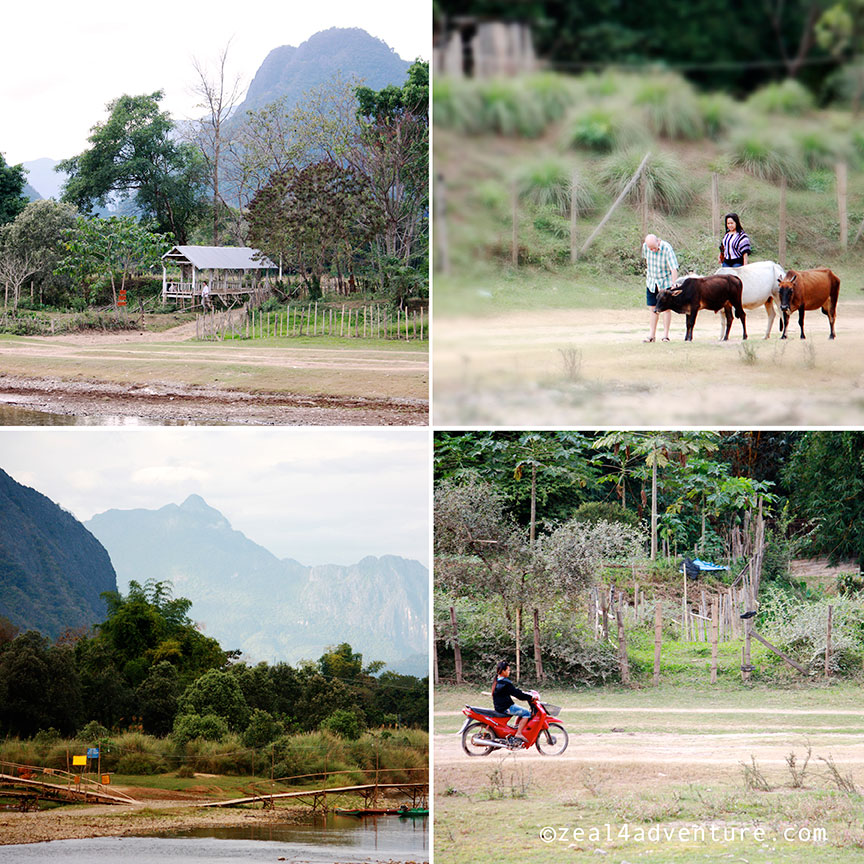
Small it may be but Vang Vieng is bursting with natural beauty.  The small town is beside a river and a picturesque backdrop of limestone karst surrounds it.  Mainly a backpacker’s hotspot until the mainstream travelers caught on a few years back.  Many are breaking a 10-hour road trip to Luang Prabang here, staying a couple of days to explore its natural wonders.  We had the same idea but didn’t have enough days to stay longer.  Wish we had.

In a quieter part of the Namsong River, a fair distance down river from the bars famous with the backpackers is The Elephant Crossing Hotel.  It is an easy walk from the main street even with backpacks in tow.

Because it situated on the banks of the Namsong River, the view was spectacular, but I guess anything along the riverbank would boast of the same breathtaking views.

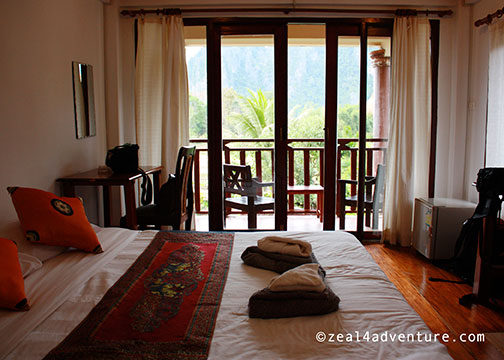
All 31 rooms of the 4-storey boutique hotel were designed to have a private balcony

overlooking Vang Vieng’s famous majestic limestone mountains.

Their riverside restaurant was calling out to us, and there we whiled the time away with some spring rolls, a few bottles of beer and a lot of river actions.

We could sit there and watch the day go by, truth to tell, if only we had more days to spare.

Useful Info:

Buses to Vang Vieng:  Tickets can be purchased at almost every guesthouses, hotels or even travel operators.  This should already include transport to the bus station.  Several types of buses to choose from:
 
Local Buses — slower without air conditioning. Journey takes at least 5 hours.  Cost: 40,000 Kip (US$ 5)
VIP Buses — run by Malany Bus Company (856-23) 51-1633 and Thavonsouk Bus Company.  Departs 10AM and 2PM.  Journey takes about 4 hours.  Cost: 50,000 Kip (US$ 6)
AC Minivans —   Leaves as soon as it is full and is the most convenient and comfortable transport.  Cost: 70,000-80,000 Kip. (US$ 9)
 
 
Elephant Crossing Hotel:
Ban Viengkeo, Vang Vieng District
Vientiane, Lao PDR
(856-23) 51-1232

A Day in Vientiane

Credits: Page from Kayla’s Tin Album by Shabby Miss Jenn.

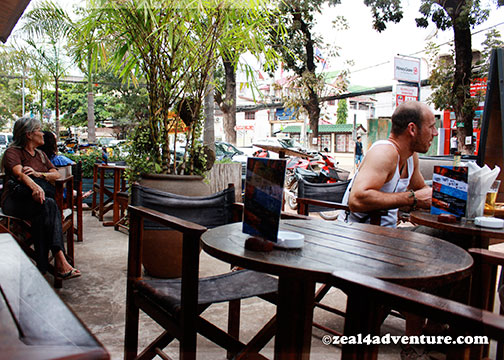
The outdoor seating at Dao Fa Bistro called out to us as we walked pass it.  We were tired from wandering the streets of Vientiane, visiting temples, doing some window-shopping and some real shopping along the way and resting our weary soles seemed like a good idea.

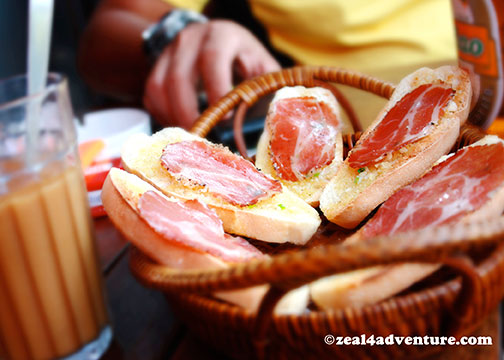
Right beside our table was a couple chatting over a plate of prosciutto on sliced garlic bread.  We decided to order the same.

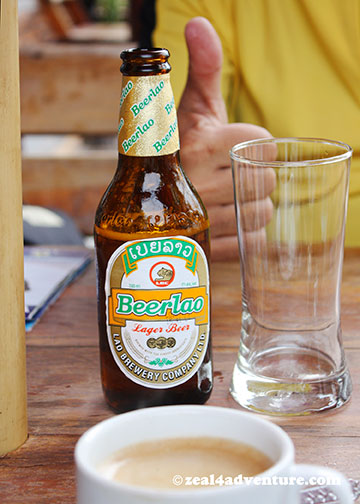
While we watched the people pass by, we devoured our basket of this heavenly tasting cured ham on garlic bread over iced coffee and cold Beer Lao.  How French can you get?  Laos was under French rule from 1893-1953, the influence evident in the many French inspired bistros that line the streets.

Our day started early at the LCCT in Malaysia.  An early morning flight to Vientiane had us arriving in Laos’ capital at around 9AM.  A taxi prearranged with our hotel was waiting for us outside the Wattay International Airport.  “Welcome to Vientiane” the driver greeted us.  A friendly guy wanting to know more – where are we from, how long we’re staying, where else we’re going, so on and so forth.  What a nice start to our Laos adventure, me think!

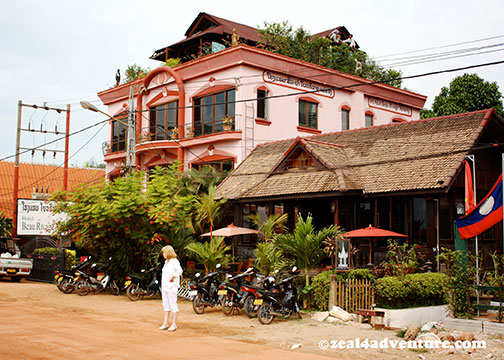
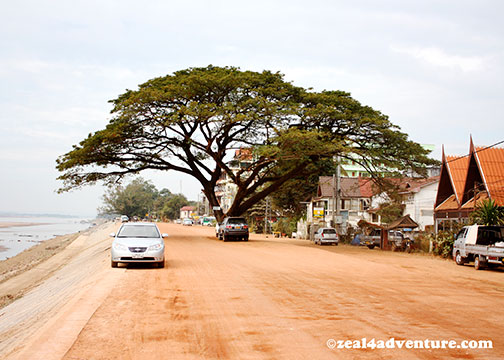
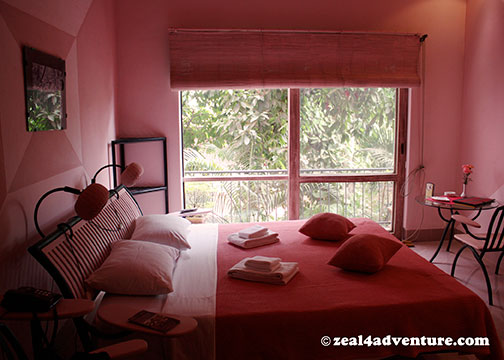
After 15-20 minutes probably (I was so deep in conversation with the taxi driver, I lost track of time), we arrived at what looked like a pink colonial 3-storey building on an unpaved road across the Mekong River.  We thanked the driver and paid him Kip 64,000, equivalent to US$ 8 for the pick up.

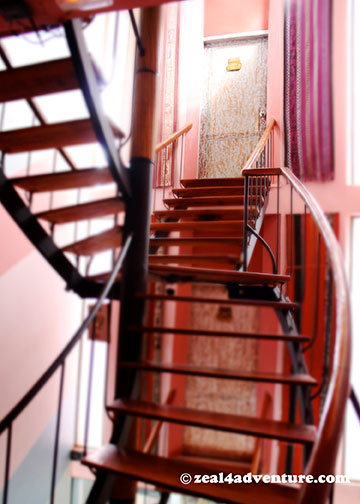
The cool modern design of the interior was a contrast to the colonial style exterior.  The color maintained the same scheme of pink and light blue of the exterior.  We were told to wait as they fix our room and we can wait at The Spirit House, the restaurant next door.

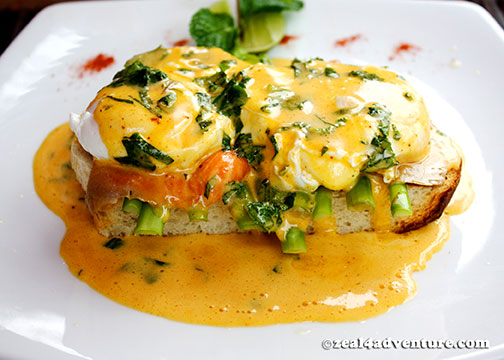
It was 10AM so we opted to share an Egg’s Benedict, just enough to satisfy our hunger but leaving space for lunch.   This was the first of many good meals throughout this trip.  But I was expecting that and would have been disappointed if our meal were anything less than good.  In 2008, when I first visited Laos, I was amazed to find the food here superb – Laotian, French or a fusion of both.  Not leaving out the charm of Laos, the food was one major reason why I went back and writing to you about it.

Hotel Beau Rivage Mekong is a boutique hotel sitting on a quieter stretch (road still unpaved) of Fa Ngum Road, a short distance from the center of town where the main “riverside scene” is.

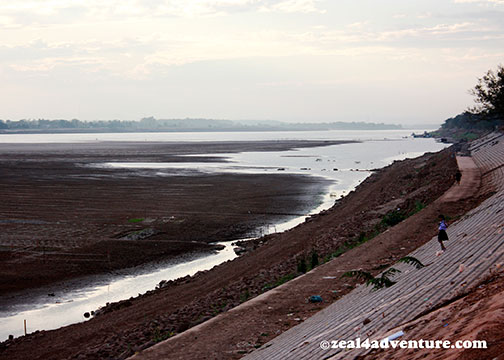
The Mekong River albeit practically dry in January serves as its main charm – great sunsets over cocktails is the main lure of their restaurant, The Spirit House.  A superior room would have the river view

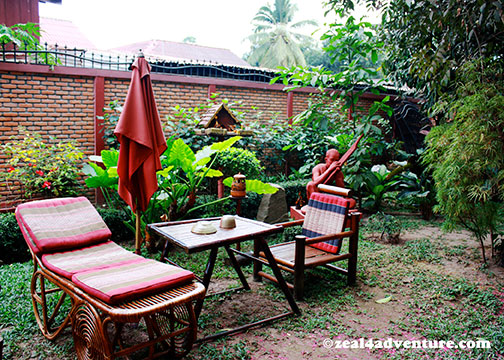
while a standard room at US$ 53, had the garden view.

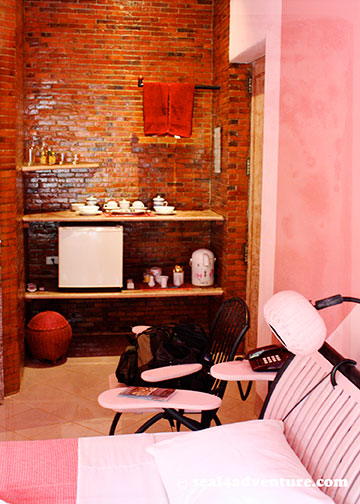
Our room was predictably pink – clean and spacious with a nice corner bar.

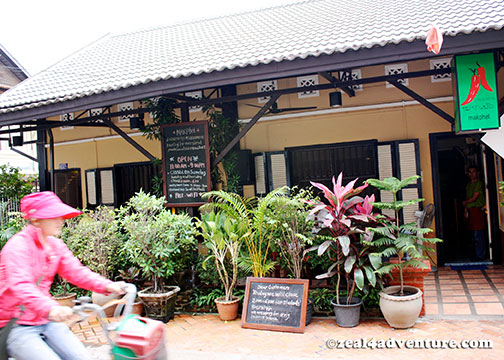
Leisurely walking to the main town, we would wander into streets; exploring shops that would catch our fancy when we happened to walk pass Makphet, a restaurant on the top of our list.

 We decided that lunch was going to be a little early since we were already there.

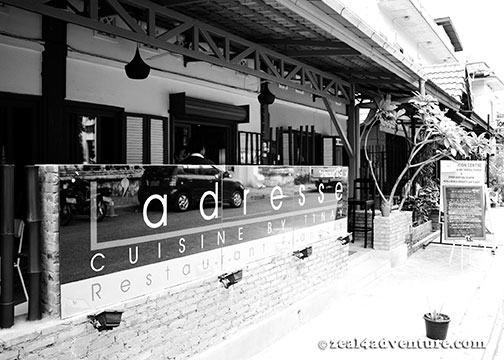
And as luck would have it, L’adresse de Tinay, the other restaurant we were eyeing was right beside so we made dinner reservations before we continued our exploring.

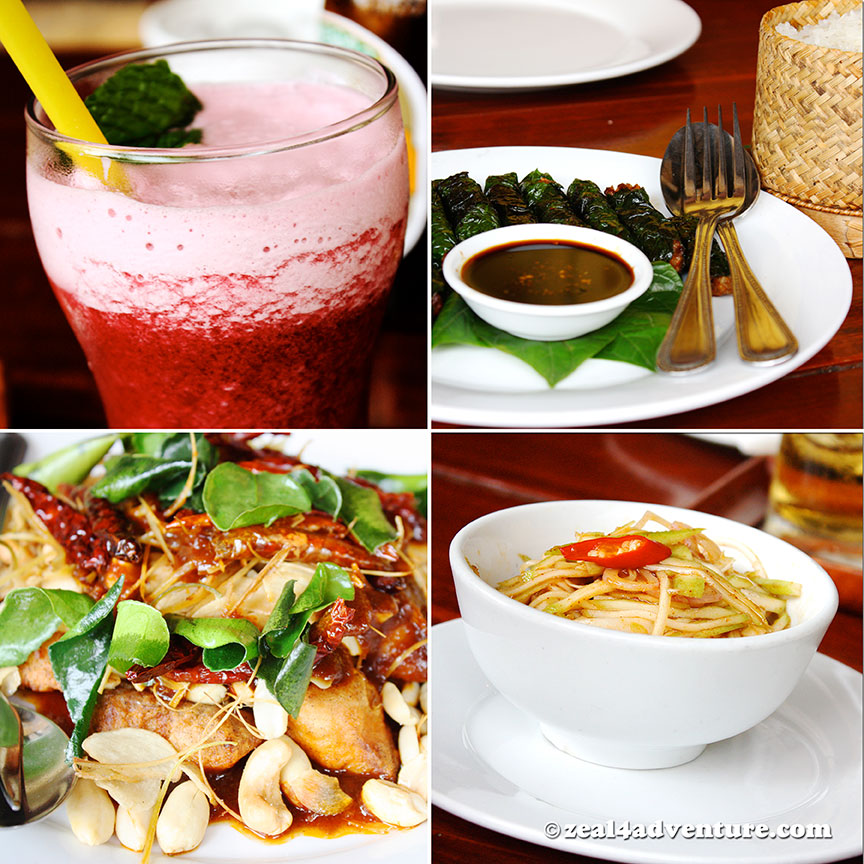
Clockwise: Grilled Beef Filet wrapped in Betel leaves with soy chili sauce, Green Mango Salad, Crispy Fried Mekong Fish with Sweet and Sour Tamarind Sauce, Red Hibiscus & Lime Breeze.

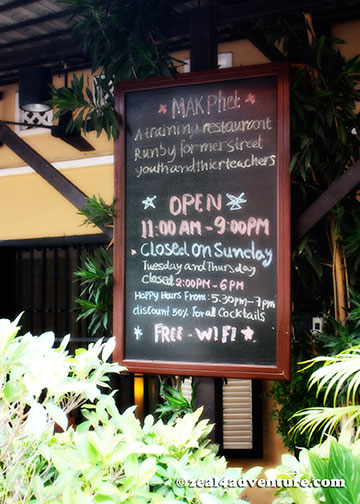
 Ranked by the 2009-2010 Miele Guide as one of the best restaurant in Asia, Makphet is a nice cozy restaurant serving modern Lao cuisine.  Not only do they serve wonderful food here, they are a “training restaurant” as well.

A training restaurant consists of culinary instructors from organizations such as Friends International to train homeless children and youths in the kitchen and in the front of house.  The group now run and support similar projects in Cambodia, Thailand, Indonesia, Honduras, Mexico, Egypt and Myanmar.  Needless to say, the dishes we chose were excellent and service was good.  They taught them well.  Be sure to get there earlier as the place can get packed.

* More on Makphet here.

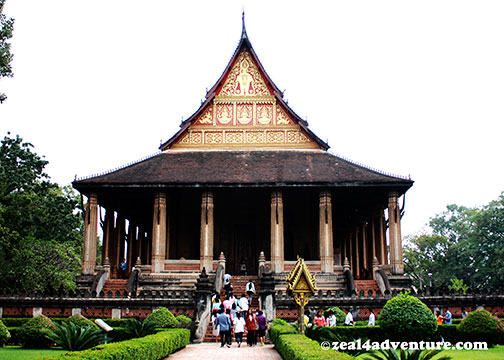
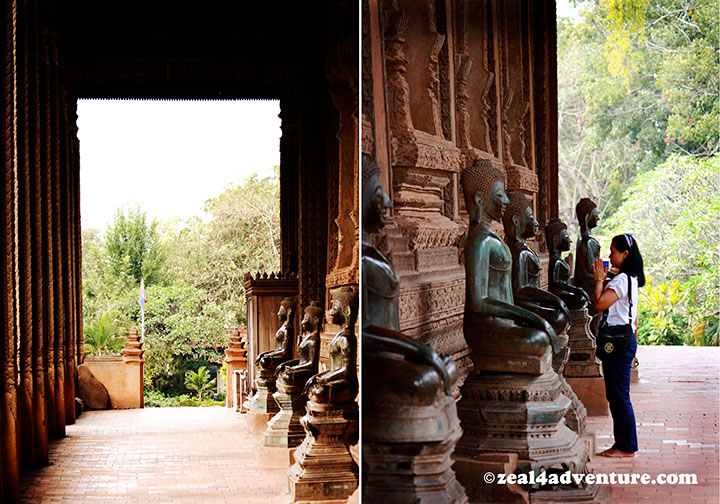
Stuffed yet happy to be ticking off one item off our long list so early in the trip.  We walked to Haw Phra Kaew, once a royal temple of the Laotian monarchy that now houses a decent museum of Laotian art.  Built in 1565 by King Sethathirath as his private sanctuary.  This charming temple used to house the famous Emerald Buddha, which is today housed in Bangkok.

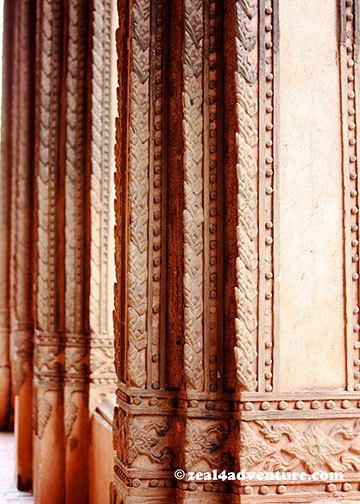
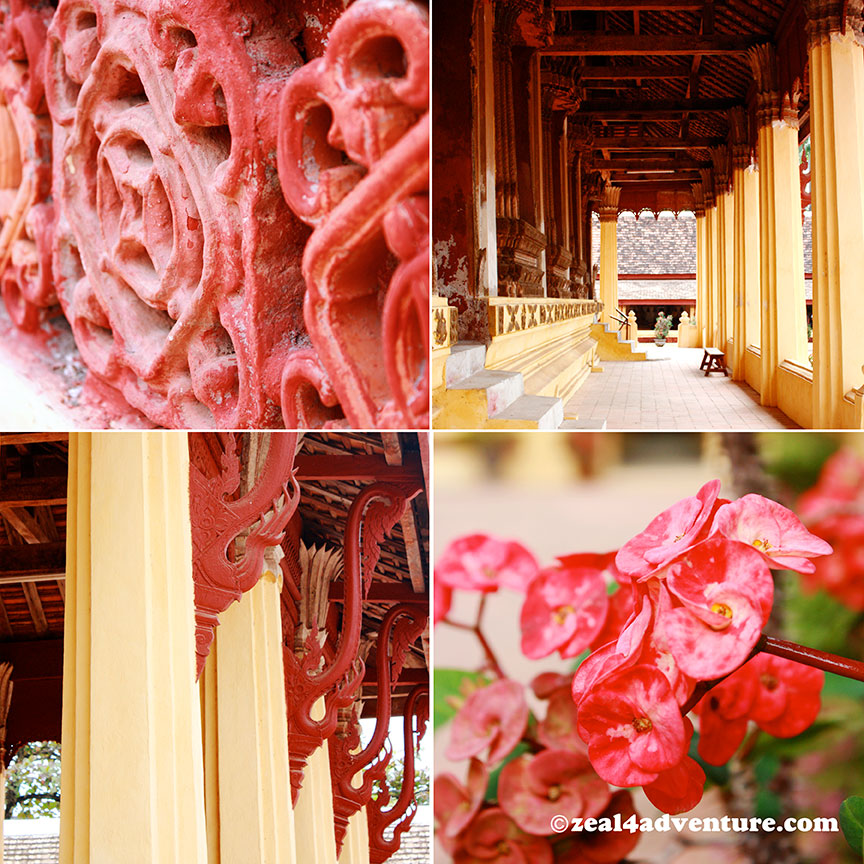
Intricately designed columns surround the temple

and buddhas grace the hallways where many still worship.

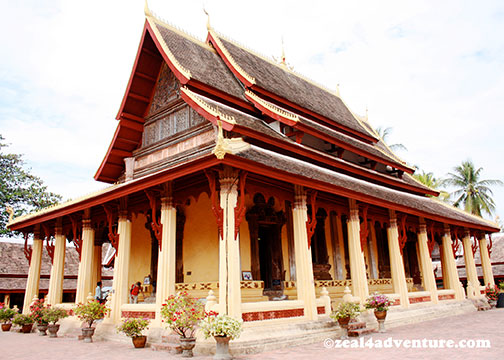
Practically across Haw Phra Kaew on Setthathirath Rd. is Wat Si Saket – a favorite and no doubt one of the most beautiful in Vientiane.  Both are important Buddhist sites but the latter is known to be the oldest temple still standing.

Modernization:  This was what greeted us at the entrance.

Built Siamese (Thai) style rather than Lao style, which could have saved the temple from destruction when the Siamese army destroyed and burned most of Vientiane in 1828.  The French restored the temple in 1924 and again in 1930.  The sim or the ordination halls stands in the middle of a square cloister.

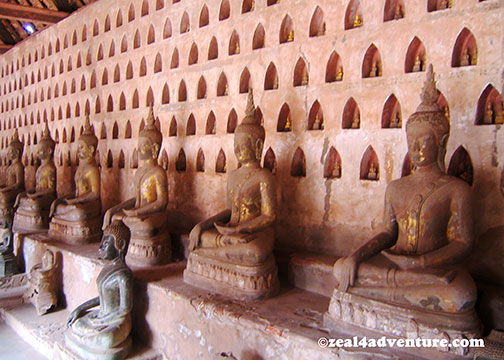
Thousand of small niches were built at the outer walls of the cloister with small Buddha images on each niche.  On shelves in front of the wall are three rows of Buddhas in various shape and size.

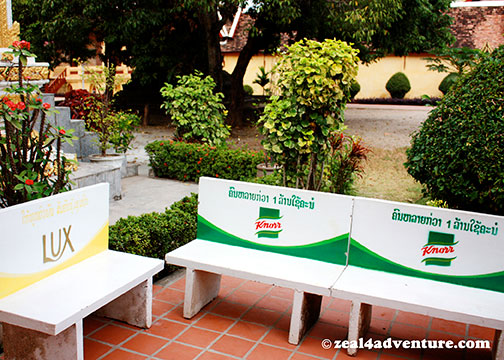
Along the edge of the cloister were potted plants abundantly blooming bringing life to the faded yellow walls and pillars, exuding a tranquil charm all its own.

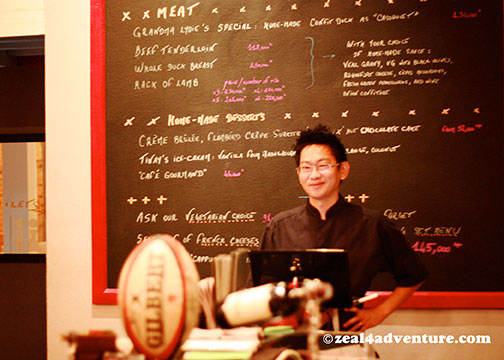
Dinner at L’adresse de Tinay was the perfect cap to our tiring yet beautiful day in Vientiane.  Tomorrow, we journey on to a Vang Vieng.  L’adressee is so to speak the newest kid in town serving outstanding French cuisine.  When we arrived, we were shown to the table we personally picked that afternoon.  A young man in black came out to greet us and get our orders.  Deliberating on what to order, the young man started giving his two cents worth and recommendations, owning up to the dishes when it hit me…  “Are you the chef?” I asked and he smiled and humbly introduced himself as Chef Tinay.

Trained in France, he went back home and opened this gem of a place with the help of his French wife, Delphine.

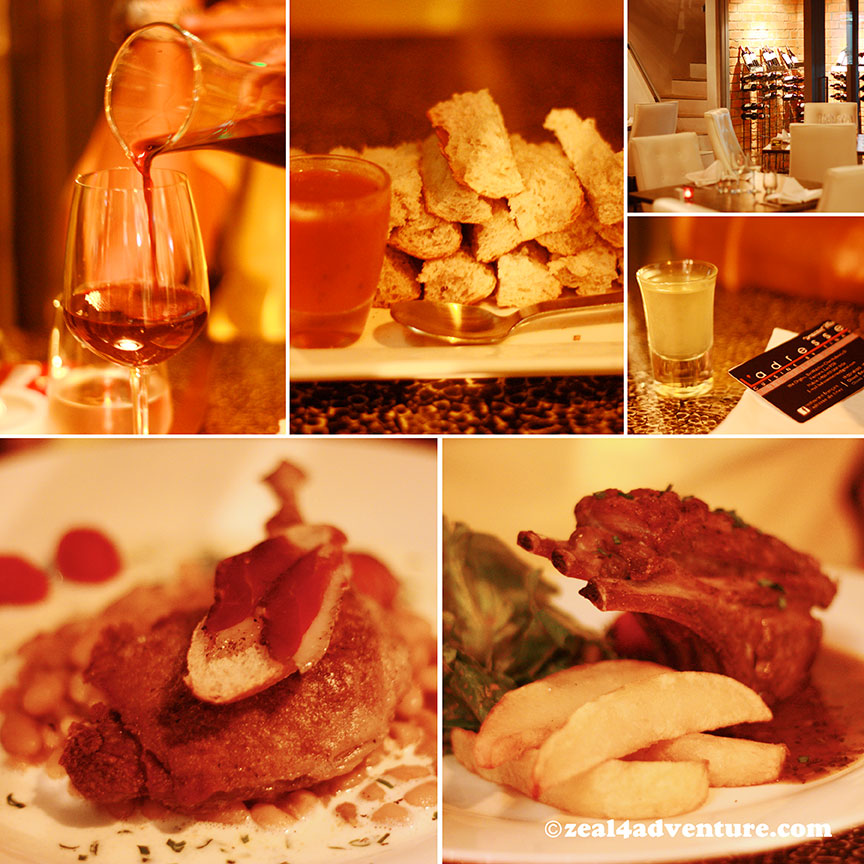
Main dishes: Duck Confit served as a cassoulet with Toulouse Sausage in sweet garlic cream (bottom left); Perfectly cooked Rack of Lamb (bottom right)

Everything we had from start to finish was excellent, ending with Delphine’s Limoncello, which she herself served.  Excellent French meal for US$ 40 per person… can you actually believe that?

* More on L’Adresse de Tinay here.

And with that we went to bed pleased at how well the day went.

Useful Info:

Hotel Beau Rivage Mekong
Fa Ngum Road, 
Ban Seetarn Neua,
Vientiane, Laos
+85621-243-350
Email: contact@hbrm.com
 
Makphet
Behind Wat Ong Teu parallel to Sethathirat Road,
Vientiane, Laos
+85621-260-587
Email: Makphet@friends-international.org
 
L’adresse de Tinay
Behind Wat Ong Teu parallel to Sethathirat Road,
Vientiane, Laos
+85620- 913-434
Email: ladressedetinay@gmail.com

Budget Traveling

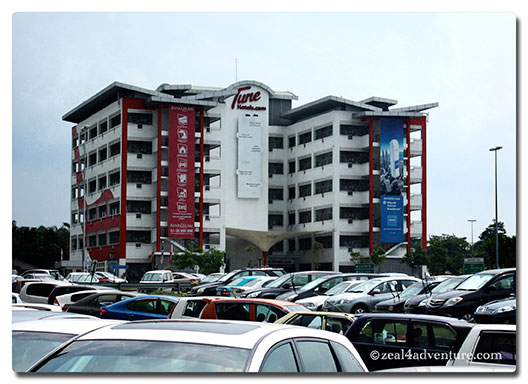
“You see that?” a friend pointed out to a showcase of a tiny, tiny room that was labeled Tune Hotel.  “That’s exactly the size of your room”, she said as we walked pass it at the arrival hall of the Low Cost Carrier Terminal (LCCT) of the Kuala Lumpur International Airport.

Maybe it’s the penny pincher in me or me just being practical that led me to save wherever and whenever I can since I got lured into traveling.  Oftentimes traveling on a budget.  Whatever savings I get, I throw back into my travel fund and splurge on other things like food, keepsakes or tours.  This is where budget airlines and hostels come in very handy.

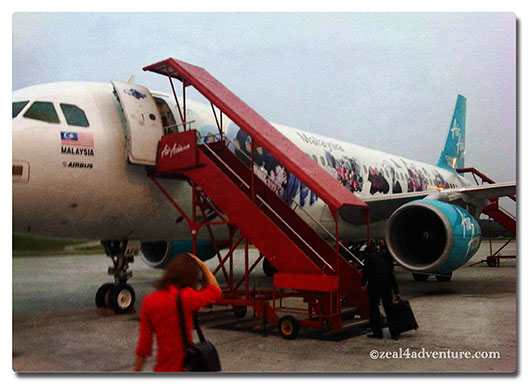
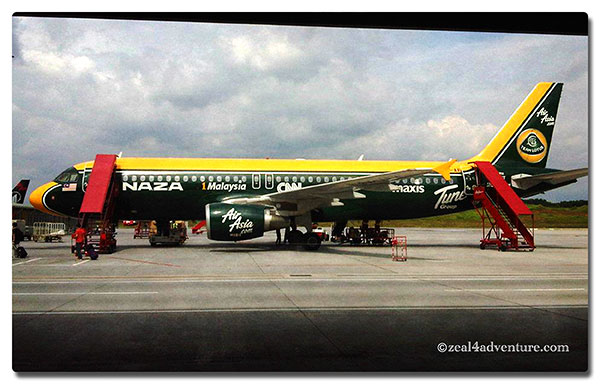
Air Asia – one of my favorite airlines – the low-fare, no frills airline with a route network that spans through more than 20 countries, mostly but not limited to Asia. They had been shuttling many Filipinos since 2005, when they started offering flights to Kota Kinabalu (KK) and Kuala Lumpur (KL) out of Clark’s Diosdado Macapagal International Airport.

And the good news is: Air Asia Philippines is the newest kid on the block; launched only last February 28, becoming the 13th regional hub of the Air Asia Group.  Future destinations are said to be HK, Macau, Inchon, Singapore, Japan, Bangkok…

Yes – it may be a bit of a hassle to travel all the way to Pampanga but the cheap fare makes it worth the effort, me thinks.

My first trip to KK in 2007 (en route to a diving expedition in Sipadan) was with this airline and many more followed since.  A satisfied customer is what I am – if you look at it as a no-frills, budget airline that it is, without expecting much in the service and perks department, then there really is nothing much to complain about.  The flights are almost always on time; the seats are comfortable enough but are first come first served.  If, however, you pay a little extra and go for the hot seats, you get to choose your seat online and board first – definitely worth the extra shell out.  I always pick the 1st row seats for the leg room. The food… well really, who needs to eat on a 4-hour flight anyway?  We normally just have our meals at any of the gas stations along the expressway before reaching the airport.

The downside here is that Kuala Lumpur, being their main hub, has most flights flying out of there.  It doesn’t help that their flights often need an overnight stay as well.  Sometimes having to pay for a room in nearby Sepang defeats the savings on the airfare – so what’s the point, right?

That’s where Tune Hotel comes in.  Just a stone’s throw away from LCCT, in fact you can spot it from the arrival terminal.  Although a shuttle is provided for just MYR 1, its schedule seemed unreliable (or maybe we were just impatient).

We waited until we realized that it takes less than 10 minutes by foot to get there, cutting through the parking lot by way of a walkway.  You can even take the trolley all the way to the hotel.

This hotel follows the same no-frills concept of its partner airline and is the answer to travelers who just need a few hours to sleep and shower.  We booked a 12-hour package for MYR 129 (that’s about US$ 40).

This came with a package of 1 towel, soap, shampoo and conditioner.  Slipping the key into a key holder turns on the power and the 12-hour countdown starts.  It stops when you take out the key.  So if you’re out most of the time, 12 hours is more than enough. US$ 40 for half a day is not exactly cheap when you think about it but it is a brilliant concept, don’t you think?

The room is exactly as seen at the airport.  It is practically the size of the bed with a bit of extra space to walk around albeit one at a time.  The bathroom is similarly as tiny and can likewise only fit one person at a time.  It is relatively clean and the bed is quite comfortable.  Oh and make sure you don’t bring a huge luggage as there is no space for that.  We brought backpacks so that worked well for us.

The upside to this is that it is conveniently located without having the need to wake up earlier than needed as flights are often scheduled early in the morning.

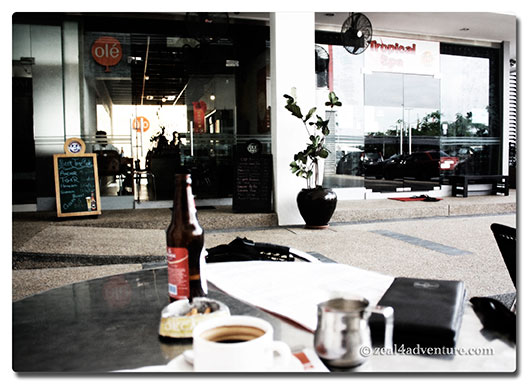
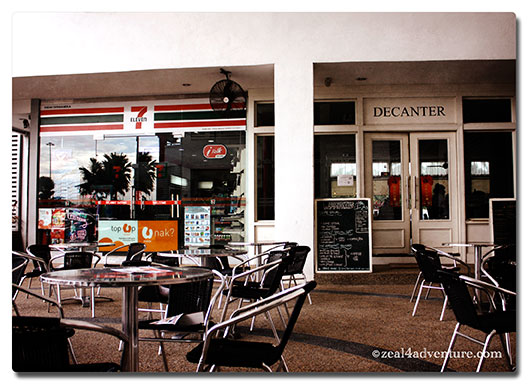
It has a nice courtyard just outside the hotel lobby with enough tables and chairs to hang around with a nice cold beer or coffee.  Decanter, the restaurant there, serves decent food and if budget is a concern, there is a 7-Eleven right beside and a coffee shop that is open 24 hours.

For a few hours, Tune Hotel serves its purpose of providing “reasonable” comfort and convenience for less.

Road Trip Eats: Cagayan Valley

“If you reject the food, ignore the customs, fear the religion and avoid the people, you might better stay home,” James Michener

Cagayan Valley is composed of five (5) provinces namely: Batanes, Cagayan, Isabela, Nueva Vizcaya and Quirino.  It lies in a larger valley in northeastern Luzon, between the Cordilleras and the Sierra Mountain Ranges.

Abuan River in Ilagan, Isabela

I’ve traveled this road countless times and for good reasons.  Besides serving as a jump off point to activities such as whitewater rafting and kayaking, Cagayan Valley’s allure includes beautiful mountain ranges that never failed to blow me away, unspoiled caves (except for Callao, of course) that begs to be explored, breathtaking sceneries along pristine rivers, historical churches, and good friends forged through the years.  Another important reason why I keep coming back is the food and here’s why.

The rugged mountain ranges greet you once you hit Nueva Vizcaya, also called the gateway to Cagayan Valley.  I’ve always looked forward to this part of the drive precisely because of the stunning mountains ranges of the Sierra Madre, the Caraballo and the Cordilleras that surrounds this province.  Truth be told, given that there are a lot to explore, I’ve never really set foot here except to pick up some gorgeous citrus fruits along the highway at Busilac, Bayombong– whatever is the sweetest and in season.

Satsuma from Nueva Vizcaya

The province has become known for its citrus fruits and oranges, which is available all year round.  Open even at the wee hours of the evening for the night travelers, the row of fruits stand at Busilac sells different varieties of oranges, which includes Perante, Valencia, Clementine, Satsuma, Pongkan, Washington Navel.  Other citrus fruits like Pomelo are also available when in season.  A bit on the tart side and not as sweet as the Davao variety, this yellowish variety is refreshingly juicy and best with salads and made as juice.

As you journey on, stop at Ilagan, Isabela (about 120 km from Nueva Vizcaya) for some really good suman (rice cake) called Inatata.
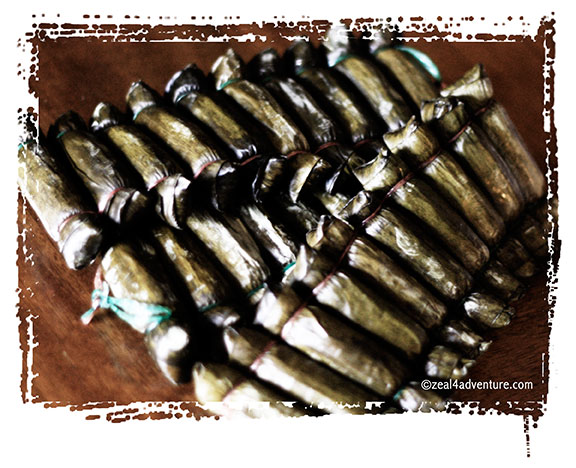
Wrapped in banana leaves as most sumans are but distinctly bundled in 10s.  But what makes this adorable mini suman a cut above the rest lies not in the packaging but in the product itself.
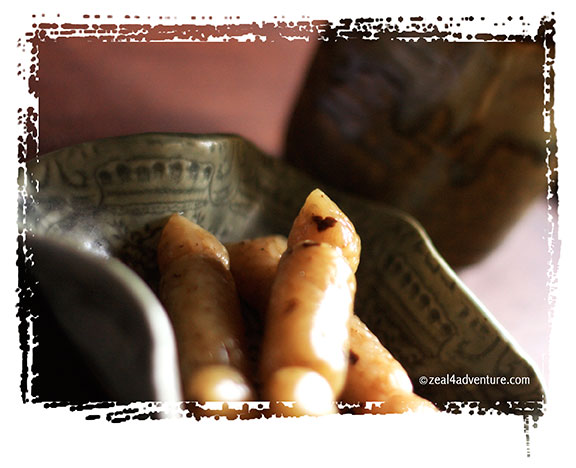
Made of glutinous rice, sugar, butter and coconut milk, somewhat like Biko but smoother and creamier in texture.  I must warn you, these little babies are so good, it’s hard to stop.  A bundle goes so quickly and before you know it, you’re so stuffed.

Once you reach the town proper of Ilagan, you’ll find a nipa hut (or is it a bamboo?) stall somewhere around the rotunda that sells Inatata for P25 a bundle.  Get a few bundles and a few more for good measure, then go across to a Jollibee to get yourself some coffee to go with the it.  You’ll thank me for it.

Make sure to save some for the road or for dessert after a plate of Pancit Cabagan at Cabagan, Isabela.  They say Feli-Cita’s serves the best in Cabagan.  This pancit has become the benchmark of all pancits for me.  Nothing so far is better than Pancit Cabagan, a medley of stir-fried fresh noodles, julienned cabbage and carrots, boiled quail eggs, and a generous heap of lechon de carajay.  Eaten with fresh onions, local soy sauce and calamansi… heaven.  What makes this so heavenly are the fresh al dente noodles – an apparent secret that may be hard to replicate.

I always have mine not in Cabagan but in Natan’s.  A small outdoor restaurant just outside the Tuguegarao Airport.  This simple pleasure I can have without having to do a road trip actually.  I often look forward to trips to the airport (whether arriving or departing) for I can have my fix of Pancit Cabagan at Natan’s.  Pancit Cabagan and Coke… need I say more?

Speaking of Tuguegarao – my base when I’m in the region and the gateway to Peñablanca where the Pinacanauan River flows.
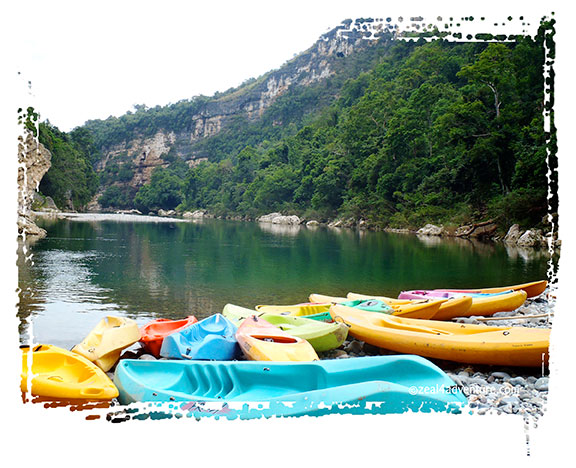
It is one of my favorite rivers where just hanging out along the riverbanks for a barbecue lunch and some kayaking is enough to make me happy. Kayaking aside, it is also home to the circadian flights of fruit bats – a must-see spectacle when in the area.

Longganisa served at Casa Carag

When in Tuguegarao, I make it a point to bring home packs of Tuguegarao Longganisa for my stash and to give as gifts.  I’ve never met anyone who’ve tried this garlicky sausage and not love it.

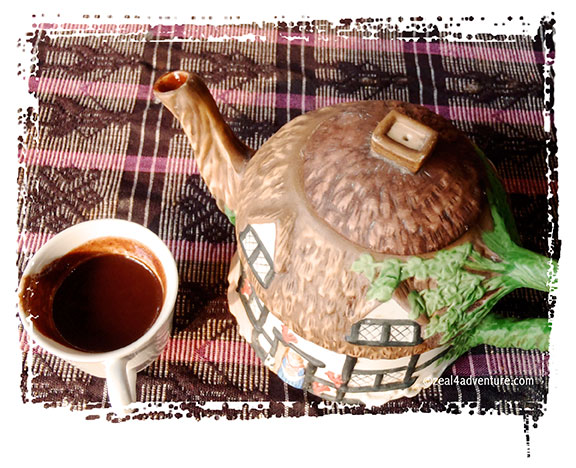
Native Chocolate at Casa Carag

Another must have when I’m in Tuguegarao is their Tsokolate.  Four tableas (tablets) to a cup makes a perfect native chocolate drink – just thick enough with the right amount of sweetness.  Tsokolate, longganisa, eggs and garlic fried rice = a power breakfast courtesy of Tuguegarao.

About 65km further north on your way to Sta. Ana perhaps, is the town of Lal-lo.  Although it is recognized in history as once being the seat of the Diocese until it was transferred to Vigan in Ilocos Sur a long time ago, I know it as a town that makes the best milk candy I have ever tasted.
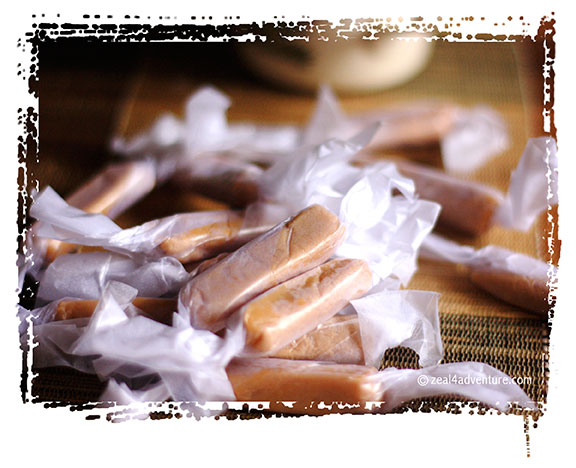
Better than the more popular Alcala milk candy, I swear.  Both made of carabao’s milk but somehow, the one from Lal-lo is softer and creamier with seemingly more milk.  Both are not too sweet but the Lal-lo specialty wins hands down.  The thing is, you won’t find it at the Tuguegarao airport where the Alcala milk candy abound.

So if you find yourself in Lal-lo by any chance, look for this sign along the road.  I promise it is worth the stop.

Once you reach Sta. Ana, head straight to the market for some fat, sweet crabs, lobster and the freshest fish.

Known as a game fishing mecca, the rich fishing grounds yield lobsters, octopus, yellow fin tuna, blue marlin and many more.  Freshwater fish, crabs and shrimps likewise abound in inland fishing grounds.
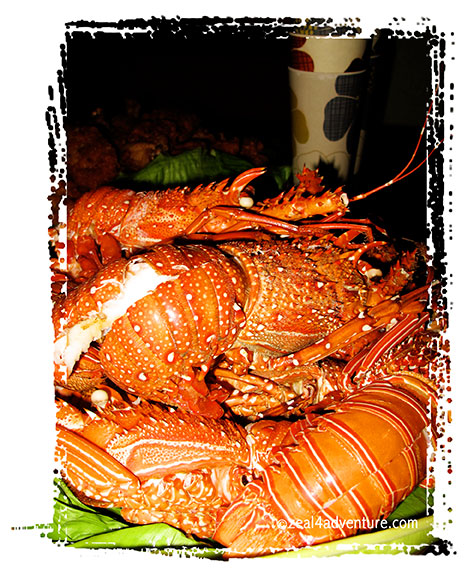
Best is to buy them at the market and have it cooked in a restaurant nearby for a fee.  We had ours cooked by JnJ Seafood restaurant along the Highway.
Ok, enough…

I’ll leave you with this for now but let this be a Part 1 as I document more good eats from this region.  A region still underrated and unnoticed in the tourism realm.   Its people, its natural wonders and its food keeps me coming back for more.

Unexpected Bonus

Mag-dive ka na, nandito ka na rin, you should dive, you’re already here”.  To be in Moalboal and not dive is indeed ridiculous. But because I was the only diver in the group, I didn’t plan to… until the divemaster convinced me, that is.

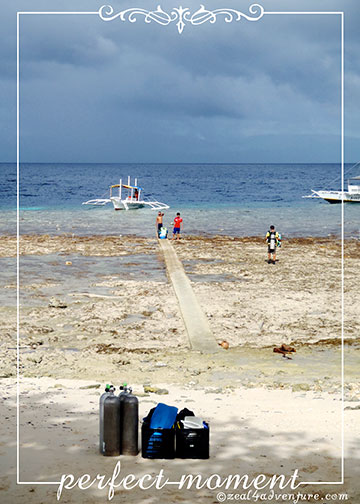
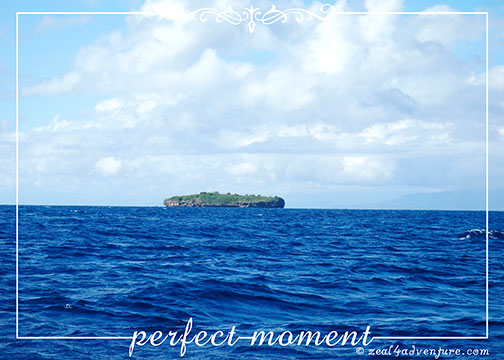
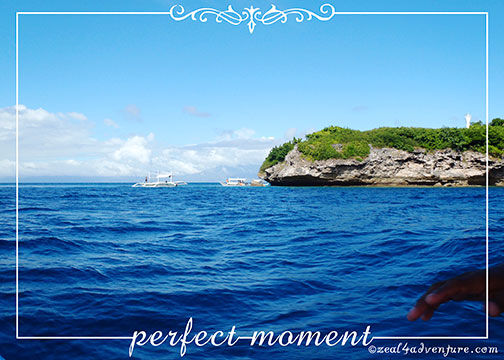
So we got up early the next day, sore from yesterday’s canyoning, and headed to this tiny island called Pescador.  Among the many impressive dive spots in Moalboal, Pescador is described to be their “jewel”.  My friends indulged and shared the cost of the banca (outrigger boat) with me.  They went snorkeling while I explored the world under… ok, that doesn’t sound right but you know what I mean.   😉

Located in the Tañon Straits, a narrow stretch of sea between the southern end of Cebu and Negros Oriental.  Considered “the most unique in the world” as it has the richest marine biodiversity in the coral triangle in the Philippines.

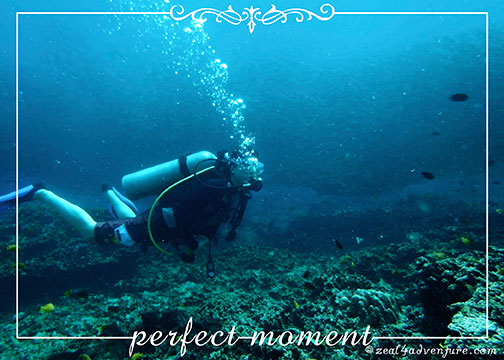
The island is essentially a wall dive made interesting with the overhangs, small caverns and holes in the reef wall.  It was an easy dive with just the right currents.  I was enjoying the drift, fascinated with all the marine life along the small caverns when divemaster taps me on the shoulder.

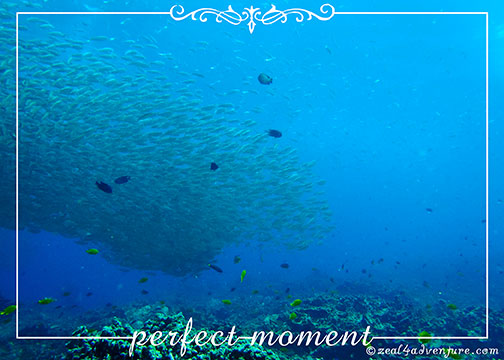
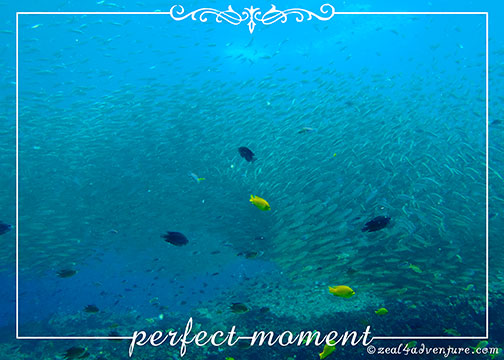
He pointed to my left and there, a short distance away, was a giant wall of fish, a silvery cloud of endless sardines against the blue backdrop of the deep, moving in one accord.  I was awestruck.  Never thought I’d ever get to see such a spectacle in our shores.

The first time I became aware of a sardine run was when a friend, years back,  showed me an awesome video filmed in South Africa.  Every year between the months of May and July, this famous shoal of sardines travel from their home in Agulhas banks and head north.  Predators follow this migration making it the main attraction for divers, rivaling the great migration in the African savannah.  This made it to my bucket list.

The tiny island off Moalboal has been host, for a few years now, to millions of sardines running the tropical waters but unlike the migration in South Africa; the sardines in our shores seemed to have made it its home (at least for now).  This wonderful phenomenon is seen all year round.  Predators seen in these side are mostly Threshers, White Tips and Whale Sharks.  Unfortunately, there were no predators in sight in this dive.  We were flying out the next day and couldn’t go below 40 ft.  Although not as spectacular as the South African video, it was an awesome experience nevertheless.

Observing from the surface, the snorkelers had their share of awesomeness from a different perspective.  They had to abort mid-stream though as the water got choppy, making it difficult to continue.  “Super bitin, too short” they said.

On our way back to the resort, the choppy waters were too big for our small boat, breaking an outrigger.

We were dropped off somewhere along White Beach.  Carrying our gears (except the tanks), walked the rest of the way back to the resort.  Awesome day.

The Kawasan High

Credits:  Papers by Queen of Quirks, Elements by Scrap Matters’ Life Simple Surprises Kit

Remarkable diving defines Moalboal and many combine it with a side trip to Kawasan Falls in nearby Badian town.

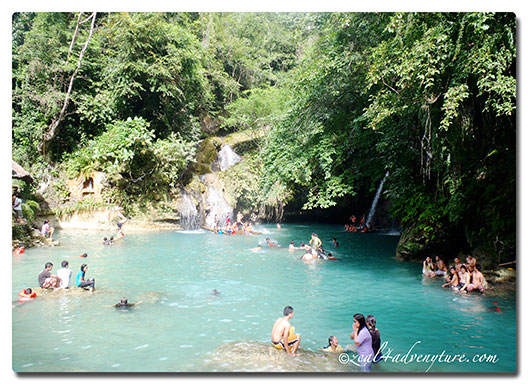
Just an hour away from Cebu’s diving destination, Badian is known for its 3-tiered waterfalls called Kawasan Falls.

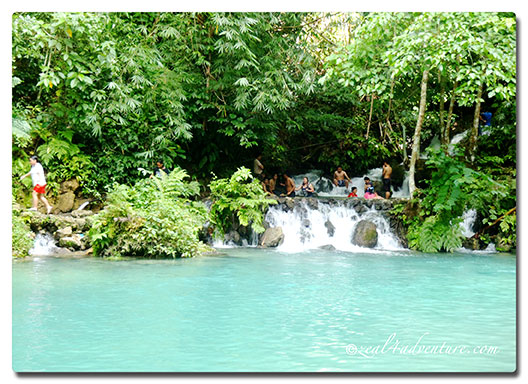
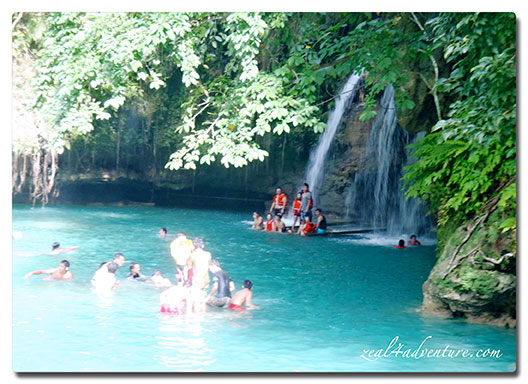
A short trek will take you to the first falls where one can enjoy it with nary a need to swim if that is the preference (bamboo rafts are available to take people to the falls).

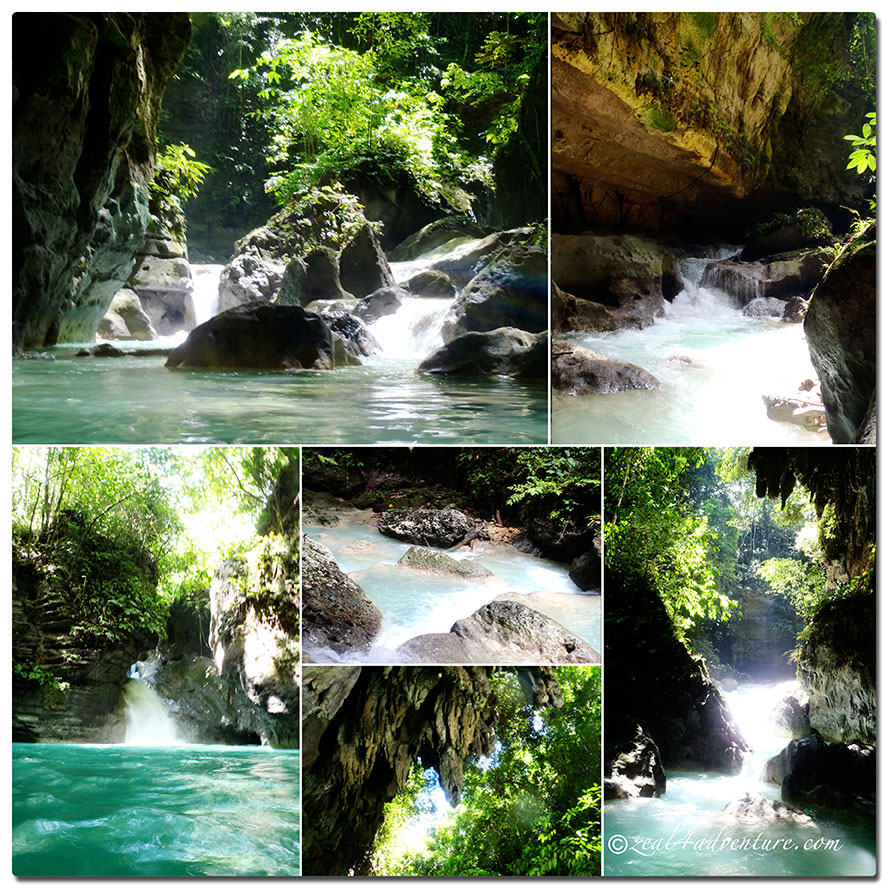
The beauty of the waterfalls cascading into turquoise pools and the lush tropical vegetation surrounding it already provides a natural high.

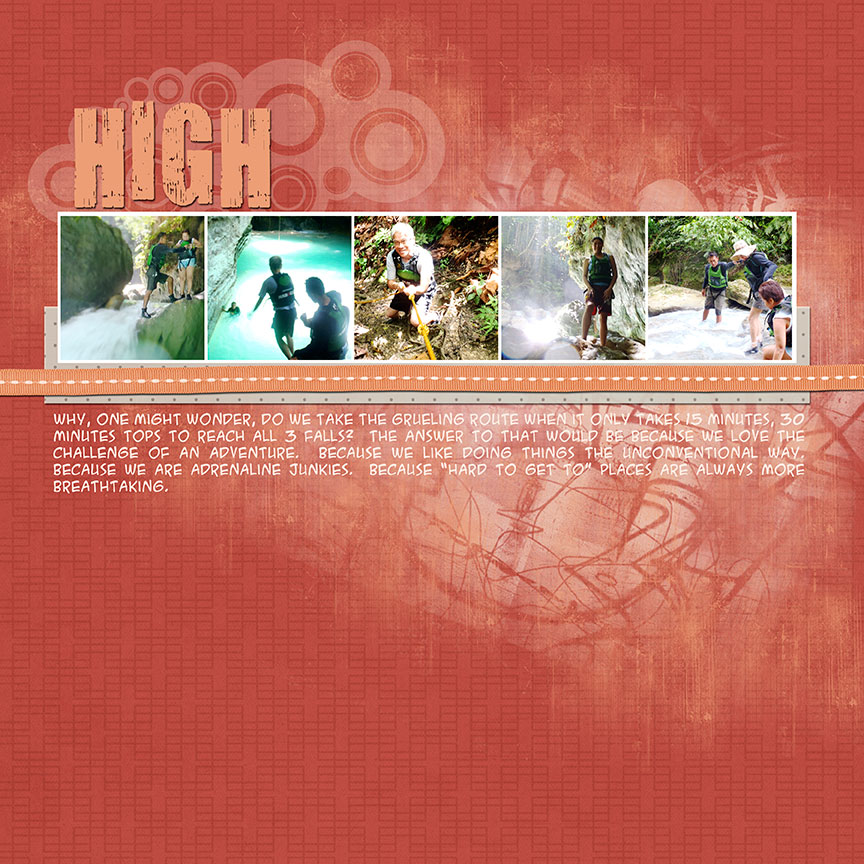
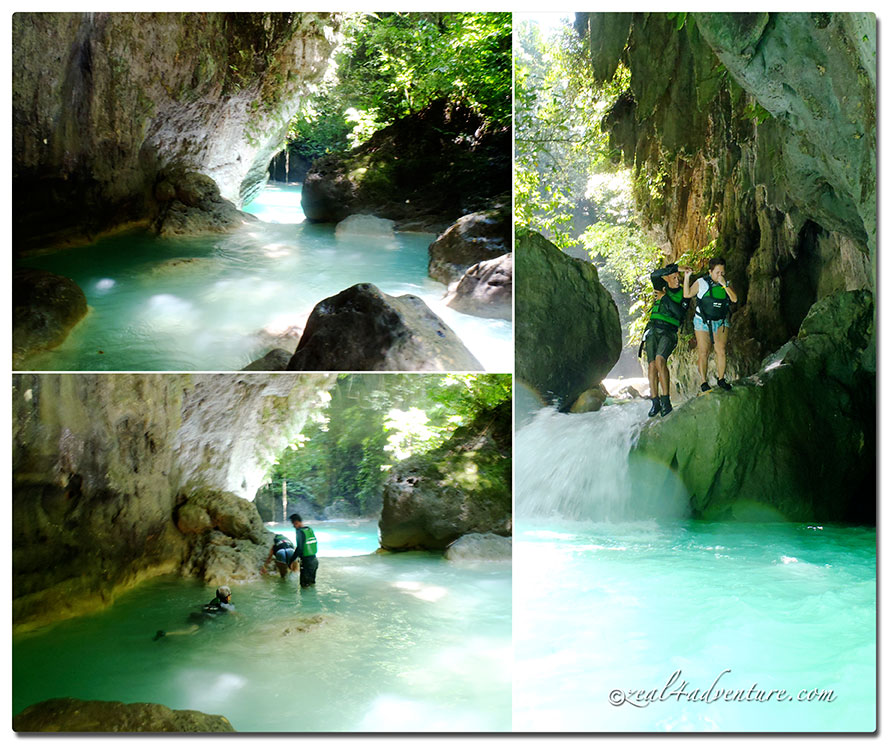
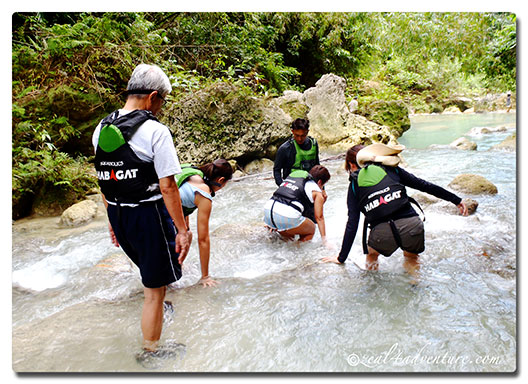
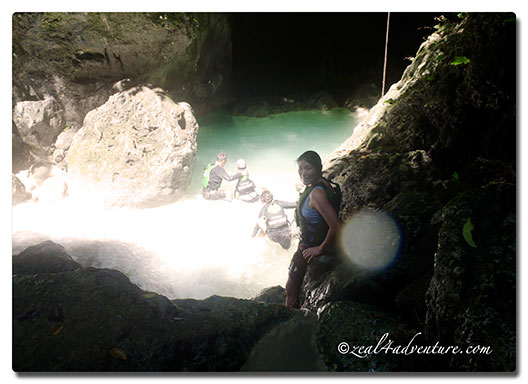
What more if, for 4 hours, you get to swim, trek, and jump into several of the turquoise pools along the way to Kawasan Falls?

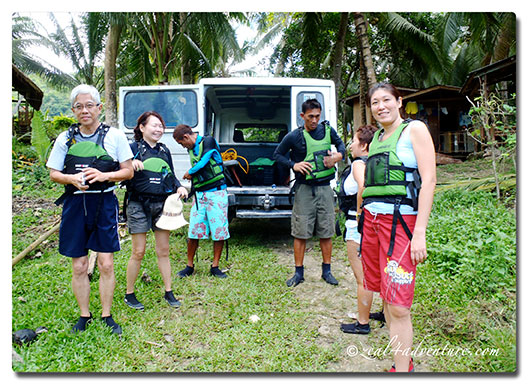
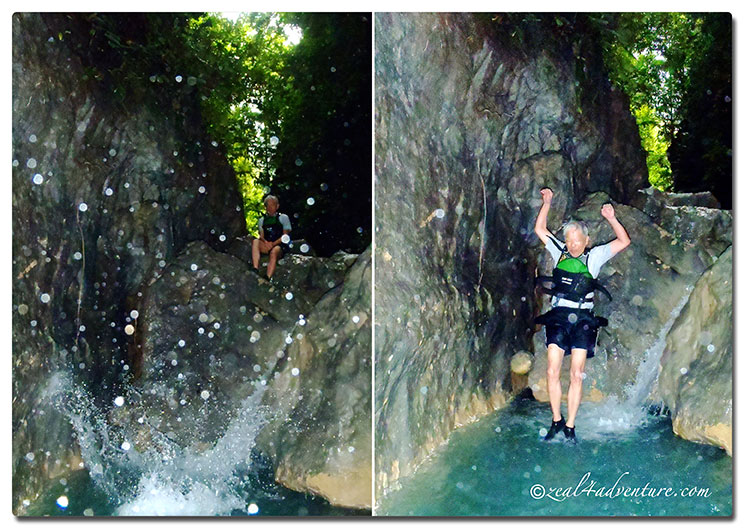
We entered the falls from upstream, near the border of Badian, at the Matutinao Valley geared with a pair of booties, a life jacket and an adventurous spirit.  Canyoning at the Kawasan is not your ordinary Kawasan Falls excursion.

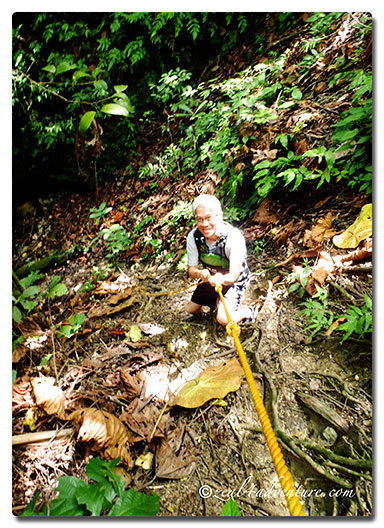
It requires swimming, river trekking, jumping off waterfalls and a bit of rappelling.  Canyoneering, as they call it, is a sport of exploring a canyon by engaging in rappelling, rafting and waterfall jumping.

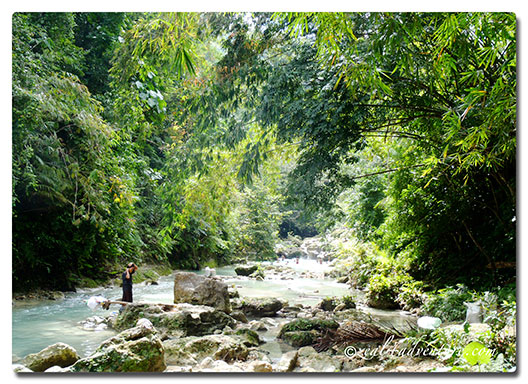
The adrenalin started pumping at the Matutinao River, just a short distance from our jump-off.

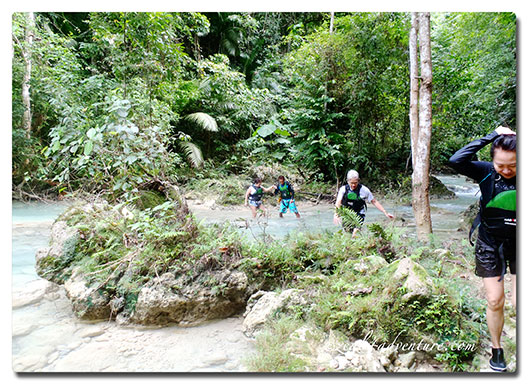
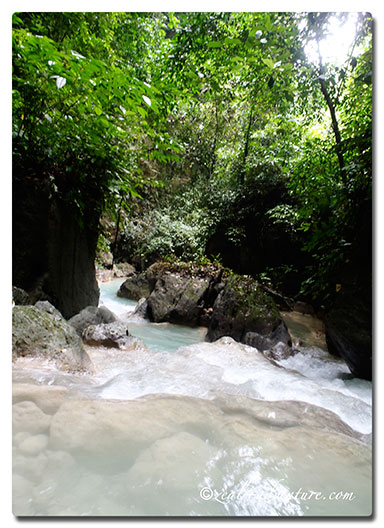
We scrambled over rocks as we get use to the art of river trekking.

We sort of rappelled down a mountain slope to reach another canyon.

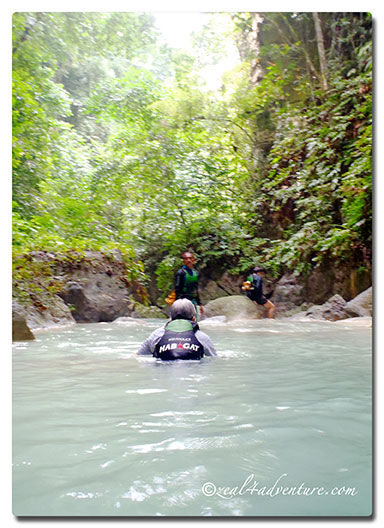
We swam when the water was deep.

We jumped from big boulders 4 times, sometimes over waterfalls, other times into a small basin with little room for error.

It was terrifying at times, but for the most part, it afforded us an ultimate high, non-stop adrenalin rush.  It was a high like no other.

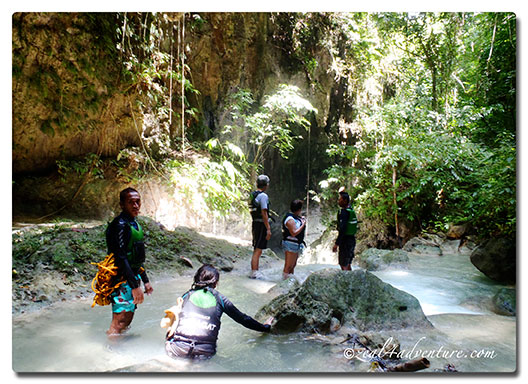
The Aquaholic team made us feel safe all through out, guiding us through the magnificent sceneries of gorgeous blue lagoons and spectacular canyons and rock formation.

The remoteness and lack of habitation have left this valley a sanctuary.  In the course of our 4-hour escapade, we bumped into a few locals at the start and another canyoning group that explores the river the harder way from below, which they call river climbing.  Otherwise, we had the river and the beautiful riverscape all to ourselves to take pleasure in.

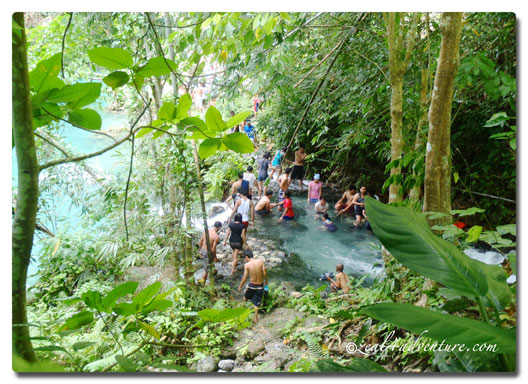
We reached the top of the 3rd cascade of Kawasan Falls at around 2pm.  Contrary to the tranquil environment we came from, we were greeted with loads of people enjoying their Sunday.

Caught off guard and surprised to see people out of nowhere walking down from atop the falls, they watched us with wonder as we walked pass them, exhausted but exhilarated.  Their facial expressions seemed to ask, “Where the heck did they come from?”

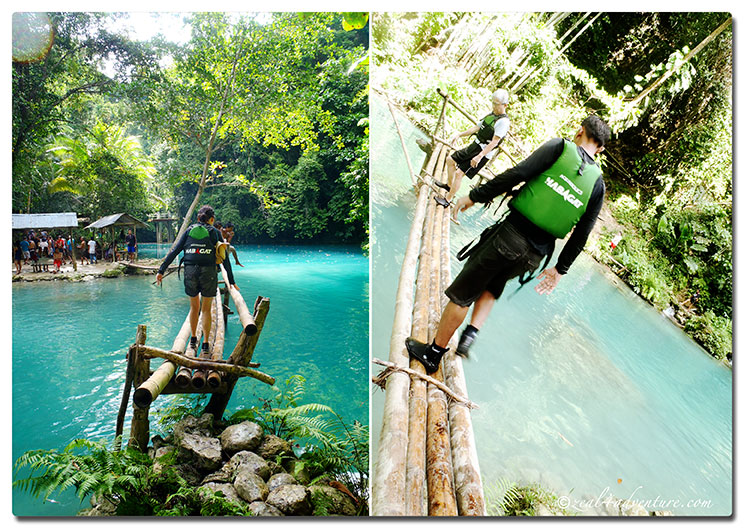
Going back to the van we walked this bamboo bridge which ironically was more frightening.

Why, one might wonder, do we take the grueling route when it only takes 15 minutes, 30 minutes tops to reach all 3 falls?

The answer to that would be because we love the challenge of an adventure.  Because we like doing things the unconventional way.  Because we are adrenaline junkies.  Because off-the-beaten paths are always more breathtaking…

Useful Info:

Philippine Aquaholic Diver’s Inc.
Club Serena Resort
Moalboal, Cebu City
Contact No: +63 (32) 516-1847; +63 (32) 474-0050; +63 (917) 717-3333
Email: dive@aquaholics.com.ph

Prelude To A Great Adventure

We were squished in a corner at the back of the mini van that was to take us westbound to Moalboal.  The van leaves when it is full and another one takes its place, taking in more passengers.

We only had time for a quick brunch at One Citilink Terminal before the conductor started calling for passengers.  There was no leg room where I was sitting in the van; I had to sit up the entire 2 hours to Moalboal.  I could not be happier to stretch my legs finally when we got off.  And even more so that we are to embark on a new adventure.  Yay!

Boasting of world-class dive spots, Moalboal has been a favorite haunt of serious divers since the ‘70s.  Diving, snorkeling and beach combing aside, a new adventure has emerged a few years ago in this side of Cebu.  This led us to Club Serena.

Where the van dropped us off, we took a tricycle to the resort.  The chatty tricycle driver offered to take us island hopping, snorkeling…  “Makakamura ho kayo (it will cost you less)”, he said.  I would have taken his offer except that we had more than just snorkeling and island hopping in mind.

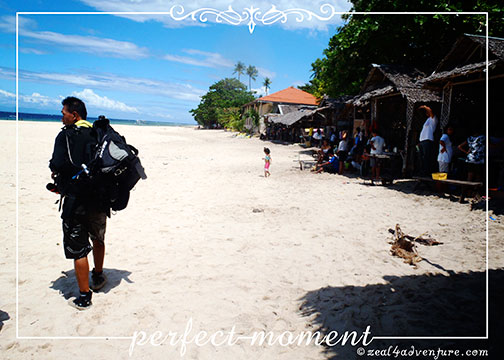
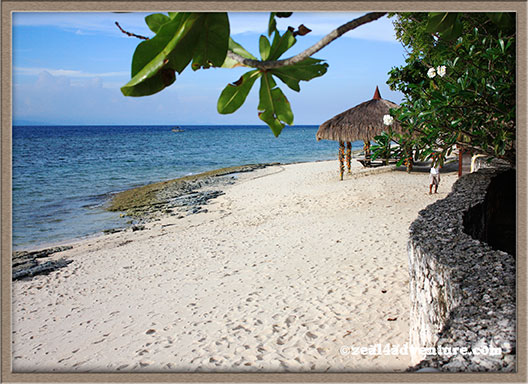
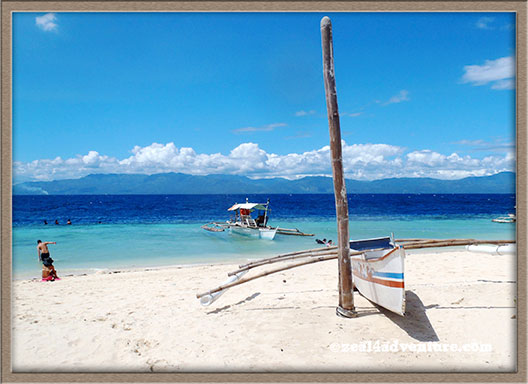
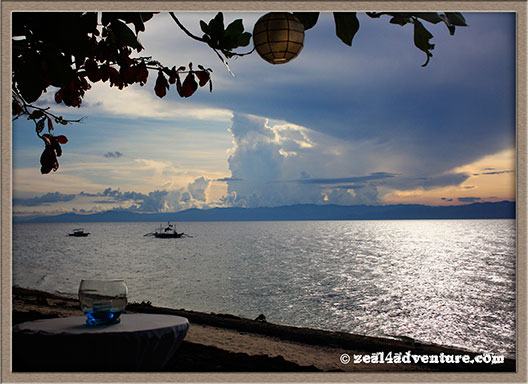
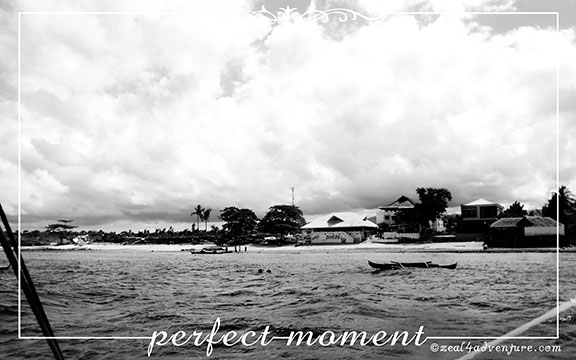
Beach in front of the resort

In the outskirts of Moalboal is White Beach and lying at the end away from the busier Panagsama Beach is Club Serena.

Stunning hues of blue from sea to sky is supposedly typical throughout Cebu.

Although both beach share a coastline, separated only by coves and rocks, White Beach also known as Basdaku (which means big sand in Cebuano) has a wide stretch of sand.  Panagsama Beach, however, plays hosts to many bars and restaurants but has no real sand to boast.  Typhoons and bad coastal management has left the beach of Panagsama rocky and without sand.  Depending on preference, I’m glad we ended up in quiet White Beach.

Honey for sale outside the resort.

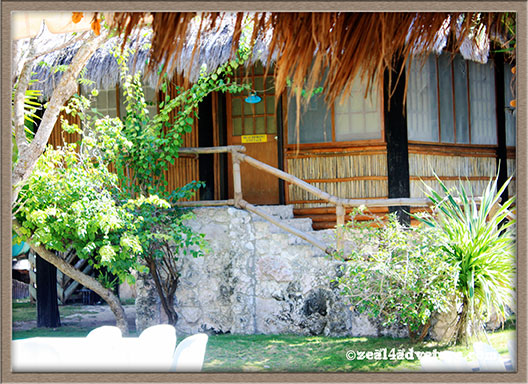
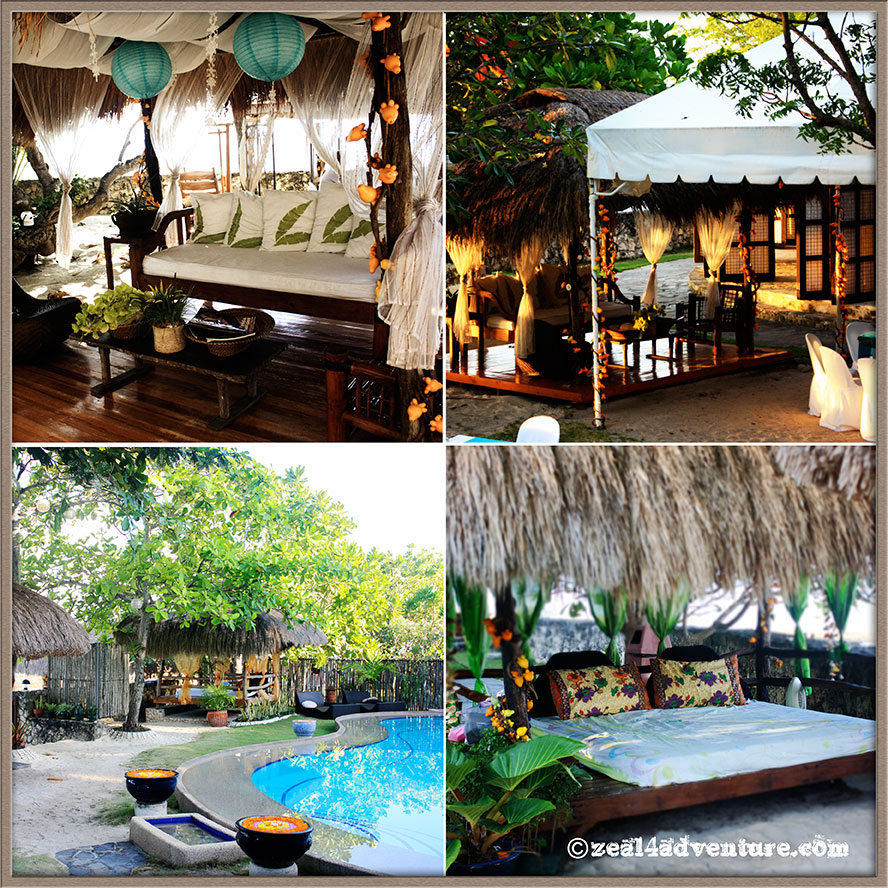
Possibly the most expensive resort along the strip, Club Serena has 8 rooms scattered around its grounds.

We took the Beachfront Suite, which they also call the Honeymoon Suite (perfect actually for honeymooners but that was not what we were there for).

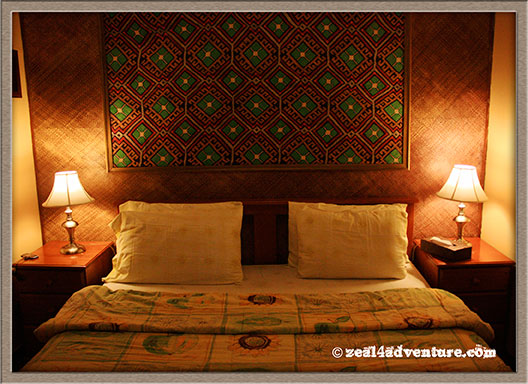
Fits all 4 but 2 had to sleep on mattresses.

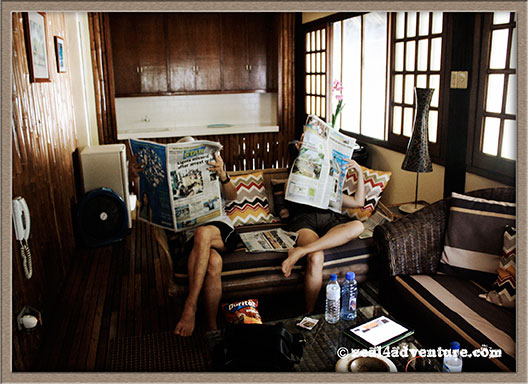
The suite comes with a room that is big enough to fit 4 of us, it also has a living and dining area where we would hangout and read.

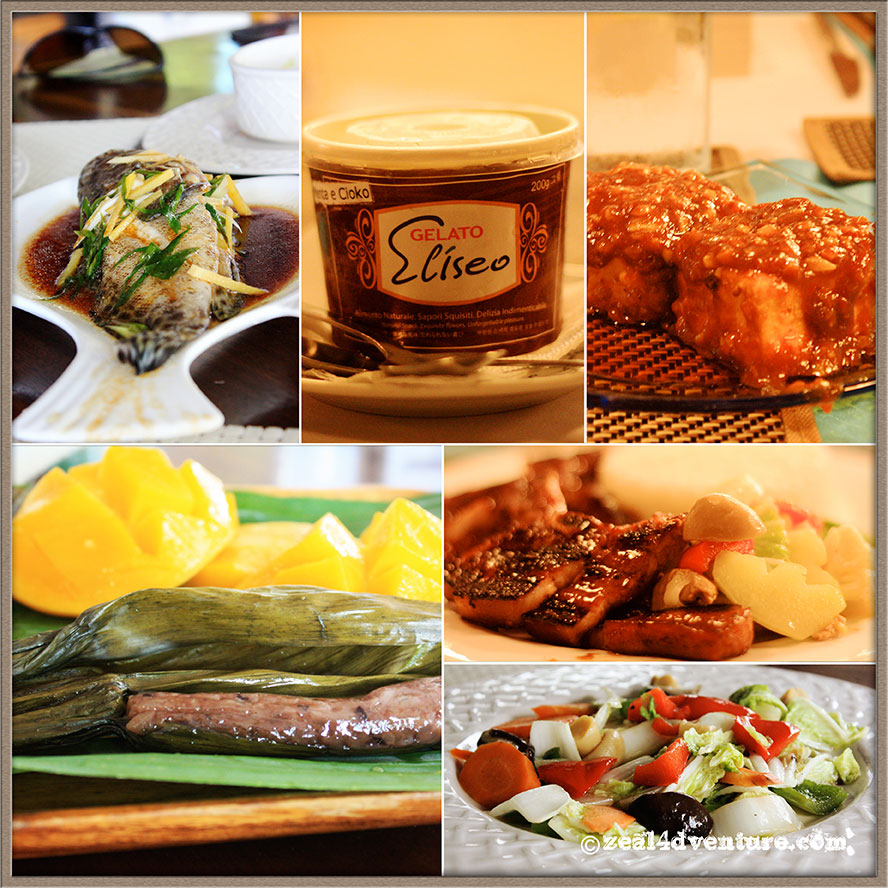
Albeit slow, the clubhouse just across our suite whips up wonderfully prepared Asian dishes and having all our meals there during our stay was a delight.

Having breakfast before we went off to our adventure.

An activity center offering a wide array of activities from diving to dolphin watching to canyoning was the reason we decided to splurge on the resort.  The resort alone with its many cozy corners, a nice pool and well-appointed rooms is already worth the splurge.

Having an activity center that arranges all your activities so close by was icing on the cake.

Over a late lunch when we arrived, our guide came up to brief us on tomorrow’s activity.  What to bring, what not to bring, what to expect, taking note too that one of our companion was over 60.  He seemed worried but was assured when he learned that our friend has climbed Mt. Kanlaon many times.  More than what I can say for myself.

We spent the rest of the day chilling.

We slept, read, and enjoyed the sunset over some wine and cheese until it was time for dinner.

The owner threw a party that night hence the nicely set-up tables.  It went till the wee hours of the morning but we were too tired to care.   🙂

What a perfect prelude to exceptional activities to come.  Stay tuned.

Useful Info:

One Citilink Terminal
N. Bacalao Avenue, near Cebu City Medical Center & Cebu Technological Center
 
Club Serena
For reservations:
Telephone:  +63 32-417-2445
Mobile:  +63 920-902-8888 / +63 917-623-6057