Oh Manuel!

It’s a funny thing about life; if you refuse to accept anything but the best, you often get it. – W. Somerset Maughem

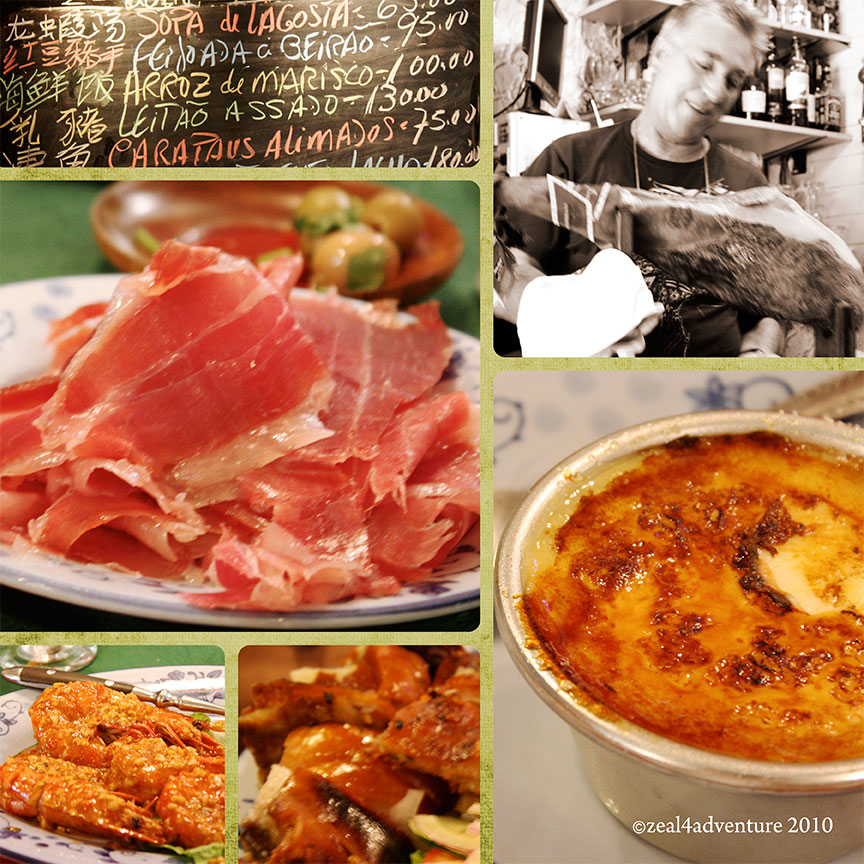
Reservations were made and off we went to Taipa to lunch.  Those with insider knowledge or Macanese connections will head to Taipa for some great culinary experience.  Tucked away in a quiet street just on the edge of Taipa Village is one of Macau’s best-kept secret, a homey, welcoming hole in a wall called O’ Manel or more formally known as Manuel Cozinha Portuguesa.  Manuel Pena, a Portuguese and his Chinese wife owns this tiny restaurant that serves fantastic Portuguese food.

In his restaurant, Manuel waits on tables himself, supervises the preparation of the dishes and does the cooking himself, sometimes with the help of his wife.  There are no menus only a blackboard; in it written are the specialties for the day.

Clockwise:  menu board; Manuel Pena and his Pata Negra; Caramel Creme; Roasted Suckling Pig; one order of Pata Negra, sliced.

For starters, we had slices of Pata Negra (or jamon iberico in Spain), a favorite since I first tried it in Seville years ago.  So memorable this Pata Negra was during my first visit to this restaurant some 3 years back, I came back with that in mind.  Fresh fish and shellfish are found on virtually every Portuguese menu and it is not surprising that we were served Garlic Prawns and a wonderfully citrus Clams in lemon sauce with a hint of coriander.  Roast suckling pigs, popular in the north of Portugal came highly recommended.  We were ecstatic that it was perfectly roasted with skin that crackled so loud we ordered one more.

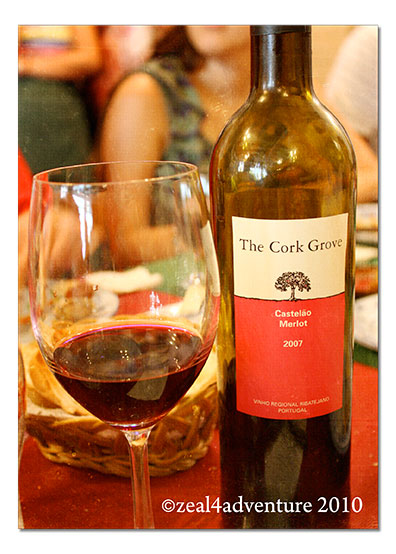
We washed all these down with a glass or two of this lovely Portuguese Merlot and capped this splendid meal with a most typical Portuguese dessert, Caramel Cream.  Mmmm…  overindulged, most definitely.

The restaurant when we entered

In less than thirty minutes

This small casual restaurant with its limited number of tables fills up quickly so book ahead.

Manuel Cozinha Portuguesa
Rua de Femão Mendes Pinto, N90 R/C
Taipa, Macau
For reservations call:  (853) 28827571 or 28825811

The Real Macau

Beaches, ancestral Chinese villages and forested hills with nature trails… traditional countryside still exists in the islands of Taipa and Coloane.

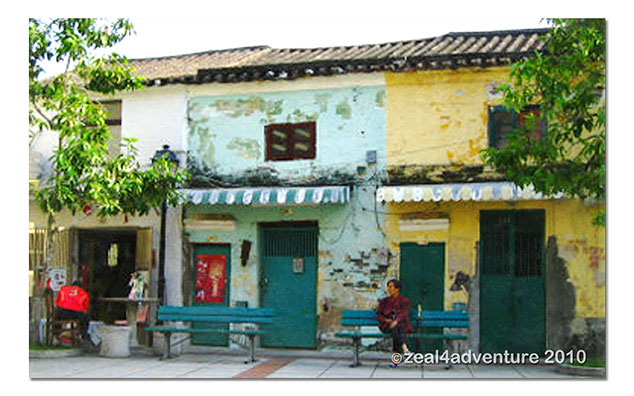
Here in the narrow streets and alleys with multi-hued buildings with peeling paints and stained walls lives the real Macau contrary to just a few meters away where The Venetian Macau Resort and Hotel stands.

Oblivious to the developments that will eventually comprise 14 resorts, the locals still while away time, chatting on benches around the square.

Although this rural part of Macau is slowly transforming into one of the biggest tourist destination in Asia, there still remains a section that is evidence to Macau’s centuries-old cultural heritage.  A quaint village on what was once Taipa Island’s southern shoreline.

Pak Tai Temple — one of the biggest temple of Taipa

Taipa Village or Tamzhai (in Cantonese) is still made up of Chinese shophouses, Portuguese-style offices, and temples all around.

Incense inside Pak Tai temple

A good place to learn about the history and culture of the area as there are plenty of them to explore.

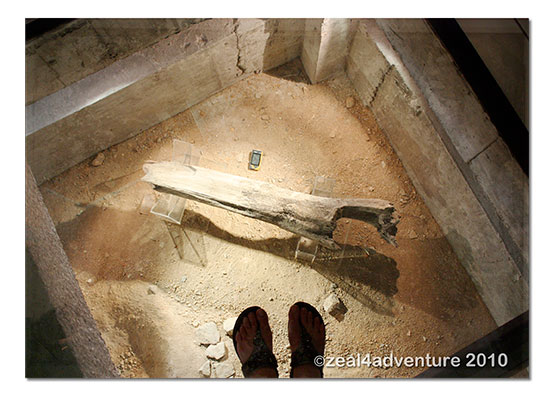
The museum of Taipa & Coloane History is a comprehensive exhibit of historical relics unearthed on Coloane,

The glass floor to view the relics from the basement

the stone architectural remains in the basement of the former Island Council Building.

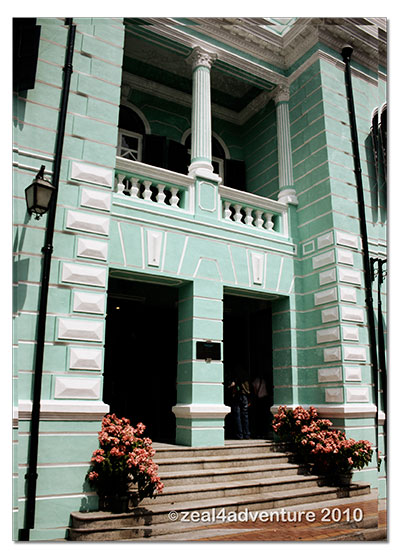
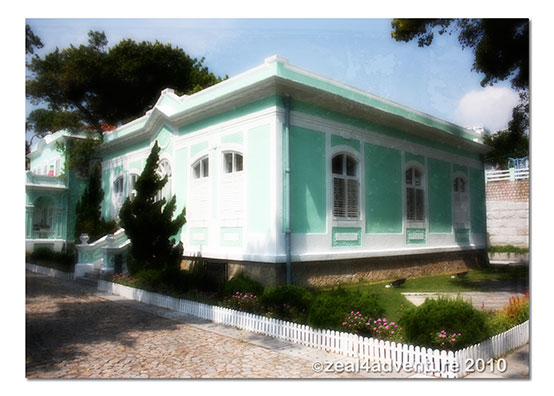
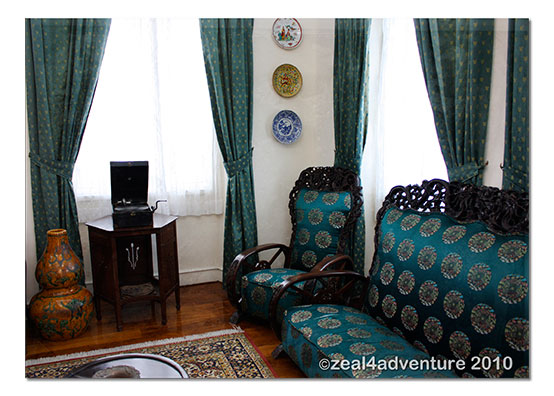
A few minutes walk to the east from the village is a waterfront area where remains a superb old colonial promenade, Avenida de Praia, complete with original houses.  The Taipa House Museum (or the Casas- Museu da Taipa)  shows a number of 20th century houses restored to depict details of turn-of-the-century domestic life of the Macanese families, highly religious, well-to-do but not extremely wealthy.

The Macanese House is one of macao’s typical houses in colonial style reminiscent of a period of Portuguese splendor characterized by frequent influx of the Portuguese, British, Mandarins and merchants in this tiny territory.

Carmo Church — 0ne of the eight views of Macau

Although Taipa’s northern shore is hardly worth a stop now, Taipa Village on the southern shore and Avenida de Praia is definitely a pleasant walk where faded mansions and wooden benches seem frozen in time.

Scenic Sunday

Take A Stroll With Me

In Macau.  Not only is the center an urban area with an old city, it is a World Heritage site to boot.  Inscribed on 25th July 2005 by UNESCO, the Historic Centre of Macau is a product of cultural exchange between East and West.  It could be the oldest, most complete and consolidated selection of European architectural legacy standing intact on Chinese Territory.  The center spans 8 squares but 2 hours will only allow for 3 squares, a ruin, a church and a whole lot of eating and window-shopping.
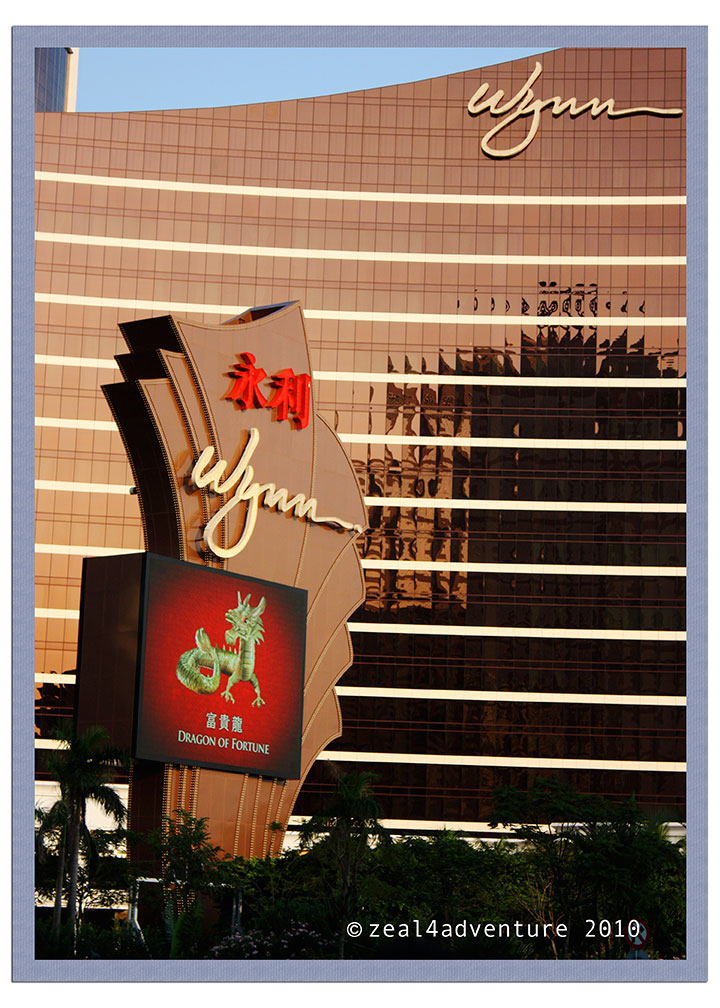
From our hotel, we walked all the way, passing casinos, to our first square.

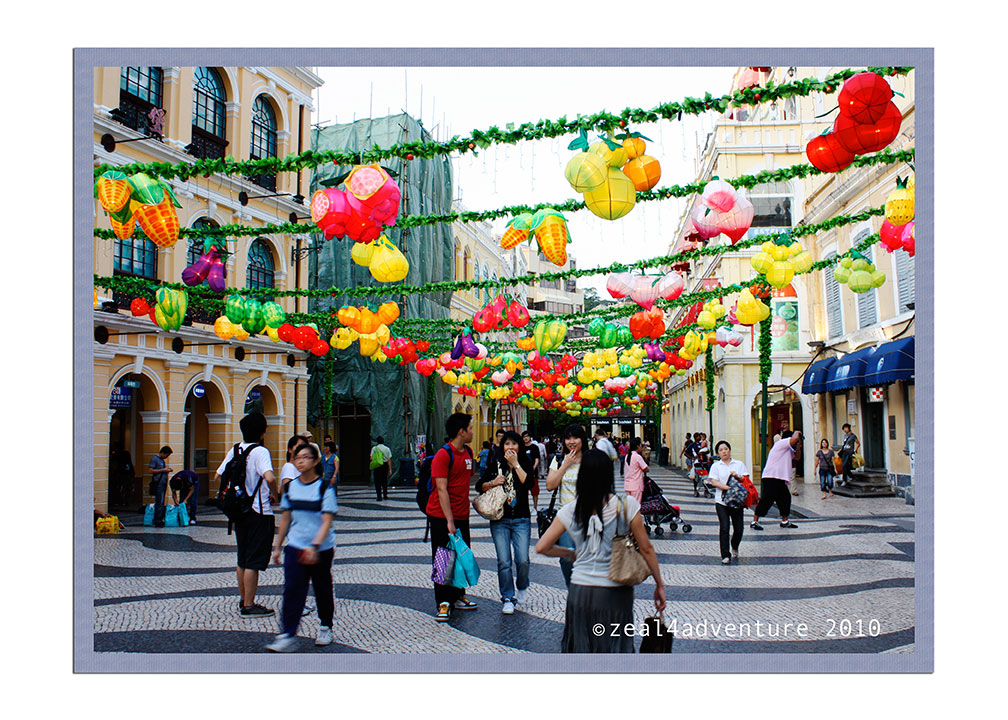
Senado Square

I would have loved a photo of an empty square to showcase the cobble-stoned grounds with exquisite black and white wave patterns.

Not to mention the pastel colored neo-classical buildings flanking the square on all sides giving it a Mediterranean atmosphere.

But Senado will not be Senado if it was not busy (at least on both times that I’ve been there).  It has been the center of Macau since the square was built sometime in the 19th century.

From the main road to the church of St. Dominic’s, the pavement extends and eventually leads to a different kind of city – the cathedral of St. Paul’s, now in ruins located on top of a hill, making the stroll a paradise with so much eye candy.

St. Dominic’s Church

Not too far from Senado Square is St. Dominic’s Square.
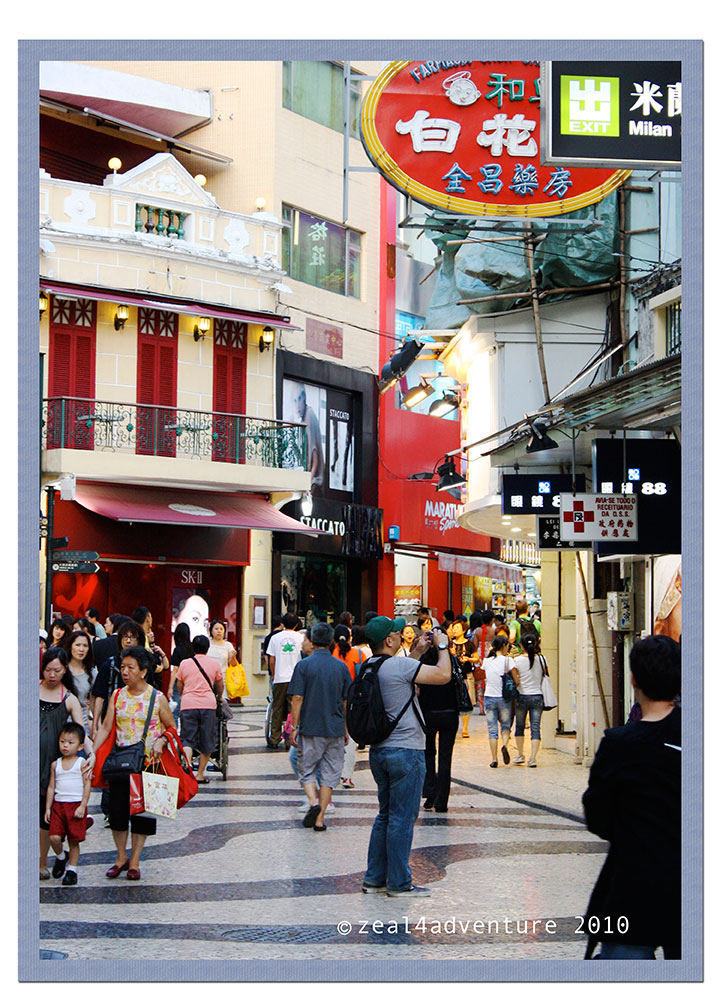
It is one of the most popular squares because it is close to where the shops and little food vendors are.

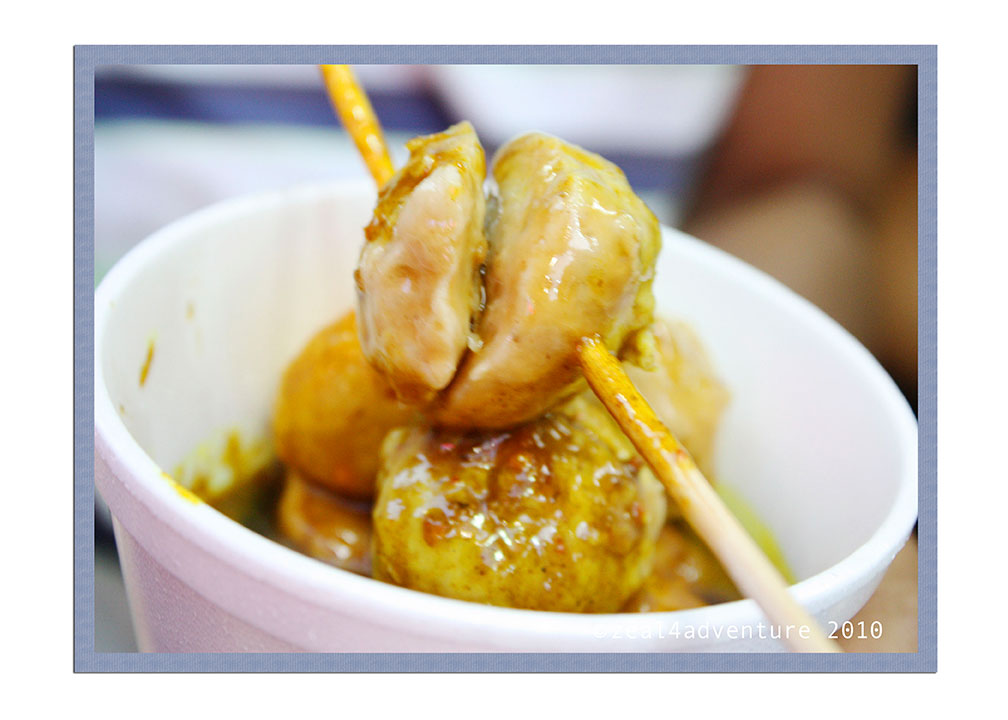
It was fun strolling through the shops gobbling through these tasty fishballs in satay sauce.

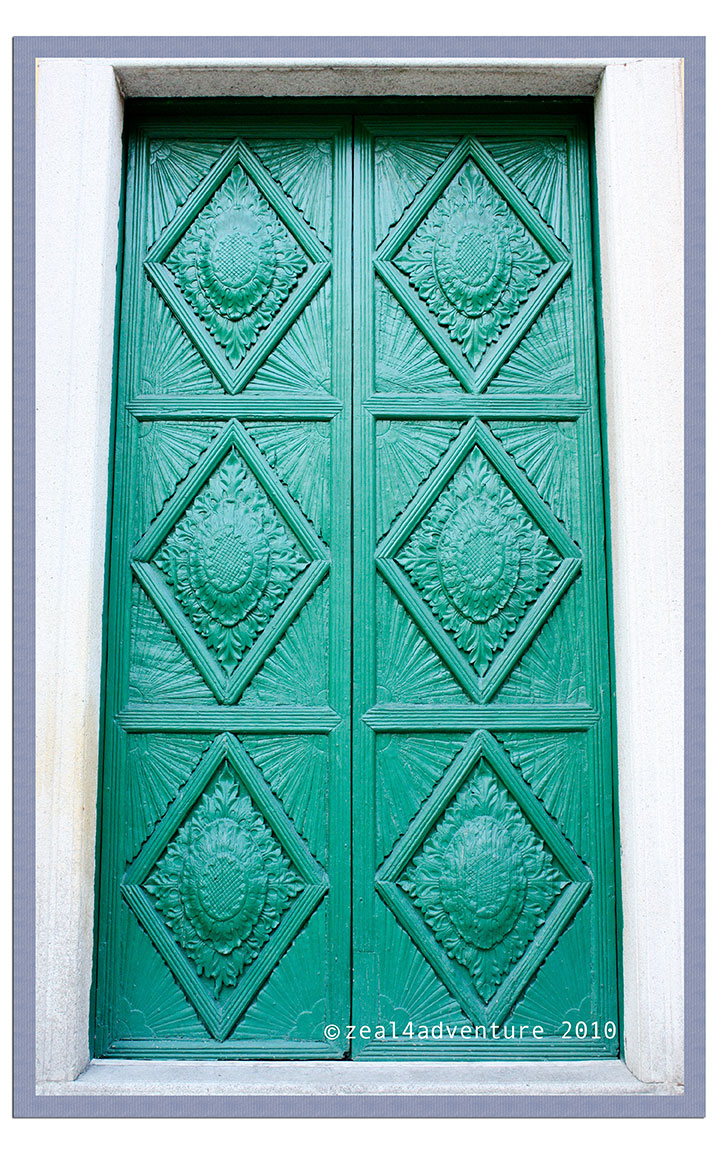
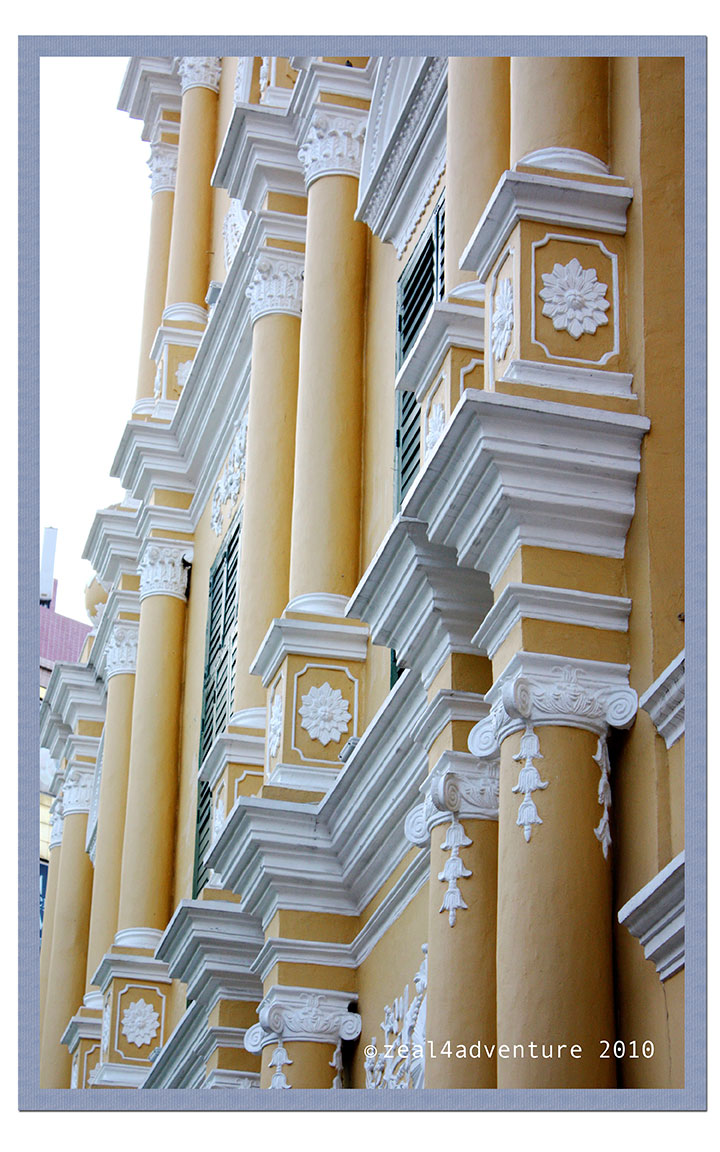
Standing on the square is an imposing façade of cream-colored stone with white stucco moldings and beautifully designed green doors.

The first church ever built in China; Dominican priest, originally constructed from wooden slats, built St. Dominic’s Church in the mid 16th century.  A far cry from what we see today.

The church has an interesting past swathed with drama and violence.  A military man was murdered at the altar during Mass because he supported the Spanish against the Portuguese.  There was also a time that the Dominicans sided with the Pope against Macau’s bishop.  When local soldiers tried to enforce an excommunication order on them, the friars locked themselves in the church for 3 days.  In 1834 the monastic order was suppressed and for a time, the church was used by the government as barracks, stable and office.

Pasteria Koi Kei

On our way to the ruins of St. Paul’s, we entered a small alley brimming with more little antique and food shops.

You’ve gotta taste these babies!

One that caught our eye was this food shop selling dried pork and beef fillet similar to a jerky but so much yummier.
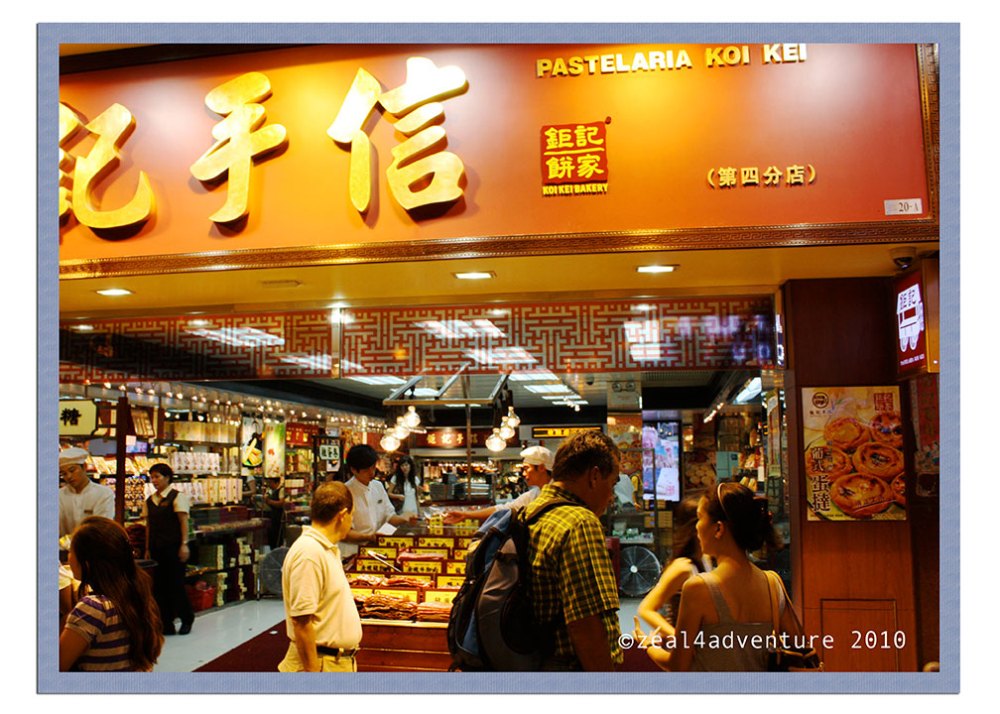
A small storefront extends really deep inside.

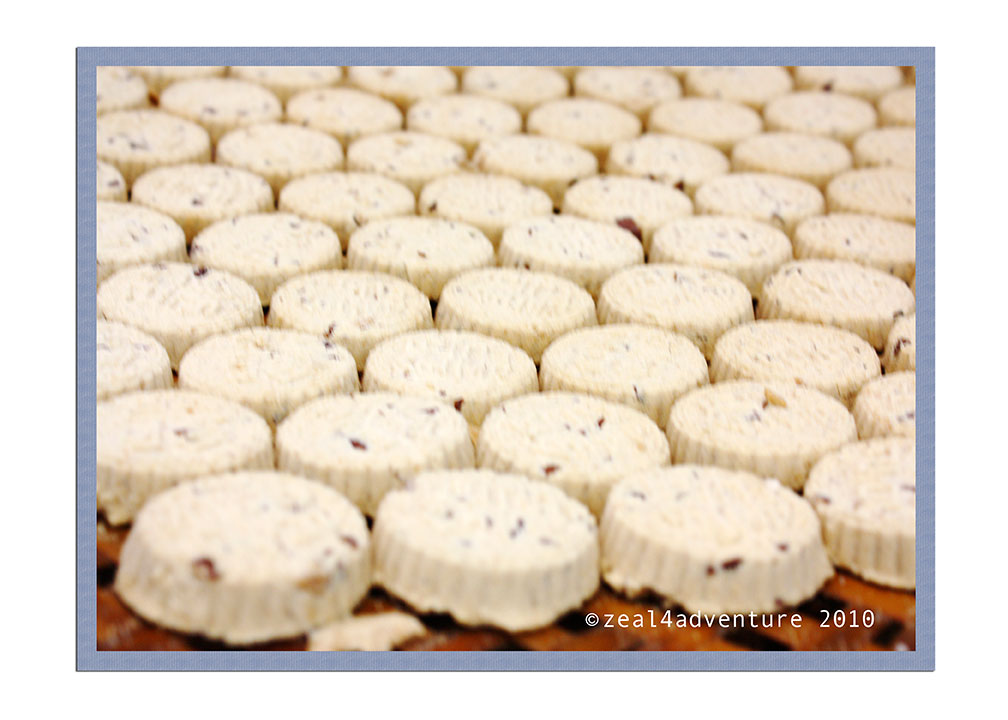
The biggest attraction though appeared to be their almond cookies.  Tracing its roots back to a cart selling only crunchy peanuts and ginger candies, Koi Kei put up its first store in 1997 and today it has gained recognition as the “most popular food souvenir” champion in Macau.  Like us, many bought items to take a taste of Macau home with them.

Sampling some egg rolls as they make ’em!  Great way to entice people to buy!

From peanut candies to almond cookies and egg rolls, Koi Kei Bakery is currently selling more than 300 varieties of products – almond cookies, egg rolls, crunchy peanut candies and the dried beef and pork fillet being among the more popular ones.

Ou Mun Cafe
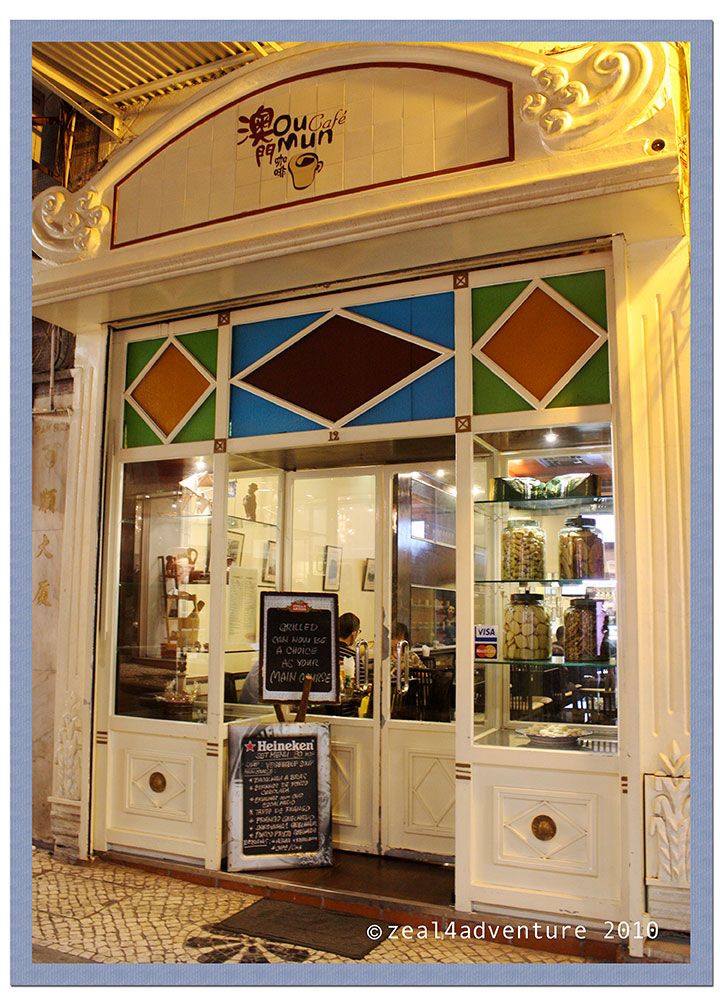
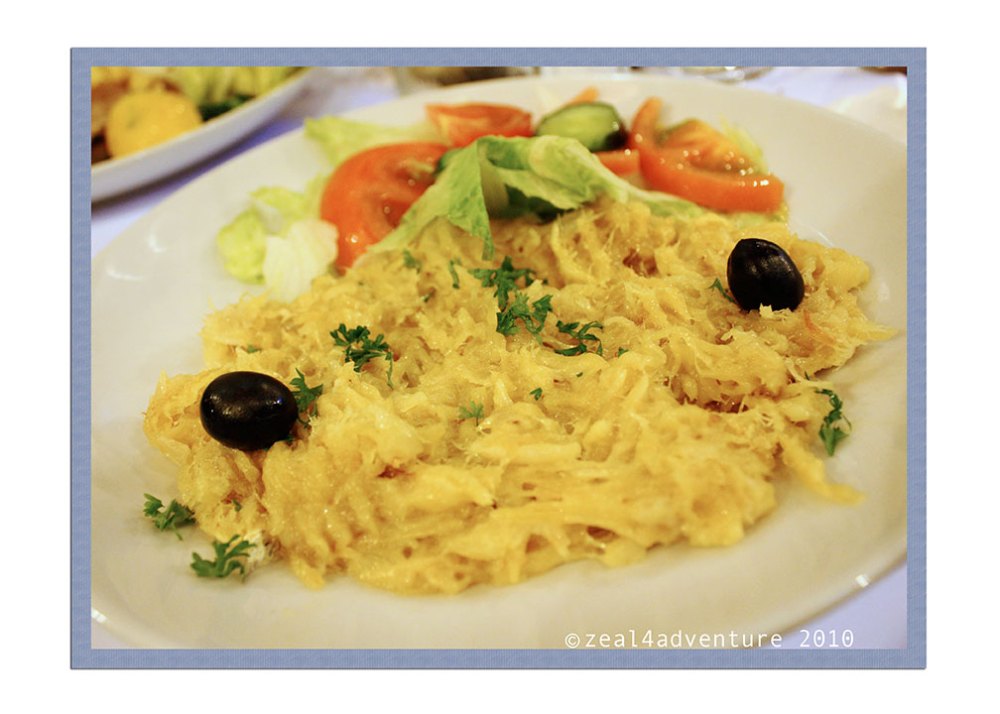
After a good couple of hours, we were famished (even after all the goodies we bought and sampled).   In a cozy looking restaurant in one of the alleys in St. Dominic’s Square, I had a Bacalhau à bras – salted cod fish sautéed with potatoes, onion and eggs, in short, a bacalhau omelette.   🙂
The Cathedral in Cathedral Square

On our way back to our hotel, we passed another route and found ourselves in another square.  The façade of the Cathedral is simple but when lit at night, it transforms into something grandiose.  The present building stands on the site of several previous cathedrals, the original was the Church of Our Lady of Hope of St. Lazarus.  The first stone Cathedral, consecrated in the mid 1800s was almost destroyed in a typhoon 24 years later.  Extensive repair was done.  In 1937, the church was completely rebuilt.

Macau is not all about the gambling, you gotta admit though, they do add character to this urban area in an old city especially at night!

Ou Mun Café
12 Travessa de São Domingos, Macau
+853 2837 2207

Scenic Sunday

The Yangshuo Charm

After chemo in 2005, I decided to take a short trip to China to cap this chapter of my life.  I wanted to start living “my life” again, the way I used to, even if I had to take baby steps to get back into my groove.  (I owe this story about me and I WILL post it as soon as I am ready to share.)  Anyway… Chose Yangshuo because it was close enough but it was not your typical Chinese town either.  It was still quite off the beaten path where backpackers still abound.  You get the same, if not better landscape in a vacation town with a plethora of interesting eateries and little shops as opposed to the big city of Guilin.  I like Yangshuo because it was small enough to explore, not intimidating at all.  Baby steps…

yangshuo

Credits: Alpha: Katescrap Barechip;  Papers: Clyle-carnival paper 2, Dmogstad – carnival paper, Hroselli – carnival paper- cream, Pspringmann – carnival paper;  Elements: ideacetis – carnival – lace (1), mmartin – carnival – beadswirl;  Frame: Joyfulheart Designs – plain jane single frame.

Outside of eating and shopping in town, the countryside and the Li River has a lot more to offer.  You can should do the following:

Ride a bike – wander through the countryside and enjoy the dramatic mountain backdrops.  The people are generally friendly.  Our guide went the extra mile and brought us to her home in the countryside and cooked us lunch.   😀

Cruise around Li River – take it from Xingping where the best limestone formations starts.

Rock Climbing – if you are into that.

Watch Impression of Lui Sanjie – by far the best thing we did in the 4 days we were there.  The show runs nightly during peak season.  It features a cast of 500 fishermen and a highly impressive light show performed on the Li River with the limestone formation as backdrop.  It was awe-inspiring, simply “goosebumps” amazing.

impressions

Yangshuo is about an hour away from Guilin.