I know, it’s a little late for this but it has been a full 2016 with many great travels that will add to the long list that I wish to share with you. Here’s a glimpse of what you’ll be seeing here this year.

A very belated Happy New Year to all!!
I know, it’s a little late for this but it has been a full 2016 with many great travels that will add to the long list that I wish to share with you. Here’s a glimpse of what you’ll be seeing here this year.
A very belated Happy New Year to all!!
This must be the quaintest of quaint towns I’ve set foot on in quite a while if not in all of my travels. Found halfway between Dali and Lijiang,
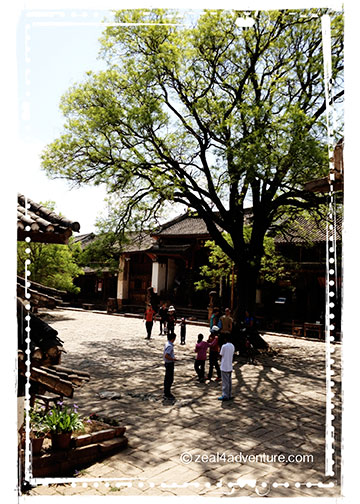
Shaxi is home to beautifully preserved adobe courtyard mansions that offer a glimpse into a forgotten era. It was the most intact trading center for centuries linking Yunnan into Bhutan and Tibet on the Tea and Horse Caravan Trail and this lead to its prosperity during the Tang Dynasty. The network channeled tea, horse, and other valuables among the diverse ethnic groups residing in the eastern Himalayan region. What lead to the trail’s demise was the development of the road transportation and Shaxi became just another village in the 1950s. In 2001, the village was included in the protection list of 101 endangered sites and a Swiss-led team worked for years to restore the deteriorating town.

The old town of Shaxi is quite compact and easily explored by foot.
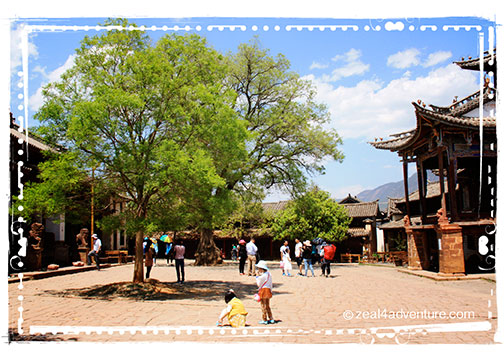
It consists mainly of a few quiet lanes and alleys that radiate from Sideng Square—a fascinating marketplace at the heart of Shaxi where we spent most of that Sunday people watching and just chilling.
The iconic Sideng Theater seats in the middle of the square.
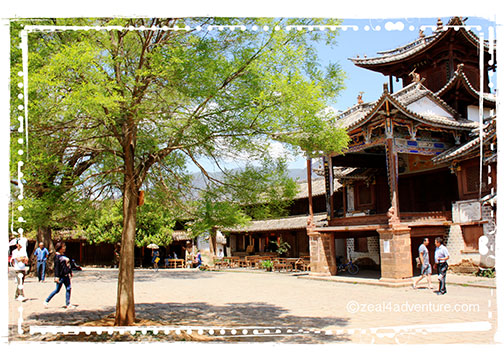
The unique 4-storey architectural structure and exquisite craftsmanship are the soul of Shaxi because it is (to this day) where the Bai people perform during celebrations.
Across the theater is the Xingjiao Temple. Both are ancient structures that add character to the square. The temple (now a museum) is one of the best-preserved temples in the entire China because it was sequestered and used as a local government headquarters during the Cultural Revolution.
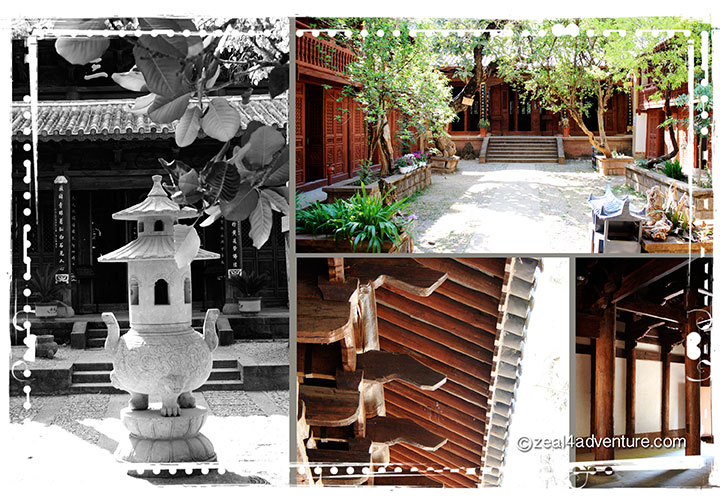
This ironically saved it from destruction. Coupled with painstaking restoration by the Shaxi Rehabilitation Project (SRP), a visit is worth the while. Original murals can still be seen on the walls of the Hall of the Heavenly King.
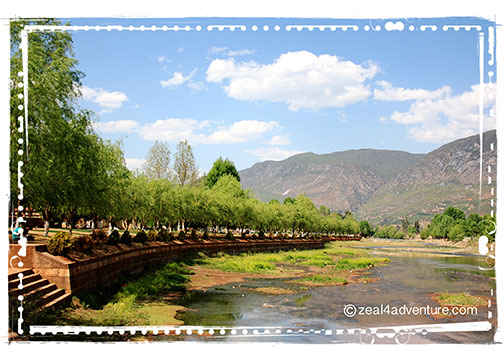
One alleyway leads to the eastern village gate and outside this gate, the Heihui River meanders from north to south through Shaxi.

The crescent-shaped Yujin Bridge was the only way for the Bai people go to the fields and do business back in the days. With the towering mountains as a backdrop, this bridge is a sight to behold and is one of the highlights of this leg.
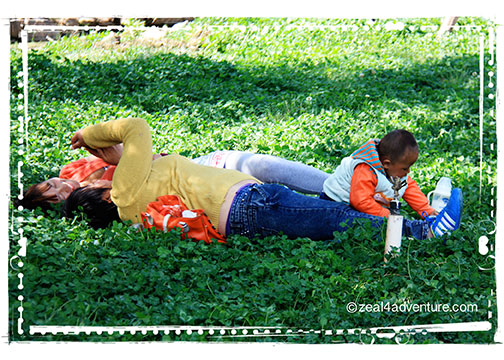
Many find pleasure just to simply lie on the grass and chill.
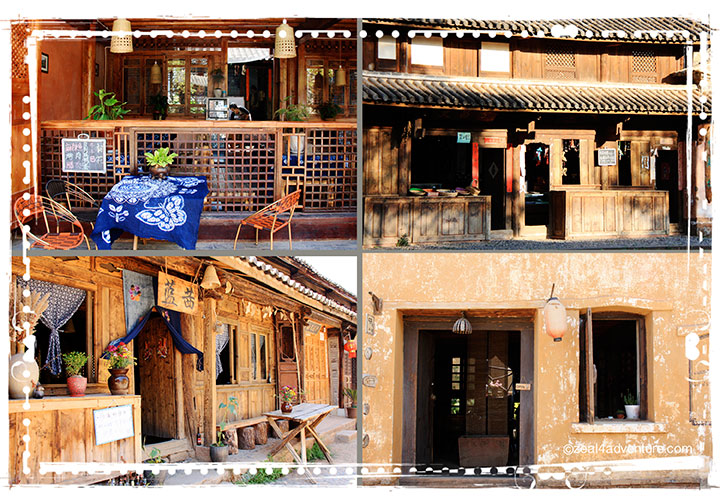
What used to be tack shops, blacksmiths and caravanserais are now guesthouses and
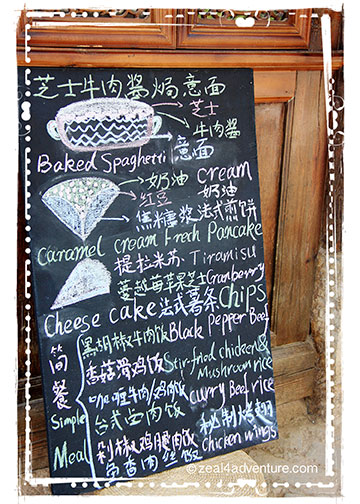
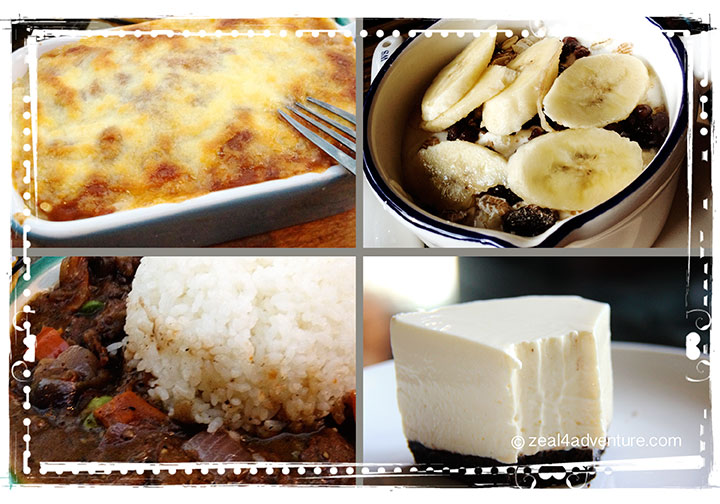
foreigner-friendly cafes (offering English menus and western style dishes), which signals an upcoming tourism boom (read: tourist buses) in this old town.
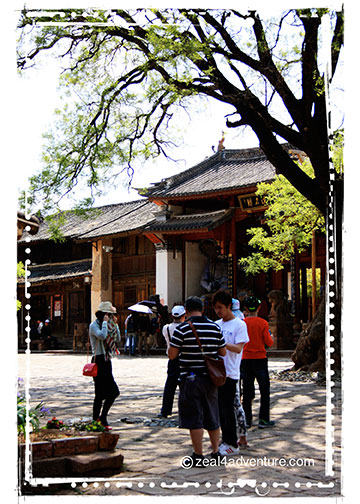
Though its visitors still form a fascinating merge of intrepid and curious travellers, many of its visitors (at the time of my visit) came in groups and spent an hour or so running through the ancient streets taking shots of the temple and theatre. This tells me that the boom might have started already.
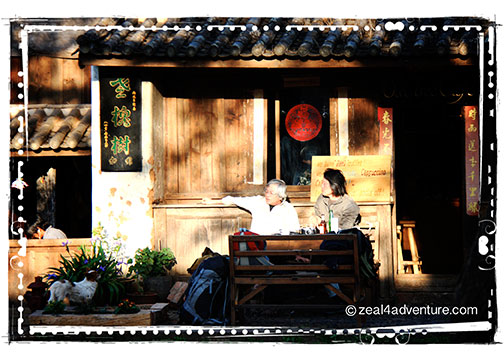
The best time to enjoy the quietness of this old trade post is first thing in the morning or very late at night.
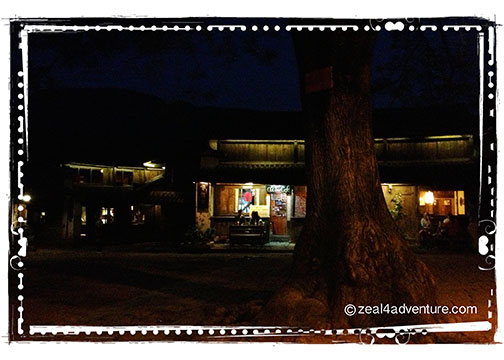
As soon as the last bus headed back to Lijiang, the sanctuary of calm kicks off and we sit in the square savoring the solitude.
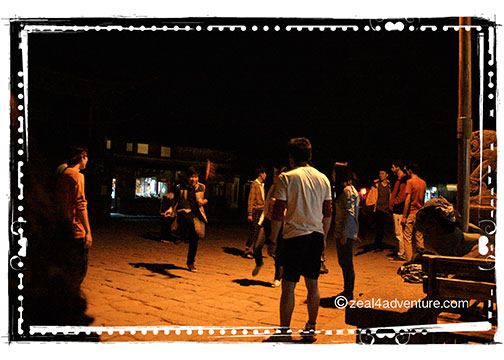
At night, we shared the square with the art students. We sit sipping our cup of coffee while they gather around the plaza playing street games under the moonlight and a few lights illuminating the square.
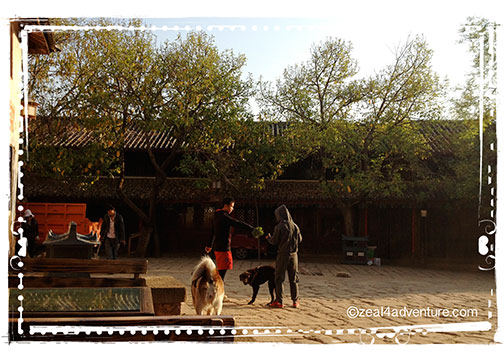
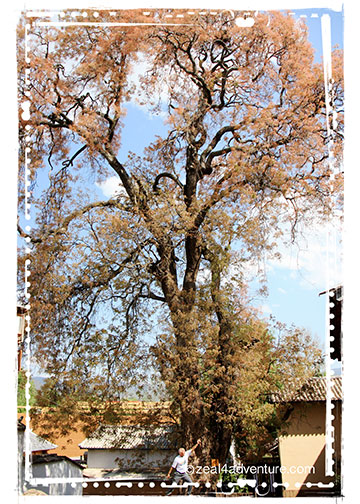 Ancient tree scatter around the village.
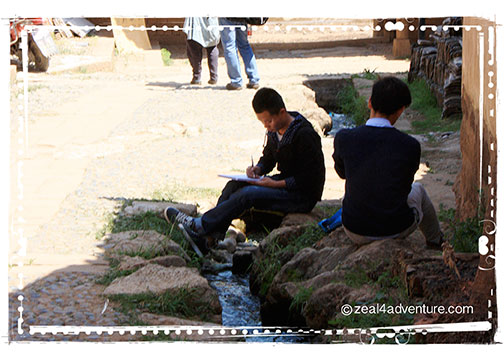 Art students abound; finding inspiration in this breathtaking old town.
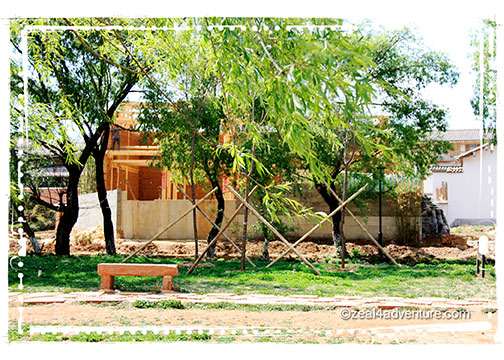 A resort on the rise.
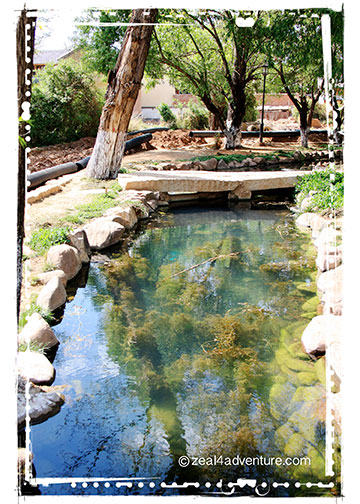 A crystal clear stream flows through the main street of the ancient village.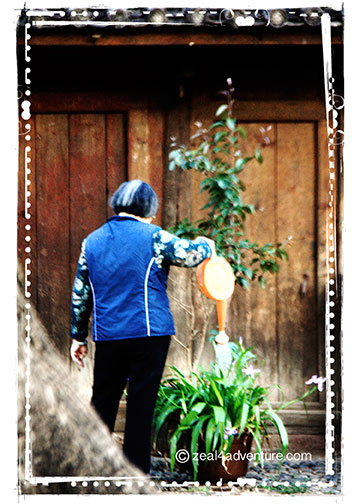
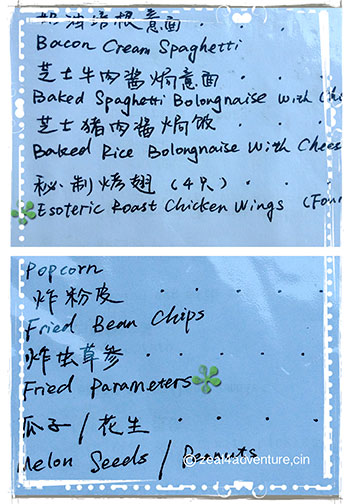 Bastardized English Menu
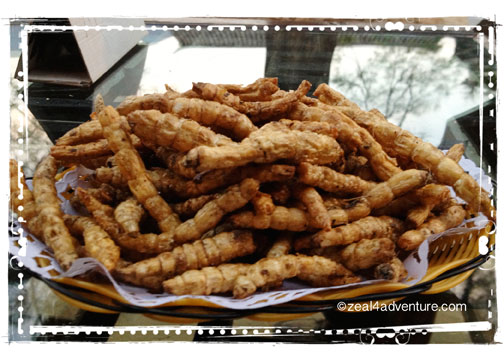 The fried parameters look like worms but is a root (perhaps from the ginseng family)
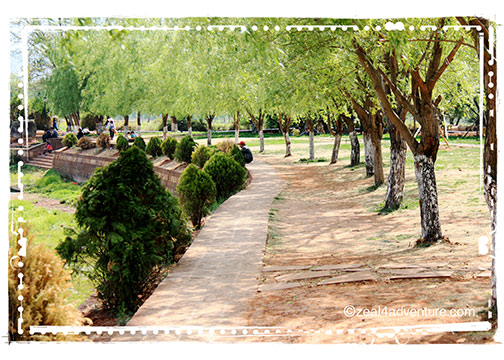 The park by the river, just outside the East gate of the ancient town.
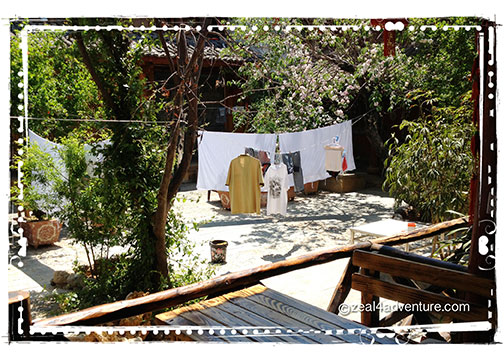 The courtyard of our guesthouse (Renjia just off the village entrance) — turned into a drying area.
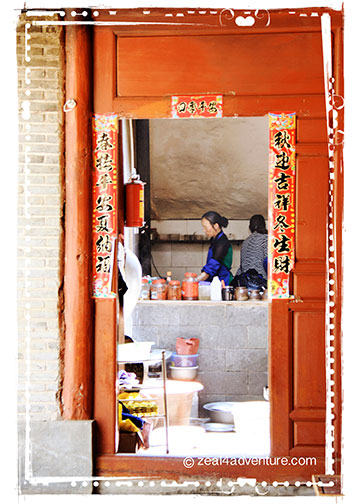 The entrance to our guesthouse was through the kitchen.
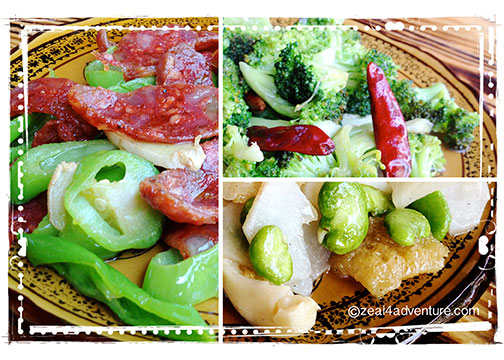 Perhaps why they serve delicious Yunnan cuisine at our guesthouse. This was lunch when we arrived.
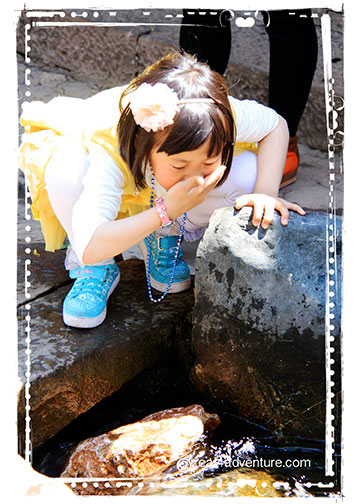
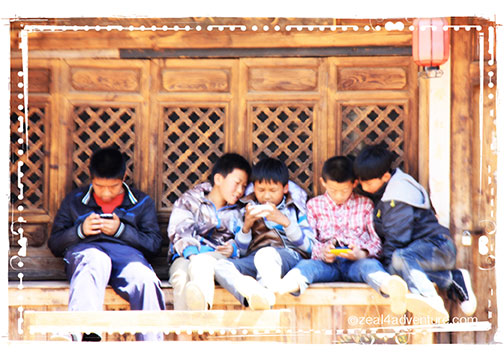 Modern day giveaway — local kids with they games.
Rising above the city of Dali, standing east to Erhai Lake and facing west to the Black Hui River is the Cangshan Mountain.
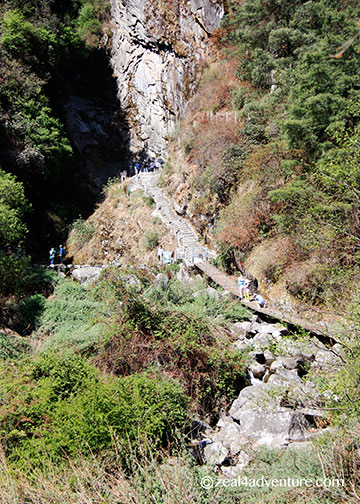
It has 19 peaks with the Malong Peak, the highest, at 4,122 meters. Picturesque streams run between summits and cascades its way down.
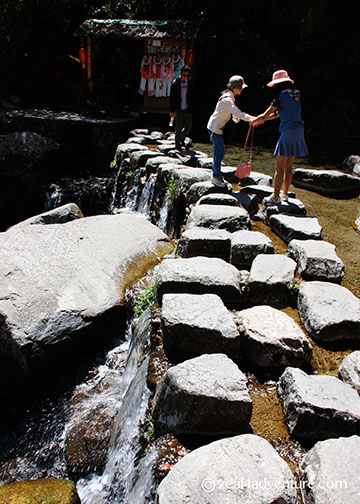
What used to be an 8-10 hour trek through the forest is now down to 2 hours. We, however, made it in 30 minutes through cable car, which we rode from the Tianlongbabu Film Studio.
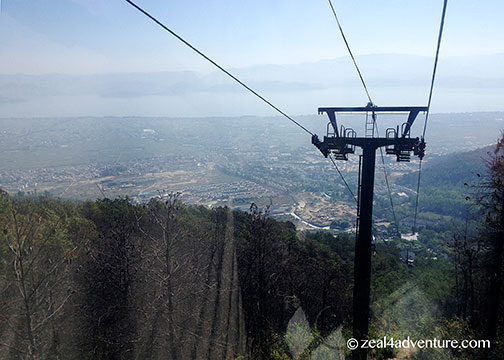 On the cable
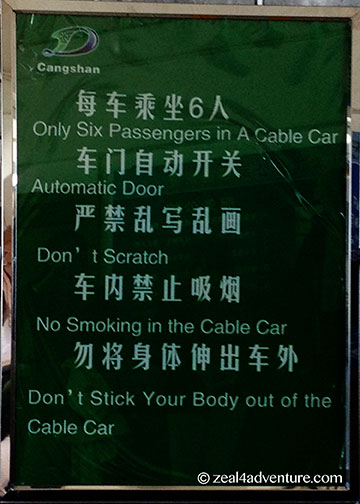 Funny reminders right before getting on the cable car.
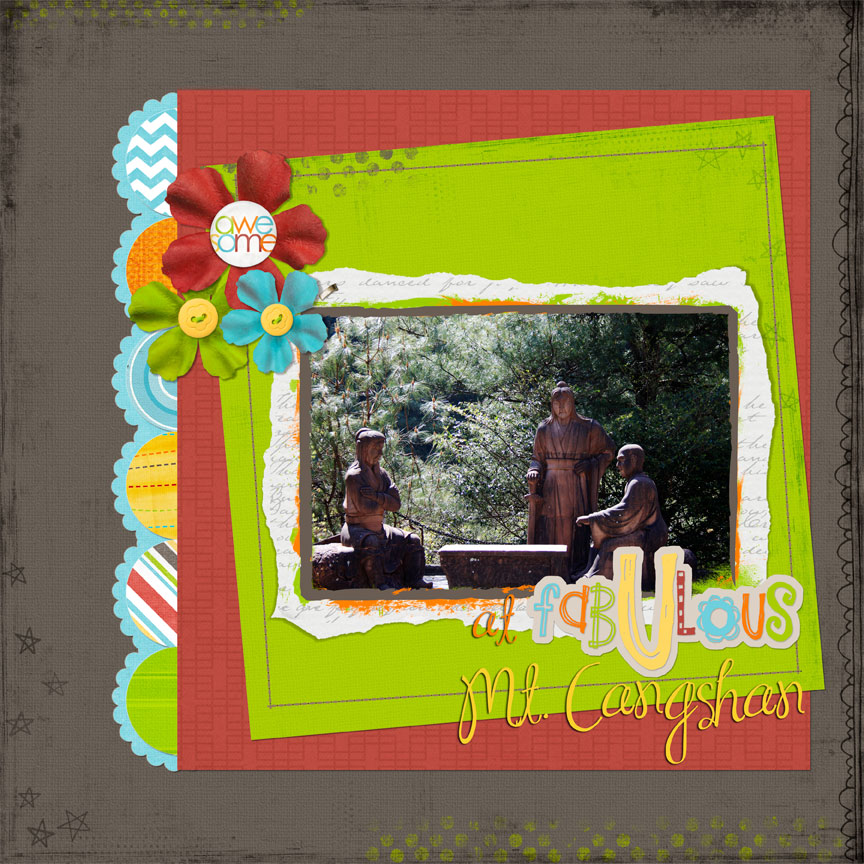
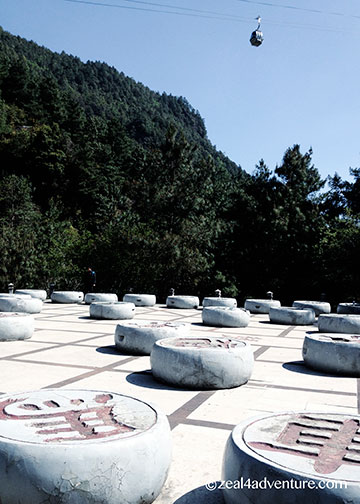
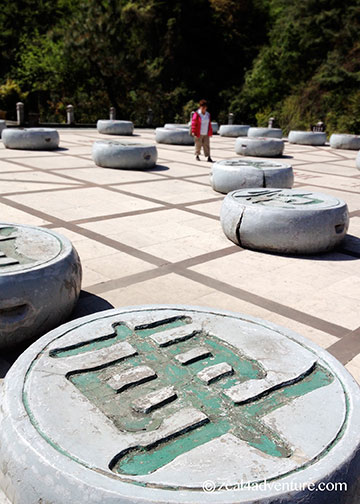
What greeted as we alighted from our cable car was this giant chessboard.
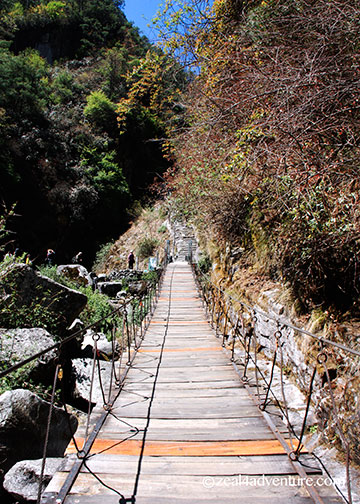
A few meters down, passing through a bridge is Qingbi Stream.
We didn’t go any further but sat somewhere and had a conversation with an old gentleman who was visiting with his daughter. He spoke impeccable English, which is quite rare today. He is from Beijing, and he learned his English in a Christian school when he was a little boy. He talked a bit about his life then and how he survived labor camp. He seemed happy and content. It was his wish to see Yunnan hence this visit with her daughter. They left first as we waited for the others to come back from their trek up the Cangshan.
When asked where she would recommend we go besides the old town, Ling told us to go to Xizhou. “It may not appeal to everyone,” she said, “but many appreciate it for its cultural heritage.” And with that, Ling arranged for a car to bring us there.
A side note on how sweet she is. She lent us her phone so we can communicate with the driver, who does not speak a word of English, through her.
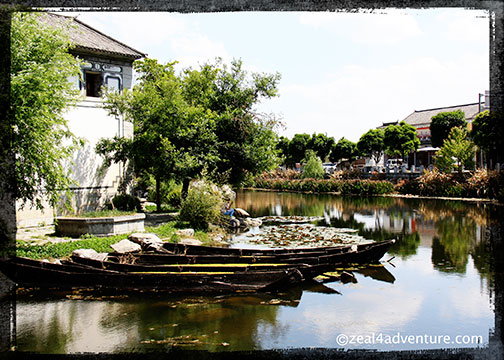
Where he dropped us off, there was no sign or directions to the village so we walked around until we reached a bridge that seemed to lead to a community.
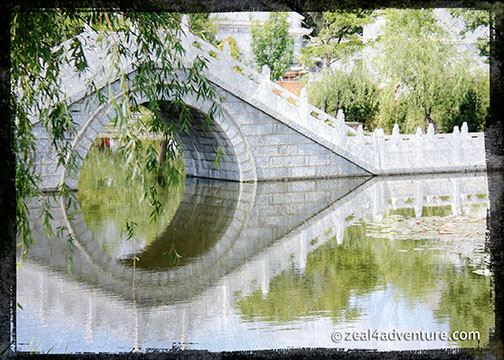
I have to say that albeit quite serene, the area was pretty empty.
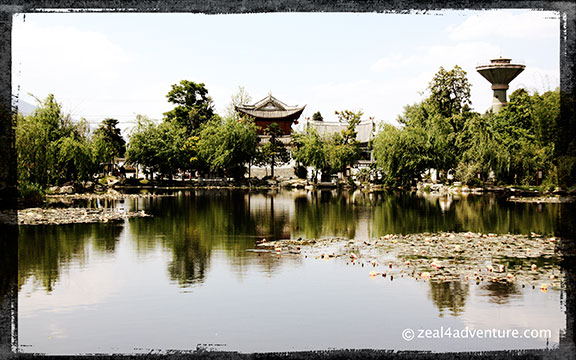
It felt strange to not meet a single soul for perhaps a good 10 minutes walking around the village.
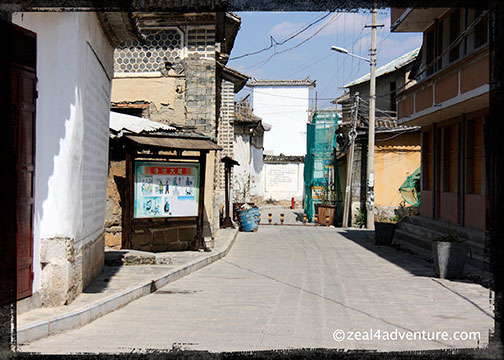
A ghost town, we thought and wondered if it was why many didn’t like the village. The houses seemed lived in though so we explored further even though half of us felt like it might be a waste time.
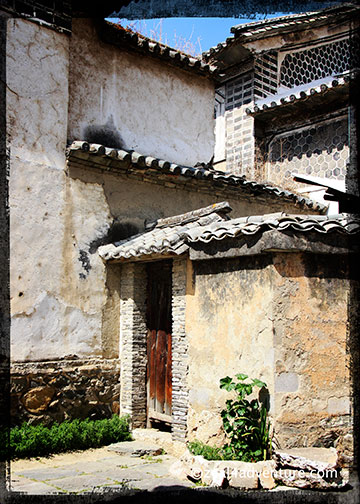
Well, I’m glad we persisted. We realized that the driver, for some reason, dropped us off at the back (perhaps) of the village or that we went the wrong direction (remember we cannot communicate).
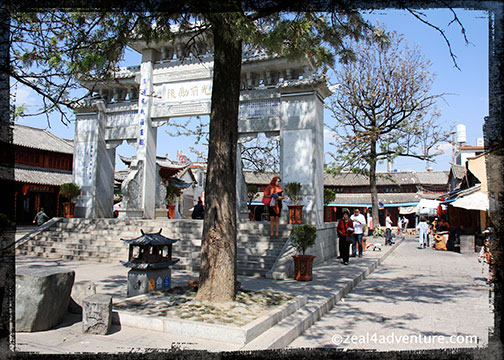 Because as we strolled further into the village, passing through courtyard houses, we eventually found ourselves at the heart of the village revealing a vibrant square surrounded by shops selling food, china wares, antiques, and a few souvenirs.
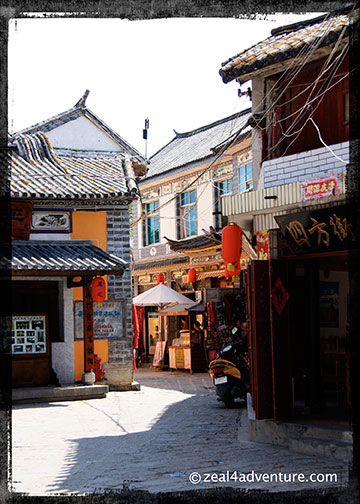
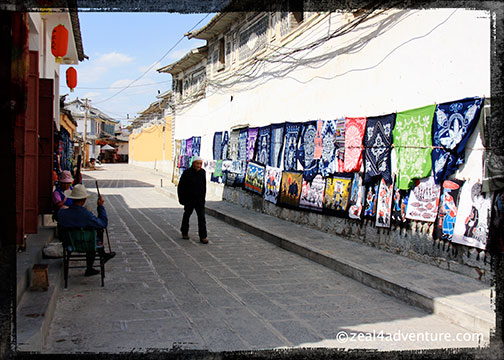
Being an enclave for prosperous merchants and scholars, the Bai people put emphasis on education and achievements. During the Ming Dynasty, they commemorate those who did remarkably well in the imperial exams by having their names written on a stone tablet standing on this square. Something like a “Hall of Fame.”
Xizhou was an important as a trading port along the Tea Horse Road and an essential place for military affairs, once housing a landing strip and radio station for the Flying Tigers during WWII.
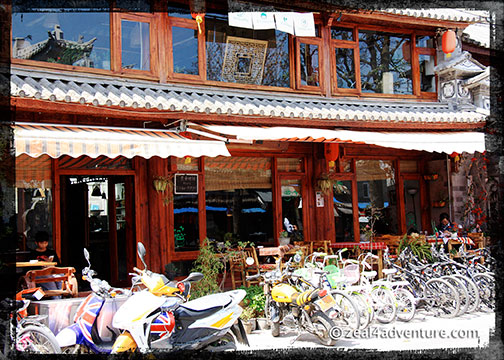
Just 20 km away from Dali Gucheng, Xizhou is (still) a sleepy town that lacks the hip vibe of the former. The architecture however fascinates and the square engaging with regular folks going about their business.
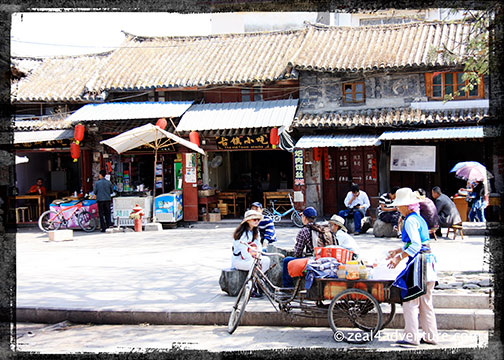
In fact, the best part of our afternoon here in Xizhou was watching village life take place as we sip our cup of joe. The ordinariness of Xizhou is what makes it extraordinary.
From Yuanyang, we went back to Kunming so we can take the overnight train to Dali. We traveled northwest to Dali on a soft sleeper train that left around midnight.
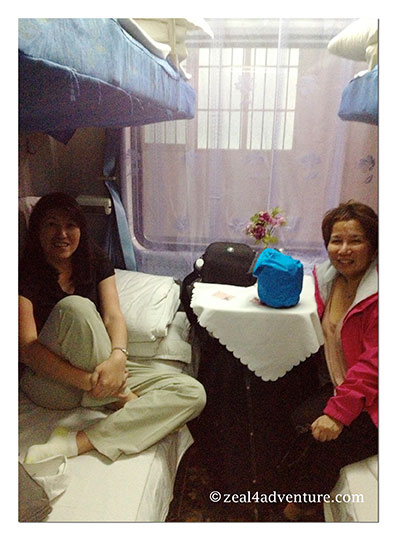
It was still dark when we were picked up at the Dali train station in Xiaguan, the new city. Driving to the old town, we watched the city wake up. Our guesthouse is across the highway from the West gate of Old Town Dali (also called Dali Gucheng).
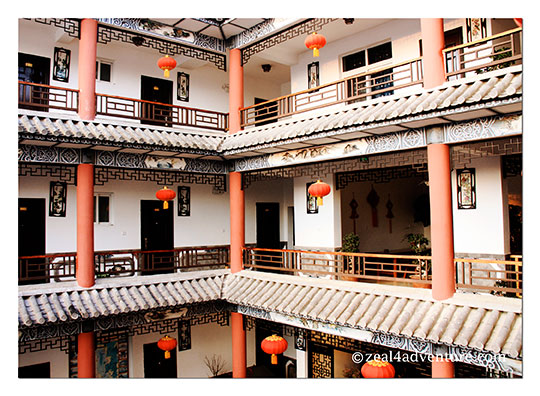
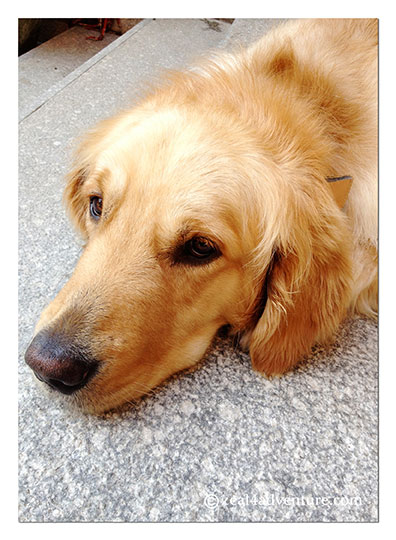
Even before owner/manager Ling could check us in, the sleepy caretaker warmly showed us our rooms and started to prepare breakfast. Beautiful people, which include Ling’s darling puppy she named after her lovely town, Dali.
Lovely because it sits in the shadows of the beautiful Cangshan mountain range.
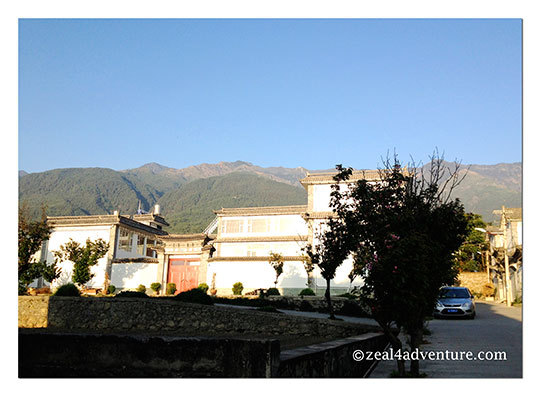
Here, we spent a few days soaking in the view, the hip vibe, and the laid back atmosphere of the old town. I felt sad to leave and wished I had planned to stay a little longer.
Here’s why.
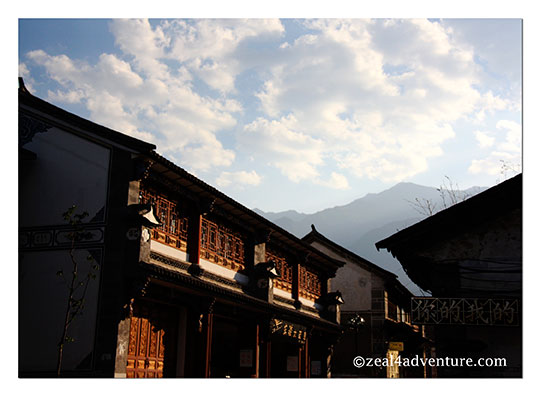
This town grows on you. It is touristy, I have to admit, but it is a real town that oozes with a new kind of hipness. A real town means that local do live there still.
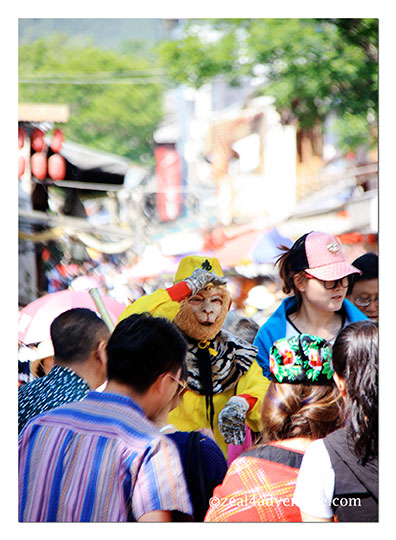
What used to be a backpacker’s haven is now swarmed with local urban tourist, but if you wander closer to the East Gate (near the end of Renmin and Yue Yu Streets), you will meet the local young hipsters.
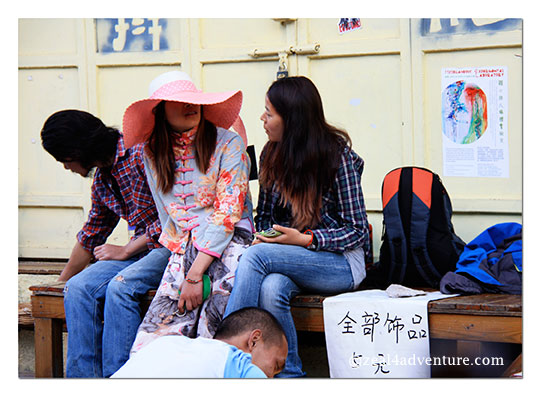
They run the quaint boutiques, cool cafes and interesting (read: eclectic, fusion, non-trad) eating places there.
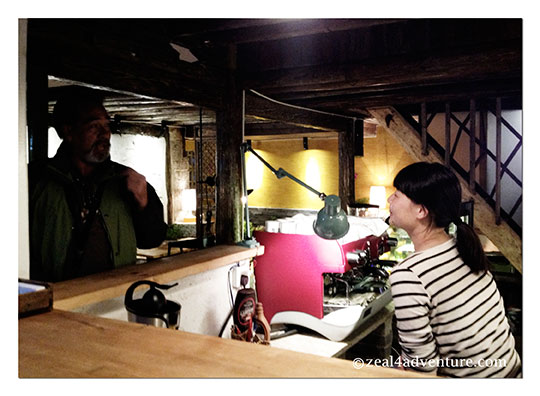
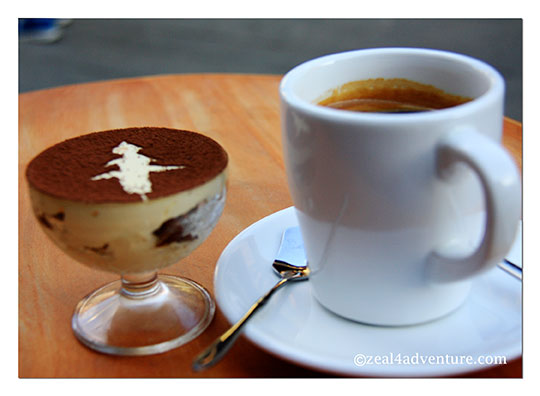 Aside from single malts, she serves a mean cup of coffee and glorious desserts.
They speak English too.
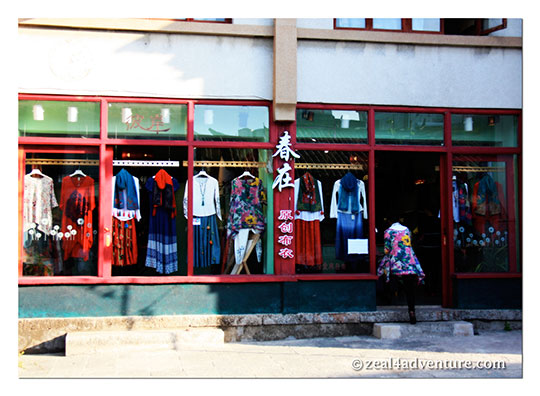
It’s a great place to shop for one of a kind locally made stuff. But if ethnic clothes, local handcrafts and traditional blue and white tie-dye tablecloths are what you are looking for, go to Foreigner Street (Huguo Lu).
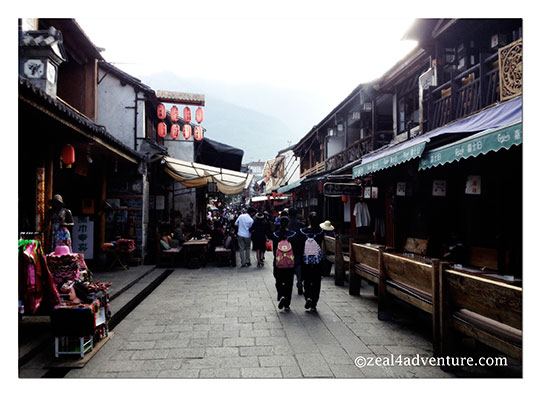
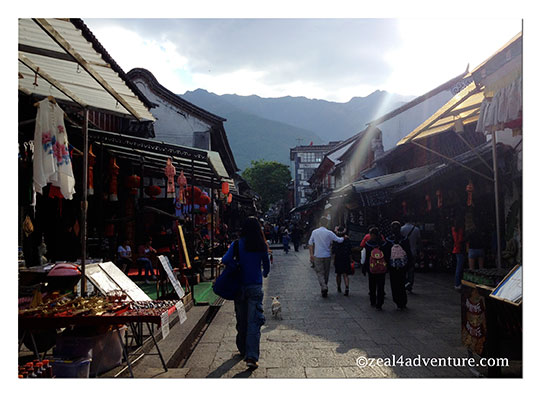
Here, you’ll find more usual stuff bordering on souvenirs. Bars and restaurants are the same.
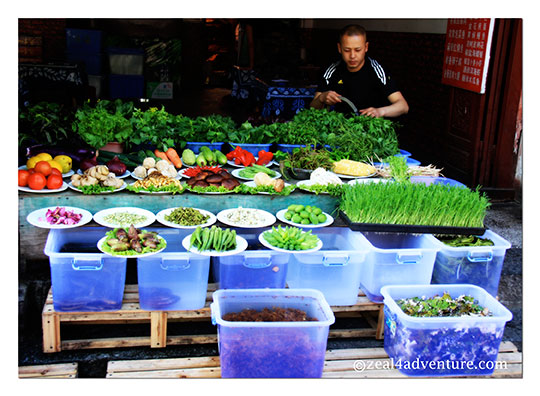
You’ll find many traditional restaurants with fresh vegetables displayed at the entrance. Do enter one of them to experience the local cuisine.
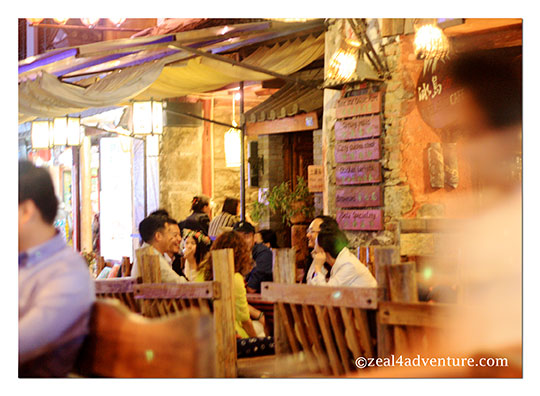 outdoor seating scene at Foreigner’s Road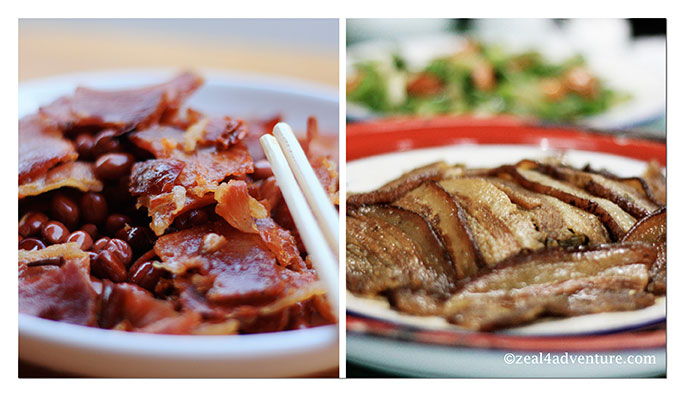
Aside from the many types of vegetables Yunnan had to offer, we actually enjoyed their pork dishes served in various ways.
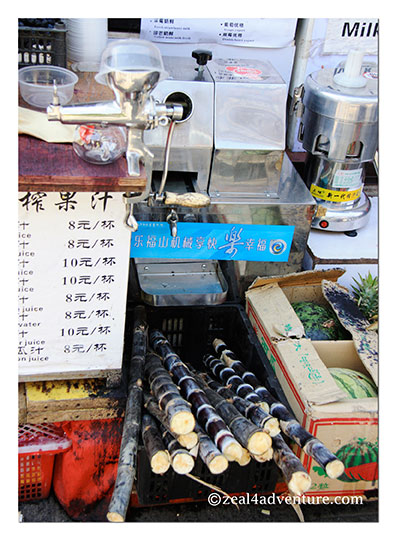
One more thing I love about Dali is the abundance of fresh fruits and fresh juices
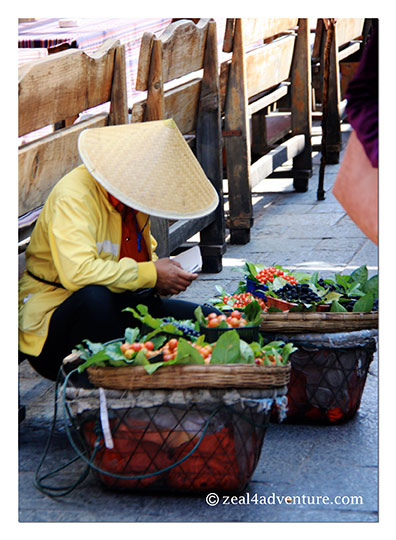
–fruit ladies (I call them) selling fruits in season in baskets and fresh juice (juiced while you wait) are found everywhere.
Located at the foot of Cangshan Mountain, Dali Gucheng resonates with the sound of streams scattered around town.
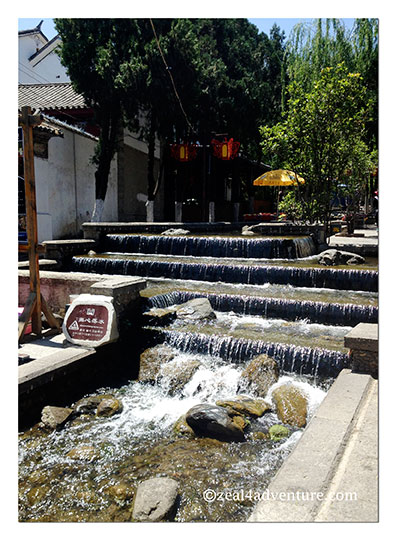
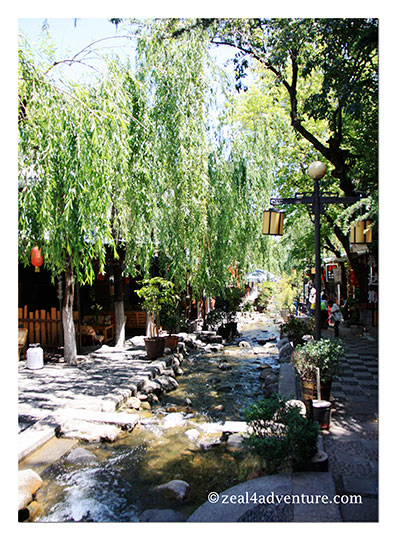
This water source cultivates many plants, which explains the beautiful blooms such as camellias, azaleas, and many others peppered all over town either being sold in pot
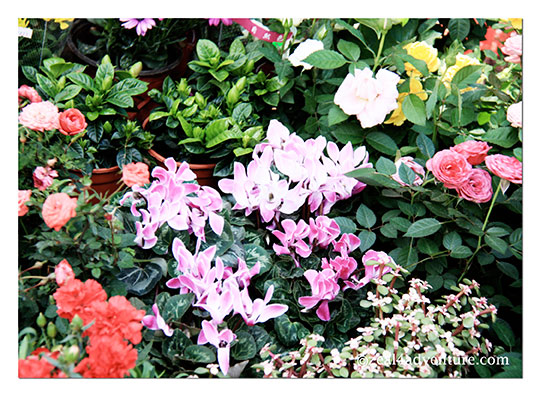
or just beautifying the street.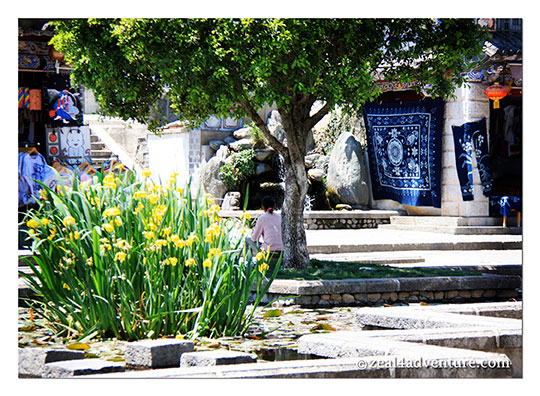
The city has a long history. About 4,000 years of it when the ethnic Bai people first settled.
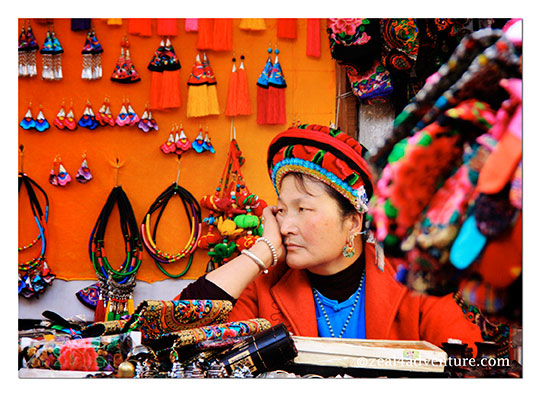
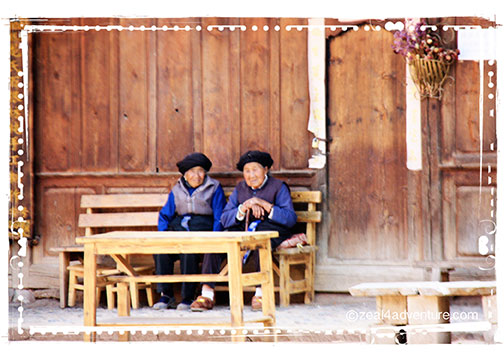
Today, they coexist with the local Yi and Muslims.
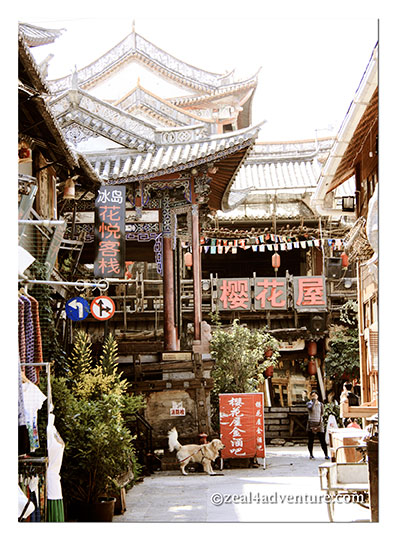
The architecture that dates back to the Ming Dynasty, though renovated, rebuilt and modernized, adds big time to the charm.
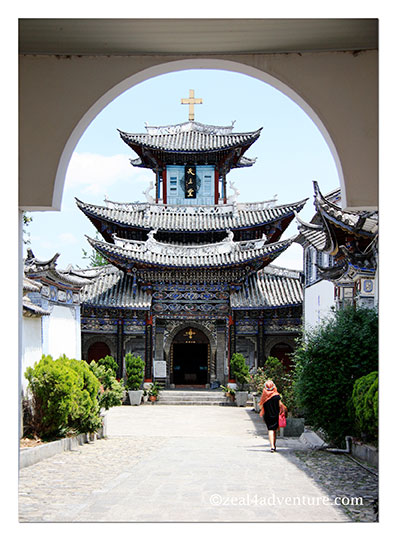
We also chanced upon a Christian church at the intersection of Fuxing and Heping Roads – charming streets to start with.
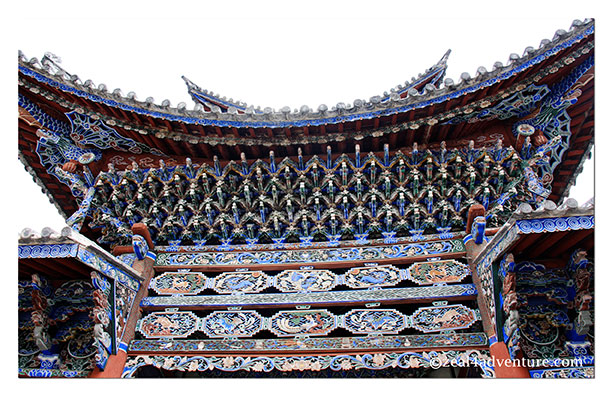
The church is primarily built on wood, following a western layout but also maintaining the Bai architecture and hip roof.
A few days spent here to chill and recharge is really not a bad idea.
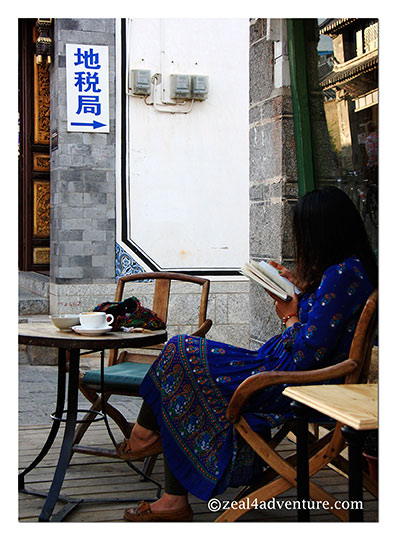
You can either sit and catch the vibe at an outdoor table at one of the cafes or bars on Renmin Road around sundown or go for a foot massage after a day of hiking or wandering around town.
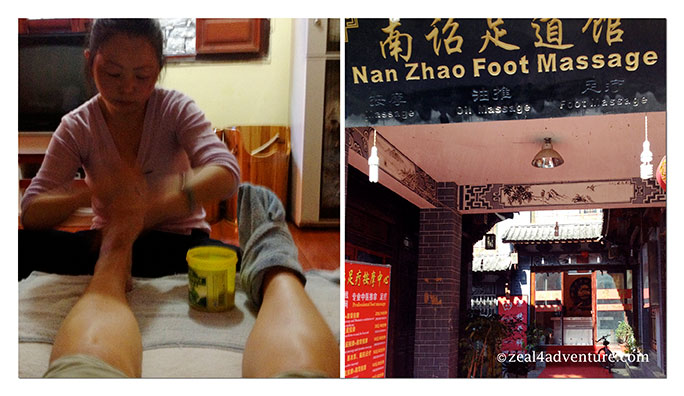 One of the best foot massage I’ve had in years.
Do try to set aside at least an extra day to just relax and do nothing but absorb the vibe. It will be a good break from all the touring and walking.
More snaps of the Old Town:
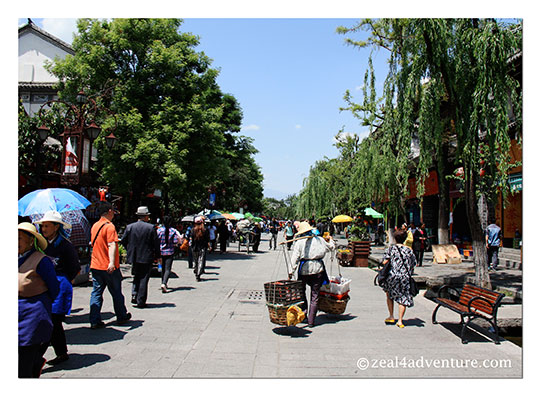 Tree-lined Fuxing Lu
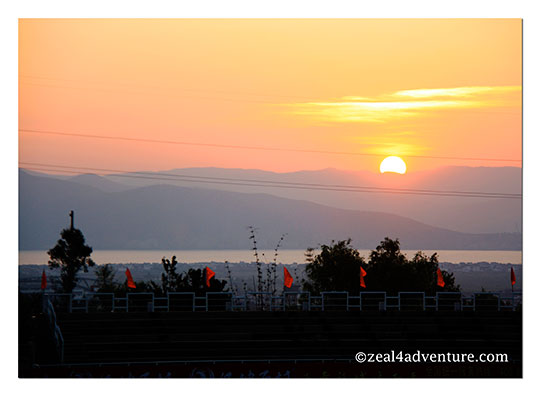 To the east of Dali lies Erhai Lake.
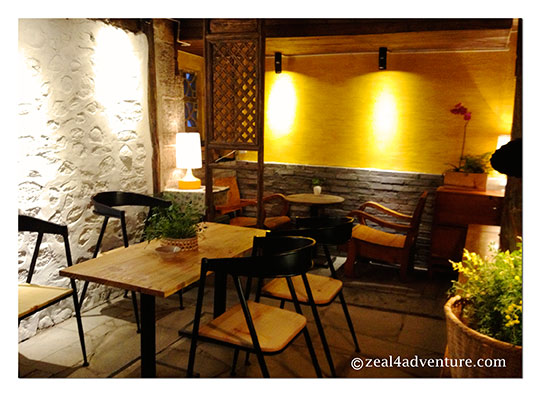 Hip Cafe along Renmin Road
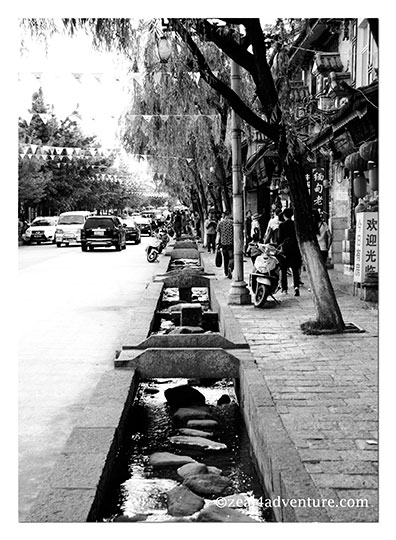 Canals with clean running water dispersed around town.
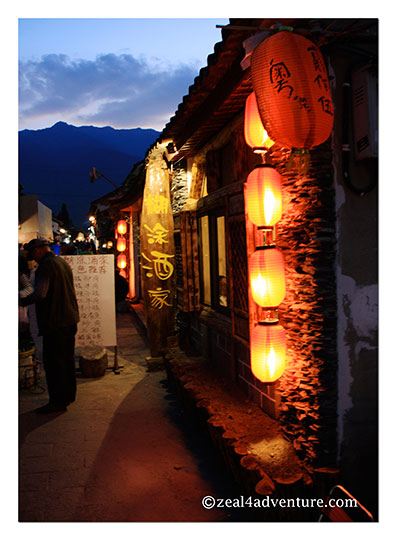 One of the many hip restaurants around Renmin Road.
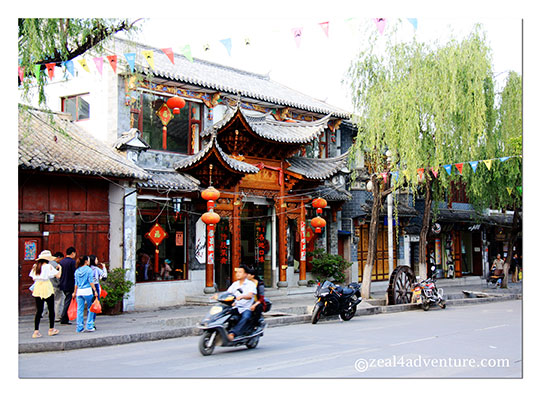 A fusion of old and new along the main road of Old Town Dali.
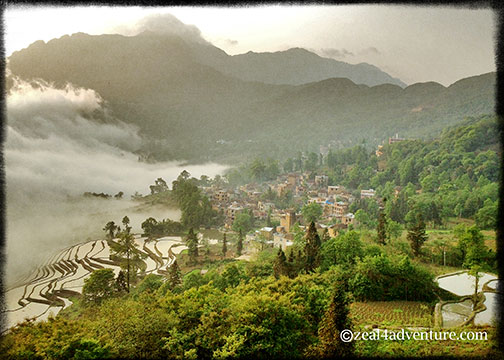
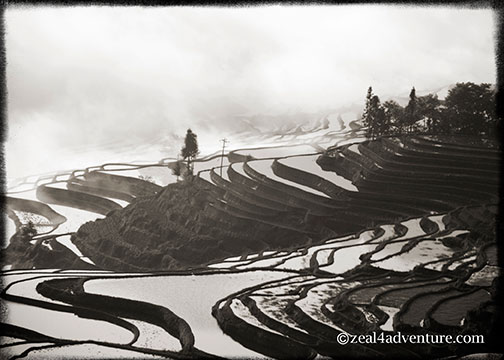
Magical, massive, magnificent—endless terraces in a sea of clouds is a sight to behold. Not foreign to rice terraces, I found myself awed by the vastness and intricacy of the Yuanyang terraces, now the 45th World Heritage Site in China. Breathtaking after breathtaking scenes came before us as we drew closer to the center.
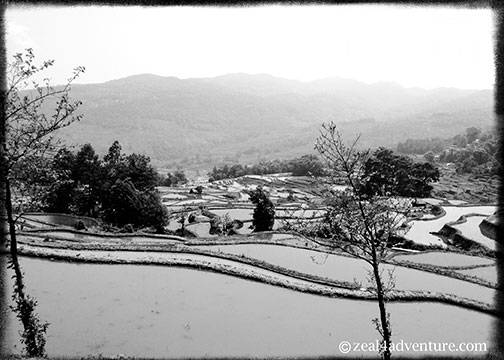
Regarded as the core of the Hani Terraces, where its ancestors settled 2,500 years ago.

In its steep mountains and challenging terrain, the Hani people struggled and succeeded in growing rice. Their creativity turned this mountain into one artistic beauty that has placed Yuanyang on the map for impressive rice paddy terracing.
 Duoyishu Rice Terraces
With an area of 28,000 acres, it is similar to the Banaue terraces of my country but on a grander scale.
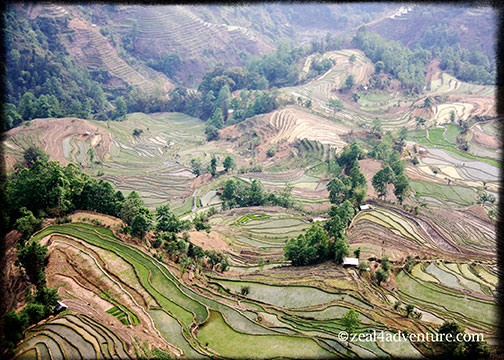
Three major scenic spots is a must. Scattered in different places, the terraces exhibit different tones and hues depending on the season and time of day. When we were there (in April), the terraces, still filled with water, glows from the sun’s ray.
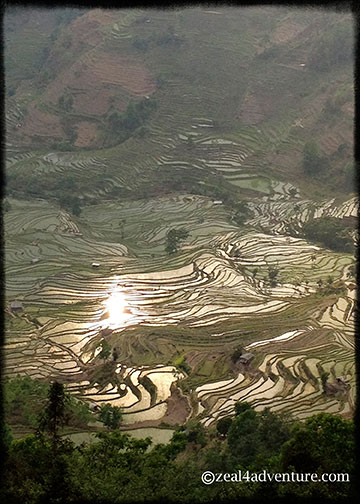 Laohuzui Rice Terraces
So different from the one I am familiar with. It is stunning.
Laohuzui. The biggest Hani rice terraces listed in the World Cultural Heritage Site and ideal for sunset shots.
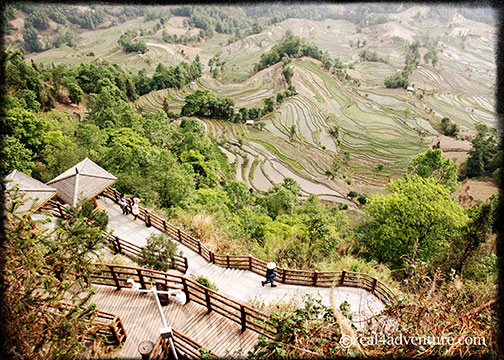
It has 2 viewing areas, the higher deck closer to the road and a lower one closer to the terraces. Both views are lovely depending on how you want to capture its grandiosity.
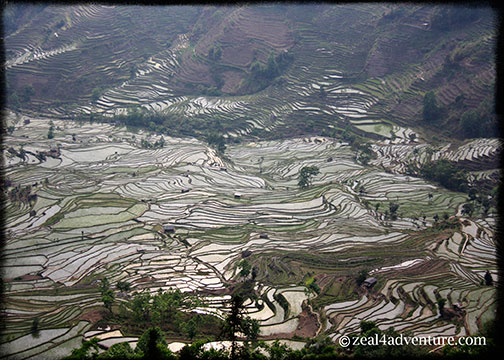
Bada. It has one of the biggest collections of terraces, and any angle is snap-worthy.

From top to bottom, the terraces is said to be 3,900 steps.
Duoyishu. Surrounded by mountains on 3 sides and a valley on the east, it makes for a beautiful sunrise scene.
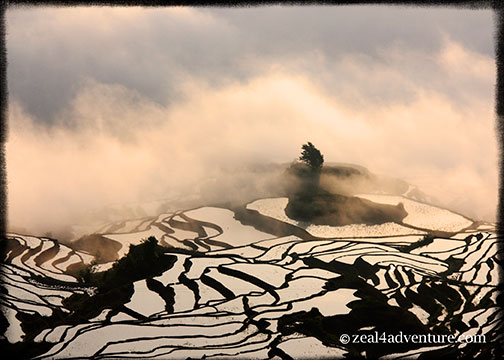
The terraces, still filled with water, unveils the reflection of the soft golden sky just coming to light underneath a sea of clouds.

From our beautiful guesthouse, Flower Residence, it was just t a 20-minute walk to the viewing deck.
And speaking or our guesthouse, we stayed in a charming boutique hotel in a village called Pugao Laozhai.
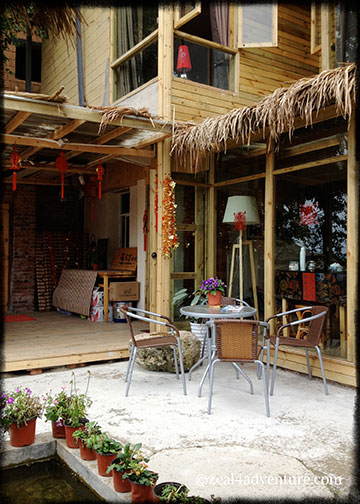
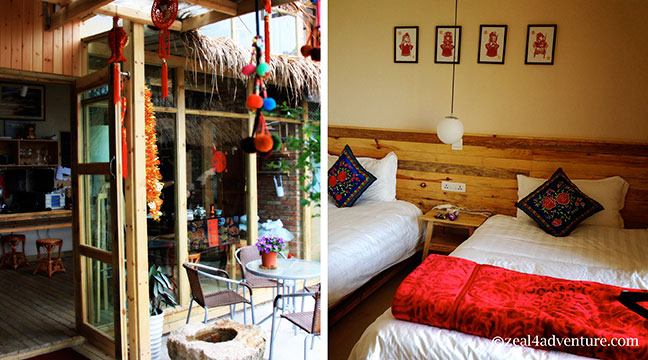

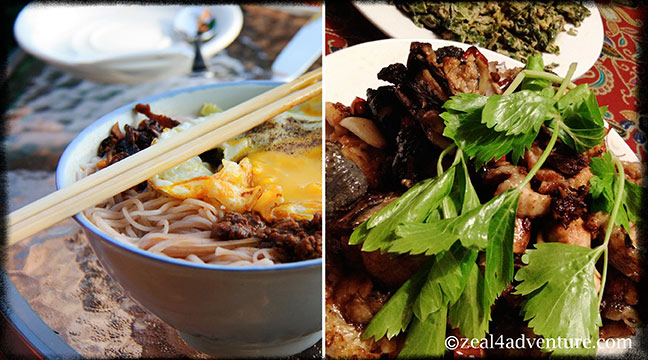
Large glass windows to enjoy the fantastic view, wood everywhere, good food, combined with wonderful hosts CC and his uncle (who cooked fabulous meals)

—is a formula sure to impress me, no doubt. A place where one can be happy to just hang out, I wish I had booked more than just a night.
Yuanyang is 2 more hours south from Jianshiu and definitely worth the road trip. A little piece of heaven with spectacular rice terraces so grand it almost guarantees poster-worthy shots at any angle.


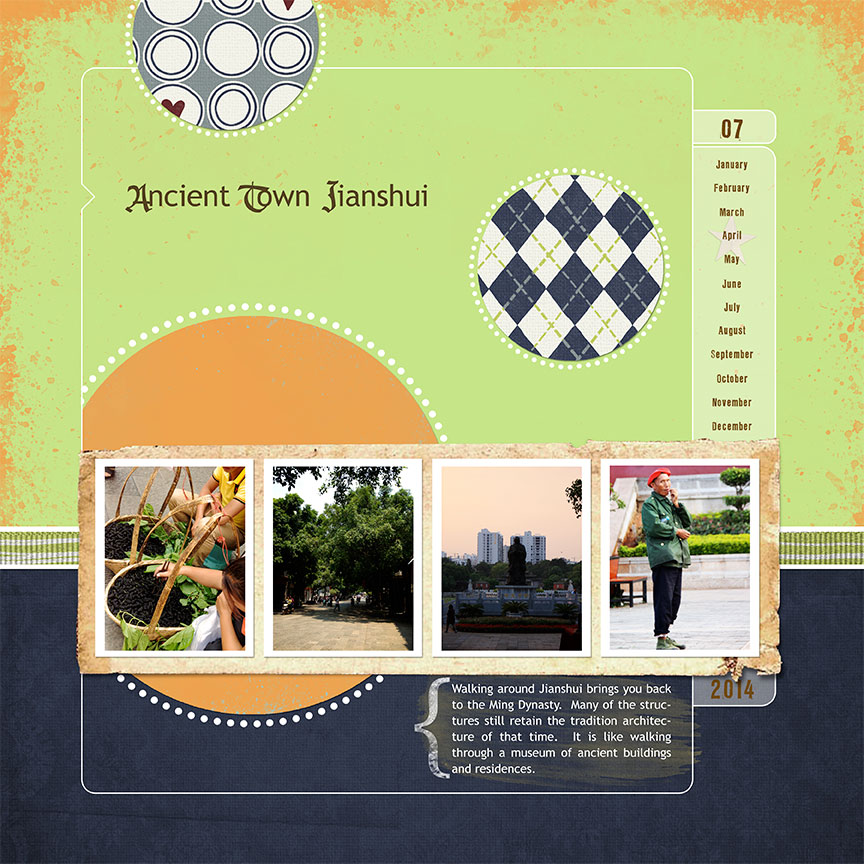 Credits: Now is paper in green and orange; 4ever paper in argyle, love, and solid blue; 4ever striped ribbon—all by Splendid Fiin; Queen of Quirk star element.
Many stop for lunch, but not many stay the night. An optional gateway just 117 kilometers northeast of Yuanyang, we thought that it would be nice to spend a leisurely afternoon and evening in Jianshui County.
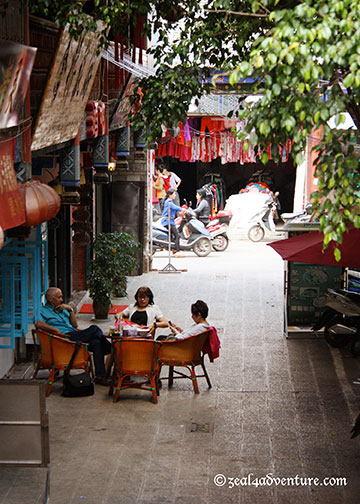 Relaxing on shaved ice, coffee and beer ordered mostly through google translate.
It may not be the highlight of our trip, but it was a pleasant interlude, watching the day pass by in a small, sleepy town.
Walking around Jianshui brings you back to the Ming Dynasty.
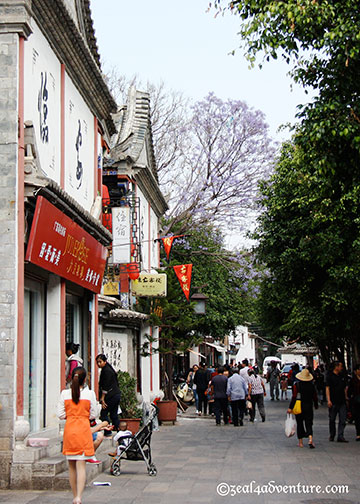
Many of the structures still keep the tradition architecture of that time. It is like walking through a museum of ancient buildings and residences.
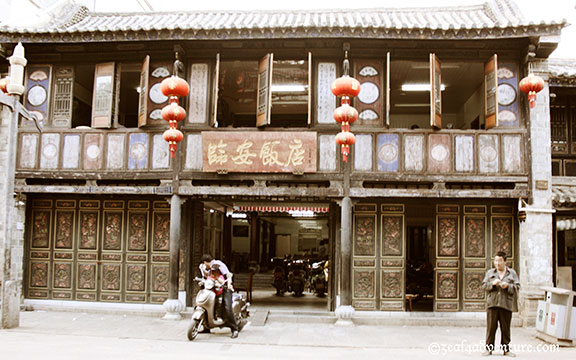
Small enough to walk around, we covered most of the must-sees in one afternoon.
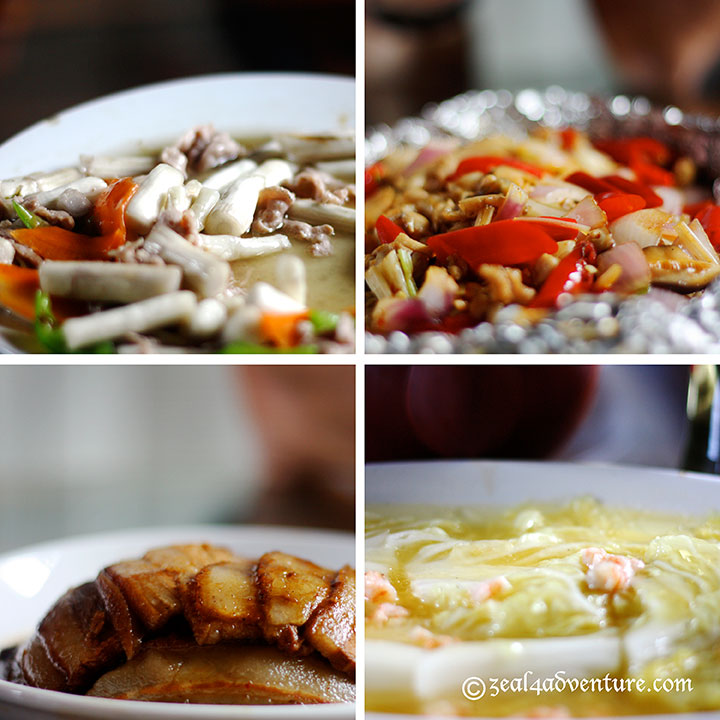
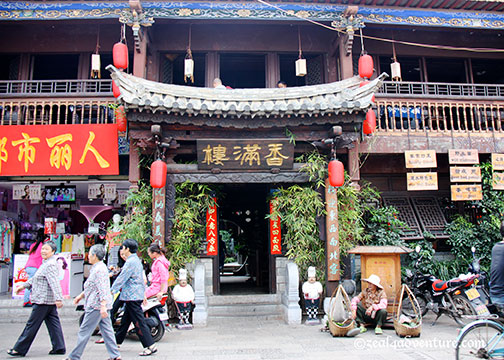
After a sumptuous lunch in one of the very few “foreigner friendly” (menu presented on a tablet with photos) restaurants in Han Lin Lu, we headed out to explore the town.
Not far from the restaurant in Jianxin St. is a fascinating example of the Qing era, the Zhu Family Garden.
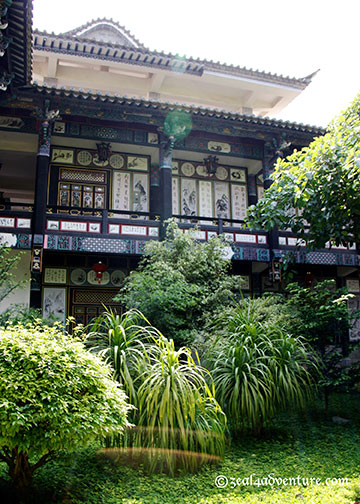
Transporting you 150 years back into imperial times, it showcases the elegance of the Zhu family’s architectural complex from raised eaves, intricate carvings to the spacious 20,000 square meter compound—
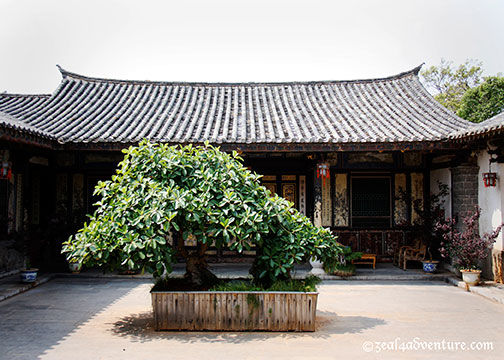 courtyard
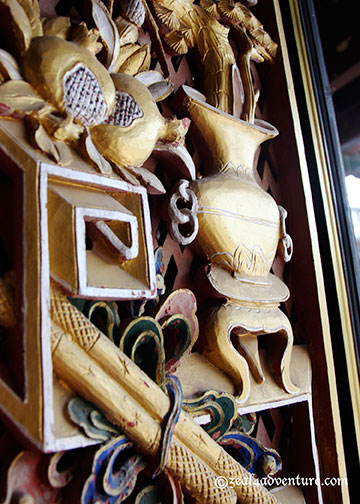 intricate carvings
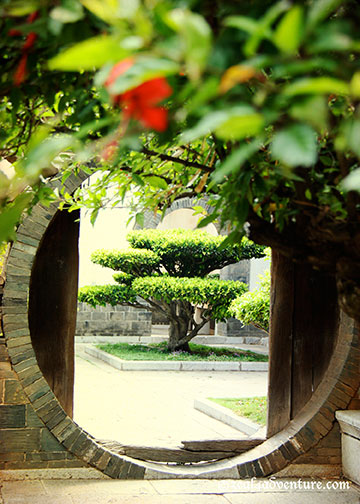 garden
comprising of ancient buildings, family houses, ponds, lovely gardens and courtyards that took thirty years to build.
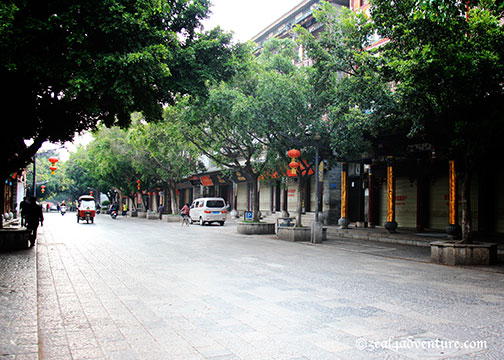
The main road, Lin-an Lu is shaded with old trees and on its eastern end stands this three-story Chaoyang Tower with a panoramic view of the town.
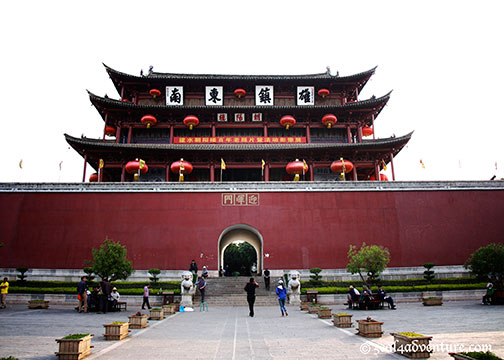
Built in 1389, the gate tower stands in the middle of Jianshui County and with exactly the same style as Beijing’s Tiananmen Square, it has been labeled as the “Little Tiananmen”.
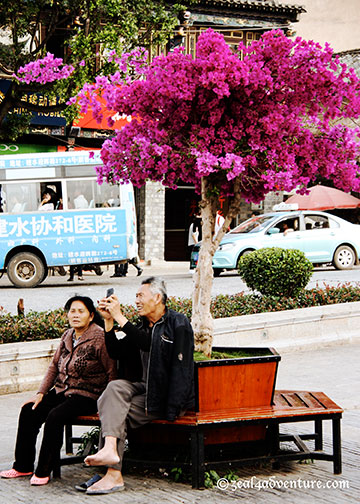
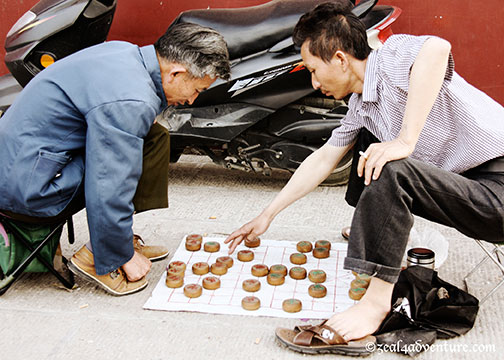
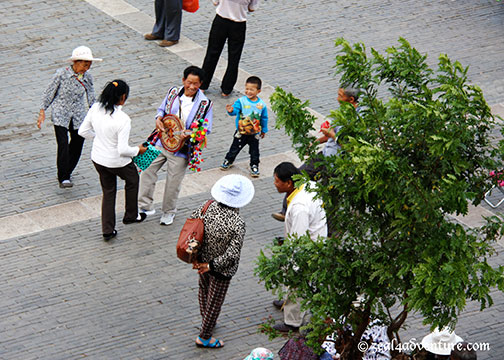
A lovely place to while away time, many locals spend their free time socializing at the square.
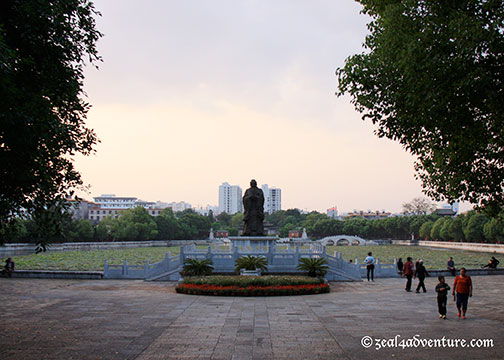
On the opposite end of Lin-an Rd. is a well-preserved and one of the largest Confucius Temple in China. The temple is constructed in traditional Chinese architecture with a history of more than 700 years. We actually skipped this and instead walked around town and amused ourselves with the everyday goings on.
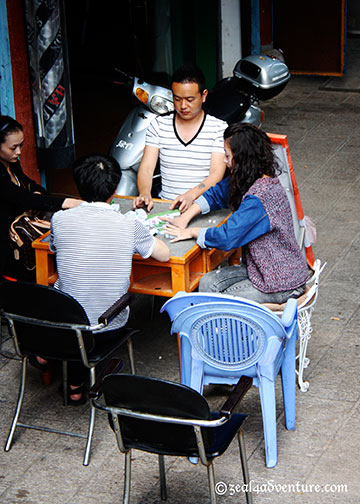 A favorite past time, I reckon
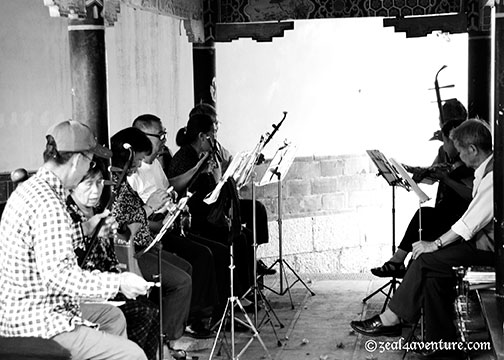 A lovely background sound it made while we were having our coffee
A contrast to lunch, in an alleyway in a small barbecue shop, dinner was the famous BBQ tofu
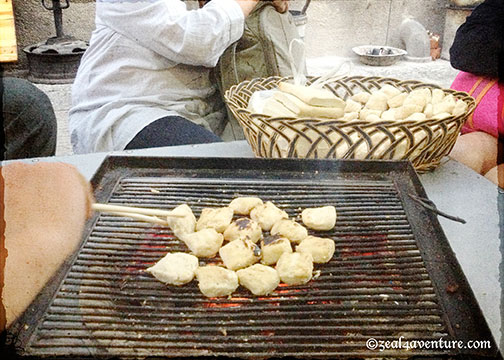
and a Jianshui original, rice noodle soup call Guo Qiao Mixian.
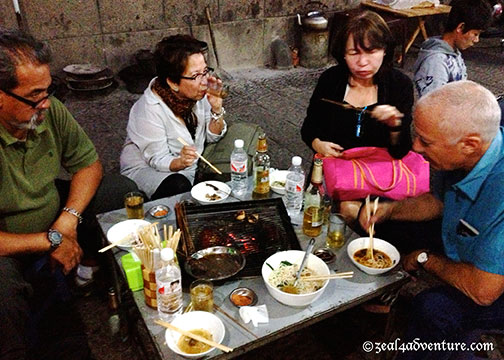
And with that satisfying dish, we ended our day ready for tomorrow’s trip the Yuanyang.
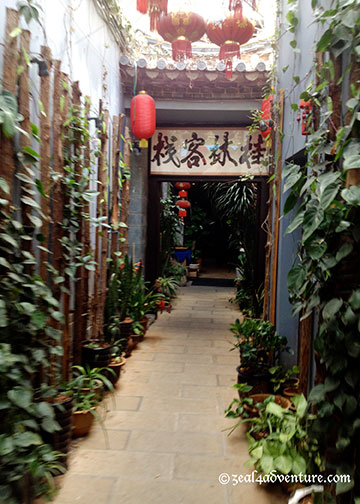 The entrance to our guesthouse, Guilin Inn
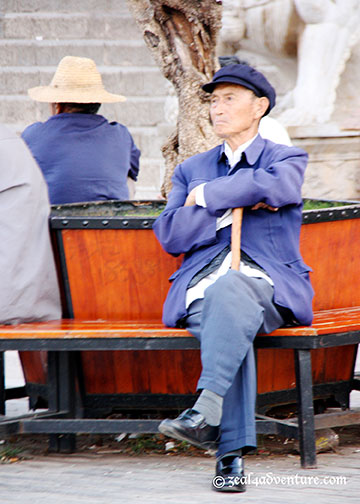 A man on the square
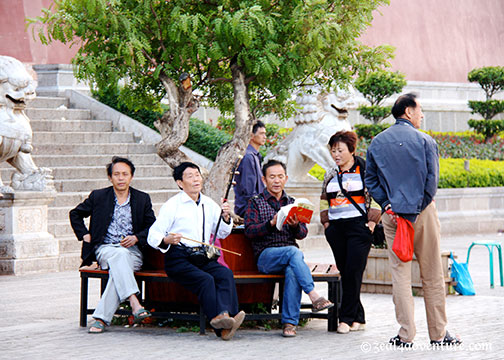 Singing in the square
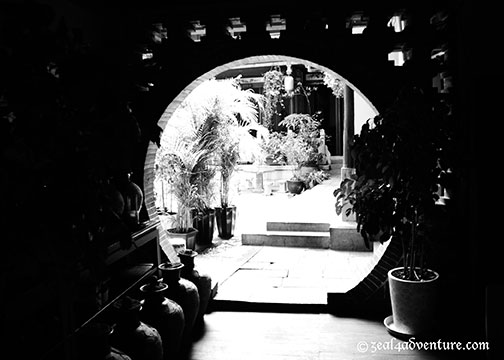 Inside the restaurant at lunch
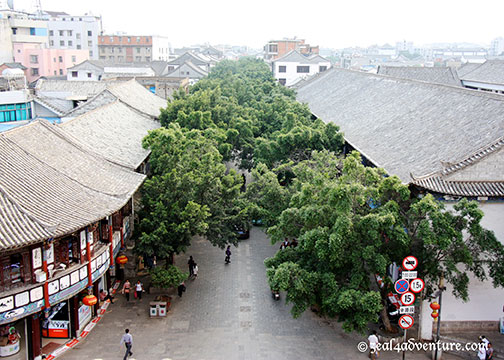 the view of Lin’an Road from the tower
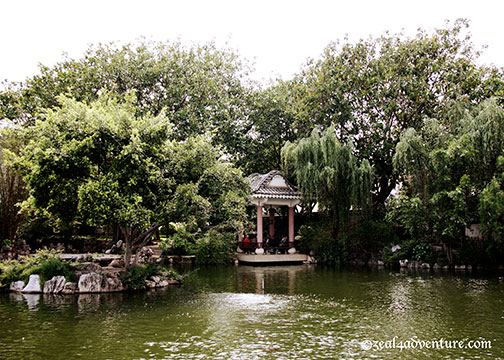 one of the many ponds of the Zhu Family Garden
At the airport, I approached the guy holding a sign with my name on it. I spoke to him in English, he to me in Mandarin. “We have a problem,” I turned to my travel group. Our driver guide speaks zero English, and he does not understand my (elementary) Mandarin. He called his boss, and we made it to our hostel.

The problem is that the boss is leaving for her own holidays in a few days. In the end, Wang and I managed. In fact, he played a part in making Yunnan high up on my “best-loved” trips.
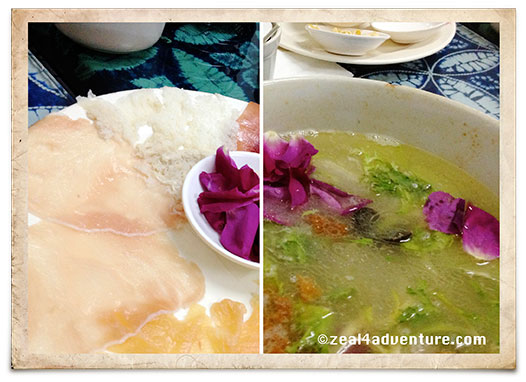
He ordered for us and taught us how to eat Yunnan’s famous “Across the Bridge Noodles.” He also suggested that we take the cable car to Western Hills. And just for this view, it was worth it.
 Dianchi Lake from the cable car. The road winds around it.
Also known as Kunming Lake, Dianchi is the largest freshwater lake in Yunnan Province and the sixth largest in China. With a stunning landscape and an elevation of 1885 meters, it is often called the Pearl of the Plateau.
 view of the river from the hills
Though severely polluted, the lake is the primary water source of Kunming’s industry and agriculture today. At one point, Dianchi made up 40% of the drinking water for the city but had to shift to other sources due to the lake’s severe algae blooms. It is teeming with fish still, and the people who live on the east side still fish for a living.
On the western suburbs of Kunming lies Western Hills, also called Sleeping Buddha Hills because from a distance, it looks that. Another name given is Sleeping Beauty Hills because when viewed from a different angle the hills look like a lady laying beside and her hair trailing into the lake.
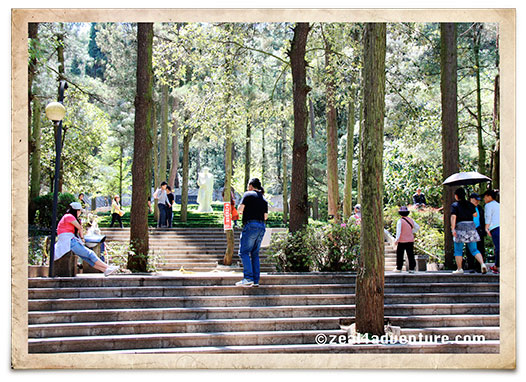
The hill stretches from the wooden Huating Temple to the Dragon Gate along the steep cliffs. I didn’t reach the Dragon Gate but instead enjoyed the view from the lower cable car station.

One can also go up the hill on a steep and narrow path, but many prefer to go up through cable car and then walk down. We opted for cable cars both ways.
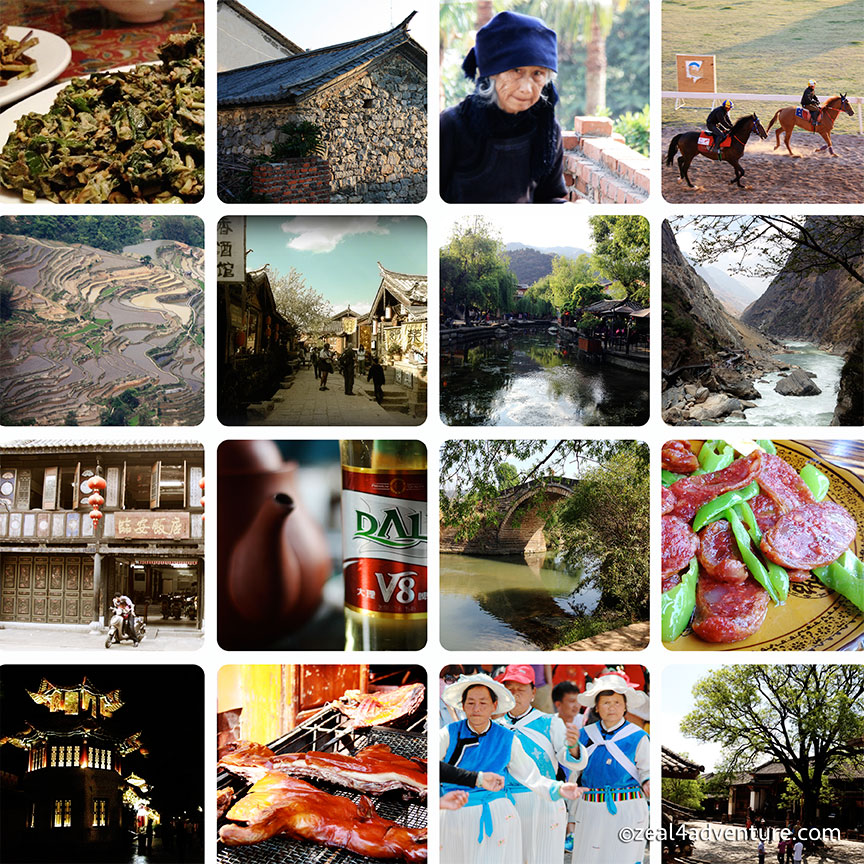
With the most ethnic groups among all of China, this southern part of China started to fascinate me when I was researching on Guilin a decade ago. And Yunnan had been on my mind ever since.
Sharing external borders with Myanmar, Laos, and Vietnam. Internally, it has as neighbors Guangxi, Guizhou, Sichuan, and Tibet. With its location, it is not surprising that Yunnan is diverse in its culture and people.
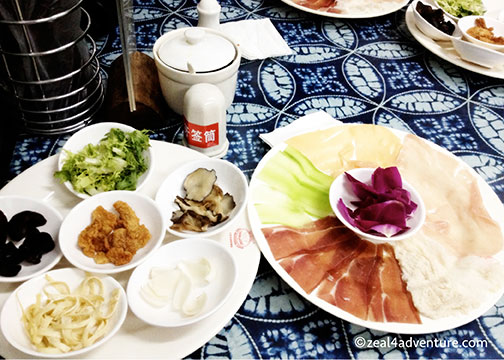 A specialty of the Yunnan Province, guoqiao mixian, which translate to “Across the Bridge Noodles”. The name made popular by a lady who used to bring noodles to her husband across the bridge. Full Story here.
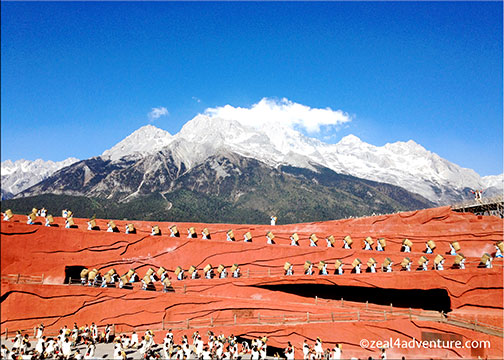 Impression Lijiang a Zhang Yimou show with the Jade Dragon Snow Mountain as its backdrop.
Its landscape ranges from snow-capped mountains to dense jungles to sensational terraces.
Amazing land it surely is and I have been charmed, captivated. Join me in the next few months as I reminisce about my journey into dramatic landscapes, breathtaking views, fascinating cultures and magnificent cuisine.
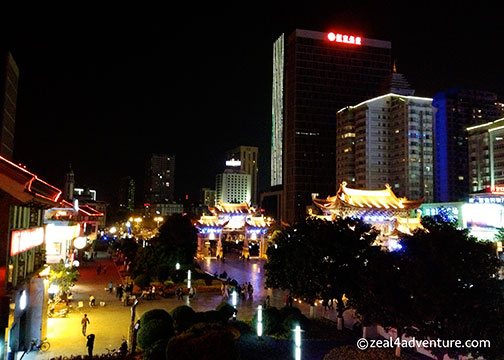
The hub and the capital of Yunnan served as our jump off point. Surrounded by temples, lakes and limestone hills, the city has its own allure, but we didn’t spend a lot of time in the city. Unfortunately.
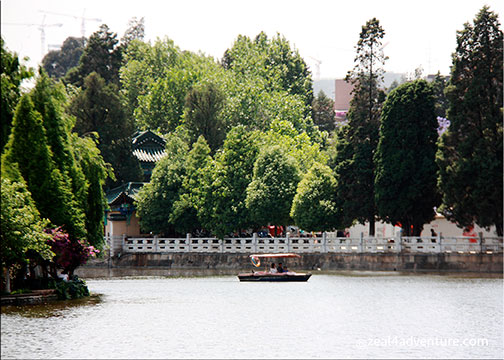
I chose to stay near the lake precisely because we didn’t have that much time for exploration. The lake is in the heart of the city’s business, food and culture.
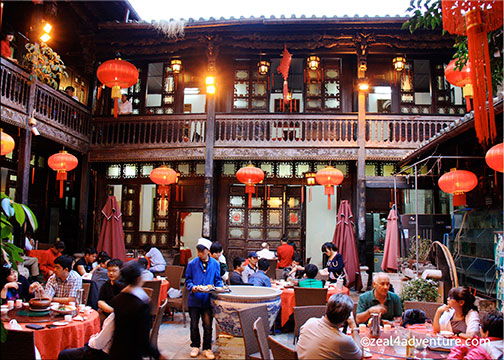 A few steps from our hostel is Lao Fang Zhi, a house of over 100 years turned restaurant that serves awesome hot Yunnan dishes.
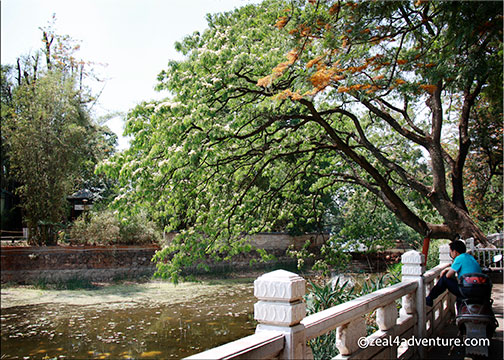
 A beautiful park designed and created way back in the 17th century. Surrounded by willow trees and dotted with vibrant lotuses, the park has become a favorite among nature lovers.
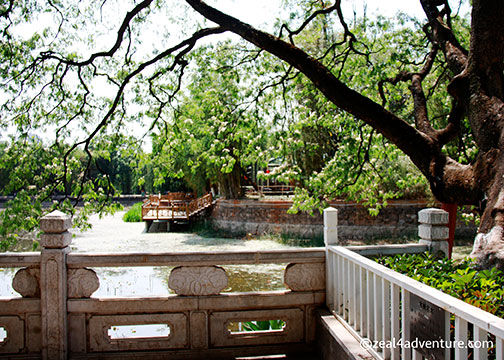
A stroll around the lake is a pleasant way to watch how the locals spend their time.
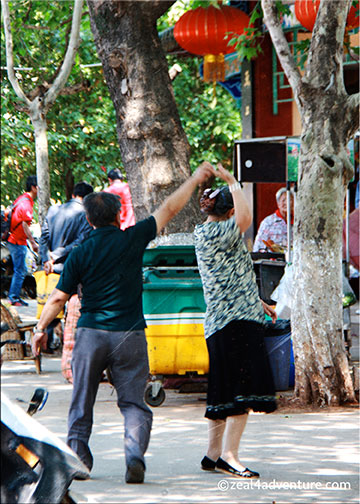
A lot was going on. In one part of the lake, music filled the air, and people were dancing.
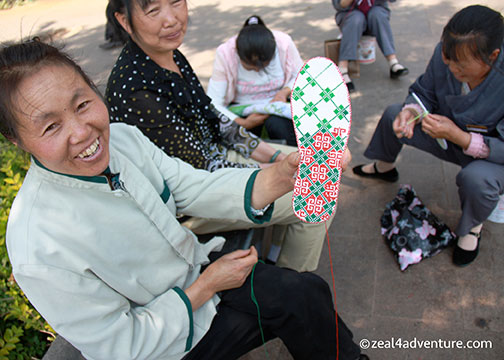
In another, aunties sit around chatting and doing some embroidery while some are contented just to admire the lake and soak up the atmosphere.
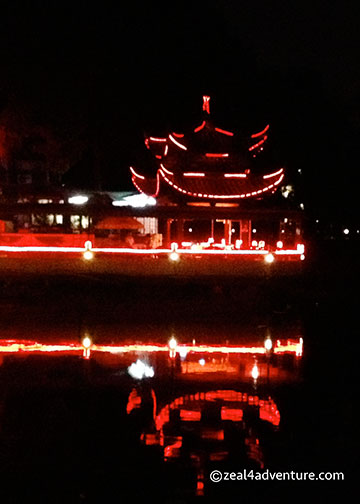
At night, the lights come alive and radiate a different ambiance.
And with this, we start our journey into an endearing province of China that seemed to have been left alone. Stay tuned.
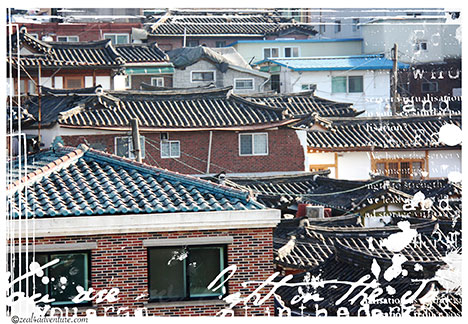
Wandering around Bukchon, a village with over 600 years of history in the midst of metropolitan Seoul was a stroll into the past and the present.
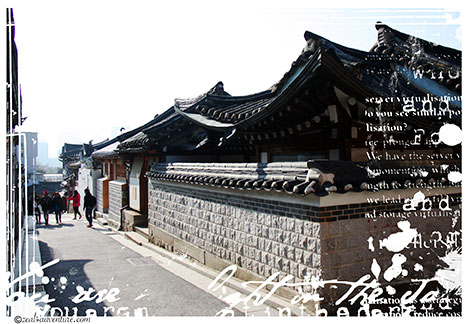 It was home to aristocrats back in those days when the village was downtown Seoul hence the many traditional houses dating back to the Joseon Dynasty.
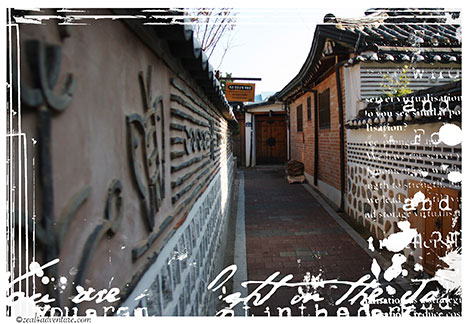
Called hanok, more than a few of these traditional houses remained remarkably well and are still actual homes to the Seoulites if not operating as cultural centers, guesthouses, restaurants or tea houses.
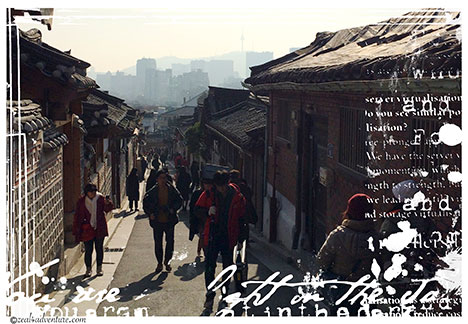
The walk around Buckchon will immerse you in an atmosphere of ancient Joseon Dynasty with old hanoks in small alleyways that lead to great panoramic views of modern Seoul.
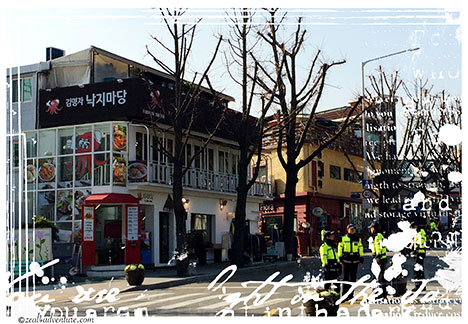
Next to Bukchon is Samcheongdong-gil. One of Seoul’s most stylish neighborhoods harmoniously juxtaposing the old Korea and the modern artsy galleries and cafes as numerous art galleries, shops and restaurants set up shop in renovated hanoks.
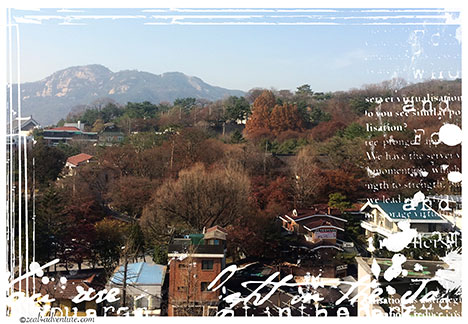 Mt. Bukak is partly responsible for the charm and mystic of Samcheong-dong.
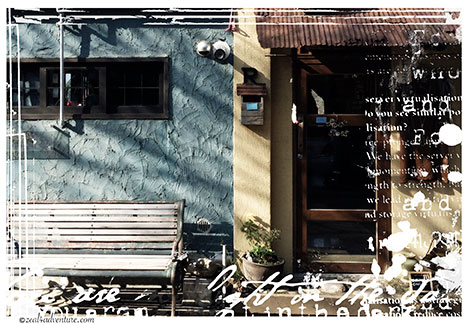
This charming enclave begins where Insadong ends. Not the typical tourist area, and the rows of boutiques, galleries, and cute coffee shops make for a delightful afternoon wander.
Captivated once again by Seoul’s unique charm, delectable bites and warm-hearted people, it is beyond any doubt that I will be back, and hopefully much sooner this time.
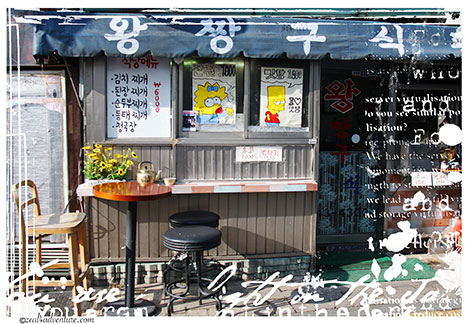
Annyeong Seoul… till we meet again.
 my adventure odyssey