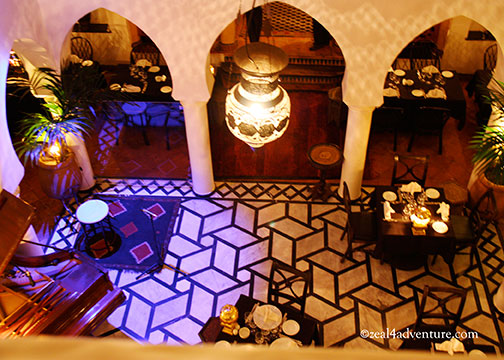
Experience Historic Marrakech

Alahu Akbar, god is great, come and pray,” an imam calls to the neighborhood over a loud-speaker, a familiar background noise by now.  In a different light, tradesmen standing outside his store enthusiastically calls for attention to sell with “Konichiwa,” “Ni Haw,” or a simple “Hello.”

wider-streets

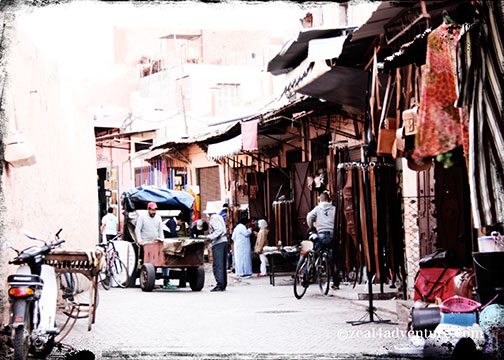
The medina, albeit still a maze, is not as intimidating as the one in Fes.  Weaving through the wider (relative to Fes’) streets,
leather-goods

I breathe in an assortment of aromas, the whiff of floral scent of potpourri; the intense smell of mix spices; the fragrance of shredded wood; the distinct odor of leather.
souks

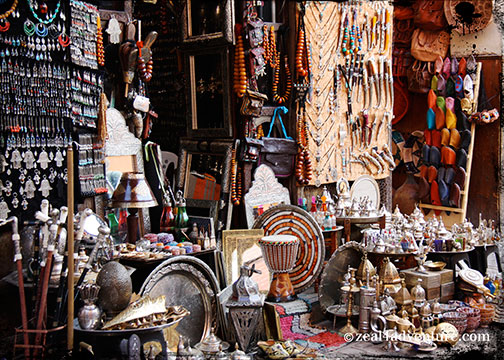
various-metalworks

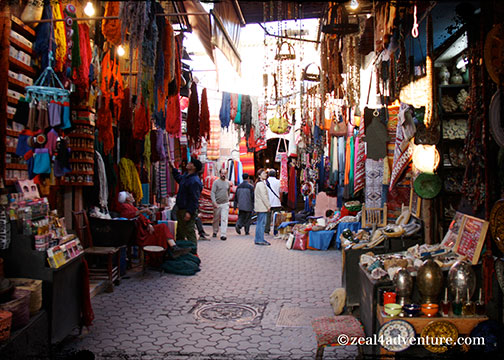
I notice that, in contrast to Fes, the medina is packed with shops intended for tourists.  Though having earned the reputation of being ruthless shopkeepers, I saw them as affable to foreigners often calling out a “Where you from?” and returning an “Ah Philippine, welcome to Morocco!”

woodwork-spectacle

Adding to this are tout craftsmen who invite curious people like us to be entertained, at the very least – I picked up a few of his merchandise.   🙂

Atlas-mountains

Marrakech also known as the “Red City” is a major city of Morocco, north of the foothills of the snow-capped Atlas Mountains.
red-walls

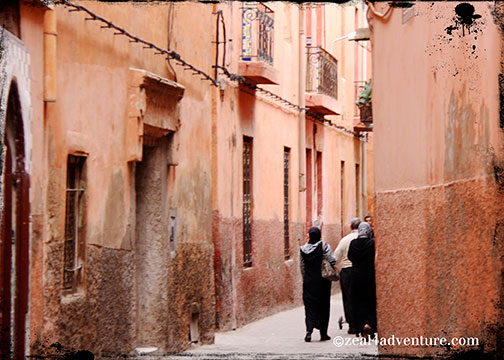
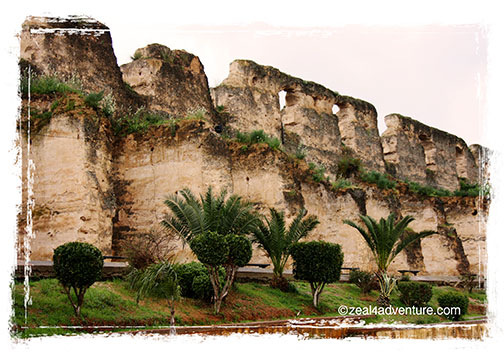
The city surrounded by blush colored walls, initially a fortress and a symbol of power, was constructed in the 12th century, the bricks used is a mixture of red mud and water from the Hazou plains.

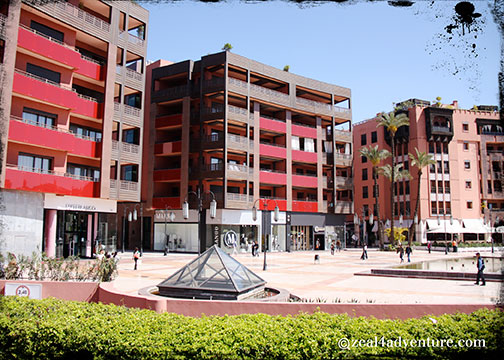
The city is divided into two distinct parts – the medina and the new European modern district called Gueliz or Ville Nouvelle.

guelizShops in Ville Nouvelle

This post will be all about the historic city, its market and its famous square.  Get lost in the narrow, labyrinth streets of this ancient rose-hued city and let it take you back in time.

Djemaa el-Fna
kotoubia

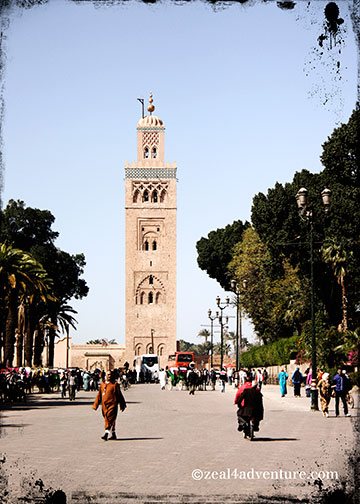
It is said that the minaret of Koutoubia mosque is the heart of Marrakech, but the soul of the city lies just 200 meters away, in the city’s market square and forum that has been in existence since its foundation.

jemaa-el-fna-from-terrace

Part of the UNESCO World Heritage Site, it owes its fame to its size, its unique atmosphere, and for bringing history to life daily.

snake-charmers

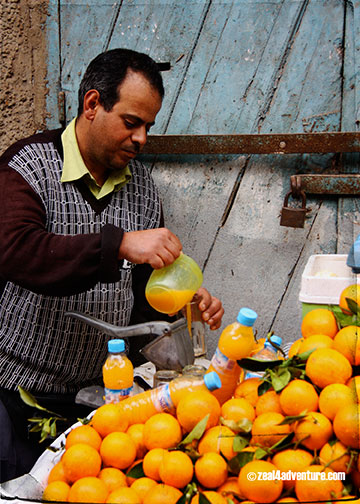
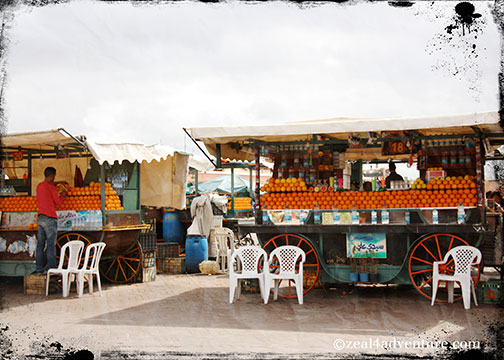
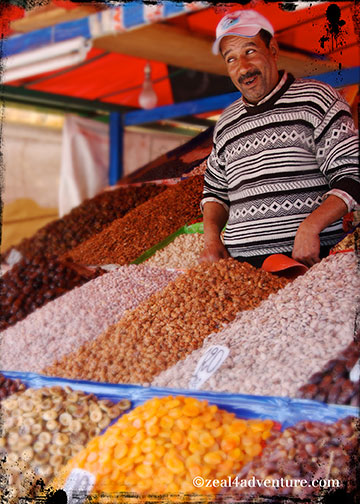
A medieval circus of musicians, dancers, snake charmers, story tellers… share the square with the fruit and juice stands.
juice-stand

dried-fruit-standChaotic yet in tune with the din of drumbeats and enthusiastic hollers.

extort

chilling

The way to experience it is to be among it all but the best way, I found out, is to watch the hustle of activities and be entertained by Djemaa el-Fna’s daily performers from any of the peripheral cafes and restaurants’ upper terrace.

terrace-cafe

It will be a show you don’t want to miss.

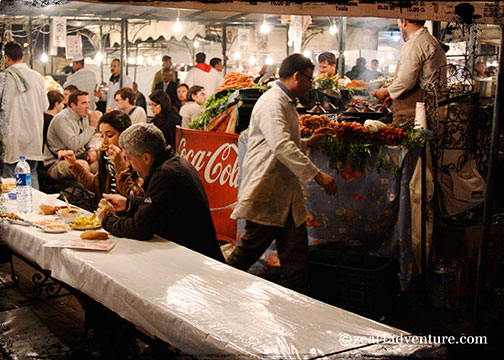
The show doesn’t peak until sundown when the square has a different life.  Rows of street stalls under giant white tents are set up each night not only for the tourists but are, in fact, local food jaunts, as well.
night-stalls

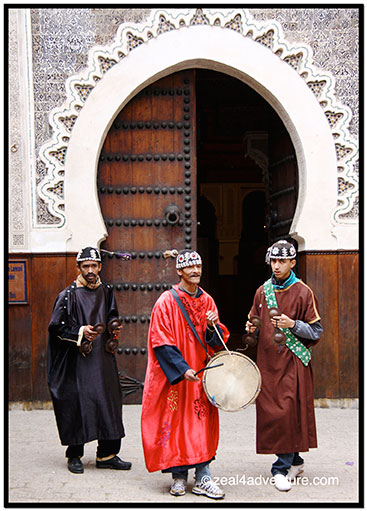
Food is prepared hot and fresh along the countless stalls serving authentic favorites one must have when in Morocco.  Head out one night and eat like the locals do and be serenaded with the sounds of live Moroccan music.  Troupes of Andalusian or Gnaoua musicians perform as part of a dinner show around the square.

bocadios-sandwich

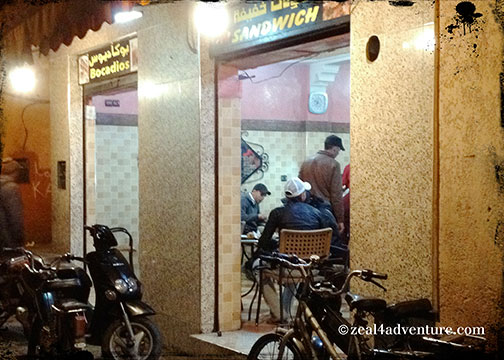
If the confusion seems to be overwhelming, look for small eateries serving these sandwiches they call bocadios.
bocadios

Amazing stuff found in the corners of the medina away from the disarray – it helps though if you can speak Moroccan or French.
meringue

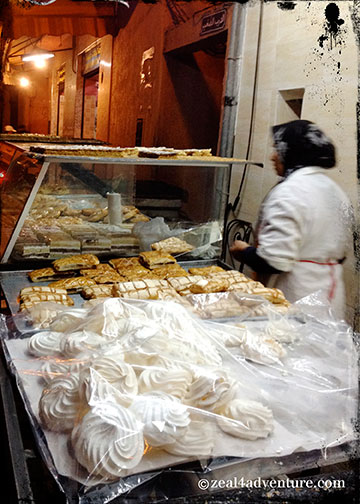
And just outside, a lady sells wonderful Moroccan sweets.  Perfect for dessert.

belly-dancing

Or escape to an evening of belly dancing, for a different kind of entertainment.
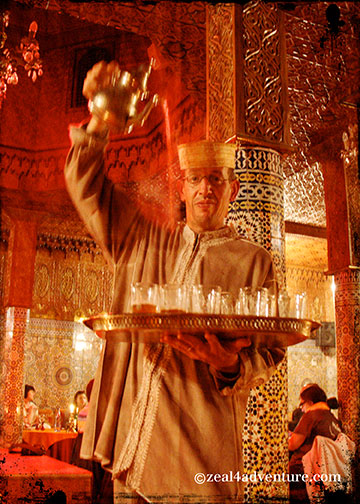
mint-tea-pouringThe proper way to pour Moroccan mint tea, as performed by our very gracious waiter.
Wander and get lost around the endless maze of souks

Marrakech has the largest traditional market in Morocco and it is so easy to spend your dirham at the seemingly endless maze of souks inside the medina.
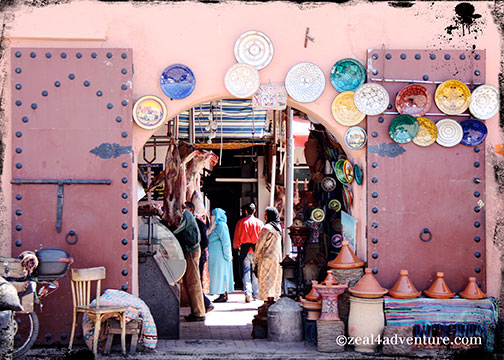
souk-entrance

A network of souks begins on the north edge of Djemaa el-Fna and ends at the Ben Youssef Madrasa, comprising of alleyways of local shops full of character.
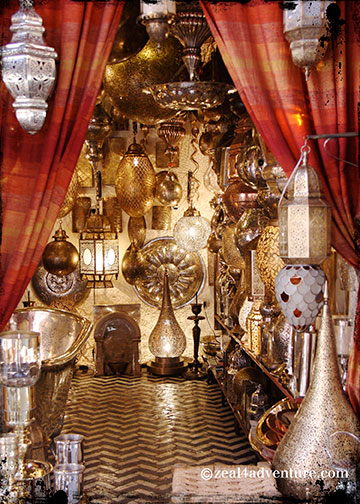
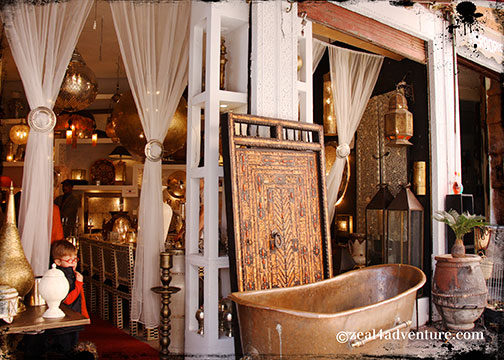
lighting-store

choice-boutiques

The further in you venture, the more fascinating they become from souks touting everything to the (more) sedate choice boutiques.

carpets

Find Berber carpets, pick up wood carvings, try on djellabas and babouches,

herbolist

or merely listen to herbalists sell you miracle cures for the aging, wander and get lost, then get help from a bunch of boys playing in the street… all these are part of the fun when exploring Marrakech’s medieval souks and winding streets.

Do all these because if you have not gotten lost, if teenagers have not offered to help you find your way out, if they didn’t hassle you for a tip, if you have not been greeted and lured by jovial merchants in five different languages, you have not experienced Marrakech.

Useful Info:

(Belly Dancing Show)
Restaurant Dar Essalam
170 Riad Zitoun Kedim
For Reservations: 212 (0) 5 24 44 35 20
 
Les Terrasses de l’Alhambra
3 Place Jemaa El Fna, Medina
212 (0) 5 24 23 75 70

Meet Adam

Gracious-HostCredits: Quickpage created by Reeta Treat using “4Ever” collaborative kit created for JessicaSprague.com

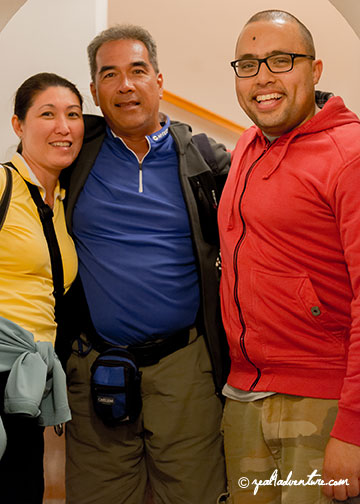
A stocky young man with glasses, wearing a baseball cap, leather jacket and track pants, Adam is not the typical Moroccan you see walking around the medina.  He talks with an American twang.  It is because although born in Morocco, he and his siblings grew up in Canada, Adam explains as he leads us to a beautiful riad he calls home.  He runs the riad that he renovated with his parents when they decided to go back home to Morocco.

bedroom

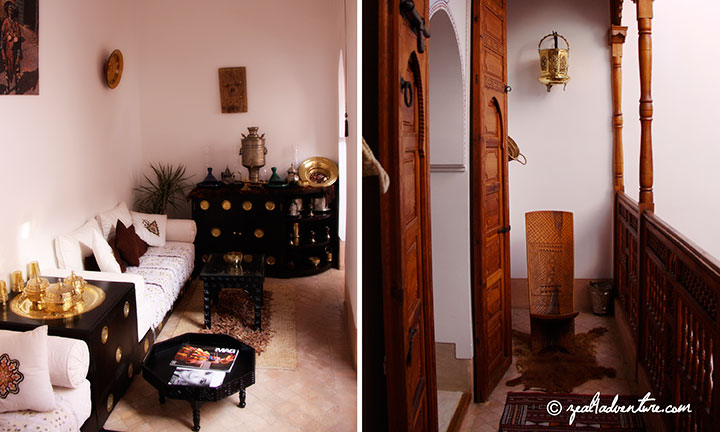
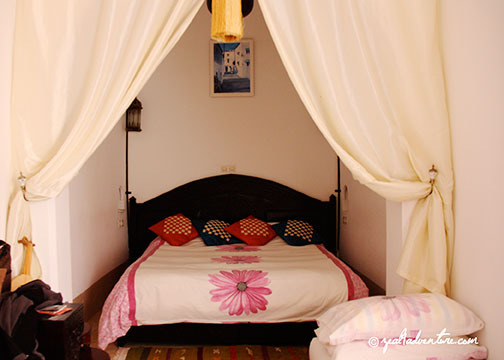
Riad Slawi is cozy with 4 rooms (5 actually if you count Adam’s room on the ground floor) tastefully designed in classic Moroccan fashion.

courtyard

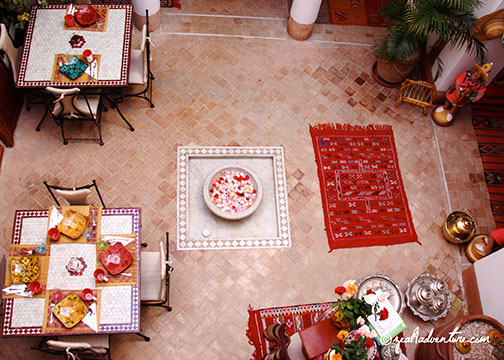
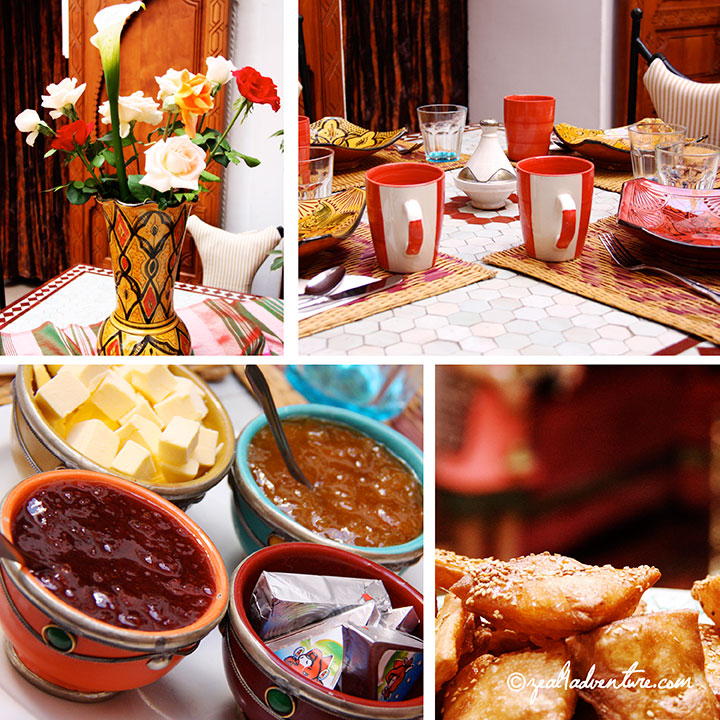
Typical of riads, it has a (well-lit) courtyard where we were served traditional, homemade breakfasts.

breakfast

But what I love best about the house is this stylish yet cozy sitting lounge where I would read and write in my journal on down time.

sitting-lounge

Hands down my favorite home in Morocco.

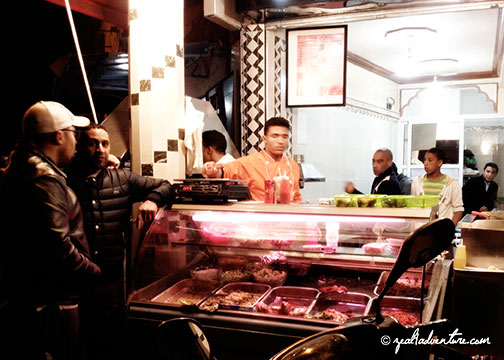
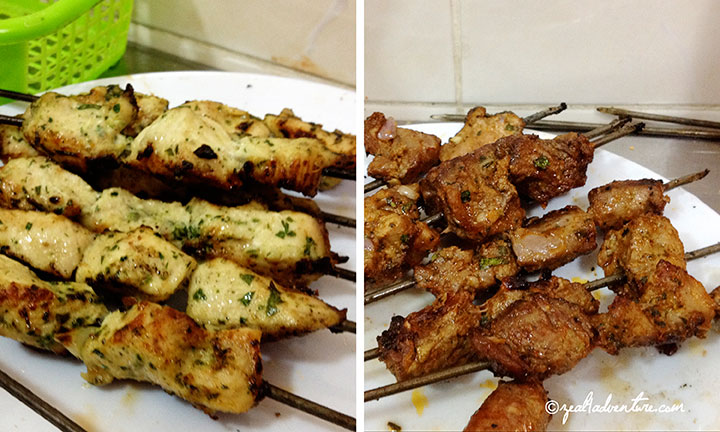
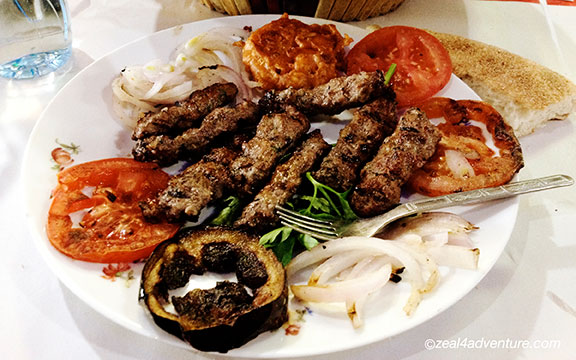
Famished from travelling all day, we asked Adam where we could get some local street food. He walked us back to the entrance of the medina and brought us to a hole in a wall where we had some awesome kebab.

hole-in-a-wall-eatery

Surrounded by local folks, we sat on stools vacated by a group of teens and heartily ate the grilled beef, lamb and chicken Adam ordered for us.

kebab

This is what I call an awesome welcome to Marrakech.
The guidebooks and people we meet along the way were not remiss in cautioning us of touts, hustlers, scammers, etc.

Adam

Adam, however, more than cleared its reputation.  He graciously offered to buy train tickets to Tangiers for us, even booked us a hotel near the train station, He allowed us to  leave our bags with him while we spent 2 days in Essaouira, and arranged to have us picked up at the bus station when we returned.  His kind certainly makes up for all the Saids of Morocco.  Such a gracious host and a real darling, I must say.

Useful Info

Riad Slawi
92 Derb Almed el Borj
Sidi Ben Slimane, Kaa Sou
+212 524 37 7967

The Road to Marrakech

hotel-swiss-chalet-style

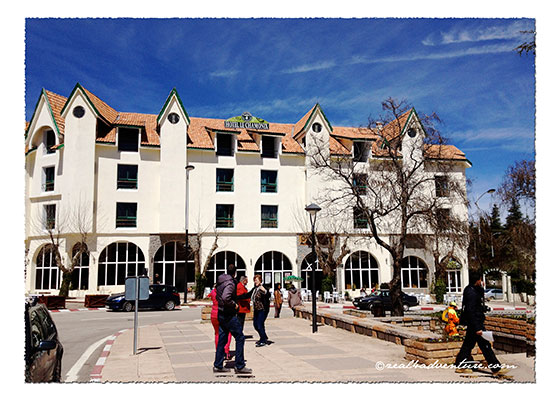
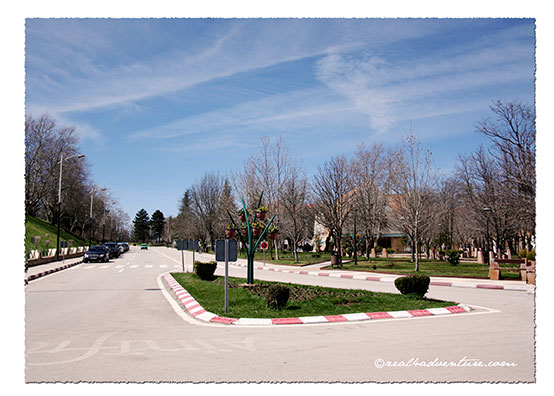
Lakes, fountains, wide roads, Swiss-style villas, and green spaces… it’s like driving into a resort town in Switzerland.  But no, we’re still in Morocco, en route to Marrakech.

big-roads-ifrane

king-of-moroccoA photo of Morocco’s King Mohammed VI, a regular sight all around the country.

We took a pit stop in the city of Ifrane in the Middle Atlas, 50 kilometers south of Fes.  Built by the French in the 1930s as a resort town and an oasis in a desert,

the-plaza

a refreshing break from the cramped, dusty alleyways of the medina.

Dayet-Aoua-2

Sitting in a natural depression, Lake Dayet Aoua, is a relatively well-conserved lake within the Parc National d’Ifrane.

Dayet-Aoua

Rich in bird life and woodlands, it is a popular destination of birdwatchers.

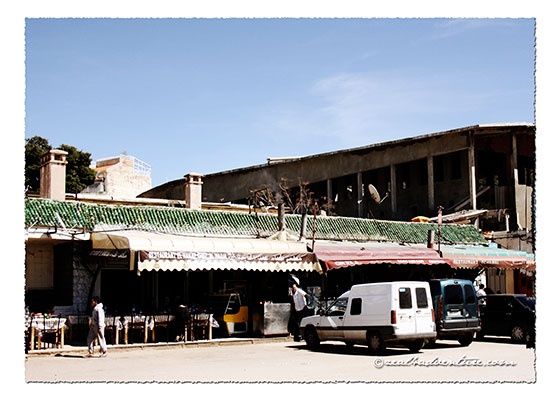
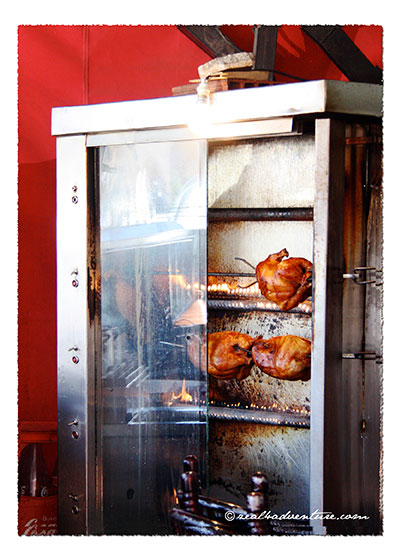
The most amazing roast chicken we had on our entire Moroccan adventure was at a roadside restaurant our driver took us to.

roadside-eatery

roasting-chicken

Juicy, succulent with a touch of Moroccan flavors…

roast-chicken

and just thinking of it had me craving for it now.

tagineCarrots, potatoes with beef slow cooked in Moroccan spices.

The vegetable and beef tagine we had with the chicken.

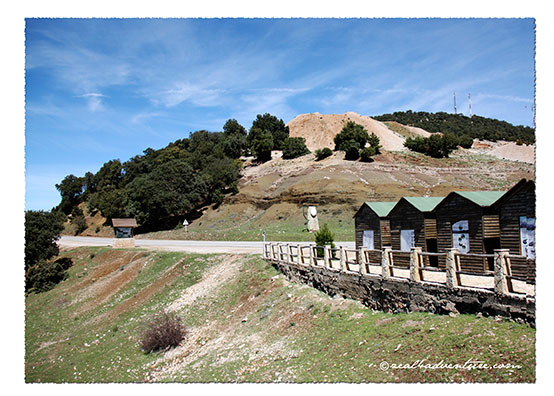
exhibitview-deckview-from-view-deckWe stopped by an exhibit of the Ifrane National Park by the road side.

The trip took 10 hours, 2 hours over the estimated time because, aside from making several stops along the way, the driver took speed limit very seriously.

scenery

This is a typical road scene before I dozed off and woke up in Marrakech at half past eight in the evening, our driver trying to find the Sidi Ben Youssef Mosque, where we are to meet our next host, Adam.

An Outing Outside of Fes: Meknes

An article I read about the vineyards in Muslim populated Morocco got me interested in Meknes. Despite its religious stricture on consumption, thanks to its gentle climate, generous sun, and rich soil, the Meknes region is home to many vineyards and olive groves. I considered a vineyard tour but, to be honest, I completely abandoned the whole wine tasting idea at the last minute in lieu of the very impressive Volubilis. And because walking around the ruins of the Roman settlement took just a little over an hour, we had more time to visit the city of Meknes.

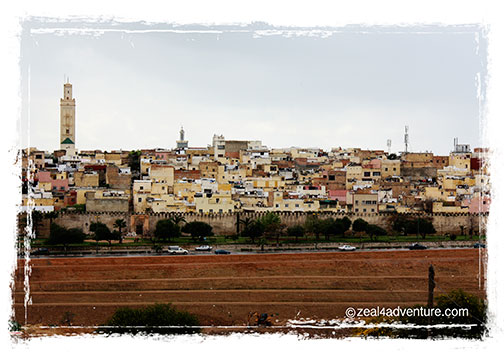
View-of-the-old-city

Much less visited than its neighbor Fes, the most unpretentious of imperial cities—Rabat, Fes, Marrakesh being the other three— as it was developed as a capital late in the history of Morocco and only briefly, by a single sultan, Moulay Ismail. Meknes, despite its humble past, rewards travelers with beautiful gates, ramparts, mosques, and palaces and is often referred to the Versailles of Morocco.  As one of the imperial capital, Sultan Moulay Ismail built the city’s vast imperial palaces and massive walls to rival King Louis XIV’s Versailles hence the reference. Suffice to say, his tomb rests here. The weather turned cold and wet, which prevented us from wandering around much, we nevertheless managed to visit a few sites.  We would have loved to see the inside of Ismail’s granary (Heri es Souani), but it was close on a Sunday.

Place el Hedime

Place-el-Hedim

At the heart of Meknes linking the medina and the Kasbah, the large square is lively in the afternoon,

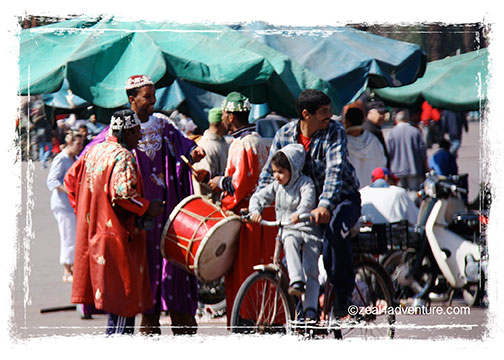
a-glimpse-of-chaosA glimpse of chaotic Djemaa el Fna

much like but a lot tamer than the Djemaa el Fna of Marrakech (you will know what I mean on my future post).  The outstanding architectural detail of the walls and gates (especially of Bab Mansour) makes for a more compelling square than Place Seffarine and Boujloud.

Moulay Ismail’s Mausoleum

triple-arch-of-mausoleum

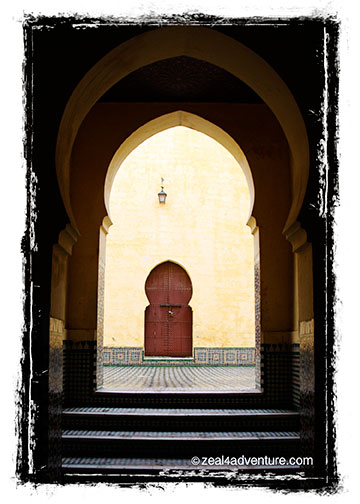
From the main entrance, an archway leads to a triple-arched entrance.  A small yellow room with a small fountain in the middle greets as you enter the mausoleum.

Moulay-Ismail-Mausoleum

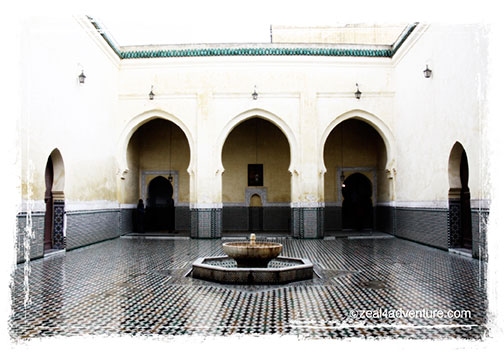
This leads to the first of several open aired courtyard surrounded in all sides by bright yellow walls.  The last courtyard fronts sanctuary where the tomb is.  While non-Muslims are not allowed inside the sanctuary, it was possible to have a glimpse of the tomb from the antechamber.

Sahrij Souani Bassin

Sarij-Swani-lake

It was said that the lake, measuring 319m by 149m, was constructed to ensure the supply of water to the town in case of drought or siege.  The reservoir is connected to the water system of the city, which was considered an ancient engineering wonder.

sahrij-Swani-wall

This is the exterior of Heri es Souani, the ingeniously designed stables of Moulay Ismail.  To keep the temperature cool and air circulating, the structure was built with tiny windows, massive vaults and an underground water channel system.  The gigantic storerooms provide stabling and grains for 12,000 horses.  Too bad we were there at the wrong time and couldn’t see the inside, they say it is bewildering.

An Outing Outside of Fes: Volubilis

on-fertile-land

It seats on top of some of the most fertile land in the Middle Atlas only 5 kilometers away from Moulay Idriss, situated near Meknes between Fes and Rabat. A site so unexpected, truth to tell.

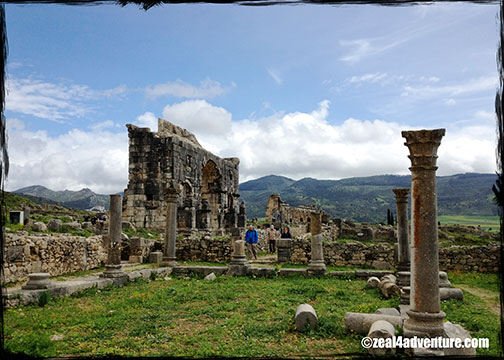
columns

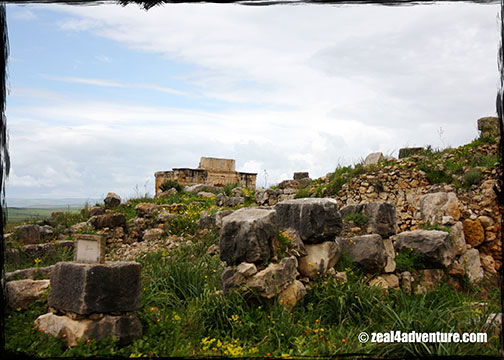
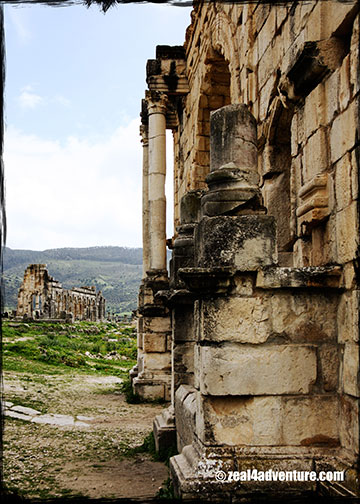
This Roman ruins consist of no more than half of the original town, but the well-defined remains of its walls,

walls

its intact and intricate mosaics, and the foundation of buildings

IMG_7780

destroyed by a massive earthquake sometime in the 18th century has earned recognition by the UNESCO as an ancient Roman site that houses extensive ruins dating back over 2,000 years.

The Mauritanian capital became an important outpost of the Roman Empire and was adorned with many fine buildings. Already a thriving town, Volubilis grew rapidly under the Roman rule from the 1st century AD onwards.

olive-treesOlive trees still grace the land.

Grains and olive oils, produced in the fertile lands of this province were exported to Rome as well as wild animals for gladiatorial spectacles, contributing to the town’s wealth and prosperity. The last stop of the Roman Imperial roads that went across France, Spain and down to Morocco’s northern city of Tangiers,

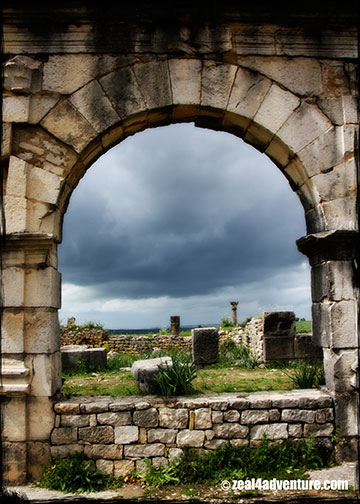
the-arc

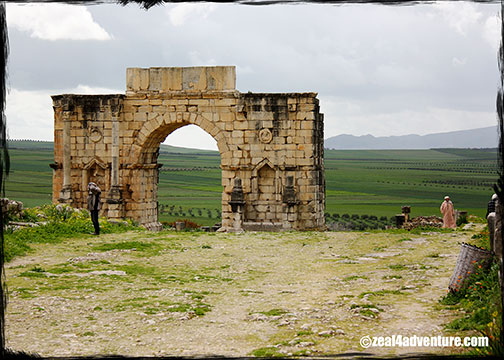
Volubilis is an exceptionally well-preserved example of a larger Roman colonial town on the fringe of the empire. Its structure comparable to other Roman ruins along the Mediterranean.

IMG_1475

Many, including us, travel to Volubilis to explore the sites’ historical significance. Amongst the ruins, visitors can see a range of public buildings, olive mills, houses, and temples.

mosaic

And because Morocco is a country of mosaic, the rather well-preserved mosaics from the ruins are considered among the finest in existence.

on-a-green-plateau

From the entrance, one can appreciate the green plateau that Volubilis seats on,

view-of-the-Rif-mountains

and when one reaches the site, fabulous views of the Rif Mountains and its surround greets.

So picturesque, Volubilis is picture perfect at any angle. Here’s more of the ruins:

IMG_7829

IMG_7778

IMG_7827

IMG_7823

IMG_7807

An Outing Outside of Fes: Moulay Idriss

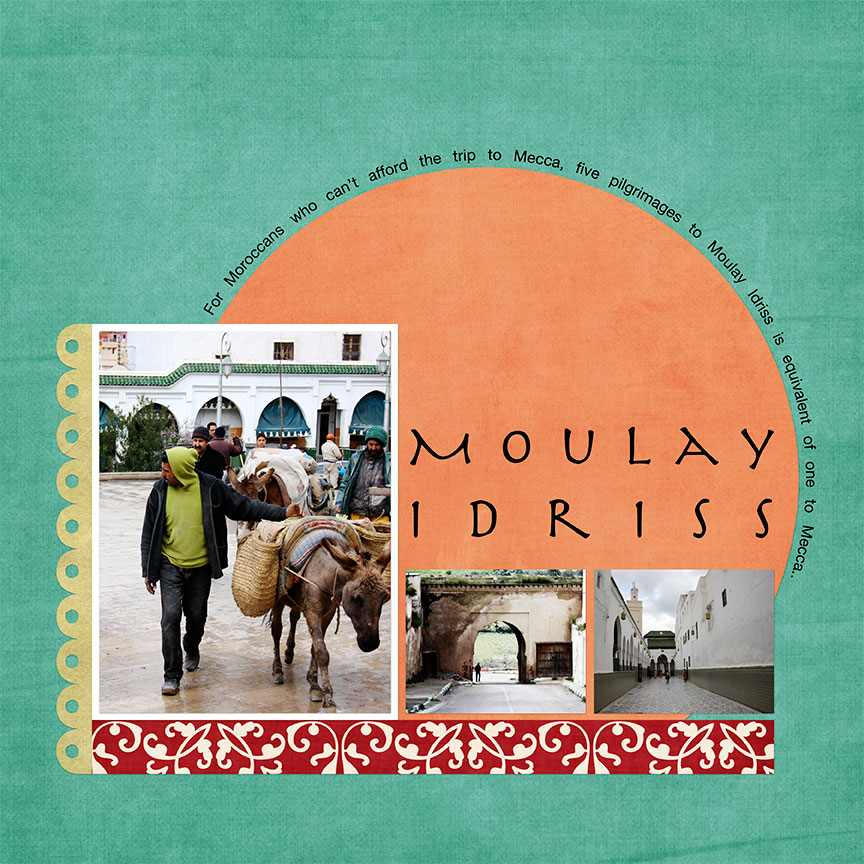
Moulay-IdrissCredits: Digital sketch by Jen Caputo (http://jencaputo.typepad.com); Papers from Scrapmatters’ Life’s Little Surprises kit — Happy Scrappy Girl, Graham like the Cracker, Haynay Designs

Seated comfortably in the van, enjoying the company of family and newfound friends,

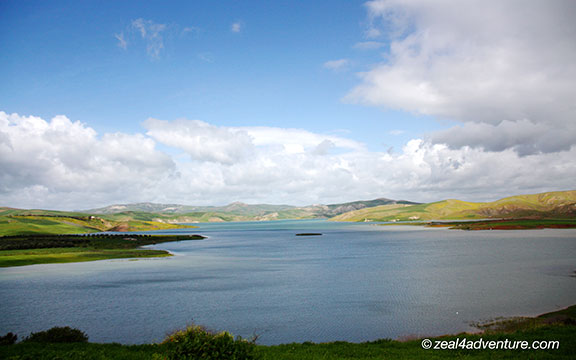
Lake-ChahandLake Chahand

we marveled at the beauty along the way,

roadside-vendor

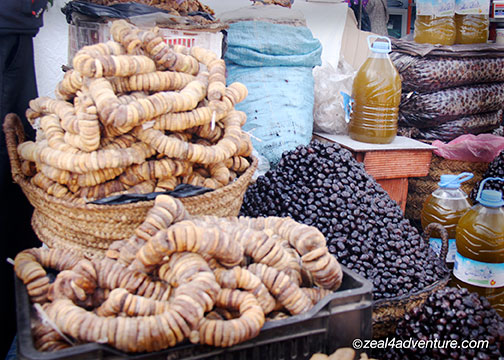
even stopping to buy some oranges and dried figs from a roadside vendor.

An hour away from Fes is a picturesque whitewashed town scenically perched in the foothills of the Rif Mountain.

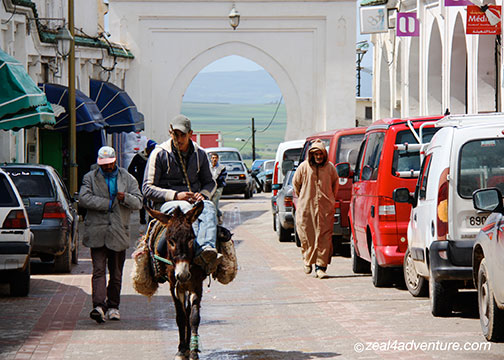
donkeys-and-cars

whitewashed

Moulay Idriss is the first of several destinations planned for the day. Considered the holiest town in Morocco, we paid a visit to the final resting place of the town’s namesake, Morocco’s religious and secular founder and the great-grandson of the prophet Mohamed.

entering-the-mausoleum

His shrine is actually off-limits to non-Muslims, but we were able to go as far as the first courtyard.

first-courtyard

Until 2005, non-Muslims were not permitted to spend the night in town and tourists were advised to be out of town by 3pm. Today, I noticed a few lodgings while walking around.

off-limits-beyond-this-pointThis is where we end the visit to the shrine.  Off limits from here.

The town is considered to be the holiest in Morocco.  They say that, for Moroccans who can’t afford the trip to Mecca, five pilgrimages to Moulay Idriss is equal to one to Mecca.

end-of-town

picturesque-view

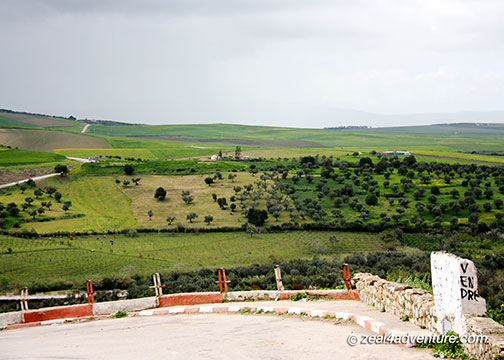
Pretty and peaceful with beautiful views across the foothills,

local-market

dried-figs

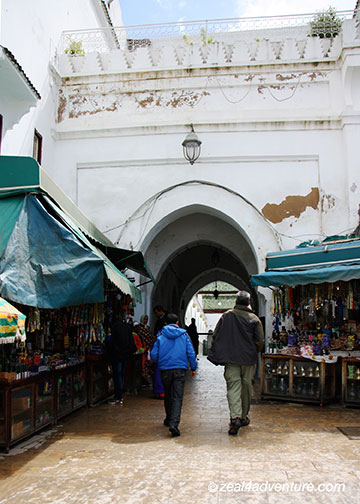
the village has a charming little souk with stalls selling everything from fruits to live hens.

main-square

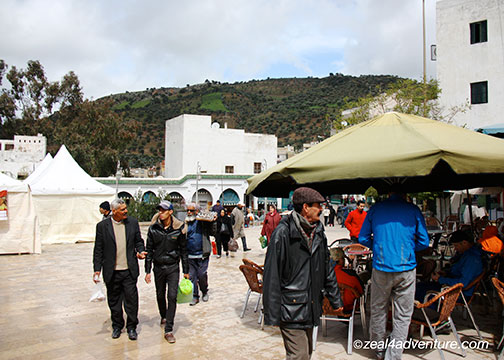
And while we were not allowed inside the mosque and shrine, we had fun walking around the main square. It is a great place to people watch while sipping mint tea

kebab

or enjoy a terrific lunch of grilled meats before or after a visit to Volubilis.

Aside from the fact that our driver barely spoke English, Ibrahim confessed to never having explored the town of Moulay Idriss and the nearby city of Volubilis making it the perfect reason to come along.

the-groupNew-found friends flanked: Israeli couple Ronin and wife and Ibrahim

But I think he just really likes us.

Meandering Through Old Fes

traditional-moroccan-music

You hear the bangs of coppersmiths in the labyrinth souks combined with the beat and clangs of Moroccan music and the constant calls to prayers,

fruit-vendor

add to that the intoxicating smells of fruits, spices, fresh innards and dung,

children-playing

then you see the chaos of men pushing wheelbarrows, children playing and

donkey

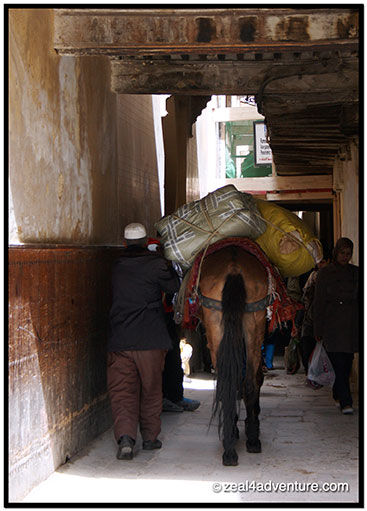
donkeys transporting people and things, and not to mention the vibrant colors of rugs, potteries, spices… all happening simultaneously.  The old city of Fes stimulates all the senses.

Rashid, our guide picked us up right after breakfast at Dar Labchara.  To discover the city, an official guide is essential.

crowded-medina

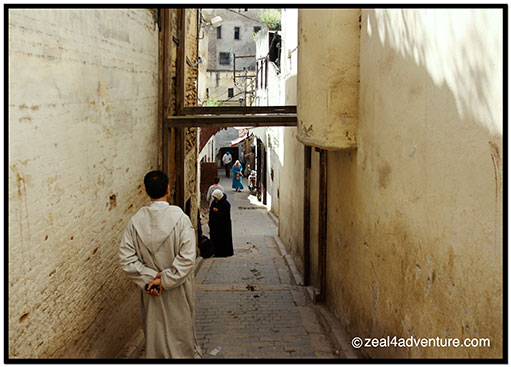
Ours took us around the medina, passing narrow alleys housing hundreds of merchants and craftsmen selling an assortment of products from dates to musical instruments.

Fes el Bali (Fes the old) is our baptism of fire into an exotic medieval world.  Not much seemed to have changed within this walled city with over 9,000 alleyways.

winding-alleyway

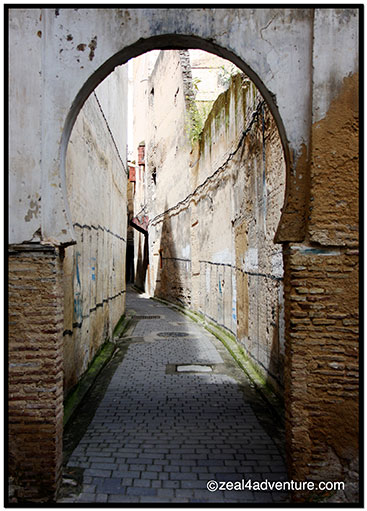
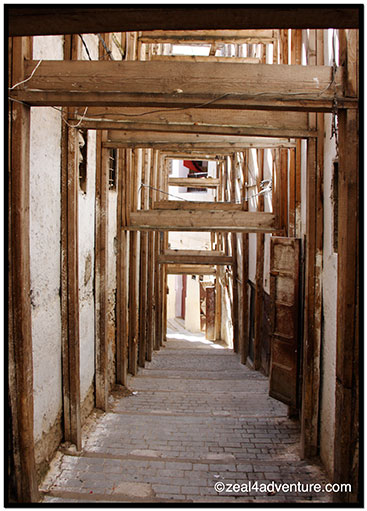
Fes el Bali is the old medina where most cultural sights are located; its labyrinth of narrow winding alleys is almost impossible to negotiate without getting lost.

collapsing-walls-with-enforcement

It is a car-free urban space and a UNESCO World Heritage Site that spans 1,300 years of Moroccan heritage.  It is the central business where 150,000 people living inside the wall – a cocktail of Berbers, Arabs, and Africans in hooded djellaba cloaks, red tarboosh hat they call fez and open heel babouche slippers – come and go, much like it was 1,300 years ago.

following-rashid

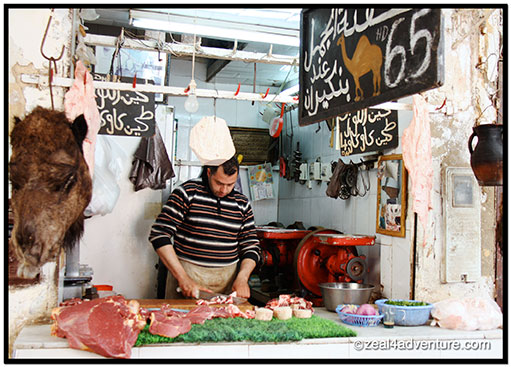
Following Rashid, we found ourselves in the market staring at a camel’s head,

camel-head

preserved-lemon-and-olives

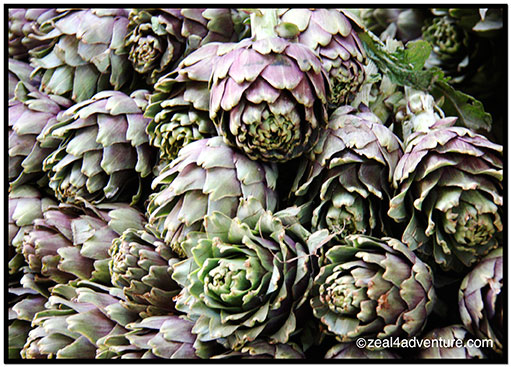
artichoke

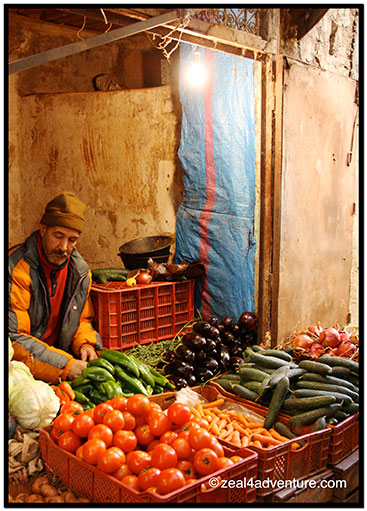
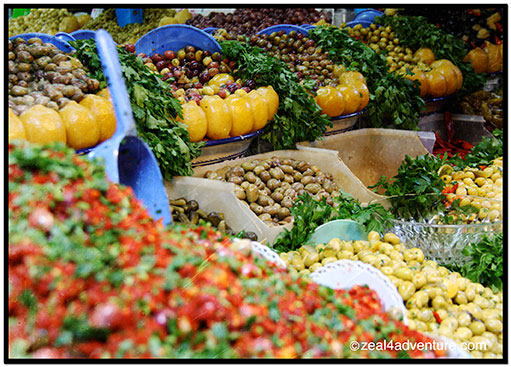
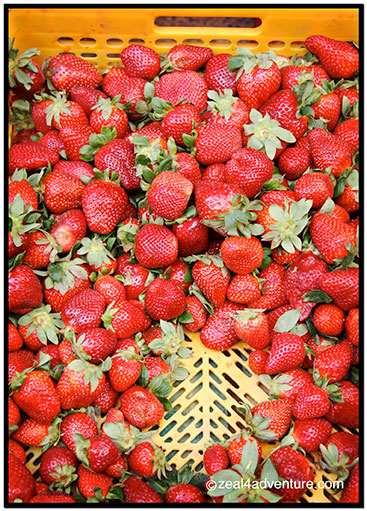
drooling over a variety of Moroccan food specialties, admiring vegetables I don’t get to buy in my part of the world, and devouring some beautiful, crunchy strawberries in season.

strawberries

Chaotic, overwhelming, stimulating, similar, in a certain way, to our wet market yet distinctly Moroccan in every way.

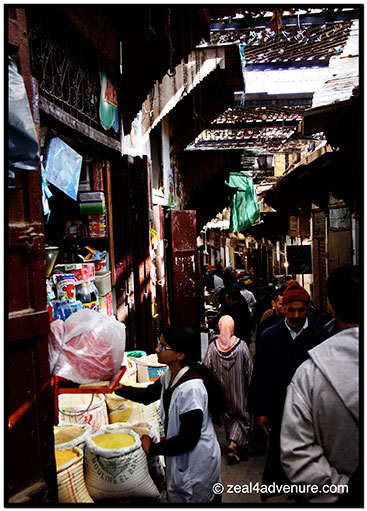
Morocco is a shopper’s delight and weaving through the maze like narrow lanes led us to various outdoor bazaars called souks.

cheese-vendor

They consist of tiny stalls displaying objects ranging from colorful scarves to buckets of olives.  It is an integral part of the medina.  It is where the locals buy their essentials.

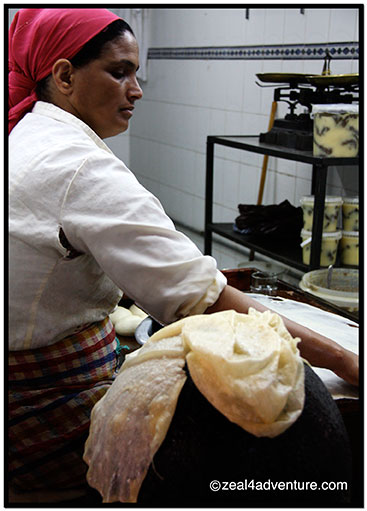
making-breadA stand making bread

Each Moroccan town has its unique souk quarter displaying some of the fine Moroccan ornaments and crafts.  In larger cities like Fes or Marrakech, there are “specialty” souks of all kinds –

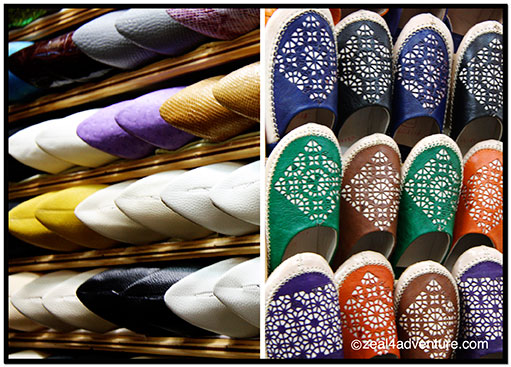
slippers

the spice souk, the carpenter’s souk, the leather souk, the slipper souk, the dyer’s souk… all within a bigger souk.  At every turn, we found ourselves in a new souk typically named after what they are selling.

seffarine-square

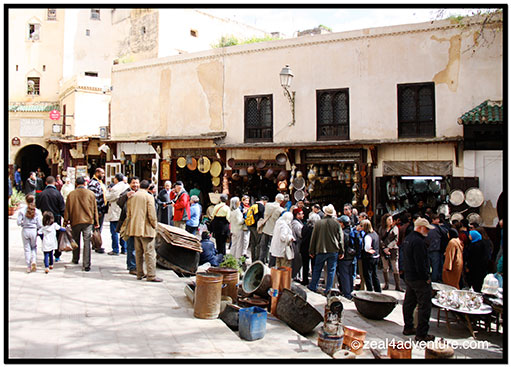
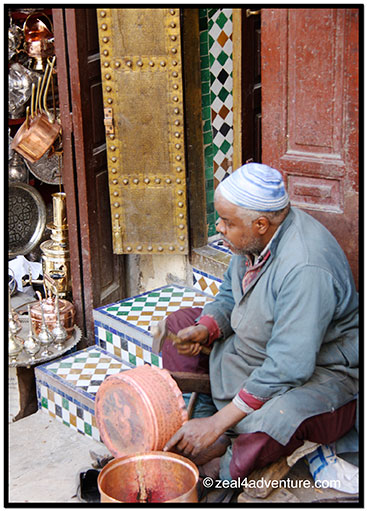
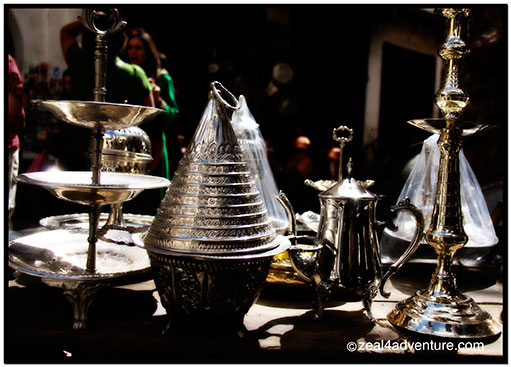
One such souk was at the Seffarine Square.  A delightful square that is the center of Fes’ copperware trade surrounded by artisans hammering sheets of metal into shape:  huge cauldrons, kettles, pots, plates and the likes.

craftsman

metalworks

On one side lay the Kairaouine library, on the other, the Seffarine Madrasa.  The open space is a refreshing break from the confining tight corners of the medina.

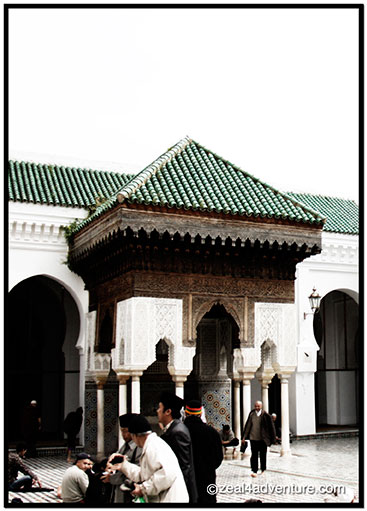
Built in AD857, the University of al-Karaouine is perhaps the oldest university in the world.

Karaouine-Mosque

Not open to non-muslim, we had to content ourselves with viewing its beautiful architecture from the entrance.  Rashid took a shot from my camera for a peek at one of the dozen horseshoe arches in the mihrab (prayer niche).

rooftop-view-of-Karaouine

A better view of the university can be had at any rooftop balcony nearby.

Rashid then lead us to another lovely square where you will find the Fondouk el Nejjarine.

nejjarine-museum

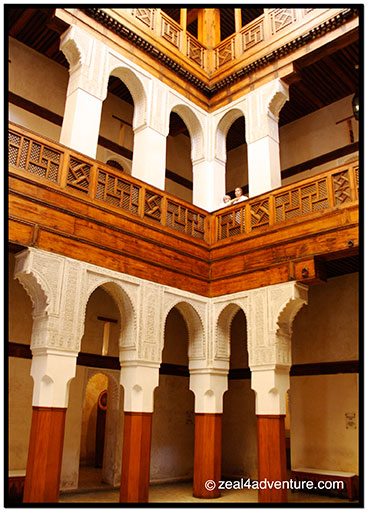
The beautifully restored building used to be a fondouk or a caravanserai, a roadside inn built to shelter men, goods and animals along ancient caravan routes.

rooftop-cafe

rooftop-cafe-view

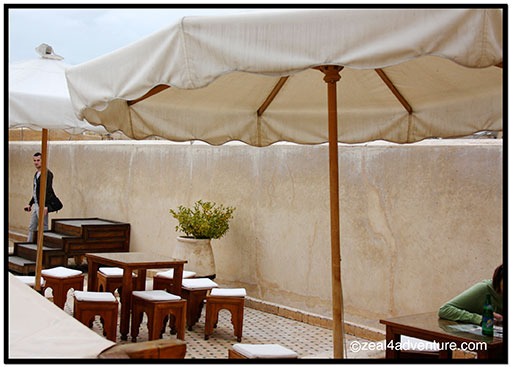
It is today a museum of wooden arts and crafts.  It has a nice little rooftop café boasting of outstanding views of the city.

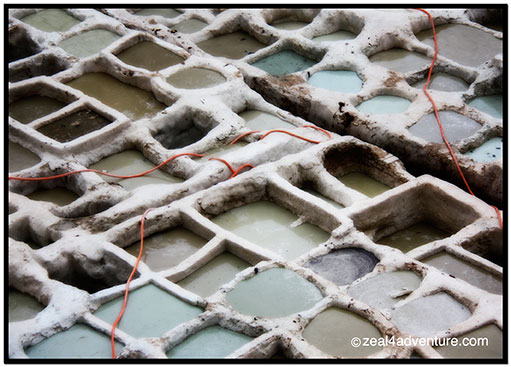
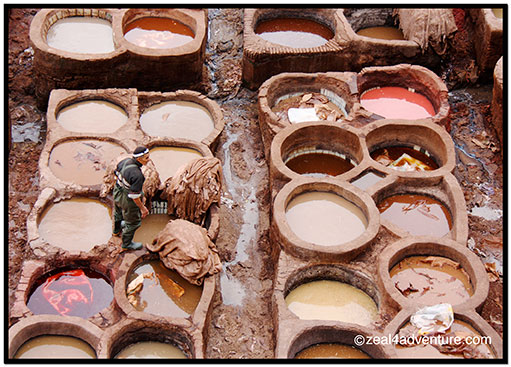
A visit to Fes will not be complete without seeing a tannery.  And at the Chounara Tannery, the smell of lye, acidic pigeon excrements and dyes drifts around the rooftop balcony, we were given sprigs of mint to mask the stench.

lye-vats

The view from the balcony allows for a site that has not changed since the 11th century –

tannery

workers balancing between stone vessels arranged like honeycombs filled with vibrant dyes.  They soak the hides in the acidic solution and then transfers them to another vat containing dyes such as henna, saffron, or mint.

dye-vats

It is a rare visual spectacle and experience not to be missed at any cost.

Now purchasing high quality leather products produced from these tanneries is another thing.  In fact, shopping in Morocco is an entertaining experience worthy of a post all its own.

A Dar in Fes

Dar-LabcharaCredits: Papers by Gwenipooh Designs and Graham Like the Cracker from Scrapmatters’ Life Little Surprises Kit; Elements by Designs by Tater from Scrapmatters’ LLS Kit and journaling snippets by Crystal Wilkerson

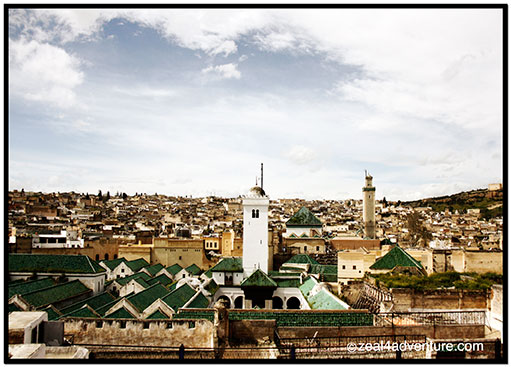
Founded 1,200 years ago in the northern part of Morocco, Fes has remained to be the country’s cultural and spiritual capital.  It is home to the oldest university in the world and its medina, a UNESCO World Heritage Site.  Fes has the best-preserved old city in the Arab World and to spend a few nights inside those walls is to, in some way, experience its unique culture.

“When you reach the train station, please call this number”, Said (Sa-eed) advised on his email. “A handsome young man will meet you at the bank outside Bab Boujeloud.” – the main and most attractive point of entry into the medina, Fes el Bali.

A petit taxi outside the train station, he advised, would cost 10 Dh to get us to the main gate.  And true enough; handsome young man introduced himself as Ibrahim.

Decorated with blue (color of Fes) zellij tile on the outside and green (color of Islam) on the other side, the gate leads to the Bab Boujeloud Square.

narrow-alleyway

Meandering through the narrow alleys teeming with people, restaurants and lodgings called riads and dars, provided a perfect primer of Fes.  The passages taper as we marched deeper into the medina, the maze of corridors begin to confuse.  We finally reached a wooden arched door in an uncommonly narrow lane.  Ibrahim unlocked the door and welcomed us into a world bursting with exotic eastern charm.  Dars and riads are traditional homes unique to Morocco.

indoor-patio-2

Entirely closed on the outside, the dar’s foyer serves as gatekeeper that led to an inner courtyard of traditional zellij (small colored tiles) floors, exquisite Moroccan design and furnishings with touches of deep red.

indoor-patio

The courtyard is the center of the house and serves as seating and dining area.  The second floor balcony overlooks it.

A burly man, Ibrahim’s uncle, Said warmly welcomed us to Fes.  He owns Dar Labchara, a lovely house he inherited from his father.  While we sipped tea and recharged from the four-hour journey, he gave us a rundown of what to expect of Fes.

We met a guy on the train also named Said, we told him, exceptionally friendly and extremely eager to help.  “You are the 3rd guests who met him”, he said.  “Does he wear a black leather jacket?” Said asked.  He revealed that one of his guests decided to pay the factory (he said he owned) a visit and found that the Said from the train isn’t quite what he presented himself to be, pretending to own a ceramic factory when he only earns a commission for bringing “tourists” there.  Not exactly harmful, but neither was he truthful.  And with that, he candidly warned of fraudsters roaming the narrow alleyways of the medina.  Warnings of this manner I came across while researching for this trip, I was still shocked, however, to have met one so early in the trip.

dinner

For a traditional Moroccan dinner, Ibrahim pointed us to the nearby Restaurant Palais des Merinides, assigning Mohammed, a staff, to bring and fetch us after.  Beautiful interiors.  As the culinary center of Morocco, my expectations were high.  Maybe too high because the food was actually decent but impressed we were not.  The Pastilla Fassia (chicken pastille) was flavorful and memorable, the play in sweet and savory appealed to me but not to everyone in the group.

Mechoui

The Mechoui (roasted mutton) was not as tender as I wished it to be.  They say that many restaurants like this pay commission for sending guests over, I hope this wasn’t the case with our dar.

Breakfast, however, was a different story. It more than made up for last night’s lackluster effort to wow.

breakfast-bread-2

The variety of breads alone – flatbread (khobz), pan-fried bread (harcha), pan-fried pancakes (msemen), a more traditional looking pancake (meloui)…

breakfast-bread

were enough to overlook the lack of any meat in the morning.  To complement the breads were cheese, butter, jams and honey, fried eggs served in a pool of olive oil seasoned with cumin and salt.

bessara

One morning, we were served a traditional soup called bessara.  It is pureed beans served with olive oil and cumin.  Usually eaten at breakfast and a prefered soup during Ramadan. Tastes like pea soup with a strong olive oil taste that leaves a slight bitter aftertaste, which quite frankly, appealed to me.

door

From the street, the houses in the medina is hidden by a high wall with a door somewhere, giving no clue as to what lays beneath.  But once inside, one is transported into a remarkable intricately decorated palace.  Fes, in a similar fashion, reveals its charm unexpectedly, its mysteries difficult to comprehend but once revealed, opens up to a brilliant world within.  The key is to run straight in.

Useful Info:

Dar Labchara
8 Derb Lebchara, Souiket
Ben Safi Talaa Sghira
Fes, Morocco
Phone: +212 535 741 306
Mobile: +212 662 347 547
Email: contact@darlabchara.com

4 Hours in Casablanca

Hassan-minaret

Towering over me, I felt very small, its minaret standing 210 meters (700 ft) tall, the tallest in the world, in fact. Half of its enormous structure sits on land, and the other over the sea on reclaimed land.

hassan-II-mosque-tour

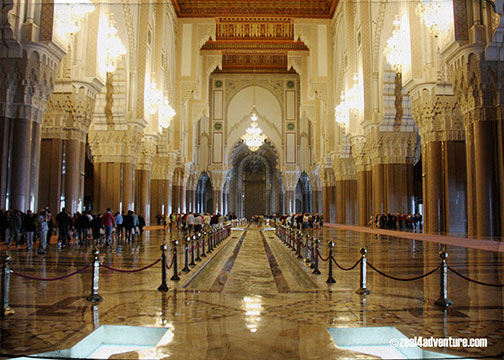
I walked barefoot inside, awed by its intricate beauty and incredible size.

“I can show you around town tomorrow”, our reliable grand taxi driver offered before he dropped us at the hotel the night before.  For 550 Dirham, Aziz endeavored to introduce us to his Casablanca in 4 hours.  First off the agenda was his and the rest of Casa’s pride.  The Grand Hassan II Mosque.

hassan-II-mosque

It is the largest in Morocco and the second largest in the world, the brainchild of the late King Hassan II when he felt that Casablanca was somewhat lacking in traditional sight.

Hassan-grandeur

It was not only built to withstand earthquake, but the grand mosque also comes with a sliding roof and a heated floor – a beautiful blend of traditional Moorish Architecture and modern innovation.

hassan-intricate-ceiling

hassan-intricate-ceiling-design

The Hassan II Mosque glistened in the morning light;

zelij

intricate-woodwork

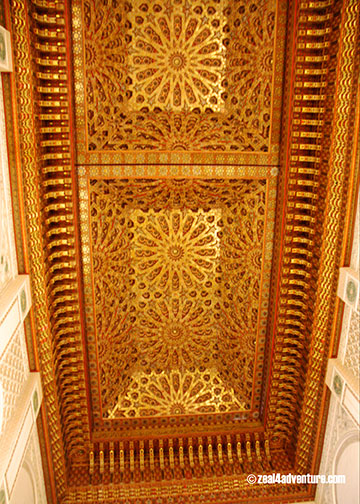
hemmed in beautiful wood carvings, stucco works and ornate traditional Moroccan tile work called zellij.

Aziz wanted to show an old part of Casablanca; he dropped us off at the Marrakech gate of the Old Medina with its imposing clock tower.

Old-medina

We wandered through the labyrinth of narrow streets of the walled city, which includes an 18th century fortress, a jewelry market and a kaleidoscope of other stores – souvenirs, handicrafts, leather goods – all requiring more than a little skill in bargaining.

old-medina-fruit-cart

Carts laden with oranges peppered the streets, and a medley of Moorish and Portuguese architectures reflecting its own personality and charm.

old-medina-3

There were children playing and old women filling up at the water station or just sitting at the doorway.

old-medina-2

Not as bustling and quite run down compared to the glories of Fes and Marrakech, the “Ancienne Medina” is a place Moroccans venture to only if there is a need to do so.  It is a part of Casa that predates the French Protectorate, and in many ways, a closed quarter where bikes and cars are restricted.

In the 1930s, the French created the Habous neighborhood just a short ride away from the old walled city, wanting to build a nicer, cleaner medina.

moroccan-ceramics

Also known as the Quartier Habous, the New Medina is home to some excellent shopping opportunities at the Joutiya market, a handicraft market selling top artisan product.

New-medina

Capped with arches, its shops surround a pretty square that lead to a nearby Muslim courthouse, Pasha’s Makhama and on the opposite side of the square is the Mohammed V Mosque

Moulay-Youssef-Mosque

and the Moulay Youssef Mosque.  A pleasant place to while away time.

We weaved through the neighborhood until it was time to be reunited with our luggage and say goodbye to Casa.  A setback that ended in a good way, at the very least it was a delightful introduction to Morocco, a country that can be overwhelming at first.

Useful Info:

Hassan II Mosque
Sour Djedid
Boulevard Sidi Mohammed Ben Abdaliah
Tours:  Guided tours are offered throughout the day to non-muslim visitors.  Be sure to dress modestly and remove your shoes before entering.
 
Old Medina (Ancienne Medina)
Between Boulevard des Almoliades & Place Mohammed V
 
New Medina (Al Habous)
Near Boulevard Victor Hugo

Casablanca: Not the Usual Welcome

Welcome-to-exotic-MoroccoCredits:  4EVER Bloghop Quickpage by Kelly Mobley

Mohamed V International Airport – “No more luggage, finish”, said the porter. “What do you mean? We still don’t have our luggage!” I yelled in frustration. “No anglaise”, he looked at me and shrugged.  A lady, also missing her luggage, told me that the guy is only a porter, and he doesn’t understand me.  I should talk to the people at the baggage service counter.  Valid point.   But not exactly the welcome I expected.

Casablanca.  The bustling port city whose name mean “white house” and made famous by the Humphrey Bogart 1942 classic.  It may not echo the same romantic air the 1942 film brings to mind, but a trip through the city’s swanky lounge and bars can still evoke the spirit of the café from the movie.

Colonial-architecture

Casablanca was a jewel of the French Colonial empire, famous for luscious art deco, neo-classic and a blend of Moorish architecture that is unique to the city.  An architectural style known as Maurasque with trademarks such as wrought iron balconies, staircase and windows; carved facades and exterior corners; floral and geometric design on stuccoed walls.  Boulevard Mohammed V and Place Mohammed V still retains a trace of its unique colonial architecture heritage.

With our luggage arriving on Emirate’s next flight the same time tomorrow, we gained half a day, allowing us to explore more of “Casa” as the locals call it.

“Grand taxi?” a guy approached us as we stepped out of the Gare Casablanca Voyager after purchasing train tickets for tomorrow.  We said no, we wanted a metered taxi. “You’ll need 2”, he said. “A petite taxi can only sit 3, at the most”, he added.

garden-and-train-station-view-from-Ibis

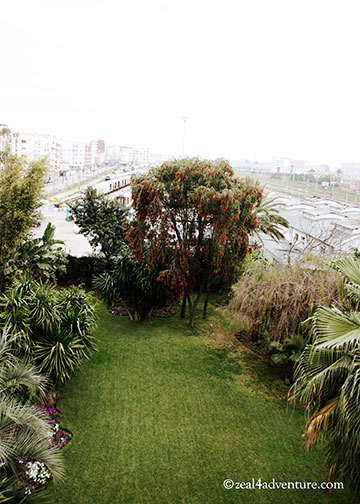
In Ibis Casa Voyageurs next door and our home for a night, the guy at the reception confirmed that the taxi driver was correct and gave us an idea on how much it would cost.  And so our negotiations with Aziz began.  We shook hands at 100 Dirham (US $13).  He would take us to Corniche d’Ain Diab,

corniche-boardwalk

where high-end bars and trendy nightclubs line the area.  “ It’s overlooking the water, where the yuppies go”, the guy on the train from the airport told us.

overlooking-the-water

He suggested that we might want to dine there, but the movie buff in us, out of curiosity, had our eyes set on Rick’s Café,

moroccan-mint-tea

so instead, we walked around the boardwalk and took shelter sipping  “Whiskey Morocco” (Moroccan mint tea)  

outdoor-cafe-by-the-water

in a café when it got too windy.

Dinner, though not our cheapest in Morocco, did not disappoint.

goat-cheese-in-honey

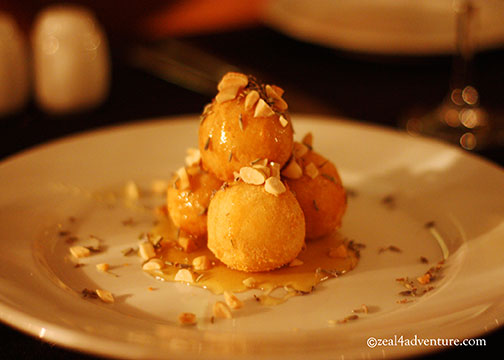
While we found the goat cheese balls drizzled in honey starter and chicken with lemon and olives tagine quite enjoyable,

lamb-chops

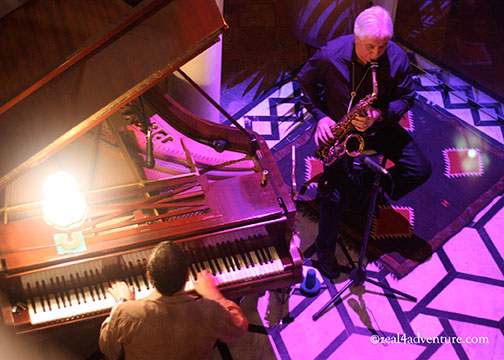
and particularly liked the lamb chops with mint pesto, it is the ambience — down to the piano and the sax player named Issam (close enough to Sam) — that made it one of the best “gin joints” in town.

jazz-music

Founded by a former US diplomat, Kathy Kriger, Rick’s Café opened in 2004.

ornate-moorish-design

With potted palms, ceiling fans, whitewashed walls, low archways, ornate lamps casting shadows everywhere, traditional Moroccan carved and inlaid woodwork, balconies and balustrades, antique brass… all provided the right atmosphere and feel of the 1942 cult classic.

archway

The nostalgia alone is reason enough to come for a visit.

Useful Info:

Rick’s Cafe
248 Bd Sour Jdid, Place du Jardin
Acienne Medina
For Reservations:  +212 522 27 42 07 / +212 522 27 42 08
 
Hotel Ibis Casa Voyageur
Boulevard Bahmad
Place de la Gare Casa-Voyageur
+212 0520 48 00 00