A Leisurely Stroll Through Luang Prabang

Credits: Papers by Sahlin Studio’s Sweet Story Telling papers, Creativity by Crystal’s Room Collection Solids; Elements by Sahlin Studio Sweet Story Telling Kit.

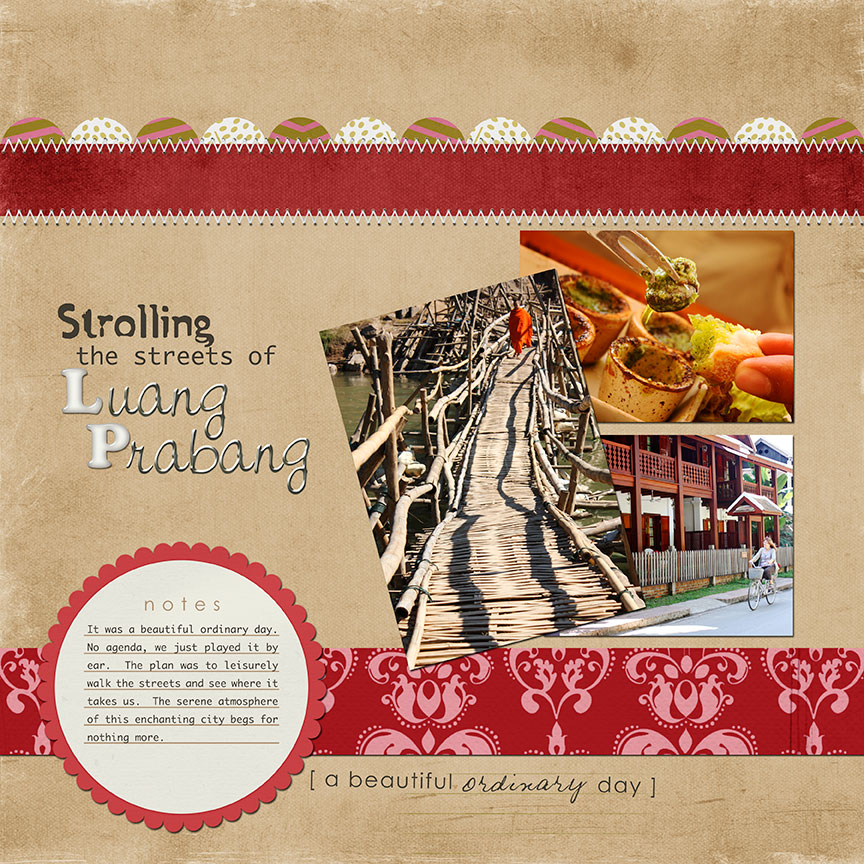
It was a beautiful ordinary day.  No agenda, we just played it by ear, went with the flow.  The plan was to leisurely walk the streets and see where it takes us.
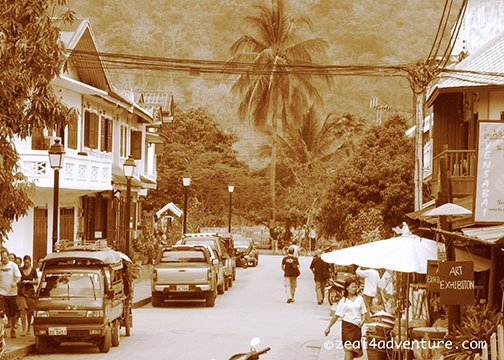
The serene atmosphere of this enchanting city begs for nothing more.  Having strolled down these streets before, it was interesting to see new ventures turning up while many stayed the same.

Luang Prabang lies in the heart of the mountainous region of North Laos.  Also known as the jewel of Indochina, the ancient royal city sits between the junction of the Mekong and the Nam Kahn Rivers.

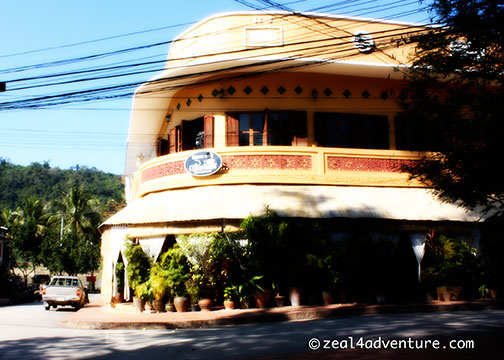
And our nice little boutique hotel, Villa Deux Rivieres is situated somewhere near the junction in Kingkitsareth Rd.
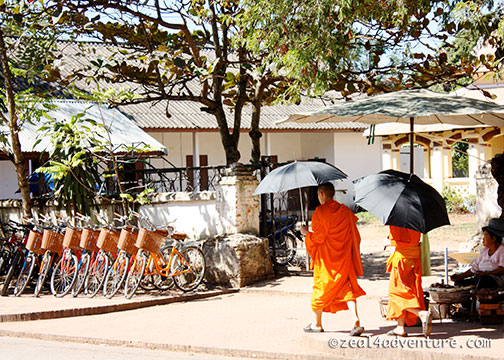
Monks with their signature umbrellas in Sakkarine St. — a quieter part of town.

Great location as it really is just a short walk away from many places of interest and the main street, Sakkarine,

The busier street of Sisavangvong has more tuk-tuks and motobikes lining the streets.

which turns into Sisavangvong St. if you walk further.  We spent a lot of time in Sakkarine St. browsing, sometimes buying from the many little shops or relaxing in several of the cafes lining the stretch.

Café Ban Vat Sene across the charming Wat Sene and Le Banneton with its wonderfully crusted breads are our favorites hang-outs.  We sat outdoors and enjoyed the cool air and the easy going vibe of the town.

Those breads lured us to Le Banneton

Caruso Lao never fails to lure me in each time we walk pass it.  Beautiful stuff on display, a bit pricey but well worth the workmanship, me think.
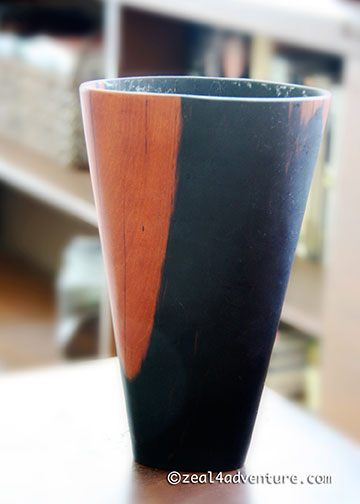
And look what I have displayed at home.  There could have been more, if freight wasn’t so ridiculously high.

Comprising this enchanting little city are ancient structures, a Royal Palace, a National Museum,

Wat Sene along Sakkarine Rd.

and a concentration of golden temples they call Wats, all thirty-four of which have been listed for preservation.
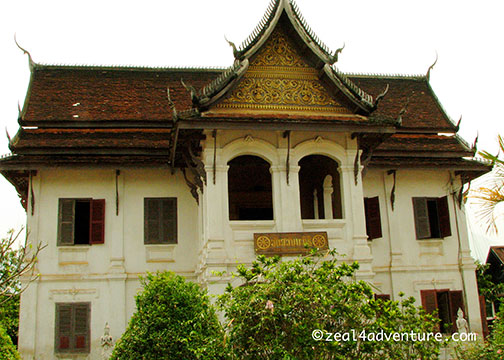
Luang Prabang, a UNESCO World Heritage Site since 1995, is undoubtedly rich in cultural heritage and has both historical and natural sites to boast.

Traditional wooden dwellings and old colonial style houses fused into a distinct cultural tradition with beautiful landscapes that surrounds.  Mount Phousi perched in the middle of town showcases stunning views of the surrounding temples and hills.

It is a city where time seemed to have stood still.  The old town (their historical district) in particular has an old world charm,

reminiscent of the 1940’s where bicycles dominate and colonial style interspersed with traditional houses line the streets with some vintage cars even.

Small enough to explore by foot, we started our stroll at our hotel in Kingkitsarath to the bank where Khan and Mekong meet. The street, as in many in Luang Prabang, becomes Khem Khong or Mekong Rd at some point.
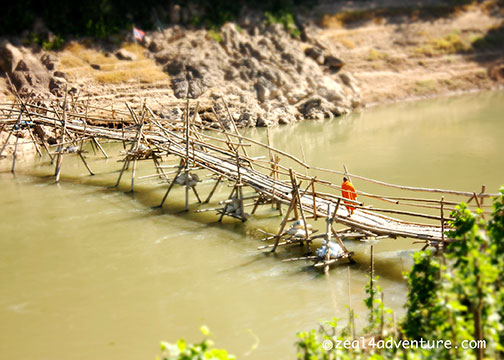
At the confluence, a path led to the river below where a wooden bridge stands.  Across is a handicraft and weaving village that one can explore but we didn’t venture out there anymore.
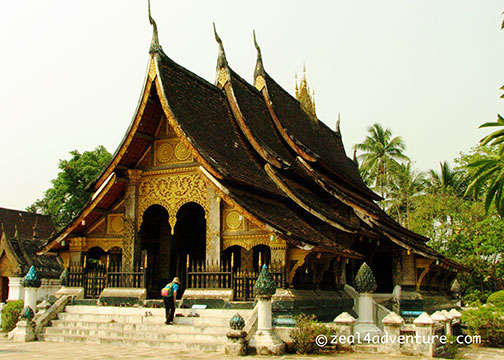
Instead, we continued on Khem Khong to get to Wat Xieng Thong – perhaps the most magnificent but definitely the most important and impressive of Lao temples.  There is a cluster of  ancient buildings dating back to the mid 16th century.

At the back of Wat Xieng Thong is a tree of life mosaic in colored glass.  Anyone with a keen interest in Lao history should not miss the religious artworks and artifacts housed here.
When it was time for lunch, we went for L’Elephant, an institution in its own right in Luang Prabang.  Menu was mostly French.

For starters we had a refreshing Carrot and Orange Salad and a superb Escargot baked in Garlic and Parsley Butter – cooked the way we like it.  For main, I had the Mekong Perch in Coriander Sauce and A had Stuffed Roasted Boneless Quail.  I say fine dining at its best in Luang Prabang.

The laid back, open-air atmosphere with high ceiling fans half expects you to see Rick Blaine come out and entertain.

In between lunch and a traditional lao massage, we explored more of Khem Kong, definitely a very quiet street where many upscale hotels are located.

Khem Kong facing the Mekong

 One of many roadside restaurants with a view of the Mekong or the Nam Khan

We then visited the Haw Kham, which is now known as the National Museum.

Once the Royal Palace, the building is a fusion of Traditional Lao and French design.  It houses an impressive collection of royal memorabilia and religious artifacts.
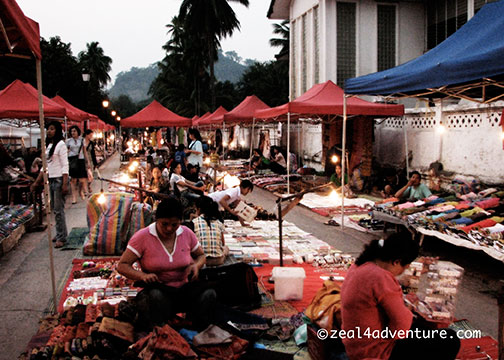
Every night, Hmong people come dowm from their villages in the mountains to sell their hand-made products,

typical Lao arts and crafts that include appliquéd blankets, silver jewelries, embroidered bags and a lot more.

A short walk-through here is more than adequate if a bargain hunter you are not.  They  have interesting and tasteful designs at a bargain, the quality is another thing though. But I guess you get what you pay for.   🙂
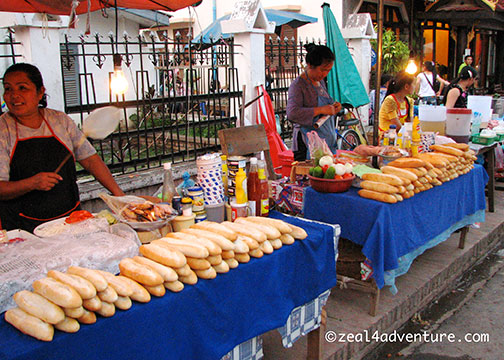
Many of the stalls here sell Lao street foods but we had our eyes set on Mango Tree in a quieter part of Sakkarine St.

Suffice it to say that dinner was fabulous.  Superb Lao dishes plated beautifully and served in a casual garden setting.

An extraordinary meal to cap an ordinary day, I must say.

So tell me, how can you not fall in love with Mekong’s jewel, its beautiful people,

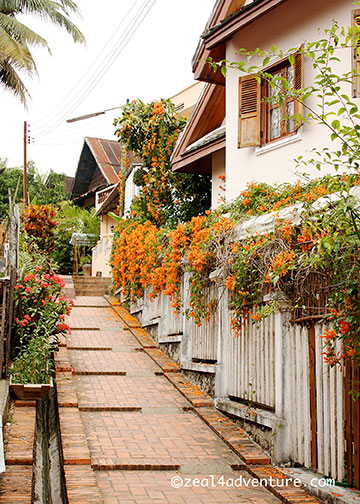
its heritage and its shabby chic French fused Lao architecture that is so uniquely Luang Prabang?
Useful Info:

Villa Deux Rivieres
Kingkitsarath Rd., Ban Khily
Luang Prabang, Laos
+856 207737 8575
 
Cafe Ban Vat Sene
Sakkarine Rd.,
Luang Prabang, Laos
+856 71 252 482
 
Le Banneton
46 Sakkarine Rd., (opposite Wat Sop)
Luang Prabang, Laos
+856 21 217 321
 
 
L’Elephant Restaurant
Ban Vat Nong
Luang Prabang, Laos
+856 71 252 482
 
 
Mango Tree
Sakkarine Rd.,
Luang Prabang, Laos
+856 71 253 750

Wat Xieng Thong
Khem Khong Rd.,
Luang Prabang, Laos
Admission: 20,000 kip
 
National Museum
Sisavangvong, Luang Prabang
+856 71 212 122
Admission: 10,000 kip


Soaring High in Vang Vieng

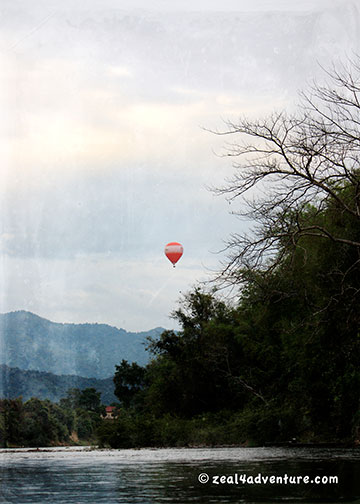
With most of Vang Vieng still asleep, we sauntered down before the break of dawn to the hotel lobby half asleep ourselves.  The ride came at 6 in the morning as promised and drove us to an empty lot where another vehicle with the basket and balloon arrived almost the same time.

They flipped the basket sideways, inflated the balloon with a giant fan and simultaneously flames it to give out that required hot air.

“You’re taking the VIP ride”, said a Chinese man in a coat to us.  Essentially, he meant that the basket can fit 4 but with no one else booked, the basket was ours for the next 40 minutes.  With their GPS and radios checked, we were asked to climb in.

By now Vang Vieng was waking up.

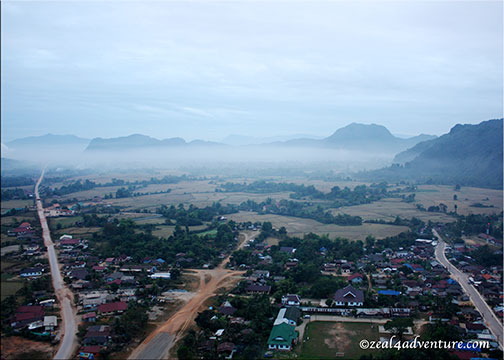
The balloon slowly lifted us up allowing us a bird’s eye view of this picturesque town.

With the air still misty, the mountain peaks looked mystical, like a painting almost.

The rice fields stretches out of the town and into the foothills.

The Namsong River beautifully snakes through Vang Vieng, manifesting its charm even more.

From the top, we see that the empty lot is actually the old airstrip and close to it is the road leading to Luang Prabang.

The beauty of Vang Vieng so captivated me; I forget that I was afraid of heights.  Tranquility fused with a rush of adrenalin was an experience unlike any I’ve had.

Hot Air Ballooning over Vang Vieng seemed to have blown away the cloud looming the town lately.

On the bus to Luang Prabang later that morning, I take one last look and say adieu to a town I have, in less than a day, become enchanted with.

Useful Info:

The Ballooning Company
Ban Vang Vieng, Laos PDR
+856-20-9691-8111
email: info@laoballooning.com
website: http://www.laoballooning.com

Fun and Frolic at the River Namsong

Credits:  Papers by Jessica Sprague (Bright Stripes paper), Carina Gardner (Coqu flirt 16), ITM Tricolor (Red tiny dot), QQ Knotty Girl papers; Elements by Carina Gardner (daisy paper bits)

Once a peaceful and quiet town, Vang Vieng used to appeal only to adventure travelers wanting to rock climb, explore caves or to simply enjoy its tranquil surroundings, its people and culture.

Surrounded with striking karst rock formation, the Namsong runs through it contributing to its serene setting.

Since the launch of inner tubing in the mid-2000, the quiet town of Vang Vieng has never been quite the same.

The Namsong now appeal to “partying” backpackers.

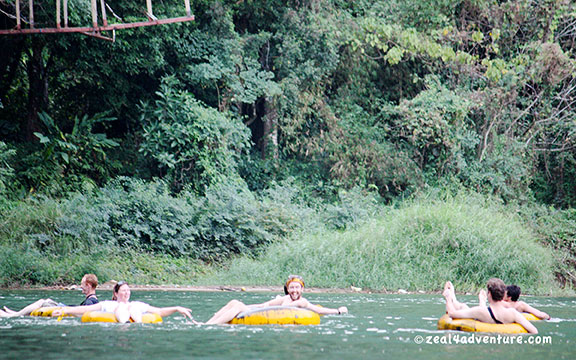
The town today is most know for “tubing” down the Namsong and with it came

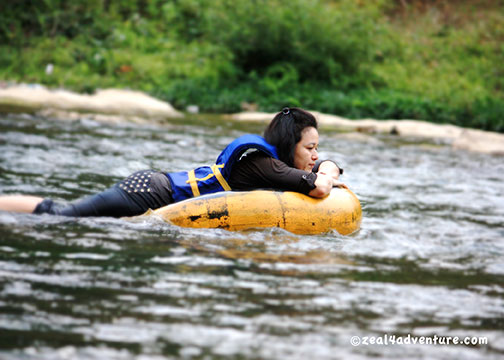
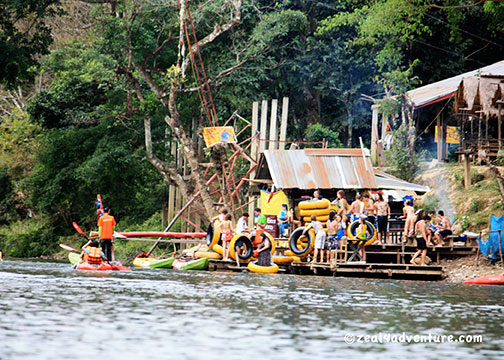
many bars along the riverbanks catering to those floating downstream either in rubber tubes or on a kayak.

The townsfolk once farmers are now owners of bars and guesthouses – predominantly made up of chill-out bars and dance shacks all offering cheap booze,

some offering more thrills in the form of swings and ziplines.

Along with the bars, lodgings of various types line both sides of the riverbanks.

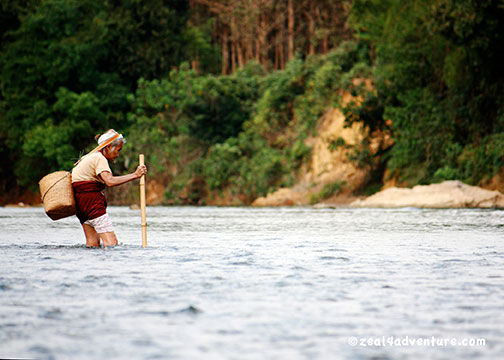
A short afternoon cruise up and down the river on a motorized boat reveal all these.  It is the easiest way to watch the goings on around the river.

Foreigners partying or simply floating down the river dominate local scenes along the river.

The “party” scene may have appealed to me years ago but today, I prefer the relaxed atmosphere of the down river part of the Namsong.

Watching the sunset over cocktails after a long day is my idea of a good time.

This looks like fun… so we booked a sunrise ride over Vang Vieng on a Hot Air Balloon… on my next post.

Road to Vang Vieng

Credits:  Papers by Crystal Wilkerson’s Room Collection series, Kaboks’ Christmas Treasure Papers; Photomask by Moninda.

A tuk-tuk picked us up at the hotel and brought us to a VIP bus parked along the Mekong River bank opposite Wat Chanh temple.  Before entering, we were asked to take off our shoes and were given a plastic bag to store them in the meantime.  The bus, like most lodgings and households in Laos, is a no-shoes zone.  Although lined with linoleum and seemingly clean enough, I felt strange and a bit grossed out walking barefooted.  But with the current seating, er… bunking arrangement, it was better this way.

The bus had double-decked bunk beds instead of seats.  I reached the end and it was all taken.  What’s going on?  Were we on the wrong bus perhaps?  It seemed like they were out of space, then I heard the conductor shout, “two in a bunk!” Are you kidding me?  These are made for size 0 petites, not the likes of us.  A couple occupying a bunk each gave one up and we thankfully took it.  At first we didn’t know how to go about it until the couple figured it out.  Facing each other, we sat uncomfortably for the next 4 hours.

Two hours down, we stopped for lunch.  Choices of sandwiches similar to Vietnam’s Banh Mi  was lunch for us.

I had a simple but pretty good canned tuna with mayo on a baguette.

At the Vang Vieng bus station two hours later, we made sure to get a proper bus particularly since we will be on the road for 6-7 hours.  Pointing to a photo of a bus with seats, we asked if there were seats available for the next day.  The lady nodded and asked, “what time?”  “10AM for the express bus to Luang Prabang, please.”

After the purchase, we got onto a jeep provided by the bus company that brought us to town.

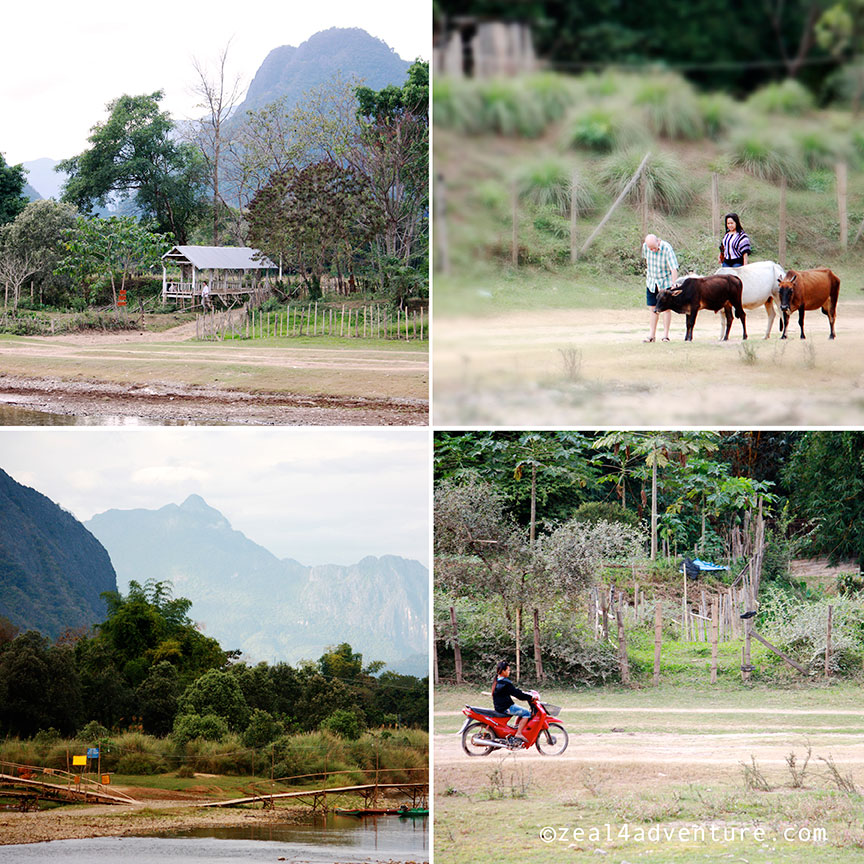
Vang Vieng is a small tourist-oriented town about 150km north of Vientiane in Vientiane Province. It has only 3 streets, a market, a bus station and a few temples.  Before we even know it, we were on the main street in town.  We could have actually walked to town.

Small it may be but Vang Vieng is bursting with natural beauty.  The small town is beside a river and a picturesque backdrop of limestone karst surrounds it.  Mainly a backpacker’s hotspot until the mainstream travelers caught on a few years back.  Many are breaking a 10-hour road trip to Luang Prabang here, staying a couple of days to explore its natural wonders.  We had the same idea but didn’t have enough days to stay longer.  Wish we had.

In a quieter part of the Namsong River, a fair distance down river from the bars famous with the backpackers is The Elephant Crossing Hotel.  It is an easy walk from the main street even with backpacks in tow.

Because it situated on the banks of the Namsong River, the view was spectacular, but I guess anything along the riverbank would boast of the same breathtaking views.

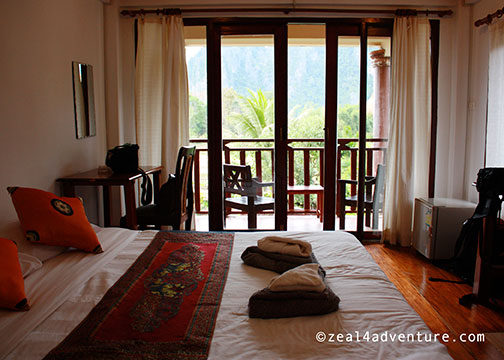
All 31 rooms of the 4-storey boutique hotel were designed to have a private balcony

overlooking Vang Vieng’s famous majestic limestone mountains.

Their riverside restaurant was calling out to us, and there we whiled the time away with some spring rolls, a few bottles of beer and a lot of river actions.

We could sit there and watch the day go by, truth to tell, if only we had more days to spare.

Useful Info:

Buses to Vang Vieng:  Tickets can be purchased at almost every guesthouses, hotels or even travel operators.  This should already include transport to the bus station.  Several types of buses to choose from:
 
Local Buses — slower without air conditioning. Journey takes at least 5 hours.  Cost: 40,000 Kip (US$ 5)
VIP Buses — run by Malany Bus Company (856-23) 51-1633 and Thavonsouk Bus Company.  Departs 10AM and 2PM.  Journey takes about 4 hours.  Cost: 50,000 Kip (US$ 6)
AC Minivans —   Leaves as soon as it is full and is the most convenient and comfortable transport.  Cost: 70,000-80,000 Kip. (US$ 9)
 
 
Elephant Crossing Hotel:
Ban Viengkeo, Vang Vieng District
Vientiane, Lao PDR
(856-23) 51-1232

Unexpected Bonus

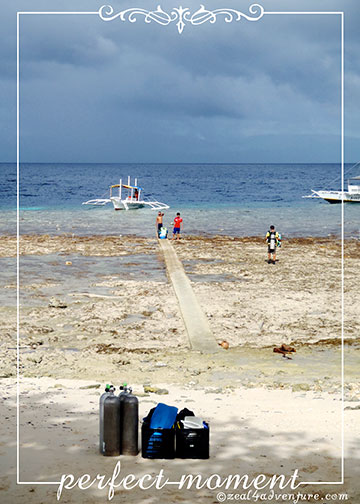
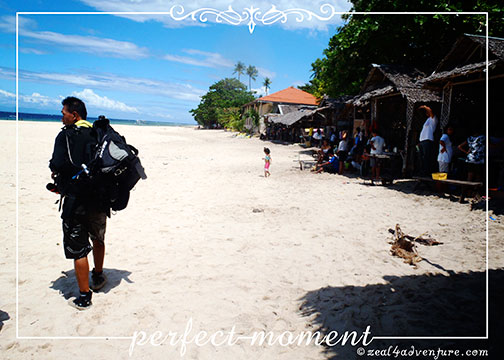
Mag-dive ka na, nandito ka na rin, you should dive, you’re already here”.  To be in Moalboal and not dive is indeed ridiculous. But because I was the only diver in the group, I didn’t plan to… until the divemaster convinced me, that is.

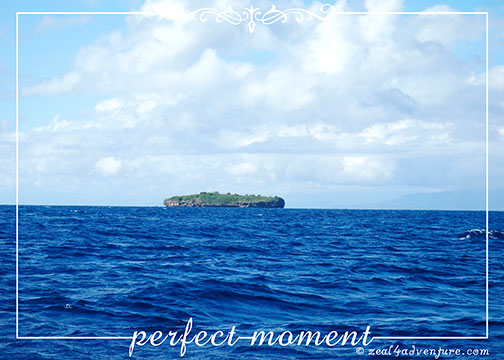
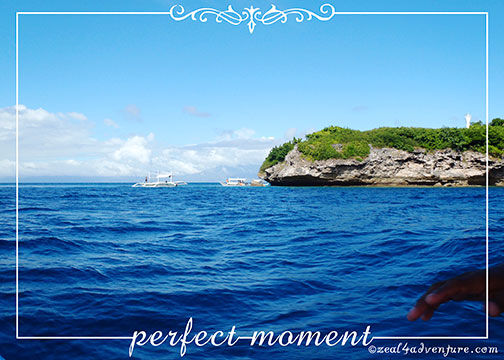
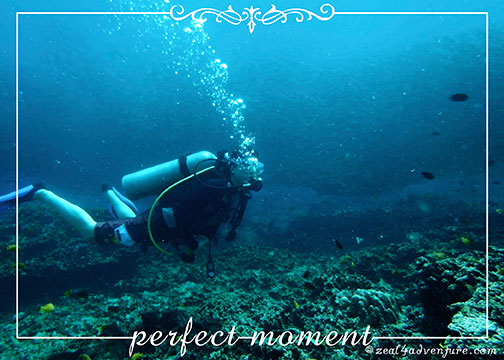
So we got up early the next day, sore from yesterday’s canyoning, and headed to this tiny island called Pescador.  Among the many impressive dive spots in Moalboal, Pescador is described to be their “jewel”.  My friends indulged and shared the cost of the banca (outrigger boat) with me.  They went snorkeling while I explored the world under… ok, that doesn’t sound right but you know what I mean.   😉

Located in the Tañon Straits, a narrow stretch of sea between the southern end of Cebu and Negros Oriental.  Considered “the most unique in the world” as it has the richest marine biodiversity in the coral triangle in the Philippines.

The island is essentially a wall dive made interesting with the overhangs, small caverns and holes in the reef wall.  It was an easy dive with just the right currents.  I was enjoying the drift, fascinated with all the marine life along the small caverns when divemaster taps me on the shoulder.

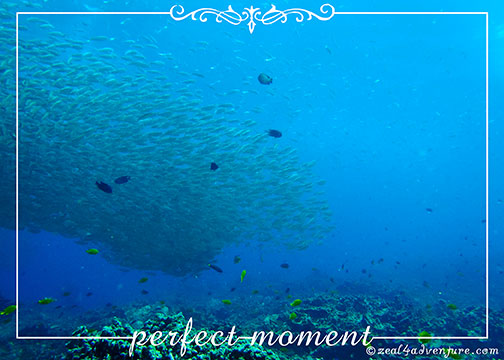
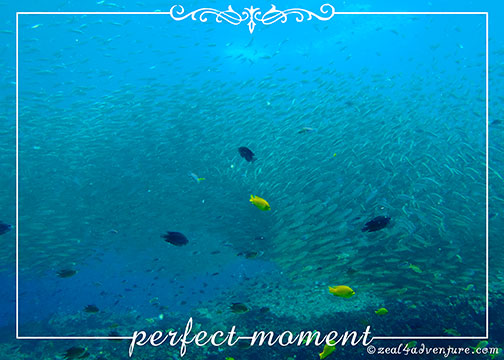
He pointed to my left and there, a short distance away, was a giant wall of fish, a silvery cloud of endless sardines against the blue backdrop of the deep, moving in one accord.  I was awestruck.  Never thought I’d ever get to see such a spectacle in our shores.

The first time I became aware of a sardine run was when a friend, years back,  showed me an awesome video filmed in South Africa.  Every year between the months of May and July, this famous shoal of sardines travel from their home in Agulhas banks and head north.  Predators follow this migration making it the main attraction for divers, rivaling the great migration in the African savannah.  This made it to my bucket list.

The tiny island off Moalboal has been host, for a few years now, to millions of sardines running the tropical waters but unlike the migration in South Africa; the sardines in our shores seemed to have made it its home (at least for now).  This wonderful phenomenon is seen all year round.  Predators seen in these side are mostly Threshers, White Tips and Whale Sharks.  Unfortunately, there were no predators in sight in this dive.  We were flying out the next day and couldn’t go below 40 ft.  Although not as spectacular as the South African video, it was an awesome experience nevertheless.

Observing from the surface, the snorkelers had their share of awesomeness from a different perspective.  They had to abort mid-stream though as the water got choppy, making it difficult to continue.  “Super bitin, too short” they said.

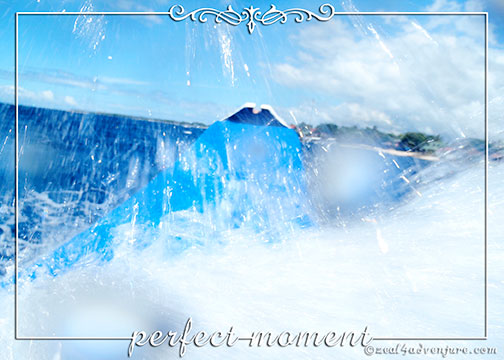
On our way back to the resort, the choppy waters were too big for our small boat, breaking an outrigger.

We were dropped off somewhere along White Beach.  Carrying our gears (except the tanks), walked the rest of the way back to the resort.  Awesome day.

The Kawasan High

Credits:  Papers by Queen of Quirks, Elements by Scrap Matters’ Life Simple Surprises Kit

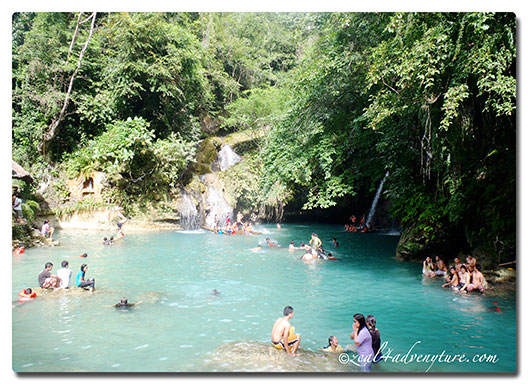
Remarkable diving defines Moalboal and many combine it with a side trip to Kawasan Falls in nearby Badian town.

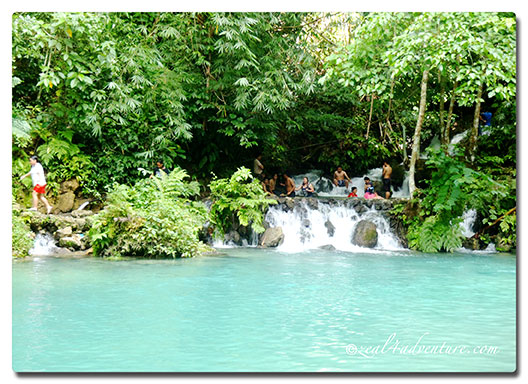
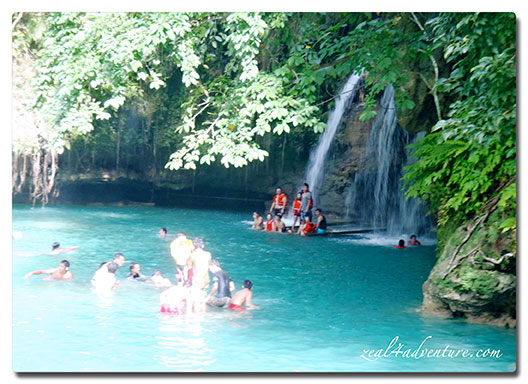
Just an hour away from Cebu’s diving destination, Badian is known for its 3-tiered waterfalls called Kawasan Falls.

A short trek will take you to the first falls where one can enjoy it with nary a need to swim if that is the preference (bamboo rafts are available to take people to the falls).

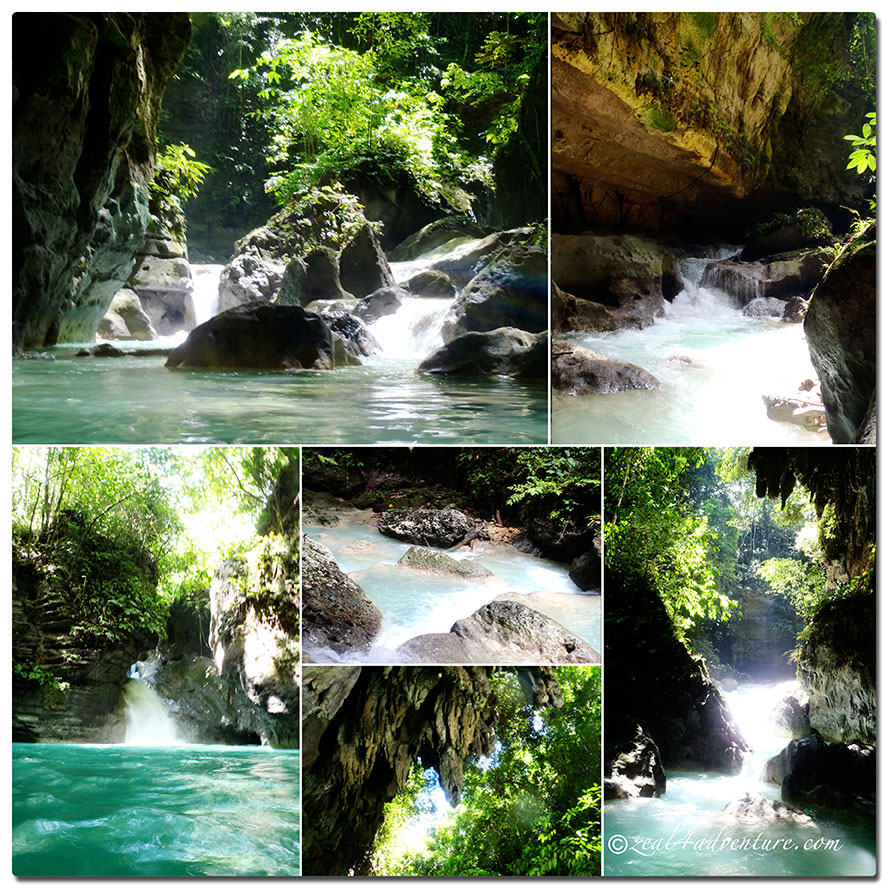
The beauty of the waterfalls cascading into turquoise pools and the lush tropical vegetation surrounding it already provides a natural high.

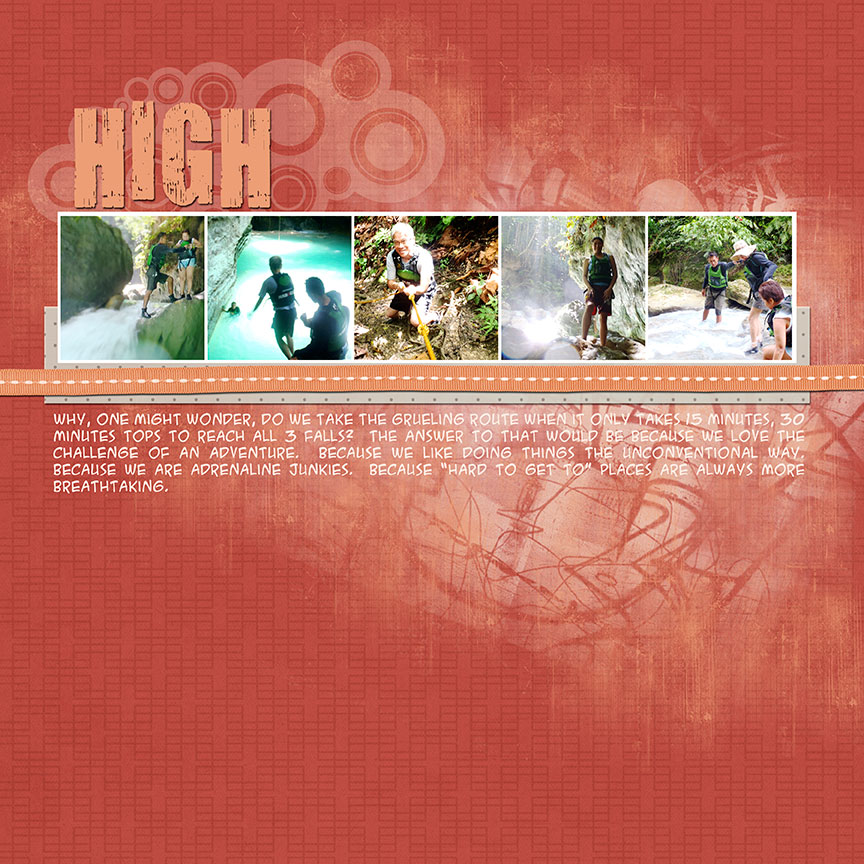
What more if, for 4 hours, you get to swim, trek, and jump into several of the turquoise pools along the way to Kawasan Falls?

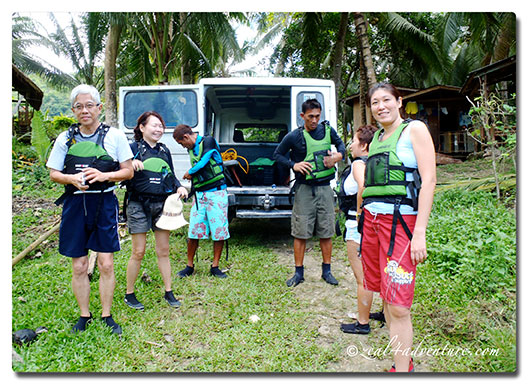
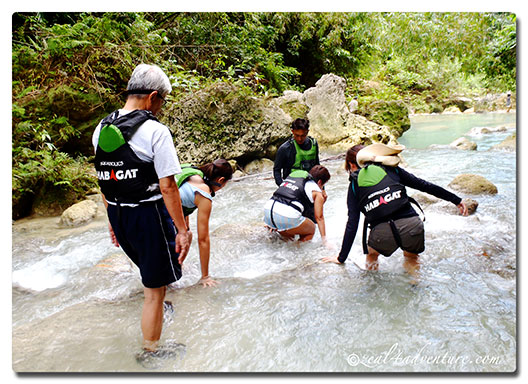
We entered the falls from upstream, near the border of Badian, at the Matutinao Valley geared with a pair of booties, a life jacket and an adventurous spirit.  Canyoning at the Kawasan is not your ordinary Kawasan Falls excursion.

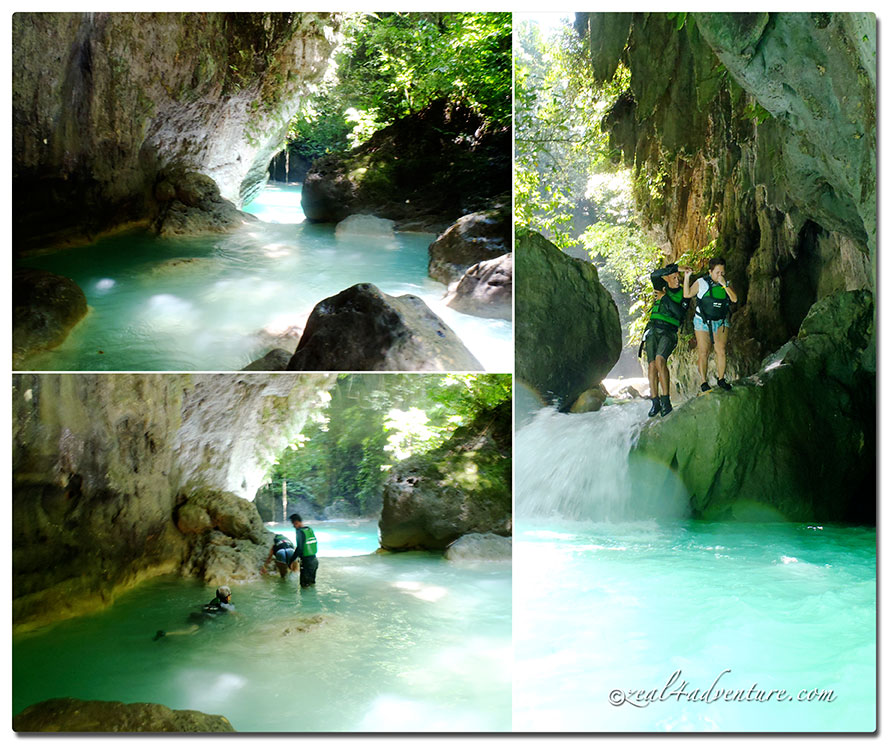
It requires swimming, river trekking, jumping off waterfalls and a bit of rappelling.  Canyoneering, as they call it, is a sport of exploring a canyon by engaging in rappelling, rafting and waterfall jumping.

The adrenalin started pumping at the Matutinao River, just a short distance from our jump-off.

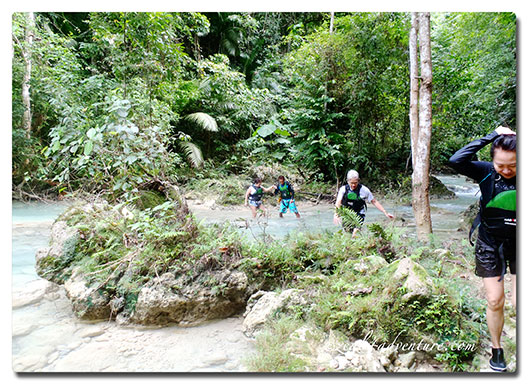
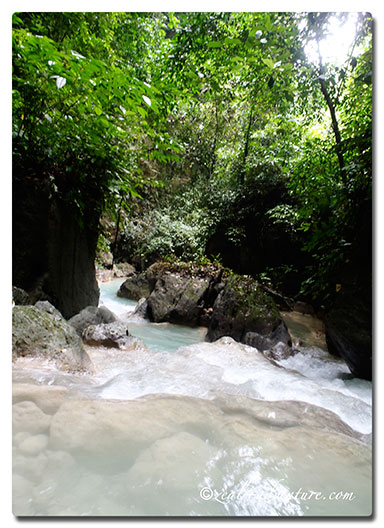
We scrambled over rocks as we get use to the art of river trekking.

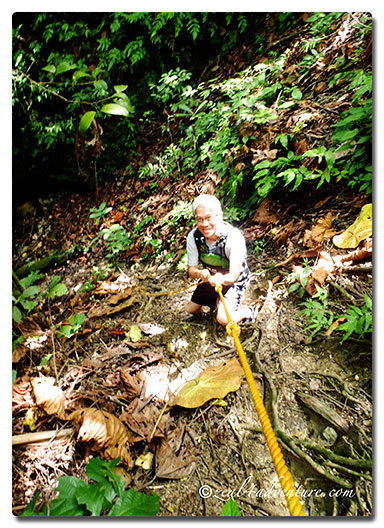
We sort of rappelled down a mountain slope to reach another canyon.

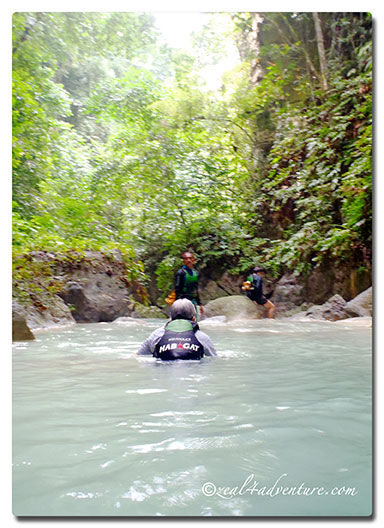
We swam when the water was deep.

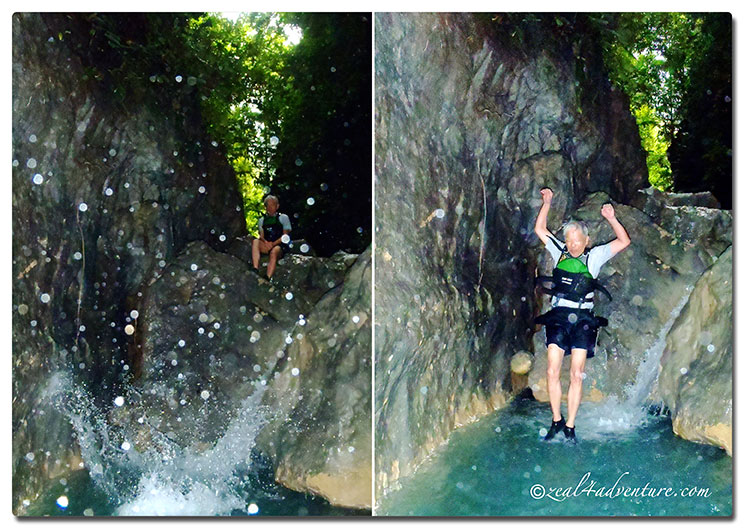
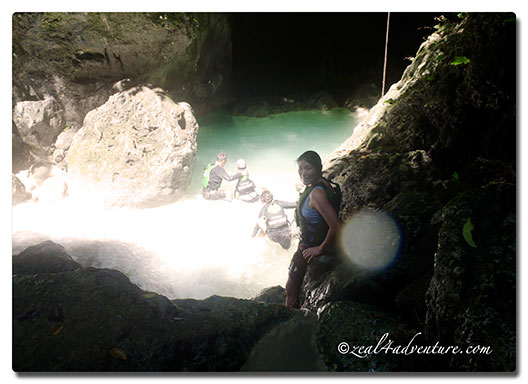
We jumped from big boulders 4 times, sometimes over waterfalls, other times into a small basin with little room for error.

It was terrifying at times, but for the most part, it afforded us an ultimate high, non-stop adrenalin rush.  It was a high like no other.

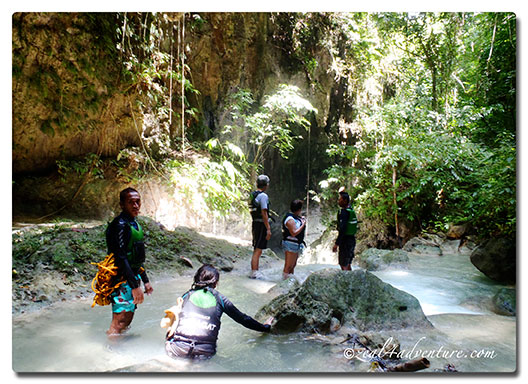
The Aquaholic team made us feel safe all through out, guiding us through the magnificent sceneries of gorgeous blue lagoons and spectacular canyons and rock formation.

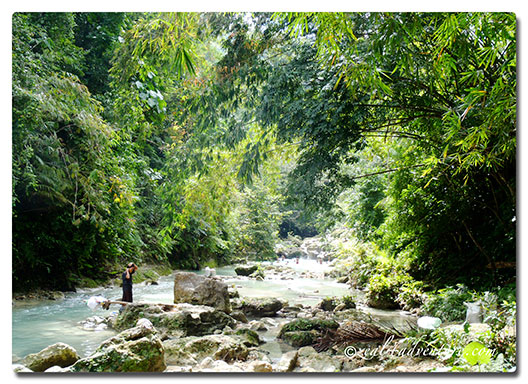
The remoteness and lack of habitation have left this valley a sanctuary.  In the course of our 4-hour escapade, we bumped into a few locals at the start and another canyoning group that explores the river the harder way from below, which they call river climbing.  Otherwise, we had the river and the beautiful riverscape all to ourselves to take pleasure in.

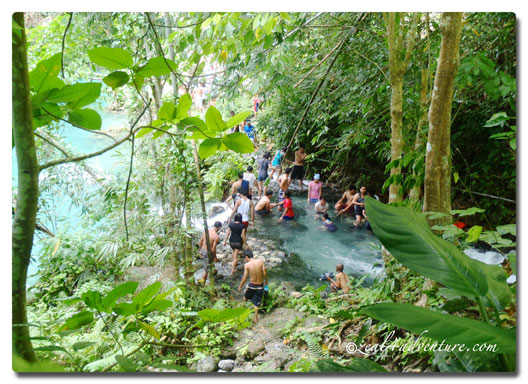
We reached the top of the 3rd cascade of Kawasan Falls at around 2pm.  Contrary to the tranquil environment we came from, we were greeted with loads of people enjoying their Sunday.

Caught off guard and surprised to see people out of nowhere walking down from atop the falls, they watched us with wonder as we walked pass them, exhausted but exhilarated.  Their facial expressions seemed to ask, “Where the heck did they come from?”

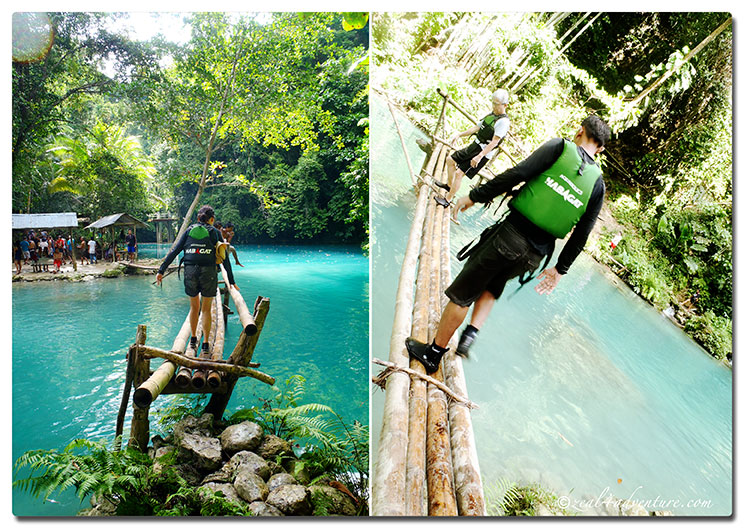
Going back to the van we walked this bamboo bridge which ironically was more frightening.

Why, one might wonder, do we take the grueling route when it only takes 15 minutes, 30 minutes tops to reach all 3 falls?

The answer to that would be because we love the challenge of an adventure.  Because we like doing things the unconventional way.  Because we are adrenaline junkies.  Because off-the-beaten paths are always more breathtaking…

Useful Info:

Philippine Aquaholic Diver’s Inc.
Club Serena Resort
Moalboal, Cebu City
Contact No: +63 (32) 516-1847; +63 (32) 474-0050; +63 (917) 717-3333
Email: dive@aquaholics.com.ph

Rest of Taroko

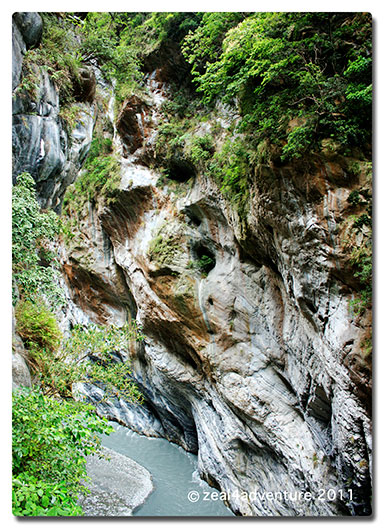
If rugged cliff, marble canyons, towering mountains, and cascading rivers are your thing, then the Taroko National Park will surely enchant.

Hungry for more after our morning’s meanderings, we decided to book a tour to cover more grounds.  A must if pressed for time, actually.  A taxi came for us after lunch, turns out that he is both taxi driver and English-speaking guide.  He said the need for an independent tour guide (and an English-speaking one to boot) has declined now that more Chinese tourists arrive by the busloads providing their own tour guides, hence the dual occupation.

One can spend the day exploring the breathtaking scenery on foot and not cover half the park, which by the way, is the 2nd largest national park in Taiwan. The gorge itself spans 19km long and is spectacular whichever angle you see it from.  With a car, we managed to cover a lot.  Besides, wandering on foot requires a bit of stamina, stamina that has substantially diminished after our morning walk.

Swallow Grotto

The trail we walked earlier apparently does not end at the highway, if we crossed it and walked north, we would have hit a tunnel that splits into two.  We earlier thought about walking along the highway but worried about getting hit by the buses or be charged with jay walking.

Anyhow, traffic and tourist buses are heavy near the tunnel.  The right side of the tunnel is off-limits to vehicles and one gets to explore the tunnel and its surrounding by foot.  Long-term erosion by the river resulted in holes and hollows on the cliffs.  Swifts and swallows took up residence here giving the place its name.

Gorgeous valleys and splendid views awaits as one walk further into the tunnel.  A part of the trail was closed due to falling rocks when we visited and so we turned back.  Normally, our guide said he’d wait at the end of the tunnel while his guests walk the entire stretch.

Cihmu Bridge

The scenery from the Swallow Grotto to our next destination is quite spectacular where the highway runs mostly through tunnels, narrow gorges and marble sceneries.

At the confluence of the laoxi and the liwu river stands Cihmu Bridge, an H-shape hanging bridge where marble stone lions stand on each side.  The rock beneath is of schist and white marble, resembling a frog with a crown (can you see it?   🙂 ).  The crown is actually a pavilion built on top of the frog-like rock.

Lushui Trail

Our driver/guide recommended that we walk this trail.  He dropped us off where the trail started and he’ll meet us at the end, he said.

The trail climbs gently uphill and crosses a short suspension bridge before making its way onto a spectacular cliff-side section.

It was a fairly easy and very scenic trail that is suitable for people of all ages.  The trail follows the road cutting through the mountain and passing through a short tunnel.

The views of the Liwu River and the gorge are impressive.

A kilometer of rough downhill road signals almost the end of the trail bringing us back to the main road along the rim, our taxi in sight.

Tianxiang

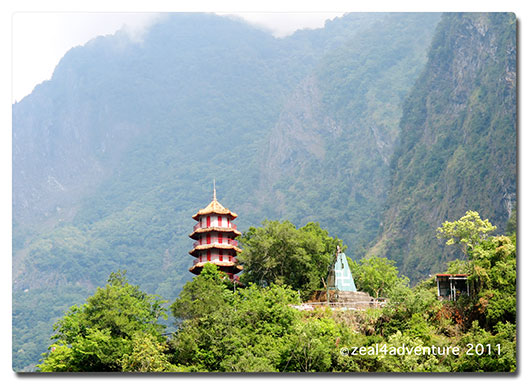
Tienfieng Pagoda

Like Buluowan, Tianxiang is an old Atayal aboriginal village sitting near the confluence of the Daxi Jili and Dasha rivers that eventually becomes the Liwu River.  Its name commemorates Wen Tianxiang, the last prime minister of the Song Dynasty.

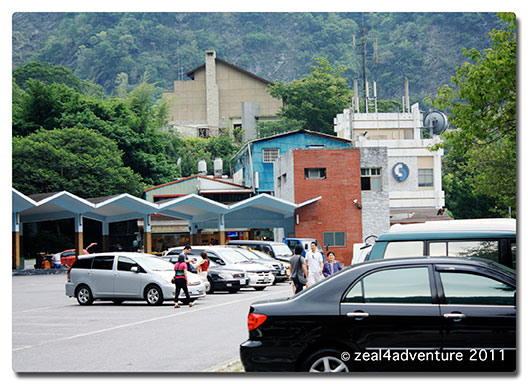
This charming town has a large parking space for tourists, a recreational plaza garden and the only 5-star hotel in Taroko – Silks Place.

Eternal Spring Shrine

From the road, driving to our next destination, we stopped only to take photos (as many have done) of the Eternal Spring Shrine, a landmark and a memorial shrine complex paying tribute to the 212 veterans who passed away during the construction of the Central Cross-Island Highway.  The shrine surrounded by lush greenery and the long steep gorge beneath was built above the Chang Chun falls offering picturesque view of the mountain and the waterfalls.  The Chang Chun falls runs year-round.

Shakadang Trail

Bridge near the Shakadang Trail entrance.  Each lion has a different face.

5pm, hot and hungry and we still had one more to go.  We were thinking to perhaps skip it but our guide insisted that we walk even just a portion of the trail.  Glad we did.

It was an easy hike, which started just below the bridge, along the Shakadang creek valley, a tributary of the Liwi River.

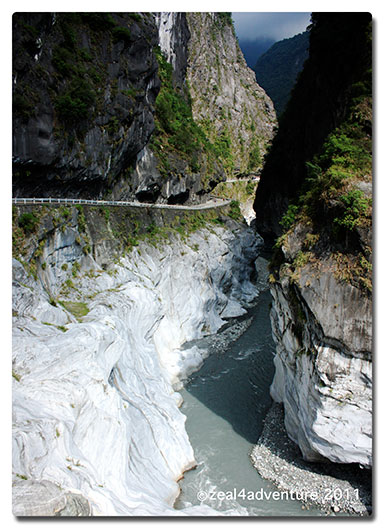
The trail is a flat 4.4km following the crystal clear blue water of the Shakadang River which winds through dramatic marble canyons surrounded by lush green vegetation.

The mineral deposits in the rocks produces such beautiful turquoise water and is a major part of the charm.

And with that, we were driven back to our hotel just in time for my aboriginal dinner.

The Sincheng Station

We headed back the next day to Taipei the same way we arrived, impressed with what Taiwan had to offer, realizing that we perhaps scratched only a small surface of this beautiful island once aptly called Formosa.  Another visit is definitely likely to happen in the (near or far) future.

Buluowan, the Lower Terrace

Taroko Gorge.  Travel buddy Art, a globe wanderer for more than 3 decades, largely influenced our trip to the national park.  He’s gone to so many places, he inspire me to never stop travelling.  Ethiopia, Uzbekistan, Iran, Bhutan, Antarctica – name it he’s been there.  And to give a thumbs-up on Taroko Gorge?  I knew we chose a winner and wasted no time booking our flights.  With tips from Art, we planned the trip as efficiently as we could.

We had to make good use of our limited time hence the 2 nights stay at the Leader Village Hotel.  Perfectly located within the park with its headquarters just a short walk down.

From the lobby, following the wooden walkway that borders the road leading to the park’s headquarters, I was rewarded with a bird’s eye view of the lower terrace.

Lush green trees surrounds the lower terrace

A beautiful sight that had me thanking Art for his recommendation.

The Traveler’s Center from E-das Hall

What used to be the home of the Taroko tribes more than 3,000 years ago is now the Park’s headquarter, which includes a recreational area (also called the Traveler’s Center)

featuring aboriginal cultures, a multimedia presentation at the E-das Hall, and a souvenir shop.  Also found here are the Swallow Grotto trail and the Meander Core Trail.

While aimlessly walking around, a guy called out prodding us to enter the E-das Hall as “the show’s about to start”, he said.  Happy to be away from the heat even for just a while, we comfortably seated ourselves and watched the entire show… in Chinese with no sub-titles to boot.  Who cares when we can cool ourselves on a hot summer’s day?  The show briefs about the different attractions to be seen and experienced at the park and the visual presentation had us eager to explore the park.  So right after the show, we went on our first trail.

Swallow Grotto Trail

Behind E-das Hall is the Swallow Grotto Trail.

Looks promising, don’t you think?

On the map though, it ends on the highway and A was hesitant to walk this trail because we might end up backtracking.  I insisted and of course he was right.

The steep steps down seemed never ending, and when we reached the end of the road, we were rewarded with this.

An obstructed view of the Liwu River.  

I cringed because I insisted and was wrong, and we had to go back up those steep steps.

Next time I will listen.

Meander Core Trail

Now this trail is a breeze with beautiful scenery and lush flora along the way.

It’s a shorter trail that starts near the traveler’s center.

The pretty wooden walkway leads all the way to a viewing deck at the end. There, we were rewarded with these views.

The Taroko Gorge (left) and the Sipan Dam (right)

After these two trails, a hearty lunch was the only way to go.

We walked back to the hotel through a more scenic and shorter route,

A rooftop picnic area at the Traveler’s Center

which passes the back of the Traveler’s center.

All these stunning scenery left us awed by the beauty of Taroko and we have not technically left our hotel grounds yet.

Taroko: An Edgy Start

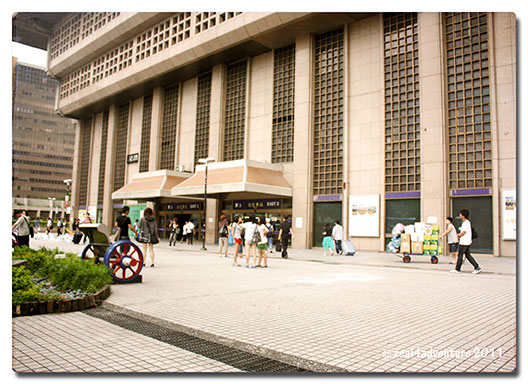
Our journey to the east coast of Taiwan began when we got off the cab at the Taipei Train Station with our backpacks in tow.

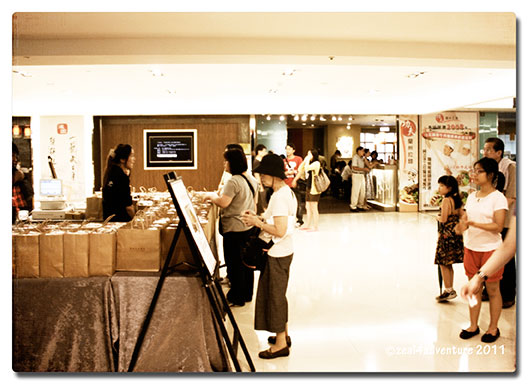
The station is a large building housing several rail services with an array of shops and restaurants on the 2nd floor.

Getting ourselves acquainted with the station the day before we thought would prepare us for a stress-free travel.   Not quite!

Taroko Gorge, one of the most fascinating areas of Taiwan, is accessible by plane or train.  Unless pressed for time, we like traveling by land, in this case by train.  While we are able to see more of the place, it is likewise a cheaper way to travel.  Sincheng (Hsin-Cheng) station is the closest station to the Taroko Gorge National Park and because our hotel is located within the park, we took Lonely Planet’s advice and bought our tickets to Sincheng,

which we soon realized, is a small station in a small town.  The more common route to Taroko is through the Hualien station (a different train passes that station).  That however is still an hour’s drive to the National Park.

To make matters worse, on the B2 level where we were to board, there are 2 lines going on opposite directions.  The ticket didn’t give much information — it was written in Chinese save for the word “Sincheng”.  It didn’t specify which train/line to take, at least not in English.  All we had were the platform number and the time of departure.  None of those we approached (young or old) could help us because they either did not speak much English or they didn’t know where the hell Sincheng is.  A and I looked at each other and without speaking burst out laughing reminiscing about our bus mishap years ago, very aware that what happened in Uganda might just repeat itself in Taiwan. It really wasn’t something to laugh about but…

We eventually found (and I assume was) a customer service booth.  And with the little mandarin I know and a lot of pointing, we boarded our train hoping for the best.

Three hours later we found a cab parked outside the Sincheng station and in 10 minutes, we were unloading our backpacks at the Leader Village Hotel, our home for the next 2 nights.

Winding through a zigzag road, the drive to the front of the lobby melted away the tensions of the day.

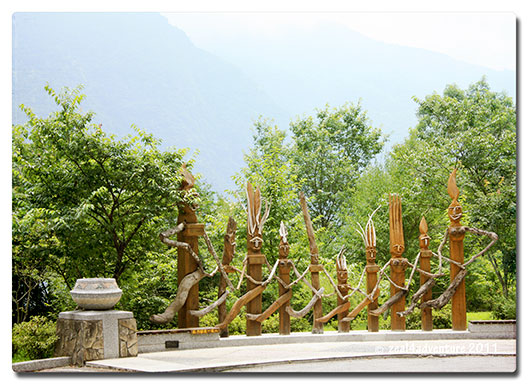
A welcome party greeting guests at the driveway.  Fun sculptures are found around the hotel grounds.  

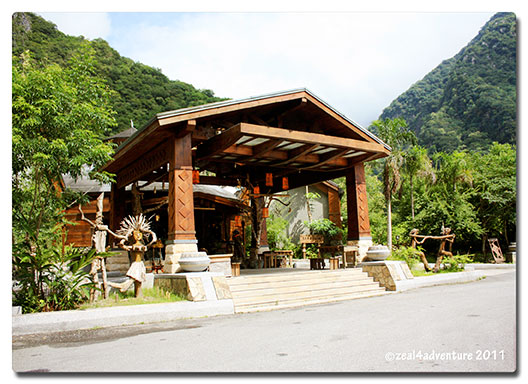
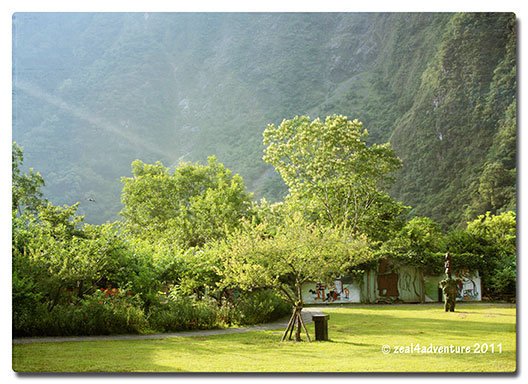
Spectacularly situated on the Buluowan plateau, the Leader Village Hotel, surrounded by green mountains, was a sight to behold.

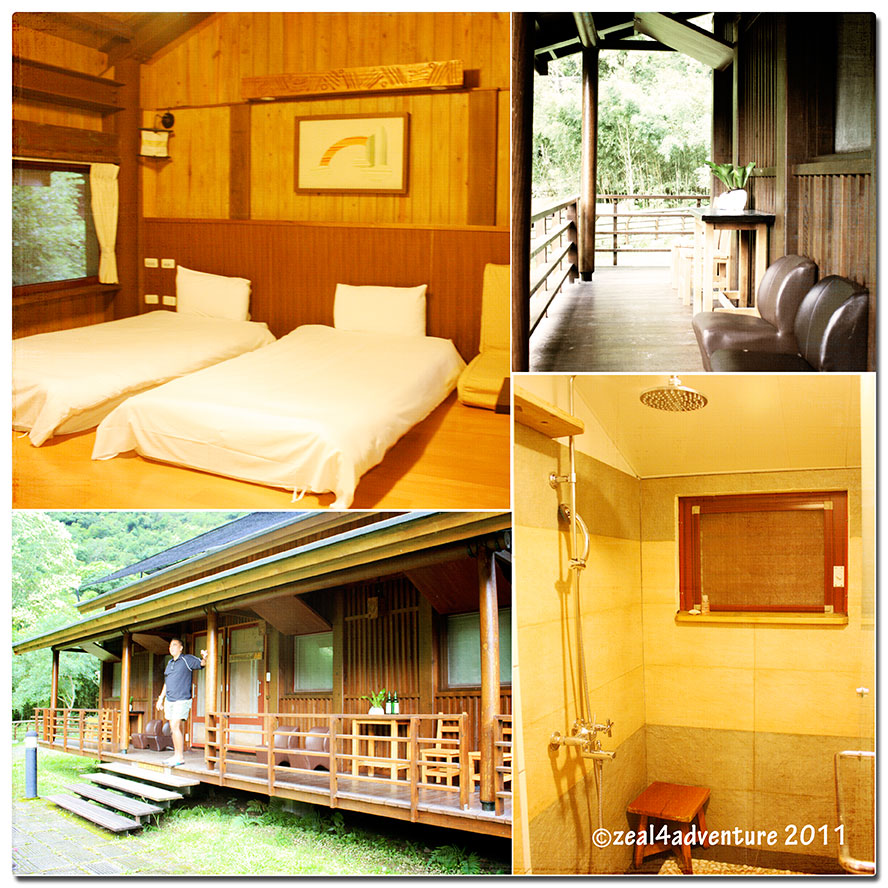
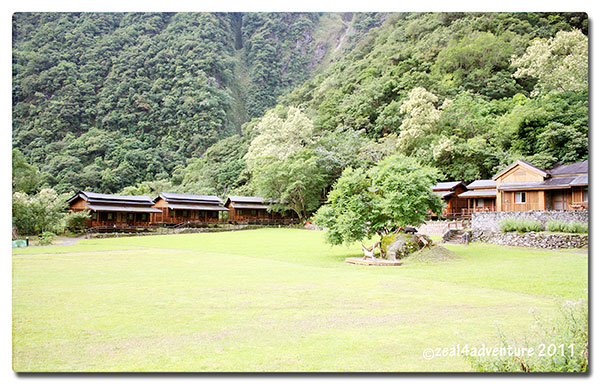
Set in fabulous scenery, native aboriginal themed wooden cabins were built in clusters all over the hotel grounds.

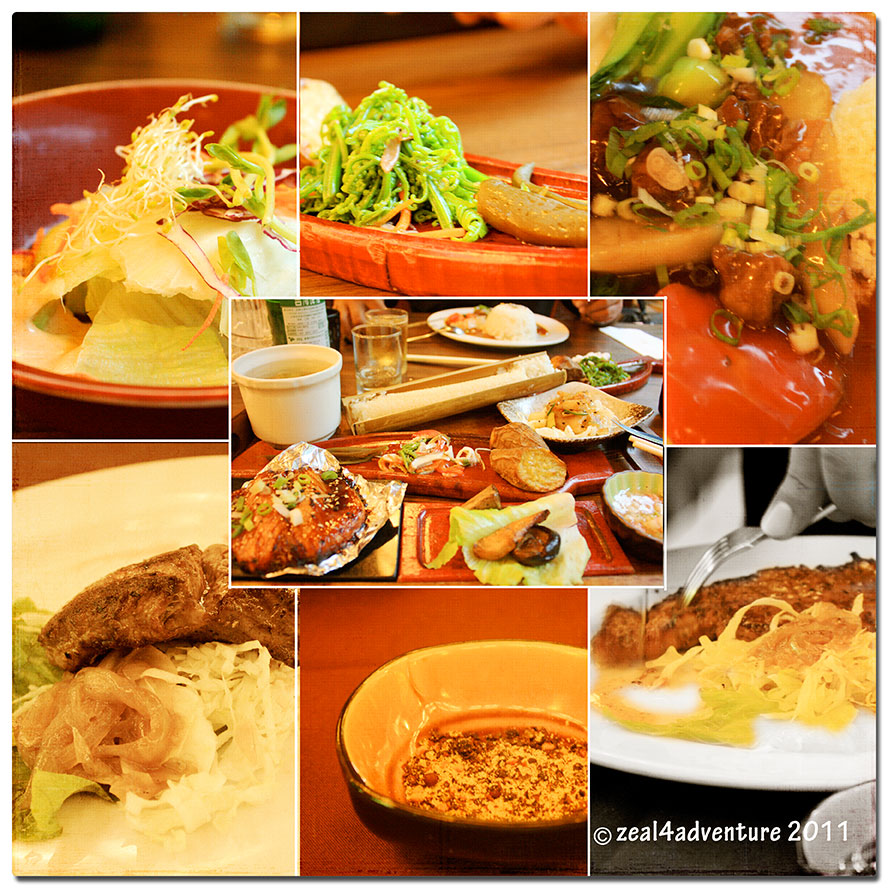
Known too for their restaurant, meals were a combination of western and aboriginal dishes.

Aboriginal dishes came as a set meal (middle pic): an order of grilled tilapia with different vegetables including sweet potatoes.  It also came with sticky rice on a bamboo.  Steaks were tender, superb when sprinkled with a dry spice mixture.

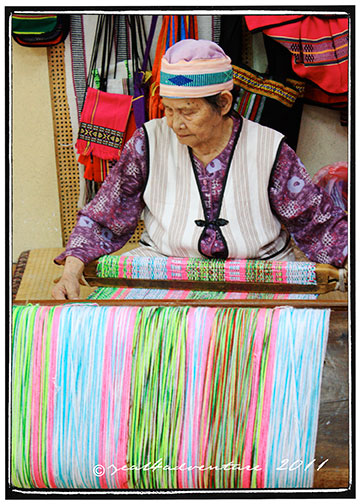
The staffs are mostly Taroko aborigines and after dinner, we were treated to a cultural show performed by the children of the Truku tribe.

The cabins are spacious, clean and rustic complete with modern amenities such as rain showers and TV.  Although the beds set on the floor is quite charming, getting out of bed was an effort… a sign that age is creeping up on us!

The best part though is to wake up to this.  I could sit on our porch the whole day and I’ll be a happy camper.

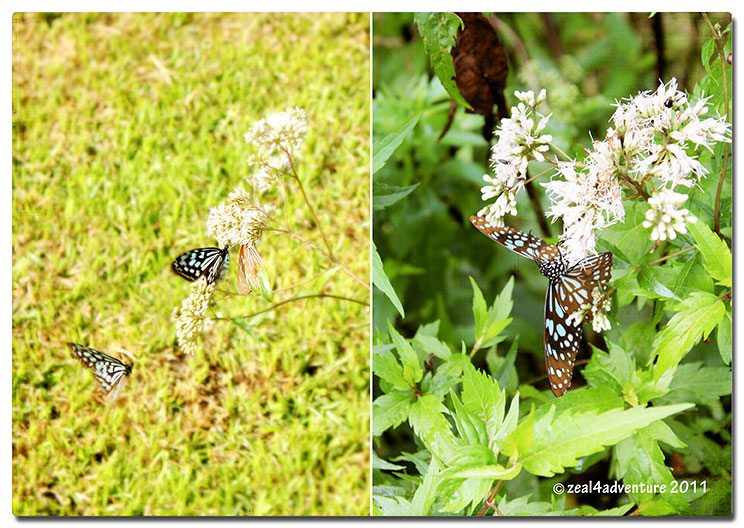
Just in front our cabin.  The grounds so green, butterflies abound.

But laze around we didn’t do of course as the beautiful grounds invites to be explored.

Dramatically set above the gorge proper with fabulous scenery everywhere, Buluowan was where the Taroko aborigines once lived and held festivals and celebrations.  Divided into the upper and the lower terrace, the hotel is on the upper while several trails, a recreation area including an exhibition hall are found on the lower terrace.

After breakfast, we explored the upper terrace.  Behind the hotel is a short nature trail aptly called Bamboo Grove Trail.  It was a cool walk through a bamboo grove.

It wasn’t so bad after all.  All is well that ends well.

More of the lower terrace up next.

Around Donsol

Credits:  “Natural Beauty” quickpage created by Maria LaFrance

After a morning of whale shark adventure, what next?  Just a short banca ride across the San Bernardino Straits, many dive shops offer trips to Manta Bowl in Ticao Island.  We however didn’t have time so I made a mental note to plan for some serious diving there next season.

Fireflies

Instead, we headed out to the Donsol River in the hopes to see fireflies illuminating in the dark.  I was envisioning dramatic strips of trees lit with fireflies like Christmas trees radiating the evening.  Alas, save for the beautiful sunset on our ride to the site, the fireflies were a let down.

We saw a total of 2, perhaps 3 trees with some fireflies glowing but not enough to even show on cam.  It didn’t help, per our guide, that it was a full moon.

Baracuda Seafood and Cocktails

Clockwise:  Home-made Pesto; tuna sashimi; succulent grilled prawns; A very fresh fried lapu-lapu.

Baracuda (with 1 “r”) serves excellent food that’s worth a mention.  After our sorry firefly tour, invited and recommended by the Israeli couple we shared the banca with, the four of us set out for Barracuda bar for some really good eats.  The resto-bar has a very friendly atmosphere headed by the owner herself, Juliet de la Cruz.  She goes around tables talking and offering shots of rum to diners.

Where to Stay

We wanted to stay at Elysia Beach Resort but they didn’t have a room so we settled for the comfortable albeit spartan Dancalan Resort.

Dancalan Beach Resort

With truly enjoyable breakfast of pancakes, bacon and coffee.

As we were walking around town, we passed Elysia resort and decided to check it out.

A simple but tastefully designed resort with rooms built around a pool.

The food may not be as good as that of the Barracuda or Dancalan (breakfast was good), it was pretty decent.

Since the main activity here takes just half a day, splurging a bit to lounge around the beautiful and relaxing grounds of Elysia makes pretty good sense to me.  I’ve made another mental note to book earlier next time I come back, most likely for those Mantas.

Useful info:

Baracuda Seafood and Cocktails
Contact: Juliet de la Paz
Mobile: +63926-640-0863
 
Dancalan Beach Resort
Email:  Donsol_dancalanbeachresort@yahoo.com
Contact No:  +63905-218-2973
 
Elysia Beach Resort
Email: elysia@live.co.kr
Contact Nos: +63917-547-4466 / +63927-348-2340 / +63926-475-9762