Tainted but not Spoiled

Credits:  Papers — Cherished love by Carena Designs, K Pertiet Notebook 8 and King Me paper; Photo Mask — K Pertiet Grunged up photo block No. 2; Overlay– House of 3’s Rhonna swirl cluster No. 8

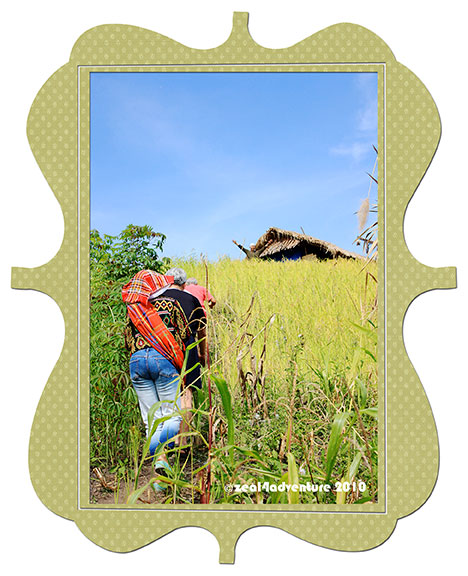
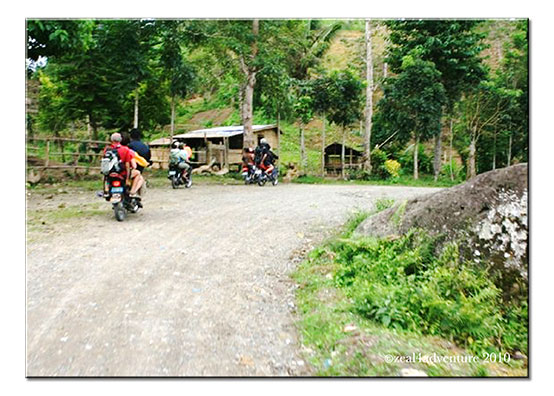
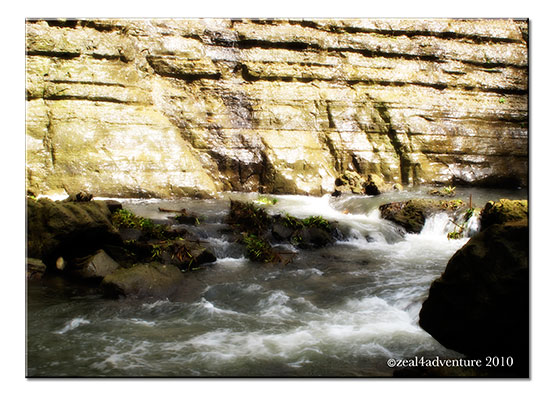
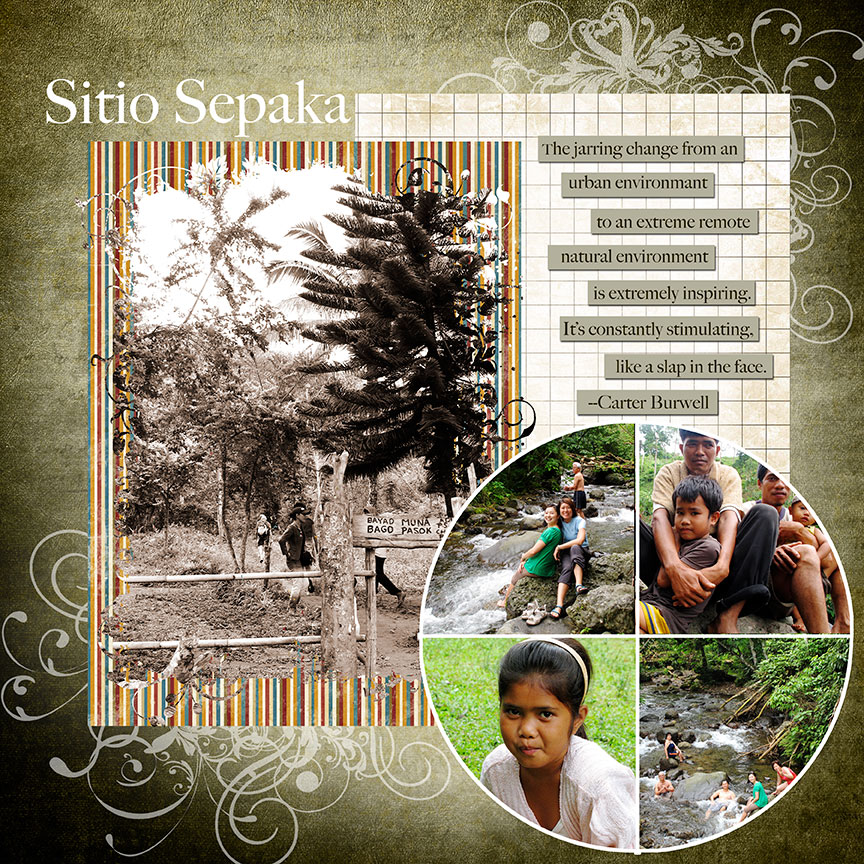
Setting aside the fact that it is tainted with a peace and order situation, Sitio Sepaka, a beautiful site is also known for its cool stream.  Four habal-habals with us in tow arrived at an entrance that charged P5 per head.

It led us to a shaded foot trail that eventually revealed a refreshing creak that enticed us to take a dip.

Children were all around, watching us with interest.  The remoteness (and of course the peace and order stature that it holds) probably does not bring many tourists to their neck of the woods thus the delight.  Oblivious to whatever threat that supposedly surrounded us, we had a great time frolicking with the locals, and the invigorating cold stream was a great “perk up” for the rest of the day.

Disclaimer: Four guides that made sure that everything was safe before we headed out to this place of course accompanied us.  If there were any danger to our wellbeing, we would never have ventured out at all.  Please check with your guide at the time of your visit and please do not insist if it is not advisable.

Scenic Sunday

A Datu and His Wives

Credits:  JSprague TW Kits (template 01 and papers)

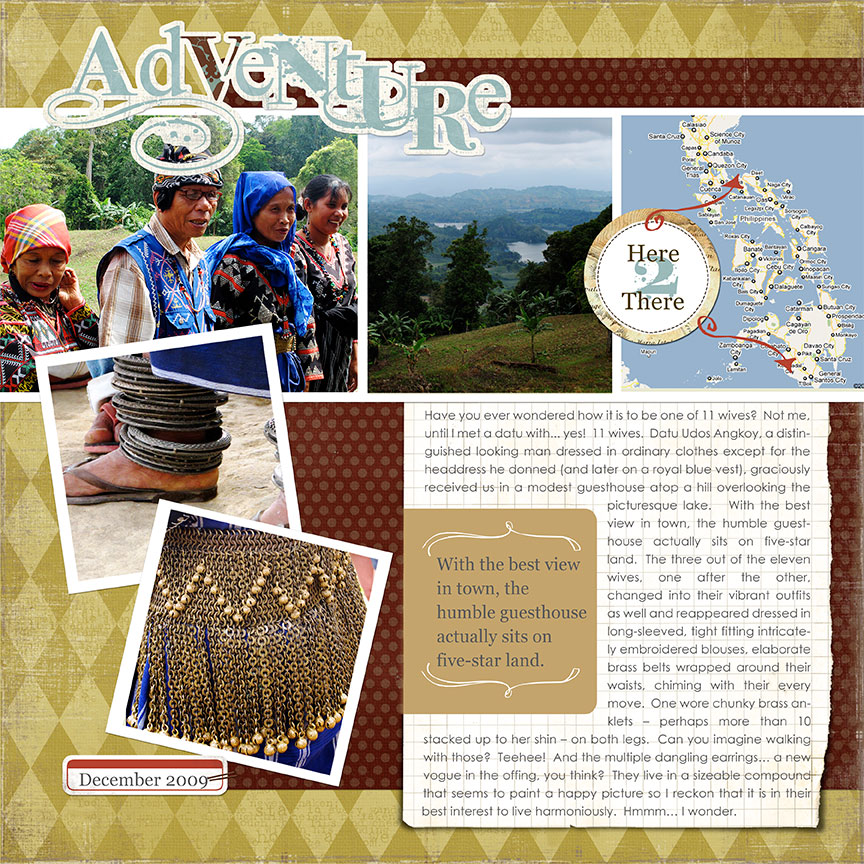
Have you ever wondered how it is to be one of 11 wives?  Not me, until I met a datu with… yes!  11 wives.  Datu Udos Angkoy, a distinguished looking man dressed in ordinary clothes except for the headdress he donned (and later on a royal blue vest), graciously received us in a modest guesthouse atop a hill overlooking the picturesque lake.

With the best view in town, the humble guesthouse actually sits on five-star land.  The three out of the eleven wives, one after the other, changed into their vibrant outfits as well and reappeared dressed in long-sleeved, tight fitting intricately embroidered blouses, elaborate brass belts wrapped around their waists, chiming with their every move.  One wore chunky brass anklets – perhaps more than 10 stacked up to her shin – on both legs.  Can you imagine walking with those?  Teehee!

And the multiple dangling earrings… a new vogue in the offing, you think?  They live in a sizeable compound that seems to paint a happy picture so I reckon that it is in their best interest to live harmoniously.  Hmmm… I wonder.

On Market Day

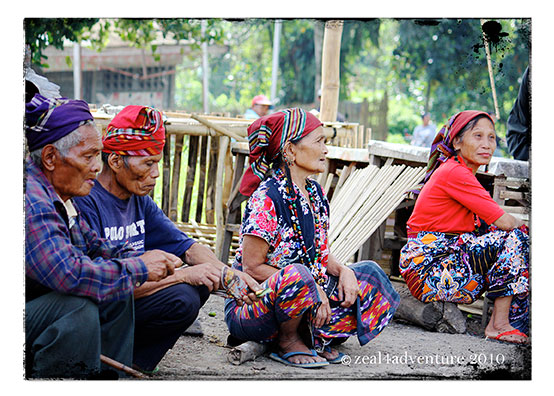
Saturday is market day for the T’bolis and a smattering of them still turn up in a semblance of a traditional ensemble.  Take out these lingering few; market day in Lake Sebu was quite a let down.  Without them, the market looked like an ordinary tiangge (bazaar) with merchandise perhaps coming from Manila or even China.  Despite this however, it was still an enjoyable endeavor, especially for me.

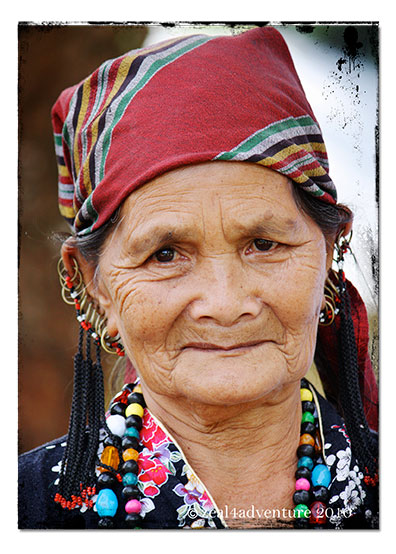
How likely is it that among the population of more than 95,000 Tbolis, I find (and more amazingly – I remembered) the same one a decade later?

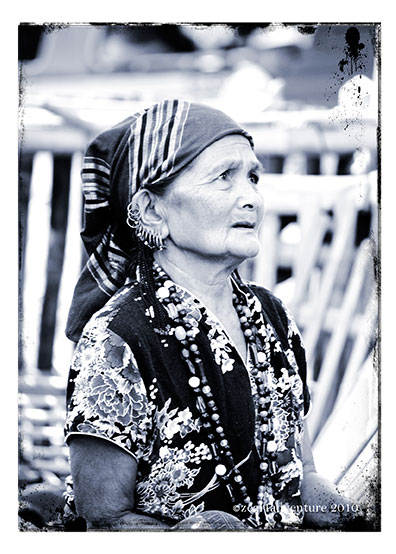
Perhaps it was her earrings or a combination of the earrings and her striking beauty that rendered a high recall.

One of the indigenous peoples of Southern Mindanao, the T’bolis primarily live in the South Cotobato province of Mindanao (the southernmost part of the Philippines).

As with many indigenous groups, many have adapted the migrant’s way of life owing to the many settlers hailing mostly from Iloilo (a province in the Western Visayas region, still south of the Philippines).

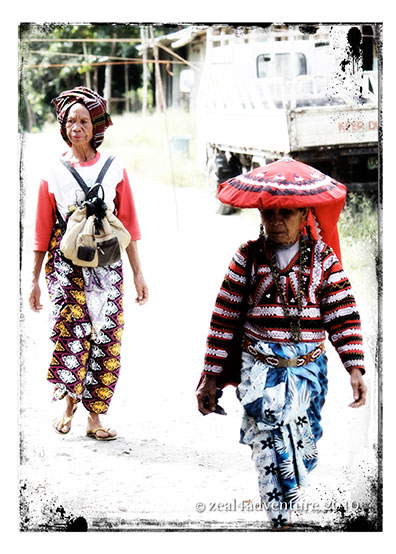
The colorful traditional outfits (I think) are mostly worn these days on special occasions and on market day.

Some snaps taken that morning.

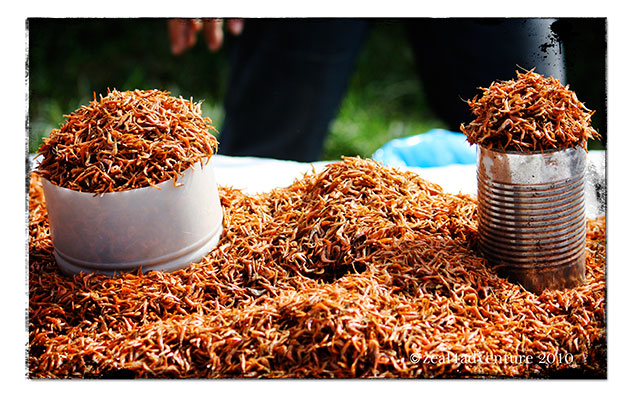
Dried baby shrimps or what we call hebi (great for flavoring)

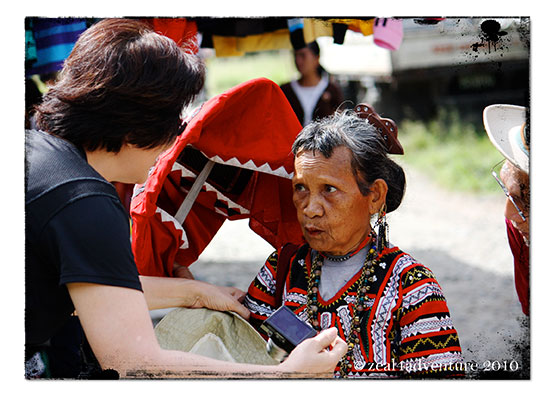
The T’bolis are famous for their intricate beadworks and brass ornaments

Negotiating for a picture with her

I just totally adore her!

T’bolis today — with an umbrella, a plastic bag of goodies and the red handbag!   😀


Beauteous Lakes of Lake Sebu

Uhmm… yes there are lakes in Lake Sebu, in fact, there are several but it is not exactly what you think.  There are no lakes within a lake.  Not to add to the confusion but Lake Sebu is a lake and a municipality, which consists of three adjacent mountain lakes – Lake Sebu, Lake Seloton and Lake Lahit… all with its own charm so impressive.  And Lake Sebu, the municipality, was named after its largest lake… aha!

Lake Sebu

Credits:  Frame mask by Orchard and Broome.

Known for its vastness, measuring around 354 hectares, is the most famous among the three lakes.

Isla Grande, the largest island within the three lakes is likewise located here.

We hiked up to the top of the island for a good view of the lake and the only way to get there was through an owong —
a canoe that is used for fishing.  A few meters from the jump off was a church,

which looked more like a shed (count your blessings folks!).  Being a Sunday, families, mostly mothers and children, waited patiently for the pastor who was still in another church in another island.   What an amazing servant of God, if you ask me.

We spent a little time there chatting the them.  Not long after, the children gamely sang hymns to entertain us.  Adorable.

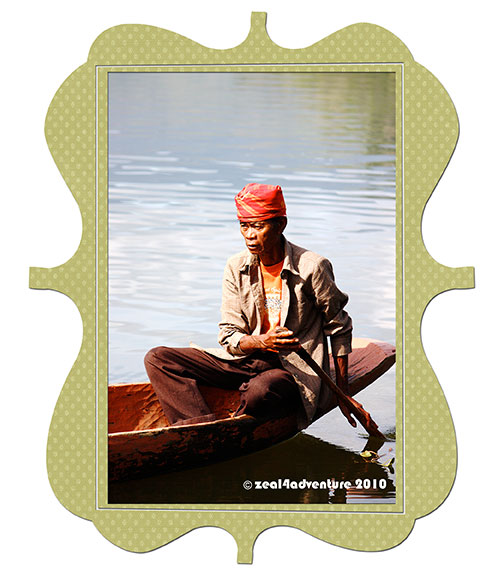
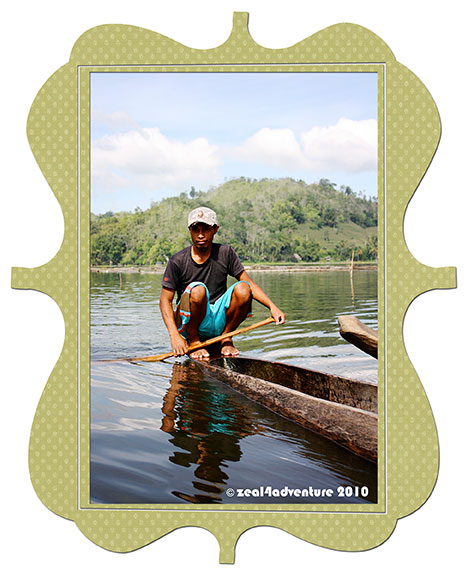
Our T’boli hosts including this man who served as boatman and

entertainer accompanied us to the top of the island.  He was making up stories (apparently a funny one), which he chants in his native language — yes language.  The T’bolis speak a Malay-Polynesian language also called Tboli.   🙂  A wonderful experience, I must say, of cultural immersion.

Lake Seloton
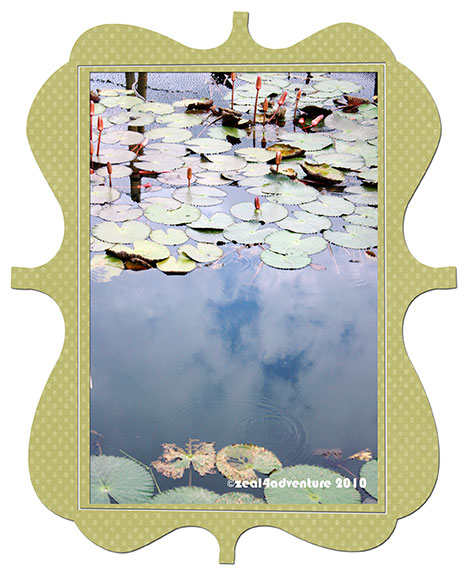
Supposedly the deepest among the three and it is also known as the sunrise lake for having the best-unblocked view of the sunrise.

Not quite as stunning as its big sister sans the sunrise, it still possesses its own loveliness.  I am sorry that we never got to see its glorious sunrise.
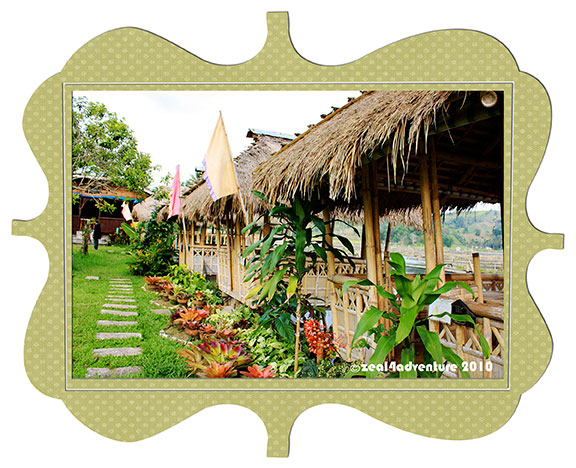
Accessible only through the Sunrise Garden Lake Resort and although just a habal-habal ride away from our longhouse, we still didn’t made it up early enough to take that (cold) ride to the resort.

Lake Lahit

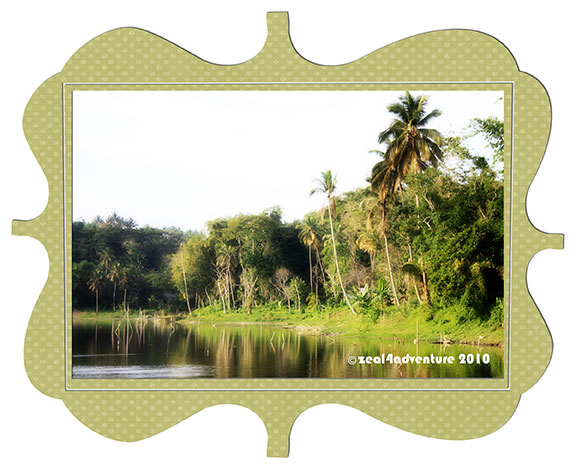
The smallest but not to be outshined by its two big sisters,
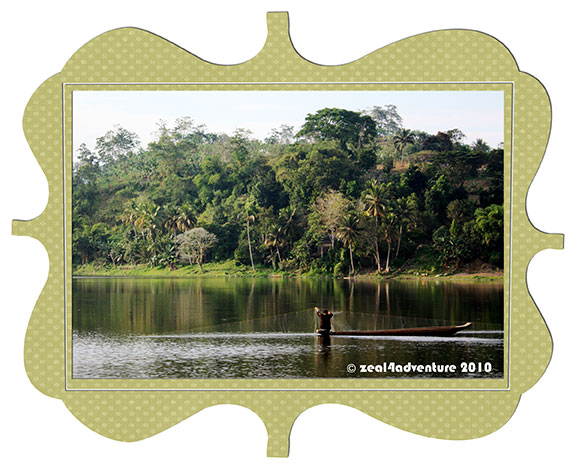
here we caught a fisherman fishing for tilapia just before sunset.

The lake at that time was quite spectacular, if I may say so myself.

These placid lakes are found in the middle of the Allah Valley Watershed Forest Reserve, which is used for fish (tilapia) farming,
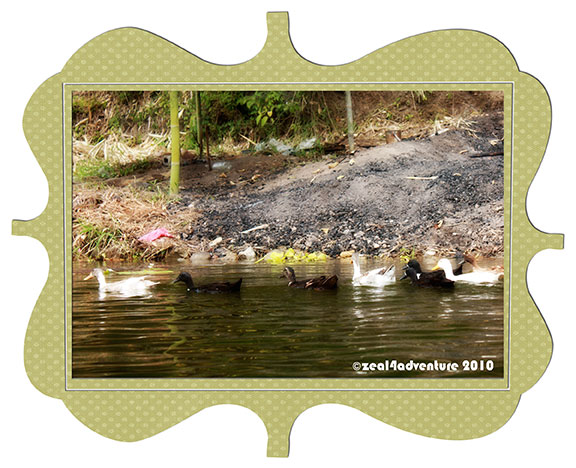
duck raising and harvesting fresh water shrimps and snails.  The watershed supplies important irrigations to the provinces of Sultan Kudarat and South Cotobato.

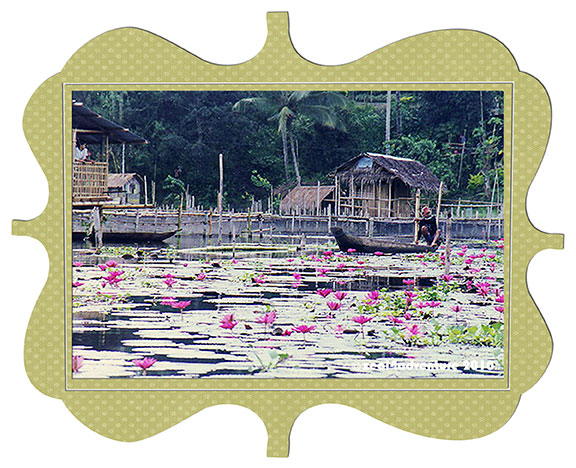
Taken ten years ago… don’t remember which lake but most likely Lake Seloton

Ten years and perhaps even until a few years ago, the lakes had an abundance of lotus and lilies creating a picturesque setting – at least in my opinion.

Today, the lakes are clean with hardly any lotus plants in sight.  I was told that lotuses are (sadly) nuisance aquatic plants that are not recommended for ponds used for fishing.  And most of the people living in the nearby islands are engaged in fishing.  Well, I’ll take health of the lake over aesthetics anytime.
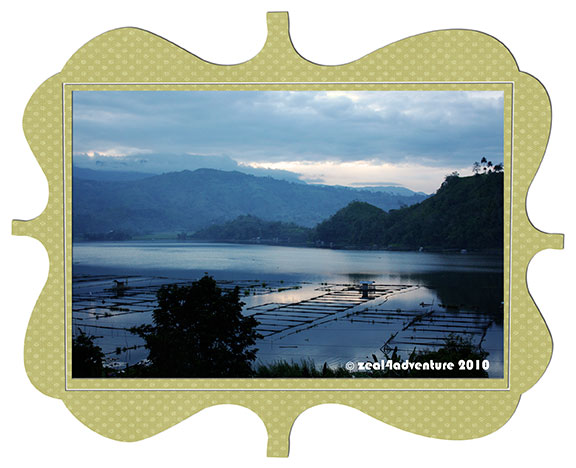
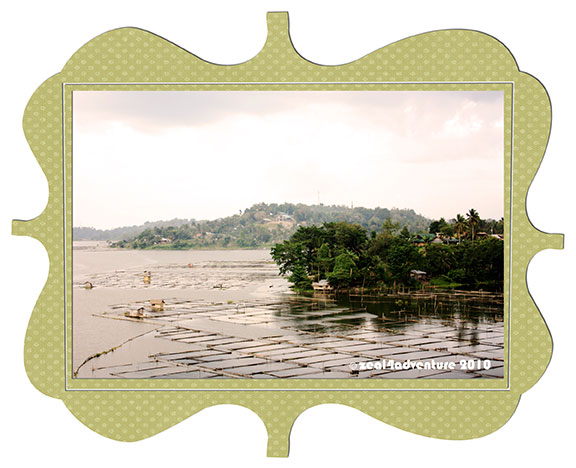
Lake Sebu with the fish cages at dusk

The lakes, in fact, became so famous in the early 1980s for tilapia raising that gave rise to the mushrooming of fish cages.  So much so that it would cover half of the lake, deteriorating its quality.   Today, it is good to know that the Fisheries Code prevents this from happening as the fish cages is allowed to occupy, at the most, only 10% of the total lake area.
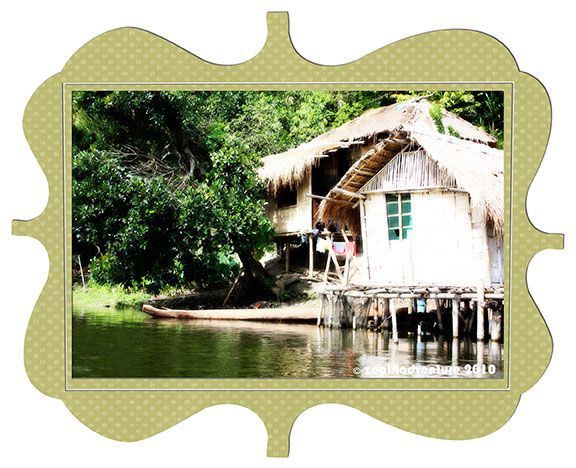
It is no wonder that Lake Sebu was named after its beauteous lake, given that the lakes are such an integral part of their lives.

Scenic Sunday

Forceful Cascades of Lake Sebu

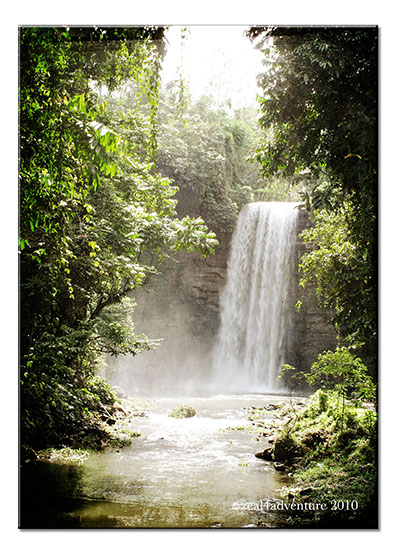
Hikong Bente (Falls #2)

Two of the seven waterfalls were the most accessible while the others have yet to have access trails.  Developed a few years ago through the funding of the local government with help from New Zealand, Hikong Alu (falls #1) and Hikong Bente (falls #2) today only requires about 30 minutes of walk – although I do not remember it to be a strenuous hike 10 years ago.  Often dubbed as the “Summer Capital” of Southern Philippines, the development of the seven waterfalls is part of a bigger plan to capitalize on the tourism potentials of Lake Sebu and to turn it into a major destination in Central Mindanao – not exactly the most popular in terms of tourism due to the poor press releases of its neighboring provinces and the mere fact that it is in Mindanao scares off a lot of tourists, foreign and locals alike.  So the efforts of the local government to focus on its beauty are commendable.

Two passengers and a driver in one motorcycle   😯

The only means of public transport around Lake Sebu is through motorcycles or what they call habal-habals.   From our longhouse, it took us 15 minutes perhaps to arrive at what looked like an entrance to a park.  P20 was all that’s needed to enter.  The focus of the development was mainly on road development and the establishments of resort facilities.  Save for the inner roads, it was a pretty smooth haba-habal ride along the main highway.

A short walk from the entrance is Hikong Alu, the first falls cascading down the jagged landscape of the lush forest of Lake Sebu.

A trail on the right leads to a natural pool where one can enjoy the beauty up close.

There are two options to get to the 2nd falls, Hikong Bente.  One can choose to zip down through a recently developed zipline.  The queue was long so we chose to walk.  The walk through the verdant forest is made easy with the stoned steps established.

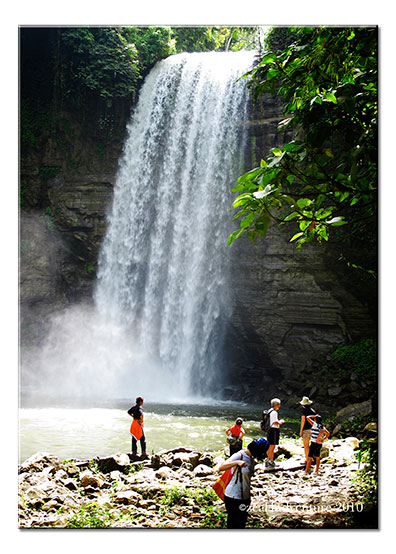
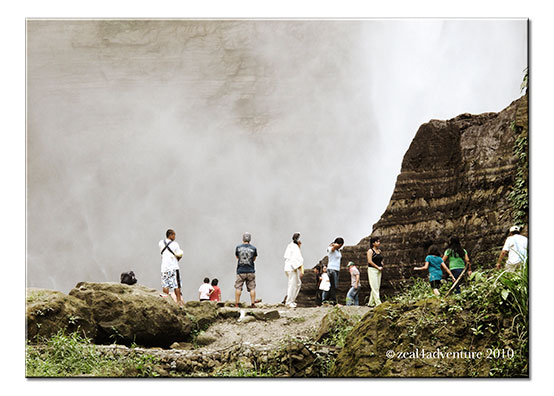
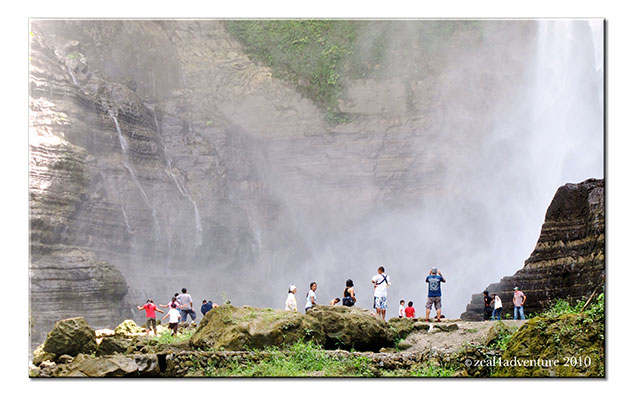
What greeted us was a grander falls with powerful cascading water that leaves a misty atmosphere.   Apparently the largest of the seven.

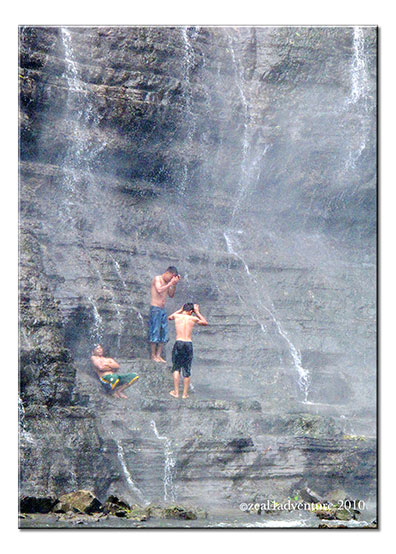
The ragged rock wall etched through the years

by the constant mist from the falls

has become favorite playgrounds.

One could either swim or do as I did – simply admire the beauty that surrounds.

Stream as seen from the entrance

Nature tops the list of potent tranquilizers and stress reducers.  The mere sound of moving water has been shown to lower blood pressure.

~Patch Adams

Scenic Sunday

Lake Sebu Revisited

It’s been 10 years since my last visit to this enchanting town where T’boli’s hail.

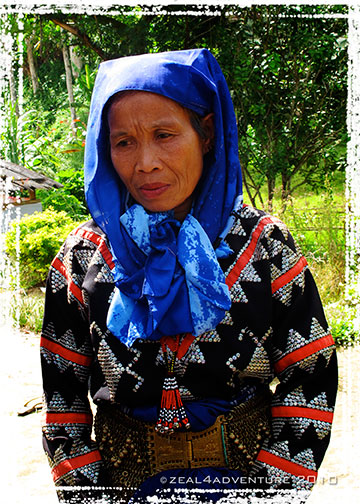
A T’boli lady in full regalia

I remember the highland tribes for their colorful costumes and intricate beadworks.  And that’s what excites me about this trip.  Revisiting the lake, taking loads of pixes, eating lots of tilapia, shopping for some beadworks were just a few things I looked forward to.

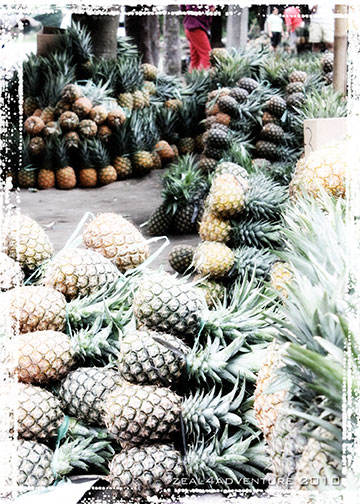
In between General Santos and Lake Sebu is the town of Polomolok.  It is the home of Dole Philippines, the biggest pineapple plantation in the world.

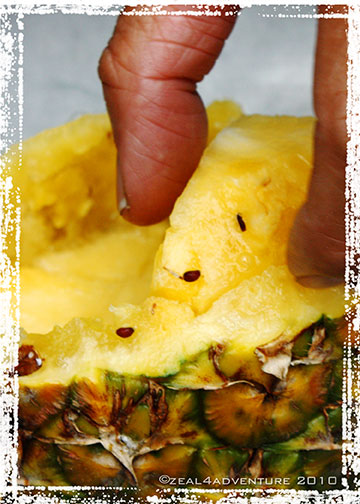
A bag of sliced pineapple for P5 (US$0.10)

And for that reason, we had to stop and get us some pineapples for the road and Lake Sebu.

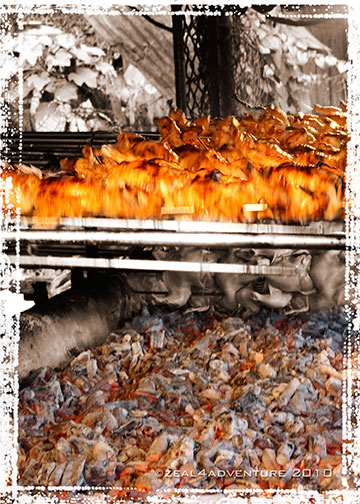
True to its promise, the pineapples were indeed über sweet.  While at it, we also stopped for a late lunch of

truly tasty and juicy lechon manok (roast chicken).

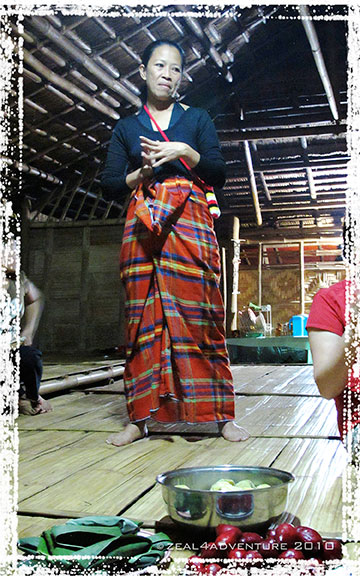
We arrived shortly before dinner with our host Mayang warmly welcoming us with a bowlful of

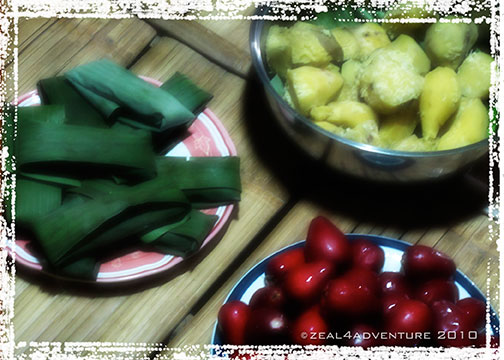
boiled camote (sweet potato), tuwal (macopa-looking fruit), suman (rice cake), and native coffee.  Our succulent late lunch didn’t stop us from devouring what was supposed to have been our snack turned starter.

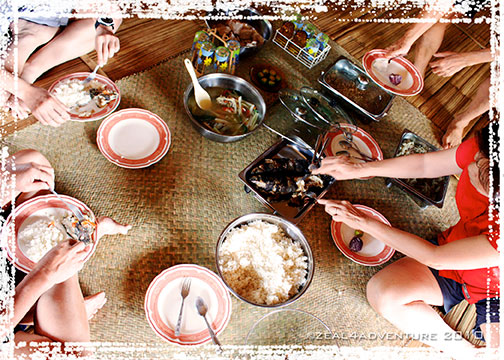
Dinner was a simple yet delicious dish of tilapia in soy sauce set on the floor.  Accommodation whilst in Lake Sebu was a traditional longhouse, Mayang’s home, which she turned into a home-stay.

Photo courtesy of A.Go

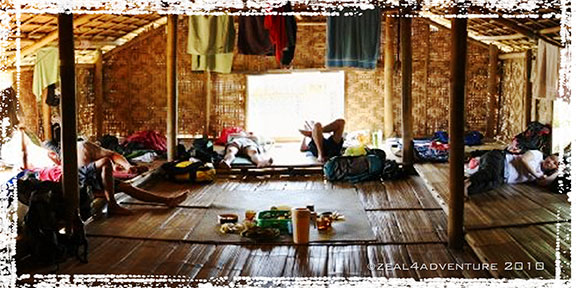
Made of rattan, palm leaves, cogon grass and bamboo, the longhouse is devoid of any furniture, the elevated sides serves as the sleeping zone

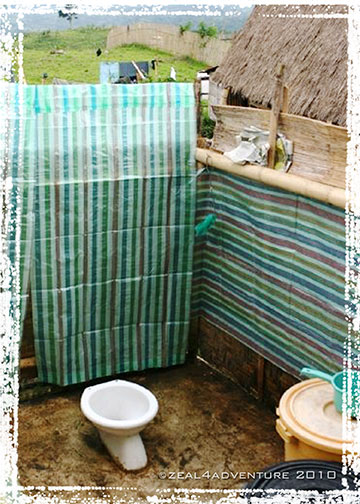
and the center of the house serves as living/dining area.  The bathroom is an outhouse and bathing under the stars, I found out, is quite liberating albeit not an easy feat.

Due to the altitude of around 1,000m the climate can be cold in December and a taking a bath in cold water with a breeze is not really my thing… I love my hot showers.

I was dead tired from the trip; I hit the sack ahead of everyone else and consequently woke up early enough to catch a glorious sunrise.

Contact Details:

Mayang Todi:
Mobile: +639187671063

Five Reasons Why…

You should try Whitewater Rafting at least once in your life.

Credits:  Bannerwoman Designs Worn, Folded Edges, Judy Meibusch Doodle Dot elements, LivEdesigns SSunFun Alpha

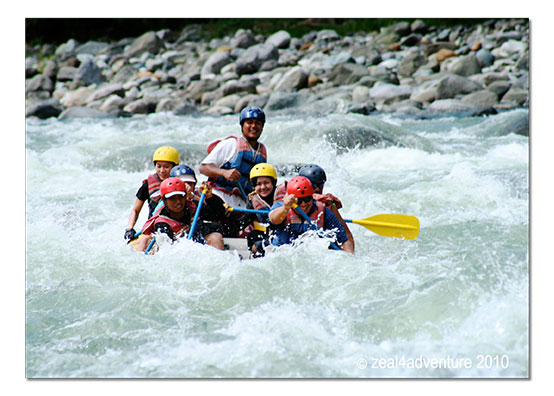
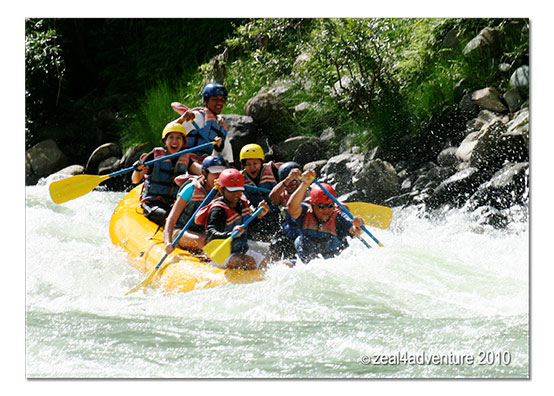
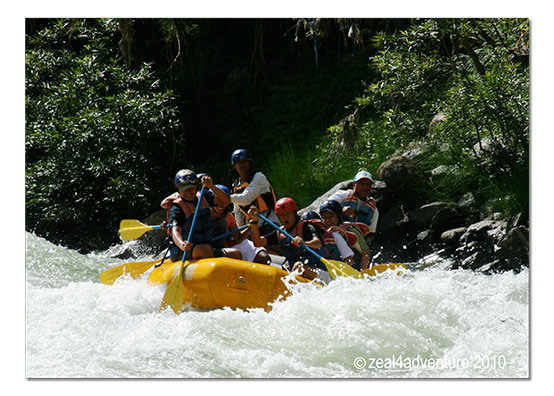
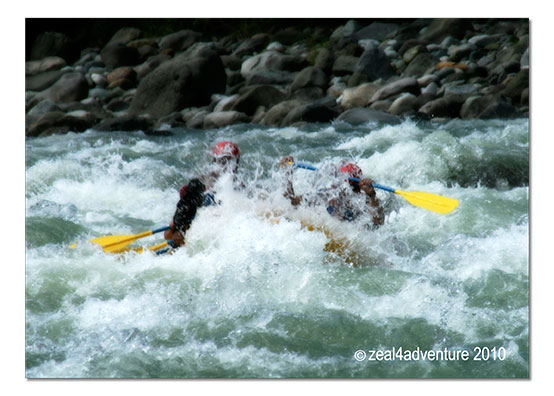
Ever since my first rafting experience in 1999, I was hooked (see here, here and here).  I can’t count the number of times I’ve rafted the Chico, after all as they say, you never run the same river twice.  And I felt it time to share this exhilarating experience with my team.

So for 3 days in January, we found ourselves in Tuguegarao slaving away, devising strategies for the year

with a little bit of team building on the side.

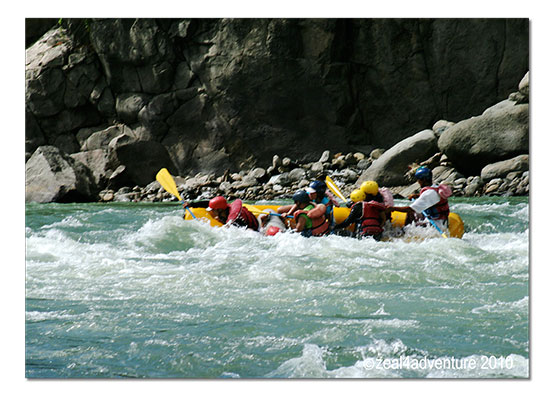
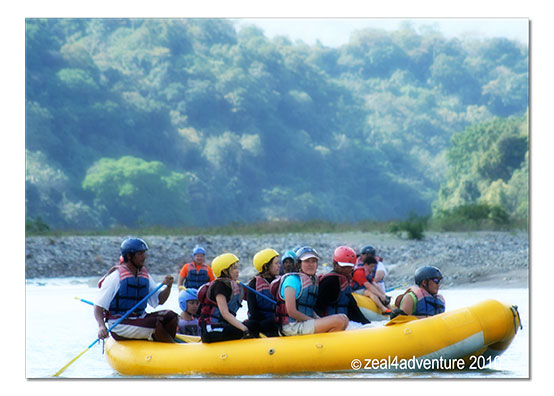
Then on day 3, we spent an adrenalin-filled day at the Chico River in Kalinga.  Here are insights gathered from this experience.

It’s Liberating

When was the last time you’ve tried something at least once in your life?  I am one to try almost anything (I say almost because I have yet to convince myself about bungee jumping) at least once.  Whitewater rafting may not be for everyone but you’ll never know unless you’ve tried it.

I’ve rafted with many first timers with sedentary lifestyles through the years and as often as not, they at the very least, had a blast and in numerous occasions, a wild side they never knew they had is kindled.

Anton Carag, charismatic mover and shaker of whitewater rafting since 1998 at the Chico

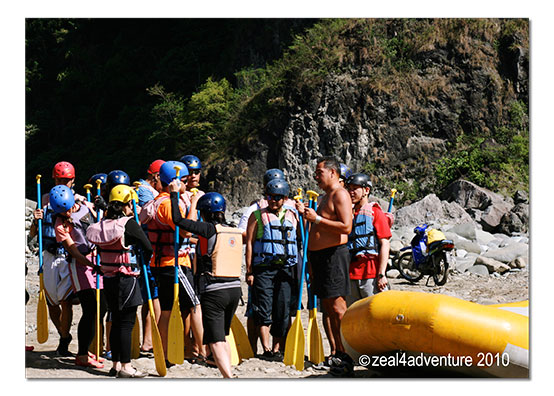
Many among my team were apprehensive before the run and listened intently to Anton Carag lecturing on proper paddling techniques, what to do when one falls off and how to get back on the raft.

Doing a Hi-Five for a job well done

I saw how their fears transformed to confidence after the first few rapids.  They started to have fun.

Some even enjoyed the falls, bringing home stories of how they survived it etc.  It also helps to know that two internationally recognized wilderness specialists trained Anton and his team of guides some 10 years ago.

It Fosters Team Spirit

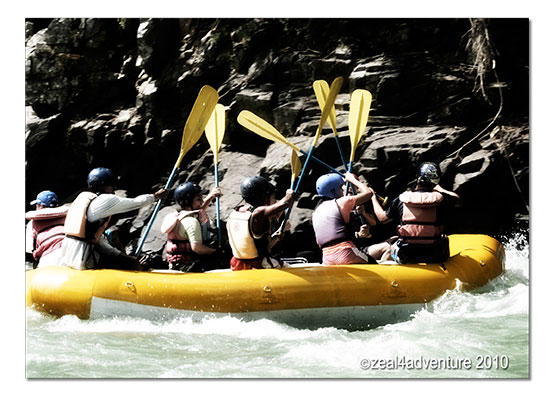
Rafting only works if everyone works as a team.  Listen to your leader and follow exactly the commands.  If the team fails to act as one, the raft may capsize.  If you’re not prepared to drink gallons of water, you probably don’t want this.   It’s also a hassle getting back on the raft and if the water’s low, you will most likely be going home with bumps and bruises as a remembrance from the river.  But hey, isn’t that proof of that adventurous spirit you thought you never had?  So listen to your guide and be in sync with your teammates.

It’s Actually Safe

First of all, the guides (mostly natives of Kalinga) know the river like the back of their hands.  And to reiterate, top-notched, seasoned river guides with international experience trained most of them.  But in case you didn’t follow instructions or to put it nicely — misunderstood the guide’s instructions and you fall off or worse, the whole raft flips, not to worry because the equipments, most especially the vest you are wearing (I can only speak of AEPI’s as I am not familiar with the other outfitters) is US-certified safe.  This means that when you’re under, the vest is buoyant enough to carry you out.  Sometimes with a little help from you, but hey again, sometimes you need to work a little harder eh?

It promotes Eco-tourism

And provides jobs.  Whitewater rafting is part of the new adventure and eco-tourism that the Philippines have to offer.  Most of the guides used are from neighboring communities and the more tourists, more jobs and other business opportunities are not far behind.  It also teaches us to respect and appreciate Mother Nature.

It’s Gorgeous Out There

Spectacular views of the Cordillera Mountains coupled with beautiful riverbanks and clear waters (not always the case though) surrounds the whole stretch of the run.  Unspoiled.  Pristine.

Except for raging rapids that never fails to stir up your adrenalin, the only other sounds you hear are chirpings of birds and the flow of the river.  Serenity in a most natural setting.

Excellent Food at Casa Carag

The 6th reason why you should try whitewater rafting with AEPI.  The food is just extraordinary.

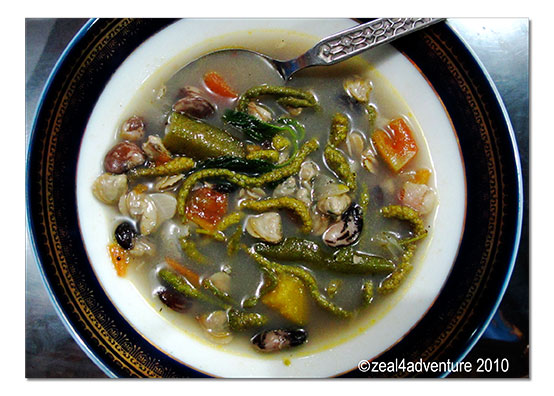
Nothing is ordinary, from the longganisa, Salinas and hot native chocolate for breakfast, to the local Ibanag dishes such as their pinakbet and inabraw.  It’s all good!

So, at the first chance of rain (which is sadly a long way off), book a package with AEPI and experience the ultimate adventure of your life.  Season starts in August and ends in February.

*  All photos at the river courtesy of AEPI.

Contact Details:
Anton Carag, Jr.
Mobile:  (63)917-532-7480
Landline: (6378)844-1298
Email:  aepi@whitewater.ph; anton@whitewater.ph; whitewater1ph@yahoo.com

The Center of the Center: Our VIP experience

Hi Nemo!

Let’s take a break from Alaska and allow me to introduce you to the center of the center of Marine Biodiversity – yes you read right.  It’s  a place with the greatest concentration of marine species in the Indo-Malay-Philippine Archipelago, Verde Island Passage (also known as VIP).  In 2006, the Philippines was declared to be in the center of marine biodiversity in the world and VIP as the “center of the center”.

Having heard this, it had been my desire (and a thrill when it finally happened) to explore the world where sea turtles, giant groupers, whale sharks, marine mammals as well as giant clams abound not to mention coral reef formations that hosts 60% of the world’s tropical fishes.

Situated between Luzon and Mindoro, the 1.14 hectares marine area is home to numerous businesses and has great potential for eco-tourism development.

Must be one of the oldest resort in Galera

Known for its beautiful beach and dive sites and a popular destination among local and foreign dive tourists.  Numerous resorts lining the coastline of Batangas Province threatens its underwater treasures from coastal infrastructure development, pollution and destructive fishing.

Fishing, being one of the major activities of coastal communities in the VIP, has been recently held at bay.  Soon after its Smithsonian declaration, President Arroyo declared it a marine sanctuary and a national protected area.   🙂

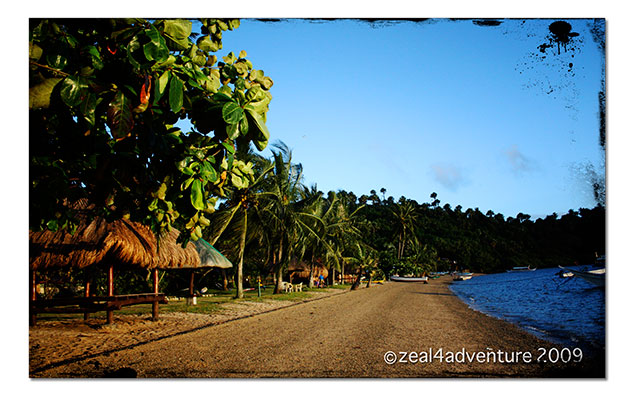
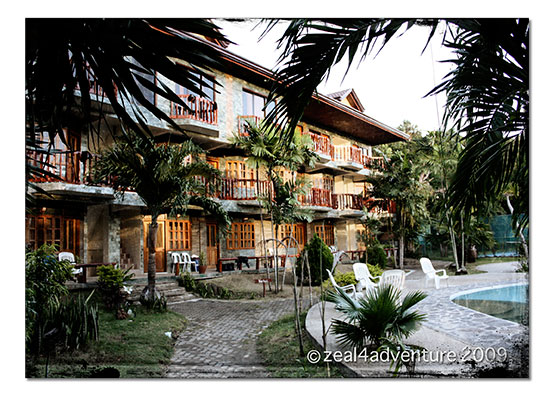
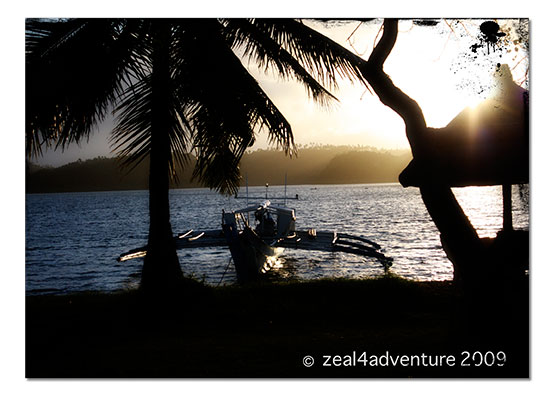
Located not too far from Puerto Galera, we rode a basnig from the Anilao Pier which took us to Sandbar Beach Club in Puerto Galera which became our base and home for the night.

Not exactly a dive resort, we had to gear up in the garden.

Our rooms.

The pool.

The dive boat ready for us on an early morning dive.

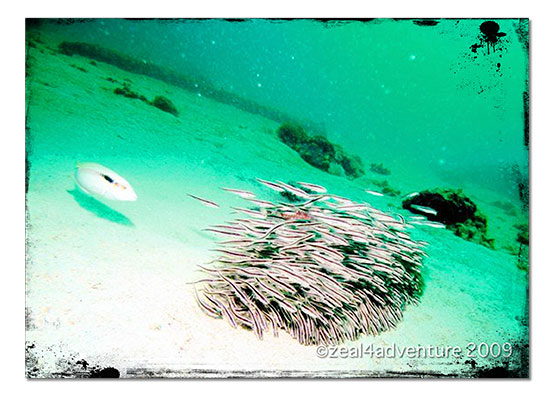
Some of the dive sites explored during our 2-day dive:

Verde Island Wall (Agapito Island)

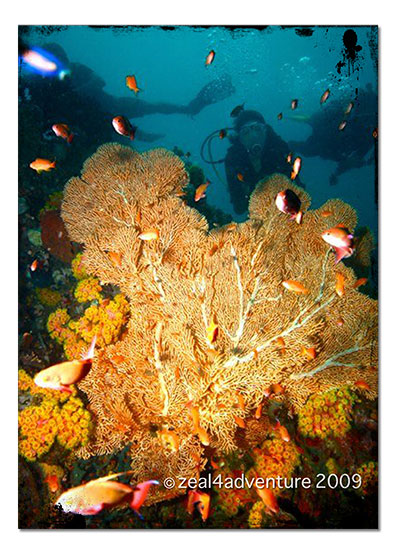
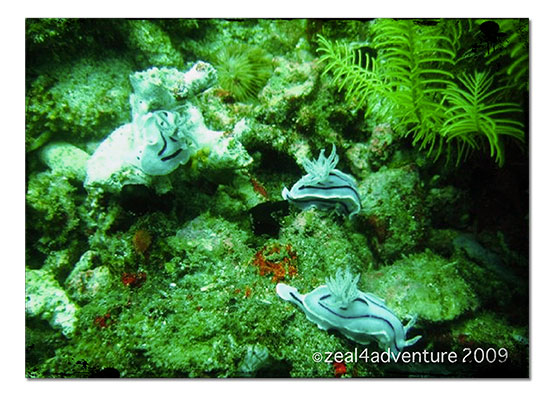
By far the most well known and interesting site in Verde Island.  Also called Agapito Island from the rocks sticking out of the sea.  The wall descends almost vertically to unfathomable depths.  It boasts of a submerged mountain with a pinnacle that drops off to 100m or 330ft.  It is home to eels, nudibranchs, surgeon fishes, fusiliers, batfishes, jacks, giant gorgonian fans and garden of corals.

Giant gorgonian fan

Nudibranchs

Sabtang Wrecks

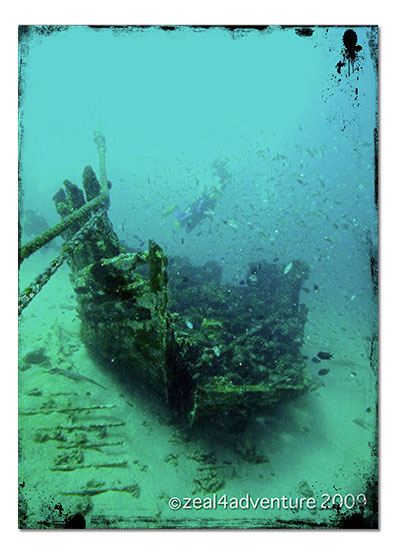
An old Vietnamese fishing boat sunk off the front of Sabtang beach sits upright in 18M on a sandy floor.

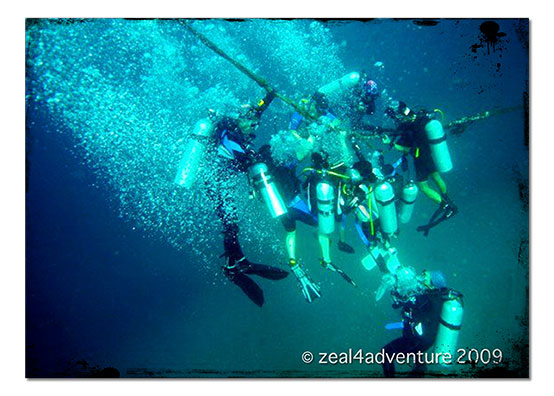
Traffic underwater.

A mooring line is attached to the bow of the wreck, which makes it easy to descent or do safety stops with.

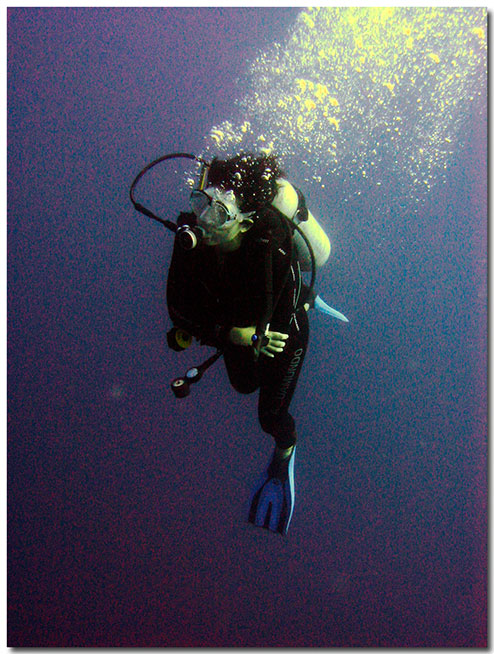
Batfish and me

A resident school of bat friendly batfish and large surgeon fish make this a popular dive spot.  Surrounded by sand, the wreck has attracted many eels, damsels, and trumpets.

A Peacock Flounder

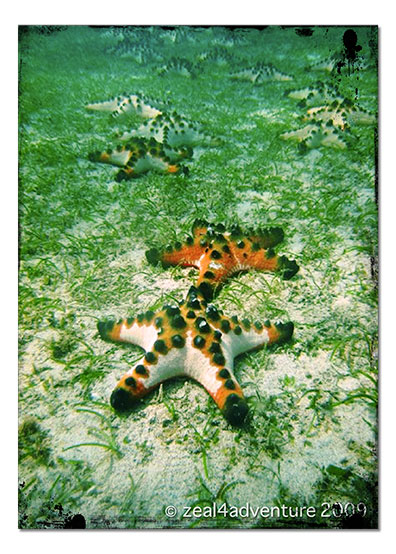
A sea of starfish

Moray Eel

The Canyon

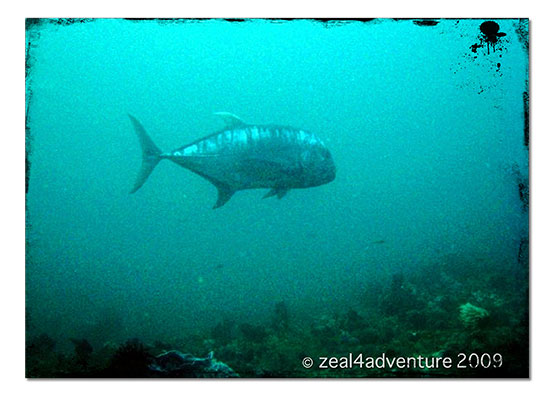
A giant jack — we saw a school from the same dive

Arguably Galera’s best dive site, a high voltage drift dive through deep canyons alive with immense school of sweetlips, barracudas, groupers, snappers, trevalies, tunas and jacks.

Lion Fish

A relatively quick descent is recommended as one enters the water.  A challenge for those not use to strong currents at depth.  Rewarding nevertheless.

Coral Garden

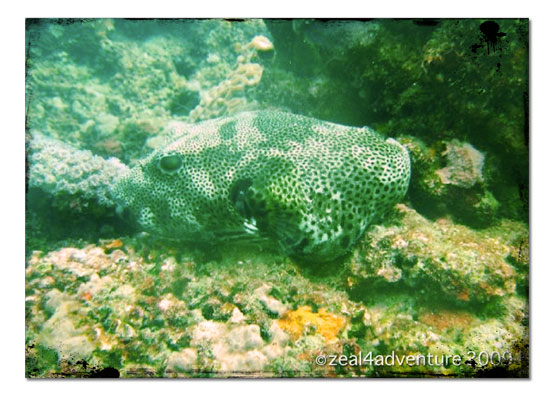
A Puffer

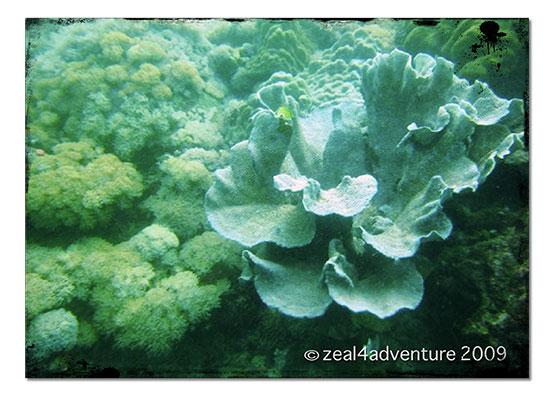
Colorful and diverse, it brings together unique corals, fishes, occasional white tip sharks and plenty of micro marine life.

The gang!

Over too soon but it was a great weekend adventure.  Happy to be ticking this off my “must see” list.

Explore more worlds in My World. To know more about Verde Island, click here.

Credits:  Underwater photos by R. Formoso and A. Vidad.

Sandbar Boquete Beach Club
Boquete Island, Sto Niño,
Pueto Galera, Oriental Mindoro
Contact details:  09156518415

The Waiting Game

The-waiting-gameCredits-  Templates:  Katy Larson 365 template o3;  Papers:  Oscraps Moonlight papers ninascrap 2 and suec3.

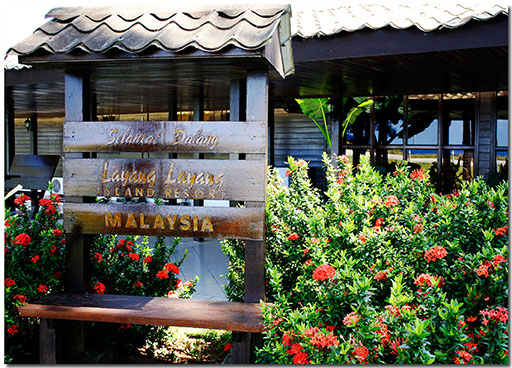
Each day we’d set out to search for hammerheads.  They were the reason we spent 5 days in Layang Layang, off the coast of Sabah, Malaysia where hammerheads (schools of them) supposedly swim this part of the ocean from February to May.

Layang-2-resort

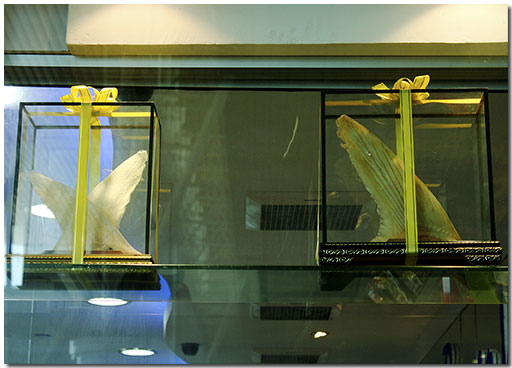
They were however seemingly elusive and hard to find.  Heard that the last sighting was almost 2 weeks prior to our arrival.  Have we caught the tail end of the season?  Perhaps.  Hammerhead sightings have been dwindling every year, according to our dive masters and they believe that it is because of 2 things, global warming and lack of conservation efforts.  The hammerheads like the cold and as the water temperature rises, they go deeper.  Another very serious issue is conservation; most of the sharks (hammerheads included) are targeted (read: killed) for their fins to use as ingredient for the popular Shark Fin’s soup, a delicacy that is served in many Chinese restaurants all over the world. 

shark's-fintaken at the KK airport – no wonder we can’t find ’em!!
This cruel “finning” is the cause for the declining population.  The United Nations Food and Agriculture Organization says 100 million sharks, skates and rays are killed every year.  The cruel finning refers to the practice of cutting off fins only and discarding the body.  When thrown back into the sea, they either bleed to death or drown as sharks need their fins to swim and they need to go forward to get oxygen.

A brief sighting was already a cause for celebration and a right to brag.  We saw a silhouette of ONE.  That didn’t count (at first); we were expecting schools in clear water, not a shadow of it.  In the end, it mattered that we at least saw ONE!  Others were completely deprived of a sighting.  4 days diving in Layang Layang is equal to 12 dives, mostly out in the blue.  Quite frustrating, if you ask me.

Layang-2nd-day-012

We waited patiently and were hopeful till the very end that maybe, just maybe our luck would change… it didn’t.  A school of Devil Rays highlights this trip with no pix to boast, I’m afraid.  So maybe, this too does not count, eh?

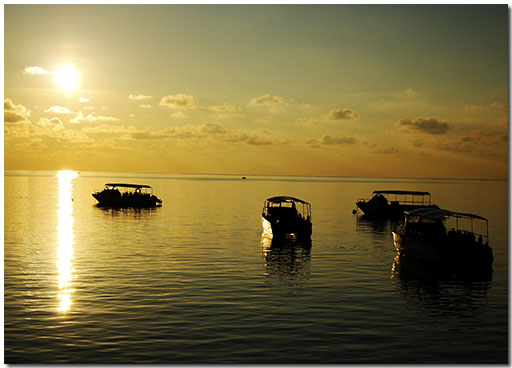
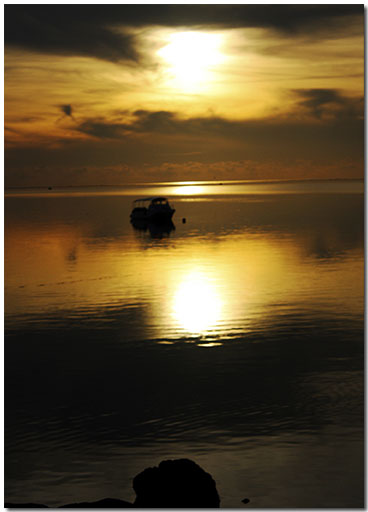
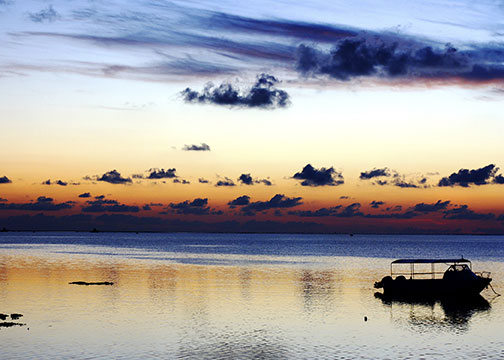
But basking in the nightly sunsets as glorious as these,

sunset-3


sunset-4


sunset-5


sunset

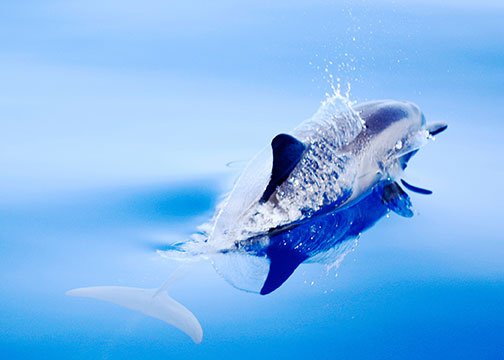
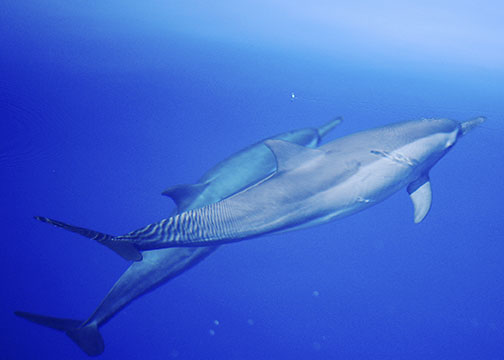
watching these dolphins, tons of them, swimming along our boat’s bow,

dolphin-leap


dolphins

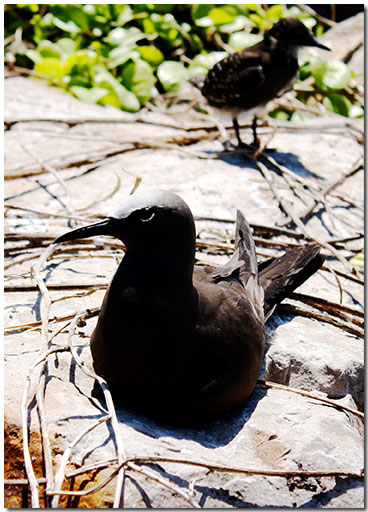
and viewing these migratory birds finding refuge at a bird island sanctuary off the shores of Layang Layang… 

bird-4


bird1


bird3

these certainly made up for the trip sans the hammerheads.  Yes.. it certainly did!

This is a big part of my world, our world.  We’ve only got one, so let’s do our share in keeping it alive and healthy.  To explore more of our amazing world, hop on to That’s My World.

Pretty in Pink!

FlamingosCredits-  Papers:  Oscraps Moonrise Paper Dtope 2, Jennilyn 3, Dyoung 3;  Embellishments:  Oscraps Moonrise Bling 3-awall;  Brush:  JSprague Stitching

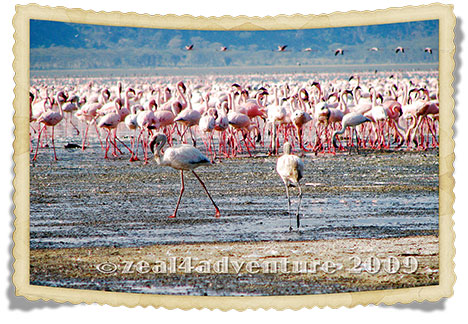
The lakeshores of Lake Nakuru literally turn pink as millions of flamingos feed on its highly alkaline lake, set in a picturesque landscape of acacia woodlands and grasslands next to Nakuru town.

Nakuru

dramatic entrance

A very shallow and strongly alkaline lake, it is world known as feeding grounds of both lesser and greater flamingos and one of my favorite parks in East Africa.

flamingos

The main reason for establishing this national park was to protect its huge flocks of the lesser flamingos.  Despite being the world’s most numerous flamingos, this bird is classified as near threatened due to its lack of suitable breeding site. Depended on rainfalls, the lake keep decreasing since 1997.  The ecosystem is threatened by annual drought.

flamingoes-3

shallow to dry lake

The second most visited park in Kenya, this small park has been dubbed “the greatest bird spectacle on earth” when thousands of flamingos landed into the lake years ago.  It has become a favorite destination for not only ornithologists but also bird and wildlife enthusiasts.  And the flamingos are definitely the reason to be in Nakuru!

flamingoes-2

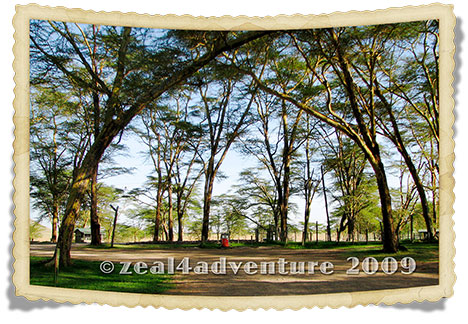
Lake Nakuru National Park is situated approximately 2-hour drive away from Nairobi.  A gentle, billowing terrain with open bush and woodlands dominates it.  It is also one of the saline lake systems lying in the Great Rift Valley.

nakuru-enroute

enroute to Nakuru

Famous for its abundant birdlife…

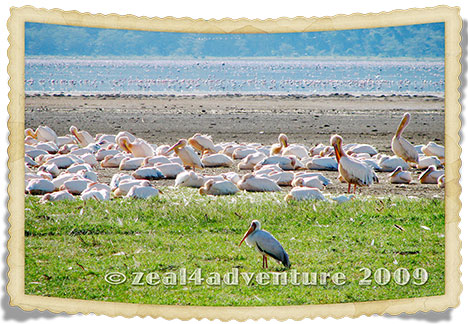
pelicansPelicans

Lake Naukuru also has waterbucks, impalas, and hippopotamus.

waterbuck

waterbuck

Game viewing is relatively easy:  buffalos, leopard, lions, and the endangered Rothschild’s giraffe…

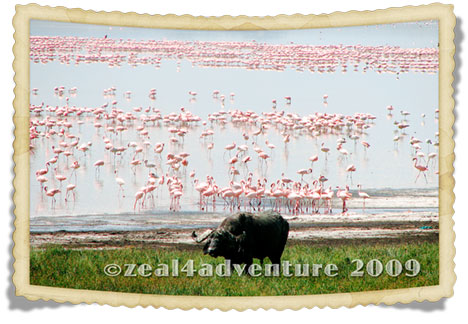
buffalo-flamingo

cape buffalo and the flamingos as its backdrop

giraffe

not a Rothschild’s giraffe

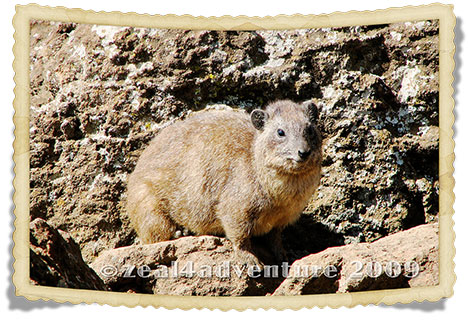
the bushlands offers eland, steenbok, impala, while the hyrax occupies the cliffs.

hyrax

hyrax

And speaking of cliffs, the best view of the lake is from Baboon cliff.

flamingoes-from-cliff

view from the top

Lake Nakuru is also home to the Kenya Rhino Conservation Project and therefore an excellent place to see rhinos.  The woodland and forest are now home to both black and white rhino.   Following the ravages of poaching, in the late 80’s, only 2 black rhinos remained.  Creating a rhino sanctuary within the park and reintroducing a breeding herd have recognized the park internationally as an important conservation area.

white-rhinos

white rhinos

Lake Nakuru… not to be missed when in Kenya.  It was definitely one of the of the highlights of my African adventure!

Frame credit:  Oscraps Moonrise frame – awall