A Secret Hideaway… Not for long

Credits:  Papers from Me Designs Christmas Treasures mini-kit (berry, light holly and light holly pattern);  Elements from Moninda Fall Mediation kit; Ribbons by Traci Brennan of Prairie Woman Designs

By some fortunate stroke of serendipity, we came to learn of a cove somewhere in Palawan that evokes nothing but serenity.  I got a call from A, “cancel your holy week trip, we’re going to Port Barton”, he insisted.  At a bar in Puerto Princesa early this year, he strike up a conversation with an Englishman who owns a resort off Port Barton.  It’s a “private, protected bay”, he said.  And with that, I canceled my Easter break dive trip.

Secret Paradise Resort is a 52-hectare nature reserve situated between Sabang and Port Barton in Palawan.

Close to Cacnipa Island (another destination bookmarked for the future), the bay has crystal clear blue waters that are as placid as a lake.

Mark Worsdell met us at the airport.  A kind enough fellow who gave in to our request to have our fill of Pho and Ban Mi at Rene’s Saigon along Rizal Avenue, before heading to the island.  A must when in Puerto.

Full and happy, we ventured northeast to Port Barton, a 3-hour (about) trip by van.  At Port Barton, we took another 45 minutes by boat to the island.

Approaching the resort, I can see why it is called a secret paradise.

Unspoiled, secluded and surrounded by tropical forest with calm waters that invites for a dip right there and then.
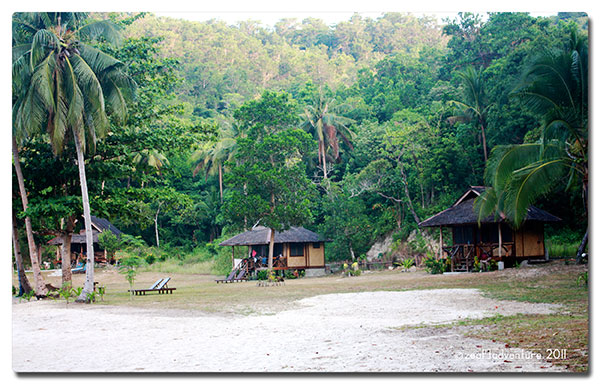
There were 10 of us and we had the resort all to ourselves, occupying all 3 cottages and a bedroom at the main house – that private.  Mark has plans though of putting up more cottages in the future to accommodate more guests.  The place has more than enough space for that!

An Eco tourism resort, it is committed to protect the bay and its marine life, especially the marine turtles that goes to Turtle Beach, one of the 3 beaches of the resort, to lay their eggs.  On our visit, the eggs were buried under the sand still, to the disappointment of my nephew.  The 2 other beaches are Hideaway and Sunset beach – all within walking distance from each other.

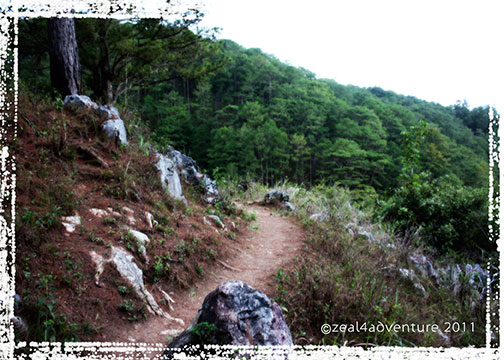
One day, we hiked to a quiet fishing village on the other side of the island – the hike took less than an hour over a rainforest.

At the highest peak, one could have a nice view of the bay.

The village, also a pretty beach minus the tranquil shelter of a cove.

The full moon left the fishermen with not one fish to sell.  We contented ourselves with giant squids instead.

They were off to town to sell their catch but we intercepted and they were happy to sell all their merchandise to us (us includes the resort).  Suffice to note that we had squid for lunch and dinner.

Notice the recycled straw made into curtains —   🙂

The village folks are mostly fishermen and their families hailing from Ilo-ilo (if I remember correctly).  They say that they live a simple but abundant life with little to worry about.  Some of them works for Mark at the resort.
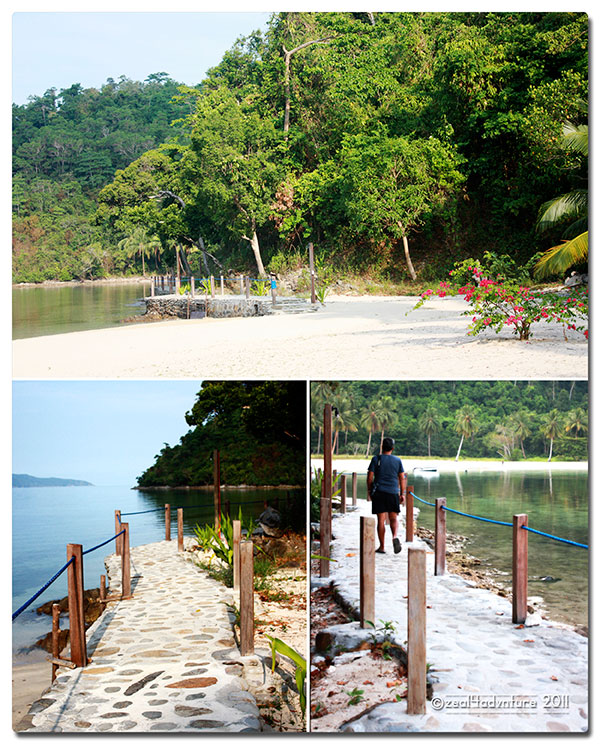
Turtle beach, where the cottages are, has a walkway that connects to Sunset beach where the main house and restaurant is.  Everyday and every night we walk this path back to our cottages,

in between we were in different snorkeling spots of San Vicente and when at the resort,
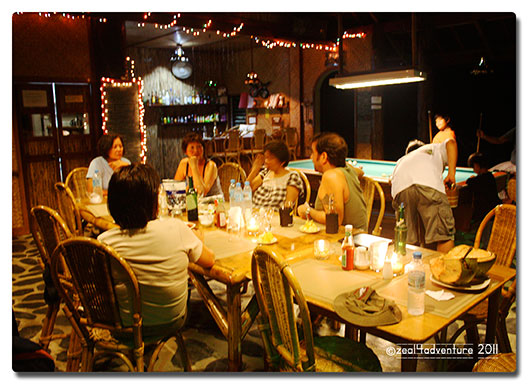
Mark chatting and drinking with ladies while the boys play billiards

we’d hang out at the restaurant chatting or playing billiards till before midnight… when the generator goes off.  There are only 5 barangays in San Vicente, which are partly served by electricity; the rest has to still make do with generators.  But despite being on generator, Secret Paradise Resort provides free Wi-Fi and hot showers – I’ll give them an A for that!
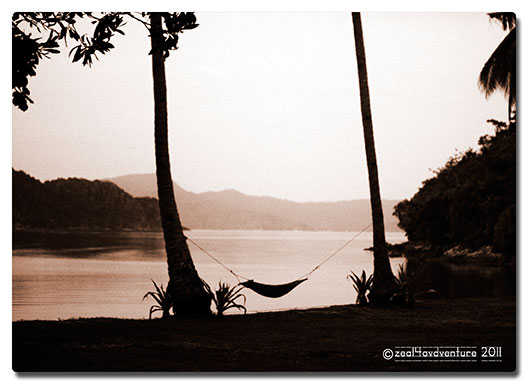
Secret Paradise Resort is definitely worth checking out if quiet and calm is what you’re looking for.
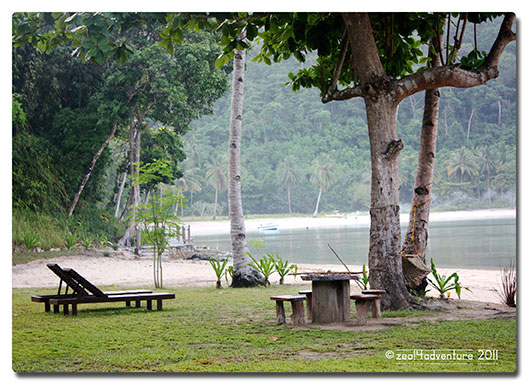
Quiet and simple with a few modern amenities, endowed white sand beach, calm blue waters… it is indeed quite a paradise on earth.

Useful Info:

Getting There:

San Vicente is accessible by bus or shuttle vans from either Puerto Princesa or via Roxas.

By Public Transfers:

From Puerto Princesa to Port Barton – public jeepneys leave between 8-9AM daily from the public market in San Jose.

From Roxas to Port Barton – there is only 1 jeepney that leaves at 12nn to Port Barton.

From El Nido or Sabang to Port Barton – take public transport to Puerto Princesa and ask to be dropped off at Roxas, there is however only 1 jeepney that plies to Port Barton so make sure to arrive at Roxas before 12nn.  Alternatively if you miss the bus, ride all the way to Puerto Princesa and hire a motorcycle to take you to Port Barton.  You can also rent a vehicle with driver from the airport.

From Port Barton – hire a boat from the tourism office or book a boat from the resort 2 days in advance.

Secret Paradise Resort
Turtle Bay, Port Barton, San Vicente, Palawan
Contact Nos: +63 928-339-9446; +63  926-490-8899
Email Address: inquire@secretparadiseresort.com
Picnic In the Woods

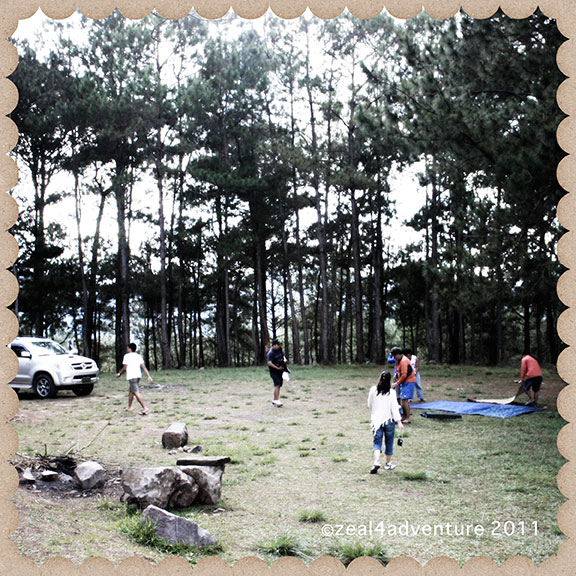
We found our spot, laid out the mats, set up the portable table and chairs,

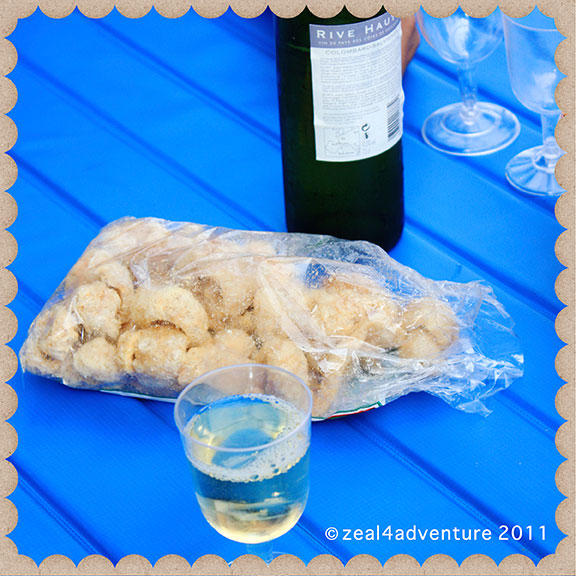
brought out the wine and some snacks, enjoying the open sky, the lovely weather and the great view.

It was a day spent with good friends, can’t ask for a more relaxing time.

We chatted, we slept, we ate (again), and we drank –

a perfect follow through from that wonderful morning trek.

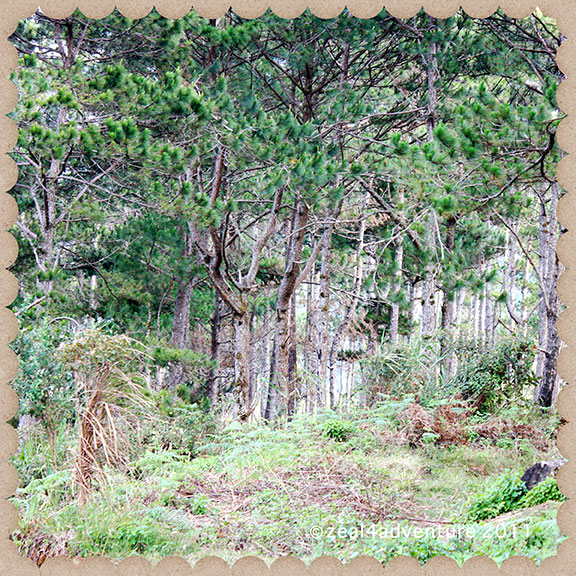
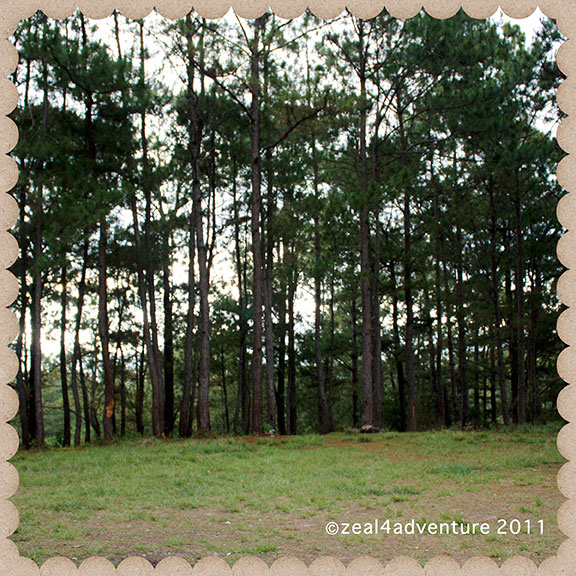
The woods on the way to the grounds.

The Kiltepan viewpoint boasts of great sunrises and most would make their way there before daybreak – a must too, actually.

But before sundown, you’ll get a perfect view of the terraces sans the clouds and the place to yourself.  A great picnic ground for those who refuses to be stressed about getting up at 4AM and prefer to unwind before dinner.   🙂

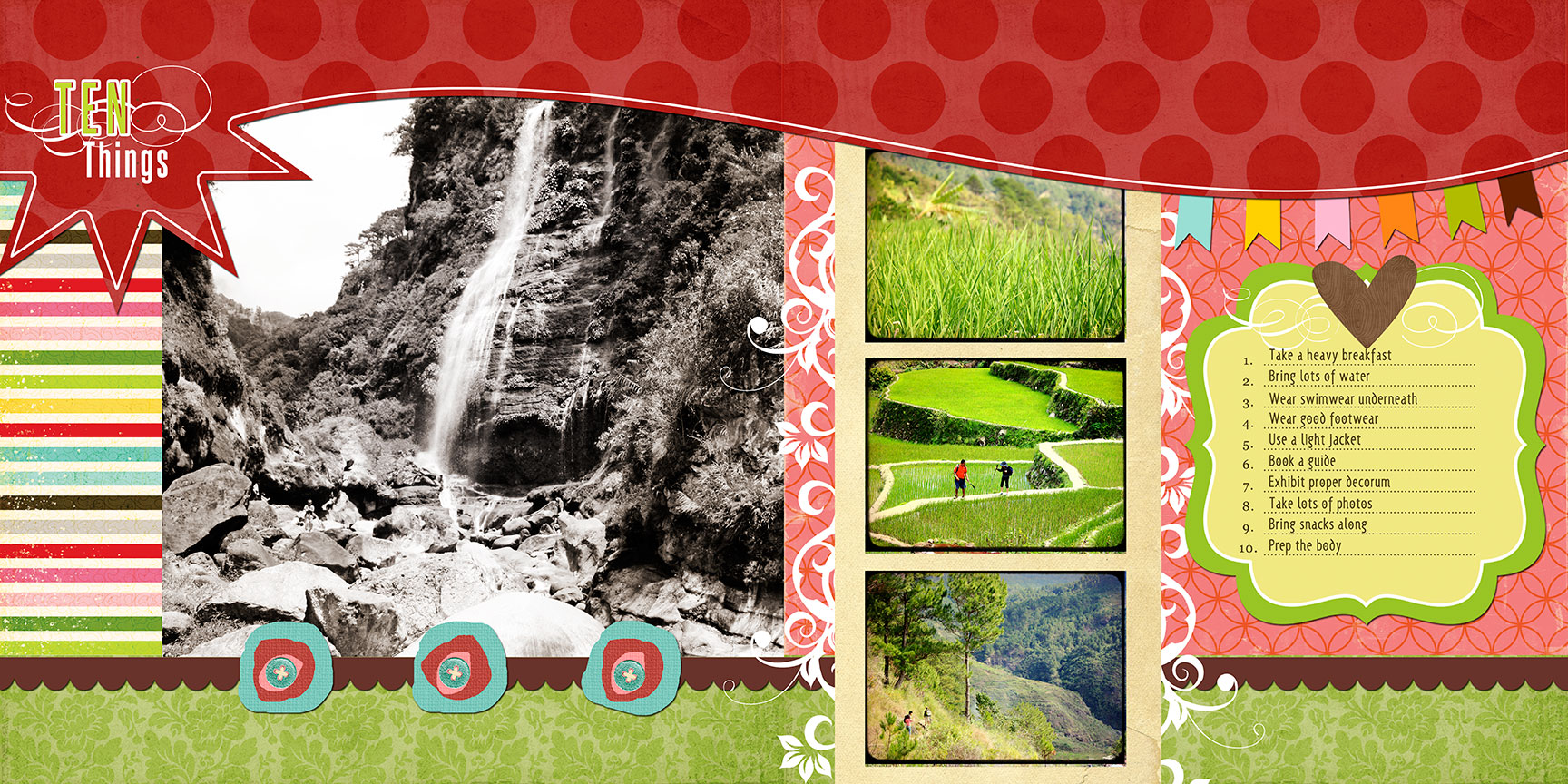
Bomod-ok Trek: Ten Things Before

Credits:  All materials used from JSprague’s Digi in Deep Lesson kit.

A visit to Sagada is not complete without doing one or two of its more popular activities –

trek to Bomod-ok falls, explore Sumaging cave or

traverse to Lumiang.  If you are a thrill-seeker, than you MUST do all three and more.  If, however, you’re not as daring,

I would still recommend venturing out to the falls, if only for the scenery.

If doing such a thing is stepping out of your comfort zone, here are some tips on how to prepare for it and what not to miss while at it.  You’ll never know what might spark after this experience.  One has to start somewhere, I certainly did and trekking these terraces started my love for the outdoors more than a decade ago.

1. Take a heavy breakfast

Lots of carb.  You’ll need the energy – for sure!

2. Bring lots of water

You’ll want to hydrate even if you don’t feel the heat.  Walking 3-4 hours even on cool weather will definitely make you sweat.

3. Wear swimwear underneath

I’m a sissy.  I could never brave the icy water.  The refreshingly blue pool however entices many and you might be one of them.  Be prepared.

4. Wear good footwear

Nothing ruins a good trek more than the wrong footwear.  Make sure you use a comfortable pair of walking shoes preferably with good traction.  I discourage using Crocs, as much as I find them comfortable – it is not made for trekking.  A good pair of rubber shoes is fine.

5. Use a light jacket

Unless it’s sometime between Nov-Feb when the weather is coldest, a light rain jacket should suffice to protect you from the wind and keep you dry when it rains.  A thick jacket will be too hot once you start to perspire.

6. Book a guide

Very important.  Even if it is the nth time to trek the path, one is still obliged to register at the Sagada Tourist Center near the town hall and book a guide for the group.  This is to make sure that everyone is accounted for after every activity.

7. Exhibit proper decorum

Talk to the village folks, don’t just snap away.  Give way to uphill trekkers and those carrying heavy stuff.  Also, don’t let the faster trekkers intimidate you, let them go first.

8. Take lots of photos

You’ll be walking along the terraces with the mountains on the background,  you’ll kick yourself for leaving that camera behind.  There are pretty sites after pretty sites so don’t forget the camera.

9. Bring snacks along

I prefer trail mixes to chips – they’re healthier.  I combine mixed nuts and dried fruits (I like raisins, cranberries and some dried mangoes cut into bite-sized pieces).   This will get you by until lunch.

10. Prep the body

Prior to the trek, walk more either around your neighborhood or on a treadmill.  This way, your body will not take too much of a beating after a wonderful adventure.

The Way to Bomod-ok

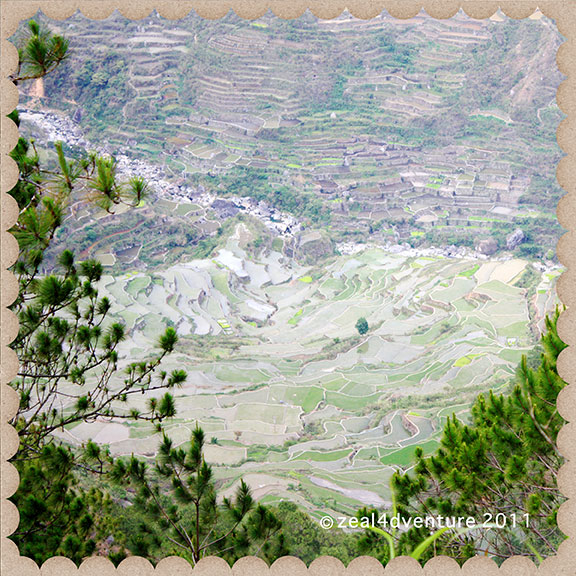
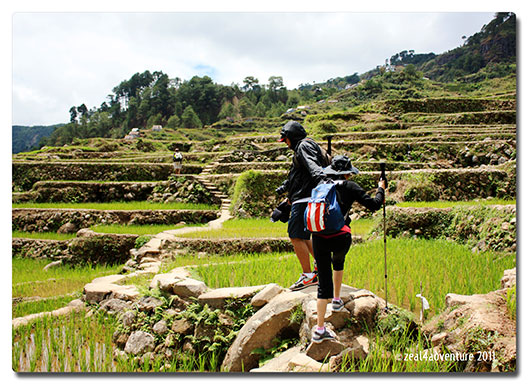
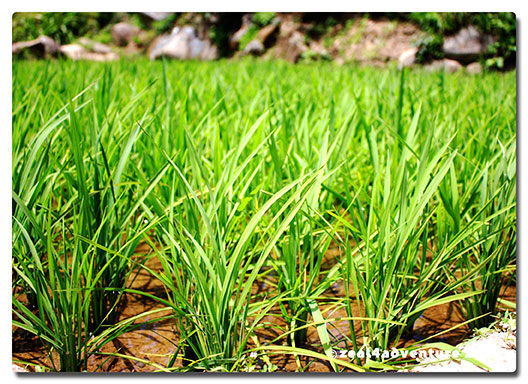
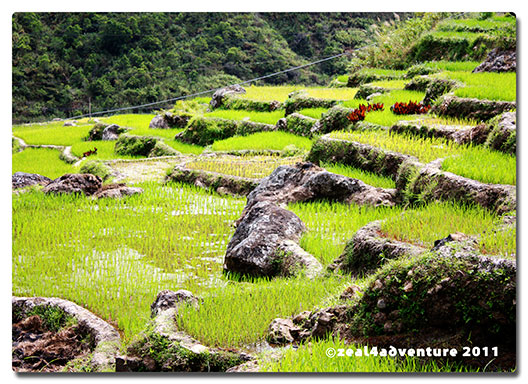
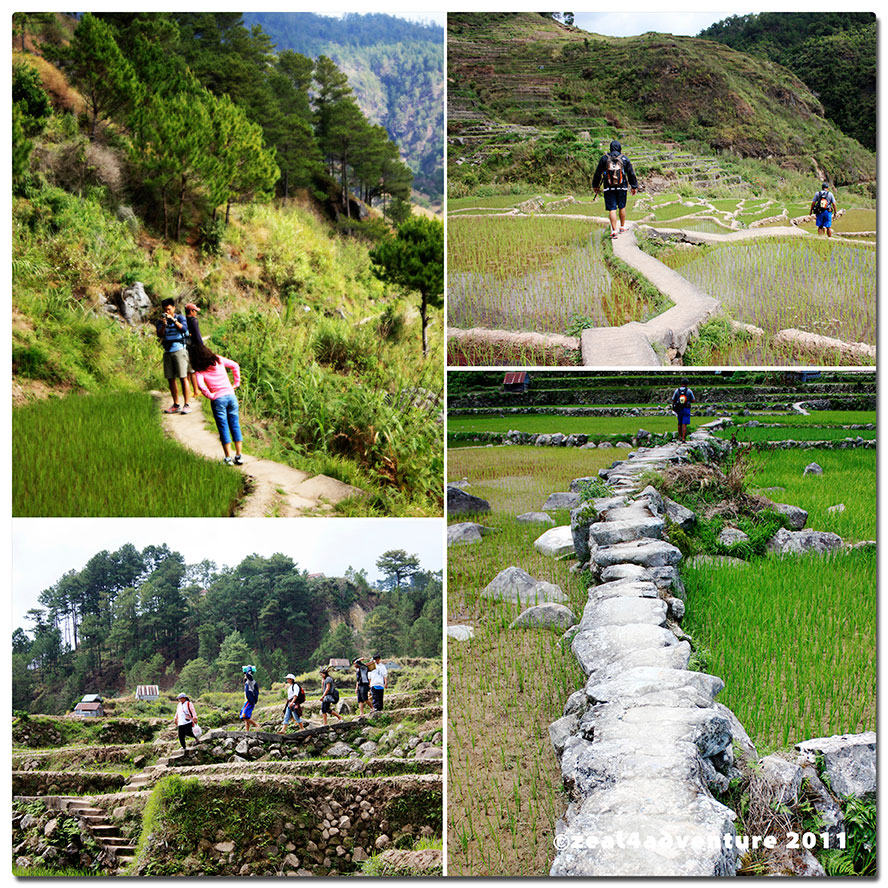
This looks like an ordinary rice plantation, zoom out a bit and it’s no longer so ordinary.

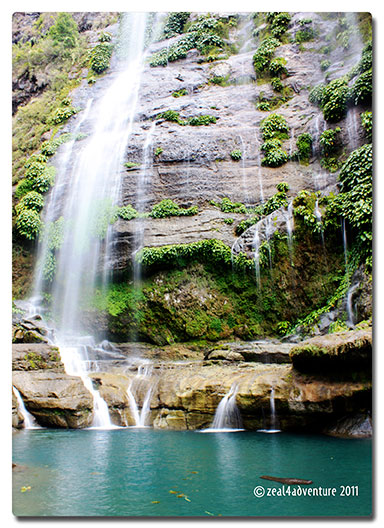
Zoom out further and you will see why I love trekking to Bomod-ok falls, sometimes called the “big falls”.

The falls can be blah at times – I say this when it’s the dry season and it does not really live up to its name.  Yet, whatever greets you at the end is beside the point… it’s the journey that I enjoy so much.  It starts at the basketball court of Banga-an village passing through several other villages.

The last village, Fedelisan, is where you will have to register and pay a fee of Php 10 to pave and maintain the trail.

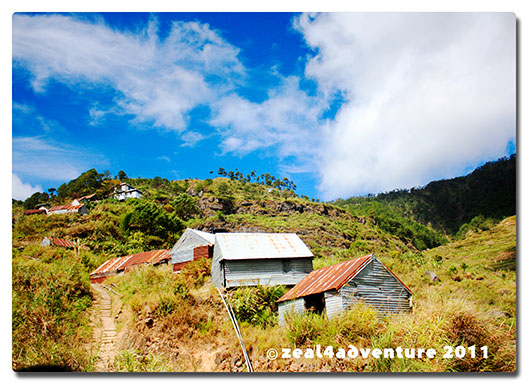
I like hanging out a bit at the village, the people are friendly and the kids adorable.

The different trails along the way.

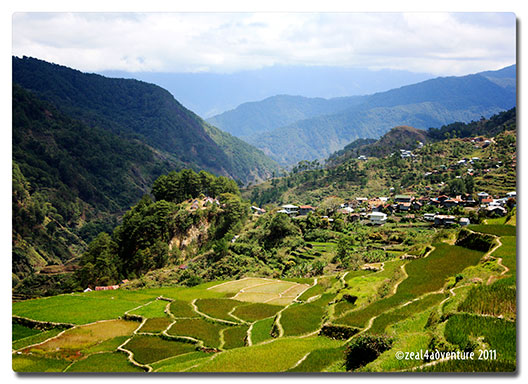
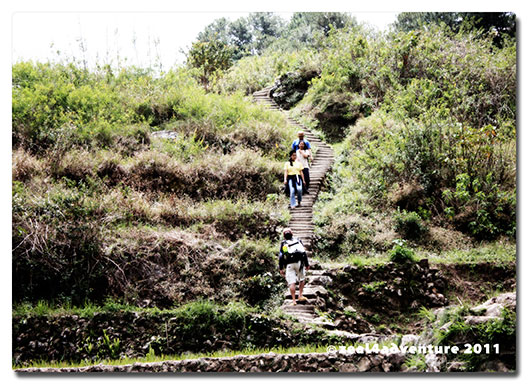
Having walked this trail so many times, I was amazed at how easy it is to navigate through the rice paddies today.

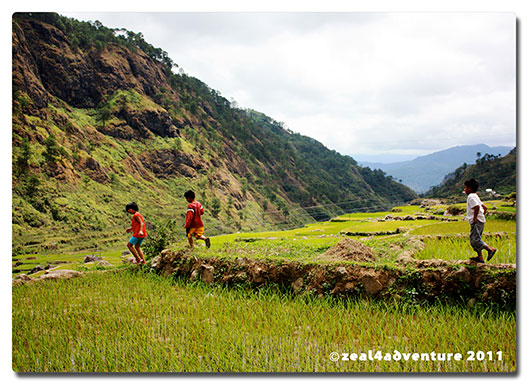
Just another playground for the village kids — running around the “unpaved” path.

I remember having to balance myself as I make my way through the wet rocks that was once the trail.   So methinks Php10 is not asking for a lot with the obvious improvements.  But I digress…

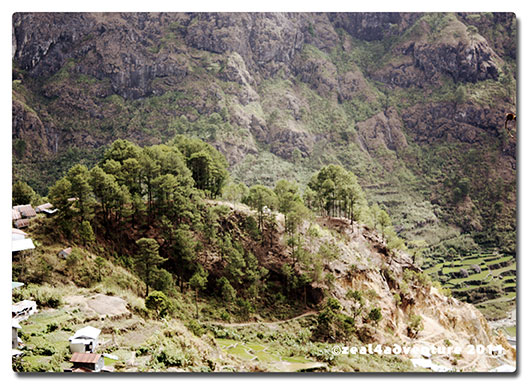
Pass the village is a spectacular view of the Fedelisan terraces – one of my favorite sites, truth to tell.

From here to the falls, you will ooh and aah from the different landscapes along the way except for an eyesore I spotted on this recent trip –

gold mining, I was told.

A couple daring kids running around on their birthday suits having loads of fun.

Once you reach the falls, what will greet you will be tons of people and kids who made the falls their playground.

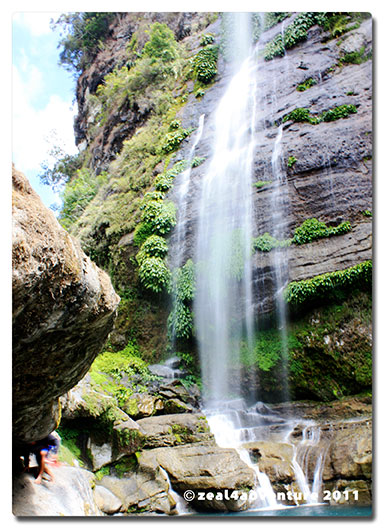
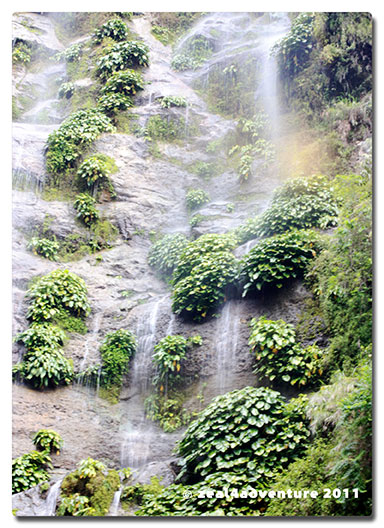
The falls this time, albeit not the strongest I’ve seen, is a pretty sight.

Swimming is allowed if you dare dip into the freezing water.

Walking through the sceneries makes the 3-4 hour trek (depending on your fitness level) a breeze.

Even this is forgiving once you reach the top.

We always like ending the trek through a village called Aguid because its terraces are just so awesome.  From Fedelisan village, take the right trail to get to Aguid.

Less of the cemented walkway and more of the dramatic twists and turns of the rice paddies.  Awesome… but I said that already.

This halo-halo is different as it has macaroni in it — interesting just because it isn’t as sweet owing to the tasteless pasta.

At the end of the trail is a halo-halo stand.  Gotta have some of those to complete your whole Bomod-ok experience.

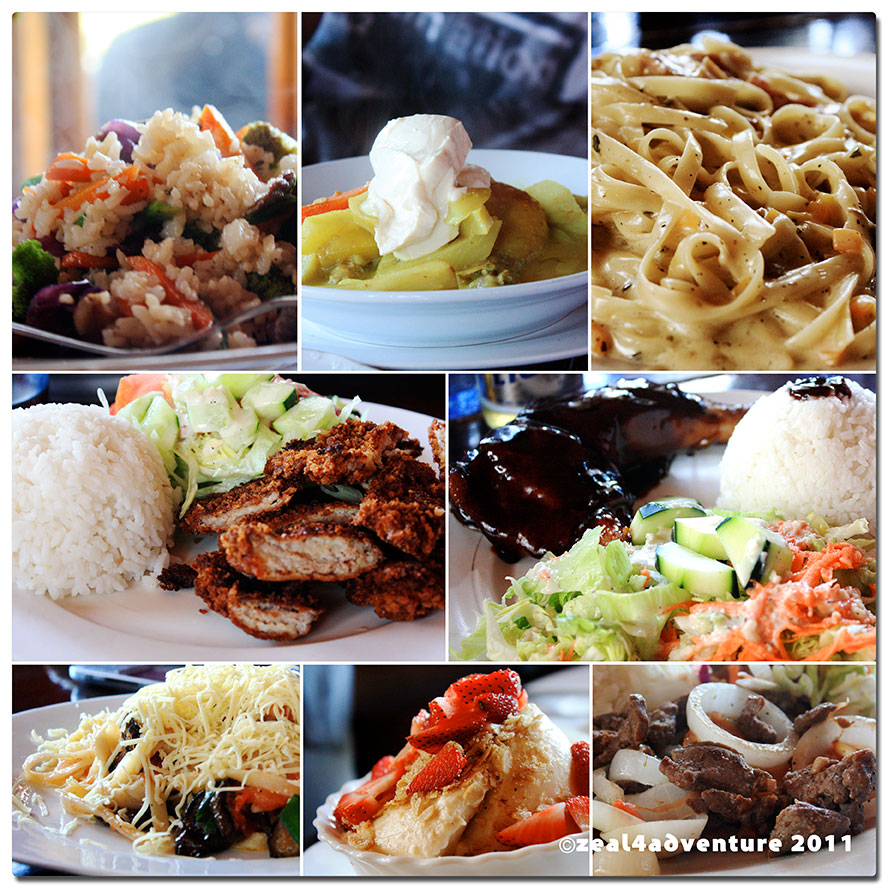
We capped our morning adventure with a delectable lunch at Yoghurt House. 

A cozy café in town that serves more than just superb yoghurt.  See why I love it so much here.

Sagada: Echo Valley, Hanging Coffins et al

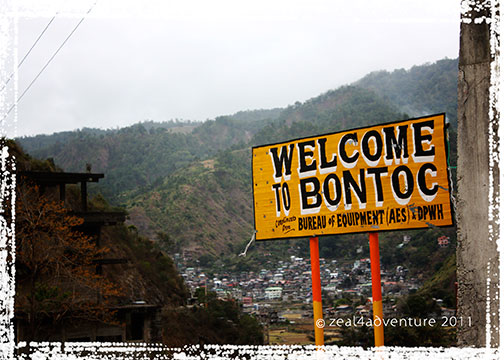
When we passed this sign, my heart skipped a beat because in just another hour or so, I will be re-acquainted with my favorite town.  The town I want to retire in, I always say.

When I need to de-stress, Sagada comes to mind.  Or when I find myself without a place to go on a long weekend, Sagada comes to the rescue.  But truth be told, I don’t really need a reason to go to Sagada… for more than a decade now, I find myself there just because I miss the smell of pine, the food or the bucolic serenity (as shown here, here and here).

I lost my heart to Sagada some 17 years ago.  Although less rustic than it was then while more and more tourists are seen each year, Sagada remains to be a top choice and a go-to to recharge.

And St. Joseph Inn still is a favorite lodging place. We like the cabins but the rooms are perfectly fine too.

It has become some sort of tradition, if I may call it that, to hangout – finishing a few bottles of wine or beer at the comfort of our cabin.

St. Jo is at the center of town and just a stone’s away from St. Mary’s Episcopal Church,

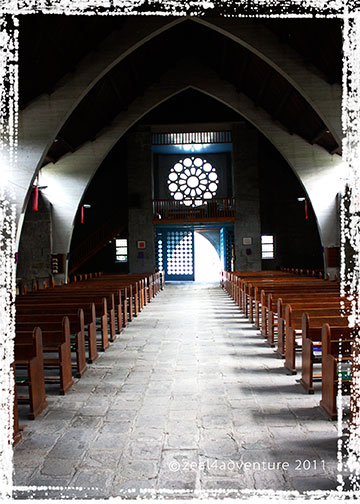
a charming little church with beautiful stained glass windows built by the Anglicans.

On certain times of the day, the light coming in from these windows makes for a dramatic interior.

Because it takes only a short walk to Echo Valley from St. Jo, we like visiting it as soon as we arrive.

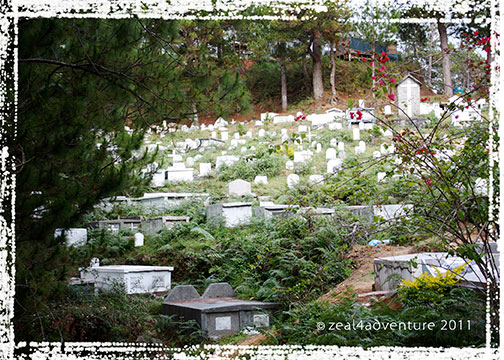
Passed the church is a path that leads to the cemetery

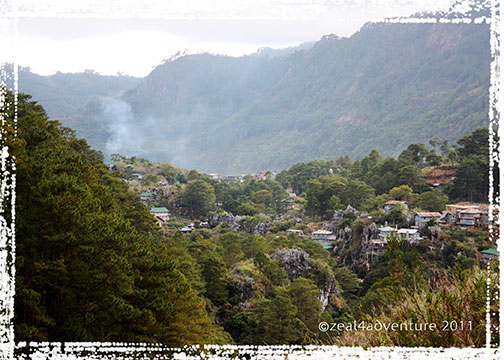
and further along is a dramatic hillside trail to Echo Valley –

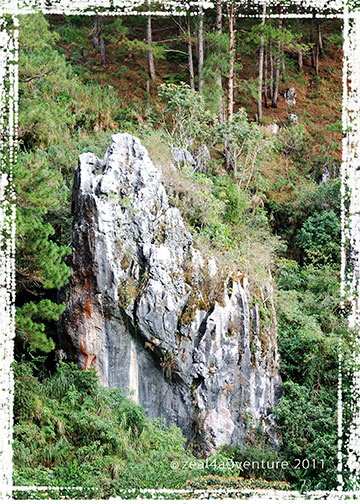
attributable to the weather-beaten limestone formations scattered around the forest.

One can hear a very distinct echo at a certain point on the hill hence the name.

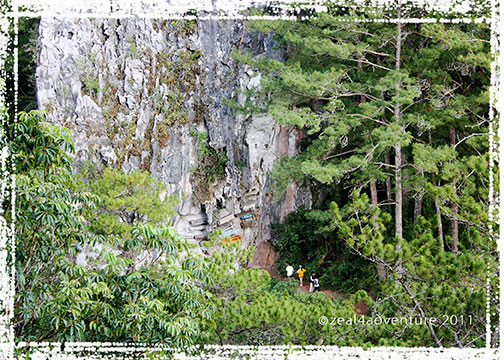
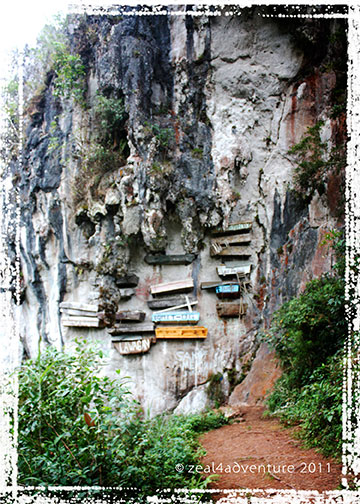
At one point, one can see from a distance, coffins hanging from the limestone walls.

A trail will lead to it up close. It is a good warm-up hike to prepare for a longer and more scenic one the next day.

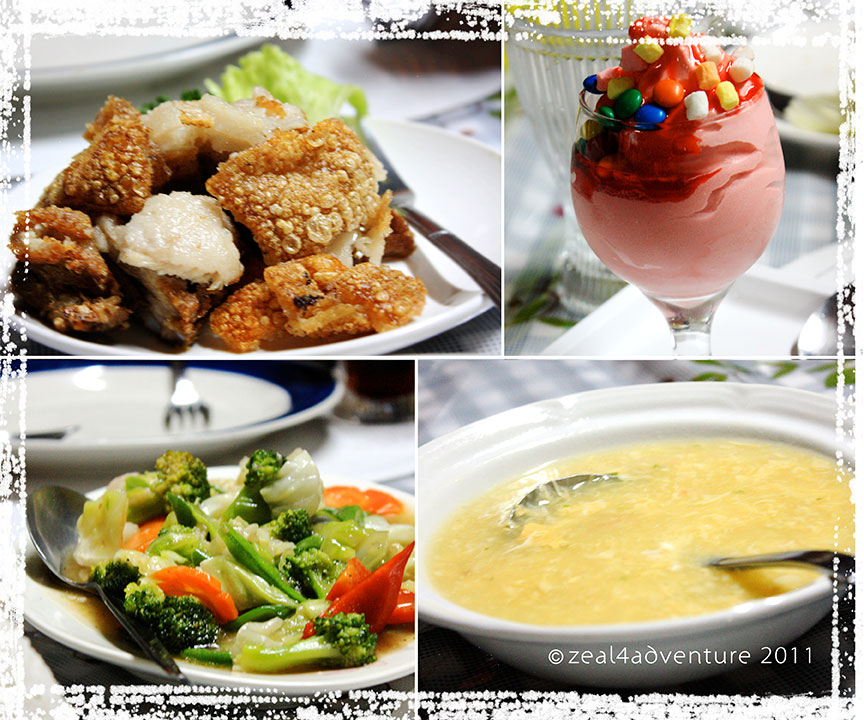
A comforting dinner at Masferré Inn and Restaurant is always a fitting cap to a full day. Named after the owner Monette’s father-in-law, the late Eduardo Masferré – widely regarded as the Philippines’ father of photography.  Half Spanish, half Kankanay, he spent much of his life toiling the farm and photographing the Cordilleras, documenting the now vanishing culture of the ethnic groups of the Ifugao region.

Some of his works are displayed in the dining area.  The Masferré Gallery down the road from St. Theodore’s houses more of his works.

“The description is not the described; I can describe the mountain, but the description is not the mountain, and if you are caught up in the description, as most people are, then you will never see the mountain.”

Jiddu Krishnamurti

Useful Info:

St. Joseph Inn
Contact: Julia Abad
Mobile:  (63) 928-951-7156

Kiangan Side Trip

More like a scrumptious lunch break from the 7+ hours drive from Manila.

It was an eagerly anticipated side trip, a delectable meal guaranteed.

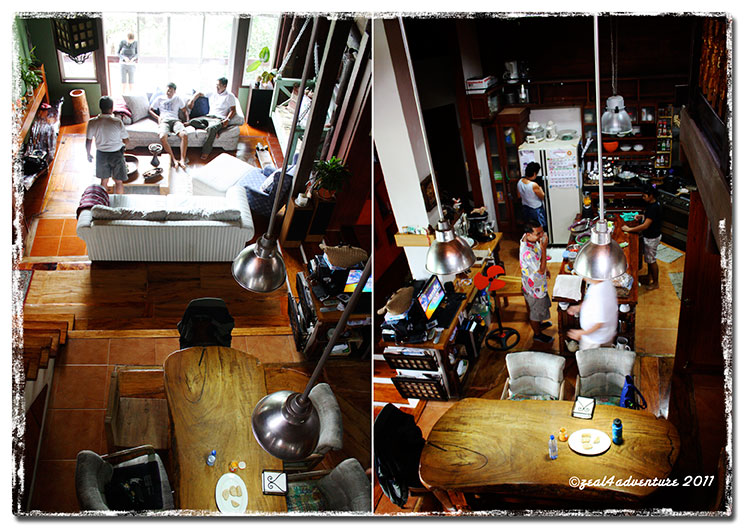
Taken from the 2nd floor:  Left photo — where Dr. Kalugdan entertains while Dra. Kalugdan happily slaves away in her territory that is the kitchen (right photo).

The Kalugdans are perfect hosts.  Their charming house, which they designed themselves, overlooks a fantastic view of the Ibulao River.

We went rafting there once and that was how we got to know them.  Lovely couple.

Kiangan of course is more than rafting and scrumptious meals.  It is also where Nagacadan Rice Terraces, one of the clusters inscribed on the UNESCO World Heritage list, is located.  I have yet to explore this historic town and first on the list is the Philippine War Memorial Shrine – a gigantic memorial shrine commemorating the end of WWII.  It was in Mt. Napuluwan in Kiangan where Gen. Yamashita surrendered so it might be worthwhile to check out the site as well.

Historic town and rice terraces aside, the town boasts of many natural wonders as well.  Ambuwaya Lake is one.  4 km from the town center and is said to be reachable by 4W drive vehicles.  Uttu waterfalls is likewise on my list of must see.   Someday, Kiangan will not be a side trip only.

Banaue Rice Terraces

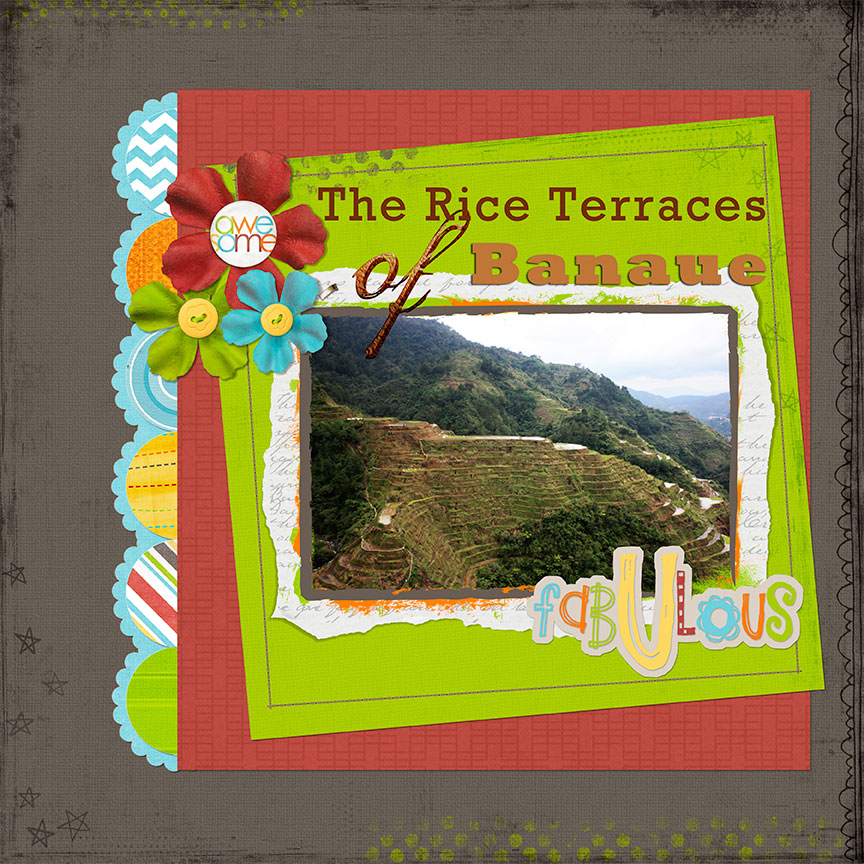
Credits: Quickpage by LCP using the “You are Awsome” collaborative kit created by J Sprague.

Construction of the terraces is carried out with great care and precision. An underground conduit is placed within the fill for drainage purposes. The groups of terraces blanket the mountainsides, following their contours. Above them, rising to the mountain-tops, is the ring of private woods (muyong), intensively managed in conformity with traditional practices, which recognize a total ecosystem, which assures an adequate water supply to keep the terraces flooded. Water is equitably shared, and no single terrace obstructs the flow on its way down to the next terrace below. There is a complex system, of dams, sluices, channels and bamboo pipes, communally maintained, which drain into a stream at the bottom of the valley. – UNESCO

This is describing a structure built more than 2,000 years ago.  Awesome, isn’t it? Although because of the presence of many modern structures around, the Banaue Rice Terraces was not included on the UNESCO list of “World Heritage in Danger”, it nonetheless holds the same complex trickle-down irrigation system that the UNESCO inscribed clusters have.  And these clusters, all found in the Province of Ifugao, are Nagacadan Terraces in Kiangan, Hungduan Terraces, Central Mayoyao Terraces, Bangaan Terraces and Batad Terraces.

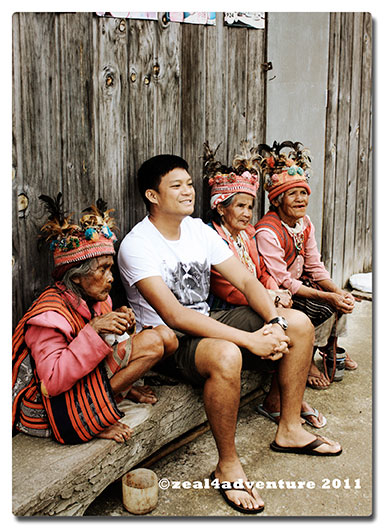
A very touristy thing to do.  For a fee, one gets to be photographed with these Ifugao women.

The Banaue Rice Terraces however, despite the exclusion, remains to be the more popular tourist destination due to its accessibility and proximity to town, which is proving to be both harmful and beneficial to the land.

These stonewalled rice paddies is considered one of mankind’s greatest engineering feats and is every Filipino’s pride.

The terraces as seen on our P1,000 bill.

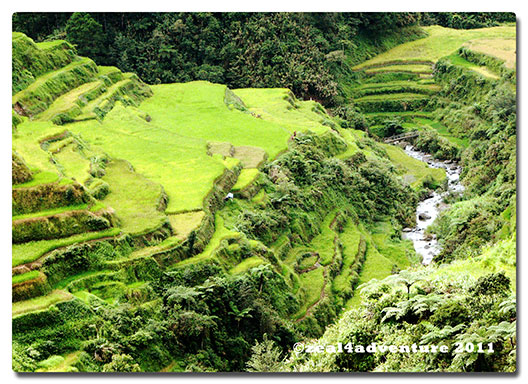
The 8th wonder of the world (as many Filipinos call it) begins at the base of the mountain and extends upland following the contours of the mountain– almost 5,000 feet above sea level.

This is North Luzon’s most famous sight and one of Southeast Asia’s most popular tourist destinations.  Famous not only for its sculpted beauty but for the traditional craftsmanship and cultural landscape dating back many centuries and is preserved to this day.

That said, these terraces are slowly being abandoned and already showing signs of damage and deterioration due to the lack of maintenance.  Many of the new generations would rather pursue work outside of the rice fields, opting to be guides or drivers.

Banaue is some 348 kilometers away from Manila and a good 8-10 hours drive.  It is a small market village sitting about 1,500 feet above sea level.  The town is not exactly enchanting, thanks to poor planning but it has its own appeal, me thinks – how can you go wrong anyway when breakfast comes with a view like this?

At Sanafe Lodge

Useful Info:

Sanafe Lodge and Restaurant
Contact no:  +63 74 386 4085 (Banaue), +63 920 950 4644 (Mobile), +63 722 2110 (Manila)
Email:  sanfelodge@yahoo.com 

Exploring Abuan River

I am not one to pass up a chance to an adventure so one February evening, I found myself on a bus with 2 other friends, en route to Ilagan, Isabela.  We were to test run an eco-tour package intended to preserve the Sierra Madre forest and wildlife.

Abuan River is located at the Northern Sierra Madre National Park — the widest remaining tropical rainforest in the island of Luzon owing to its rich and diverse ecosystem spanning from coral reefs to beach forests.
For decades the river has been the route of “bugadors” (timber haulers) to transport illegally cut logs from the forest to Ilagan.  To give these timber haulers and their community an alternative livelihood, World Wildlife Fund-Philippines (WWF-Philippines) together with Coca Cola Philippines and the local government of Ilagan identified the river as the next ecotourism destination with rappelling, waterfalls trek, kayaking and even seasonal whitewater rafting as potential activities.
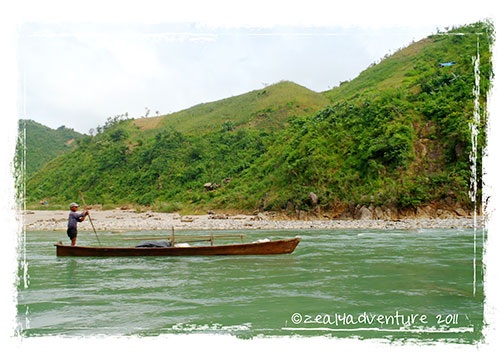
Skillfully navigating our boat through rocks and (sometimes) strong rapids.

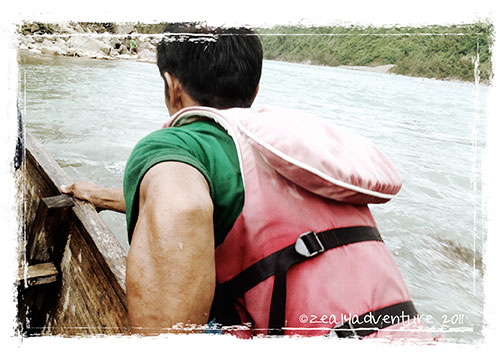
Skilled in the river, the “bugadors” were our boatmen, river and trekking guides while their wives were tapped to prepare the food.

Ladies in charge of lunch.

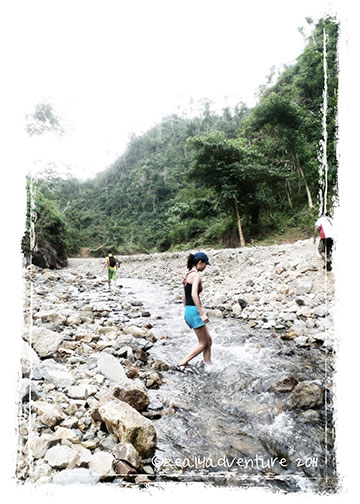
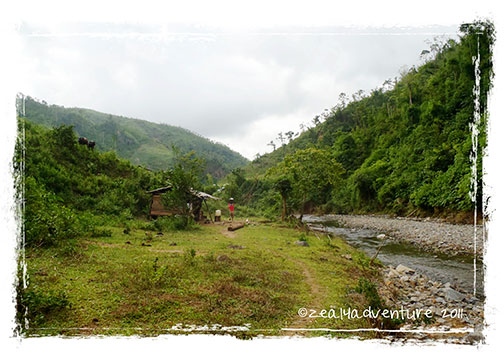
Two hours navigating through the rapids and rocks and we arrived at the start of the trail to Sulimanan Falls.  Getting there was an easy 30 minutes trek that passes through rivers, hills and grasslands.

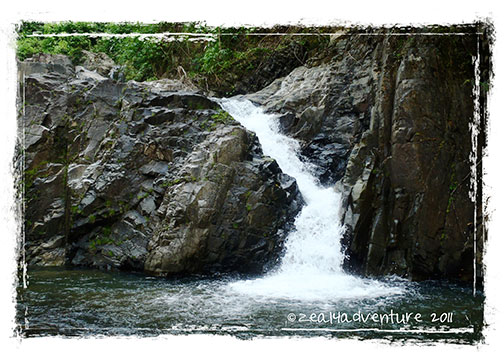
At the end of the trail lies a 3-tiered falls.

First falls

2nd falls

Pool from the 2nd tier falling to the 1st tier

3rd falls where we had lunch

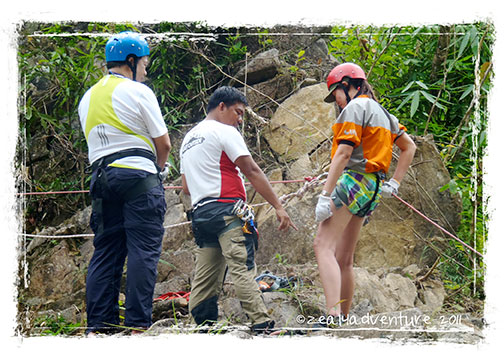
Getting to the 2nd and 3rd tier required a bit of scaling and bouldering with the help of ropes provided by AEPI, the outfitter tapped to develop the tour.  Lunch was prepared on the 3rd tier beside the falls.

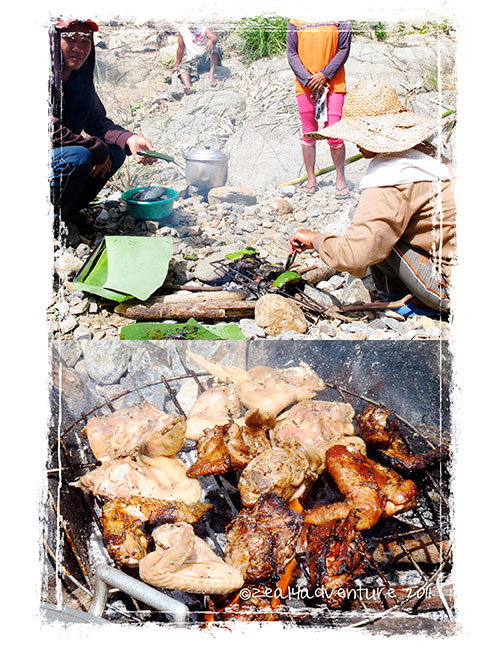
Simple but mouth-watering!

That’s what I call innovation.   🙂

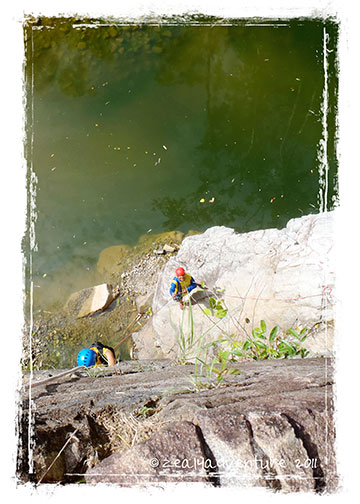
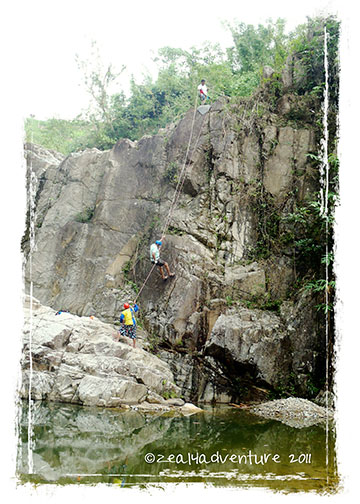
After lunch, the next agenda was to rappel down to the 2nd tier.

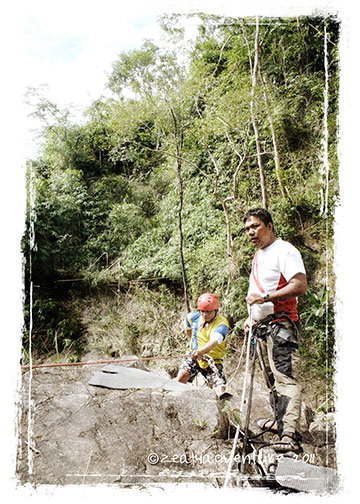
Getting into position:  Argel and Herbert — our belayers.

Not exactly my thing, I was not happy to learn of this but with a little prodding, gamely went along with the agenda.

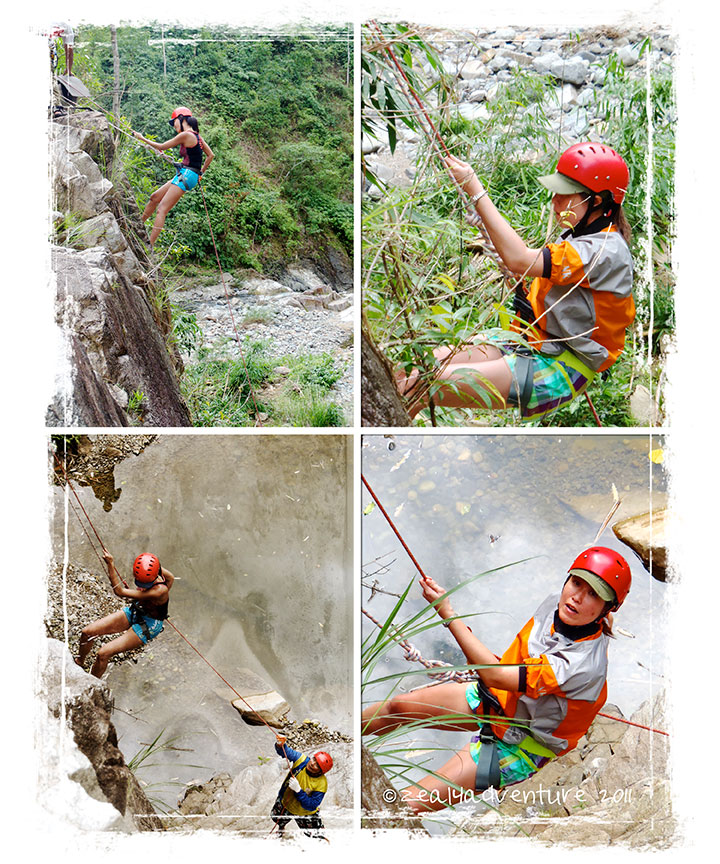
I know that I am gradually overcoming my fear of heights when it took me perhaps only 20 minutes to muster enough courage to just go for the 60 ft. descent with only some distress and perspiration while at it.

S and I rappelling down.

Either that or I am getting better at throwing caution to the wind.

After witnessing a few of my rappelling jitters in the past, A gave me a big hug and told me he was proud of me. Heck!  I am proud of me.   🙂

Sili’t Gata

Serve me a dish that combines coconut milk and chili pepper and you’ve won me over, tightly wrapped around your finger at that.  So imagine me in Bicol where sili (chili pepper) and gata (coconut milk) is present in almost every dish.  Absolute bliss, I tell ya! First thing we did after we put to right the mishap was ventured to the Food Court of SM-Naga looking for the food stall recommended by the CWC staff.

At Geewan:

We shared an order of:

Clockwise:  Laing, Pinagat and Bicol Express
Laing:  Probably the most famous Bicol dish.  It’s pork sautéed in garlic, ginger and onions combined with dried taro leaves cooked in coconut milk and spiced with… you guessed it – sili.

Pinagat:  Similar to Laing, Pinangat is bundled taro leaves filled with meat or shrimps, sili, ginger, garlic and onion and then slow cooked in gata.  Until I came to Bicol I thought this was a version of the Laing.

Bicol Express:  Pork meat simmered in gata with lots and lots of chili strips.  Some version use green chili to make the dish less spicy and some versions has shrimp paste to add to the flavor.

Kinunot:  Not something that I’d order but in the spirit of adventure, we ordered it just to taste.  It’s an unusual dish of stingray meat or what they call pagi and malunggay leaves.  Just like all the above, the meat and vegetable is simmered in gata and sili.  It was pretty good, I must say.  The thought however of eating something so beautiful does not leave me longing for it.

Laing Pizza

An out of the ordinary creation we got to try at the CWC clubhouse.  Interesting flavor and surprisingly delectable.

Bob Marlin

Our last dinner in Camsur, we decided to go to town for a more scrumptious experience of Bicol cuisine.  We likewise wanted to experience the taste of the town, particularly Magsaysay Ave., the restaurant street of Naga City.  Shuttles were available at the CWC to take guests to town.  We had ourselves dropped off at Bob Marlin’s Restaurant and Grill.  Crispy Pata, albeit their most popular dish, was not something we’d order as we remained faithful to Bicolano food whilst there.

Given the restaurant’s name however, we cannot not have a Marlin Slab in honor of its namesake.  We were not disappointed.

Because it is my favorite Bicolano dish, we ordered the Pinangat to celebrate Bicol cuisine.

Lastly, we ordered a dish we haven’t tried yet and the curious in me just had to give this dish a try.  Adobong Manok sa Gata — Chicken Adobo in Coconut Milk.  Sounds interesting?  Tastes interesting too.  The dish replaces soy sauce with gata, which made the stew creamy.  Because I absolutely love gata in anything, I utterly enjoyed this twist in adobo and have inspired me to attempt this dish at home someday.

Useful Info:

Geewan (Main branch)
P. Burgos St.
Naga, Camarines Sur, Philippines
Phone Number: (63 54) 472-3888 or (63 74) 811-7272
 
Bob Marlin Restaurant and Grill
Magsaysay Ave.
Naga City, Camarines Sur, Philippines
Phone Number: (63 54) 473-1339, (63 54) 478-4414

Around Isarog

So the mishap in our reservations gave birth to a short exploration of nearby spots around Naga.

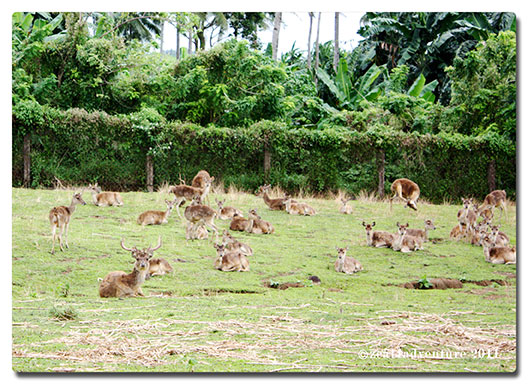
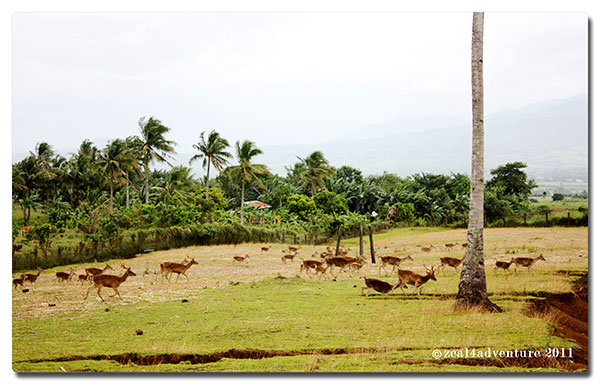
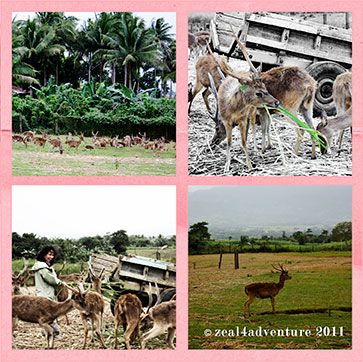
A whole afternoon with nothing to do, we headed to Mt. Isarog (after a Bicolano lunch at the SM) not to climb it but to explore the nearby areas.  We hired a van for the afternoon and heeded his recommendation.  He brought us to an enclosed hilly grassland where they breed deer, the land so vast we had to look hard to find them.

We eventually walked to where they were grazing or resting to get a better glimpse.

As we were approaching, one by one they got up and in no time dashed towards the gate.

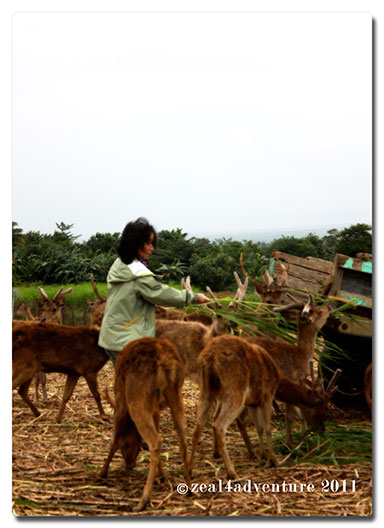
Turned out it was feeding time and friend S who didn’t walk with us gets to feed them.

The provincial government funds this Deer Farm, which today holds 300 herds of deer from 60 herds when it started in 1996.  They have at least 5 species from Australia such as Blackbuck Antelope, Fallow Deer, Red Deer, Elk, etc.   Located at the slopes of Bicol’s 2nd highest mountain, the Deer Farm is about a 90-mins scenic countryside ride from CWC.

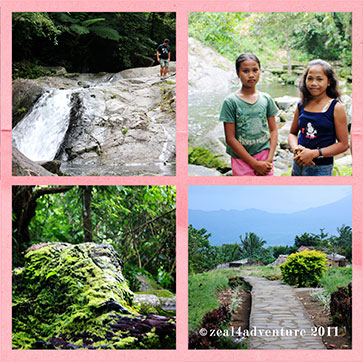
Nestled on the shoulder of Isarog and about 30 minutes drive from the deer farm is Concosep, a barangay in the town of Tigaon.

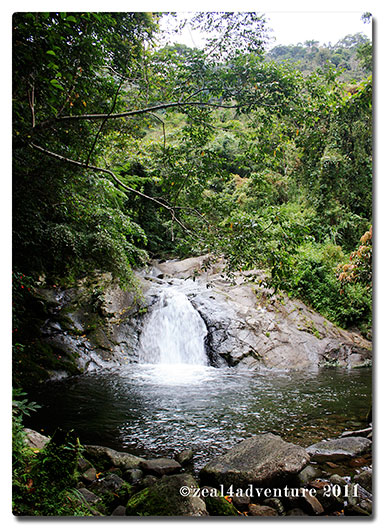
With an elevation of about 1,800 ft, Consocep is home to 3 waterfalls (Tumaguiti, Kawa-kawa, and Bulalacao) but because just days before the trip, I developed a pinched nerve and could hardly walk; we opted to visit just Kawa-kawa falls, the smaller and has the easiest trail of the three.

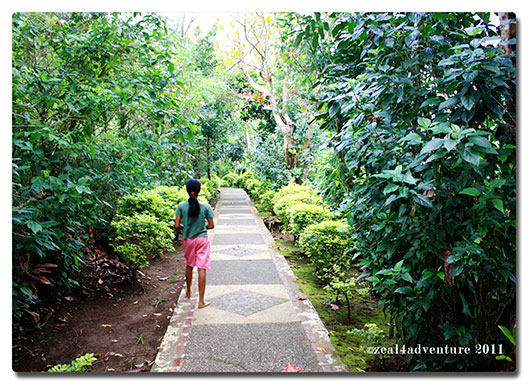
The path is wide and mostly concrete and it only takes a few minutes to reach the falls.

Derived from the word “kawali” or pan because the pool resembles it.  Nothing impressive but it gave my nerves a good workout, which actually was recommended by many.

Unwittingly, it turned out to be a good 1st day.

Useful Info:

If you are in need of transport around Naga, get in touch with:

Edgar Medina
Mobile:  0933-480-1747 / 0926-567-9797 / 0918-596-2593