A Dar in Fes

Dar-LabcharaCredits: Papers by Gwenipooh Designs and Graham Like the Cracker from Scrapmatters’ Life Little Surprises Kit; Elements by Designs by Tater from Scrapmatters’ LLS Kit and journaling snippets by Crystal Wilkerson

Founded 1,200 years ago in the northern part of Morocco, Fes has remained to be the country’s cultural and spiritual capital.  It is home to the oldest university in the world and its medina, a UNESCO World Heritage Site.  Fes has the best-preserved old city in the Arab World and to spend a few nights inside those walls is to, in some way, experience its unique culture.

“When you reach the train station, please call this number”, Said (Sa-eed) advised on his email. “A handsome young man will meet you at the bank outside Bab Boujeloud.” – the main and most attractive point of entry into the medina, Fes el Bali.

A petit taxi outside the train station, he advised, would cost 10 Dh to get us to the main gate.  And true enough; handsome young man introduced himself as Ibrahim.

Decorated with blue (color of Fes) zellij tile on the outside and green (color of Islam) on the other side, the gate leads to the Bab Boujeloud Square.

narrow-alleyway

Meandering through the narrow alleys teeming with people, restaurants and lodgings called riads and dars, provided a perfect primer of Fes.  The passages taper as we marched deeper into the medina, the maze of corridors begin to confuse.  We finally reached a wooden arched door in an uncommonly narrow lane.  Ibrahim unlocked the door and welcomed us into a world bursting with exotic eastern charm.  Dars and riads are traditional homes unique to Morocco.

indoor-patio-2

Entirely closed on the outside, the dar’s foyer serves as gatekeeper that led to an inner courtyard of traditional zellij (small colored tiles) floors, exquisite Moroccan design and furnishings with touches of deep red.

indoor-patio

The courtyard is the center of the house and serves as seating and dining area.  The second floor balcony overlooks it.

A burly man, Ibrahim’s uncle, Said warmly welcomed us to Fes.  He owns Dar Labchara, a lovely house he inherited from his father.  While we sipped tea and recharged from the four-hour journey, he gave us a rundown of what to expect of Fes.

We met a guy on the train also named Said, we told him, exceptionally friendly and extremely eager to help.  “You are the 3rd guests who met him”, he said.  “Does he wear a black leather jacket?” Said asked.  He revealed that one of his guests decided to pay the factory (he said he owned) a visit and found that the Said from the train isn’t quite what he presented himself to be, pretending to own a ceramic factory when he only earns a commission for bringing “tourists” there.  Not exactly harmful, but neither was he truthful.  And with that, he candidly warned of fraudsters roaming the narrow alleyways of the medina.  Warnings of this manner I came across while researching for this trip, I was still shocked, however, to have met one so early in the trip.

dinner

For a traditional Moroccan dinner, Ibrahim pointed us to the nearby Restaurant Palais des Merinides, assigning Mohammed, a staff, to bring and fetch us after.  Beautiful interiors.  As the culinary center of Morocco, my expectations were high.  Maybe too high because the food was actually decent but impressed we were not.  The Pastilla Fassia (chicken pastille) was flavorful and memorable, the play in sweet and savory appealed to me but not to everyone in the group.

Mechoui

The Mechoui (roasted mutton) was not as tender as I wished it to be.  They say that many restaurants like this pay commission for sending guests over, I hope this wasn’t the case with our dar.

Breakfast, however, was a different story. It more than made up for last night’s lackluster effort to wow.

breakfast-bread-2

The variety of breads alone – flatbread (khobz), pan-fried bread (harcha), pan-fried pancakes (msemen), a more traditional looking pancake (meloui)…

breakfast-bread

were enough to overlook the lack of any meat in the morning.  To complement the breads were cheese, butter, jams and honey, fried eggs served in a pool of olive oil seasoned with cumin and salt.

bessara

One morning, we were served a traditional soup called bessara.  It is pureed beans served with olive oil and cumin.  Usually eaten at breakfast and a prefered soup during Ramadan. Tastes like pea soup with a strong olive oil taste that leaves a slight bitter aftertaste, which quite frankly, appealed to me.

door

From the street, the houses in the medina is hidden by a high wall with a door somewhere, giving no clue as to what lays beneath.  But once inside, one is transported into a remarkable intricately decorated palace.  Fes, in a similar fashion, reveals its charm unexpectedly, its mysteries difficult to comprehend but once revealed, opens up to a brilliant world within.  The key is to run straight in.

Useful Info:

Dar Labchara
8 Derb Lebchara, Souiket
Ben Safi Talaa Sghira
Fes, Morocco
Phone: +212 535 741 306
Mobile: +212 662 347 547
Email: contact@darlabchara.com

Shirakawa-go

ogimachi-gassho-house

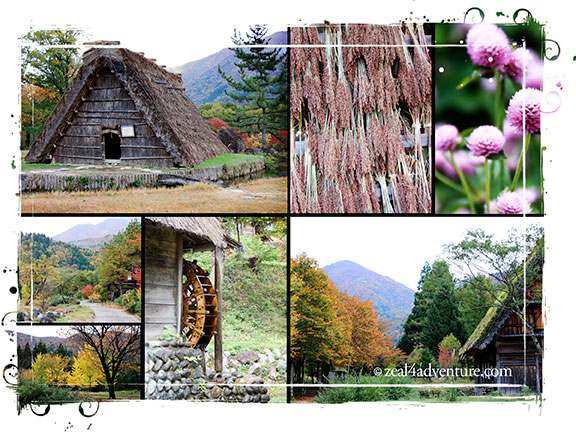
Gassho-zukuri.  We’re not done talking about it yet because there are still some that can be found in typical farming villages, some ordinary folks still call it home, this 250-year old special farmhouses.

omigachi-collage

These villages still exist, and one is just 50 minutes away by bus from Takayama.

ogimachi-tourists

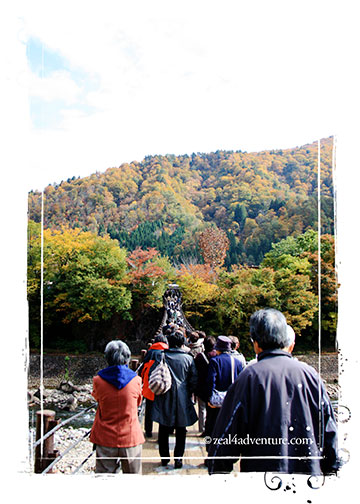
The UNESCO declared World Cultural Heritage Site, Shirakawa-go and its neighboring region Gokayama has been slowly attracting visitor since it was inscribed in 1995.

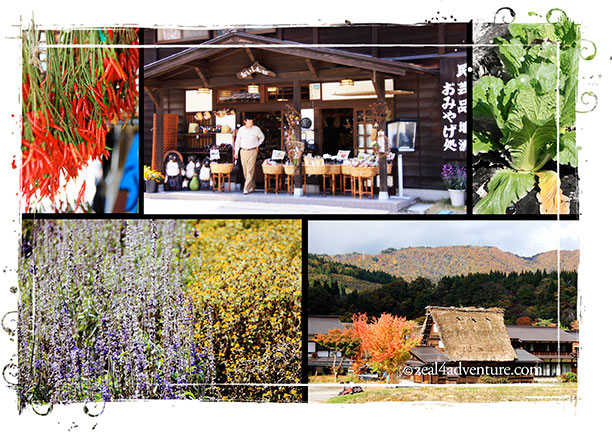
Ogimachi is Shirakawa-go’s largest community.  A charming village, albeit a slightly “touristy” oriented one, lining the Shogowa River valley.

Ogimachi-scenery

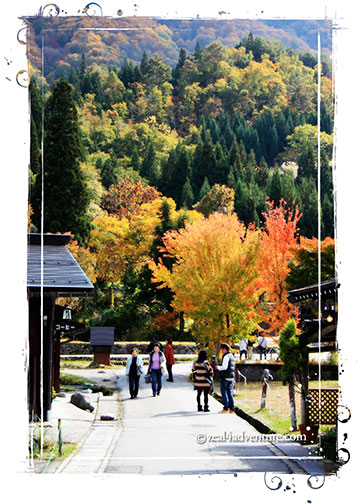
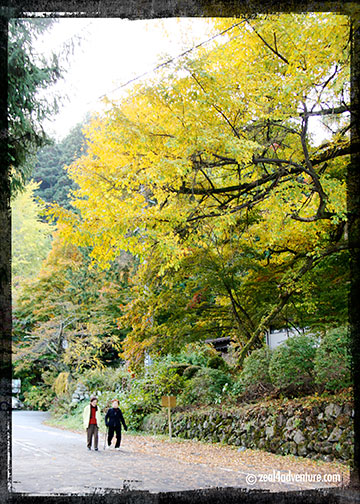
Its beauty lies not only in the scenery, resplendent in shades of autumn at the time of visit, but as well as in its community.  Ogimachi has 2 medical clinics, a primary school and a junior high school.

Ogimachi-fixing-roof

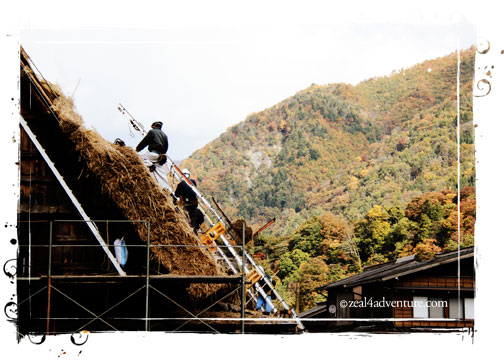
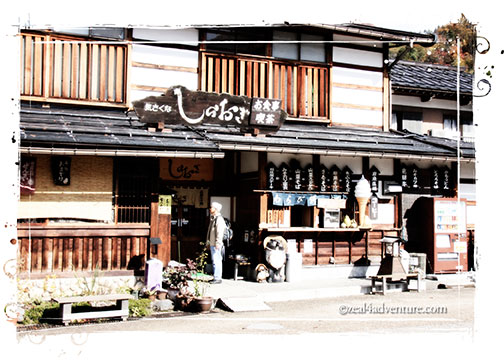
Many still live in a Gassho-zukuri, but many of the well-preserved farmhouses have become museums, restaurants and there are 20 or so of it that has been made into Minshuku (bed and breakfast) guesthouses.

lunch-shiraogi

Time permitting; spending a night there would have been glorious.  Instead, we contented ourselves to a nice hot soba meal before heading back to Takayama.

Ogimachi-crossing-the-shogawa-river

Across the bridge, near the bus stop is a well-constructed outdoor heritage museum.

minkaen-collage

The Gassho-zukuri Minkaen features 25 preserved farmhouses.

minkaen-1

Like Hida-No-Sato, it was relocated and rebuilt to emulate a traditional village in the countryside, scenery and landscape of which is simply superb with the mountains lending the perfect backdrop.

minkaen-2

Takayama Morning Markets

It was cold. The warmth of the comforter and the futon was extremely inviting, but I was determined not to give in to the temptation because we are going to the market today.

Jinya-scenic-walk-3

Jinya-scenic-walk

Jinya-scenic-walk-4

So at exactly 6am, we ambled to the morning market nearer to the ryokan, watching the city wake up along the way.

setting-up

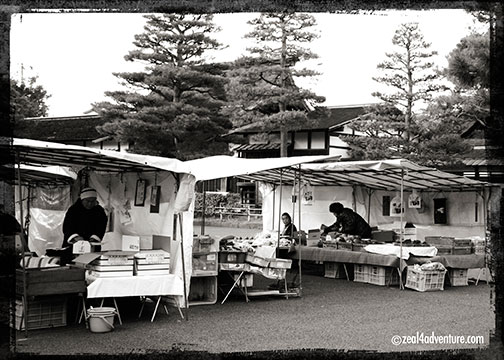
At the Jinya-mae market, we watched it come to life one stall at a time.

Jinya-morning-market

I expected to see a much bigger market than the neighborhood market it really is.

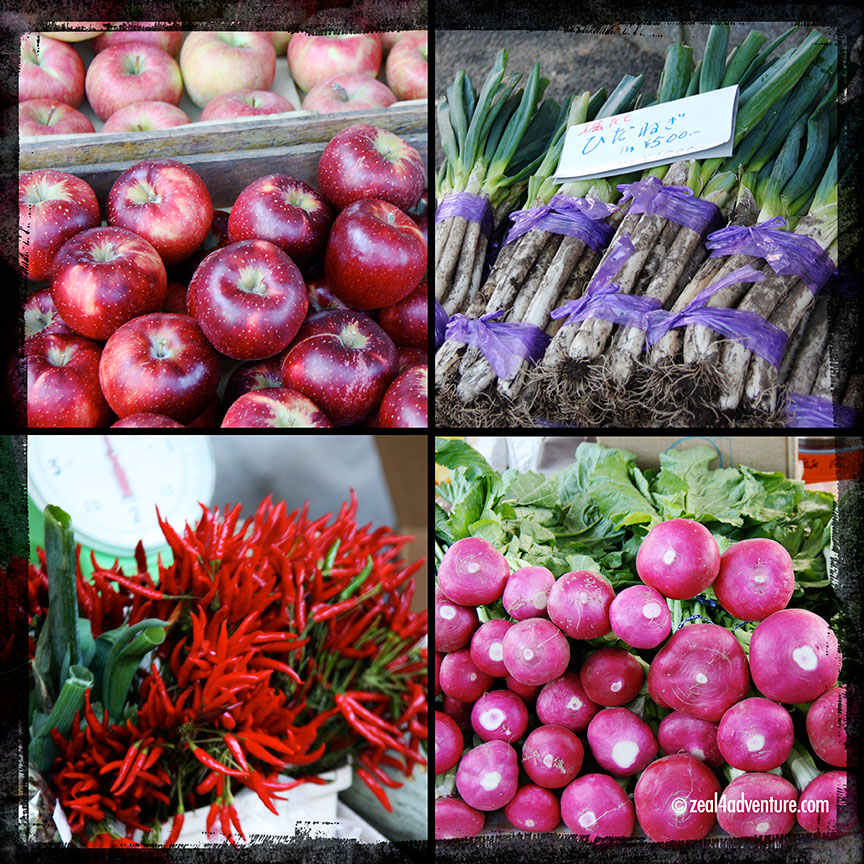
Jinya-produce

More of a farmer’s market, it sells a lot of foodstuff and produce from gigantic, gorgeous but expensive fresh fruits and vegetables to rice cakes and

Jinya-pickles

pickled vegetables all wanting to be purchased, begging to be noticed at the least. We eventually gave in to this corn – the sweetest and crunchiest I’ve ever had, and that is not an exaggeration.

sweet-corn

If we weren’t heading back to the ryokan for breakfast, I would have feasted on a few more.

breakfast

Thank God for good judgement as breakfast was lavish in Hakuun!

There are two morning markets (Asa-ichi) in Takayama that takes place daily from 6am till noon. The Jinya-mae morning market can be found in front of Takayama Jinya, a historical office building from the Edo Period said to be the only remaining building of its kind.

Not far from the Sanmachi district is Miyagawa morning market.

Miyagawa-morning-market

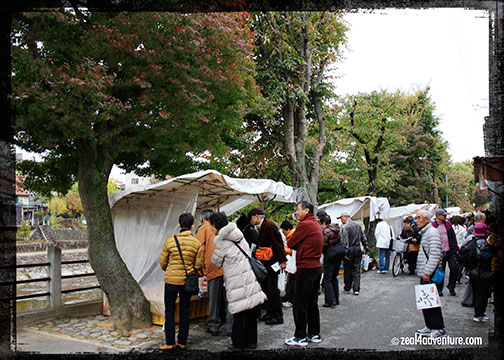
This market situated along the east bank of the Miyagawa River is bigger and I believe geared more towards the tourists.

Miyagawa-street-food

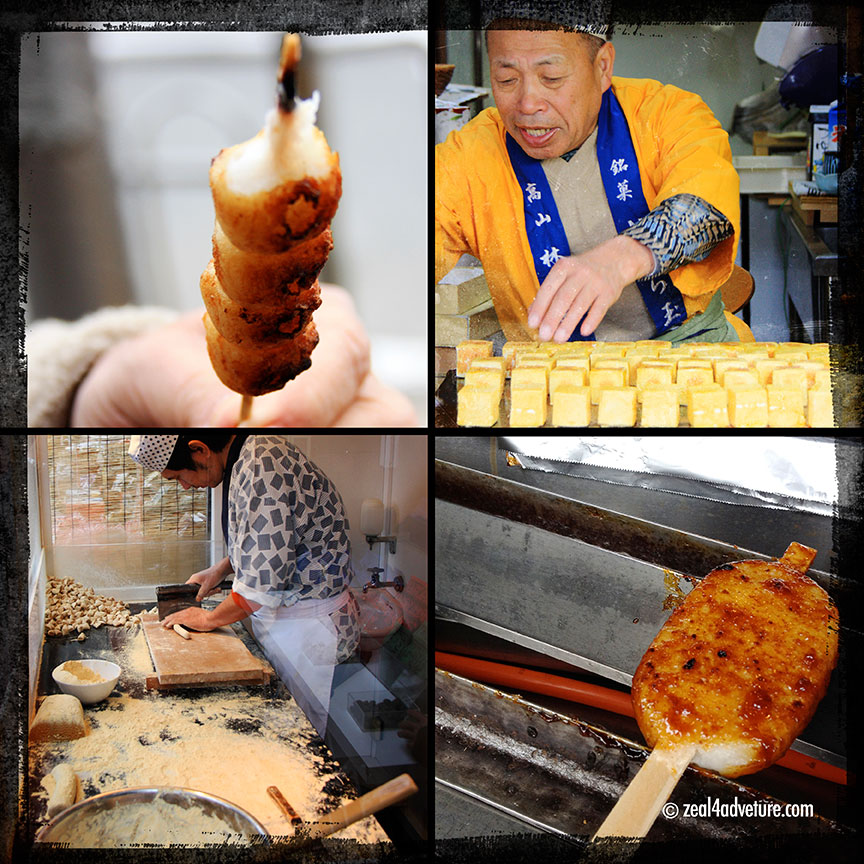
Stalls selling crafts of wood or fabric, souvenirs, street foods are spotted alongside fruits and vegetables stands.

Miyagawa-Sticky-balls

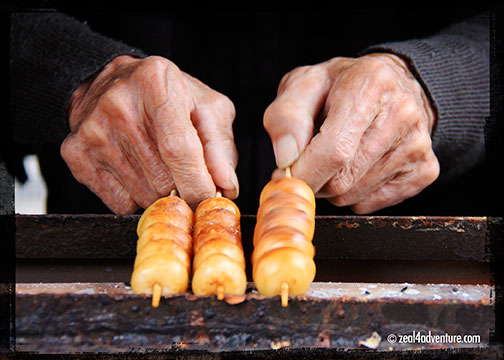
Interesting bites that had us so full but wanting more. So with these bites in tow, we explored the market.

Miyagawa-souvenirs

Here, tourists abound or maybe it was the time of the day – when the city was already fully awake and vibrant with life. Here, the lure to buy is much, much greater. Here, I looked, I tried some, I got a few to take home.

Old Town Splendor

It was close to lunch when we hailed a taxi at the Takayama Station to take us to Futurishizuka Hakuun, our Ryokan.  Not exactly at the center of town but Takayama is small enough to go around on foot anyway.  A leisurely walk to town took us about 15 minutes to Le Midi,

Hida-beef-at-Le-Midi

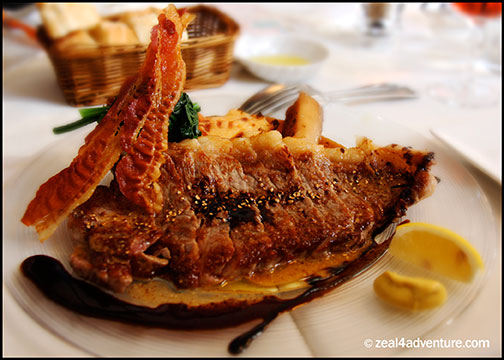
a French bistro recommended by the Ryokan, for an excellent Hida beef meal.

Lesser known internationally, the Hida region of Gifu Prefecture breeds top quality black cattle.  As a mater of fact, it was given the highest prize by the same award giving body that made Kobe beef what it is today.  And when in Takayama and the surrounding areas around the Hida region, a Hida beef meal should be high on your list.

But more than Hida beef, Takayama is visited for its famous historic townscape.

sanmachi-2

At the center of town, old wooden houses from the Edo period line both sides of the streets of Sanmachi imparting an atmosphere straight from the 19th century.

restaurant-in-traditional-building

Most of these are still private homes while a few are now shops, inns, and restaurants.

shop

Many museums, galleries, and even sake breweries likewise coexist with the old private houses in that quarter.  The three narrow streets that form Sanmachi are “Nationally Recognized Important Historical Preservation Areas”.

Takayama was the center of Japan’s timber industry and was known for its expertise in carpentry.  It is believed that carpenters from this town worked on palaces and temples in Kyoto and Nara hence the well-preserved quarter.

black-houses

The striking black luster of the buildings were the result of rich merchants back then trying to hide the use of the best but prohibited wood by painting their houses with soot, which in my opinion gave the city its character in the end.

traditional-buildings

The old town is where the action is; just a short distance from each other is where most of the attractions are.

scenic-town

And for the remaining portion of the day, we walked around town not exactly aimless but with a loose agenda, and this was where our meanderings took us:

Takayama Matsuri Yatai Kaikan

Ranked as one of Japan’s most beautiful festival, the Takayama Matsuri Festival always attracts a large number of spectators.  Magnificent floats are pulled through the streets of Takayama’s old town during the festival held every spring and autumn.

Festival Floats Exhiibit Hall

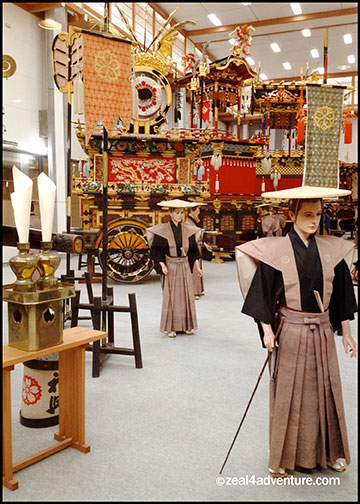
The Takayama Matsuri Yatai Kaikan or the Festival Floats Exhibition Hall displays on rotation four of the eleven floats used in the festival.  Many of the floats that date back from the 17th century are of gilded wood intricately carved with detailed decorative metalwork.  If not displayed in the hall, they are stored in tall storehouses called yatai-gura scattered quite noticeably around the town.  And these elaborately crafted floats are excellent showcases of the special skills the Hida-Takayama craftsmen are known for.

Sakurayama Hachiman Shrine

Sakurayam-shrine

Just across the exit of the exhibition hall is the shrine where the Matsuri Festival is held every year. It was built during the time of Emperor Nintoku and later made bigger than the original under Lord Kanamori.  It was officially established to protect a part of Takayama,

Sakurayama Nikko Kan

The Nikko Toshogu is a Shinto shrine in Nikko Tochigi Prefecture dedicated to the first shogun of the Edo Shogunate, Tokugawa Ieyasu, a UNESCO World Heritage Site.  The Shogunate spent a fortune and took 15 years to reconstruct the Toshogu.

sakurayama-nikko-kan

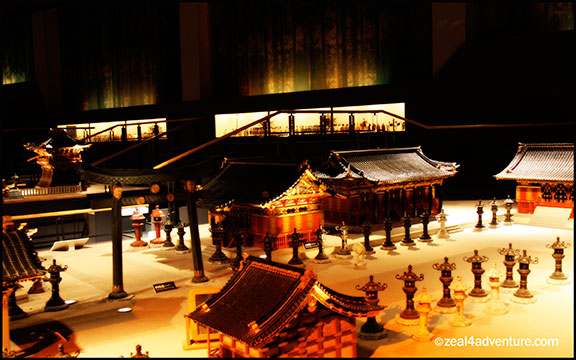
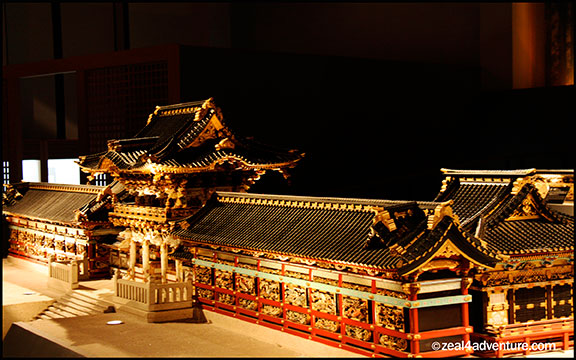
The entrance fee of the Matsuri Yatai Kaikan includes the Sakurayama Nikko Kan, a hall displaying the impressive one-tenth scale replica of the Nikko Toshogu.

sakurayama-nikko-kan-2

The replica, after the war, was shown in the United States and in a few decades later, in Japan.  Today, it has found its home at the Sakurayama Nikko Kan complete with a computerized lighting system programmed to alternate sunrise to sunset.  It is a beautiful exhibit not to be missed.

Yoshijma Heritage House

Built by master carpenter Nishida Isaburo in 1907.  The Yoshijima family was a prosperous merchant engaged in money lending and the production of sake in Takayama.  And it once had a building where sake once brewed and plastered storehouses where sake was stored before being sold.  Unfortunately, most of the structure has been torn down with only a small part remaining.

yoshijima-heritage-house

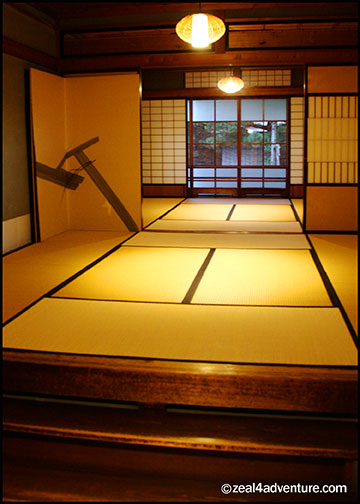
Well maintained, the house has posts and beams polished and smoothened through the years to a rich brown tone delivering a sense of sophistication to an already beautiful old house.  Another a must see.

As we continue to explore the town, we decided on an early dinner of Tonkatsu.

tonkatsu

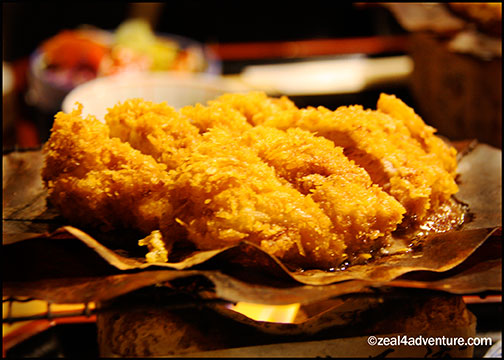
Unlike the ordinary Tonkatsu we know, this deep-fried breaded pork fillet is placed on top of a magnolia leaf with the sweet sauce heating on a dish with fire underneath. Tender and juicy, this meal was the perfect way to end the exploration.

Back in our Ryokan, we reveled at our ante room, put our feet up, and sipped our green teas.  We were in good spirits.

green-tea

I wasn’t planning to, but the hot tub was calling out to me.

Futarishizuka-Hakuun

Nestled on a hill, Futurishizuka Hakuun is favored with a wonderful view of the city and mountain.  It has in some rooms a private hot bath.  And our tub has that view – beats having a massage any day.

hot-bath

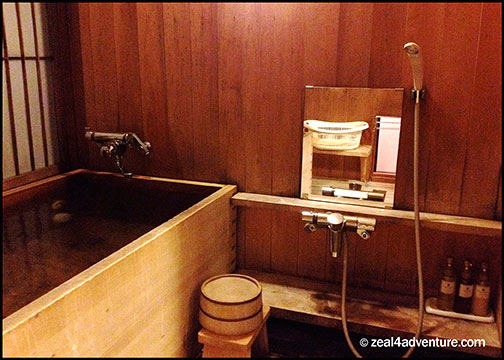
As I lay down in the tub, I see steam all around, and I feel heat melting the weariness from all the walking done the past few days.  Knowing that there will be more, I welcome this tonight.  And maybe tomorrow too.

Useful Info:

Yoshijima Heritage House
Hours: 9:00AM to 5:00PM (Mar – Nov); 9:00AM to 4:30PM (Dec – Feb)
Closed on Tues (Dec – Feb, when Tue falls on a national holiday, it is open and is closed the following day)
Admission: ¥500
 
 
Festival Floats Exhibition Hall & Sakurayama Nikko Kan
Hours: 8:30AM to 5:00PM (Mar – Nov); 9:00AM to 4:30AM (Dec – Feb)
Admission: ¥820

East of Kyoto: Southern Higashiyama Neighborhood Walk

higashiyamaCredits: Papers by Designs by Tater from ScrapMatter’s Life’s Little Surprises Kit.

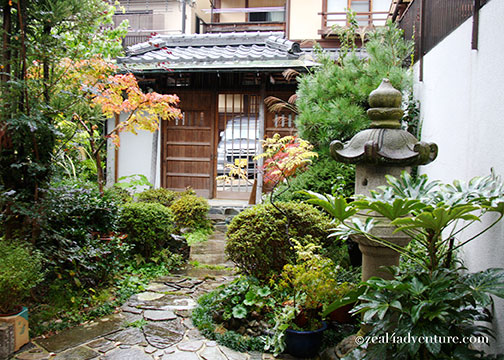
The guesthouse took sometime to find.  Tucked away in a street where cars aren’t allowed.  The driver of our shuttle service eventually found it; he led us into a narrow residential street.

garden-at-entrance

The house is charming, even at night.  A young man let us in, cheerfully welcoming us at 10 in the evening.  The real owners of Yamato Guesthouse are his parents, Kenzo and Nagako.

kenzo-and-Nagako

He was there for the weekend, I figured.  I noticed a group was enjoying some drinks at a corner so I asked if they served dinner — we were hungry, arriving straight from Kansai International Airport.  Of course, they only serve breakfast but they accommodated our request and prepared something simple after seeing our hungry faces.  The other group, it turned out, are friends visiting hence the beer and the snacks – I felt a bit embarrassed about our dinner request.   😯   Such is the hospitality of the Japanese and of our host.

breakfast

Nagako served quite an exquisite breakfast and for 2 days I felt very pampered

The former capital of Japan is famous for its temples and shrines, a beautiful city with tradition and culture filled to the brim.  Kyoto is one of the oldest cities and there is so much to see.  Even just zooming in on an area – the east side – we still barely scratched the surface.  Two whole days is obviously not enough but that was all we had.  We were merely passing through and we made the most of it.

Yamato, I estimate, is a good 10 minutes stroll away from Kiyomizu Temple — actually, it could be 20 if you window shop and ogle at everything interesting along the way.

store-chawanzaka

The neighborhood consists of many interesting stores, delightful cafe and food stalls, which actually make for a pleasant stroll to the temple.

chawanzaka

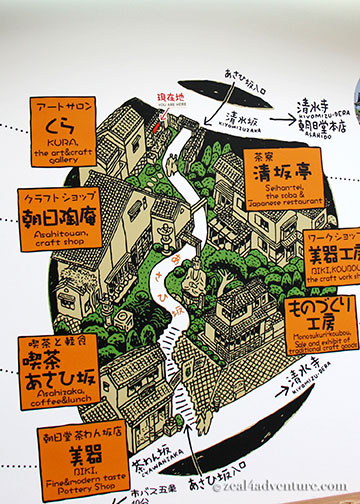
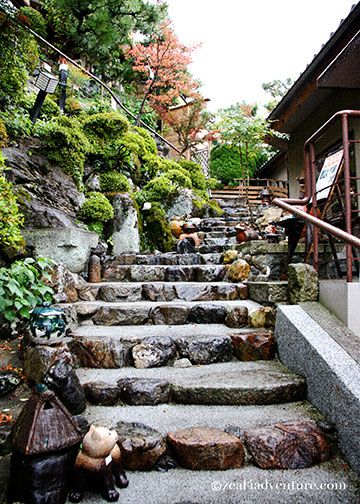
The street of our guesthouse comes out to Chawan-zaka, it actually leads to the temple but we chose instead to turn into a complex that has several flights of stairs,

asahizaka-mapA map of Asahizaka complex

asahizaka-steps

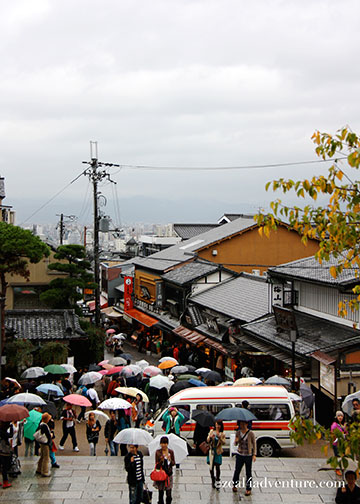
stores and cafes line the way leading to Kiyomizu-zaka, where we chanced on more stores and tourists.

kiyomizuzaka-from-templeKiyomizu-zaka from the temple

If you turn right, you will end up in Kiyomizu Temple.

kiyomizudera

Inside the temple, the tourists escalated in unbelievable proportion.

tourists

Half way through the temple, we gave up and settled for a much-needed coffee break and cream puffs.
Yatsuhashi-cream-puff

Kiyomizu-dera is perhaps the most beloved of Kyoto’s temples.

kiyomizu-temple-entrance

It is a famous hilltop temple offering sweeping views of the old capital.

view-of-the-city-from-kiyomizudera

Popular with tourist and pilgrims, the temple is part of the Historic Monument of Ancient Kyoto and a UNESCO World Heritage Site.

The narrow cobbled street of Kiyomizu-zaka (if you walk away from the temple) will lead to Sannen-zaka and Ninen-zaka, a restored neighborhood oozing with old world charm.

Ninenzaka-and-shannenzaka

Both streets are lined with old wooden houses, traditional shops and restaurants.  It is  a good example of the old Kyoto, the Kyoto everyone imagines.  Despite the drizzle, it was a wonderful walk, quite uplifting I must say.

Following the route suggested by Lonely Planet, we found the street the guidebook described as “the most beautiful street in Kyoto”, Ishibei-koji.  It is a quiet alley lined with high-end restaurants and ryokans.  I saw a photographer taking shots of the street at the end of the stone-paved road.  I went to where he stood and this was what came out.

Ishibei-koji

Have to admit that this quiet street has character with its own stories to tell perhaps but to be identified as “the most” beautiful street puts too much pressure don’t you think?  Beauty is indeed in the eyes of the beholder.  Developed primarily as an area for luxurious rental homes, it is presently a favorite site to shoot TV dramas, movies and TV commercials.

At this point, it was already more than drizzling and it didn’t look like it would let up.  We decided it was time for lunch.

Useful Info:

Guest House Yamato
6-539-23 Gojohashihigashi,
Higashiyama-ku, Kyoto, Kyoto Prefecture
Kiyomizu Temple
1-294 Kiyomizu
Higashiyama-ku, Kyoto, Kyoto Prefecture

East Africa

East-Africa-2

It actually stretches from the northern arid deserts of Ethiopia to the tropical forests of Mozambique and Madagascar, with 19 countries in between.  While my East African adventure in 2006 only spanned 3 countries, the experience it yielded were quite diverse – from the usual Safari adventures to tracking Chimpanzees to the more extreme, whitewater rafting.  Kenya, Tanzania and Uganda, territories that were formerly under British control and each hold common thread yet bear its own unique character.

Highlights:

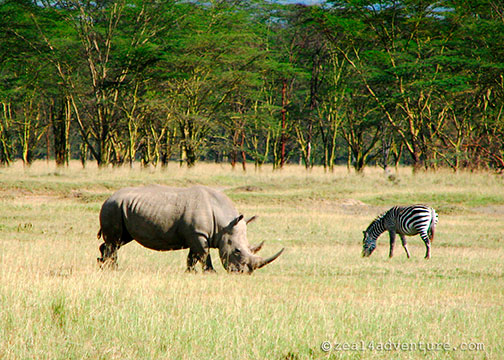
rhino-and-zebra

Catching sight of the Big Five – Lions, African Elephants, Cape Buffalos, Leopards, and Rhinoceroses.

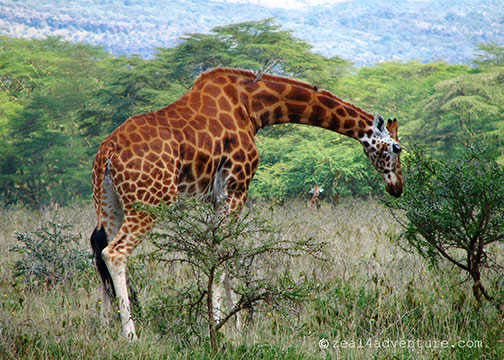
giraffe

The Big Five aside, Zebras along with giraffes have become favorites.

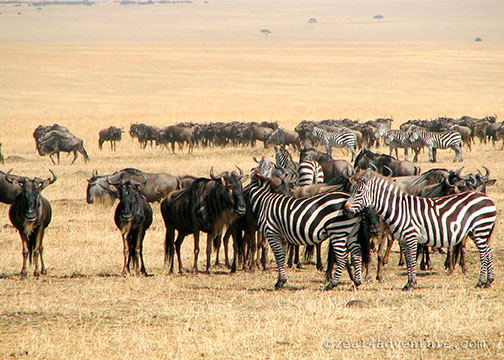
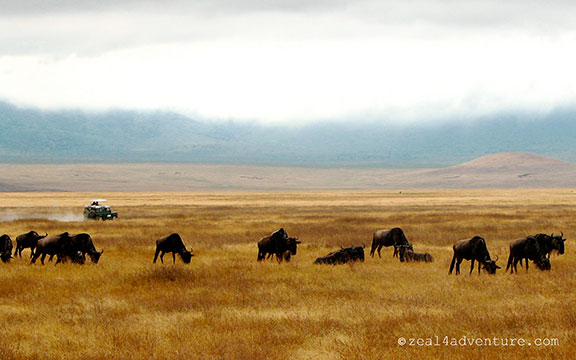
Witnessing not quite the migration but the start of it.  From July to October, one could witness the great migration where wildebeest and zebra travel to and from the Serengeti National Park to the greener pastures of the Masai Mara National Reserves.

masai-mara

It is perhaps the most breathtaking event in animal kingdom and the whole point of our visit to this continent.  To see them gather together, sometimes in a line is more than thrilling.

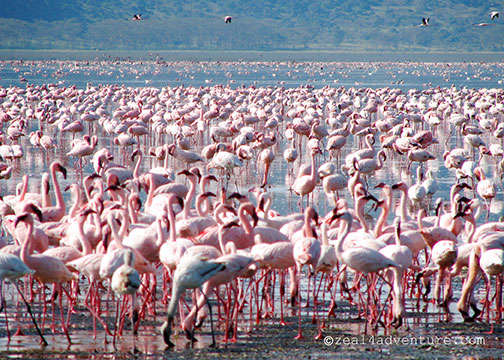
flamingos

Witnessing a gathering of Flamingos.  Absolutely a sight to behold, this sea of pink covering a large part of Lake Nakuru.  One of the Rift Valley soda lakes that attract vast quantity of flamingos that feed on the lake’s abundant algae.

Being in beautiful Ngorongoro Crater.  It is the world’s largest intact unflooded volcanic caldera and is home to over 300,000 animals including the rare Black Rhinos.

ngorongoro

An absolutely beautiful place to be on a safari, the crater makes for a stunning backdrop to rich grazing grounds.

zanzibar4

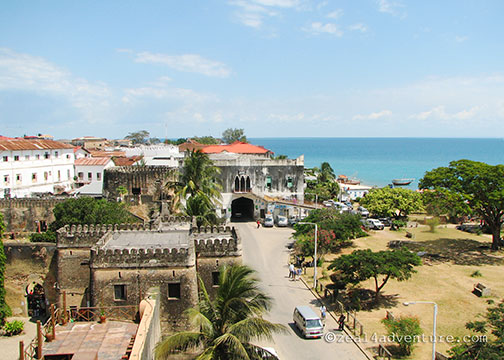
Chilling in Zanzibar.  A semi-autonomous island separated from the Tanzanian mainland.

zanzibar3

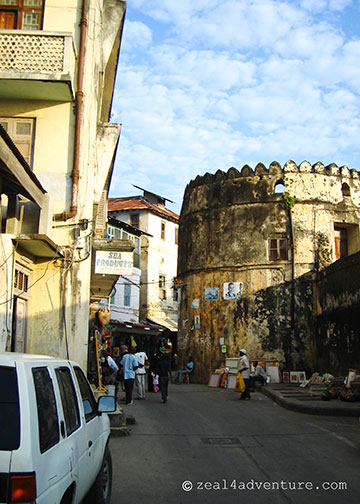
Although just a short distance from the Tanzanian coast, it is at the crossroad of Africa, the Middle East and Asia resulting in a culture of diverse ethnicities, more Middle Eastern in its feel than African.  Likewise with local dishes, the rich fragrance of cinnamon, ginger, cumin, pepper and cardamom is synonymous with Zanzibar, also known as the Spice Island.  The streets of Stone’s Town – the capital’s old quarter – is full of the bustle of back street markets and local flavor.

zanzibar2

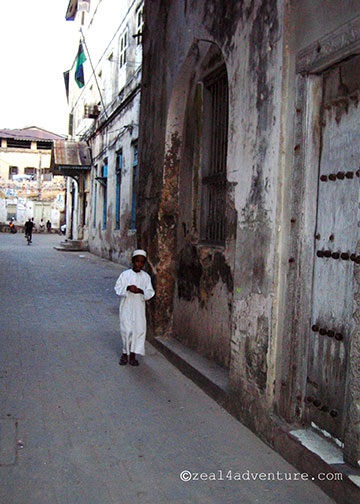
The charm lies in its labyrinth alleyways and faded buildings redolent of the glories of the old Islāmic empire.

7th-Jul-06-(73)

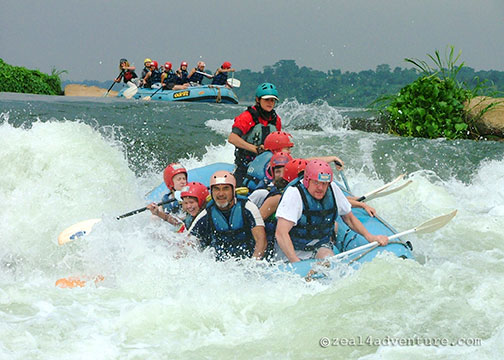
Rafting the White Nile.  Stretching 31km from just below the Bujugali Falls in Jinja, experiencing the Nile at its source is by far the best heart-pounding whitewater ride of my life.

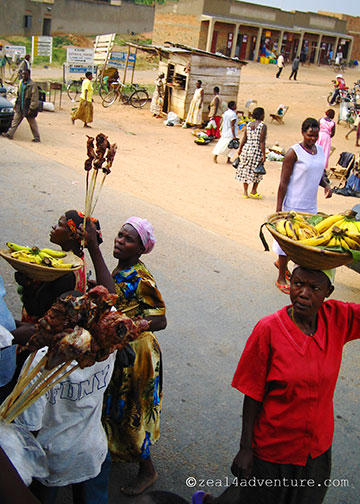
Getting lost in Uganda.  On a wrong bus, we went the other way and ended up not quite where we wanted to be.

bus-stop-scene-in-Uganda

Best known for Idi Amin or Joseph Koney, getting lost could be frightening but this mishap gave us a taste of the local flare and the kindness of its people.  We eventually found our way but not without the help of the people we didn’t know from Adam.  An impression indelibly marked in my heart.

It is by far one of the best trip I’ve had – a wonderful surprise, considering that it was not even on the priority.  I will be back Africa, sooner than you know.

A Leisurely Stroll Through Luang Prabang

Credits: Papers by Sahlin Studio’s Sweet Story Telling papers, Creativity by Crystal’s Room Collection Solids; Elements by Sahlin Studio Sweet Story Telling Kit.

It was a beautiful ordinary day.  No agenda, we just played it by ear, went with the flow.  The plan was to leisurely walk the streets and see where it takes us.

The serene atmosphere of this enchanting city begs for nothing more.  Having strolled down these streets before, it was interesting to see new ventures turning up while many stayed the same.

Luang Prabang lies in the heart of the mountainous region of North Laos.  Also known as the jewel of Indochina, the ancient royal city sits between the junction of the Mekong and the Nam Kahn Rivers.

And our nice little boutique hotel, Villa Deux Rivieres is situated somewhere near the junction in Kingkitsareth Rd.

Monks with their signature umbrellas in Sakkarine St. — a quieter part of town.

Great location as it really is just a short walk away from many places of interest and the main street, Sakkarine,

The busier street of Sisavangvong has more tuk-tuks and motobikes lining the streets.

which turns into Sisavangvong St. if you walk further.  We spent a lot of time in Sakkarine St. browsing, sometimes buying from the many little shops or relaxing in several of the cafes lining the stretch.

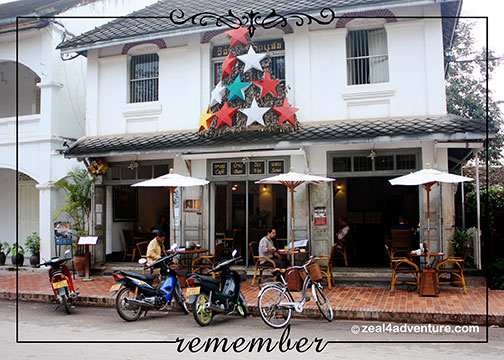
Café Ban Vat Sene across the charming Wat Sene and Le Banneton with its wonderfully crusted breads are our favorites hang-outs.  We sat outdoors and enjoyed the cool air and the easy going vibe of the town.

Those breads lured us to Le Banneton

Caruso Lao never fails to lure me in each time we walk pass it.  Beautiful stuff on display, a bit pricey but well worth the workmanship, me think.

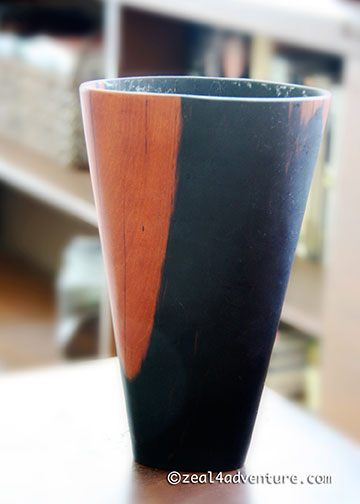
And look what I have displayed at home.  There could have been more, if freight wasn’t so ridiculously high.

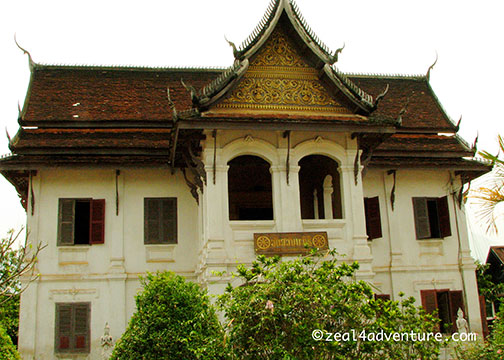
Comprising this enchanting little city are ancient structures, a Royal Palace, a National Museum,

Wat Sene along Sakkarine Rd.

and a concentration of golden temples they call Wats, all thirty-four of which have been listed for preservation.

Luang Prabang, a UNESCO World Heritage Site since 1995, is undoubtedly rich in cultural heritage and has both historical and natural sites to boast.

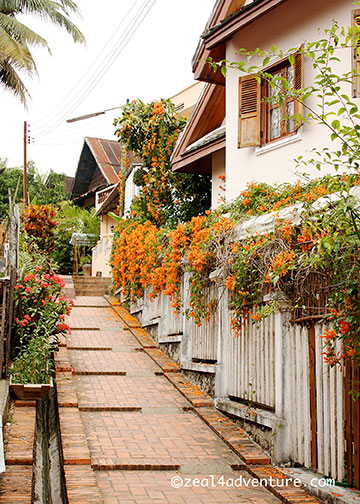
Traditional wooden dwellings and old colonial style houses fused into a distinct cultural tradition with beautiful landscapes that surrounds.  Mount Phousi perched in the middle of town showcases stunning views of the surrounding temples and hills.

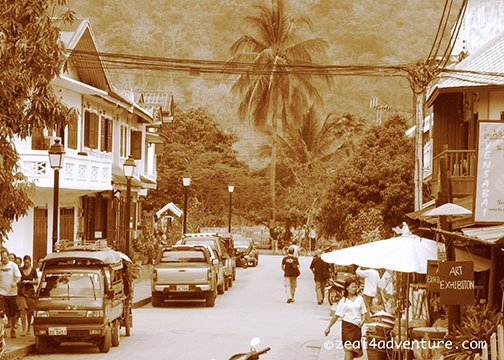
It is a city where time seemed to have stood still.  The old town (their historical district) in particular has an old world charm,

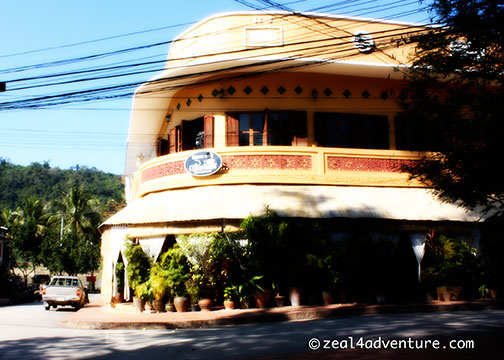
reminiscent of the 1940’s where bicycles dominate and colonial style interspersed with traditional houses line the streets with some vintage cars even.

Small enough to explore by foot, we started our stroll at our hotel in Kingkitsarath to the bank where Khan and Mekong meet. The street, as in many in Luang Prabang, becomes Khem Khong or Mekong Rd at some point.

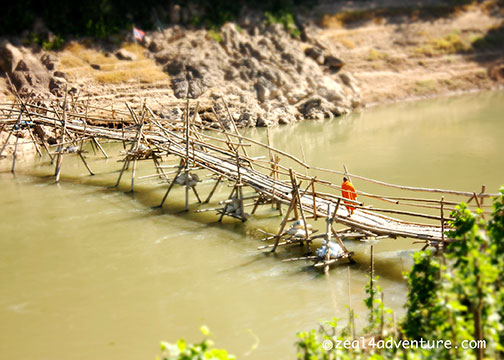
At the confluence, a path led to the river below where a wooden bridge stands.  Across is a handicraft and weaving village that one can explore but we didn’t venture out there anymore.

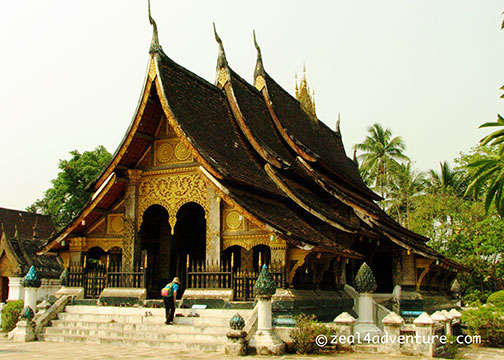
Instead, we continued on Khem Khong to get to Wat Xieng Thong – perhaps the most magnificent but definitely the most important and impressive of Lao temples.  There is a cluster of  ancient buildings dating back to the mid 16th century.

At the back of Wat Xieng Thong is a tree of life mosaic in colored glass.  Anyone with a keen interest in Lao history should not miss the religious artworks and artifacts housed here.

When it was time for lunch, we went for L’Elephant, an institution in its own right in Luang Prabang.  Menu was mostly French.

For starters we had a refreshing Carrot and Orange Salad and a superb Escargot baked in Garlic and Parsley Butter – cooked the way we like it.  For main, I had the Mekong Perch in Coriander Sauce and A had Stuffed Roasted Boneless Quail.  I say fine dining at its best in Luang Prabang.

The laid back, open-air atmosphere with high ceiling fans half expects you to see Rick Blaine come out and entertain.

In between lunch and a traditional lao massage, we explored more of Khem Kong, definitely a very quiet street where many upscale hotels are located.

Khem Kong facing the Mekong

 One of many roadside restaurants with a view of the Mekong or the Nam Khan

We then visited the Haw Kham, which is now known as the National Museum.

Once the Royal Palace, the building is a fusion of Traditional Lao and French design.  It houses an impressive collection of royal memorabilia and religious artifacts.

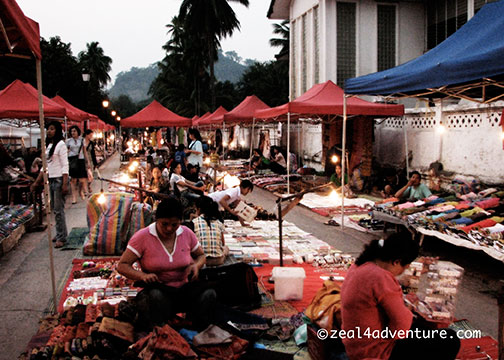
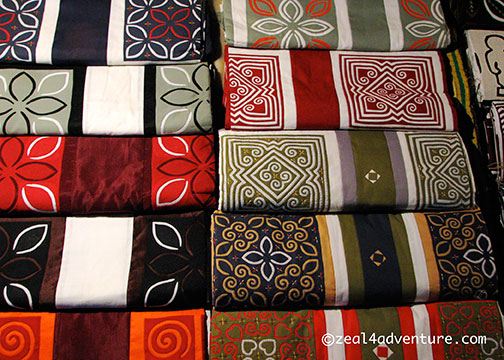
Every night, Hmong people come dowm from their villages in the mountains to sell their hand-made products,

typical Lao arts and crafts that include appliquéd blankets, silver jewelries, embroidered bags and a lot more.

A short walk-through here is more than adequate if a bargain hunter you are not.  They  have interesting and tasteful designs at a bargain, the quality is another thing though. But I guess you get what you pay for.   🙂

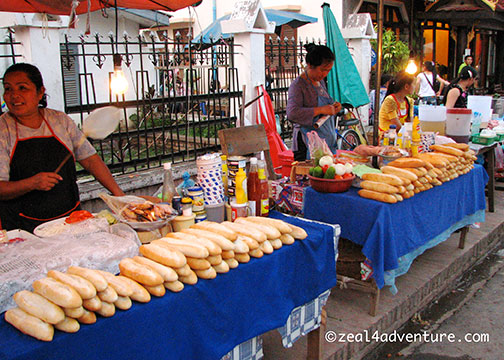
Many of the stalls here sell Lao street foods but we had our eyes set on Mango Tree in a quieter part of Sakkarine St.

Suffice it to say that dinner was fabulous.  Superb Lao dishes plated beautifully and served in a casual garden setting.

An extraordinary meal to cap an ordinary day, I must say.

So tell me, how can you not fall in love with Mekong’s jewel, its beautiful people,

its heritage and its shabby chic French fused Lao architecture that is so uniquely Luang Prabang?

Useful Info:

Villa Deux Rivieres
Kingkitsarath Rd., Ban Khily
Luang Prabang, Laos
+856 207737 8575
 
Cafe Ban Vat Sene
Sakkarine Rd.,
Luang Prabang, Laos
+856 71 252 482
 
Le Banneton
46 Sakkarine Rd., (opposite Wat Sop)
Luang Prabang, Laos
+856 21 217 321
 
 
L’Elephant Restaurant
Ban Vat Nong
Luang Prabang, Laos
+856 71 252 482
 
 
Mango Tree
Sakkarine Rd.,
Luang Prabang, Laos
+856 71 253 750

Wat Xieng Thong
Khem Khong Rd.,
Luang Prabang, Laos
Admission: 20,000 kip
 
National Museum
Sisavangvong, Luang Prabang
+856 71 212 122
Admission: 10,000 kip


Early Morning Alms

I am not a morning person and waking up early can be such an effort.  Laos somehow has managed to get me up at the crack of dawn, and for good reasons.  When we snuck out of our hotel’s gate fence one early January morning, the streets were still quiet with only street lamps lighting our way to Old Town, as Luang Prabang’s historic district is called. Here, the day seemed to have started already.

Villagers found their spot, kneeling on mats, waiting with a basket of sticky rice, fruits or sweets.

Vendors likewise positioned themselves near tourists, waiting for an opportunity to sell.

We sat at a corner with our camera watching the day progress.

Every morning, between 5 & 6AM, the monks of Luang Prabang’s 30 or so temples collect alms from the kneeling pilgrims and some early rising tourists.

Barefoot, they parade through the picturesque streets single file from oldest to youngest in their burnt sienna robes carrying alms bowls over their shoulder.

Alms giving have been practiced here every morning as townsfolk provide the monk’s daily sustenance for hundreds of years now.  They say that the monks are only allowed to eat food given to them in the morning of each day hence the daily ritual.

Those that give, they also say, earn merits for the good deed.

Cultural aside, this century old tradition is a spectacle on its own – waves of mandarin clad monks flood the streets contrasting the green trees and traditional white structures.  And as soon as it has started, it is over, and people start going their way.  We head for breakfast.

Café Ban Vat Sene.  We had coffee and dessert here last night and were instantly drawn to the place – the atmosphere relaxed with a Parisian café vibe.  But you see a lot of those as Luang Prabang has a natural laid-back atmosphere with a large French influence from architecture to restaurants and bakeries.  The cool January air summons us to sit outside for breakfast and watch the last of the procession.

They make wonderful French breads– baguettes, croissants, pain de campagne… with homemade jams

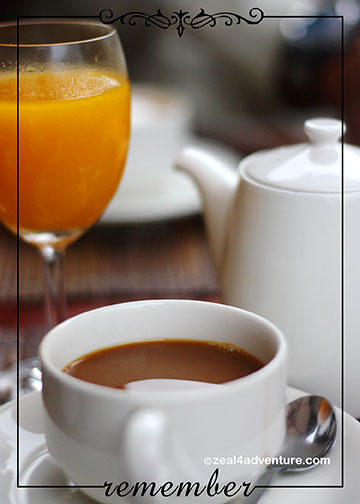
and a freshly brewed pot of coffee – my day has officially started.

Useful Info:

This religious ceremony is one of Luang Prabang’s major attraction, tourists must learn to be courteous and respectful of this tradition.  Please click here to know what and what not to do.

Cafe Ban Vat Sene
Open daily from 6am – 10pm
For reservations, call: +856 71 252 482

Route 13

Credits:  Papers by Creativity by Crystal’s Room Collection, Art & Soul Papers by Sahlin Studio, Story Telling Paper by Sahlin Studio.

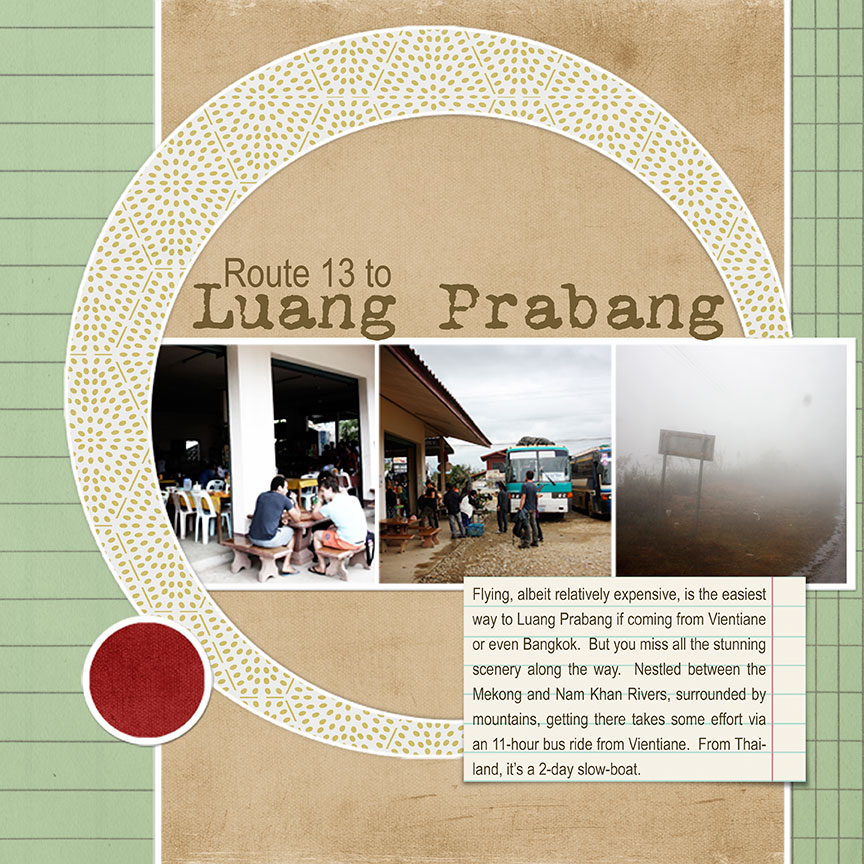
Flying, albeit relatively expensive, is the easiest way to Luang Prabang.  But you miss all the stunning scenery along the way.  Nestled between the Mekong and Nam Khan Rivers, surrounded by mountains, getting there takes some effort via an 11-hour bus ride from Vientiane.  From Thailand, it’s a 2-day slow-boat.

We chose to take Route 13 because it was cheaper, the scenery – stunning and we wanted to stop at Vang Vieng even for just a day (although a day isn’t really enough).  From there, it still takes 7 hours on a meandering, poorly paved road leading to the ancient city, also a UNESCO World Heritage Site.  The remarkable landscape makes the exhausting experience worthwhile.

We break the trip for lunch and there I had my bowl of delightful beef noodle soup as I had planned, remembering how good that bowl of soup was in 2007.  Lining up for that bowl, I watched with interest how they assembled the dish right before us.  First the fresh noodles, then the beef, the vegetables and at the end of the line sits a huge pot of soup ever so gently simmering under a slow fire.  The lady ladled up soup almost to the brim and handed it to me.

I devoured it with gusto.  It was as I remembered it to be, pretty damn good soup.

From that time till we reached Luang Prabang, we stopped a couple of times.  The entire bus tensed up when we realized that it was having problems with its brakes

– made even scarier when the air became dense with fog, which kept me awake and praying the rest of the trip.  We inched our way to the city and finally breathed a sigh of relief when we saw signs of city lights just around the bend.

It took us nine hours… but all is well that ends well.  Luang Prabang is worth it, I promise.

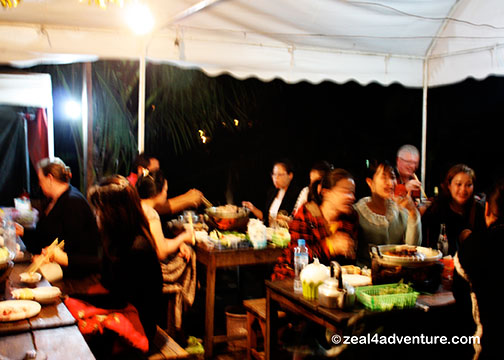
Not far from our nice little boutique hotel, just across The Apsara, is a sidewalk eatery I stumbled upon on my earlier trip.

It serves a mean Laotian-style BBQ that is a much like but not quite shabu-shabu.

It’s a cross between that and a Korean BBQ where the meat is grilled on the griddle while the soup is simmering on the same griddle.  As the meat cooks, the fatty juices drips on to the soup and I don’t have to tell you how divine that soup gets the longer it simmer and the more drippings it gets from the meat.  Brilliant.

And just like that, Luang Prabang has charmed me once more, today’s dreadful last stretch erased.

Getting There:  Click here for more options.

Banaue Rice Terraces

Credits: Quickpage by LCP using the “You are Awsome” collaborative kit created by J Sprague.

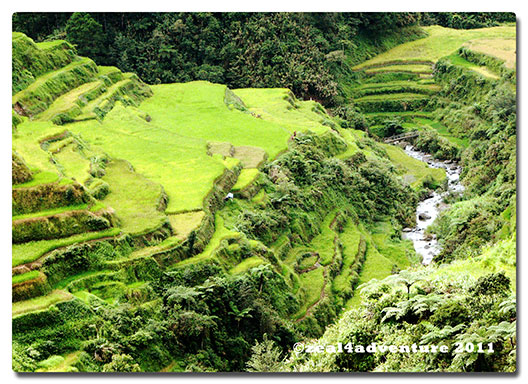
Construction of the terraces is carried out with great care and precision. An underground conduit is placed within the fill for drainage purposes. The groups of terraces blanket the mountainsides, following their contours. Above them, rising to the mountain-tops, is the ring of private woods (muyong), intensively managed in conformity with traditional practices, which recognize a total ecosystem, which assures an adequate water supply to keep the terraces flooded. Water is equitably shared, and no single terrace obstructs the flow on its way down to the next terrace below. There is a complex system, of dams, sluices, channels and bamboo pipes, communally maintained, which drain into a stream at the bottom of the valley. – UNESCO

This is describing a structure built more than 2,000 years ago.  Awesome, isn’t it? Although because of the presence of many modern structures around, the Banaue Rice Terraces was not included on the UNESCO list of “World Heritage in Danger”, it nonetheless holds the same complex trickle-down irrigation system that the UNESCO inscribed clusters have.  And these clusters, all found in the Province of Ifugao, are Nagacadan Terraces in Kiangan, Hungduan Terraces, Central Mayoyao Terraces, Bangaan Terraces and Batad Terraces.

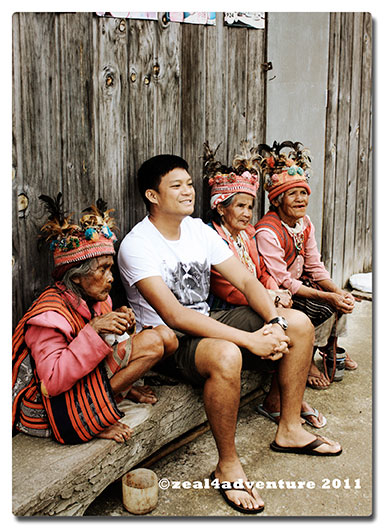
A very touristy thing to do.  For a fee, one gets to be photographed with these Ifugao women.

The Banaue Rice Terraces however, despite the exclusion, remains to be the more popular tourist destination due to its accessibility and proximity to town, which is proving to be both harmful and beneficial to the land.

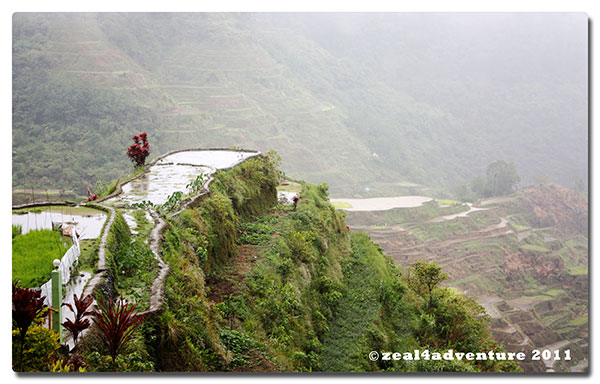
These stonewalled rice paddies is considered one of mankind’s greatest engineering feats and is every Filipino’s pride.

The terraces as seen on our P1,000 bill.

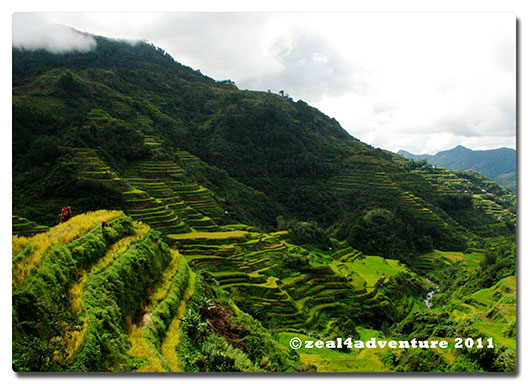
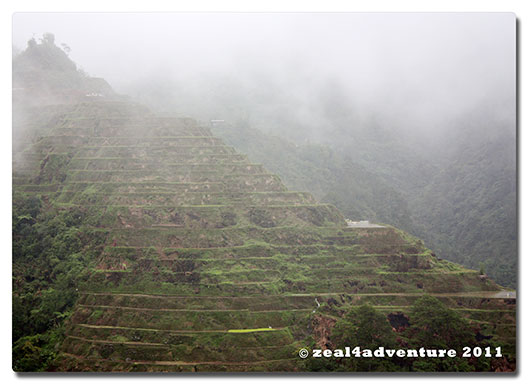
The 8th wonder of the world (as many Filipinos call it) begins at the base of the mountain and extends upland following the contours of the mountain– almost 5,000 feet above sea level.

This is North Luzon’s most famous sight and one of Southeast Asia’s most popular tourist destinations.  Famous not only for its sculpted beauty but for the traditional craftsmanship and cultural landscape dating back many centuries and is preserved to this day.

That said, these terraces are slowly being abandoned and already showing signs of damage and deterioration due to the lack of maintenance.  Many of the new generations would rather pursue work outside of the rice fields, opting to be guides or drivers.

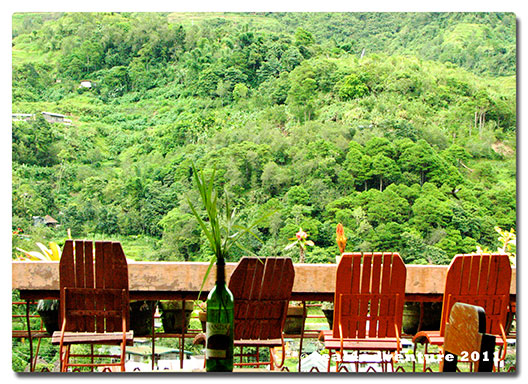
Banaue is some 348 kilometers away from Manila and a good 8-10 hours drive.  It is a small market village sitting about 1,500 feet above sea level.  The town is not exactly enchanting, thanks to poor planning but it has its own appeal, me thinks – how can you go wrong anyway when breakfast comes with a view like this?

At Sanafe Lodge

Useful Info:

Sanafe Lodge and Restaurant
Contact no:  +63 74 386 4085 (Banaue), +63 920 950 4644 (Mobile), +63 722 2110 (Manila)
Email:  sanfelodge@yahoo.com