Hong Kong: A Mini Dining Escapade

Hong Kong used to mean one thing to me in the past – shopping.  Not anymore.  Today, Hong Kong signifies food – delightful, glorious food.

Credits:  Papers by Nadi Designs, Art of Digital Design and Prairie Woman Design.  Flower by Moninda; Word art by Wimpy Chompers; Alpha by Denise Beatty Originals

Welcome to the culinary capital of Asia.  In this relatively small island, foodies can revel not only in an assortment of Chinese regional delicacies but also in a range of international cuisine – from food stalls to Michelin starred restaurants.  This has been the highlight of a very short trip to Hong Kong early this year.  By the end of this month, I will be back to sample more gastronomic delights so Hong Kong here I come… again.  But before that, allow me to reminisce a bit on that mini dining escapade.

I will begin with the customary dim sum.  How can you be in Hong Kong and not indulge in supposedly “the best dim sum in the world”?

Zen Chinese Cuisine
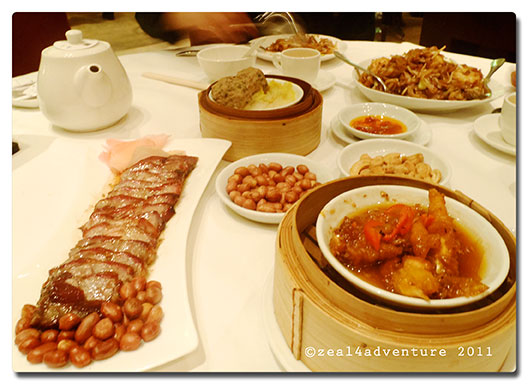
A long-standing casual Chinese Restaurant in Pacific Place.  Apart from serving a range of Cantonese specialties, they also serve an extensive and intricate range of dim sum for lunch.   Be warned though, they usually have a long line especially during lunchtime so be there early.

Hutong

Located on the 28th floor of One Peking in Tsim Sha Tsui.  This stunning restaurant with a fantastic view of the HK harbor serves authentic Northern Chinese cuisine with a contemporary twist.
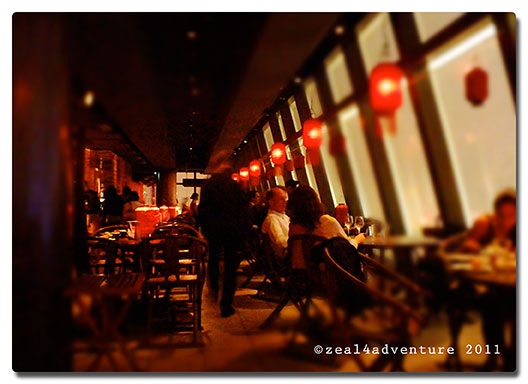
Red lanterns, hanging birdcages, intricately carved wood panels, Chinese silk curtains — all add charm to the dark, muted interior giving off a traditional Chinese feel.
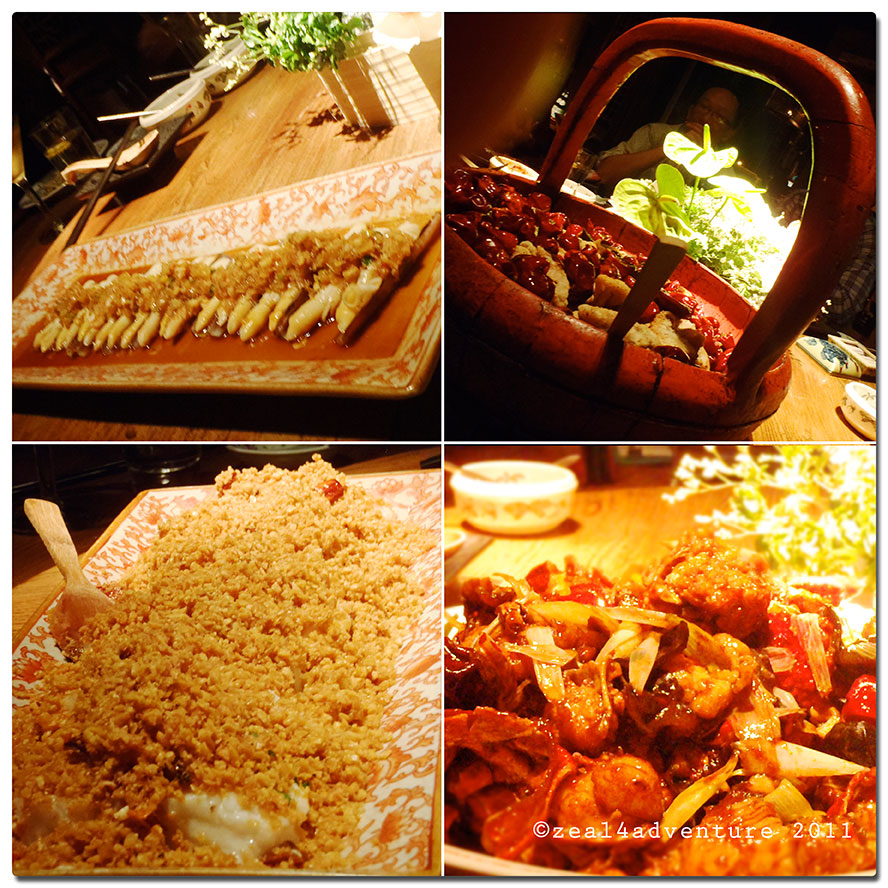
Clockwise:  “Red Lantern” Crispy chicken w/ Sichuan red chili; Lobsters fried w/ red pepper & sweet chili sauce; Cod fillet tossed with fermented bean & chilis; Chili-spiced bamboo clams

A must-try are their Chili-spiced bamboo clams steeped in Chinese rose wine & chili sauce, Cod fillet tossed with crispy fermented bean & chili, lobsters fried with red pepper & sweet chili sauce, “Red Lantern” Crispy chicken with Sichuan red chili and last but not the least (not in photo) is their Crispy de-boned lam ribs.

Yung Kee Restaurant

My absolute favorite restaurant in Hong Kong and I will almost always pay a visit when I’m in town.

More than Hong Kong’s dimsum, I must have a piece of that lovingly roasted goose.   Juicy, tender, rich meat with skin so crispy… To. Die. For.

Another house specialty that I take home with me is their century eggs oozing with sticky yolk.  Paired with pickled ginger… wicked!

Kee Wah Bakery
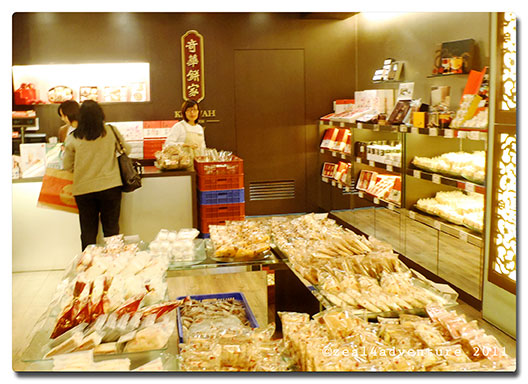
Right beside Yung Kee is a bakery called Kee Wah for some beautifully packed Chinese traditional pastries.  Beautiful packaging aside, their egg rolls and pineapple shortcakes are great pasalubongs (gifts) to take home.
Useful Info:

Zen Chinese Cuisine
One Pacific Place Mall
88 Queensway, HK
+852 2845-4555 / 2845-4377
Hutong
28th Floor, One Peking Road,
Tsim Sha Tsui, Kowloon
+852 3428-8342
Yung Kee Restaurant
32-40 Wellington Street
Central, HK
(5 minutes walk from MTR Central station , exit D2)
 

Tian Zi Fang: The Hippest Neighborhood of Shanghai

“It is amazing on the 2F” it says on the door.   We walked in and were greeted with nothing but stocks of coffee and a stairway.

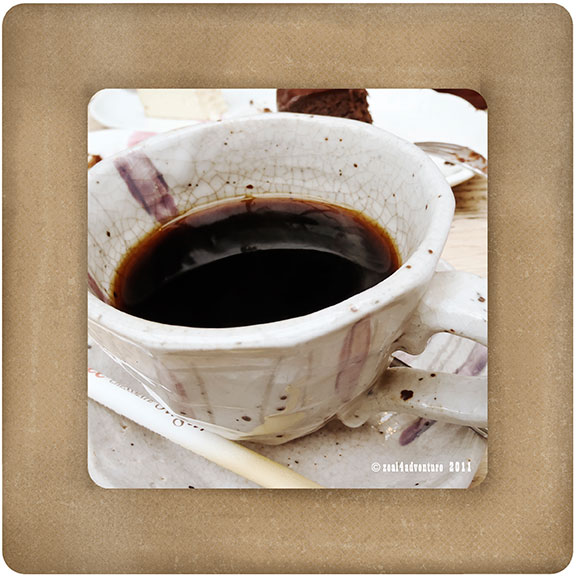
We walked up and the steep flight led to an amazing albeit crowded 2F indeed, wrapping us with the wonderful scent of roasted java.

It is an unpretentious charming little café that has a wide choice of coffees and serves Japanese comfort food.

A Japanese guy mans the bar, he is said to be the owner of Café Dan, this hip café restaurant in Shanghai’s hippest district, Tian Zi Fang.

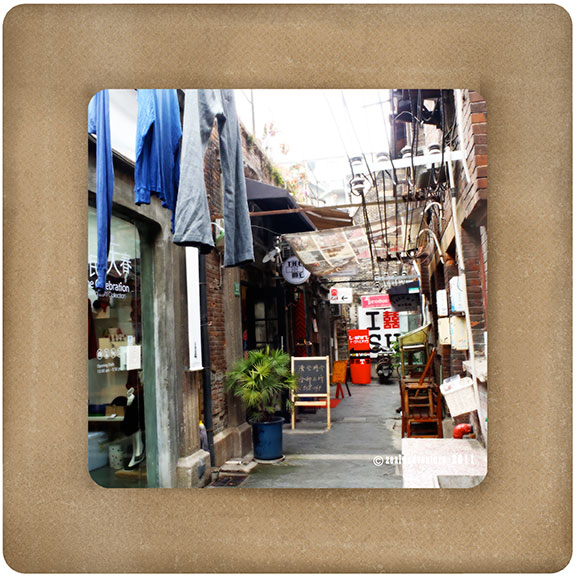
Taikang Road, used to be Shanghai’s “old” art district where one would find a range of Chinese calligraphies and traditional ink paintings. Now also known as Tian Zi Fang is a hip new assortment of design and art enclaves and cozy cafe and bars.  It is a maze of old residential shikumen that got invaded by artists and local designers.

Many of the little shops here carry original designs and a myriad of small art galleries are scattered all over this artsy compound.

A typical boutique.

Tian Zi Fang integrates heritage, the arts and urban amenities.

Many of the houses in this 1920s commune rented out their ground floors to boutiques & restaurants and it is not unlikely to see locals going about their business like doing laundry, cooking etc. as you are to see yuppies sipping lattes.

The place is particularly busy in the weekend when people come to have coffee and indulge in some healthy window-shopping or even some real shopping.

Useful Info:

Cafe Dan
Back street 41-248 Taikang Lu
Tel:  021-64661042
Website:  www.idancoffee.com
Park in:  Riuyue Parking

Shanghai Express

Credits: Papers by Moninda’s Sea Memory papers; Template by J Sprague’s Digi in Deep Cre8 No. 1 Template.  

It really was – spent mostly in a conference hall.  But no matter how work related my trips are I’ll manage to squeeze in a day or two of exploring.   So here I am in Shanghai after 8 years or so and much has changed especially the fashion and restaurant scene.  Due to its rapid growth over the last 2 decades, it is today a global city, exciting and influential, once again known as the “Paris of the Far East”.  Certain districts of Shanghai have achieved world-class status in their respective fields.  The wharf area, which they called The Bund became at one time China’s financial hub and will always be the image and pride of Shanghai.  Artistic and trendy as they are, many new areas are developed to keep the old yet manages to metamorphose into something cool.  New concept restaurants pop up so fast, it’s difficult to keep up.  (More of trendy Shanghai in days to come)

At the western end of Shanghai is the Hongqiao district, a hyper-modern zone of hotels, conference halls and offices.  A large part of the expat community took up residence here.

In Hongmei Lu near Yan ‘an Lu is a 2-storey building selling mostly pearls aptly called Hongqiao International Pearl City.  Each store we went in had impressive designs and is unsurprisingly quite reasonable and being the pearl lover that I am… I was a happy camper.  But don’t be fooled by the name, as in many Chinese shopping centers, they also have many shops that sell “made in China” stuff like toys, even hiking and photography paraphernalia.

Just across Pearl City is Hongmei Pedestrian Street, known for restaurants, bars and cafés serving various cuisines.  Foreigners or overseas Chinese own and run half of the bars and restaurants lining the streets hence the recent re-naming to Foreigner’s Street 101.

And among the many western restaurants lining the street, we got sidetracked to this simple Xinjiang restaurant called Cindy’s obviously serving Xinjiang (an Autonomous region of China) cuisine, largely resembling that of Central Asia – mutton and lamb kebab, Nan (flat bread), noodles, yoghurt…

This was just calling out to us.

Really good kebab.

I just find this really neat!  The pack came with chopsticks and napkins

Abuan Whitewater Adventure

Credits: Papers by CC oh joy yuletide, Chrysanthemum, Crystal Wilkerson Polka dot 08, EP Life is Good;  Border by LivE WWSH Page border; Tag by Crustal Wilkerson SVC tag

We were back at Abuan River the next day and were given the option to be on a raft or a kayak.

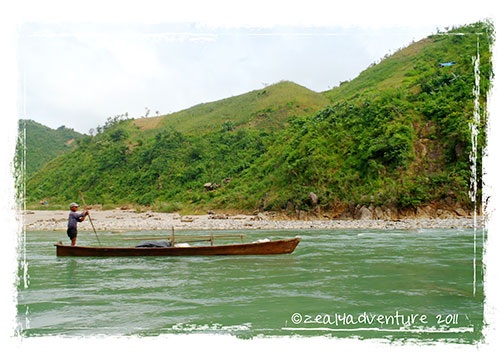
As we navigated upstream to where lunch was waiting,

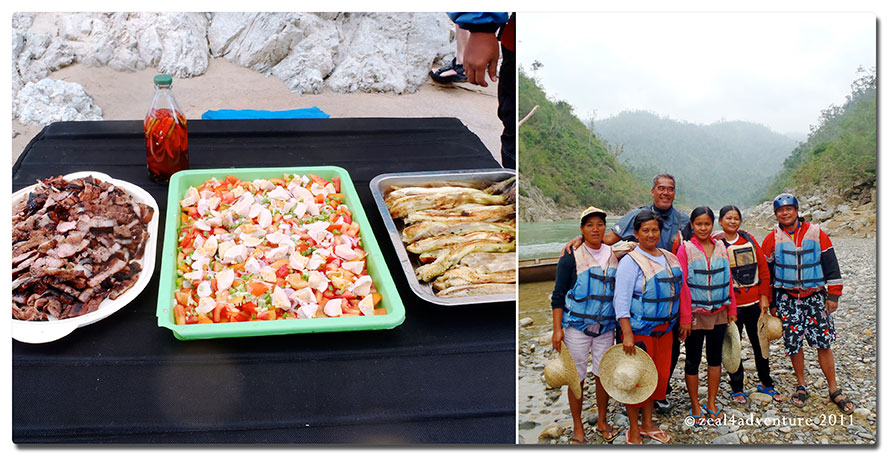
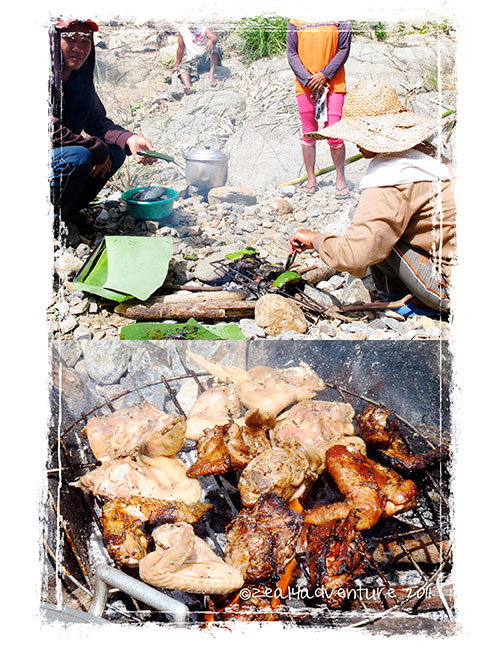
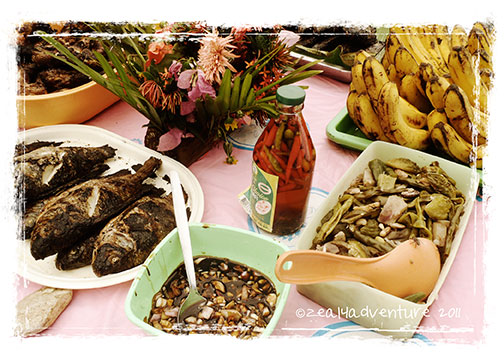
Our lunch (left) and the kitchen crew with Anton and Herbert (right)

I took note of the big rapids to assess whether to go down river alone (on a kayak) or with company (on a raft).

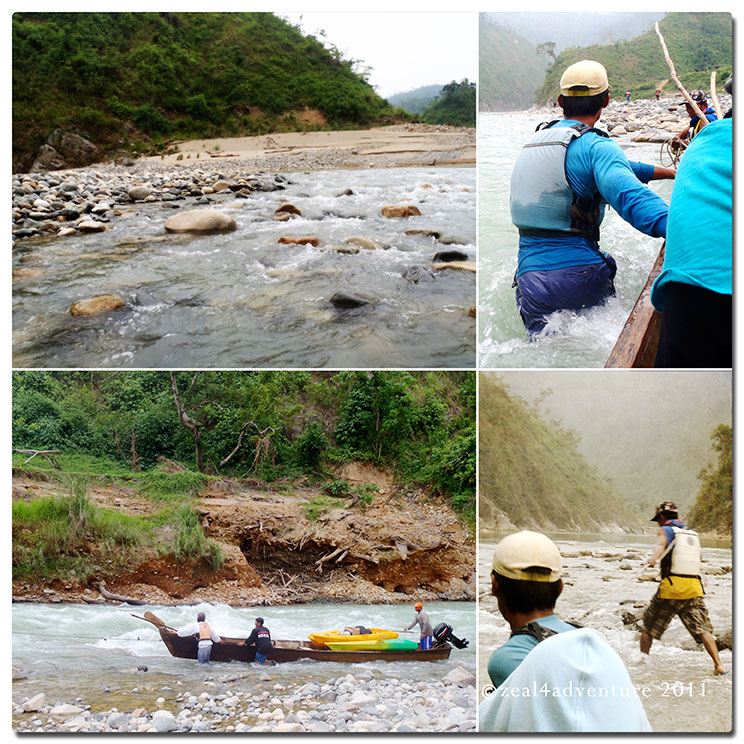
There were easy rapids but there were rough ones as well.  Rough enough to make us get off our banca and walk while the boatmen and guides pushed and pulled.

Few days before the run, the river was high with some strong rapids, which would make for a fun ride on a raft.  On the day of our run, the water subsided quite a bit albeit still strong enough for a fun, challenging ride on a kayak but tamer on a raft hence the choice.

In truth, I am not fond of falling into icy water on a chilly, cloudy day and falling off a kayak is a high probability especially on that one rough rapid so I opted to start the trip downriver on a raft and switched to a kayak when the rapids became tamer.

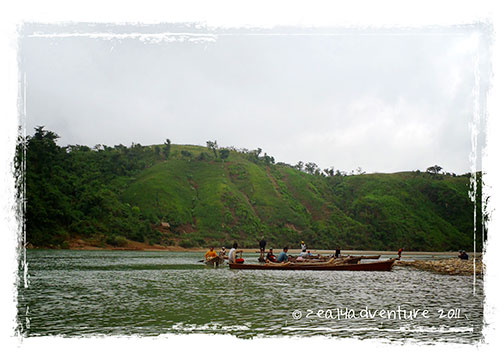
In between rapids, the water is as gentle and calming as a river can be.  Quite a scenic river, it was easy to appreciate the beauty and serenity of the river and its surroundings.

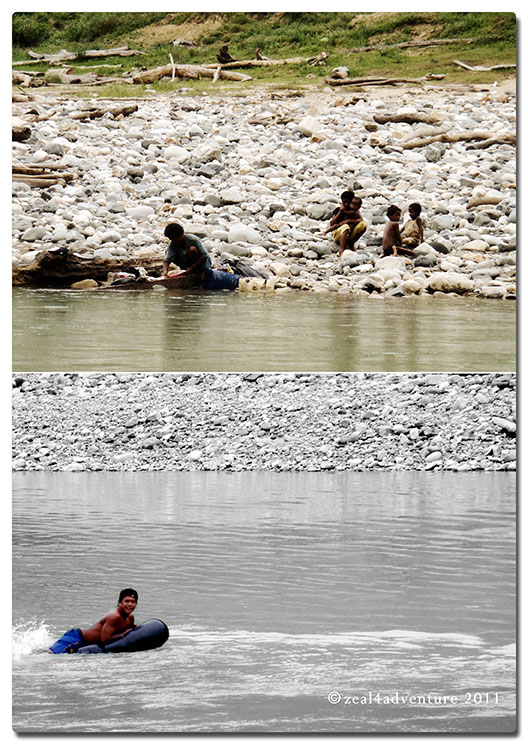
Many of the locals enjoy the river as much too.

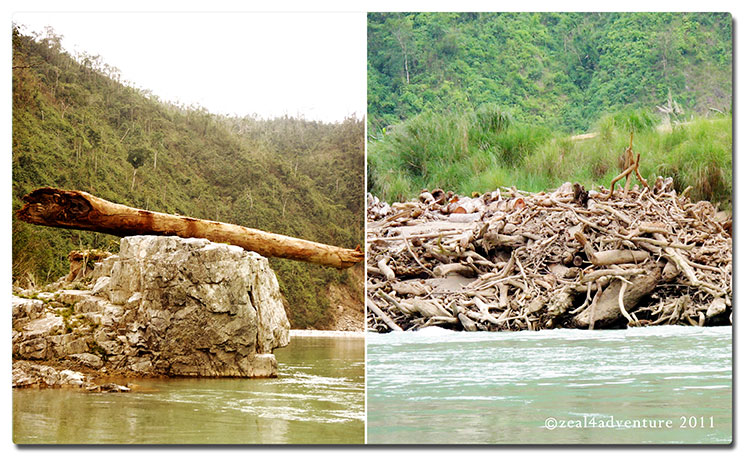
Though it couldn’t conceal the remnants of a recent major typhoon, a result of the abuse done to its forest.

Definitely a great introduction to whitewater rafting and likewise a fun challenge for kayakers with some experience.

Useful Info:

Adventures and Expeditions Philippines, Inc. (AEPI)
Contact Person:  Anton Carag Jr.
Email: anton@whitewater.ph
Mobile: (63)917-5327480

Exploring Abuan River

I am not one to pass up a chance to an adventure so one February evening, I found myself on a bus with 2 other friends, en route to Ilagan, Isabela.  We were to test run an eco-tour package intended to preserve the Sierra Madre forest and wildlife.

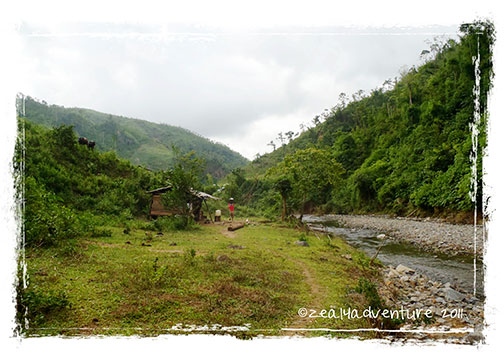
Abuan River is located at the Northern Sierra Madre National Park — the widest remaining tropical rainforest in the island of Luzon owing to its rich and diverse ecosystem spanning from coral reefs to beach forests.

For decades the river has been the route of “bugadors” (timber haulers) to transport illegally cut logs from the forest to Ilagan.  To give these timber haulers and their community an alternative livelihood, World Wildlife Fund-Philippines (WWF-Philippines) together with Coca Cola Philippines and the local government of Ilagan identified the river as the next ecotourism destination with rappelling, waterfalls trek, kayaking and even seasonal whitewater rafting as potential activities.

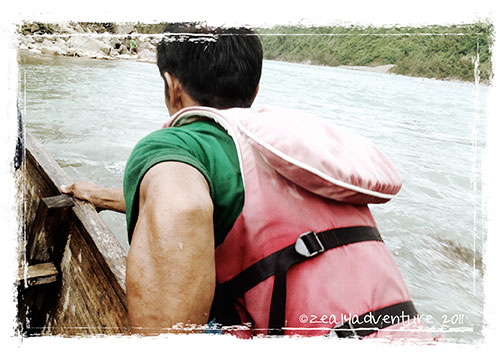
Skillfully navigating our boat through rocks and (sometimes) strong rapids.

Skilled in the river, the “bugadors” were our boatmen, river and trekking guides while their wives were tapped to prepare the food.

Ladies in charge of lunch.

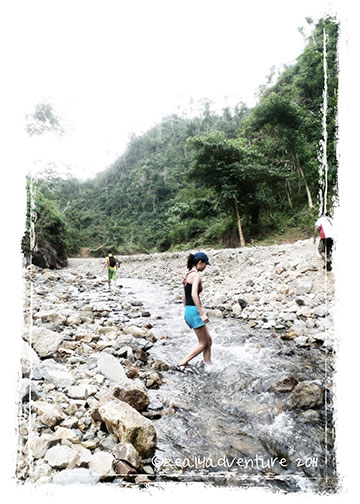
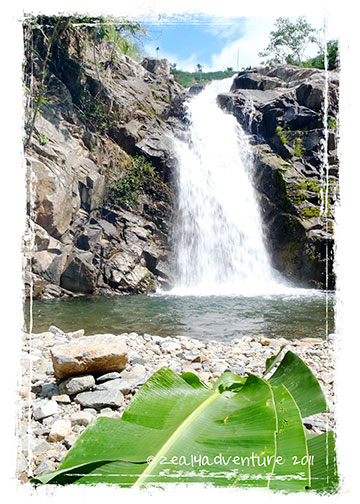
Two hours navigating through the rapids and rocks and we arrived at the start of the trail to Sulimanan Falls.  Getting there was an easy 30 minutes trek that passes through rivers, hills and grasslands.

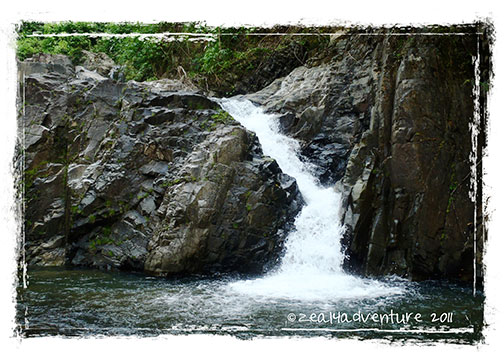
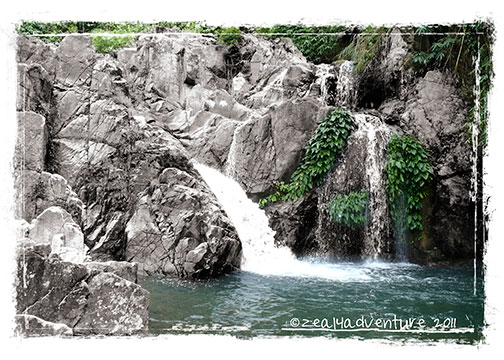
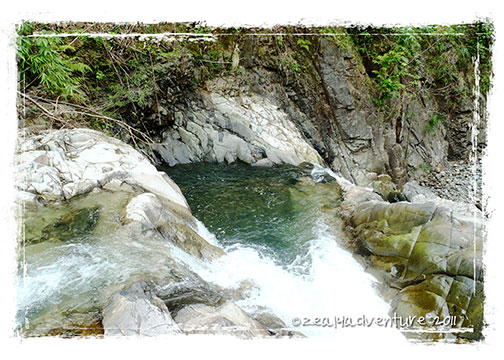
At the end of the trail lies a 3-tiered falls.

First falls

2nd falls

Pool from the 2nd tier falling to the 1st tier

3rd falls where we had lunch

Getting to the 2nd and 3rd tier required a bit of scaling and bouldering with the help of ropes provided by AEPI, the outfitter tapped to develop the tour.  Lunch was prepared on the 3rd tier beside the falls.

Simple but mouth-watering!

That’s what I call innovation.   🙂

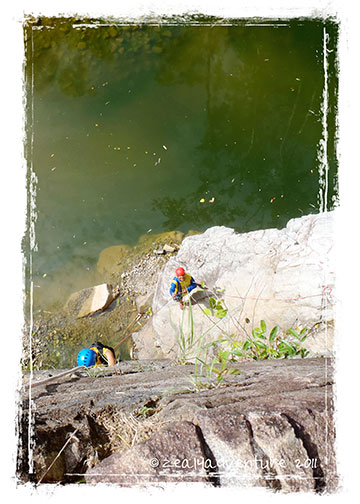
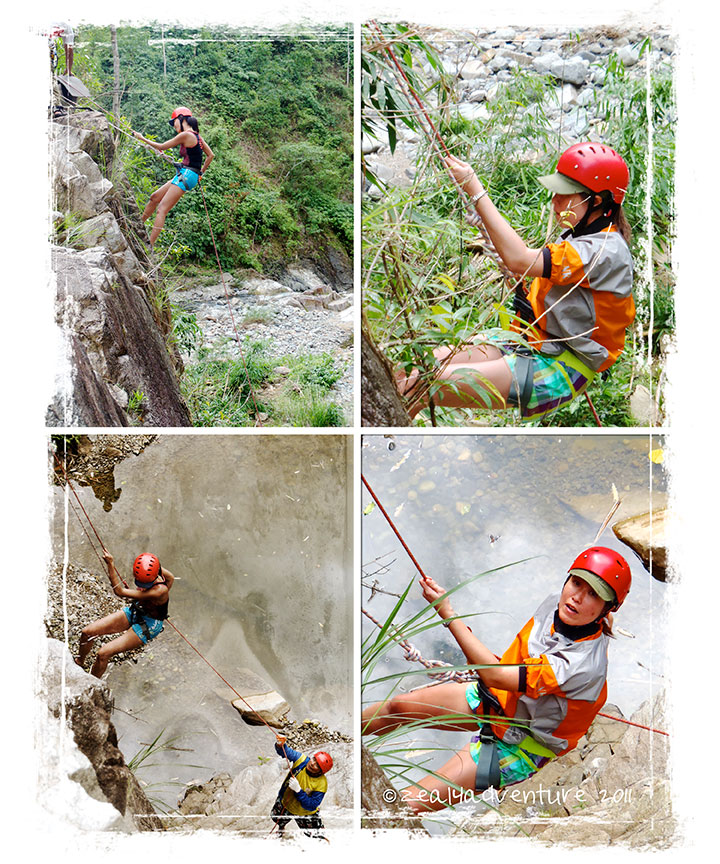
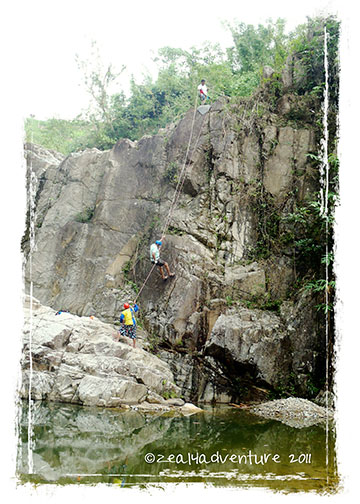
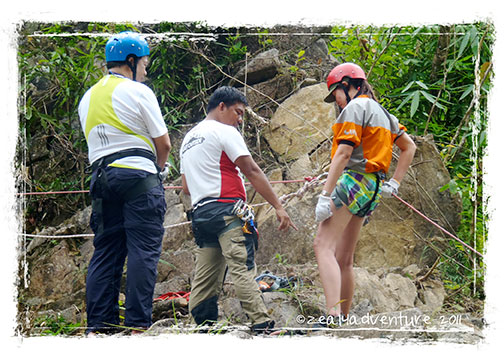
After lunch, the next agenda was to rappel down to the 2nd tier.

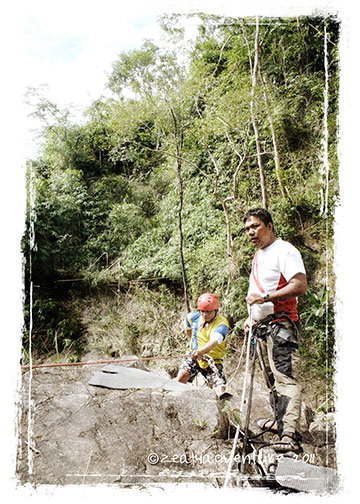
Getting into position:  Argel and Herbert — our belayers.

Not exactly my thing, I was not happy to learn of this but with a little prodding, gamely went along with the agenda.

I know that I am gradually overcoming my fear of heights when it took me perhaps only 20 minutes to muster enough courage to just go for the 60 ft. descent with only some distress and perspiration while at it.

S and I rappelling down.

Either that or I am getting better at throwing caution to the wind.

After witnessing a few of my rappelling jitters in the past, A gave me a big hug and told me he was proud of me. Heck!  I am proud of me.   🙂

The Cirque’s in Town

It was a weekend of heavy downpour but we made it to Rizal Park to catch Varekai, a Cirque du Soleil touring show currently staging in Manila till July 24.  All I can say is if you haven’t gone to see it yet, I recommend that you get yourselves some tickets.  It’s worth it.  Having seen Zaia in Macau, I wasn’t sure if a touring group would be as impressive.  The show proved me wrong.  I would like to think that the effort is on par if not more – from the tents to the seats to the stage, not to mention the props, costumes and the cast and crews that they brought with them – quite a production. Known for its mind-blowing yet gracefully choreographed acrobatic stunts, wonderful music and colorful costume, this French Canadian entertainment company has always been more than your average circus act.  An amazing circus show that found its way here is certainly a waste if missed.

We decided to book an overnight at Hotel H20 and check out the Manila Ocean Park the next day.

The hotel is conveniently located inside the Park and is just across the show venue.  Glad we did as the rains did not let up and we actually had to drive from one parking lot to the next or end up with shoes soaking wet.  The hotel was interesting albeit a bit inconvenient when we had to walk to Manila Ocean Park sans a covered path to get to the hotel.  We booked a Bayview room and we were greeted with this in the morning.   😦

While we’re at it – shows-wise, I mean.  Cinemalaya starts this weekend through July 24.  Looks like an impressive line up of Filipino Indie films that’s showing at the CCP and Greenbelt 3 theaters.

Useful Info:

Hotel H20 and Manila Ocean Park
Luneta, Manila (behind the Quirino Granstand)

Getting there:

Casa Vallejo: Back To Life

More than a hundred years ago, the Americans develop Baguio into a hill station. They also established Camp John Hay, Brent School, and Baguio Country club during that time.  Not long after, Baguio became known as the Philippines’ summer capital and in 1909, Casa Vallejo was put up to accommodate many of Baguio’s visitors and continued doing so for the next 20 years.

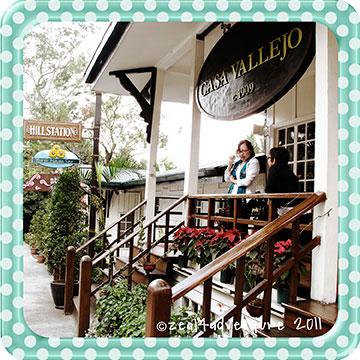
This white wooden structure located along Upper Session was an inn for the 1st 20 years and at one point, a detention hall and a temporary annex to the Baguio City High School.   When the government closed it down in 1999, many feared demolition but survived as well as many old timers fought to preserve the structure, particularly the pinewood used to build the inn.

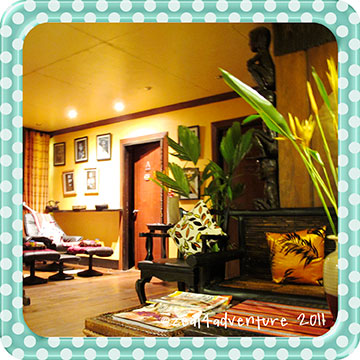
With a little tweaking but with the same quaint charm, it stands today back to life as a boutique hotel– every piece of pinewood intact.  Old window panes were said to have been screwed back and the rotting wooden floors were replaced with pinewood salvaged from other parts of the inn.  The number of rooms was reduced to accommodate bathrooms on each room because the old building had common baths.  The stairs leading to the ballroom were restored.  And the ballroom now turned into Hill Station (that cozy restaurant that serves lovely food) was where government official and socialites back then used to dine and wine.  With so much history (from its glory days to its near fatal fate), it is a pleasure to be staying in one of the remaining American structures still standing on the original government center.

It being an old structure though, the rooms and especially the bathrooms are not as spacious.  Luckily our room was facing the back, more like the parking area, because unfortunately with all the cars, Baguio does not boast of fresh air like it used to many, many decades ago.  I can imagine the noise and pollution we would have to bear if our room faced the road.  A Deluxe Room for P 2,599 for 3 people is a good deal.  It comes with free breakfast albeit limited choices at the Hill Station.

*Information gathered on its restoration found here.

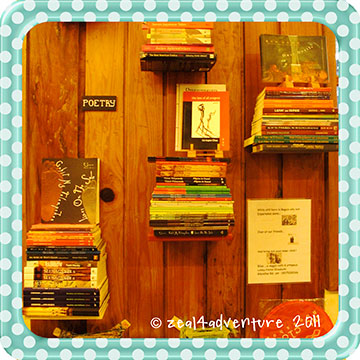
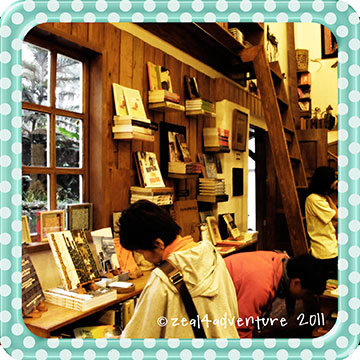
You’ll also find Mt Cloud, a nice little bookshop (as they called it) that carries many interesting foreign and local titles.

Although cramped, for some reason it was conducive enough for me to find 2 books right away.  I would have found more if I had stayed a little longer.

Just beside Mt Cloud is North Haven Spa.  We didn’t think twice to book us a blissfully relaxing indigenous body massage just before we called it a night.  Great decision.

Except for a few hours at BenCab’s Museum, we practically spent most of our time in Casa Vallejo not having the slightest desire to even walk over to SM Baguio for some wonderful sunset views.  We were so content just being lazy.

Useful Info:

Casa Vallejo
Upper Session Road
Baguio City
Phone +6374-424-3397
Website:  www.casavallejobaguio.com
Mt Cloud Bookshop
+6374-424-4437
Website:  http://mtcloudbookshop.com
North Haven Spa
+6374-424-8112
Website:  www.northhavenspa.com


The Flavors of Old Baguio

My face lit up when A announced that “Mitos recently opened her own restaurant”, and all I could think of was the Fabada she served at her home one time we were in Baguio, that was last year.  Needless to say, we had to go that very evening.  We went back the next day with more friends in tow.  And I’ve been back one more time since then.

Mitos is Mitos Benitez-Yñiquez and her now famous restaurant is called Hill Station.  She, for the longest time, managed her family’s renowned Mario’s Restaurant in Baguio.  Her new restaurant is within Casa Vallejo, the boutique hotel built in 1909, renovated and open again for business along Upper Session.

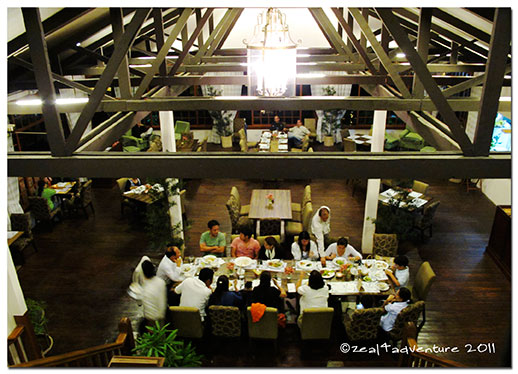
Inspired by American colonial architecture, the main dining area has high ceiling, big French windows and wooden floors.  It also has 2 elegant staircases that lead to the hotel. Warm and cozy that makes you want to linger.

The food celebrates the flavors of Old Baguio, one of the last hill stations of Southeast Asia.  The menu offers a variety of slow-cooked hearty meals.  Lots of stews and some really good curry dishes.  Slow-cooked meals somehow evoke a sense of comfort and complement it with the homey, cozy atmosphere, who wants to go anywhere else?

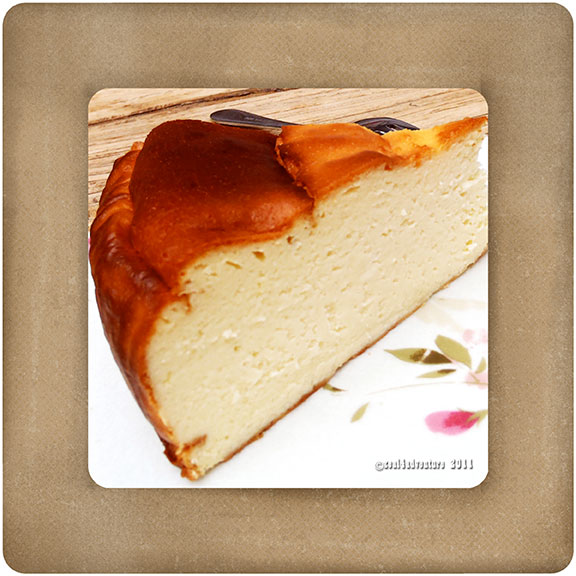
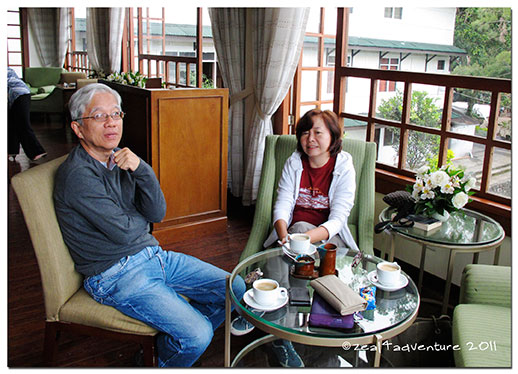
Yes we spent the afternoon in a cozy corner of the restaurant reading, chatting and enjoying our cake and coffee until it was time for dinner.

Everything or almost everything is homemade — from the breads to the pastries to their ice cream.  As you enter from the bar you will see a shelf of potteries on sale mostly by famed potter, Lanelle Abueva and the Sagada Potters.  Along with it are homemade goodies by Mitos herself, for sale as well– salad dressings, salsa monja, salsa brave, granola, bihod, some jams… if I could bring them all home, I would.

I couldn’t stop raving about Hill Station to my friends in Manila hence the trip to Baguio early this year.  We got a room at Casa Vallejo and spent most of our time there – more on this on my next post.  We also wanted to try everything on their menu, which suffices to say is impossible for 3 people spending only a weekend there.  But with what we are able to cover, here are our favorites:

Tuna Tataki with Wasabi Mayo

Isn’t it obvious?  So good it was gone before I knew it.  Take my word for it… go for this.  The tuna seared very briefly then sliced thinly and seasoned with freshly cracked pepper that gave the tuna a nice kick.  Dipped in wasabi mayo… absolutely heaven.  A great appetizer just before we moved on to the main dining hall.

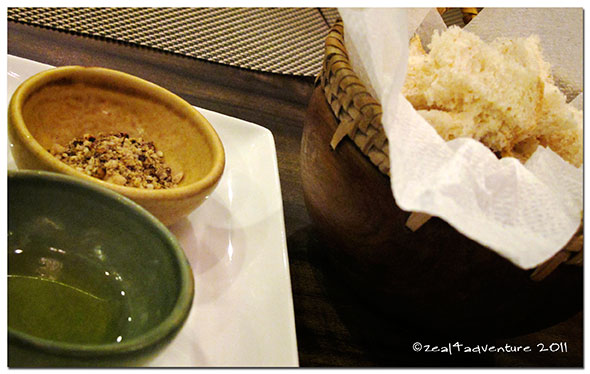
Home-made bread with Moroccan spice blend and olive oil

First I must say that this spice blend is brilliant.  What a way to whet one’s appetite.  The thing is, you need to control yourself lest you regret it once the main entrée arrives.

Left to right:  Grilled Shiitake and Grilled Tomatoes; Hill Station Green Garden

Hill Station Green Garden — mixed greens, tomatoes, blueberries, white cheese, caramelized walnuts and topped with a sesame-miso dressing.  What’s not to like about this salad?  Great combination and I’m always a sucker for miso or sesame dressings… this was an obvious choice.

Grilled Shiitake and Grilled Tomatoes — we had this over lunch the next day.  It was on their list of Specials.  A really nice blend of ingredients.  Shiitake with all the flavors and the tomatoes grilled and slightly caramelized… a winner.

Clockwise:  Cambodian Coriander and Garlic Chicken; Crispy Duck Flakes; Indian Lamb Curry; Steak and Prawns Peri-Peri

Cambodian Coriander and Garlic Chicken — marinated overnight and charbroiled.  Yum!

Crispy Duck Flakes — had this on my first visit and I highly recommend.  The duck was simmered for hours and then flaked and fried resulting to a dish full of flavor.  And to add to this flavor is laing sa gata.  Unforgettable.

Indian Lamb Curry —  my friend AH was all smiles when he had his first mouthful of this gorgeous curry dish.  I tried a mouthful too and I agree with his smile.  The lamb was so tender and the curry rich and tasty.  A scrumptious dish that epitomizes slow-cooking.

Steak & Prawns Peri-Peri — it had me at Peri-Peri, a famed South African dish that I enjoy a lot.  Was not disappointed.

Left- right:  Tortilla de Patatas and Chorizo Bilbao; French Toast

French Toast — made from home-made whole wheat bread, of course I must have this.

Tortilla de Patatas and Chorizo Bilbao — saving the best for last, I instantly fell in love with this tortilla.  It raised my love for anything chorizo to the next level.  A dish of eggs, potatoes and good quality chorizo bilbao, have it with the baguette and the salsa brava con chorizo bilbao… wicked!  Wanted to have more than just a few bites, unfortunately it was not mine to do so.  Makes me want to go back to enjoy again, this time I’ll order the dish.

Hill Station is worth a trip to Baguio, I guarantee.  And while there, look out for a bubbly lady with a hearty laugh, that’s Mitos.

Useful Info:

Hill Station
At Casa Vallejo
Upper Session Road,
Baguio City
Contact No.:  (074) 424-2734, 423-9100 or 423-9558

At the Wharf

If you don’t like crowds and all kinds of tourist traps, Fisherman’s Wharf is probably not the best place to be.  But if it is your first time in San Francisco, I would recommend an hour or two to wander around, sample some fresh sourdough bread and feast on Dungeness crabs.

And with a tourist in tow (a staff M came with us on this trip), we headed out to the Wharf the morning of our departure and spent our last few hours in SF doing just that.

Fisherman’s Wharf is best known for Pier 39, the San Francisco Maritime National Historic Park, Ghirardelli Square and a lot more, it is however most famous for (at least as far as I’m concerned) the restaurants and stands that serves fresh seafood, more notably its Dungeness Crabs and Clam Chowder on sourdough bread.  While you can actually get great tasting Dungeness crabs elsewhere like R&G in Chinatown and a favorite back then, Thanh Long at the Sunset district

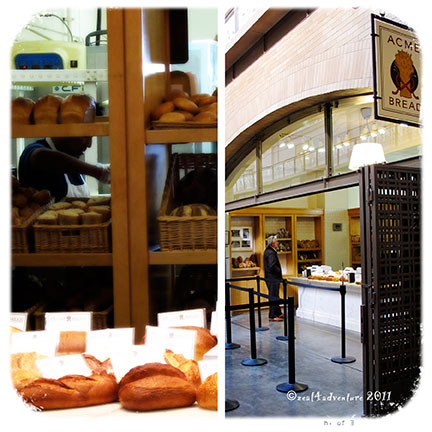
and the sourdough bread over at Acme is, in my opinion, more superior, my brother always says that, “experiencing it where it all started is always more meaningful”.  I agree.

And Fisherman’s Wharf is the epicenter of San Francisco’s famed Dungeness crabs. The fresh street Dungeness crabs sold by vendors are expensive but very fresh – ask for fresh crabs and you’ll get one that is freshly cooked for you.

Even before there were sidewalk vendors and restaurants, some of the fishermen would set up cauldrons of boiling water and cook the freshly caught crabs, handing them out in paper cups as a crab cocktail.  Many restaurants and vendors today continue the tradition of steaming crab cauldrons in front of their place of business and still serve them on paper cups.  One may however opt to order a whole cooked crab to take home. Firm and sweet, this crustacean has played a significant role in defining San Francisco’s culture – from the boat docks of Fisherman’s Wharf and the Italian restaurants nearby to the Vietnamese and Chinese restaurants around the city today.
Clam Chowder on sourdough bread is my brother’s favorite and Boudin Café is where he usually goes to get them.  Born in the Gold Rush, Boudin Bakery is the oldest business in San Francisco.  Known for its sourdough bread, the bakery still uses the same starter yeast bacteria culture it developed in 1849.

Although their main bakery is in the Richmond district, their Baker’s Hall at the Wharf is their flagship place.  It may not be the best today; it surely is still a very decent piece of sourdough bread and is and will always be synonymous to San Francisco.
I love San Francisco and no matter how often I visit, I will never tire of it.  It is after all my favorite city.  So until next time…

Sean Lions and Pier 39

Credits:  Papers from Moninda’s Sea Memories;  Elements from PouYou and Me kit;  Journal Paper from Scrapmatter’s Life Little Surprises kit

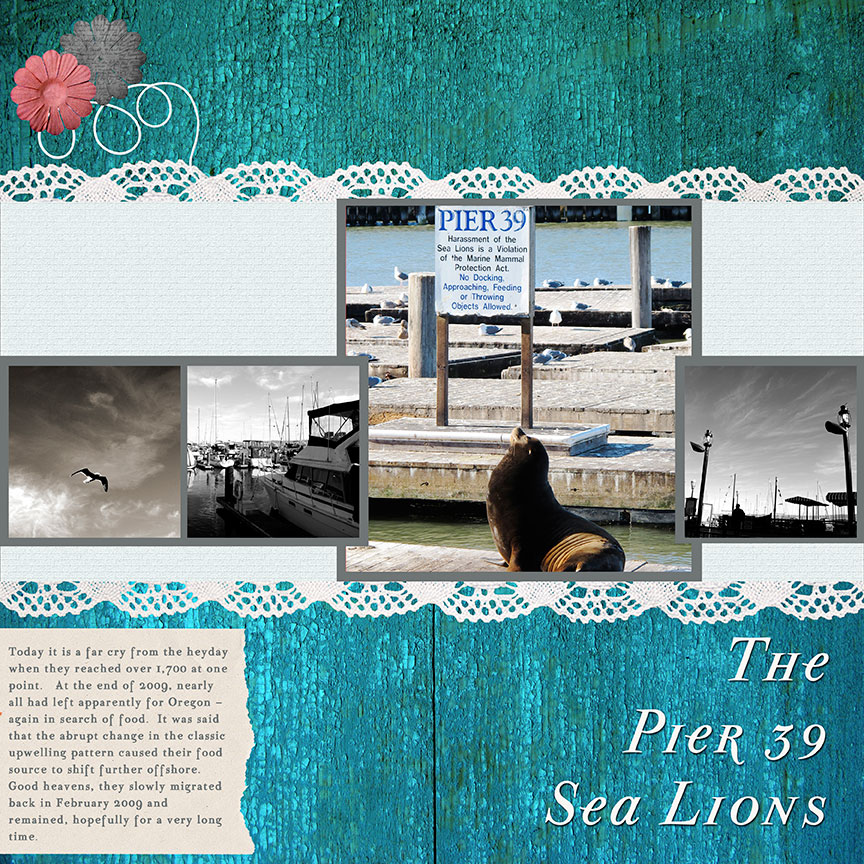
California Sea Lions are found along the coast of eastern North Pacific from the coast of Vancouver all the way to Baja California in Mexico.  They are known to be the most intelligent of all sea lions.  These playful curious animals are highly social as well, which makes them adapt easily to artificial environments.  Because of this, California sea lions are commonly found in public displays in zoos and marine parks and are even trained by the US Navy for certain military operations hence.

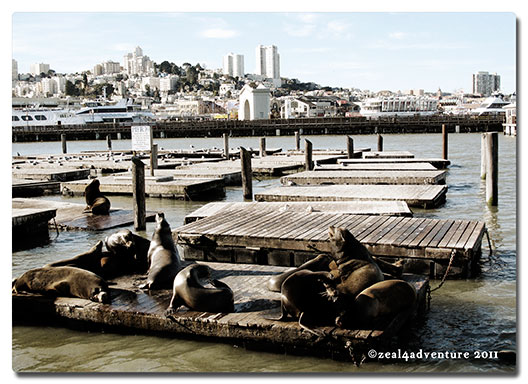
Pier 39 is admittedly so touristy and is crowded with shoppers and souvenir seekers.  So why am I there, you might ask?  Wildlife fascinates me and one attraction that appealed to me lies just outside the shopping arcades, on the marina next door.  They are known as the Pier 39 sea lions.

Some of California sea lions took over the “K” dock of Pier 39 in 1989 becoming immediate tourists favorites.   They can be found sunbathing, barking and up to their old antics at the marina.  They showed up shortly after the 1989 earthquake arriving in droves probably chasing after an abundant run of herring in the area.  They soon took over the dock by January 1990 and since then been entertaining both visitors and locals alike.  During winter the population increases while it dwindles during the summer months, as many would migrate south to the Channel Islands to breed.  Outside of the breeding season, they often gather on marinas and wharves so they start coming back sometime around late July.

Today it is a far cry from the heyday when they reached over 1,700 at one point.   At the end of 2009, nearly all had left apparently for Oregon – again in search of food.  It was explained that the abrupt change in the classic upwelling pattern caused their food source to shift further offshore.  Good heavens, they slowly migrated back in February 2009, remained and hopefully increase again in population.