Kamikochi: A glimpse of the Japanese Alps

KamikochiCredits:  Template by Jen Caputo; Papers: Designs by Sarah Bennett, Erica Zane, Gwenipooh Designs. Haynay Designs.

Sometimes a change in plans is a good thing.  We arrived in Hirayu Onsen early.  Our room wasn’t ready yet.  “You may want to go to Kamikochi instead”, the front desk clerk recommended to us after she discouraged a trip to the Shin-Hotaka Ropeway, a two-stage tramway that climbs alongside the Hotaka Mountain Range.  She informed us that it had been raining so the visibility will be bad.  “It will also be very slippery”, she added.  We took her word, left our bags with them and headed to the bus station after lunch.
IMG_0828

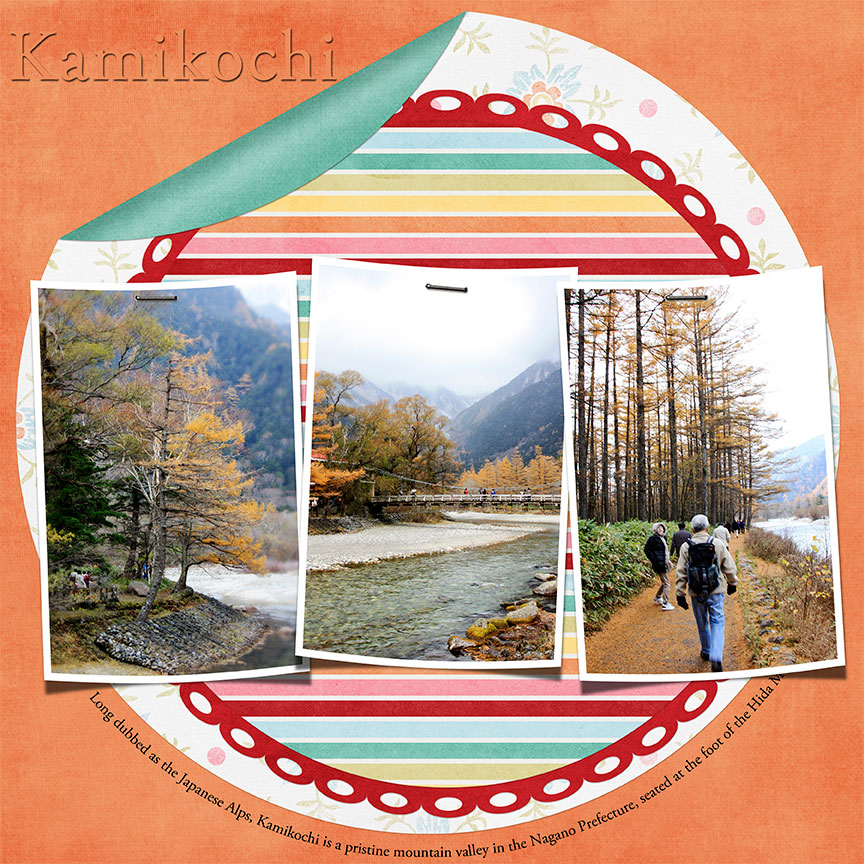
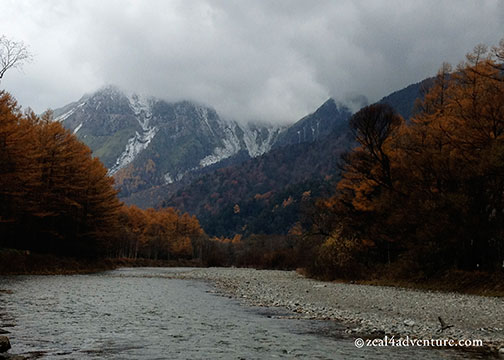
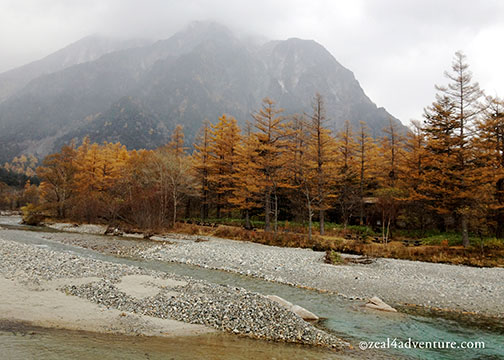
Long dubbed as the Japanese Alps, Kamikochi is a pristine mountain valley in the Nagano Prefecture, seated at the foot of the Hida Mountains, deep in the Chukusangaku National Park where the Azusa River flows some 1,500 meters above sea level.
IMG_0844

It is known for its splendid landscape and various hiking trails.  As private vehicles have been prohibited in the park since 1996, only buses or taxis are allowed,
IMG_7260

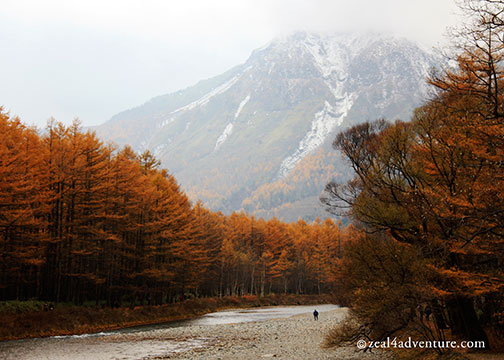
Kamikochi has become one of the best-protected natural areas of Japan despite the droves of tourists and hikers that flock there.

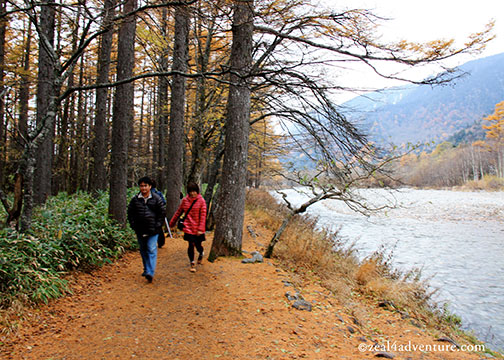
The scenic bus ride from Hirayu Onsen to the Kamikochi parking lot took all of 30 minutes with a brief stop at Taisho Pond for those wanting to hike to the center of Kamikochi. Since it was drizzling and freezing and we weren’t in proper attire, not to mention that we only had half a day, we passed.
trail-from-taisho

It is the best way to enjoy a day in Kamikochi actually, and on hindsight, I am not sure we made the right decision to forego the hike.
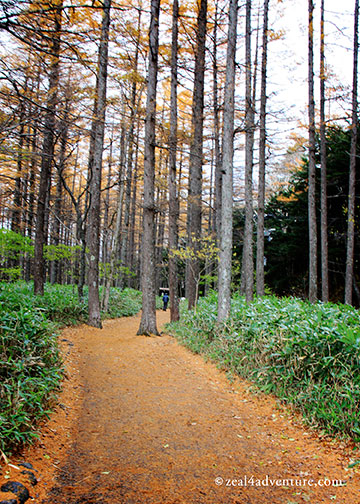
trail-to-bridge

From the parking lot, we took our time and marveled at the wondrous views of some of the tallest peaks of Central Japan’s Northern Alps as we followed the trail to the Kappabashi Bridge.
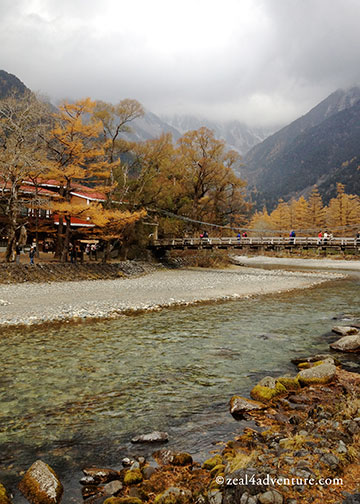
kappabashi

This wooden suspension bridge is a symbol of Kamikochi with the most gathering of visitors.
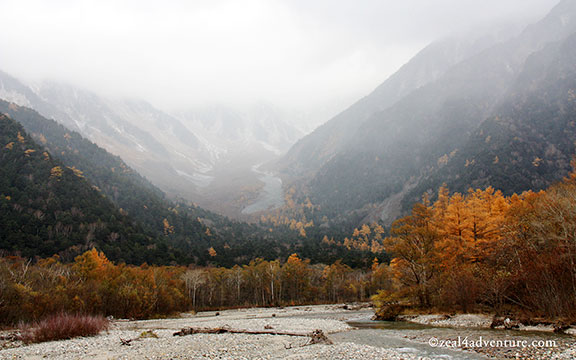
IMG_7253

From the bridge, one can see the surrounding mountains, Nishihotakadake, Okuhotakadake, Myojindake, and the active volcano Yakaedake – all towering summits over 3,000 meters above sea level.
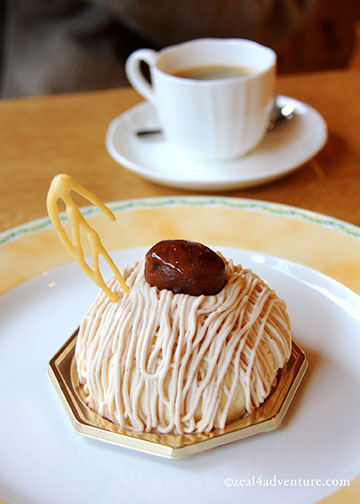
coffee-and-dessert

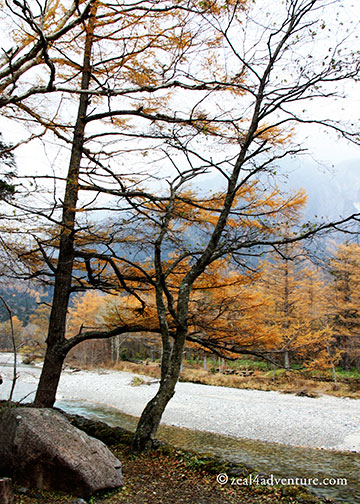
Though we barely scratched the surface with just half a day, less actually if you take out the time we spent indoors to warm ourselves with coffee and dessert, Kamikochi has instantly become a personal favorite, and I wouldn’t mind spending a few days wandering around should there be a next time.
IMG_7251

So sometimes a change in plans is indeed a good thing.

Onsen: A New Found Love

Getting ready for my first outdoor “hot spring” bath, I found myself in a room filled with women of all ages, some soaking in the (indoor) pool and others seated on stools going about the bathing rituals.

I found an empty seat.  Observing their rituals, I started washing and scrubbing until I felt clean enough to share a pool with them (the onsen etiquette dictates that one must be scrubbed clean before entering any pools).  The room was warm but because winter was on its way, the weather has turned cold and windy outside.  I hesitated and soaked in the pool while I mustered the courage to brave the cold, windy afternoon.

With only a hand towel in tow, my friend Stella and I walked into unfamiliar territory.  Outside the bathing room were several (geothermal) pools spread around a gorgeous Japanese garden. As I felt the gush of wind blow straight into my bones, I went straight into the nearest pool.  Unbeknown to us at that time, it was the pool that the source of the spring pours into.  Wrong move.  The farther away the pools are from the source, the gentler (to the body) it becomes.  We settled on alternating between the third and the fourth pool.  The heat can be unbearable at first, but once the body acclimatized, it was soothing, palliative even.  The diversity of minerals relieves a multitude of ailments, they say.  It was the perfect remedy to my sore muscles at least.  Despite a 10°C windy evening, I felt warm to the bones from the hot spring.  When it snowed on the second night, it was surreal.
northern-alps

Hirayu. It is a town surrounded by mountains and active volcanoes on all sides, a town known for its more than 30 natural source hot springs or what is known in Japan as “onsen”.  The oldest and largest of Okuhida’s “onsen towns” is also the region’s transportation hub making it a marvelous base for wandering through nearby areas like Kamikochi, Norikura, Matsumoto, Shin Hotaka and the Hirayu-Otaki waterfalls – famous for its illuminated display of a frozen waterfall during the winter.

hirayu-no-mori-2

Our home for 2 nights, Hirayu No Mori, is conveniently located near the bus terminal.

hirayu-no-mori

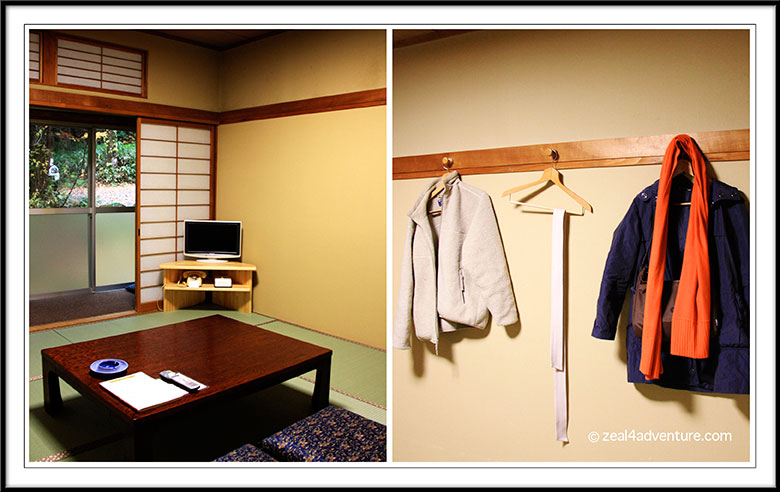
This hot spring resort, primarily a bathhouse, boasts of beautiful grounds, comfortable rooms

traditional-guestroom

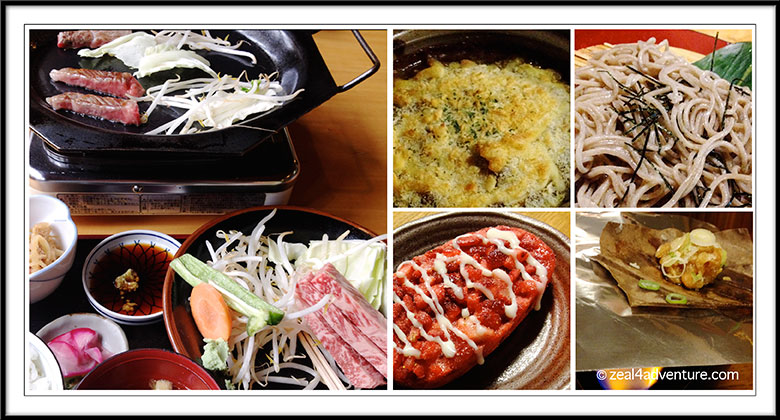
and a restaurant serving central Japanese dishes such as Hida Beef and Hoba Miso.

food

It has 3 bath facilities (2 segregated and 1 mix gender) and a total of 16 pools altogether.

And for two nights under the stars, I soothed my exhaustion away in several of the pools and soaked up as much of this quintessential Japanese experience to take home with me.

Useful Info:

There are several rules of etiquette to keep in mind when visiting a onsen.  Click here to know what these are.

Hirayu No Mori
763-1 Hirayu Okuhidaosengo,
Takayama, Gifu Prefecture
Contact:  0578-89-3338

Shirakawa-go

ogimachi-gassho-house

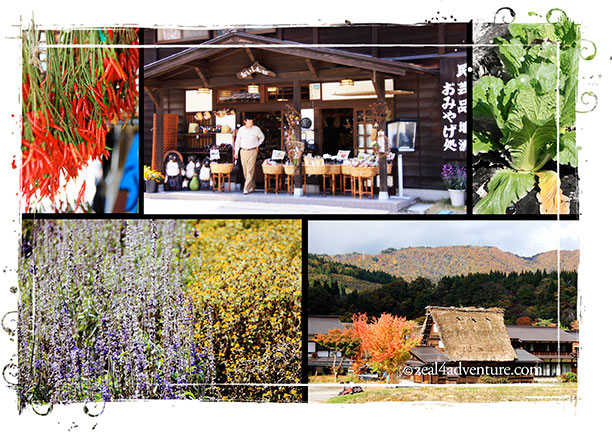
Gassho-zukuri.  We’re not done talking about it yet because there are still some that can be found in typical farming villages, some ordinary folks still call it home, this 250-year old special farmhouses.

omigachi-collage

These villages still exist, and one is just 50 minutes away by bus from Takayama.

ogimachi-tourists

The UNESCO declared World Cultural Heritage Site, Shirakawa-go and its neighboring region Gokayama has been slowly attracting visitor since it was inscribed in 1995.

Ogimachi is Shirakawa-go’s largest community.  A charming village, albeit a slightly “touristy” oriented one, lining the Shogowa River valley.

Ogimachi-scenery

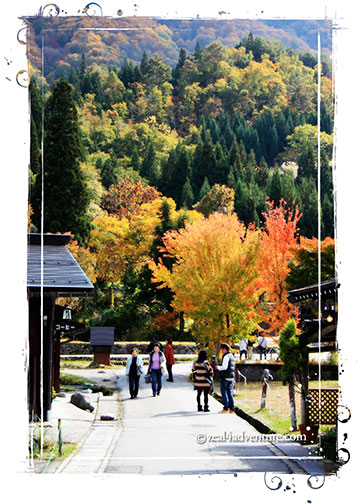
Its beauty lies not only in the scenery, resplendent in shades of autumn at the time of visit, but as well as in its community.  Ogimachi has 2 medical clinics, a primary school and a junior high school.

Ogimachi-fixing-roof

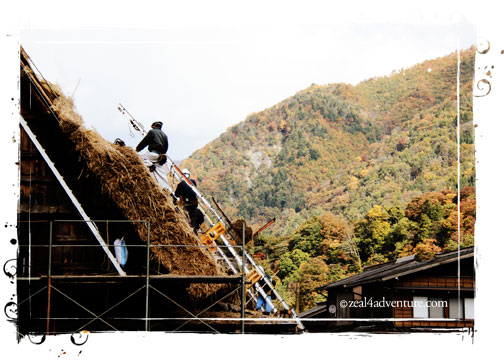
Many still live in a Gassho-zukuri, but many of the well-preserved farmhouses have become museums, restaurants and there are 20 or so of it that has been made into Minshuku (bed and breakfast) guesthouses.

lunch-shiraogi

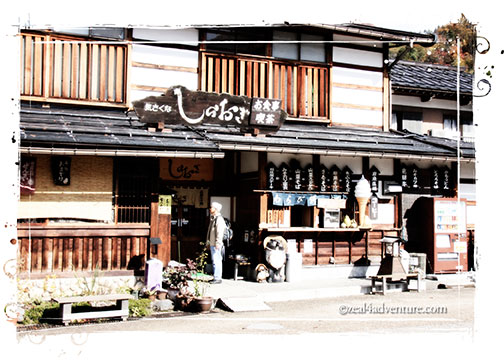
Time permitting; spending a night there would have been glorious.  Instead, we contented ourselves to a nice hot soba meal before heading back to Takayama.

Ogimachi-crossing-the-shogawa-river

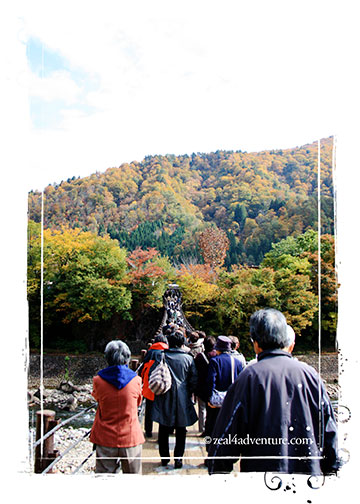
Across the bridge, near the bus stop is a well-constructed outdoor heritage museum.

minkaen-collage

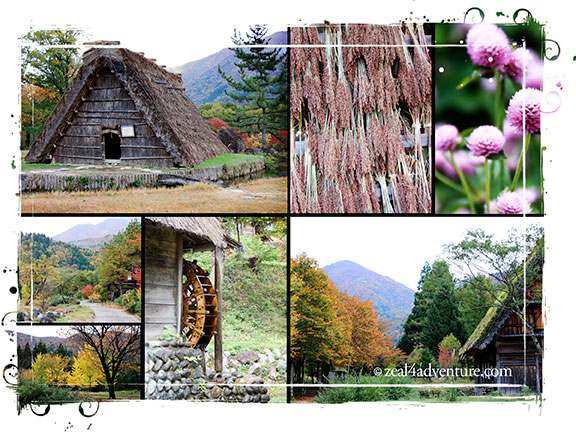
The Gassho-zukuri Minkaen features 25 preserved farmhouses.

minkaen-1

Like Hida-No-Sato, it was relocated and rebuilt to emulate a traditional village in the countryside, scenery and landscape of which is simply superb with the mountains lending the perfect backdrop.

minkaen-2

A Feast for the Eyes and Soul

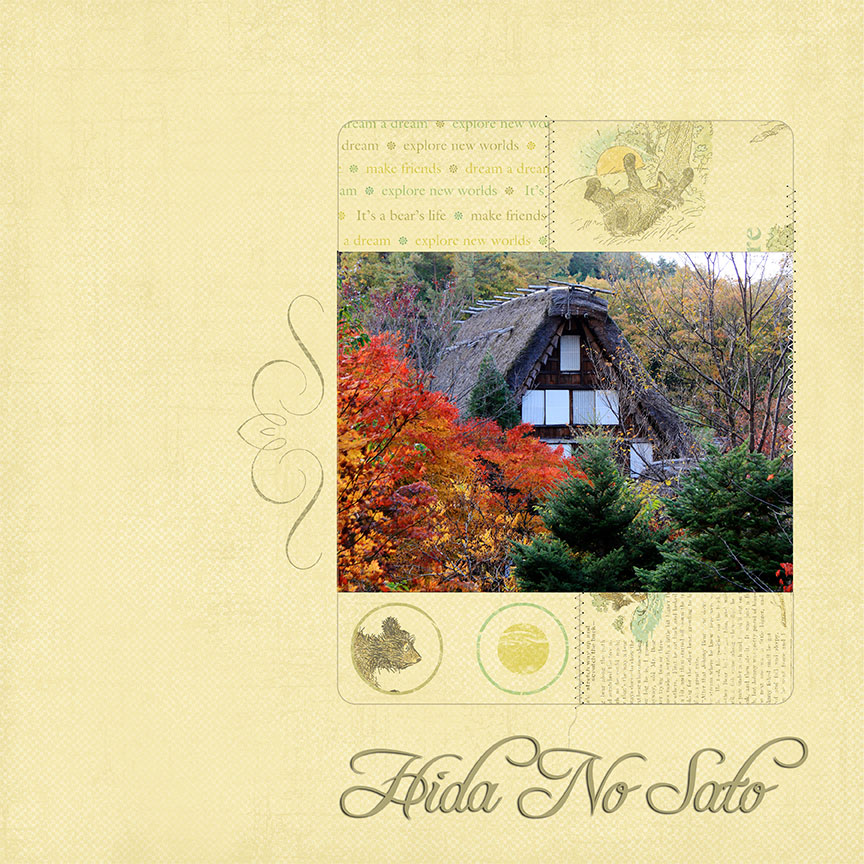
Hida-No-SatoCredits:  Template by K Pertiet (Bears Life)

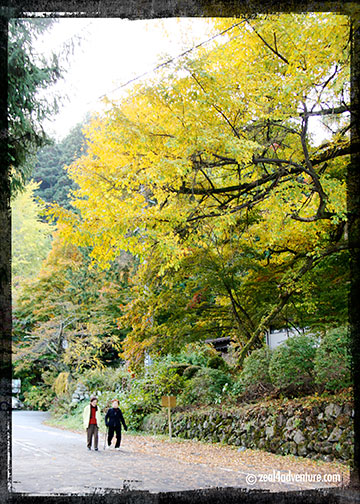
I love how the Gassho-Zukuri farmhouses stand out against the warm hues of autumn – a stunning contrast, really.  This tall (possibly 3-4 stories high) coffee-colored A-shaped thatched roof farmhouses were first built during the Edo period.

entrance

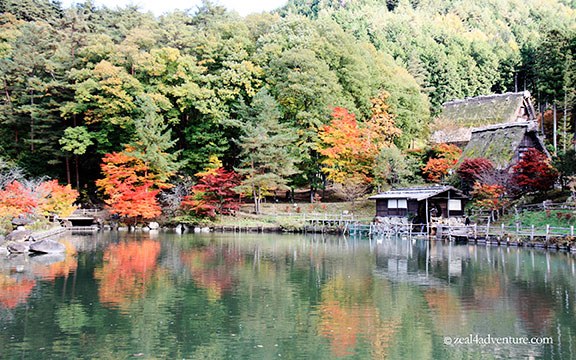
Lush woodland with hints of fall reflects on the stillness of the pond like a mirror.  It reminds me of a Monet artwork except that the setting isn’t France.  This is the first thing your eyes will wander to once you enter Hida No Sato, sometimes also called Hida Folk Village.

gassho

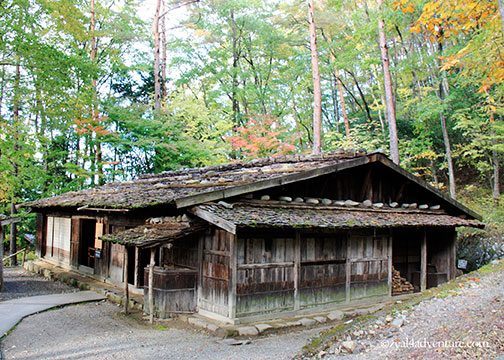
And this is where those Gassho houses were relocated.  It resembles a village of old Japan – it has around 30 well-preserved traditional houses, storehouses and other structures with farming tools and everyday utensils displayed in each house.

Tanaka's-House

This outdoor museum of sort, aside from preserving the structures, strives to keep the culture alive by offering hands-on lessons on the traditional way of life like rice cropping, straw-work and stitching, cypress carving to even storytelling using the local dialect.

interior

A few hours here will boost your appreciation on how life was back then for farmers and craftsmen of the Hida region.

IMG_7176

Life isn’t easy for these people as winter is harsh in this part of Japan.  The steep slanting roof was said to be for the purpose of rain and snow.  It allows both to fall straight off, preventing water from seeping through the roof or heavy snow collapsing the roof.  It also eases the work of cleaning. Isn’t it amazing how a practical need has led to a fascinating and unique style of architecture?
autumn-colors

So when in Takayama, you must go visit this place.  It’s just a 30-minute walk from town or a 10-minute bus ride from the Takayama Station.  It will be a feast for the eyes and the soul.

Useful Info

Hida No Sato
1-590 Kamiokamoto-machi, Takayama City
Opens 7 days a week from 8:30am – 5:00pm
Admission: ¥700
 
How to get there from Takayama:
Take a 10-minute bus ride from the Takayama Station (bus runs every hour); get off at the Hida No Sato bus stop. 

Takayama Morning Markets

It was cold. The warmth of the comforter and the futon was extremely inviting, but I was determined not to give in to the temptation because we are going to the market today.

Jinya-scenic-walk-3

Jinya-scenic-walk

Jinya-scenic-walk-4

So at exactly 6am, we ambled to the morning market nearer to the ryokan, watching the city wake up along the way.

setting-up

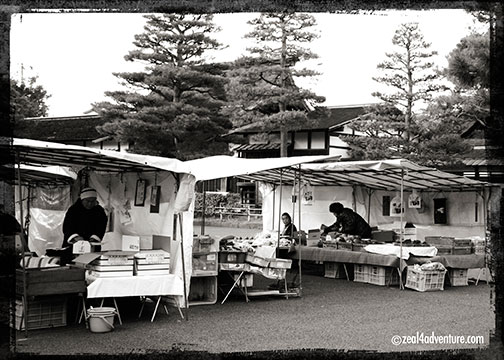
At the Jinya-mae market, we watched it come to life one stall at a time.

Jinya-morning-market

I expected to see a much bigger market than the neighborhood market it really is.

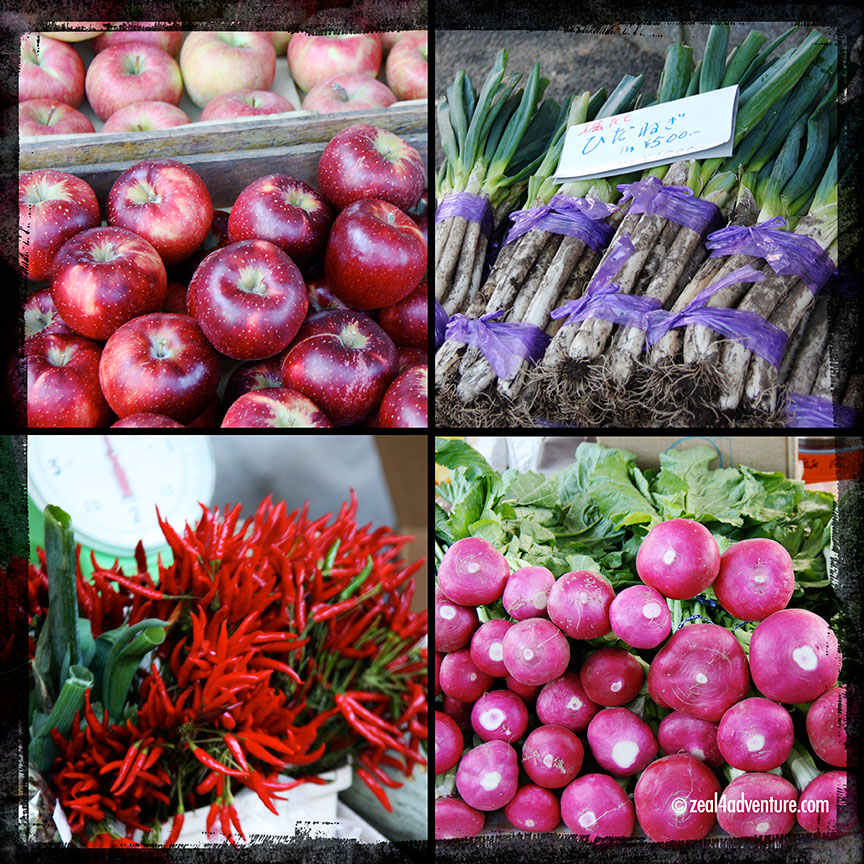
Jinya-produce

More of a farmer’s market, it sells a lot of foodstuff and produce from gigantic, gorgeous but expensive fresh fruits and vegetables to rice cakes and

Jinya-pickles

pickled vegetables all wanting to be purchased, begging to be noticed at the least. We eventually gave in to this corn – the sweetest and crunchiest I’ve ever had, and that is not an exaggeration.

sweet-corn

If we weren’t heading back to the ryokan for breakfast, I would have feasted on a few more.

breakfast

Thank God for good judgement as breakfast was lavish in Hakuun!

There are two morning markets (Asa-ichi) in Takayama that takes place daily from 6am till noon. The Jinya-mae morning market can be found in front of Takayama Jinya, a historical office building from the Edo Period said to be the only remaining building of its kind.

Not far from the Sanmachi district is Miyagawa morning market.

Miyagawa-morning-market

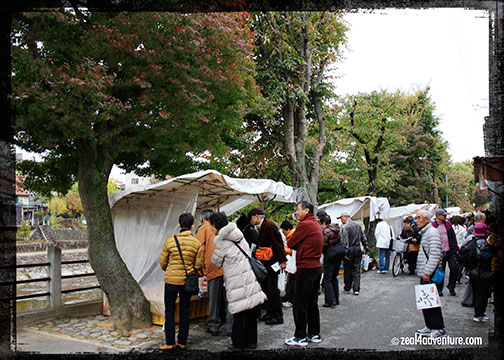
This market situated along the east bank of the Miyagawa River is bigger and I believe geared more towards the tourists.

Miyagawa-street-food

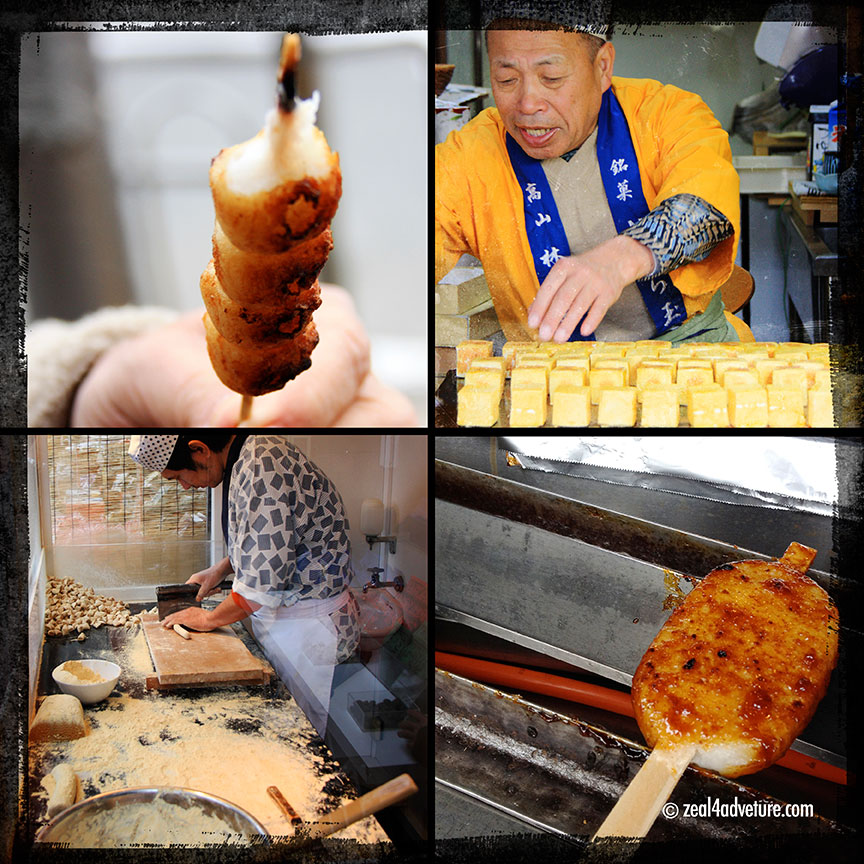
Stalls selling crafts of wood or fabric, souvenirs, street foods are spotted alongside fruits and vegetables stands.

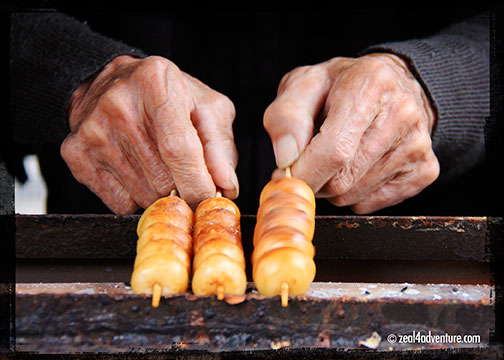
Miyagawa-Sticky-balls

Interesting bites that had us so full but wanting more. So with these bites in tow, we explored the market.

Miyagawa-souvenirs

Here, tourists abound or maybe it was the time of the day – when the city was already fully awake and vibrant with life. Here, the lure to buy is much, much greater. Here, I looked, I tried some, I got a few to take home.

Nishiki Market

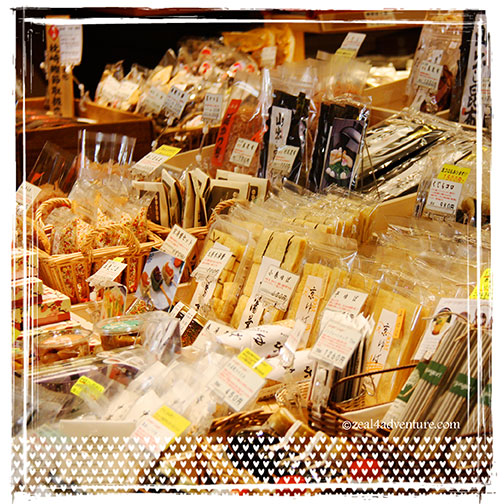
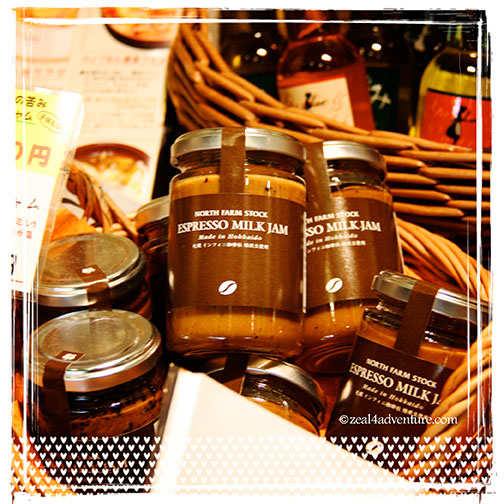
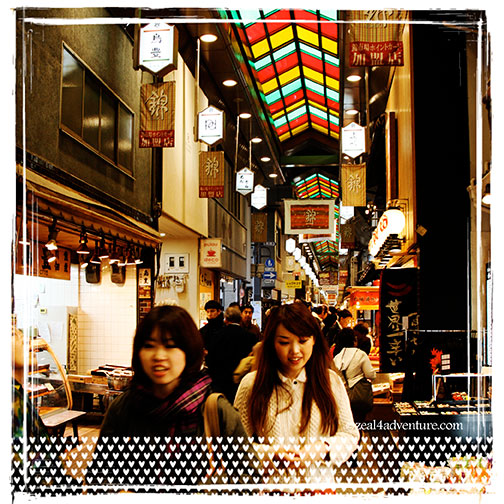
Kyoto has a kitchen in a vibrant retail market specializing in all things related to food –

assortments

espresso-milk-jam

fresh seafood, fresh produce, fresh fruits, sweets, knives, cookware, etc. – 5 blocks long, lined with more than one hundred shops and restaurants.  This is where to find Kyoto’s specialties and many seasonal foods.

Untitled-1

Located in central Kyoto, this narrow market has supplied Kyoto’s residents with high quality traditional ingredients for centuries.  The history extends some 400 years ago, and many shops are still operated by their founding families.

nishiki-market

A walk down Nishiki-koji will give you a sense of what Kyoto is all about.  This may not appeal to just any visitor, but this can be pure heaven to lovers of food and the kitchen.

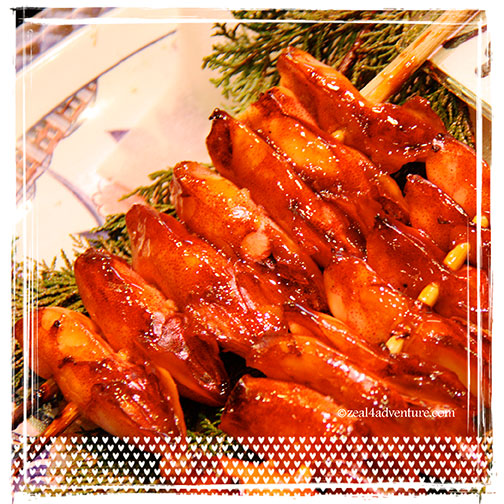
teriyaki-squid

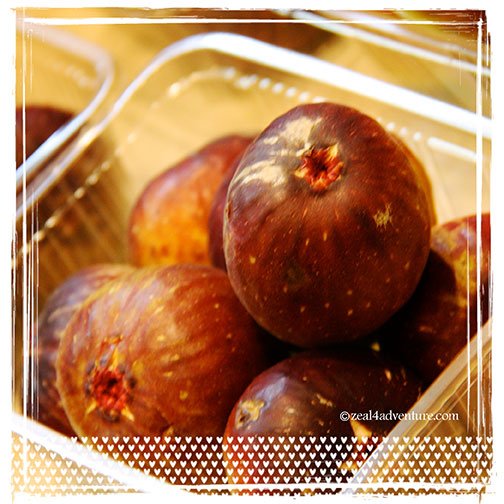
figs

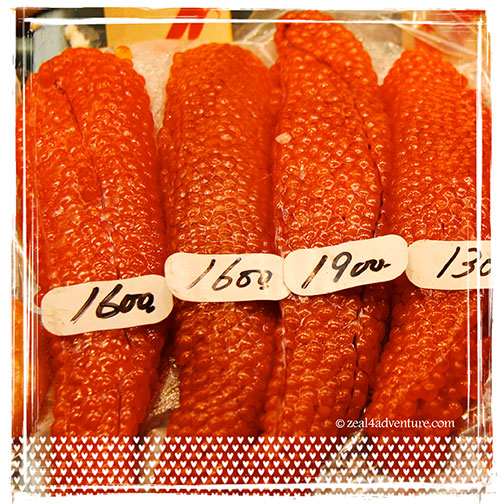
fish-roe

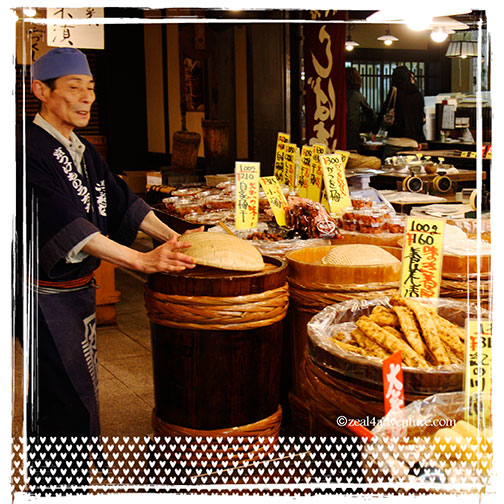
In the narrow alleys of the market, the stalls are filled with food items of any kind – some already prepared while others yet to be cooked.  A great place to eat too, with so many intriguing eateries to choose from and we could have, but they close at 5.

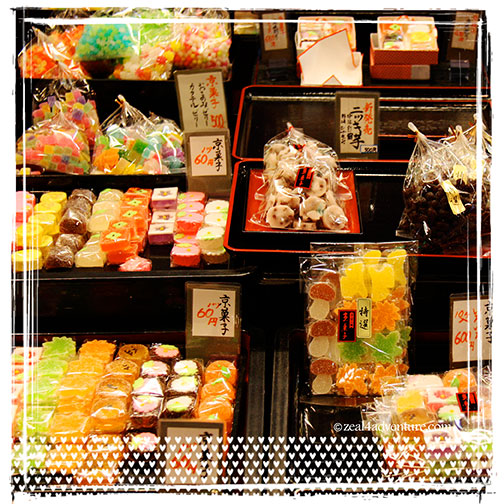
sweets

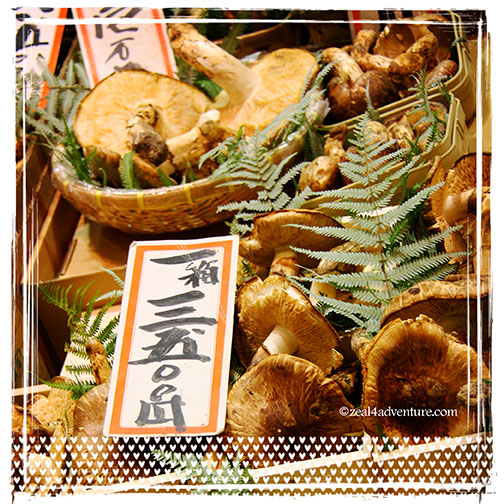
shitake

Local markets, I believe, reflects the culture and economy of a place and visiting these markets is one of my joys in traveling.  Whenever you can on your next trip, go hit the market.  It usually is a plethora of everyday stuff that characterizes a city.
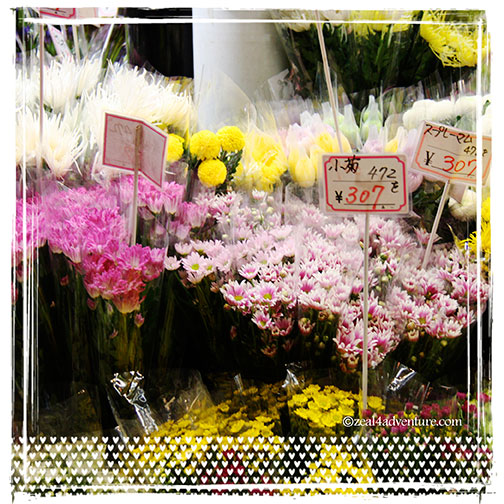
flowers

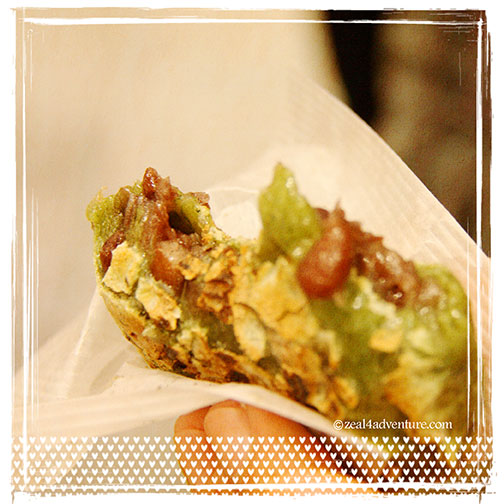
roasted-mochi

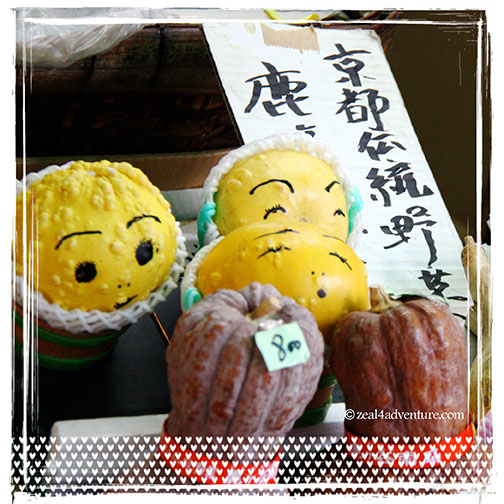
gourds

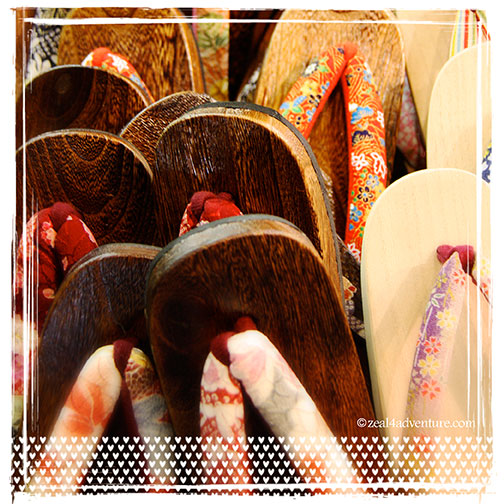
japanese-slippers

Useful Info

Getting There:  From JR Kyoto Station, take the Karasuma Subway to the Shijo Station.  It is a 5 mins walk to the market.  The market is parallel to Shijo Ave., connected to the Teramachi Shopping arcade.

Nishiki Market
Nishikikōji-dōri between Teramachi & Takakura
Opens daily except Wednesday from 9am – 5pm

The Train Station and The Ramen

steel-and-glass

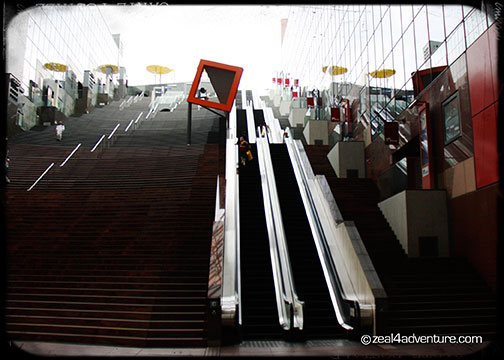
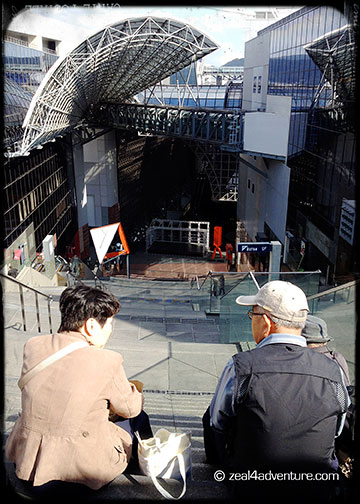
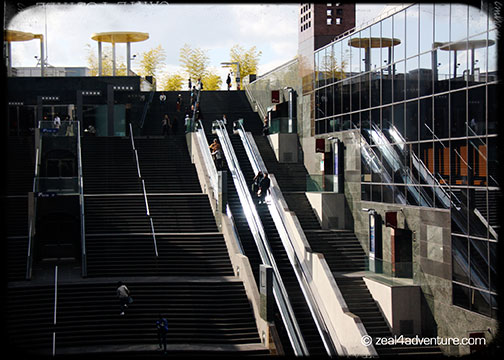
It is a feast of steel and glass with a concave shape interior that opens to the sky, massive with a 60-mile long atrium and 171 steps of stairs.

171-steps

With a hotel, a shopping mall, a movie theater, a department store, a food court and 2 tourist information centers in one roof, the Kyoto Train Station is a splendid example of modern architecture and somewhat controversial when it was built in the mid ‘90s.

hub

It is, nevertheless, a chic way to enter or leave Kyoto.

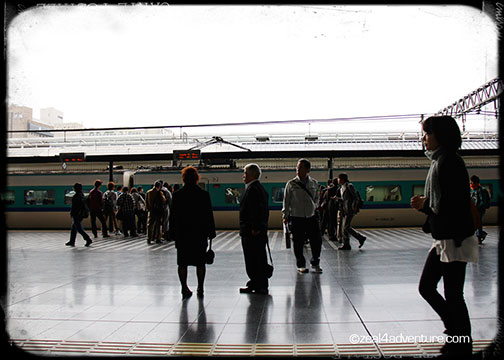
platform

It has an old fashion charm to it, but I am partial to traveling by train because not only is it easier on the budget, it is also less of a hassle and more flexible in terms of schedule.  However, purchasing train tickets and finding your way around stations can be confusing if English is not spoken fluently.  We believe that being there a day before to get the tickets and familiarize ourselves with the place makes it less stressful on the day itself.

modern-art

And spending the morning at the incredible Kyoto Train Station was enjoyable.  With the essentials done and over with, we explored the building.
view-from-the-top

stairs

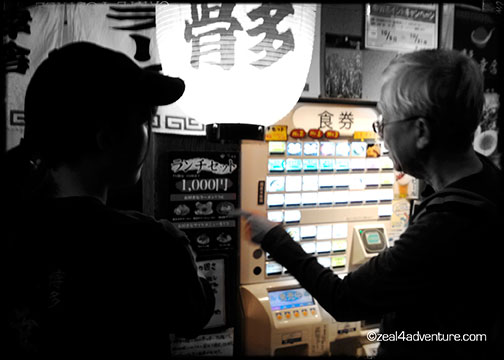
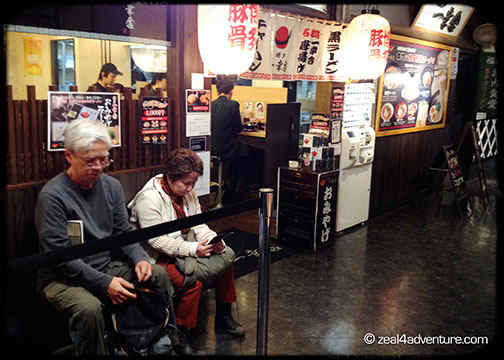
The Cube is a shopping mall that starts at the basement and goes all the way up to the 11th floor.  Kyoto Ramen Koji is on the 10th.  It is a “ramen alley” with seven different ramen shops and a coffee and dessert station.  Choosing a place was a daunting task – never thought ramen could be so complicated.  So we decided to choose the one with the longest line – the popular one, we thought.  The problem was we needed to order through a vending machine, which was all in Japanese.  The restaurant staffs do not speak English and therefore, could not explain the process.  We finally chose Hakata Ikkousha because:

a) girl at the door knew some English.

vending-machine

b) they had the 2nd longest line

waiting-in-lineIt was a long line… really!

c) it also has an English name and it promises to make people happy with their dish.

ikkousha

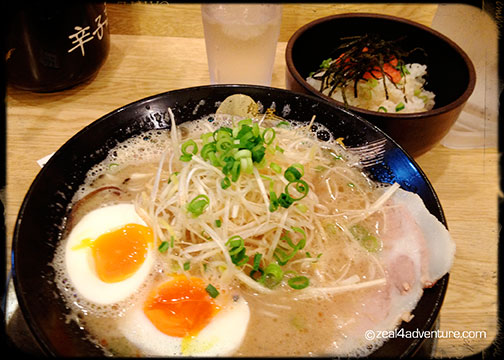
No way of comparing, we decided that the ramen we had was fantastic, though I could go without the rice with fish roe, which came as a set for  ¥1,000.

ramen

The pork literally melts in the mouth; the broth flavorful and the noodles are al dente.  It could be, by far, our cheapest meal in Kyoto.

chasen

display

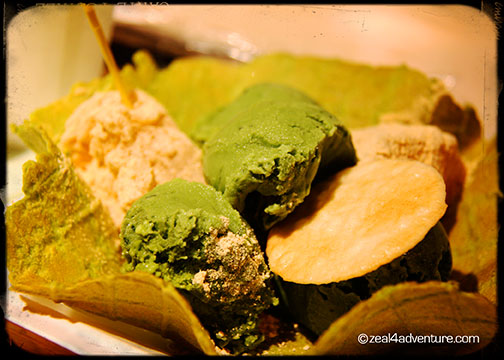
On our way out of ramen alley, I could hear the desserts at the corner ever so softly but persistently calling my name.

green-tea-ice-cream-with-mochi

Thank you Chasen, for calling out to me.  You did not disappoint.  The mochi was exceptional.

Useful Info

Kyoto Train Station
901, Higashi-Shiokojicho (JR west)
1-3, Higashi-Shikoji Takakura0cho (JR central)

East of Kyoto: Southern Higashiyama Neighborhood Walk

higashiyamaCredits: Papers by Designs by Tater from ScrapMatter’s Life’s Little Surprises Kit.

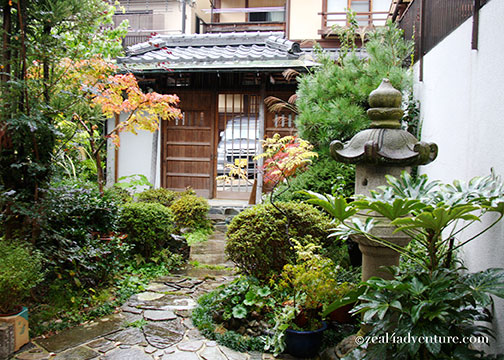
The guesthouse took sometime to find.  Tucked away in a street where cars aren’t allowed.  The driver of our shuttle service eventually found it; he led us into a narrow residential street.

garden-at-entrance

The house is charming, even at night.  A young man let us in, cheerfully welcoming us at 10 in the evening.  The real owners of Yamato Guesthouse are his parents, Kenzo and Nagako.

kenzo-and-Nagako

He was there for the weekend, I figured.  I noticed a group was enjoying some drinks at a corner so I asked if they served dinner — we were hungry, arriving straight from Kansai International Airport.  Of course, they only serve breakfast but they accommodated our request and prepared something simple after seeing our hungry faces.  The other group, it turned out, are friends visiting hence the beer and the snacks – I felt a bit embarrassed about our dinner request.   😯   Such is the hospitality of the Japanese and of our host.

breakfast

Nagako served quite an exquisite breakfast and for 2 days I felt very pampered

The former capital of Japan is famous for its temples and shrines, a beautiful city with tradition and culture filled to the brim.  Kyoto is one of the oldest cities and there is so much to see.  Even just zooming in on an area – the east side – we still barely scratched the surface.  Two whole days is obviously not enough but that was all we had.  We were merely passing through and we made the most of it.

Yamato, I estimate, is a good 10 minutes stroll away from Kiyomizu Temple — actually, it could be 20 if you window shop and ogle at everything interesting along the way.

store-chawanzaka

The neighborhood consists of many interesting stores, delightful cafe and food stalls, which actually make for a pleasant stroll to the temple.

chawanzaka

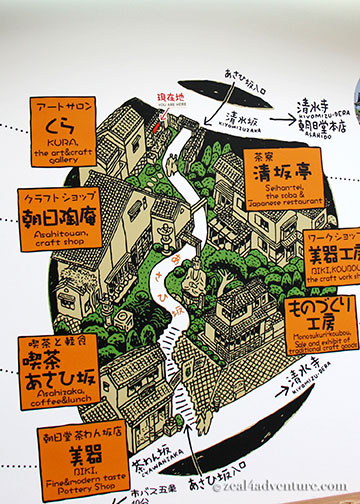
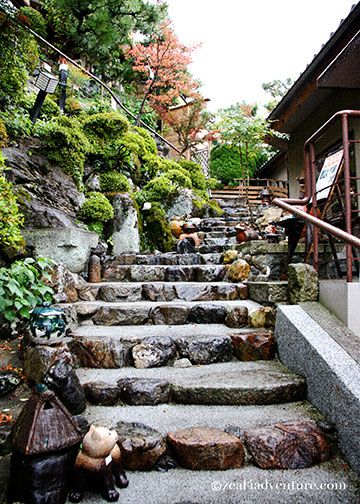
The street of our guesthouse comes out to Chawan-zaka, it actually leads to the temple but we chose instead to turn into a complex that has several flights of stairs,

asahizaka-mapA map of Asahizaka complex

asahizaka-steps

stores and cafes line the way leading to Kiyomizu-zaka, where we chanced on more stores and tourists.

kiyomizuzaka-from-templeKiyomizu-zaka from the temple

If you turn right, you will end up in Kiyomizu Temple.

kiyomizudera

Inside the temple, the tourists escalated in unbelievable proportion.

tourists

Half way through the temple, we gave up and settled for a much-needed coffee break and cream puffs.

Yatsuhashi-cream-puff

Kiyomizu-dera is perhaps the most beloved of Kyoto’s temples.

kiyomizu-temple-entrance

It is a famous hilltop temple offering sweeping views of the old capital.

view-of-the-city-from-kiyomizudera

Popular with tourist and pilgrims, the temple is part of the Historic Monument of Ancient Kyoto and a UNESCO World Heritage Site.

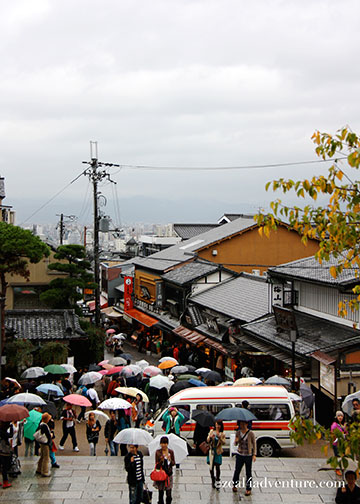
The narrow cobbled street of Kiyomizu-zaka (if you walk away from the temple) will lead to Sannen-zaka and Ninen-zaka, a restored neighborhood oozing with old world charm.

Ninenzaka-and-shannenzaka

Both streets are lined with old wooden houses, traditional shops and restaurants.  It is  a good example of the old Kyoto, the Kyoto everyone imagines.  Despite the drizzle, it was a wonderful walk, quite uplifting I must say.

Following the route suggested by Lonely Planet, we found the street the guidebook described as “the most beautiful street in Kyoto”, Ishibei-koji.  It is a quiet alley lined with high-end restaurants and ryokans.  I saw a photographer taking shots of the street at the end of the stone-paved road.  I went to where he stood and this was what came out.

Ishibei-koji

Have to admit that this quiet street has character with its own stories to tell perhaps but to be identified as “the most” beautiful street puts too much pressure don’t you think?  Beauty is indeed in the eyes of the beholder.  Developed primarily as an area for luxurious rental homes, it is presently a favorite site to shoot TV dramas, movies and TV commercials.

At this point, it was already more than drizzling and it didn’t look like it would let up.  We decided it was time for lunch.

Useful Info:

Guest House Yamato
6-539-23 Gojohashihigashi,
Higashiyama-ku, Kyoto, Kyoto Prefecture
Kiyomizu Temple
1-294 Kiyomizu
Higashiyama-ku, Kyoto, Kyoto Prefecture

Buluowan, the Lower Terrace

Taroko Gorge.  Travel buddy Art, a globe wanderer for more than 3 decades, largely influenced our trip to the national park.  He’s gone to so many places, he inspire me to never stop travelling.  Ethiopia, Uzbekistan, Iran, Bhutan, Antarctica – name it he’s been there.  And to give a thumbs-up on Taroko Gorge?  I knew we chose a winner and wasted no time booking our flights.  With tips from Art, we planned the trip as efficiently as we could.
We had to make good use of our limited time hence the 2 nights stay at the Leader Village Hotel.  Perfectly located within the park with its headquarters just a short walk down.

From the lobby, following the wooden walkway that borders the road leading to the park’s headquarters, I was rewarded with a bird’s eye view of the lower terrace.

Lush green trees surrounds the lower terrace

A beautiful sight that had me thanking Art for his recommendation.

The Traveler’s Center from E-das Hall

What used to be the home of the Taroko tribes more than 3,000 years ago is now the Park’s headquarter, which includes a recreational area (also called the Traveler’s Center)

featuring aboriginal cultures, a multimedia presentation at the E-das Hall, and a souvenir shop.  Also found here are the Swallow Grotto trail and the Meander Core Trail.

While aimlessly walking around, a guy called out prodding us to enter the E-das Hall as “the show’s about to start”, he said.  Happy to be away from the heat even for just a while, we comfortably seated ourselves and watched the entire show… in Chinese with no sub-titles to boot.  Who cares when we can cool ourselves on a hot summer’s day?  The show briefs about the different attractions to be seen and experienced at the park and the visual presentation had us eager to explore the park.  So right after the show, we went on our first trail.

Swallow Grotto Trail

Behind E-das Hall is the Swallow Grotto Trail.

Looks promising, don’t you think?

On the map though, it ends on the highway and A was hesitant to walk this trail because we might end up backtracking.  I insisted and of course he was right.

The steep steps down seemed never ending, and when we reached the end of the road, we were rewarded with this.

An obstructed view of the Liwu River.  

I cringed because I insisted and was wrong, and we had to go back up those steep steps.

Next time I will listen.

Meander Core Trail

Now this trail is a breeze with beautiful scenery and lush flora along the way.

It’s a shorter trail that starts near the traveler’s center.

The pretty wooden walkway leads all the way to a viewing deck at the end. There, we were rewarded with these views.

The Taroko Gorge (left) and the Sipan Dam (right)

After these two trails, a hearty lunch was the only way to go.

We walked back to the hotel through a more scenic and shorter route,

A rooftop picnic area at the Traveler’s Center

which passes the back of the Traveler’s center.

All these stunning scenery left us awed by the beauty of Taroko and we have not technically left our hotel grounds yet.

Hong Kong: A Mini Dining Escapade

Hong Kong used to mean one thing to me in the past – shopping.  Not anymore.  Today, Hong Kong signifies food – delightful, glorious food.

Credits:  Papers by Nadi Designs, Art of Digital Design and Prairie Woman Design.  Flower by Moninda; Word art by Wimpy Chompers; Alpha by Denise Beatty Originals

Welcome to the culinary capital of Asia.  In this relatively small island, foodies can revel not only in an assortment of Chinese regional delicacies but also in a range of international cuisine – from food stalls to Michelin starred restaurants.  This has been the highlight of a very short trip to Hong Kong early this year.  By the end of this month, I will be back to sample more gastronomic delights so Hong Kong here I come… again.  But before that, allow me to reminisce a bit on that mini dining escapade.

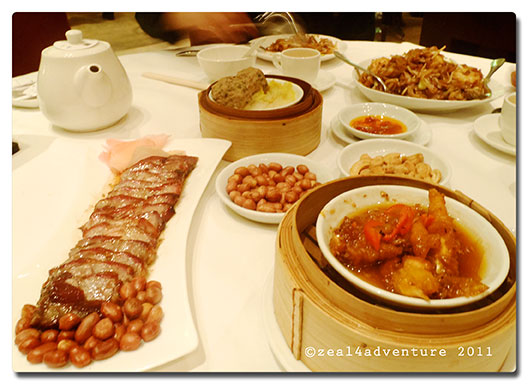
I will begin with the customary dim sum.  How can you be in Hong Kong and not indulge in supposedly “the best dim sum in the world”?

Zen Chinese Cuisine

A long-standing casual Chinese Restaurant in Pacific Place.  Apart from serving a range of Cantonese specialties, they also serve an extensive and intricate range of dim sum for lunch.   Be warned though, they usually have a long line especially during lunchtime so be there early.

Hutong

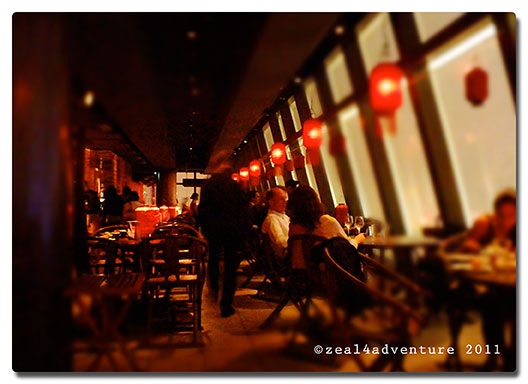
Located on the 28th floor of One Peking in Tsim Sha Tsui.  This stunning restaurant with a fantastic view of the HK harbor serves authentic Northern Chinese cuisine with a contemporary twist.

Red lanterns, hanging birdcages, intricately carved wood panels, Chinese silk curtains — all add charm to the dark, muted interior giving off a traditional Chinese feel.

Clockwise:  “Red Lantern” Crispy chicken w/ Sichuan red chili; Lobsters fried w/ red pepper & sweet chili sauce; Cod fillet tossed with fermented bean & chilis; Chili-spiced bamboo clams

A must-try are their Chili-spiced bamboo clams steeped in Chinese rose wine & chili sauce, Cod fillet tossed with crispy fermented bean & chili, lobsters fried with red pepper & sweet chili sauce, “Red Lantern” Crispy chicken with Sichuan red chili and last but not the least (not in photo) is their Crispy de-boned lam ribs.

Yung Kee Restaurant

My absolute favorite restaurant in Hong Kong and I will almost always pay a visit when I’m in town.

More than Hong Kong’s dimsum, I must have a piece of that lovingly roasted goose.   Juicy, tender, rich meat with skin so crispy… To. Die. For.

Another house specialty that I take home with me is their century eggs oozing with sticky yolk.  Paired with pickled ginger… wicked!

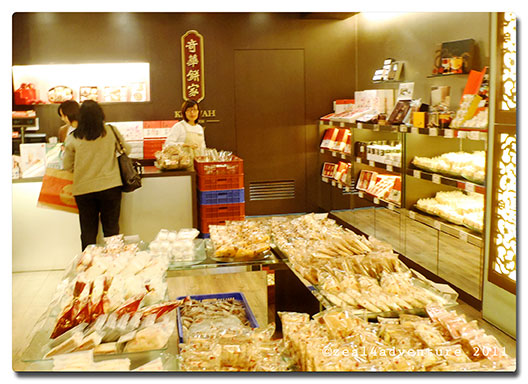
Kee Wah Bakery

Right beside Yung Kee is a bakery called Kee Wah for some beautifully packed Chinese traditional pastries.  Beautiful packaging aside, their egg rolls and pineapple shortcakes are great pasalubongs (gifts) to take home.

Useful Info:

Zen Chinese Cuisine
One Pacific Place Mall
88 Queensway, HK
+852 2845-4555 / 2845-4377
Hutong
28th Floor, One Peking Road,
Tsim Sha Tsui, Kowloon
+852 3428-8342
Yung Kee Restaurant
32-40 Wellington Street
Central, HK
(5 minutes walk from MTR Central station , exit D2)