Casablanca: Not the Usual Welcome

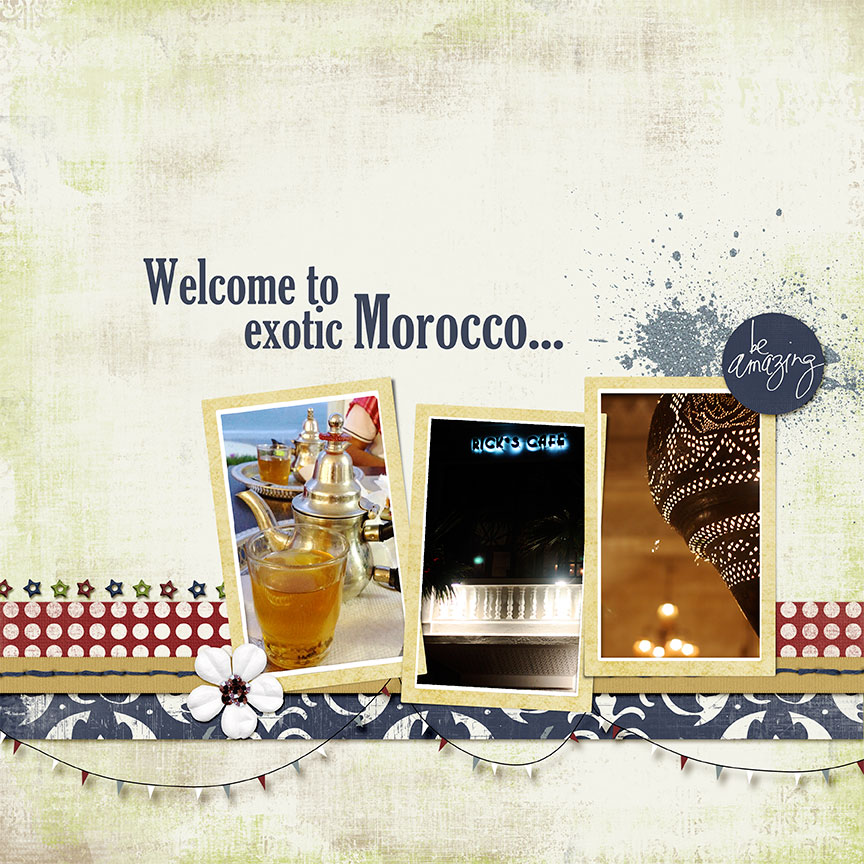
Welcome-to-exotic-MoroccoCredits:  4EVER Bloghop Quickpage by Kelly Mobley

Mohamed V International Airport – “No more luggage, finish”, said the porter. “What do you mean? We still don’t have our luggage!” I yelled in frustration. “No anglaise”, he looked at me and shrugged.  A lady, also missing her luggage, told me that the guy is only a porter, and he doesn’t understand me.  I should talk to the people at the baggage service counter.  Valid point.   But not exactly the welcome I expected.

Casablanca.  The bustling port city whose name mean “white house” and made famous by the Humphrey Bogart 1942 classic.  It may not echo the same romantic air the 1942 film brings to mind, but a trip through the city’s swanky lounge and bars can still evoke the spirit of the café from the movie.

Colonial-architecture

Casablanca was a jewel of the French Colonial empire, famous for luscious art deco, neo-classic and a blend of Moorish architecture that is unique to the city.  An architectural style known as Maurasque with trademarks such as wrought iron balconies, staircase and windows; carved facades and exterior corners; floral and geometric design on stuccoed walls.  Boulevard Mohammed V and Place Mohammed V still retains a trace of its unique colonial architecture heritage.

With our luggage arriving on Emirate’s next flight the same time tomorrow, we gained half a day, allowing us to explore more of “Casa” as the locals call it.

“Grand taxi?” a guy approached us as we stepped out of the Gare Casablanca Voyager after purchasing train tickets for tomorrow.  We said no, we wanted a metered taxi. “You’ll need 2”, he said. “A petite taxi can only sit 3, at the most”, he added.
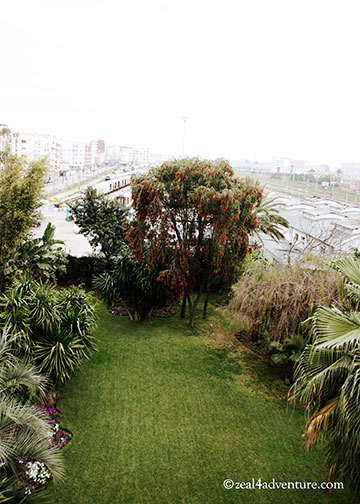
garden-and-train-station-view-from-Ibis

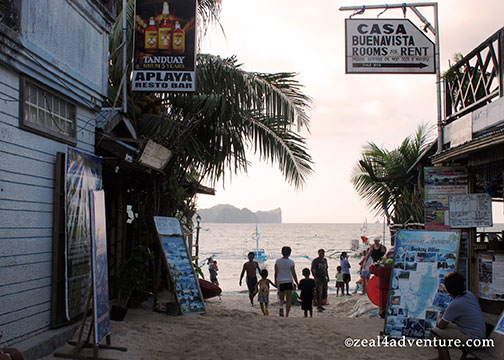
In Ibis Casa Voyageurs next door and our home for a night, the guy at the reception confirmed that the taxi driver was correct and gave us an idea on how much it would cost.  And so our negotiations with Aziz began.  We shook hands at 100 Dirham (US $13).  He would take us to Corniche d’Ain Diab,

corniche-boardwalk

where high-end bars and trendy nightclubs line the area.  “ It’s overlooking the water, where the yuppies go”, the guy on the train from the airport told us.

overlooking-the-water

He suggested that we might want to dine there, but the movie buff in us, out of curiosity, had our eyes set on Rick’s Café,

moroccan-mint-tea

so instead, we walked around the boardwalk and took shelter sipping  “Whiskey Morocco” (Moroccan mint tea)  

outdoor-cafe-by-the-water

in a café when it got too windy.

Dinner, though not our cheapest in Morocco, did not disappoint.
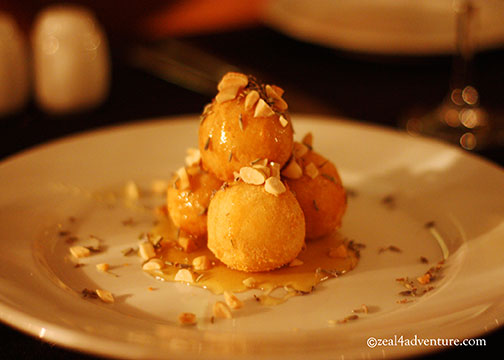
goat-cheese-in-honey

While we found the goat cheese balls drizzled in honey starter and chicken with lemon and olives tagine quite enjoyable,

lamb-chops

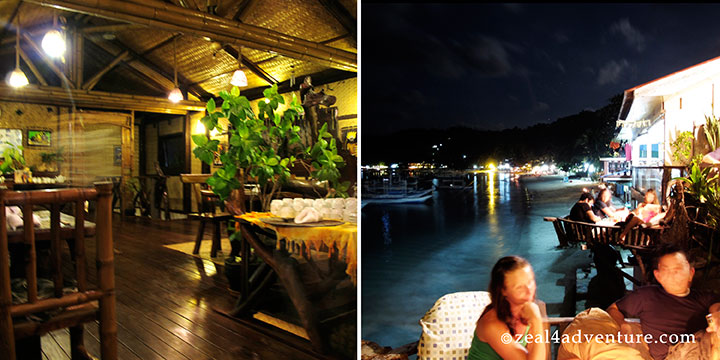
and particularly liked the lamb chops with mint pesto, it is the ambience — down to the piano and the sax player named Issam (close enough to Sam) — that made it one of the best “gin joints” in town.
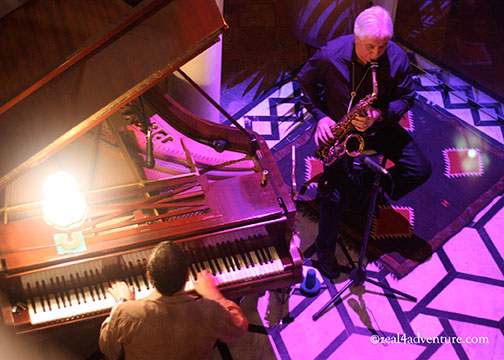
jazz-music

Founded by a former US diplomat, Kathy Kriger, Rick’s Café opened in 2004.

ornate-moorish-design

With potted palms, ceiling fans, whitewashed walls, low archways, ornate lamps casting shadows everywhere, traditional Moroccan carved and inlaid woodwork, balconies and balustrades, antique brass… all provided the right atmosphere and feel of the 1942 cult classic.
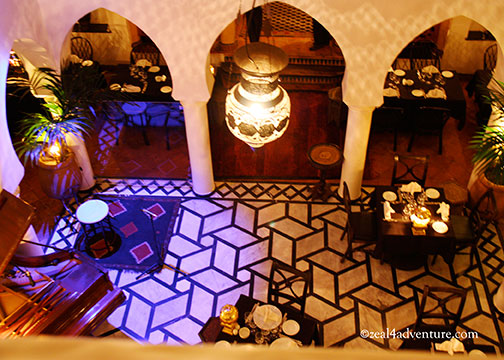
archway

The nostalgia alone is reason enough to come for a visit.

Useful Info:

Rick’s Cafe
248 Bd Sour Jdid, Place du Jardin
Acienne Medina
For Reservations:  +212 522 27 42 07 / +212 522 27 42 08
 
Hotel Ibis Casa Voyageur
Boulevard Bahmad
Place de la Gare Casa-Voyageur
+212 0520 48 00 00

Kamikochi: A glimpse of the Japanese Alps

KamikochiCredits:  Template by Jen Caputo; Papers: Designs by Sarah Bennett, Erica Zane, Gwenipooh Designs. Haynay Designs.

Sometimes a change in plans is a good thing.  We arrived in Hirayu Onsen early.  Our room wasn’t ready yet.  “You may want to go to Kamikochi instead”, the front desk clerk recommended to us after she discouraged a trip to the Shin-Hotaka Ropeway, a two-stage tramway that climbs alongside the Hotaka Mountain Range.  She informed us that it had been raining so the visibility will be bad.  “It will also be very slippery”, she added.  We took her word, left our bags with them and headed to the bus station after lunch.

IMG_0828

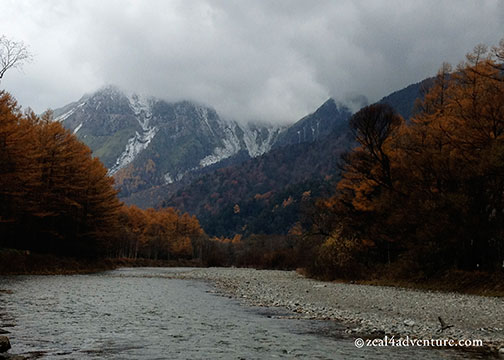
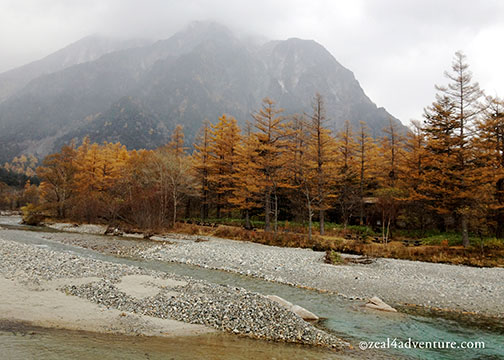
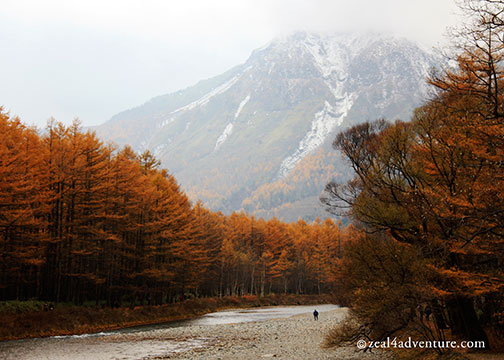
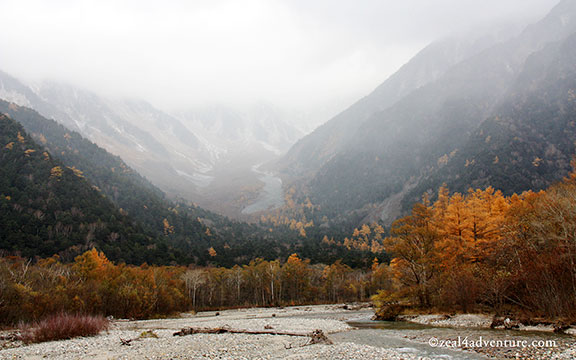
Long dubbed as the Japanese Alps, Kamikochi is a pristine mountain valley in the Nagano Prefecture, seated at the foot of the Hida Mountains, deep in the Chukusangaku National Park where the Azusa River flows some 1,500 meters above sea level.

IMG_0844

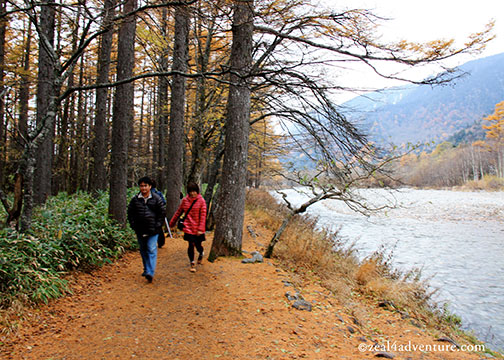
It is known for its splendid landscape and various hiking trails.  As private vehicles have been prohibited in the park since 1996, only buses or taxis are allowed,

IMG_7260

Kamikochi has become one of the best-protected natural areas of Japan despite the droves of tourists and hikers that flock there.

The scenic bus ride from Hirayu Onsen to the Kamikochi parking lot took all of 30 minutes with a brief stop at Taisho Pond for those wanting to hike to the center of Kamikochi. Since it was drizzling and freezing and we weren’t in proper attire, not to mention that we only had half a day, we passed.

trail-from-taisho

It is the best way to enjoy a day in Kamikochi actually, and on hindsight, I am not sure we made the right decision to forego the hike.

trail-to-bridge

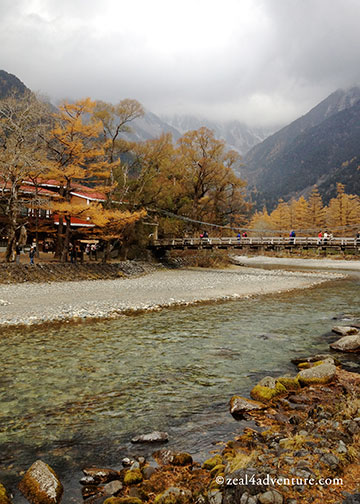
From the parking lot, we took our time and marveled at the wondrous views of some of the tallest peaks of Central Japan’s Northern Alps as we followed the trail to the Kappabashi Bridge.

kappabashi

This wooden suspension bridge is a symbol of Kamikochi with the most gathering of visitors.

IMG_7253

From the bridge, one can see the surrounding mountains, Nishihotakadake, Okuhotakadake, Myojindake, and the active volcano Yakaedake – all towering summits over 3,000 meters above sea level.

coffee-and-dessert

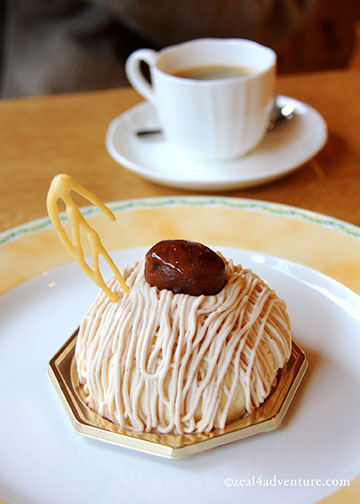
Though we barely scratched the surface with just half a day, less actually if you take out the time we spent indoors to warm ourselves with coffee and dessert, Kamikochi has instantly become a personal favorite, and I wouldn’t mind spending a few days wandering around should there be a next time.

IMG_7251

So sometimes a change in plans is indeed a good thing.

East of Kyoto: Southern Higashiyama Neighborhood Walk

higashiyamaCredits: Papers by Designs by Tater from ScrapMatter’s Life’s Little Surprises Kit.
The guesthouse took sometime to find.  Tucked away in a street where cars aren’t allowed.  The driver of our shuttle service eventually found it; he led us into a narrow residential street.

garden-at-entrance

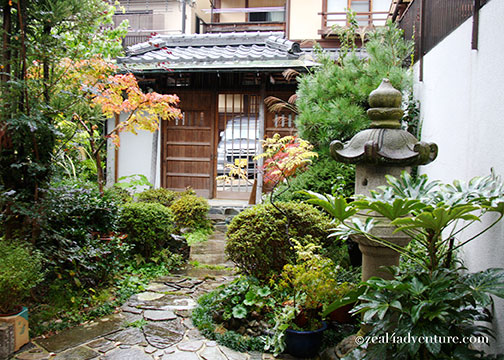
The house is charming, even at night.  A young man let us in, cheerfully welcoming us at 10 in the evening.  The real owners of Yamato Guesthouse are his parents, Kenzo and Nagako.

kenzo-and-Nagako

He was there for the weekend, I figured.  I noticed a group was enjoying some drinks at a corner so I asked if they served dinner — we were hungry, arriving straight from Kansai International Airport.  Of course, they only serve breakfast but they accommodated our request and prepared something simple after seeing our hungry faces.  The other group, it turned out, are friends visiting hence the beer and the snacks – I felt a bit embarrassed about our dinner request.   😯   Such is the hospitality of the Japanese and of our host.

breakfast

Nagako served quite an exquisite breakfast and for 2 days I felt very pampered

The former capital of Japan is famous for its temples and shrines, a beautiful city with tradition and culture filled to the brim.  Kyoto is one of the oldest cities and there is so much to see.  Even just zooming in on an area – the east side – we still barely scratched the surface.  Two whole days is obviously not enough but that was all we had.  We were merely passing through and we made the most of it.

Yamato, I estimate, is a good 10 minutes stroll away from Kiyomizu Temple — actually, it could be 20 if you window shop and ogle at everything interesting along the way.

store-chawanzaka

The neighborhood consists of many interesting stores, delightful cafe and food stalls, which actually make for a pleasant stroll to the temple.

chawanzaka

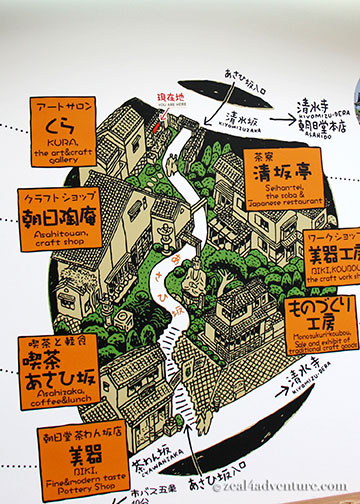
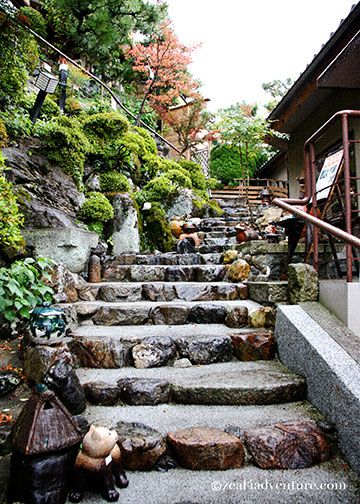
The street of our guesthouse comes out to Chawan-zaka, it actually leads to the temple but we chose instead to turn into a complex that has several flights of stairs,

asahizaka-mapA map of Asahizaka complex

asahizaka-steps

stores and cafes line the way leading to Kiyomizu-zaka, where we chanced on more stores and tourists.

kiyomizuzaka-from-templeKiyomizu-zaka from the temple

If you turn right, you will end up in Kiyomizu Temple.

kiyomizudera

Inside the temple, the tourists escalated in unbelievable proportion.

tourists

Half way through the temple, we gave up and settled for a much-needed coffee break and cream puffs.

Yatsuhashi-cream-puff

Kiyomizu-dera is perhaps the most beloved of Kyoto’s temples.

kiyomizu-temple-entrance

It is a famous hilltop temple offering sweeping views of the old capital.

view-of-the-city-from-kiyomizudera

Popular with tourist and pilgrims, the temple is part of the Historic Monument of Ancient Kyoto and a UNESCO World Heritage Site.

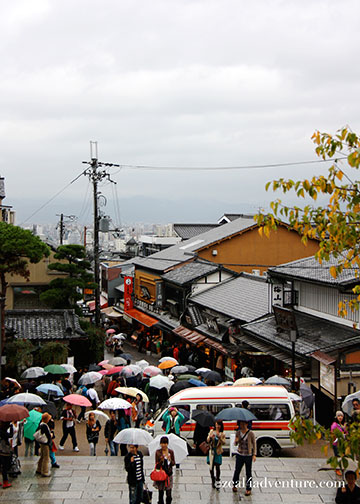
The narrow cobbled street of Kiyomizu-zaka (if you walk away from the temple) will lead to Sannen-zaka and Ninen-zaka, a restored neighborhood oozing with old world charm.

Ninenzaka-and-shannenzaka

Both streets are lined with old wooden houses, traditional shops and restaurants.  It is  a good example of the old Kyoto, the Kyoto everyone imagines.  Despite the drizzle, it was a wonderful walk, quite uplifting I must say.

Following the route suggested by Lonely Planet, we found the street the guidebook described as “the most beautiful street in Kyoto”, Ishibei-koji.  It is a quiet alley lined with high-end restaurants and ryokans.  I saw a photographer taking shots of the street at the end of the stone-paved road.  I went to where he stood and this was what came out.

Ishibei-koji

Have to admit that this quiet street has character with its own stories to tell perhaps but to be identified as “the most” beautiful street puts too much pressure don’t you think?  Beauty is indeed in the eyes of the beholder.  Developed primarily as an area for luxurious rental homes, it is presently a favorite site to shoot TV dramas, movies and TV commercials.

At this point, it was already more than drizzling and it didn’t look like it would let up.  We decided it was time for lunch.

Useful Info:

Guest House Yamato
6-539-23 Gojohashihigashi,
Higashiyama-ku, Kyoto, Kyoto Prefecture
Kiyomizu Temple
1-294 Kiyomizu
Higashiyama-ku, Kyoto, Kyoto Prefecture

East Africa

East-Africa-2

It actually stretches from the northern arid deserts of Ethiopia to the tropical forests of Mozambique and Madagascar, with 19 countries in between.  While my East African adventure in 2006 only spanned 3 countries, the experience it yielded were quite diverse – from the usual Safari adventures to tracking Chimpanzees to the more extreme, whitewater rafting.  Kenya, Tanzania and Uganda, territories that were formerly under British control and each hold common thread yet bear its own unique character.

Highlights:

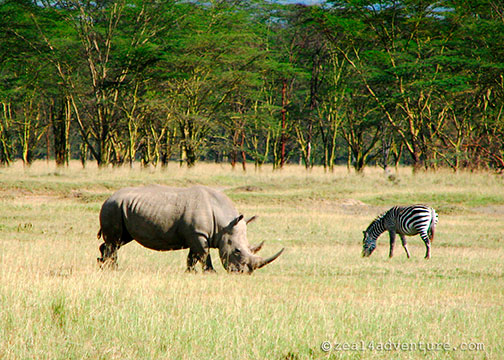
rhino-and-zebra

Catching sight of the Big Five – Lions, African Elephants, Cape Buffalos, Leopards, and Rhinoceroses.

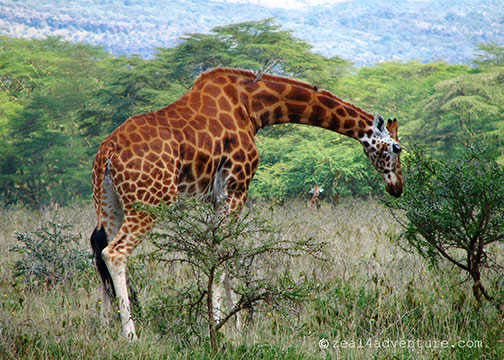
giraffe

The Big Five aside, Zebras along with giraffes have become favorites.

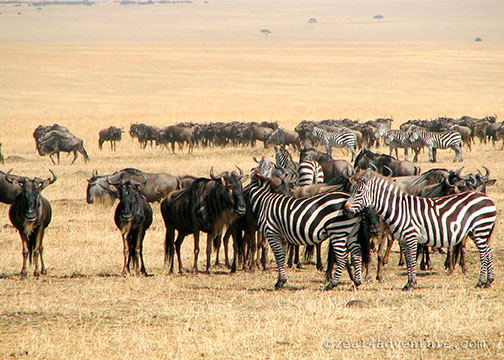
Witnessing not quite the migration but the start of it.  From July to October, one could witness the great migration where wildebeest and zebra travel to and from the Serengeti National Park to the greener pastures of the Masai Mara National Reserves.

masai-mara

It is perhaps the most breathtaking event in animal kingdom and the whole point of our visit to this continent.  To see them gather together, sometimes in a line is more than thrilling.

flamingos

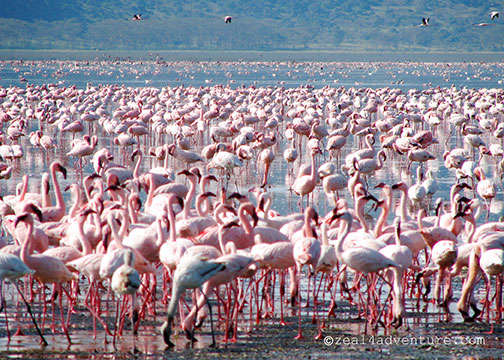
Witnessing a gathering of Flamingos.  Absolutely a sight to behold, this sea of pink covering a large part of Lake Nakuru.  One of the Rift Valley soda lakes that attract vast quantity of flamingos that feed on the lake’s abundant algae.

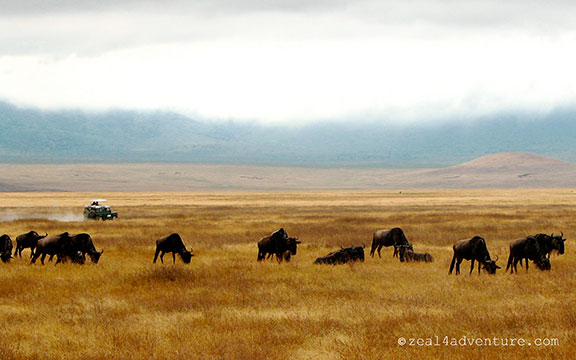
Being in beautiful Ngorongoro Crater.  It is the world’s largest intact unflooded volcanic caldera and is home to over 300,000 animals including the rare Black Rhinos.

ngorongoro

An absolutely beautiful place to be on a safari, the crater makes for a stunning backdrop to rich grazing grounds.

zanzibar4

Chilling in Zanzibar.  A semi-autonomous island separated from the Tanzanian mainland.

zanzibar3

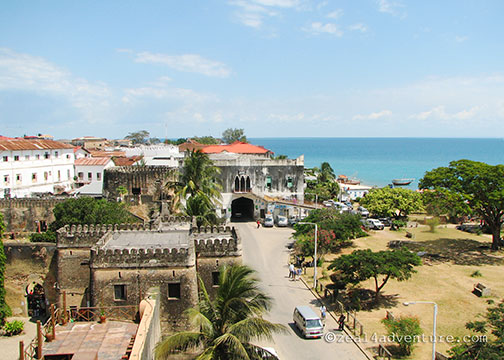
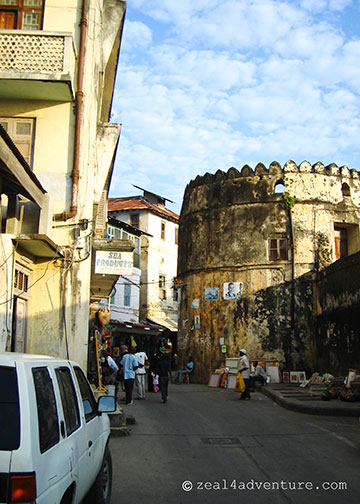
Although just a short distance from the Tanzanian coast, it is at the crossroad of Africa, the Middle East and Asia resulting in a culture of diverse ethnicities, more Middle Eastern in its feel than African.  Likewise with local dishes, the rich fragrance of cinnamon, ginger, cumin, pepper and cardamom is synonymous with Zanzibar, also known as the Spice Island.  The streets of Stone’s Town – the capital’s old quarter – is full of the bustle of back street markets and local flavor.

zanzibar2

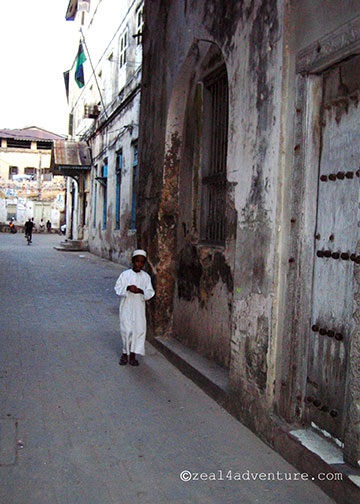
The charm lies in its labyrinth alleyways and faded buildings redolent of the glories of the old Islāmic empire.

7th-Jul-06-(73)

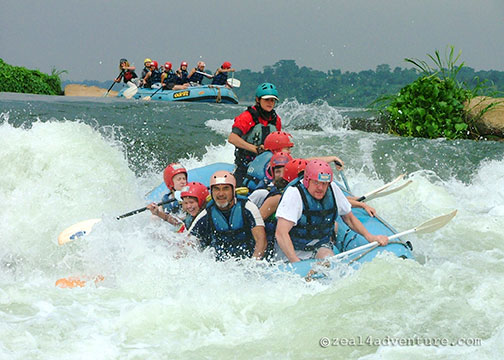
Rafting the White Nile.  Stretching 31km from just below the Bujugali Falls in Jinja, experiencing the Nile at its source is by far the best heart-pounding whitewater ride of my life.

Getting lost in Uganda.  On a wrong bus, we went the other way and ended up not quite where we wanted to be.

bus-stop-scene-in-Uganda

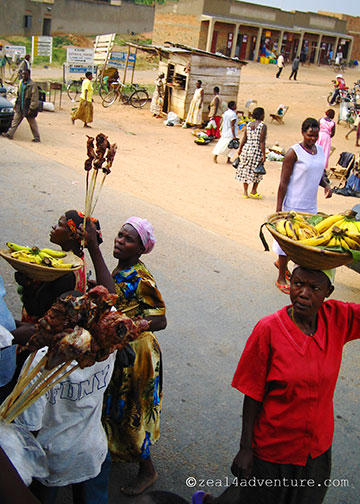
Best known for Idi Amin or Joseph Koney, getting lost could be frightening but this mishap gave us a taste of the local flare and the kindness of its people.  We eventually found our way but not without the help of the people we didn’t know from Adam.  An impression indelibly marked in my heart.

It is by far one of the best trip I’ve had – a wonderful surprise, considering that it was not even on the priority.  I will be back Africa, sooner than you know.

Rest of Batan: Ivana

Credits: Template by Jen Caputo; Papers by Scrapmatters by Becca

At the Honesty Coffee Shop, we waited for the boat that plies the Batan-Sabtang route from the port off Ivana.

It was late.  The waves were strong, delaying its arrival and so its departure.  We spent the entire morning waiting to leave for Sabtang.  Having hitched a ride from Basco, we can’t go too far so we stayed put exploring the church across.  We eventually left for Sabtang after lunch.  That was 6 years ago.

San Jose Church in Ivana looks more like a castle to me because of the crenellated walls of the bell tower.

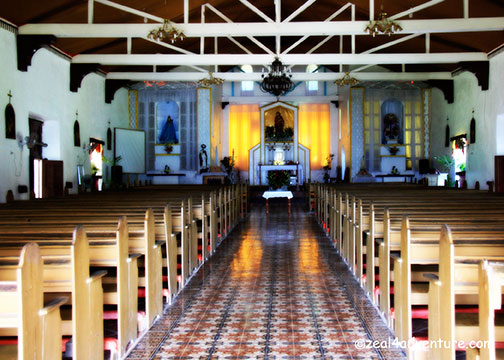
Well preserved, the church is photogenic inside and out.

Today, the church is just as pretty though the recently built port is an eyesore.

Shot in 2006 while waiting to leave for Sabtang.

What used to be a beautiful view of Sabtang and the sea is now partly blocked by the port.

She is perhaps the most visited and the most photographed woman in the island.  Floresitida Estrella, fondly known as Lola Ida, lives in a house known as the House of Dakay – one of the oldest stone house in the island.

Me at the House of Dakay sans Lola Ida.  She was probably not around hence the solo shot.

An earthquake in 1918 earthquake hit the island and leveled most of the town to the ground, this house survived.  We did not visit her this time.

Instead, we headed to Vatang Grill and Restaurant for lunch.

Just along the main road, close to the shore.

Six years ago while waiting for the boat, we had sweet Filipino-style spaghetti for lunch in a small and perhaps the only eatery in Ivana then.

Finally, a good restaurant serving rather good local Ivatan cuisine in this side of the island.

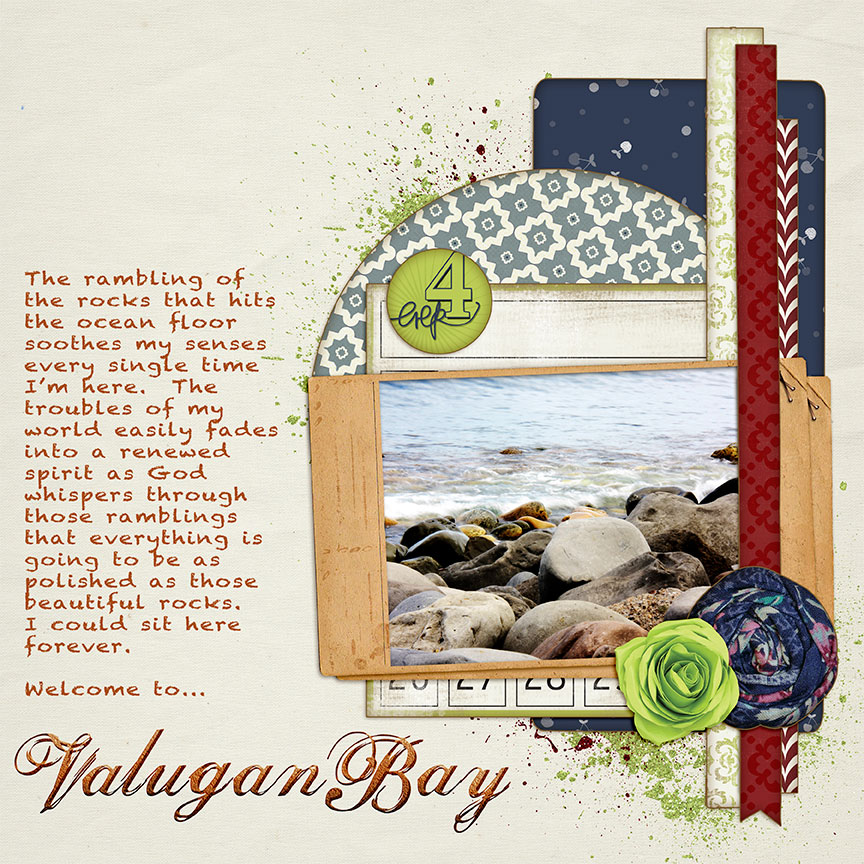
Basco Jaunts: Valugan Bay

Credits:  Quickpage by Antonia Krajicek using the “4Ever” kit, a collaborative kit created by Jessica Sprague.com; Suede Alpha by Miss Behaving 2011.

From where we got off, I could hear the splash of the waves; the boulders hardly visible.

The sea is calmer in May.

The rambling of the rocks that hits the ocean floor becomes clearer when you are closer.

With picture-perfect spots scattered all over the islands, Batanes is easy to love.  To pinpoint one specific spot that I love the most is a tall order and perhaps impossible.

Valugan Bay though is so different from any beach I’ve seen, it has left indelible memories and has landed on my top 10 lists of favorites.

I’ve never come across any beach as dramatic as Valugan Bay.

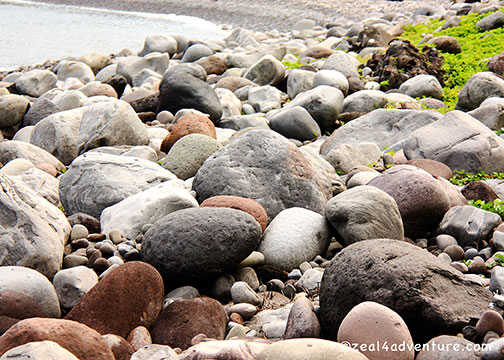
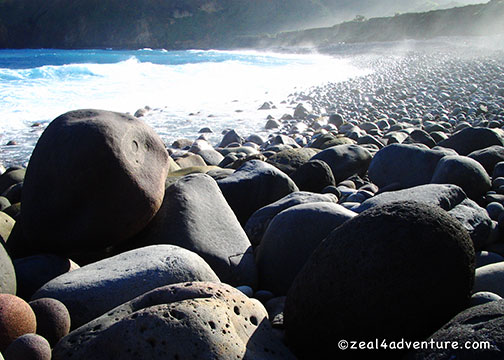
Spewed out by Mt. Iraya and polished through time by powerful waves of the Pacific Ocean, large multi colored rocks covers a kilometer stretch of beach

Taken February 2006 when the waves were larger.

and made more mystical by the ocean mist when waves are strong.

The rambling of the rocks soothes my senses every time I’m here.

The troubles of my world easily fades into a renewed spirit as God whispers through those ramblings that everything will be as polished as those beautiful rocks.   I could sit here forever.

Batanes

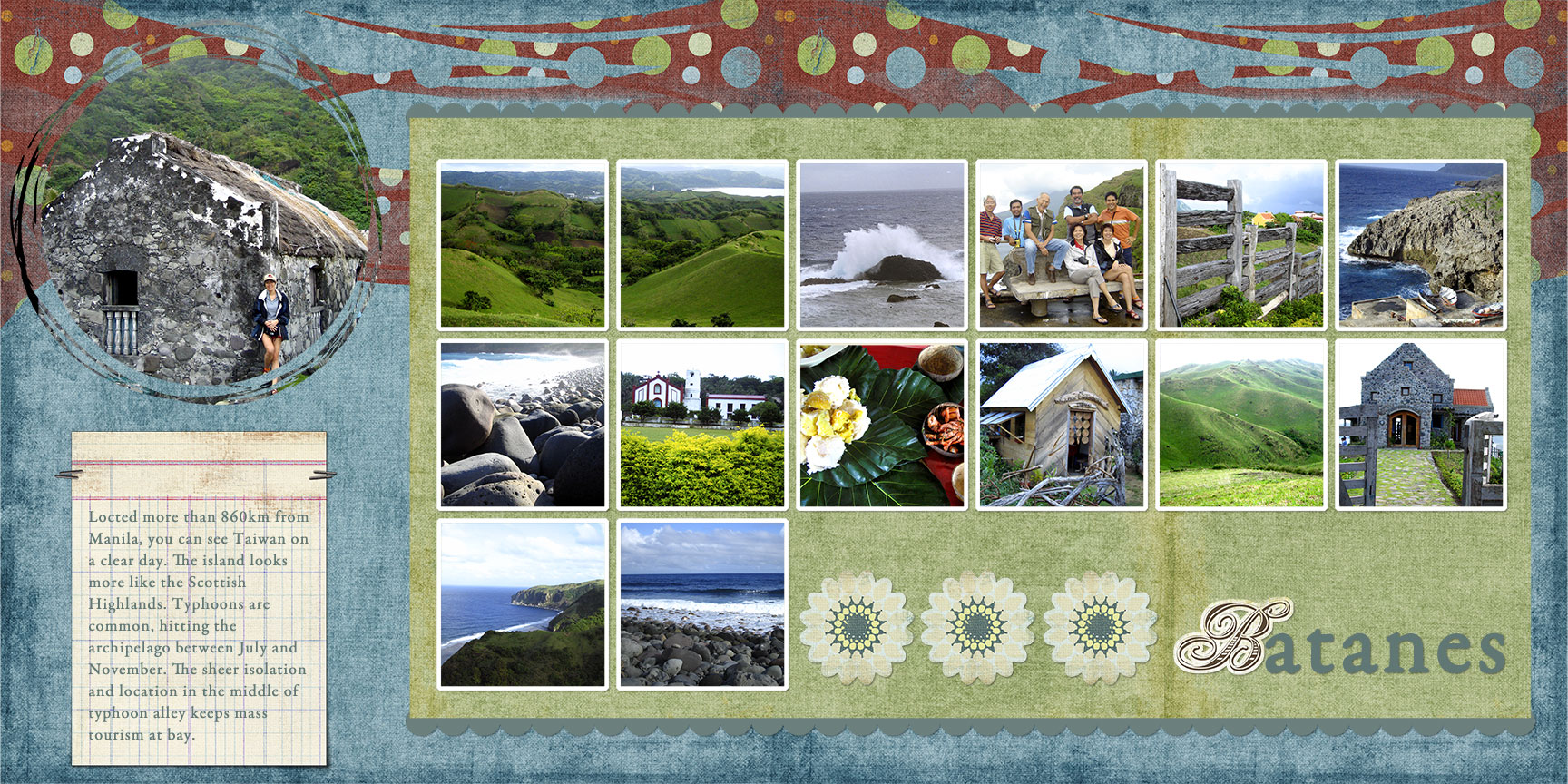
Located more than 860 km from Manila, you can see Taiwan on a clear day.  The island looks more like the Scottish Highland.  Typhoons are common, hitting the archipelago between July and November.  The sheer isolation and location, in the middle of typhoon alley, keeps mass tourism at bay.

My journeys to Batanes have been a series of milestones.  I first set foot on this northernmost part of the Philippines, the home of the Ivatans, in 1997.  That trip started it all.  It catapulted my zeal for adventure.  I found myself back nine years after, this time to explore the farthest inhabited island of Batanes called Itbayat.  And very recently, another dream brought us back to this pretty corner of the world.  A new milestone to achieve.

Batanes continue to enchant despite commercialization.  More frequent flights fetch more tourists albeit still miniscule compared to other destinations.  The size of the plane allowed to land at the Batanes airport prevents mass tourism from flocking in still.  With its rolling hills, ancient cultures, traditional stone houses, and breathtaking landscapes, Batanes is worth exploring again and again.  Let this post be a prelude to an ultimate adventure.  Stay tuned.

Rugged Mystique

Credits: Papers from SDynes Christmas Treasures Mini Kit; Frames from Orchbroom Mask and SDynes Christmas Elements; Floral Elements from Sahlin Studio’s Story Telling kit (sc flowers).

Bewitched.  I can’t seem to put my finger on it but there’s something about the town of El Nido that has left me enchanted from day one.

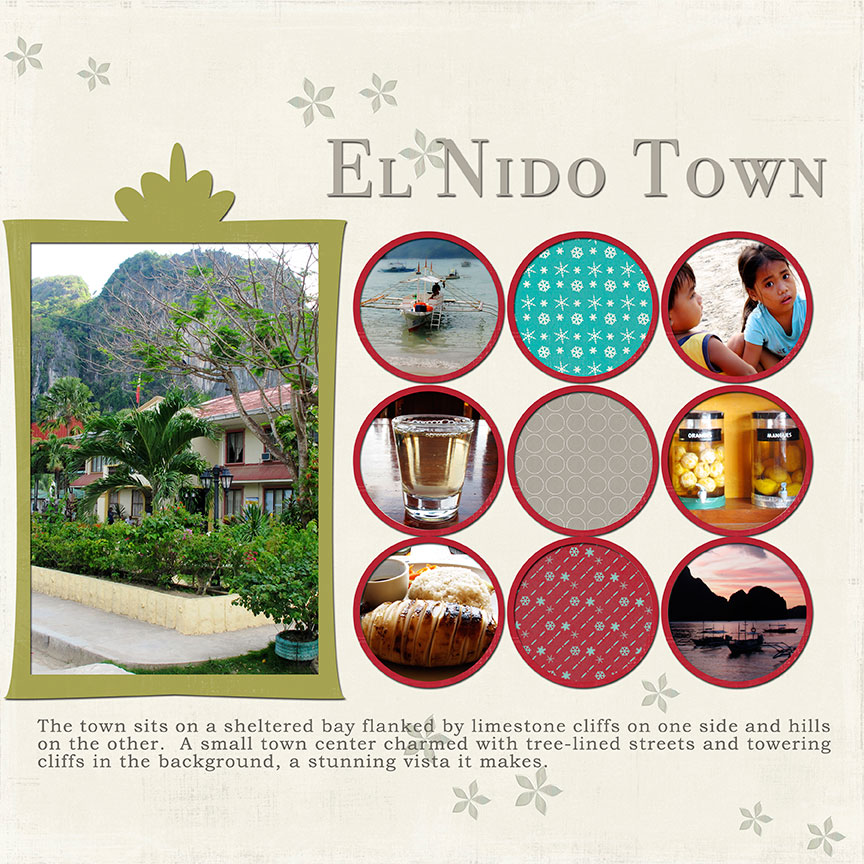
The town sits on a sheltered bay flanked by limestone cliffs on one side

and hills on the other.

A small town center charmed with tree-lined streets and towering cliffs in the background, a stunning vista it makes.

It still is very much a backpacker’s town really and it is this laid-back backpacking atmosphere that lured me back to many years after.

This charming fishing village in the northernmost tip of the Palawan Island often is referred to as the Last Frontier due to its rugged mystique.

How time flies… it took me 8 years to come back to one of my favorite towns.  I still remember many details of the town like it was yesterday.

El Nido has turned into a touristic town and I see that more exciting places to eat and stay have sprouted everywhere.

Madali ang pera dito kung masipag ka”, says Mang Rudy.

The opportunities are endless with tourism at the forefront here at El Nido and money can indeed be easy if one works hard.

The one place I would have loved to go back to, we heard no longer serve meals on a regular basis.  Walking to town, we unwittingly found the house so we entered the half-opened gate and were told that they don’t accept dinner bookings anymore.  We took it as that.  On hindsight, I am not sure if they meant that they were already full for the holidays or that they weren’t serving because it was a holiday.  Having seen many closed shops and restaurants around Palawan during Easter break, this will not come as a  surprise.  Elm St Café is a cozy dining place set in a beautiful garden amidst a limestone backdrop so beautiful when lit at night.  The owners opened their home along Rizal Ave. and they served meals to those that booked in advance – usually a surprise, depending on what is found in the market that day.  They were the best of the best then, the ambiance and the element of surprise added to the experience and memories.

Not to fret though as there are a whole new lot to choose from, we barely scratched the surface, I think.  And here are some that caught our fancy.

La Salangane – more than the French meals, what had us coming back were the homemade flavored rums.

Ginger, apple, pineapple, pears, oranges, mangoes, even pepper –

wonderful flavors enjoyed in a relaxed atmosphere overlooking the Cadlao Mountain by the beach.

Made more special over sunset.  This is THE place to get your espresso fix as well.  Many of the places in E Nido, including our inn, do not even serve brewed coffee.

The Alternative Restaurant – mentioned by some French tourists we met on our way to El Nido, we decided to give it a shot.  The place was not easy to find as it does not look like much from the outside and we kept walking pass it.

On the 2nd floor though where the restaurant is, the ambience turned to cozy.  At one side overlooking the sea, a few sunken oval seats resembling a “bird’s nest” overhangs the beach – a cool place to hang out and watch the sunset, me thinks but A wasn’t as confident that the structure would hold us so we got ourselves a table instead.

Despite an extensive vegetarian choice, I had a pork dish with pasta – and it was pretty good.  Our French friends though were not as impressed.

Altrové Trattoria – saving the best for last.  This Pizzeria was the best of the lot in my books.

Made of fresh dough and cooked crisp in a brick-oven is perhaps the best pizza in town.  The place, unlike The Alternative, is hard to miss.  Beautiful façade of a place, the brick oven proudly stands at the ground floor.

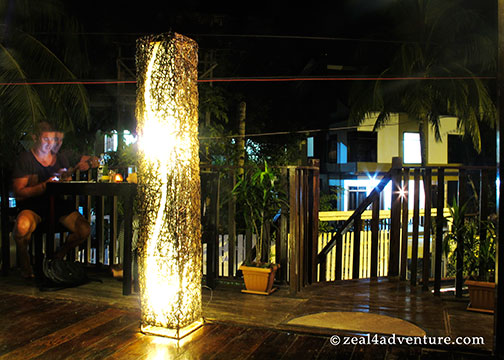
A nicely decorated second floor is where the dining area is.

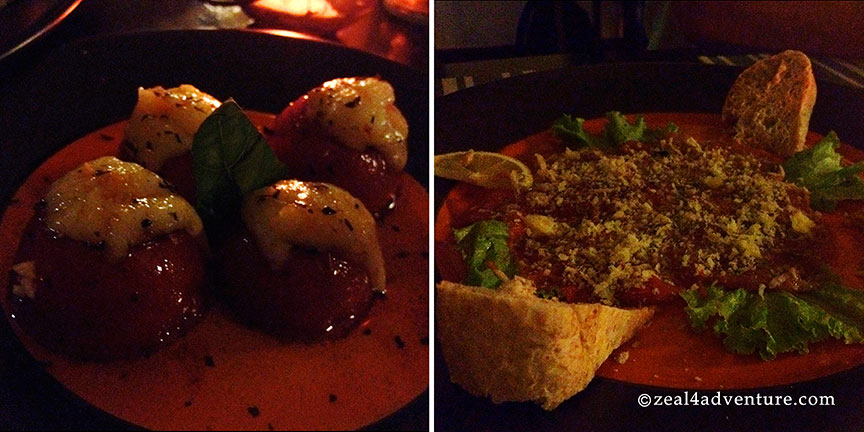
We enjoyed our antipasti of Beef Carpaccio and Baked Tomatoes on Mozzarella.

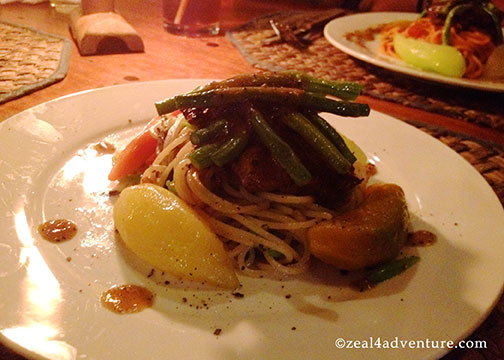
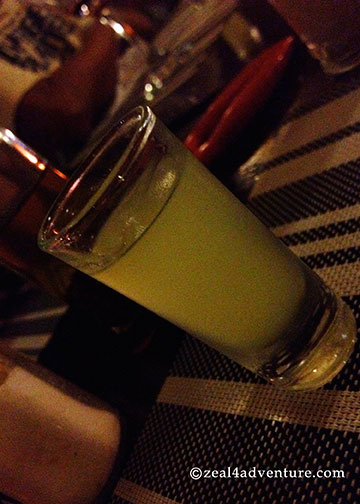
The seafood pasta dish was divine and the pizza, wonderfully crusty.  And to cap the evening… Limóncello, how can I not love this place?

To serve Limóncello in a town like El Nido, where electricity only runs from 2pm-6am, was impressive.  And this, dear friends, has easily landed on the top of my El Nido list, dining-wise.

Useful Info:

La Salangane
Serena Street
Barangay Buena Suerte
Contact:  (63) 916-648-6994
Email:  info@lasalangane.com
 
The Alternative
Serena Street
Barangay Buena Suerte
Contact:  (63) 917-896-3408
 
Altrove Trattoria
Hama Street
Barangay Masagana
Contact:  (63) 927-741-8016 
 

A Leisurely Stroll Through Luang Prabang

Credits: Papers by Sahlin Studio’s Sweet Story Telling papers, Creativity by Crystal’s Room Collection Solids; Elements by Sahlin Studio Sweet Story Telling Kit.

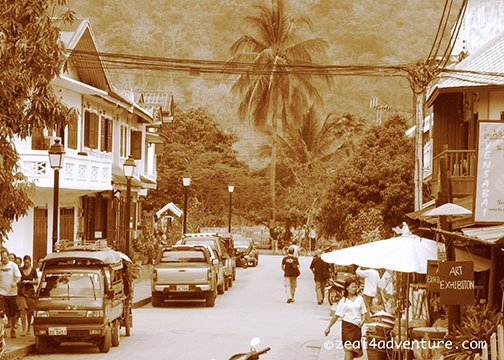
It was a beautiful ordinary day.  No agenda, we just played it by ear, went with the flow.  The plan was to leisurely walk the streets and see where it takes us.

The serene atmosphere of this enchanting city begs for nothing more.  Having strolled down these streets before, it was interesting to see new ventures turning up while many stayed the same.

Luang Prabang lies in the heart of the mountainous region of North Laos.  Also known as the jewel of Indochina, the ancient royal city sits between the junction of the Mekong and the Nam Kahn Rivers.

And our nice little boutique hotel, Villa Deux Rivieres is situated somewhere near the junction in Kingkitsareth Rd.

Monks with their signature umbrellas in Sakkarine St. — a quieter part of town.

Great location as it really is just a short walk away from many places of interest and the main street, Sakkarine,

The busier street of Sisavangvong has more tuk-tuks and motobikes lining the streets.

which turns into Sisavangvong St. if you walk further.  We spent a lot of time in Sakkarine St. browsing, sometimes buying from the many little shops or relaxing in several of the cafes lining the stretch.

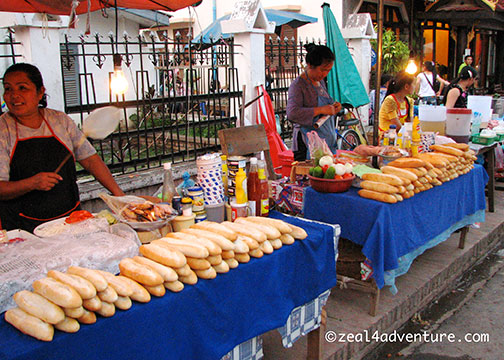
Café Ban Vat Sene across the charming Wat Sene and Le Banneton with its wonderfully crusted breads are our favorites hang-outs.  We sat outdoors and enjoyed the cool air and the easy going vibe of the town.

Those breads lured us to Le Banneton

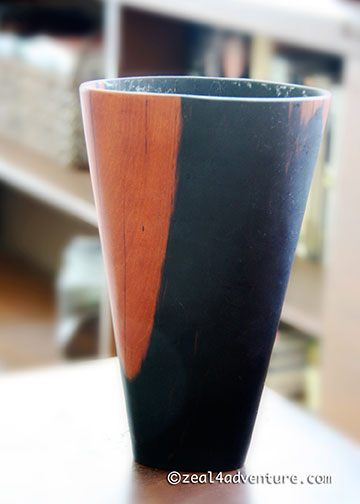
Caruso Lao never fails to lure me in each time we walk pass it.  Beautiful stuff on display, a bit pricey but well worth the workmanship, me think.

And look what I have displayed at home.  There could have been more, if freight wasn’t so ridiculously high.

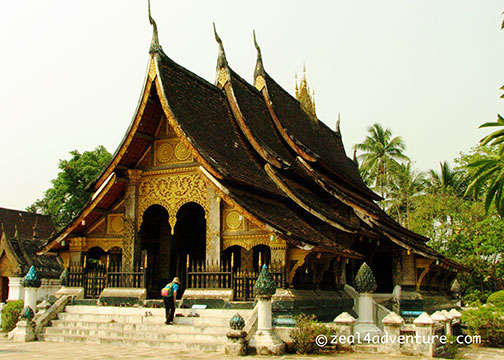
Comprising this enchanting little city are ancient structures, a Royal Palace, a National Museum,

Wat Sene along Sakkarine Rd.

and a concentration of golden temples they call Wats, all thirty-four of which have been listed for preservation.

Luang Prabang, a UNESCO World Heritage Site since 1995, is undoubtedly rich in cultural heritage and has both historical and natural sites to boast.

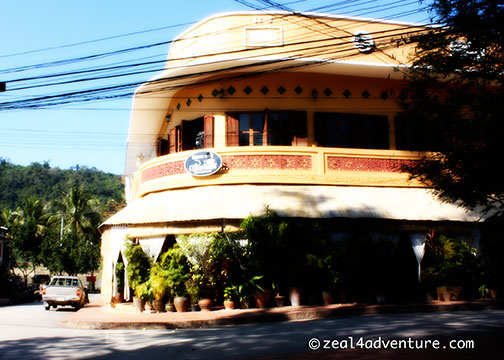
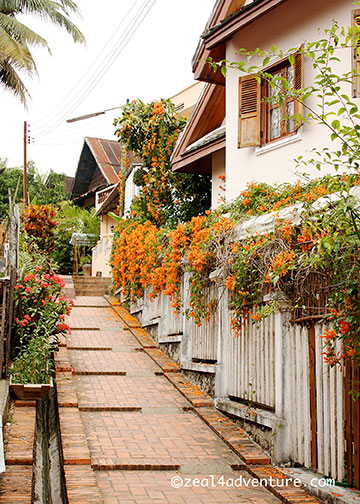
Traditional wooden dwellings and old colonial style houses fused into a distinct cultural tradition with beautiful landscapes that surrounds.  Mount Phousi perched in the middle of town showcases stunning views of the surrounding temples and hills.

It is a city where time seemed to have stood still.  The old town (their historical district) in particular has an old world charm,

reminiscent of the 1940’s where bicycles dominate and colonial style interspersed with traditional houses line the streets with some vintage cars even.

Small enough to explore by foot, we started our stroll at our hotel in Kingkitsarath to the bank where Khan and Mekong meet. The street, as in many in Luang Prabang, becomes Khem Khong or Mekong Rd at some point.

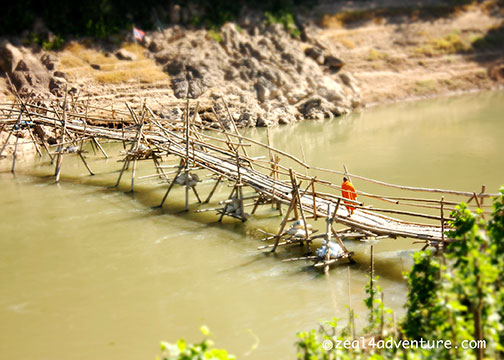
At the confluence, a path led to the river below where a wooden bridge stands.  Across is a handicraft and weaving village that one can explore but we didn’t venture out there anymore.

Instead, we continued on Khem Khong to get to Wat Xieng Thong – perhaps the most magnificent but definitely the most important and impressive of Lao temples.  There is a cluster of  ancient buildings dating back to the mid 16th century.

At the back of Wat Xieng Thong is a tree of life mosaic in colored glass.  Anyone with a keen interest in Lao history should not miss the religious artworks and artifacts housed here.

When it was time for lunch, we went for L’Elephant, an institution in its own right in Luang Prabang.  Menu was mostly French.

For starters we had a refreshing Carrot and Orange Salad and a superb Escargot baked in Garlic and Parsley Butter – cooked the way we like it.  For main, I had the Mekong Perch in Coriander Sauce and A had Stuffed Roasted Boneless Quail.  I say fine dining at its best in Luang Prabang.

The laid back, open-air atmosphere with high ceiling fans half expects you to see Rick Blaine come out and entertain.

In between lunch and a traditional lao massage, we explored more of Khem Kong, definitely a very quiet street where many upscale hotels are located.

Khem Kong facing the Mekong

 One of many roadside restaurants with a view of the Mekong or the Nam Khan

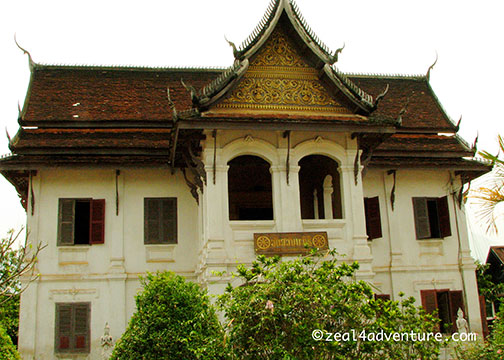
We then visited the Haw Kham, which is now known as the National Museum.

Once the Royal Palace, the building is a fusion of Traditional Lao and French design.  It houses an impressive collection of royal memorabilia and religious artifacts.

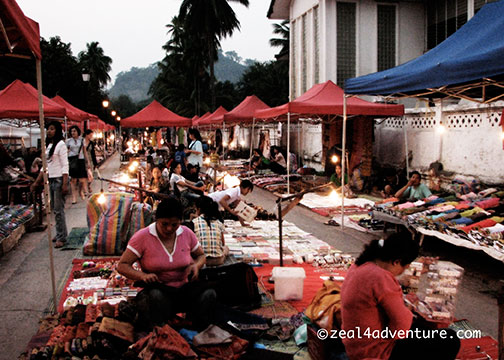
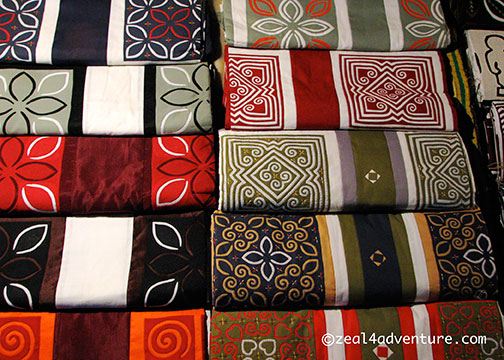
Every night, Hmong people come dowm from their villages in the mountains to sell their hand-made products,

typical Lao arts and crafts that include appliquéd blankets, silver jewelries, embroidered bags and a lot more.

A short walk-through here is more than adequate if a bargain hunter you are not.  They  have interesting and tasteful designs at a bargain, the quality is another thing though. But I guess you get what you pay for.   🙂

Many of the stalls here sell Lao street foods but we had our eyes set on Mango Tree in a quieter part of Sakkarine St.

Suffice it to say that dinner was fabulous.  Superb Lao dishes plated beautifully and served in a casual garden setting.

An extraordinary meal to cap an ordinary day, I must say.

So tell me, how can you not fall in love with Mekong’s jewel, its beautiful people,

its heritage and its shabby chic French fused Lao architecture that is so uniquely Luang Prabang?

Useful Info:

Villa Deux Rivieres
Kingkitsarath Rd., Ban Khily
Luang Prabang, Laos
+856 207737 8575
 
Cafe Ban Vat Sene
Sakkarine Rd.,
Luang Prabang, Laos
+856 71 252 482
 
Le Banneton
46 Sakkarine Rd., (opposite Wat Sop)
Luang Prabang, Laos
+856 21 217 321
 
 
L’Elephant Restaurant
Ban Vat Nong
Luang Prabang, Laos
+856 71 252 482
 
 
Mango Tree
Sakkarine Rd.,
Luang Prabang, Laos
+856 71 253 750

Wat Xieng Thong
Khem Khong Rd.,
Luang Prabang, Laos
Admission: 20,000 kip
 
National Museum
Sisavangvong, Luang Prabang
+856 71 212 122
Admission: 10,000 kip


Fun and Frolic at the River Namsong

Credits:  Papers by Jessica Sprague (Bright Stripes paper), Carina Gardner (Coqu flirt 16), ITM Tricolor (Red tiny dot), QQ Knotty Girl papers; Elements by Carina Gardner (daisy paper bits)

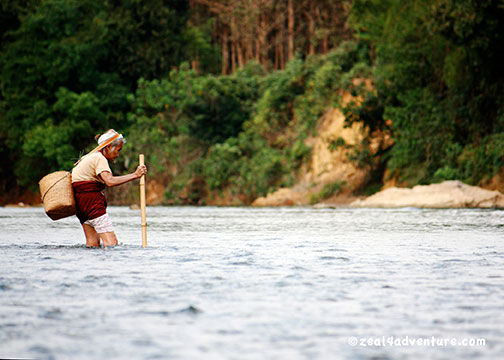
Once a peaceful and quiet town, Vang Vieng used to appeal only to adventure travelers wanting to rock climb, explore caves or to simply enjoy its tranquil surroundings, its people and culture.

Surrounded with striking karst rock formation, the Namsong runs through it contributing to its serene setting.

Since the launch of inner tubing in the mid-2000, the quiet town of Vang Vieng has never been quite the same.

The Namsong now appeal to “partying” backpackers.

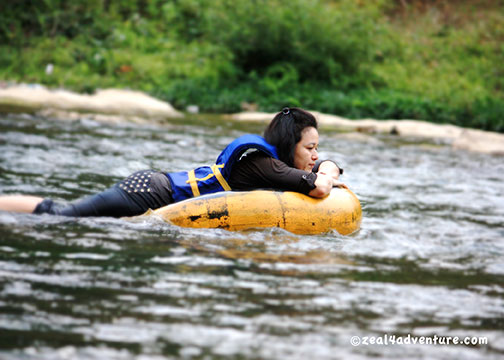
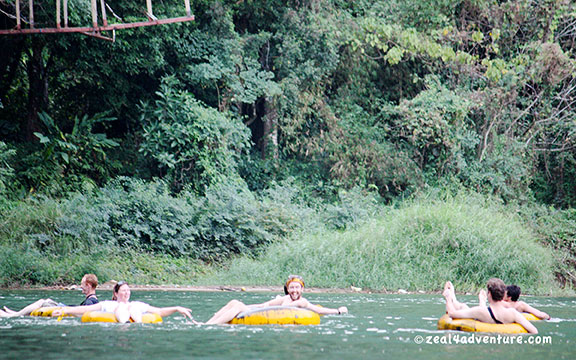
The town today is most know for “tubing” down the Namsong and with it came

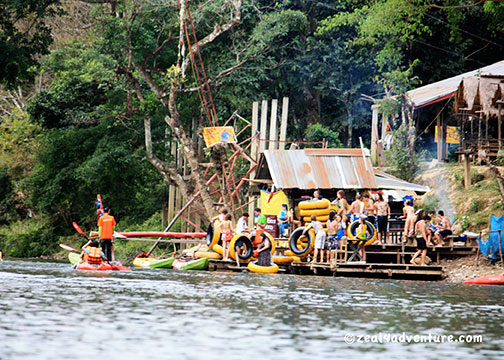
many bars along the riverbanks catering to those floating downstream either in rubber tubes or on a kayak.

The townsfolk once farmers are now owners of bars and guesthouses – predominantly made up of chill-out bars and dance shacks all offering cheap booze,

some offering more thrills in the form of swings and ziplines.

Along with the bars, lodgings of various types line both sides of the riverbanks.

A short afternoon cruise up and down the river on a motorized boat reveal all these.  It is the easiest way to watch the goings on around the river.

Foreigners partying or simply floating down the river dominate local scenes along the river.

The “party” scene may have appealed to me years ago but today, I prefer the relaxed atmosphere of the down river part of the Namsong.

Watching the sunset over cocktails after a long day is my idea of a good time.

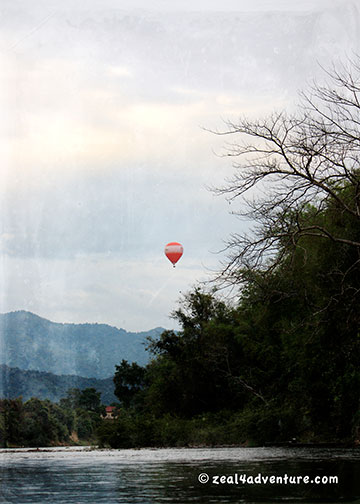
This looks like fun… so we booked a sunrise ride over Vang Vieng on a Hot Air Balloon… on my next post.