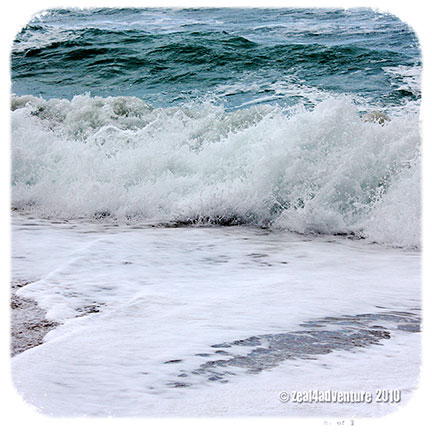
Maira-ira, Kiteboarding and Happy Memories

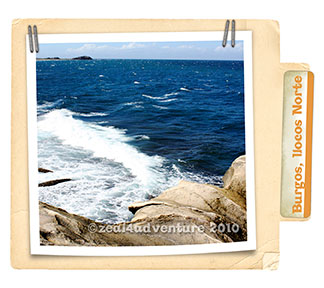
There’s something about white sand and strong waves crashing on the shore that evoke memories of my childhood.  Perhaps because my earliest recollection of the beach was when I was 4, living in the US with my family (of course), vacationing then in Miami Beach.  I played with the waves, trying not to get my feet wet by outrunning the waves crashing on shore.  Fun but futile because I think I ended up wet anyway.

Approach to our resort — Hannah’s (shhh… it looks better from afar!)

We arrived at Maira-ira point practically sundown and oblivious to how pristine the beach across the street from our resort was.  We woke up to an overcast morning, greeted with strong amihan winds.  Perfect for surfers, I thought.

Well, there you have it… it was the first time I saw kiteboarders in action.  I learned about this sport from a friend J a few years back.

And what do you know?  It was J surfing the waves on his kiteboard.  It was fascinating to watch and I’m sure more than thrilling to be on board.
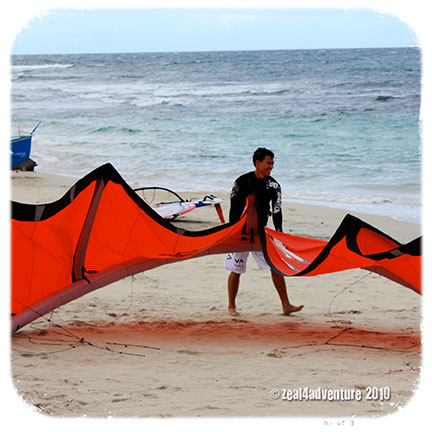
That’s not J!  Tee hee!   😀

J’s been convincing me to try it… yeah, yeah!  Perhaps someday… for now, I’m happy wading through the waves.

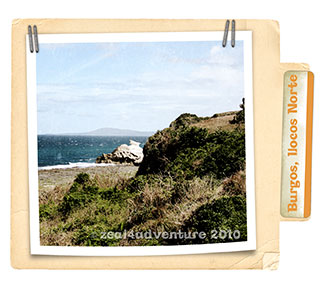
The Blue Lagoon, as it is aptly known, is nestled around hills on a crescent cove that can be truly private and hidden from the mainstream beach-combing crowd.
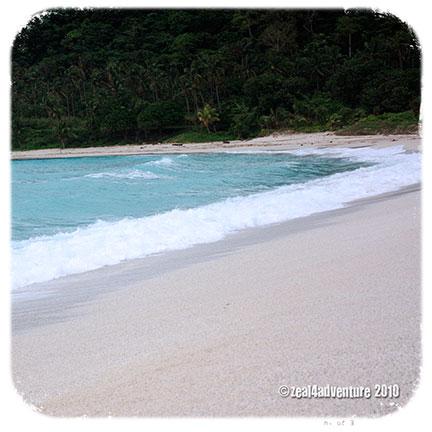
I like my beach that way.

From the road, partly hidden from trees and other vegetations, a sign pointing to some stairs leads to the beach.

sand up close

Sand definitely not “Boracay” fine but I like it that the tiny white pebbles stay put in super strong winds.  God knows best, doesn’t He?

The Windmills of Your Mind

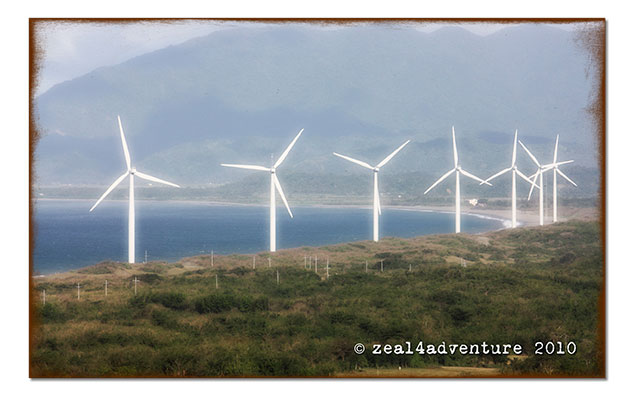
Like a circle in a spiral, like a wheel within a wheel, never ending or beginning, on an ever-spinning reel… kept playing on my head as we approached the windmills in Bangui, also known as… Bangui Windmills!   😛

Lunch noodles consisting of crispy pork (bagnet style), eggs (sunny side up) and liver

After a simple lunch of Pancit Batil Patung (a noodle dish supposedly unique to Tuguegarao and is strangely being served in a Kitchenette along the way to Bangui),

we drove a little further and followed a dirt road leading to the bay, the majestic windmills already visible growing more majestic as we got closer –

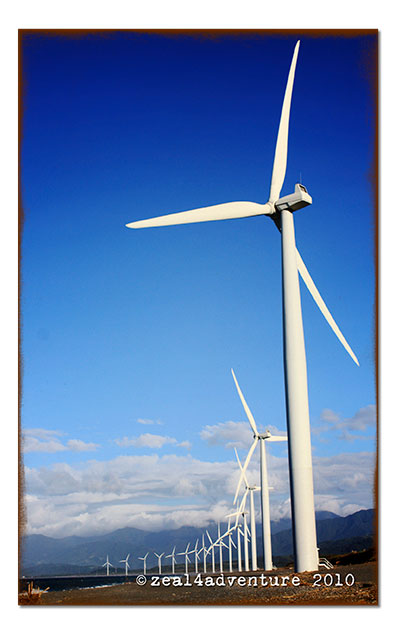
15 wind turbines arranged in a row on the shore of Bangui Bay facing South China Sea.

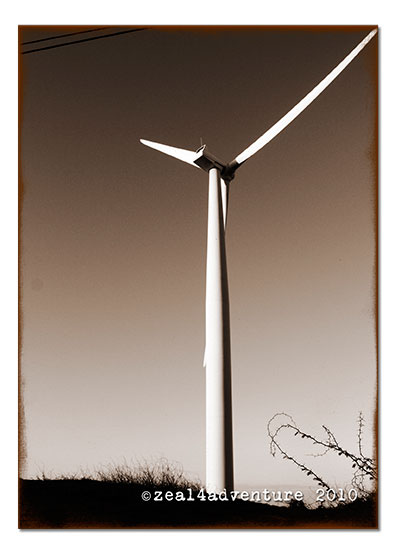
Each turbine is roughly 70 meters high with blades 41 meters long and spaced approximately 200 meters apart,

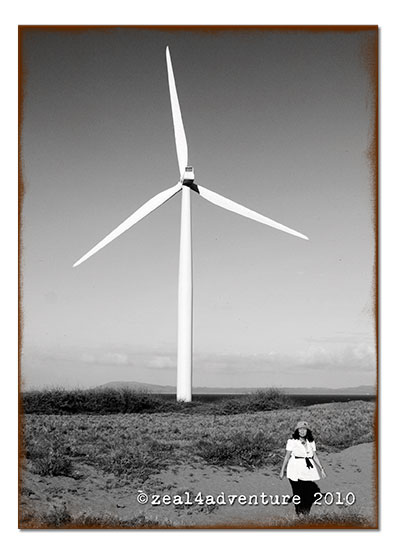
our smallness so apparent against its imposing structure.

It is the 1st “wind farm” project in the Philippines owing to the poor quality of power supplied to Ilocos Norte by the National Power Corporation back in the late ‘90s.

Built by the Northwind Power Development Corporation and inaugurated in 2005, this project provides 40% of the power requirement of Ilocos Norte today.  It is also considered the biggest in Southeast Asia.

A sight one must see in person to experience first hand its grandness.

A cafe in the midst of windmills

Before heading to our final destination for day 1, which is our resort, we saw signs that points to Kang Kang Windmill Café.

Brewing our coffee

Curious and at the same time badly in need of some caffeine in our veins, we had a go at it.

Best with Chef Tony’s Belgian Butter Honey Roasted Popcorn… heavenly!

Curiosity has its rewards – freshly brewed Kalinga coffee in a small café named after their small sitio… our 3rd best find of the day!

Click on the icon for more scenic scenes from around the world.

Scenic Sunday

Kapurpurawan: A hidden gem

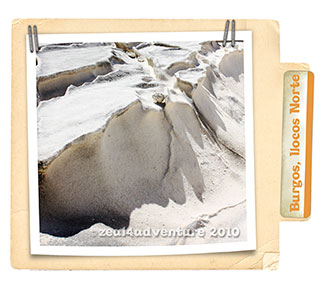
Got its name from the word “kapur” which means white in Ilocano, I am guessing that Kapupurawan means “whiteness” if I got my grammar right.   Correct me if I am wrong, anyone.

We almost missed the turn off on the left side of the highway.  The road sign was somewhat faded and didn’t seem to lead anywhere.  But we took the road anyway armed with only instructions gathered from the net and different blog sites.  As the road got rougher and narrower, we decided that walking might be a better option.  It was a short unremarkable trek to the make shift shed, nothing that would prepare you for what lies ahead.

From the shed look to your right and you will see a tiny speck of white rock formation, waves dramatically splashing against its base.

We are facing the South China Sea and suddenly I understood why this hidden gem got into the pages of travelogues and travel blogs.   Unaware of such a site until a few months ago, it was a discovery that made our long drive to Ilocos worthwhile… thanks to the world wide web.  We traveled this road some 12 years ago and had no idea that there was such a treasure tucked away from the main road.

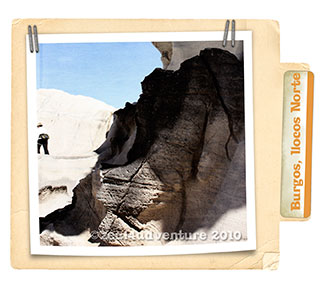
We carefully trekked the spiky corals until we reached the limestone formation made more dramatic with each step.

We stayed atop for a while trying to keep steady from the strong winds.

I could stay there forever marveling on God’s great creation but we have more on our agenda.

Going back, we were discussing how this place would be great for fashion pictorials.  I can imagine the gowns blowing against the wind with water splashing in the background.  Then we saw people with cameras, lenses, tripod… the works walking towards us.  I heard my name and lo and behold, it was a friend.  They were doing a pre-nuptial shoot.  Those who know of the place apparently have the same thoughts.  We left them to do their shoot wondering how long this gem will be kept hidden from the majority.

Credits:  Frame by KPertiet


A Century-old Lighthouse

After a hearty breakfast of longganisa in Vigan, we wasted no time and found ourselves back on the road heading towards the northern most province on the western side of Luzon.  At some point along the narrow coastal road in Burgos, a big brown marker on the right lead us to a winding road up a hill.

Sitting on top of the hill is a Spanish-era “parola” or lighthouse overlooking a dramatic view of the northern-most tip of Luzon.

Cape Bojeador, it is called, is one of the famous historical landmark of Ilocos Norte.

This 19th century lighthouse is still standing today serving ships passing by the northern part of South China Sea.

One off the list of many must sees of this road trip.

The Kenai Fjord Surprise

Alaska was a surprise.  Didn’t think I’d enjoy it as much as I enjoyed it.  It was a great choice of a destination for my “big trip” that I aim to do every couple of years.  What an experience. We would like to think that we did pretty well even though we didn’t achieve all that we’ve set out to see and do.  There were lakes, wildlife and activities that will have to wait till next time but I’m happy and whatever we saw beyond this point would be a real bonus.  Guess what, we got that bonus.

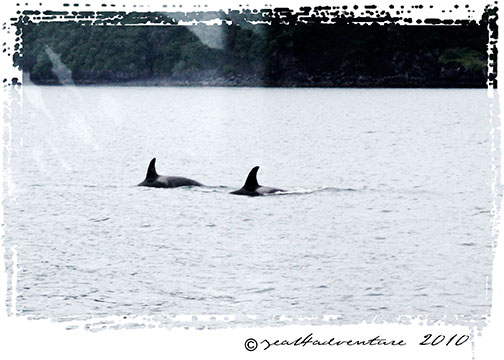
Orcas.  Yes the killer whale.  As suggested by the lady from our hostel, we had a great chance of seeing orcas in Kenai Fjord.

So soon after we got ourselves settled, we were on a boat headed towards Kenai Fjord just 15 minutes from town.

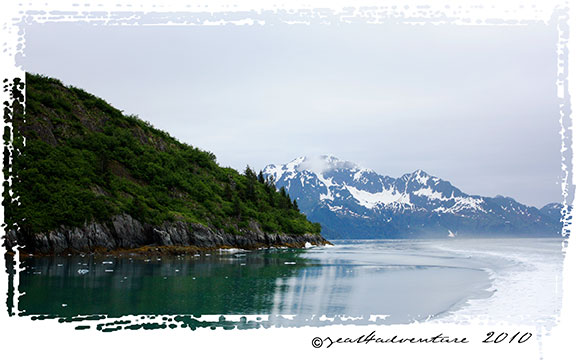
Not only does it have some of the most beautiful fjords and glaciers in Alaska, it also offers one of the best wildlife spectacles. Humpbacks and killer whales, sea otters, harbor seals, sea lions and puffins flock the park’s waters.

As promised, that boat ride never lacked wildlife sightings.  It was a thrill to see tons of sea lions basking in the sun,

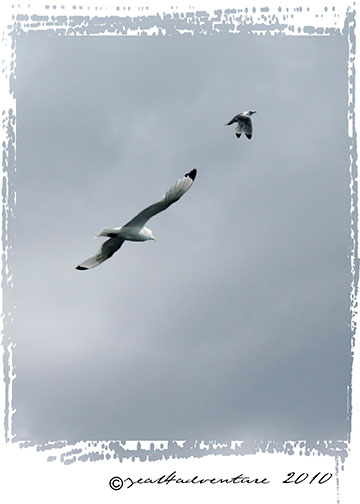
birds flying all around and of course,

breaching humpbacks that never cease to amaze.

What capped it all however, were the orcas.  It was “goosebump” awesome.

A perfect way to end an awesome trip.  Well… ok, technically, we still had 2 more days in Alaska and a few more sights that are worth posting, but our Kenai Fjord experience has, without a doubt, left indelible memories.

Visit Scenic Sunday for more scenes from around the world.

Scenic Sunday

Seward

Scenic Sunday

Happy and pleased, we bid goodbye to the Ryndam recognizing the tail end of a wonderful adventure.  We took a cab to Moby Dick Hostel, our home for a night and there we slept once again on dry land.

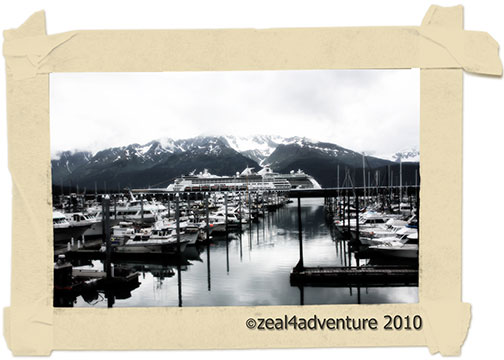
Seward is a picturesque town sandwiched between the Kenai Mountains and the water of Kenai Fjord National Park.  It is one of Alaska’s oldest and most scenic communities.

A little bit of history

It was named after the US Secretary of State, William Seward, who negotiated the purchase of Alaska from Russia.

In the 1903, John and Frank Ballaine and a group of settlers arrived to begin construction of a railroad.  The Alaska Railroad was constructed between 1915-1925 and Seward was developed as the ocean terminus and supply center.

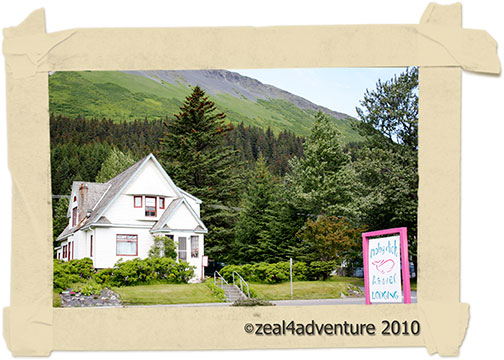
And what do you know?  Just in front of our humble hostel is the Ballaine House, one of the oldest home in Seward.  It was built by Frank Ballaine, the brother of Seward’s founder.

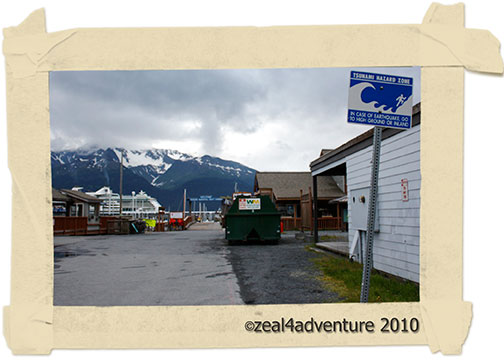
By 1960, Seward was the largest community on the Peninsula.  Tsunamis generated after the 1964 earthquake, also known as “The Great Alaska Earthquake”, destroyed the railroad terminal and killed several residents.   Fast forward to present day, tsunami warning signs are seen in most street corners.

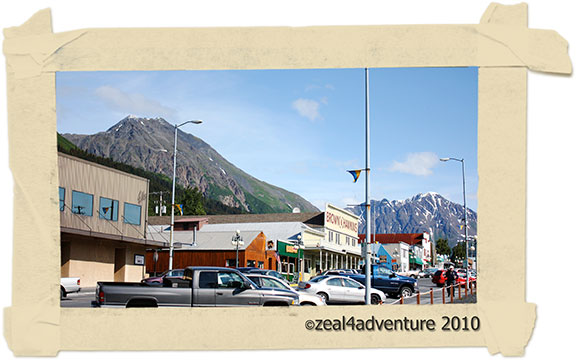
We spent 2 days in Seward, more than enough time to explore the town fully.  Here’s what we saw on our walks through town.

A Best Western

Van Gilder, one of the oldest hotel in town

Overlooking the harbor

Quaint little shops

King Crab for $8!… obviously where we dined!  Who could ask for more?

Downtown Seward

For more scenes from around the globe, visit Scenic Sunday.

A Glimpse of Seward

Credits:  Chrissyw template, JSprague Brown Paper texture, JSprague “Home Away From Home” Brown Solid Paper

Known as the gateway to Kenai Fjord National Park, Seward was where we ended our cruising.  Our next destination, Anchorage is just 126 miles away and we will get there by train.  But before that, the next posts will be exploring Seward.  And here’s a glimpse in sepia.

For more Sepia Scenes, click here.

Sitka

Nestled on Baranof Island and protected by a myriad of small-forested islands, Sitka is a town not lacking in character.  Aside from it being home to native Tlinglits with the cultures still being practiced today, it was also the capital of Russia-America until its transfer to the U.S. in 1867.  It is in Castle Hill that the Russian flag was lowered and the American flag raised.

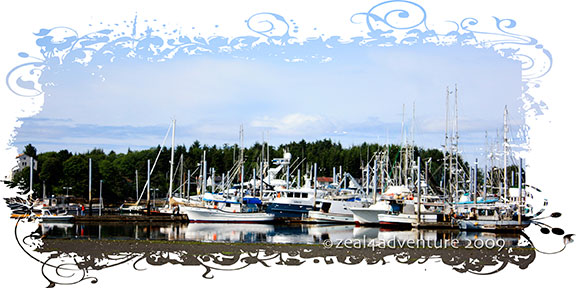
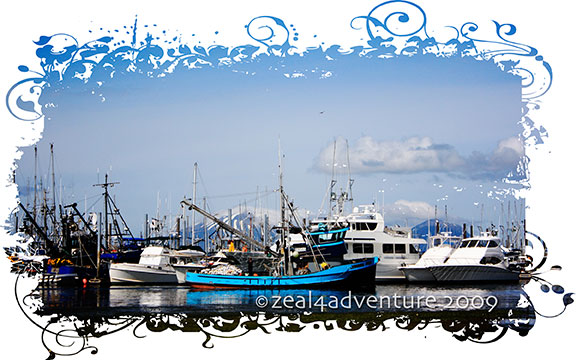
Easily managed by foot, we walked around town browsing through shops, walking along the harbor.

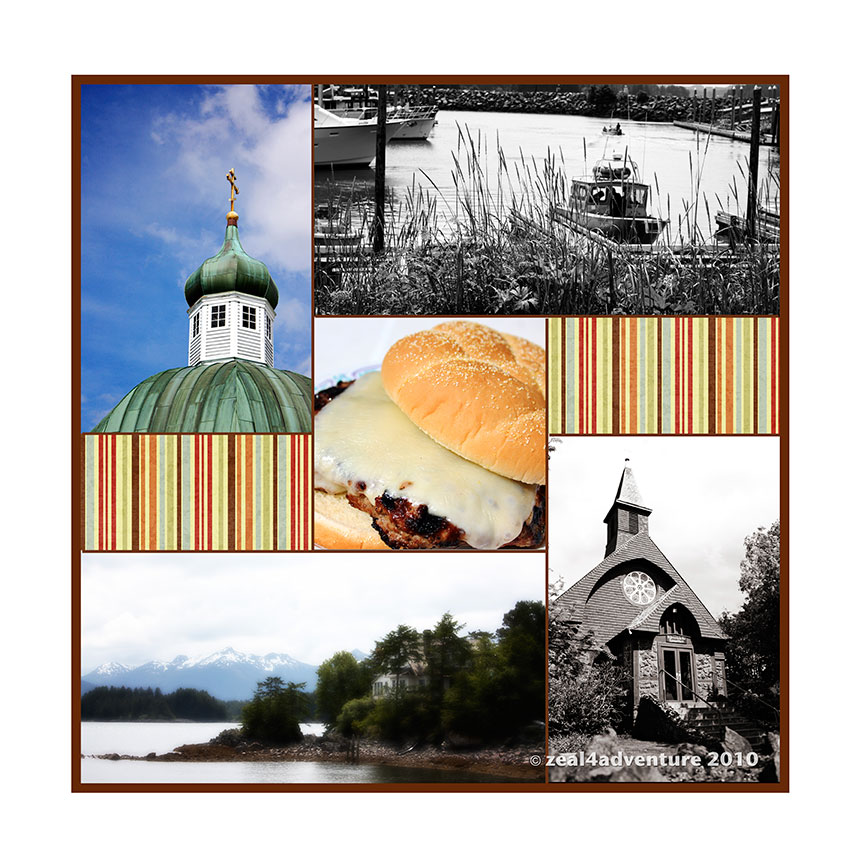
The first Russian church built in America, St. Michael’s Cathedral is a picturesque focal point in Sitka, topped by its magnificent onion-shaped dome.  And in addition to many historical sights and museums, as in many of Alaska towns, Sitka has a wide range of outdoor activities… fishing, kayaking, hiking, biking…

Oh and that focal photo?  That’s my way of taking my hat off to one of the best tasting, juiciest burger I’ve ever had.  Not exactly a “burger person”, this particular one called me at first sight and am I glad I listened.   😉

Hop on over to Little Red House for more fun mosaics.

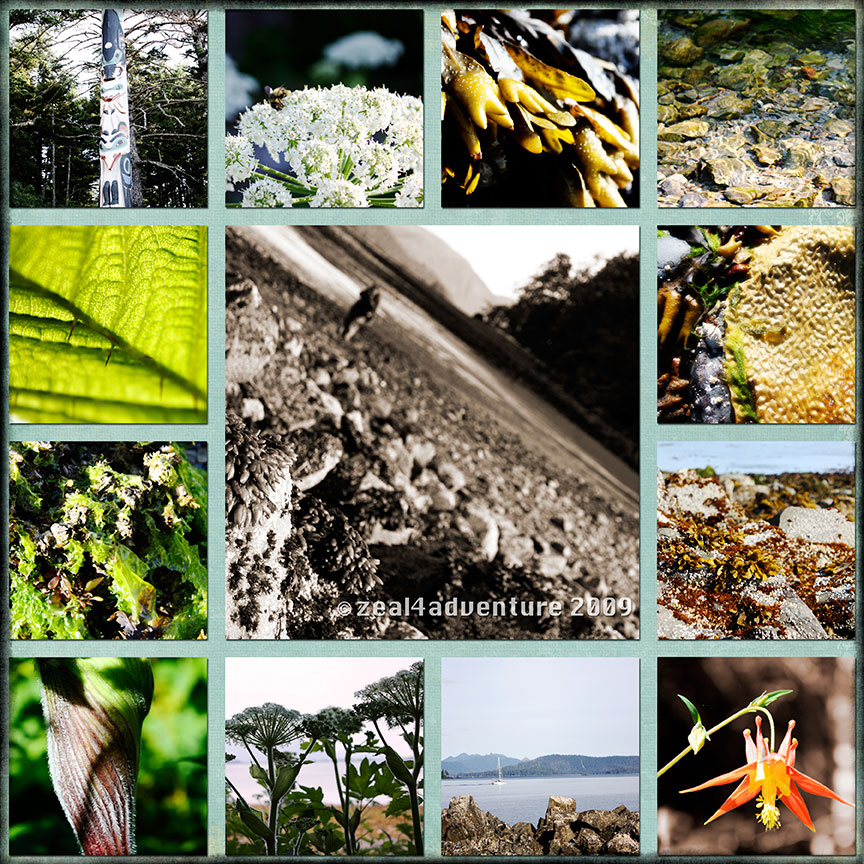
Sitka in Detail

Famous for its spectacular scenery, abundant wildlife and culturally rich history, we wandered around this former “Russian Capital” with an experienced Southeast Alaska photographer taking shots upon shots of its beautiful surroundings.

Sitka up-close from a beach

Please go to Little Red House for more fun mosaics from all over.