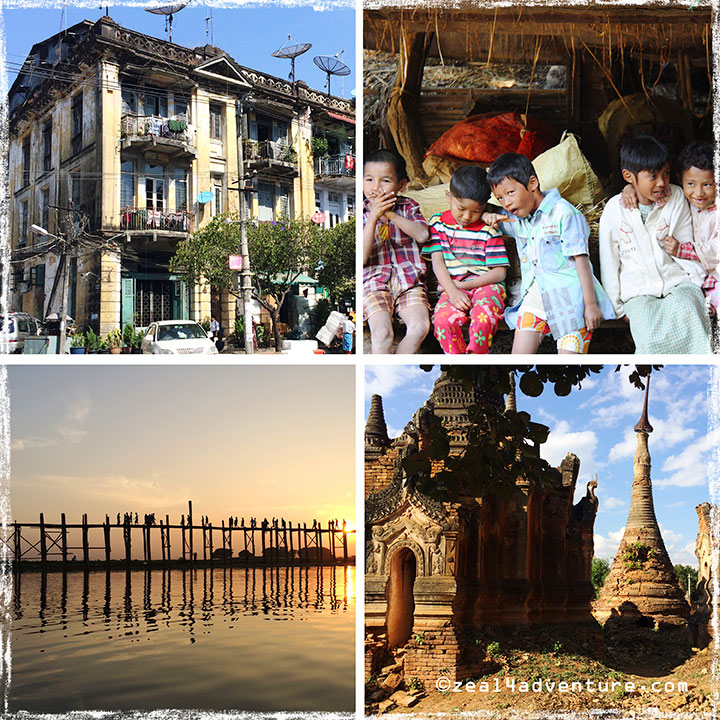
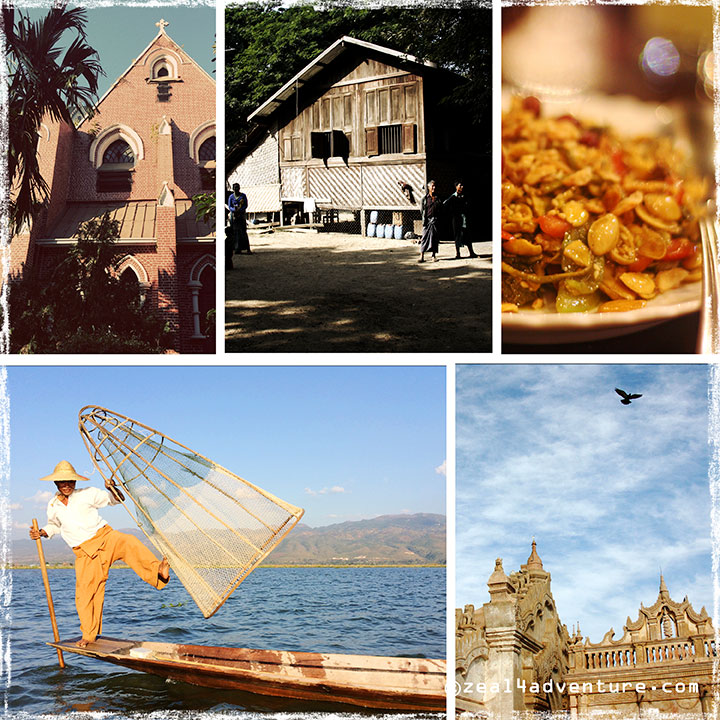
Temple Hopping on E-Bikes

With thousands of age-old temples, Bagan’s Archeological Zone is Myanmar’s Must-See. Although it is not yet recognized as a UNESCO World Heritage Site due to poor management strategies and legal frameworks, it still is a sight to behold and not to be missed.
hot-air-balloon

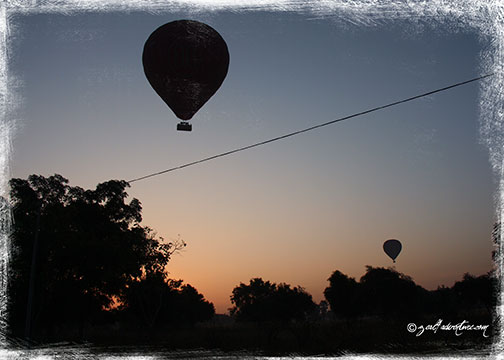
To explore, one can choose to go by horse carriage, car, balloon, bike or an electric bike. We chose the latter (for a change).  It’s like riding a motorbike, except that the battery is charged by electricity and a fully charged battery will last for 8 hours (more than enough to get you by for the day). It can go up to 40km/h making your way to the destination quicker than riding a bike. And besides, foreigners are not allowed to drive motorbikes or scooters in Myanmar making e-bikes the popular choice.
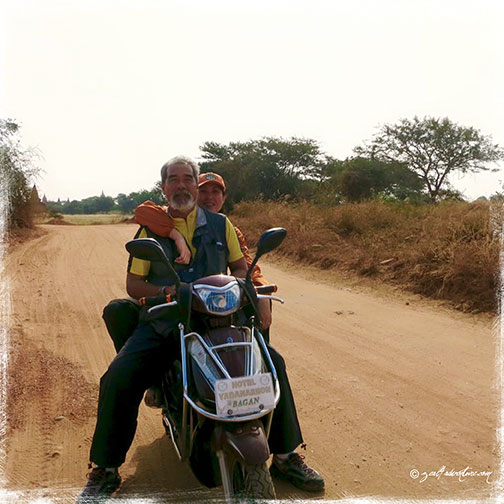
E-bike

So at 9AM, right after breakfast, our guide talked Anton through the mechanics of operating the bike, which is basically like driving a scooter. And then we discussed the day’s itinerary and requested that we start the route from the end – our way of avoiding the usual crowds. That was how we found ourselves (alone) in the midst of temples and stupas sprawled across the Bagan plain.

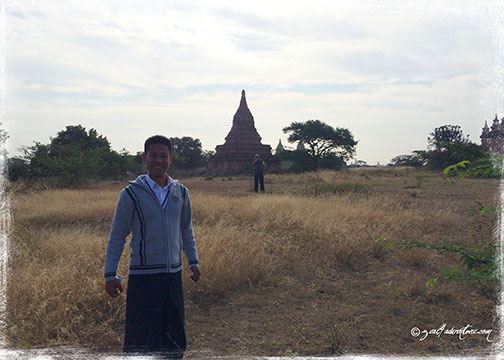
temples-spreadout

guideOur guide

Lying on the bend of the Ayeyarwaddy River, spanning 26 square miles, Bagan was once an ancient city that was the capital of the prosperous Bagan empire that dates back to the Christian era. At the height of the empire’s power, more than 10,000 temples and pagodas were built. Over 2,200 temples and pagodas still exist today.
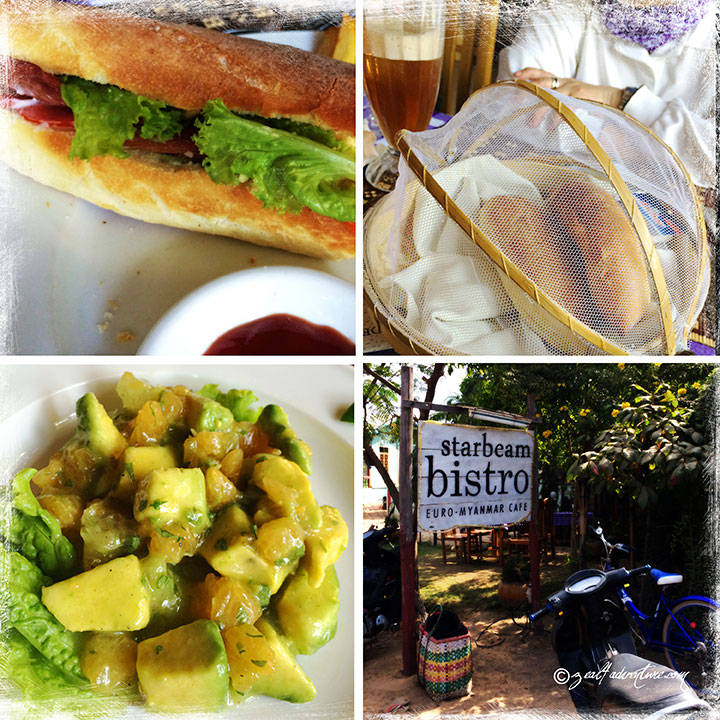
Starbeam-Bistro

In between pagodas, we had a delightful lunch at the Starbeam Bistro, and we likewise managed to visit a market (my all-time favorite activity).

market

pya-tha-da

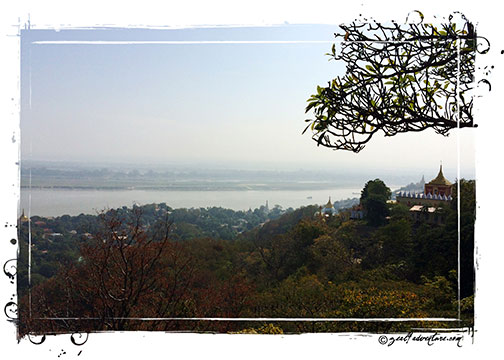
Our first stop and closest to New Bagan, where we were staying, Pya Tha Da had a fantastic panoramic view of the area and is said to have one of the best sunset spots around.
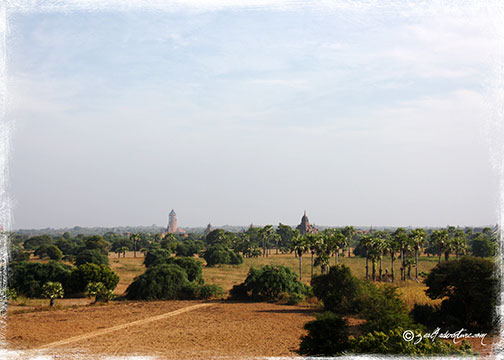
view-from-the-pya-tha-da

We didn’t get to see it, but we luxuriated in the sight all by ourselves.
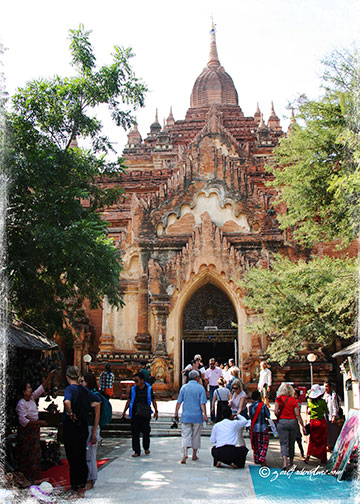
Thatbyinnyu-Phaya

Thatbyinnyu Phaya, our next stop after lunch, is one of the highest monuments.
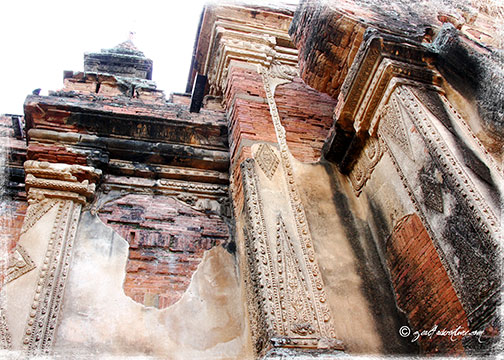
Thatbyinnyu-Phaya-up-close

It towers above other temples nearby and can be seen from much of the Bagan plains.
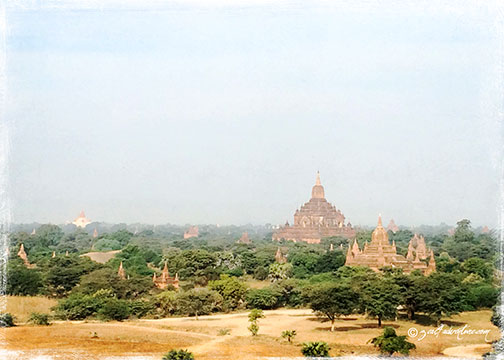
Thatbinnyu-from-PyathadarThatbyinnyu Phaya from Pya Tha Da

Ananda-Temple

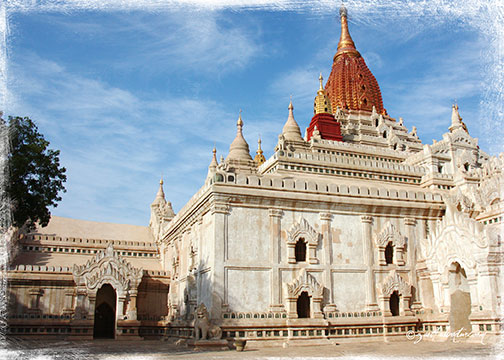
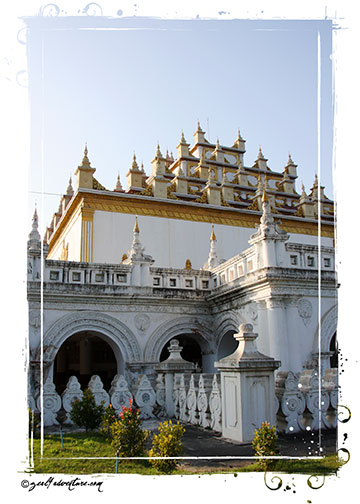
Adjacent to it is the Ananda Temple. Considered to be one of the best surviving masterpiece of the Mon Architecture and one of the 4 surviving temples of Bagan.
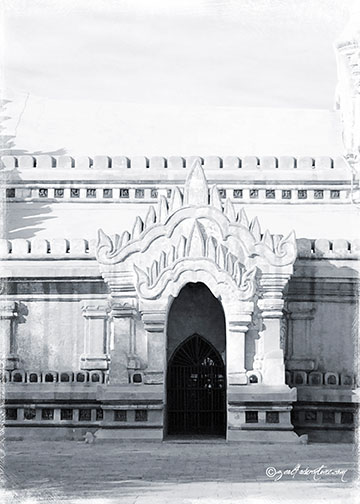
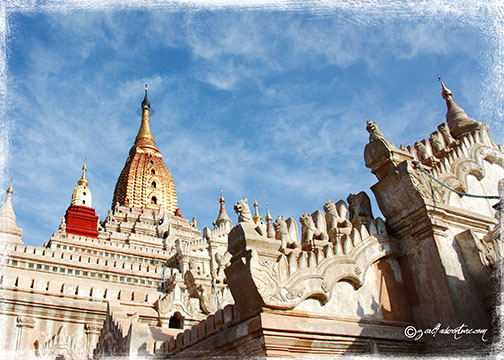
Ananda-Temple-door-detail

Ananda-Temple-details

Well preserved and most revered, the impressive temple has been called the “Westminster Abbey of Burma.” This is my favorite.
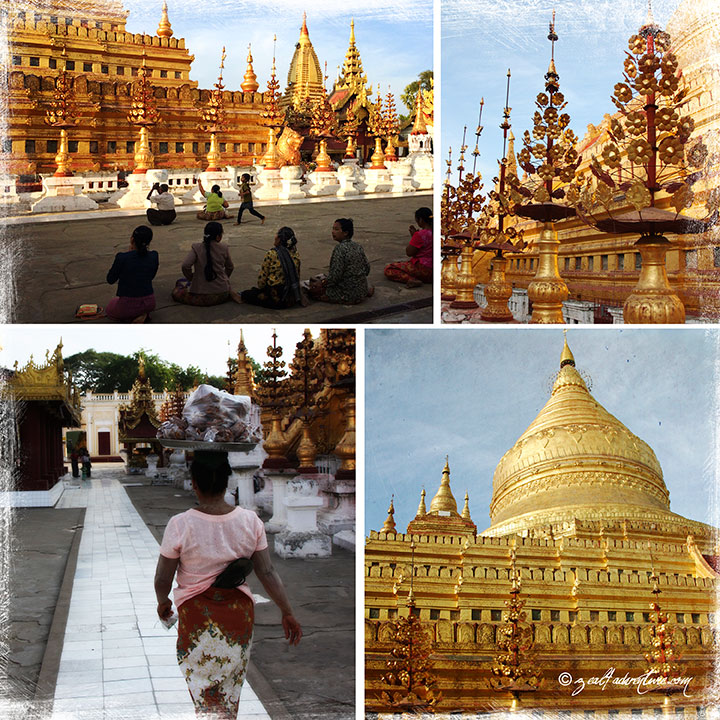
Shwezigon

Last but not the least is the Shwezigon Pagoda, a Buddhist temple in Nyaung-U, a town just outside of Bagan. A prototype of Burmese stupas, it’s circular stupa is gilded in gold leaf. Among the 4 important temples of Bagan, Shwezigon is the most essential reliquary shrine of Bagan.

Other temples seen only from afar:
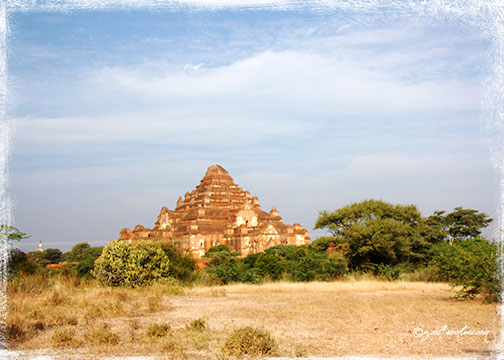
DhammayazyiDhammayangyi Temple
Gawdawpalin-templeGawdawpalin Temple

The Cruise to Bagan

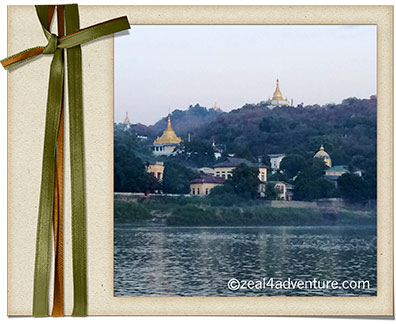
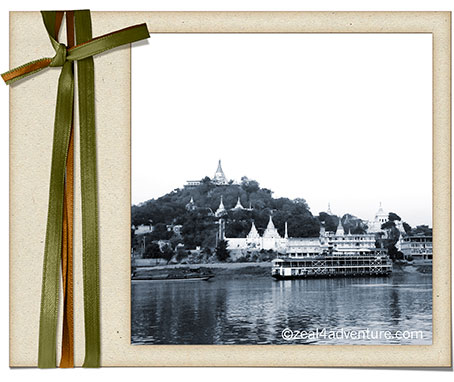
Myanmar’s lifeline, the Irrawaddy River flows from the snow-capped mountains of the Himalayas cutting across the country from north to south before emptying into the Andaman Sea. The river is used for commercial transport and is Myanmar’s largest river, about 2,170 kilometers long.

It is a pleasant way to travel between Mandalay and Bagan, two essential cities to be when visiting Myanmar. The former is the country’s most significant and historically most important of all cities, and the latter is its mecca of temples.

A visit to Myanmar was seen as relatively remarkable. Significant changes recently to the political regime has caught the attention of the traveling world, and cruise lines have started to offer multi-day cruises as part of their itinerary.

We flew into Yangon via AirAsia, which had a long layover in Kuala Lumpur. We decided to stay the night so we could have our favorite char siu at Oversea Restaurant in Jalan Imbi. Due to flight delays too, we only spent a night in Yangon.

It was a few days of airports and planes; the day cruise was a pleasant respite – to take it easy, go with the flow (literally), and visit with locals.

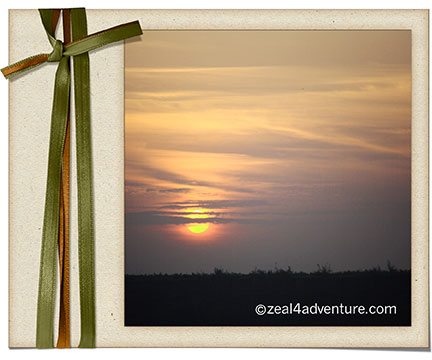
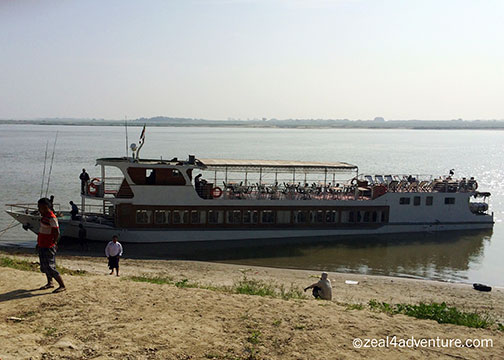
The RV Panorama Cruise ship runs between Mandalay and Bagan from October to March. It leaves at dawn at the Gawein Jetty in Mandalay and arrives in Bagan at the Nyaung U Jetty late afternoon just around sunset.

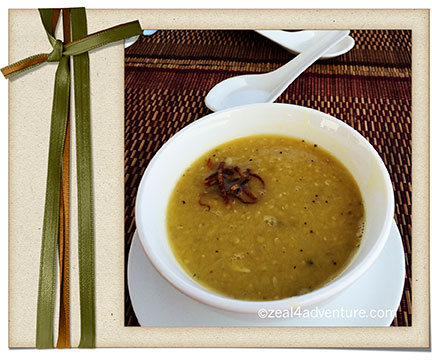
The cruise comes with breakfast, lunch and afternoon snacks with a side trip to a town by the river.

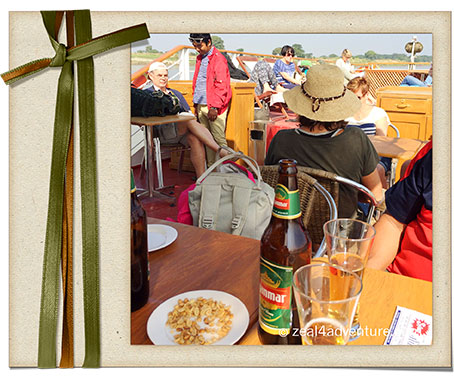
The town visit was a nice break from an otherwise uneventful journey. For the most part, we kept ourselves entertained relaxing on the upper deck by the bar.

It is, in my opinion, an excellent way to slow down after a few days of catching flights in different airports. Here’s sharing with you some of the highlights of the day cruise.

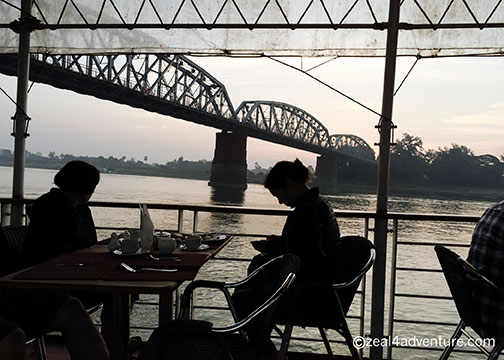
Breakfast at dawn
The RV Panoarama docked at a town by the river.
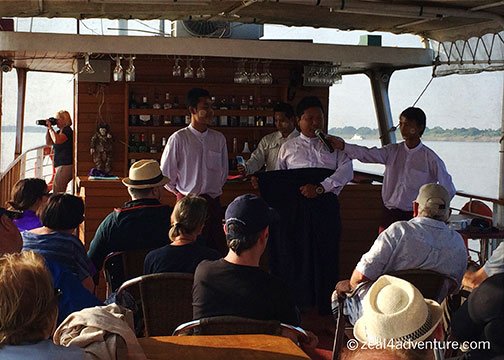
The crew teaching how to wear a longyi.
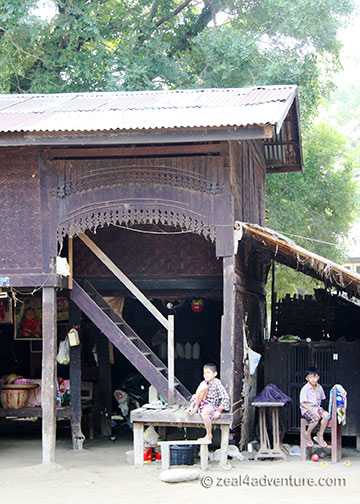
Traditional house
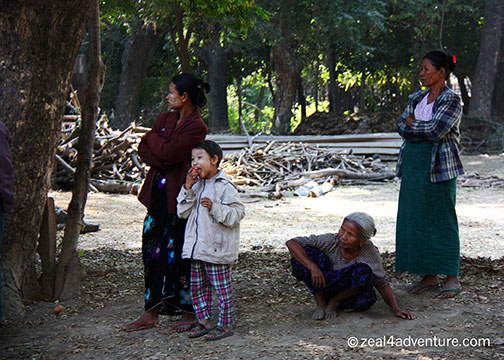
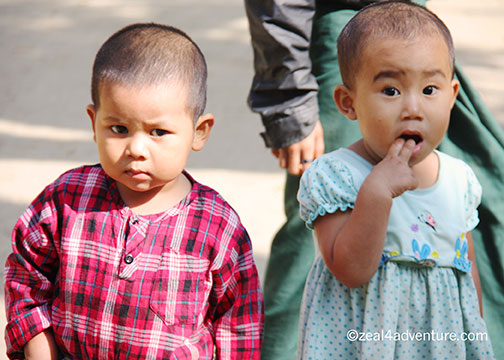
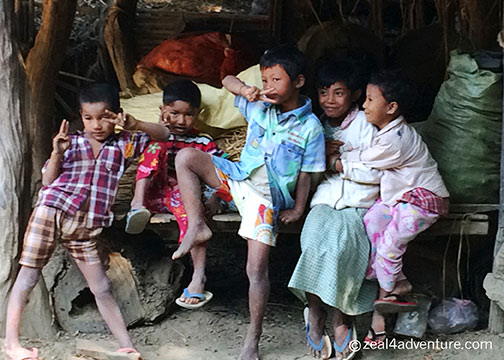
Curious local folks


First Impressions

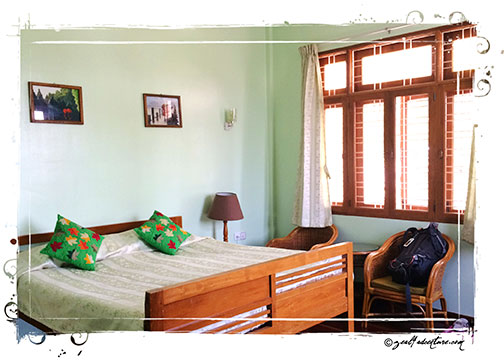
It started in this guesthouse, my fondness for Mandalay, where we were greeted with grace and elegance.

Big-rooms-at-Mama's

The tastefully built B&B has three floors of spacious rooms and a dining area on the roof deck.

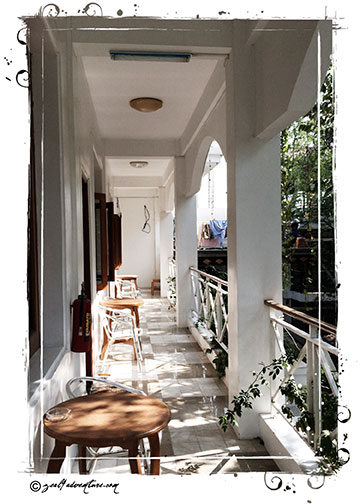
hallway-at-Mama's

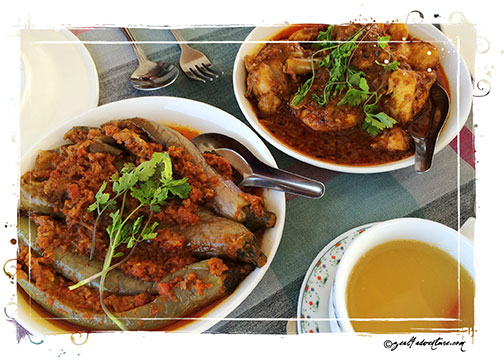
Once owned by the mama, Wyn and wife, Sue, now run the place. With her immaculate English and years of experience, mama still plays host and entertains with grace. We asked for a good referral on where to eat, and mama volunteered to prepare our first meal in Mandalay and truth be told, hers was one of the most memorable of our ten days in Myanmar.

Meal-at-Mama's

Talk about first impressions.

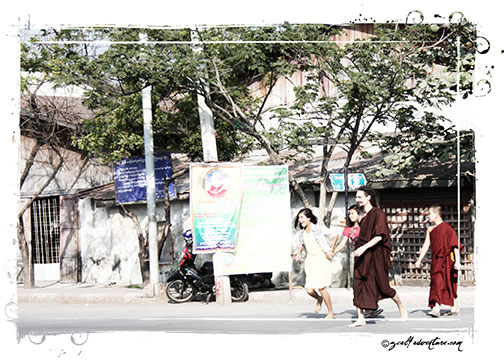
With half a day to explore the city, we decided to explore the area on foot. Good idea as we were able to witness every day Mandalay life unfolding walking along 62nd street.

pedestrian

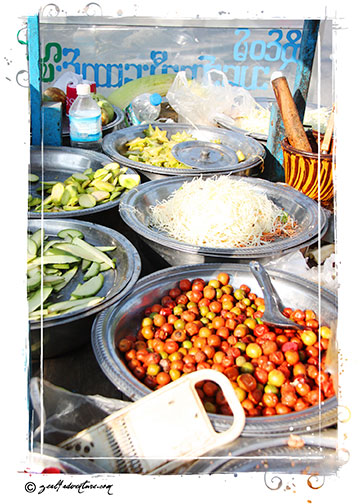
street-food

The 2nd largest city and the last royal capital of Myanmar, Mandalay is not exactly pretty at first sight, but its charm grows on you as it slowly reveals itself.

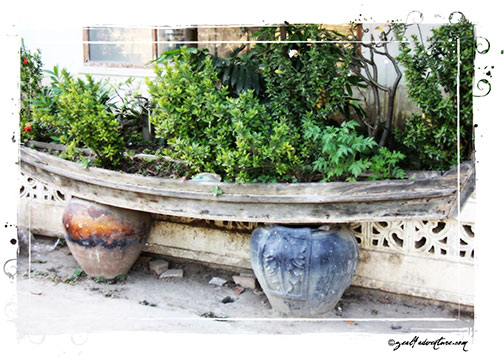
planter-on-the-side-of-the-roadInnovative plantbox sighted along the roadside.
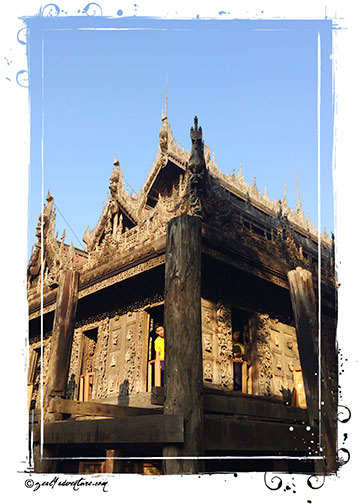
It’s a relatively new city, built in 1857 when King Mindon was trying to re-establish Burmese prestige after the country’s defeat in the 2nd Anglo-Burmese War. If you take the time to explore, there is much to be enjoyed. You’ll need at least two days.

The 62nd Street led us to the Shwenandaw Monastery.

Shwenandaw-Kyaung-2

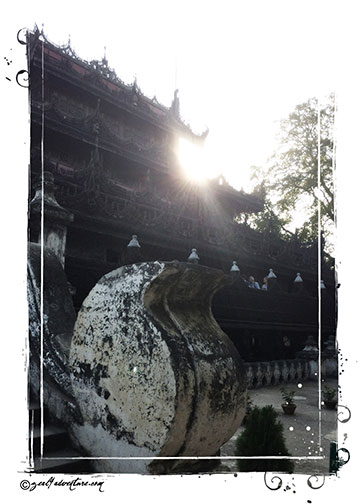
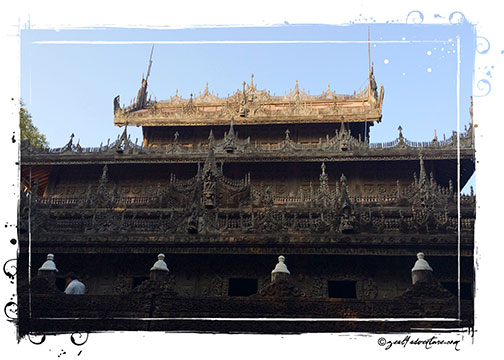
Made entirely from teakwood with intricately carved façade, the monastery also known as Shwenandaw Kyaung provides one of the most exceptional examples of traditional 19th-century Burmese architecture.

traditional-19th-century-Burmese-architecture

This is the only surviving structure from Mandalay’s Royal Palace. King Mindon initially used the building as his personal apartment and died here in 1878.

Shwenandaw-Monastery

His son worried that his ghost still resided there dismantled the structure and transported beside the Atumashi Monastery.

Atumashi-Monastery-2.jpg

While most of Mandalay is flat, Mandalay Hill (where the city took its name after) offers a stunning bird’s eye view of the city. We planned to walk up the hill, but we were tired of walking, so we hailed a taxi instead to take us to the lift (one could scale up the 240-meter hill by taking the long stairway up to the summit).

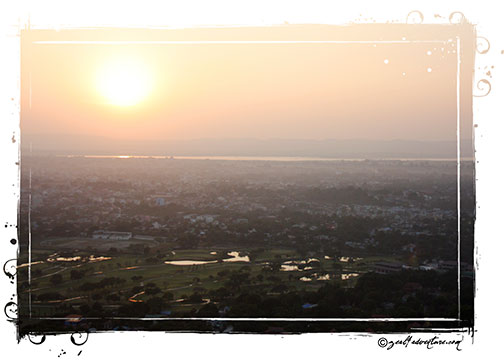
view-from-peak

At the peak is the Su Taung Pyei Pagoda. On its terrace, people stay to wait for the sunset and take in the panoramic view of the Mandalay plains, how expansive the city is.

crowd-waiting-for-sunset

sunset-from-mandalay-hills

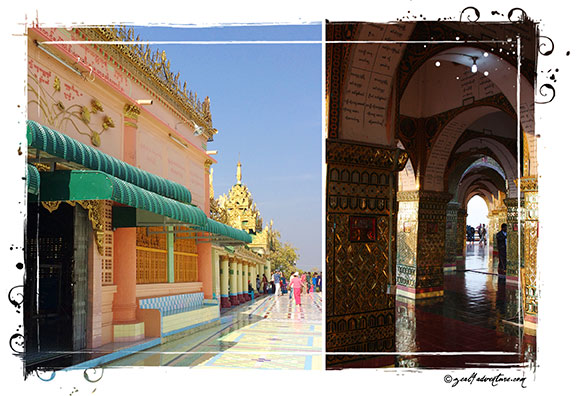
The pagoda itself I find gaudy with over the top mirrors that sparkle and shine at every turn and the LED lights that adorned the Buddha shrine.

Su-Taung-Pyei-Pagoda

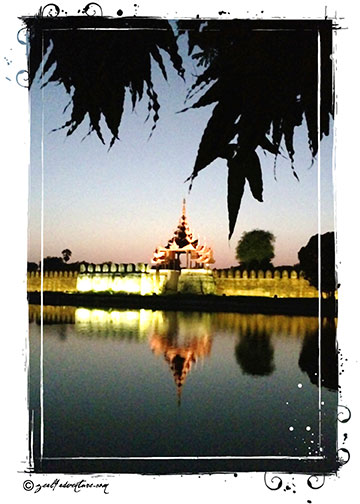
On our way back, we passed Mandalay Royal Palace, as time prohibited us from entering the palace, we admired it from the road.

Mandalay-Royal-Palace

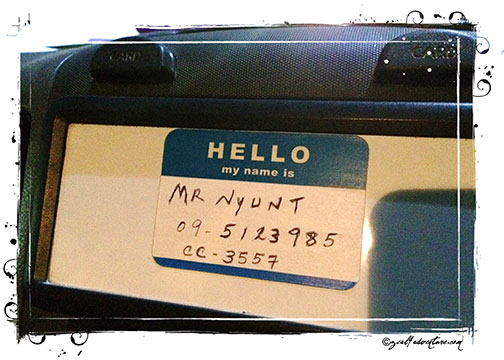
When the taxi driver dropped us off at the restaurant recommended by the guesthouse, he made us take a photo of his contact details. I found it amusing and very enterprising.

taxi-diver-contact

Traditional dinner and a puppet show after capped our first day in Mandalay.

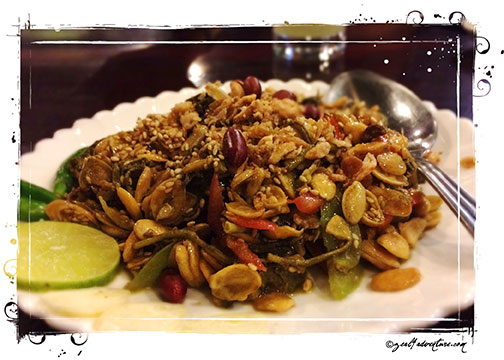
tea-leaf-saladThe very traditional and iconic Tea Leaf Salad (must try!)
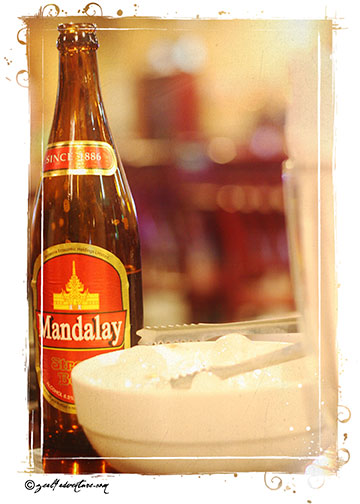
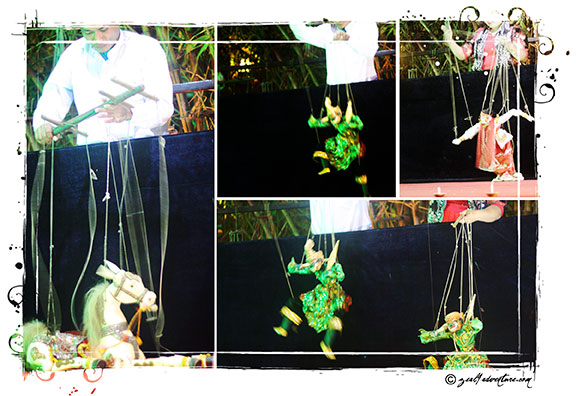
mandalay-beer

Traditional Burmese puppetry, called Marionettes, is an art form using wooden puppets to entertain Burma’s royalty.

puppet-show

It also served to communicate news, stories and moral lessons to its people. Today, as with many cultures, it is a dying art.

Tomorrow, we explore more of the beautiful outskirts and downtown of Mandalay.


Mingalaba

I approached the guy holding a sign with my name on it. “Mingalaba (hello),” he greeted and then led us to a Toyota Corolla. The first thing I noticed (aside from it being an old car) was the right-hand steering driving on the right-hand side of the road. Before we even reached the guesthouse, I was already helping him navigate the road (making sure the blind spot is clear of any passing cars – haha!). And that, my friends, was my introduction to the world of Burmese driving.
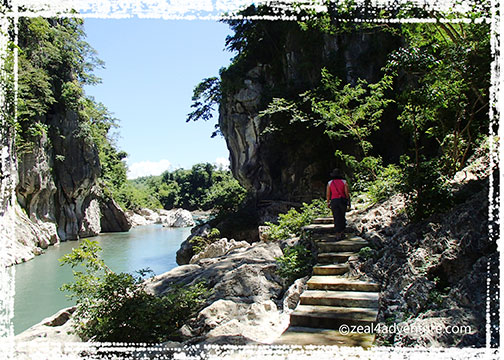
Burma, also known as the Republic of the Union of Myanmar, where the landscape scatter with golden pagodas, and where more than 100 ethnic groups live. Under the rule of the oppressive military junta for almost five decades, exploring this nation can feel like you’ve stumbled into a bygone era as it has remained a rural country of traditional ways.

Expect to be dazzled by Myanmar as it steps out of its checkered past. With tradition deeply rooted in the philosophy of Buddhism, Myanmar shimmer with gilded temples and stupas, flourishes with emerald-green landscapes, beautiful lakes, and lush tropical forest but most memorable are the encounters with its gracious people ready with warm smiles and eagerness to introduce their country and culture.

Follow me as I cast my mind back to the beautiful ten days wandering around the different cities of Myanmar.

Of Snows and Hot Baths

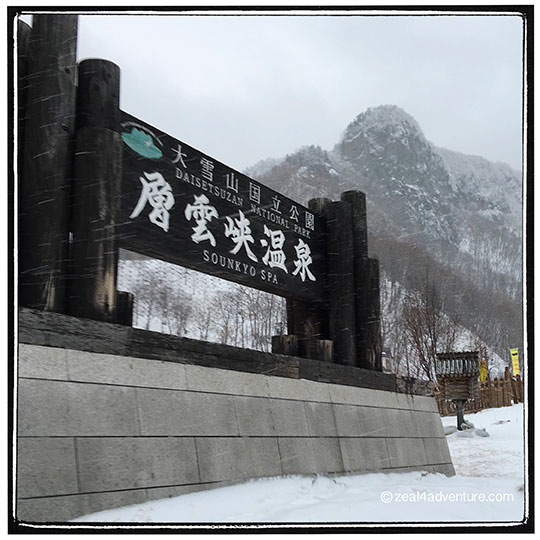
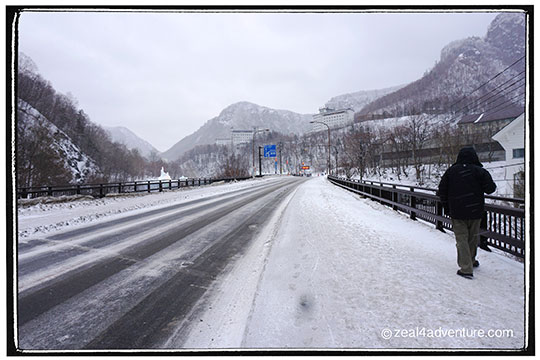
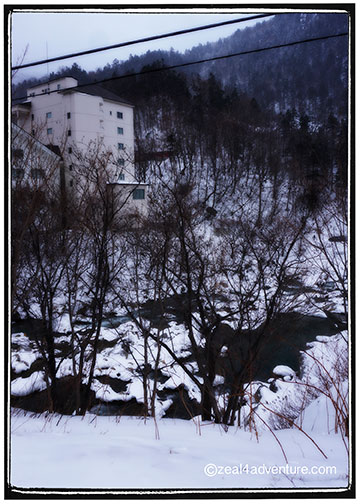
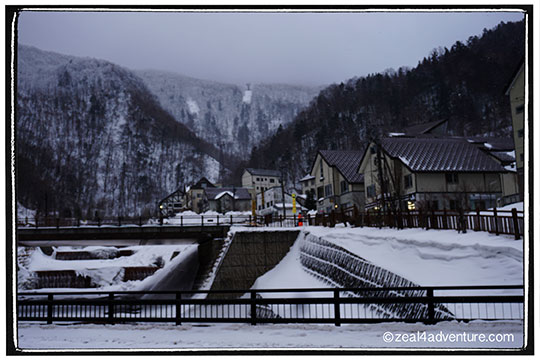
In the middle of Daisetsuzan National Park, nestled in narrow scenic gorge flanked by cliffs,

abundant hot springs, powerful waterfalls,

and fantastic rock formation is a full-scale mountain resort town called Sounkyo.

It has become quite touristy because it is an excellent base for trekking and skiing around the National Park.

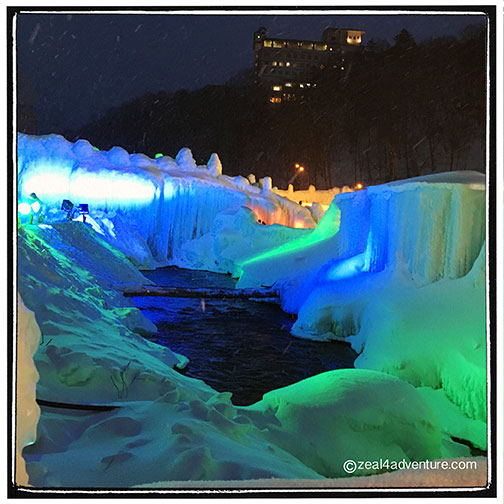
From late January to the end of March, the town hosts (you guessed it) the Sounkyo Ice Waterfall Festival (Sounkyo Onsen Hyoubaku Matsuri).

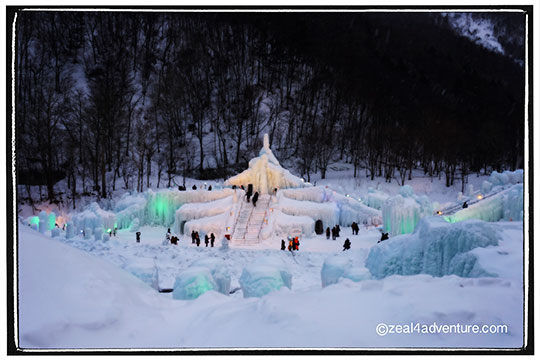
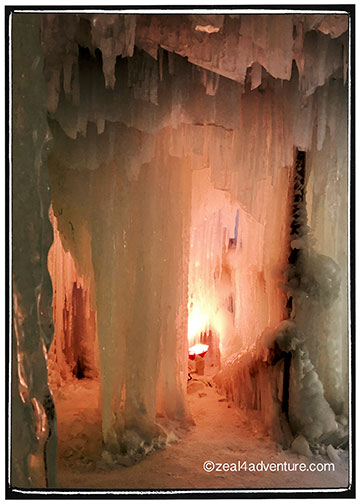
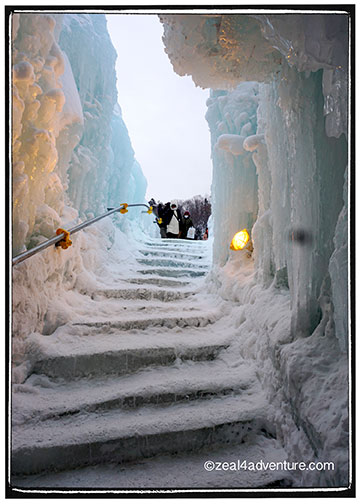
The highlight of this festival is the frozen waterfalls along with the man-made, multi-story high structures that have a maze like tunnels running through them, all built around the Ishikari River.

Snow domes and ice sculptures likewise scatter around the compound.

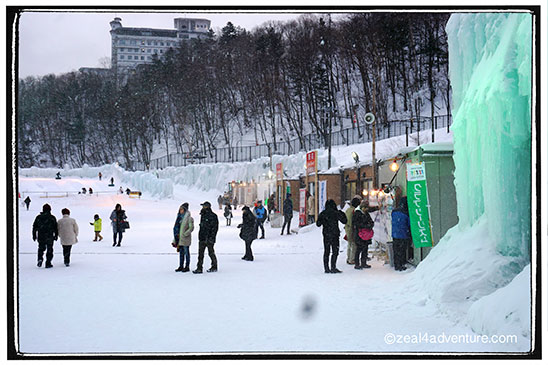
Heated quarters with warm drinks and food here.

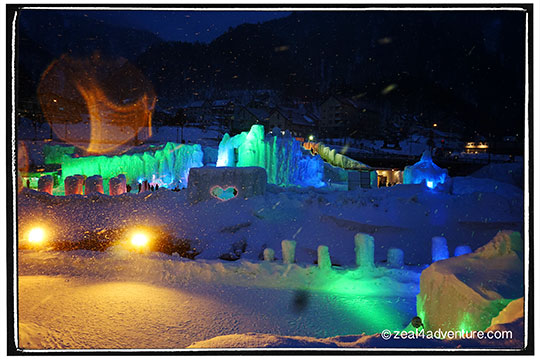
And even if logic tells you to stay indoors due to the severe cold weather, make sure to be there at night


The Ishikari River runs through the festival.

or miss out on the spectacular lights that illuminate the whole place come sundown. On weekends, you’ll be lucky to witness fireworks too.

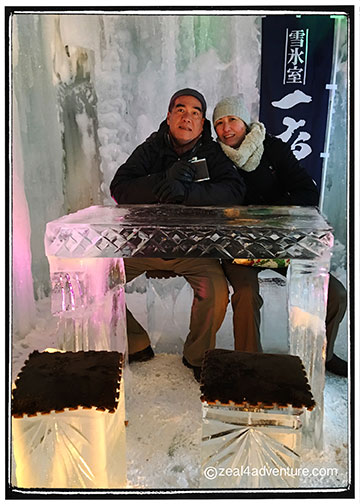
Us in an ice bar display

The best way to end the evening is to thaw off at one of the many hot springs found in town. At the Sounkyo Kanko Hotel, we went for the spacious outdoor bath at the back of the hotel. Crazy it may seem, but because this open-air bath is unisex, it was wonderful to be sharing this experience with the hubby. Getting ourselves to walk the short distance from the dressing room to the pool in skimpy clothes provided by the hotel was unimaginable, but once in the hot bath, it was nirvana. This being the last stretch of our Hokkaido winter holiday, it seemingly melted away all the frozen kinks in our body, accumulated over the past days.

Ahh… Always a good experience, this bathing in the snow.

Happy Feet At Asahiyama Zoo

Credits: Solid Brown paper and Guess What Tag by Splendid Finn You are awesome kit; Bow, Ribbon Cluster, Staples, Saving Memories word art by Sus Design

Mumble, the penguin character in that animated film, Happy Feet, that cannot sing but tap danced his way to Gloria’s heart. Yes, that same Mumble charmed its way into my heart too.

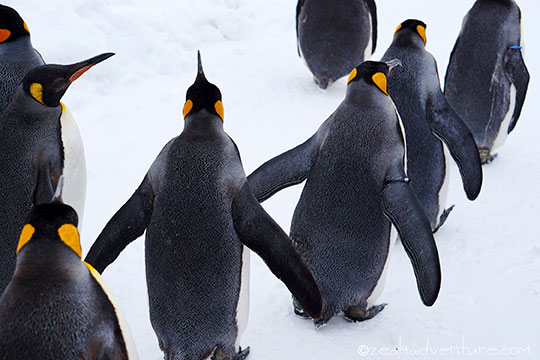
So the whole reason I was in Asahikawa was to be up close to the likes of Mumble. All these chubby birds had to do was waddle past us, and it made my day.

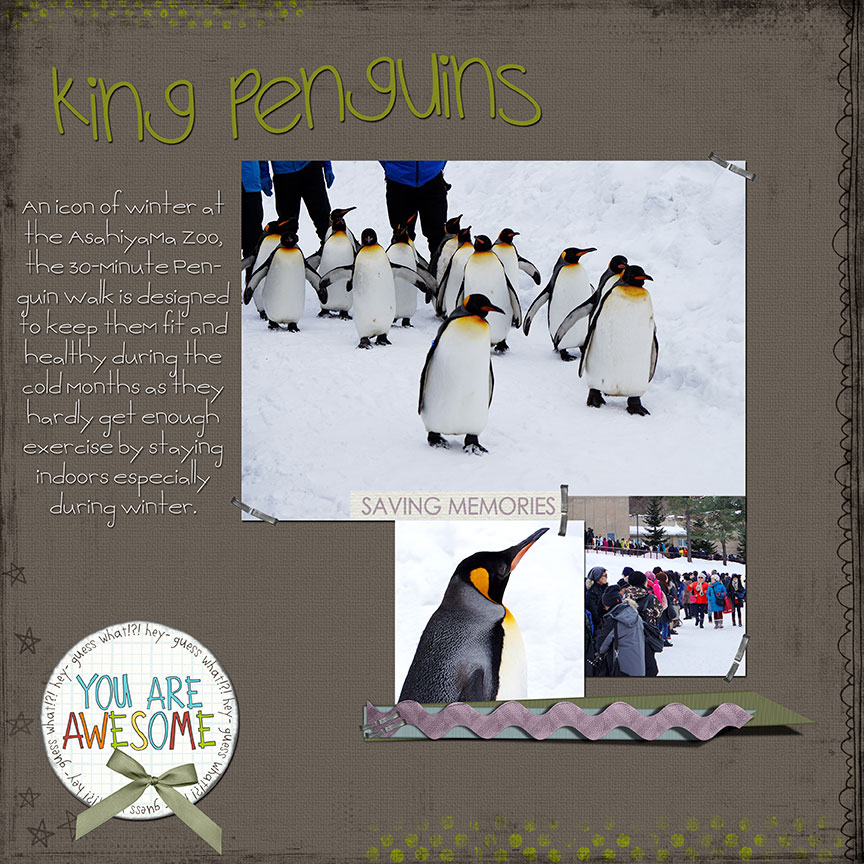
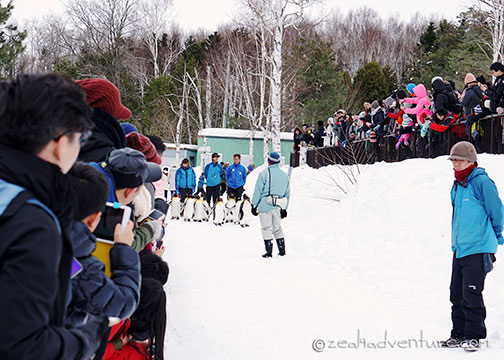
An icon of winter at the Asahiyama Zoo, the 30-minute Penguin Walk is designed to keep them fit and healthy during the cold months as they hardly get enough exercise by staying indoors especially during winter. They are known to walk as far as 1 kilometer a day towards the sea in a group to catch fish.

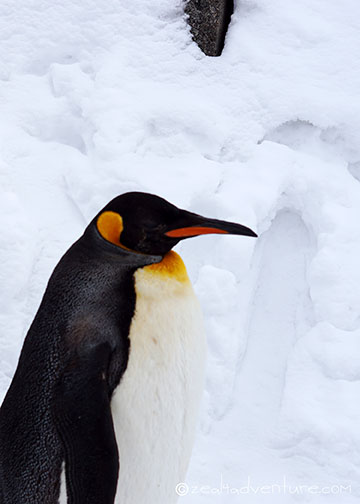
A close relative and very similar in looks to Emperor Penguins – what Mumble is – the King Penguins are 2nd only to the Emperor in size. To distinguish, the latter’s orange feathers on the side of their head are colorful and brighter than that of their cousins. Their beaks are also the longest of the whole family of penguins. Though they are known to be the best divers and swim incredibly fast, they, however, saunter on land and are known to slide on their bellies to help them maneuver through the ice and snow.

To survive the severely frigid climate, they are equipped with several unique layers of scale-like feathers to protect them from icy winds and offer a waterproof coat. They also store large amounts of fat that insulate their bodies while also serving as a long-lasting energy source.

What’s interesting is that wild penguins follow the paths between the mountains and during the walk, they were not trained to walk the path, but because they see people like mountains, they automatically follow the path that the people make.

If you happen to be in Hokkaido during the winter, make sure to make your way to Asahiyama Zoo to get a glimpse of these cute chubby birds. It will be worth your while.

Sapporo Snow Festival

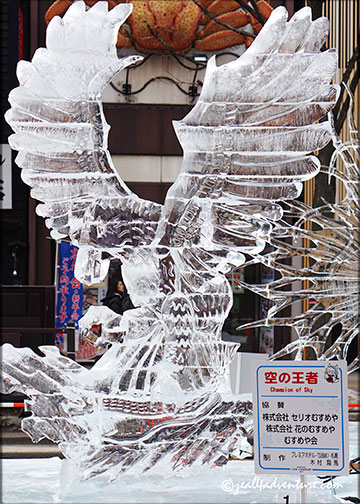
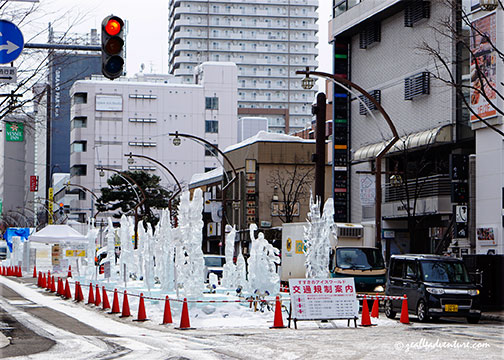
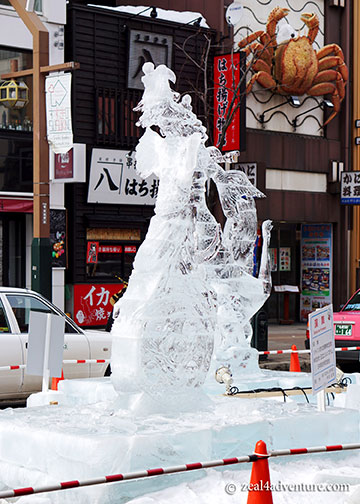
On our way to our accommodation from the airport, our cab drove through Susukino to reveal a row of illuminated ice sculpture.  That was our prelude to the Yuki Matsui, internationally known as Sapporo’s Snow Festival.  For seven days every February, Japan’s largest winter event is turned into a winter wonderland of snow stations and ice sculptures.

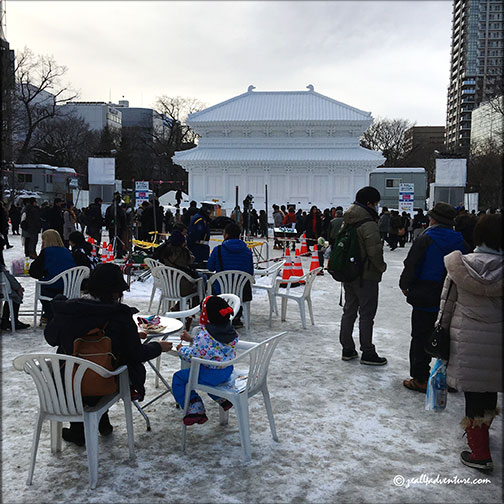
From a few snow statues created by high school students on its main site, Odori Park in 1950, the festival is now an event visited by millions.  Packed with people walking the slippery path that spans the 1.5km Odori Park showcasing spectacular snow and ice sculptures of different size and shapes from local and international participants.


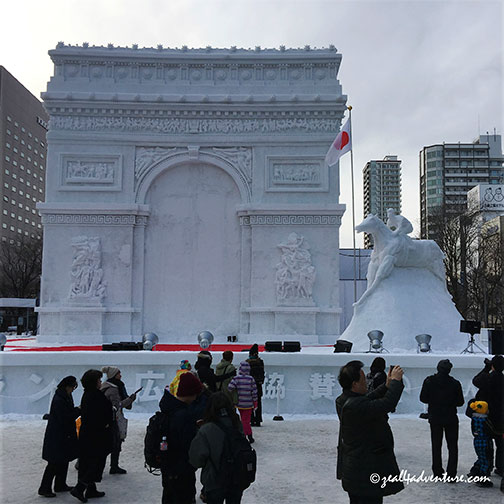
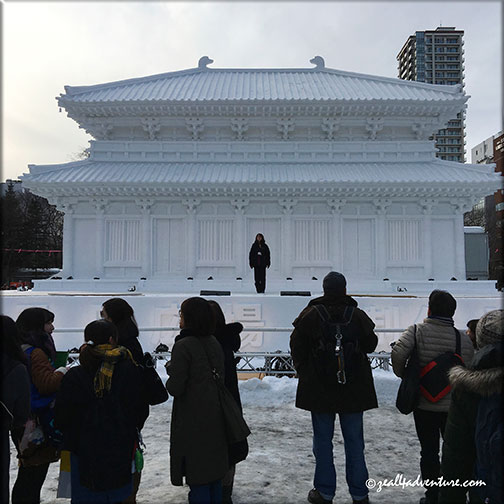
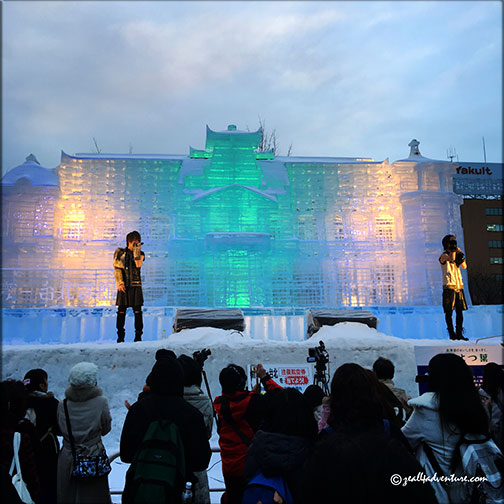
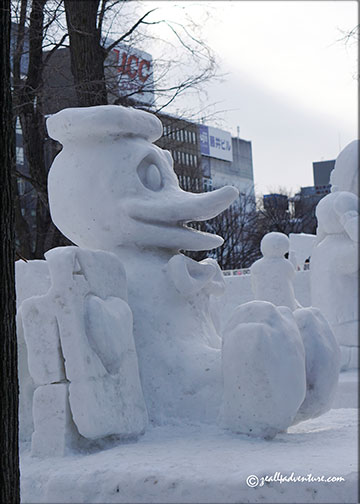
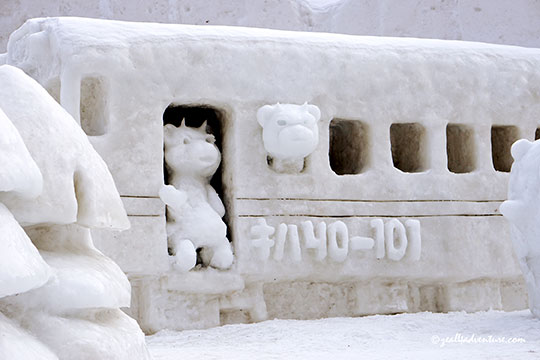
We came across humongous structures such as the Arc de Triumph sculpture and the Taipei Guest House.


Some serve as a stage for concerts and other performances.

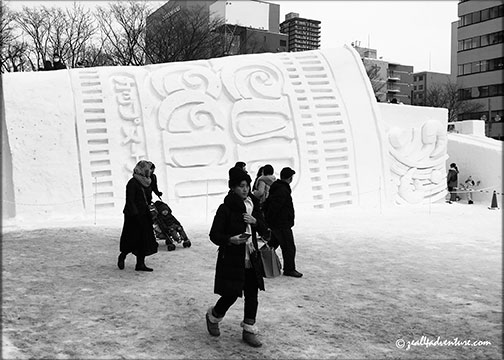
This giant Cup Noodle that double as a slide is a favorite,

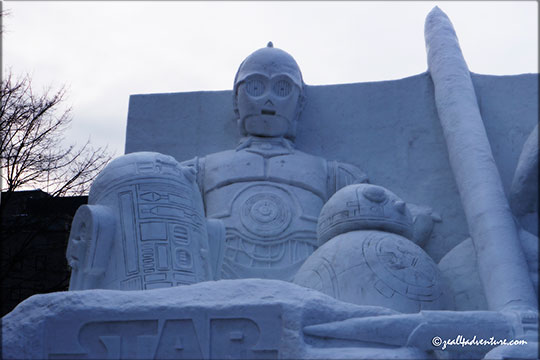
Star War characters R2D2, C3PO and Darth Vader and other cartoon characters make up the fun stuff.

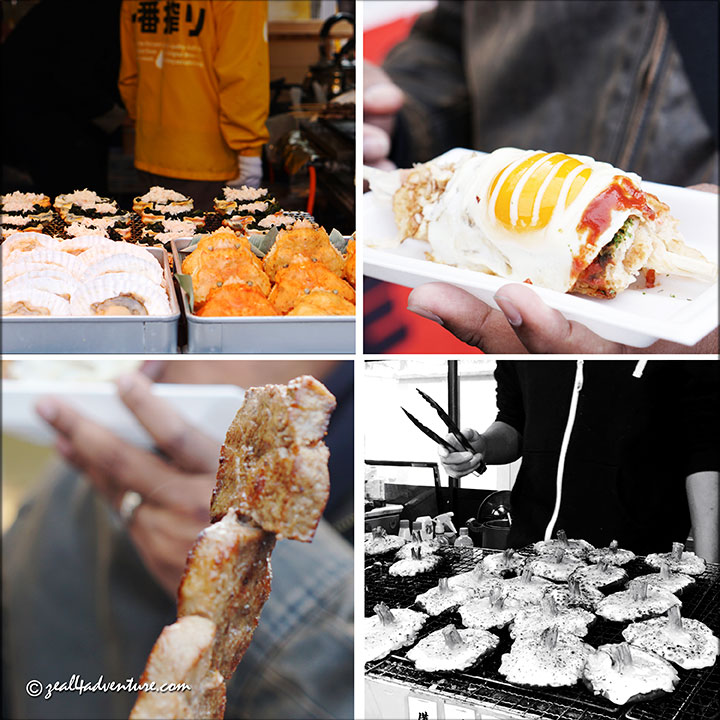
Meanwhile, I am drawn to the smell and the sizzle of beef being grilled on an open barbecue pit, even if we just came from lunch.

Not to be left out are the food stalls of various kinds.  A piece of advice to future attendees, skip lunch that day and head straight to the park.

The row of illuminated ice sculptures that I saw the night before is less dramatic in daylight.

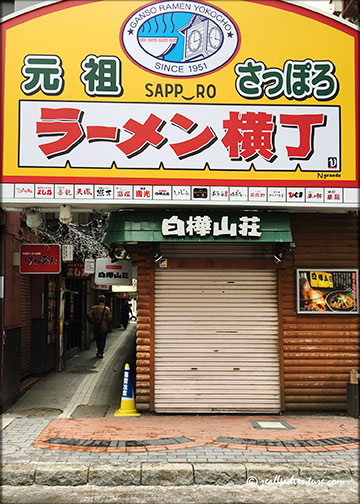
Packed with bars, restaurants, pachinko and red light establishments, Susukino really comes alive upon sundown and so does its displays found on its main street.  We weaved through the sculptures into Ramen Alley for lunch.

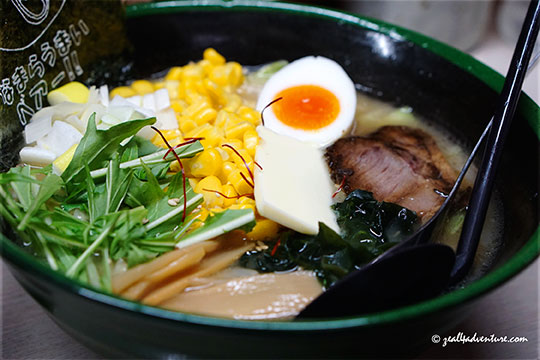
The alley has 17 old style ramen shops to choose from.  In a shop randomly selected to fit all 7 of us, we slurped down a bowl of noodles in miso broth topped with seaweed, spring onions, char sou pork, hard-boiled egg, corn and a slice of butter—unique ingredients that make Sapporo’s Ramen worth a try.

The third venue is a multipurpose dome where a variety of events take place inside.  Outside the dome is where the fun is.  Large snow slides and a snow rafting area is set up for the merriment of people of all ages.  Sadly, as the venue is a little away from the city center and is only open until 6 pm.

Useful Info:

Odori Park:  Odori-nishi 1-chome to 12-chome, Chuo-ku

Susukino Venue: Ekimae-dori from Minami 4-Jo to Minami 7-Jo, Chou-ku

Tsudome: Sapporo Sports Facility “Tsudome” Sakaemachi 885-1, Higashi-ku

A Week in Winter Paradise

Credits: Papers by Splendid Finn; border bit by Splendid Finn; Journaling Snippet by Creativity by Crystal; Fresh Glitter Lines by Delicious Scraps; Alpha by Akiloune Designs; Diecut Paper by Creativity by Crystal

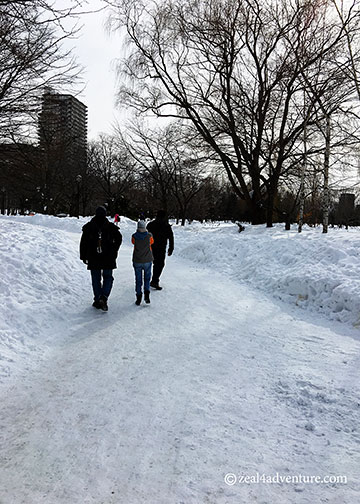
Outside the apartment building, snow pile shin high by the sidewalk. The icy ground slippery as hell and the wind bite as we walk to the metro station. From tropical to arctic, my senses went into shock and so did my camera and phone. Anton loves the cold, you see.

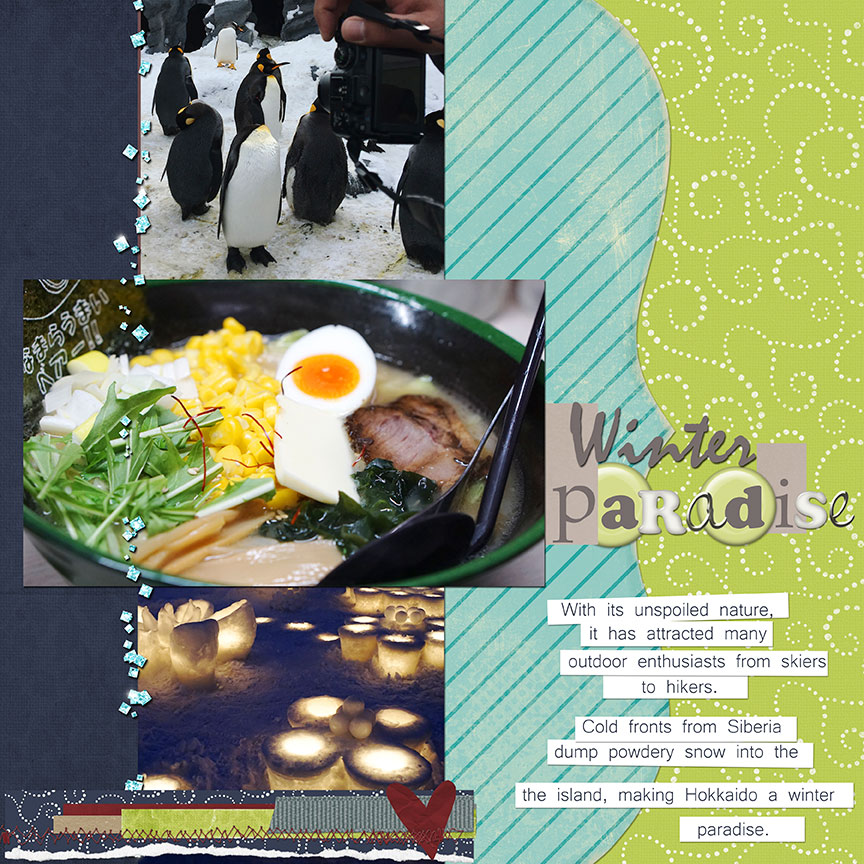
Hokkaido is Japan’s largest and northernmost prefecture. With its unspoiled nature, it has attracted many outdoor enthusiasts from skiers and snowboarders in winter to hikers and bikers in summer.  Cold fronts from Siberia dump powdery snow into the island, making Hokkaido a winter paradise for those who love it, like my husband.

This and the stunning natural beauty of the island tend to overshadow the fact the food is excellent

and the history compelling this side of Japan. One of the highlights of this trip was soaking in an open-air onsen amidst the snow.

Come and ogle with me at the ice and snow sculptures that scatter around Hokkaido, take pleasure in some really awesome food, and get in line to catch sight of emperor penguins doing their daily walk — all this we did in a week in Hokkaido, a winter paradise.

Minalungao

It’s the first days of summer, and this draft has been on the back burner giving way to other bigger trips I’ve had.

So before I start writing about my next destination, which took place last month in an icy setting and is the exact opposite of what we will be experiencing in the coming days, I’d like to take you to a place in Nueva Ecija. A little gem, they say it is. It was a spur of the moment and as these things go, we all made it.  Sometimes to plan is vain.

The small part of an otherwise well-paved road was only wide enough for our Explorer to safely get its way past the stream, thanks to this boy who helped us navigate our way.

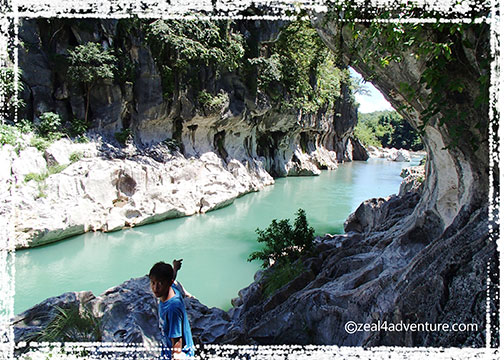
Thanking him after, he offered to be our guide. Enterprising young man. And so for 500Php, the then 14-year-old AJ took us around his playground.

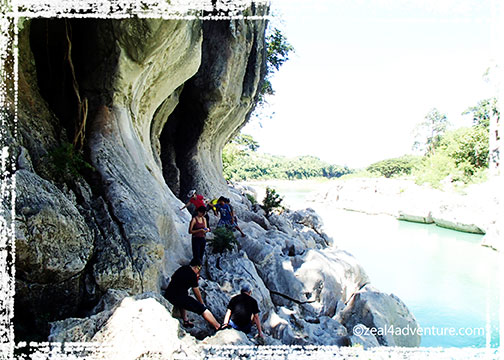
We navigated the short but somehow challenging, sometimes slippery rocks and trail to the cave that AJ said would take only 5 minutes. “Akala ko 5 minutes lang sa loob ng cave, bakit parang 20 minutes na kami ditto sa loob ah?” (I thought it only takes 5 minutes to explore the cave, why does it seem like 20 minutes already?) I asked AJ. “Kasi ang bibilis nyo mag lakad!” “Because you all walk so fast!” he said. He has a point.  🙂

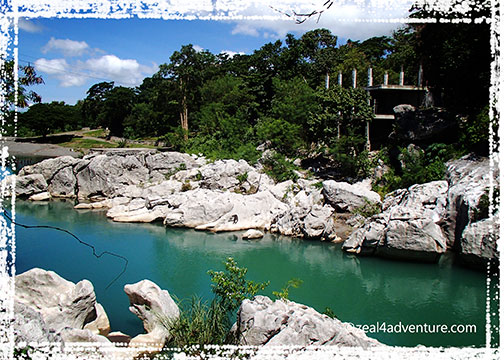
In the foothills of the Sierra Madre lies a protected area in the municipality of General Tinio (sometimes also called Papaya – don’t ask me why) where the Penaranda River flows cutting through magnificent limestone walls.

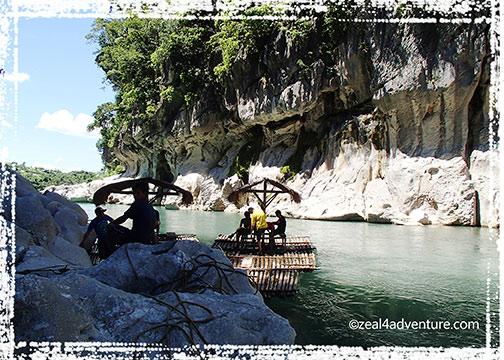
One can trek to the caves through the limestone wall, swim in the crystal clear, refreshing water or simply soak in the scenery while enjoying a packed lunch on the raft.

Do try to make your way there if you haven’t. An enjoyable day trip it certainly was.

Yunnan Eats: Cheese, Cured Pork and Fresh Vegetables

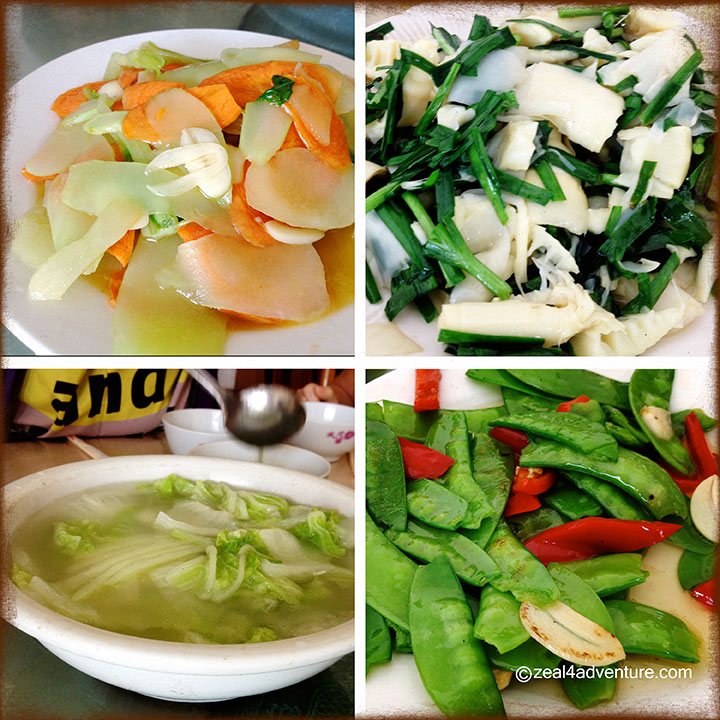
On the road, we randomly stopped for lunch. The driver calls me into the kitchen, there we ordered, without a menu but rather from what they have in the kitchen, apparently fresh from the fields. He tries to explain the unfamiliar items while I struggle to decipher what he is telling me. But all is well that ends well.  We had a wonderful food experience throughout the trip.

Vegetables

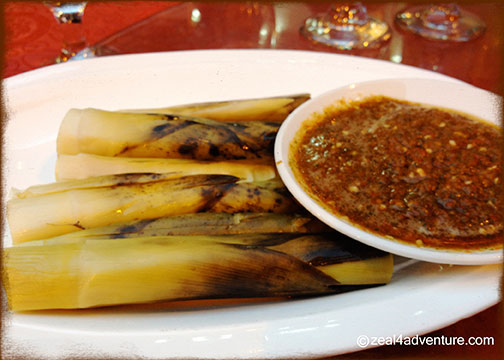
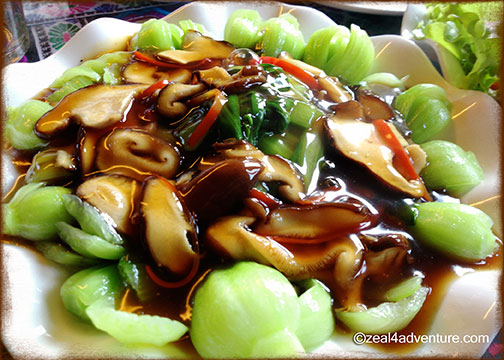
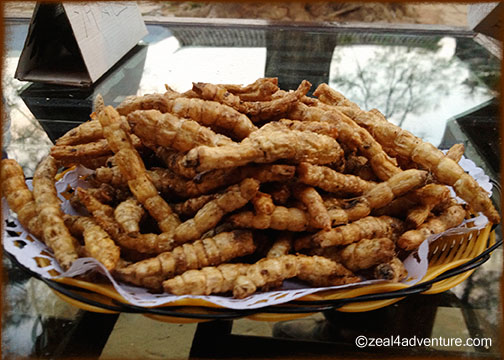
Fresh vegetables cooked lightly with lots of garlic and some chilies are a staple.   Because Yunnan has a diverse variety of plant species, you’ll find dishes made with ferns, bamboo shoots, flowers, tubers, fungi, herbs and even insects of all kinds.

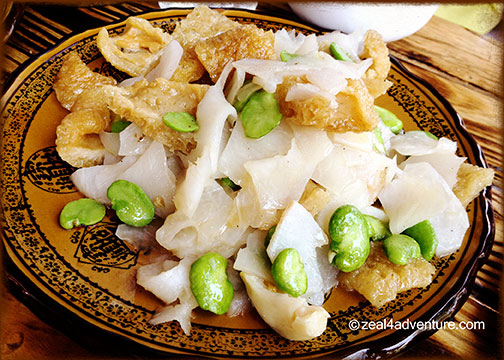
A kind of root that was actually quite good.
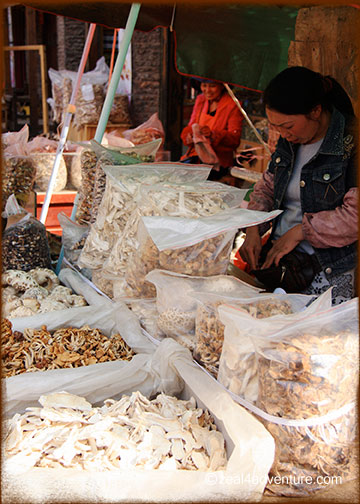
Various types of mushrooms found at the local market in Shuhe.
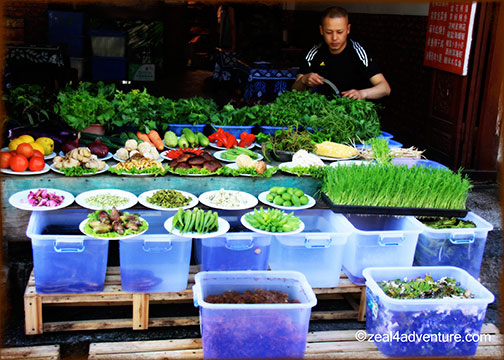
A typical local restaurant showcasing a variety of vegetables, tubers, flowers and ferns.

Cheese?

Cheese is something you do not expect in China because Chinese as a nation are not keen on dairy products. But in a province that lies on the fringe of China, its mash-up nationalities’ dietary habits are far removed from the mainstream Chinese. The love of dairy products could perhaps be attributed to the mélange of ethnic groups such as Mongolians and Tibetans. The way in which they eat it though is distinctly Chinese.

Called rubing, it is often served with rice, sliced and pan-fried until golden on both sides or cut into cubes and stir fried in a wok.

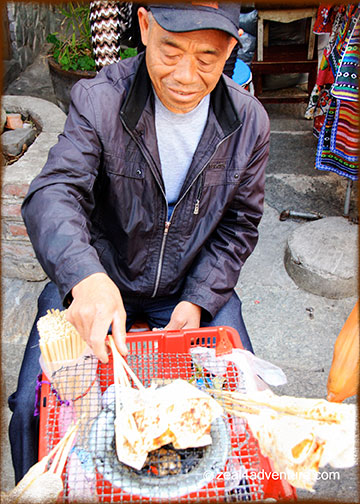
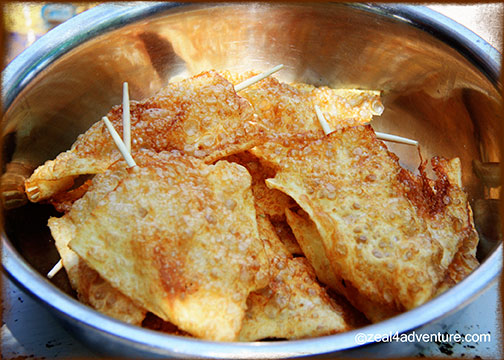
Another interesting cheese called rushan is grilled and sold by the roadside. It’s crispy and milky in flavor.

Cured Pork

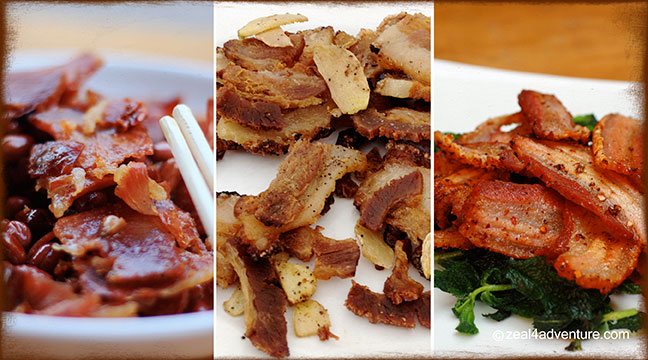
Have you heard of Yunnan ham? We used to get them canned and is an absolute favorite of Anton’s. In Yunnan, we couldn’t find the canned one, but instead, we devoured it in so many other ways.

They love them steamed, boiled, fried… usually to flavor stews and braised dishes as well as soups and broths.

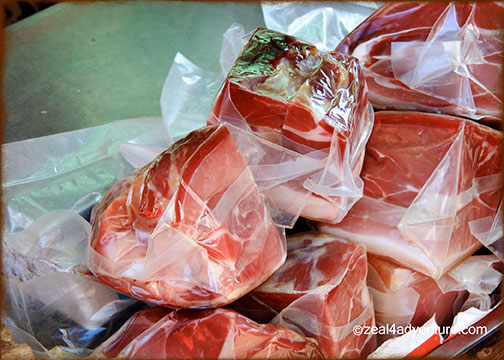
Xuan Wei ham from Xuan Wei City is the most famous. It is to China what Iberian ham is to the Spanish.

Found this in the local market in Shuhe.

And with this, I close my series on Yunnan. Don’t drool too much now. I hope you had as much fun reading it as I had re-living it.