Clockwise: Me all set to go, MV Koon, a friend about to do the giant stride.
I could hear someone enthusiastically banging his tank and I instantly knew there was something major up ahead. I examined my surroundings and there it was, gracefully gliding through the great expanse of the sea, coming toward our direction. Yes, this was what we came here for. And suddenly the exhaustion vanished. A sense of calm never fails to envelop me whenever I encounter this gentle giant gliding through, perhaps enjoying the attention too.
Strong currents hit us when we reached Ko Bon Pinnacle from the blue. It pays to be fit because just reaching the Pinnacle is a work-out all its own. This near vertical slope is where manta rays are frequently spotted playing. There are a couple of cleaning stations on the reef and manta sightings are almost guaranteed.
This occurrence will continue until the next day, in different dive sites, mostly in the northern part of Similan. It was awesome and is always a privilege being with them in their domain.
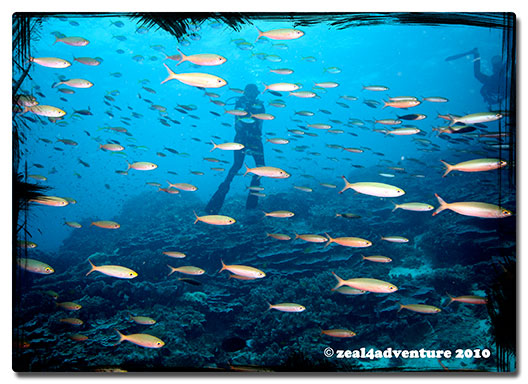
The Similan Islands was declared a national park in 1982 and is rated top ten among the world’s dive destinations. The impressive boulder formation also continues below the surface with diverse landscapes of canyons, boulders, coral gardens, caves and walls. It is also home to an amazing variety of marine life.
The southern coast consists of those smaller islands (described on previous posts) that are numbered from one through nine and is balanced by the larger northern islands of Ko Bon for its beautiful piece of landscape, Ko Tachai with her attractive sandy beach above and plateaus beneath with probably the most colorful coral gardens in the park. Richelieu, the 3rd island of the south was also a highlight of our dive trip.
A relatively small dive site and a bit too crowded with divers all vying to see the huge extent of marine life in the area. Whale Sharks are usually sighted during the months of April and May but for some reason, they elude me once more. And so my pursuit of that elusive butandings continues.
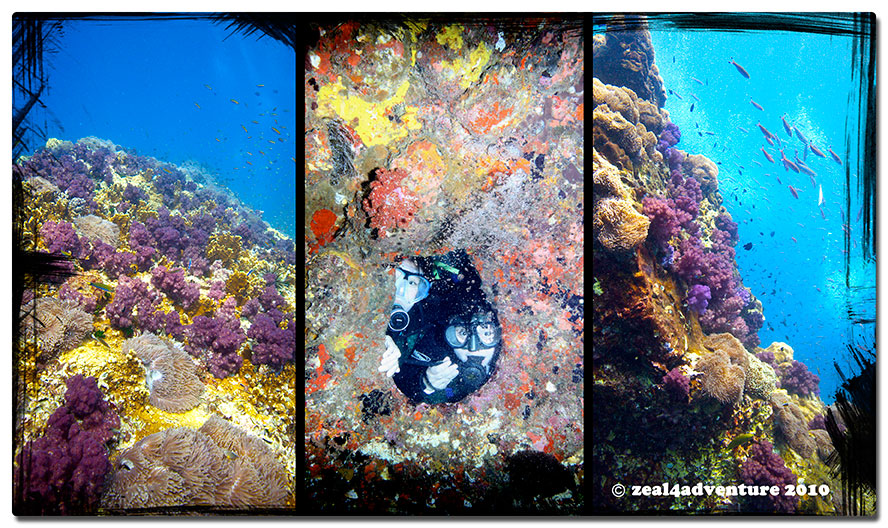
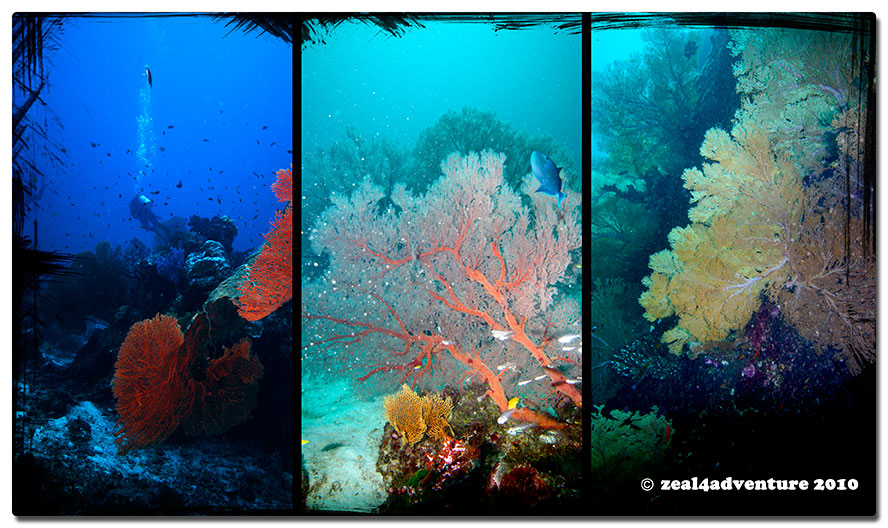
Here’s some underwater snapshots to take pleasure in:
The tide was getting high and the swell stronger. As we were wading to the shore, I got caught in one big swell and almost lost my camera to it. 😮 Whew! Gotta get that underwater casing soon.
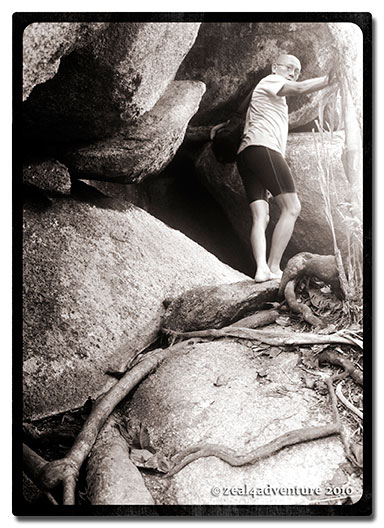
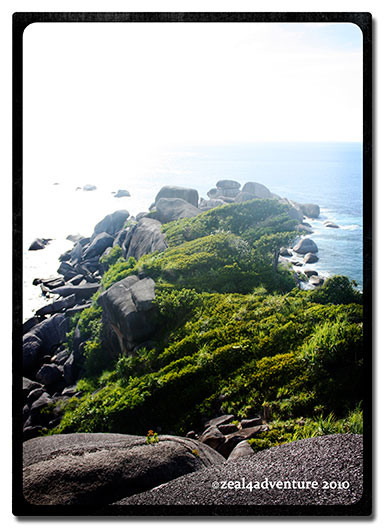
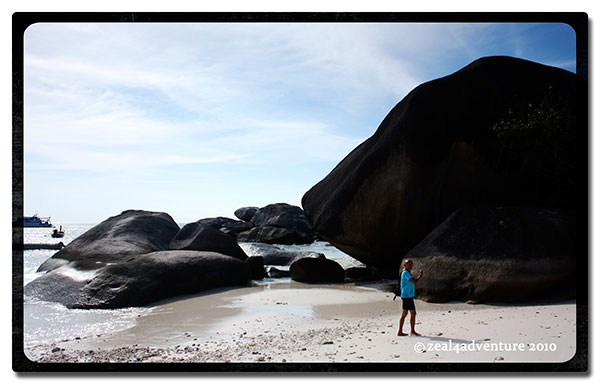
Climbing those boulders would have been easy if I had worn my aqua socks, but instead I wore slippers and it keeps slipping off my feet so I went barefoot.
Chris, our divemaster went barefoot — he seemed fine!
Thought it would be a walk in the park but the boulders were rough (at least to my delicate soles :-)) and hot from the sun. I felt like I was walking on hot coals. Seriously. The soles of my feet hurt for 2 days, I think I got a 1st degree burn from it. 😯 It was all worth it though.
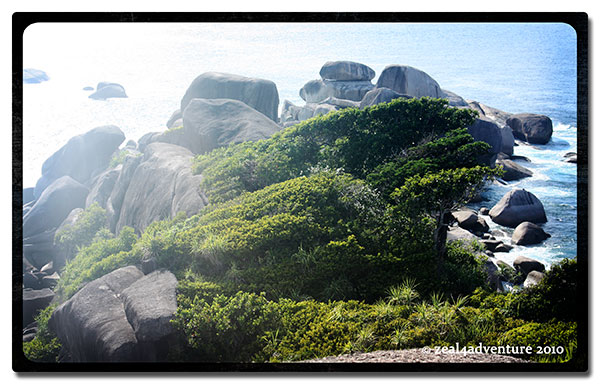
The gorgeousness of the entire island made it seemed all right.
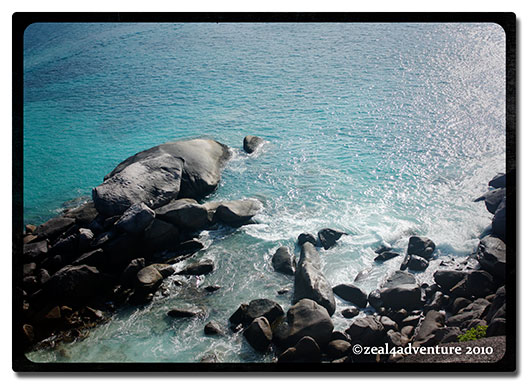
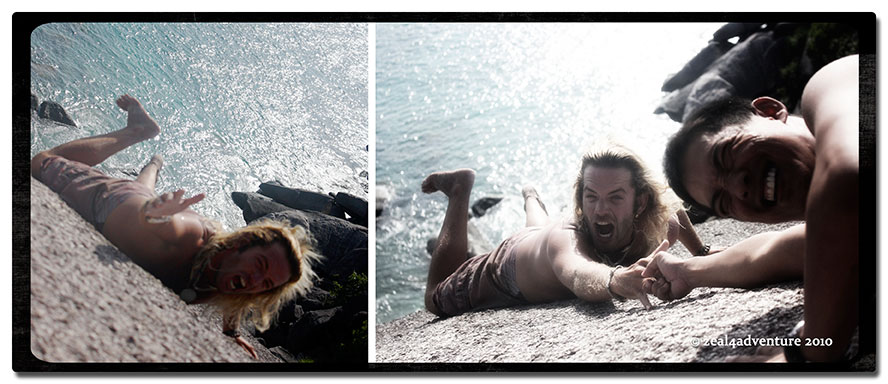
A word of caution: it can get a bit unnerving once you reach the top especially if you have a fear of heights like moi! I made sure I stayed out of the edge… unlike my two friends here:
I tell you, it really is best to stay away from the edge! 😛
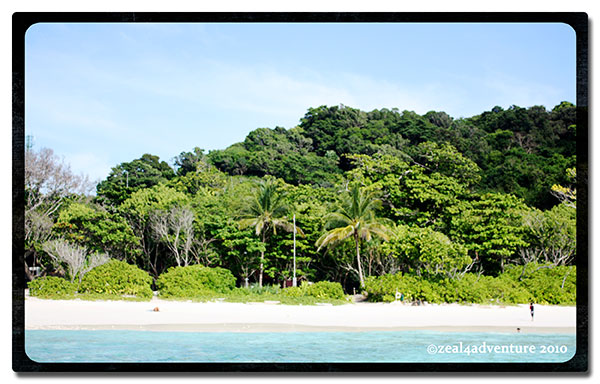
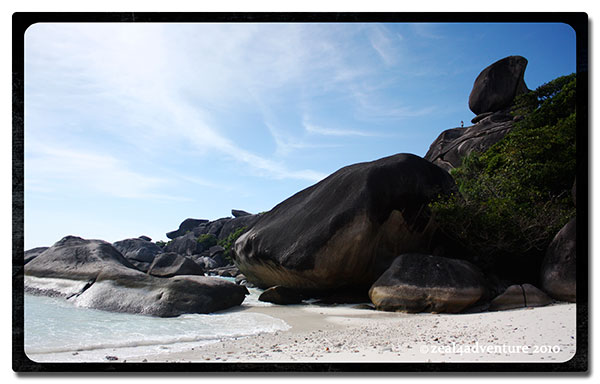
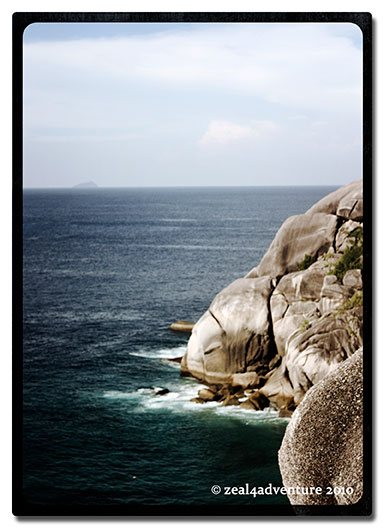
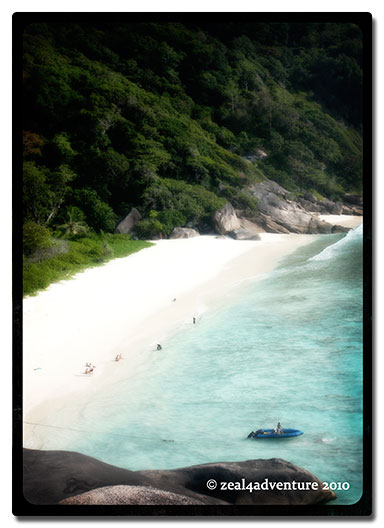
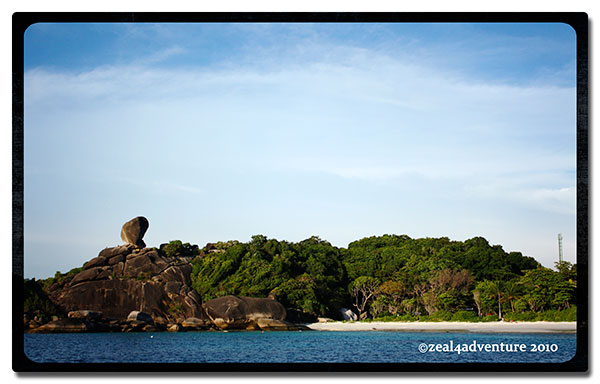
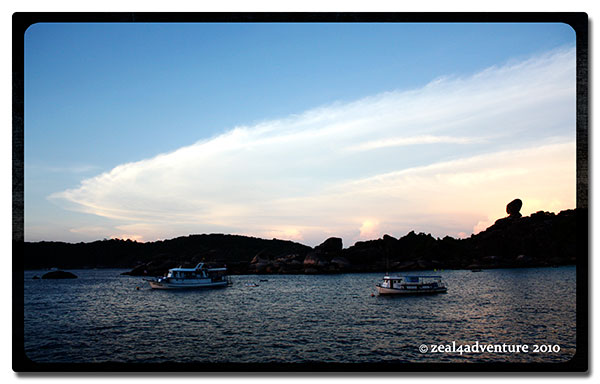
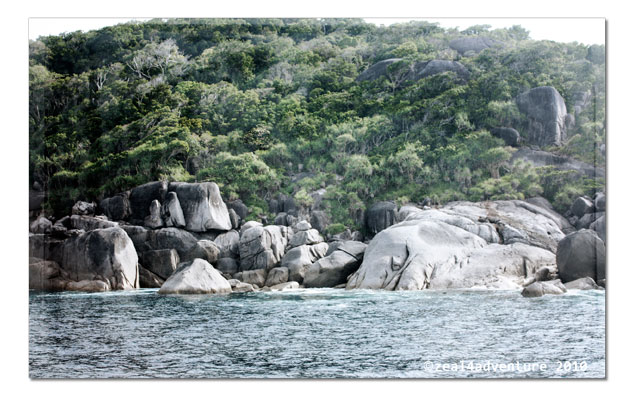
It looked inviting from our dive boat, the wonderful granite rock formation intrigued us no end. It was a no-brainer, we had to take time off from our dive and head to this bay called island No. 8, also known as Donald Duck Bay, The Boulders and Shoe Bay (Ao Guerk in Thai).
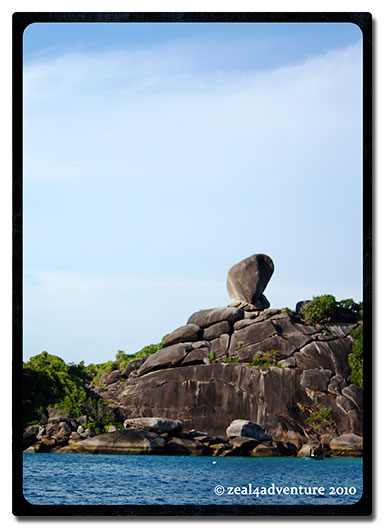
All describing this prominent large boulder that seemingly stands upside down unsteadily balancing on its tip. It could resemble the cartoon character or a boot, depending on which angle you see it from. Our angle resembles neither – so I call it “The Boulders”. Going back to our dive boat though, we caught a glimpse of Donald but the water was splashing so much, I dared not take out my camera or I’d surely lose it this time. 😕
It is said that the rocks were formed around 65 million years ago from hot magma and polished to its actual shape today by the weather and the sea.
The picturesque bay is where the National Park office is located and is a favorite anchorage of the live-aboards. And why not?
Call us crazy but at the height of Bangkok’s uprising, we were on the plane to Phuket, via Singapore of course. We were to embark on a 4 -day dive safari.
Located along the coastline of the Andaman Seas and the Indian Ocean, Koh Similan or the Similan Islands comprises of 9 granite island covered in tropical jungle and is best known for its wonders beneath its clear aquamarine waters.
The Similans is located about 100 kilometers northwest of Phuket International Airport.
It is more than an hour drive to Thap Lamu Port where we boarded the MV Koon, our home for the next 4 days.
Briefing before a dive with divemaster Chris
As it takes about 3.5 hours to get to the Similans, most dive trips are by liveaboard if one wants to fully explore the dive sites. There are hydrofoils, however, being offered from Phuket for a 2-dive day trip.
We left Thap Lamu Port just before sundown and our journey started with a bang (literally).
Thais, being Buddhists, always light a few firecrackers, I suppose, to drive away bad spirits and be blessed with a safe journey.
Day 1
Day 2
Day 3
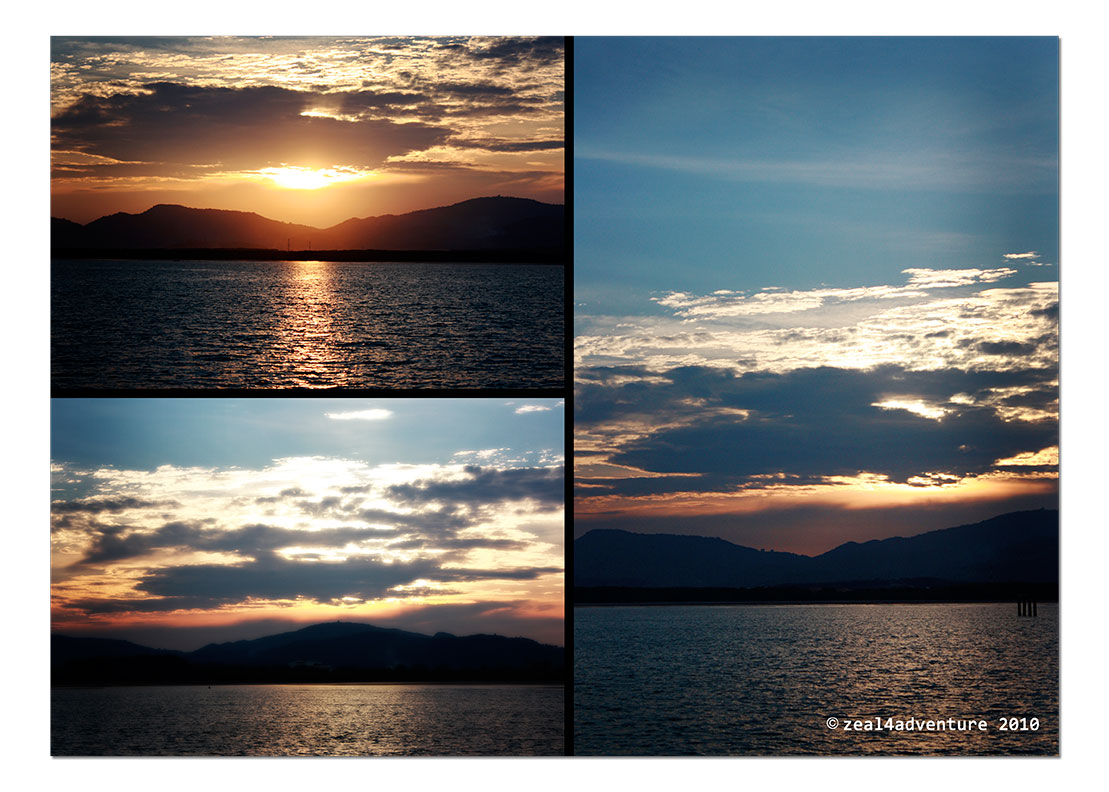
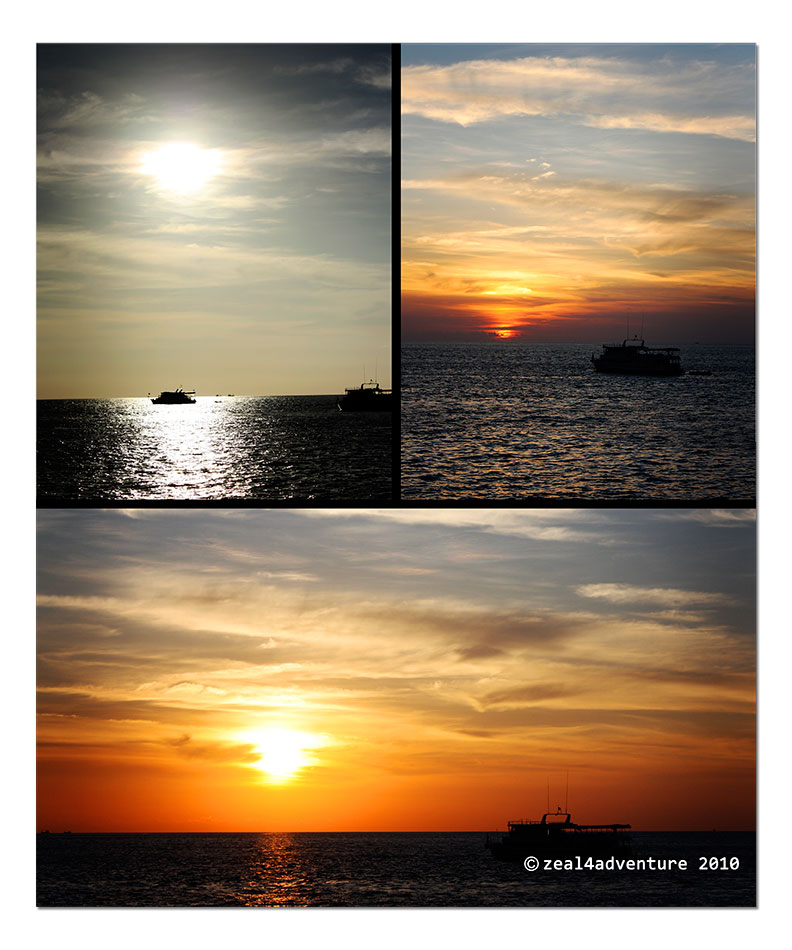
And blessed we were, with a beautiful sunset which will be a daily happening for the next 3 nights.
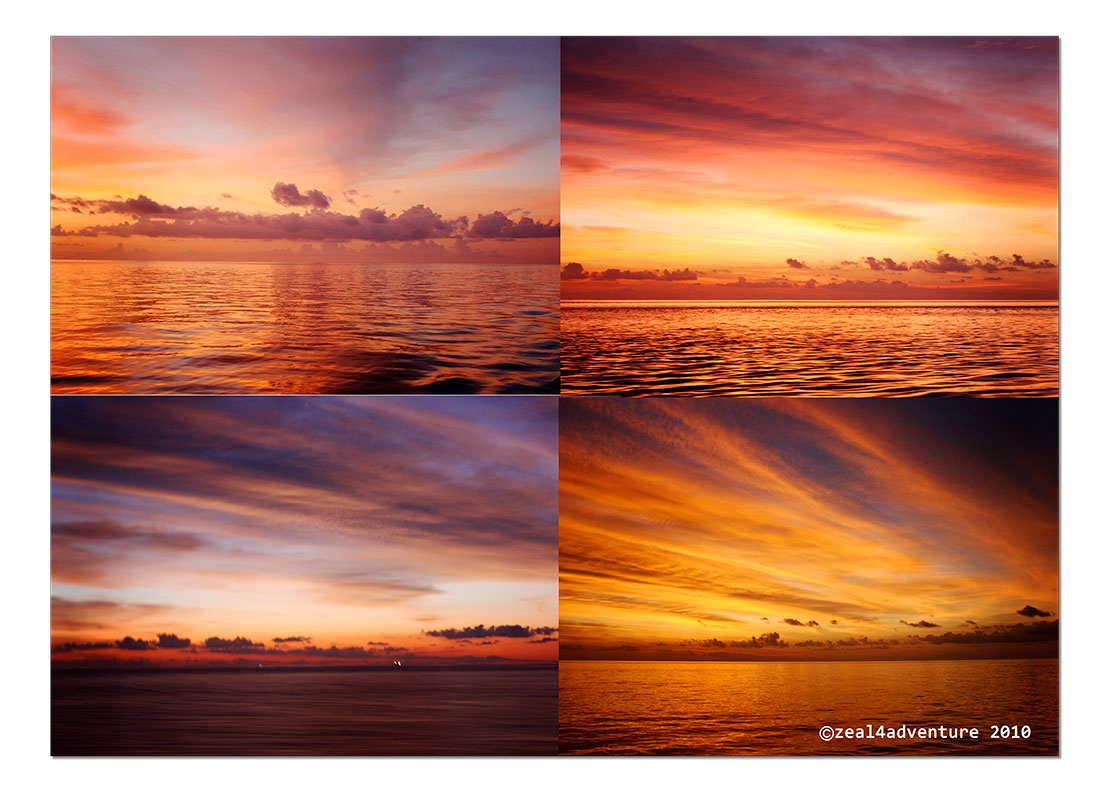
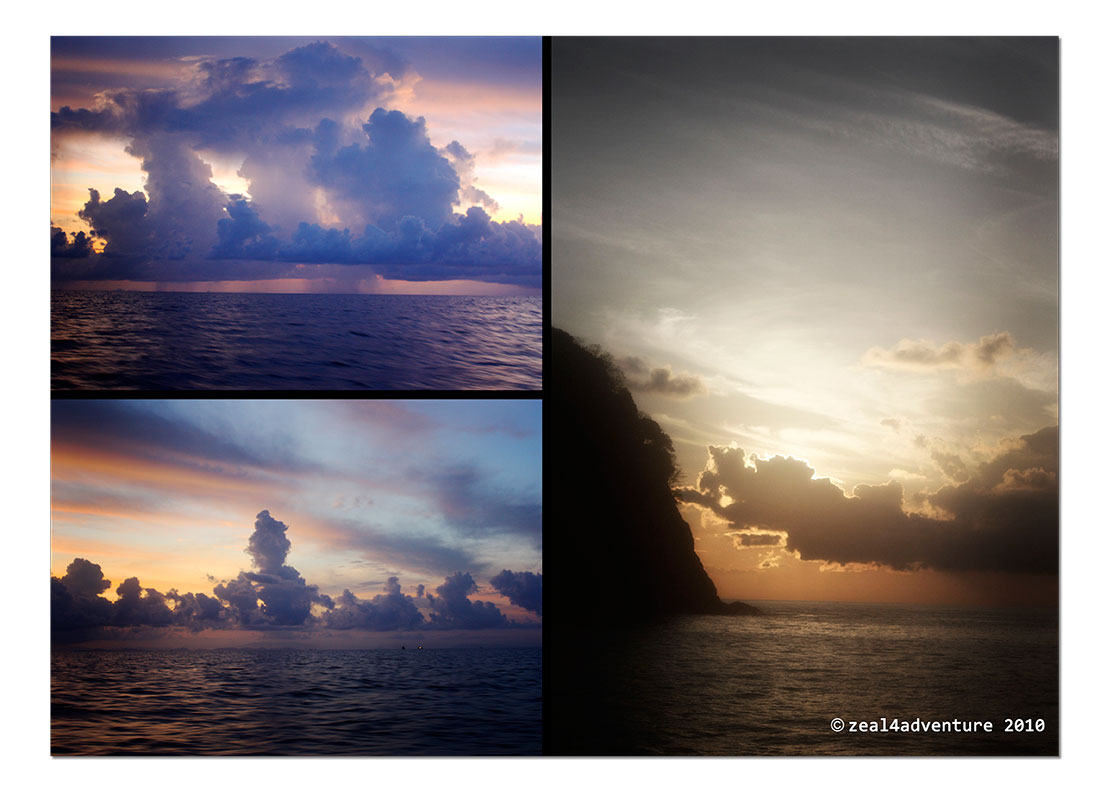
Sunrise from 2 different mornings
Not only were sunsets spectacular, the sunrises were dazzling too.
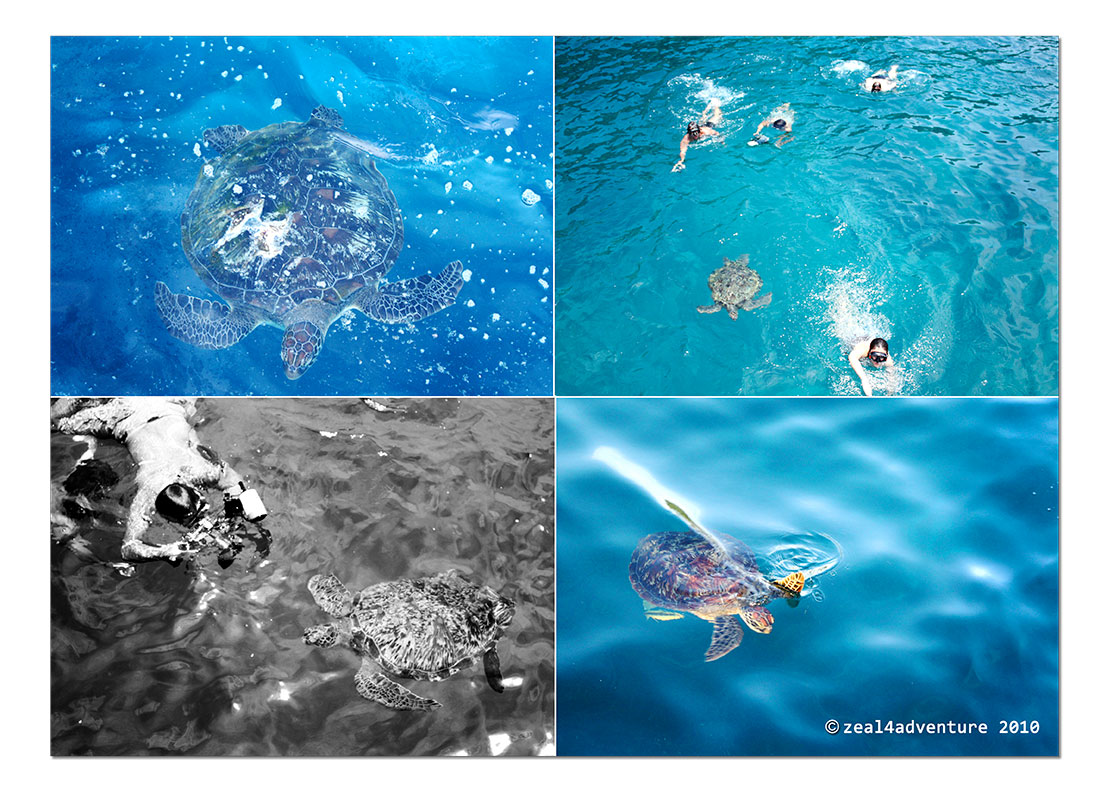
We also had a regular visitor that came to play!
MV Koon is operated by Flying FishDiving Evolution and fits 16 guests. Aside from a couple of foreigners (1 American and the other Spanish), we practically had the boat to ourselves.
The cabins, albeit tiny were comfortable, making good use of space. Toilets and showers, although shared, were clean and not too cramp.
I like it that the dining area was al fresco. We spent most of our hours on board here. My only complaint was the food.
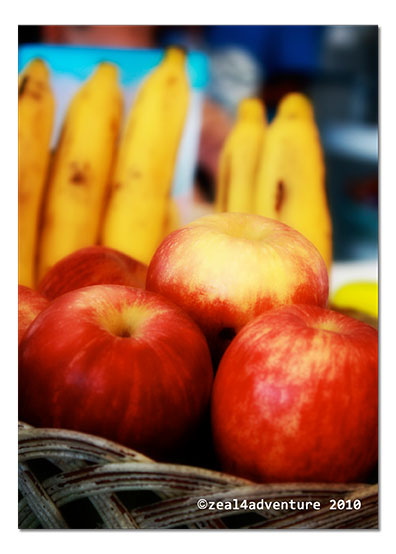
Fruits all day long! 😀
It was pretty good but I would have preferred more authentic Thai cuisine. We (at least those of us who could take hot & spicy) almost always end up sharing the crew’s food. Heehee! 😀
A typical day
Eat. Dive. Sleep. That was pretty much what we did aboard the MV Koon. It was a good life on board the MV Koon. Our home while in the Andaman Seas.
Up next… exploring the beautiful Island # 8 also called Donald Duck Bay. Stay tuned.
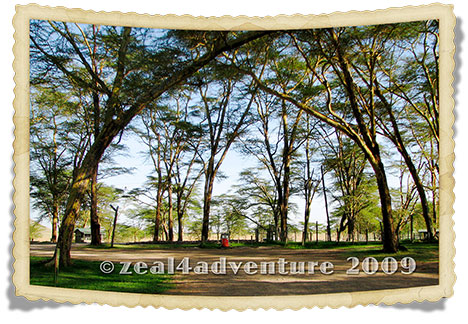
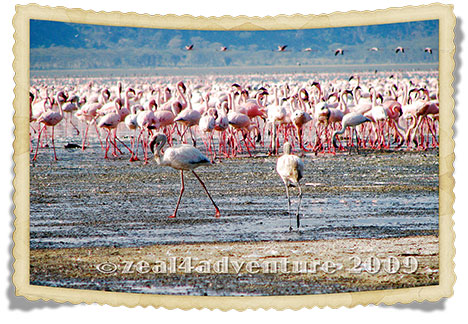
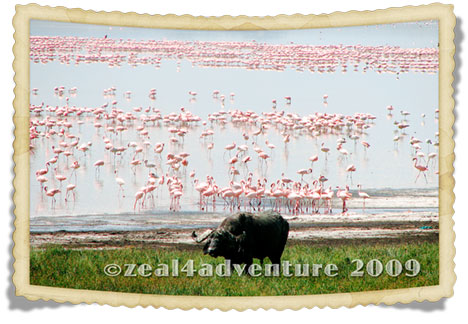
The lakeshores of Lake Nakuru literally turn pink as millions of flamingos feed on its highly alkaline lake, set in a picturesque landscape of acacia woodlands and grasslands next to Nakuru town.
dramatic entrance
A very shallow and strongly alkaline lake, it is world known as feeding grounds of both lesser and greater flamingos and one of my favorite parks in East Africa.
The main reason for establishing this national park was to protect its huge flocks of the lesser flamingos. Despite being the world’s most numerous flamingos, this bird is classified as near threatened due to its lack of suitable breeding site. Depended on rainfalls, the lake keep decreasing since 1997. The ecosystem is threatened by annual drought.
shallow to dry lake
The second most visited park in Kenya, this small park has been dubbed “the greatest bird spectacle on earth” when thousands of flamingos landed into the lake years ago. It has become a favorite destination for not only ornithologists but also bird and wildlife enthusiasts. And the flamingos are definitely the reason to be in Nakuru!
Lake Nakuru National Park is situated approximately 2-hour drive away from Nairobi. A gentle, billowing terrain with open bush and woodlands dominates it. It is also one of the saline lake systems lying in the Great Rift Valley.
enroute to Nakuru
Famous for its abundant birdlife…
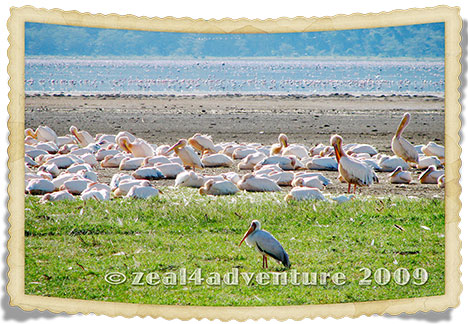
Pelicans
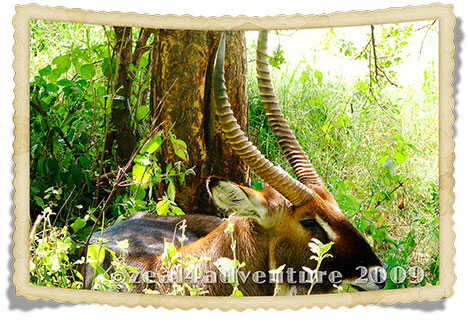
Lake Naukuru also has waterbucks, impalas, and hippopotamus.
waterbuck
Game viewing is relatively easy: buffalos, leopard, lions, and the endangered Rothschild’s giraffe…
cape buffalo and the flamingos as its backdrop
not a Rothschild’s giraffe
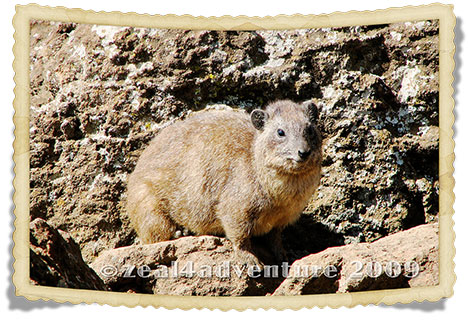
the bushlands offers eland, steenbok, impala, while the hyrax occupies the cliffs.
hyrax
And speaking of cliffs, the best view of the lake is from Baboon cliff.
view from the top
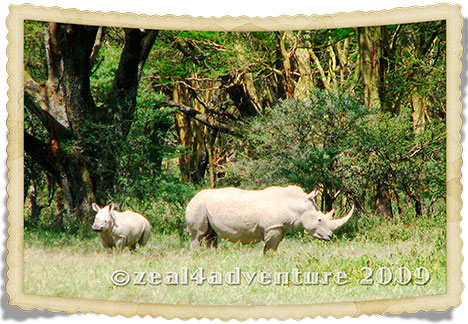
Lake Nakuru is also home to the Kenya Rhino Conservation Project and therefore an excellent place to see rhinos. The woodland and forest are now home to both black and white rhino. Following the ravages of poaching, in the late 80’s, only 2 black rhinos remained. Creating a rhino sanctuary within the park and reintroducing a breeding herd have recognized the park internationally as an important conservation area.
white rhinos
Lake Nakuru… not to be missed when in Kenya. It was definitely one of the of the highlights of my African adventure!
Almost. It was July and the start of the migration. Perfect timing. After all, our trip to Africa started with the idea of this “much documented” migration. Well, no “Great Wildebeest Migration” for us BUT it was still a haven for viewing a multitude of all sorts of animals in a 5-mile radius. And just to witness and be in an African savannah is enough to thrill us no end.
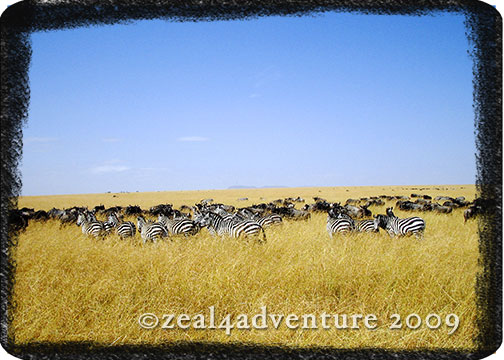
zebras and wildebeests
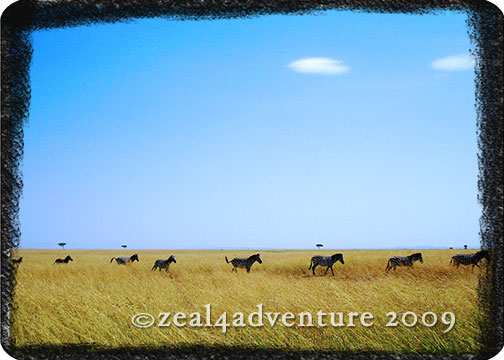
They were getting ready for the migration, we were told. Zebras were queuing as if for immigration (to pass the border hee hee!) 😀
zebras in a line
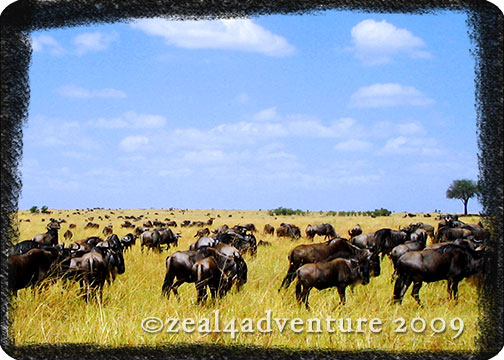
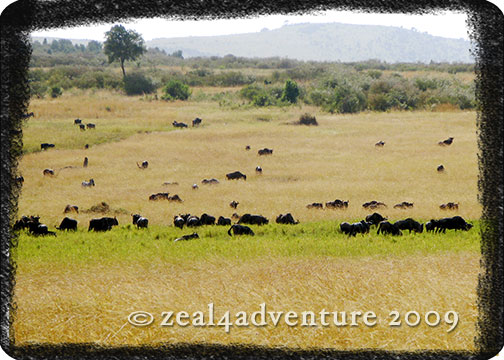
and hundreds of wildebeest grazing and waiting perhaps for their turn to queue? 😀 Sometime between July and October, the famous Masai Mara National Reserve reverberates to the thumps of millions of hoofs as the Great Wildebeest Migration billows. Even if we missed this, we were thrilled nonetheless to just have a “NatGeo” moment.
wildebeests (waiting for their turn?)
Everything about Kenya’s finest wildlife reserve is outstanding. The wildlife is abundant in Masai Mara and the rolling grassland makes certain that animals are always within field of vision. After grazing in Tanzania’s northern Serengeti, as if in one accord, a large number of wildebeest and zebra enter the Masai Mara around the end of June drawn by the sweet grass brought about by the long rains of April and May.
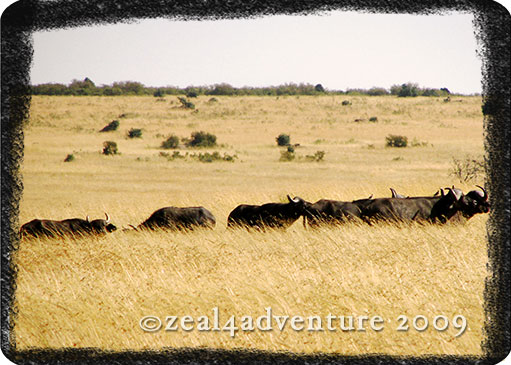
buffalos
steenboks
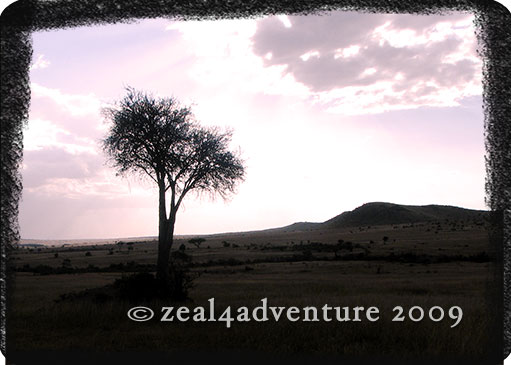
The rolling grasslands, the diversity of the inhabitants, the acacia trees fulfilled my expectation of the African landscape depicted in Out of Africa.
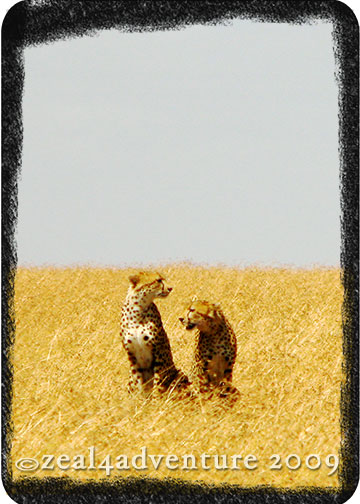
It is where the word “safari” is in its truest sense. We even witnessed a cheetah take down a wildebeest. A highlight it definitely was for the day.
cheetahs (before the attack!)
A sad note though… scientists at the Nairobi based International Livestock Research Institute (ILPI) have found that the numbers of giraffes, hartebeests, impalas, warthogs, topis and waterbucks noticeably and persistently fell throughout the reserve between 1989 & 2003. They blame it on the increasing human settlement around the unfenced park.
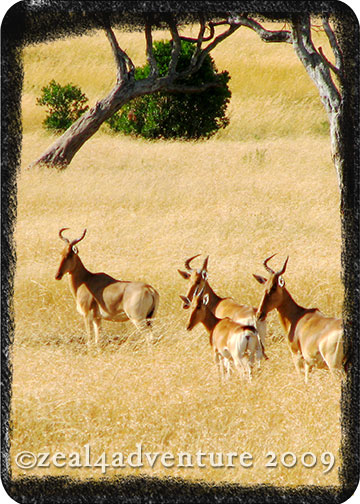
hartebeests
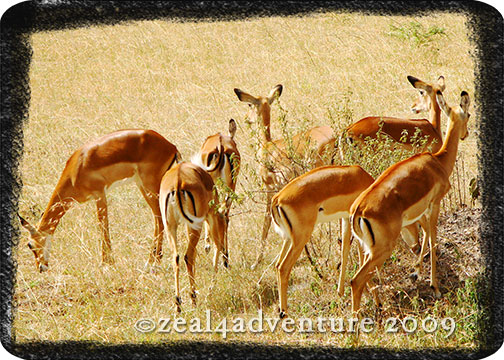
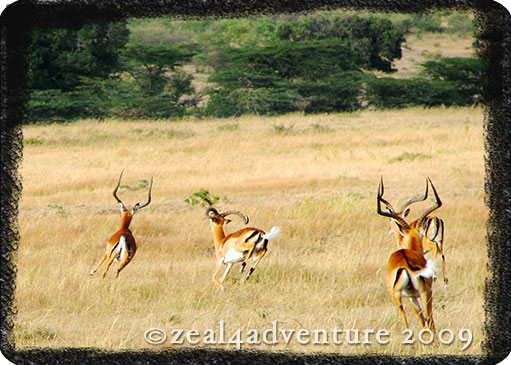
gazelles in action
Seeing the Big 9 was an experience unparalleled. And what are they, you may ask? The Big 5s are the Buffalos, Elephants, Leopards, Lions and Rhinoceroses and the Big 9 extends to the Cheetahs, Zebras, Giraffes, and Hippos. Yes my friends, we saw them all and save for the Leopard that didn’t get photographed because it was just too fast and nimble.
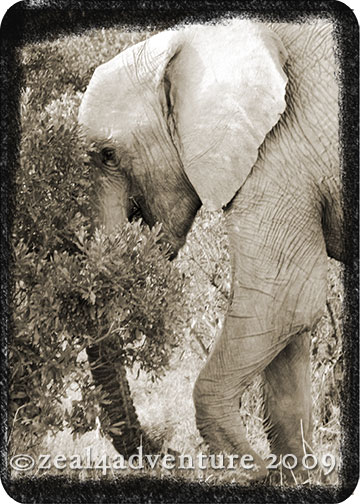
elephant
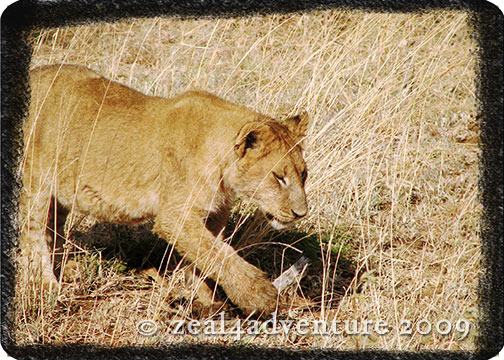
mama lion
zebras
A trip to Africa is obviously not complete without experiencing a safari and is almost always the highlight of one’s trip. It was for us and we went to not 1 but 4 great safaris in Kenya and Tanzania. Awesome! Stay tuned for more safari tales (hopefully soon!) 😉
This was taken in Lake Nkuruba Nature Reserve in Fort Portal. It is also home to orphans of AIDS victims. Part orphanage, part guesthouse, the money earned from the guesthouse (and various donors) helps sustain the orphanage. Most of the time, a show is prepared for guests. Performing with gusto, we watched, entertained by their zeal. They showed pride as they performed in front of a handful of delighted foreigners. These children definitely have the groove!
Red Colobus among the many wildlife found at the forest.
Lake Nkuruba was our jump-off point to an up close encounter with the chimpanzees. Uganda is home to gorillas (in Rwenzori Forest) and chimps (in Kibale Forest). Unable, however, to see the gorillas due to time, budget constraints and the government’s policy on permits, we went on the chimpanzee trek.
A small town with one main road, we found our way to this western town of Uganda the hard way. In fact the highlight of our African adventure was this journey to Fort Portal and Lake Nkuruba. It’s a story all its own so stay tuned. 😀
Africa—my biggest trip so far and a dream vacation not exactly at the top of my priority list. I found my way to Africa quite by chance. A few years ago, a friend of mine did a year of volunteer work in Mombasa, Kenya. One day, I received an email from her inviting us (her traveling buddies) to join her on a safari. The thrill-seeker in me cannot NOT take this opportunity, so in June of 2005, I found myself on board a flight enroute to Nairobi. Turned out to be by far the greatest experience ever. Extraordinary adventures that made it to my list of firsts.
Credits: Brushes – DDMWISE a la Mode, NRJ Funky Vintage8; Papers- Defining flowers – jen wilson, Kpertiet King Me paper, Lumiene – jen wilson, strip – jen wilson, Tjd Kuwtj hardwood 3; Elements – KPertiet – Hemp Tie, Linda GB Tiny tags_all worn, Lynng_barcelona button 2
To kick off this African Adventure series, I’d like to introduce to you to the Massai of East Africa. They are after all one of the better-known African tribe. They live on the Serengeti Plain near Kenya and Tanzania. A unique society with a rich history steeped in culture and tradition, however with the interference of the west, the Massai are at risk of losing that culture within our lifetime.
It was quite evident at the time of our visit to a village that they have become more and more entrenched in a market economy. Souvenirs were peddled in one area of their village. The Massai are pastoral people who live mainly off their cattle. Traditionally, livestock is their primary source of income. Beyond being used for food, it may be traded for beads and clothing. Until recently, it was illegal to sell livestock for cash. But the modern day comforts have lured many a younger Massai to the Western culture. In a bar in Arusha in Tanzania, we were introduced to a Massai in regular modern day get up (sans their signature shoes made of rubber tires and red wraps) playing billiards with the locals. If not for their very distinct earlobe hole and beads and other accessories, they blend in really well with the others.
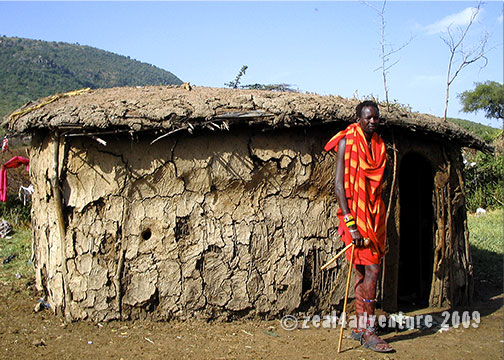
Despite that, majority of this red wrap cladding people still live in traditional Massai abode made of cow dung and mud. I know, I know! We entered one of it upon their invitation albeit hesitantly and with a huge sigh of relief, we found that it wasn’t stinky at all! 😯
They are known to be fierce warriors and hunting and killing a lion is common still today for these warriors to sort of prove their manhood and test their courage.
I am pleased to have caught a glimpse into the lives of this interesting set of people before outside interference completely change them.
After chemo in 2005, I decided to take a short trip to China to cap this chapter of my life. I wanted to start living “my life” again, the way I used to, even if I had to take baby steps to get back into my groove. (I owe this story about me and I WILL post it as soon as I am ready to share.) Anyway… Chose Yangshuo because it was close enough but it was not your typical Chinese town either. It was still quite off the beaten path where backpackers still abound. You get the same, if not better landscape in a vacation town with a plethora of interesting eateries and little shops as opposed to the big city of Guilin. I like Yangshuo because it was small enough to explore, not intimidating at all. Baby steps…
Outside of eating and shopping in town, the countryside and the Li River has a lot more to offer. You can should do the following:
Ride a bike – wander through the countryside and enjoy the dramatic mountain backdrops. The people are generally friendly. Our guide went the extra mile and brought us to her home in the countryside and cooked us lunch. 😀
Cruise around Li River – take it from Xingping where the best limestone formations starts.
Rock Climbing – if you are into that.
Watch Impression of Lui Sanjie – by far the best thing we did in the 4 days we were there. The show runs nightly during peak season. It features a cast of 500 fishermen and a highly impressive light show performed on the Li River with the limestone formation as backdrop. It was awe-inspiring, simply “goosebumps” amazing.
On a lighter note… let’s talk about the other side of Yap. It’s more than just the land of mantas and sharks, it’s also known for its intriguing stone money and (stimulating?) betel nuts.
So where is Yap? It is one of four states that comprise the Federated States of Micronesia (the others are Chuuk, Pohnpei, and Kosrae). Close to Guam, Palau and the Philippines, Yap is steeped in ancient traditions and peopled by one of the most distinctive cultures in the Pacific.
Land of Stone Money
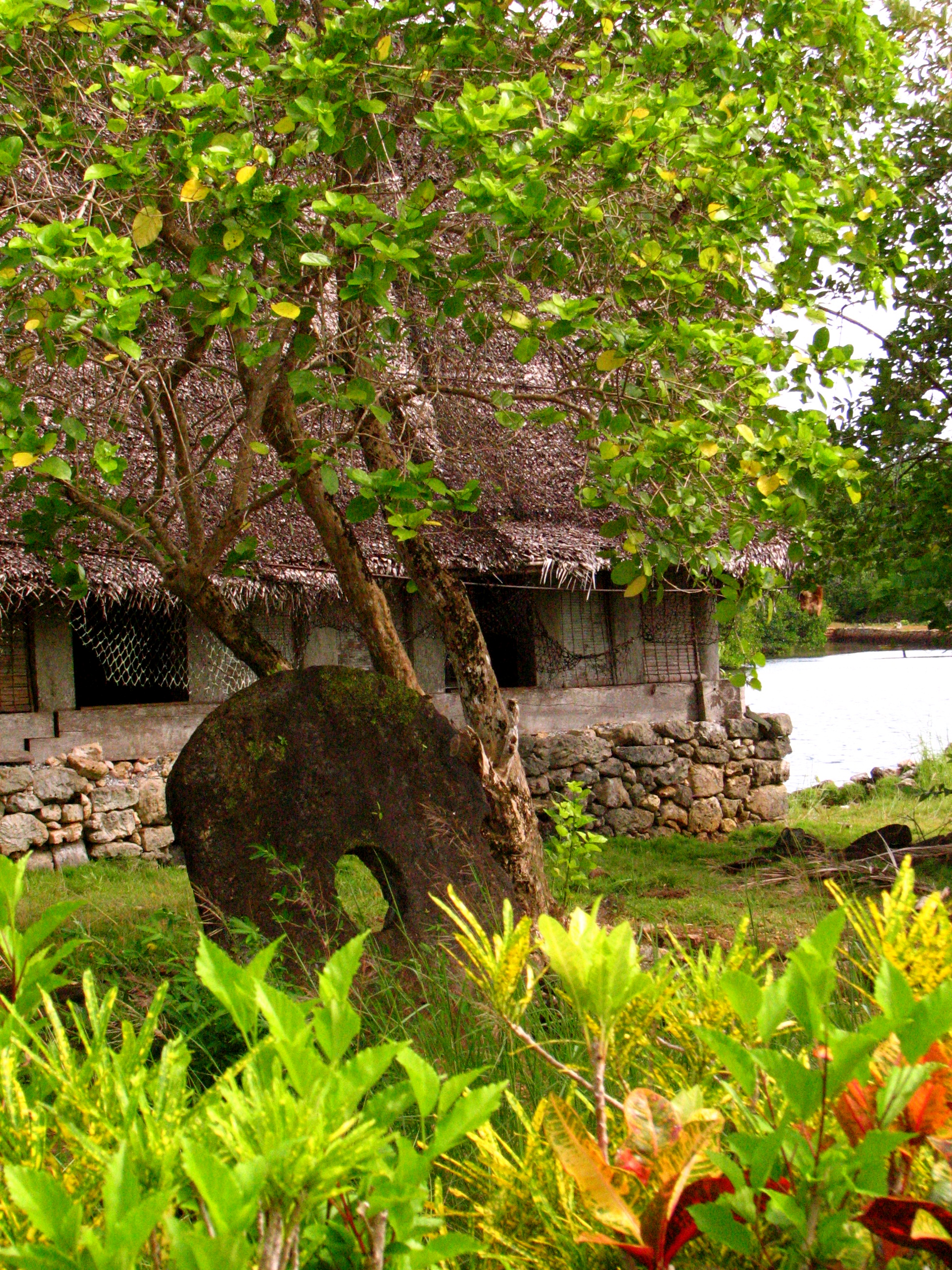
stone money
Notable for its stone money made of crystalline calcite (primarily found in the walls of limestone caverns), many of which were brought from as far as New Guinea but most came from Palau since ancient times. Difficult to steal, the stone money was placed outside the house to denote wealth and stature. The bigger the stone, the higher their rank in society. The scarcity of the discs and the efforts required to obtain them made the stones valuable to the Yapese. The canoe journey took days (depending on the weather) requiring good sailing skills. Today, although they use US$ dollars in their daily transactions, the stone discs are still used for more traditional or ceremonial exchange.
Betel nut 101
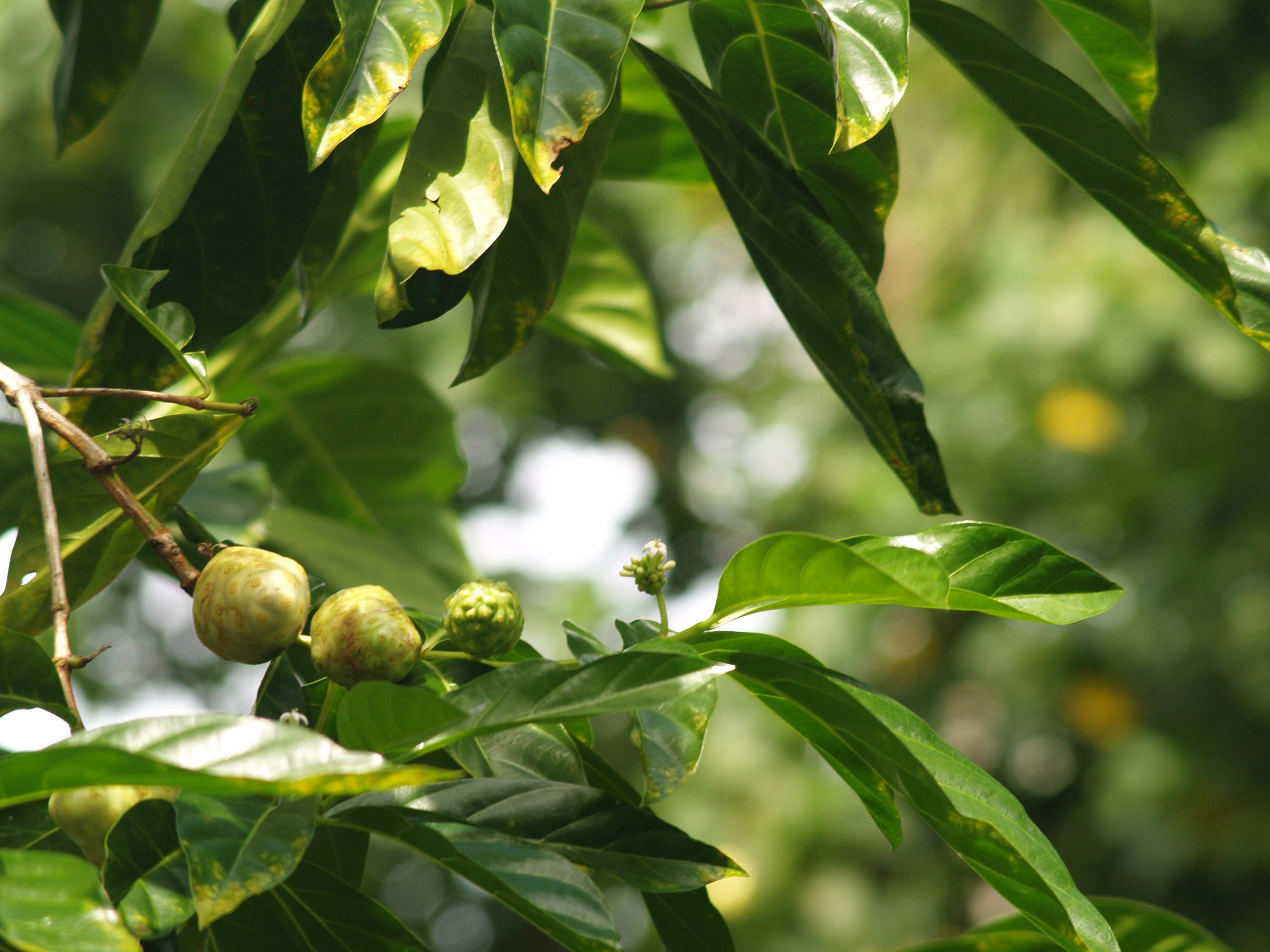
Split a juicy round green betel nut, sprinkle with lime (not the fruit but powdered limestone), wrap in a pepper leaf, pop in mouth and chew. Spit out the juice, do not swallow.
betel nut
Betel nut chewing combines 2 pleasures, they say – the relaxing rhythm of rumination, like chewing gums and mild stimulation, something habitual coffee and tea drinkers enjoy. They say that it makes them relaxed and alert at the same time. I guess, the chewing relaxes them and the caffeine-like property of the nut makes them alert. Makes sense to me! Nowadays, many add tobacco to their chew. Why? Dunno!
Red teeth are common throughout Yap as the reaction of the nut with the limestone brings off a bright red color that discolors the teeth when chewed regularly. And yes, even the foreigners who made Yap their home possess the distinct red teeth.
Vain that I am, I will never dare try this stuff 😛 Our friend A was the only brave soul who tried it and he was awake the entire night haha! 😀
Other attractions that highlight this remote island:
A handmade seaside Men’s house – can you believe that women (and that includes me!) can’t enter to this day?
Cultural villages
World War II remnants – Yap was once occupied by Japanese troops and was regularly bombed by US ships and aircrafts.
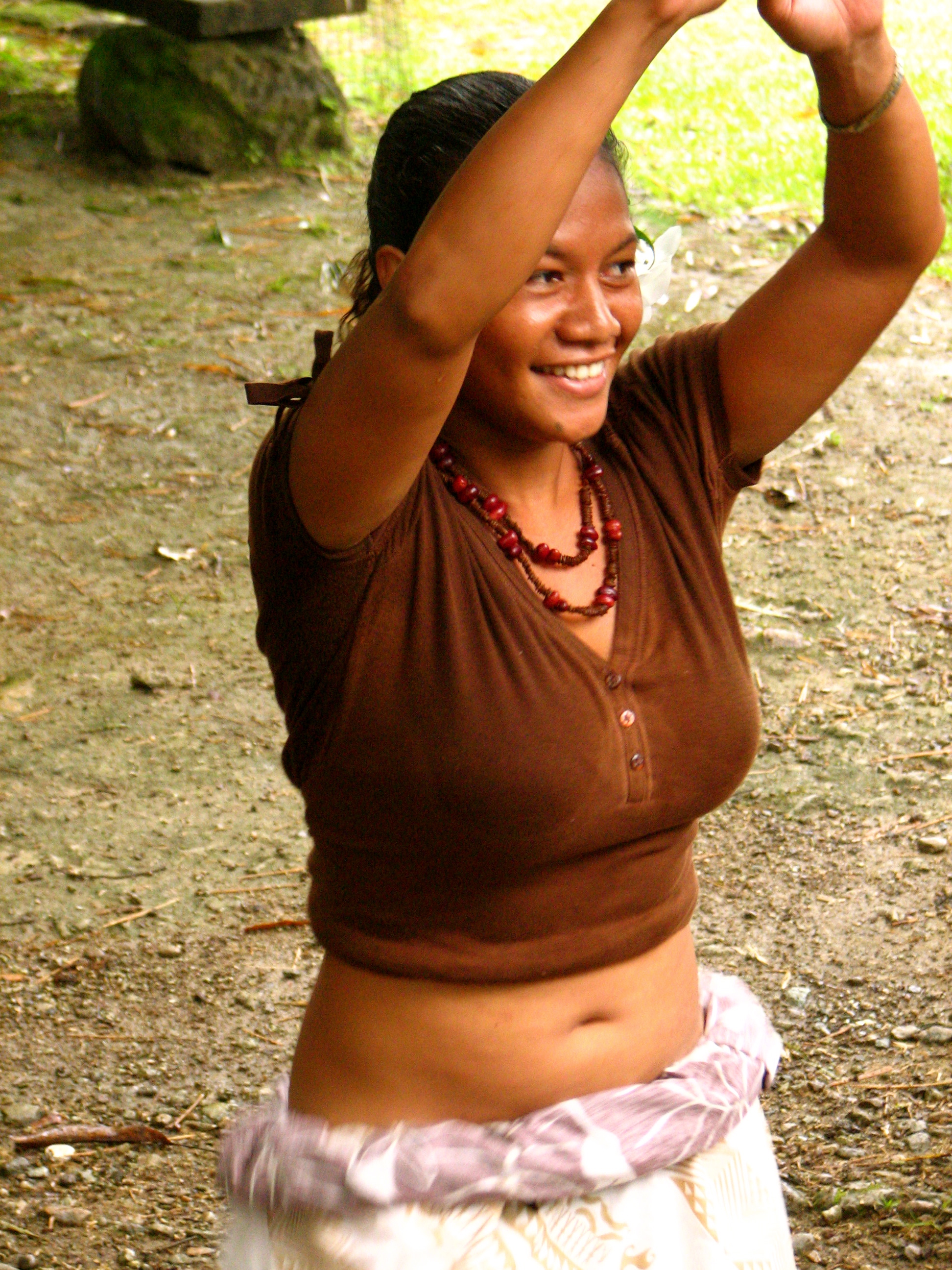
Cultural dances – that’s Rihka our guide entertaining us while we wait for our hot dogs and burgers
Mangrove forests
The island was opened for tourism in 1989 and has seen a good amount of tourists visiting not only for diving but to catch a glimpse of the culture as well. Yap’s indigenous cultures and traditions are still strong compared to other neighboring islands. You still see some topless women roaming the streets.
Sleeping Arrangements:
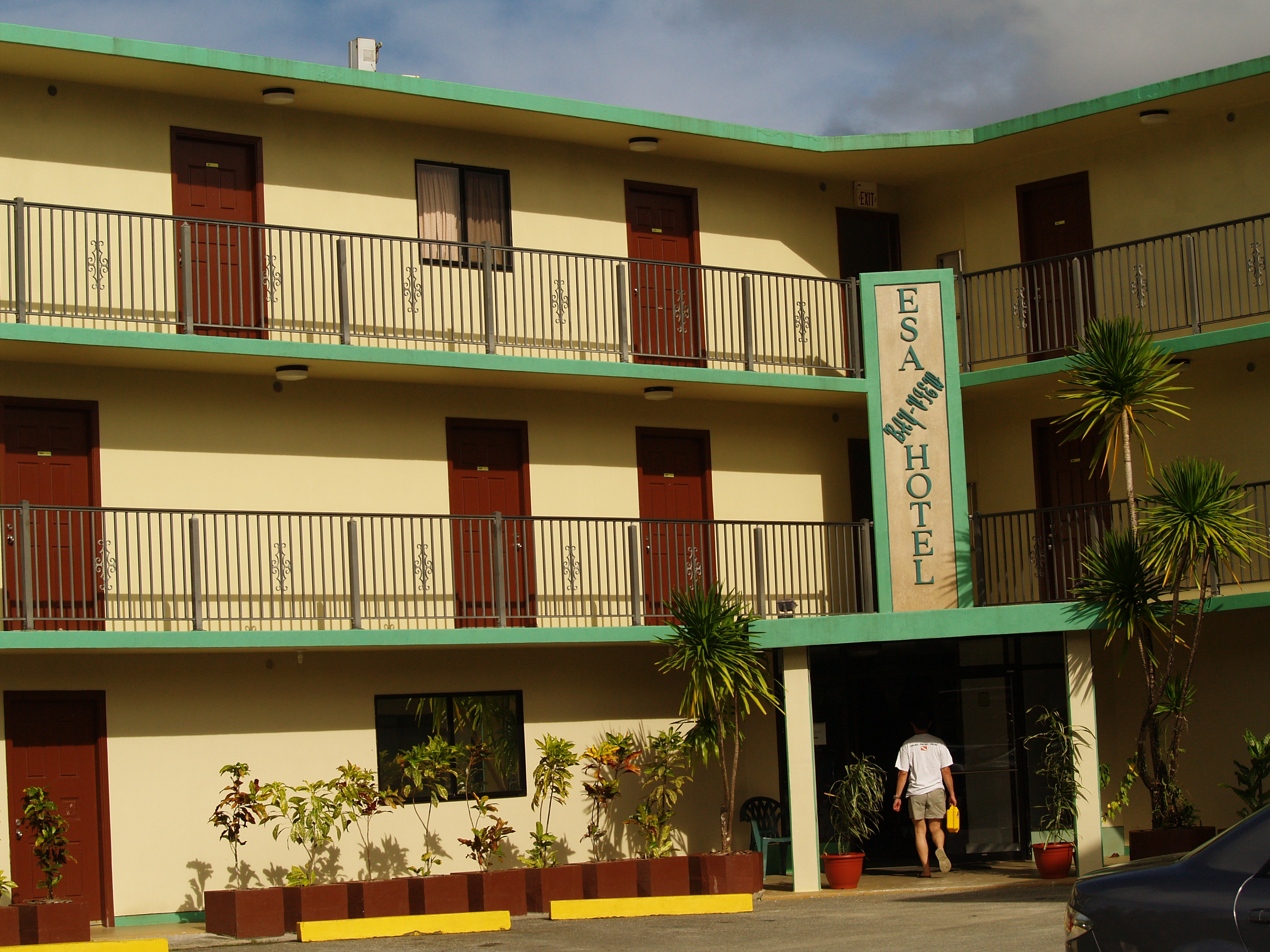
ESA Bayview Hotel – we stayed here. I know… it looks like a motel but REALLY the rooms are comfy and they have nice balcony overlooking the bay.
It was 3 AM (1 AM Manila time) when we arrived at a small, simple looking airport in Yap (looks like one of our small city airports back home). We were met by Dave, a soft-spoken, burly man who runs Beyond the Reef and who briefly advised us on pick-up times and what to dos for the next few days. We were tired but elated for what lies ahead. There were only a handful of us that got off the plane en route to Guam (so you think that it would be quick and easy getting through? We had to wait for one of our friend’s luggage as it did not get off the plane and was on its way to Guam… which they say is a normal thing — Yikes!). The 5,000 visitors last year were mostly divers. With a population of only 13,000, this sleepy town is known mostly for it’s marine life, more specifically for Manta Rays. Sightings are almost always a sure thing. And so we travelled a long and winding route to this Federated State of Micronesia hoping for some encounters with the Mantas. Because the flights do not connect, we had to stay the night in Palau both ways, which allowed us practically 2 days to kill. And killed we did by shopping till we dropped. Not that we don’t have those PX goods and those dive paraphernalia back home BUT um I rarely go shopping when I’m home. A lame excuse ya?
Not too hot…
divers weaving through
Of course we went to several dive sites but I have 2 favorites that I will rave about later. First, let me briefly acquaint you with some of the “not too hot” sites. Not that they’re a real disappointment but perhaps we just weren’t there at the right time. The first would be Yap Cavern, had fun weaving in and out (as it was my first time in a cavern) but kinda disappointing coz we missed the schools of jacks and the barracudas that usually hang out at the end of the cavern. What we had was a rare episode, I heard So I wouldn’t generalize this one experience. It still is a pretty site even without the schools. Next was Miil Channel and likewise a let down for us, as the Mantas were nowhere in sight, while the reviews raved of schools of Mantas (sometimes reaching up to 8 at a single sighting) when in season. We thought that we perhaps brought some bad luck with us? We found out after, that we were a month shy of the season. No wonder, no mantas! While Fanif looked like a ghost town underwater with just a smattering of reef sharks (am I spoiled or am I spoiled???),Magic Kingdom on the other hand boasts of beautiful coral beds — reminding me of Twin Rocks in Anilao but pales in comparison to my 2 favorites so hang in there, stay with me and read on.
Vertigo
sharkies lined up
School of sharks — black tips and gray reefs everywhere. Babies, teenagers, full growns, fat ones, thin ones– all sizes just below our boat. We didn’t even have to swim far. At one point, I counted 23 sharks. TWENTY THREE! It’s like watching a 3D movie with front row seats. Amazing!
We came back on our last day to cap off a great dive trip. Good visibility, no
currents, beautiful reefs, plenty of other fishes — sweet lips, surgeons, wrasse, etc. A no brainer. We just had to have our group shot here, and we did.
The second time around, I counted only 7 sharks wandering around but they were swimming so close, we could almost touch them. Well, that really isn’t a good thing, is it? But I’m still alive so I guess it can’t be such a bad thing. 🙂 Ok, there are some rules to be followed like stay on the reef, always face and never swim out to the blue (that’s the deep blue water where the sharks are). And for as long as you follow those rules, you’ll be okay. I got to see the sharks up close and personal. Love the black tips with white borders the most. A perfect finale indeed.
Valley of the Rays
swimming so low we could touch them if we stretch long enough
Love the name, and the rays love this place. It succinctly describes this place. Here, manta rays abound because here, planktons and remoras are aplenty. They come for the cleaning (from the remoras) and the feeding (the planktons). I think that is why it is called a cleaning station ya? Now I wonder if it is also called a feeding station? 🙂
For three days, our schedule looked like this… up by 6, breakfast at 7, on the boat by 8, and at “The Valley” by 9. The mantas are there early, we were told. And they were indeed. As soon as we approached the station, they were there, at least 2 if not 3 at a time (except for the first day when they appeared 7 minutes before I had to deco, read: I only had less than 7 minutes before I have to ascend, or else! hehe!). And they did not disappoint. These gentle giants with wingspan of approximately 10-12 feet wide, were swimming, gliding gracefully above us, in front of us, all around us. Sometimes playing hide and seek, sometimes posing for the camera, sometimes just watching us, hovering so close above us we had to stay close to the ground or risk getting hit. An experience hard to top, eh?
up close and personal
It’s Sooo Worth It!
an underwater group shot in Vertigo
We came to Yap primarily for the Mantas, and we got Mantas. E.V.E.R.Y.D.A.Y! The sharks were a a pleasant surprise and a bonus. Despite some disappointments, Yap in my opinion is money well spent. If Mantas are what you’re after, I recommend Yap. If you want to see more than just Mantas, Palau would be more practical where Mantas aren’t guaranteed but you’ll encounter a whole lot of pelagics. Best if you can do both. Close encounter with the Mantas (and sharkies). Check!
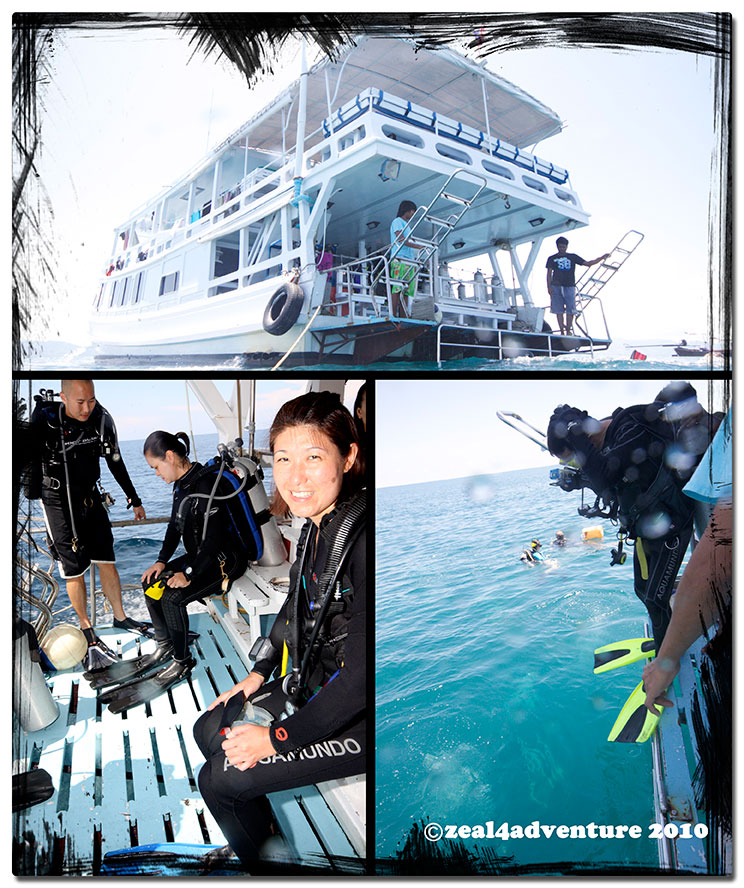 Clockwise: Me all set to go, MV Koon, a friend about to do the giant stride.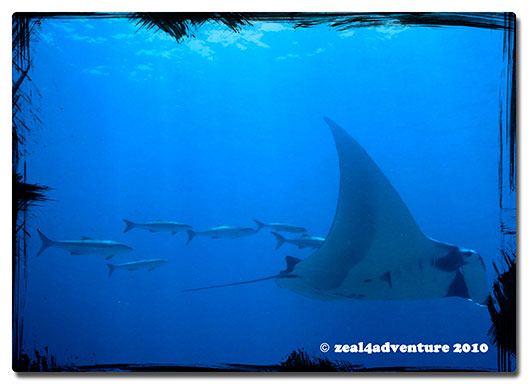

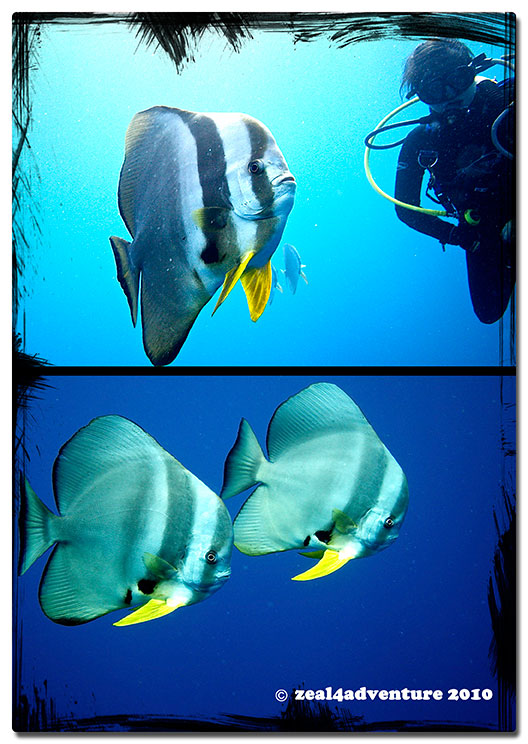 Huge Batfish
 Cuttlefish
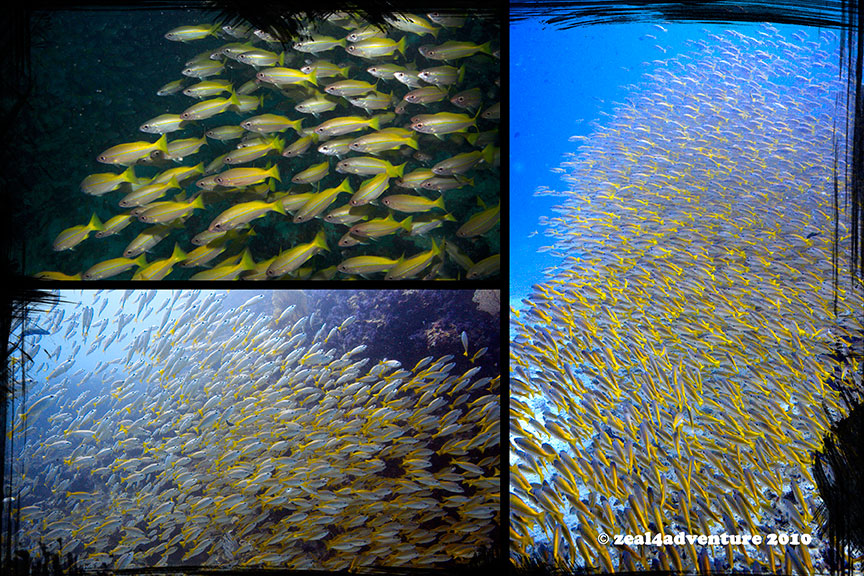 Yellow fusilier
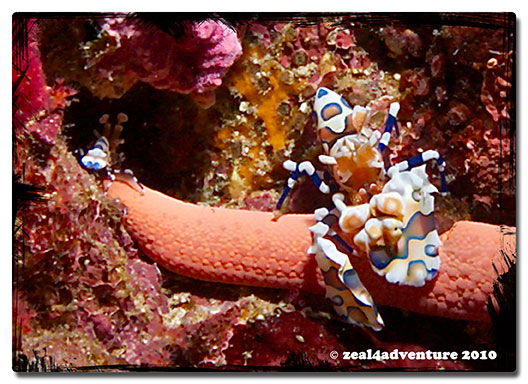 Harlequin Shrimp
 Lionfish
 Moray eel
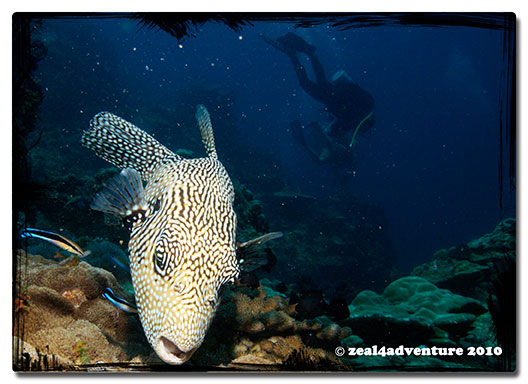 Puffer fish
 Seahorse
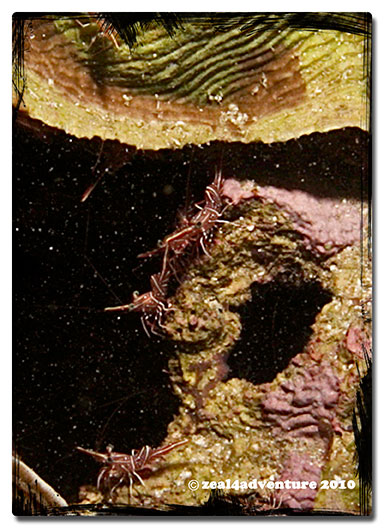 Shrimps
 This is either a squid or another octopus
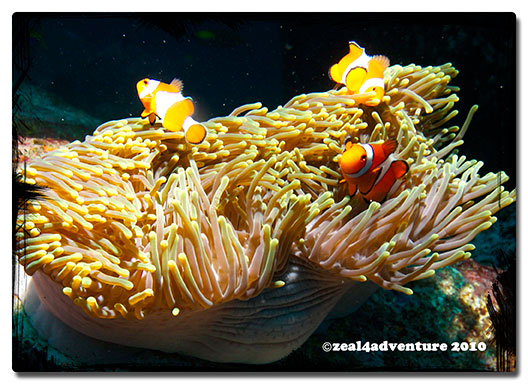 Tomato Clownfish
 Us, posing for the cam during a safety stop.














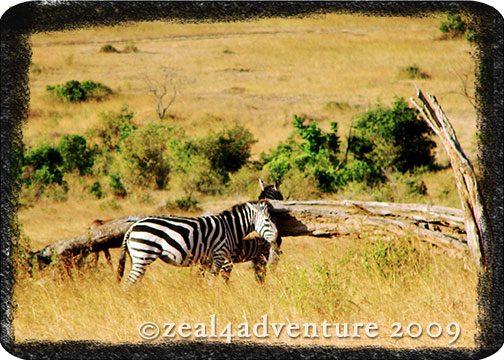 zebras

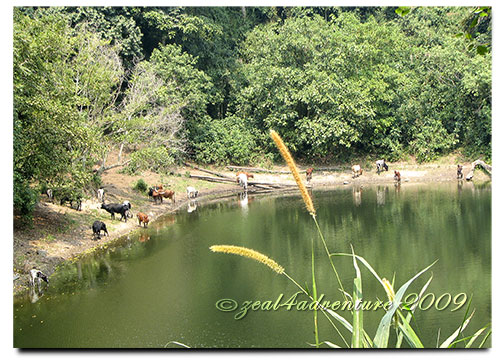
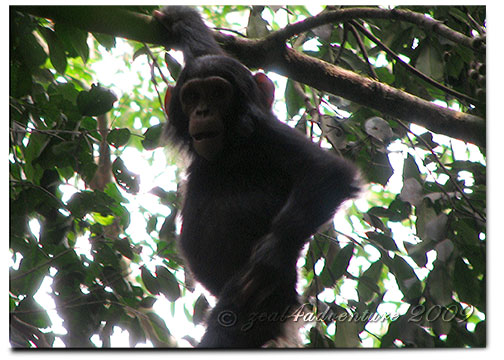


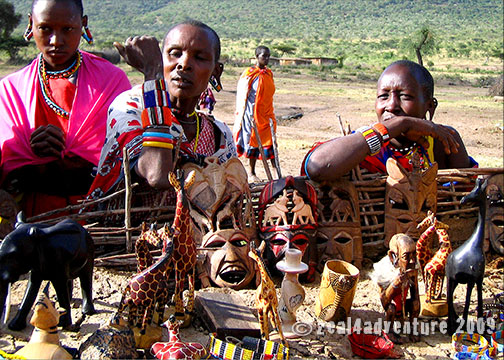











 my adventure odyssey