Alaska was a surprise. Didn’t think I’d enjoy it as much as I enjoyed it. It was a great choice of a destination for my “big trip” that I aim to do every couple of years. What an experience. We would like to think that we did pretty well even though we didn’t achieve all that we’ve set out to see and do. There were lakes, wildlife and activities that will have to wait till next time but I’m happy and whatever we saw beyond this point would be a real bonus. Guess what, we got that bonus.
Orcas. Yes the killer whale. As suggested by the lady from our hostel, we had a great chance of seeing orcas in Kenai Fjord.
So soon after we got ourselves settled, we were on a boat headed towards Kenai Fjord just 15 minutes from town.
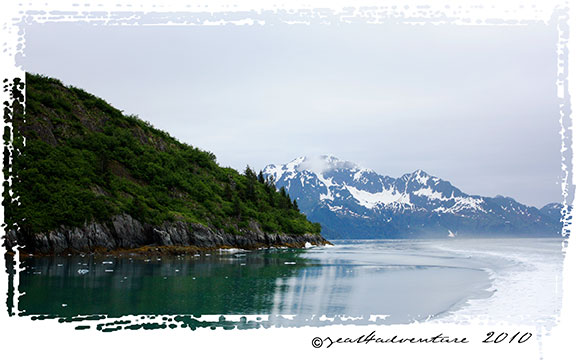
Not only does it have some of the most beautiful fjords and glaciers in Alaska, it also offers one of the best wildlife spectacles. Humpbacks and killer whales, sea otters, harbor seals, sea lions and puffins flock the park’s waters.
As promised, that boat ride never lacked wildlife sightings. It was a thrill to see tons of sea lions basking in the sun,
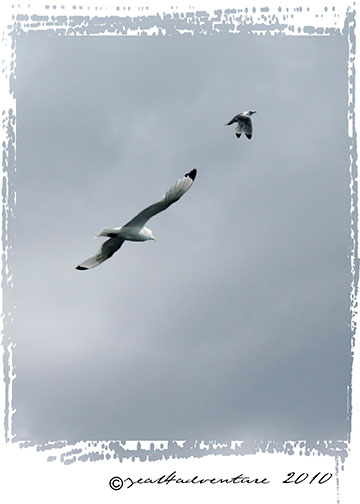
birds flying all around and of course,
breaching humpbacks that never cease to amaze.
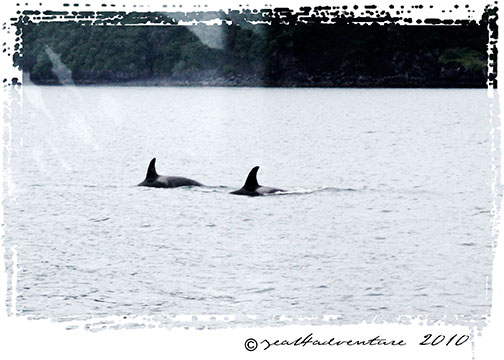
What capped it all however, were the orcas. It was “goosebump” awesome.
A perfect way to end an awesome trip. Well… ok, technically, we still had 2 more days in Alaska and a few more sights that are worth posting, but our Kenai Fjord experience has, without a doubt, left indelible memories.
Visit Scenic Sunday for more scenes from around the world.
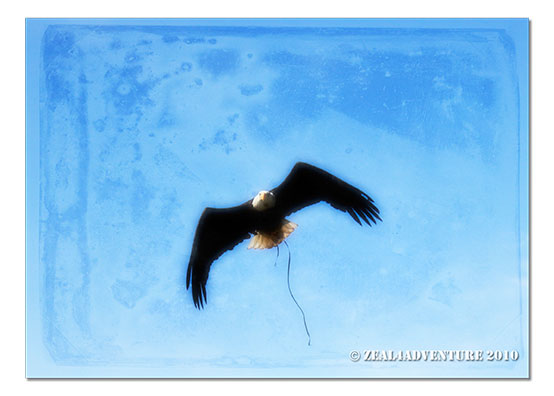
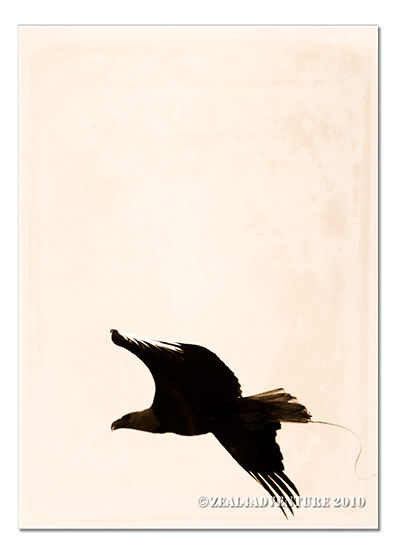
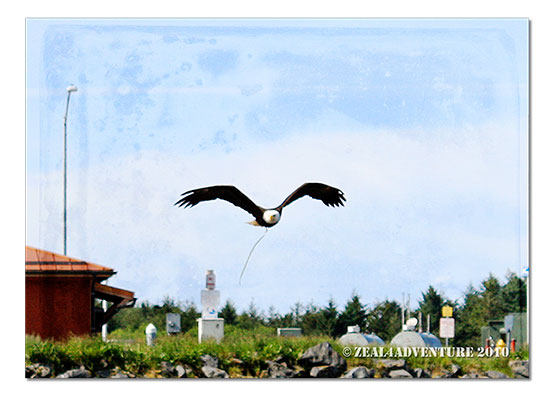
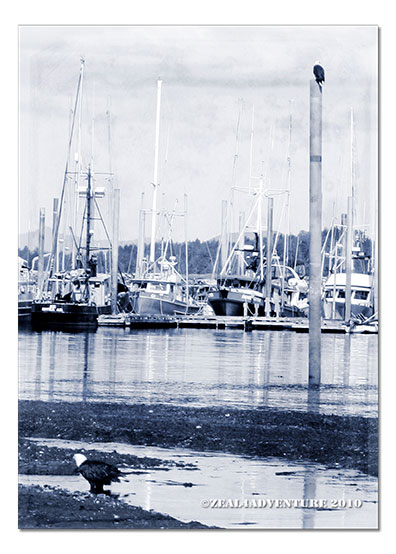
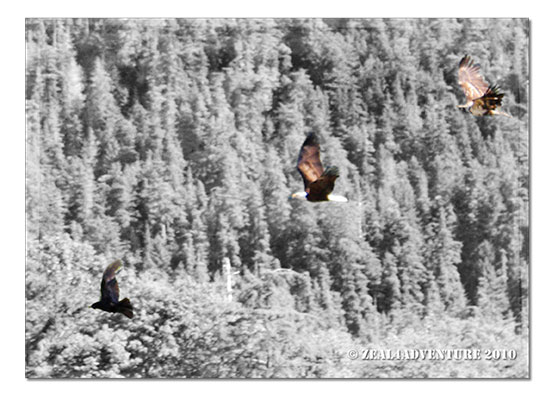
Bald Eagles have been the national bird of the U.S. since 1782. While they are still protected under federal law, the birds are no longer “endangered” and about half of the 70,000 live in Alaska. They are spotted year round but are especially abundant March through early July.
As the photos reveal, it was bald eagles galore for us that one day in June. They were perched atop poles, on the beach, in flight around the harbor waiting for spawning herrings to appear. They were spectacular.
For more scenes from across the globe, click here.
The best way to see Alaska’s wildlife is on the water, so we were told. We had a simple goal – to search for, view and learn about a variety of North America’s wildlife. We therefore plied the island-studded waters of Stephen’s Passage inside a warm, comfortable cabin on-board a water jet-powered catamaran, specially designed for wildlife viewing. Stephen’s Passage is renowned as a favored summer feeding ground for humpback whales. We decided to go for it in Juneau because the operators guaranteed whale sightings or a $100 refund. Sounds like a winning proposition to me. And whales we did see + some seals to boot.
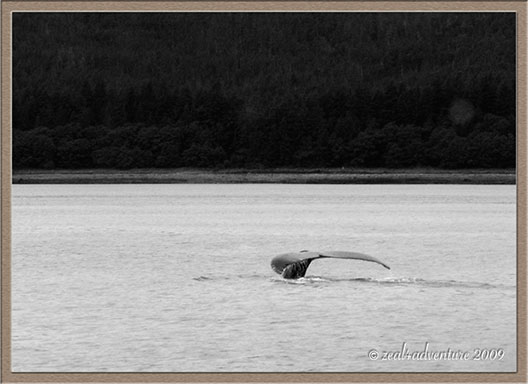
We saw graceful and magnificent whales tail lobbing – raising their flukes out of the water and then slapping it on the surface — blowing and perhaps even singing, a most interesting behavior of the whales, a naturalist on-board explains. I couldn’t hear because it was too cold and windy for me so I stayed indoors the whole time, taking photos through the large windows surrounding the whole cabin.
Behavior and Habitat
The naturalist explains further that humpbacks are a baleen whale and a rorqual whale that sings amazing songs, long and complex, which they believe is used for mating. They are acrobats of the ocean, breaching and slapping the water. They live in pods (a social group of whales) and these mammals travel a great distance to take advantage of the best breeding grounds and feeding spots. North Pacific humpbacks, for example, mate and give birth in Hawaii and then travel to Alaska each summer to feed.
Endangered
Humpbacks are among the most endangered whales and fewer than 10% of their original population remains. However in recent years, humpbacks have been observed more and more frequently feeding along the California coast.
Harbor Seals
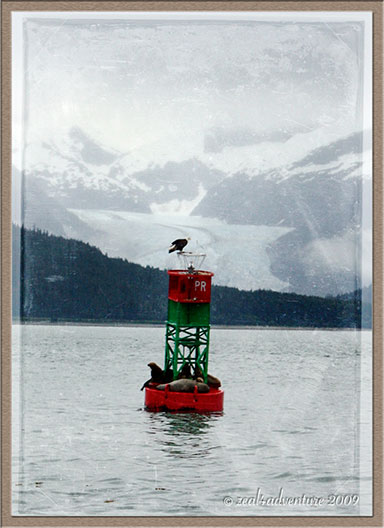
Normally hauling out on rocks, these seals seemed to be enjoying the rest on a buoy. They often swim quietly along the shore, their round, earless heads just breaking the surface. Seals depend on a thick layer of body fat for warmth. Their coat consists of coarse short hairs. Color varies from blond to nearly black, may are spotted and blotched.
Did you know…
Humpback whales can consume as much as a ton of krill and small fish per day in the summer?
Humpbacks migrate to the nutrient-rich waters of Southeast Alaska in the summer after having fasted all winter. This intensive feeding builds a thick layer of fat called blubber which stores the nourishment the whales will need in autumn when they return to the warm waters of Hawaii and Mexico to breed.
For more scenes from around the world, go to Scenic Sunday.
Since the mid 1970s, collisions between vehicles and large mammals on the Trans-Canada Highway (TCH) have been a concern of the parks in Canada. The construction of wildlife overpasses along the TCH began in the mid 1980s with the twinning of the highway from the east park entrance to the junction with the Bow Valley Parkway.
These bridge structures and various underpasses were installed at strategic locations in the park, providing safe passage to wildlife and hopefully minimizing traffic.
Banff National Park and its environs in Alberta are among the world’s best testing sites for innovation passageway to alleviate the effects of roads on wildlife. This has helped maintain large mammal populations for the past 25 years and has allowed the gathering of valuable data.
In the mid 1990s, research began to determine the effectiveness. Early results showed that the underpasses were very effective for elk, deer and coyotes, but that larger carnivores like wolves, cougars, black and grizzly bears were reluctant to use them. The overpasses were built as a result. Today, they are finding that many animals are beginning to adapt to the underpasses.
More on wildlife overpasses here and more sepia scenes here.
Wildlife. It was the major reason why we chose to go to Banff. It is home to a wide variety of wildlife. We were not disapointed.
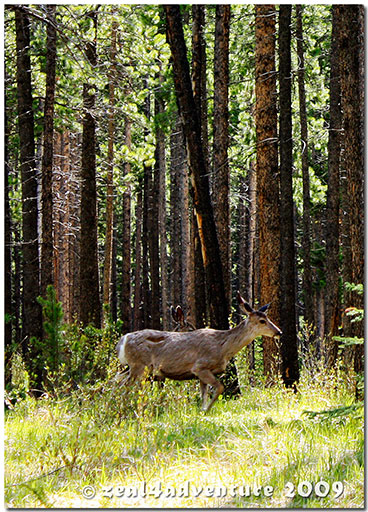
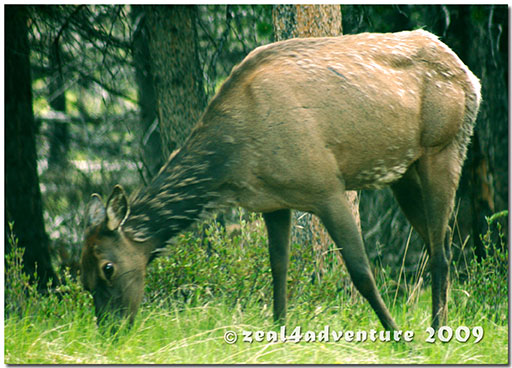
On our first day, we saw this deer an hour after we arrived at the park. We will soon come to realize that it is quite common to see them along the road. We however wanted to increase our chances to see bears and learn more about the animals of the National Park, and joining a guided tour was our best bet.
And so on the evening of our 3rd day, at a quarter past 6, we were seated comfortably on the bus, excited for what laid ahead. With enthusiasm, we listened to our guide talk about the habitats of the park and how Banff’s bear population is suffering in the hands of human, with trains being the single largest killer.
First sighting – a deer again and we have not left town yet. “They are common along the Bow Valley Parkway although their population is quite low now,” declared our guide. He appeared to be very knowledgeable but thanks to an Aussie in the group who had an incredibly keen eye. He spotted most of our sightings that evening. I was impressed.
“Because of the dwindling population, it is harder to spot bears nowadays. I will however try to bring you to where I think the bears will be.” assures our guide. He was either 1) really good 2) really lucky or 3) he was lying about the dwindling population. 😉 Halfway through the tour, we saw people out of their vehicles and on the road trying to get a glimpse or rather a good photo of
2 black bears (actually), a mom and her cub! First of all, you do not get out of your vehicle when you spot a wildlife, let alone a bear. “Believe me, you will not know what hit you when they pound on you” said our guide to the other group who were trying to inch closer to the bears. Well, pound they didn’t but retreat they did… luckily after Amanaged some shots (from inside the bus, of course). Money well spent. Grizzlies next… perhaps? 😉
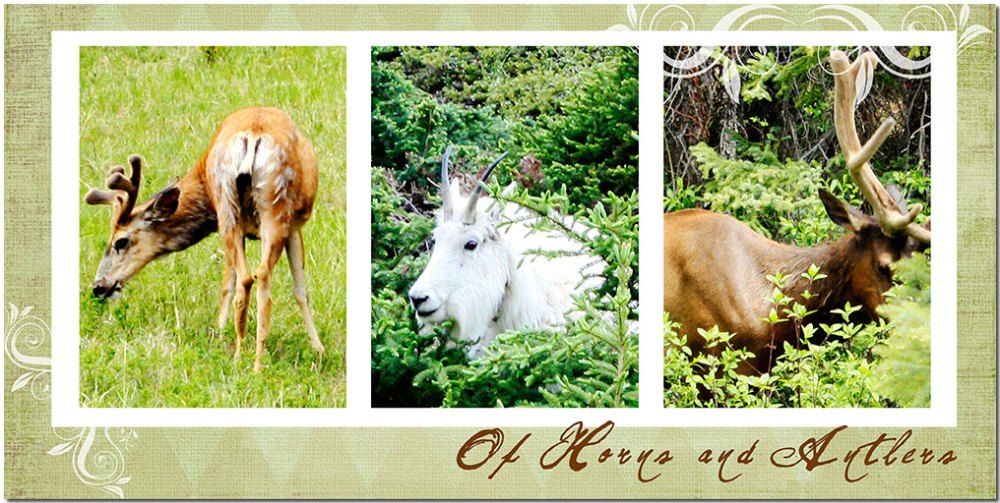
One not so lucky occasion was when we spotted a herd of mountain goats. With several cars behind us on a winding road, we had to sadly drive along. As we drove around the corner still watching the herd, it was even more painful to see them jumping off to the road. A rare sight and a perfect shot that was not to be. We were too far and they were too quick. A sight to behold nevertheless.
Other animals sighted around Banff – birds and small mammals included.
Squirrel.
They do have right of way!
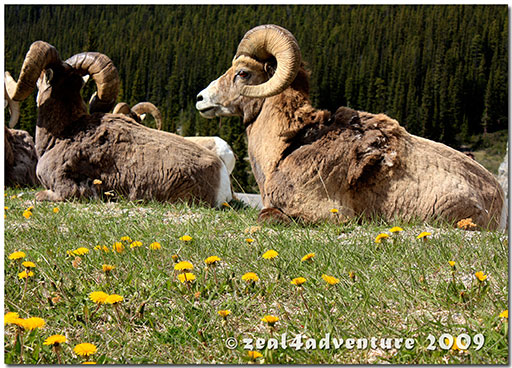
As we got closer to Jasper, the easier it was to spot wildlife along the road like these bighorn sheep relaxing by the roadside. Not so rare apparently. So excited, we forgot to stay in our car and was told by some concerned citizens on the danger of being so close to the animals. Shame on us but they were so inviting, not budging, posing for us. We eventually trekked back to our car… after we shot away. 😀
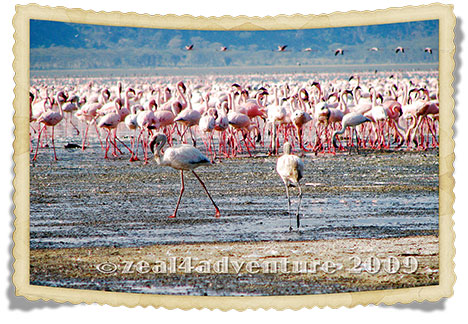
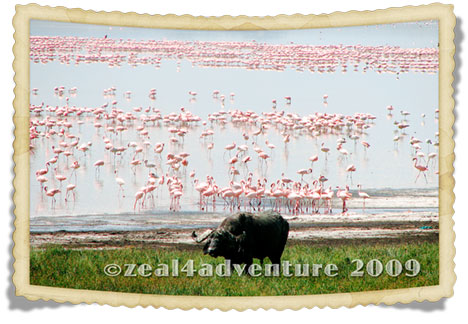
The lakeshores of Lake Nakuru literally turn pink as millions of flamingos feed on its highly alkaline lake, set in a picturesque landscape of acacia woodlands and grasslands next to Nakuru town.
dramatic entrance
A very shallow and strongly alkaline lake, it is world known as feeding grounds of both lesser and greater flamingos and one of my favorite parks in East Africa.
The main reason for establishing this national park was to protect its huge flocks of the lesser flamingos. Despite being the world’s most numerous flamingos, this bird is classified as near threatened due to its lack of suitable breeding site. Depended on rainfalls, the lake keep decreasing since 1997. The ecosystem is threatened by annual drought.
shallow to dry lake
The second most visited park in Kenya, this small park has been dubbed “the greatest bird spectacle on earth” when thousands of flamingos landed into the lake years ago. It has become a favorite destination for not only ornithologists but also bird and wildlife enthusiasts. And the flamingos are definitely the reason to be in Nakuru!
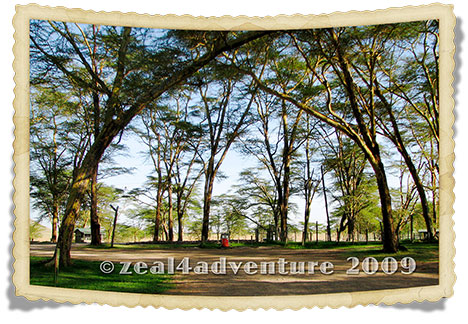
Lake Nakuru National Park is situated approximately 2-hour drive away from Nairobi. A gentle, billowing terrain with open bush and woodlands dominates it. It is also one of the saline lake systems lying in the Great Rift Valley.
enroute to Nakuru
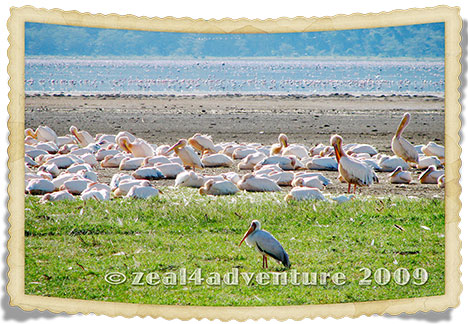
Famous for its abundant birdlife…
Pelicans
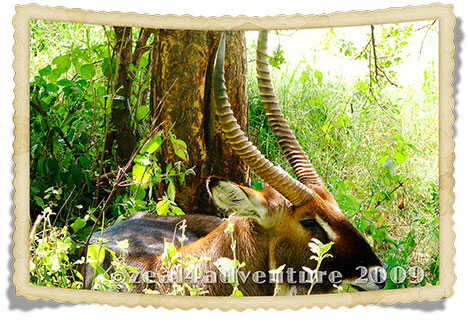
Lake Naukuru also has waterbucks, impalas, and hippopotamus.
waterbuck
Game viewing is relatively easy: buffalos, leopard, lions, and the endangered Rothschild’s giraffe…
cape buffalo and the flamingos as its backdrop
not a Rothschild’s giraffe
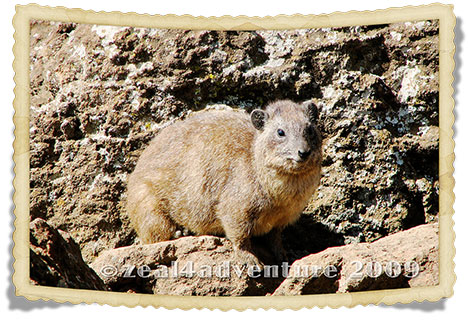
the bushlands offers eland, steenbok, impala, while the hyrax occupies the cliffs.
hyrax
And speaking of cliffs, the best view of the lake is from Baboon cliff.
view from the top
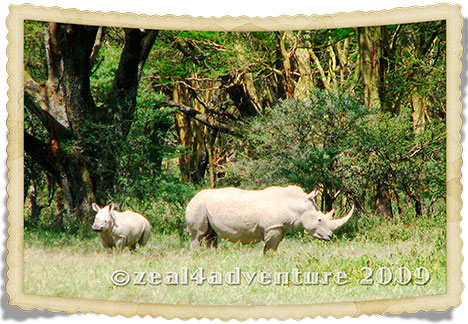
Lake Nakuru is also home to the Kenya Rhino Conservation Project and therefore an excellent place to see rhinos. The woodland and forest are now home to both black and white rhino. Following the ravages of poaching, in the late 80’s, only 2 black rhinos remained. Creating a rhino sanctuary within the park and reintroducing a breeding herd have recognized the park internationally as an important conservation area.
white rhinos
Lake Nakuru… not to be missed when in Kenya. It was definitely one of the of the highlights of my African adventure!
Credits: Digital Couture Chipwglit Alphas, KPertiet Vintage text paper.
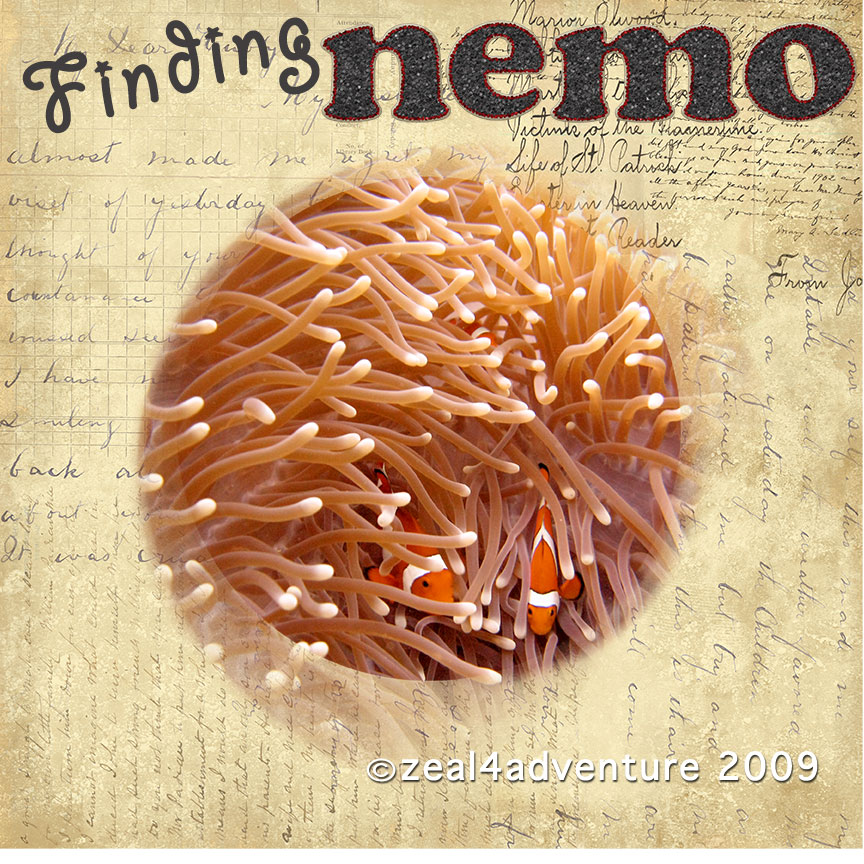
It’s summertime… yes it’s time to go diving again… and yes, that’s Nemo!
Nemo in the real (sea) world is called a clownfish. They are a type of fish that lives in saltwater habitats. It is also called an Anemone fish. That bed of soft tentacles that sort of make up their home is called a Sea Anemone. Clownfish live in a symbiotic relationship with certain sea anemones. This means they benefit from living with the sea anemone, and the sea anemone benefits from the presence of the clownfish. In the ocean, the clownfish are protected from predator fish by the stinging tentacles of the anemone, while the anemone receives protection from polyp-eating fish, which the clownfish chases away.
Clownfish have a few ocean predators, but their greatest threat is humans. People who catch clownfish and keep them as pets in aquariums are making a mistake. There are only ten out of more than one thousand types of anemone that are able to host these fish. Many people put the fish in a tank with the wrong anemone. In captivity, the clownfish can live from 3 to 5 years. In the wild, they live 6 to 10 years.
Clown fish live in sheltered reefs or in shallow lagoons, usually in pairs. They live in warmer waters of the Pacific Ocean and Indian Ocean including the Philippines where this shot was taken, specifically in Anilao, Batangas.
Anilao, just 3-4 hours from Manila is a popular dive spot known worldwide. The waters abound in marine life, corals and amazing diversity of fishes. Because of its proximity, it has become one of my favorite weekend getaway.
I hope you had as great a weekend as I had! Have a splendid week ahead! 🙂
It was 3 AM (1 AM Manila time) when we arrived at a small, simple looking airport in Yap (looks like one of our small city airports back home). We were met by Dave, a soft-spoken, burly man who runs Beyond the Reef and who briefly advised us on pick-up times and what to dos for the next few days. We were tired but elated for what lies ahead. There were only a handful of us that got off the plane en route to Guam (so you think that it would be quick and easy getting through? We had to wait for one of our friend’s luggage as it did not get off the plane and was on its way to Guam… which they say is a normal thing — Yikes!). The 5,000 visitors last year were mostly divers. With a population of only 13,000, this sleepy town is known mostly for it’s marine life, more specifically for Manta Rays. Sightings are almost always a sure thing. And so we travelled a long and winding route to this Federated State of Micronesia hoping for some encounters with the Mantas. Because the flights do not connect, we had to stay the night in Palau both ways, which allowed us practically 2 days to kill. And killed we did by shopping till we dropped. Not that we don’t have those PX goods and those dive paraphernalia back home BUT um I rarely go shopping when I’m home. A lame excuse ya?
Not too hot…
divers weaving through
Of course we went to several dive sites but I have 2 favorites that I will rave about later. First, let me briefly acquaint you with some of the “not too hot” sites. Not that they’re a real disappointment but perhaps we just weren’t there at the right time. The first would be Yap Cavern, had fun weaving in and out (as it was my first time in a cavern) but kinda disappointing coz we missed the schools of jacks and the barracudas that usually hang out at the end of the cavern. What we had was a rare episode, I heard So I wouldn’t generalize this one experience. It still is a pretty site even without the schools. Next was Miil Channel and likewise a let down for us, as the Mantas were nowhere in sight, while the reviews raved of schools of Mantas (sometimes reaching up to 8 at a single sighting) when in season. We thought that we perhaps brought some bad luck with us? We found out after, that we were a month shy of the season. No wonder, no mantas! While Fanif looked like a ghost town underwater with just a smattering of reef sharks (am I spoiled or am I spoiled???),Magic Kingdom on the other hand boasts of beautiful coral beds — reminding me of Twin Rocks in Anilao but pales in comparison to my 2 favorites so hang in there, stay with me and read on.
Vertigo
sharkies lined up
School of sharks — black tips and gray reefs everywhere. Babies, teenagers, full growns, fat ones, thin ones– all sizes just below our boat. We didn’t even have to swim far. At one point, I counted 23 sharks. TWENTY THREE! It’s like watching a 3D movie with front row seats. Amazing!
We came back on our last day to cap off a great dive trip. Good visibility, no
currents, beautiful reefs, plenty of other fishes — sweet lips, surgeons, wrasse, etc. A no brainer. We just had to have our group shot here, and we did.
The second time around, I counted only 7 sharks wandering around but they were swimming so close, we could almost touch them. Well, that really isn’t a good thing, is it? But I’m still alive so I guess it can’t be such a bad thing. 🙂 Ok, there are some rules to be followed like stay on the reef, always face and never swim out to the blue (that’s the deep blue water where the sharks are). And for as long as you follow those rules, you’ll be okay. I got to see the sharks up close and personal. Love the black tips with white borders the most. A perfect finale indeed.
Valley of the Rays
swimming so low we could touch them if we stretch long enough
Love the name, and the rays love this place. It succinctly describes this place. Here, manta rays abound because here, planktons and remoras are aplenty. They come for the cleaning (from the remoras) and the feeding (the planktons). I think that is why it is called a cleaning station ya? Now I wonder if it is also called a feeding station? 🙂
For three days, our schedule looked like this… up by 6, breakfast at 7, on the boat by 8, and at “The Valley” by 9. The mantas are there early, we were told. And they were indeed. As soon as we approached the station, they were there, at least 2 if not 3 at a time (except for the first day when they appeared 7 minutes before I had to deco, read: I only had less than 7 minutes before I have to ascend, or else! hehe!). And they did not disappoint. These gentle giants with wingspan of approximately 10-12 feet wide, were swimming, gliding gracefully above us, in front of us, all around us. Sometimes playing hide and seek, sometimes posing for the camera, sometimes just watching us, hovering so close above us we had to stay close to the ground or risk getting hit. An experience hard to top, eh?
up close and personal
It’s Sooo Worth It!
an underwater group shot in Vertigo
We came to Yap primarily for the Mantas, and we got Mantas. E.V.E.R.Y.D.A.Y! The sharks were a a pleasant surprise and a bonus. Despite some disappointments, Yap in my opinion is money well spent. If Mantas are what you’re after, I recommend Yap. If you want to see more than just Mantas, Palau would be more practical where Mantas aren’t guaranteed but you’ll encounter a whole lot of pelagics. Best if you can do both. Close encounter with the Mantas (and sharkies). Check!






























 my adventure odyssey