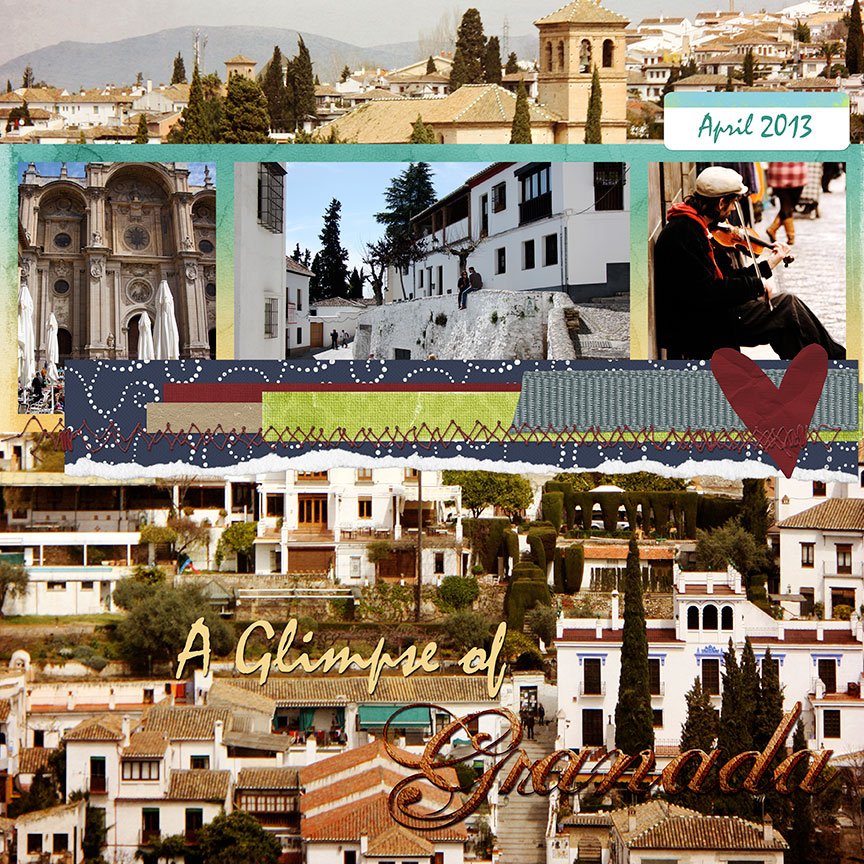
A Glimpse of Granada

Glimpse-of-GranadaCredits: Papers by Scrapmuss Design; label and border element by Splendid Fiins; Suede Alpha by MissBhaving
Outside of (the little I know of) the Alhambra, I know close to nothing about Granada. After all, I didn’t plan to venture out this far from Seville. So expectation was kept to a minimum.
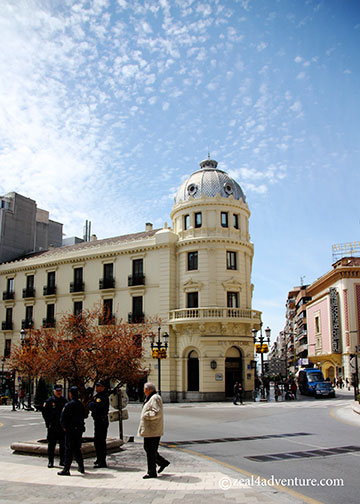
calle-puerta-realThe NH Hotel at Puerta Real, the crossroad of the city’s shopping zone.
Crossing Calle Puerto Real on our way to lunch, the beautiful bourgeois architecture instantly left an impression.
desolate

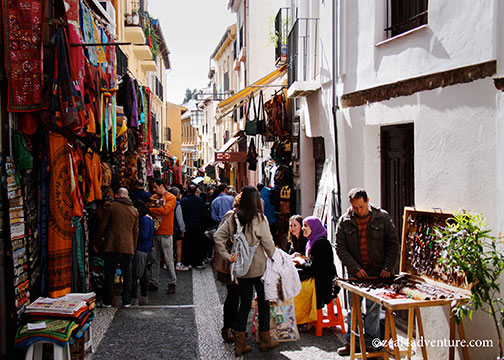
Although we passed some streets that seemed desolate, we soon found ourselves in the heart of the city where the Cathedral and the Alcaiceria, the Moorish Silk market of way back, impressed once more.
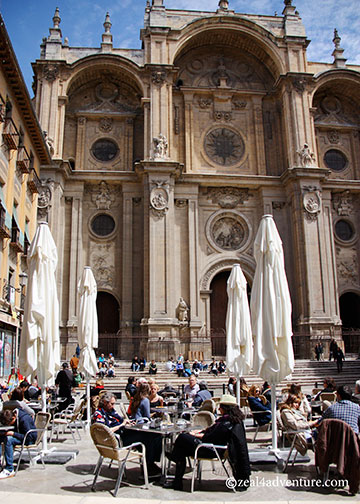
cathedral

Lunch, arranged by the Noval brothers (our guide and driver), was at the Restaurante Sevilla—a stone throw away from the Cathedral, at the fringe of the Alcaiceria.
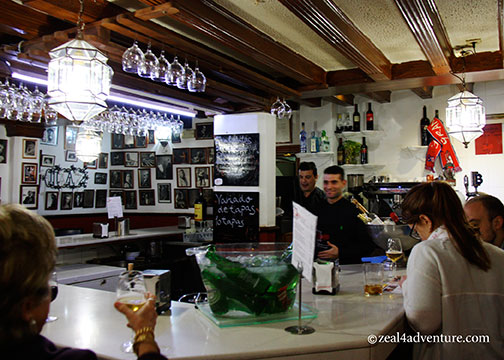
restaurante-sevilla

In a small, old style Spanish bar, we were served yet another excellent meal of tapas.
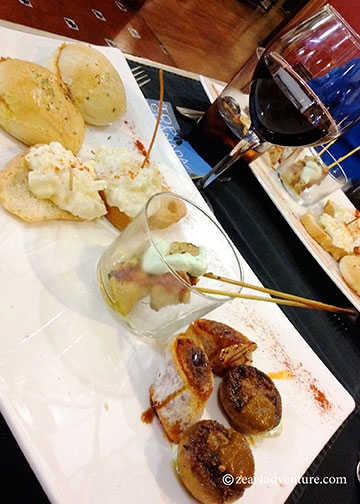
tapas

Quite in keeping with the cuisine’s good repute. Andalusian cuisine has yet to disappoint.

The best way to experience the city’s old yet vibrant center is to walk it.
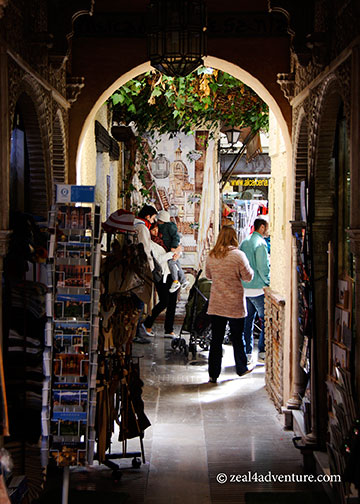
Alcaiceria

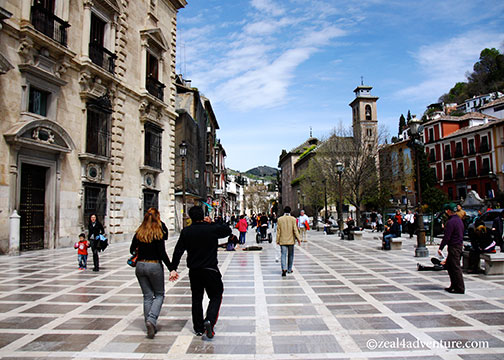
So after that fulfilling lunch, we inched our way out of the Alcaiceria to the busy Plaza Nueva, which despite the name, is the oldest square.
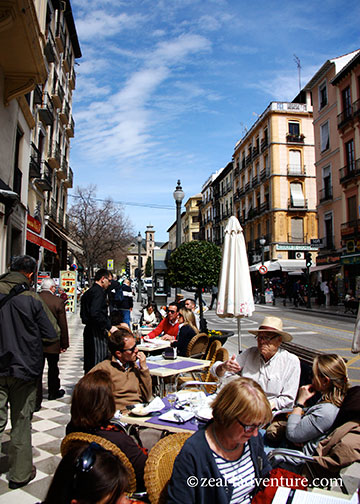
busy-plaza-nueva

Lively cafes and bars, along with Moorish and Renaissance monuments and landmarks scatter around here.

A short distance on the east, right where the Carrera de Darro begins, the Rio Darro emerges from underground.
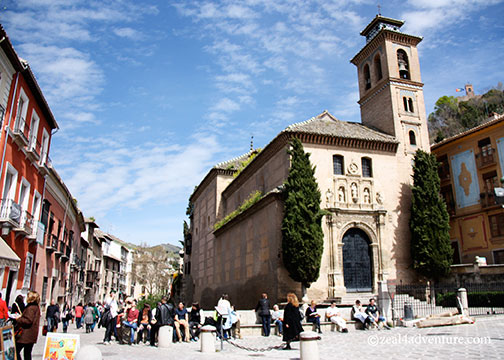
Iglesia-de-San-Gil-y-Santa-Ana

Here too lies one of the best remaining churches of Mudejar architecture, the 16th century Iglesia de San Gil y Santa Ana.
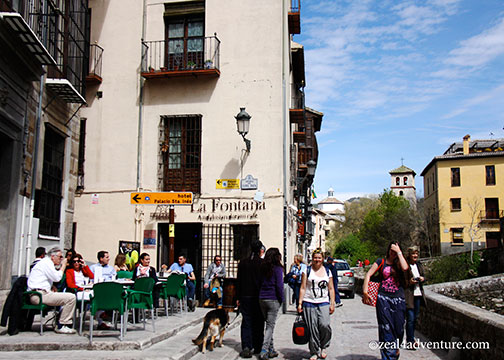
cafes-along-carrera-del-darro

It was strolling along the Carrera de Darro that Granada called to me. “One day,” I told Anton, “we will sit and absorb the pulse of the city in one of these cafes.”

artists

To assimilate with the carefree students and free-spirited artists that fill the streets for even just a few days would be pretty cool.

Follow the river and you will come across Paseo de los Tristes.
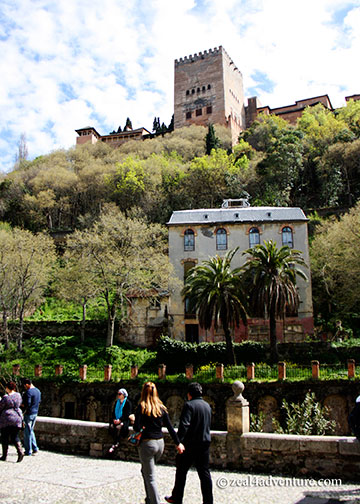
Alhambra

A picturesque street with a river running along it, the Alhambra keeping watch from atop.

Granada has an unmistakable Moorish soul, most likely because it was the last city to be reconquered by the Catholic Monarchs.
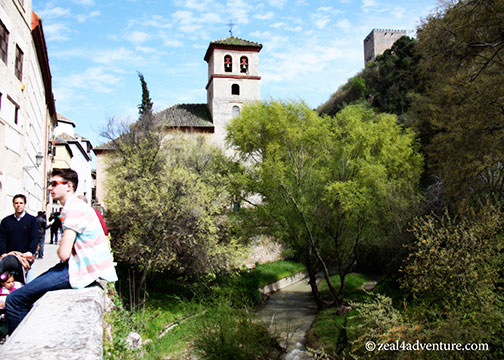
darro-river

Lying at the confluence of 4 rivers—the Beiro, Darro, Genil, and the Monachit, separated by the gorge of the Rio Darro. The city is set between 2 outlying hills, the Alhambra hill on the south and the Albaicin, on the north.

Albaicin, a UNESCO World Heritage site, is the old Moorish quarter of Granada.
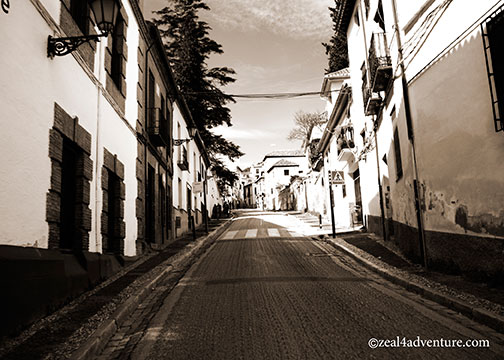
cobbled-streets

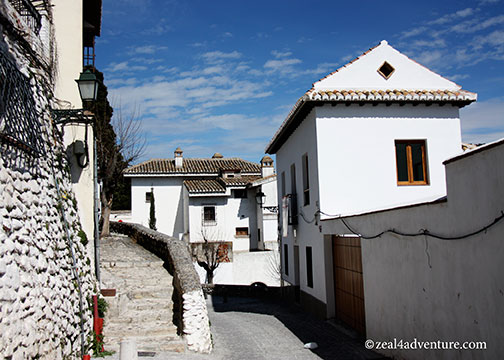
Walking through its narrow and winding cobbled streets will take you back over 1500 years. It holds a vast amount of Granada’s historic buildings and plazas.
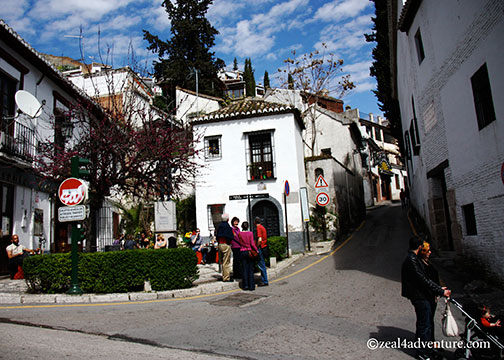
residential-district

Although a residential district on the whole, it is host to many restaurants, bars as well as guesthouses oozing with classic Andalusian charm.
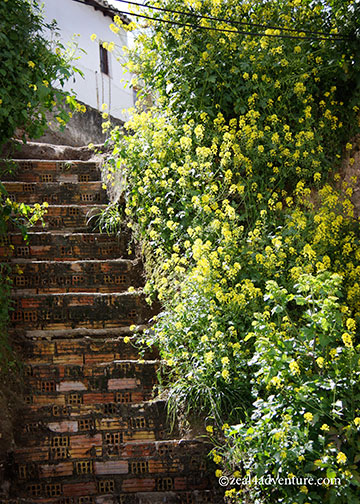
andalusian-charm

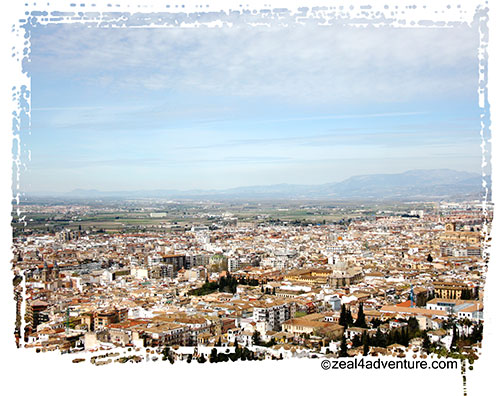
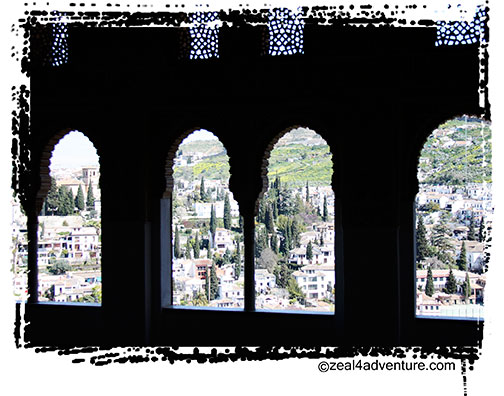
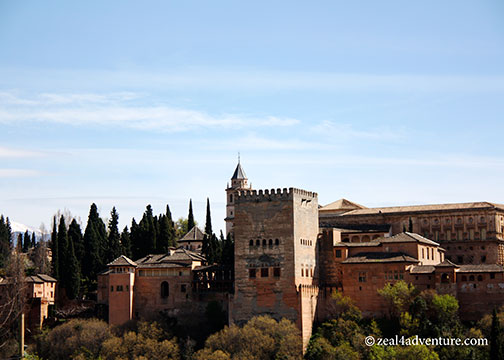
Above all, this beautiful residential neighborhood delivers some incredible view of the Alhambra and much of the city.
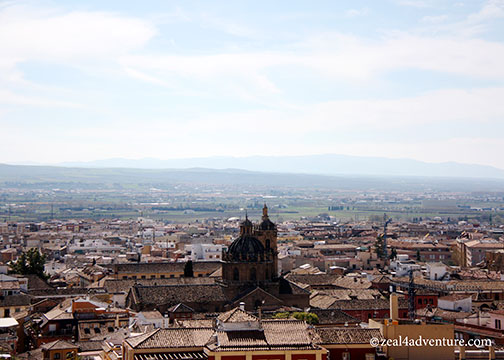
view-of-the-city-from-AlbaicinView of the city from Albaicin
alhambra-from-albaicinAlhambra from Albaicin

More of Granada through my lens:

albaicin-restaurantsA Plaza in Albaicin
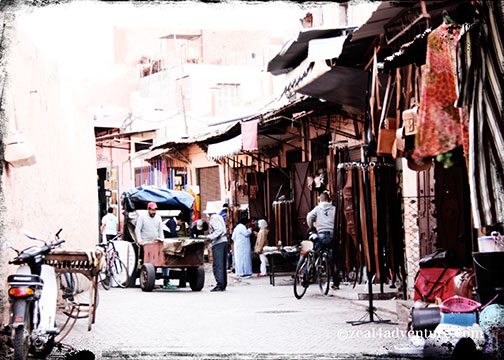
calle-caldereria-nuevaCalle Calderreria Nueva–a narrow street close to Plaza Nueva, holding tourist shops, a few restaurant and a few merchants typical of the old Moorish quarter.  Not quite similar but oftentimes referred to the medina found in Morocco.
carmen-es-2The Carmen es—rows of beautiful houses—line the streets of Albaicin.
real-chancilleriaThe Real Chancilleria at Plaza Nueva
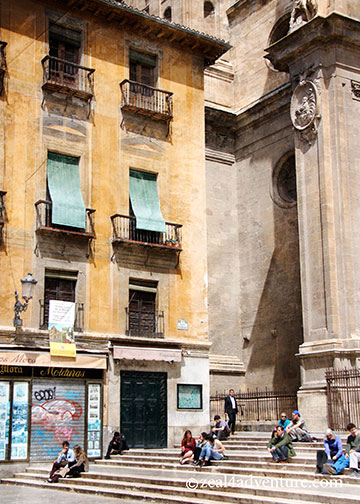
cathedral-surroundingsSteps of the Cathedral where people hang out
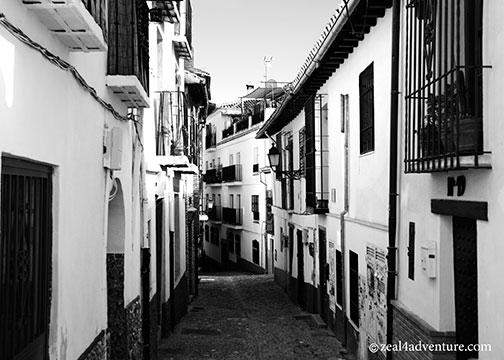
narrow-streetsNarrow streets of Albaicin
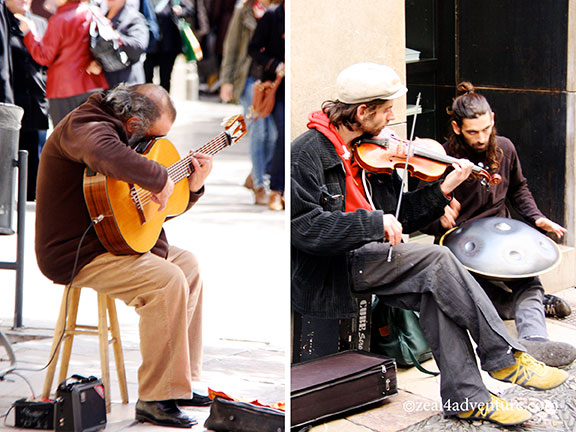
musiciansMusicians found in every corner — Alcaiceria
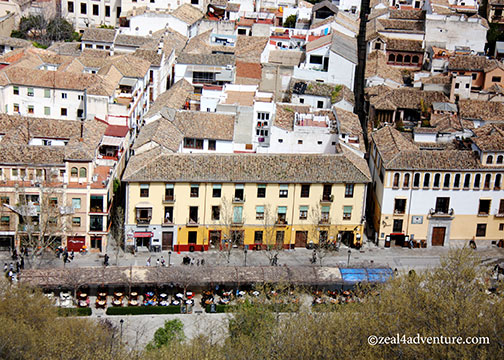
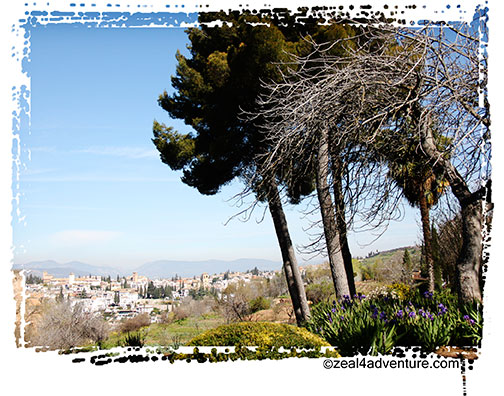
GranadaA glimpse of the city from the Alhambra

Useful Info:

Restaurante Seville
Calle Oficios, 12
+34 958 221 223

La Alhambra

We didn’t plan this, going to Granada that is. I was thinking Cordoba because it is closer to Seville. And of course, the beautiful Mezquita de Cordoba tickled my fancy. In Cadiz, however, our host was bewildered that we weren’t going to Granada and urged us to take a trip there. Curiosity got the better of us and the Mezquita will have to wait.

pic-3

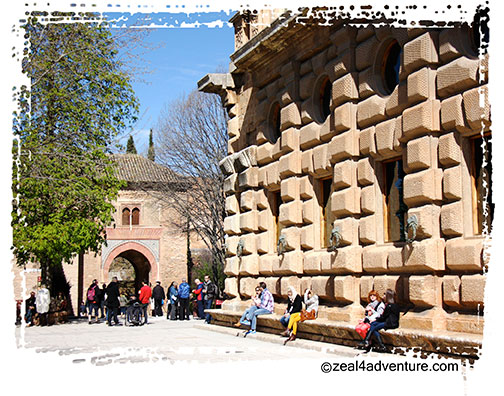
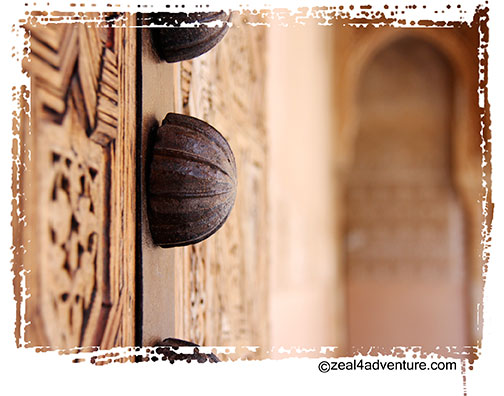
So what is there in Granada that captivated the hearts of even its own? It was the pride in their faces that convinced me to change plans. La Alhambra, the most renowned building of the Andalusian Islamic historical legacy, is in Granada, and this Moorish citadel and palace is one big reason behind the region’s appeal.

pic-1

The private tour we booked included tickets to this UNESCO World Heritage Site. They say that when in Granada, you cannot miss the grand Alhambra because it is a city, a fortress and a palace all in one site.

overlooking-the-modern-Ganada

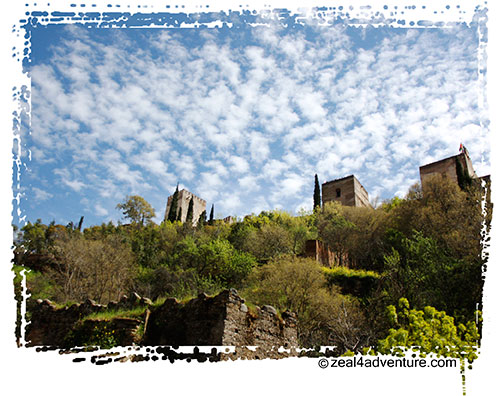
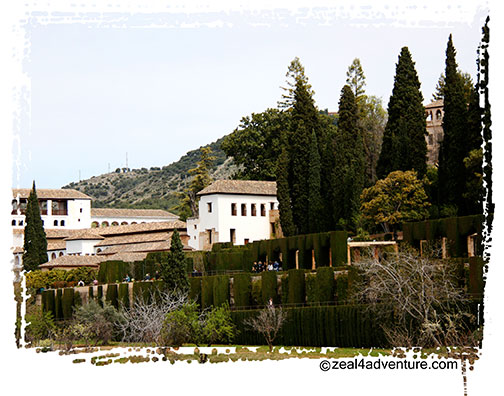
On a hill overlooking the modern lower town, the Alhambra (consisting of three parts—the Nasrid Palace, the Alcazaba and the Generalife) snake around the Sabika hill.

Alhambra

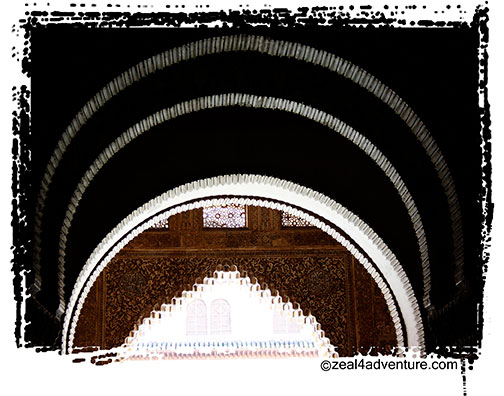
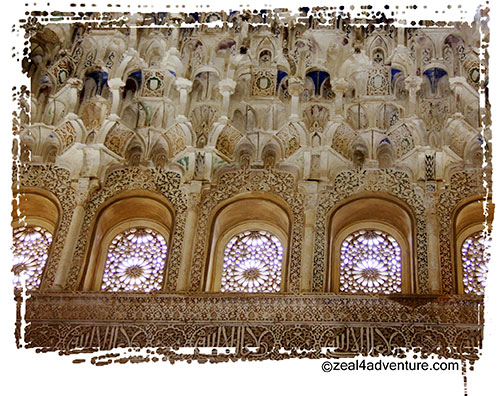
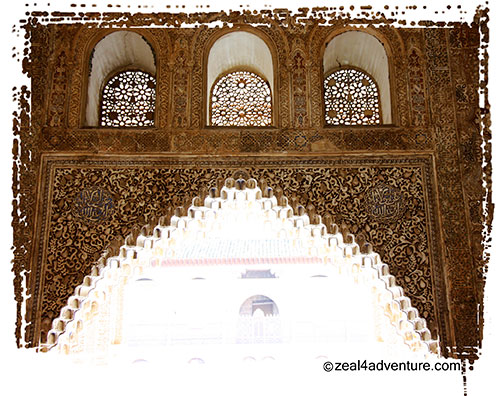
It is the pinnacle of Moorish Art that captured well the Muslim Spain. One of the great architecture sights of Europe, it is an outstanding example of royal Arab residences of the medieval period.

pic-12

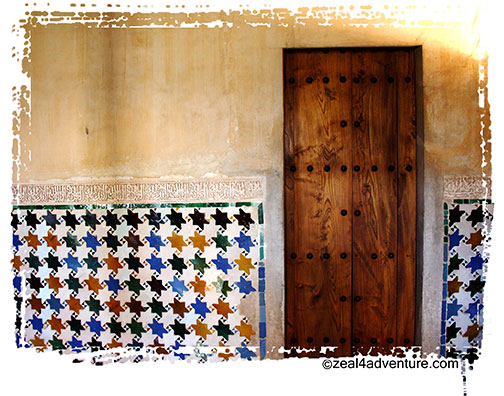
A series of courtyards surrounded by rooms present a varied repertoire of Moorish arched columns, fountains, and light reflecting water basins.

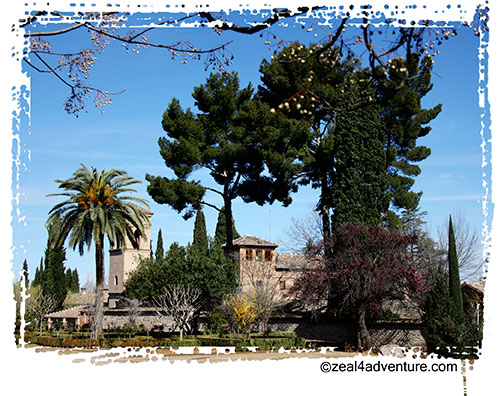
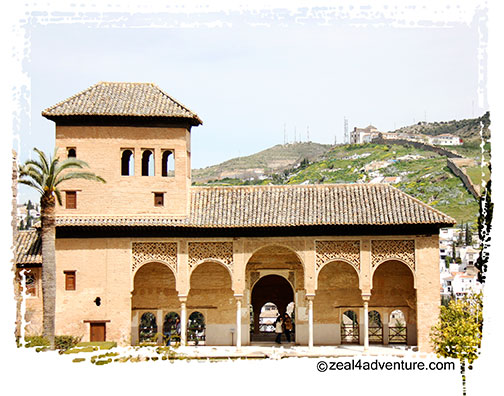
pic-16-partal-palaceThe Partal Palace

Here’s more captures… the details, the grandeur, the lushness– a great source of pride indeed.

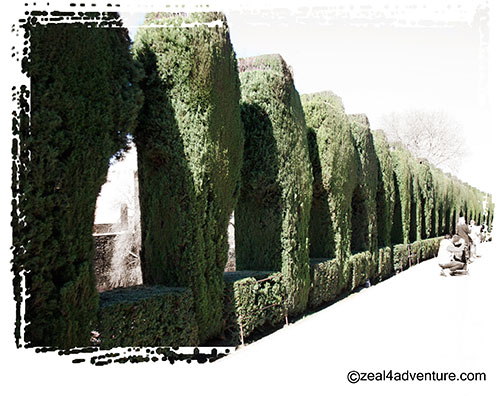
pic-2The tall hedges of the Generalife Garden.

pic-4 pic-5

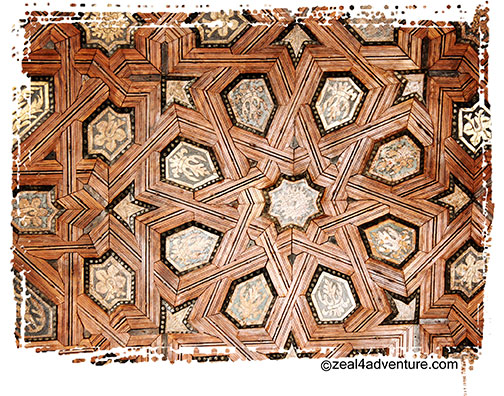
pic-6-ceiling-designCeiling Design

pic-7 pic-8 pic-9 pic-10   pic-11   pic-13

pic-14The garden of the Nasrid Palace
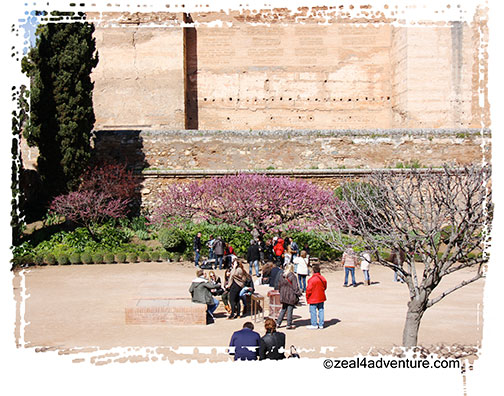
pic-15The facade of the Alcazaba, the battlements


Useful Info

The Nasrid Palace is booked by time and date, and visitors must be mindful of the time stated on their tickets. There is always a queue so make sure not to be late or you might not get in.

La Alhambra
Calle Real de la Alhambra
+34 958 027 971

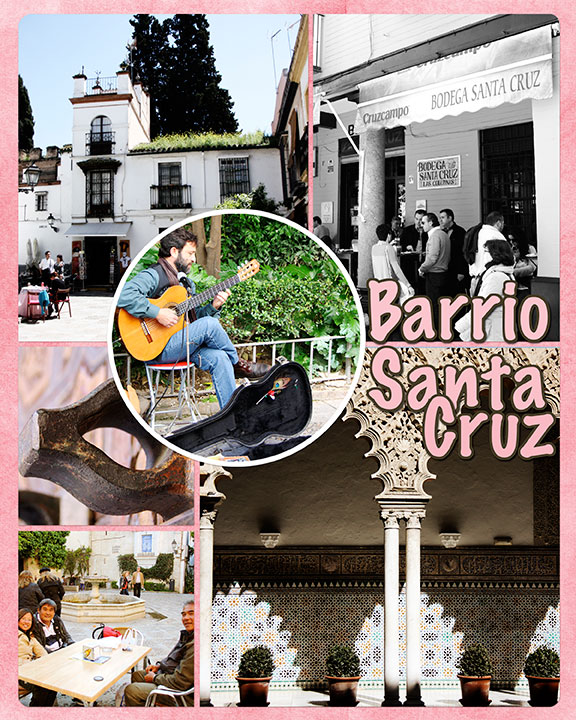
The Alcazar and Barrio Santa Cruz

CollageCredits:  Template by J Sprague Photo collage; Paper by Scrapmuss Designs

After a night of soulful music and dancing, elated from the cultural assimilation, we were back on the street the next day for more. The Santa Cruz district, also known as Barrio Santa Cruz, the old Jewish quarters, is just a hop away from our hostel.

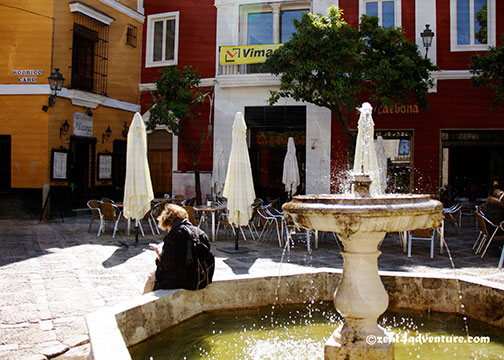
Best known for its small plazas—Plaza de Santa Cruz, Plaza de los Venerables,

plaza-alianzaPlaza Alianza
plaza dona elviraPlaza Dona Elvira

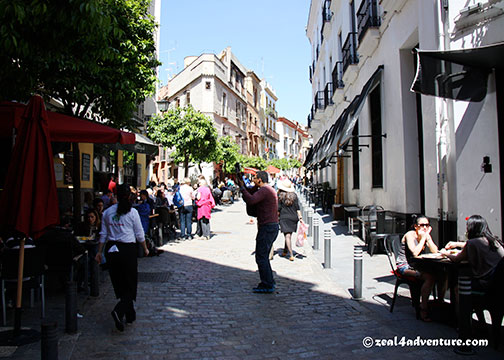
Plaza Alianza, Plaza de Dona Elvira among others—hidden around the lively labyrinth of narrow streets and alleys awash with shops not only of touristy souvenirs

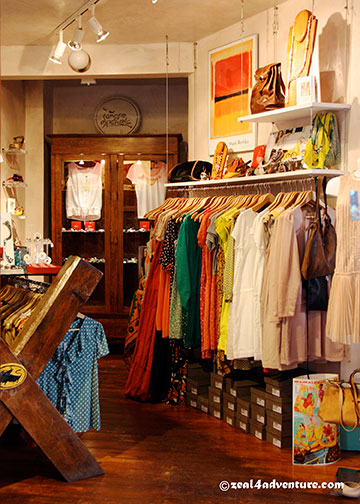
shopSangre Espanola–burnt my MC here.

and bars indulged too by locals,

bars

it is a natural gathering of visitors and the community alike. Picturesque lime-washed houses added to its charm.

And in this district stands 3 UNESCO World Heritage sites:

cathedral-from-triunfoThe Cathedral from Plaza del Triunfo

the Cathedral and its Giralda, the Archivo de Indias (which we failed to enter), and the Alcazar.

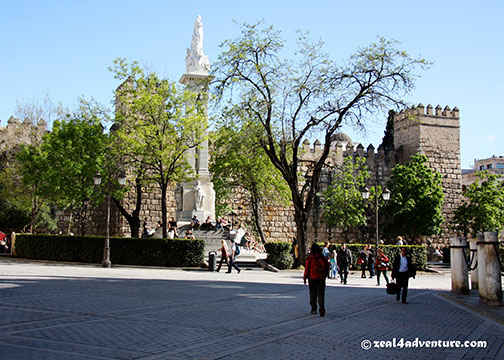
On the southeast side of the Plaza del Triunfo stands the Real Alcazar, supposedly the oldest European palace still in use.

alcazr-from-triunfoThe Alcazar from Plaza del Triunfo

Walking through the Alcazar is like walking through the history of Seville.

alcazar-collage

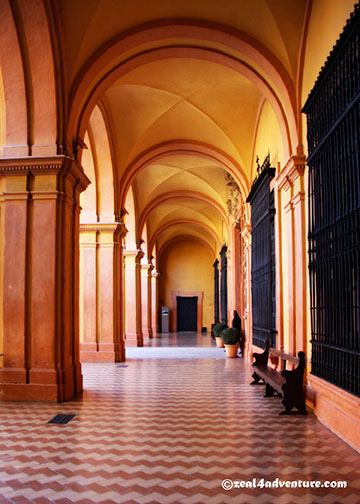
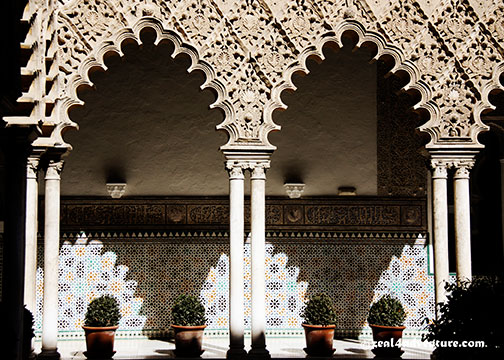
Art and architecture designs throughout the palace are marked by the diversity of cultures starting in Moorish times to the Middle Ages, the Renaissance, Baroque, and the XIX century.

Before it became the royal palace of Christian Kings, it was once a Moorish fortress. Today, it is still used as a part-time residence of the Spanish royal family, although only a few rooms are closed to the public.

alcazar-2

Built by Moorish architecture, the structure standing today still has details of a medieval fortress.

gardens

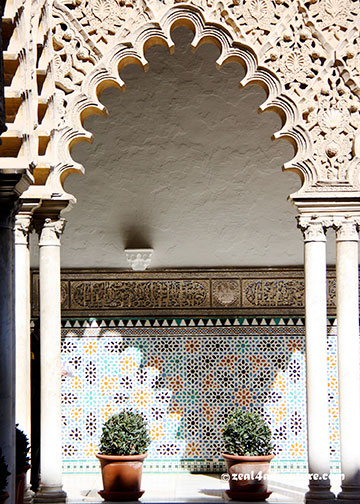
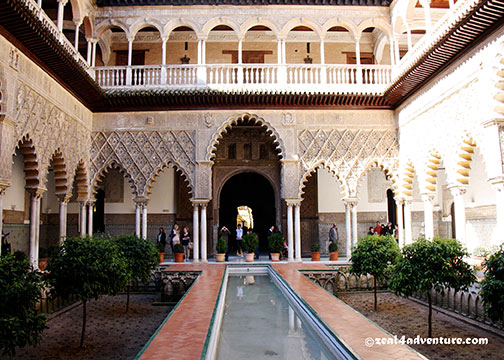
The gardens are outstanding, but I say that the picturesque Patio de las Doncellas, the Ambassador’s Hall,

patio-de-los-doncellas-2

patio-de-las-doncellas

patio-de-los-doncellas-3

with its tranquil pond that reflects the Mudejar plasterwork will transport you to another time. The intricate carvings and mosaic will leave you in awe.

The castle is huge, which took up half of our day. All the walking left us craving for tapas. And my notes tell me that Bodega Santa Cruz is the place to be when in the area.

bodega-santa-cruz

The bar wasn’t swarming with people yet, as it was only half past 11, so we easily found a table at the corner, in plain view of our bartender who wrote our orders down in chalk.

Bodega-sta.-cruz-dishesLeft to right: pringa, berenjenas con miel (fried aubergines with honey and salt), lomo chipiona

One by one, he calls out our orders, pringa, lomo chipiona, alitas de pollo, berenjenas con miel… all good that left us gratified.

And after wandering through the barrio, we were back for more tapas, al fresco this time.

Cafe-Alianza

We settled for Café Alianza at the plaza of the same name.

Restaurant-Alianza

Satisfying early dinner in a lovely square, a great way to cap the day.

Useful Info:

Bodega Sta. Cruz
Calle Rodrigo Caro, 1A
+35 954 21 32 46
 
Café Restaurante Alianza
Calle de Rodrigo Caro, 9
+34 954 21 76 35
 
Royal Alcazar of Seville
Patio de Banderas
+34 954 50 23 24
 
Sangre Española
Calle Santa Teresa, 4
+34 954 22 72 26

Exploring Seville’s City Center

I found Anton at the front desk chatting with the guy in charge. He seemed impressed that Anton could pretty much carry a conversation in Spanish. Here’s a tip: if you can speak even just a bit of the local language, try to use it to the best of your ability not only to impress but because it is the fastest way to a local’s heart. This was actually how we found our way to Casa Jimio for some interesting tapas.

Calle-Jimio

Front desk guy pointed us there; it is only a short walk from our hostel, La Casa de la Luna and a stone’s throw away from Plaza Nueva. From there, he said, we could hop from one excellent tapas bar to another. Following his lead, we got ourselves a table at La Flor de Toranzo, also known locally as Casa Trifon.

lunchLeft to right: Salmorejo; olives; Jamon Iberico “bellota”

Apparently one of the more famous bars in Seville, it offers a traditional menu with specialty tapas like foie gras, marinated turkey breast, anchovy rolls…

sandwiches-of-La-Flor-de-Toranzo

Anchoas con leche condensada (anchovies with condensed milk) sandwich caught our eye and suffice it to say that we were so blown away with the flavor combination, we got another order even if we were attempting to do a tapas bar crawl, a time-honored tradition that has Spaniards walking, drinking, and nibbling almost daily.

Seville. This beautiful Andalusian capital sitting on the lower reaches of the River Guadalquivir oozes with charm.

The-Adriatico-BuidlingThe Adriatico Building

As with most European cities, historical monuments are scattered around but what sets Seville apart is its seductive atmosphere—starting with the Seville orange trees found in every corner perfuming the air with its blossoms, its passion for flamenco

condetria-fillelia

and its love for food.

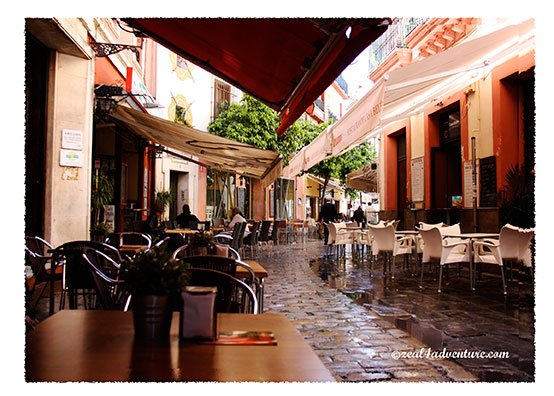
One thing Seville does not have little of, is its tapas bars and restaurants. Being a city of eaters and drinkers, tapas joints abound in Seville.

food-lovers

A day for a true Sevillano starts with a pre-breakfast snack (around 7am), then followed by the real breakfast at 10am. A beer or a glass of vino accompanies lunch at 2pm and at 5pm, the Sevillano head to the bars to tide them over till supper at home, usually around 9pm.

With our bellies full from a very satisfying lunch (we only managed 2 bars),

people

we headed to Avenida de la Constitucion, taking in its vibrancy—people of all kinds (locals, tourists, students…)

old-and-new

fill the street, historical monuments and buildings share space with modern shopping malls,

tram

modern trams ply the cobbled avenida, and adding to the gaiety, music filled the air from a guy playing Besame Mucho in his accordion…

accordion-man

madness in a good way is what this major thoroughfare is.

The Cathedral and the Giralda

The-Cathedral-along-Avenida

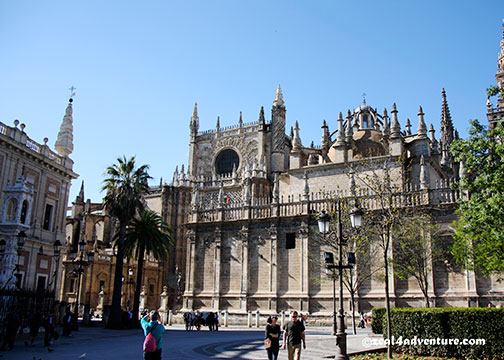
The largest Gothic building in Europe sits in the heart of the city on Avenida de la Constitucion. The Seville Cathedral, its flamboyance an expression of the city’s wealth during the 15th century.

grandeur

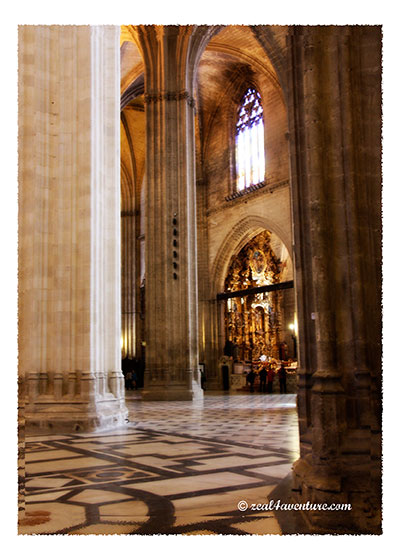
Replacing what was once a grand mosque of the Almohad Dynasty in the 12th century, it dominates the city today with its splendor and size. The astonishingly large building breaks several size records, making it the largest church in the world when measured by volume.

cathedral-interior

I was filled with awe at the massive size of the cathedral, at its sumptuous simplicity: the ceiling is about 13 stories high (42m) at the central nave and gilded in gold.

high-ceiling

The huge interior has a large collection of artworks from Murillo, Zurbaran, and Goya among others.

Its bell tower is called the Giralda. It was the large and beautiful minaret of the mosque, built to resemble that of the Koutoubia Mosque in Marrakech in Morocco.

giralda-2

Not only is it now the bell tower of the largest church in the world and the tallest landmark in Seville, it is also an excellent example of the cultural blend that molded Spain into what it is today.

giralda

It stands 343 ft. (105m) tall above sea level and instead of steps, a series of ramps were built so that the person calling the faithful to prayer (when it was still a mosque) could easily ride a horse up to the top.

view-from-the-giralda-2

Do make your way up the ramps because when you reach the top, you will be rewarded with panoramic view of Seville.

view-from-the-giralda

view-from-the-giralde

And after walking up the tower, we did as the Sevillanos always do; we found our spot and had an afternoon snack.

afternoon-meriendaUseful Info:

La Casa de la Luna
Calle Mariana de Pineda (near Puerta Jerez)
+34 954-218-389
 
La Flor de Toranzo
Calle Jimio 1-3
+34 954-229-315
 
Seville Cathedral
Avenida de la Constitucion

Andalusia’s White Town Jaunts

Ruta-de-pueblos-blancos

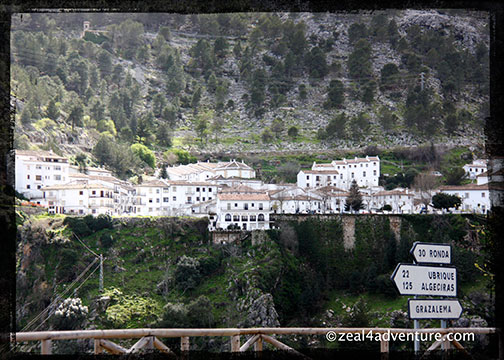
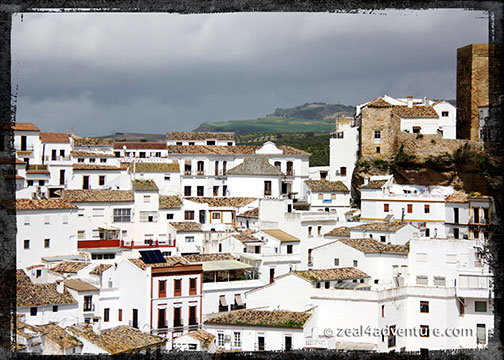
Between the provinces of Malaga and Cadiz, lodged between the valleys and mountains or clustered high on the hillsides within the Sierra de Grazalema Natural Park, lies a cornucopia of sleepy white towns and villages.  Traditionally lime-washed but now painted white houses make up these towns.  Known as the Pueblos Blancos, they create a striking contrast amid a backdrop of rugged limestone mountain.

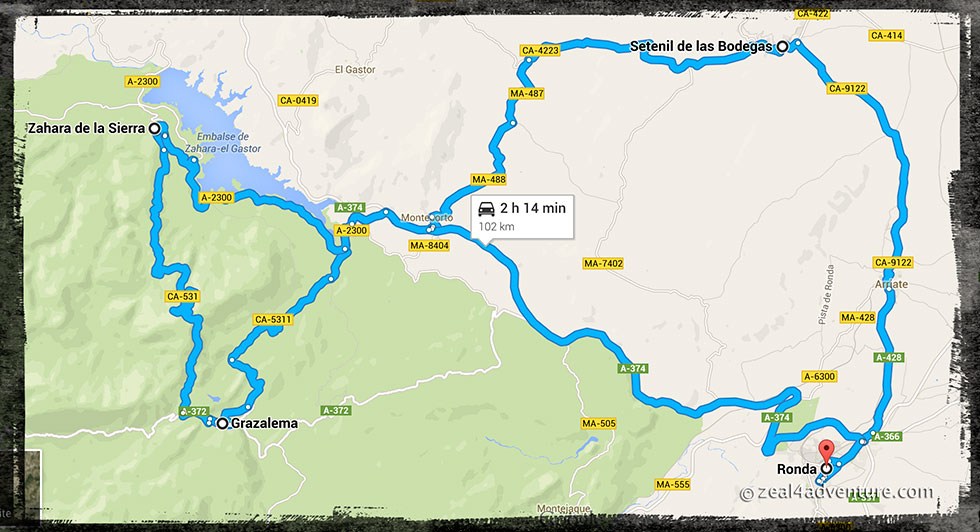
Out of the 6 or 7 noteworthy villages on the Ruta de los Pueblos Blancos, we managed 3 on a rented Opel.

our-route

After breakfast, from Ronda we headed north via the A428 and found our way to the first village on our route, Setenil de los Bodegas.

Senetil-white-houses

This quaint little village has houses built into rock overhangs above the Rio Trejo, many of which have the rock as its natural roofs and walls.

Setenil structures-built-on-caves

Fetching in an unusual kind of way, this Setenil.

Setenil-narrow-hilly-roads-2

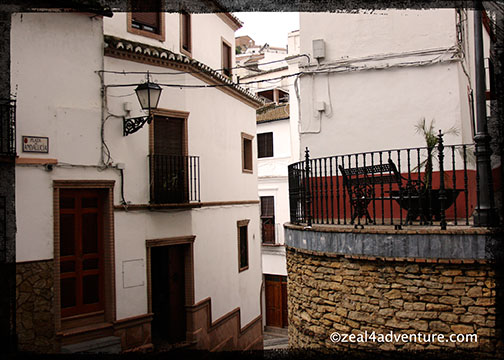
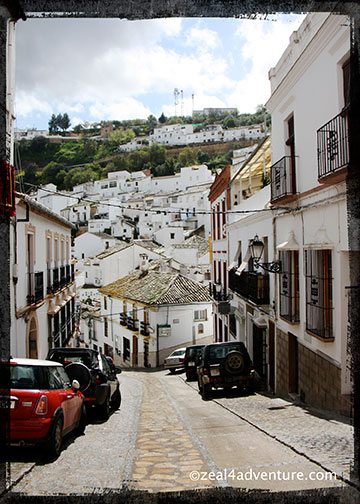
Looking for a place to have a few beers and tapas (as it was nearing lunch time), we discovered that the hilly, winding streets in some parts of town are intimidatingly narrow

Setenil-narrow-hilly-roads

especially if one’s stick shift skills are rusty and the car is rented.

Setenil rocks-make-natural-roof

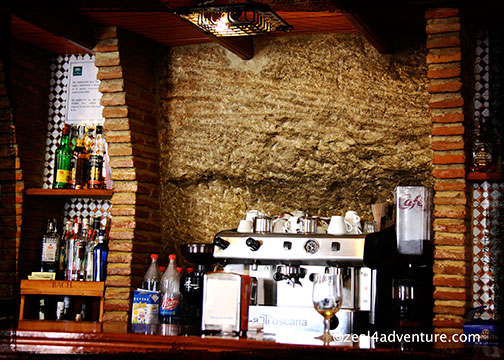
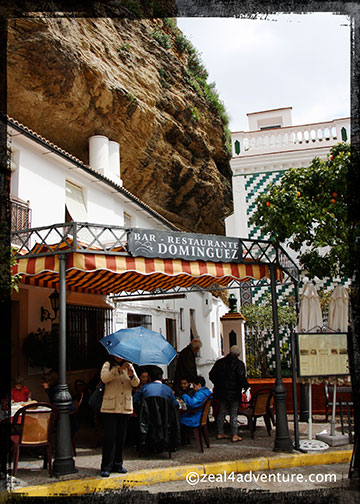
On Plaza de Andalucia, we found Bar Restaurante Dominguez quietly tucked in a corner of Calle Herreria.

Setenil Restaurante-Dominguez

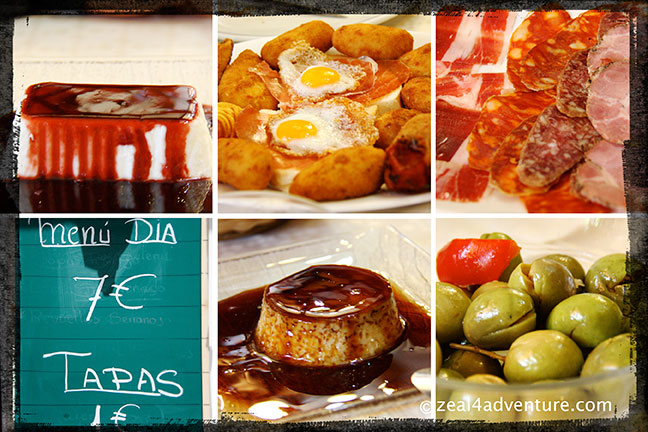
I don’t remember anymore what drew us there (hunger perhaps) but following the recommendation of the owner, lunch was truly satisfying.

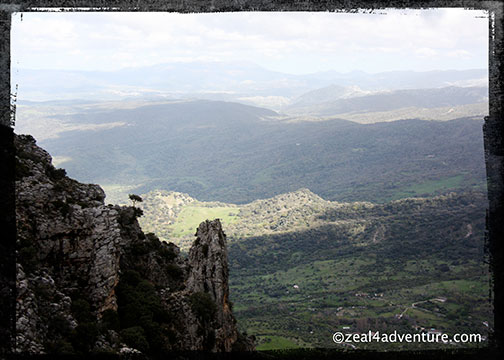
Let me first tell you about this stunning natural park, Sierra de Grazalema.  It was declared a UNESCO Biosphere Reserve in 1977 because it has an exceptional variety of flora and fauna.

Grazalema-limestone-mountain-rangesDo you see the eagle perched on the craggy edge of the limestone?

A karstic region set in 51,695 hectares of land that is surrounded by a string of limestone mountain ranges known collectively as… Sierra de Grazalema.  So imagine the spectacular vista of rugged limestone cliffs, and impressive gorges, magnificent forest of rare Spanish firs, and the attractive white towns dotted around the sierra.

Grazalema-from-the-road

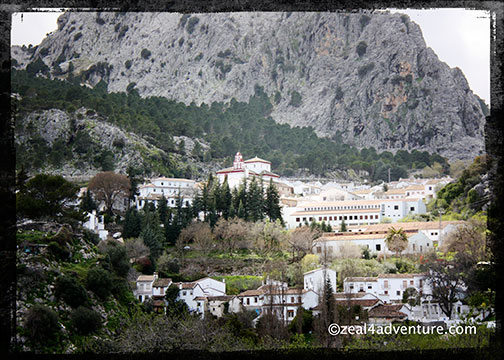
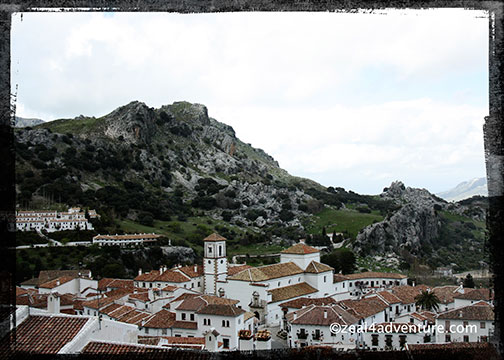
The village of Grazalema is located right at the center of its foothills.  A beautiful white town beneath the craggy peak of San Cristobal.

Grazalema-Plaza-Espana

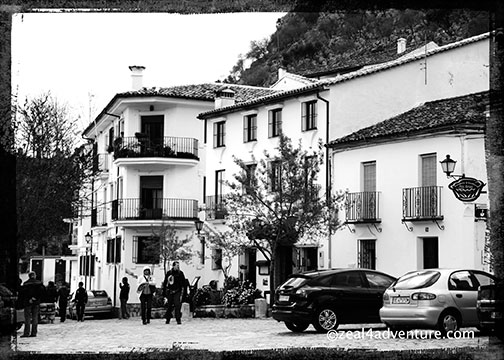
It has its own charm with a simple central square, the Plaza de España, and cobbled streets lined with whitewashed houses with wrought ironed railing covered windows.

Grazalema-Iglesia-de-la-Encarnacion-from-afar

The town has two beautiful churches, Iglesia de la Aurora on Plaza de España and Iglesia de la Encarnacion.  It is an ideal base for those who want to hike the sierra.

The last village we managed was the most picturesque among the three and a real must.

Zahara overlooking the lake

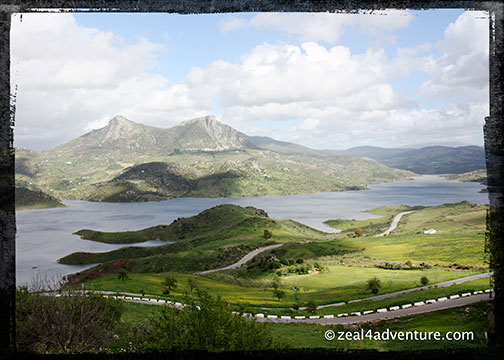
At the northern end of the Grazalema Natural Park, this pueblos blanco overlooks the turquoise water of El Embalse, a huge reservoir that dominates the view from the village perched atop a hill.

Zahara-castle-remains

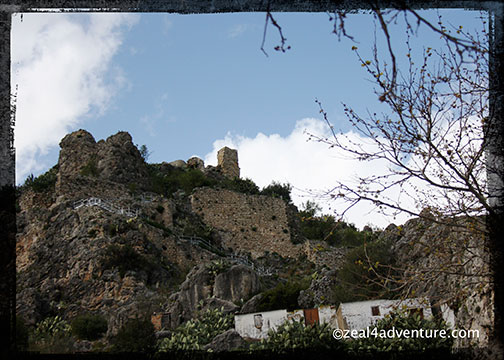
Zahara de la Sierra, once an important Moorish town has the surviving tower of the 12th century Moorish Castle looming over the valley.

Zahara-town-beneath

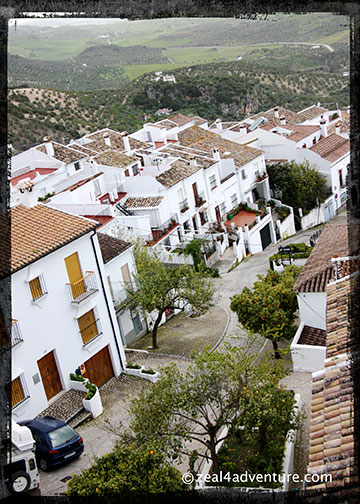
Scattered below on the slopes are the red-tiled roof whitewashed houses of the village.

This couldn’t be a more outstanding finale to this excursion.  Although we barely scratched the surface, like Ronda, visiting these pueblos blancos gave us a taste of the real Spain, its laid back way of life.

real-spain

Amid such splendor, how can you not stop and smell the flowers?  Cherish its beauty?  Why would you even want to go anywhere?

Useful Info:

Bar Restaurante Dominguez
Plaza de Anadlucia, 11
Setenil de las Bodegas, Cadiz
Contact: +34 956 13 45 31

Of Hammams, Ports and Fish Markets

In a room, “Careless Whisper” played in the background, hot water ran from a faucet onto a pail, steaming the room.  On a bench in one side of the room, I sat and waited.

Soon after, a lady entered and impassively poured hot water over me; I shivered at first then felt the water soothingly eased the fatigue away. She asked if I could bear the heat. “Oh, no problem there.” I thought. Then she soaped every part of me, my hair included (I worried about how it would turn out sans conditioner).  She left, came back 15 minutes later, started scrubbing, scrubbing until I can feel dead skin rubbing against my body. And when she poured water on me again, the soap and dead skin washed off, I felt the difference.  My skin and hair, they were silky smooth.  “Can I buy some of that soap, please?”

A Berber massage followed after and for an hour, I was in dreamland. This has always been my gauge of a good massage but how am I getting my money’s worth by not feeling every knead and every rub? I ask myself all the time. I love a good scrub every so often and this, I promise, is the bomb. If I had another day to spare, I’d do it again even if I’ll have to listen to George Michael all over again.

And even if a real hammam this is not, I appreciated the experience and wished I had found the time to go to a real one, perhaps in Fes.

essaouira

seaside

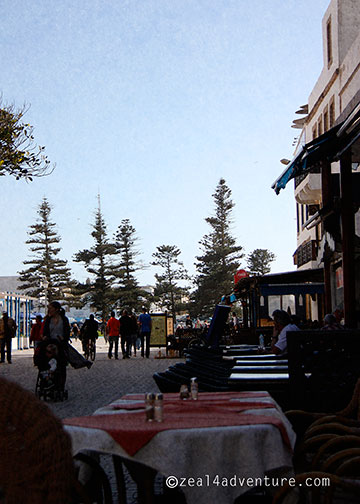
cafes-near-the-port

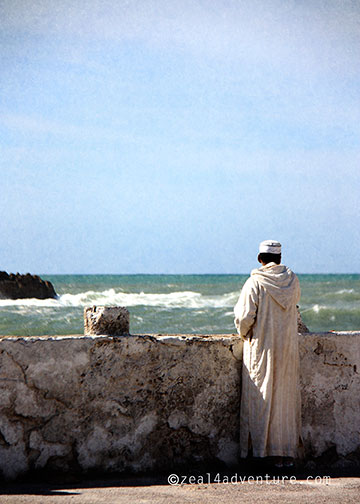
But Essaouira is as good a place, its rugged charm and relaxed atmosphere offers relief from the bustle of the bigger cities. Read: a good place to chill.  Our last leg in exotic Morocco was spent in the coastal town west of Marrakech just a three hour bus ride away.

place-moulay-hassanPlace Moulay, the main town square near the waterfront.

It’s a hidden gem with its windswept beach, open air feel and hip vibe.  A wonderful refresher from the dark, crowded alleyways of Fes and Marrakech.

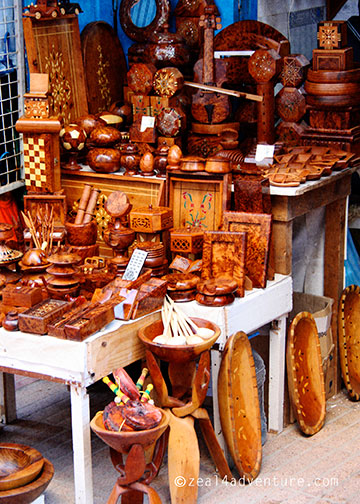
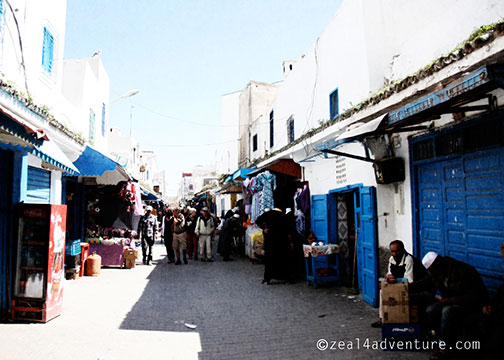
Behind the 18th century sea walls are artists’ enclaves, Thuya wood workshops, and bright, quiet alleyways.

medina

Ranked as a UNESCO World Heritage Site, the medina is gorgeous and peaceful.

thuya-wood

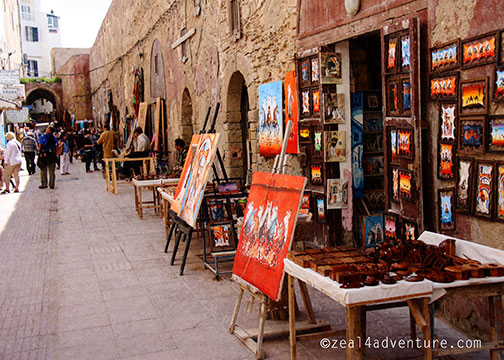
art

Although the alleyways around the Kasbah have already quite a few souvenir shops, it is still a market town

tout

where rural Berbers is still seen to hawk their wares.

local-market

The streets are full of people selling things from vegetables to DVDs.  And in one of these stores, we found some great CD of Gnaoua music.

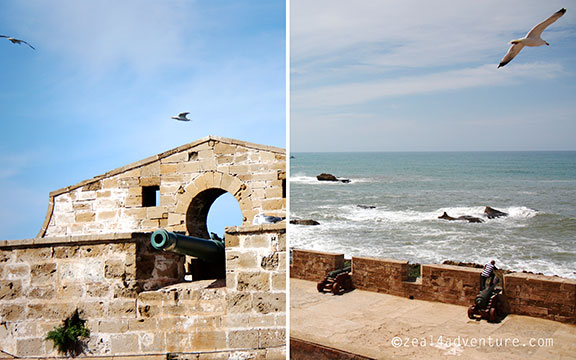
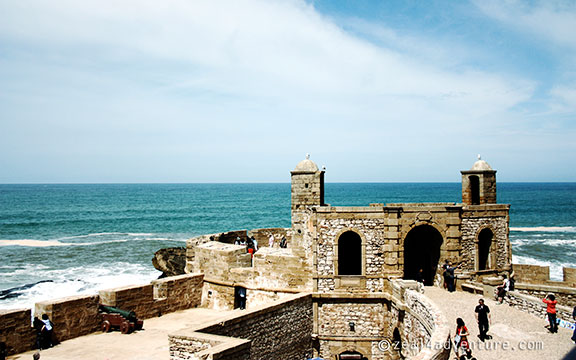
Tall towers bordered with cannons still define the perimeter of the old town and spending

fortified walls

time within its well-preserved ramparts will take you back to when the town was still called Mogador.

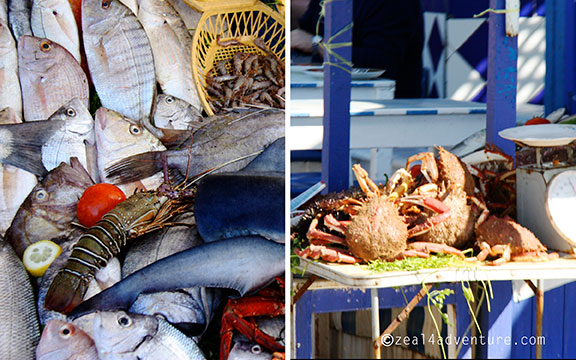
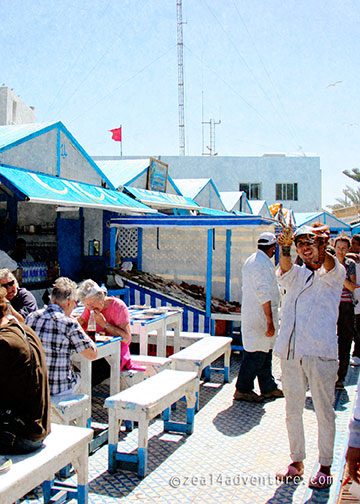
The smell of freshly grilled sardines and lobsters will draw you to the town’s famous fish market.

fresh-seafood

Known for its outstanding fresh seafood,

fish-market

it is a great place to enjoy a few bottles of beer, soak up the sun and people watch

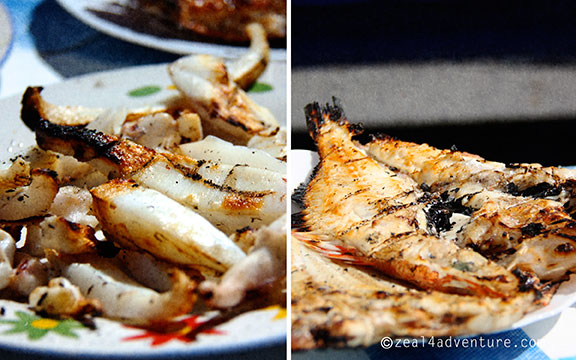
grilled-seafood

while your order of the choicest catches grill to perfection.

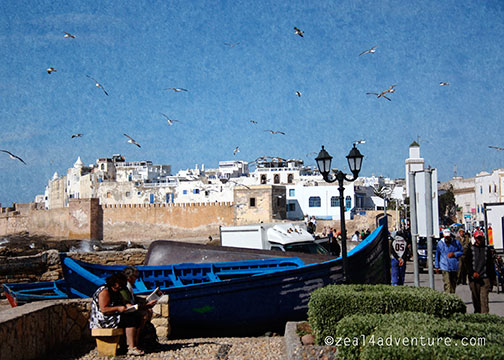
Essaouira (pronounced: essa weera) has a beautiful port down by the harbor.

blue-and-white

The Skala du Port offers a picturesque view of the fishing port with many shades of blue – blue skies, blue sea, blue and white architecture,

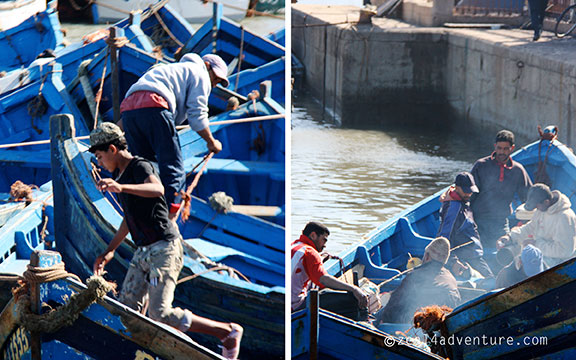
blue-fishing-boats

blue boats huddled against each other, some still unloading their catches for the day, which they will bring ashore to sell in the fish market.

After my visit to the hammam, we spent the rest of the morning on a rooftop café overlooking the fort and the sea—

fort

an excellent place to relish our last days in Morocco, to cap the trip.

Experience Historic Marrakech

Alahu Akbar, god is great, come and pray,” an imam calls to the neighborhood over a loud-speaker, a familiar background noise by now.  In a different light, tradesmen standing outside his store enthusiastically calls for attention to sell with “Konichiwa,” “Ni Haw,” or a simple “Hello.”

wider-streets

The medina, albeit still a maze, is not as intimidating as the one in Fes.  Weaving through the wider (relative to Fes’) streets,

leather-goods

I breathe in an assortment of aromas, the whiff of floral scent of potpourri; the intense smell of mix spices; the fragrance of shredded wood; the distinct odor of leather.

souks

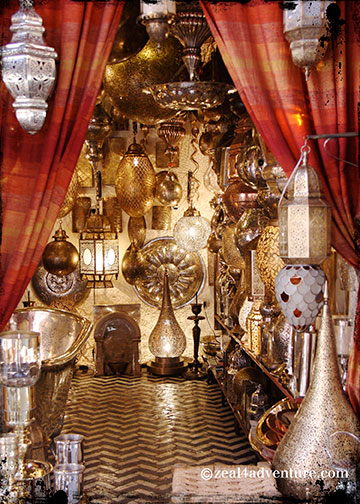
various-metalworks

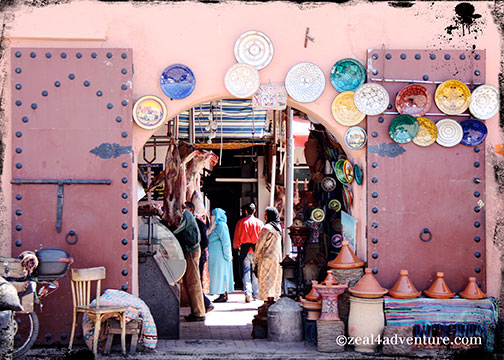
I notice that, in contrast to Fes, the medina is packed with shops intended for tourists.  Though having earned the reputation of being ruthless shopkeepers, I saw them as affable to foreigners often calling out a “Where you from?” and returning an “Ah Philippine, welcome to Morocco!”

woodwork-spectacle

Adding to this are tout craftsmen who invite curious people like us to be entertained, at the very least – I picked up a few of his merchandise.   🙂

Atlas-mountains

Marrakech also known as the “Red City” is a major city of Morocco, north of the foothills of the snow-capped Atlas Mountains.

red-walls

The city surrounded by blush colored walls, initially a fortress and a symbol of power, was constructed in the 12th century, the bricks used is a mixture of red mud and water from the Hazou plains.

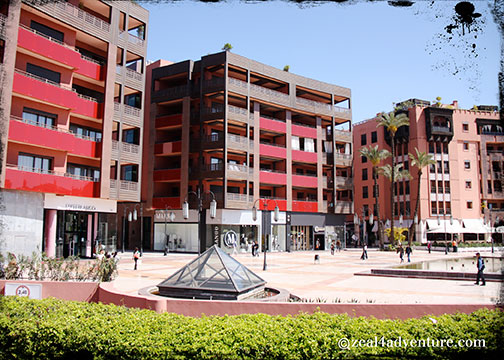
The city is divided into two distinct parts – the medina and the new European modern district called Gueliz or Ville Nouvelle.

guelizShops in Ville Nouvelle

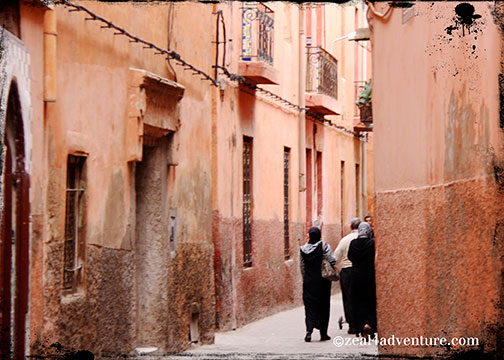
This post will be all about the historic city, its market and its famous square.  Get lost in the narrow, labyrinth streets of this ancient rose-hued city and let it take you back in time.

Djemaa el-Fna

kotoubia

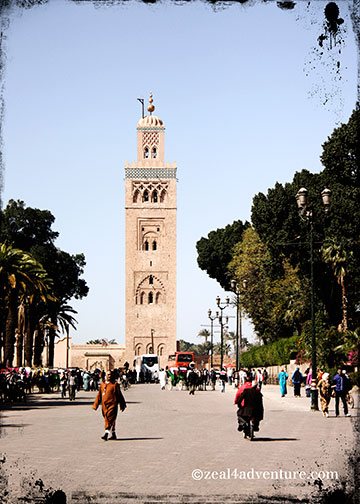
It is said that the minaret of Koutoubia mosque is the heart of Marrakech, but the soul of the city lies just 200 meters away, in the city’s market square and forum that has been in existence since its foundation.

jemaa-el-fna-from-terrace

Part of the UNESCO World Heritage Site, it owes its fame to its size, its unique atmosphere, and for bringing history to life daily.

snake-charmers

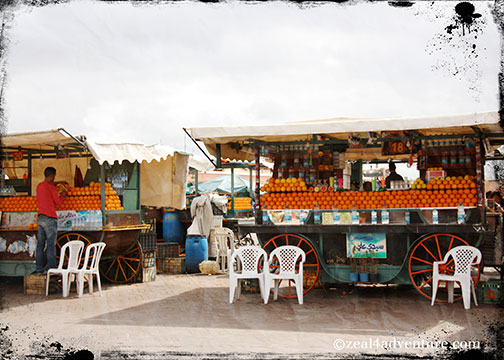
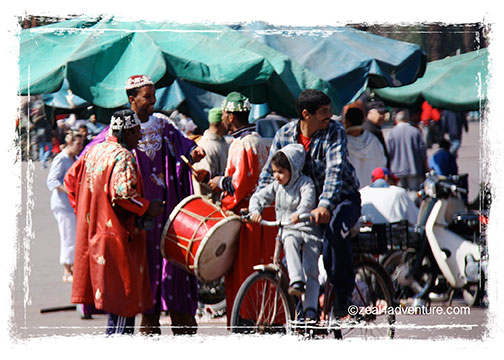
A medieval circus of musicians, dancers, snake charmers, story tellers… share the square with the fruit and juice stands.

juice-stand

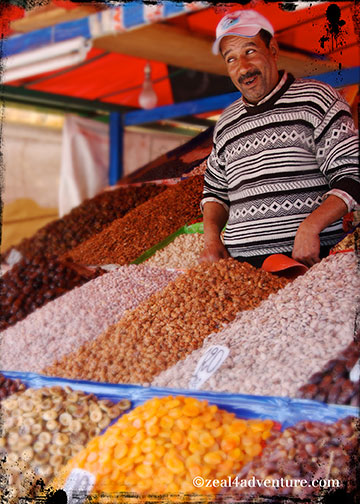
dried-fruit-standChaotic yet in tune with the din of drumbeats and enthusiastic hollers.

extort

chilling

The way to experience it is to be among it all but the best way, I found out, is to watch the hustle of activities and be entertained by Djemaa el-Fna’s daily performers from any of the peripheral cafes and restaurants’ upper terrace.

terrace-cafe

It will be a show you don’t want to miss.

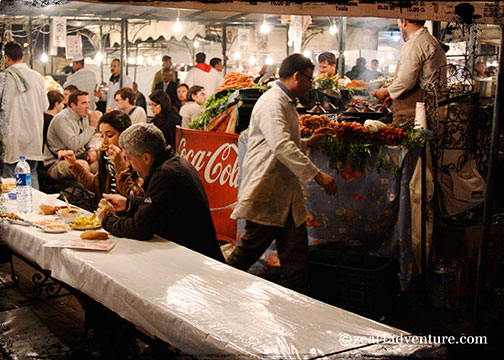
The show doesn’t peak until sundown when the square has a different life.  Rows of street stalls under giant white tents are set up each night not only for the tourists but are, in fact, local food jaunts, as well.

night-stalls

Food is prepared hot and fresh along the countless stalls serving authentic favorites one must have when in Morocco.  Head out one night and eat like the locals do and be serenaded with the sounds of live Moroccan music.  Troupes of Andalusian or Gnaoua musicians perform as part of a dinner show around the square.

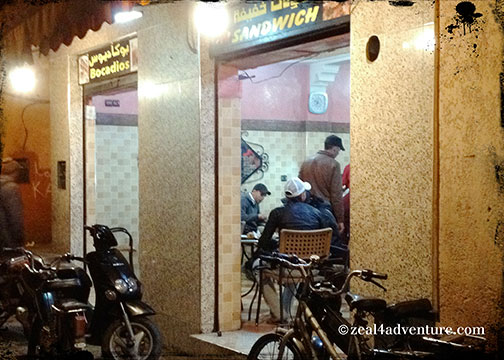
bocadios-sandwich

If the confusion seems to be overwhelming, look for small eateries serving these sandwiches they call bocadios.

bocadios

Amazing stuff found in the corners of the medina away from the disarray – it helps though if you can speak Moroccan or French.

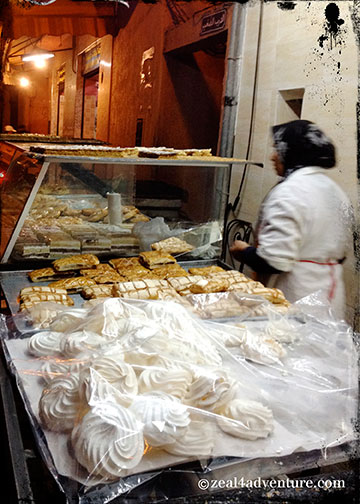
meringue

And just outside, a lady sells wonderful Moroccan sweets.  Perfect for dessert.

belly-dancing

Or escape to an evening of belly dancing, for a different kind of entertainment.

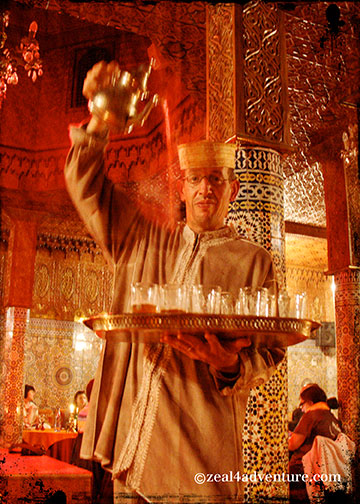
mint-tea-pouringThe proper way to pour Moroccan mint tea, as performed by our very gracious waiter.

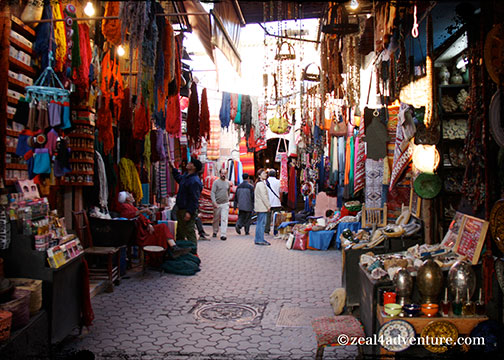
Wander and get lost around the endless maze of souks

Marrakech has the largest traditional market in Morocco and it is so easy to spend your dirham at the seemingly endless maze of souks inside the medina.

souk-entrance

A network of souks begins on the north edge of Djemaa el-Fna and ends at the Ben Youssef Madrasa, comprising of alleyways of local shops full of character.

lighting-store

choice-boutiques

The further in you venture, the more fascinating they become from souks touting everything to the (more) sedate choice boutiques.

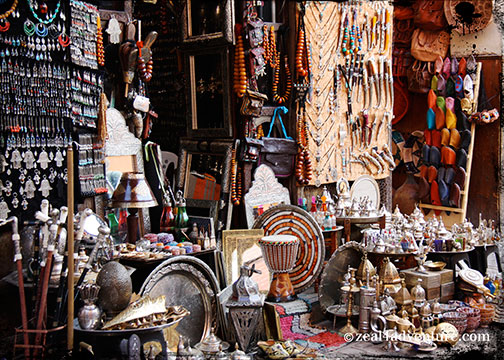
carpets

Find Berber carpets, pick up wood carvings, try on djellabas and babouches,

herbolist

or merely listen to herbalists sell you miracle cures for the aging, wander and get lost, then get help from a bunch of boys playing in the street… all these are part of the fun when exploring Marrakech’s medieval souks and winding streets.

Do all these because if you have not gotten lost, if teenagers have not offered to help you find your way out, if they didn’t hassle you for a tip, if you have not been greeted and lured by jovial merchants in five different languages, you have not experienced Marrakech.

Useful Info:

(Belly Dancing Show)
Restaurant Dar Essalam
170 Riad Zitoun Kedim
For Reservations: 212 (0) 5 24 44 35 20
 
Les Terrasses de l’Alhambra
3 Place Jemaa El Fna, Medina
212 (0) 5 24 23 75 70

An Outing Outside of Fes: Meknes

An article I read about the vineyards in Muslim populated Morocco got me interested in Meknes. Despite its religious stricture on consumption, thanks to its gentle climate, generous sun, and rich soil, the Meknes region is home to many vineyards and olive groves. I considered a vineyard tour but, to be honest, I completely abandoned the whole wine tasting idea at the last minute in lieu of the very impressive Volubilis. And because walking around the ruins of the Roman settlement took just a little over an hour, we had more time to visit the city of Meknes.

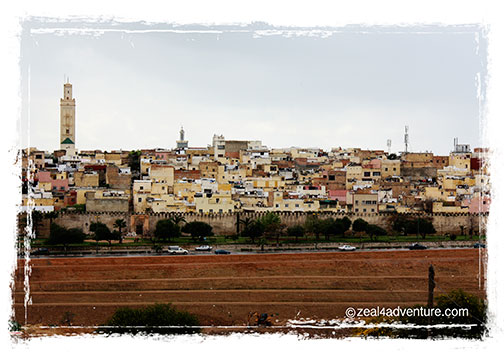
View-of-the-old-city

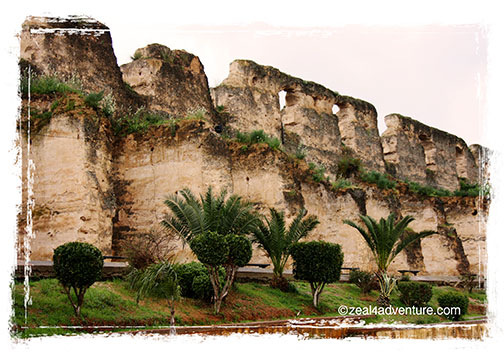
Much less visited than its neighbor Fes, the most unpretentious of imperial cities—Rabat, Fes, Marrakesh being the other three— as it was developed as a capital late in the history of Morocco and only briefly, by a single sultan, Moulay Ismail. Meknes, despite its humble past, rewards travelers with beautiful gates, ramparts, mosques, and palaces and is often referred to the Versailles of Morocco.  As one of the imperial capital, Sultan Moulay Ismail built the city’s vast imperial palaces and massive walls to rival King Louis XIV’s Versailles hence the reference. Suffice to say, his tomb rests here. The weather turned cold and wet, which prevented us from wandering around much, we nevertheless managed to visit a few sites.  We would have loved to see the inside of Ismail’s granary (Heri es Souani), but it was close on a Sunday.

Place el Hedime

Place-el-Hedim

At the heart of Meknes linking the medina and the Kasbah, the large square is lively in the afternoon,

a-glimpse-of-chaosA glimpse of chaotic Djemaa el Fna

much like but a lot tamer than the Djemaa el Fna of Marrakech (you will know what I mean on my future post).  The outstanding architectural detail of the walls and gates (especially of Bab Mansour) makes for a more compelling square than Place Seffarine and Boujloud.

Moulay Ismail’s Mausoleum

triple-arch-of-mausoleum

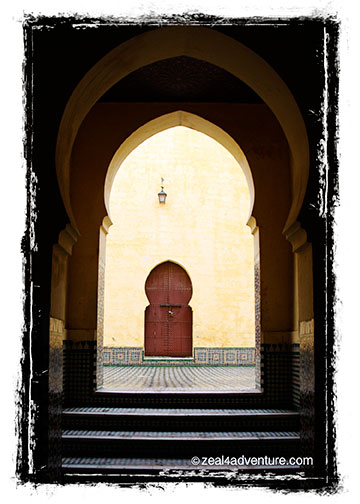
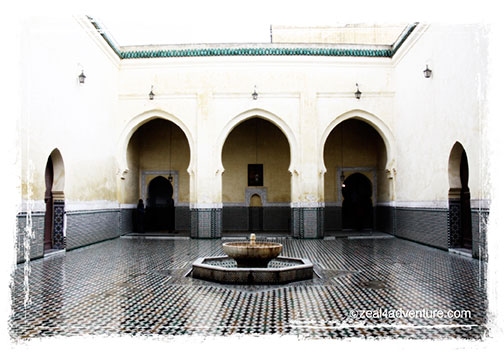
From the main entrance, an archway leads to a triple-arched entrance.  A small yellow room with a small fountain in the middle greets as you enter the mausoleum.

Moulay-Ismail-Mausoleum

This leads to the first of several open aired courtyard surrounded in all sides by bright yellow walls.  The last courtyard fronts sanctuary where the tomb is.  While non-Muslims are not allowed inside the sanctuary, it was possible to have a glimpse of the tomb from the antechamber.

Sahrij Souani Bassin

Sarij-Swani-lake

It was said that the lake, measuring 319m by 149m, was constructed to ensure the supply of water to the town in case of drought or siege.  The reservoir is connected to the water system of the city, which was considered an ancient engineering wonder.

sahrij-Swani-wall

This is the exterior of Heri es Souani, the ingeniously designed stables of Moulay Ismail.  To keep the temperature cool and air circulating, the structure was built with tiny windows, massive vaults and an underground water channel system.  The gigantic storerooms provide stabling and grains for 12,000 horses.  Too bad we were there at the wrong time and couldn’t see the inside, they say it is bewildering.

An Outing Outside of Fes: Volubilis

on-fertile-land

It seats on top of some of the most fertile land in the Middle Atlas only 5 kilometers away from Moulay Idriss, situated near Meknes between Fes and Rabat. A site so unexpected, truth to tell.

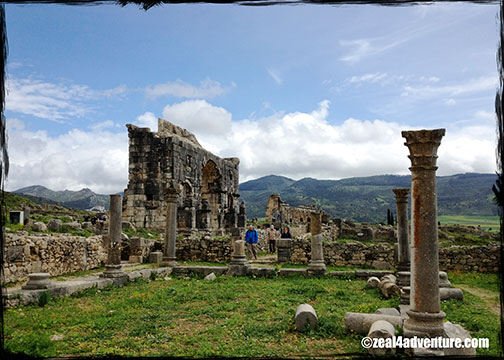
columns

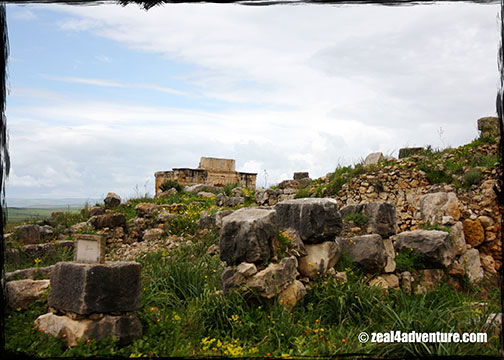
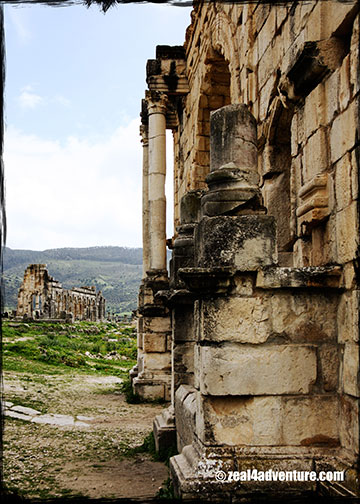
This Roman ruins consist of no more than half of the original town, but the well-defined remains of its walls,

walls

its intact and intricate mosaics, and the foundation of buildings

IMG_7780

destroyed by a massive earthquake sometime in the 18th century has earned recognition by the UNESCO as an ancient Roman site that houses extensive ruins dating back over 2,000 years.

The Mauritanian capital became an important outpost of the Roman Empire and was adorned with many fine buildings. Already a thriving town, Volubilis grew rapidly under the Roman rule from the 1st century AD onwards.

olive-treesOlive trees still grace the land.

Grains and olive oils, produced in the fertile lands of this province were exported to Rome as well as wild animals for gladiatorial spectacles, contributing to the town’s wealth and prosperity. The last stop of the Roman Imperial roads that went across France, Spain and down to Morocco’s northern city of Tangiers,

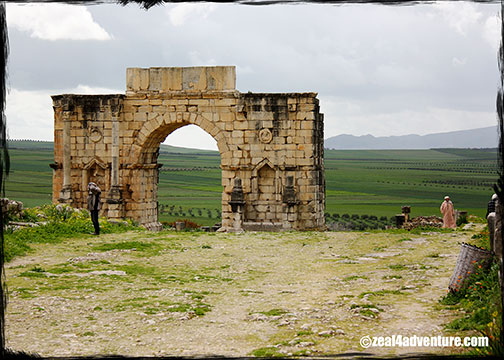
the-arc

Volubilis is an exceptionally well-preserved example of a larger Roman colonial town on the fringe of the empire. Its structure comparable to other Roman ruins along the Mediterranean.

IMG_1475

Many, including us, travel to Volubilis to explore the sites’ historical significance. Amongst the ruins, visitors can see a range of public buildings, olive mills, houses, and temples.

mosaic

And because Morocco is a country of mosaic, the rather well-preserved mosaics from the ruins are considered among the finest in existence.

on-a-green-plateau

From the entrance, one can appreciate the green plateau that Volubilis seats on,

view-of-the-Rif-mountains

and when one reaches the site, fabulous views of the Rif Mountains and its surround greets.

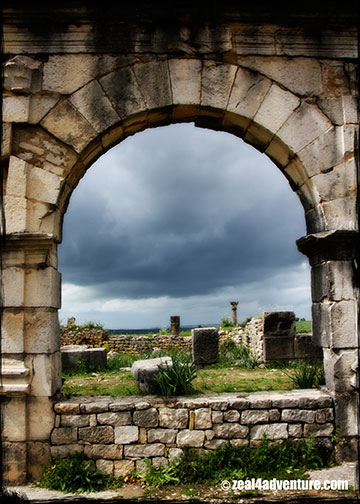
So picturesque, Volubilis is picture perfect at any angle. Here’s more of the ruins:

IMG_7829

IMG_7778

IMG_7827

IMG_7823

IMG_7807

Meandering Through Old Fes

traditional-moroccan-music

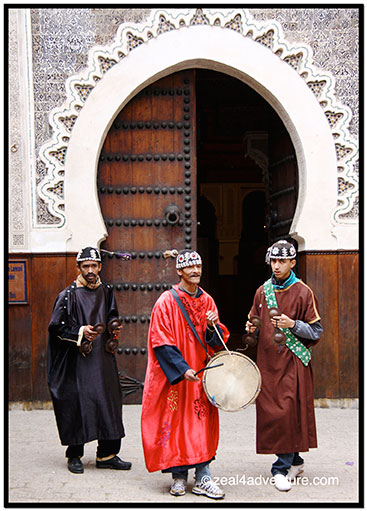
You hear the bangs of coppersmiths in the labyrinth souks combined with the beat and clangs of Moroccan music and the constant calls to prayers,

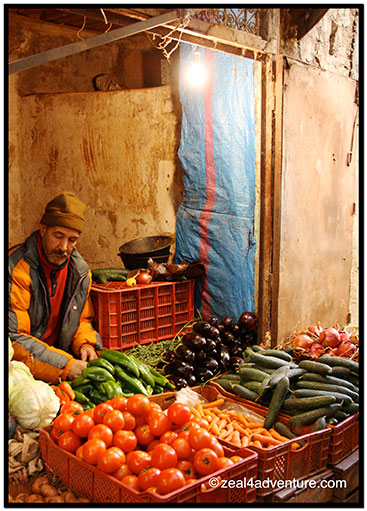
fruit-vendor

add to that the intoxicating smells of fruits, spices, fresh innards and dung,

children-playing

then you see the chaos of men pushing wheelbarrows, children playing and

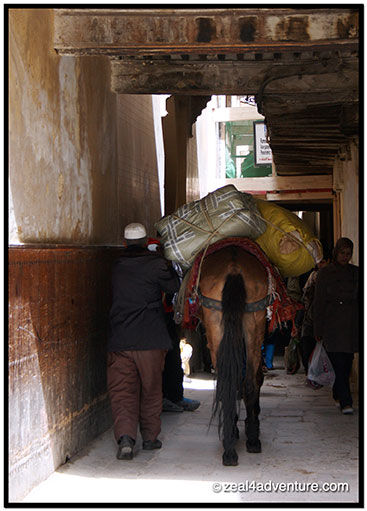
donkey

donkeys transporting people and things, and not to mention the vibrant colors of rugs, potteries, spices… all happening simultaneously.  The old city of Fes stimulates all the senses.

Rashid, our guide picked us up right after breakfast at Dar Labchara.  To discover the city, an official guide is essential.

crowded-medina

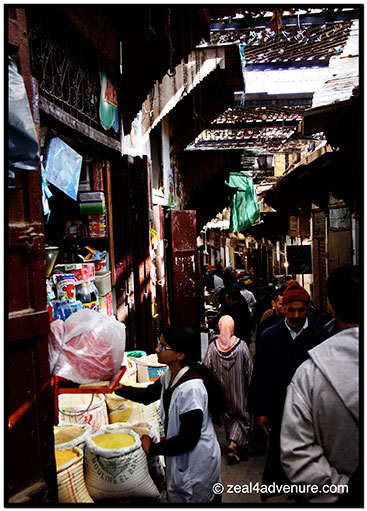
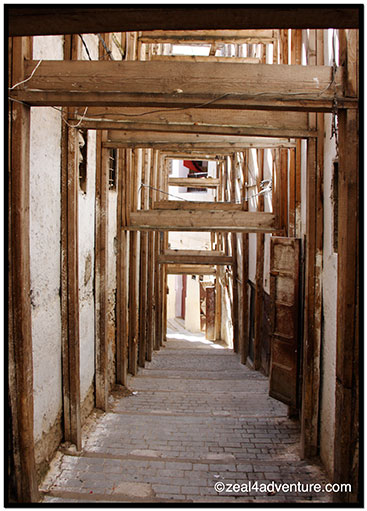
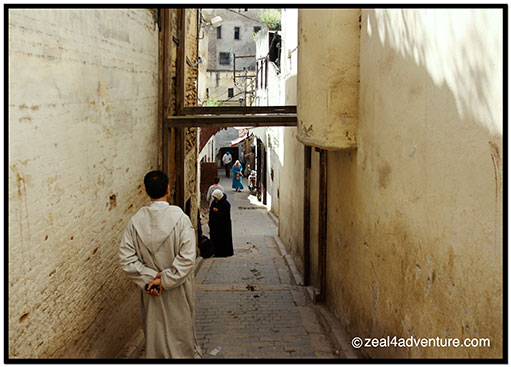
Ours took us around the medina, passing narrow alleys housing hundreds of merchants and craftsmen selling an assortment of products from dates to musical instruments.

Fes el Bali (Fes the old) is our baptism of fire into an exotic medieval world.  Not much seemed to have changed within this walled city with over 9,000 alleyways.

winding-alleyway

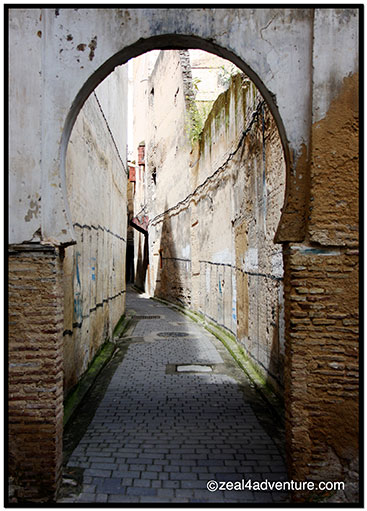
Fes el Bali is the old medina where most cultural sights are located; its labyrinth of narrow winding alleys is almost impossible to negotiate without getting lost.

collapsing-walls-with-enforcement

It is a car-free urban space and a UNESCO World Heritage Site that spans 1,300 years of Moroccan heritage.  It is the central business where 150,000 people living inside the wall – a cocktail of Berbers, Arabs, and Africans in hooded djellaba cloaks, red tarboosh hat they call fez and open heel babouche slippers – come and go, much like it was 1,300 years ago.

following-rashid

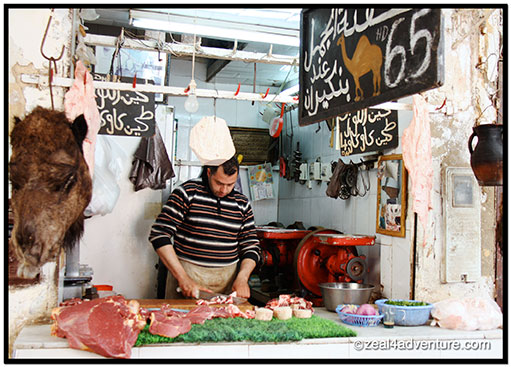
Following Rashid, we found ourselves in the market staring at a camel’s head,

camel-head

preserved-lemon-and-olives

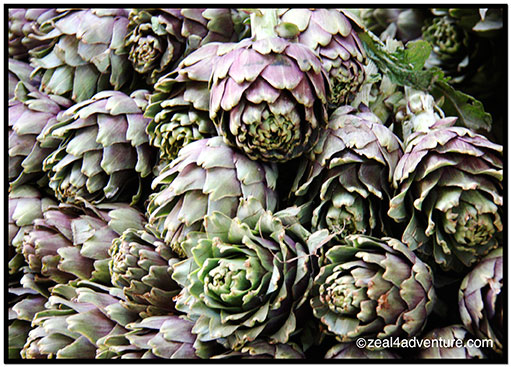
artichoke

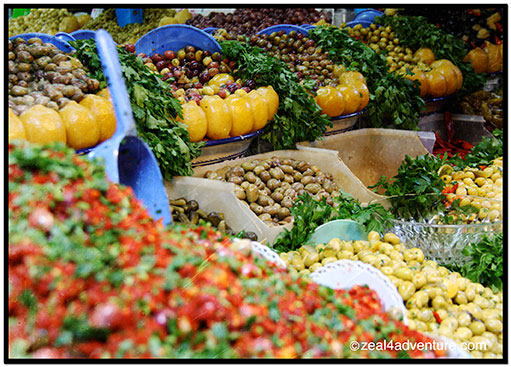
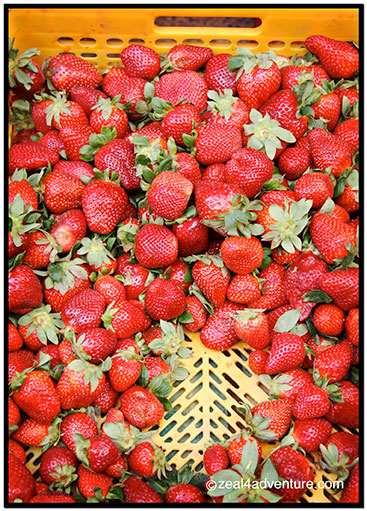
drooling over a variety of Moroccan food specialties, admiring vegetables I don’t get to buy in my part of the world, and devouring some beautiful, crunchy strawberries in season.

strawberries

Chaotic, overwhelming, stimulating, similar, in a certain way, to our wet market yet distinctly Moroccan in every way.

Morocco is a shopper’s delight and weaving through the maze like narrow lanes led us to various outdoor bazaars called souks.

cheese-vendor

They consist of tiny stalls displaying objects ranging from colorful scarves to buckets of olives.  It is an integral part of the medina.  It is where the locals buy their essentials.

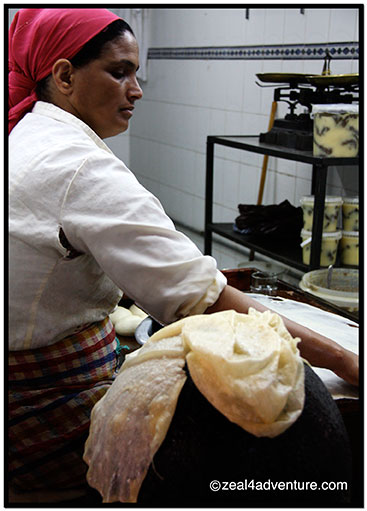
making-breadA stand making bread

Each Moroccan town has its unique souk quarter displaying some of the fine Moroccan ornaments and crafts.  In larger cities like Fes or Marrakech, there are “specialty” souks of all kinds –

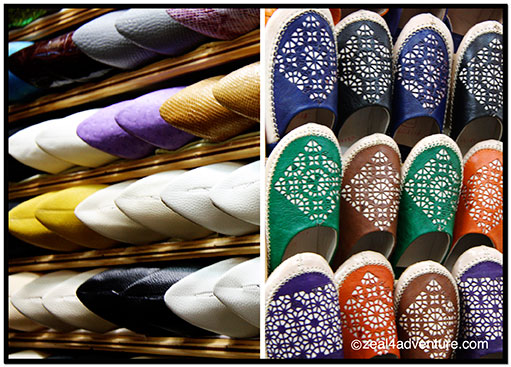
slippers

the spice souk, the carpenter’s souk, the leather souk, the slipper souk, the dyer’s souk… all within a bigger souk.  At every turn, we found ourselves in a new souk typically named after what they are selling.

seffarine-square

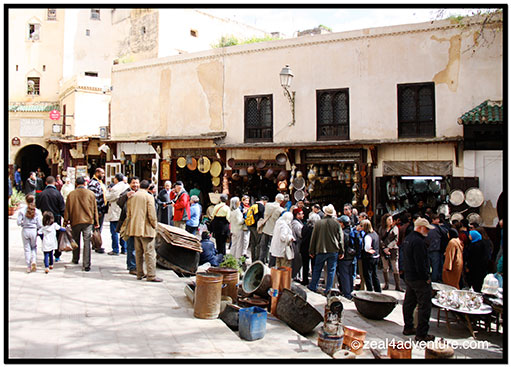
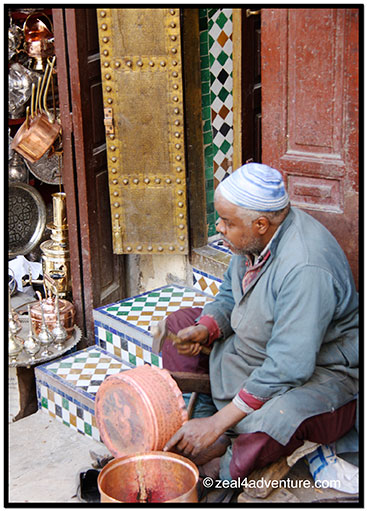
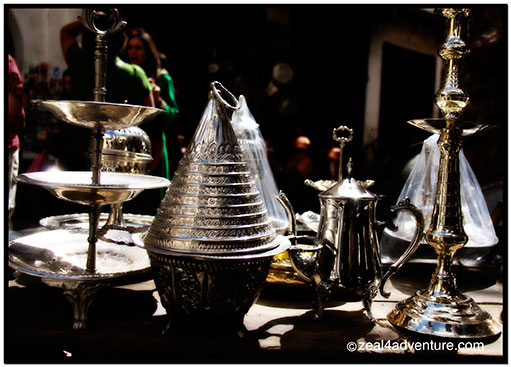
One such souk was at the Seffarine Square.  A delightful square that is the center of Fes’ copperware trade surrounded by artisans hammering sheets of metal into shape:  huge cauldrons, kettles, pots, plates and the likes.

craftsman

metalworks

On one side lay the Kairaouine library, on the other, the Seffarine Madrasa.  The open space is a refreshing break from the confining tight corners of the medina.

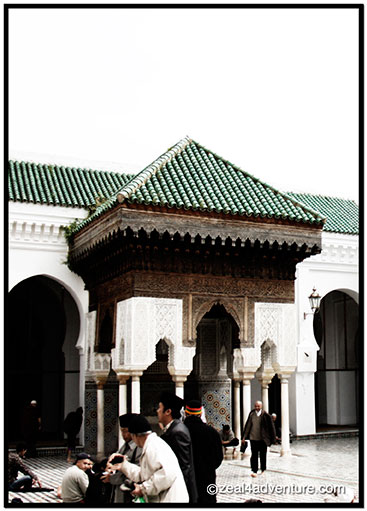
Built in AD857, the University of al-Karaouine is perhaps the oldest university in the world.

Karaouine-Mosque

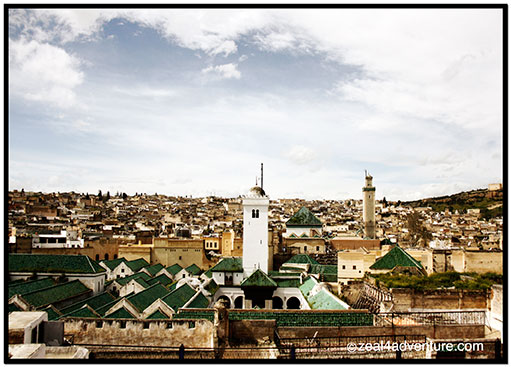
Not open to non-muslim, we had to content ourselves with viewing its beautiful architecture from the entrance.  Rashid took a shot from my camera for a peek at one of the dozen horseshoe arches in the mihrab (prayer niche).

rooftop-view-of-Karaouine

A better view of the university can be had at any rooftop balcony nearby.

Rashid then lead us to another lovely square where you will find the Fondouk el Nejjarine.

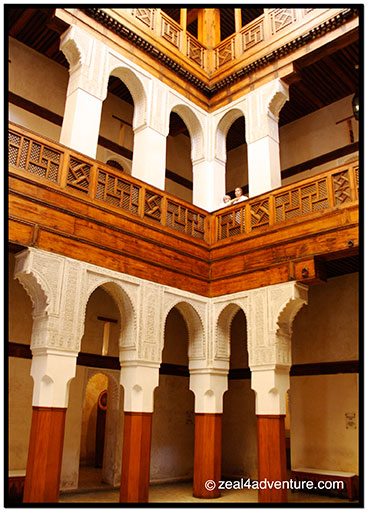
nejjarine-museum

The beautifully restored building used to be a fondouk or a caravanserai, a roadside inn built to shelter men, goods and animals along ancient caravan routes.

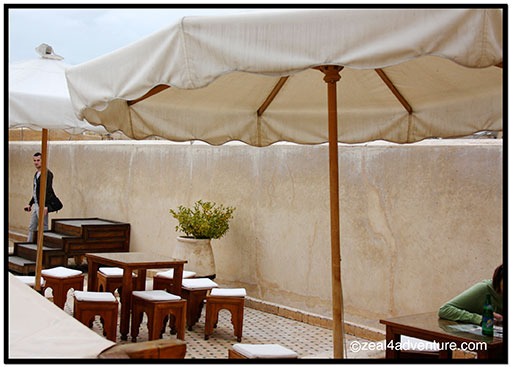
rooftop-cafe

rooftop-cafe-view

It is today a museum of wooden arts and crafts.  It has a nice little rooftop café boasting of outstanding views of the city.
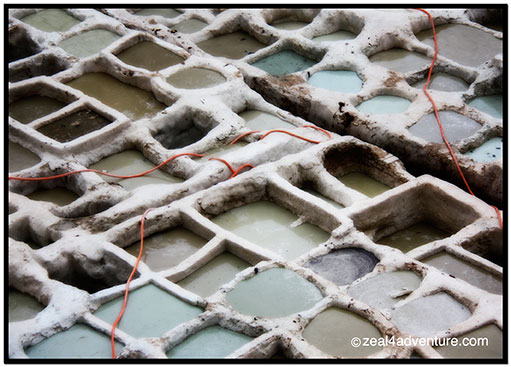
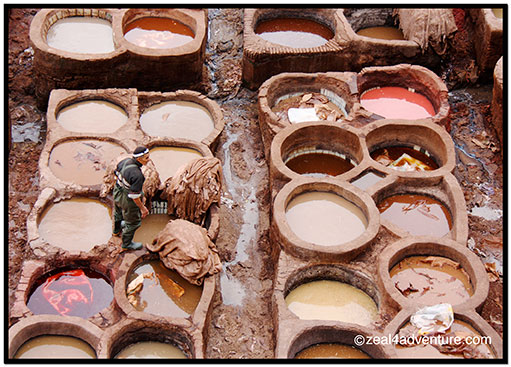
A visit to Fes will not be complete without seeing a tannery.  And at the Chounara Tannery, the smell of lye, acidic pigeon excrements and dyes drifts around the rooftop balcony, we were given sprigs of mint to mask the stench.
lye-vats

The view from the balcony allows for a site that has not changed since the 11th century –

tannery

workers balancing between stone vessels arranged like honeycombs filled with vibrant dyes.  They soak the hides in the acidic solution and then transfers them to another vat containing dyes such as henna, saffron, or mint.
dye-vats

It is a rare visual spectacle and experience not to be missed at any cost.

Now purchasing high quality leather products produced from these tanneries is another thing.  In fact, shopping in Morocco is an entertaining experience worthy of a post all its own.