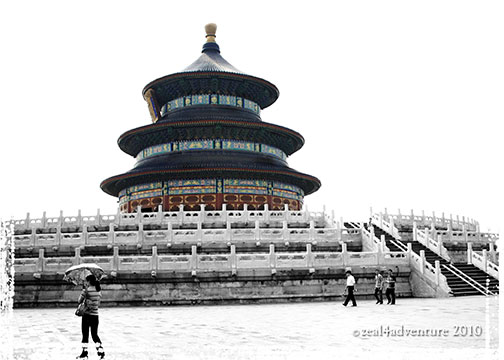
Temple of Heaven

“The Temple of Heaven is a masterpiece of architecture and landscape design which simply and graphically illustrates a cosmogony of great importance for the evolution of one of the world’s great civilization.” – UNESCO World Heritage.

Inscribed as a UNESCO World Heritage Site since 1998, the Temple of Heaven is an extraordinary example of Chinese religious architecture.

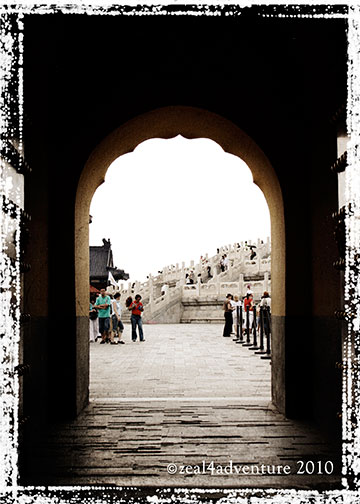
Built in 1420, covering an area of 273 hectares, this temple traditionally was only for imperial use and commoners were not allowed to enter even the enormous park.

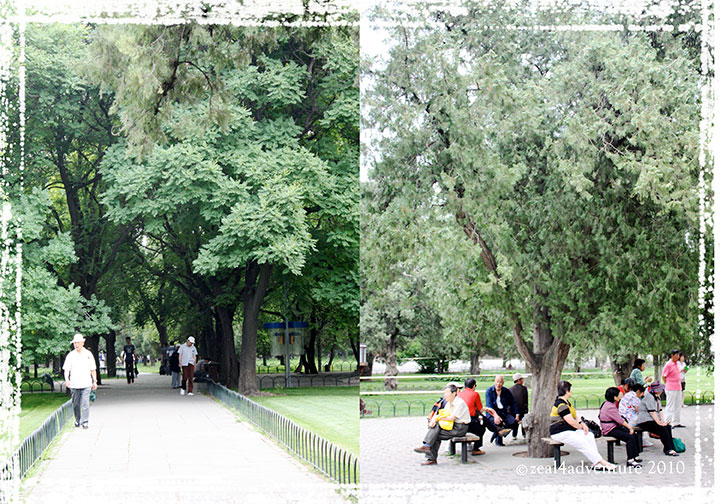
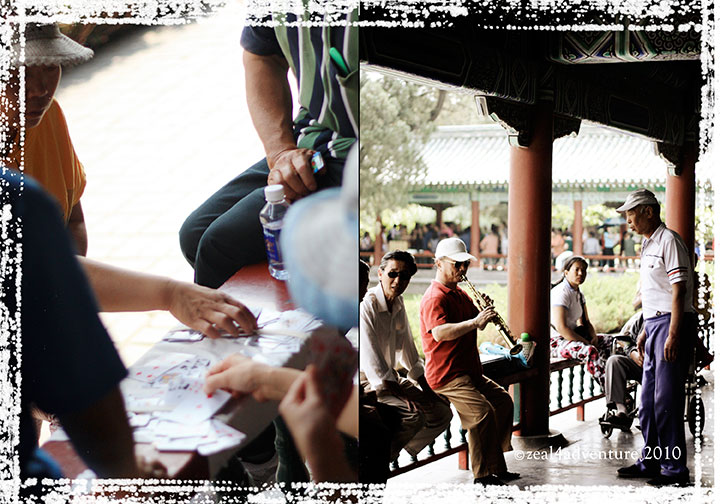
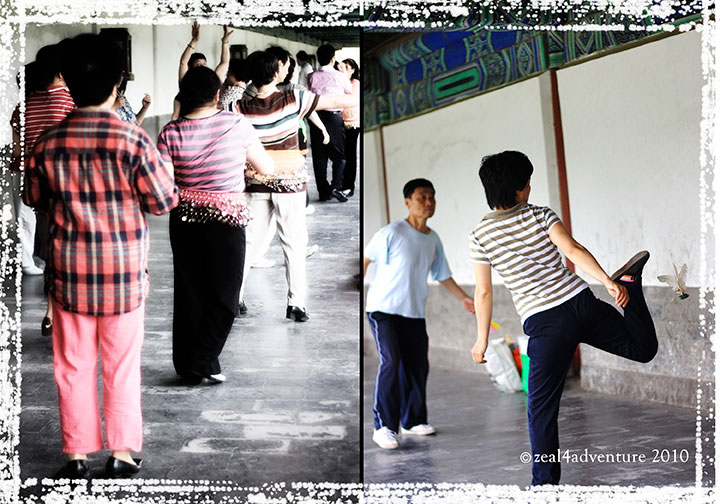
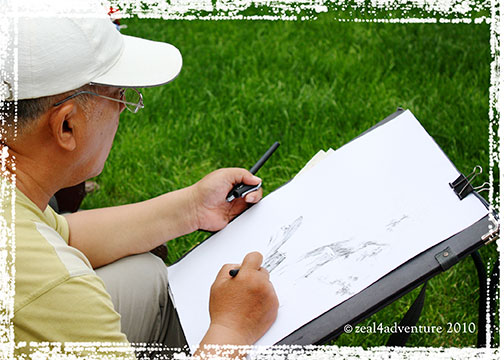
Today, it is one of the most popular parks among local people (mostly retired).

Many enjoy the park carrying out various activities from dancing to playing cards all day long.

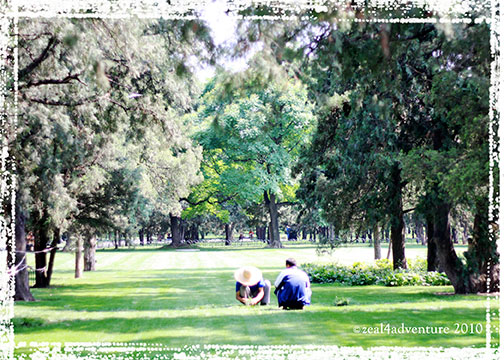
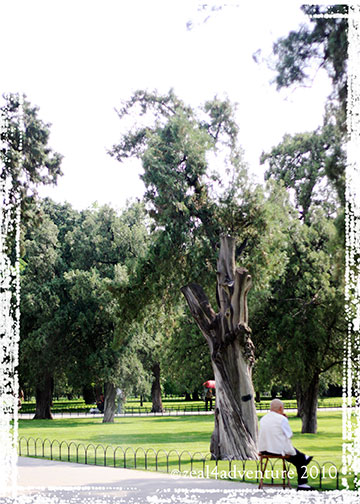
The park has more than 100,000 trees of various kind – some spotted were

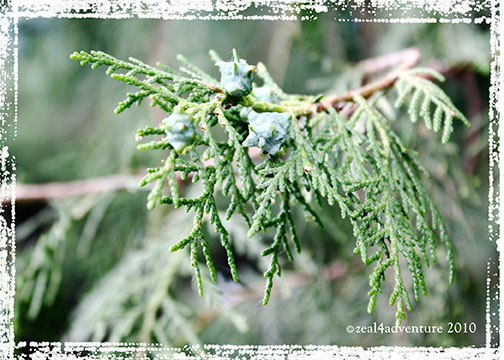
ancient cypresses and

evergreen pines to name a few.


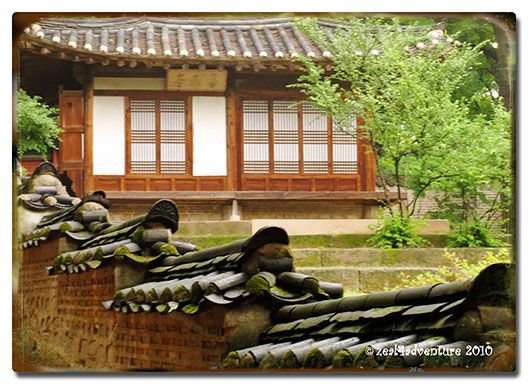
Chang Deok Gung: A Palace in Harmony with Nature

The ancient seat of Korean royalty has 5 major palaces in Seoul and some are definitely worth a visit.  Chang Deok Gung is one.  We visited the palace as recommended if given half a day sightseeing only.  Some chose to go shopping… not me.  Although Geong Bok Gung is the grandest palace and the seat of power for centuries, we didn’t go there because it would need more time to fully explore.

And even if Chang Deok Gung is 2nd only in importance to Gyeong Bok Gung, it was a favorite of many kings of the Joseon Dynasty, perhaps because it was built in harmony with nature.

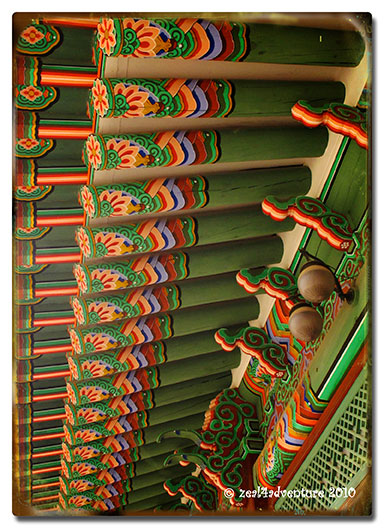
The walls inside the palace were laid out freely, not imposing but rather blending with nature

and this earned the palace a UNESCO listing as World Heritage Site in 1997.

Both palaces were totally destroyed by fire during the Japanese invasion of 1592.  After the war, Gyeong Bok Gung was not rebuilt because its site was no longer considered auspicious.

Instead, Chang Deok Gung was restored in 1610 and served as main palace for the next 258 years, until Gyeong Bok Gung was finally rebuilt in 1868.

Some sites to note:

Seongjeongjeon – where the king handled routine state affairs.

Originally a hall for the king, but it was also used by queens to throw parties to honor elders and encourage customs of respecting one’s elders.

For leisure and relaxation, the royal family had a secret garden built.  The garden presents an unusually exquisite design adapted to the topography.

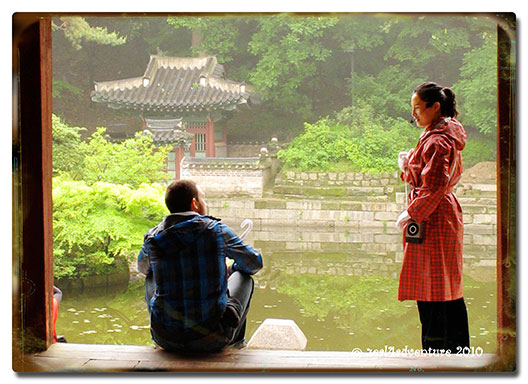
Buyongji lies in the heart of the Secret Garden.  A relatively open space used for retreats as well as for study.

A number of buildings were built around this rectangular pond.

Jondeojeong – this area is believed to have been the last to be added on to the Secret Garden.

The Palace in more detail:


The Ruins of St. Paul’s (Ruínas de São Paulo)

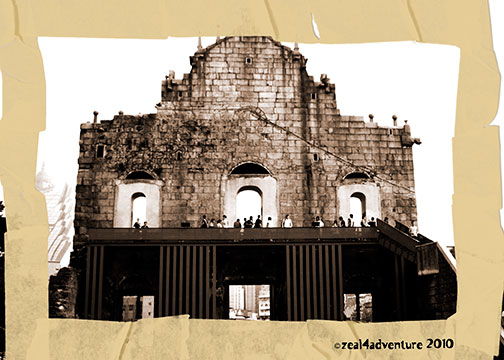
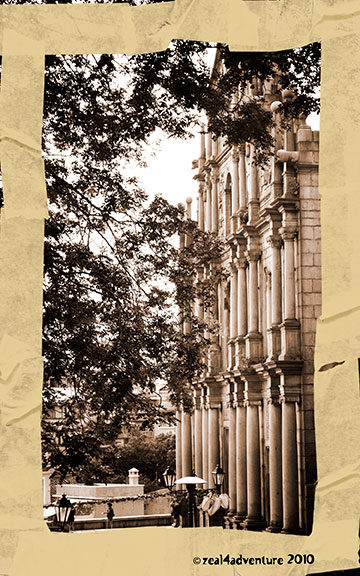
The sixty-eight granite steps from the square will lead you to a façade of what was once the greatest cathedral in Macau.  Built from 1582-1602 by the Jesuits, the remains of St. Paul’s Cathedral was the largest Catholic Church in Asia at the time.

It is a fine example of Macau’s unique characteristic as a city of Europeans, Chinese and other Asian exchange.  Ruined by fire twice, ravaging the other buildings and destroying the church ad almost all the complex.  From 1990 – 1995 work was carried out to restore the back of the church, turning it into a museum.

Regarded today as the symbol of Macau, St. Paul’s ruins was considered the core area when the historical center of Macau was inscribed on the World Heritage list in 2005.  It is today one of Macau’s most famous landmark where music performances are held regularly.

If you enjoyed these sepia scenes, click image below for more.

Ilocos UNESCO Pride

Three UNESCO World Heritage Site found in one region, that’s right, all found in Ilocos – Vigan City, Santa Maria Church both in Ilocos Sur and Paoay Church in Ilocos Norte.  That’s two out of four Baroque Churches in the Philippines inscribed in the UNESCO World Heritage list.  Can’t get any cultural than that — a perfect post to end this road trip series.  So without further ado:

Santa Maria Church

Along the western coast of the Ilocos Region, an hour drive south of Vigan is the town of Sta. Maria.  Somehow the Spaniards like building churches on top of hills because again on top of a hill overlooking the town, the blue sea and the verdant fields nearby is another World Heritage Site, the massively baroque Sta. Maria Church.  Built in 1769, this church was used as a fortress during the 1896 Philippine Revolution.  The church’s façade is not impressive but more striking and quite unique is the tower that is slightly tilted.

St. Augustine Church

Is also popularly known as Paoay Church visited by many due to its interesting architecture.  A unique example of Filipino architecture from the Spanish period, the main distinction though are its buttresses which supports its walls, 3 meters thick, from earthquake.  For that reason, it was cited as one of the most outstanding “earthquake baroque” structure.  Aside from its function however, I think the buttresses add a very Asian touch, almost reminding me of Balinese architecture.  The church is an example of east meets west architecture (Filipino, Asian and Spanish) which is uniquely Filipino, I think.

I hope you enjoyed Ilocos as much as I have.

Take A Stroll With Me

In Macau.  Not only is the center an urban area with an old city, it is a World Heritage site to boot.  Inscribed on 25th July 2005 by UNESCO, the Historic Centre of Macau is a product of cultural exchange between East and West.  It could be the oldest, most complete and consolidated selection of European architectural legacy standing intact on Chinese Territory.  The center spans 8 squares but 2 hours will only allow for 3 squares, a ruin, a church and a whole lot of eating and window-shopping.
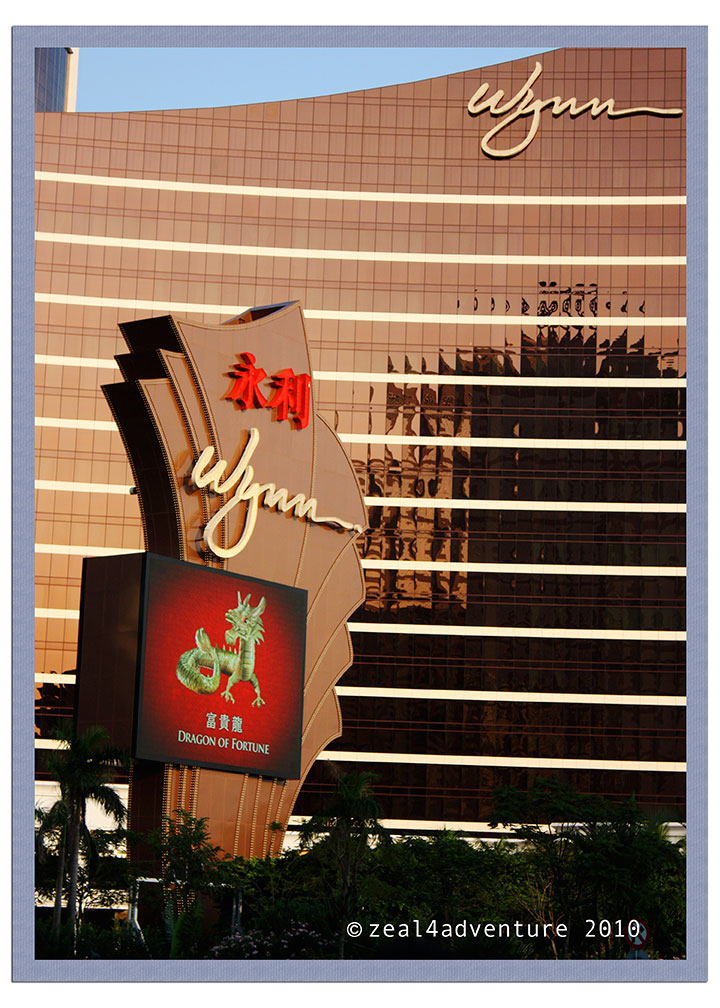
From our hotel, we walked all the way, passing casinos, to our first square.

Senado Square

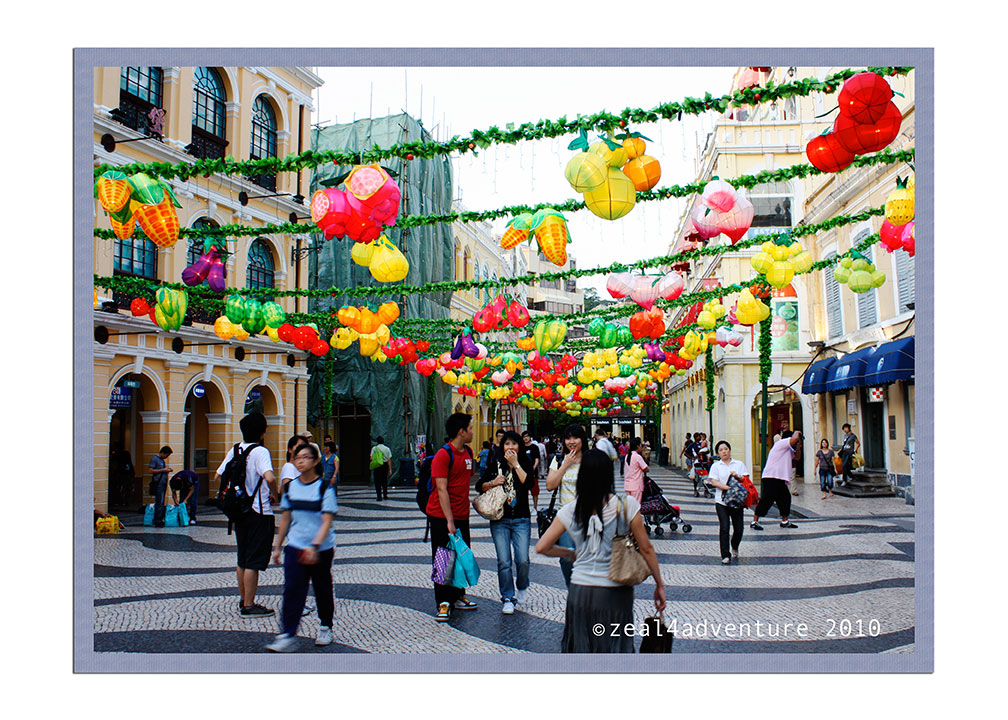
I would have loved a photo of an empty square to showcase the cobble-stoned grounds with exquisite black and white wave patterns.

Not to mention the pastel colored neo-classical buildings flanking the square on all sides giving it a Mediterranean atmosphere.

But Senado will not be Senado if it was not busy (at least on both times that I’ve been there).  It has been the center of Macau since the square was built sometime in the 19th century.

From the main road to the church of St. Dominic’s, the pavement extends and eventually leads to a different kind of city – the cathedral of St. Paul’s, now in ruins located on top of a hill, making the stroll a paradise with so much eye candy.

St. Dominic’s Church

Not too far from Senado Square is St. Dominic’s Square.
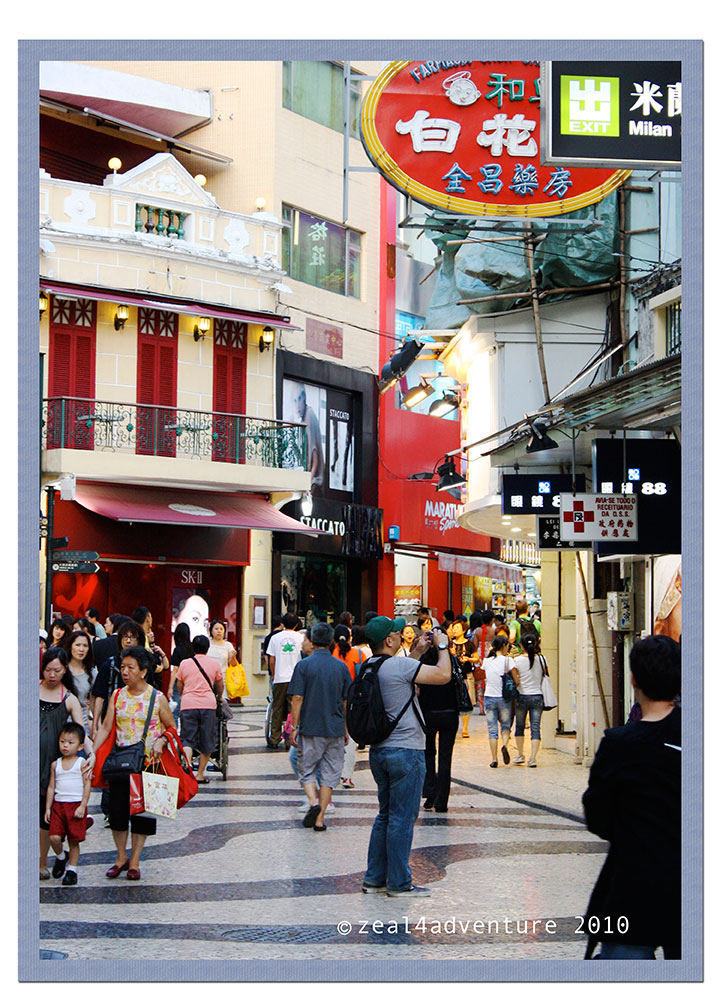
It is one of the most popular squares because it is close to where the shops and little food vendors are.

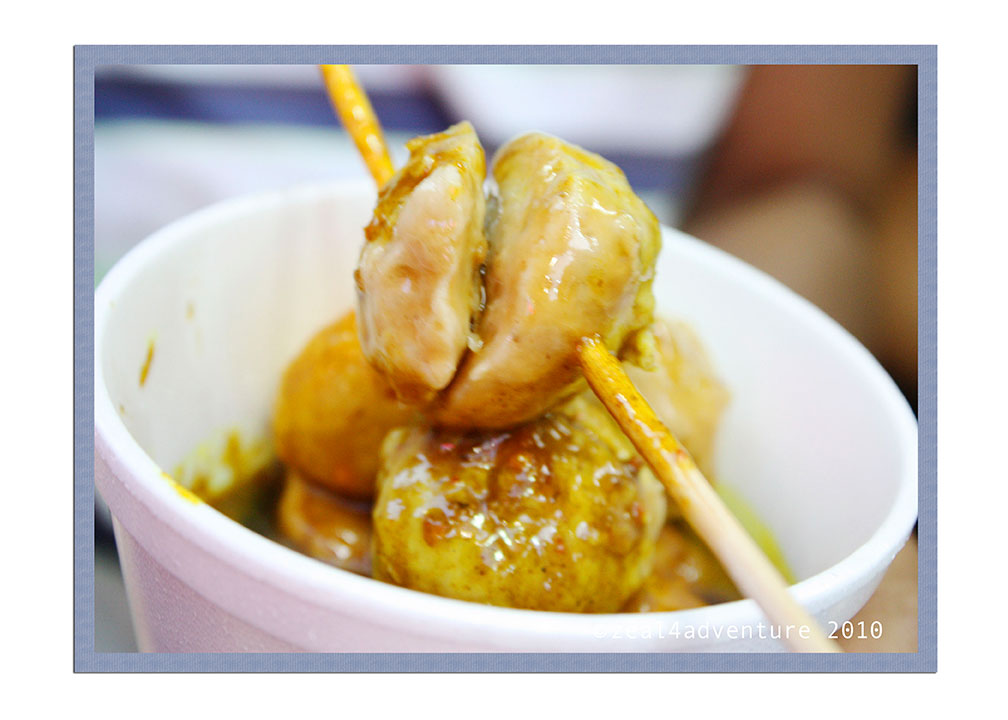
It was fun strolling through the shops gobbling through these tasty fishballs in satay sauce.

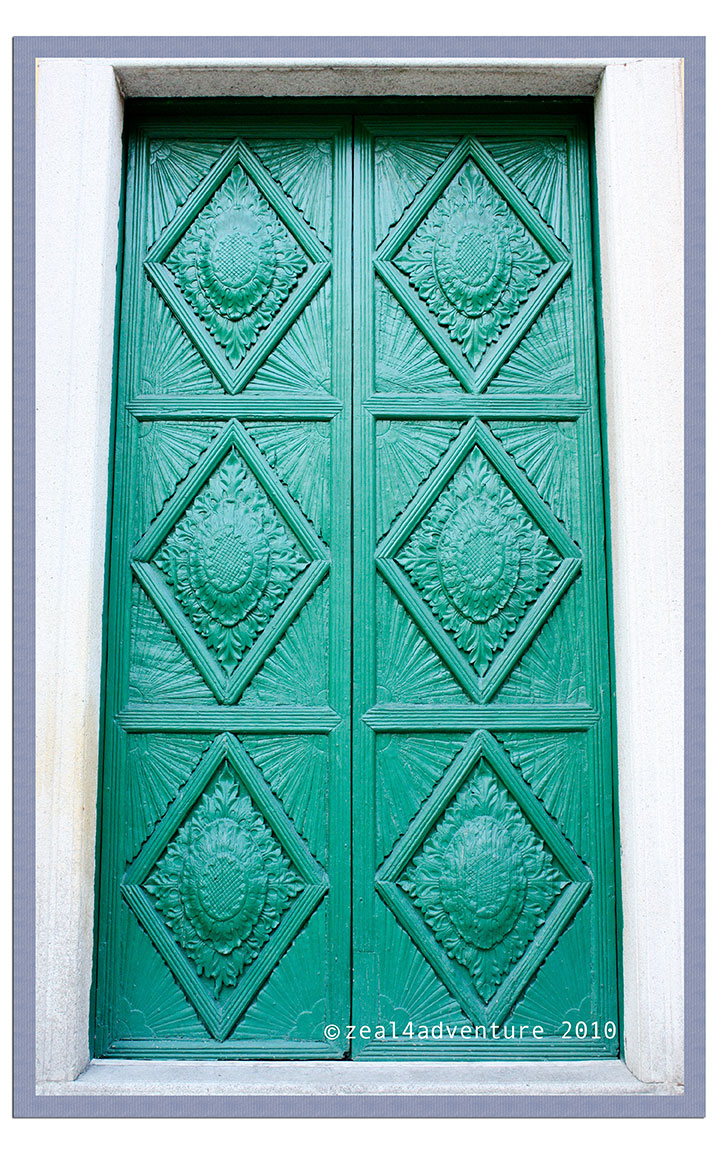
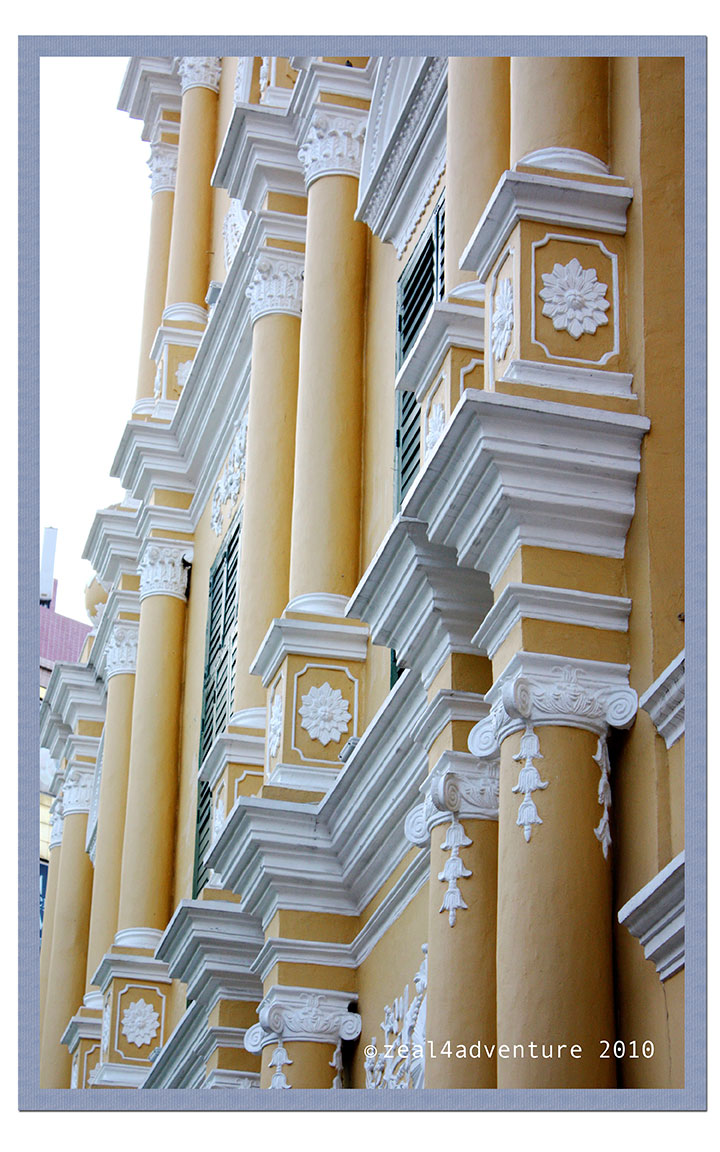
Standing on the square is an imposing façade of cream-colored stone with white stucco moldings and beautifully designed green doors.

The first church ever built in China; Dominican priest, originally constructed from wooden slats, built St. Dominic’s Church in the mid 16th century.  A far cry from what we see today.

The church has an interesting past swathed with drama and violence.  A military man was murdered at the altar during Mass because he supported the Spanish against the Portuguese.  There was also a time that the Dominicans sided with the Pope against Macau’s bishop.  When local soldiers tried to enforce an excommunication order on them, the friars locked themselves in the church for 3 days.  In 1834 the monastic order was suppressed and for a time, the church was used by the government as barracks, stable and office.

Pasteria Koi Kei

On our way to the ruins of St. Paul’s, we entered a small alley brimming with more little antique and food shops.

You’ve gotta taste these babies!

One that caught our eye was this food shop selling dried pork and beef fillet similar to a jerky but so much yummier.
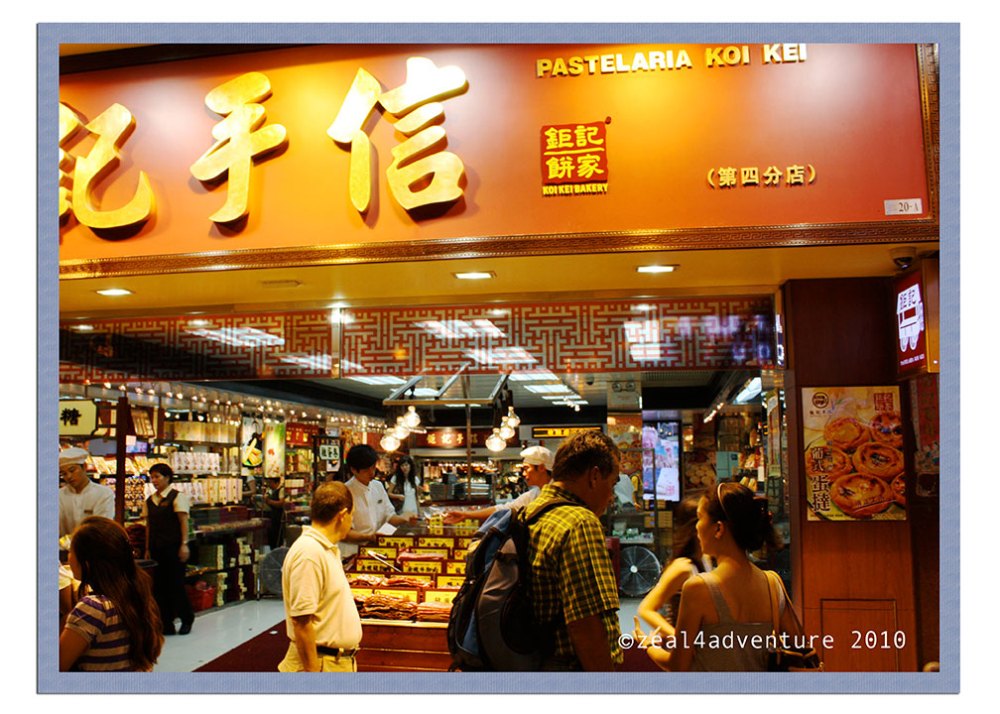
A small storefront extends really deep inside.

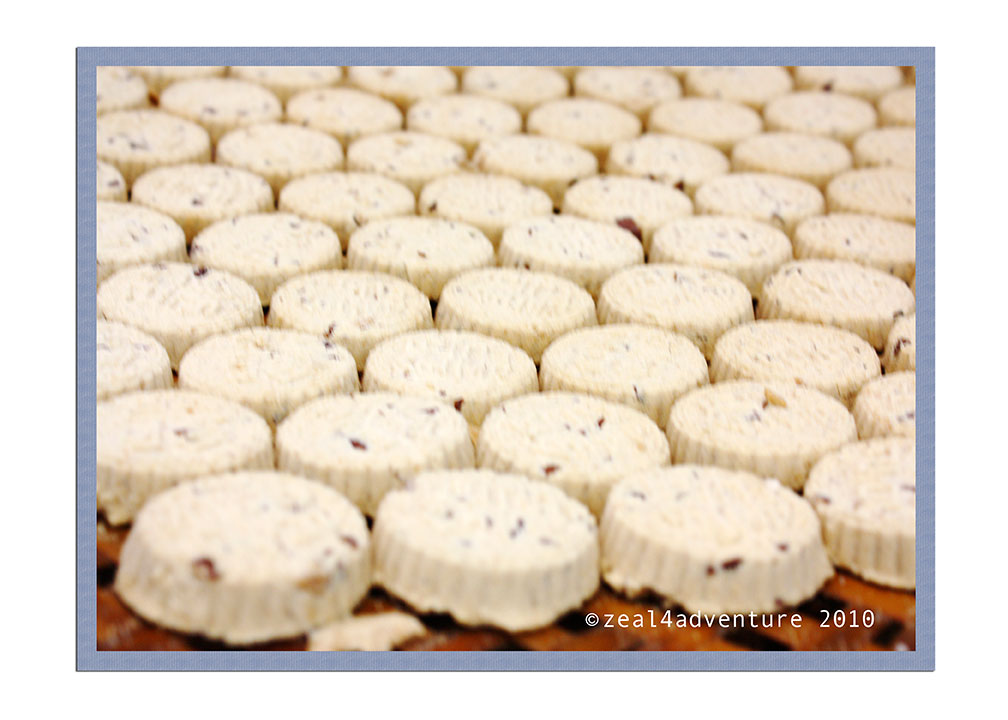
The biggest attraction though appeared to be their almond cookies.  Tracing its roots back to a cart selling only crunchy peanuts and ginger candies, Koi Kei put up its first store in 1997 and today it has gained recognition as the “most popular food souvenir” champion in Macau.  Like us, many bought items to take a taste of Macau home with them.

Sampling some egg rolls as they make ’em!  Great way to entice people to buy!

From peanut candies to almond cookies and egg rolls, Koi Kei Bakery is currently selling more than 300 varieties of products – almond cookies, egg rolls, crunchy peanut candies and the dried beef and pork fillet being among the more popular ones.

Ou Mun Cafe
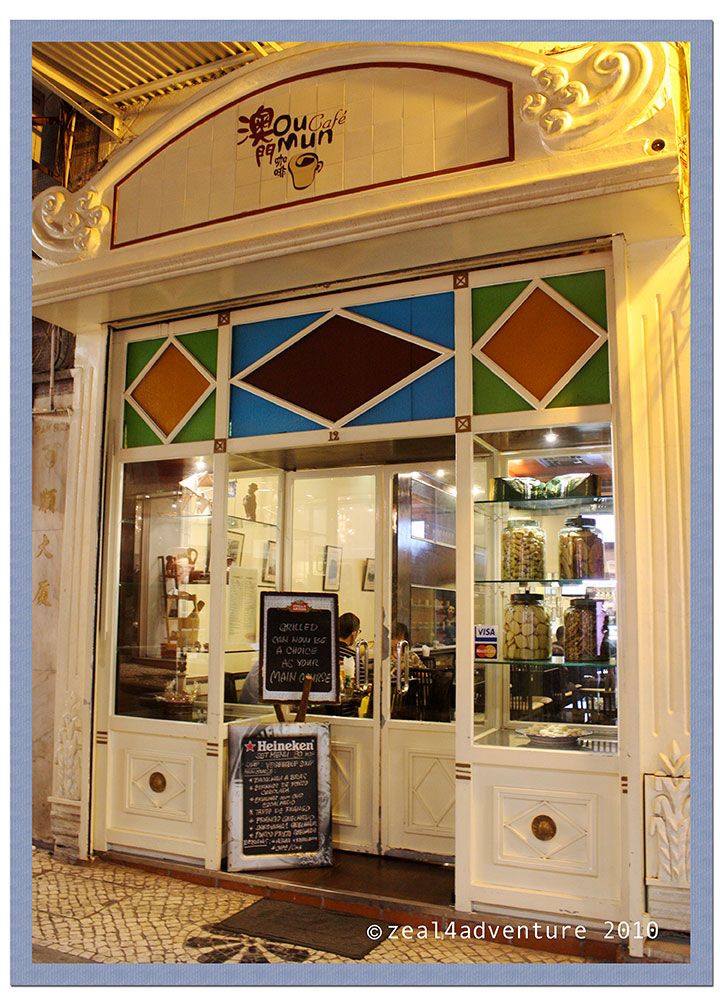
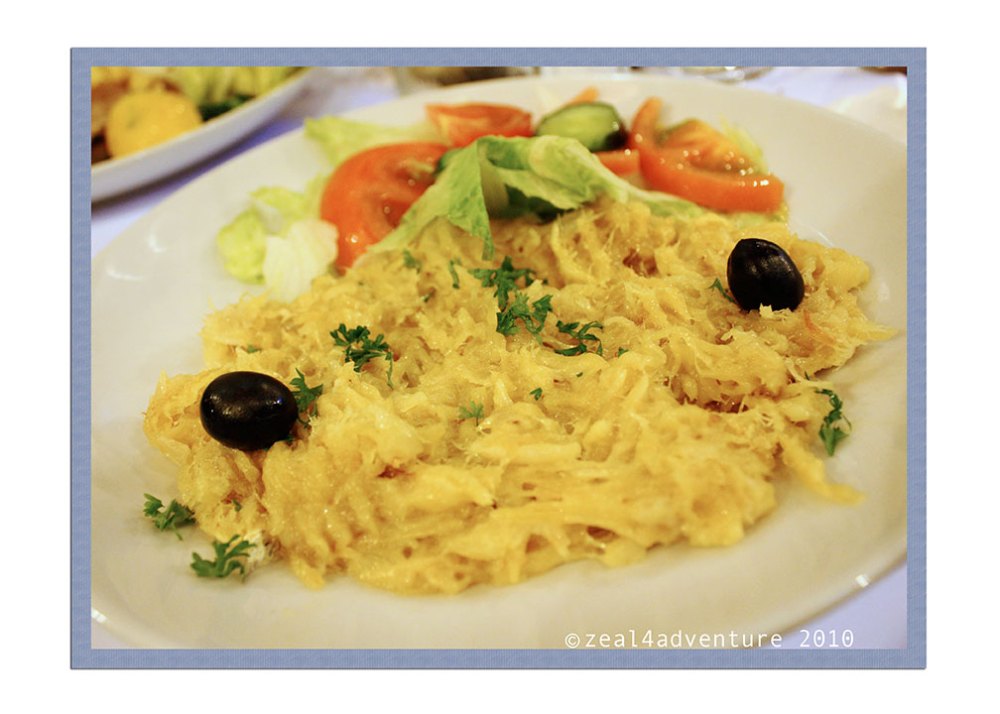
After a good couple of hours, we were famished (even after all the goodies we bought and sampled).   In a cozy looking restaurant in one of the alleys in St. Dominic’s Square, I had a Bacalhau à bras – salted cod fish sautéed with potatoes, onion and eggs, in short, a bacalhau omelette.   🙂
The Cathedral in Cathedral Square

On our way back to our hotel, we passed another route and found ourselves in another square.  The façade of the Cathedral is simple but when lit at night, it transforms into something grandiose.  The present building stands on the site of several previous cathedrals, the original was the Church of Our Lady of Hope of St. Lazarus.  The first stone Cathedral, consecrated in the mid 1800s was almost destroyed in a typhoon 24 years later.  Extensive repair was done.  In 1937, the church was completely rebuilt.

Macau is not all about the gambling, you gotta admit though, they do add character to this urban area in an old city especially at night!

Ou Mun Café
12 Travessa de São Domingos, Macau
+853 2837 2207

Scenic Sunday

Timeless Vigan

Ilocos Sur is where many culture and histories meet, all sharing space in this timeless city called Vigan – shrines, landmarks, museums, churches, ancestral homes, a cobbled-stoned street.  Inscribed in 1999 in the UNESCO World Heritage list, citing that, “Vigan represents a unique fusion of Asian buildings and construction with European colonial architecture and planning.”

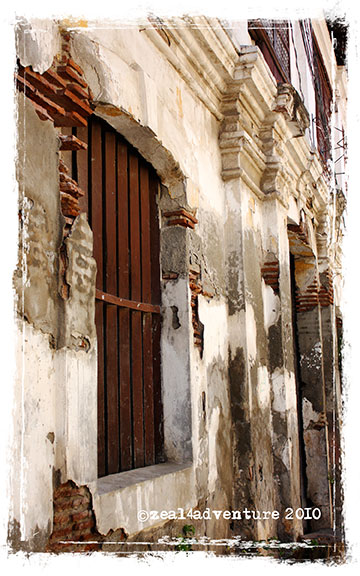
Established in the 16th century, Vigan is still the most intact example of a Spanish colonial town in Asia today.  It is best known for its cobbled-stone street, Calle Crisologo, lined with many old buildings that are intact, restored or in (dis)repair.

One can see remnants of the old-Spanish architecture throughout the center of the city.

Although the street is now busy with souvenir and curio shops, it still transports one back to the Vigan at its peak.  It is the oldest surviving Spanish colonial city in the country, not many of the historical buildings are left after WWII.

The old Vigan colonial houses, built mostly by rich Chinese traders, are made of thick brick walls and red clay.

They conduct their business on the ground floor and reside above.  It is a characteristic of Chinese culture and other Asian countries as well.  The resulting townscape is a unique display of a harmonious blend of Ilocano, Chinese and European elements, a unique display of the multi-culture nature of the Filipino society.

Captivated by colonial towns and its culture, this road trip all started with Vigan in mind.

From their longganisa and bagnets to their ancestral homes, we savored it all.

the street at night

We spent the 2 days walking up and down Calle Crisologo soaking in the heritage,

wondering how life was back in those elegant days of yore.  An interesting city albeit far from the capital with about 400 kilometers (that’s about 8 hours) of travel needed if you are coming from Manila.  Vigan is charming and I urge every Filipino to make a visit at least once in their life.   🙂

Not your typical McDonald’s facade

Al fresco dining in the evenings is a wonderful thing

Scenic Sunday

Sweet Jasper

Scenic Sunday

Jasper

Credits:  Template:  Katy Larson Kiseed Studio;  Paper:  LivEdesign Sing4Spring PP3 and SP2;  Elements:  LivE S4S Spring String 2;  Alpha Tags:  LivE Sing4Spring Alpha Tags

“Must not miss Jasper,” my well-traveled friend advices.  “It is a town you will adore.” Anyone who knows me knows that I love quaint, rugged towns and this little town where peaks crown the horizon in every direction is indeed a town I have regarded as one of my top picks.  The largest and the most northerly of Canada’s Rocky Mountain National Parks and one of the group of 4 national park and 3 provincial parks which together are designated by UNESCO as the “Canada Rocky Mountain Park World Heritage Site”.

Quieter then the 2 previous towns, Jasper feel more like a friendly small town than a tourist town.  It is because nearly one quarter of Jasper’s population is not dependent on tourism.  Canadian National, Canada’s largest railroad, employs hundreds of people who call Jasper home.

If you’re into small quaint towns (filled with abundant wildlife) as I am, this rugged, not-so-little piece of wilderness will become your favorite spot as well once experienced.  In my next few post, you’ll see why.  So consider this an intro to one of my favorite places.

A World Heritage Expedition

mwtwhite4

“We woke up to a perfect storm”, aptly described by a friend of the bad weather that welcomed us one morning as we approached the Sulu Seas on our way to Tubbataha Reefs National Marine Park, simply called Tubbataha.  The park was declared a National Marine Park in 1988 and a UNESCO enlisted World Heritage Site in 1994.

minerva1

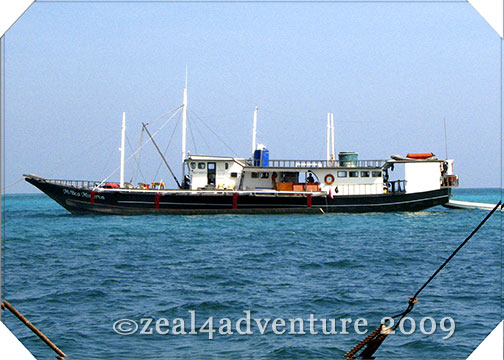
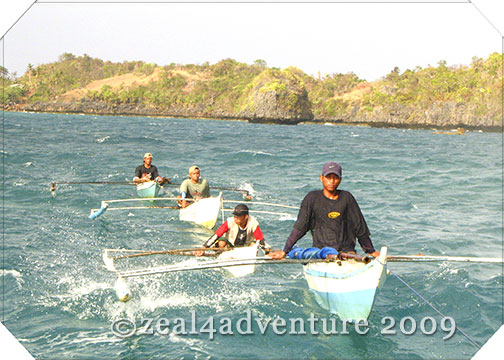
We were on an expedition on board the M/V Minerva, a research vessel owned and operated by WWF-Philippines, which opened the Cagayancillo micro-archipelago and Tubbataha Reefs to non-divers.  Yes NON-DIVERS.

Intrigued with Tubbataha, I’ve always wondered what it was all about.  “A must-see and a must-do especially if you are a diver”, I was told, which made me all the more attracted to it, never mind that I didn’t dive (then).  The hindrance was the cost and not to mention, the divers will be underwater while I will be left above, trying to get a glimpse of the world beneath (or so I thought).  So when I got hold of this offer to join the expedition… you guessed it, I jumped right at the chance.  Worth every centavo… good food

sunset

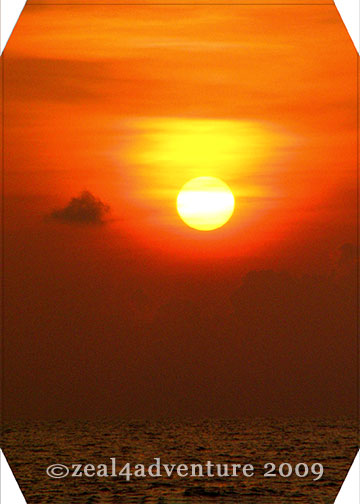
and awesome sunsets were just the tip of the iceberg.

cagayancillo

Cagayancillo was a discovery, but best of all, we were brought to snorkeling sites (as opposed to dive sites), and without having to don a scuba gear, we saw jacks (schools of ’em) in our face, sea turtles, even reef sharks, stingrays and barracudas owing to very clear visibility.  It was a turning point, so to speak.  Took up scuba diving soon after and turned out to be one of the best decision ever.   🙂

tubbataha

A reef ecosystem made of 2 atolls; Tubbataha is home to many marine species and is recognized as being probably the best diving in the Philippines and amongst the best in South East Asia.  Politically part of Cagayancillo, Palawan, the name Tubbataha comes from the dialect of the Samal, seafaring people of the Sulu region, and means “long exposed reef”.

lighthouse

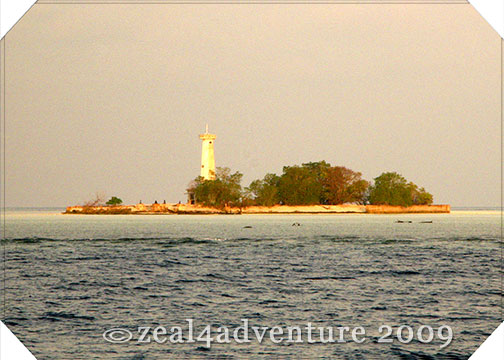
The remoteness of Tubbataha Reefs has been its greatest protector against our exploitation.  There are no permanent residents here and the reefs are only accessible by live-aboard dive boats.  Not exactly cheap and easy.

bird-island

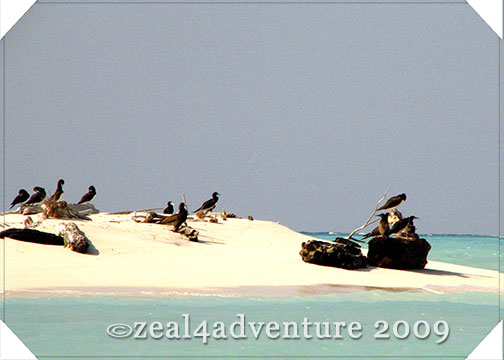
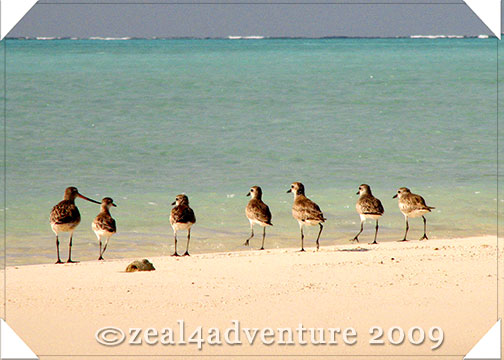
Situated on the north face of the north atoll is a large reef popularly known as Bird Island due to the numerous “boobies” and “noodies” that nests in the islet.

bobbies1

We were greatly charmed by these critters from afar.  The nearest we could get to them is thru telephoto lenses as stepping foot on this island is reserved for rangers and researchers.  Be that as it may, it was the most spectacular sight I’ve seen as far as bird watching is concerned.

noody

A project of WWF-Philippines, it aims to encourage and demonstrate to the commercial tour operators that there is a market in the non-divers.  The hope is that with the support of such operators, Tubbataha Reefs will raise funds each year to pay for itself.

Enjoyed myself immensely that I went on the expedition twice.  The first time, as a paying volunteer (to check out the sites) and the second was when it ran its first commercial trip in 2007.

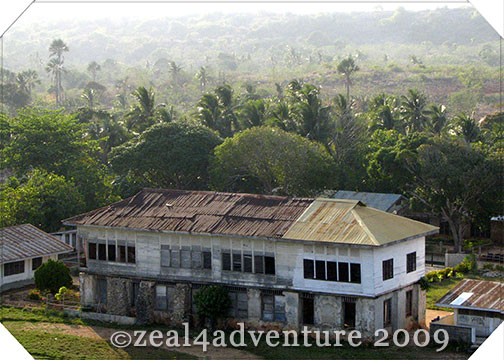
The expedition takes you to not 1 but 3 World Heritage Sites.  Aside from Tubbataha, the expedition kicks off and/or concludes with a trip to Miag-ao church and the Puerto Princesa Subterranean underground river.

For the 2009 trip details, click here.

I hope you enjoyed my world this week.  To enjoy more worlds, hop on over to My World Tuesday.

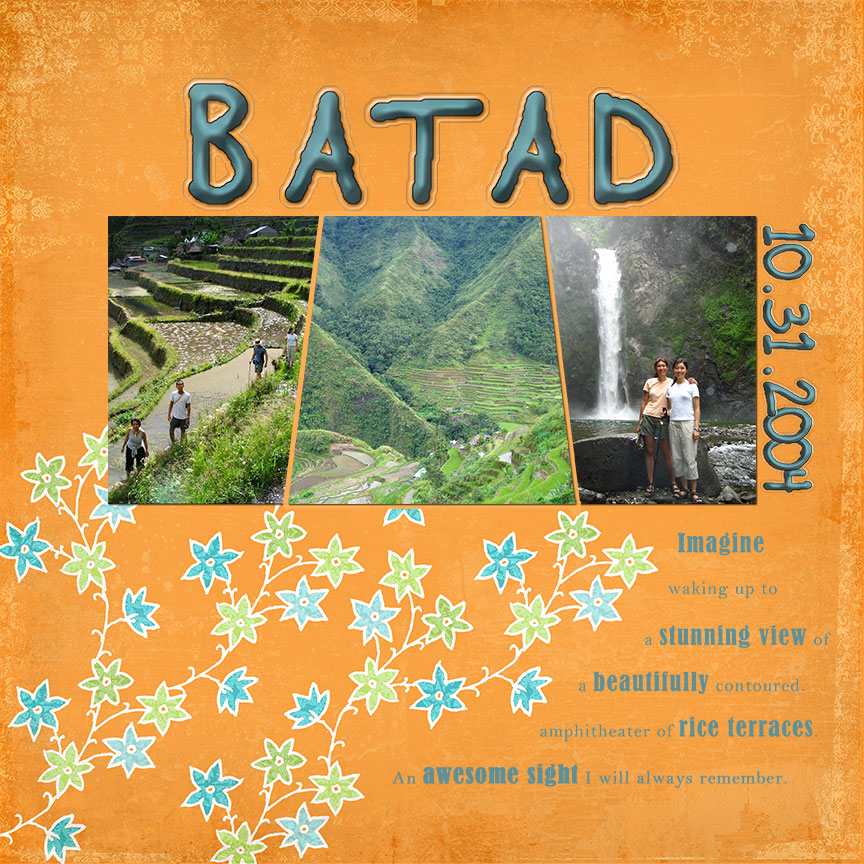
Batad


batad

Credits:  Alpha: Sharejoy- blue alpha puffy stickers; JSprague Festa Mini Kit – Orange Paper

Banaue comes to mind when rice terraces are concerned.  True.  It is not famous for nothing.  And The Viewpoint, after weaving through a host of souvenir shops, has a magnificent view of it.  But Batad is for the more intrepid traveler, more off the beaten path, so trekked to Batad we did one Halloween weekend and we discovered a marvelous view of more pristine terraces.  An amphitheater, in fact, was what greeted us as we neared the village.  Quite dramatic, if I may say so.

The village, 4 years ago, still had no electricity and is mostly made up of traditional Ifugao houses, most if not all would have a view of the terraces.  A 40-minute hike down the terraces will lead you to Tappia Falls — an impressive falls and taking a dip means braving the icy-cold water.  So, you think I braved it?  Umm…   🙂

Touted as the backpacker’s mecca, getting to Batad requires trekking (as there is no other way to get there) so tourists aren’t as plenty as there are in Banaue.  My kind of place.  A place where you can get lost in the midst of tranquil beauty and isolation, and this makes the trek worth it.

Batad is on the UNESCO list of World Heritage Site in Danger since 2001.

Getting there:

Take a jeep from Banaue to the Batad junction, hike up to the saddle and from there, it’s a 40-minute hike down to the village.  Alternatively, you can now hire a jeep that will take you up to the saddle.