WS #8: Fresh Berry Goodness

Despite a crazy week in Baguio City, it was a weekend full of activities including swimming through a sea of people during the Panagbenga festivities.  This post however is not about the festival (that will be for another post) but about my visit to a wild bluberry plantation in Tublay and the strawberry capital of Baguio, La Trinidad.

strawberry-fields

Strawberries (and blueberries) are all-time favorites. Strawberries, however, tops the list especially if they are firm and sweet.  The strawberries that greeted us that day, probably just a few hours after harvest, looked so fresh and shiny, almost like plastic.  I had to restrain myself from eating the whole 2 kilos of it.

strawberries

The next town, Tublay where we dropped by a blueberry plantation, is just a few minutes away from Trinidad.  Not exactly the blueberries we are familiar with, these blueberries are tropical and thrive in less harsh weather.  As an aside, I learned that majority of blueberries flourish in harsh weather, the colder it is, the better for the blueberries.  Our blueberries are smaller and have less meat but that tiny piece of fruit is so bursting with flavor.  Because it is grown in the wild, supply is scarce.  It’s virtually gone even before harvest is completed.

bluberries

And the view is enough to make the trip worthwhile.

bluberry-view

Lucky for me, berries are said to contain phytochemicals and flavanoids that may help to prevent some diseases.  Eating a diet rich in blueberries, strawberries and other berries may help reduce your risk if several types of cancer.

For more weekend snapshots, click here.
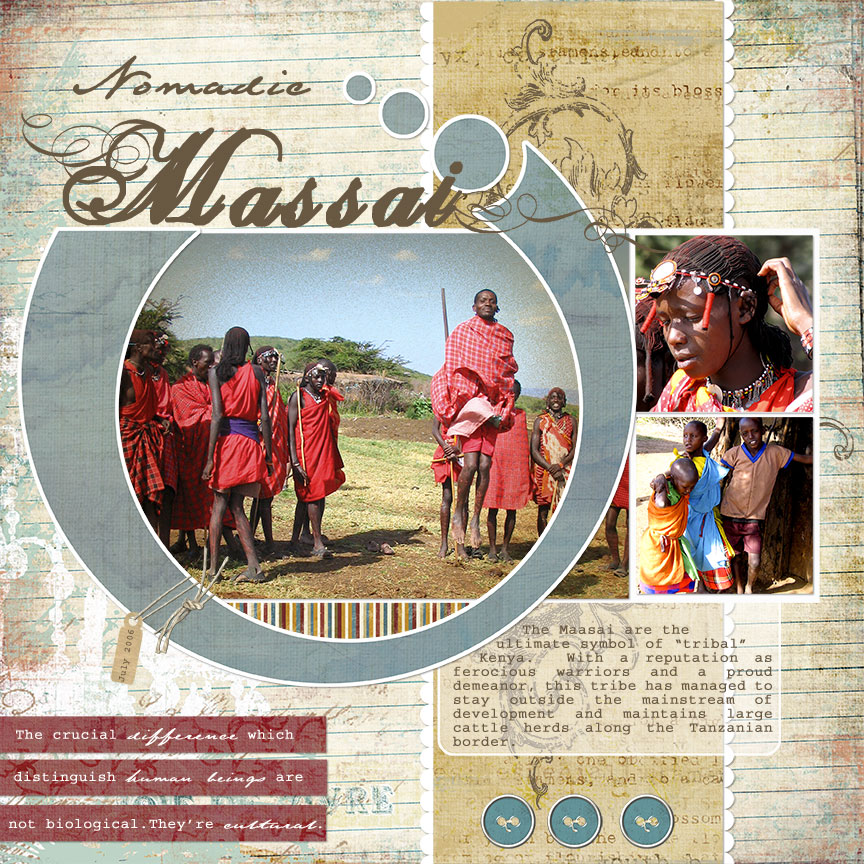
Massai – A vanishing race

Africa—my biggest trip so far and a dream vacation not exactly at the top of my priority list.  I found my way to Africa quite by chance.  A few years ago, a friend of mine did a year of volunteer work in Mombasa, Kenya.  One day, I received an email from her inviting us (her traveling buddies) to join her on a safari.  The thrill-seeker in me cannot NOT take this opportunity, so in June of 2005, I found myself on board a flight enroute to Nairobi.  Turned out to be by far the greatest experience ever.  Extraordinary adventures that made it to my list of firsts.

massai1Credits:  Brushes – DDMWISE a la Mode, NRJ Funky Vintage8;  Papers- Defining flowers – jen wilson, Kpertiet King Me paper, Lumiene – jen wilson, strip – jen wilson, Tjd Kuwtj hardwood 3; Elements – KPertiet – Hemp Tie, Linda GB Tiny tags_all worn, Lynng_barcelona button 2

To kick off this African Adventure series, I’d like to introduce to you to the Massai of East Africa.  They are after all one of the better-known African tribe.  They live on the Serengeti Plain near Kenya and Tanzania.  A unique society with a rich history steeped in culture and tradition, however with the interference of the west, the Massai are at risk of losing that culture within our lifetime.

massai-goods1

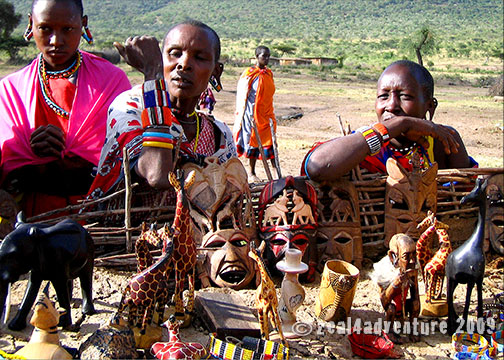
It was quite evident at the time of our visit to a village that they have become more and more entrenched in a market economy.  Souvenirs were peddled in one area of their village.  The Massai are pastoral people who live mainly off their cattle.  Traditionally, livestock is their primary source of income.  Beyond being used for food, it may be traded for beads and clothing.  Until recently, it was illegal to sell livestock for cash.  But the modern day comforts have lured many a younger Massai to the Western culture.  In a bar in Arusha in Tanzania, we were introduced to a Massai in regular modern day get up (sans their signature shoes made of rubber tires and red wraps) playing billiards with the locals.  If not for their very distinct earlobe hole and beads and other accessories, they blend in really well with the others.

massai-house1

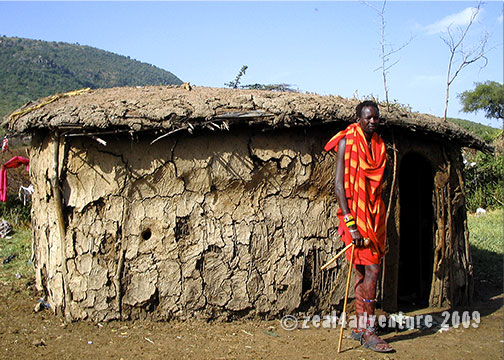
Despite that, majority of this red wrap cladding people still live in traditional Massai abode made of cow dung and mud.  I know, I know!  We entered one of it upon their invitation albeit hesitantly and with a huge sigh of relief, we found that it wasn’t stinky at all!   😯

They are known to be fierce warriors and hunting and killing a lion is common still today for these warriors to sort of prove their manhood and test their courage.

I am pleased to have caught a glimpse into the lives of this interesting set of people before outside interference completely change them.

Palanan On My Mind


mwtwhite

palanan-on-my-mindCredits:  Elements – scarlet hells media- JScollabed 2, Sclengeman- Carnival tag 2; Papers – hroselli carnival paper – turquoise, mlima – carnival paper, mmartin carnival paper

Travel doesn’t get much rugged than this. This remote province is only accessible by cargo ship, light aircraft or a trek of several days across the Sierra Madre mountain range. We opted to fly.  In June 2002, we found ourselves exploring Isabela’s best-kept secret, Palanan.   There were lagoons so blue, they called it Blue Lagoon (haha!), we likewise hiked to a really beautiful cascading waterfalls (name escapes me right now), and endless stretches of white sand beaches in the middle of nowhere with hardly anyone except for some occasional encounters with Dumagats fishing.


palanan-marlin

Declared a wilderness area in 1979, the Palanan Wilderness Area is home to several threatened bird species including the Philippine Eagle. Still inhabiting the Palanan coastline, the Dumagat’s lifestyle is relatively unchanged because of the area’s remoteness.

Its inaccessibility is both a hurdle and a lure to adventure-seekers.  Nestled in the farthest eastern corner of the province of Isabela, bounded by the Pacific Ocean.  Palanan is what I call P.A.R.A.D.I.S.E!

palanan1

Not only is it paradise, it has its fair share of history as well.  It was in Palanan that the Philippine-American war ended in Mar 23, 1901 when Emilio Aguinaldo was captured by American forces who gained access to Aguinaldo’s camp by pretending to surrender to the Filipinos.

An off the beaten path worth exploring.

For more That’s My World entries, head on to their site here.