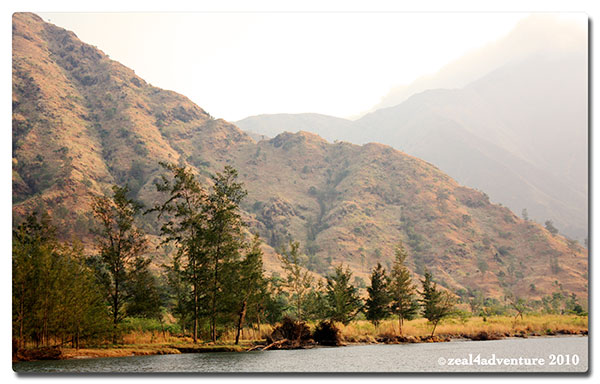
Vivere Azure: An Oasis of Calm

Every now and then this good friend of mine and I would spend a weekend together… just the two us.  So one weekend in September, having just emerged from a harrowing few weeks, my friend S wanted to veg-out somewhere away from the metro.  Being a good friend and someone who hardly pass up a chance to any kind of adventure (kaladkarinin in filipino hee hee!   :-D), I agreed to keep her company.  At the recommendation of a mutual friend, we booked ourselves a room at Vivere Azure.

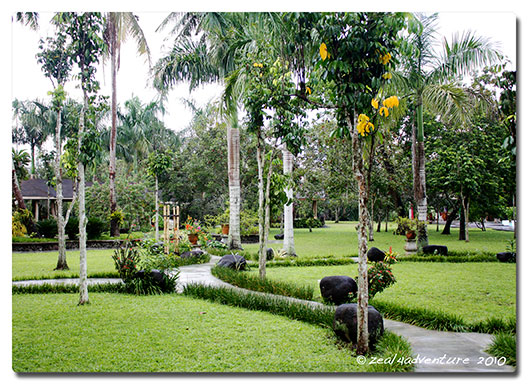
A refuge, I call it, just 2-1/2 hours away from Manila, this premier deluxe resort is found in the sloping hills of Anilao, an excellent dive location thriving with divers and tourists alike.

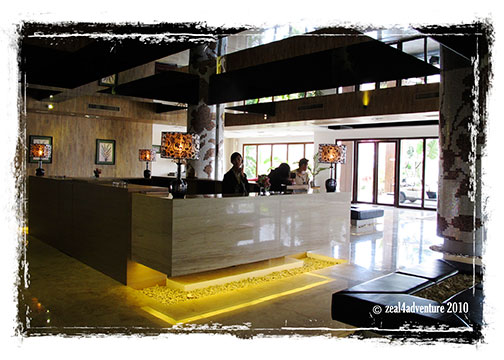
Reception Area

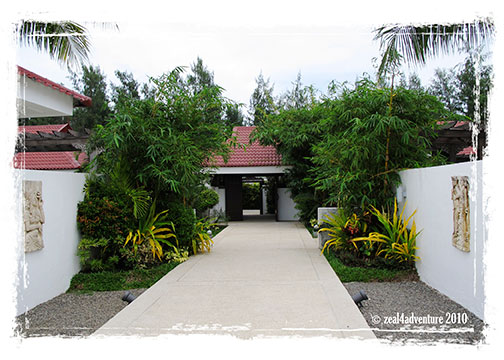
The unassuming entryway from the road, as with many of the resorts in Anilao, does not do justice to the place but once inside the gate, we were transported to an oasis of calm.  It seemed like we had the whole place to ourselves.  Warmly welcomed by very gracious staff complete with a welcome drink, we were ushered to our room.

Clockwise:  Inside, the balcony, the beach just a few steps away from our room, the view

The Cobalt Room albeit a bit snug was well appointed and very comfortable.  We oohed and we aahed over our room and the splendid view it afforded us.
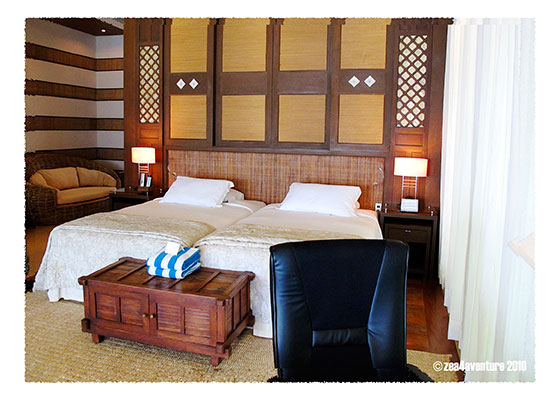
The Presidential Suite

The bar

Then we oohed and ahhed some more as we walked through the entire resort.  I liked it that the resort even had a sandy beach to speak of (a rarity in Anilao) and that our room was just a few steps away from it.

The rate per head (P6,500) is inclusive of 5 meals – breakfast, lunch and dinner plus 2 snacks.

The cozy dining area overlooking the sea was where they serve lunch and dinner.  The breakfast area was a different area closer to our rooms and the beach.
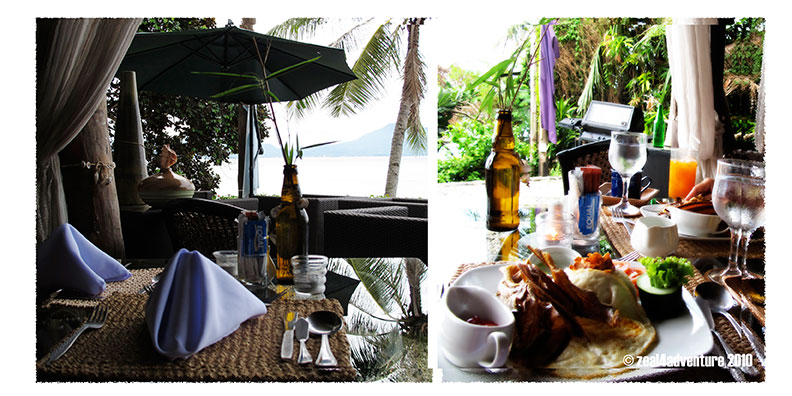
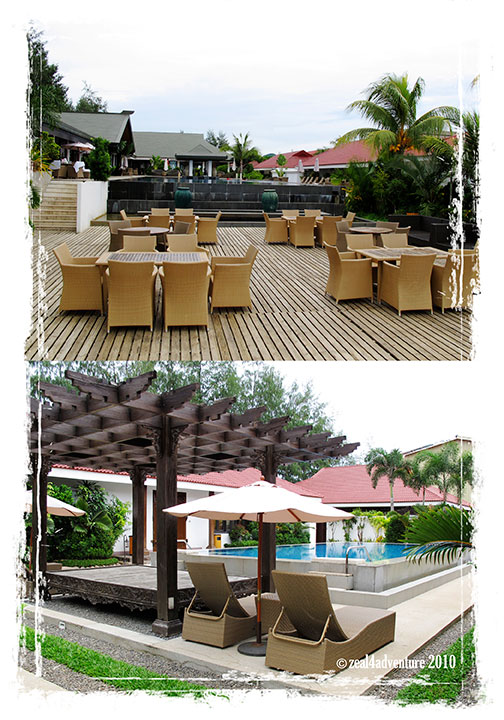
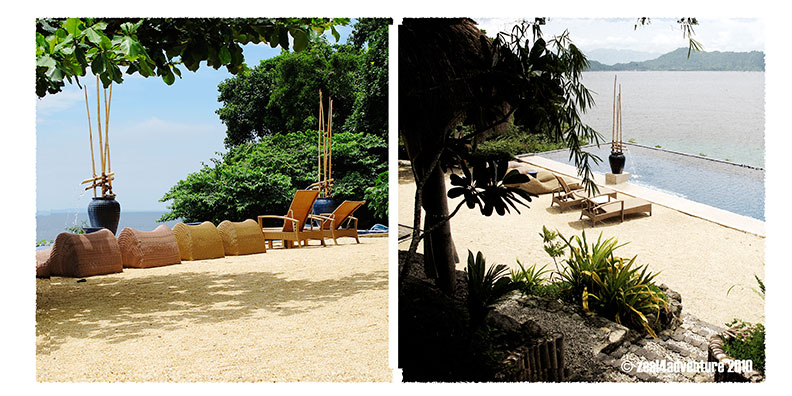
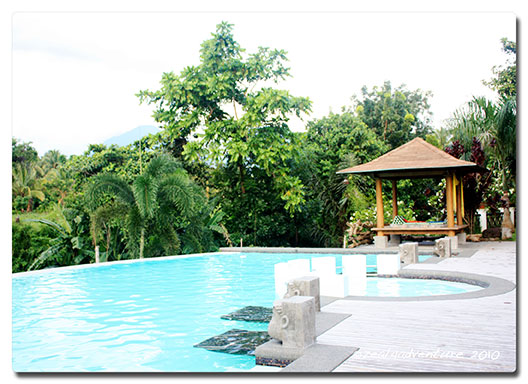
Our lunch was pretty impressive and satisfying – a good sign that we will be enjoying our meals here (and we were not disappointed).  After lunch we decided to enjoy the pool, which was not quite “infinity” but close enough.

A great way to enjoy the view and the sunset

The pool and the loungers were extremely de-stressing; I was in slumber land as soon as my head hit the lounge.
The following morning, I decided to go snorkeling.  They supposedly have a beautiful house reef.  For Anilao standards, it could be better.  I think Dive ‘n Trek has a better house reef.  But overall, I was pretty impressed and for a non-diver, I think the reef was acceptable.  The thing that totally won me over though was the pampering – impeccable service, I tell ya!  It’s like having a very discreet butler at your beck and call.

I frequent Anilao but hardly splurge on a resort as my main goal always was to go diving.  Not this time.  Our goal was to do nothing.  Besides, S is not a diver and Azure, although can arrange dive trips through their affiliate dive centers, is technically not a dive resort.
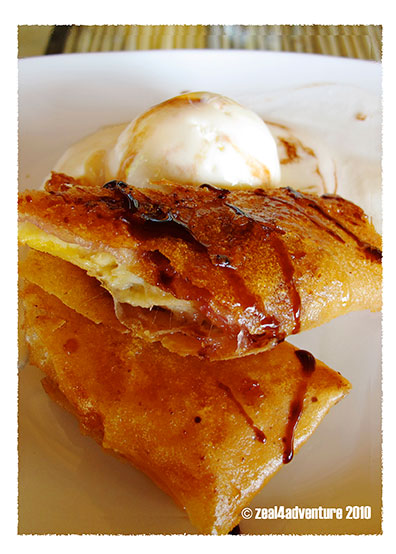
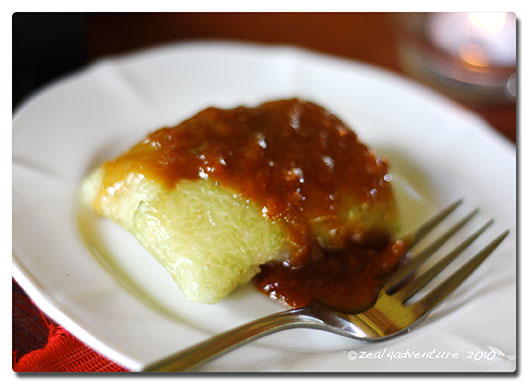
Our farewell snack — turon à la mode (fried banana roll)

That September weekend, I got acquainted  to a whole new Anilao.  So was it worth the splurge?  I say yes but don’t take me word for it, go book yourself a room.   😀

Getting There:

Other Useful Info:

Km. 108 Barangay Aguada, San Teodoro, Anilao, Mabini, Batangas
Contact Nos.:  (632)771-777 or +63917-843-0912
Email:  info@viveresuites.com
 

Chilling in Sta. Ana

Yeah.  It’s a long ways just to chill I know.  But A and our good friends convinced me to go all the way to Cagayan Valley so that I can spend some down time with them away from the hustle and bustle of my town that is Manila.

But what really convinced me was the surprise birthday party planned for our dear friend J.  And so I obliged and found myself on a bus one August evening en route to Tuguegarao.  A 10-hour bus ride had me arriving at 7am the following morning.   After breakfast and a bit of a rest, I was soon off again with the gang on 3-hour drive to Sta. Ana.

Not knowing what to expect, I was pleasantly surprised when we reached the unpretentious entrance that lead to a simple structure,

that is the resort’s reception lobby.   Located at the northeastern tip of Luzon, in a 7-hectare waterfront of Cagayan Valley facing the South China Sea,

Cagayan Holiday & Leisure Resort provides

112 spacious villas,

a seashore swimming pool,

a Spa and Holistic center and a fine dining Chinese Restaurant.

Our ocean front villa came with a private pool where we of course spent most of our time chilling.

Each of the 17 ocean front villas has 5 bedrooms with its own bath and albeit not to my taste is fully furnished and in fairness, tastefully designed.  The kitchenette does not really allow for real cooking but we had a feast just the same.

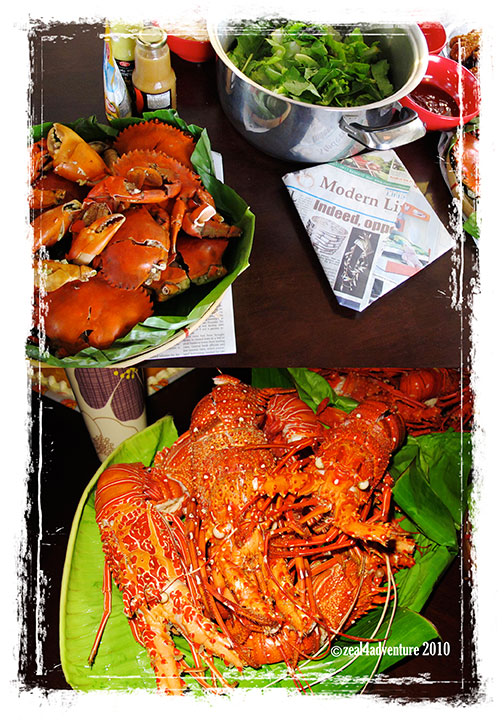
We bought most of our food from the local market and for a fee, asked a restaurant — JnJ Seafood Restaurant along the highway — to cook for us.  We had a feast.  A seaside town, Sta Ana is known for sweet, inexpensive crabs and lobsters, which suffice to say, was the highlight of our stay.

News of disgruntled residents somewhat taints this Chinese owned resort in the Cagayan Special Economic Zone and Freeport (CSEZF) area — they are accused of employing many Chinese citizens offering less opportunities to the locals.  There were undeniably Chinese-speaking employees working alongside Filipino employees during our visit, perhaps to cater to the mostly Chinese tourists billeted at the resort.  This town was once only known for game fishing without much facility, it is today attracting tourists from Hong Kong and China, mostly gamblers. The resort complex is really known for its casino but if gambling is not your thing, there is the spa and some watersports facilities such as jetskis and kayaks that can be rented.

The beach however does not boast of the same esteemed white sand of many Philippine beaches.

The sunset though managed to get my seal of approval.   🙂

If you are in the area and only if you are, I’d recommend that you check them out.

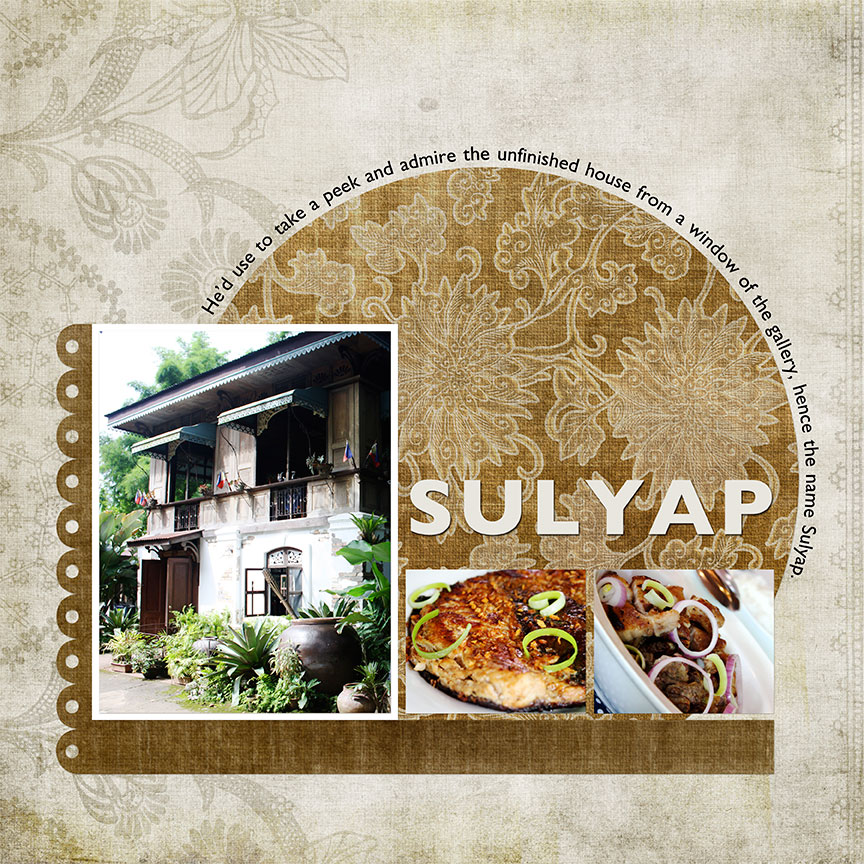
Sulyap

Credits:  Template by Jen Caputo’s ckapr08; Papers by LivE Designs Sing 4 Spring paper kit (PP4, PP6 and SP6)

A weekend road-trip just before it ended was capped by a wonderful lunch at a café oozing with charm.  Highly recommended by Jorge and Amor Bondad (of Sitio de Amor), we headed to Sulyap Café and Art Gallery before heading home.

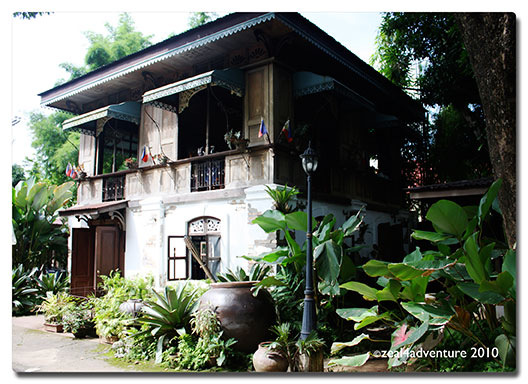
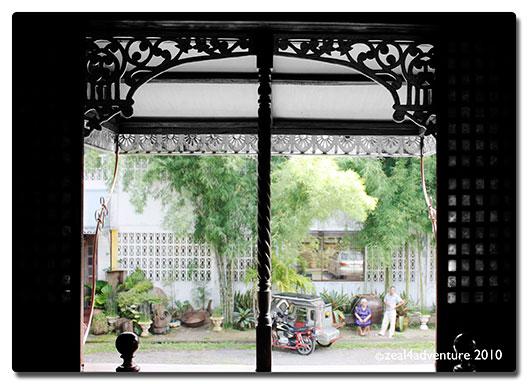
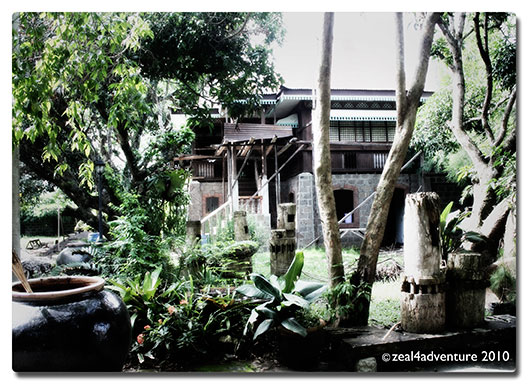
The café is a 2 story Spanish colonial house transported from Quezon and restored piece by piece at the Cocoland compound.

Gorgeous ceiling detail

Lovely window details, a trademark of the old Spanish houses — overlooking the gallery.

Did I say charming inside and out?

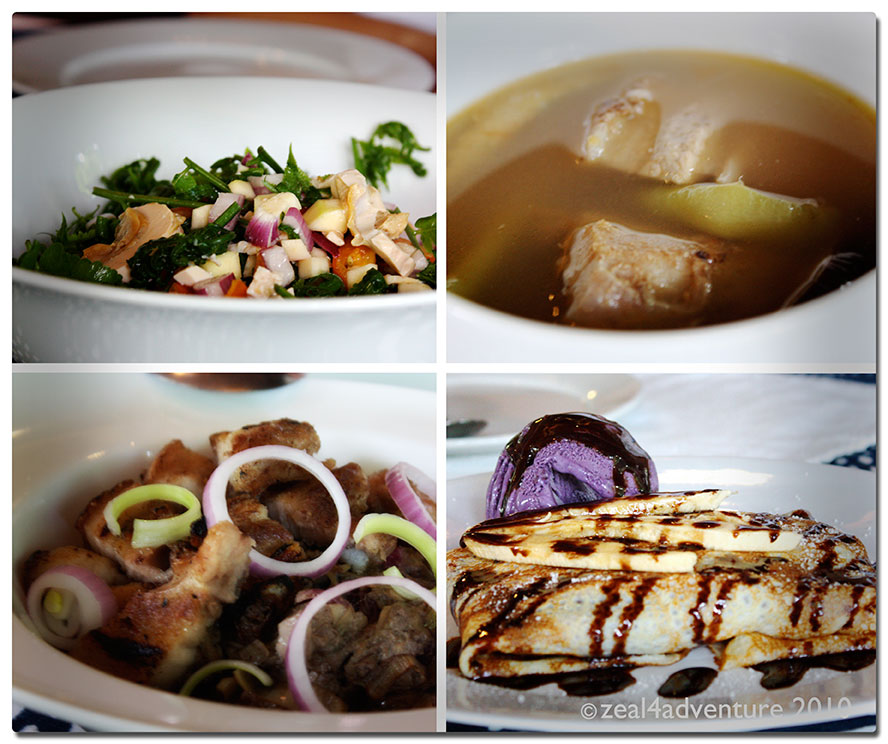
Clockwise:  Enseladang Pako (Fiddelhead fern salad), Sinigang na Liempo, Banana crepe, Kulawong Puso ng Saging (an original recipe of San Pablo city).

And the food… quite good and could merit a return in the future.

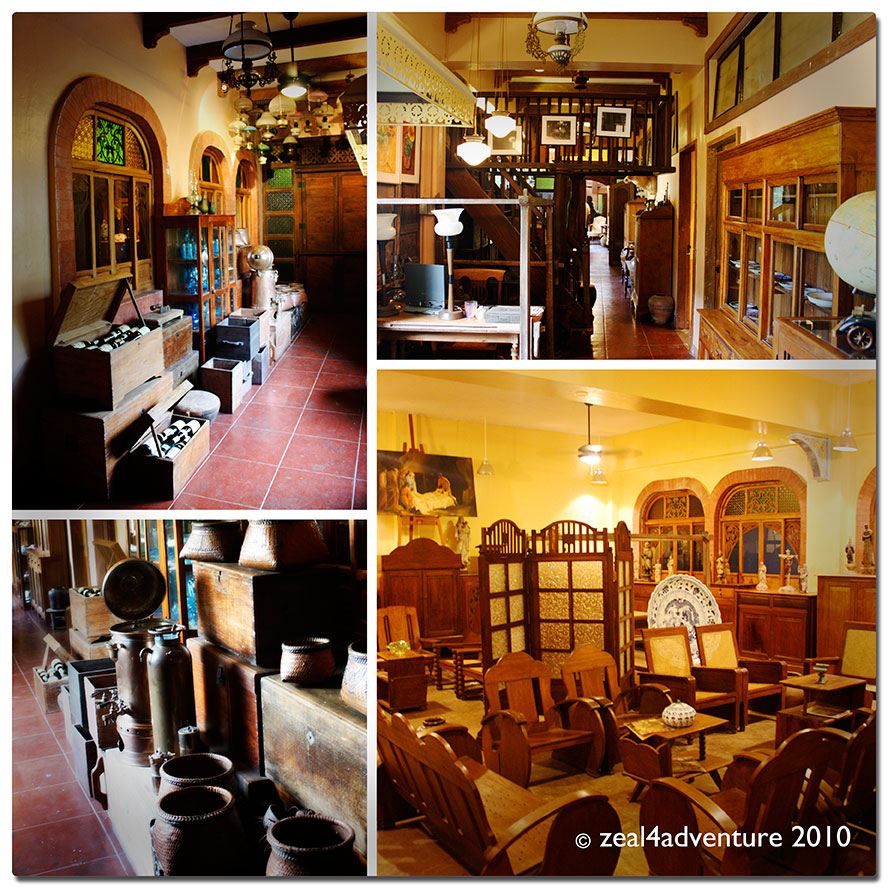
Across the café is the art gallery, which had pieces in various sizes, from furniture to plates and other collectibles.  This building used to be the Cocoland Hotel before proprietor Rommel Empalmado bought the compound.  He also recounted that prior to it being a hotel, it was a South Luzon College, which explained the school-like structure.

He also disclosed that when he was restoring the old house, being a lover of anything old, he’d use to take a peek (sinusulyap – sulyap in Filipino) and admire the unfinish house from a window of the gallery across, hence the name Sulyap.  Quite an endearing story, me thinks.

Rommel is currently building a bigger house in the other part of the compound, this time a bed and breakfast that he hopes to open by December – so watch out for this new lodging alternative in the Viaje del Sol circuit.

Definitely a gratifying end to our weekend getaway.

Getting There:

On the Maharlika Highway coming from Manila on the way to San Pablo, you’ll hit a fork, take the left road (that’s Colago Ave.), which would take you off the highway and lead you to San Pablo proper. You’ll come to an intersection with a stop light (Puregold Supermarket should be on the right corner), turn left on Cosico Ave.  Turn left 2 or 3 streets after (there should be a sign of Sulyap on the right that points to the street where you should turn).  The road will lead to the gate of the Cocoland compound.

Sulyap Cafe and Gallery
Brg. Del Remedio, Cocoland Compound,
San Pablo, Laguna
Tel no:  (049)562-9740 / 582-9735

Of Preservation and Livelihood

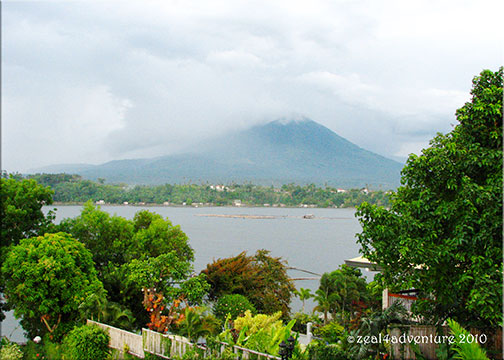
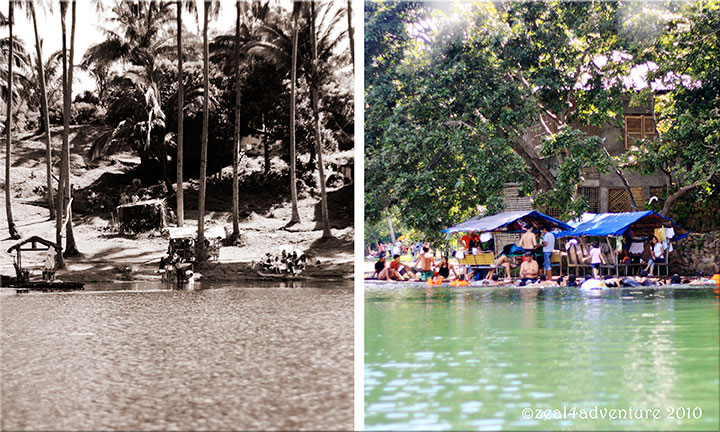
We were running late, directions given were not very clear and so we took a wrong turn and ended up in Sampaloc Lake.

Sampaloc Lake taken from the balcony of Tahanan ni Aling Meding on a previous visit.

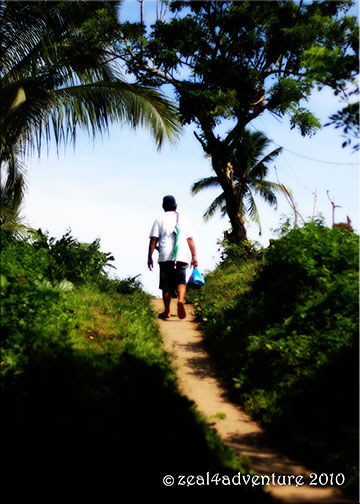
When we finally arrived at Sto. Angel, we saw our friends waiting by the roadside.  We turned into a parking lot and hurriedly parked, exchanged pleasantries and off we went, following Mang Tano, on a short trek as lunch was waiting for us.

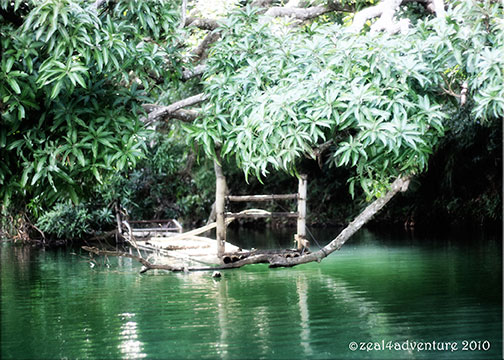
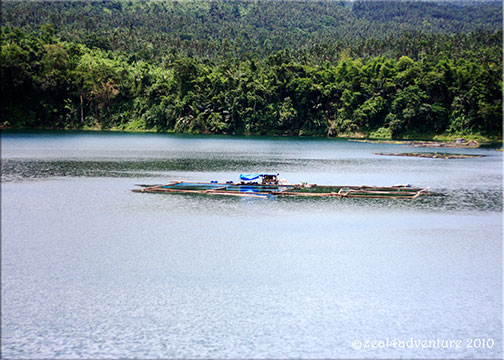
It was an easy trail and about 15 minutes later, the trail revealed a blue-green lake that is quite captivating.

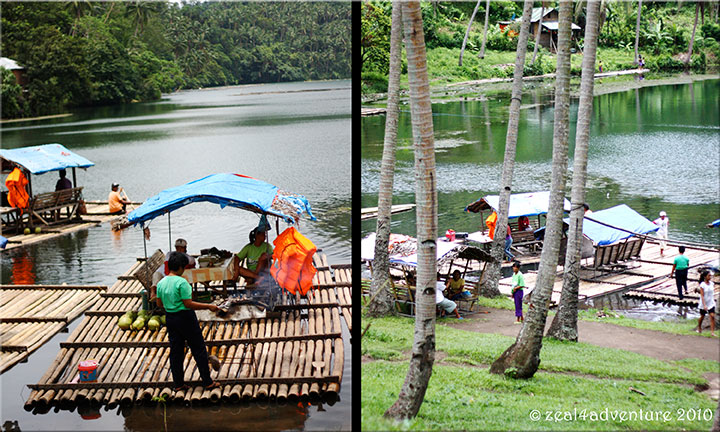
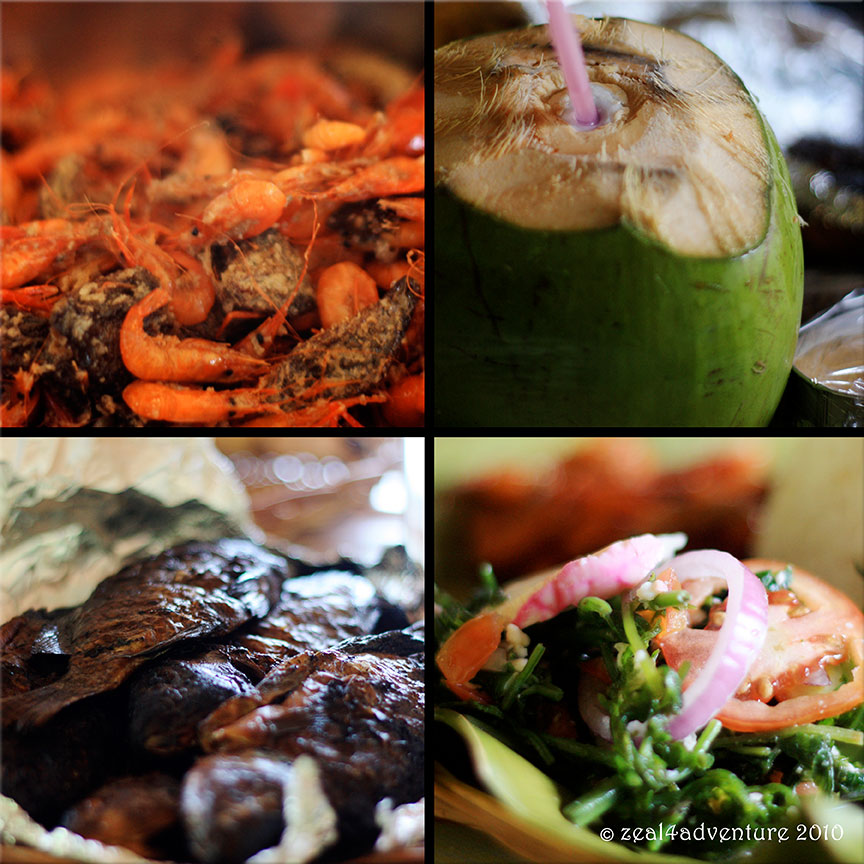
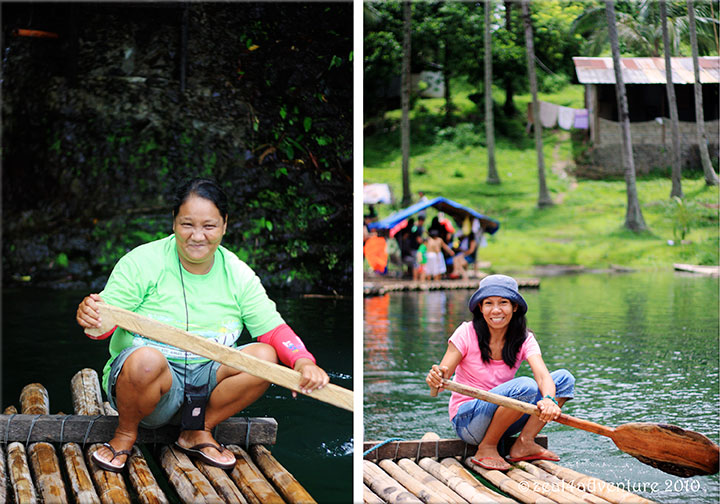
There were rafts positioned at the banks, one of which was reserved for us.  One can book with Aling Sion, Mang Tano’s wife a tour of the lake for P180 and if you add another P180, you get to enjoy a delectable lunch of

Clockwise:  Ginataang hipon, buko juice (coconut juice), pako (fiddlehead fern) salad, grilled tilapia.

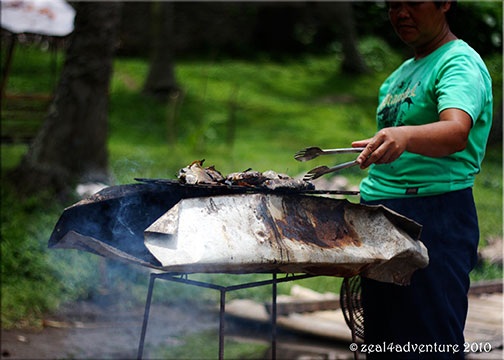
pako salad, grilled tilapia and ginataang hipon (shrimps in coconut milk), all caught from the river and cooked fresh.

All meals are prepared by the fishermen’s wives which make up the Samahang Mangingisda sa Lawa ng Pandin (loosely translates to “Association of the Fishermen of Lake Pandin”).  The association was established as part of a preservation effort and at the same time help the residents earn a little bit of income on the side with the wives attending to the tourists.

With the help of Mandy Mariño, the fishermen’s wives organized the “Tour of the Pandin Lake” personally paddling the rafts.

Today, it is the most pristine of the 7 lakes of San Pablo.  Although there is nothing much of the tour, it just takes you around the lake, stopping at a short uphill trail that leads to clearing where one can take a peek at its twin, Lake Yambo.

Yambo’s name was derived from its famous lengend of 2 lovers, Yambo and Pandin.

Both lakes are teeming with tilapia, carp, catfish, milkfish, shrimps and snails.

They are also suitable for swimming but just to avoid the hassle of changing afterwards, we skipped it and just enjoyed the lake, the company and the delightful lunch.

Note: This tour is likewise part of the Viaje del Sol route.

Getting There:

Along the National Highway going towards Lucena, you’ll reach a fork somewhere along San Pablo, take the left.  This will lead you to the town proper.  Go all the way till you reach the city hall, go pass the rotunda until you reach Sto. Angel.  Watch out for a sign. Ask around if you don’t see the Lake Pandin sign that would lead you to a parking lot.  The residents are very helpful and will point you to the right direction.

Contact detail:

Aling Sion
0929 9789565


Fresh from the Tree

Credits:  Papers by LivE Designs – UNR Grassy Sky and Lily Lines from the UNR_Naturally Free kit and PP2 from the Sing4Spring Paper Kit; Elements – Birdoodle, Brad set of 4 and Frame 1 from the Sing4Spring Elements kit.

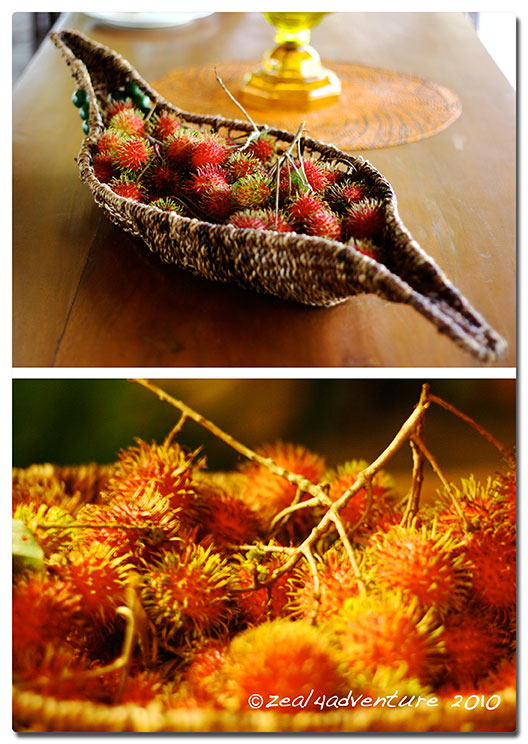
I am not particularly fond of rambutan, at least not in the same level of fondness I have for lychee and longan – rambutan’s close cousins.  But one glorious day I was given some that was fresh from the tree and it has gained a few notches on my gustatory scale.

This tropical fruit indegenous to Malaysia is a hairy bright red oval fruit about the size of a small hen’s egg.  Inside is a translucent grapelike flesh that is sweet and tastes a lot similar to but slightly acidic than that of the lychee.   The pit is what sometimes turns me off.  It annoys me much if the outer layer of the seed sticks to the flesh.  However after tasting the freshly picked fruit, I found out that a fresh produce does no such thing, and I learned to be less judgmental of the fruit.

July – October is harvest time for these sweet juicy fruit and last August, we were in San Pablo, Laguna for the Rambutan Festival where a kilo can go as low as P20 (US$ 0.50).

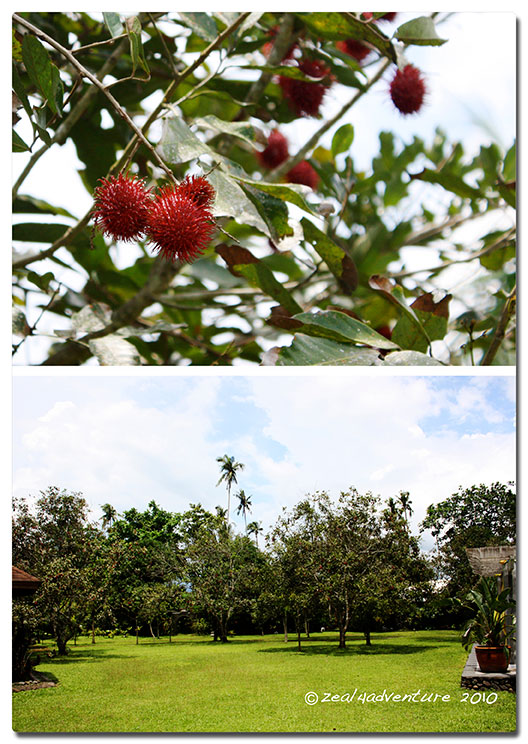
On our recent road trip, we checked in at Sitio de Amor, a great place to have fresh rambutans, either by personally picking them from their trees that is sprawled all over their garden or simply have it served right after picking during mealtime.

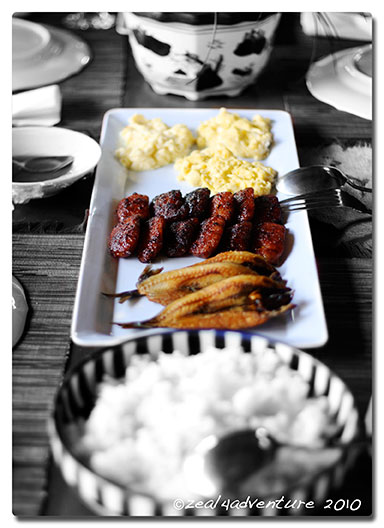
Our breakfast fare which include scrambled eggs, longganisa (local sausage) and a dried fried fish called Nora Aunor (no kidding!)

Glutinous rice cake topped with cane sugar (panocha) — the best in my opinion.

Sitio de Amor is a sprawling 4.5 hectare landscaped orchard situated near the Maharlika Highway.  Nestled between Mt. San Cristobal and Mt. Banahaw,

traversed by the Balanga River feeding into a lagoon where people can choose to take a dip.

Another option is the infinity pool built by the owners of the resort, Jorge and Amor Bondad.  A weekend home turned resort, the Bondads are very hands-on in expanding and sprucing up this oasis of theirs.  In fact, when in their property, you will chance on Amor working in her garden, claiming the chore to be her stress buster.

Looks like more rooms coming up in the future.

Note: Sitio de Amor is part of the many destinations of Viaje del Sol.

Getting There:

Once you see Jardin de San Vicente along the Maharlika Highway, watch out for a sign that will lead you to the resort.

Sitio de Amor
Km 88.8 Maharlika Highway
Barangay San Antonio
San Pablo, Laguna
For reservations, call:  522-7340 ; 0918-9274346
Email:  sitiodeamor@yahoo.com

Xiao Long Bao: Dumpling of all Dumplings

Credits:  Quickpage by Joanne aka 2girlsand poodle from the You Are Awesome Kit.  Alpha by Scrapmatters.com Life Little Surprises kit.
If you haven’t heard of Xiao Long Bao, it’s about time that you do.  You absolutely must try this at least once in your life. This delectable steamed soup dumpling is named after the small bamboo basket it is steamed in.  Inside the dumpling are pockets of minced meat and gelatinized broth made of chicken, pork or cured ham.  When steamed, the gelatin melts inside the dumpling and the soup bursts into deliciousness in your mouth.

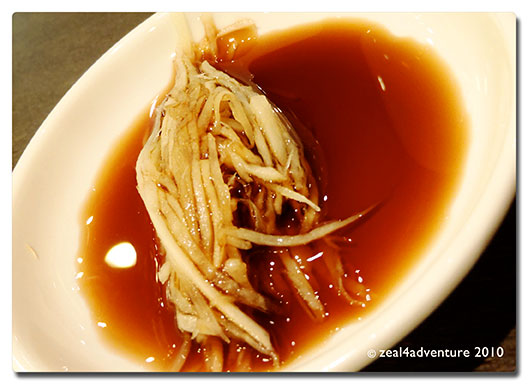
Best with vinegar and ginger slivers

The graceful way I eat this is to bite a small hole into the dumpling and sip out the juice before taking the whole dumpling.  A word of caution… wait a few minutes to cool the dumpling before devouring though – the last thing you want is to ruin the whole experience by burning yourself.

My first encounter with this Shanghainese specialty was in 1991, in Taiwan – the very first branch of Din Tai Fung, I recently learned.   And for a very long time, I could only dream of it.  It took me 10 long years to feast on these babies again, this time in Shanghai.  It took perhaps another 5 years for Xiao Long Bao to make its way to the Philippines.  Eat Well is a favorite and very recently, Crystal Jade opened its doors in Greenhills supposedly offering excellent xiao long baos.  The long line turned me off so I have yet to judge for myself.

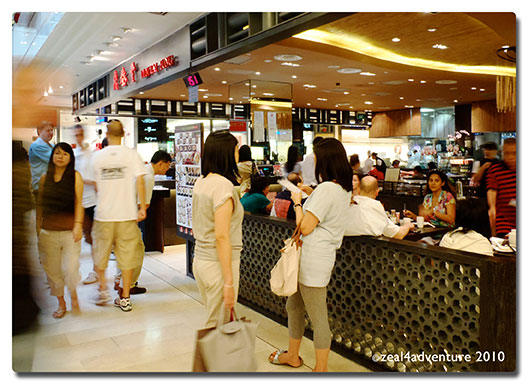
Din Tai Fung. Singapore. Packed!

Recently however, I came full circle when a few months ago in Beijing and more recently in Singapore, I saw myself in Din Tai Fung for a treat of my favorite dumpling (and more).  Din Tai Fung has become known for their delectable dumplings for decades and opened up franchises in many Asian countries but sadly not in the Philippines (yet).  I saw that they’ve expanded their dumplings to more than just their signature Xiao Long Bao.  They now have chicken, fish and even a vegetarian dumpling.

Though I was a bit disappointed with the vegetarian dumplings, their signature dish remains to be my favorite and

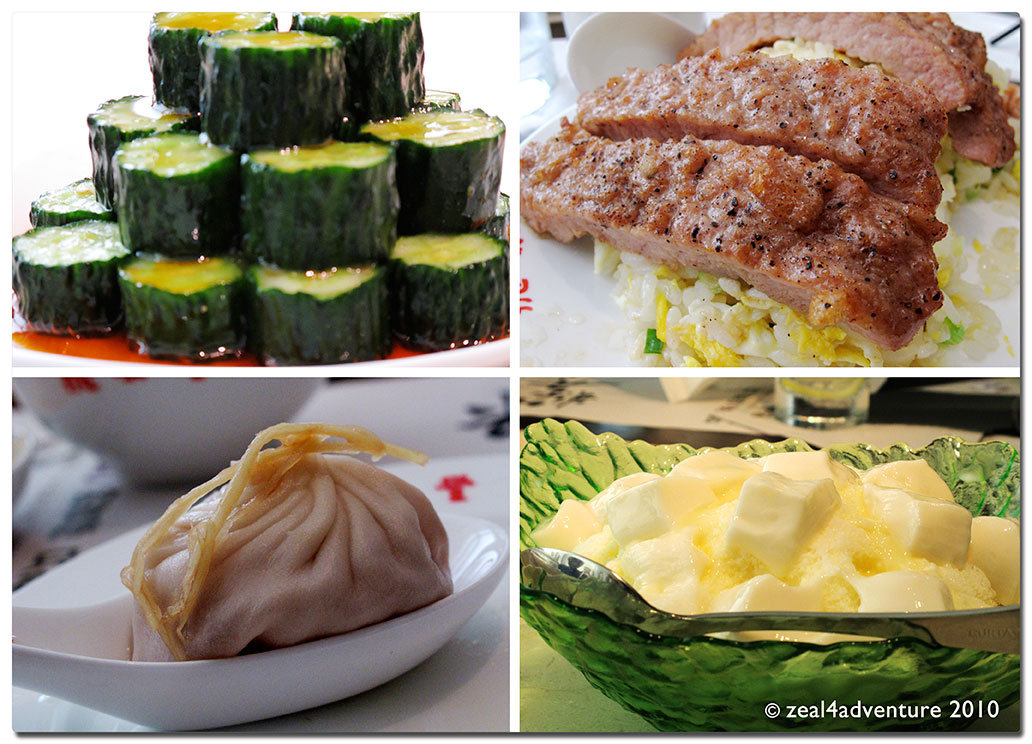
Clockwise:  Cucumber appetizer, Fried Pork Chops on fried rice, Almond Jelly on crushed ice, xiao long bao with vinegar and ginger slivers.

I so totally enjoyed their pork chops and almond jelly dessert.  So really even if XLB made them what they are today, it isn’t just all about dumplings at Din Tai Fung. If you find yourself in a neighborhood with  Din Tai Fung near you, don’t hesitate at all.  Click here to see where they are around the globe.

Where to get XLB in the Philippines:

Eat Well Delicious Kitchen (sounds tacky but they really serve up delicious meals)

At The Fort
Unit C, Ground Floor, Net Quad Building,
30th-31st St., Bonifacio Global City, Taguig
For Reservation and Pickup only: +632 856-9408
At Greenhills
Missouri St. cor. Connecticut St., Greenhills, San Juan, Metro Manila, Philippines
Phone Number: +632 722-8518


Crystal Jade
Unit 117-121 (near Haagen Dazs and Goodwill Bookstore)
V-Mall, Greenhills Shopping Center
Greenhills, San Juan City, Metro Manila

Phone Number: +632 570-6910, 570-6912


The Binondo “Wok”ing Tour

Possibly, no definitely the best way to see Manila “on foot” as their leaflet suggests and I completely agree.  It’s literally experiencing Binondo or Chinatown one bite at a time.

I am of Chinese descent but I don’t really know my way around Chinatown.  My parents would occasionally take us there for lunch or dinner when we were growing up but really, I am clueless as to their whereabouts.

An “old-time” favorite of the family

Binondo is like a maze, although the street names are all very familiar, I have no sense of where they are in relation to each other.  Leave me there and I am helpless.

I grew up with home cooked Chinese food.  Not the stuff that you eat in “Cantonese-style” Chinese restaurants in the metro, but simple home cooked meals that really is more everyday stuff to me than “Chinese”.

So taking this tour was somewhat nostalgic and enlightening.  We journeyed through old and new adventures.  There were food that I grew up with and there are those I encountered for the first time.  The places we walked through were likewise familiar, yet unfamiliar.

Binondo Today and Yesterday

Ivan showing the group a “grandma” slipper that is almost in the brink of deletion.

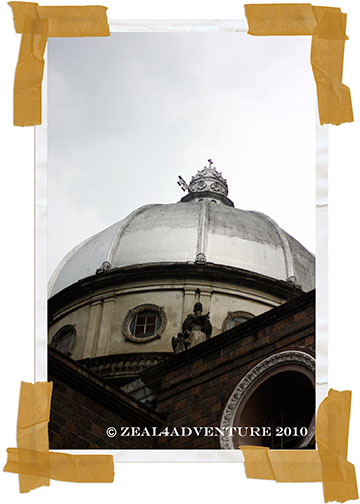
Our gracious host, Ivan Man Dy met us at the Binondo Church located across the Plaza Calderon dela Barca along Quentin Paredes St.

It is today a well-known landmark in Chinatown.  Because the saint once served there as an altar boy, it is also known as Minor Basilica of St. Lorenzo Ruiz.

At the Plaza across the church, we talked briefly about how the early Hokkien (Fookien) immigrants arrived from Fujian province in China during the Spanish rule and the time when Binondo was the main center of business and finance in Manila with mainly the Chinese, Chinese mestizos, and Spanish Filipinos anchoring the bustling banking and financial community many decades ago.
Today, the community is still vibrant as ever and continues to keep alive its heritage.

Café Mezzanine

After a brief reminder of our history, we walked over to a café above Eng Bee Tin where we were served a bowl of “kiampung”, which literally translates to salty rice.

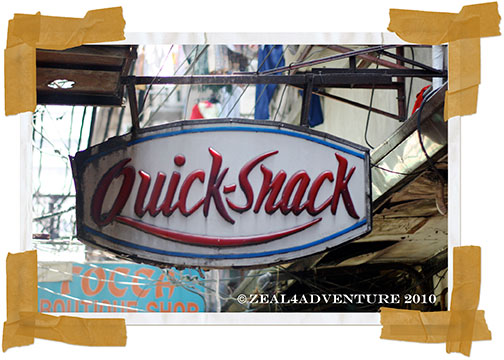
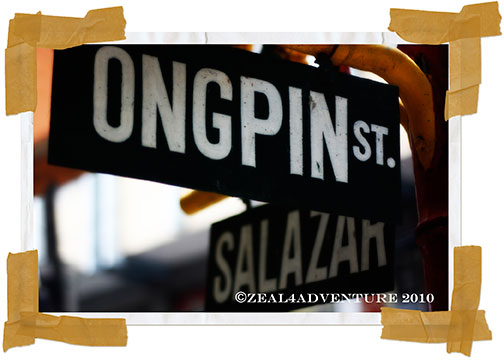
This rice dish is a mixture of pork, chicken, dried shrimps, mushrooms and peanuts mixed together in soy sauce and topped with caramelized and spring onions – a simple dish that reminded me of my childhood, my grandmother, actually.  Opened and run by a group of volunteer firemen headed by Gerry Chua, all of its proceeds go to the Binondo and Paco Volunteer Fire Search and Rescue Brigade.  So if you find yourself in the area, head on to Café Mezzanine and eat up a storm, every bite you take is a contribution to a noble cause.  Located at the corner of Ongpin and Yuchengco (former Nueva St) Sts., it opens its doors at 7am and closes at 10pm.
Dong Bei Restaurant

Fried Kutchay Pancake

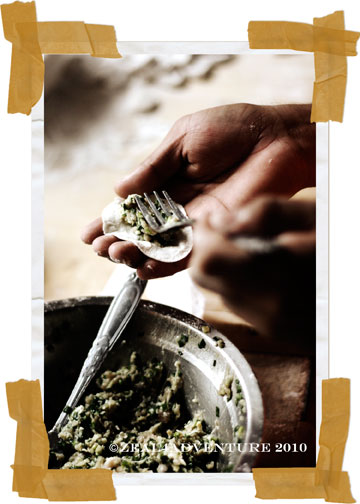
We then walked over to a hole in a wall that serves perhaps the best dumplings in town.

At the storefront (as you enter) there will be someone making fresh dumplings by hand for everyone to see.

Owned by new immigrants Ivan calls “bagong salta” (new arrivals) from Northern China, they serve prominent dishes from that region.

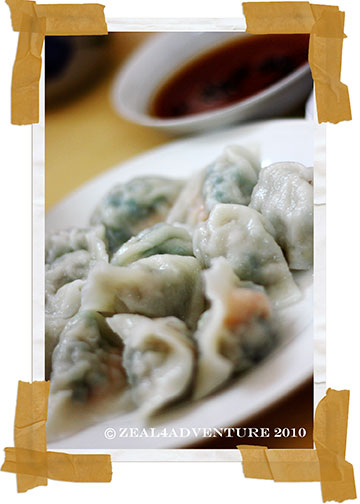
Heavenly with the sauce!

The steamed Kutchay dumpling is a blend of minced pork, kutchay and fresh shrimps – juicy pork dumpling flavored with kutchay and fresh crisp shrimp adding another dimension to the taste of the dumpling.  This is truly a wonderful blend of flavors and is heavenly with the soy-vinegar sauce.   I loved it so much, I bought some frozen ones to savor more of it at home.  Heard that they also make a mean dish of hand-made noodle with Soybean sauce.  Must get myself back there to try it.

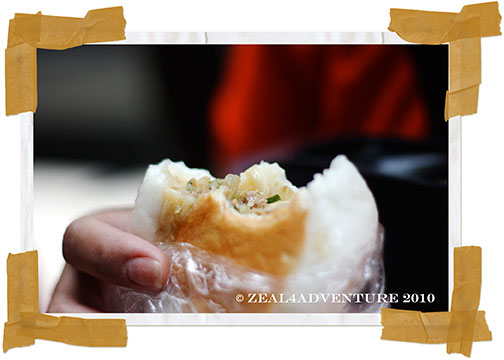
Fried Siopao

Another favorite and a first for me is fried siopao from a small take-out stall along Benevidez St. Yes folks, this siopao is not steamed but pan-fried.  This might be the best tasting siopao I had ever tasted in my life.  Not the typical asado filling, this is more like bola-bola siopao but much more tastier.   Definitely a must-try.

Aside from the siopao, I also bought to munch some sugar sprinkled bicho-bicho (Chinese crullers).  This was a favorite and truly a blast from my past!

There’s more and best to experience it first hand.  The Big Binondo Food Wok.  Go book a tour today.  And oh… make sure you’re hungry.

A Museum of Art and Nature

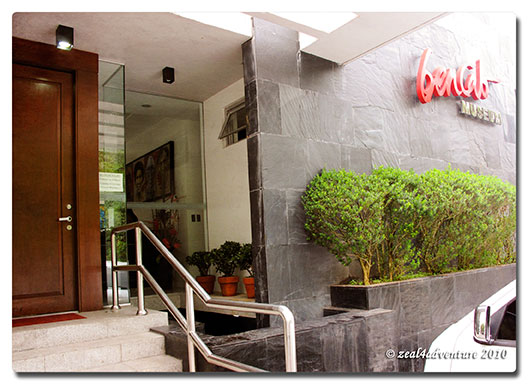
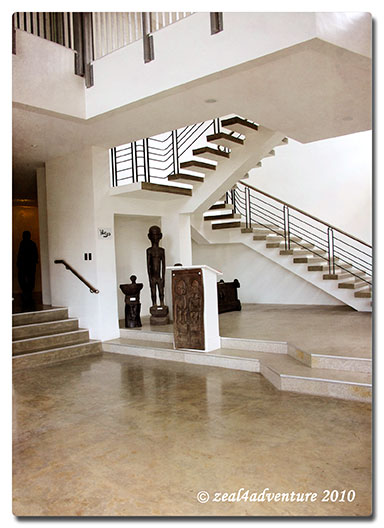
A short ride from the Baguio City center along Km 6, Asin Road stands a modern white building that is BenCab’s Museum.  A 4-hectare project of the National Artist for Visual Arts, Benedicto Reyes Cabrera, more popularly known as BenCab.

The Master of contemporary Philippine Arts traces his beginnings in Mabini where he painted and ran an art gallery with his elder brother Salvador Cabrera.  He then moved to London, gotten married to a British writer and eventually established for himself a name of international recognition.  When his marriage ended, he relocated to Baguio in 1988 and along with other artists formed the Baguio Arts Guild.  BenCab being a tenacious admirer and collector of Cordillera Arts also formed his own group of artists when he established the Tam-awan Village, an art center that promotes Cordillera traditions.

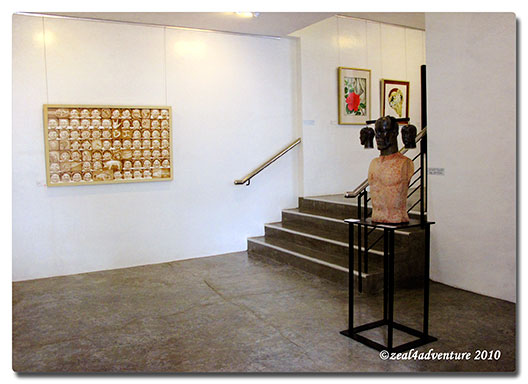
So it is to no surprise that aside from the BenCab Gallery, which presents a range of his works of different periods, sizes and styles,

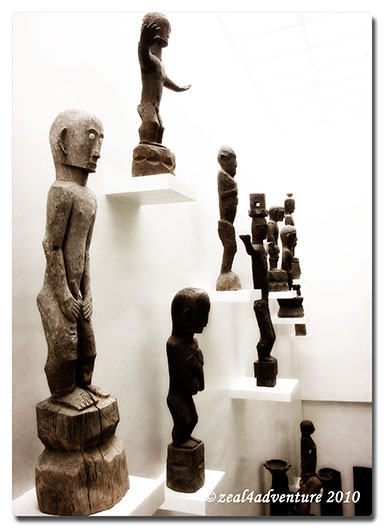
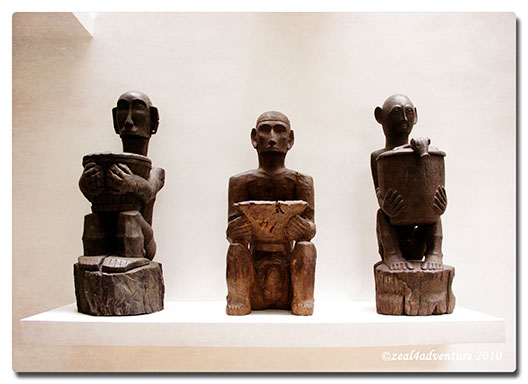
the museum also houses a Cordillera Gallery displaying a collection of tribal artifacts and indigenous crafts of the northern Luzon highlanders.

It also showcases artworks by contemporary Filipino artists – Cesar Legaspi, Anita Magsaysay-Ho, Fernando Zobel, Arturo Luz, Ed Borlongan to name a few.  A collection he accumulated through the years.

Aside from promoting art, a major part of its mission is to preserve, protect, and conserve its natural surroundings.  And how?

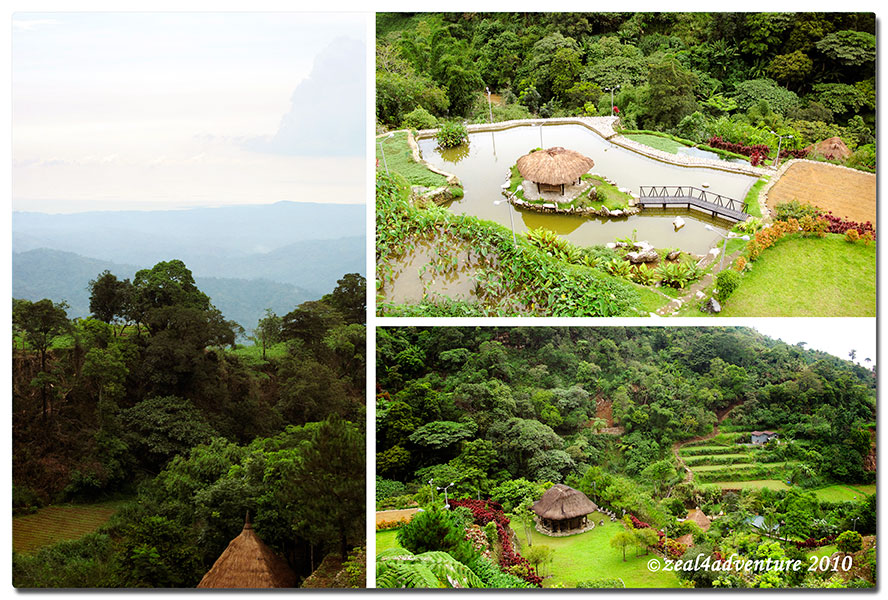
The museum commands a breathtaking view of the adjacent organic garden, its surrounding mountains and the South China Sea on the horizon.  Other sections of the estate features large ponds for ducks and a thatched-roof gazebo erected on a center island.

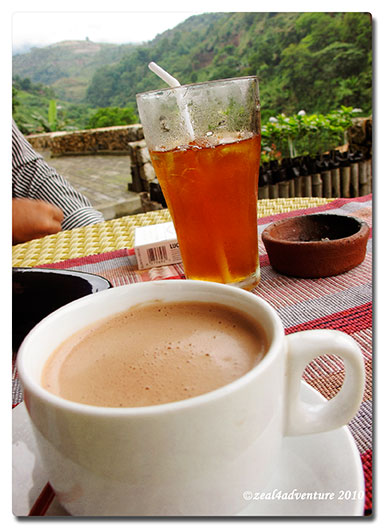
Café Sabel, serving cordillera coffee, tea and some food, is on the ground floor and overlooks all these.  Truly a remarkable man’s gift to a community he joined more than a decade ago.

A museum that is worth a visit opens its doors from Tuesday to Sunday, 9am-6pm.  Admission fee is P100 per head.

You Have Something To Say

Credits: JSprague TW dialog template; LivE SSun Fun paper pack (grass, maraschino and paisley skies); JWilson’s Rejuvinate and Reaffirm flower element.

We could hear assertive arguments in the background.  When the other party left, we asked what that was all about.  You said that they were from the other island pressuring to discuss developments of the island.  Explicit in your battle to protect your land and resources, you struggle to preserve your indigenous culture and tradition.  An admirable task and we are with you in your struggle for existence in this world dominated by us, the “unats” – straight haired.

Mang Augusto and many like him have been struggling for existence after the Pinatubo eruption.  They are descendants of indigenous people who lived around Mt. Pinatubo of Luzon for thousands of year.  The Aytas or Aetas were forced into evacuation centers and many have been relocated throughout the country when tens of thousands of them were displaced by the dramatic eruption of Mt. Pinatubo.  Ash and lahar covered their homes and destroyed the forests, rivers and fields that had ever since supported their livelihood and this historical disaster radically changed their world in June of 1991.

Enjoying life in Nagsasa Cove

Although they were among the first to inhabit the Philippines, they have been facing the same problems as other indigenous people in the Philippines – how to secure a land to make a living, enhance their human, civil and ancestral rights given that they can no longer live separate from the outside world nor maintain their basic source of livelihood.

Nagsasa could be the next hot spot and may soon be at risk from commercialization,

which could probably strip the caretakers of the cove from their domain, this time by us, the “unats”.

The Secret Is Out!

Tent… check, sleeping bag… check, therma rest… check, swimwear… check, sunblock… check, pasta, pasta sauce and chorizo… check… cook set… check and the list goes on.  These however, are the essentials needed for an overnight trip to Nagsasa Cove.

Credits: J. Sprague You are Awesome Paper kit (Blue Leaf & Brown Red), Framers; LivE’s Worn Kraft tag, Sing 4 Spring elements (Button Accent 02 & Fight of the Bbee)

My friend S had been itching to make a trip there ever since she learned of Nagsasa.  And so the weekend after our Northern Samar trip, we were up early, traveling north to what we thought was a secret paradise.  Punta de Uian Resort in San Antonio, Zambales to be exact.

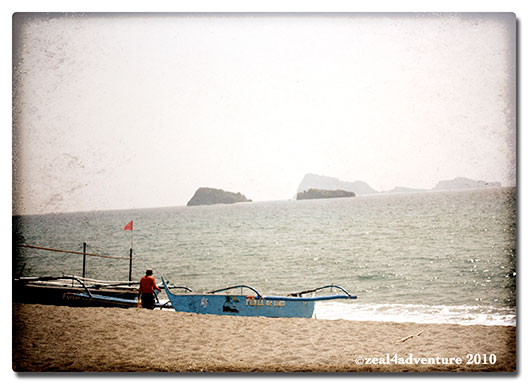
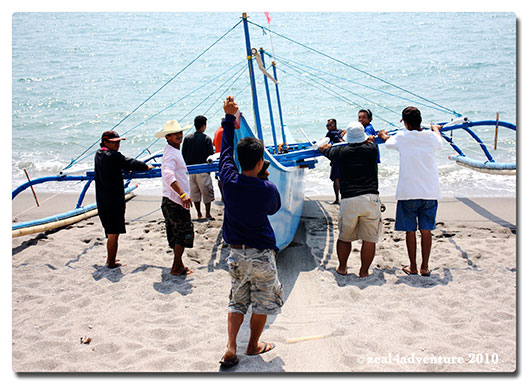
The boat we hired from Punta de Uian

A resort kind enough to take us to Nagsasa (for a fee, of course) even if it was not part of the trips they offer.

Off to Nagsasa…

Wondering why hire a boat through a resort?  I want my car parked safely in a parking lot while we camp out on a cove 8 kms away.   Better safe than sorry right?

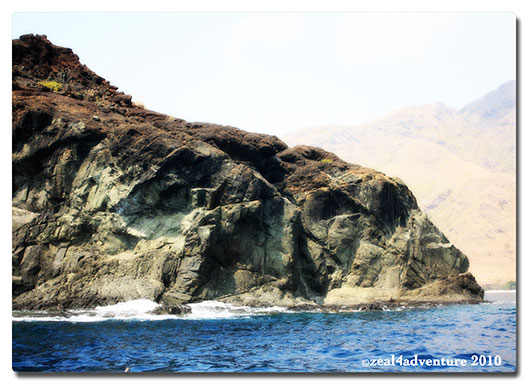
The view on our way

Nagsasa is supposedly less popular than Anawangin perhaps because it takes twice as long (about 45 mins) to get to Nagsasa from Pundaquit Beach.

The approach

Arrival (looks empty)

So imagine how stunned we were at first to see scores of campers spread out on the crescent shaped stretch of beach, maybe having the same thoughts as ours, which is… “why are they all here?”

Water so still

Perhaps it was the long weekend and everyone who knows about Nagsasa had the same idea, or perhaps it is the magnificent paradise that makes it difficult to remain a secret for long.

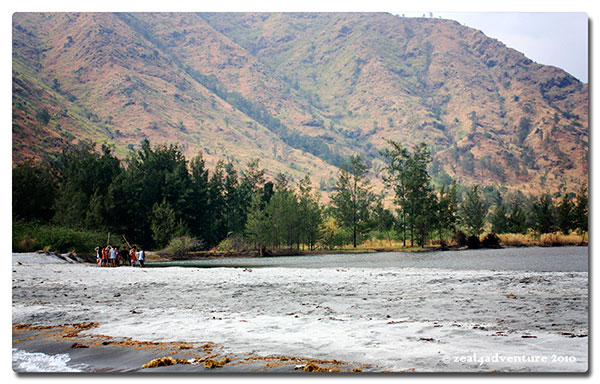
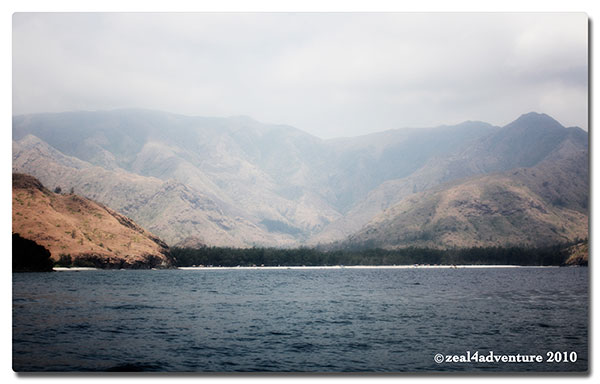
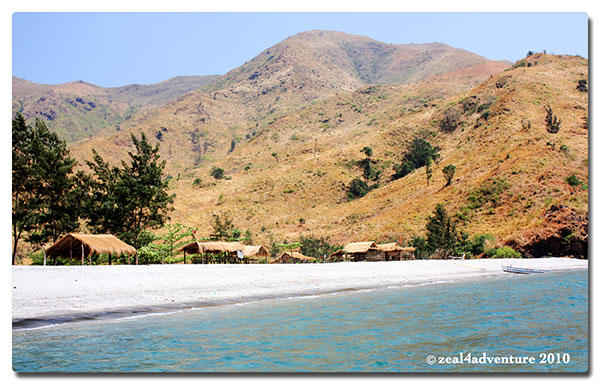
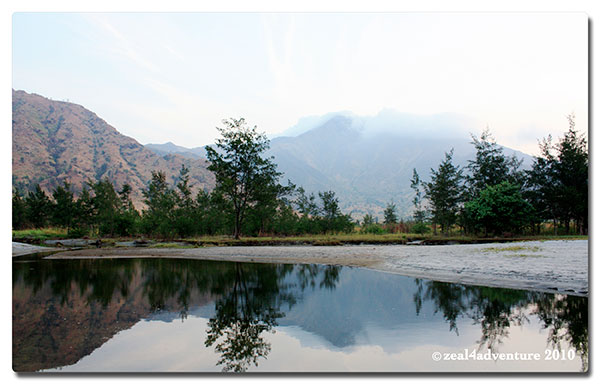
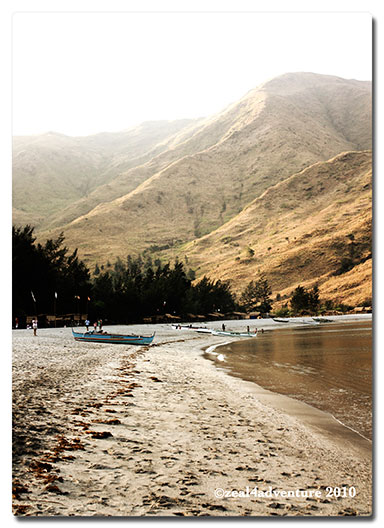
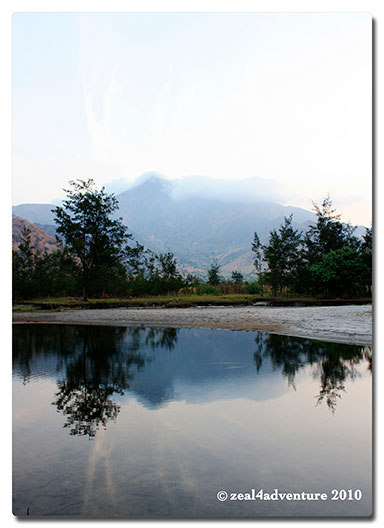
Whatever it is, we were happy to be among those who were enjoying this wondrous cove with breathtaking Mt. Nagsasa serving as backdrop to a pristine stretch of ash colored sand.

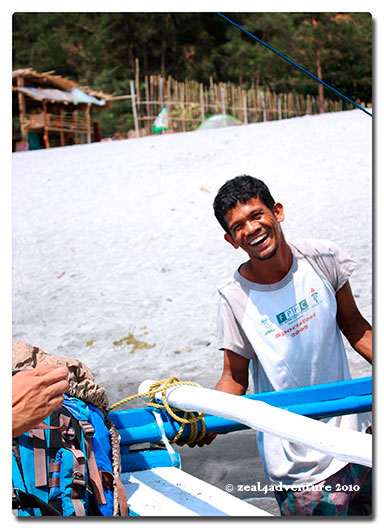
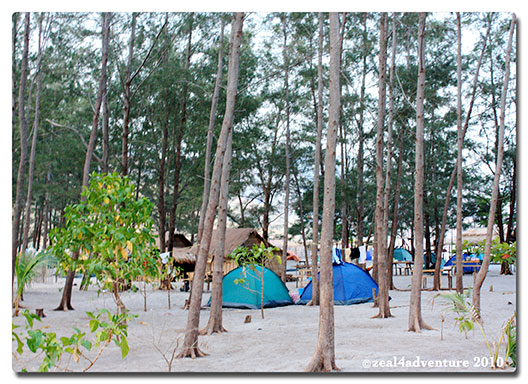
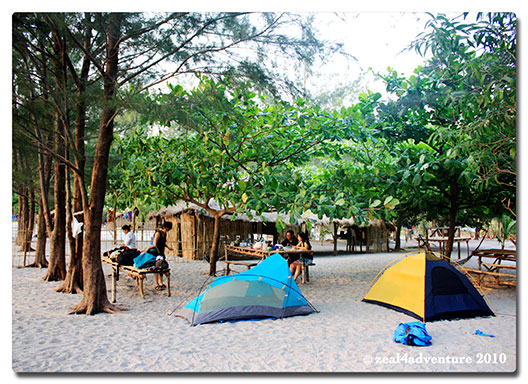
Once we got off the boat, we looked for our little corner, Mang Augusto and his family lives beside our campsite, making him the caretaker.

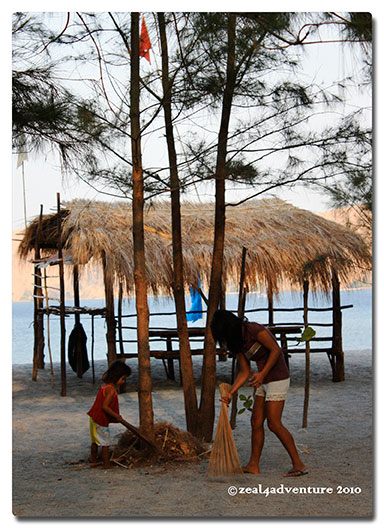
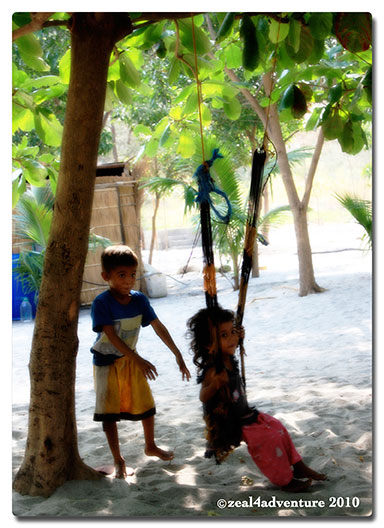
Siblings – Mang Augusto’s kids

We had a picnic table for our meals and our chit chats.

We also had a bathroom just at the back, which I truly appreciate, never mind that it didn’t have a light, what are headlamps for anyway?

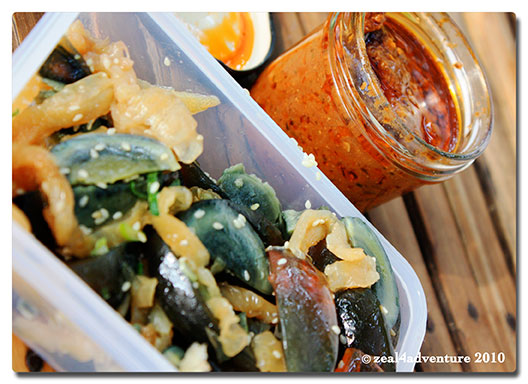
Our starters:  Greek and Chinese — an obvious lack of coordination… yummy just the same.

After we settled, we pitched our tent and then prepared our meal… we burned our rice (it was not easy using the aluminum cook set, really!).  Mang Augusto’s wife cooked 2 kilos of rice for us for only P100 ($2).  Way too much for 5 so we had it for breakfast, lunch and dinner and there were still left overs.  So here’s the tip: don’t even bother to cook rice when you can have it cooked for you (for practically a song).   😉

Nagsasa (and Anawangin and perhaps others as well) emerged after the violent eruption of Mt Pinatubo in 1991.

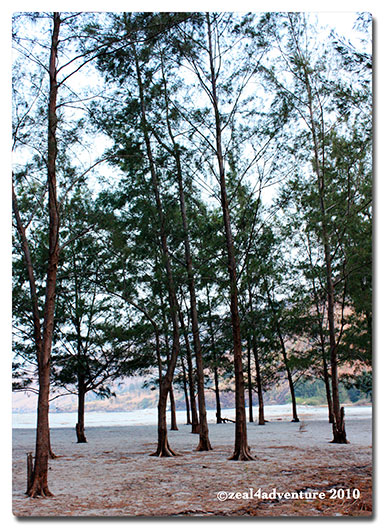
The eruption actually changed the landscape of Zambales producing these coves of ash sand beach lined with Agoho trees stretching inland, rendering a beach so impressive.

So how did such a tree find its way to this part?  It is said that these trees were non-existent prior to the eruption and that the seeds of the trees came from the ash expelled by Pinatubo.

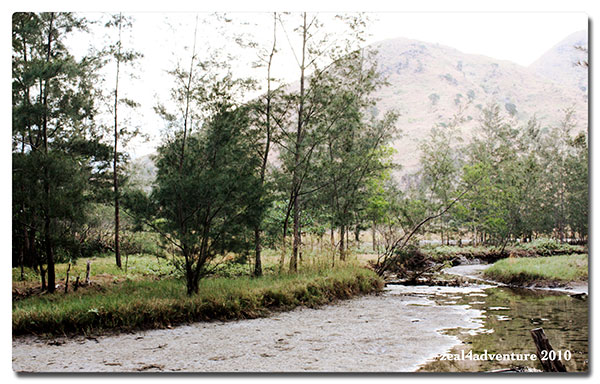
Streams and waterfalls dry out during the summer

How amazing is our God to reward us with unexpected loveliness after nature spewed out its fury?  Perhaps it is His way of reminding us that like a rainbow after a storm, something beautiful invariably comes after a tragedy.  Ain’t that a comfort?

Here are more snaps at different times of the day.

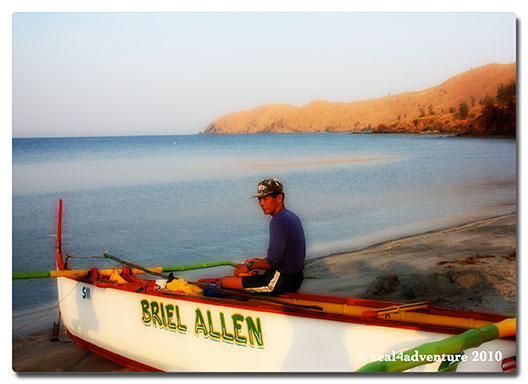
A bangkero (boatman) having breakfast

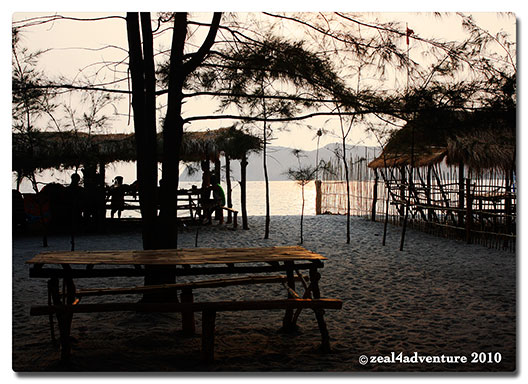
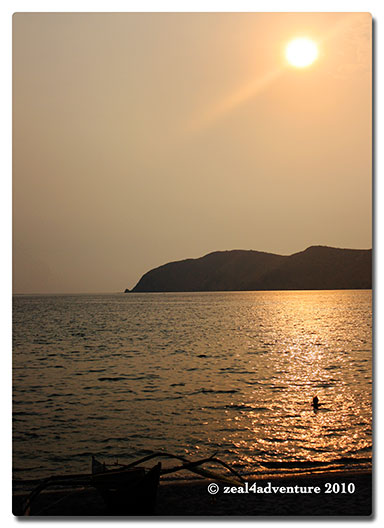
Sunset

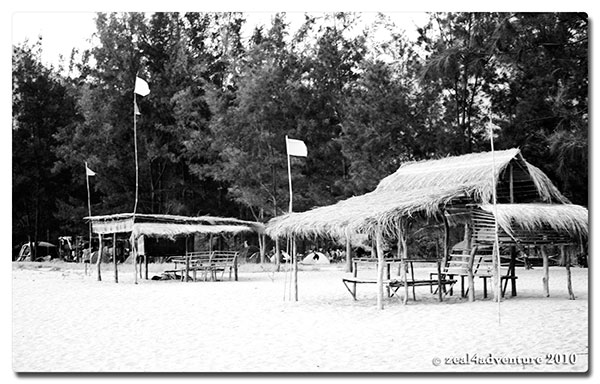
More huts for rent

At sunrise (I didn’t wake up early enough   😉 but pretty impressive just the same)

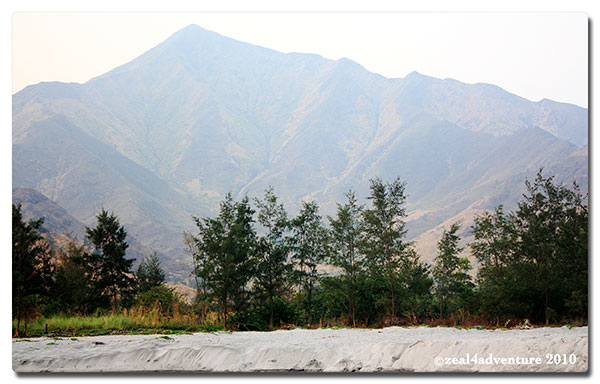
Mt. Nagsasa

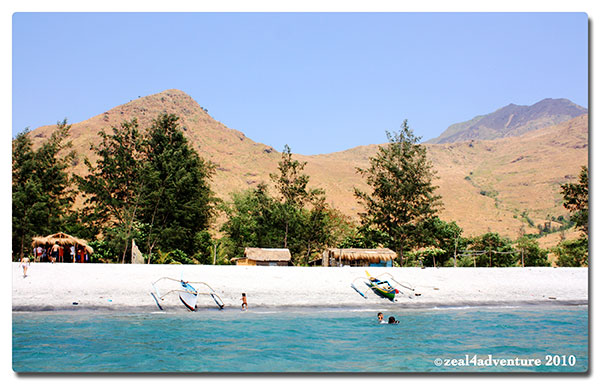
Nagsasa Cove from the boat

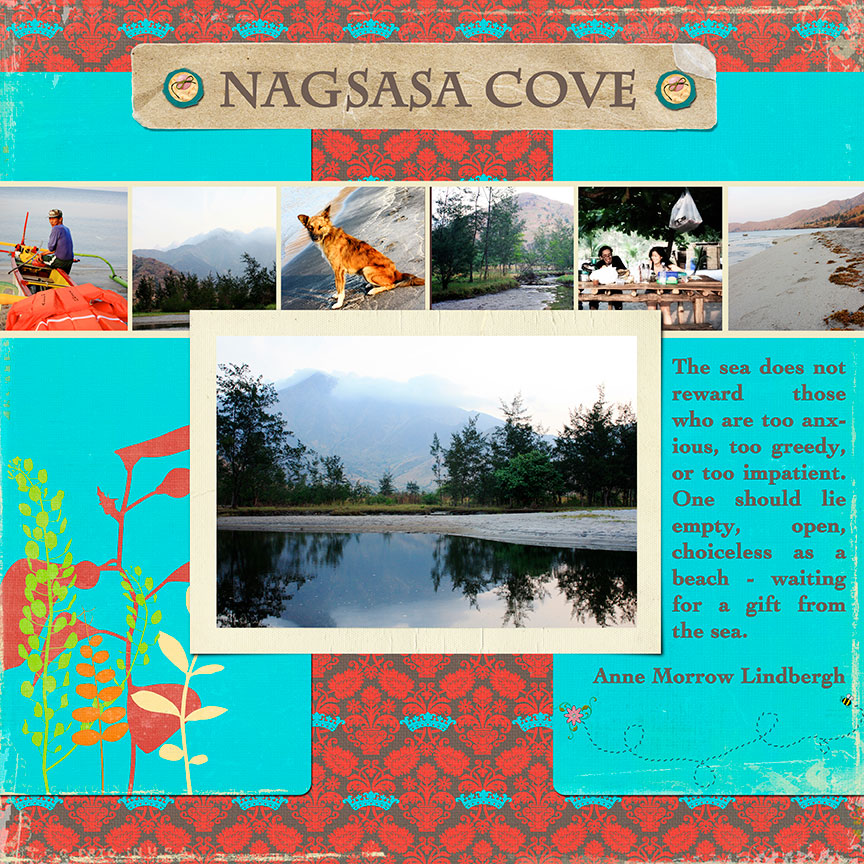
And I leave you with this last shot (simply magic)   🙂