On Market Day

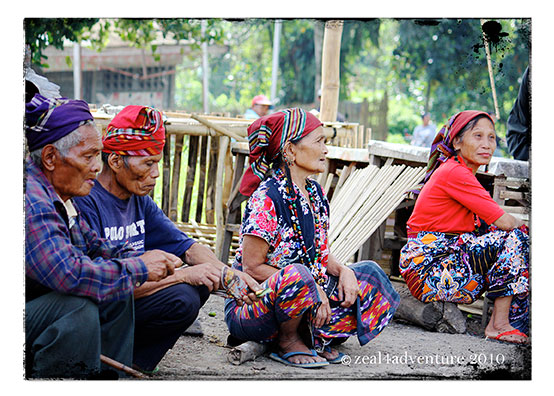
Saturday is market day for the T’bolis and a smattering of them still turn up in a semblance of a traditional ensemble.  Take out these lingering few; market day in Lake Sebu was quite a let down.  Without them, the market looked like an ordinary tiangge (bazaar) with merchandise perhaps coming from Manila or even China.  Despite this however, it was still an enjoyable endeavor, especially for me.

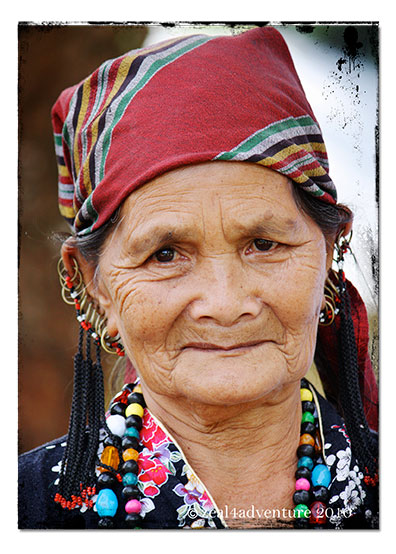
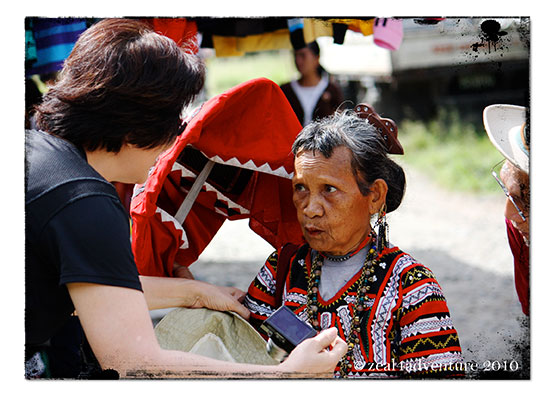
How likely is it that among the population of more than 95,000 Tbolis, I find (and more amazingly – I remembered) the same one a decade later?

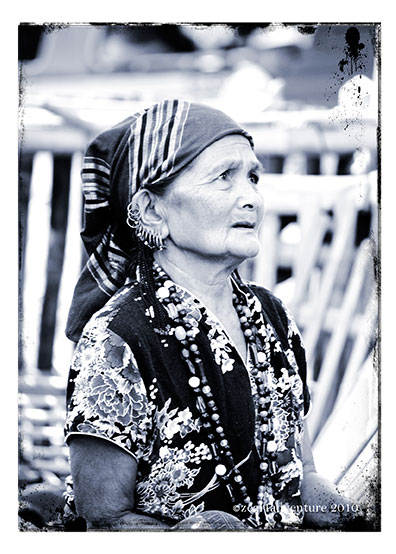
Perhaps it was her earrings or a combination of the earrings and her striking beauty that rendered a high recall.

One of the indigenous peoples of Southern Mindanao, the T’bolis primarily live in the South Cotobato province of Mindanao (the southernmost part of the Philippines).

As with many indigenous groups, many have adapted the migrant’s way of life owing to the many settlers hailing mostly from Iloilo (a province in the Western Visayas region, still south of the Philippines).

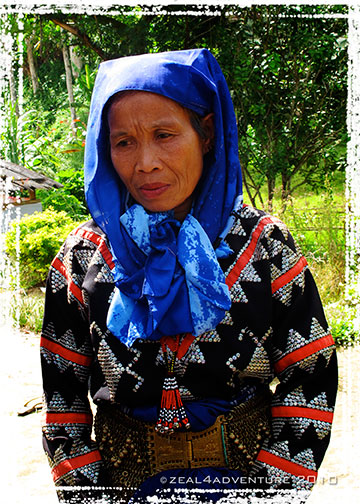
The colorful traditional outfits (I think) are mostly worn these days on special occasions and on market day.

Some snaps taken that morning.

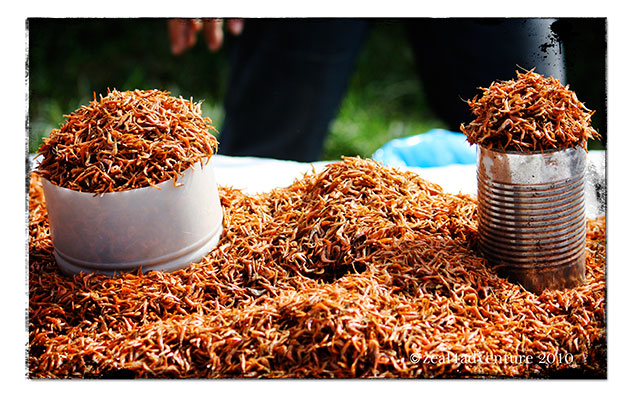
Dried baby shrimps or what we call hebi (great for flavoring)

The T’bolis are famous for their intricate beadworks and brass ornaments

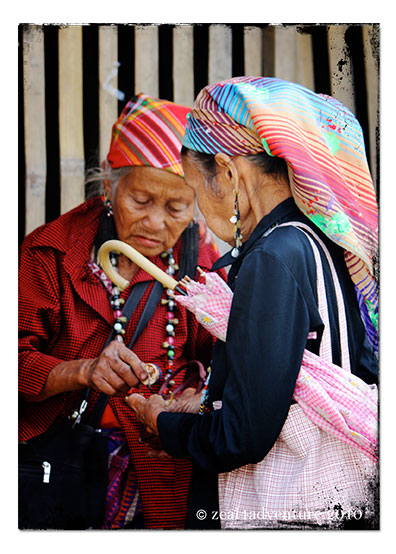
Negotiating for a picture with her

I just totally adore her!

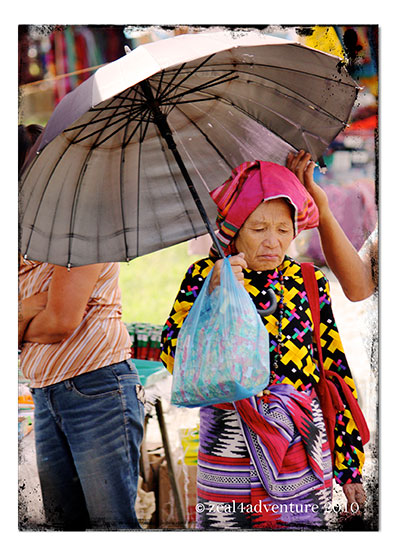
T’bolis today — with an umbrella, a plastic bag of goodies and the red handbag!   😀


Beauteous Lakes of Lake Sebu

Uhmm… yes there are lakes in Lake Sebu, in fact, there are several but it is not exactly what you think.  There are no lakes within a lake.  Not to add to the confusion but Lake Sebu is a lake and a municipality, which consists of three adjacent mountain lakes – Lake Sebu, Lake Seloton and Lake Lahit… all with its own charm so impressive.  And Lake Sebu, the municipality, was named after its largest lake… aha!

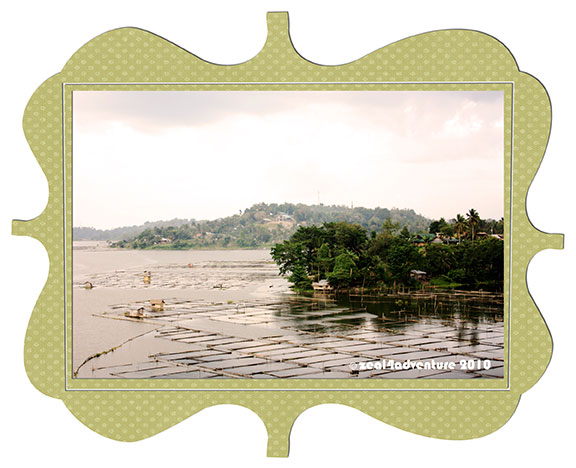
Lake Sebu

Credits:  Frame mask by Orchard and Broome.

Known for its vastness, measuring around 354 hectares, is the most famous among the three lakes.

Isla Grande, the largest island within the three lakes is likewise located here.

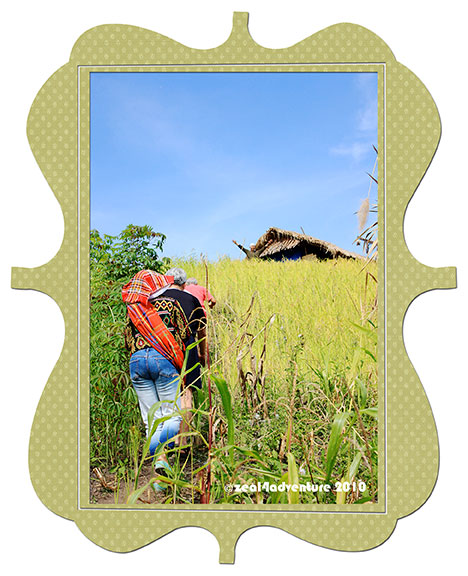
We hiked up to the top of the island for a good view of the lake and the only way to get there was through an owong —
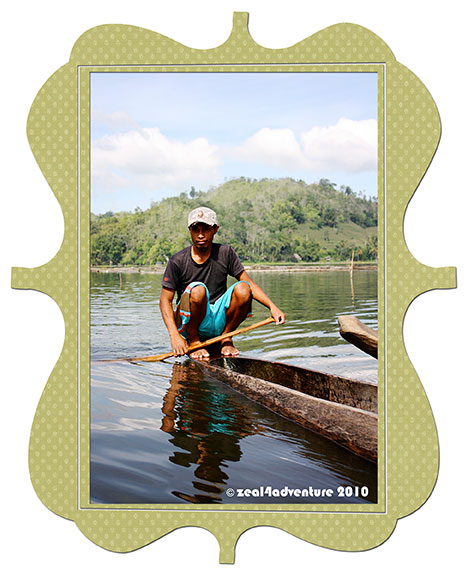
a canoe that is used for fishing.  A few meters from the jump off was a church,

which looked more like a shed (count your blessings folks!).  Being a Sunday, families, mostly mothers and children, waited patiently for the pastor who was still in another church in another island.   What an amazing servant of God, if you ask me.

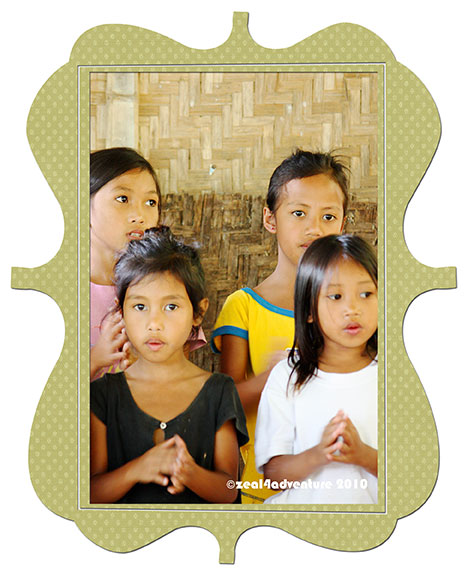
We spent a little time there chatting the them.  Not long after, the children gamely sang hymns to entertain us.  Adorable.

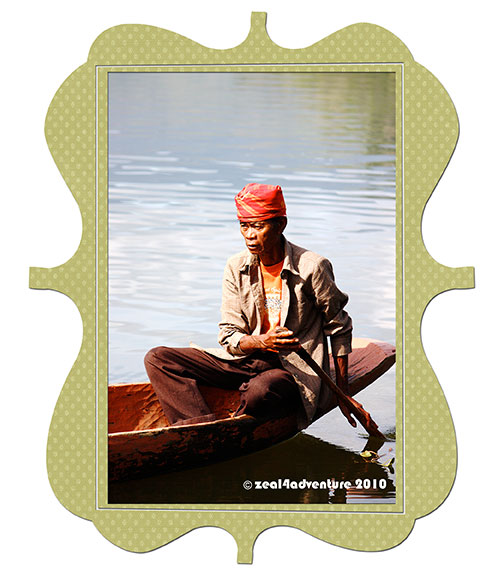
Our T’boli hosts including this man who served as boatman and

entertainer accompanied us to the top of the island.  He was making up stories (apparently a funny one), which he chants in his native language — yes language.  The T’bolis speak a Malay-Polynesian language also called Tboli.   🙂  A wonderful experience, I must say, of cultural immersion.

Lake Seloton
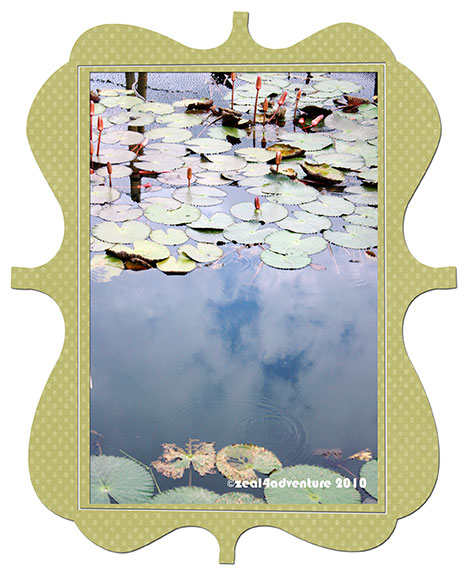
Supposedly the deepest among the three and it is also known as the sunrise lake for having the best-unblocked view of the sunrise.

Not quite as stunning as its big sister sans the sunrise, it still possesses its own loveliness.  I am sorry that we never got to see its glorious sunrise.
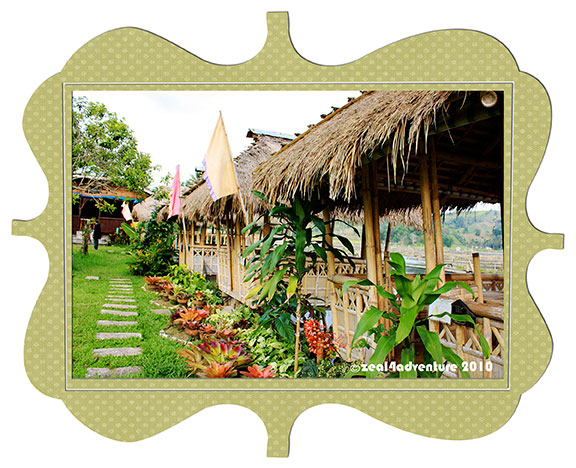
Accessible only through the Sunrise Garden Lake Resort and although just a habal-habal ride away from our longhouse, we still didn’t made it up early enough to take that (cold) ride to the resort.

Lake Lahit

The smallest but not to be outshined by its two big sisters,
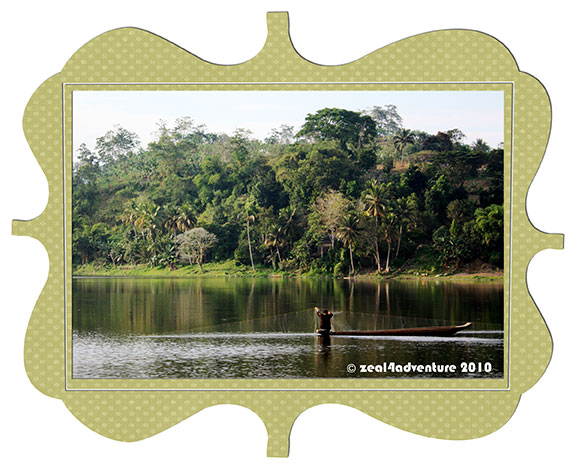
here we caught a fisherman fishing for tilapia just before sunset.

The lake at that time was quite spectacular, if I may say so myself.

These placid lakes are found in the middle of the Allah Valley Watershed Forest Reserve, which is used for fish (tilapia) farming,
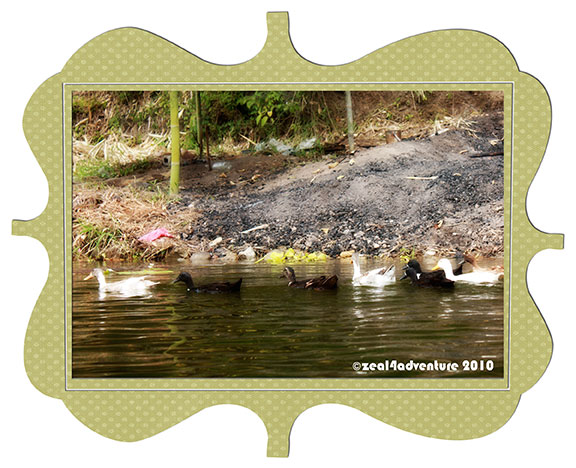
duck raising and harvesting fresh water shrimps and snails.  The watershed supplies important irrigations to the provinces of Sultan Kudarat and South Cotobato.

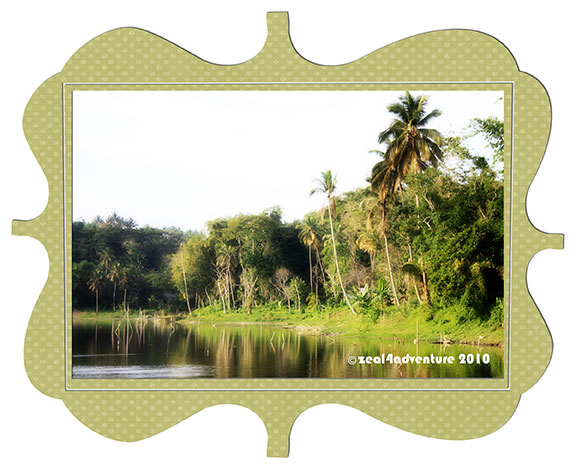
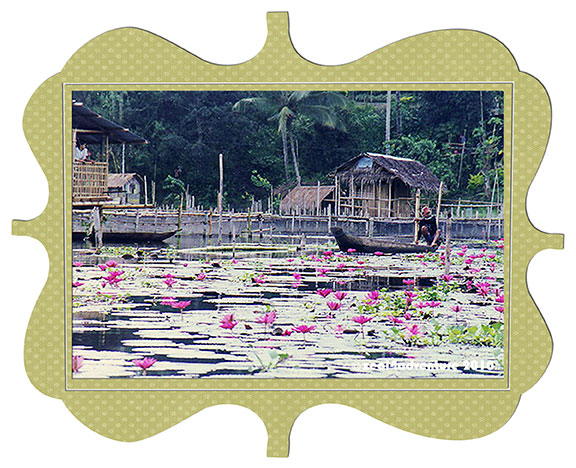
Taken ten years ago… don’t remember which lake but most likely Lake Seloton

Ten years and perhaps even until a few years ago, the lakes had an abundance of lotus and lilies creating a picturesque setting – at least in my opinion.

Today, the lakes are clean with hardly any lotus plants in sight.  I was told that lotuses are (sadly) nuisance aquatic plants that are not recommended for ponds used for fishing.  And most of the people living in the nearby islands are engaged in fishing.  Well, I’ll take health of the lake over aesthetics anytime.
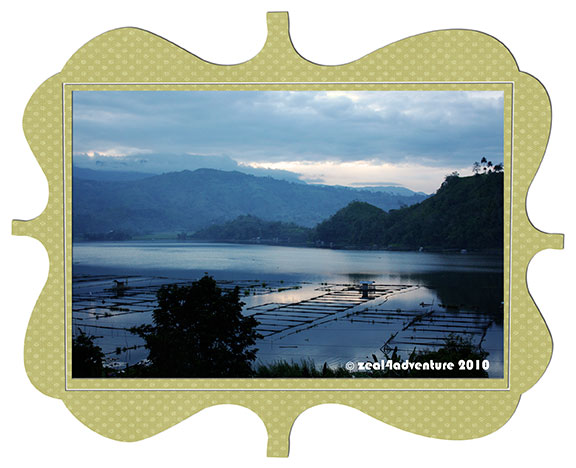
Lake Sebu with the fish cages at dusk

The lakes, in fact, became so famous in the early 1980s for tilapia raising that gave rise to the mushrooming of fish cages.  So much so that it would cover half of the lake, deteriorating its quality.   Today, it is good to know that the Fisheries Code prevents this from happening as the fish cages is allowed to occupy, at the most, only 10% of the total lake area.
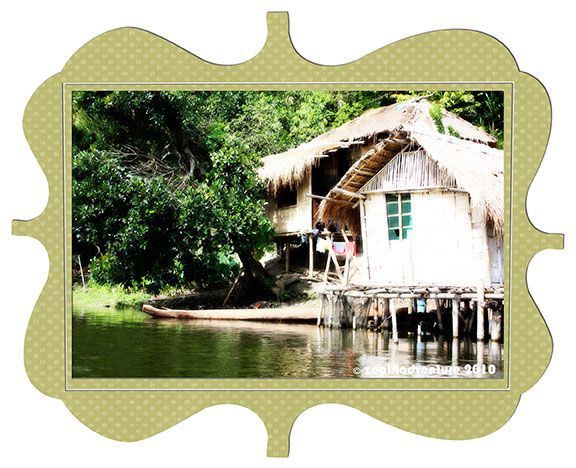
It is no wonder that Lake Sebu was named after its beauteous lake, given that the lakes are such an integral part of their lives.

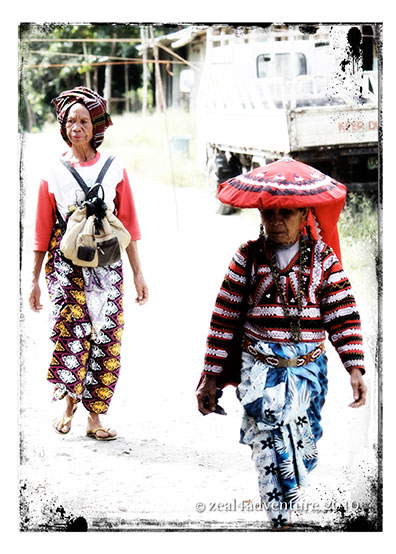
Scenic Sunday

Back to My Everyday

Credits:  JSprague TW paper kit (JSprague Brown Solid, JSprague Red Solid, KHMize Boogie Star Stripe, KPertiet King Me, K Pertiet Letterbox Bird Watcher, Trish Jones TNC radientessence papers); JSprague TW Snapshot template

Journal reads:

Today I come back home to my everyday.  As I enter, I am transported back to the usual accustomed routine.  I however welcome the smell, the organized chaos and the quietness of my home.  A jaunt, long or short, breaks the monotony of my everyday and makes me look forward to the familiar, every time.  The comfort of my bed, the smell of my pillow and the warmth of my blanket never fail to welcome me back home. Today I cook with glee after eating out every single day.  Today I enthusiastically put up my feet, sit on my couch and work on my computer as I always do on a normal day.  Today I say hello to home sweet home… it is good to be back.

Forceful Cascades of Lake Sebu

Hikong Bente (Falls #2)

Two of the seven waterfalls were the most accessible while the others have yet to have access trails.  Developed a few years ago through the funding of the local government with help from New Zealand, Hikong Alu (falls #1) and Hikong Bente (falls #2) today only requires about 30 minutes of walk – although I do not remember it to be a strenuous hike 10 years ago.  Often dubbed as the “Summer Capital” of Southern Philippines, the development of the seven waterfalls is part of a bigger plan to capitalize on the tourism potentials of Lake Sebu and to turn it into a major destination in Central Mindanao – not exactly the most popular in terms of tourism due to the poor press releases of its neighboring provinces and the mere fact that it is in Mindanao scares off a lot of tourists, foreign and locals alike.  So the efforts of the local government to focus on its beauty are commendable.

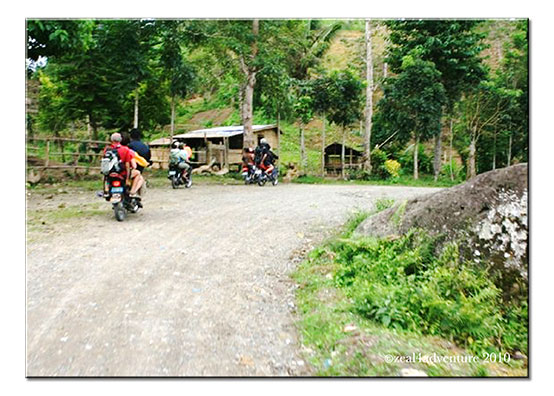
Two passengers and a driver in one motorcycle   😯

The only means of public transport around Lake Sebu is through motorcycles or what they call habal-habals.   From our longhouse, it took us 15 minutes perhaps to arrive at what looked like an entrance to a park.  P20 was all that’s needed to enter.  The focus of the development was mainly on road development and the establishments of resort facilities.  Save for the inner roads, it was a pretty smooth haba-habal ride along the main highway.

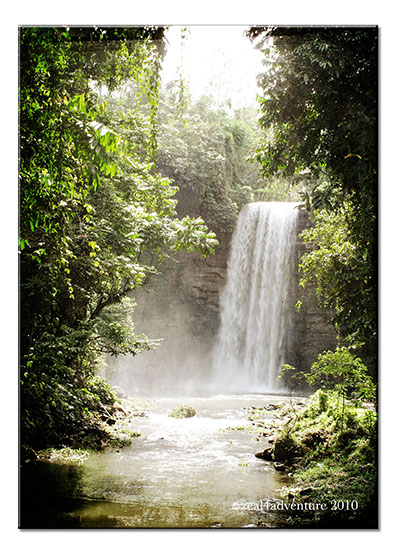
A short walk from the entrance is Hikong Alu, the first falls cascading down the jagged landscape of the lush forest of Lake Sebu.

A trail on the right leads to a natural pool where one can enjoy the beauty up close.

There are two options to get to the 2nd falls, Hikong Bente.  One can choose to zip down through a recently developed zipline.  The queue was long so we chose to walk.  The walk through the verdant forest is made easy with the stoned steps established.

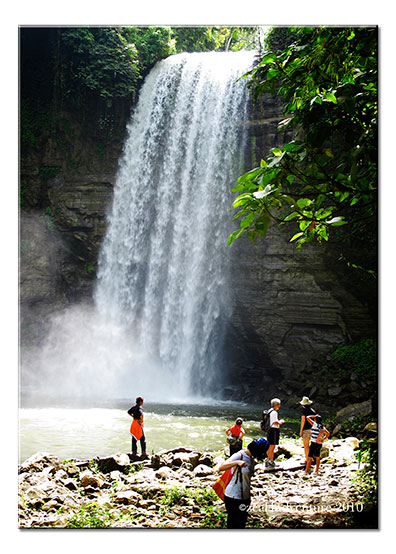
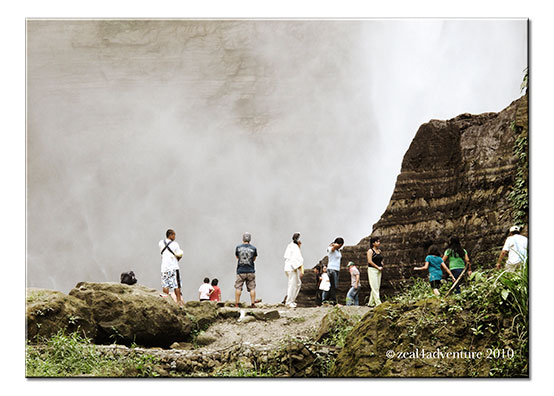
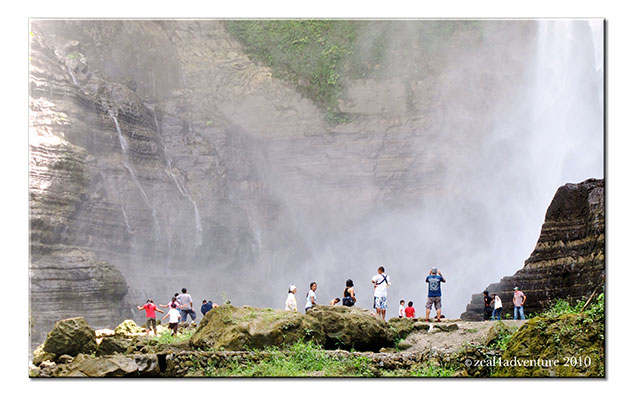
What greeted us was a grander falls with powerful cascading water that leaves a misty atmosphere.   Apparently the largest of the seven.

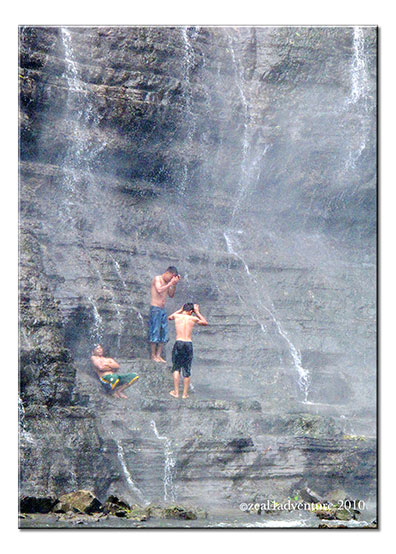
The ragged rock wall etched through the years

by the constant mist from the falls

has become favorite playgrounds.

One could either swim or do as I did – simply admire the beauty that surrounds.

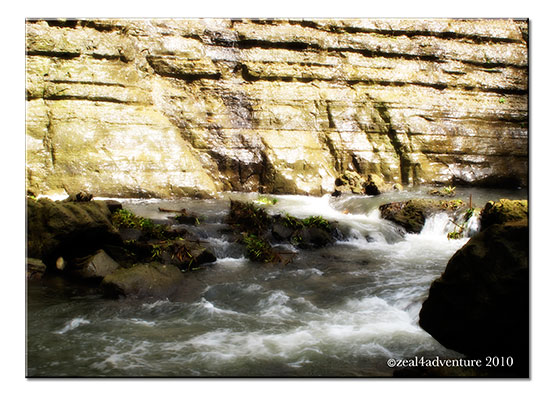
Stream as seen from the entrance

Nature tops the list of potent tranquilizers and stress reducers.  The mere sound of moving water has been shown to lower blood pressure.

~Patch Adams

Scenic Sunday

Lake Sebu Revisited

It’s been 10 years since my last visit to this enchanting town where T’boli’s hail.

A T’boli lady in full regalia

I remember the highland tribes for their colorful costumes and intricate beadworks.  And that’s what excites me about this trip.  Revisiting the lake, taking loads of pixes, eating lots of tilapia, shopping for some beadworks were just a few things I looked forward to.

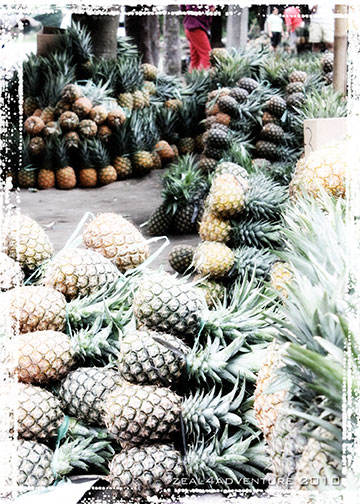
In between General Santos and Lake Sebu is the town of Polomolok.  It is the home of Dole Philippines, the biggest pineapple plantation in the world.

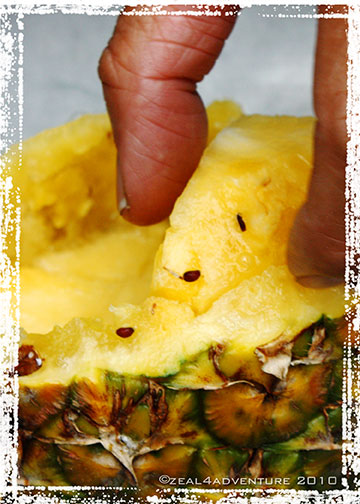
A bag of sliced pineapple for P5 (US$0.10)

And for that reason, we had to stop and get us some pineapples for the road and Lake Sebu.

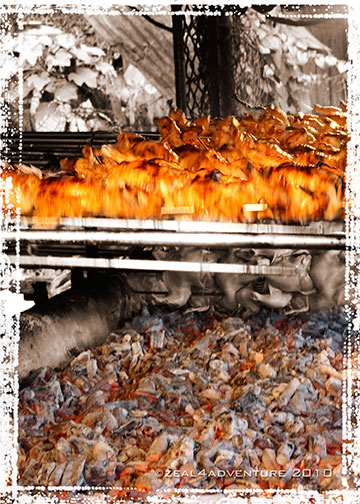
True to its promise, the pineapples were indeed über sweet.  While at it, we also stopped for a late lunch of

truly tasty and juicy lechon manok (roast chicken).

We arrived shortly before dinner with our host Mayang warmly welcoming us with a bowlful of

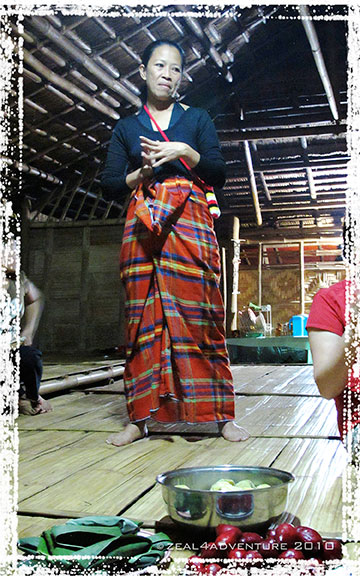
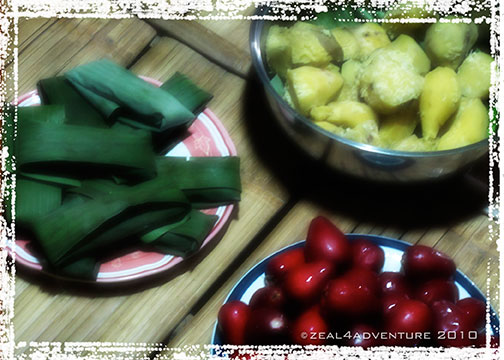
boiled camote (sweet potato), tuwal (macopa-looking fruit), suman (rice cake), and native coffee.  Our succulent late lunch didn’t stop us from devouring what was supposed to have been our snack turned starter.

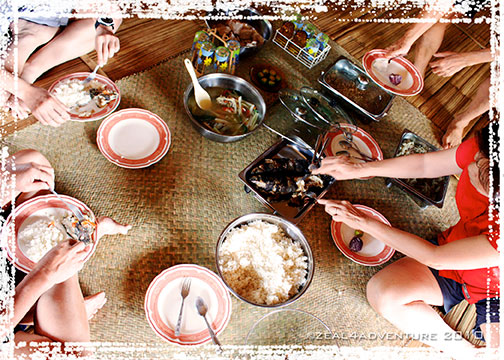
Dinner was a simple yet delicious dish of tilapia in soy sauce set on the floor.  Accommodation whilst in Lake Sebu was a traditional longhouse, Mayang’s home, which she turned into a home-stay.

Photo courtesy of A.Go

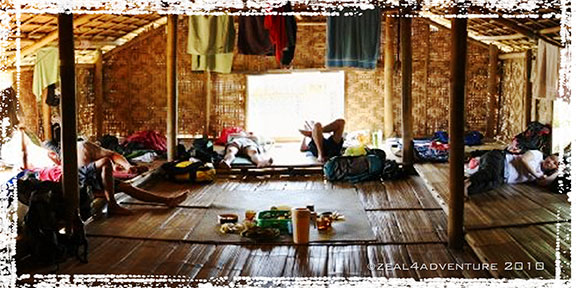
Made of rattan, palm leaves, cogon grass and bamboo, the longhouse is devoid of any furniture, the elevated sides serves as the sleeping zone

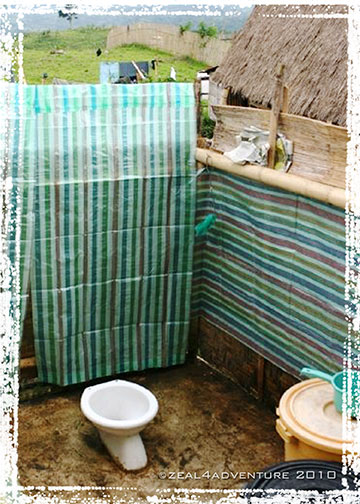
and the center of the house serves as living/dining area.  The bathroom is an outhouse and bathing under the stars, I found out, is quite liberating albeit not an easy feat.

Due to the altitude of around 1,000m the climate can be cold in December and a taking a bath in cold water with a breeze is not really my thing… I love my hot showers.

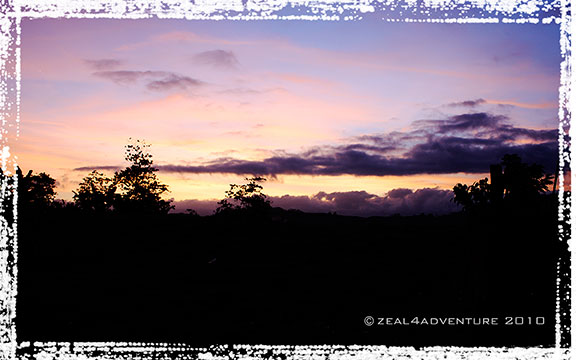
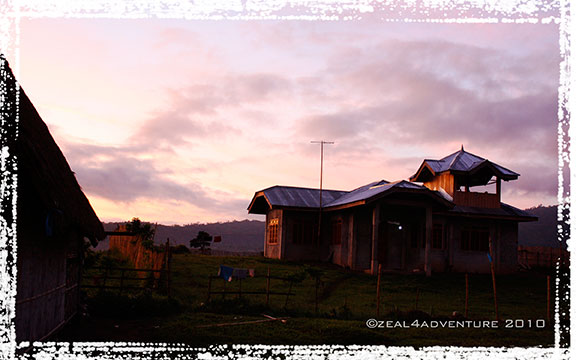
I was dead tired from the trip; I hit the sack ahead of everyone else and consequently woke up early enough to catch a glorious sunrise.

Contact Details:

Mayang Todi:
Mobile: +639187671063

Making Good Use of Downtime

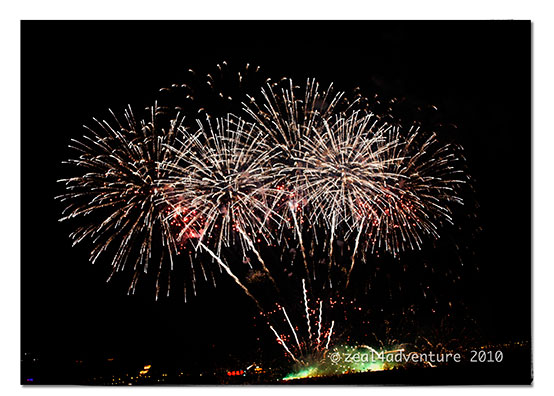
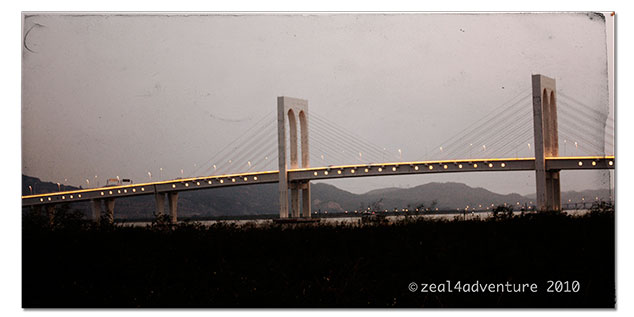
We were at the sea area in front of the Macau Tower early to catch the Annual Macau Fireworks Display contest.

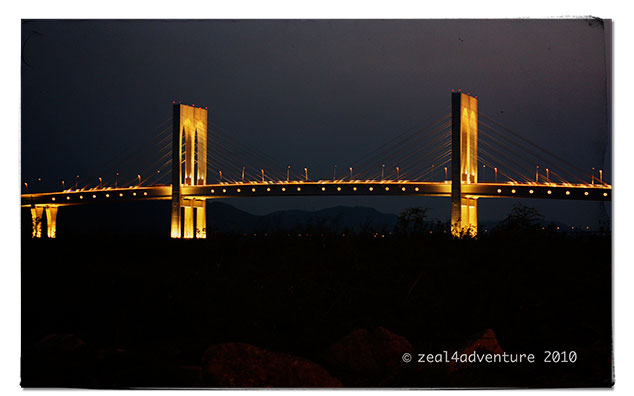
Early birds have its drawback… a long wait.  Its reward however outweighs it inconvenience.  Securing good front row seats afforded great captures of the fireworks and these series of shots of the Sai Van Bridge as the sun sets.

Once considered remote from Peninsular Macau, when they were accessible only by small ferries, the islands of Taipa and Coloane have developed as integrated suburbs since being linked to the mainland by 3 bridges.

One of them is Sai Van Bridge, opened in January of 2005.  It is the first cable-stayed bridge in Macau.  The double deck bridge has 6 lanes in the upper deck and 4 at the lower deck.

More of the fireworks in upcoming posts.  For more scenes from around the world click image below.

Scenic Sunday

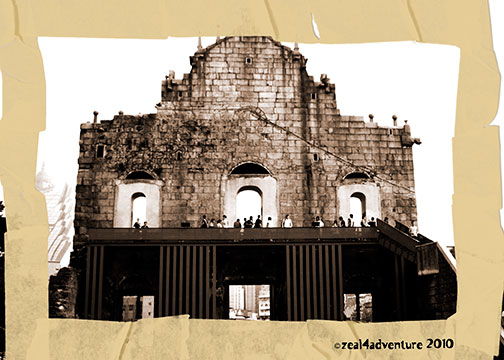
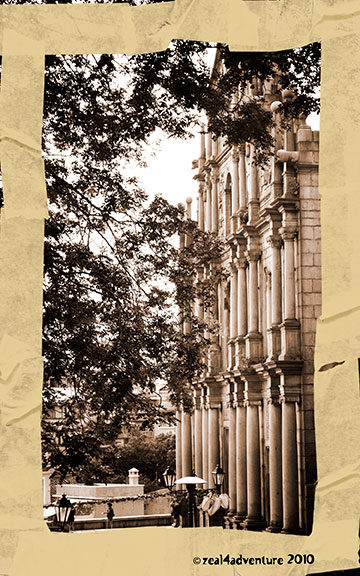
The Ruins of St. Paul’s (Ruínas de São Paulo)

The sixty-eight granite steps from the square will lead you to a façade of what was once the greatest cathedral in Macau.  Built from 1582-1602 by the Jesuits, the remains of St. Paul’s Cathedral was the largest Catholic Church in Asia at the time.

It is a fine example of Macau’s unique characteristic as a city of Europeans, Chinese and other Asian exchange.  Ruined by fire twice, ravaging the other buildings and destroying the church ad almost all the complex.  From 1990 – 1995 work was carried out to restore the back of the church, turning it into a museum.

Regarded today as the symbol of Macau, St. Paul’s ruins was considered the core area when the historical center of Macau was inscribed on the World Heritage list in 2005.  It is today one of Macau’s most famous landmark where music performances are held regularly.

If you enjoyed these sepia scenes, click image below for more.

Oh Manuel!

It’s a funny thing about life; if you refuse to accept anything but the best, you often get it. – W. Somerset Maughem

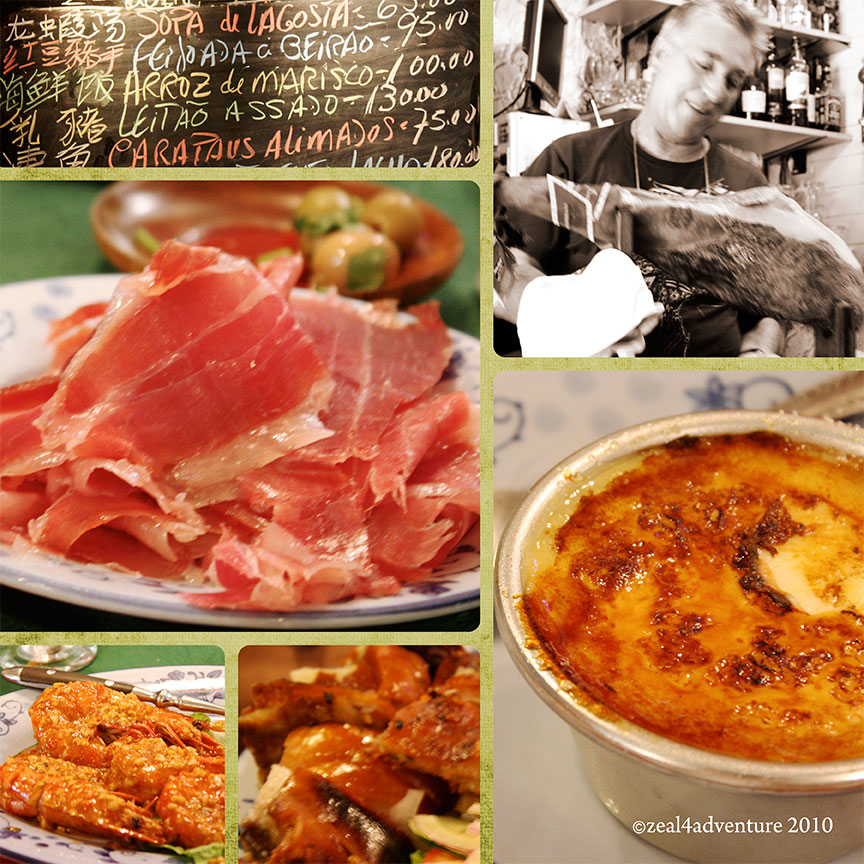
Reservations were made and off we went to Taipa to lunch.  Those with insider knowledge or Macanese connections will head to Taipa for some great culinary experience.  Tucked away in a quiet street just on the edge of Taipa Village is one of Macau’s best-kept secret, a homey, welcoming hole in a wall called O’ Manel or more formally known as Manuel Cozinha Portuguesa.  Manuel Pena, a Portuguese and his Chinese wife owns this tiny restaurant that serves fantastic Portuguese food.

In his restaurant, Manuel waits on tables himself, supervises the preparation of the dishes and does the cooking himself, sometimes with the help of his wife.  There are no menus only a blackboard; in it written are the specialties for the day.

Clockwise:  menu board; Manuel Pena and his Pata Negra; Caramel Creme; Roasted Suckling Pig; one order of Pata Negra, sliced.

For starters, we had slices of Pata Negra (or jamon iberico in Spain), a favorite since I first tried it in Seville years ago.  So memorable this Pata Negra was during my first visit to this restaurant some 3 years back, I came back with that in mind.  Fresh fish and shellfish are found on virtually every Portuguese menu and it is not surprising that we were served Garlic Prawns and a wonderfully citrus Clams in lemon sauce with a hint of coriander.  Roast suckling pigs, popular in the north of Portugal came highly recommended.  We were ecstatic that it was perfectly roasted with skin that crackled so loud we ordered one more.

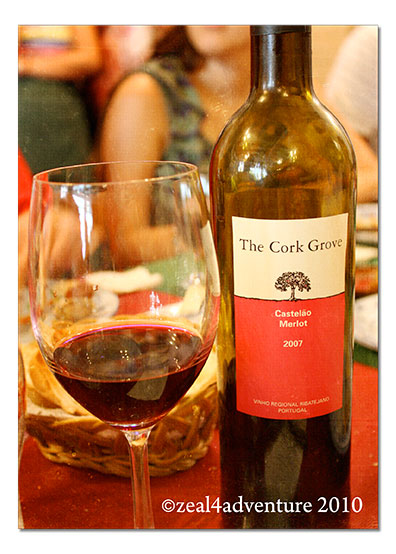
We washed all these down with a glass or two of this lovely Portuguese Merlot and capped this splendid meal with a most typical Portuguese dessert, Caramel Cream.  Mmmm…  overindulged, most definitely.

The restaurant when we entered

In less than thirty minutes

This small casual restaurant with its limited number of tables fills up quickly so book ahead.

Manuel Cozinha Portuguesa
Rua de Femão Mendes Pinto, N90 R/C
Taipa, Macau
For reservations call:  (853) 28827571 or 28825811

The Real Macau

Beaches, ancestral Chinese villages and forested hills with nature trails… traditional countryside still exists in the islands of Taipa and Coloane.

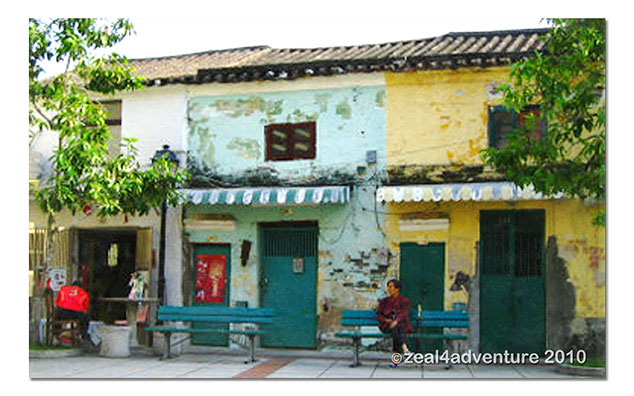
Here in the narrow streets and alleys with multi-hued buildings with peeling paints and stained walls lives the real Macau contrary to just a few meters away where The Venetian Macau Resort and Hotel stands.

Oblivious to the developments that will eventually comprise 14 resorts, the locals still while away time, chatting on benches around the square.

Although this rural part of Macau is slowly transforming into one of the biggest tourist destination in Asia, there still remains a section that is evidence to Macau’s centuries-old cultural heritage.  A quaint village on what was once Taipa Island’s southern shoreline.

Pak Tai Temple — one of the biggest temple of Taipa

Taipa Village or Tamzhai (in Cantonese) is still made up of Chinese shophouses, Portuguese-style offices, and temples all around.

Incense inside Pak Tai temple

A good place to learn about the history and culture of the area as there are plenty of them to explore.

The museum of Taipa & Coloane History is a comprehensive exhibit of historical relics unearthed on Coloane,

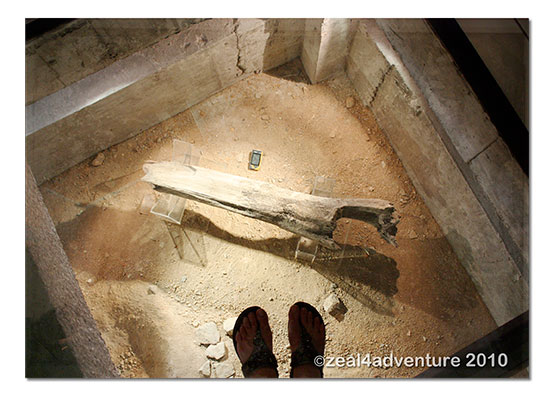
The glass floor to view the relics from the basement

the stone architectural remains in the basement of the former Island Council Building.

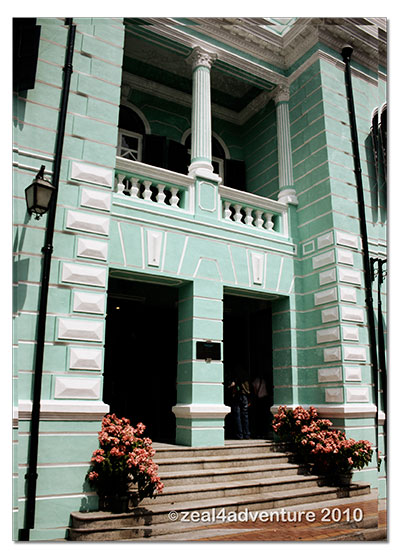
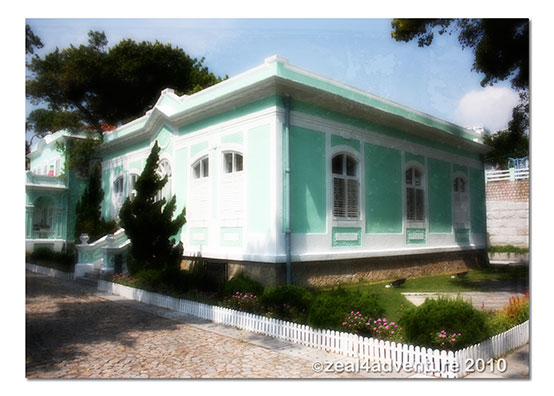
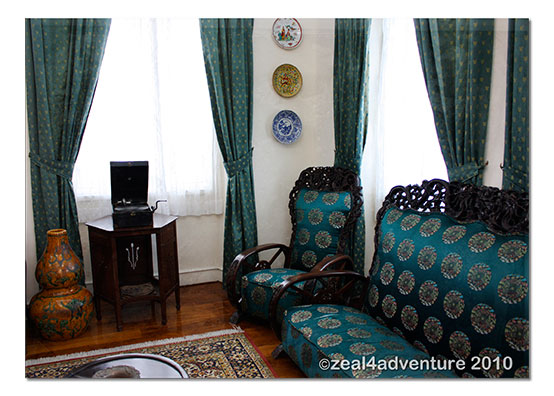
A few minutes walk to the east from the village is a waterfront area where remains a superb old colonial promenade, Avenida de Praia, complete with original houses.  The Taipa House Museum (or the Casas- Museu da Taipa)  shows a number of 20th century houses restored to depict details of turn-of-the-century domestic life of the Macanese families, highly religious, well-to-do but not extremely wealthy.

The Macanese House is one of macao’s typical houses in colonial style reminiscent of a period of Portuguese splendor characterized by frequent influx of the Portuguese, British, Mandarins and merchants in this tiny territory.

Carmo Church — 0ne of the eight views of Macau

Although Taipa’s northern shore is hardly worth a stop now, Taipa Village on the southern shore and Avenida de Praia is definitely a pleasant walk where faded mansions and wooden benches seem frozen in time.

Scenic Sunday