The Binondo “Wok”ing Tour

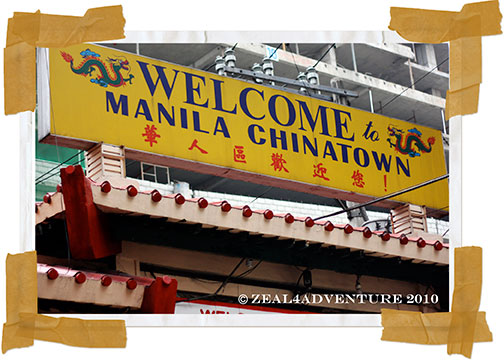
Possibly, no definitely the best way to see Manila “on foot” as their leaflet suggests and I completely agree.  It’s literally experiencing Binondo or Chinatown one bite at a time.

I am of Chinese descent but I don’t really know my way around Chinatown.  My parents would occasionally take us there for lunch or dinner when we were growing up but really, I am clueless as to their whereabouts.
An “old-time” favorite of the family

Binondo is like a maze, although the street names are all very familiar, I have no sense of where they are in relation to each other.  Leave me there and I am helpless.

I grew up with home cooked Chinese food.  Not the stuff that you eat in “Cantonese-style” Chinese restaurants in the metro, but simple home cooked meals that really is more everyday stuff to me than “Chinese”.
So taking this tour was somewhat nostalgic and enlightening.  We journeyed through old and new adventures.  There were food that I grew up with and there are those I encountered for the first time.  The places we walked through were likewise familiar, yet unfamiliar.

Binondo Today and Yesterday

Ivan showing the group a “grandma” slipper that is almost in the brink of deletion.

Our gracious host, Ivan Man Dy met us at the Binondo Church located across the Plaza Calderon dela Barca along Quentin Paredes St.
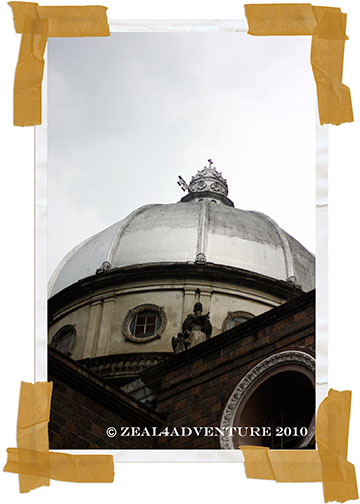
It is today a well-known landmark in Chinatown.  Because the saint once served there as an altar boy, it is also known as Minor Basilica of St. Lorenzo Ruiz.
At the Plaza across the church, we talked briefly about how the early Hokkien (Fookien) immigrants arrived from Fujian province in China during the Spanish rule and the time when Binondo was the main center of business and finance in Manila with mainly the Chinese, Chinese mestizos, and Spanish Filipinos anchoring the bustling banking and financial community many decades ago.

Today, the community is still vibrant as ever and continues to keep alive its heritage.

Café Mezzanine

After a brief reminder of our history, we walked over to a café above Eng Bee Tin where we were served a bowl of “kiampung”, which literally translates to salty rice.

This rice dish is a mixture of pork, chicken, dried shrimps, mushrooms and peanuts mixed together in soy sauce and topped with caramelized and spring onions – a simple dish that reminded me of my childhood, my grandmother, actually.  Opened and run by a group of volunteer firemen headed by Gerry Chua, all of its proceeds go to the Binondo and Paco Volunteer Fire Search and Rescue Brigade.  So if you find yourself in the area, head on to Café Mezzanine and eat up a storm, every bite you take is a contribution to a noble cause.  Located at the corner of Ongpin and Yuchengco (former Nueva St) Sts., it opens its doors at 7am and closes at 10pm.

Dong Bei Restaurant

Fried Kutchay Pancake

We then walked over to a hole in a wall that serves perhaps the best dumplings in town.

At the storefront (as you enter) there will be someone making fresh dumplings by hand for everyone to see.
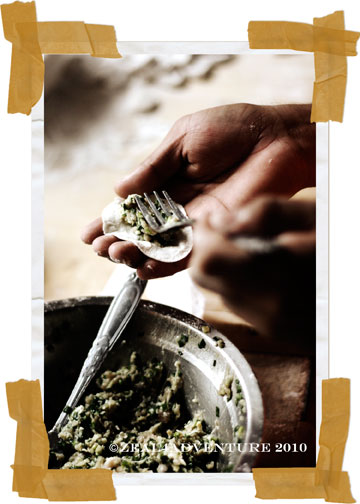
Owned by new immigrants Ivan calls “bagong salta” (new arrivals) from Northern China, they serve prominent dishes from that region.
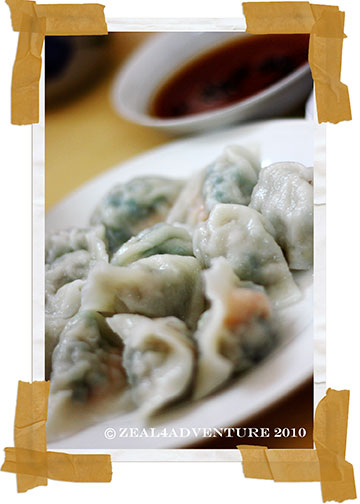
Heavenly with the sauce!

The steamed Kutchay dumpling is a blend of minced pork, kutchay and fresh shrimps – juicy pork dumpling flavored with kutchay and fresh crisp shrimp adding another dimension to the taste of the dumpling.  This is truly a wonderful blend of flavors and is heavenly with the soy-vinegar sauce.   I loved it so much, I bought some frozen ones to savor more of it at home.  Heard that they also make a mean dish of hand-made noodle with Soybean sauce.  Must get myself back there to try it.

Fried Siopao
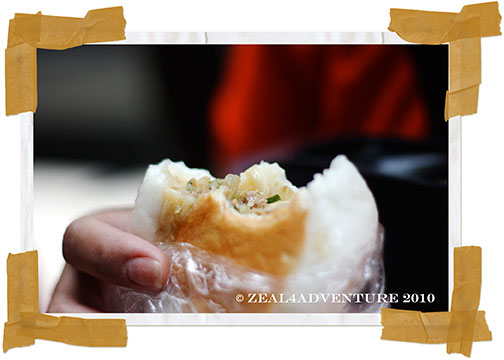
Another favorite and a first for me is fried siopao from a small take-out stall along Benevidez St. Yes folks, this siopao is not steamed but pan-fried.  This might be the best tasting siopao I had ever tasted in my life.  Not the typical asado filling, this is more like bola-bola siopao but much more tastier.   Definitely a must-try.

Aside from the siopao, I also bought to munch some sugar sprinkled bicho-bicho (Chinese crullers).  This was a favorite and truly a blast from my past!

There’s more and best to experience it first hand.  The Big Binondo Food Wok.  Go book a tour today.  And oh… make sure you’re hungry.
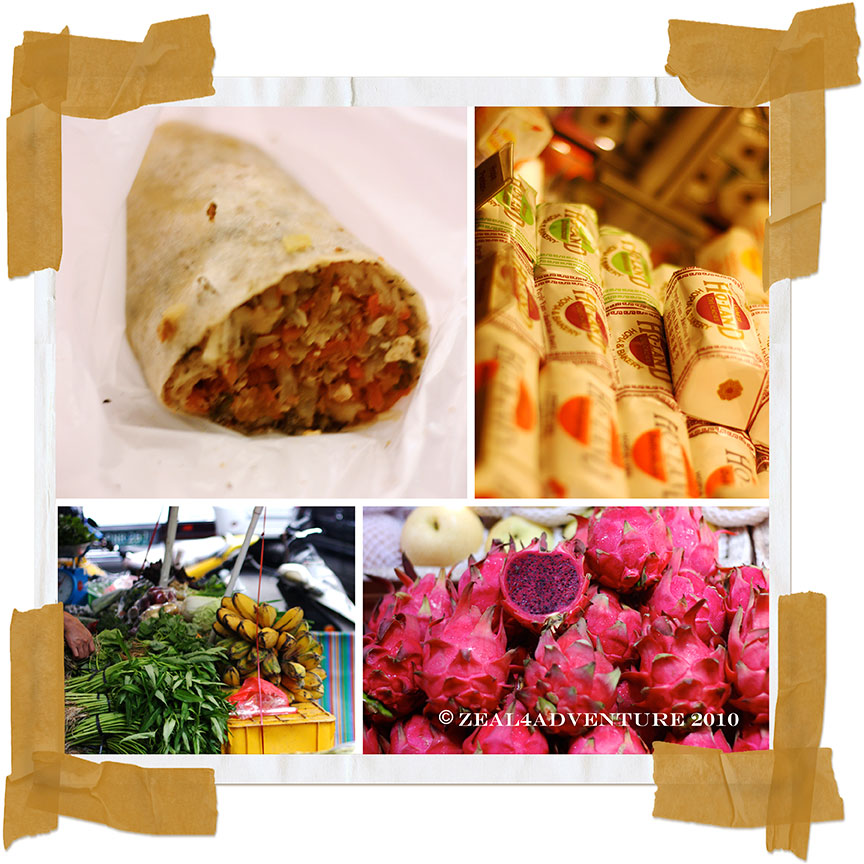
Maa Shee Saw Yo (Delicious!)

Credits:  Kitschy Digitals – You Are Awesome Kit Plain and Yellow Houndstooth papers; JSprague Awesome Scallop tag

Twenty years ago, Korea to me meant underground shopping where overruns of well-known brands abound.

Itaewon

Today, these so-called underground shops albeit scarce still exists but no longer rule my interest.  More than lovely sceneries (which I only discovered on this trip), it’s the cuisine that got me fired up.  Korean food ranked high on my list of favorites ever since I stepped foot on their soil some twenty years ago.  The proliferation of Korean restos in my neck of the woods nurtured that fondness.  Lucky for us, we had great Korean hosts and night after night, we were treated with authentic Korean cuisine and more. And contrary to some reports, Koreans are very courteous people.   🙂

Some of my favorite dishes came to life and once again, I got to taste it from its source.

Bibimbap

Rice, meat, vegetables, an egg and chili paste.  Mixed together and I’m in heaven.  What I love best about this is the crusty rice at the bottom.  So better make sure that it is served in a hot stone bowl.

Chapchae

Usually served as a side dish in Korea but I can have it as a main dish anytime.  It can truly make my day.
Galbi Gui

The first time I tried this was in a small restaurant in Itaewon and I’ve never looked back.  A must have in every Korean dinners.  It is short ribs marinated in Korean Soy Sauce, garlic and sugar and then grilled, usually at the table.   Typically served with lettuce, which is used to wrap the beef in.  The hot bean paste called ssamjang sealed the deal for me.
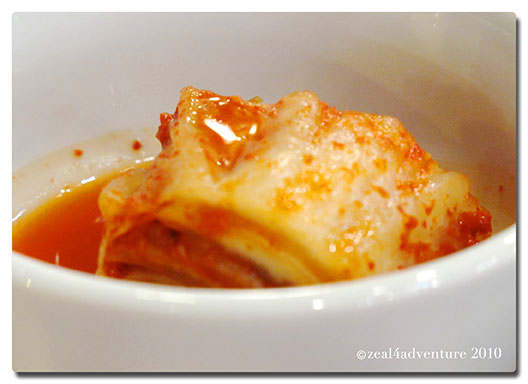
Kimchi

Funny how I sometimes crave for this when it wasn’t love at first taste…  nope, not at all!  It actually took a while for me to even like this stuff.  But what is Korean food without kimchi?

A Colorful Platter of 9 ingredients in Thin Crepe

This was interesting and a first encounter.  The platter came with thinly sliced fresh and pickled vegetables and mushrooms.  Gather a few of each and wrap with the crepe.  Maa shee saw yo!

It was a great trip to Korea even if it was actually work (and a bit of play).  The food capped it all, as usual.

Chang Deok Gung: A Palace in Harmony with Nature

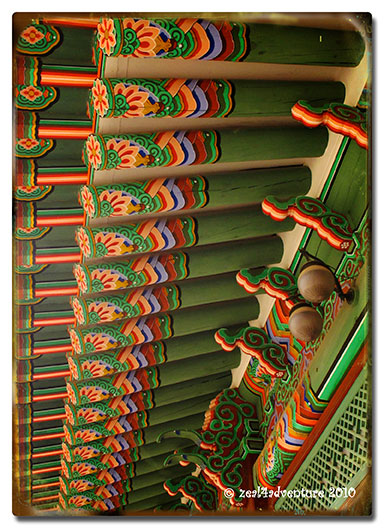
The ancient seat of Korean royalty has 5 major palaces in Seoul and some are definitely worth a visit.  Chang Deok Gung is one.  We visited the palace as recommended if given half a day sightseeing only.  Some chose to go shopping… not me.  Although Geong Bok Gung is the grandest palace and the seat of power for centuries, we didn’t go there because it would need more time to fully explore.

And even if Chang Deok Gung is 2nd only in importance to Gyeong Bok Gung, it was a favorite of many kings of the Joseon Dynasty, perhaps because it was built in harmony with nature.

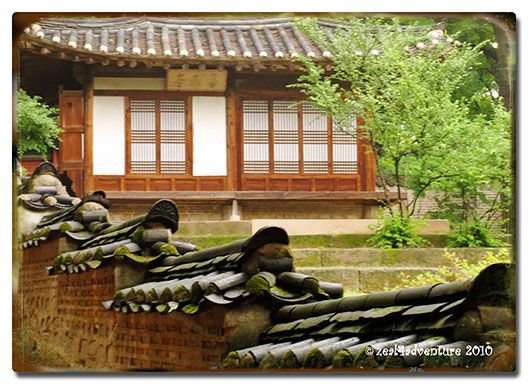
The walls inside the palace were laid out freely, not imposing but rather blending with nature

and this earned the palace a UNESCO listing as World Heritage Site in 1997.

Both palaces were totally destroyed by fire during the Japanese invasion of 1592.  After the war, Gyeong Bok Gung was not rebuilt because its site was no longer considered auspicious.

Instead, Chang Deok Gung was restored in 1610 and served as main palace for the next 258 years, until Gyeong Bok Gung was finally rebuilt in 1868.

Some sites to note:

Seongjeongjeon – where the king handled routine state affairs.

Originally a hall for the king, but it was also used by queens to throw parties to honor elders and encourage customs of respecting one’s elders.

For leisure and relaxation, the royal family had a secret garden built.  The garden presents an unusually exquisite design adapted to the topography.

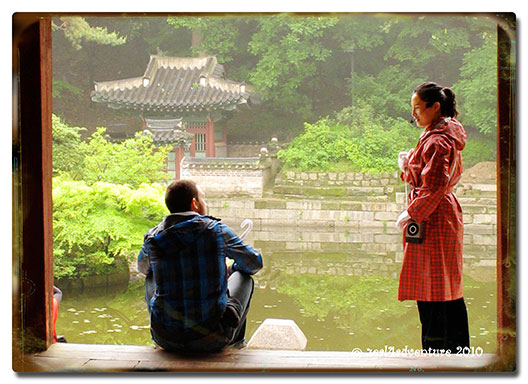
Buyongji lies in the heart of the Secret Garden.  A relatively open space used for retreats as well as for study.

A number of buildings were built around this rectangular pond.

Jondeojeong – this area is believed to have been the last to be added on to the Secret Garden.

The Palace in more detail:


A Museum of Art and Nature

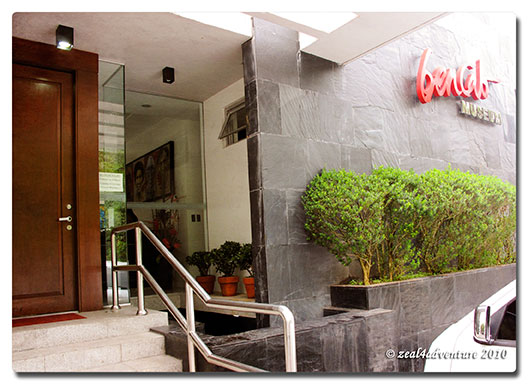
A short ride from the Baguio City center along Km 6, Asin Road stands a modern white building that is BenCab’s Museum.  A 4-hectare project of the National Artist for Visual Arts, Benedicto Reyes Cabrera, more popularly known as BenCab.

The Master of contemporary Philippine Arts traces his beginnings in Mabini where he painted and ran an art gallery with his elder brother Salvador Cabrera.  He then moved to London, gotten married to a British writer and eventually established for himself a name of international recognition.  When his marriage ended, he relocated to Baguio in 1988 and along with other artists formed the Baguio Arts Guild.  BenCab being a tenacious admirer and collector of Cordillera Arts also formed his own group of artists when he established the Tam-awan Village, an art center that promotes Cordillera traditions.

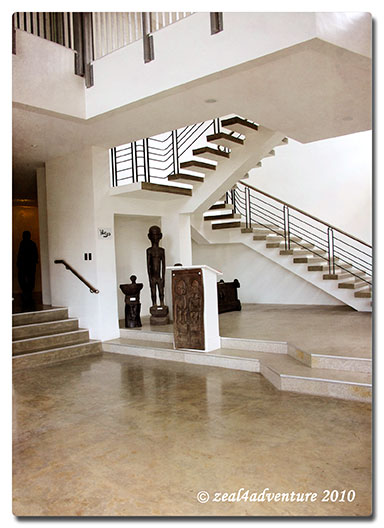
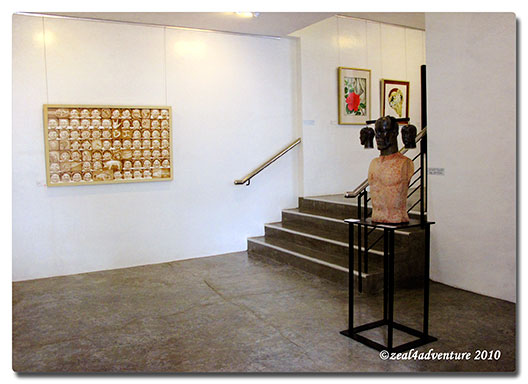
So it is to no surprise that aside from the BenCab Gallery, which presents a range of his works of different periods, sizes and styles,

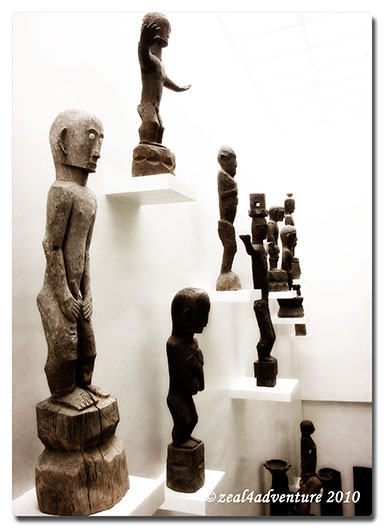
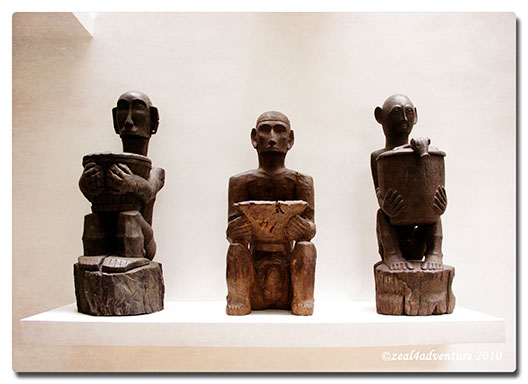
the museum also houses a Cordillera Gallery displaying a collection of tribal artifacts and indigenous crafts of the northern Luzon highlanders.

It also showcases artworks by contemporary Filipino artists – Cesar Legaspi, Anita Magsaysay-Ho, Fernando Zobel, Arturo Luz, Ed Borlongan to name a few.  A collection he accumulated through the years.

Aside from promoting art, a major part of its mission is to preserve, protect, and conserve its natural surroundings.  And how?

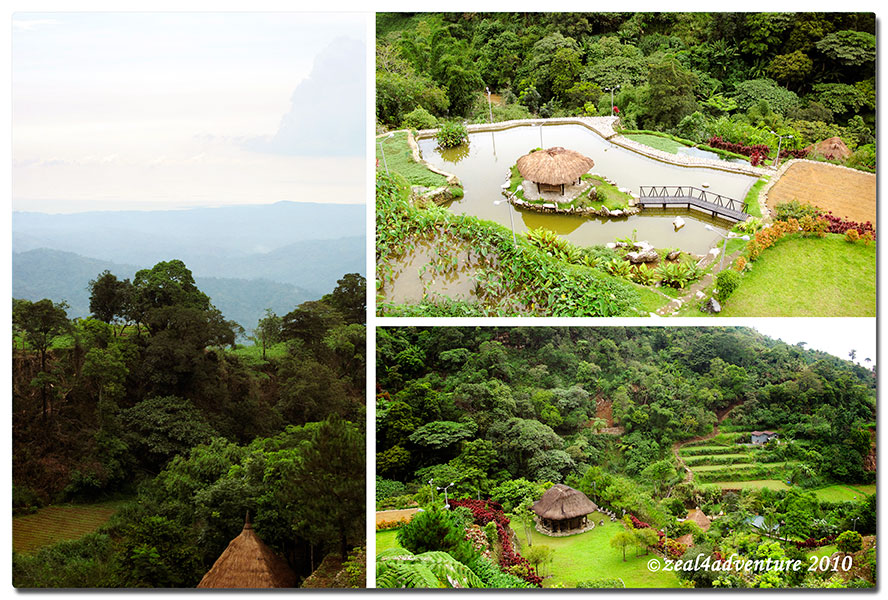
The museum commands a breathtaking view of the adjacent organic garden, its surrounding mountains and the South China Sea on the horizon.  Other sections of the estate features large ponds for ducks and a thatched-roof gazebo erected on a center island.

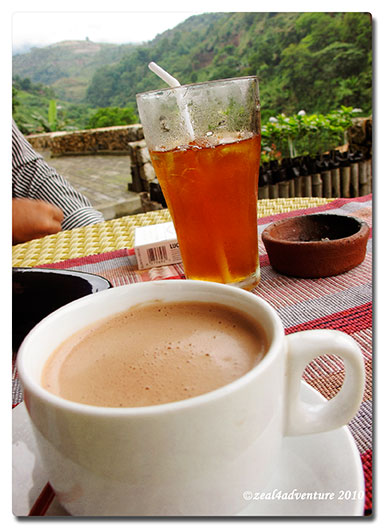
Café Sabel, serving cordillera coffee, tea and some food, is on the ground floor and overlooks all these.  Truly a remarkable man’s gift to a community he joined more than a decade ago.

A museum that is worth a visit opens its doors from Tuesday to Sunday, 9am-6pm.  Admission fee is P100 per head.

You Have Something To Say

Credits: JSprague TW dialog template; LivE SSun Fun paper pack (grass, maraschino and paisley skies); JWilson’s Rejuvinate and Reaffirm flower element.

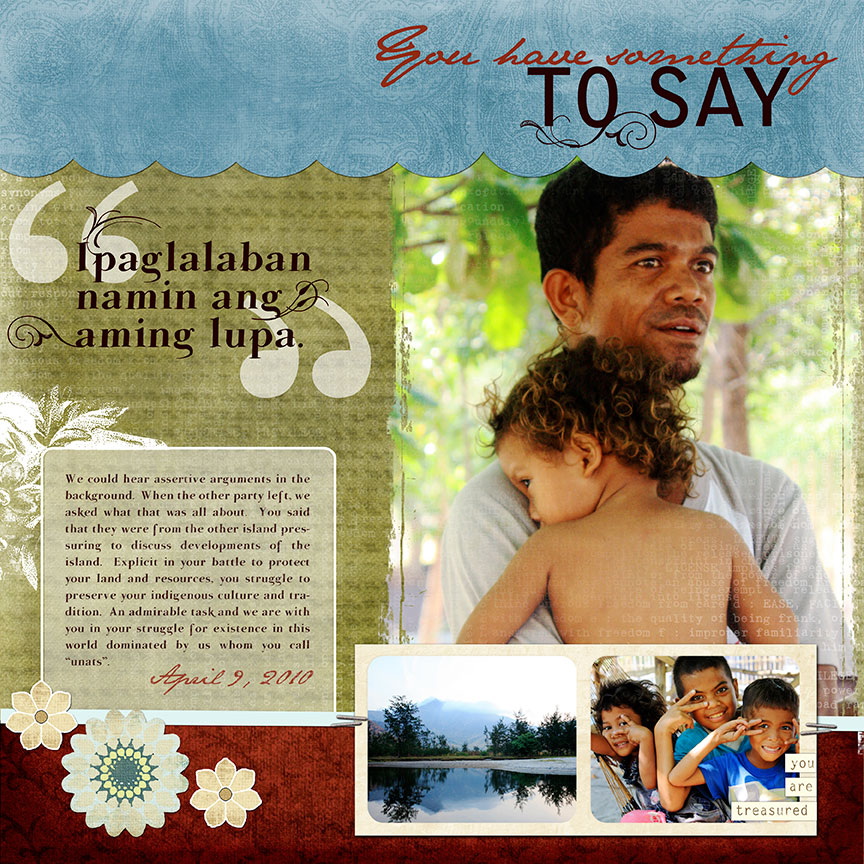
We could hear assertive arguments in the background.  When the other party left, we asked what that was all about.  You said that they were from the other island pressuring to discuss developments of the island.  Explicit in your battle to protect your land and resources, you struggle to preserve your indigenous culture and tradition.  An admirable task and we are with you in your struggle for existence in this world dominated by us, the “unats” – straight haired.

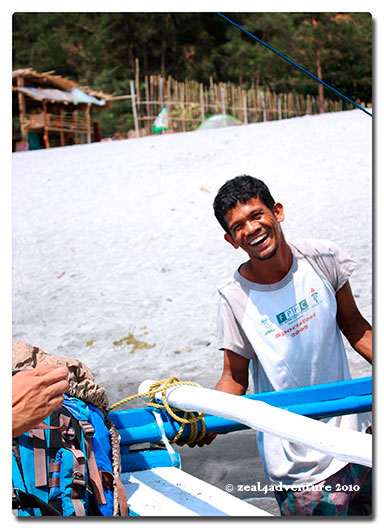
Mang Augusto and many like him have been struggling for existence after the Pinatubo eruption.  They are descendants of indigenous people who lived around Mt. Pinatubo of Luzon for thousands of year.  The Aytas or Aetas were forced into evacuation centers and many have been relocated throughout the country when tens of thousands of them were displaced by the dramatic eruption of Mt. Pinatubo.  Ash and lahar covered their homes and destroyed the forests, rivers and fields that had ever since supported their livelihood and this historical disaster radically changed their world in June of 1991.

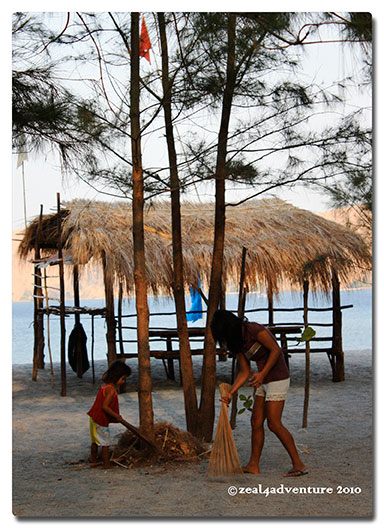
Enjoying life in Nagsasa Cove

Although they were among the first to inhabit the Philippines, they have been facing the same problems as other indigenous people in the Philippines – how to secure a land to make a living, enhance their human, civil and ancestral rights given that they can no longer live separate from the outside world nor maintain their basic source of livelihood.

Nagsasa could be the next hot spot and may soon be at risk from commercialization,

which could probably strip the caretakers of the cove from their domain, this time by us, the “unats”.

A Simple Life

Credits:  Daniella Austen’s Fancy Quickpage 3.

The largest island, Dalipuri is the only one with resorts established among a cluster of islands known as the Balicuatro Islands.  The rest of the islands are mostly home to farmers and fishermen.  San Vicente has 7 islets called the Naranjo group.  On our way there, someone in our motley group decided that we wanted to explore the town of San Vicente and we spontaneously found ourselves in this island town that lies isolated from the other 6 Naranjo Islands.  The kind of exploring that I like.

Not used to having visitors, the townsfolk started gathering around us as if we were famous people.  Really, we felt like superstars.   😛  Curious, they started following us everywhere until one lady – a teacher – decided to proudly walk us around her town.

A small fishing town, they sell a lot of dried dilis (anchovies) to the entire province of Samar and probably to other areas in the Visayas Region.

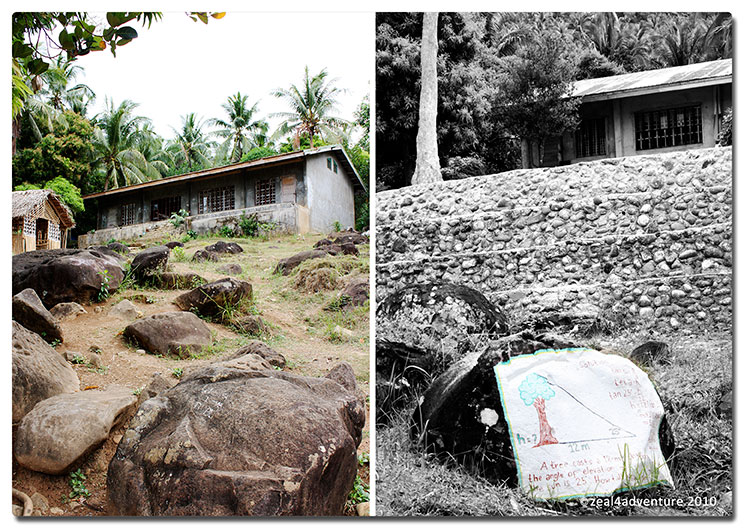
School on top of the hill and equations painted on boulders.

There was a grade school and a high school.  The former quite interesting, albeit dilapidated.  Interesting because it sits on top of a hill

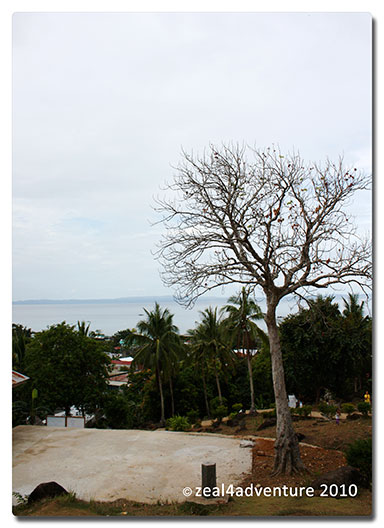
with a view so breathtaking – what a treat to be in school – I wish I had just a little of that view when I was in school.  On my way to the top, I noticed mathematical equations painted on large rocks beside the steps.  Makes me wonder what stimulates this kind of creativity.  Simple and practical, yet artistic and tasteful.  I think it’s the view!   😀

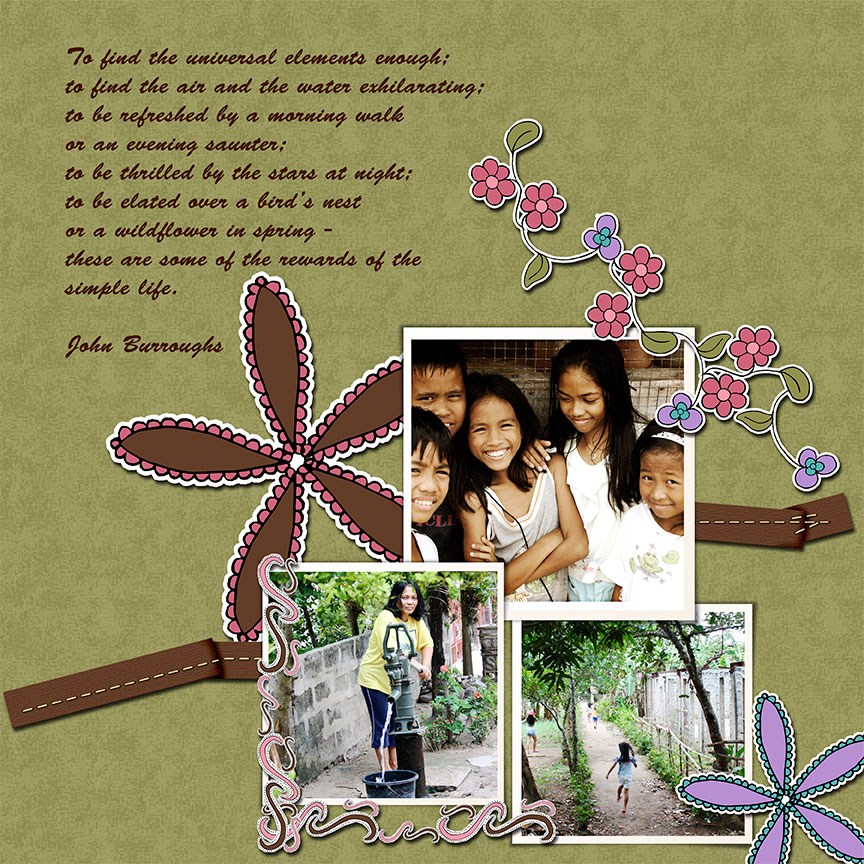
Excited and thankful (they seem) that soon, running water will come to every household.  I’m not kidding!

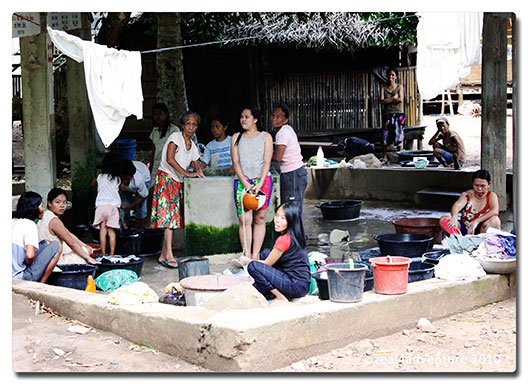
Meanwhile, they are happy with the posos (dug out wells) strategically located around town,

even if they have to wash their cloths in areas such as the above and carry water to their homes.  I cannot imagine how much worse their situation was before.

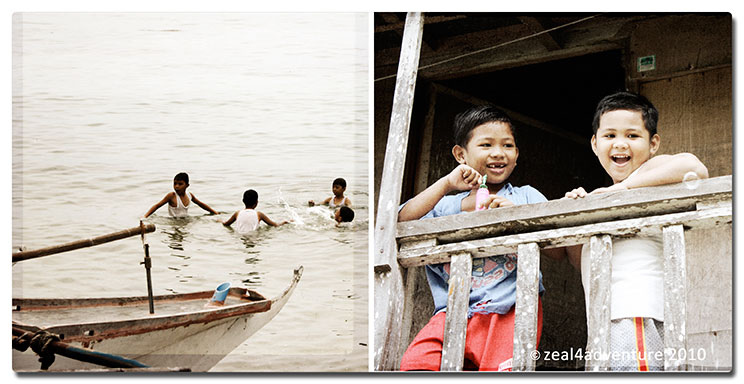
And yet, they seemed happy.

As Henry Ward Beecher says, “The art of being happy lies in the power of extracting happiness from common things”.

Live simply.  But not without a sabongan (arena for cockfighting), simple as this town may be.  Gambling, as it turns out, is their past time.

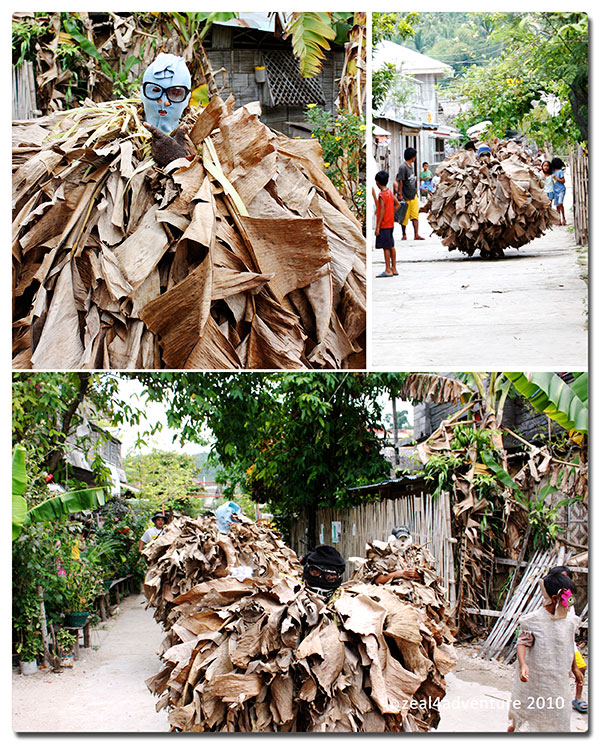
Every year on Maundy Thursday, boys (in their teens) parade around town donned in masks (similar to a ski mask) and dressed in dried banana leaves, supposedly to scare the evils away.  Each of them dressed differently.  Such serendipity that we were witness to a traditional ritual they call Judeo or Hudyo that only occurs one day a year.

Thanks E for your suggested detour.  It was the highlight of our visit as we were perhaps the highlight of their day.

Scenic Sunday

A Heritage of Music, Dance and Storytelling

This is my last post on the T’bolis and it’s beautiful land, Lake Sebu and what better way to honor its people and its land than to celebrate its cultural heritage through vivacious singing and dancing.  No, we didn’t dance nor sang BUT…

On our last night in Lake Sebu, our host prepared a simple musical production in honor of their heritage.  The T’bolis are masters at music, dance and storytelling.

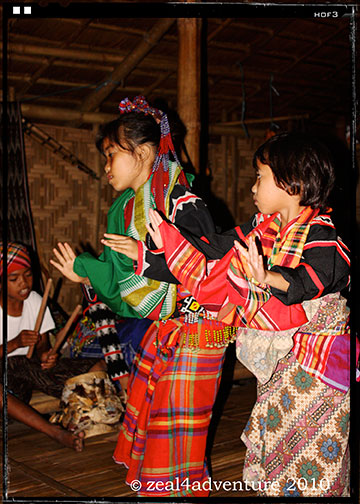
After dinner, young T’boli women, men and children garbed in their traditional and colorful costumes gathered on one side of the longhouse getting ready to perform while eight friends in shorts and t-shirts looking forward to the show.  It started with our host introducing their culture, particularly their type of dance and music.  Inspired by nature, they imitate in their music the sounds of birds chirping, water flowing and the blowing of the wind.

These indigenous people have a rich musical heritage and a wide array of musical instruments.

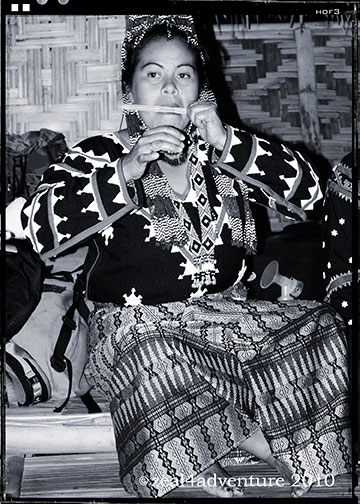
This is a Hegulong (t’boli guitar) that was played by the bead maker we saw earlier that day.  It is said that a hegulong can only be made from a specific tree and a densu (ritual) of offering something to Tulus funen (a spirit who dwells among trees) must be accomplished before the instrument can be blessed with good tunes.

These performances are not for entertainment but it is more of their way of seeking wisdom from their ancestors.

Their dances likewise are mimics from the actions of animals, such as monkeys and birds.

This boy was the star of the night.  He twirled, tumbled, scratched and did all things a normal monkey does.

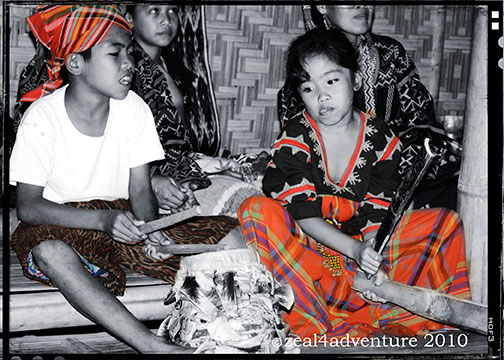
It was cute and hilarious.  The T’boli children—whenever they gather – tap anything in sight in rhythmic beats.

Something perhaps like what these kids were doing.

But as in many cultural heritages, the T’boli’s are threatened.  The community owned School of Indigenous Knowledge and Training (SIKAT) was set up to address their vanishing culture.

SIKAT is a school that revitalizes cultures and traditions in their indigenous education program, which includes traditional music and dances.  It is their aim to encourage students to learn in their own language and to value their heritage.

Getting There:

General Santos City is the gateway to Lake Sebu.  From the bus terminal take a bus to Koronadal (often referred to as Marbel, its old name) and get off at the Koronadal bus station. Tell the conductor to drop you off there.  The trip is about 45 minutes.  From Koronadal, take the Yellow Bus to the town of Surralah (about 38 minutes).  From Surralah, take a jeep to Lake Sebu (about 43 minutes).

On the other hand, one can also arrange for pick-up, depending on the resort you stay at.

Brass and Beads

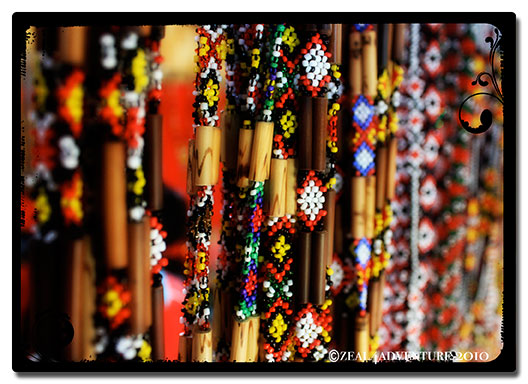
Creative – that’s what they are.  The Tbolis possess marvelous traditional craft skills up to this day – aside from weaving, they are also known for their wax brass casting and colorful beadworks, which are used as jewelries, accessories or home décor.  They are also very stylish people, the T’bolis – some of the accessories worn by their women include earrings, necklaces, belts, anklets and combs.  Some more elaborate than others.  Some I can even wear with my modern day attire.  In fact, I have been accessorizing my wardrobe with the necklaces I bought since we got back – quite unique and distinctly ethnic garb, if I may say so.

There are several kinds of necklaces, some more difficult to obtain than others. Those considered heirlooms will be the most difficult to find is unlikely to be found in the market.

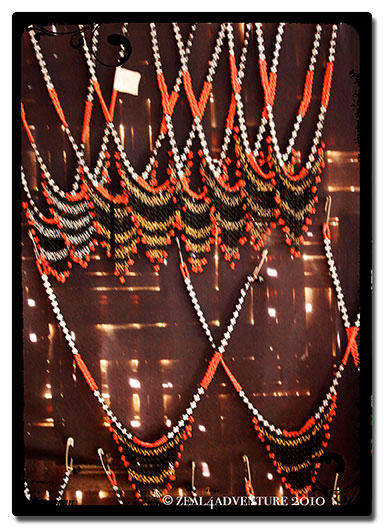
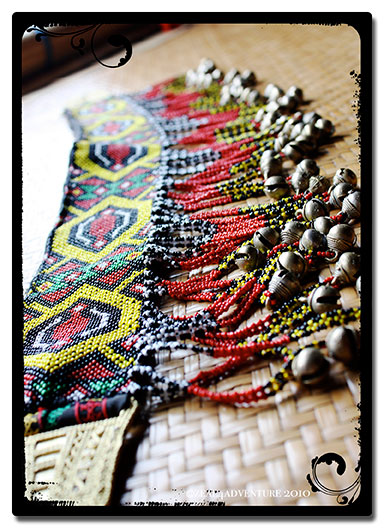
There are those made of beads such as this choker of pure beadwork in black, red and white called hikef.

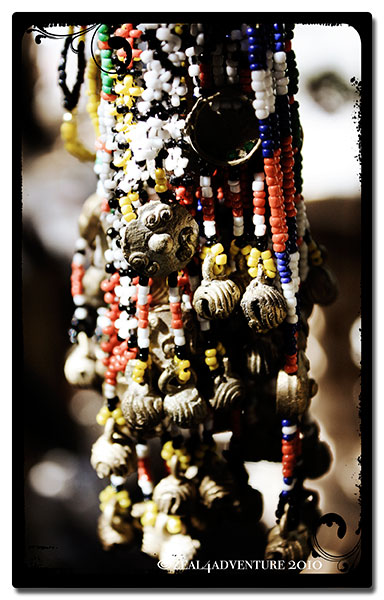
Some a combination of brass and beads.

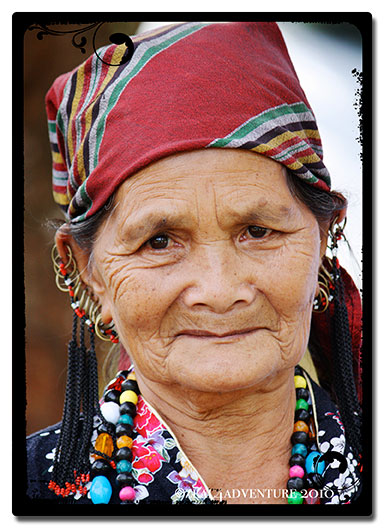
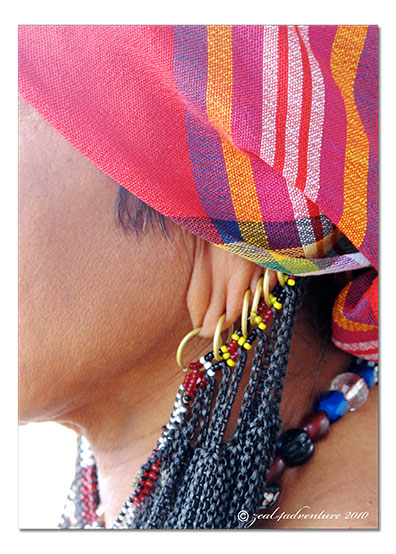
Earrings are also favorites.  Here again is the lady and her unforgettable multi-studded dangling earrings.

And here’s Mayang wearing an earring called a kowal.   It consists of several strands of tiny colored beads suspended under the chin, from the left earlobe to the right that frames the face.  She is also wearing a beaded comb.

This is Jeomema, one of our guides, in traditional garb

Speaking of combs, these are pretty common as many T’boli women are seen wearing them.

They also have belts or girdles as they are sometimes called — perhaps because of the strings of beads or brass that hangs from the waistband to their bellies.

Beaded belts are more common and are used more than girdles.

The beaded ones are jazzier while the brass girdles more ethnic.  I prefer it as a home décor, framed and hanged.  Imagine your waist and lower back after a day, if you choose to wear it.   😛  I bought one ten years ago (to hang, not to wear) but lost it when we moved house.  Arghh!   😦

Remember the anklet worn by this wife of Datu Angkoy?  Also something that may never come to fad, but who knows?  Anything is possible in this day and age.

Meet some of the creative craftsman:

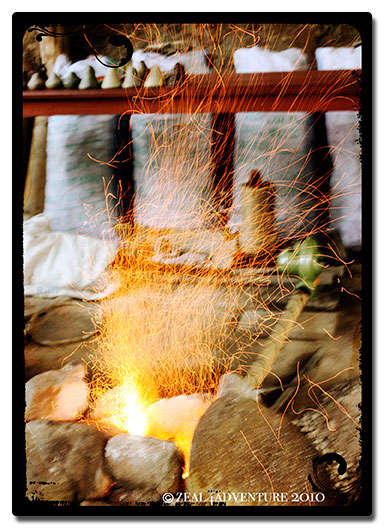
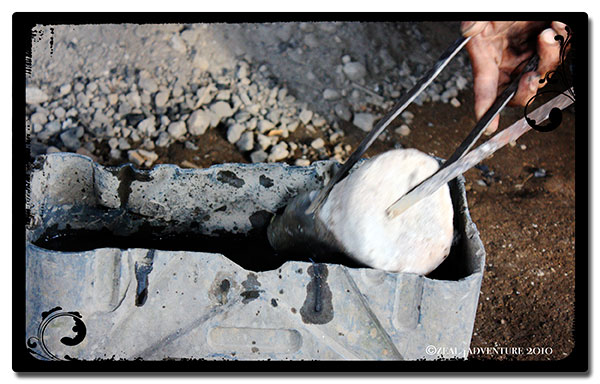
Bondosh is a well-known brass caster who was very generous in sharing his brass casting methods.  We watched him finish the bells that we ordered.

He melted some brass scraps and poured the molten brass into a cast shaped like a bell.  This goes into an oven.

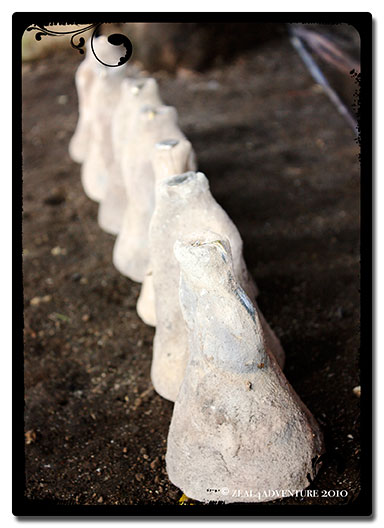
From the oven he lined them up to cool.

Then dips it in cold water

to break the cast which reveals an intricately designed brass bell almost ready.  Interesting.

In our longhouse, we encountered this bead maker (is that what they call them?) at work.  She was also going to perform that evening and she made good use of her time eh?

A Moment with a Lang Dulay

I have learned to appreciate art in various forms – from painting, pottery, sculpture to graphic and interior designs, to even the performing arts – and most recently, the artistry of weaving, more specifically T’nalak weaving.

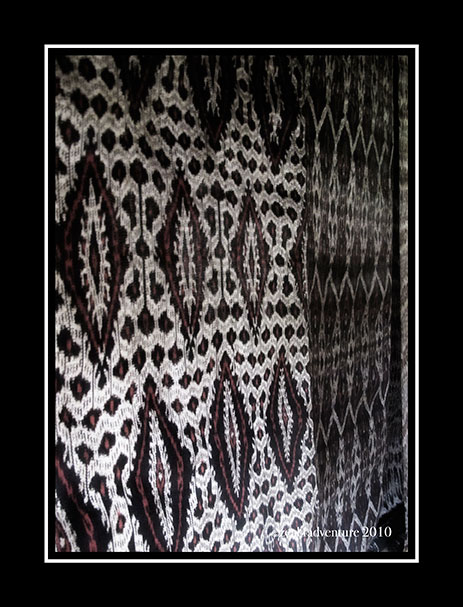
The T’bolis are known for their traditional fabric called T’nalak.  This is made of long threads of Philippine-grown abaca fibers dipped in red and dark brown dyes.  I am awed that it takes an enormous amount of time (like 6 months) to finish a 5m x 0.60m piece.  And it is woven by “dreamweavers” whose designs are inspired by their dreams.

Gawad sa Manlilikha ng Bayan (GAMABA) is a program aimed at celebrating and safeguarding the work of indigenous and traditional artists of the Philippines.  It provides recognition to National Living Treasures, the highest honor given to indigenous folk artist for their outstanding work in creating, preserving and promoting traditional art forms that are threatened with extinction.  Awardees are artists who have manifested willingness to share their rare skill with others, especially younger members of their community.

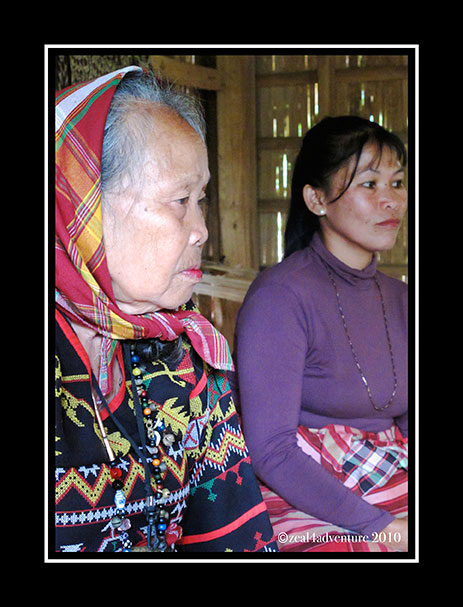
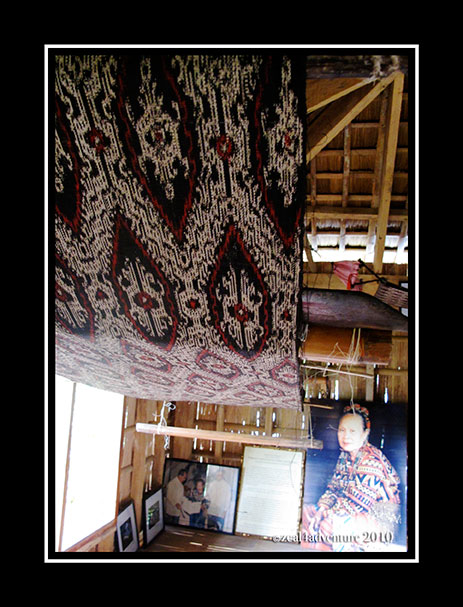
Lang Dulay, known as THE Dreamweaver, fit that bill.  A National Living Treasure awardee since 1998, this 85-year-old native from South Cotobato opened a training center in Lake Sebu.

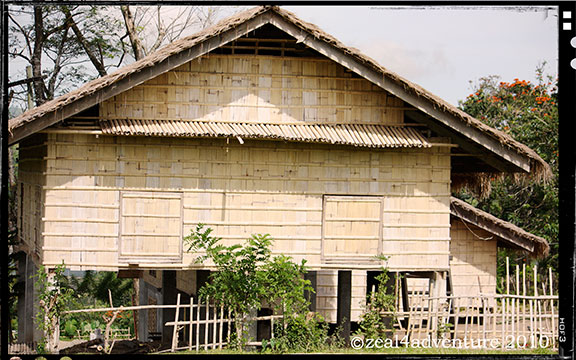
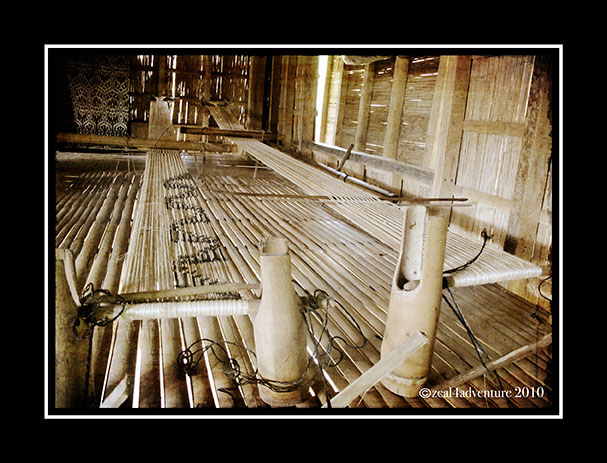
Her workshop is a 4m x 10m elevated rectangular bamboo/nipa hut

Her students.  Unfortunately at the time of visit, the center was closed due to some affair.

and this is where she trains her students,

including this protégé.

Her works are incredible but most of all, her heart is awe-inspiring.  What a great privilege and honor to meet such a humble and gifted person who is National Artist in stature.

A Datu and His Wives

Credits:  JSprague TW Kits (template 01 and papers)

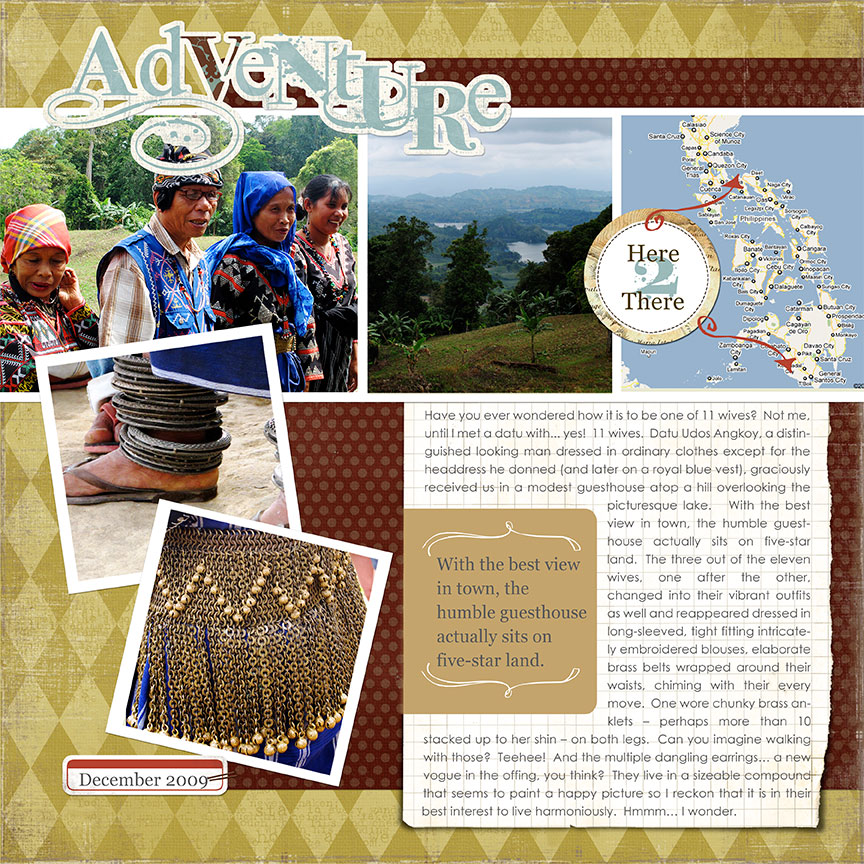
Have you ever wondered how it is to be one of 11 wives?  Not me, until I met a datu with… yes!  11 wives.  Datu Udos Angkoy, a distinguished looking man dressed in ordinary clothes except for the headdress he donned (and later on a royal blue vest), graciously received us in a modest guesthouse atop a hill overlooking the picturesque lake.

With the best view in town, the humble guesthouse actually sits on five-star land.  The three out of the eleven wives, one after the other, changed into their vibrant outfits as well and reappeared dressed in long-sleeved, tight fitting intricately embroidered blouses, elaborate brass belts wrapped around their waists, chiming with their every move.  One wore chunky brass anklets – perhaps more than 10 stacked up to her shin – on both legs.  Can you imagine walking with those?  Teehee!

And the multiple dangling earrings… a new vogue in the offing, you think?  They live in a sizeable compound that seems to paint a happy picture so I reckon that it is in their best interest to live harmoniously.  Hmmm… I wonder.