Sagada: Echo Valley, Hanging Coffins et al

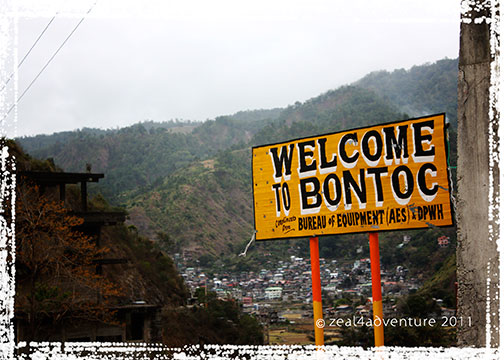
When we passed this sign, my heart skipped a beat because in just another hour or so, I will be re-acquainted with my favorite town.  The town I want to retire in, I always say.

When I need to de-stress, Sagada comes to mind.  Or when I find myself without a place to go on a long weekend, Sagada comes to the rescue.  But truth be told, I don’t really need a reason to go to Sagada… for more than a decade now, I find myself there just because I miss the smell of pine, the food or the bucolic serenity (as shown here, here and here).

I lost my heart to Sagada some 17 years ago.  Although less rustic than it was then while more and more tourists are seen each year, Sagada remains to be a top choice and a go-to to recharge.
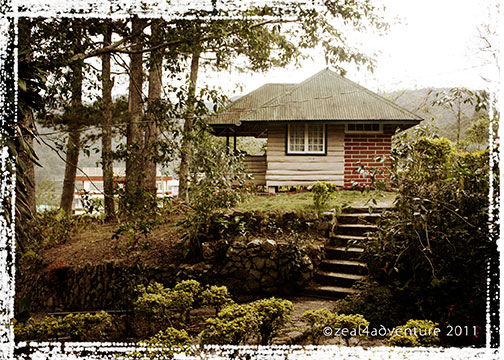
And St. Joseph Inn still is a favorite lodging place. We like the cabins but the rooms are perfectly fine too.

It has become some sort of tradition, if I may call it that, to hangout – finishing a few bottles of wine or beer at the comfort of our cabin.
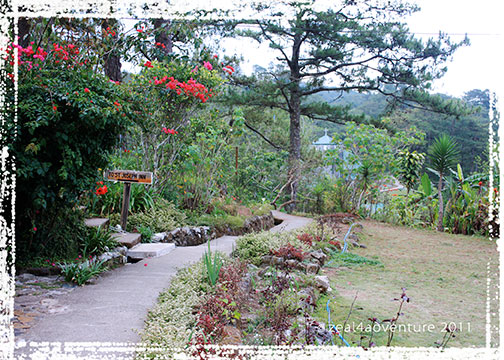
St. Jo is at the center of town and just a stone’s away from St. Mary’s Episcopal Church,

a charming little church with beautiful stained glass windows built by the Anglicans.
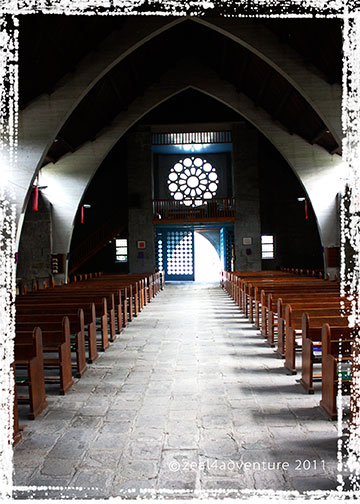
On certain times of the day, the light coming in from these windows makes for a dramatic interior.

Because it takes only a short walk to Echo Valley from St. Jo, we like visiting it as soon as we arrive.
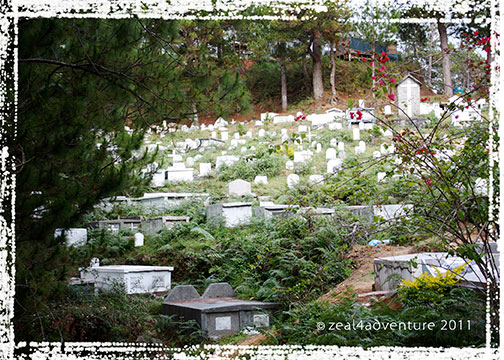
Passed the church is a path that leads to the cemetery
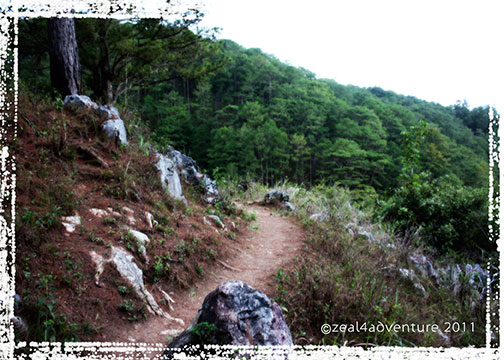
and further along is a dramatic hillside trail to Echo Valley –
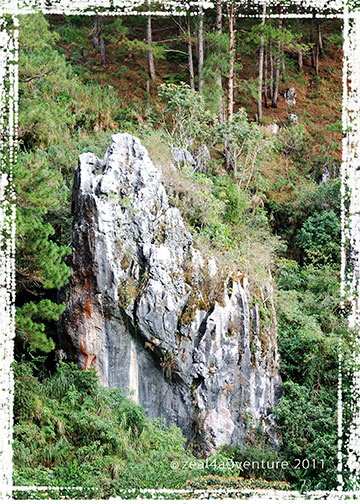
attributable to the weather-beaten limestone formations scattered around the forest.
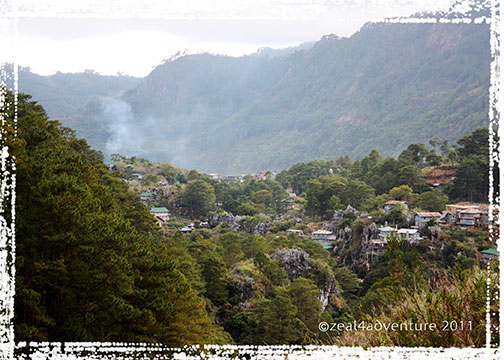
One can hear a very distinct echo at a certain point on the hill hence the name.
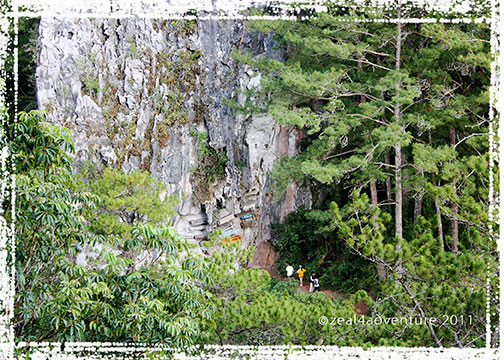
At one point, one can see from a distance, coffins hanging from the limestone walls.
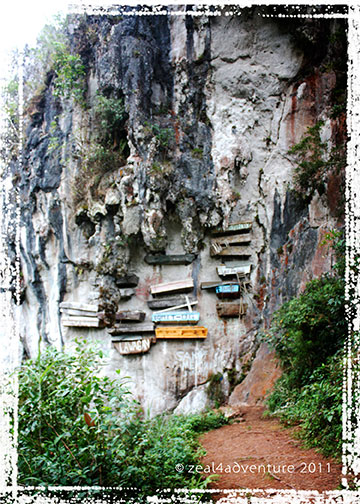
A trail will lead to it up close. It is a good warm-up hike to prepare for a longer and more scenic one the next day.
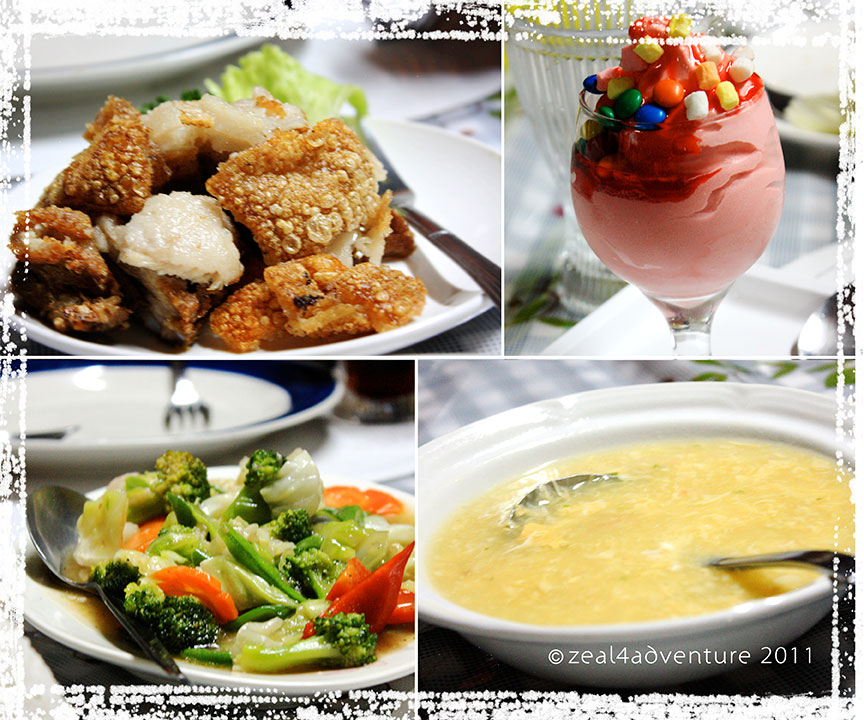
A comforting dinner at Masferré Inn and Restaurant is always a fitting cap to a full day. Named after the owner Monette’s father-in-law, the late Eduardo Masferré – widely regarded as the Philippines’ father of photography.  Half Spanish, half Kankanay, he spent much of his life toiling the farm and photographing the Cordilleras, documenting the now vanishing culture of the ethnic groups of the Ifugao region.
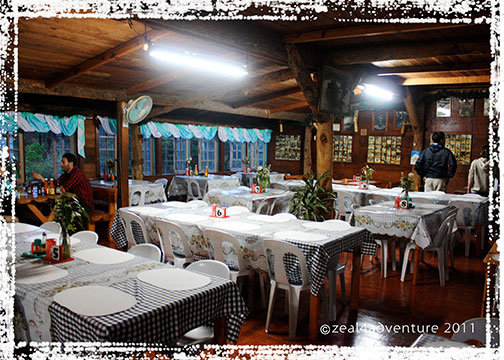
Some of his works are displayed in the dining area.  The Masferré Gallery down the road from St. Theodore’s houses more of his works.

“The description is not the described; I can describe the mountain, but the description is not the mountain, and if you are caught up in the description, as most people are, then you will never see the mountain.”

Jiddu Krishnamurti
Useful Info:

St. Joseph Inn
Contact: Julia Abad
Mobile:  (63) 928-951-7156

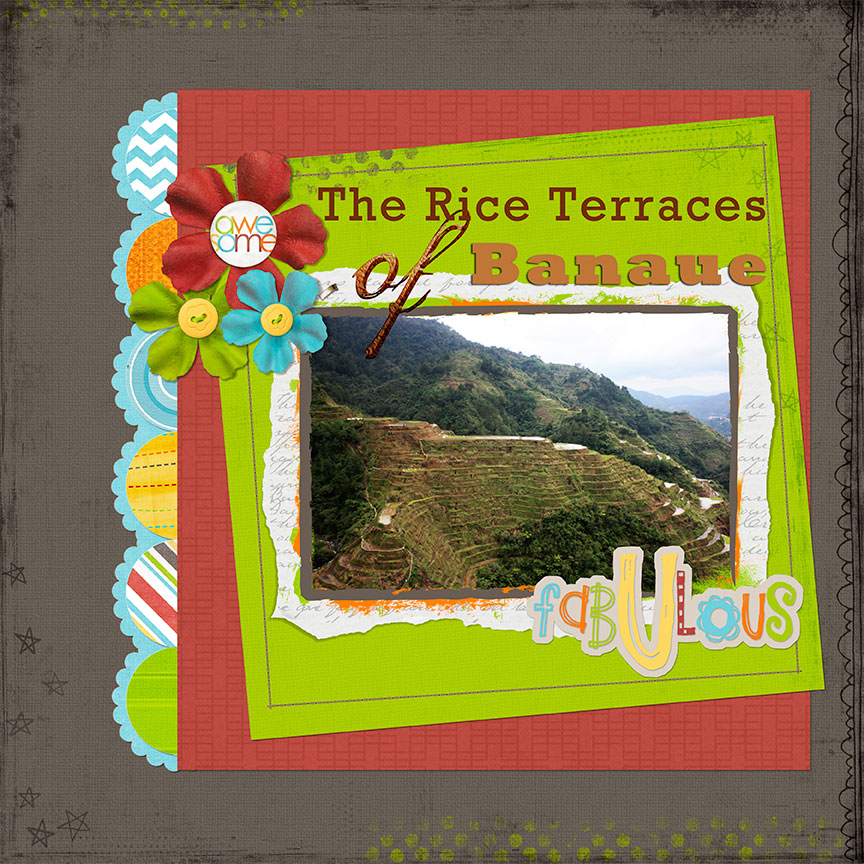
Banaue Rice Terraces

Credits: Quickpage by LCP using the “You are Awsome” collaborative kit created by J Sprague.

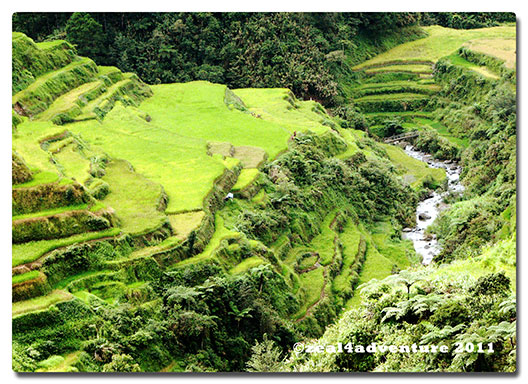
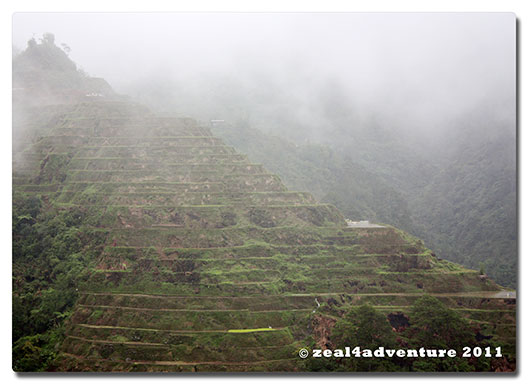
Construction of the terraces is carried out with great care and precision. An underground conduit is placed within the fill for drainage purposes. The groups of terraces blanket the mountainsides, following their contours. Above them, rising to the mountain-tops, is the ring of private woods (muyong), intensively managed in conformity with traditional practices, which recognize a total ecosystem, which assures an adequate water supply to keep the terraces flooded. Water is equitably shared, and no single terrace obstructs the flow on its way down to the next terrace below. There is a complex system, of dams, sluices, channels and bamboo pipes, communally maintained, which drain into a stream at the bottom of the valley. – UNESCO

This is describing a structure built more than 2,000 years ago.  Awesome, isn’t it? Although because of the presence of many modern structures around, the Banaue Rice Terraces was not included on the UNESCO list of “World Heritage in Danger”, it nonetheless holds the same complex trickle-down irrigation system that the UNESCO inscribed clusters have.  And these clusters, all found in the Province of Ifugao, are Nagacadan Terraces in Kiangan, Hungduan Terraces, Central Mayoyao Terraces, Bangaan Terraces and Batad Terraces.

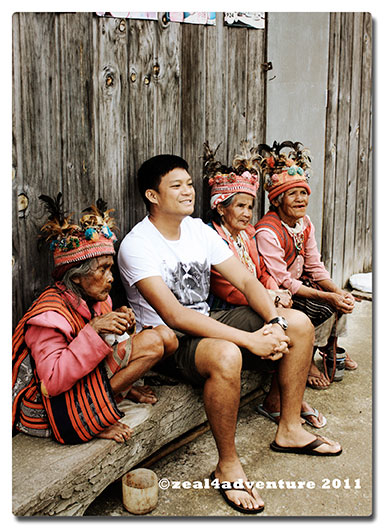
A very touristy thing to do.  For a fee, one gets to be photographed with these Ifugao women.

The Banaue Rice Terraces however, despite the exclusion, remains to be the more popular tourist destination due to its accessibility and proximity to town, which is proving to be both harmful and beneficial to the land.

These stonewalled rice paddies is considered one of mankind’s greatest engineering feats and is every Filipino’s pride.

The terraces as seen on our P1,000 bill.

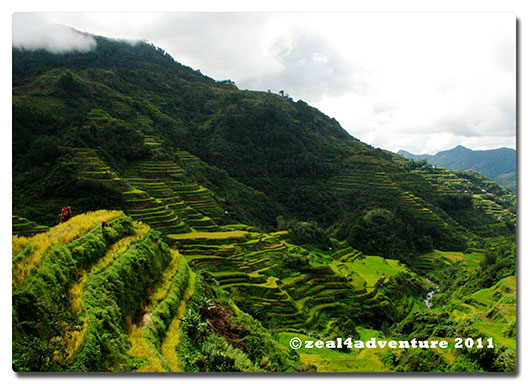
The 8th wonder of the world (as many Filipinos call it) begins at the base of the mountain and extends upland following the contours of the mountain– almost 5,000 feet above sea level.

This is North Luzon’s most famous sight and one of Southeast Asia’s most popular tourist destinations.  Famous not only for its sculpted beauty but for the traditional craftsmanship and cultural landscape dating back many centuries and is preserved to this day.

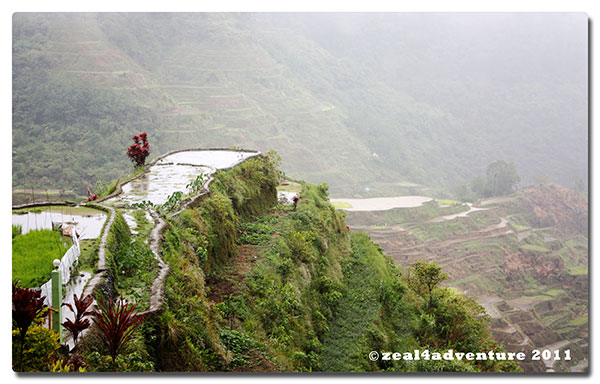
That said, these terraces are slowly being abandoned and already showing signs of damage and deterioration due to the lack of maintenance.  Many of the new generations would rather pursue work outside of the rice fields, opting to be guides or drivers.

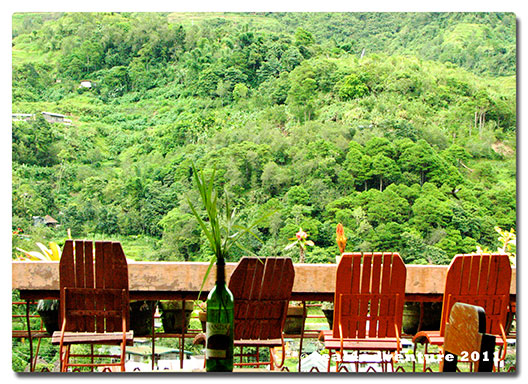
Banaue is some 348 kilometers away from Manila and a good 8-10 hours drive.  It is a small market village sitting about 1,500 feet above sea level.  The town is not exactly enchanting, thanks to poor planning but it has its own appeal, me thinks – how can you go wrong anyway when breakfast comes with a view like this?

At Sanafe Lodge

Useful Info:

Sanafe Lodge and Restaurant
Contact no:  +63 74 386 4085 (Banaue), +63 920 950 4644 (Mobile), +63 722 2110 (Manila)
Email:  sanfelodge@yahoo.com 

The Cirque’s in Town

It was a weekend of heavy downpour but we made it to Rizal Park to catch Varekai, a Cirque du Soleil touring show currently staging in Manila till July 24.  All I can say is if you haven’t gone to see it yet, I recommend that you get yourselves some tickets.  It’s worth it.  Having seen Zaia in Macau, I wasn’t sure if a touring group would be as impressive.  The show proved me wrong.  I would like to think that the effort is on par if not more – from the tents to the seats to the stage, not to mention the props, costumes and the cast and crews that they brought with them – quite a production. Known for its mind-blowing yet gracefully choreographed acrobatic stunts, wonderful music and colorful costume, this French Canadian entertainment company has always been more than your average circus act.  An amazing circus show that found its way here is certainly a waste if missed.

We decided to book an overnight at Hotel H20 and check out the Manila Ocean Park the next day.

The hotel is conveniently located inside the Park and is just across the show venue.  Glad we did as the rains did not let up and we actually had to drive from one parking lot to the next or end up with shoes soaking wet.  The hotel was interesting albeit a bit inconvenient when we had to walk to Manila Ocean Park sans a covered path to get to the hotel.  We booked a Bayview room and we were greeted with this in the morning.   😦

While we’re at it – shows-wise, I mean.  Cinemalaya starts this weekend through July 24.  Looks like an impressive line up of Filipino Indie films that’s showing at the CCP and Greenbelt 3 theaters.

Useful Info:

Hotel H20 and Manila Ocean Park
Luneta, Manila (behind the Quirino Granstand)

Getting there:

The Flavors of Old Baguio

My face lit up when A announced that “Mitos recently opened her own restaurant”, and all I could think of was the Fabada she served at her home one time we were in Baguio, that was last year.  Needless to say, we had to go that very evening.  We went back the next day with more friends in tow.  And I’ve been back one more time since then.

Mitos is Mitos Benitez-Yñiquez and her now famous restaurant is called Hill Station.  She, for the longest time, managed her family’s renowned Mario’s Restaurant in Baguio.  Her new restaurant is within Casa Vallejo, the boutique hotel built in 1909, renovated and open again for business along Upper Session.

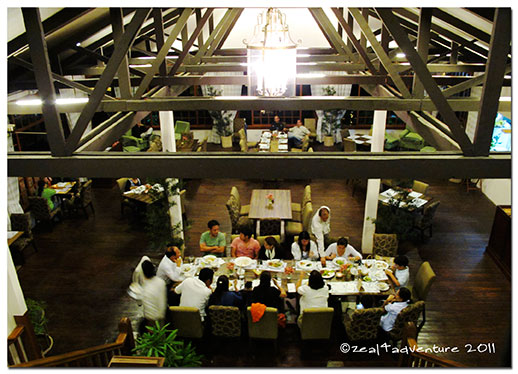
Inspired by American colonial architecture, the main dining area has high ceiling, big French windows and wooden floors.  It also has 2 elegant staircases that lead to the hotel. Warm and cozy that makes you want to linger.

The food celebrates the flavors of Old Baguio, one of the last hill stations of Southeast Asia.  The menu offers a variety of slow-cooked hearty meals.  Lots of stews and some really good curry dishes.  Slow-cooked meals somehow evoke a sense of comfort and complement it with the homey, cozy atmosphere, who wants to go anywhere else?

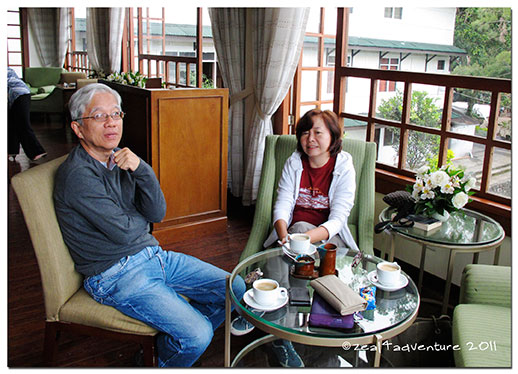
Yes we spent the afternoon in a cozy corner of the restaurant reading, chatting and enjoying our cake and coffee until it was time for dinner.

Everything or almost everything is homemade — from the breads to the pastries to their ice cream.  As you enter from the bar you will see a shelf of potteries on sale mostly by famed potter, Lanelle Abueva and the Sagada Potters.  Along with it are homemade goodies by Mitos herself, for sale as well– salad dressings, salsa monja, salsa brave, granola, bihod, some jams… if I could bring them all home, I would.

I couldn’t stop raving about Hill Station to my friends in Manila hence the trip to Baguio early this year.  We got a room at Casa Vallejo and spent most of our time there – more on this on my next post.  We also wanted to try everything on their menu, which suffices to say is impossible for 3 people spending only a weekend there.  But with what we are able to cover, here are our favorites:

Tuna Tataki with Wasabi Mayo

Isn’t it obvious?  So good it was gone before I knew it.  Take my word for it… go for this.  The tuna seared very briefly then sliced thinly and seasoned with freshly cracked pepper that gave the tuna a nice kick.  Dipped in wasabi mayo… absolutely heaven.  A great appetizer just before we moved on to the main dining hall.

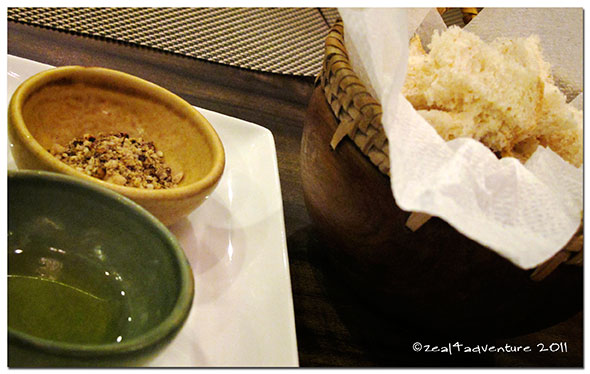
Home-made bread with Moroccan spice blend and olive oil

First I must say that this spice blend is brilliant.  What a way to whet one’s appetite.  The thing is, you need to control yourself lest you regret it once the main entrée arrives.

Left to right:  Grilled Shiitake and Grilled Tomatoes; Hill Station Green Garden

Hill Station Green Garden — mixed greens, tomatoes, blueberries, white cheese, caramelized walnuts and topped with a sesame-miso dressing.  What’s not to like about this salad?  Great combination and I’m always a sucker for miso or sesame dressings… this was an obvious choice.

Grilled Shiitake and Grilled Tomatoes — we had this over lunch the next day.  It was on their list of Specials.  A really nice blend of ingredients.  Shiitake with all the flavors and the tomatoes grilled and slightly caramelized… a winner.

Clockwise:  Cambodian Coriander and Garlic Chicken; Crispy Duck Flakes; Indian Lamb Curry; Steak and Prawns Peri-Peri

Cambodian Coriander and Garlic Chicken — marinated overnight and charbroiled.  Yum!

Crispy Duck Flakes — had this on my first visit and I highly recommend.  The duck was simmered for hours and then flaked and fried resulting to a dish full of flavor.  And to add to this flavor is laing sa gata.  Unforgettable.

Indian Lamb Curry —  my friend AH was all smiles when he had his first mouthful of this gorgeous curry dish.  I tried a mouthful too and I agree with his smile.  The lamb was so tender and the curry rich and tasty.  A scrumptious dish that epitomizes slow-cooking.

Steak & Prawns Peri-Peri — it had me at Peri-Peri, a famed South African dish that I enjoy a lot.  Was not disappointed.

Left- right:  Tortilla de Patatas and Chorizo Bilbao; French Toast

French Toast — made from home-made whole wheat bread, of course I must have this.

Tortilla de Patatas and Chorizo Bilbao — saving the best for last, I instantly fell in love with this tortilla.  It raised my love for anything chorizo to the next level.  A dish of eggs, potatoes and good quality chorizo bilbao, have it with the baguette and the salsa brava con chorizo bilbao… wicked!  Wanted to have more than just a few bites, unfortunately it was not mine to do so.  Makes me want to go back to enjoy again, this time I’ll order the dish.

Hill Station is worth a trip to Baguio, I guarantee.  And while there, look out for a bubbly lady with a hearty laugh, that’s Mitos.

Useful Info:

Hill Station
At Casa Vallejo
Upper Session Road,
Baguio City
Contact No.:  (074) 424-2734, 423-9100 or 423-9558

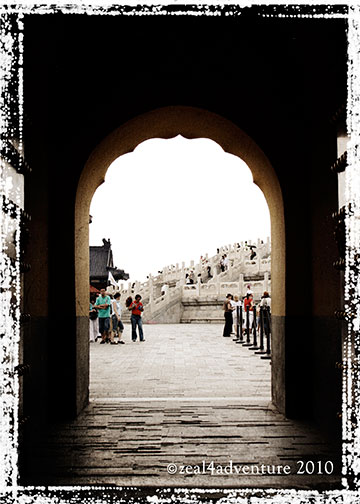
Temple of Heaven

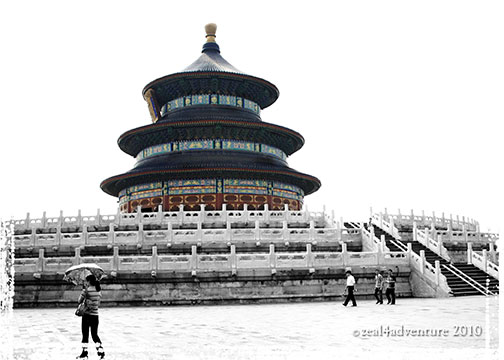
“The Temple of Heaven is a masterpiece of architecture and landscape design which simply and graphically illustrates a cosmogony of great importance for the evolution of one of the world’s great civilization.” – UNESCO World Heritage.

Inscribed as a UNESCO World Heritage Site since 1998, the Temple of Heaven is an extraordinary example of Chinese religious architecture.

Built in 1420, covering an area of 273 hectares, this temple traditionally was only for imperial use and commoners were not allowed to enter even the enormous park.

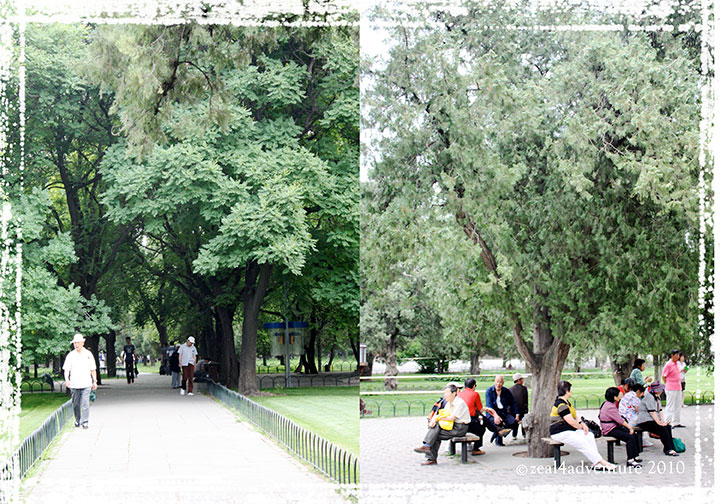
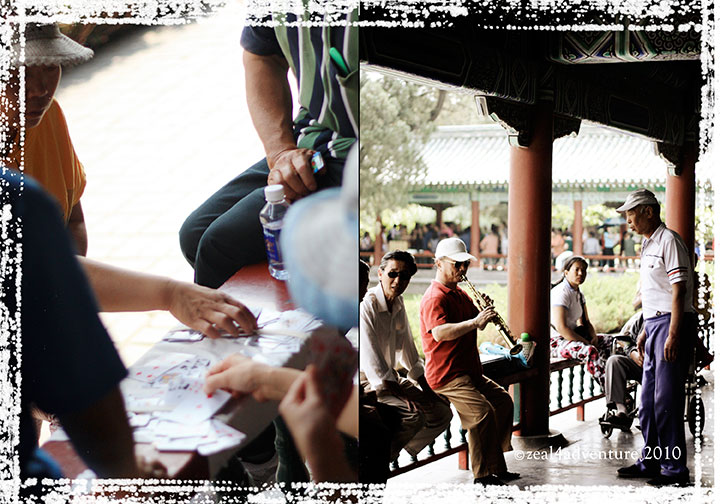
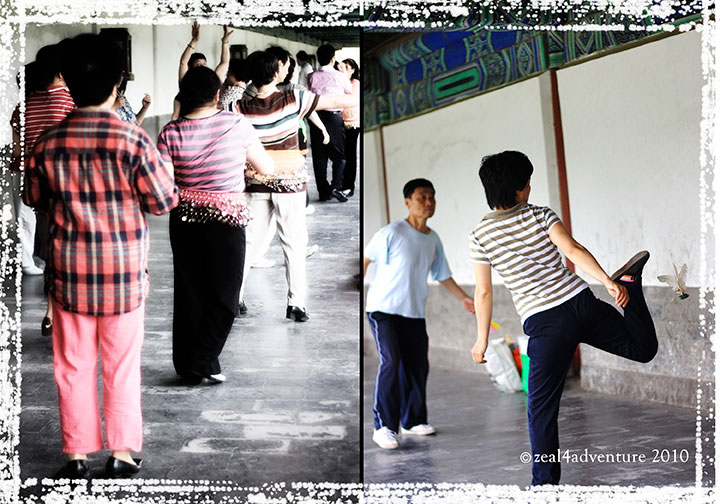
Today, it is one of the most popular parks among local people (mostly retired).

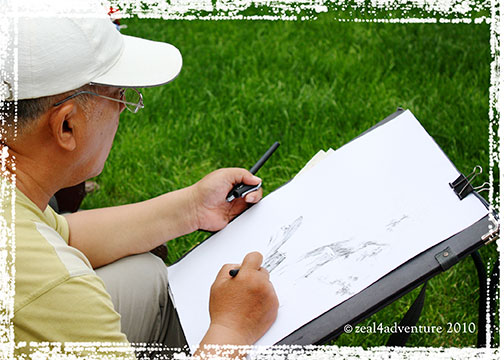
Many enjoy the park carrying out various activities from dancing to playing cards all day long.

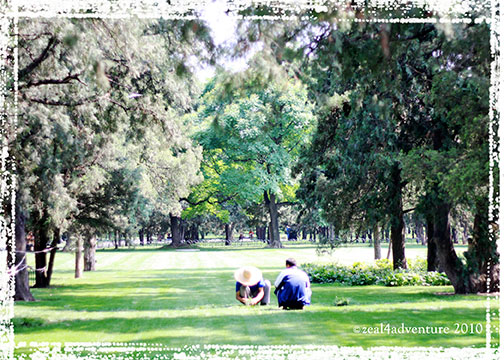
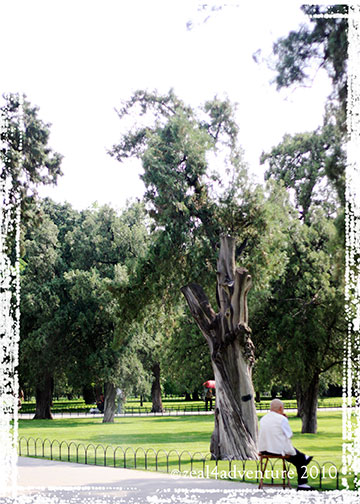
The park has more than 100,000 trees of various kind – some spotted were

ancient cypresses and

evergreen pines to name a few.


Beijing Acrobats

Credits:  LivE S4S Stitched Page Overlay, TW Lesson 2 paper, Laurie’s Ornament, KPertiet Storyboard Negatives.

China’s acrobatics are world-renowned and deservedly popular among Beijing’s visitors.  Young students that demonstrate extreme flexibility, dexterity and balance that boggle the mind perform today’s acrobatic shows.  If you have enough time, might as well witness a show.  Expect to “ooh” and “ahh” during the entire show as the young performers show off stunts such as: plate spinning, unicycling, juggling, Chinese yo-yo, etc.

Snippets from the show:

Where to watch:

Chao Yang Theater

Wansheng Theater

Tiandi Theater


A Glimpse of Beijing’s Ancient Neighborhoods

A hutong is an architecture and structure unique to Beijing and visiting one of this (either by walking or a rickshaw) is one of Beijing’s attractions especially to people wanting to know more about its history.  Going around a hutong will let one experience the remnants of Beijing’s ancient culture.

In old China, there were clear definitions of what streets and lanes are.  A 36-meter-wide road was called a big street while an 18-meter-wide road was called a small street.  And a 9-meter-wide lane was called a hutong.

According to history records, these hutongs came to existence during the Yuan Dynasty when the Mongols – led by Genghis Khan, occupied Beijing.  The city had to be rebuilt after it was demolished during the take over, thereby creating hutongs.  The word “hutong” is Mongolian in origin, which means, “water well”.  People tend to gather where there is water so with the digging of new wells; new communities are not far behind.  Hutongs are alleys formed by lines of “Siheyuans” (traditional courtyard residences).

Hutongs were established surrounding the Imperial palaces throughout the Yuan, Ming and Qing Dynasties.

Since the mid- 20th century however, new roads and buildings have replaced many of the hutongs.  Some hutongs though still survive today, thanks to their local government’s protection policy.  Most in existence today date from the Ming (1368-1644) and Qing (1644-1911) dynasties.

Walking through the hutongs, it is common to see groups of elderly citizens playing cards, mahjong or Chinese chess together.

Also important to hutong life is the traditional foods sold in carts or small stalls.  These ancient neighborhoods today provide a glimpse of the life in old Beijing.  To live in a hutong would mean no baths and toilets in their homes.  Public baths and toilets are provided and imagine having to trudge your way to the toilet in the middle of the night at below zero degree.

And yet there are still many living in these ancient neighborhoods, perhaps it is the way of life these folks are accustomed to, real life as it has been for generations.


A Taste of Ancient China

Credits:

Although the Tian An Men (Men meaning gate) Gate was built in 1417 during the Ming Dynasty to compliment the Forbidden City, what first came to mind as I was walking through the humungous complex was the 1989 protest known to the world as the Tiananmen Square Massacre.  This was where the heroic flight of thousands of young men and women played a crucial role in the events that ultimately led to the collapse of communism.

The largest city space in the world at 40,000 square meters the square was packed with people wandering about.  It held the monument of the National Heroes, the Great Hall of the People, the National Museum of China and the Mausoleum of Mao Zedong.  It also is the gate connecting to the Forbidden City, which sits on its north.

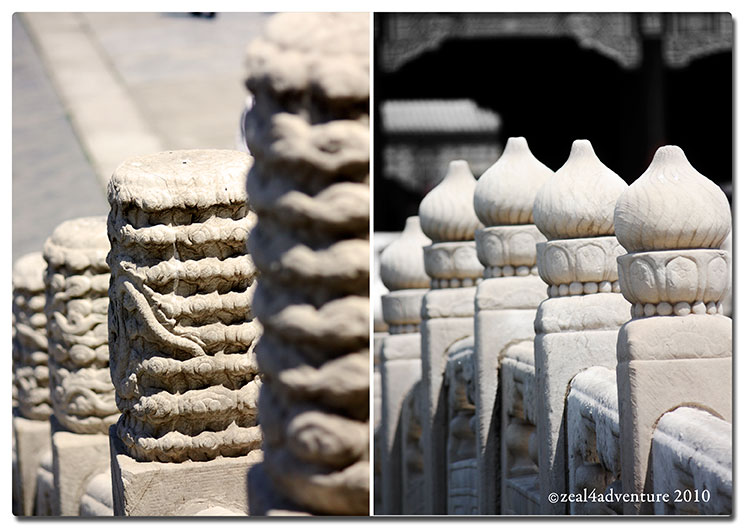
The large white marble column seen all around the square was constructed in 1420 as part of the Forbidden City ‘s grand design, which took 14 years to complete.

This Chinese inspired palace is located in the middle of Beijing and now houses the Palace Museum.  For almost 500 years (from the Ming Dynasty to the end of the Qing Dynasty), it served as the home of emperors and their households.  It likewise was the economic and political center of the Chinese government.  The construction began under the Ming Emperor Yongle in 1406 and is the largest and the most well preserved imperial residence in China today.

Walking through the city gives an idea of the grandiose lifestyle of the former emperors.  During these times, common Chinese were not allowed to enter the city at all, a big contrast to today’s millions of people entering daily.

The entrance of the Palace is through Tiananmen gate and once you reach the Wumen (Meridien Gate),

you enter the heart of the complex where you fall in line or wait for your guide to purchase your ticket.

It was chaotic and it continues to be so until you leave the complex.   The rooms are now off-limits and one can only take a peak from the outside, unlike a decade ago when one could actually enter and have a feel of the old splendor.  The price of commercialization, I guess.

Despite the chaos, a visit to the Forbidden City is a must especially if it is your first time.

Because of the size, allow at least 3 hours to walk the complex, wear comfy walking shoes and best to get those audio guides for a thorough walk through.

Forbidden City
North of Tiananmen Square
Dong Cheng District
Opens from 8:30am – 4pm daily
Price:  ¥ 40-60 / ticket

Beijing at Night

Credits:  Kitschy Digital (You are awesome kit) Chevron and Yellow Houndstooth papers, Knotty girl’s pp1 paper;  Caro 752 Marquee 1 & 2 brushes, KPertiet Grungy clusters and LivE Sing for Spring Page overlay;  LivE TW01 Tag;  K Pertiet Academic Alphas.

A “Snack Street” and a “Bar Street”, both alive till the wee hours of the morning, both swarming with street food – some made me squeamish while some whetted my appetite.  Two popular night scenes not to be missed when in Beijing.

Wangfujing Night Food Market

Just off Wangfujing St., located pretty much in the center of Beijing and a 10-minute walk from where we stayed.

After a hotpot dinner at a nearby mall, we walked along Wangfujing St., a portion of it is off limits to cars and other motor vehicles.

The food market was crowded with people, but they say this is quite normal as it is a famous snack street among locals and foreigners alike.  I was not prepared for what’s to come though.

The first few food stalls had as displays bugs and scorpions on a stick, bizarre foods that would probably delight Andrew Zimmern no end but not me.

Even beautiful sea creatures such as seahorses and starfishes.  I was horrified.  Poor creatures.  I now know that there are foods that I cannot eat, what a revelation!!  But not all food stalls are alike,

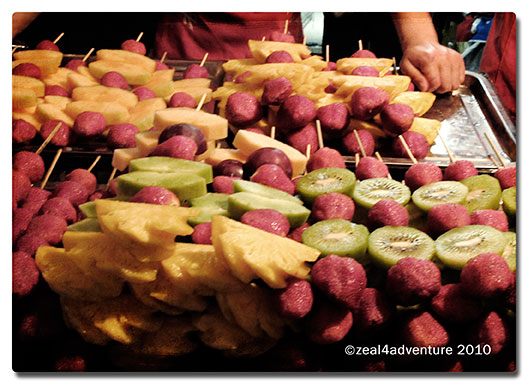
Candied fruits

there were others that had me wish we skipped the hotpot meal and went straight here.

Lamb Shawarma

There were wonderful smells of lamb kebabs, shawarmas, grilled meats, roasted chestnuts and many, many more.

A great place for a cheap sumptuous dinner, sans the bizarre foods of course.

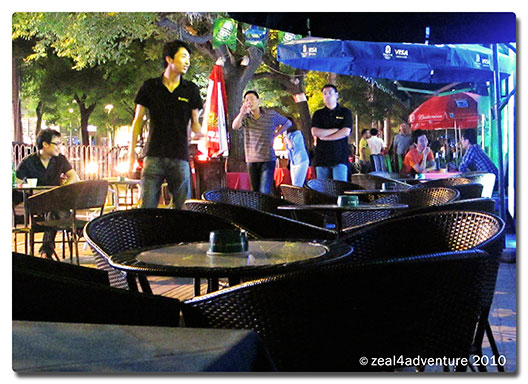
Sanlitun Bar Street

One of the best known bar street in Beijing, Sanlitun is located in Eastern Beijing in the Chaoyung District.

Hidden away in the small alleys of Sanlitun are many small bars and cafes.

This has been one of the most popular entertainment area for foreign expats, recounts my brother who used to work in Beijing in the late ‘90s.  What used to be a small street with bars has turned into stretches of bars and trendy restaurants.  Hardly recognizable, he says, as we weave through the streets in search of his favorite hangout spot 12 years ago.

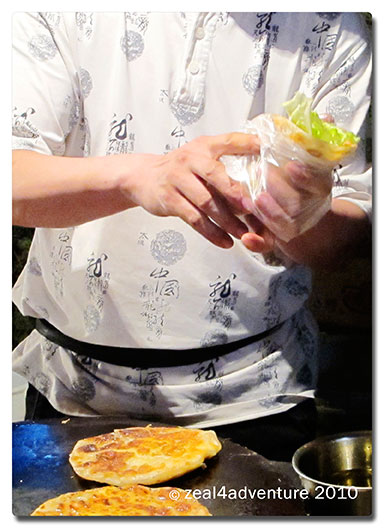
Before taking a cab back to our hotel, we came across this stall selling some sort of a wrap

made up of char siu pork and fried egg with some sort of sweet-savory sauce and lettuce to finish off.

Better then the breakfast offerings at the hotel.

Beijing : The Old Meets New

If the last time you were in Beijing was 15 years ago,

you’d also be surprised at how they have managed to preserve its ancient past even while it transforms into a modern metropolis.

Walking along Wangfujing Avenue, I notice a smattering of bicycles reminiscent of the Beijing I last saw, still pedaling down the streets but is more and more being replaced by cars and buses.

Modern buildings and malls line the streets of Beijing along side stunning ancient eastern architectures. The capital of China with 3,000 years of history is today a dynamic city where the old and new intermingles and is a magnet for local and foreign visitors. It remains the People’s Republic of China’s center of politics, culture and economics.

Great Wall

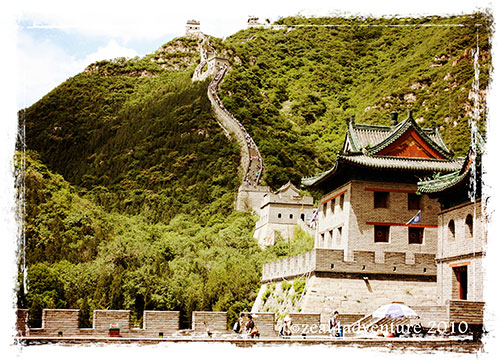
Great Wall – Juyongguan Pass

A visit to Beijing will never be complete without the imperative call to the Great Wall.  It was the reason for this trip putting aside the good eats, that is.  My nephew wanted to see the Great Wall, after taking it up in school and thus a family vacation was mounted.

Packed with tourists

So to Juyongguan Pass (also called Juyong Pass) we went one morning.  It is the nearest section of the Great Wall to Beijing, a little nearer than Badaling, the most popular section of the Great Wall.

Juyong Pass does not however escape the same glut of souvenir shops and a number of other tourist traps that Badaling has.  But if convenience, keeping transportation simple and time management is of importance, both these passes are the best places to get a feel of the walls’ more than 2,000 years history.  In fact, as early as the 13th century, the area of Juyong Pass was known for its beauty and was listed as one of the eight “great sights of Yanjing”.

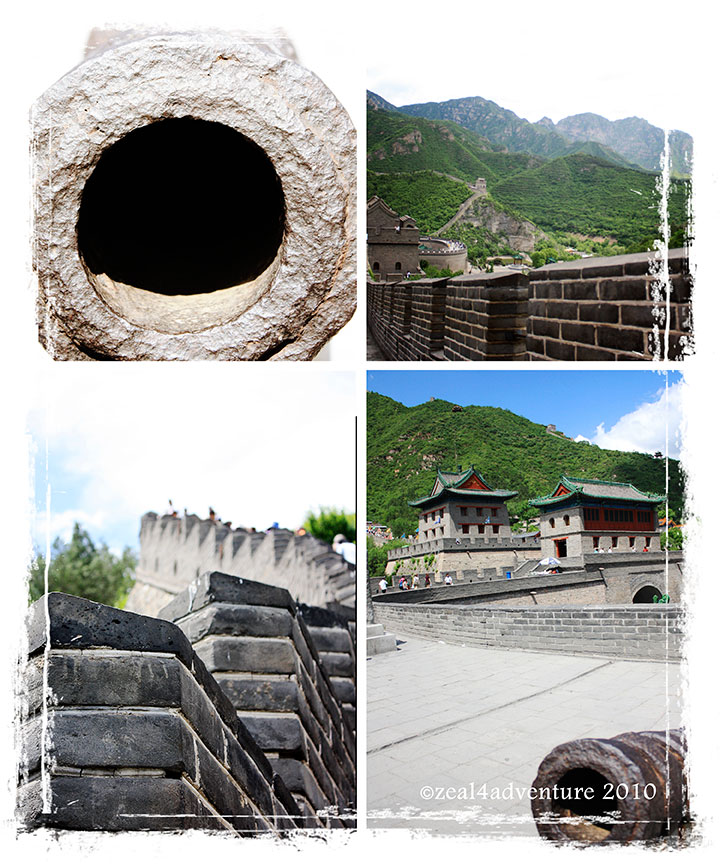
Aside from its easy access, its steps starts off from the same level as the parking lot so there is no need to climb or take a cable car to reach the wall.

It however rises steeply on both sides of the gate

The view from mid-way to the 1st watchtower

Our goal that never was.

– a reason why we never even reached the first watchtower.

Once a strategic military garrison, this 20 kilometer-long valley,

stretching along the ridge of incredibly steep mountains was considered important in the defense of Beijing in the ancient China.  These mountains that flanks the valley can definitely be credited for the beauty of the pass.

If you are looking to see authentic “Ming Dynasty” walls though, this is not the place to be as a short expanse of the wall has been recently restored.  Simitai might be a better option since it is virtually unreconstructed and is listed as a UNESCO’s World Heritage Site.

More of Beijing in my next posts.   🙂

Scenic Sunday