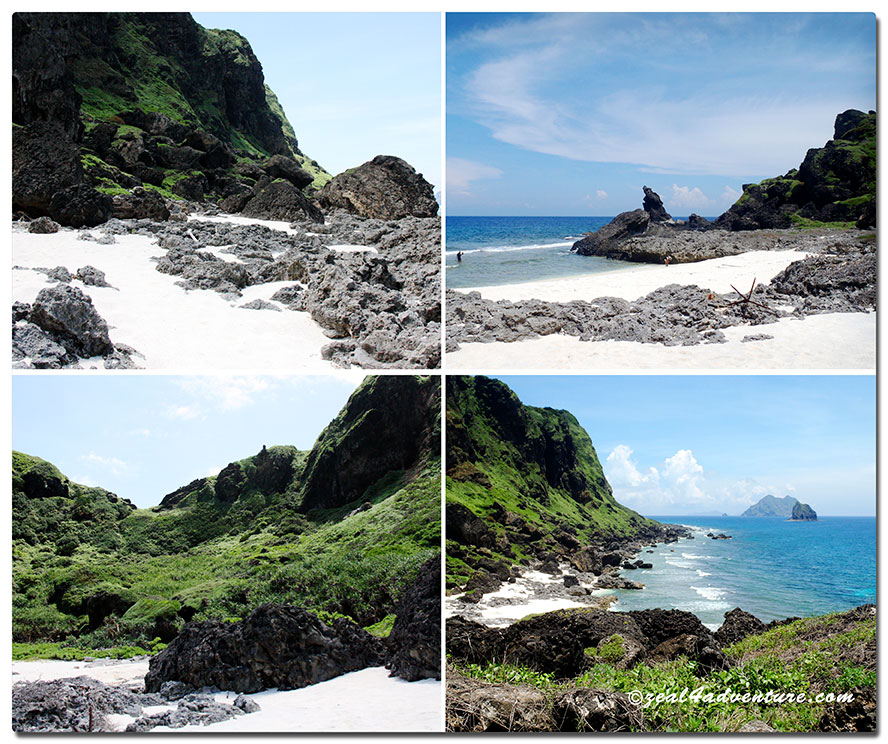
Torongan Cave: Not To Miss in Itbayat

When asked about the places I have liked the most in my travels, high up there with Africa, my answer would always include Batanes. When I look back at the adventures I had in this northernmost province of the Philippines,

our trek to Torongan cave in Itbayat was a highlight for sure… the state of wonderment, unforgettable.

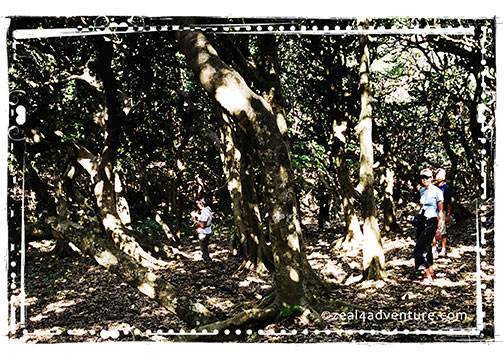
It was a 20-30 minute hike from a gate to the cave entrance, passing through a forest.

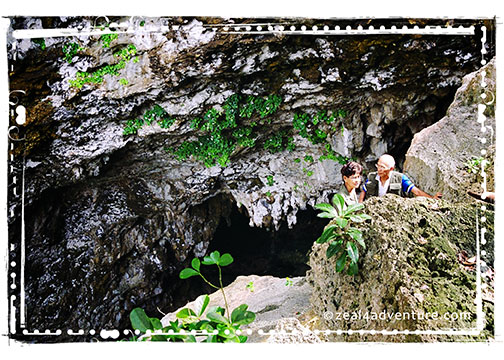
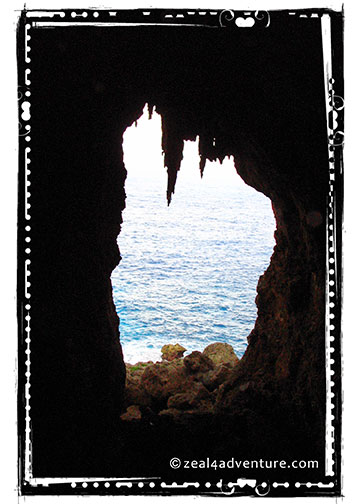
And from this spectacular cave entrance is a relatively easy walk down the large cavern leading to a wall that opens to the sea.

This opening is believed to be the entry point of the Austronesians from Taiwan to the island some 4000 years ago. An excavation done on Torongan cave in 2004 uncovered the oldest artifacts so far found in Batanes.

But it isn’t the cave per se that impressed me.  We exited the cave where we entered,

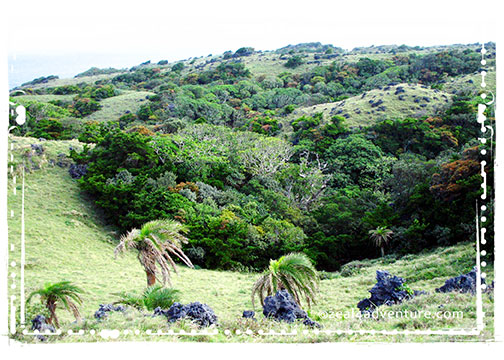
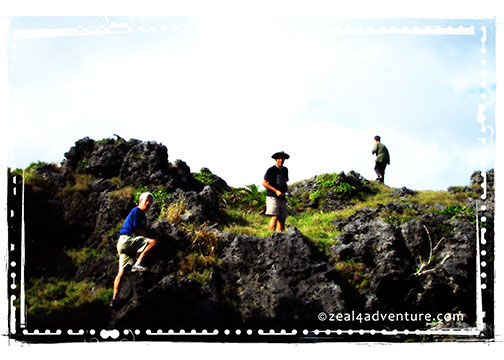
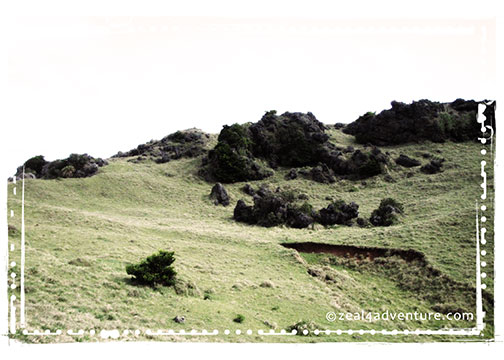
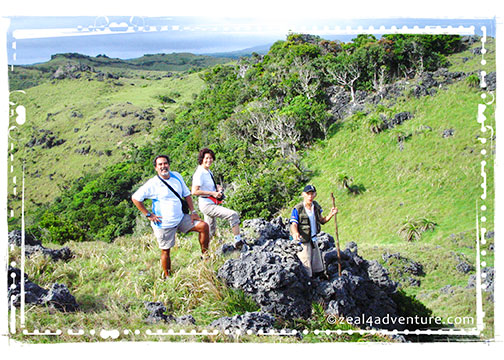
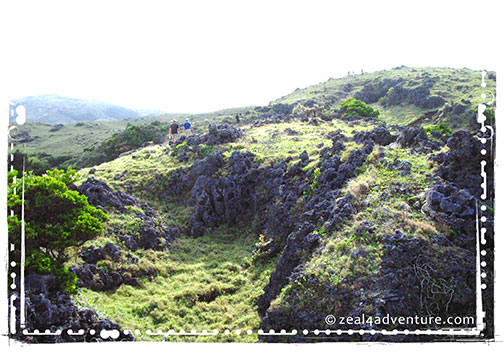
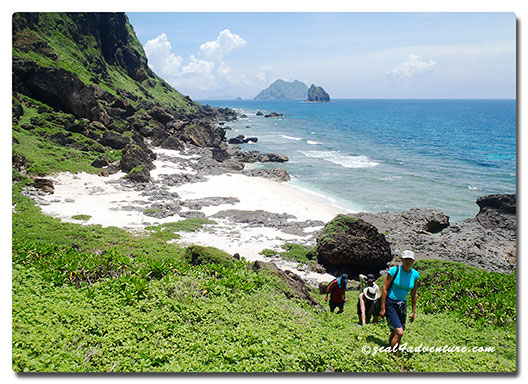
we walked further and found ourselves climbing up some boulders to a rocky pasture land,

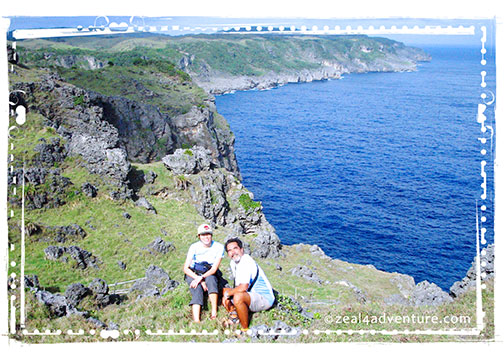
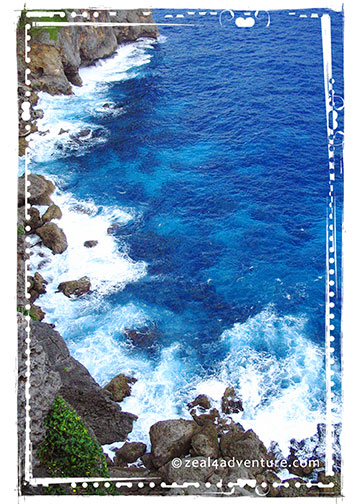
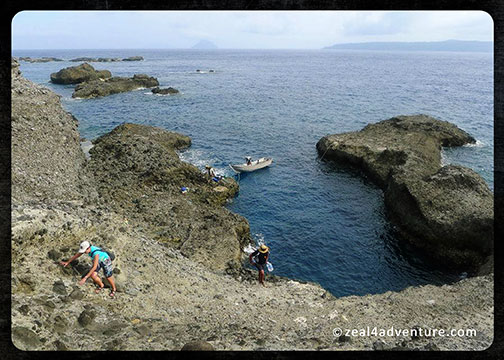
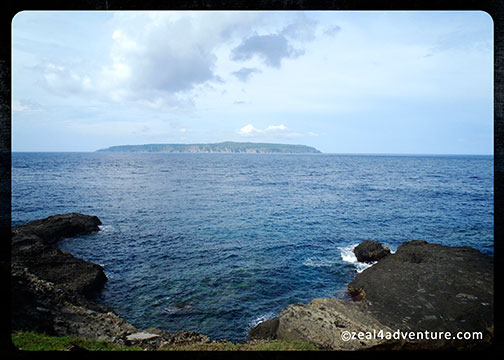
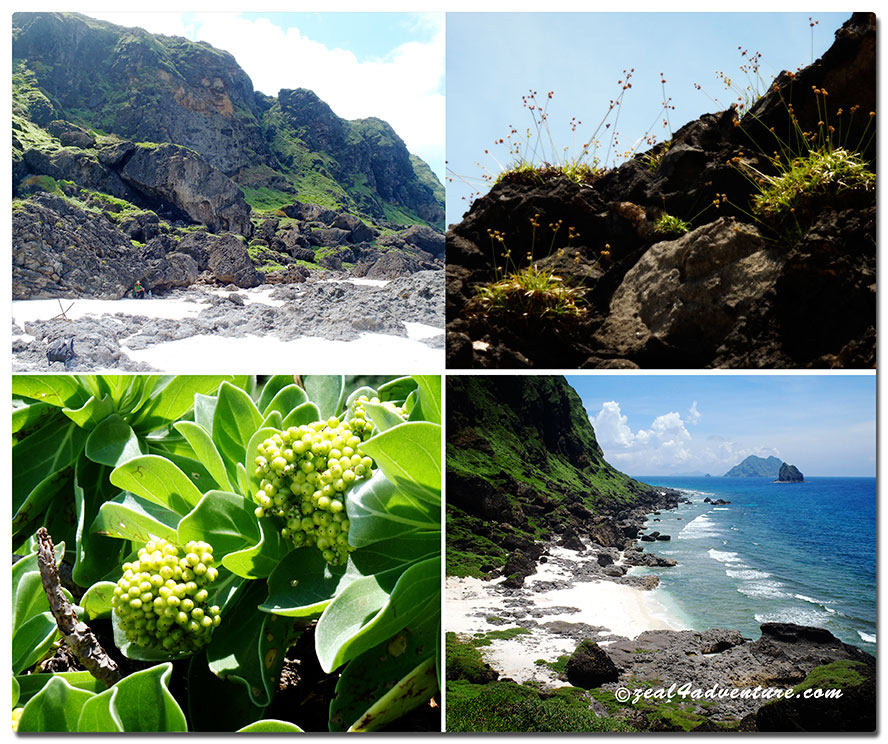
revealing the coast, and Dinem Island in the distance, a view so jaw-dropping beautiful.

The dramatic change in scenery atop the cave was an experience stuck in my memory to this day.

We wandered around in awe.

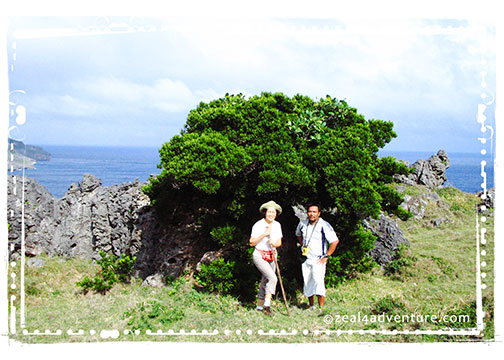
The view majestic at every turn.

Walking back, we passed through several ancient burial grounds shaped like a boat, albeit hard to discern.

If you have limited time in Itbayat, make Torongan cave your first stop and be awed.

Itbayat: On a Hunt for Halo-Halo

It was the middle of May; the blistering heat was rapidly zapping my energy… I wanted halo-halo.  We knocked on Nanay Laura’s house as her canteen was closed.

A keepsake with Nanay Laura.

Her charming Larez Carinderia beside her house was a favorite back then.  Who can forget her cooking?

A retired municipal treasury officer, Nanay Laura is an exceptional cook.

In my opinion, she makes the best Turmeric (or Yellow) Rice  (a Batanes Specialty) in the whole of Batanes.

She whips up creative dishes with the limited ingredients Itbayat has to offer her.  In 2006 and again last May, we were witness to that.

She was in Raele that day and didn’t have halo-halo.  I asked to see the twins instead. I remembered them from 6 years ago and was curious to see how they have turned out.

Now in their “tweens”, they have become beautiful, confident young girls.  We asked where we might find some halo-halo; Eva Marie offered to bring us there.

Each store we went to would apologetically shake their heads.  Ok, what about some ice cream then?  No success in that area too, although there is a store that actually has a soft serve machine but they weren’t serving any that day.

It is, after all, the farthest inhabited island of the north. Supplies don’t come easily, and often, especially if the falowa from Basco don’t come.

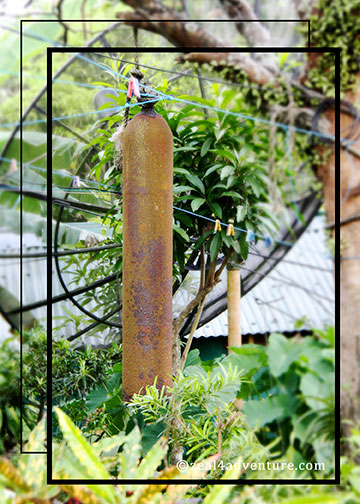
This bell is used to tell the town if the boat from Basco has left or not.

In Mayan Centro, Itbayat’s town center, a few trucks would occasionally ply the streets as townsfolk use these as transport to other towns.

There are those also who would go around in bikes, but these are rare.  People walk everywhere, to other towns even, if trucks aren’t available.  Eva Marie mentioned that she walked all the way to Raele yesterday where there was a fiesta.  She said she walked for hours and was so tired and bored.  I asked her how many hours; she shrugged and replied, “hindi ko alam, basta matagal, I don’t know, all I know is it took a long time”.

School break means that the kids are free to play, if not helping out the family.

Some of us even joined (or shall I say disrupted) their game.

Eva Marie likes hanging out with us.

Walking around town, she provided nuggets of information about her town.  Six degrees of separation definitely apply here.  Everyone is an aunt, uncle or a cousin.

She has ten siblings (eight, six years ago). She has been to Basco but has never left Batanes even if her mother works in Manila.

Along with some of her siblings, she stays with her grandmother, Nanay Laura.

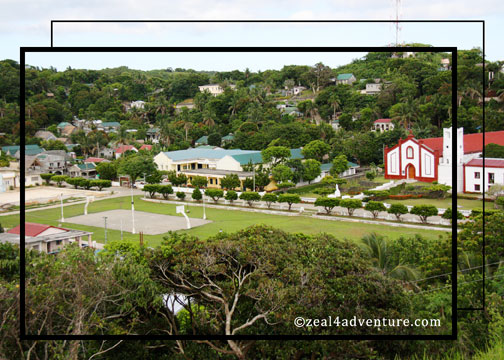
Mayan Centro holds its own appeal, set in a bowl between hills.

The town center from the PAGASA tower.

At the centro, a basketball court and an open field play center-stage.

It is perhaps the only form of leisure in Itbayat; children of all ages are often seen playing in the field.

Across Larez Carinderia is an Old Spanish church, Sta. Maria Immaculada and the school beside it.  On one side is the municipal office

and on the opposite end of the field is its guesthouse, where we previously stayed.

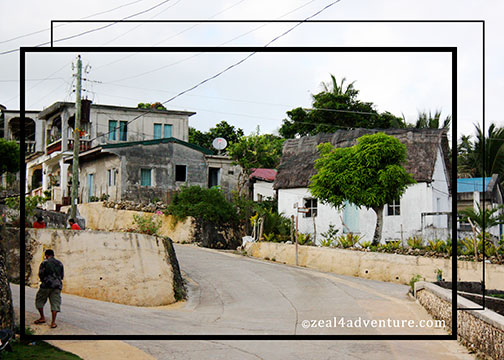
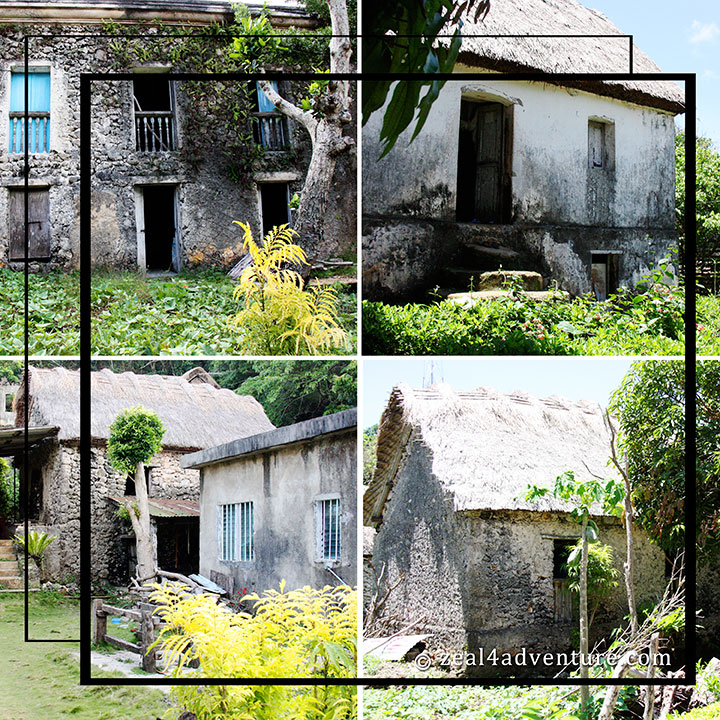
While the town has many traditional Ivatan houses with its cogon roofs, many opted to use galvanized roof.  Cheaper upkeep and it’s less prone to fire, says Nanay Cano.

But the Itbayats love their gardens.

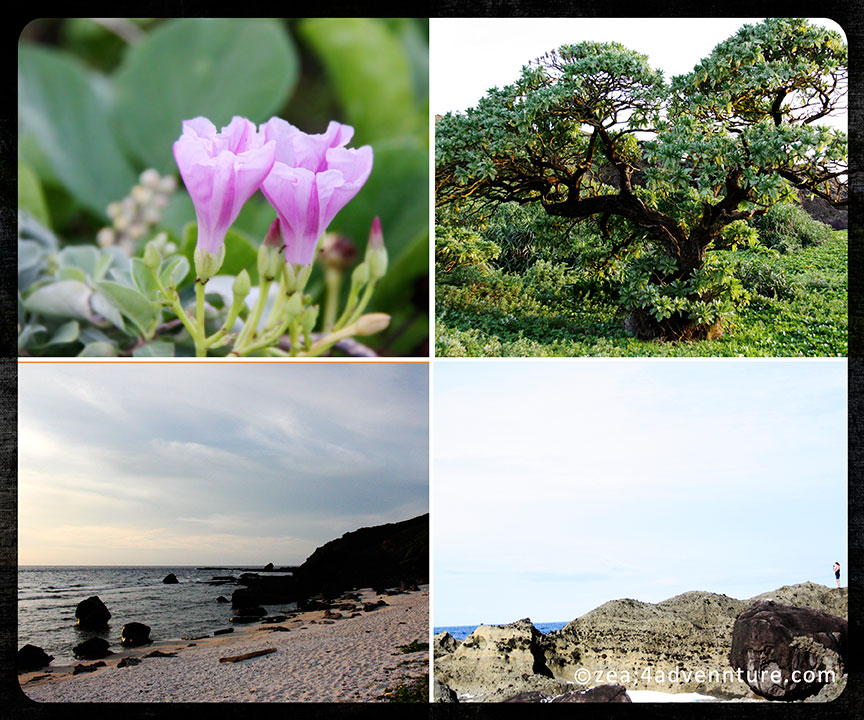
An Arius Tree, indigenous to Batanes. 

No matter the type of house they may have, their gardens are always verdant, some are even quite creative.

We practically roamed the entire town center in search of something cold and alas, we found a heat-quenching treat in some ice candy.

Siayan

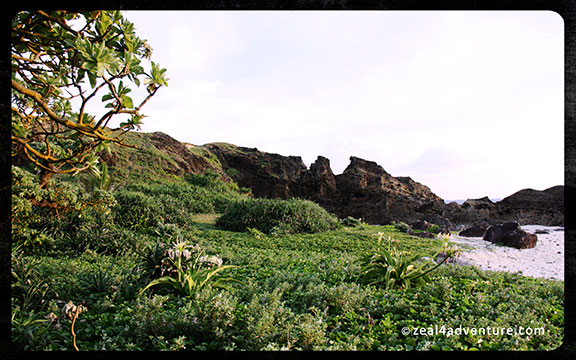
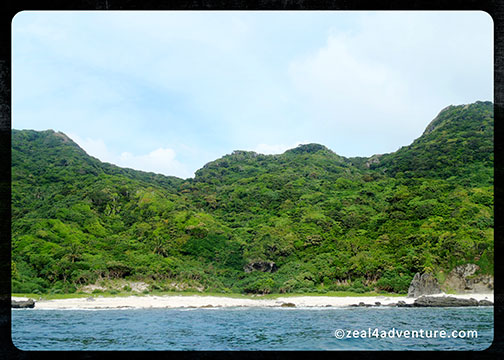
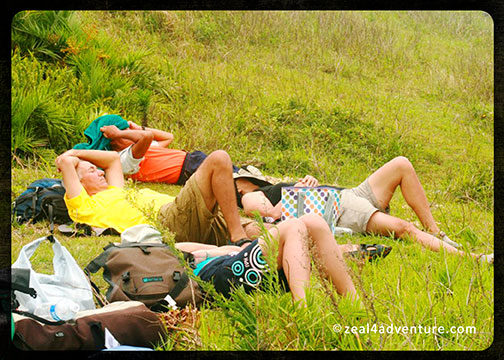
We scrambled through rocks, walked through pastureland until we reached a beautiful beach.

As with Y’ami, a shore entry wasn’t possible.

The boat took shelter at one side of the island, hidden by a cove of volcanic rocks; the boat is safe there for the night.

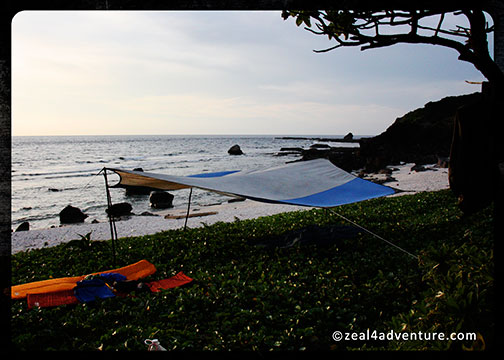
We, on the other hand, had only a tarp to shelter us for the night.

If it rains, we’re doomed.  And as thunder rumbled and lightning flashed through the night, deep sleep eluded me.

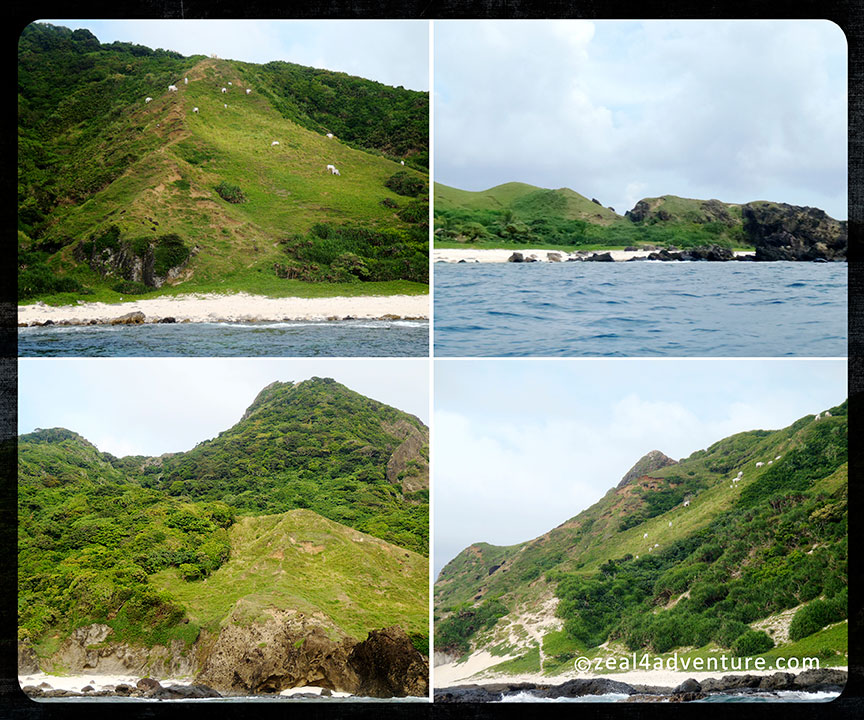
Siayan Island is about 1km in diameter.  It is 164m high and is considered an inactive volcano hence the rocky path to the beach.

Lying about 8 km north-northeast of Itbayat, it is just an hour away from the farthest inhabited island of Batanes.

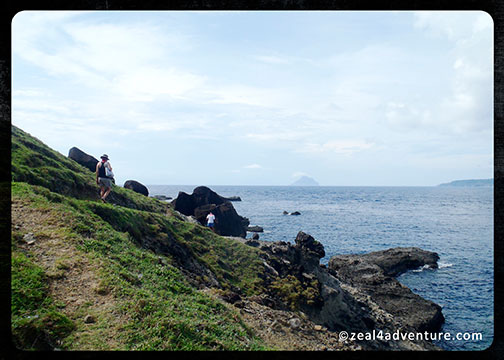
Itbayat in the distance.

The water can become turbulent however and our guides took precaution and insisted we stay the night in Siayan.

When they said that the island has a water source, I had in my mind a stream tucked away in a forest somewhere.  Instead, it is more of a concrete rain catchment built on top of a hill.  The water stored there is only for bathing, not for drinking.  We took turns rinsing ourselves and I should add that the view on this hill is spectacular.  I meant to take a photo but unfortunately never got around to doing so because I don’t normally bring a camera with me when I take a bath, do you?  So I keep forgetting.

Dinner and bedtime was early because we were tired from the day’s excitement and there really wasn’t much to do after dark.

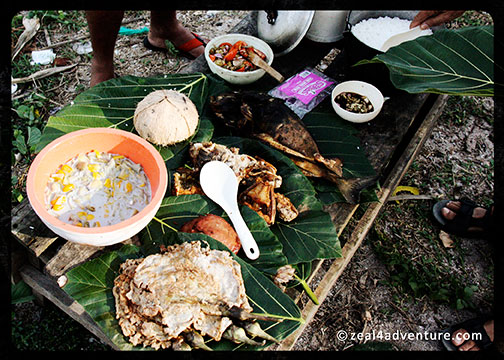
Breakfast Feast prepared by our guides.

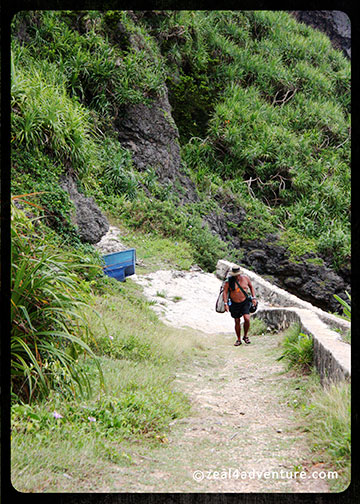
The walk back after breakfast was another struggle – going down this time.

Definitely not a walk in the park.

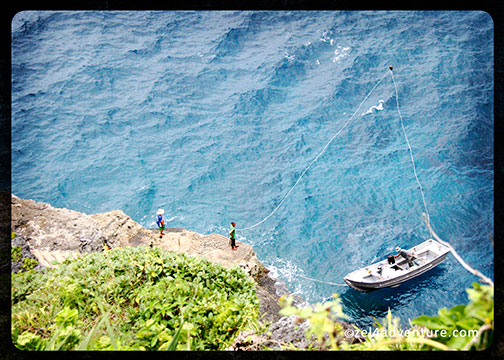
A glimpse of our boat from the top.

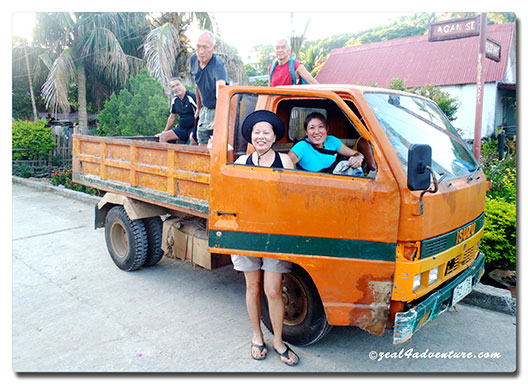
Back in Paganaman port, we walked up steep steps (with our stuff) to the road where our truck will return for us.

Waiting for our ride.  Tired from the journey and the sleepless night.

A grueling trip worth all the experience.  Will I do it again?  Perhaps not back to Y’ami, but to other unexplored territories, hell yes.  As I always say, I’ll do (almost) anything at least once in my life.

A Trip to Y’ami: Philippine’s Northernmost Tip

A truck waits for us at the corner of Nanay Cano’s house.

It will be taking us to Paganaman Port where we will embark on a trip to Y’ami Island.   The northernmost island of Batanes, it is closer to Taiwan than it is to Aparri.  An idea I never really took seriously until an email came my way one day in March.  “He wasn’t joking”, I thought.

We had to trek down to the port with our drinking water and overnight kits.  It was a long way down.

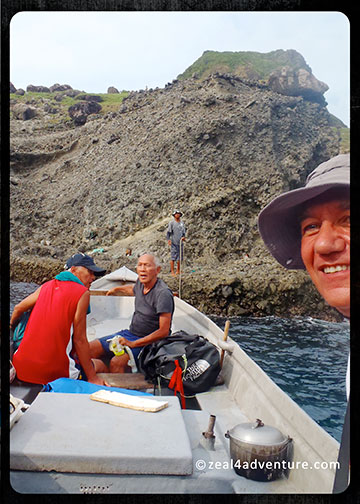
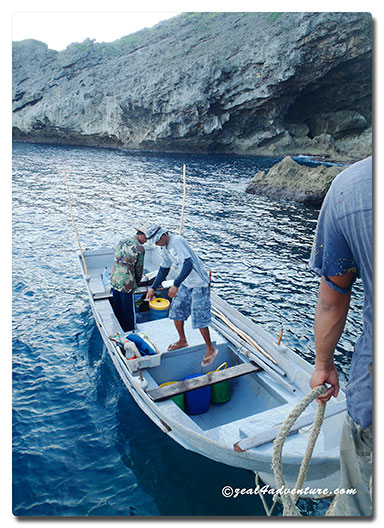
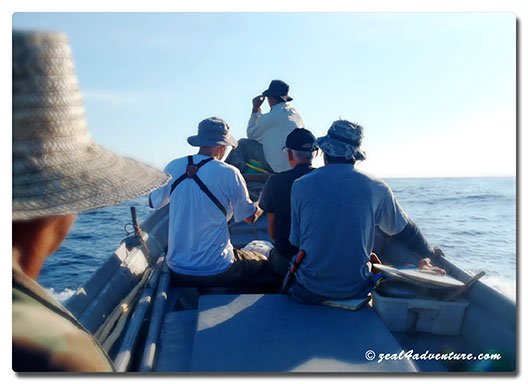
There it was waiting for us at the landing.  The boat, also called a falowa that Nanay Cano arranged for us was unbelievably small.

Could it really bring us safely to Y’ami on treacherous waters?  The sea was calmest in May, which was why this expedition happened then.  So along with treacherous waters is scorching sun.  That boat has no cover whatsoever.  So I ask myself for the nth time, how far do I go really?  Is this so-called adventure worth the trouble?

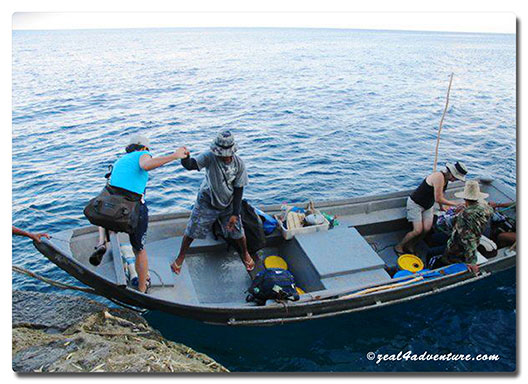
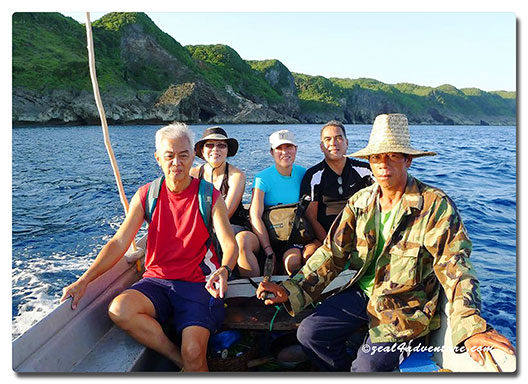
No one spoke a word when we reached the landing.  One by one, we got on the boat with much effort.  The water was rough, making it difficult to mount.  It was the biggest fishing boat on the island, we were told, costing us a mere P6,000 for the 2-day journey.

Looking back at Itbayat.

Composed of 3 major inhabited islands, Batan, Sabtang and Itbayat, Batanes also has smaller uninhatbited islands.  These are Siayan, Di-nem, Dequey, North, Mavudis, and Y’ami (also called Mavulis by locals).  Y’ami being the farthest, we will pass all these islands on the way.

The plan was to drop off our stuff at Siayan, the island closest to Itbayat.  Because Y’ami has no water source, we will stay the night at Siayan before heading back to Itbayat the next day.

The water became quite rough at one point, I wanted to get off with our stuff in Siayan but as fate would have it, the captain (they actually call him piloto) decided that we were light enough to travel the long haul.  Stopping at Siayan would take up time (you’ll soon find out why) and he’d rather be out of the water before late afternoon. If truth be told, the rough sea exhibited how capable our captain was and that there was nothing to fear.  One of us noticed that they only have one engine.  “What happens if the engine breaks”, he asked.  They shrugged, “we will use the sail”.  Simple as that!

Am I glad there was no need for that.  Needless to say, the journey to Y’ami was grueling with me getting perhaps the lousiest seat – the middle seat with nothing to hold on to.  I slip and slide as the boat ride the waves.  The fiberglass boat is slippery when wet, leg room was limited, the sun scorching…

But the scenery along the way somewhat eased the uneasiness.

Three hours after we left Paganaman port, we see Y’ami in the distance. As we approach it, we realized that getting off was a problem.

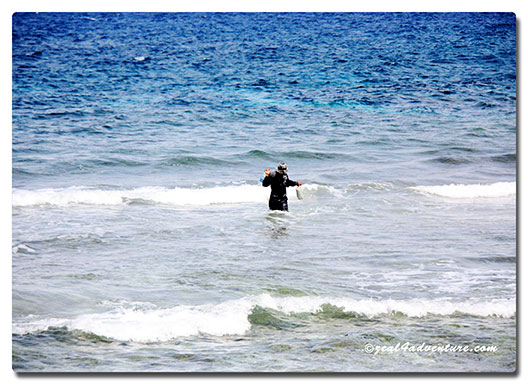
The water was too rough for a shore entry so we anchored far from shore and waded to the island.

“This better be worth it”, my thought balloon goes.

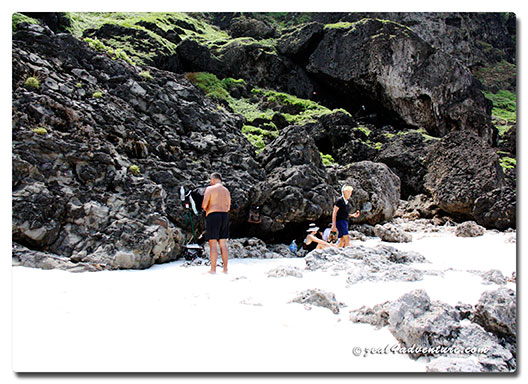
Under those rocks we found shelter from the scorching heat of mid-day sun.
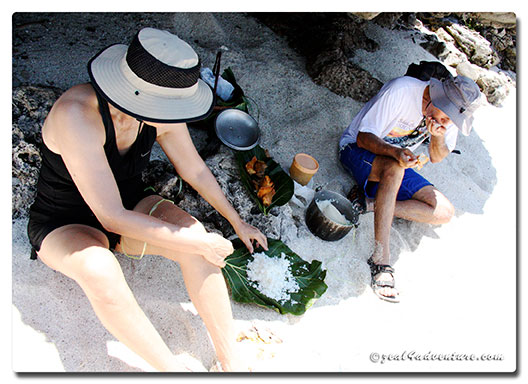
And there we had lunch.

Trekking to the other side of the hill where there is some sort of landing, albeit on sharp rocks.

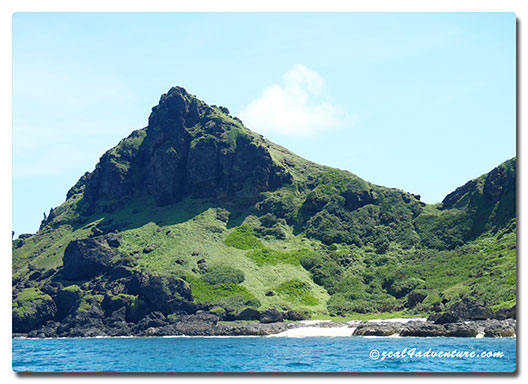
The island is beautiful, pure, unspoiled.  Sadly though, we saw a baby shark with its fins cut off from a fishing boat.

Except for some fishermen (including the corrupted ones) taking a break from fishing, hardly anyone sets foot in this uninhabited island.  It is, after all, a long way from home.

Nanay Cano and Coconut Crabs

Faustina Cano, Tina or simply “Nanay” is the woman to call when you’re headed to Itbayat.  She can arrange almost anything.  We needed a boat to take us to the farthest island of Batanes – an idea out of the ordinary that turned to fruition through Nanay’s help.   A retired teacher, Nanay is now the tourism officer of the island and is perfect for her role.  You’ll soon find out why.

Flying was not always possible for this northernmost inhabited island.  When there was still no airport or when it recently went for a refurbishment, one has no choice but to take a grueling 4-hour boat ride.

Because it is a giant uplifted coral reef as research claims, it does not have a shoreline to land on.  When the water is rough (which is almost always), getting oneself to the port is a challenge.

Chinalopiran Port, Itbayat

One has to time the boat and jump as it levels with the landing.  Whew!  Glad I never had to do this although it would have been an interesting trip if ever.

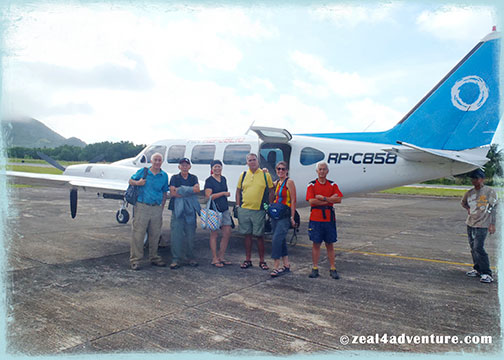
The motley crew on a mission.

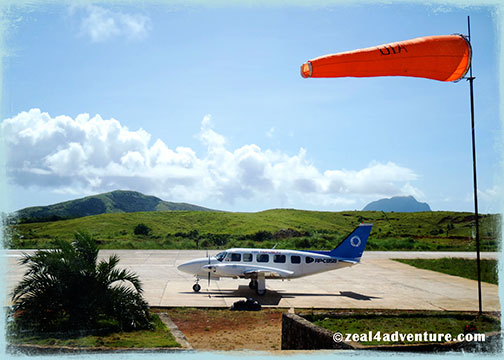
Arriving on an 8-seater plane, we landed at the Itbayat Airport only 12 minutes after we took off from Basco.  The airport is far from town and when I first came in 2007, a truck picked us up and took us to town on bumpy, unpaved roads.  This time, we hitched a ride with the ambulance that was going back after bringing an old woman to the airport.

Road conditions had improved with some roads paved along the way.  Classified as a community airport, it provides one pick-up to take passengers to and from the airport.

Needless to say, we booked our rooms at Nanay Cano’s Homestay.  Our home for the next few days had 5 beds, one bathroom and several fans to keep us cool although it is rendered useless after midnight when the power goes off till 6 the following morning.  On hot summer’s nights in May, we miserably sweltered through the night, truth to tell.  How far do I go for adventure, I often ask myself.

Nanay Cano is an excellent host, she knows the history of the place, and she explains it with so much gusto too.  As soon as we got settled, she called us together to explain the following day’s agenda, the islands we are visiting and its logistics etc.   It is not going to be easy, and again I ask, how far do I go for adventure?

Coconut crabs.  A delicacy and found most in this island.  Walking around town waiting for lunch to be served at Nanay Cano’s, we came across some fishermen selling these crabs and a delicious dinner it made.

The crab is said to climb coconut trees and husks coconuts with their powerful claws hence the name.  It is however not a significant part of their diet.

When cooked, the claws are hard and needs a good bashing to break, the meat sweet and firm.  Although I still prefer Alimango (mud crabs) and Alimasag (blue crabs), Coconut crabs is a priced delicacy and is widely hunted, its population dwindling.  The IUCN has classified them on the red list of threatened species.  This means (as I understand it) that they can only be consumed locally and is not to be sold outside of the island.  Or am I just justifying for having a scrumptious meal?   😉

Aside from the coconut crabs, Itbayat produces garlic, a lot of them.  Nanay explains that the different varieties are a result of bartering with Taiwan, who has an extensive production of garlic as well.

Between some of us, we brought home a total of 12 kilo worth – Nanay arranged to have it shipped to Basco lest we go over the weight limit.  These are good garlic, folks.  If you find your way to this corner of the globe, do get yourself some of these.  I am loving it and will miss it once I run out.

With that lovely dinner, we were off to bed early… before the fan shuts down.  A long, challenging day awaits us tomorrow.

Useful Info:

Nanay Faustina Cano: +63 919 300-4787
Air Republique Booking Office: +63 908 120-2548

Batanes

Located more than 860 km from Manila, you can see Taiwan on a clear day.  The island looks more like the Scottish Highland.  Typhoons are common, hitting the archipelago between July and November.  The sheer isolation and location, in the middle of typhoon alley, keeps mass tourism at bay.

My journeys to Batanes have been a series of milestones.  I first set foot on this northernmost part of the Philippines, the home of the Ivatans, in 1997.  That trip started it all.  It catapulted my zeal for adventure.  I found myself back nine years after, this time to explore the farthest inhabited island of Batanes called Itbayat.  And very recently, another dream brought us back to this pretty corner of the world.  A new milestone to achieve.

Batanes continue to enchant despite commercialization.  More frequent flights fetch more tourists albeit still miniscule compared to other destinations.  The size of the plane allowed to land at the Batanes airport prevents mass tourism from flocking in still.  With its rolling hills, ancient cultures, traditional stone houses, and breathtaking landscapes, Batanes is worth exploring again and again.  Let this post be a prelude to an ultimate adventure.  Stay tuned.

El Nido: Island Hop Day

“The best island destination of Southeast Asia” was how National Geographic Traveler Magazine sized up El Nido in its November-December 2007 issue.  And has since been dubbing it as one of the best travel destinations.  Alex Garland’s “The Beach was inspired by El Nido, many say.  The Amazing Race, Bourne Legacy… it’s becoming a Hollywood favorite as well and for good reason.

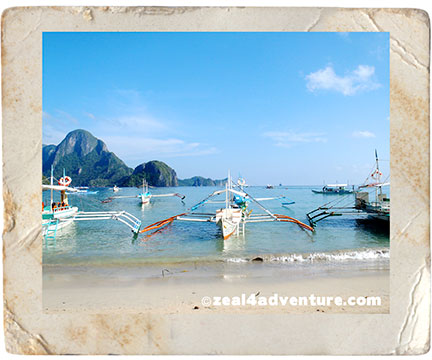
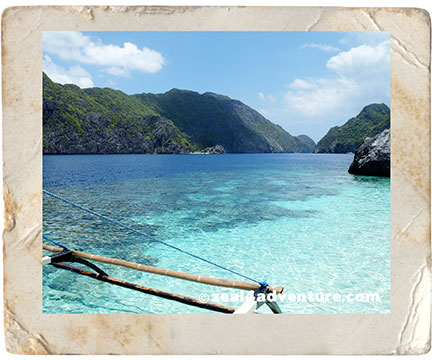
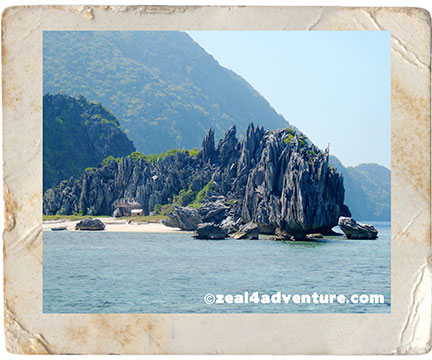
Majestic karst limestone formation, enchanting lagoons, marble cliffs, lush forest, white sandy beaches, clear blue waters, wonderful marine life… all these epitomizes the Philippines’ so called “Last Frontier”.

Shops along the main streets of the town center offer the same A to D island-hopping tours.  To be in El Nido and not do these tours is like going to an ice cream parlor and not have ice cream.

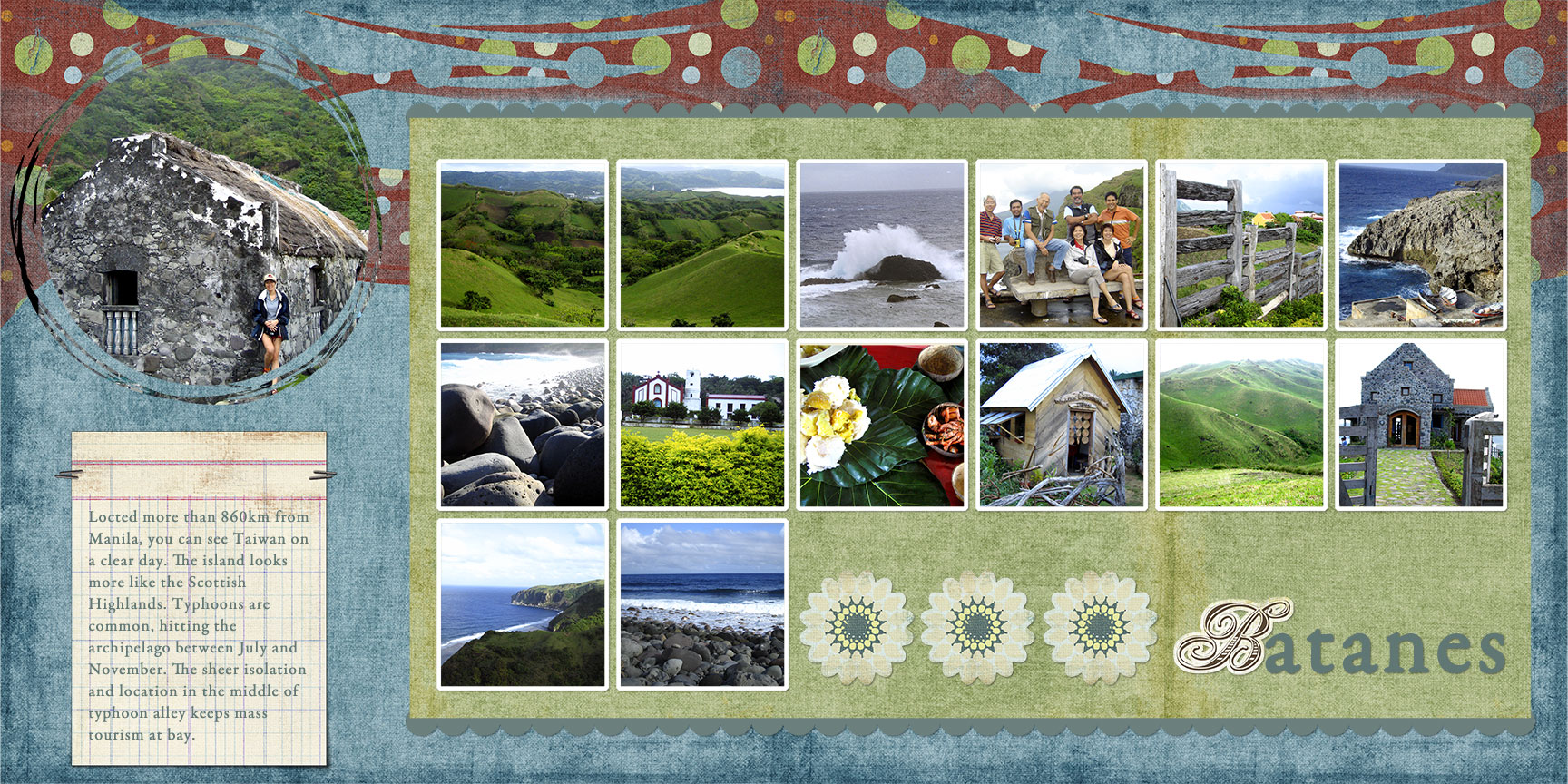
It is after all the gateway to Bacuit bay—

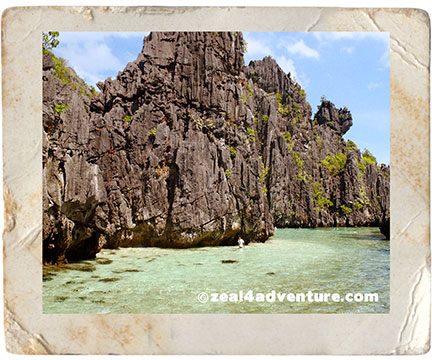
an exquisite nature gem scattered with limestone islands with stretches of white sand beaches and hidden coves.

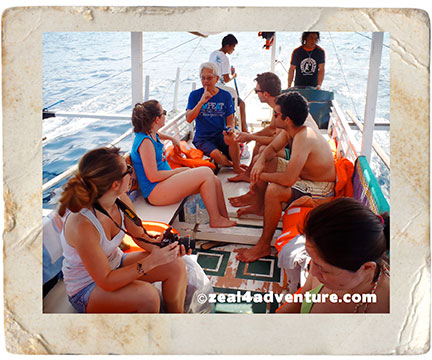
Mang Rudy promised a good lunch in his tour and so, together with the French friends we met coming to El Nido, we booked a tour with him.

Tour C— because it was my favorite tour the last time and because the our French friends wanted to see “Secret Beach”.

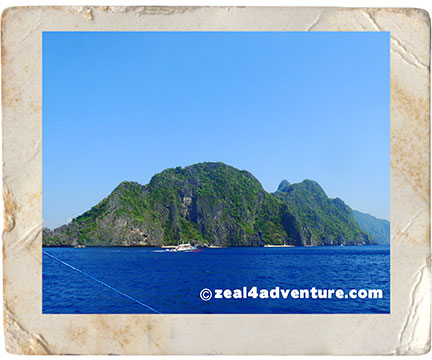
First on the agenda was Hidden Beach on Matinloc Island and the farthest from town.

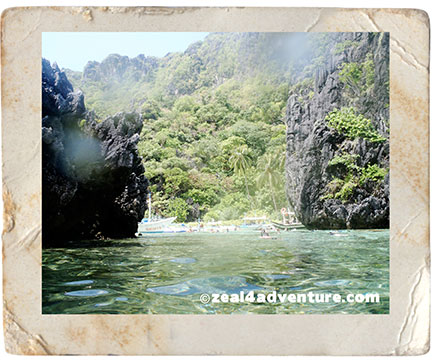
Beautiful beach with lush vegetation hidden behind towering limestone cliffs hence the name.

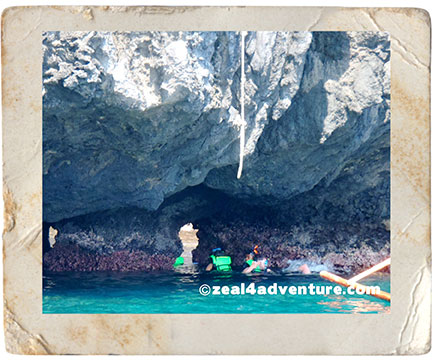
We did some snorkeling but didn’t step foot on the beach.

Matinloc Shrine, our next stop, is on one side of the island.

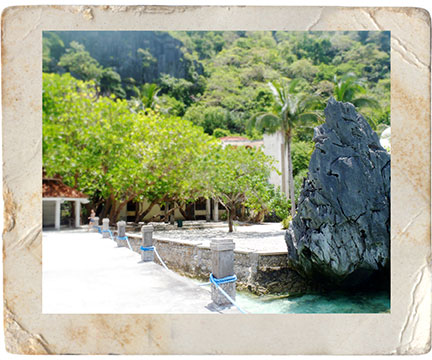
The shrine is a two-storey building towering in one corner and a concrete gazebo at the center of the site.  Abandoned, the shrine is not in good condition but remains part of the tour— most likely because of its remarkable scenery.

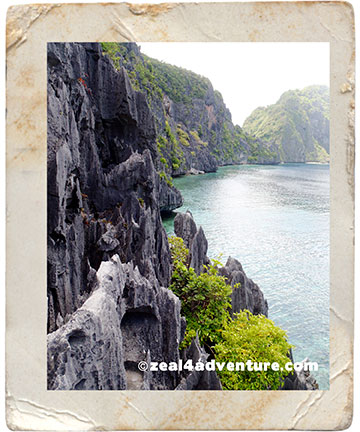
In front of the building stands a limestone cliff with a stunning view of the nearby Tapiutan Island and other beaches of the island.

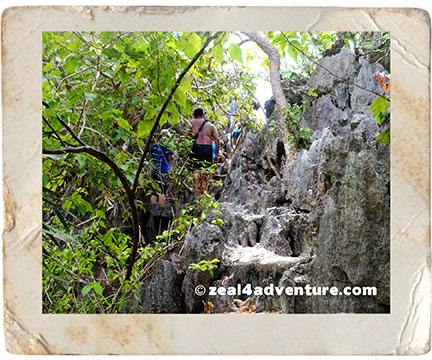
One has to climb the cliff to see the view while relatively easy; the sharp limestone edges can easily cut.  So be careful.

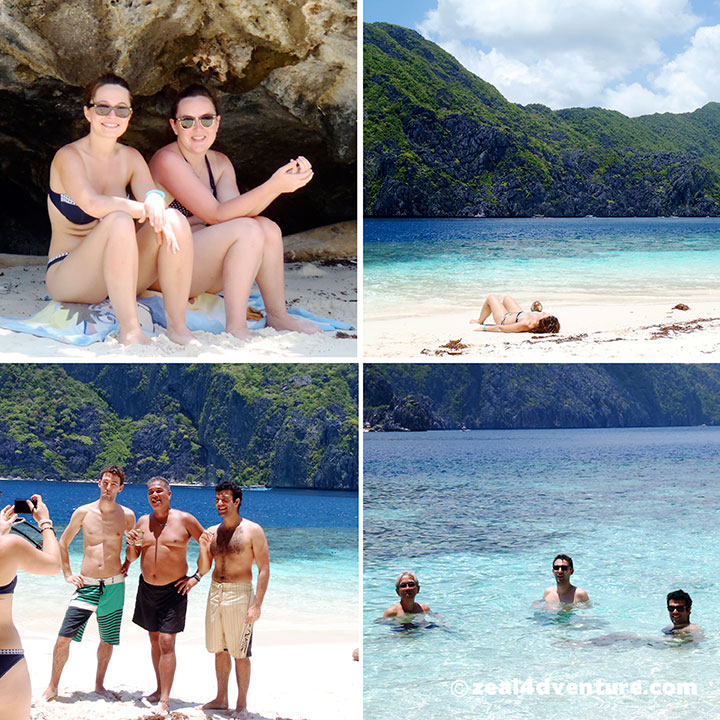
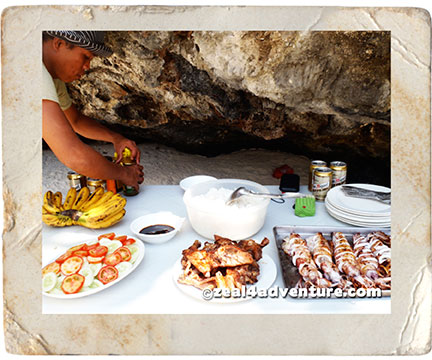
A beautiful tiny cove, Shumizu Island, which we had all to ourselves, was where we stopped for lunch.

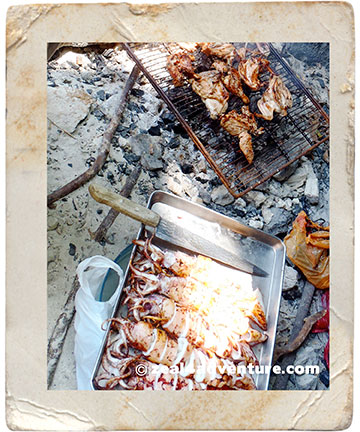
While the food was on the grill, we enjoyed the sun, sea and sand.

Lunch was a wonderful feast of grilled chicken and squid alongside a refreshing cucumber and tomato salad.

Thank you Mang Rudy, we were not disappointed.

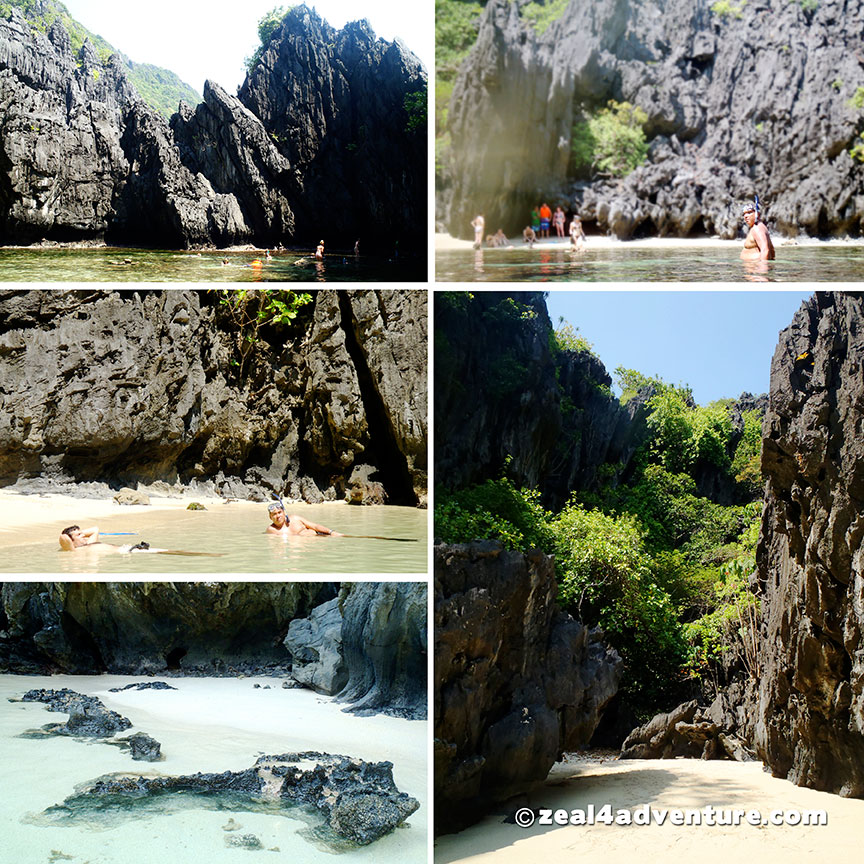
Matinloc Island has a Secret Beach.

Inside the steep rock wall is an enchanting beach inaccessible by boat.

The only way to enter this secret beach is through a small crevice, which during high tide is submerged earning its name.  When submerged, one has to swim through the crevice underwater making the reveal more dramatic, truth to tell.

This particular beach is said to have been the inspiration to Alex Garland’s “The Beach”.  It is easy to understand why.

Inside those walls is another world, a secret paradise, if I may call it that.  It is a sight to behold and this, dear friends, is why Tour C became a favorite.

Fronting the Matinloc Shrine is Star Beach.  I particularly love the rock formation in front.

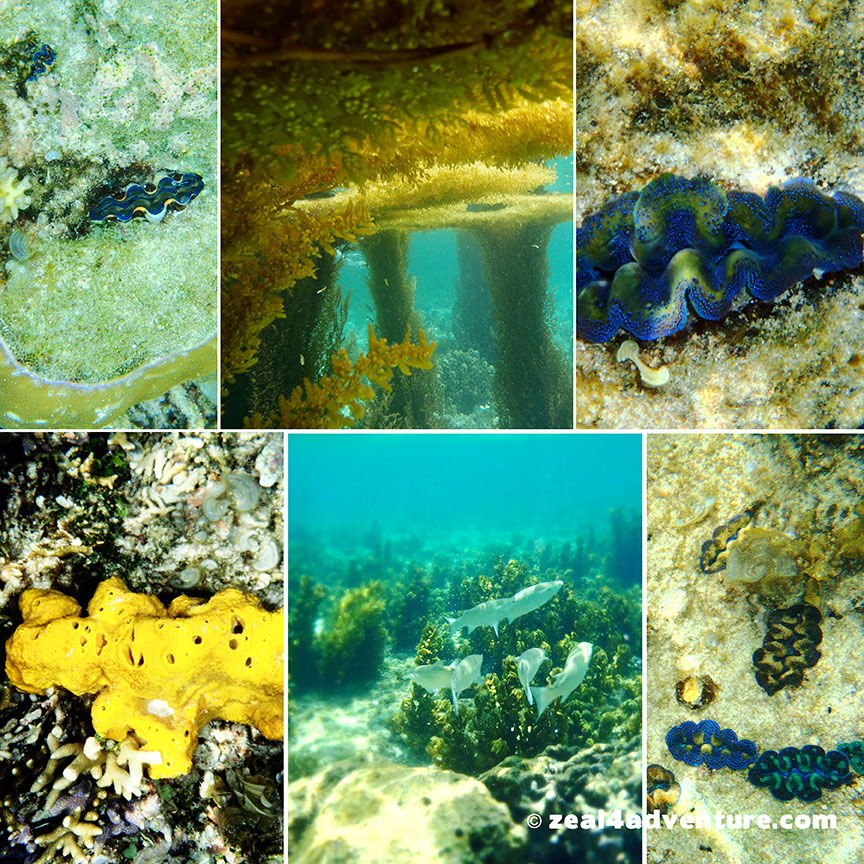
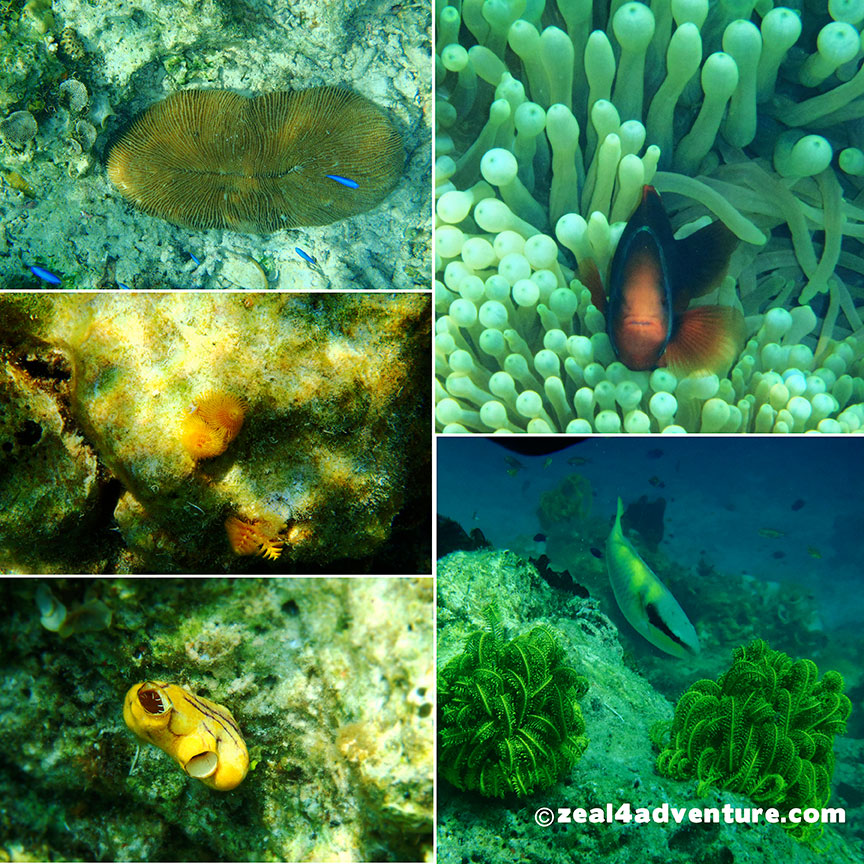
The reef nearby is a great snorkeling spot owing to good coral beds and the abundance of marine life.

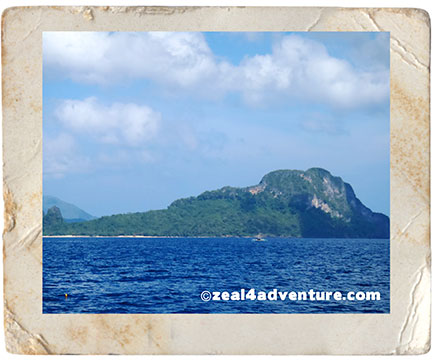
Capping this tour is a stop at Dimalicad Island, better known as Helicopter Island because of the shape it resembles from afar.

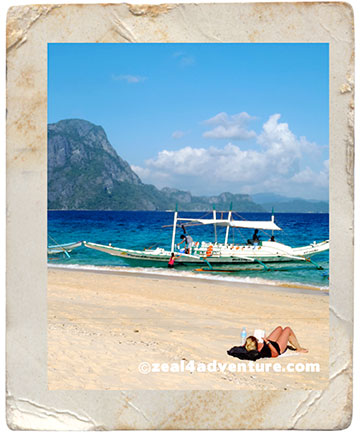
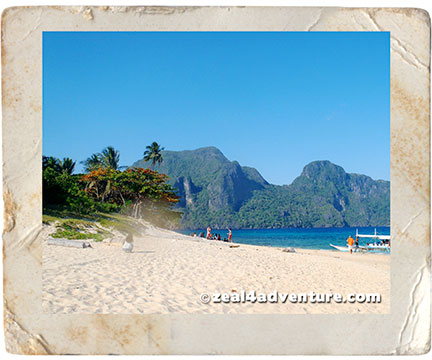
The long stretch of sparkling white sand beach makes it ideal for lounging around with a good book or sunbathing perhaps.

Although the water beckons for a swim, the waves can be strong for some.

They couldn’t have chosen a more perfect cap for the day.

Rugged Mystique

Credits: Papers from SDynes Christmas Treasures Mini Kit; Frames from Orchbroom Mask and SDynes Christmas Elements; Floral Elements from Sahlin Studio’s Story Telling kit (sc flowers).

Bewitched.  I can’t seem to put my finger on it but there’s something about the town of El Nido that has left me enchanted from day one.

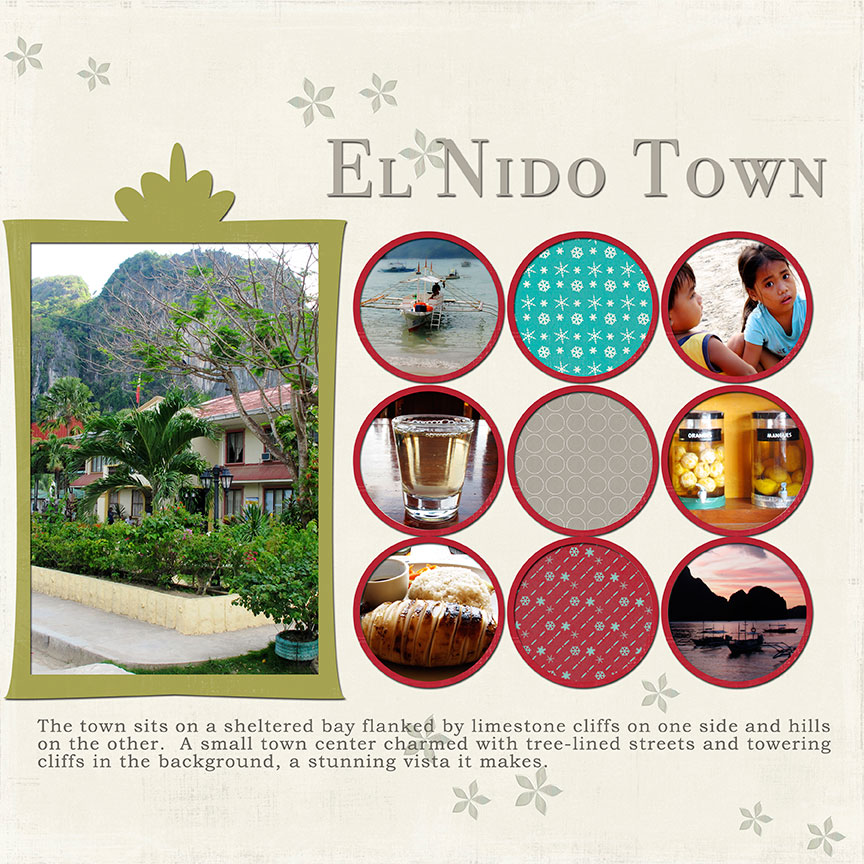
The town sits on a sheltered bay flanked by limestone cliffs on one side

and hills on the other.

A small town center charmed with tree-lined streets and towering cliffs in the background, a stunning vista it makes.

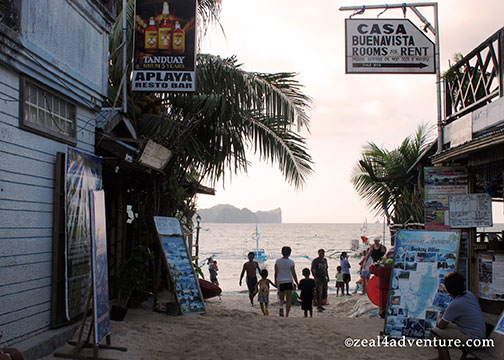
It still is very much a backpacker’s town really and it is this laid-back backpacking atmosphere that lured me back to many years after.

This charming fishing village in the northernmost tip of the Palawan Island often is referred to as the Last Frontier due to its rugged mystique.

How time flies… it took me 8 years to come back to one of my favorite towns.  I still remember many details of the town like it was yesterday.

El Nido has turned into a touristic town and I see that more exciting places to eat and stay have sprouted everywhere.

Madali ang pera dito kung masipag ka”, says Mang Rudy.

The opportunities are endless with tourism at the forefront here at El Nido and money can indeed be easy if one works hard.

The one place I would have loved to go back to, we heard no longer serve meals on a regular basis.  Walking to town, we unwittingly found the house so we entered the half-opened gate and were told that they don’t accept dinner bookings anymore.  We took it as that.  On hindsight, I am not sure if they meant that they were already full for the holidays or that they weren’t serving because it was a holiday.  Having seen many closed shops and restaurants around Palawan during Easter break, this will not come as a  surprise.  Elm St Café is a cozy dining place set in a beautiful garden amidst a limestone backdrop so beautiful when lit at night.  The owners opened their home along Rizal Ave. and they served meals to those that booked in advance – usually a surprise, depending on what is found in the market that day.  They were the best of the best then, the ambiance and the element of surprise added to the experience and memories.

Not to fret though as there are a whole new lot to choose from, we barely scratched the surface, I think.  And here are some that caught our fancy.

La Salangane – more than the French meals, what had us coming back were the homemade flavored rums.

Ginger, apple, pineapple, pears, oranges, mangoes, even pepper –

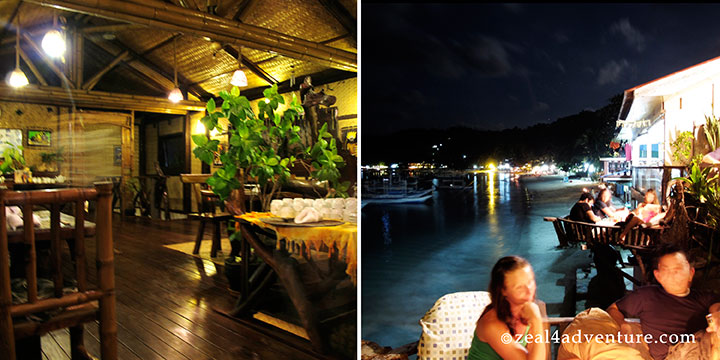
wonderful flavors enjoyed in a relaxed atmosphere overlooking the Cadlao Mountain by the beach.

Made more special over sunset.  This is THE place to get your espresso fix as well.  Many of the places in E Nido, including our inn, do not even serve brewed coffee.

The Alternative Restaurant – mentioned by some French tourists we met on our way to El Nido, we decided to give it a shot.  The place was not easy to find as it does not look like much from the outside and we kept walking pass it.

On the 2nd floor though where the restaurant is, the ambience turned to cozy.  At one side overlooking the sea, a few sunken oval seats resembling a “bird’s nest” overhangs the beach – a cool place to hang out and watch the sunset, me thinks but A wasn’t as confident that the structure would hold us so we got ourselves a table instead.

Despite an extensive vegetarian choice, I had a pork dish with pasta – and it was pretty good.  Our French friends though were not as impressed.

Altrové Trattoria – saving the best for last.  This Pizzeria was the best of the lot in my books.

Made of fresh dough and cooked crisp in a brick-oven is perhaps the best pizza in town.  The place, unlike The Alternative, is hard to miss.  Beautiful façade of a place, the brick oven proudly stands at the ground floor.

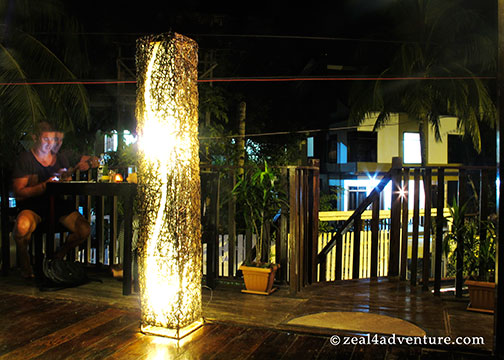
A nicely decorated second floor is where the dining area is.

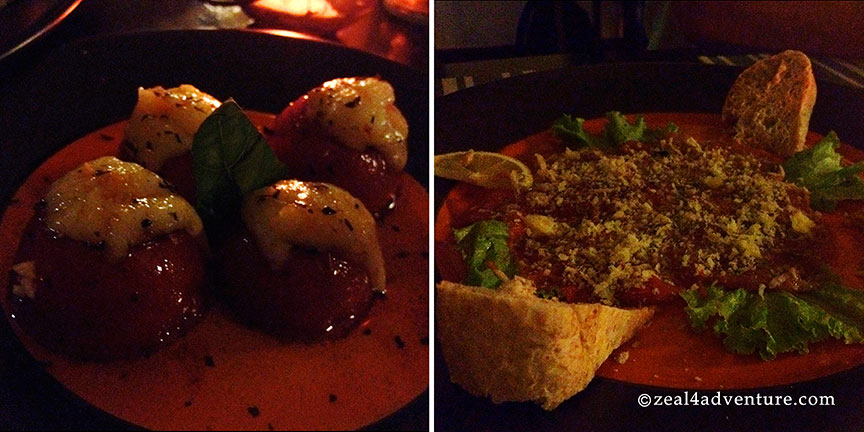
We enjoyed our antipasti of Beef Carpaccio and Baked Tomatoes on Mozzarella.

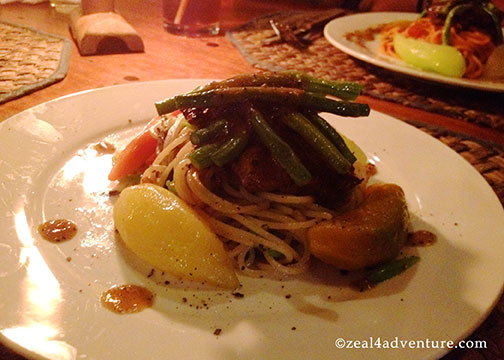
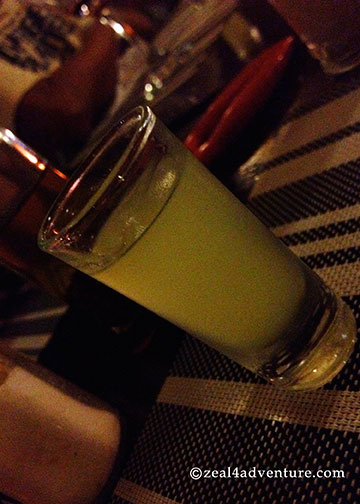
The seafood pasta dish was divine and the pizza, wonderfully crusty.  And to cap the evening… Limóncello, how can I not love this place?

To serve Limóncello in a town like El Nido, where electricity only runs from 2pm-6am, was impressive.  And this, dear friends, has easily landed on the top of my El Nido list, dining-wise.

Useful Info:

La Salangane
Serena Street
Barangay Buena Suerte
Contact:  (63) 916-648-6994
Email:  info@lasalangane.com
 
The Alternative
Serena Street
Barangay Buena Suerte
Contact:  (63) 917-896-3408
 
Altrove Trattoria
Hama Street
Barangay Masagana
Contact:  (63) 927-741-8016 
 

Spelunking

Many, many years ago, 1994 I think it was, we made a day trip to Sagada from Banaue.  We found ourselves a guide and he suggested that we do the caves.  That was 18 years ago, I was not the same person I am today.  I hesitated, “I’ll stay in the jeep”, I told my friends.  They looked at me, “that’s a 3-hour wait”.  “But my shoes (a trekking boots) will get dirty”, I said.  Bewildered, they just looked at me and started walking down the steep stairs leading to the opening of Sumaging.  A friend stayed with me but when the last of them disappeared from our sight, she convinced me to do it as she has already decided to go for it.  Long story short, I gave in.
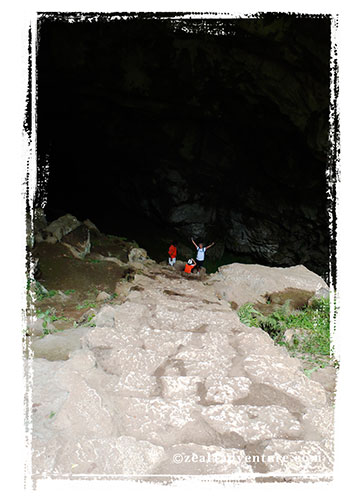
Slippery step after slippery step, I was cursing.  “I will never EVER listen to you guys again”.  But at least I didn’t cry like one of our companions.  I was too angry to cry.  Yes, it was terrifying, especially for a first timer.
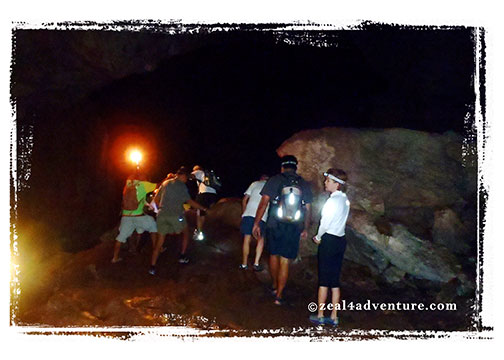
But it gets better as you walk pass the guano covered rocks.  Yes again, those rocks aren’t only slippery, they’re stinky as hell too.
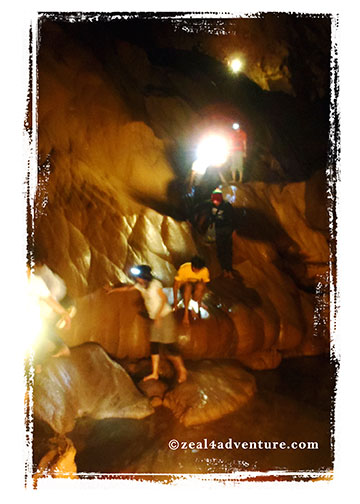
As we walk those boulders with only a gasera (gas lamp) lighting our way, I would imagine slipping and falling into a deep pit – for all you know, it ain’t that deep but the surroundings were pitch dark so imaginations can get wild, believe me.
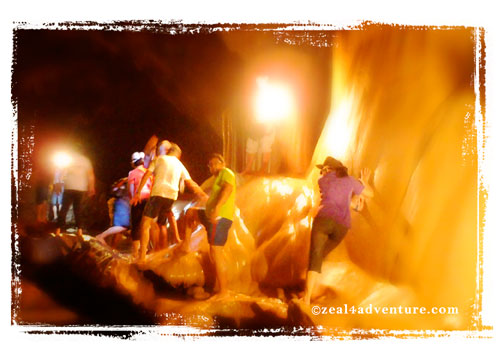
At a certain point, we were asked to take off our shoes.  Well, at least my (trek) boots won’t get wet, I thought.  But my next worry though was how on earth are we to manage those slippery rocks barefooted.  Best. Thing. Ever.
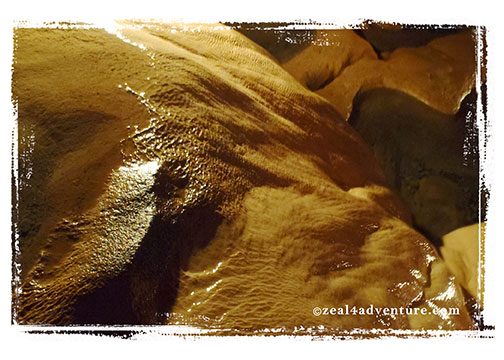
The pumice-like rocks had enough traction that your feet practically stick to those boulders.  Amazing.
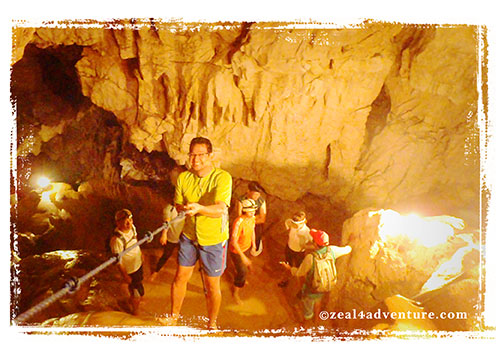
Still cursing though as we not only rappel up and down to get to other chambers, we had to step on our guides too, if no other options will do (shoulders or thighs lang naman).
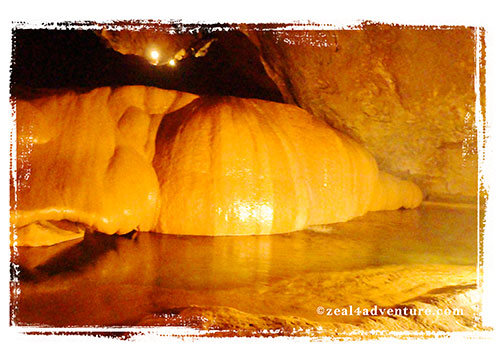
Beautiful stone formations with names like King’s curtain, pig pen, pregnant woman, rice terraces formation etc. are found in those chambers.
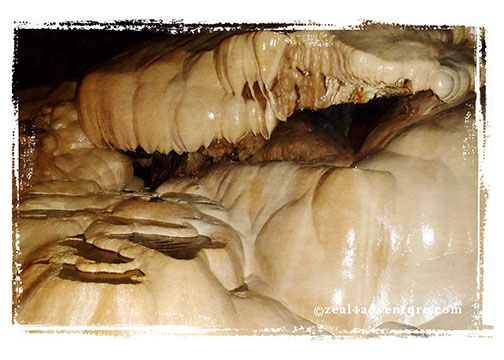
It was definitely the saving grace of this “craziness”, truth to tell.

Recounting our adventure that evening, I started with “Next time we do this again, I will…”, they all looked at me, “I thought you will never EVER do this again?”  Oh well.

I was somewhat true to my word, I never entered Sumaging since.  Not saying though that I haven’t done Cueba de Oro, San Carlos, Sierra, Baggao caves since that fateful day.  Unbeknownst to me then, Sumaging would be my intro to the outdoors and life has never been the same since.  Although caving or spelunking, as they call it, will never really be a favorite activity but if push comes to shove, I’ll do it.  Anything for camaraderie.
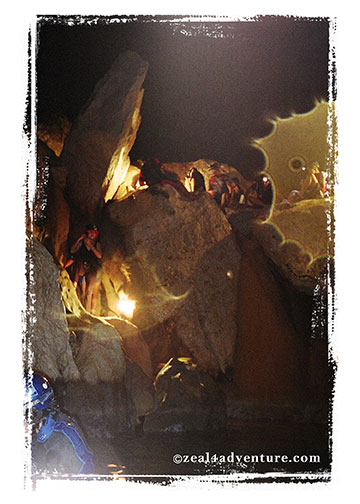
Fast forward to 2005, I heard of the Lumiang-Sumaging traverse.  Curious and not wanting anything new to pass me by, I ventured once more to the uncomfortable with friends in tow.
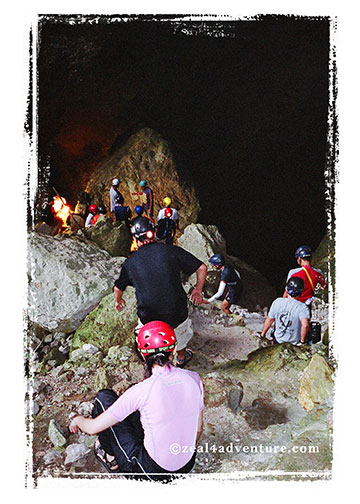
We started early as this would take us 4-5 hours, they said.  More experienced this time, it wasn’t as daunting but to say it was challenging might be an understatement.
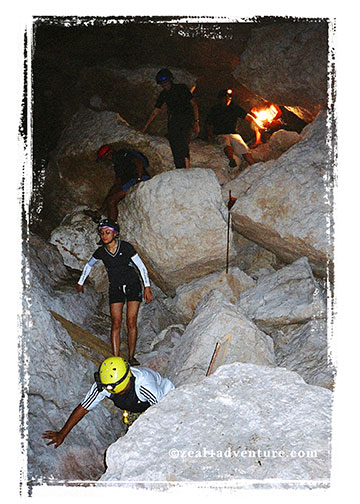
Not recommended for the faint of heart or the inexperienced.  That said, many of the friends with me that day had never experienced Sumaging or any caves for that matter… so who am I to discourage.  Did they ever enter another cave?  No.
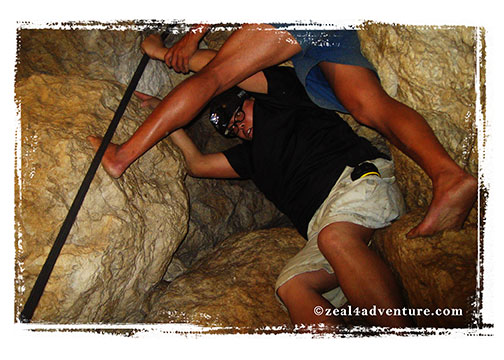
The obstacles that we went through would consist of rappelling down small openings with the use of ropes – squeezing and contorting sometimes,
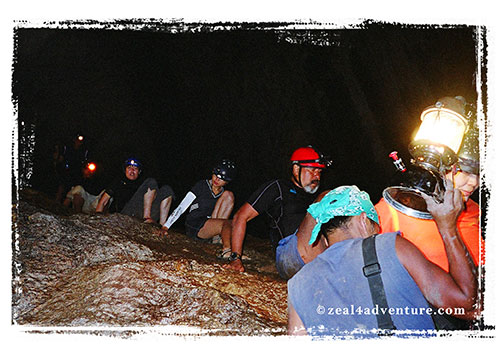
sitting on our butts and inch our way down if ropes were unavailable, hugging rocks,
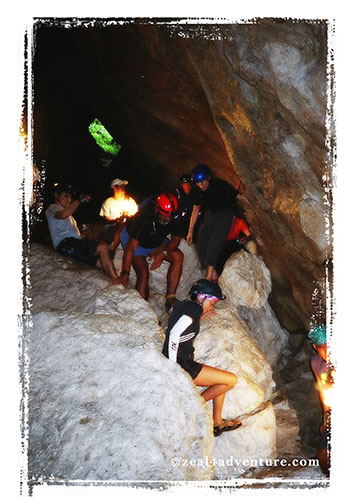
walking along narrow ridges with only a rope to hold on to –this I can guarantee are steep cliffs and falling can be fatal, and a lot of listening and following (mostly the guides’ instructions).
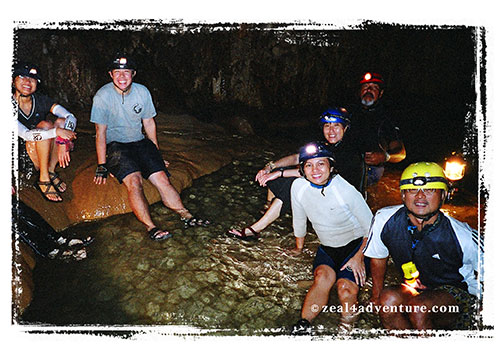
Halfway and nearing Sumaging, the chambers would have icy cold pools where one can take a dip or rest on the banks.
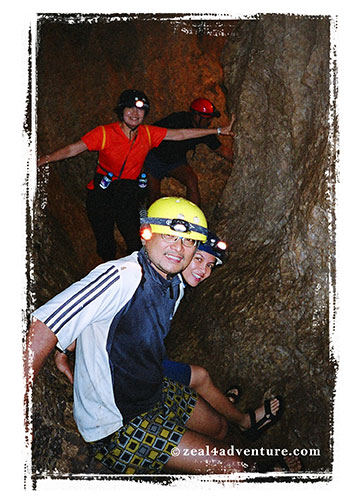
Like Sumaging, Lumiang is beautiful, breathtaking even but unlike Sumaging, it can really test your limits.  A bragging right of sort, me think.

Would I do it again?  Perhaps.  I always believe though that the first time is always the most memorable.  It stays vivid in your memory like it was yesterday.  I remember more my first descent on Sumaging 18 years ago than the more recent Lumiang-Sumaging traverse.
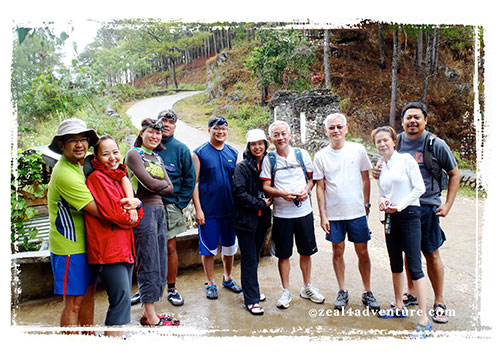
Early this year, I accompanied friends to Sumaguing.  These friends of mine have never gone into a cave ever.  It was as I remembered it but less intimidating – I didn’t have to step on anyone’s shoulders, to say the least.
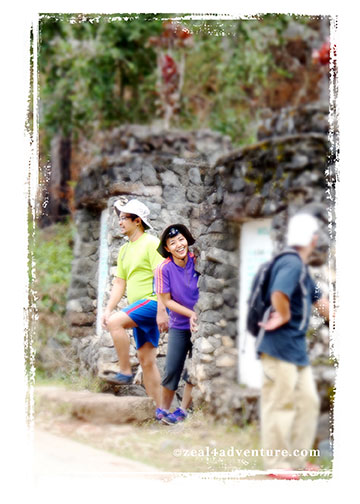
I didn’t push Lumiang… Sumaging was bittersweet for them – challenging yet a source of pride for finishing.  Exactly my sentiments each time – Sumaging or Lumiang.
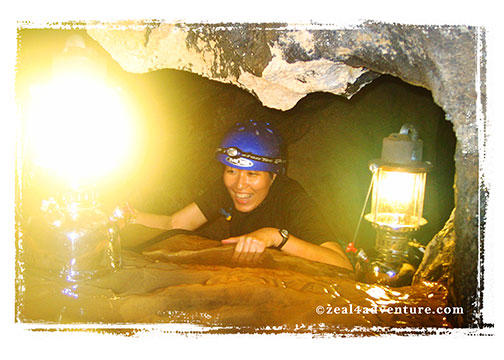
Useful Tips:

1.  Aquasocks or river shoes proves best inside the cave.  I used my Five Fingers on my last trip and I didn’t have to take them off.  But sandals are good too.

2.  Wear quick drying shirts. Rash guards would keep you warmer.

3.  Never go in the cave without a guide.  Register for a guide at the Tourist Information Center at the Municipal Hall.
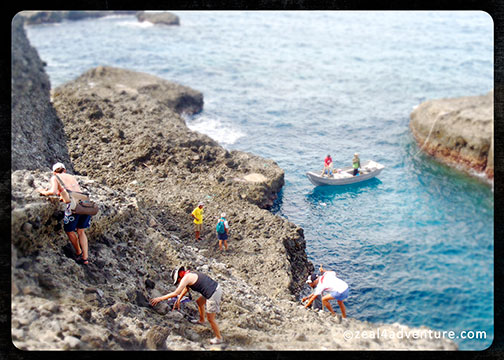
4.  Best is to bring headlamps and helmets (for Lumiang).
5.  Water and towel is likewise advised.

6.  Always follow your guide’s instructions.  They know best.

Kuang Si Falls

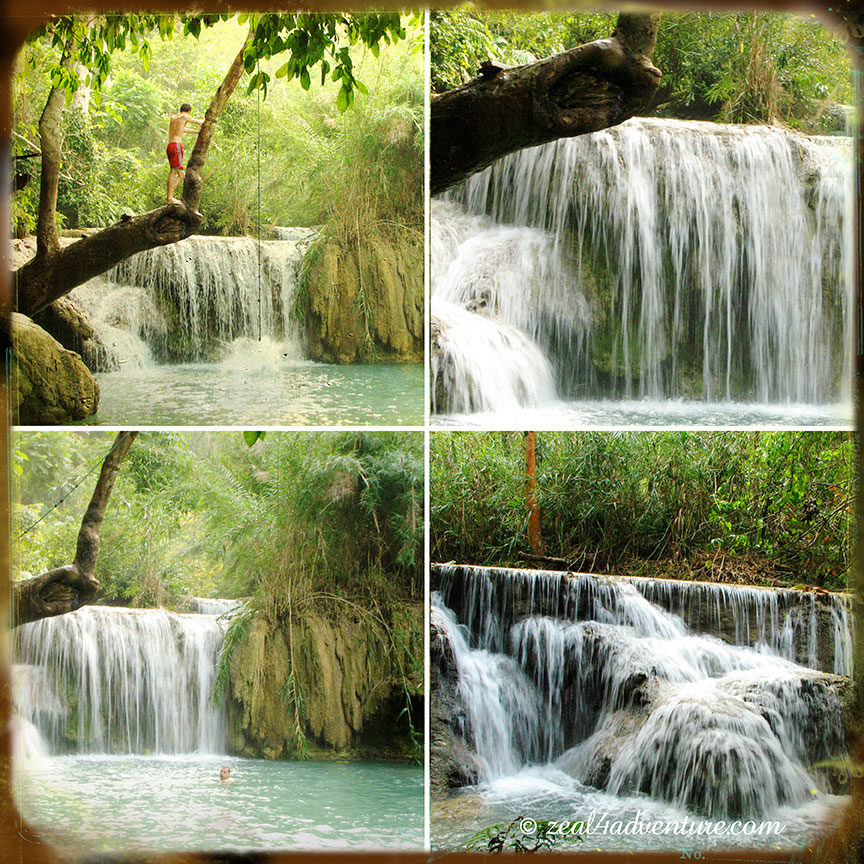
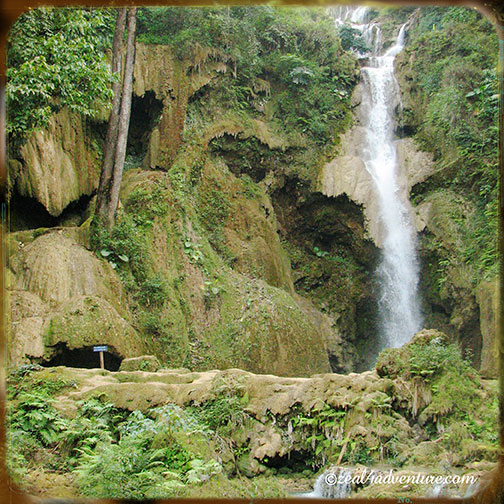
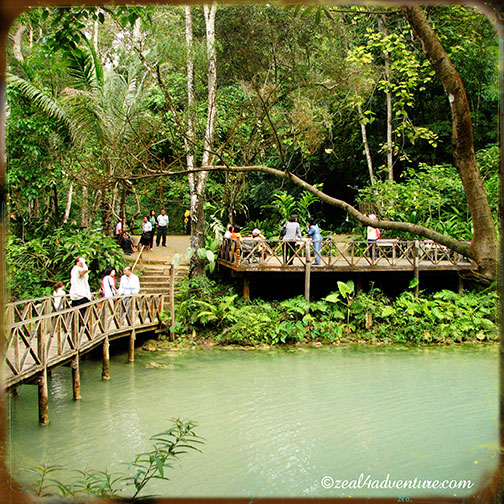
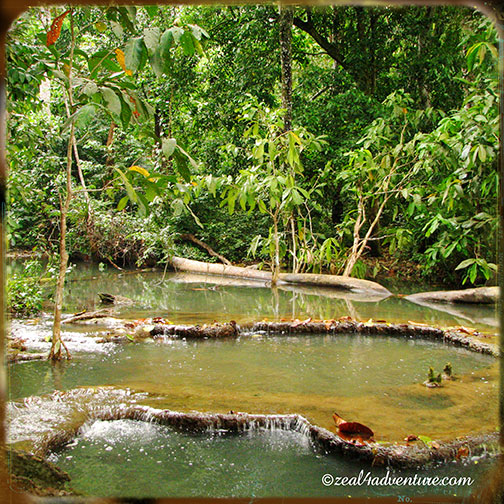
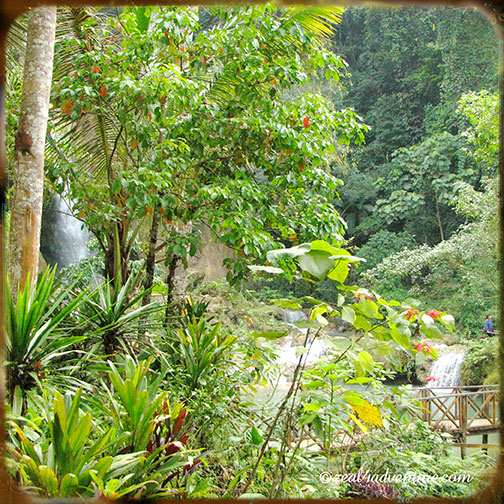
Picturesque and very accessible – Kuang Si falls, 29 km south of Luang Prabang, has become a popular attraction outside of the world heritage city.  Surrounded by lush forest, the falls is 3 tiered, all picture perfect.

The breathtaking main falls is 60 meters high while the rest, equally stunning, are 1-3 meter cascades that creates small aquamarine pools.

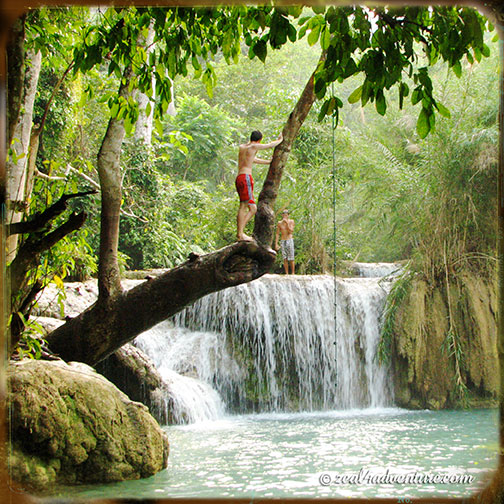
The water invites especially on a hot day, many take a dip, some even take to jumping off trees for some thrills.

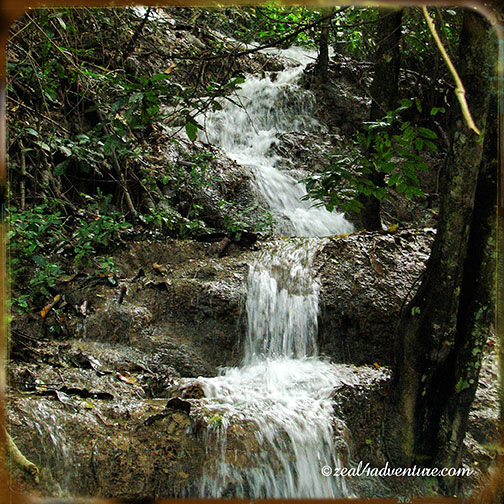
A forest trail leads the top of the falls where you’ll find the source of the Kuang Si in a stream.

The surrounding area was developed into a lovely park with bridges, a picnic area with tables and even a changing room for those wanting to swim.  My journey to Kuang Si wasn’t as easy as taking a tuk-tuk to the entrance of the park.

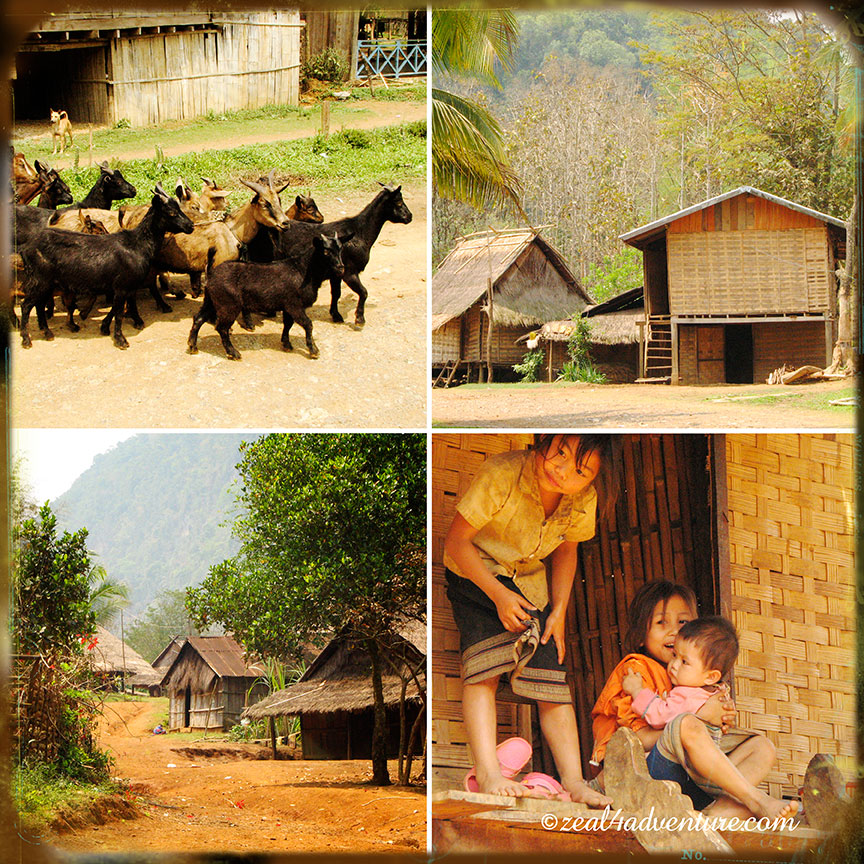
It started when a van picked us up and dropped us off (an hour later) at a Hmong community.

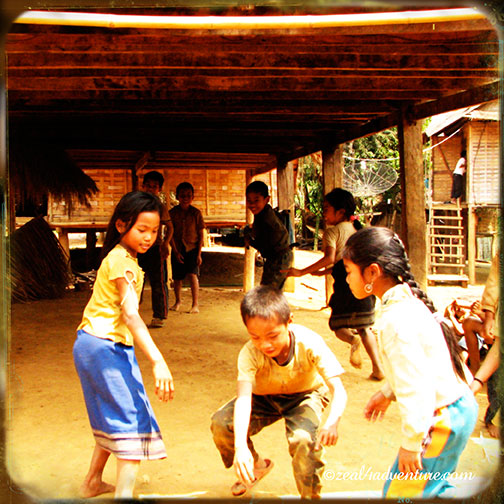
There we learned the difference between the Hmong as compared to the rural Lao lowlanders.  To get to the falls, we trekked through paddy fields and pineapple gardens before entering a rain forest.

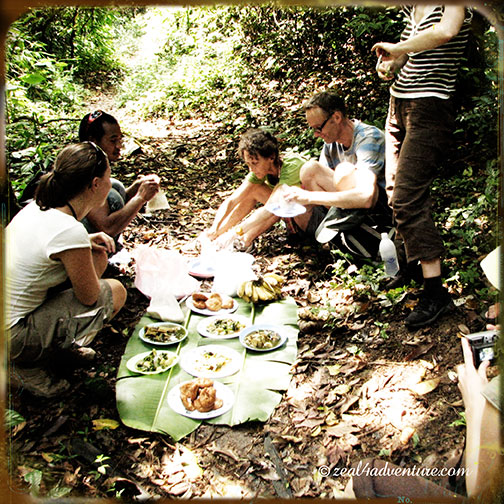
Halfway through our trek, we stopped for a simple Lao lunch prepared by the outfitter.

About 3 hours later, the hilly trail took us to a stream that we soon realized was the stream feeding the Kuang Si.

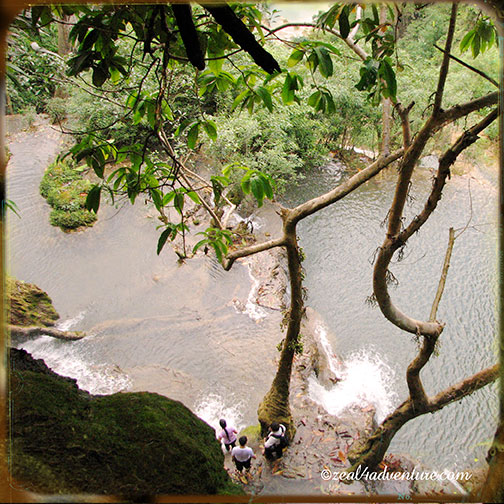
The view from the top looking down the pool below was spectacular.  Expecting to approach the falls the regular way from below, the realization of ending at the top was a wonderful surprise and quite memorable, truth to tell.
I made this trek 4 years ago with Green Discovery.  Spare an extra day for this if you can, it’s worth the effort.