Exploring Abuan River

I am not one to pass up a chance to an adventure so one February evening, I found myself on a bus with 2 other friends, en route to Ilagan, Isabela.  We were to test run an eco-tour package intended to preserve the Sierra Madre forest and wildlife.
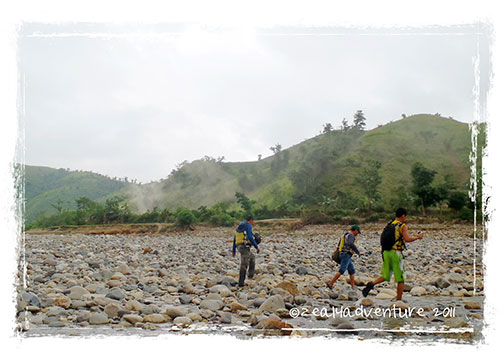
Abuan River is located at the Northern Sierra Madre National Park — the widest remaining tropical rainforest in the island of Luzon owing to its rich and diverse ecosystem spanning from coral reefs to beach forests.
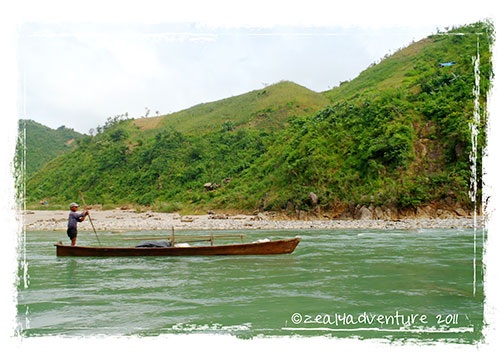
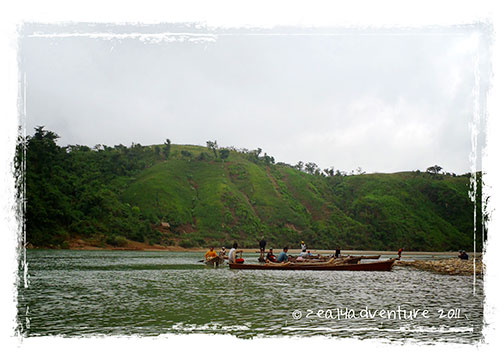
For decades the river has been the route of “bugadors” (timber haulers) to transport illegally cut logs from the forest to Ilagan.  To give these timber haulers and their community an alternative livelihood, World Wildlife Fund-Philippines (WWF-Philippines) together with Coca Cola Philippines and the local government of Ilagan identified the river as the next ecotourism destination with rappelling, waterfalls trek, kayaking and even seasonal whitewater rafting as potential activities.
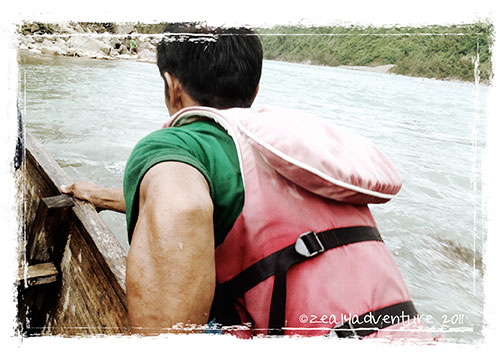
Skillfully navigating our boat through rocks and (sometimes) strong rapids.

Skilled in the river, the “bugadors” were our boatmen, river and trekking guides while their wives were tapped to prepare the food.
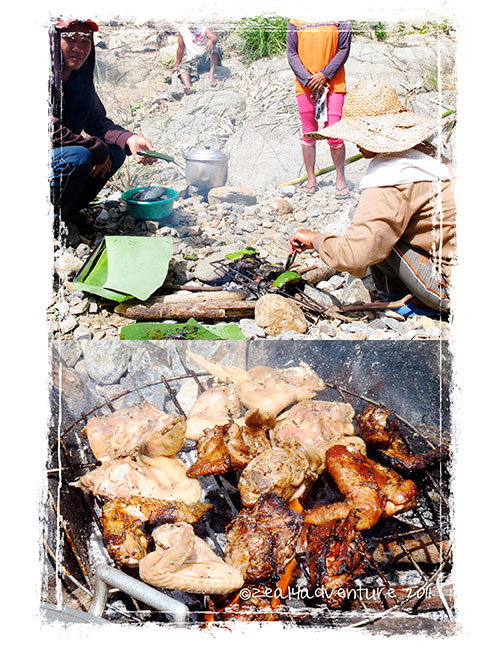
Ladies in charge of lunch.

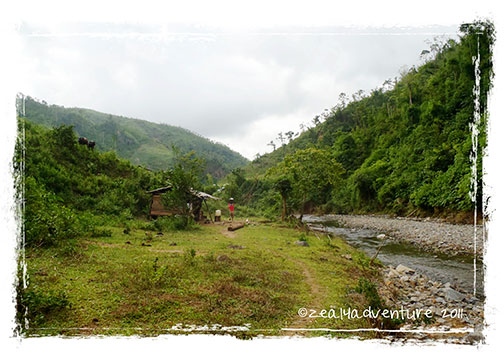
Two hours navigating through the rapids and rocks and we arrived at the start of the trail to Sulimanan Falls.  Getting there was an easy 30 minutes trek that passes through rivers, hills and grasslands.
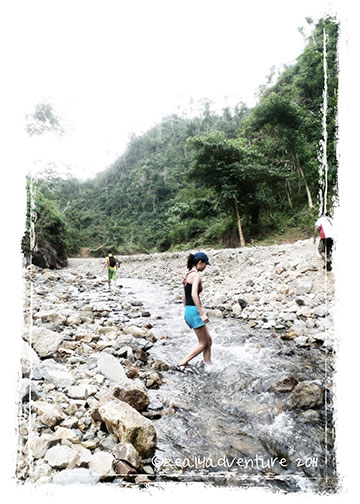
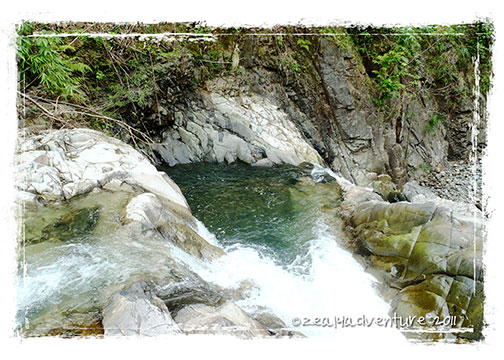
At the end of the trail lies a 3-tiered falls.
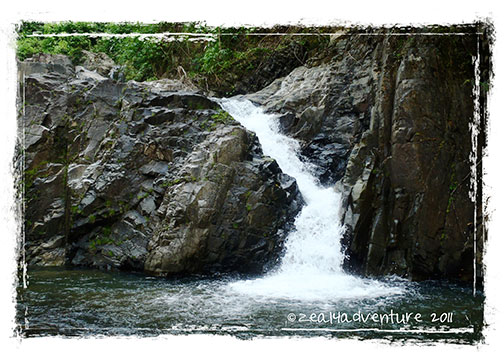
First falls
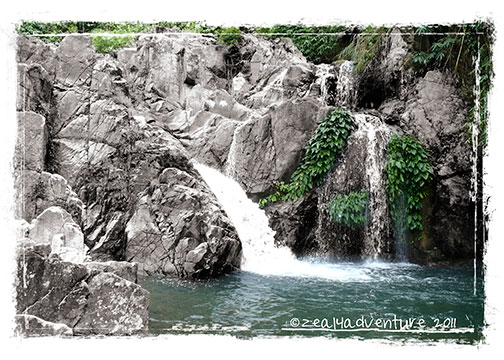
2nd falls

Pool from the 2nd tier falling to the 1st tier
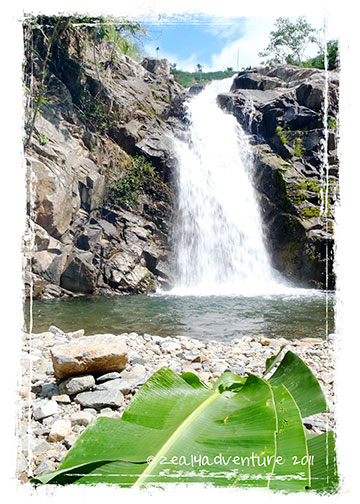
3rd falls where we had lunch

Getting to the 2nd and 3rd tier required a bit of scaling and bouldering with the help of ropes provided by AEPI, the outfitter tapped to develop the tour.  Lunch was prepared on the 3rd tier beside the falls.
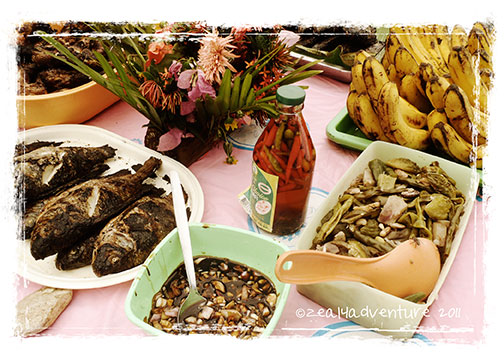
Simple but mouth-watering!

That’s what I call innovation.   🙂

After lunch, the next agenda was to rappel down to the 2nd tier.
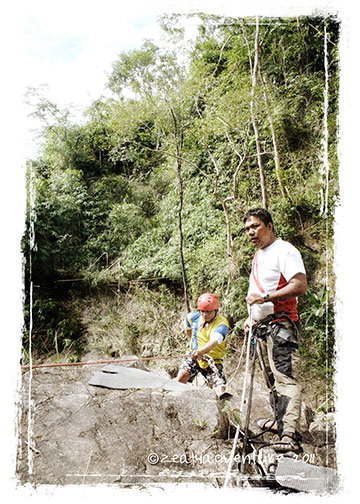
Getting into position:  Argel and Herbert — our belayers.
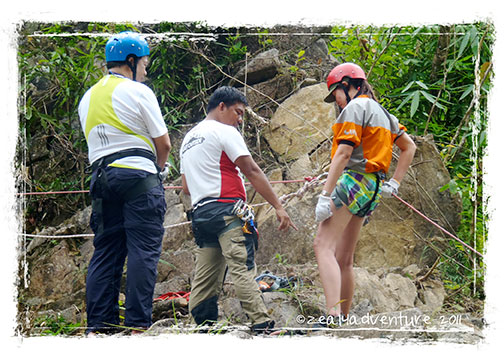
Not exactly my thing, I was not happy to learn of this but with a little prodding, gamely went along with the agenda.
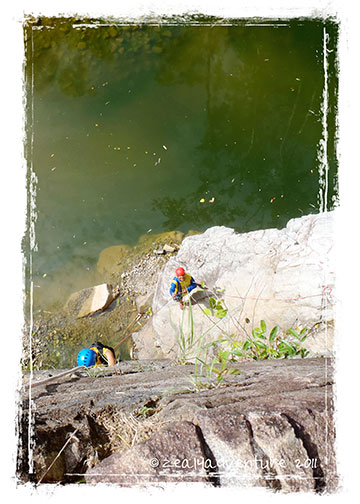
I know that I am gradually overcoming my fear of heights when it took me perhaps only 20 minutes to muster enough courage to just go for the 60 ft. descent with only some distress and perspiration while at it.
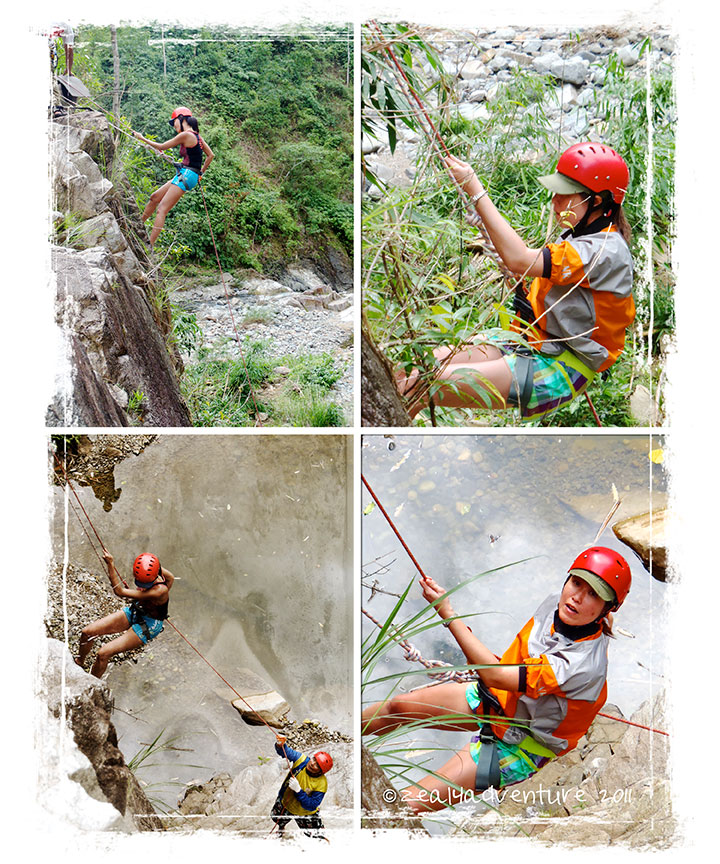
S and I rappelling down.

Either that or I am getting better at throwing caution to the wind.
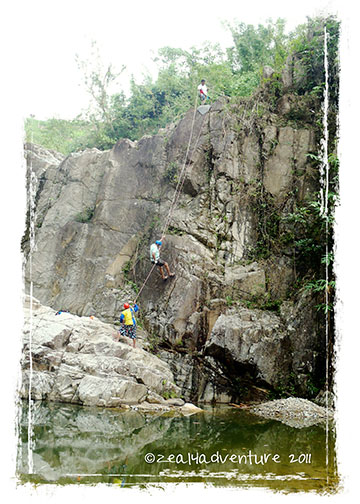
After witnessing a few of my rappelling jitters in the past, A gave me a big hug and told me he was proud of me. Heck!  I am proud of me.   🙂

Caramoan Adventure

Credits: Quickpage by Sarah H from JS bloghop 2010.

An adventure it was indeed.  Not in a thrilling kind of way but more precarious I’m afraid.

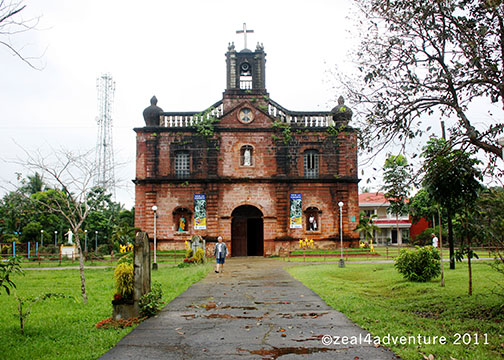
St. Michael the Archangel Parish

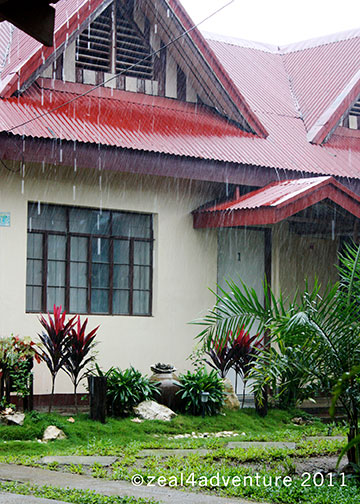
It started as a simple exploration of the town and while there, we were met with rains so we waited it out at River Inn,

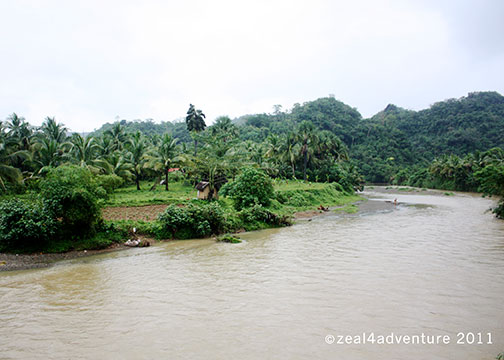
the nearest hiding place when it poured.  We watched the river swell as the downpour continued and seemingly refusing to let up.

We decided to make a go for lunch the moment it waned.  Needless to say, we arrived Sea Porch soaking wet.

The food was good at least so there were some delightful moments that transpired during the day.  After lunch, we decided that it was best to go back when the rain started to pelt down once again.

We hired a tricycle but halfway through, we saw the resort’s van stranded with newly arrived guests.  The river overflowed (which is a common thing, they say).

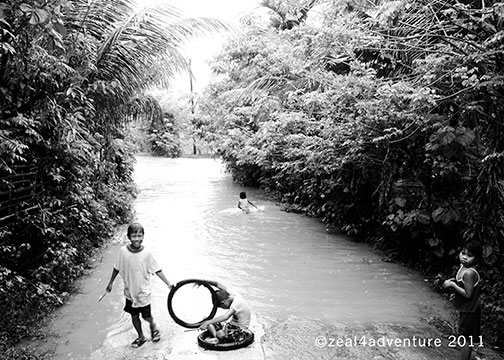
Children without a care in the world.  So used to it, they saw it as their playground.

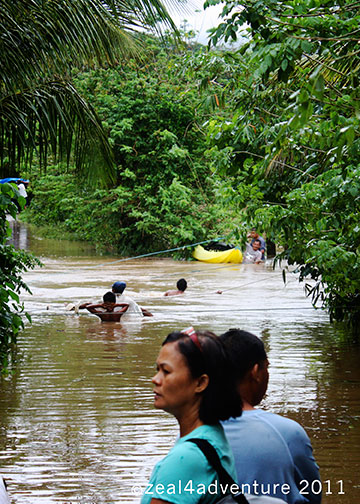
It was deep and the current was strong, we couldn’t go further… at least not the tric, so we paid our driver and let him go.  At this point, we were so wet and weary that the idea of a dry, cozy cabin seemed so inviting.  We were told that it would take a while for the flood to subside, my heart sank.   I thought it funny that the resort sent a kayak to get us to the other side.  What?!? The current was strong; I was iffy.  If the kayak topples (which was very likely), my thought balloon goes, “there goes my camera”.  Desperate for a hot shower, I decided to bid my “rebel” goodbye and went for it.  All the worry was unnecessary – as I said, this happens often and they have used the kayak to get them across countless times.  They expertly maneuvered the kayak without us having to paddle a single stroke.  Our only task was to sit upright and not move.  It worked.

I remind myself often to throw caution to the wind and not to underestimate the deftness of Filipinos (or anyone for that matter) especially when caught in a situation.

In no time, we were curled up in our cozy little cabin — dry, warm and clean.  The rain eventually stopped, the water calm once more and the sun dared to peek out at one point as we traveled back to Naga the following day without incident.

A Preview of the Caramoan Islands

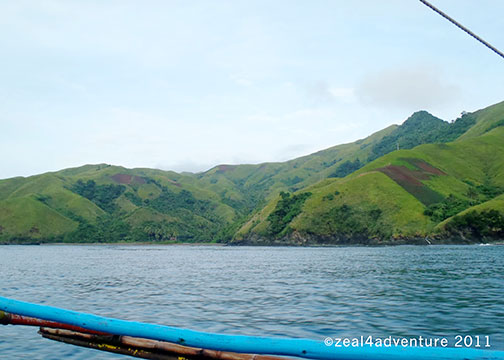
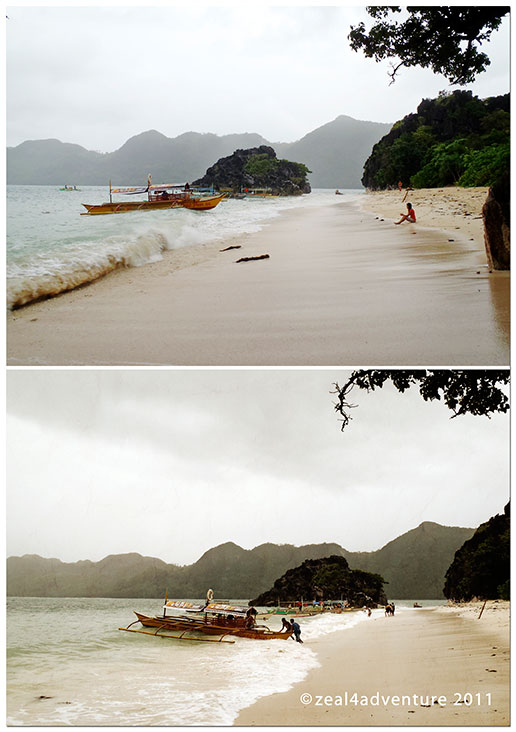
December and a typhoon looming at that is definitely the wrong time to explore the islands of Caramoan.  This however did not stop us…  “no guarantees”, we were told.  Do you believe in the power of prayer?  The weather held up for the most part.  We were limited though to 3 nearby islands, the waves were strong thus preventing us from exploring more islands much less snorkel.  But for bad weather, this was answered prayer.  Presenting the three:

Matukad Island

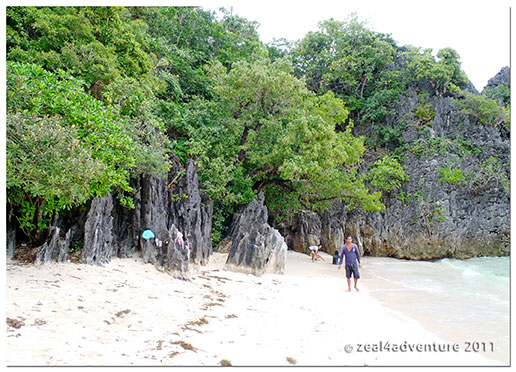
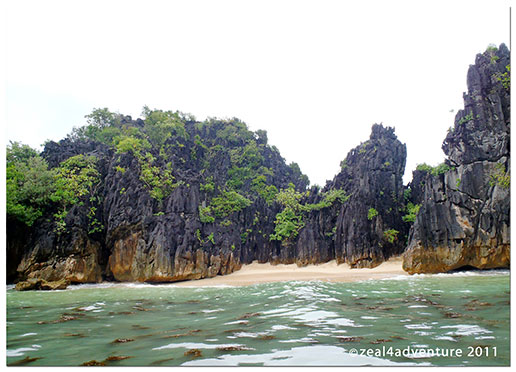
Beautiful stretch of powdery white sand beach walled with limestone cliffs.

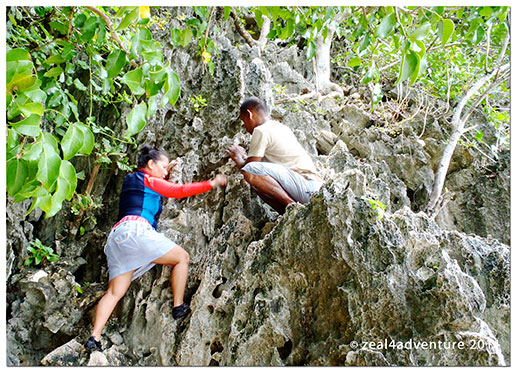
At one end of the beach is a cliff that many climb to view the lagoon hidden behind.

Thought it would be wise of me not to climb that cliff due to a back injury I was nursing at that time but it did not stop me from being envious of friend S who got to see the lagoon.  Perhaps to make me feel better, she said I’ve seen better…    🙂

Hunongan Cove

This private cove beside Gota Village was developed to house the booted-out contestants of the Survivor series – what a nice reward, me think.

They have 14 pretty cabana that were not operational at the time of our visit – repairs were being made perhaps also in preparation for the next “Survivor” ocular.  Lunch was served there hence the visit.

Like Matukad, it has a stretch of powdery white sand and it being a cove is blessed with a much tamer shore.

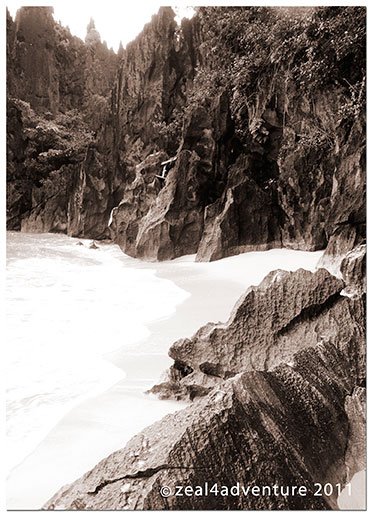
Also like Matukad, it is walled with limestone cliffs but unlike Matukad, this does not have a lagoon anywhere.

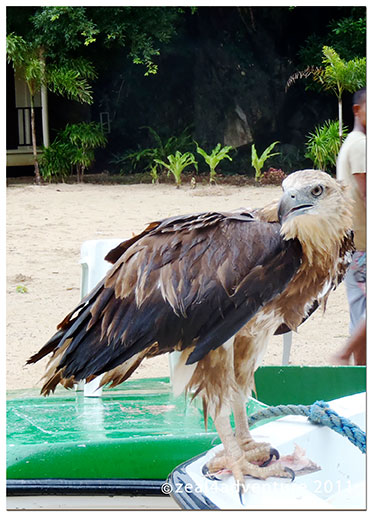
Philippine Eagle

It has a regular visitor though whom they feed when around.

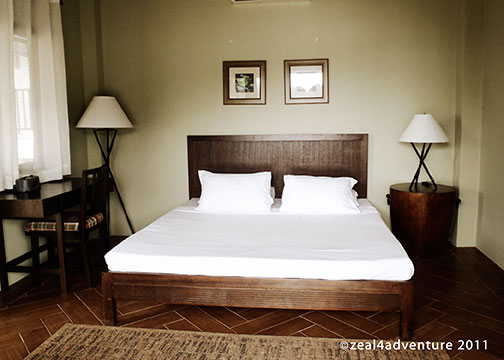
The caretakers opened a cabana, which I assume would be typical, for us to take a look.

This will cost P6,000+ a night if they were operational.  No thanks!  Our charming cabin at Gota Village albeit more basic was P3,500 a night only.

Minalahos Island

We were supposed to head back already but were curious with this one particular island with beautiful jagged edge formations so we stopped to take a look.  Glad we did.

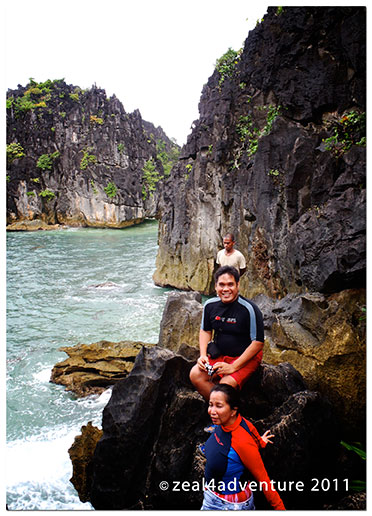
The cliff was easy enough to climb and we were rewarded by a stunning view of the other side.  The boatman said that during calm days, it’s a good snorkel and kayaking area.

With the little that we saw, I can deduce that Caramoan is indeed a remarkable paradise that reminds of Palawan and even to a certain extent, Halong Bay minus the junks.  No wonder it has become the choice of many Survivor franchise.  The place is quite enchanting.

The Upside of Being Wimpy!

Credits:  Papers and elements by LivE Designs’ You are Awesome kit — AwwwSome Blue, Color Me Happy and Floral clusters; Frame by Moninda Fall Meditation Frame 4 with shadow.

To finally be on our way to Caramoan was like a project coming to fruition.  This trip was supposed to have happened a decade ago, prevented however by various reasons – the remoteness and the logistic nightmares being some of the major ones.  There were so many other trips so I placed Caramoan in the back burner until Gota Village Resort came about.  Yeah, sometimes I can be a wimp!!  An attempt last summer still didn’t fall through because they were closed for a Survivor shoot.  “Ok, maybe Caramoan really isn’t for us”, I thought.  But late last year, without a plan yet for the Christmas break, I attempted to inquire for rooms and lo and behold, I got an affirmative – but not without a side trip, as you probably know by now.

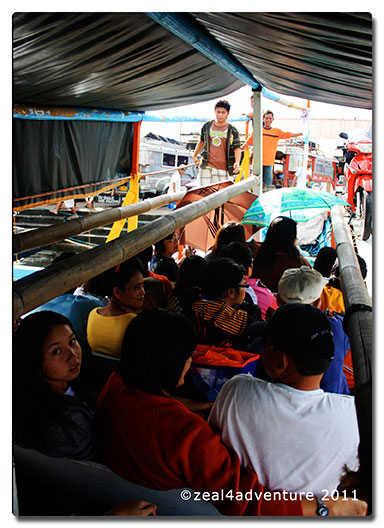
From CWC, we hired a van and headed to Sabang Port.  At the port, we took this boat so cramped with passengers to Guijalo Port.  2-3 hours later we got into a van provided by the resort and another 30-45 minutes, we finally reached our destination.  Not exactly a breeze but imagine if you took public transport all the way… which would be the case if we had gone a decade ago.  And that, my friends, was the reason this trip only happened now.

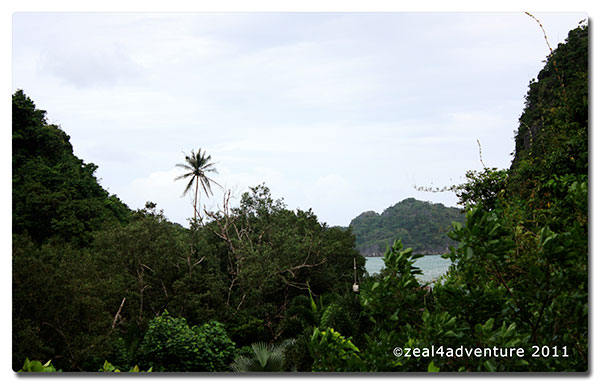
Also known as the Caramoan Peninsula, it is a group of islands isolated from the rest of Camarines Sur and like many remote islands, these included, they remain unspoiled by regular tourists.

December however is not exactly the right season to be exploring the islands, the waves prevented us to explore even the island across the resort.

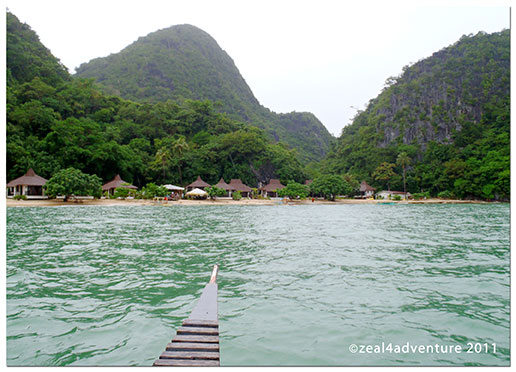
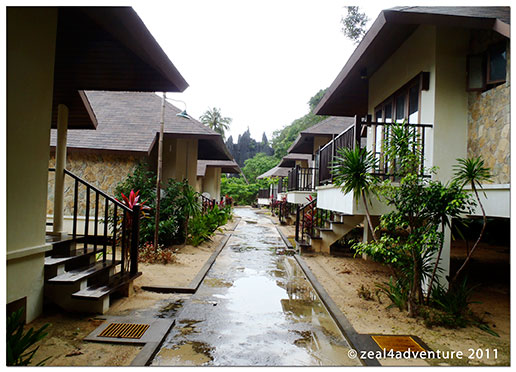
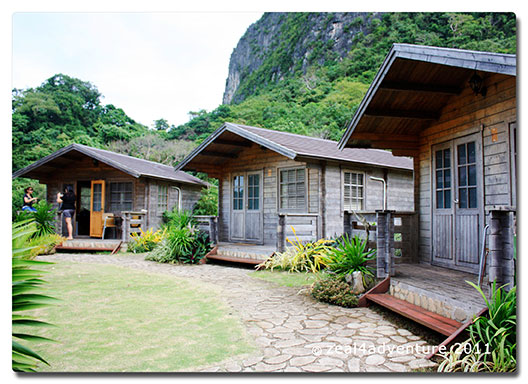
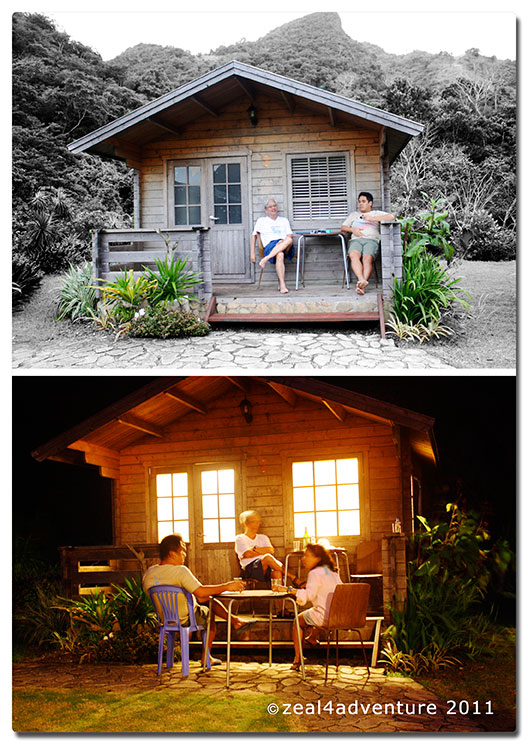
I have to say, this resort is charming!  No beach in sight but as you enter, the wooden cabins and the mountains in the background is an obvious prelude to the charm.

The deck at the reception area allows a peek of the ocean on one side

The cabins from the deck at night.

and the other a bird’s eye view of the cabins.

The dining hall from the beach.

Walk further to the dining hall and you will see the ocean emerge inch by inch and before you know it, right in front of you is a breathtaking view of the ocean and its nearby islands.

It’s like being in the mountains with the beach just around the corner.

As with CWC, the Provincial government of Camarines Sur operates Gota Village Resort, which makes transfers from CWC much easier than doing your own logistics.  In fact, for large groups, one can organize for a fast craft to shuttle you directly to the resort.  It will only take an hour.

It is also said that the resort earned for the Philippines the title of “Ecotourism Destination of the Year” in the 2009 edition of Nature – one of France’s biggest travel fairs.  It was also with France that Caramoan first got its big break.  The French franchise of the reality show “Survivor” chose to shoot one season here.  Many more franchises of the “Survivor” shows followed after that… Sweden, Israel, Bulgaria and Serbia.  And while we were there, they said that they would close again soon to make repairs in preparation for the next ”Survivor” ocular.

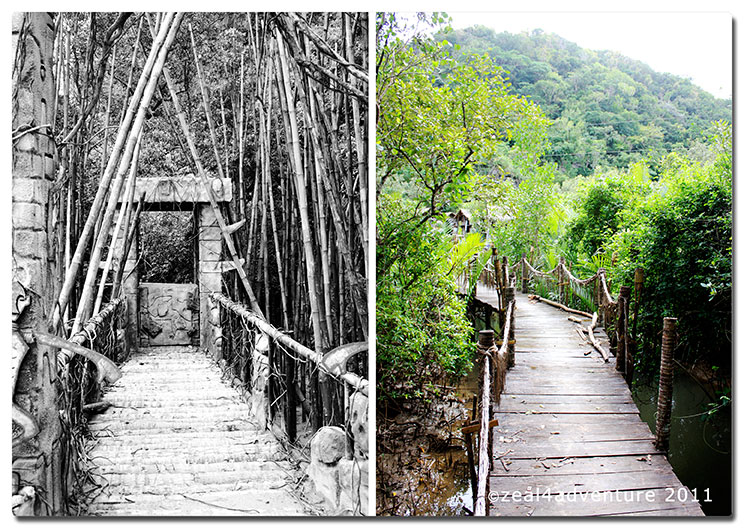
The different bridges connecting one tribal council to another.

It is on the adjacent beach called “Gota 2” that they built the different “tribal council” sets.  Not exactly my cup of tea ( I don’t follow this show) but the reality is that they pride themselves of being the favorite of the “Survivor” series… and why not?  Sadly though, they rave more about this when there is so much more to rave about — like their beautiful islands and breathtaking cliffs, perhaps?

Given the rainy season, the crowning point of this trip for me was spending most afternoons enjoying the mountain setting with some wine and cheese (that we brought with us) on our cozy little porch chatting away till dinner called.  Precious.

Useful Info:

Gota Village Resort
Address:  2F Bldg. 11 La Fuerza Plaza Compound,
2241 Don Chino Roces Ave., Makati City
Tel. No.:  +632 817-0831 or +632 710-9086
Mobile:  +63 928-308-3969
Email:  gotavillage@gmail.com or infocamsur@gmail.com

Sulyap

Credits:  Template by Jen Caputo’s ckapr08; Papers by LivE Designs Sing 4 Spring paper kit (PP4, PP6 and SP6)

A weekend road-trip just before it ended was capped by a wonderful lunch at a café oozing with charm.  Highly recommended by Jorge and Amor Bondad (of Sitio de Amor), we headed to Sulyap Café and Art Gallery before heading home.

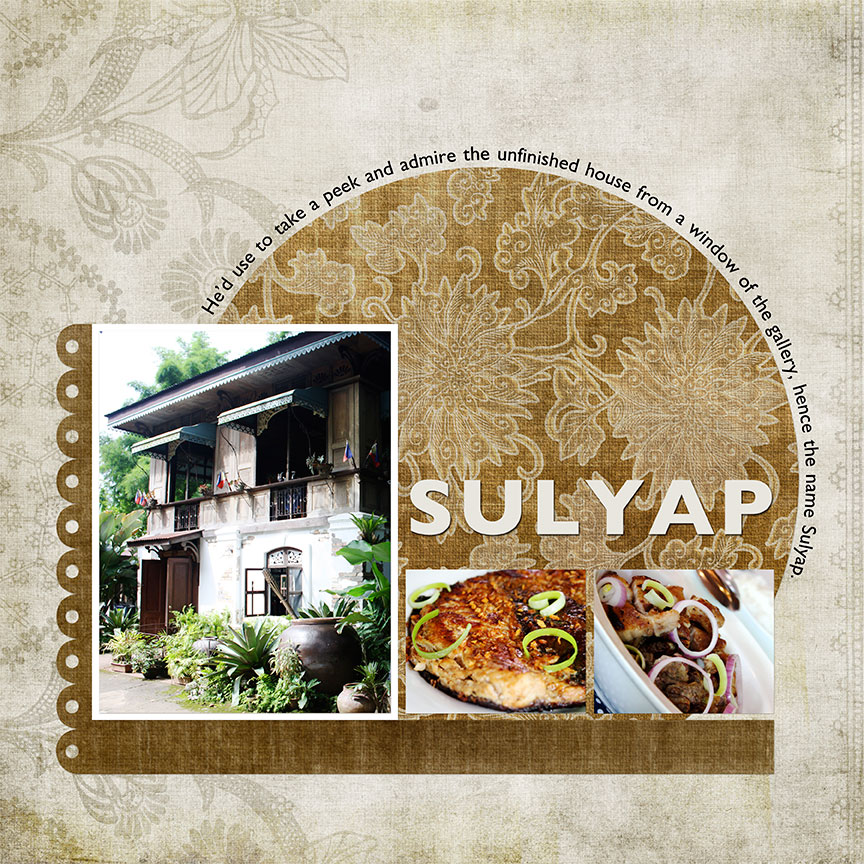
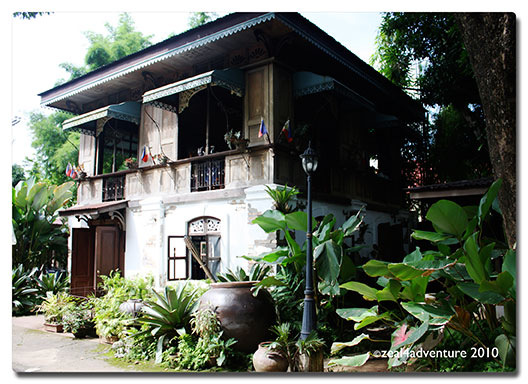
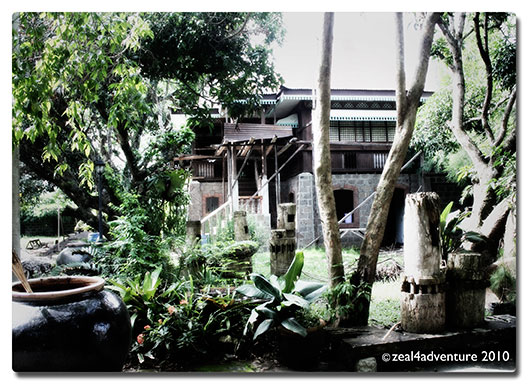
The café is a 2 story Spanish colonial house transported from Quezon and restored piece by piece at the Cocoland compound.

Gorgeous ceiling detail

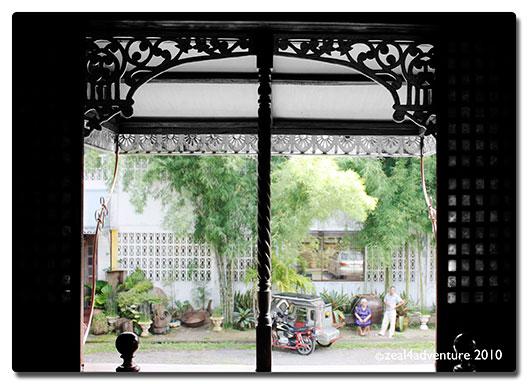
Lovely window details, a trademark of the old Spanish houses — overlooking the gallery.

Did I say charming inside and out?

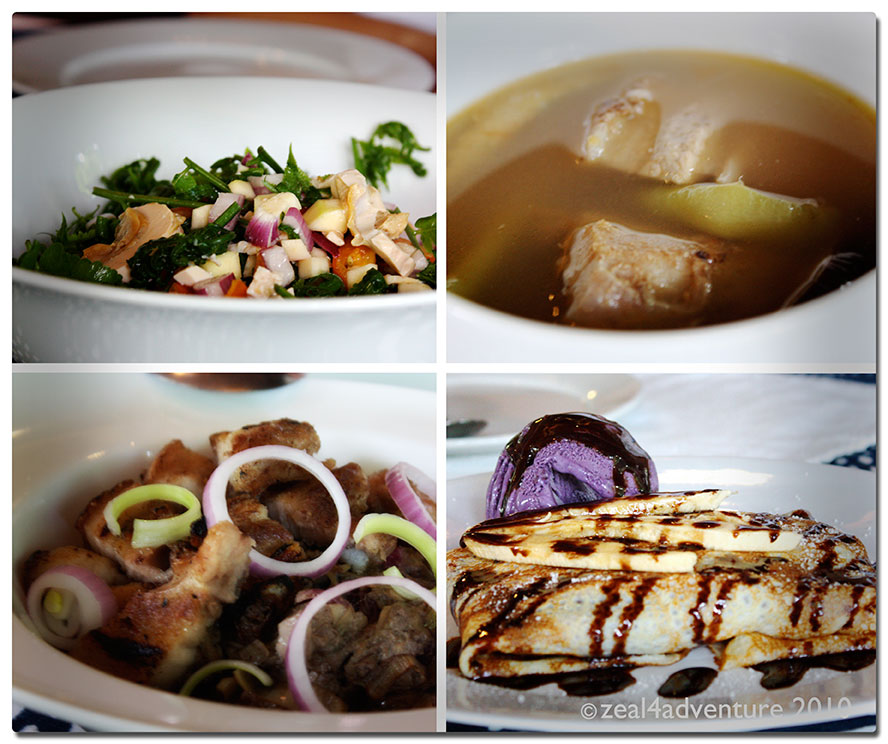
Clockwise:  Enseladang Pako (Fiddelhead fern salad), Sinigang na Liempo, Banana crepe, Kulawong Puso ng Saging (an original recipe of San Pablo city).

And the food… quite good and could merit a return in the future.

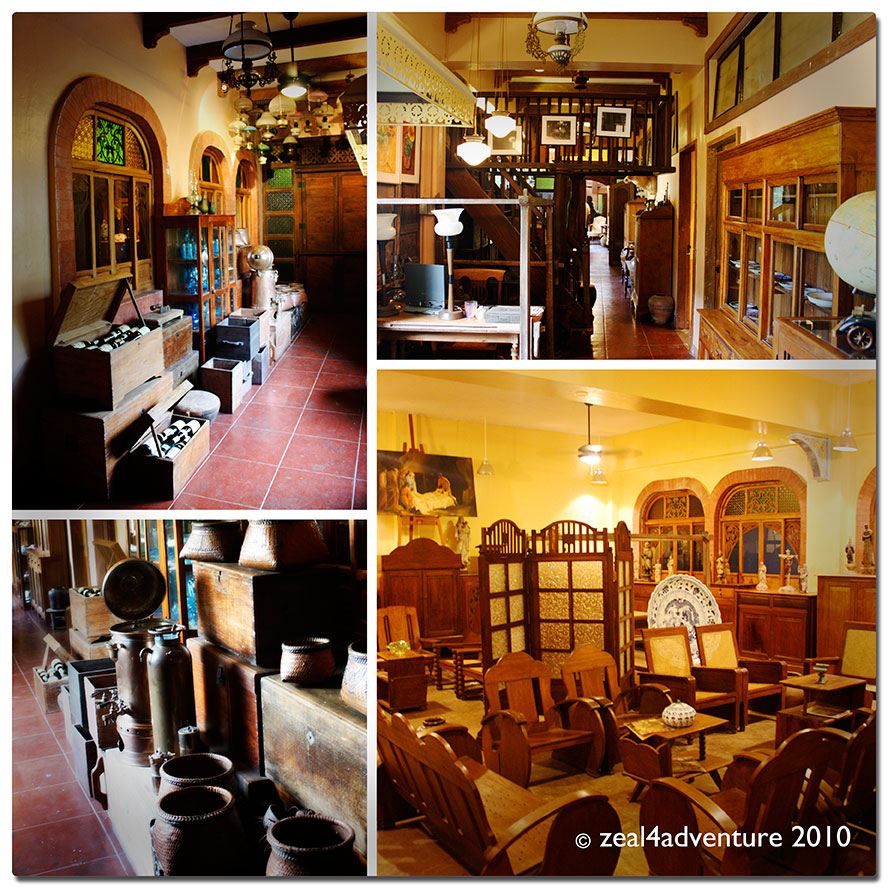
Across the café is the art gallery, which had pieces in various sizes, from furniture to plates and other collectibles.  This building used to be the Cocoland Hotel before proprietor Rommel Empalmado bought the compound.  He also recounted that prior to it being a hotel, it was a South Luzon College, which explained the school-like structure.

He also disclosed that when he was restoring the old house, being a lover of anything old, he’d use to take a peek (sinusulyap – sulyap in Filipino) and admire the unfinish house from a window of the gallery across, hence the name Sulyap.  Quite an endearing story, me thinks.

Rommel is currently building a bigger house in the other part of the compound, this time a bed and breakfast that he hopes to open by December – so watch out for this new lodging alternative in the Viaje del Sol circuit.

Definitely a gratifying end to our weekend getaway.

Getting There:

On the Maharlika Highway coming from Manila on the way to San Pablo, you’ll hit a fork, take the left road (that’s Colago Ave.), which would take you off the highway and lead you to San Pablo proper. You’ll come to an intersection with a stop light (Puregold Supermarket should be on the right corner), turn left on Cosico Ave.  Turn left 2 or 3 streets after (there should be a sign of Sulyap on the right that points to the street where you should turn).  The road will lead to the gate of the Cocoland compound.

Sulyap Cafe and Gallery
Brg. Del Remedio, Cocoland Compound,
San Pablo, Laguna
Tel no:  (049)562-9740 / 582-9735

Of Preservation and Livelihood

We were running late, directions given were not very clear and so we took a wrong turn and ended up in Sampaloc Lake.

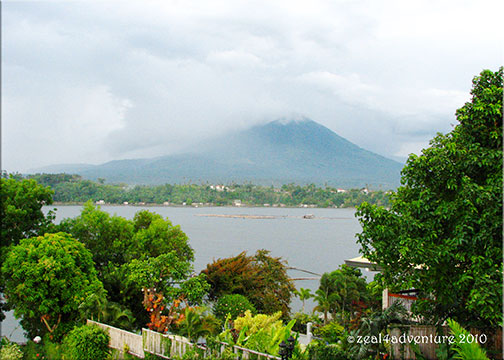
Sampaloc Lake taken from the balcony of Tahanan ni Aling Meding on a previous visit.

When we finally arrived at Sto. Angel, we saw our friends waiting by the roadside.  We turned into a parking lot and hurriedly parked, exchanged pleasantries and off we went, following Mang Tano, on a short trek as lunch was waiting for us.

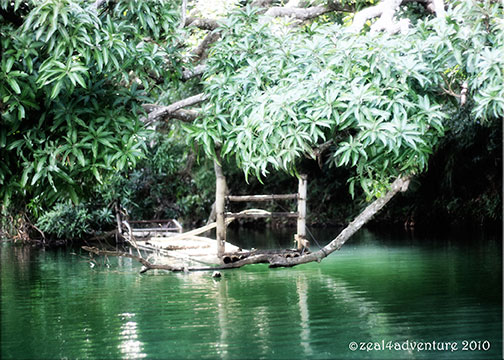
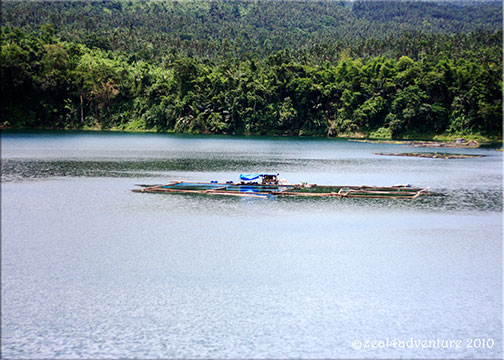
It was an easy trail and about 15 minutes later, the trail revealed a blue-green lake that is quite captivating.

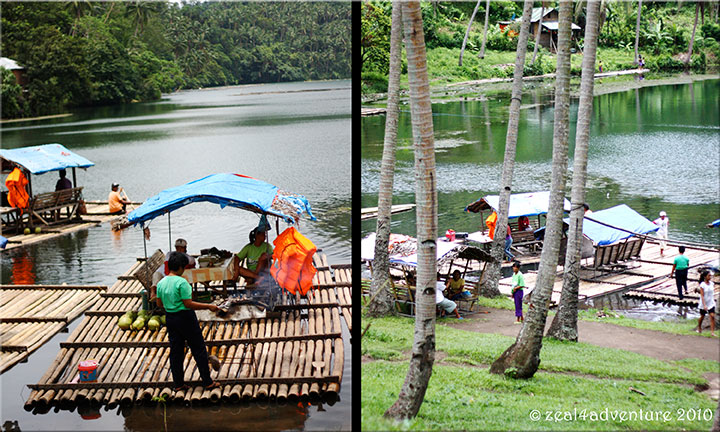
There were rafts positioned at the banks, one of which was reserved for us.  One can book with Aling Sion, Mang Tano’s wife a tour of the lake for P180 and if you add another P180, you get to enjoy a delectable lunch of

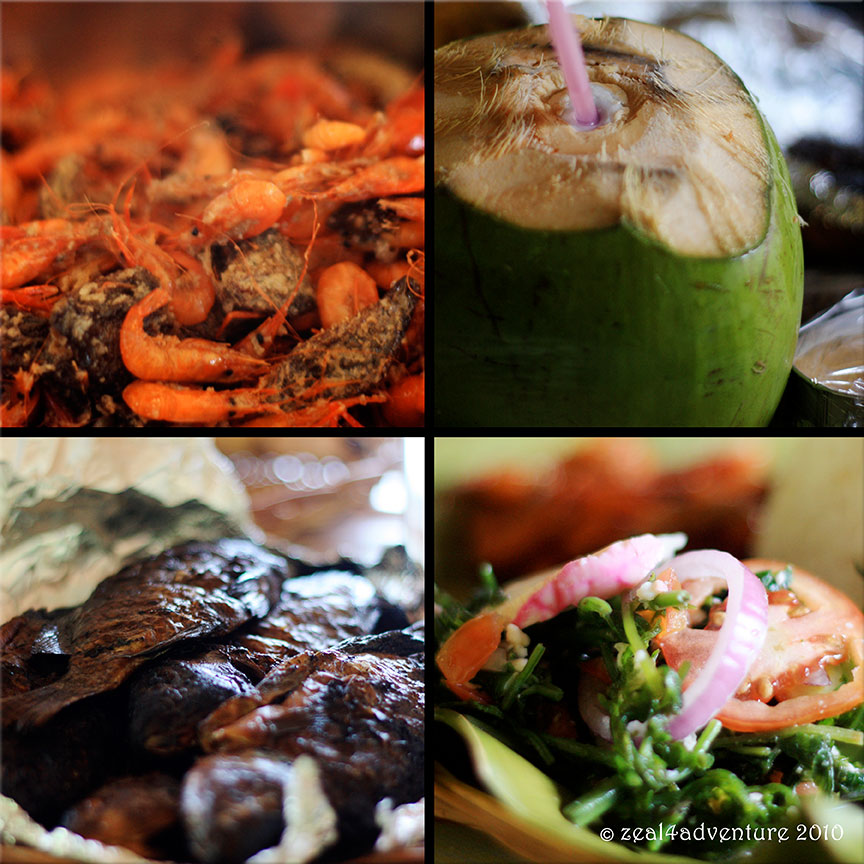
Clockwise:  Ginataang hipon, buko juice (coconut juice), pako (fiddlehead fern) salad, grilled tilapia.

pako salad, grilled tilapia and ginataang hipon (shrimps in coconut milk), all caught from the river and cooked fresh.

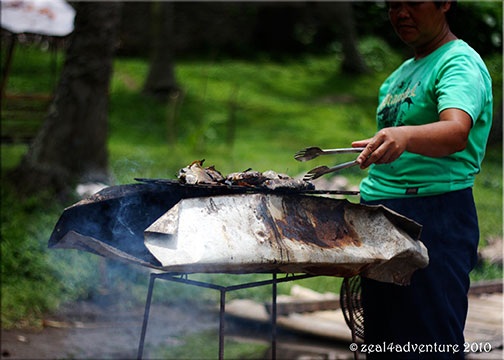
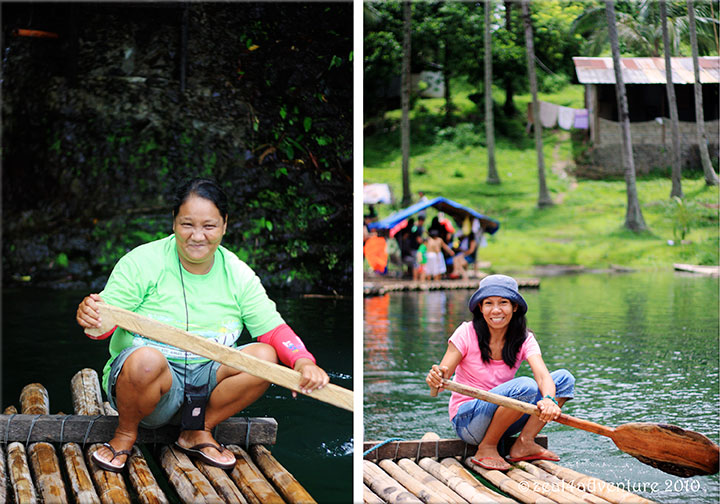
All meals are prepared by the fishermen’s wives which make up the Samahang Mangingisda sa Lawa ng Pandin (loosely translates to “Association of the Fishermen of Lake Pandin”).  The association was established as part of a preservation effort and at the same time help the residents earn a little bit of income on the side with the wives attending to the tourists.

With the help of Mandy Mariño, the fishermen’s wives organized the “Tour of the Pandin Lake” personally paddling the rafts.

Today, it is the most pristine of the 7 lakes of San Pablo.  Although there is nothing much of the tour, it just takes you around the lake, stopping at a short uphill trail that leads to clearing where one can take a peek at its twin, Lake Yambo.

Yambo’s name was derived from its famous lengend of 2 lovers, Yambo and Pandin.

Both lakes are teeming with tilapia, carp, catfish, milkfish, shrimps and snails.

They are also suitable for swimming but just to avoid the hassle of changing afterwards, we skipped it and just enjoyed the lake, the company and the delightful lunch.

Note: This tour is likewise part of the Viaje del Sol route.

Getting There:

Along the National Highway going towards Lucena, you’ll reach a fork somewhere along San Pablo, take the left.  This will lead you to the town proper.  Go all the way till you reach the city hall, go pass the rotunda until you reach Sto. Angel.  Watch out for a sign. Ask around if you don’t see the Lake Pandin sign that would lead you to a parking lot.  The residents are very helpful and will point you to the right direction.

Contact detail:

Aling Sion
0929 9789565


A Glimpse of Beijing’s Ancient Neighborhoods

A hutong is an architecture and structure unique to Beijing and visiting one of this (either by walking or a rickshaw) is one of Beijing’s attractions especially to people wanting to know more about its history.  Going around a hutong will let one experience the remnants of Beijing’s ancient culture.

In old China, there were clear definitions of what streets and lanes are.  A 36-meter-wide road was called a big street while an 18-meter-wide road was called a small street.  And a 9-meter-wide lane was called a hutong.

According to history records, these hutongs came to existence during the Yuan Dynasty when the Mongols – led by Genghis Khan, occupied Beijing.  The city had to be rebuilt after it was demolished during the take over, thereby creating hutongs.  The word “hutong” is Mongolian in origin, which means, “water well”.  People tend to gather where there is water so with the digging of new wells; new communities are not far behind.  Hutongs are alleys formed by lines of “Siheyuans” (traditional courtyard residences).

Hutongs were established surrounding the Imperial palaces throughout the Yuan, Ming and Qing Dynasties.

Since the mid- 20th century however, new roads and buildings have replaced many of the hutongs.  Some hutongs though still survive today, thanks to their local government’s protection policy.  Most in existence today date from the Ming (1368-1644) and Qing (1644-1911) dynasties.

Walking through the hutongs, it is common to see groups of elderly citizens playing cards, mahjong or Chinese chess together.

Also important to hutong life is the traditional foods sold in carts or small stalls.  These ancient neighborhoods today provide a glimpse of the life in old Beijing.  To live in a hutong would mean no baths and toilets in their homes.  Public baths and toilets are provided and imagine having to trudge your way to the toilet in the middle of the night at below zero degree.

And yet there are still many living in these ancient neighborhoods, perhaps it is the way of life these folks are accustomed to, real life as it has been for generations.


Similan Diving

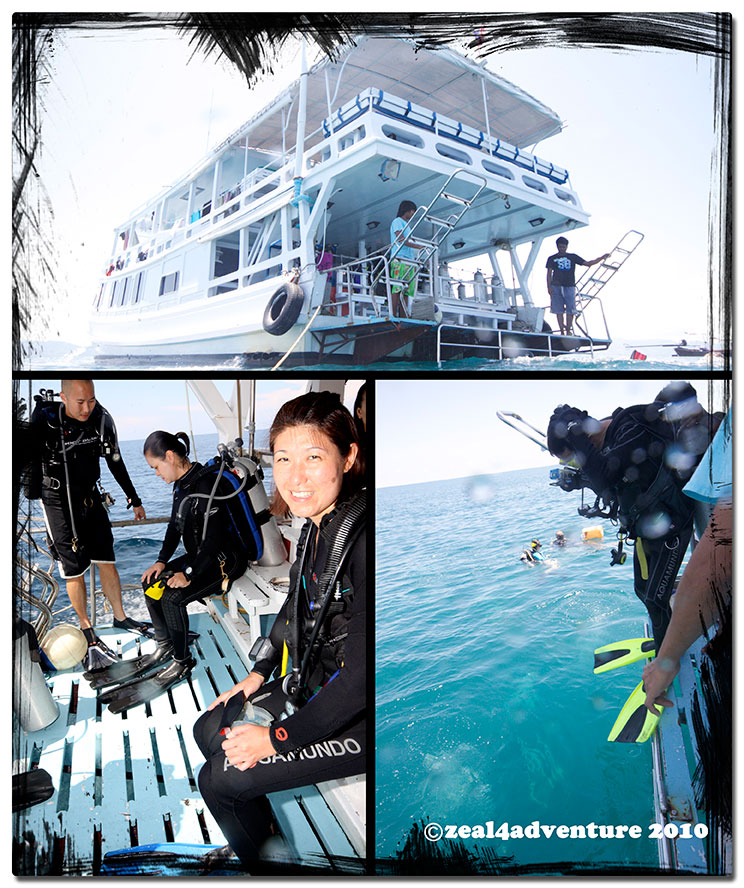
Clockwise:  Me all set to go, MV Koon, a friend about to do the giant stride.

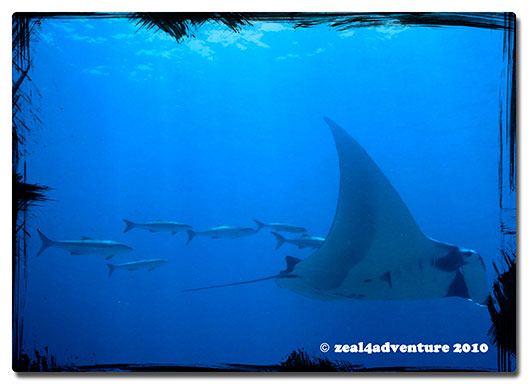
I could hear someone enthusiastically banging his tank and I instantly knew there was something major up ahead.  I examined my surroundings and there it was, gracefully gliding through the great expanse of the sea, coming toward our direction.  Yes, this was what we came here for.  And suddenly the exhaustion vanished.  A sense of calm never fails to envelop me whenever I encounter this gentle giant gliding through, perhaps enjoying the attention too.

Strong currents hit us when we reached Ko Bon Pinnacle from the blue.  It pays to be fit because just reaching the Pinnacle is a work-out all its own.  This near vertical slope is where manta rays are frequently spotted playing.  There are a couple of cleaning stations on the reef and manta sightings are almost guaranteed.

This occurrence will continue until the next day, in different dive sites, mostly in the northern part of Similan.  It was awesome and is always a privilege being with them in their domain.

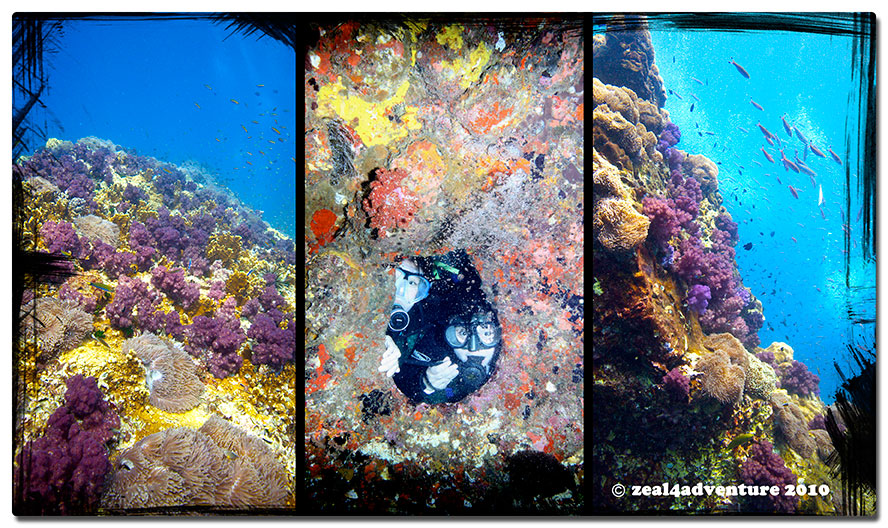
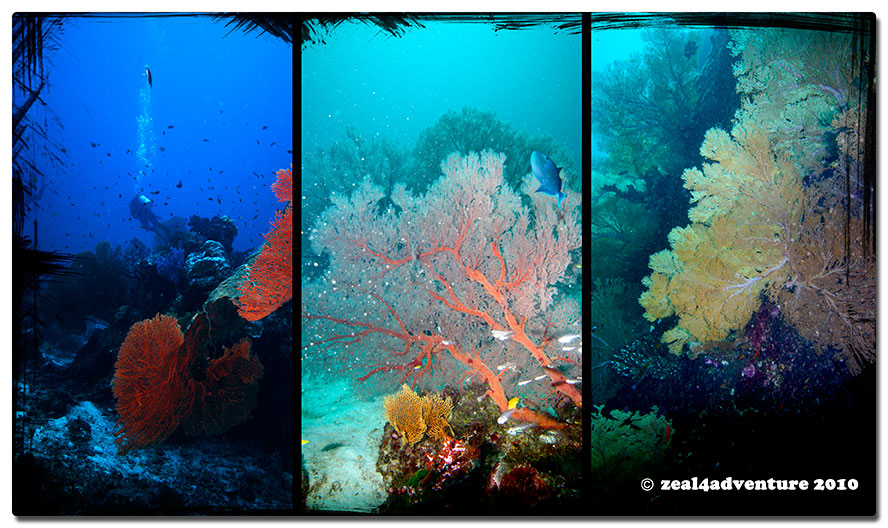
The Similan Islands was declared a national park in 1982 and is rated top ten among the world’s dive destinations.  The impressive boulder formation also continues below the surface with diverse landscapes of canyons, boulders, coral gardens, caves and walls.  It is also home to an amazing variety of marine life.

The southern coast consists of those smaller islands (described on previous posts) that are numbered from one through nine and is balanced by the larger northern islands of Ko Bon for its beautiful piece of landscape, Ko Tachai with her attractive sandy beach above and plateaus beneath with probably the most colorful coral gardens in the park.  Richelieu, the 3rd island of the south was also a highlight of our dive trip.

A relatively small dive site and a bit too crowded with divers all vying to see the huge extent of marine life in the area. Whale Sharks are usually sighted during the months of April and May but for some reason, they elude me once more.  And so my pursuit of that elusive butandings continues.

Here’s some underwater snapshots to take pleasure in:

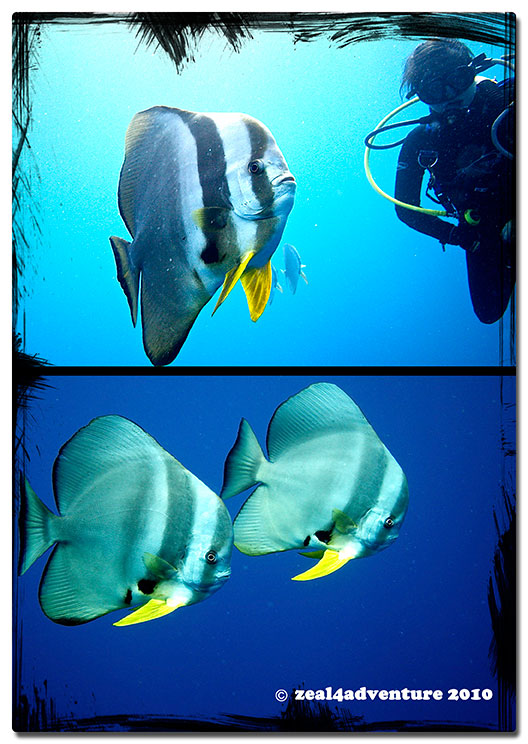
Huge Batfish

Cuttlefish

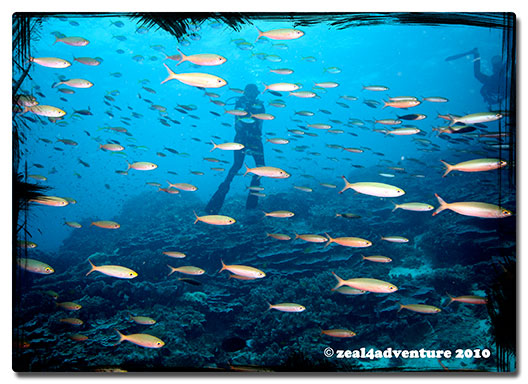
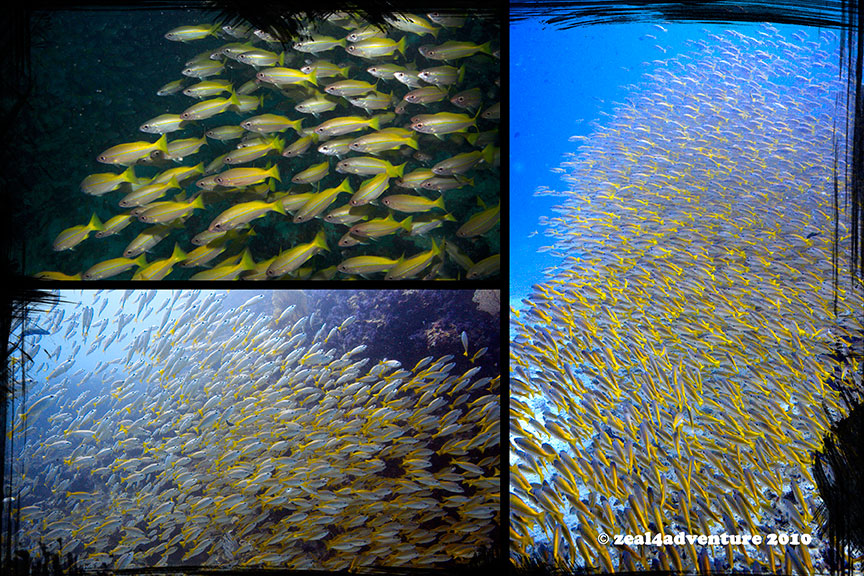
Yellow fusilier

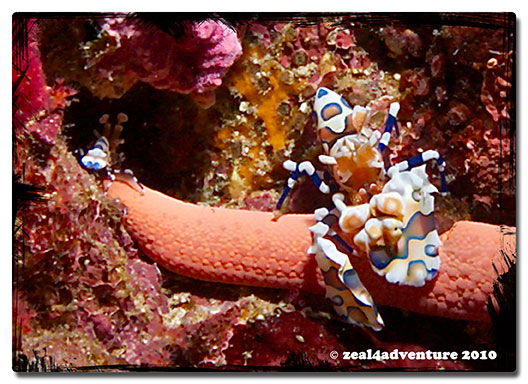
Harlequin Shrimp

Lionfish

Moray eel

Octopus

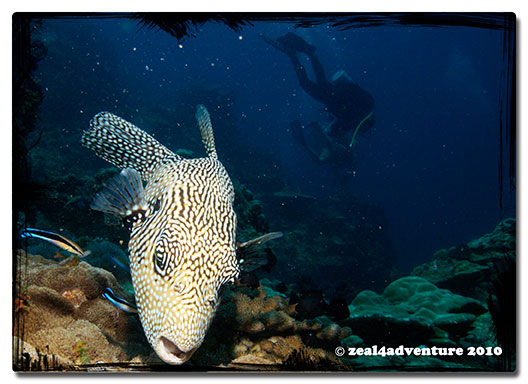
Puffer fish

Seahorse

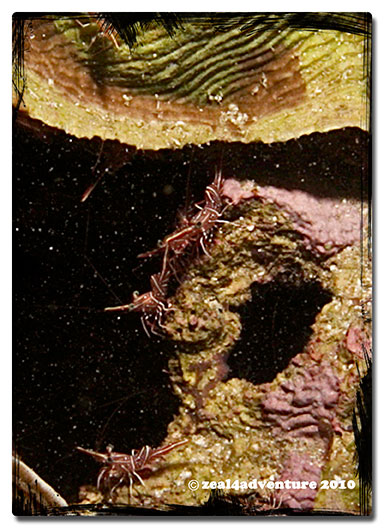
Shrimps

This is either a squid or another octopus

Tomato Clownfish

Us, posing for the cam during a safety stop.

*  All photos courtesy of R. Formoso of Subaquatic Scuba.


The Secret Is Out!

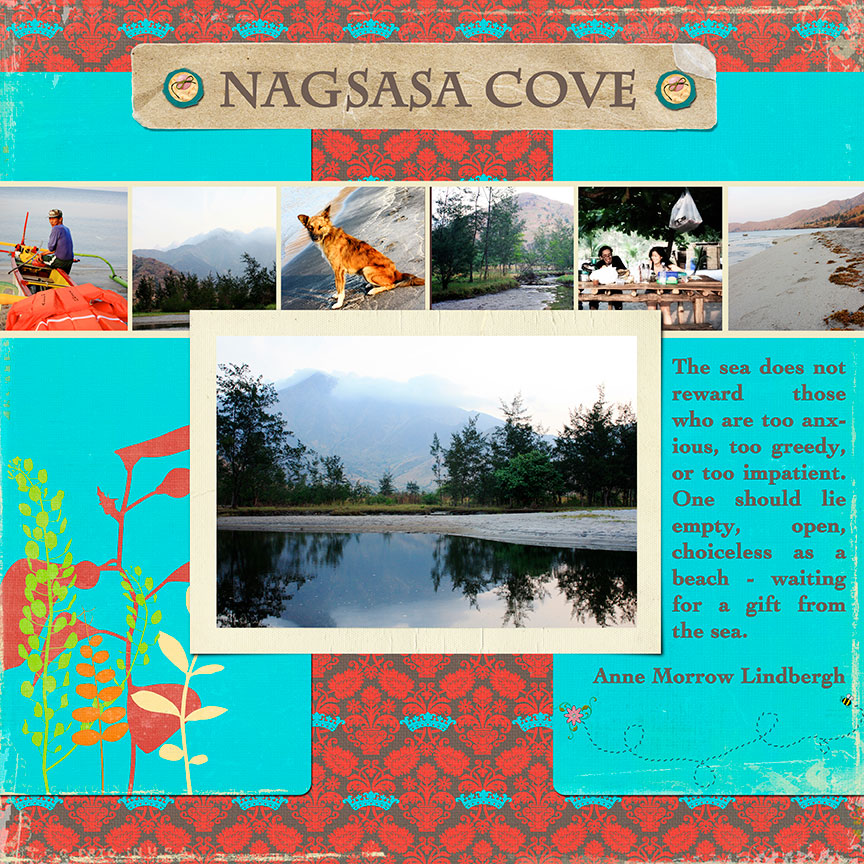
Tent… check, sleeping bag… check, therma rest… check, swimwear… check, sunblock… check, pasta, pasta sauce and chorizo… check… cook set… check and the list goes on.  These however, are the essentials needed for an overnight trip to Nagsasa Cove.

Credits: J. Sprague You are Awesome Paper kit (Blue Leaf & Brown Red), Framers; LivE’s Worn Kraft tag, Sing 4 Spring elements (Button Accent 02 & Fight of the Bbee)

My friend S had been itching to make a trip there ever since she learned of Nagsasa.  And so the weekend after our Northern Samar trip, we were up early, traveling north to what we thought was a secret paradise.  Punta de Uian Resort in San Antonio, Zambales to be exact.

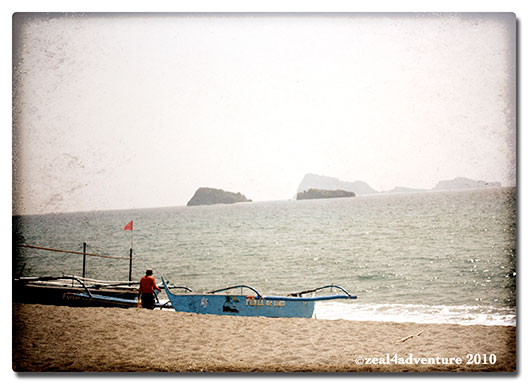
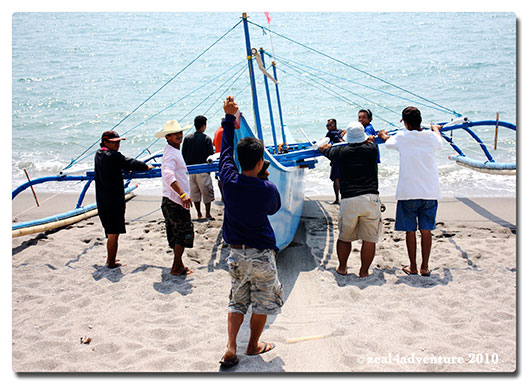
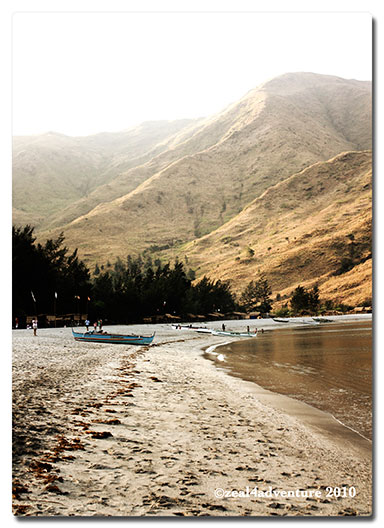
The boat we hired from Punta de Uian

A resort kind enough to take us to Nagsasa (for a fee, of course) even if it was not part of the trips they offer.

Off to Nagsasa…

Wondering why hire a boat through a resort?  I want my car parked safely in a parking lot while we camp out on a cove 8 kms away.   Better safe than sorry right?

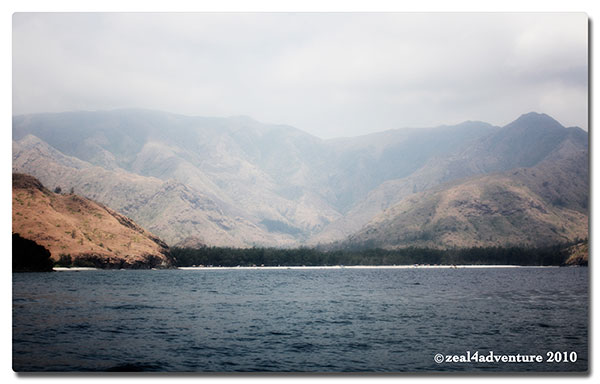
The view on our way

Nagsasa is supposedly less popular than Anawangin perhaps because it takes twice as long (about 45 mins) to get to Nagsasa from Pundaquit Beach.

The approach

Arrival (looks empty)

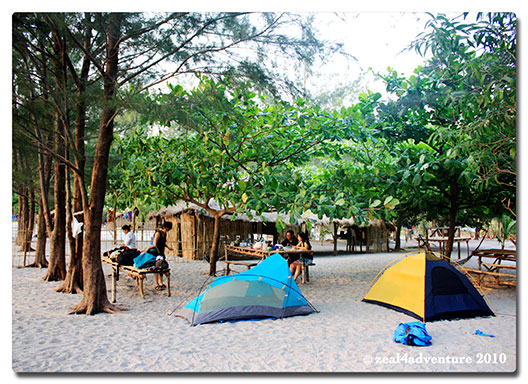
So imagine how stunned we were at first to see scores of campers spread out on the crescent shaped stretch of beach, maybe having the same thoughts as ours, which is… “why are they all here?”

Water so still

Perhaps it was the long weekend and everyone who knows about Nagsasa had the same idea, or perhaps it is the magnificent paradise that makes it difficult to remain a secret for long.

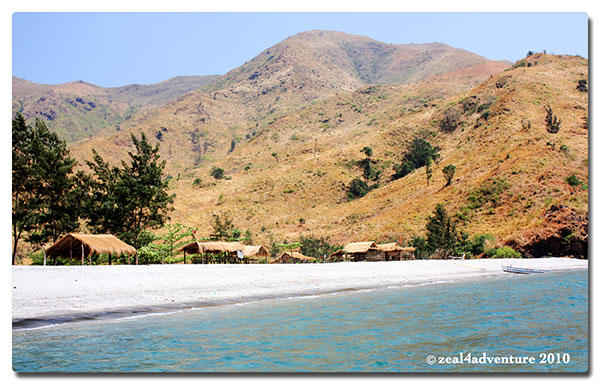
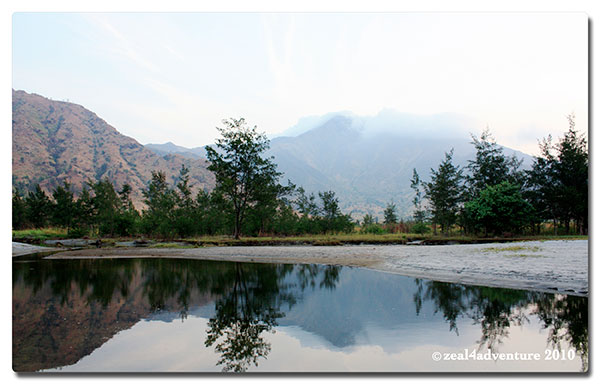
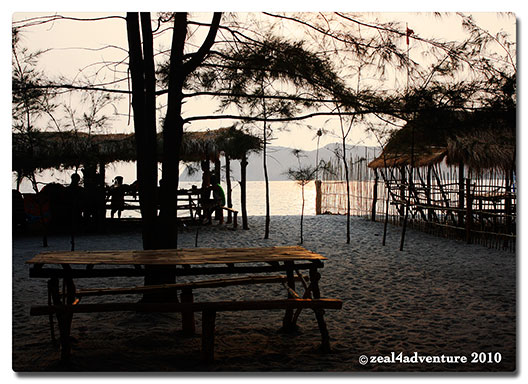
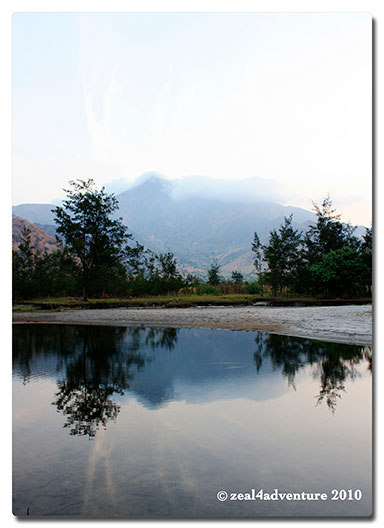
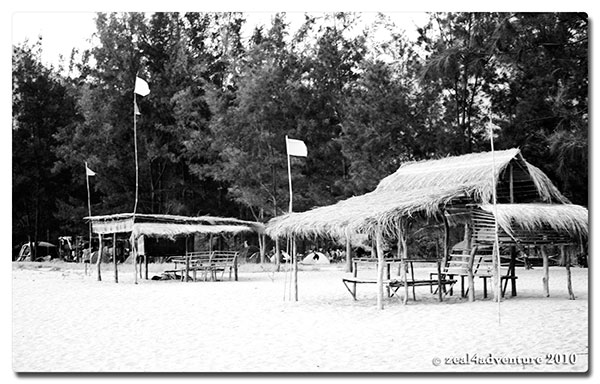
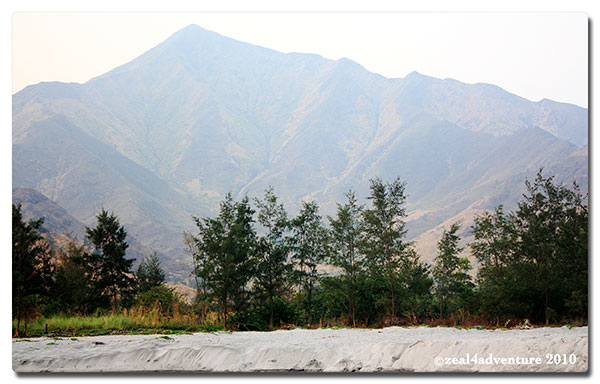
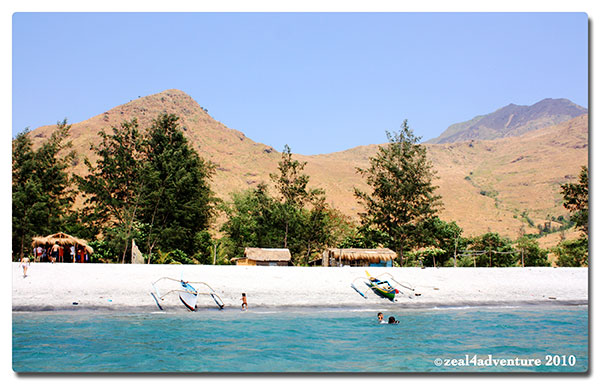
Whatever it is, we were happy to be among those who were enjoying this wondrous cove with breathtaking Mt. Nagsasa serving as backdrop to a pristine stretch of ash colored sand.

Once we got off the boat, we looked for our little corner, Mang Augusto and his family lives beside our campsite, making him the caretaker.

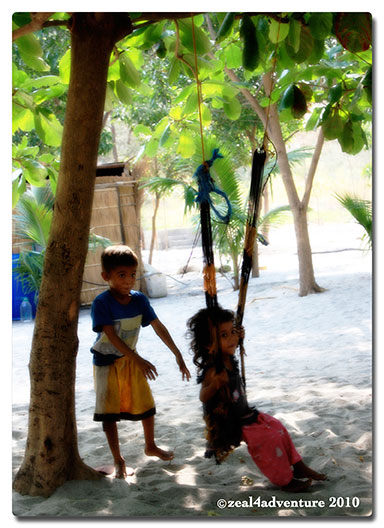
Siblings – Mang Augusto’s kids

We had a picnic table for our meals and our chit chats.

We also had a bathroom just at the back, which I truly appreciate, never mind that it didn’t have a light, what are headlamps for anyway?

Our starters:  Greek and Chinese — an obvious lack of coordination… yummy just the same.

After we settled, we pitched our tent and then prepared our meal… we burned our rice (it was not easy using the aluminum cook set, really!).  Mang Augusto’s wife cooked 2 kilos of rice for us for only P100 ($2).  Way too much for 5 so we had it for breakfast, lunch and dinner and there were still left overs.  So here’s the tip: don’t even bother to cook rice when you can have it cooked for you (for practically a song).   😉

Nagsasa (and Anawangin and perhaps others as well) emerged after the violent eruption of Mt Pinatubo in 1991.

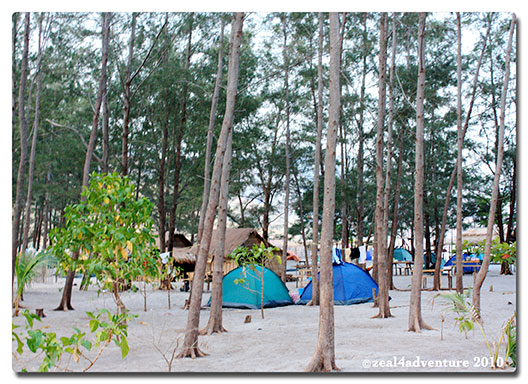
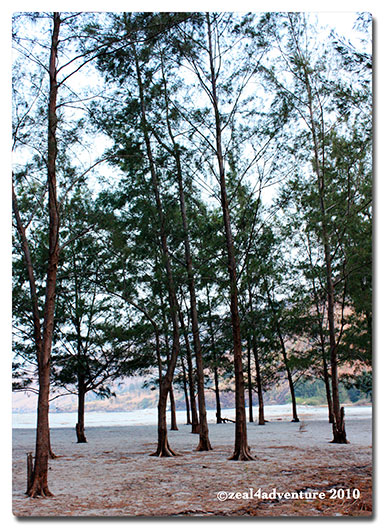
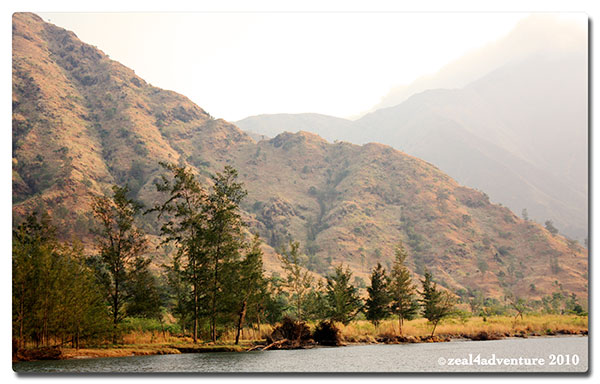
The eruption actually changed the landscape of Zambales producing these coves of ash sand beach lined with Agoho trees stretching inland, rendering a beach so impressive.

So how did such a tree find its way to this part?  It is said that these trees were non-existent prior to the eruption and that the seeds of the trees came from the ash expelled by Pinatubo.

Streams and waterfalls dry out during the summer

How amazing is our God to reward us with unexpected loveliness after nature spewed out its fury?  Perhaps it is His way of reminding us that like a rainbow after a storm, something beautiful invariably comes after a tragedy.  Ain’t that a comfort?

Here are more snaps at different times of the day.

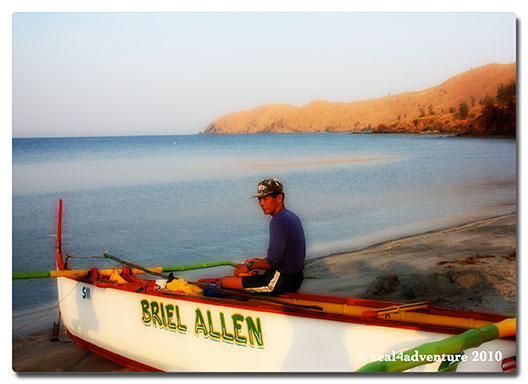
A bangkero (boatman) having breakfast

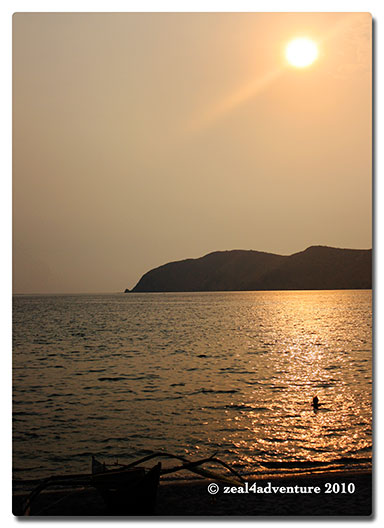
Sunset

More huts for rent

At sunrise (I didn’t wake up early enough   😉 but pretty impressive just the same)

Mt. Nagsasa

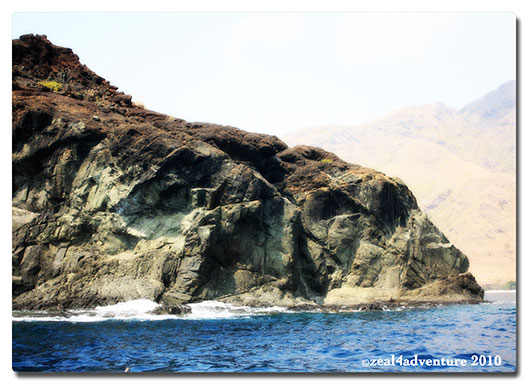
Nagsasa Cove from the boat

And I leave you with this last shot (simply magic)   🙂

A Lazy Afternoon in Biri

Climbing, wading and swimming under the scorching heat can be tiring.  I felt like a nap, which was what I did as soon as we arrived at our resort.

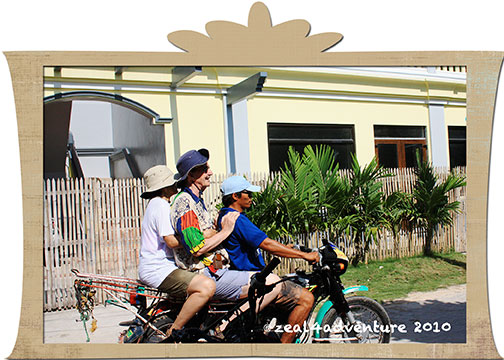
I was practically falling asleep on the habal-habal.   🙂
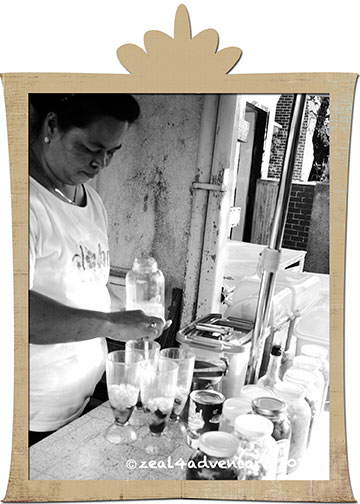
Not even the halo-halo stand attracted me to stop.  All I could think of is that bed and our air-conditioned room.  But as soon as I woke up, there was nothing I want more than to devour on my all-time heat-quencher fave

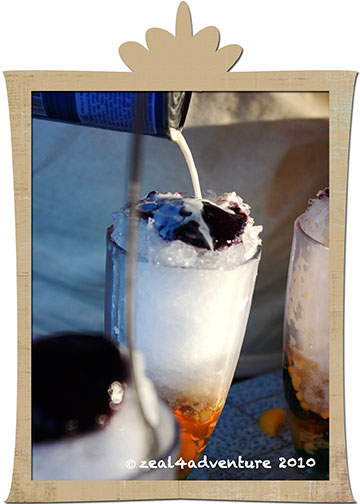
– nothing like a delightful treat of homemade preserves topped with smoothly crushed ice and some milk to wake me up.  Bliss.

Halo-halo, the country’s most popular summer refreshment, has a different version in each municipality, each claiming to be the best.  So I find enjoyment in trying the different halo-halo around the country.  And the best ones are always those sold on the streets.

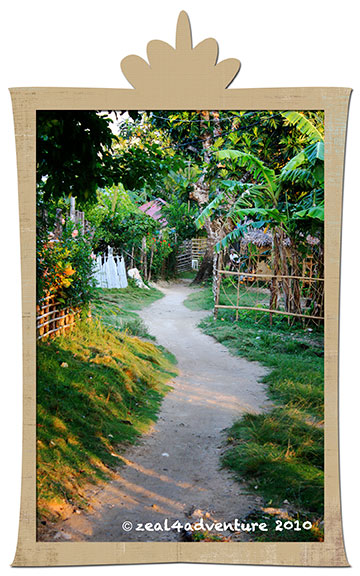
After that wonderful treat, I was ready to get to know the town.  A relatively clean town, I noticed.

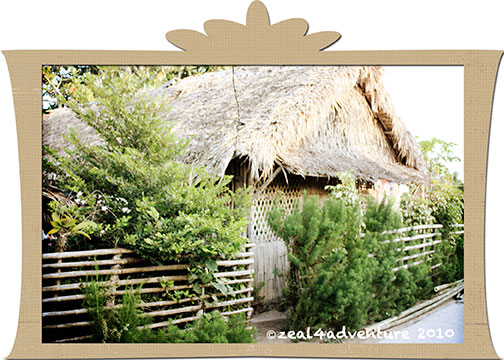
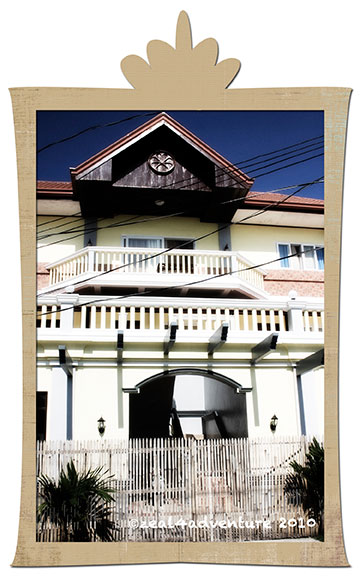
The houses are a combination of the traditional nipa huts and concrete 2-storey structures such as that of our resort.

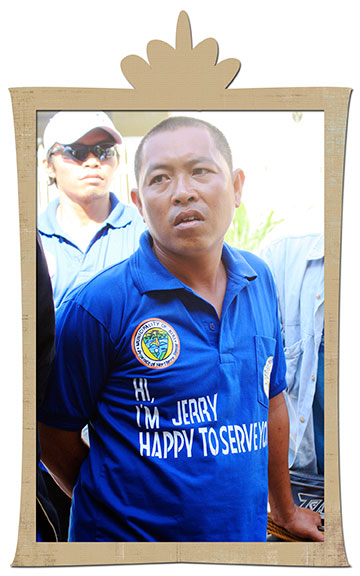
They were a friendly bunch of people; even the kids are not shy at all.

But he does not seem very happy, does he?  (heehee!)

While walking around town, I befriended a girl with the same name as mine, perhaps around 12 years old.  She walked beside me and we started conversing, she told me stories of each “big” house we passed.  Some were owned by balibayans but mostly by foreigners who have married a local.  Jennifer confessed that she wanted to practice her English because she hopes to marry a foreigner someday so she can live in a “big” house as well.  I tried to impress on her the value of education and once she has that, she will not need a “foreigner” in shining armor to sweep her off her feet.   😉

The rest of the afternoon was spent on the terrace of Biri Resort, sipping ice-cold beer and watching the sunset.  Uh-huh… simple pleasures at its finest.