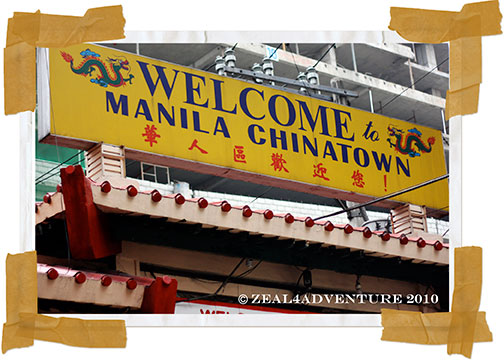
The Binondo “Wok”ing Tour

Possibly, no definitely the best way to see Manila “on foot” as their leaflet suggests and I completely agree.  It’s literally experiencing Binondo or Chinatown one bite at a time.

I am of Chinese descent but I don’t really know my way around Chinatown.  My parents would occasionally take us there for lunch or dinner when we were growing up but really, I am clueless as to their whereabouts.
An “old-time” favorite of the family

Binondo is like a maze, although the street names are all very familiar, I have no sense of where they are in relation to each other.  Leave me there and I am helpless.

I grew up with home cooked Chinese food.  Not the stuff that you eat in “Cantonese-style” Chinese restaurants in the metro, but simple home cooked meals that really is more everyday stuff to me than “Chinese”.
So taking this tour was somewhat nostalgic and enlightening.  We journeyed through old and new adventures.  There were food that I grew up with and there are those I encountered for the first time.  The places we walked through were likewise familiar, yet unfamiliar.

Binondo Today and Yesterday

Ivan showing the group a “grandma” slipper that is almost in the brink of deletion.

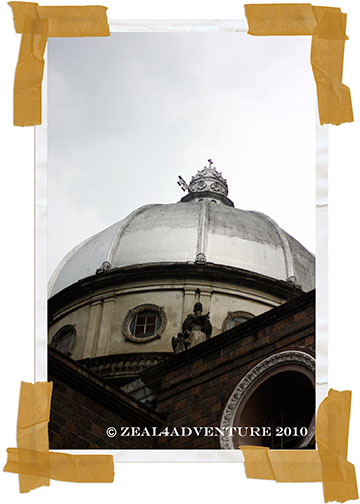
Our gracious host, Ivan Man Dy met us at the Binondo Church located across the Plaza Calderon dela Barca along Quentin Paredes St.
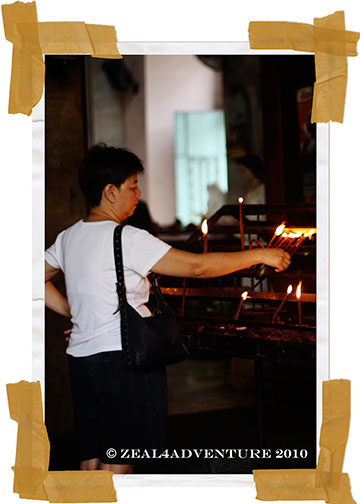
It is today a well-known landmark in Chinatown.  Because the saint once served there as an altar boy, it is also known as Minor Basilica of St. Lorenzo Ruiz.
At the Plaza across the church, we talked briefly about how the early Hokkien (Fookien) immigrants arrived from Fujian province in China during the Spanish rule and the time when Binondo was the main center of business and finance in Manila with mainly the Chinese, Chinese mestizos, and Spanish Filipinos anchoring the bustling banking and financial community many decades ago.

Today, the community is still vibrant as ever and continues to keep alive its heritage.

Café Mezzanine

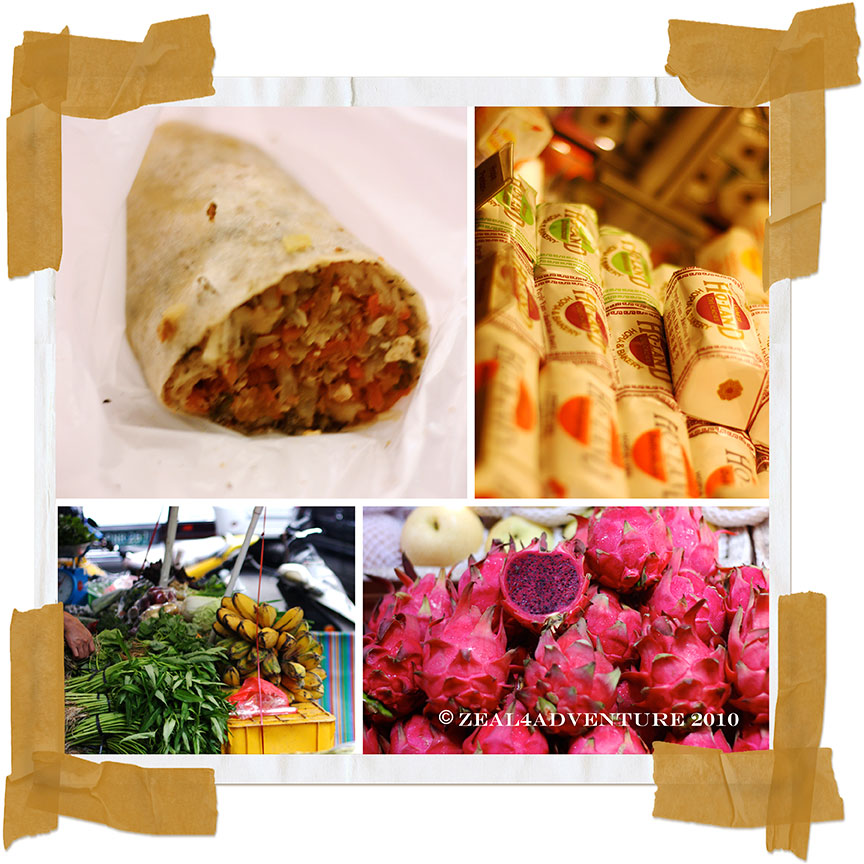
After a brief reminder of our history, we walked over to a café above Eng Bee Tin where we were served a bowl of “kiampung”, which literally translates to salty rice.

This rice dish is a mixture of pork, chicken, dried shrimps, mushrooms and peanuts mixed together in soy sauce and topped with caramelized and spring onions – a simple dish that reminded me of my childhood, my grandmother, actually.  Opened and run by a group of volunteer firemen headed by Gerry Chua, all of its proceeds go to the Binondo and Paco Volunteer Fire Search and Rescue Brigade.  So if you find yourself in the area, head on to Café Mezzanine and eat up a storm, every bite you take is a contribution to a noble cause.  Located at the corner of Ongpin and Yuchengco (former Nueva St) Sts., it opens its doors at 7am and closes at 10pm.

Dong Bei Restaurant

Fried Kutchay Pancake

We then walked over to a hole in a wall that serves perhaps the best dumplings in town.

At the storefront (as you enter) there will be someone making fresh dumplings by hand for everyone to see.
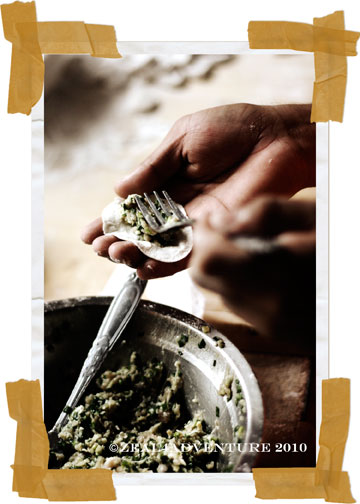
Owned by new immigrants Ivan calls “bagong salta” (new arrivals) from Northern China, they serve prominent dishes from that region.
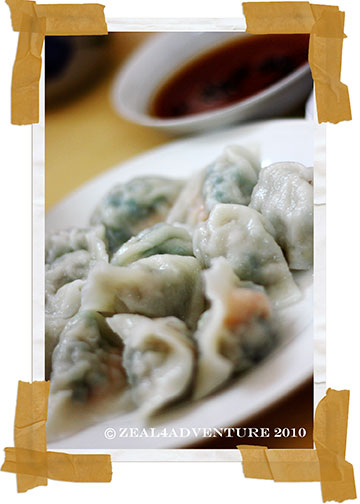
Heavenly with the sauce!

The steamed Kutchay dumpling is a blend of minced pork, kutchay and fresh shrimps – juicy pork dumpling flavored with kutchay and fresh crisp shrimp adding another dimension to the taste of the dumpling.  This is truly a wonderful blend of flavors and is heavenly with the soy-vinegar sauce.   I loved it so much, I bought some frozen ones to savor more of it at home.  Heard that they also make a mean dish of hand-made noodle with Soybean sauce.  Must get myself back there to try it.

Fried Siopao
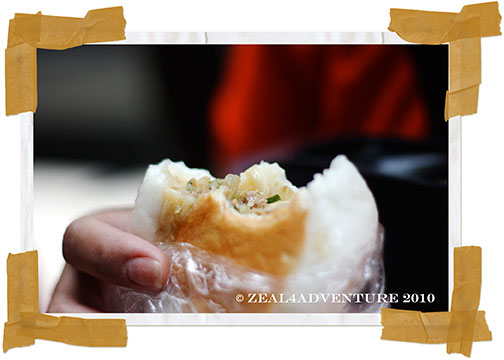
Another favorite and a first for me is fried siopao from a small take-out stall along Benevidez St. Yes folks, this siopao is not steamed but pan-fried.  This might be the best tasting siopao I had ever tasted in my life.  Not the typical asado filling, this is more like bola-bola siopao but much more tastier.   Definitely a must-try.

Aside from the siopao, I also bought to munch some sugar sprinkled bicho-bicho (Chinese crullers).  This was a favorite and truly a blast from my past!

There’s more and best to experience it first hand.  The Big Binondo Food Wok.  Go book a tour today.  And oh… make sure you’re hungry.
My take on Kalbijim

A and I love Korean beef stew or Kalbijim as they call it in Korea.  For some reason – with all the delectable authentic Korean dishes we had during our 4 days stay – Kalbijim was surprisingly not part of the menu.  Don’t ask me why, it’s a mystery to me as it may be to you.  So in the spirit of my visit to Korea and missing out on the authentic taste of this wonderful tasting beef stew, I’ve decided one evening to look up a recipe and reminisce the taste of Korea just one more time.

Korean Beef Stew

  • 1 Kilo short ribs or beef flank
  • 4 slices ginger
  • 2 tsps. garlic, chopped
  • 1 pc. onion, sliced
  • ¼ tsp. chili powder
  • 2 tbsps. brown sugar
  • 6 tbsps. Kikkoman Soy Sauce
  • 3 cups beef stock
  • 1 pc. carrot, cubed
  • 2 pcs. raddish, cubed
  • 1 tbsp. Manjo Mirin
  • 1 tbsp. sesame oil
  • sesame seeds, toasted
  • leeks

Here’s what you do:

  • Boil beef in 3 cups water seasoned with salt and pepper for 30 minutes.  Set aside.
  • Saute ginger, garlic, onion, chili powder.  Add sugar and beef.  Make sure to cook until slightly brown.
  • Pour soy sauce and beef stock.  Cook until beef is tender.
  • Add carrots, raddish, mirin, sesame oil.  Garnish with toasted sesame seeds and leeks.

I had some mushrooms so I threw that in which explains the inclusion in the photo.  Totally optional, just wanted to use up the remaining mushrooms I had and add more veggies onto the dish.  If you want a truly authentic beef stew, omit the mushrooms.

Maa Shee Saw Yo (Delicious!)

Credits:  Kitschy Digitals – You Are Awesome Kit Plain and Yellow Houndstooth papers; JSprague Awesome Scallop tag

Twenty years ago, Korea to me meant underground shopping where overruns of well-known brands abound.

Itaewon

Today, these so-called underground shops albeit scarce still exists but no longer rule my interest.  More than lovely sceneries (which I only discovered on this trip), it’s the cuisine that got me fired up.  Korean food ranked high on my list of favorites ever since I stepped foot on their soil some twenty years ago.  The proliferation of Korean restos in my neck of the woods nurtured that fondness.  Lucky for us, we had great Korean hosts and night after night, we were treated with authentic Korean cuisine and more. And contrary to some reports, Koreans are very courteous people.   🙂

Some of my favorite dishes came to life and once again, I got to taste it from its source.

Bibimbap

Rice, meat, vegetables, an egg and chili paste.  Mixed together and I’m in heaven.  What I love best about this is the crusty rice at the bottom.  So better make sure that it is served in a hot stone bowl.

Chapchae

Usually served as a side dish in Korea but I can have it as a main dish anytime.  It can truly make my day.

Galbi Gui

The first time I tried this was in a small restaurant in Itaewon and I’ve never looked back.  A must have in every Korean dinners.  It is short ribs marinated in Korean Soy Sauce, garlic and sugar and then grilled, usually at the table.   Typically served with lettuce, which is used to wrap the beef in.  The hot bean paste called ssamjang sealed the deal for me.

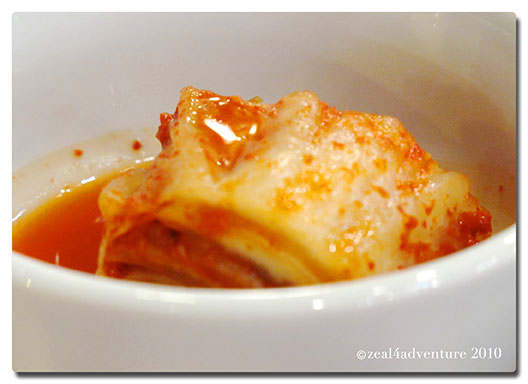
Kimchi

Funny how I sometimes crave for this when it wasn’t love at first taste…  nope, not at all!  It actually took a while for me to even like this stuff.  But what is Korean food without kimchi?

A Colorful Platter of 9 ingredients in Thin Crepe

This was interesting and a first encounter.  The platter came with thinly sliced fresh and pickled vegetables and mushrooms.  Gather a few of each and wrap with the crepe.  Maa shee saw yo!

It was a great trip to Korea even if it was actually work (and a bit of play).  The food capped it all, as usual.

Sliding In Some Exploring

Credits:  Template by Crystal; Scratchy overlay from JSprague’s Thank Ya Kindly kit; Papers:  Brown Solid, Dark Blue Solid, Green Solid, Red Solid, Engraved Birds (JSprague’s TW Kits), Trish Jones’ Radiant Essence.

Oftentimes work gets in the way of my adventures – that is not a good thing.  But sometimes it brings me out of town, out of the country even – and THAT is a good thing. Even if I spend a lot of the time confined in a conference, I try to squeeze a day or two (say the weekend before or after the official business meetings) to explore the area.  There are times though that I skip exploring altogether due to time constraint.  Not this time… this time, work brought me to Seoul and the meeting started on a Monday so yeah…

I decided to take it easy because I wasn’t traveling with my usual set of travel buddies and lest they kill me, taking it easy was the route to take.  First order of the day was brunch at Apgujeong-dong.

A residential and shopping district in one of the most affluent areas of Seoul, Apgujeong has luxury brand stores, home grown boutiques,

new trendy eateries and open-air cafes lining its streets.  Most offer ritzy atmosphere and high quality goods and services.

We meandered through the streets in search for coffee.  It was still early and because it was a Sunday perhaps, stores and restaurants open later than we are used to so we wandered into a Starbucks, just for that coffee fix.

Homemade-style fresh organic food — B.B. Cafe by Hanskin

The organic café that first caught my fancy does not open till 12nn and when we went back (at 12nn), they weren’t serving the pizza we were eyeing earlier until 2… go figure!

We ended up satisfying our pizza craving at Schadheli, not as charming at first glance, but cozy enough for us to notice.  We ordered a good ol’ reliable Margherita and it was good so we tried another flavor, this time we were more more adventurous.

This one had spicy chicken topping drizzled in honey… yes honey.  It complimented well with the “Korean-style” spicy chicken and the cheese.

They make a mean Vongole too.

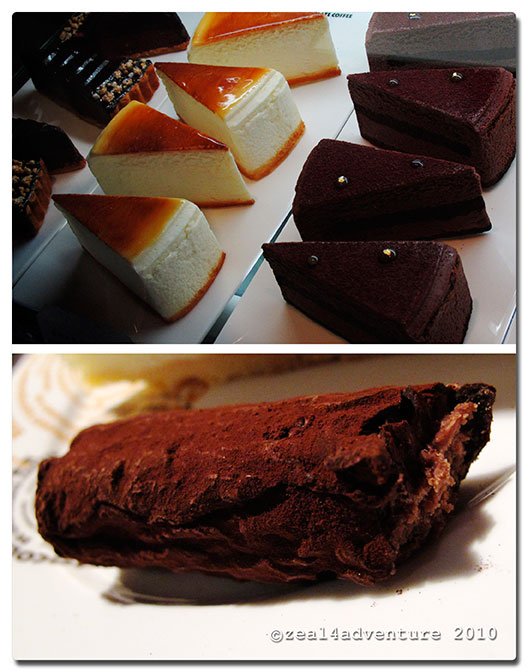
Koreans and their coffee, there must be something about it because coffee houses are seen in every corner, Starbucks and other international chains notwithstanding.  We walked into De Chocolate Coffee because we fancied the façade.

Coffee here was good, but the sweets… superb.

After that eating escapade interspersed with a little bit of shopping, we headed back to our hotel to get ready for the next order of the day… cocktails and then dinner.

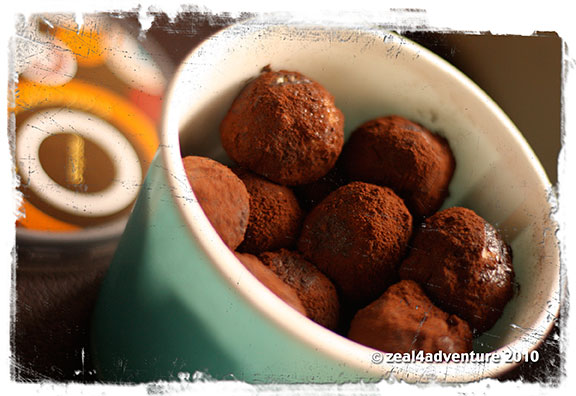
Custard+Macaroons+Cocoa Powder=

Gigi’s Custaroon Poppers that melts in your mouth.   Aptly named, it is creamy custard with a layer of coconut filled macaroons covered with cocoa powder that I could pop one after the other.  Seriously.  I was hooked at first bite. Try it!  I’m sure you’ll be too.

Where I got it:

Parvati
Ground floor near the Mindano entrance of Trinoma

You can also order here.

A Feast To Die For

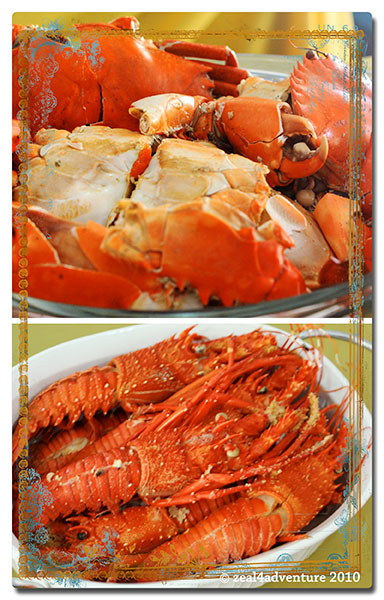
I leave you with this to feast on.  It was crab and lobster galore on the last day of our Northern Samar stint.  These fat crabs are to die for.

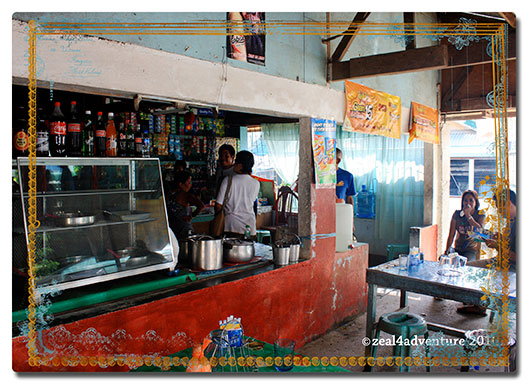
A hole in a wall serving all kinds of food so call in advance if you want to have a taste of that mouthwatering crabs and lobsters

If you are a crab/lobster lover, you must visit Octo King when you find yourself in Catarman.  MUST!

And if you want to explore Northern Samar, contact Josette Doctor of the Provincial Tourism Office .  She can help you with your itinerary.
* Some updates:  I made a mistake in Josette’s email address, now corrected.  Also added a phone number where you can contact her.

Important info:

Octo King
Contact Ronnie Biaca
0920-5252526

Provincial Tourism Office
Contact Josette Doctor
(63 55) 251-8124
josettedoctor@yahoo.co.uk

More than Tuna…

General Santos has an array of good eats that made me more than smile.  Here’s what has landed on the top of my list.

Durian Gatchpuccino – cappuccino with a twist

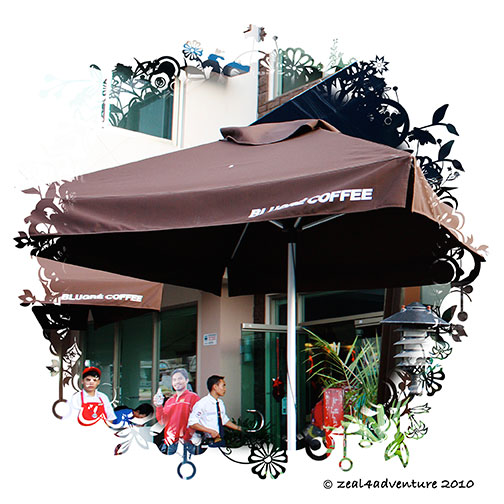
Named after its owner Gatchi Gatchialian, I reckon. Blugre Coffee, originally from Davao, became famous for their Durian coffee concoction.

Heard so much about it and the first thing I did was head over to GMP building, along South Osmeña Street to see what the rave was all about.

It’s cappuccino with durian bits, indeed something to rave about if you love durian – of course.

Durian – the fruit

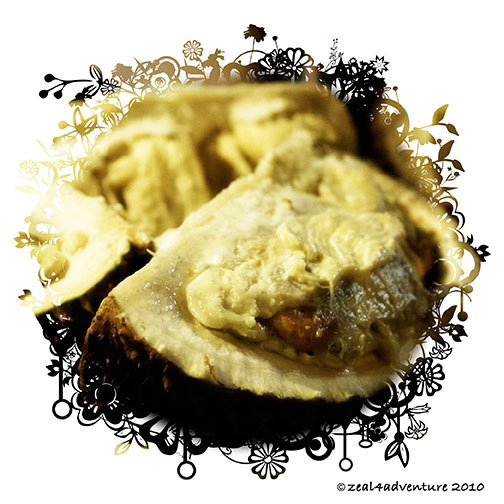
As you have probably noticed by now, I have this love affair with durian – wasn’t love at first sight though but I was rather introduced to it gradually.  I first tasted Durian flavored pastillas (milk candy) years ago and loved it, and then I discovered Durian ice cream, totally adored it.  I eventually had a go at the actual fruit, frozen at first — tasted very much like the ice cream.  And for more than a decade now, I am more than smitten.
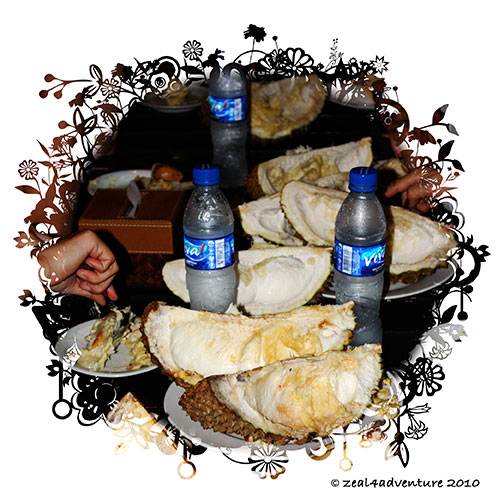
GenSan, as with many places in Southern Philippines, is Durian haven and walking home from dinner,

we (the durian addicts) grabbed ourselves some and had a feast.

Six’ Bling’s

(Not a very good shot of an ) Ostrich Sisig

The only restaurant in GenSan that offers ostrich and crocodile delicacies but more than these, we had some pretty good appetizers too.

One that caught our eye was “Dili Ka GuaPo” (translated in English as “you’re not handsome”) – a mix of crispy fried dilis (anchovies) kag (is “and” in Bisaya) sliced guava, and pomelo dressed in vinaigrette, hence the name.  Aside from its eye-catching name, it is a refreshing combination of salty, sweet and sour.  Located at the NCCC compound off the National Highway, this wonderful find is a must-try when in GenSan.

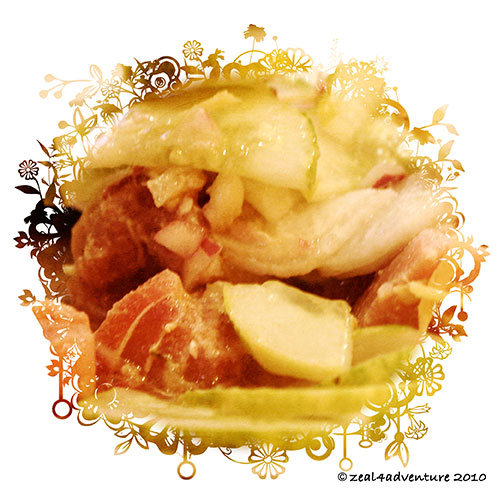
And since it’s GenSan, we had to have our tuna, this time we had it kinilaw (tuna cooked in vinegar),

and grilled, as recommended.

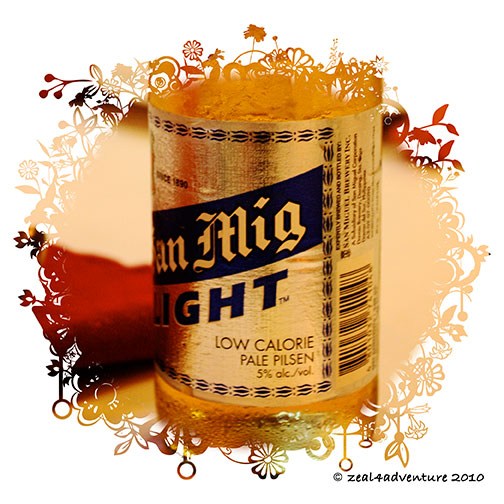
Best paired with perfectly chilled San Mig Light beer below zero.  Ahhh…

Useful Information:

Six’ Bling’s
Contact No.:  (083) 553-8808; (083) 3021961; (0917) 715-2528; (0922) 859-1961

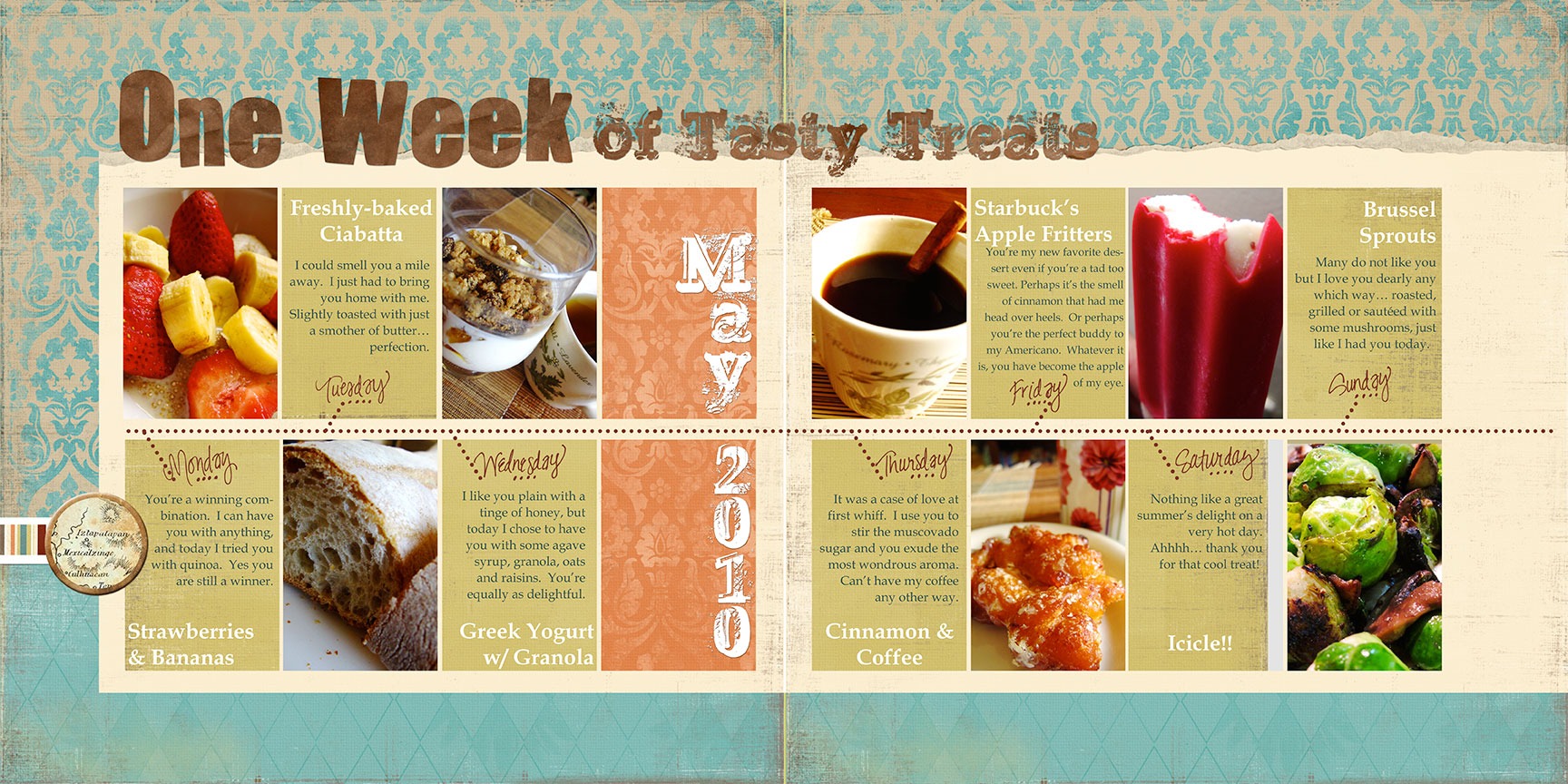
One Week of Tasty Treats

Food is another passion of mine that is high up there with travelling.  Truth be told, it is a huge part of my travels and my daily life.  Whether I’m out somewhere or just relaxing at home, I beam with joy if I am able to have my fix of favorite eats.  It can be as simple as spam, eggs and baked beans – my all time comfort food or as fancy as escargot.  Last week was a happy week for me because a visit to my favorite Saturday market = many a tasty treats.  Sharing with you some of my joys from the simple treats I picked up last week.

Credits:  JSprague’s Type Writer 2 papers  (Click on image to enlarge)

Some Useful Information:

Quinoa:  It’s pronounced keen-wah and while it is practically unknown here, it is a staple of the ancient Incas.  It is a grain that comes from the Andes Mountains and a 100-g portion is known to be a rich source of iron and vitamin B; a good source of protein; a source of calcium, vitamin B2, and niacin.  And best of all, it’s absolutely yummy.  You can find this at the grains section in any Healthy Options outlet.

Lartisan Boulangerie Francaise:  This is where I most-often get my breads.  It shares a space with Mikey’s Deli along Jupiter although I seldom get them there.  Our neighborhood deli, Santi’s (thank God) also carries their breads albeit a limited range.

Rizal Dairy Farms:  Can be found in Salcedo Market.  This is where I get my stash of Greek Yogurt.

Picolé:  Also found at the Salcedo Market, I chanced on this on my way home and it just called out to me through the scorching heat.  I just had to get myself some.  And by golly – they’re heavenly!

Oh Manuel!

It’s a funny thing about life; if you refuse to accept anything but the best, you often get it. – W. Somerset Maughem

Reservations were made and off we went to Taipa to lunch.  Those with insider knowledge or Macanese connections will head to Taipa for some great culinary experience.  Tucked away in a quiet street just on the edge of Taipa Village is one of Macau’s best-kept secret, a homey, welcoming hole in a wall called O’ Manel or more formally known as Manuel Cozinha Portuguesa.  Manuel Pena, a Portuguese and his Chinese wife owns this tiny restaurant that serves fantastic Portuguese food.

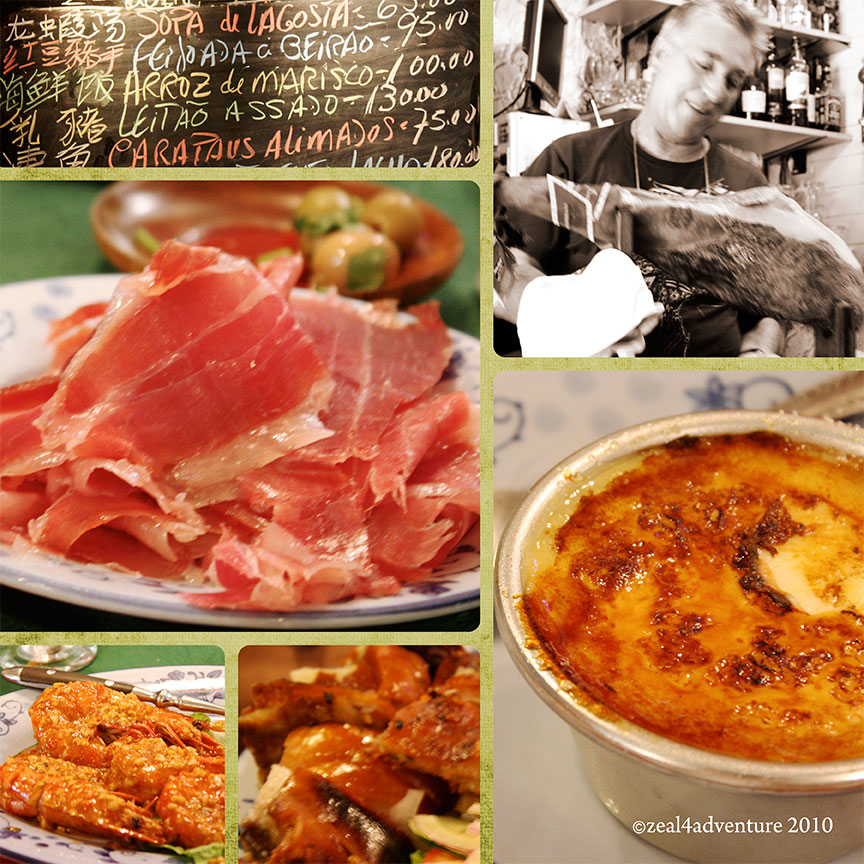
In his restaurant, Manuel waits on tables himself, supervises the preparation of the dishes and does the cooking himself, sometimes with the help of his wife.  There are no menus only a blackboard; in it written are the specialties for the day.

Clockwise:  menu board; Manuel Pena and his Pata Negra; Caramel Creme; Roasted Suckling Pig; one order of Pata Negra, sliced.

For starters, we had slices of Pata Negra (or jamon iberico in Spain), a favorite since I first tried it in Seville years ago.  So memorable this Pata Negra was during my first visit to this restaurant some 3 years back, I came back with that in mind.  Fresh fish and shellfish are found on virtually every Portuguese menu and it is not surprising that we were served Garlic Prawns and a wonderfully citrus Clams in lemon sauce with a hint of coriander.  Roast suckling pigs, popular in the north of Portugal came highly recommended.  We were ecstatic that it was perfectly roasted with skin that crackled so loud we ordered one more.

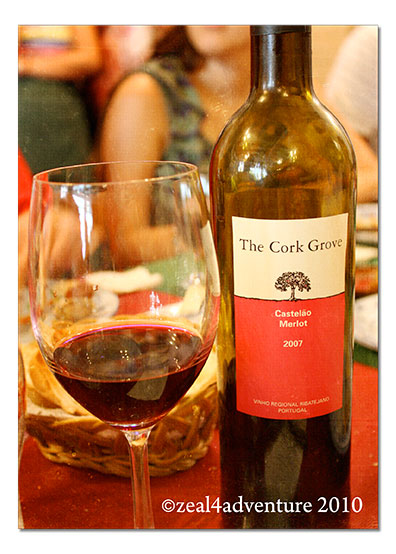
We washed all these down with a glass or two of this lovely Portuguese Merlot and capped this splendid meal with a most typical Portuguese dessert, Caramel Cream.  Mmmm…  overindulged, most definitely.

The restaurant when we entered

In less than thirty minutes

This small casual restaurant with its limited number of tables fills up quickly so book ahead.

Manuel Cozinha Portuguesa
Rua de Femão Mendes Pinto, N90 R/C
Taipa, Macau
For reservations call:  (853) 28827571 or 28825811

Take A Stroll With Me

In Macau.  Not only is the center an urban area with an old city, it is a World Heritage site to boot.  Inscribed on 25th July 2005 by UNESCO, the Historic Centre of Macau is a product of cultural exchange between East and West.  It could be the oldest, most complete and consolidated selection of European architectural legacy standing intact on Chinese Territory.  The center spans 8 squares but 2 hours will only allow for 3 squares, a ruin, a church and a whole lot of eating and window-shopping.

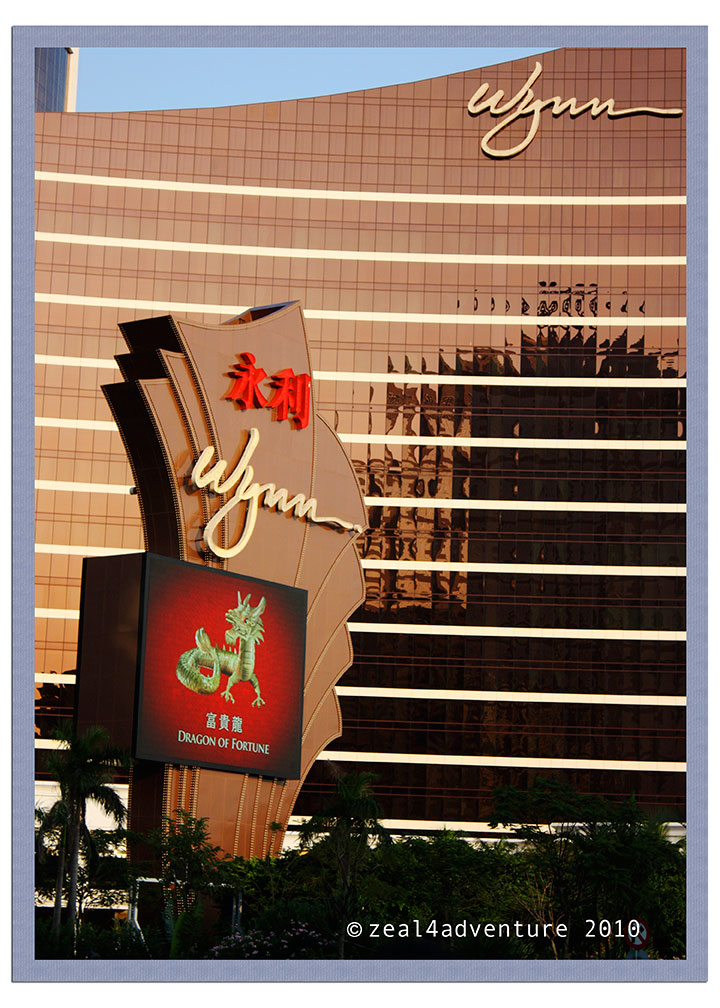
From our hotel, we walked all the way, passing casinos, to our first square.

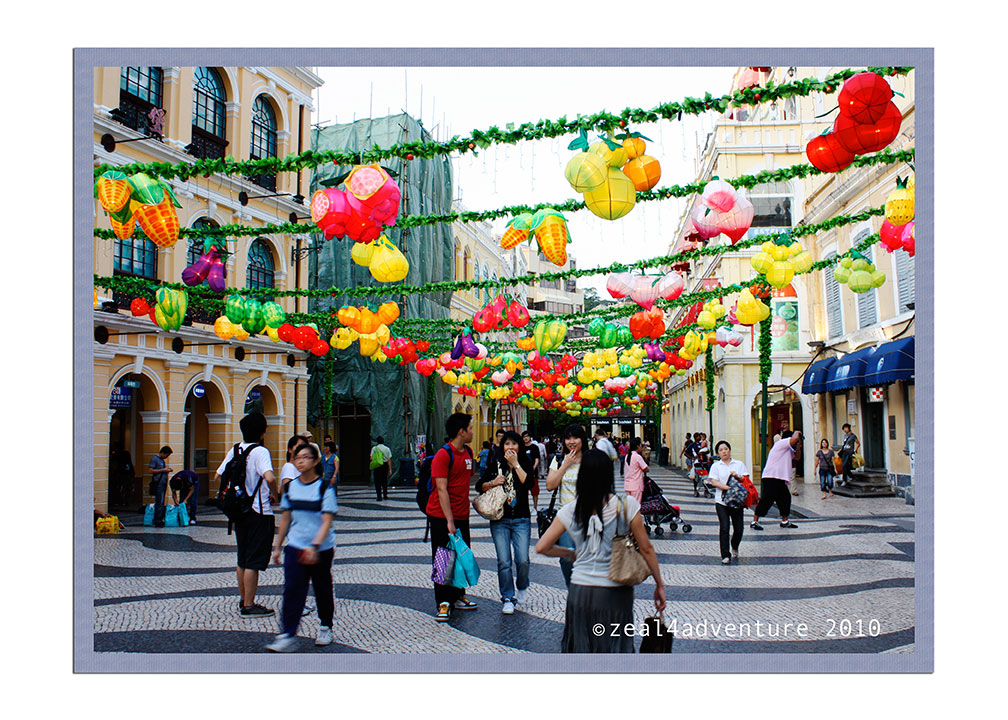
Senado Square

I would have loved a photo of an empty square to showcase the cobble-stoned grounds with exquisite black and white wave patterns.

Not to mention the pastel colored neo-classical buildings flanking the square on all sides giving it a Mediterranean atmosphere.

But Senado will not be Senado if it was not busy (at least on both times that I’ve been there).  It has been the center of Macau since the square was built sometime in the 19th century.

From the main road to the church of St. Dominic’s, the pavement extends and eventually leads to a different kind of city – the cathedral of St. Paul’s, now in ruins located on top of a hill, making the stroll a paradise with so much eye candy.

St. Dominic’s Church

Not too far from Senado Square is St. Dominic’s Square.

It is one of the most popular squares because it is close to where the shops and little food vendors are.

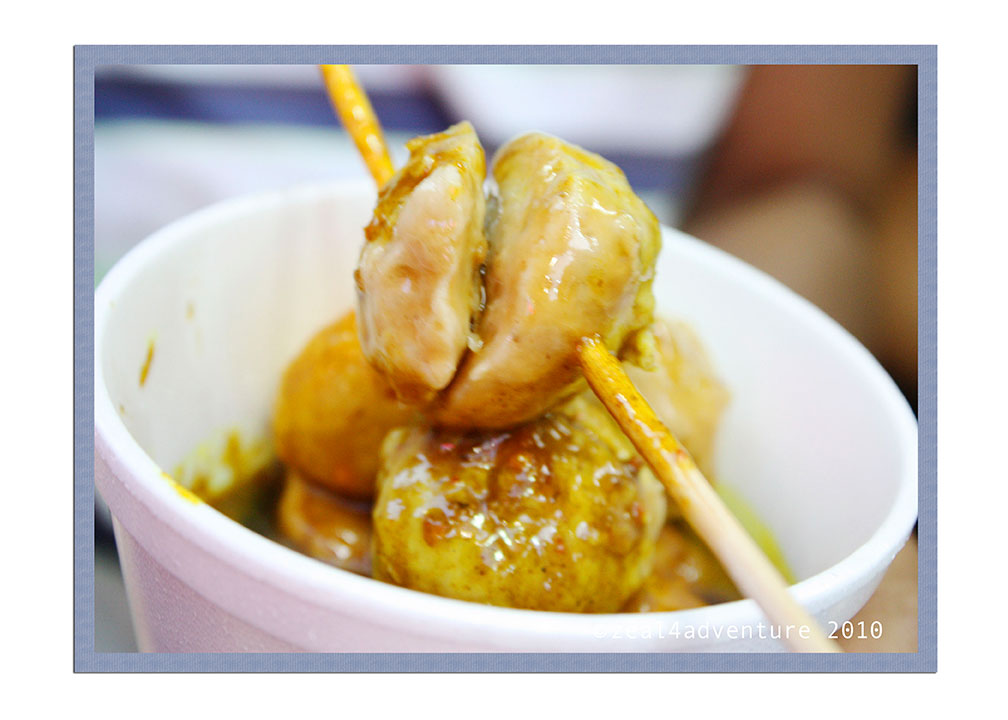
It was fun strolling through the shops gobbling through these tasty fishballs in satay sauce.

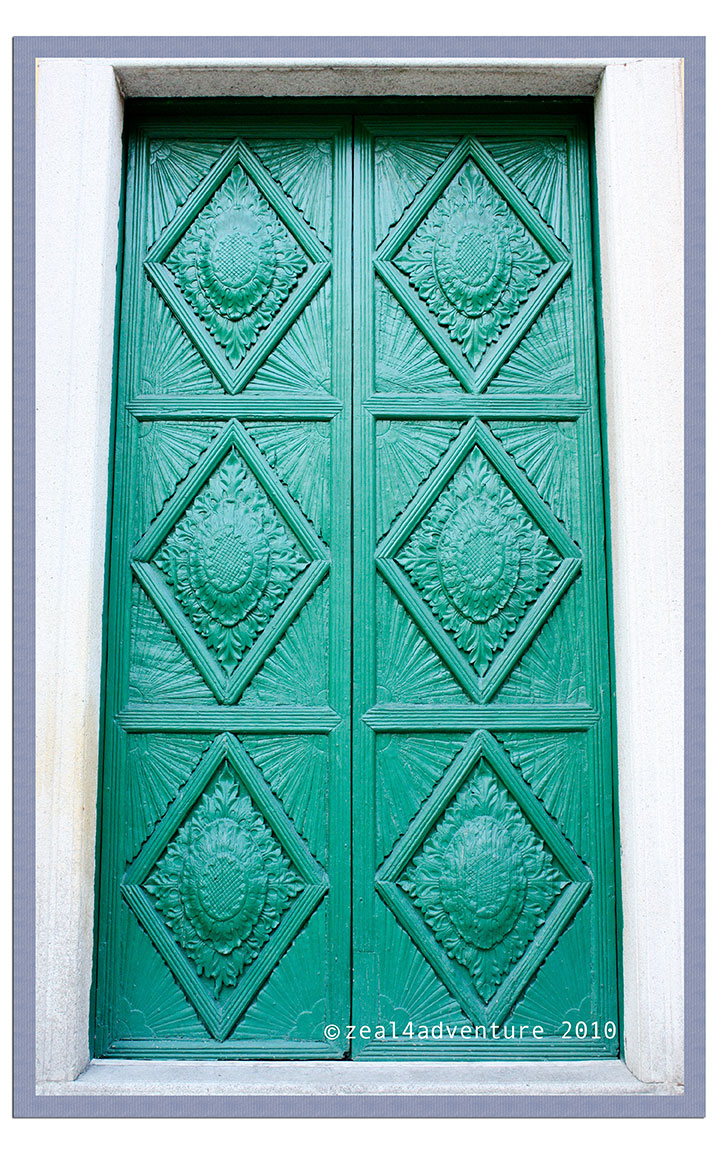
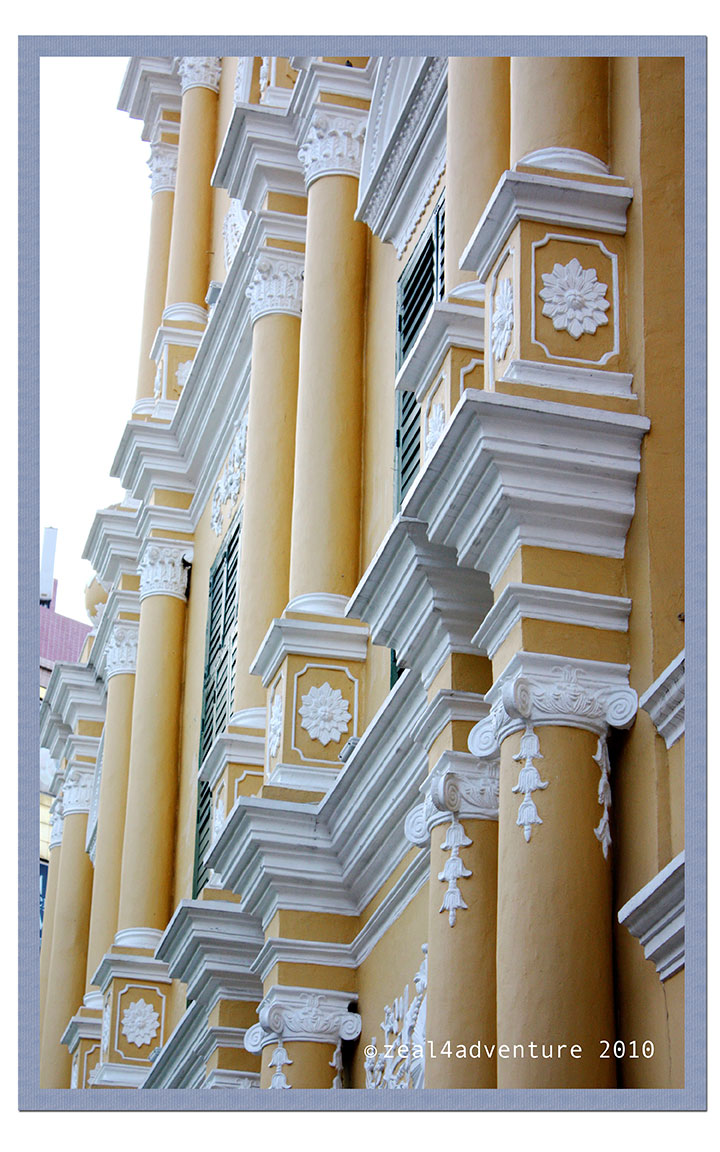
Standing on the square is an imposing façade of cream-colored stone with white stucco moldings and beautifully designed green doors.

The first church ever built in China; Dominican priest, originally constructed from wooden slats, built St. Dominic’s Church in the mid 16th century.  A far cry from what we see today.

The church has an interesting past swathed with drama and violence.  A military man was murdered at the altar during Mass because he supported the Spanish against the Portuguese.  There was also a time that the Dominicans sided with the Pope against Macau’s bishop.  When local soldiers tried to enforce an excommunication order on them, the friars locked themselves in the church for 3 days.  In 1834 the monastic order was suppressed and for a time, the church was used by the government as barracks, stable and office.

Pasteria Koi Kei

On our way to the ruins of St. Paul’s, we entered a small alley brimming with more little antique and food shops.

You’ve gotta taste these babies!

One that caught our eye was this food shop selling dried pork and beef fillet similar to a jerky but so much yummier.

A small storefront extends really deep inside.

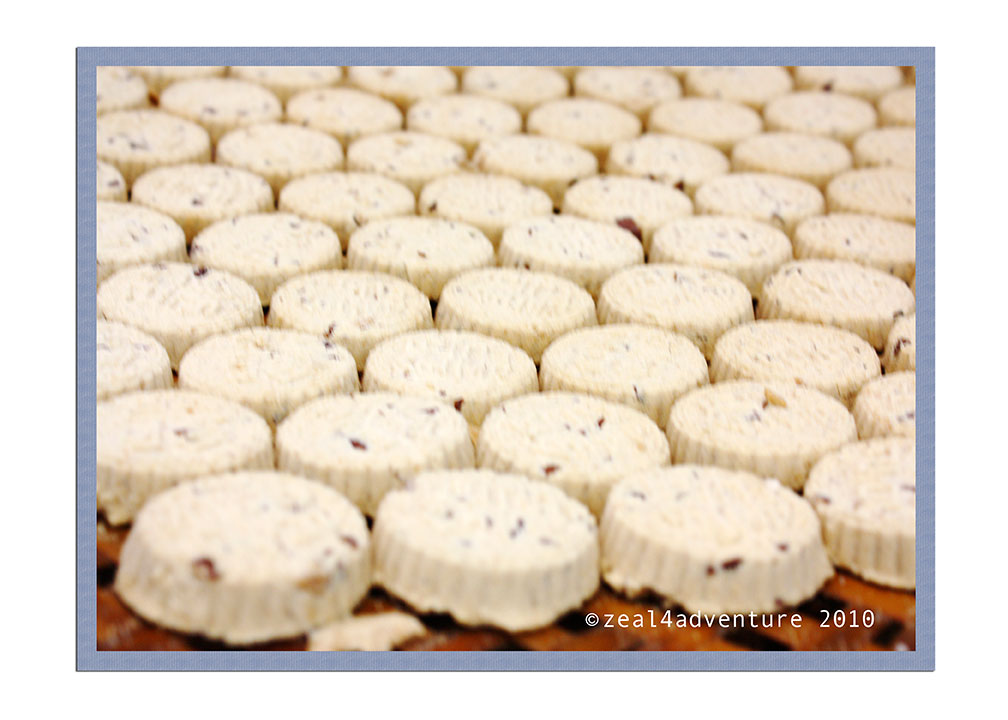
The biggest attraction though appeared to be their almond cookies.  Tracing its roots back to a cart selling only crunchy peanuts and ginger candies, Koi Kei put up its first store in 1997 and today it has gained recognition as the “most popular food souvenir” champion in Macau.  Like us, many bought items to take a taste of Macau home with them.

Sampling some egg rolls as they make ’em!  Great way to entice people to buy!

From peanut candies to almond cookies and egg rolls, Koi Kei Bakery is currently selling more than 300 varieties of products – almond cookies, egg rolls, crunchy peanut candies and the dried beef and pork fillet being among the more popular ones.

Ou Mun Cafe

After a good couple of hours, we were famished (even after all the goodies we bought and sampled).   In a cozy looking restaurant in one of the alleys in St. Dominic’s Square, I had a Bacalhau à bras – salted cod fish sautéed with potatoes, onion and eggs, in short, a bacalhau omelette.   🙂

The Cathedral in Cathedral Square

On our way back to our hotel, we passed another route and found ourselves in another square.  The façade of the Cathedral is simple but when lit at night, it transforms into something grandiose.  The present building stands on the site of several previous cathedrals, the original was the Church of Our Lady of Hope of St. Lazarus.  The first stone Cathedral, consecrated in the mid 1800s was almost destroyed in a typhoon 24 years later.  Extensive repair was done.  In 1937, the church was completely rebuilt.

Macau is not all about the gambling, you gotta admit though, they do add character to this urban area in an old city especially at night!

Ou Mun Café
12 Travessa de São Domingos, Macau
+853 2837 2207

Scenic Sunday