The Real Macau

Beaches, ancestral Chinese villages and forested hills with nature trails… traditional countryside still exists in the islands of Taipa and Coloane.
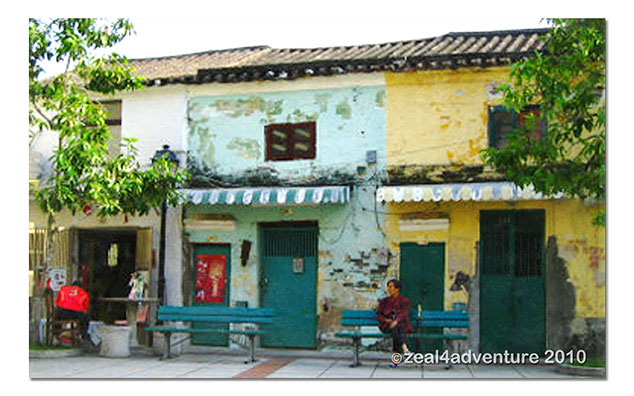
Here in the narrow streets and alleys with multi-hued buildings with peeling paints and stained walls lives the real Macau contrary to just a few meters away where The Venetian Macau Resort and Hotel stands.

Oblivious to the developments that will eventually comprise 14 resorts, the locals still while away time, chatting on benches around the square.

Although this rural part of Macau is slowly transforming into one of the biggest tourist destination in Asia, there still remains a section that is evidence to Macau’s centuries-old cultural heritage.  A quaint village on what was once Taipa Island’s southern shoreline.

Pak Tai Temple — one of the biggest temple of Taipa

Taipa Village or Tamzhai (in Cantonese) is still made up of Chinese shophouses, Portuguese-style offices, and temples all around.

Incense inside Pak Tai temple

A good place to learn about the history and culture of the area as there are plenty of them to explore.
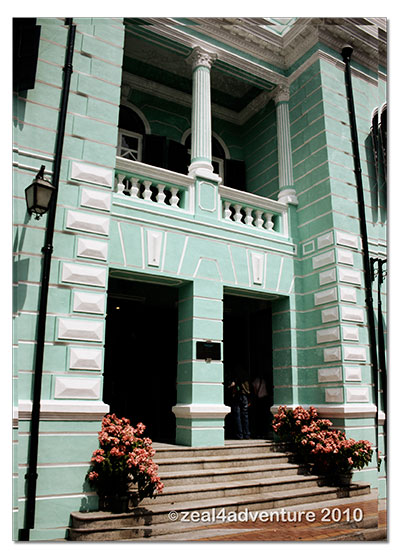
The museum of Taipa & Coloane History is a comprehensive exhibit of historical relics unearthed on Coloane,
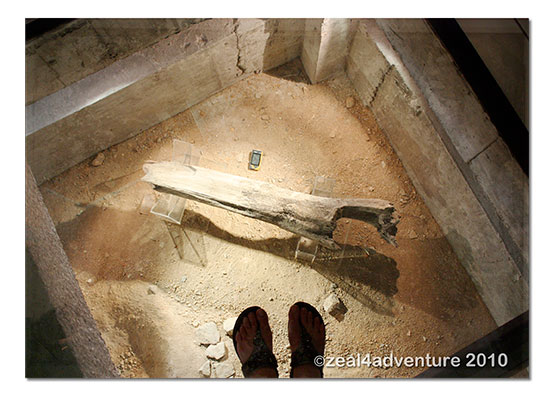
The glass floor to view the relics from the basement

the stone architectural remains in the basement of the former Island Council Building.
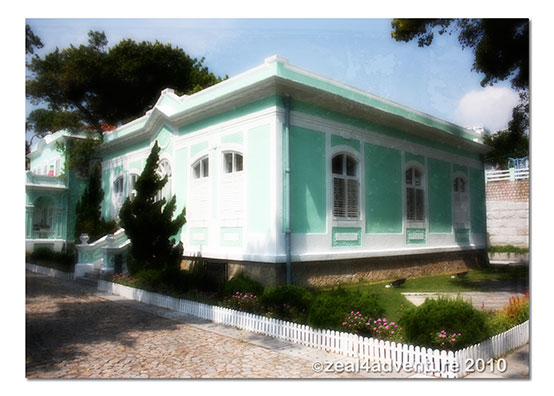
A few minutes walk to the east from the village is a waterfront area where remains a superb old colonial promenade, Avenida de Praia, complete with original houses.  The Taipa House Museum (or the Casas- Museu da Taipa)  shows a number of 20th century houses restored to depict details of turn-of-the-century domestic life of the Macanese families, highly religious, well-to-do but not extremely wealthy.
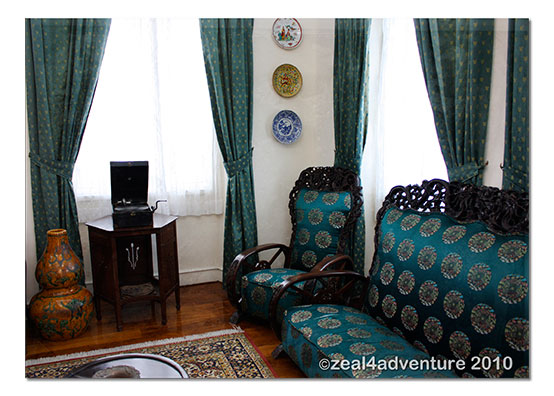
The Macanese House is one of macao’s typical houses in colonial style reminiscent of a period of Portuguese splendor characterized by frequent influx of the Portuguese, British, Mandarins and merchants in this tiny territory.

Carmo Church — 0ne of the eight views of Macau

Although Taipa’s northern shore is hardly worth a stop now, Taipa Village on the southern shore and Avenida de Praia is definitely a pleasant walk where faded mansions and wooden benches seem frozen in time.

Scenic Sunday

Syquia Mansion

Credits:  Papers by Jessica Sprague Home Away From Home Paper kit.

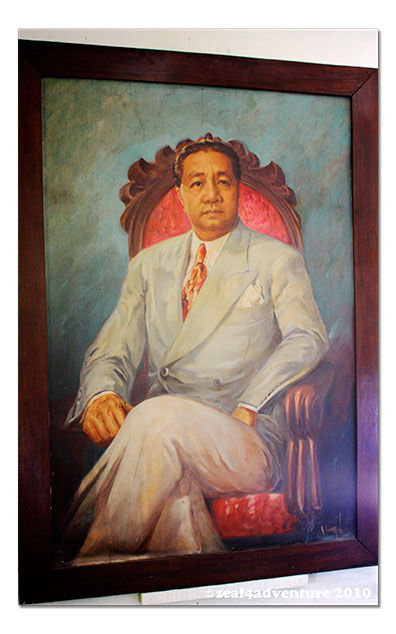
This colonial mansion built in 1830 at the corner of Quirino Blvd. and Salcedo St. is the ancestral home of Doña Alicia Syquia, wife of Philippine’s 6th president, the late Elpidio Quirino.

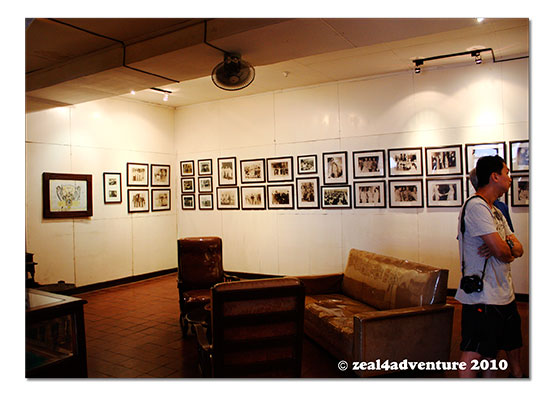
It is today a museum that offers free entrance to visitors.  In the house are 19th century furnishings, memorabilia and various photos, providing a glimpse to the man.

Doña Alicia did not live to become first lady however, because she was a casualty of World War II — she along with 3 of her children were killed by the Japanese.  Elpidio did not re-marry and his daughter, Doña Victoria served as First Lady.

The mansion had become the official residence of President Quirino thus claimed as the first Malacañang of the north.

A portrait of Doña Victoria graces the wall of the Receiving Room

A single wooden stairs leads to the receiving room on the 2nd floor where a replica of the Spolarium hangs.  Rumor has it that Juan Luna’s assistant painted the replica and this was what they referred to when the real Spolarium was restored.

The rooms are spacious with various doors linking one room from the other.  One can enter one door and exit another door leading to another room.

Capiz windows up close

The mansion was well kept and retains a lot of the 19th century details.

Glass window detail

I am a fan of Machuca tiles — flooring used in the Azotea

Looking out to the Azotea froma room (nice grill detail too).

The guide was very knowledgeable and equipped with many information.  Definitely a must see when in Vigan.

This is my entry to My World this week.  Click on the icon below for a glimpse of more worlds from around the globe.

Timeless Vigan

Ilocos Sur is where many culture and histories meet, all sharing space in this timeless city called Vigan – shrines, landmarks, museums, churches, ancestral homes, a cobbled-stoned street.  Inscribed in 1999 in the UNESCO World Heritage list, citing that, “Vigan represents a unique fusion of Asian buildings and construction with European colonial architecture and planning.”

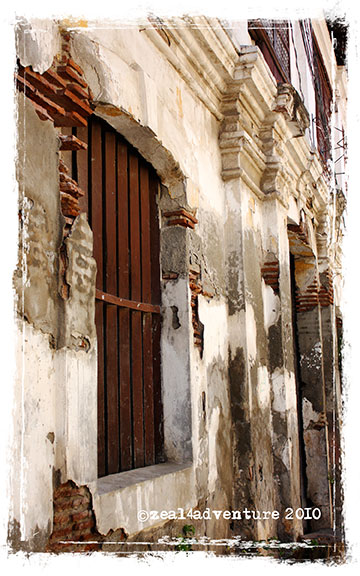
Established in the 16th century, Vigan is still the most intact example of a Spanish colonial town in Asia today.  It is best known for its cobbled-stone street, Calle Crisologo, lined with many old buildings that are intact, restored or in (dis)repair.

One can see remnants of the old-Spanish architecture throughout the center of the city.

Although the street is now busy with souvenir and curio shops, it still transports one back to the Vigan at its peak.  It is the oldest surviving Spanish colonial city in the country, not many of the historical buildings are left after WWII.

The old Vigan colonial houses, built mostly by rich Chinese traders, are made of thick brick walls and red clay.

They conduct their business on the ground floor and reside above.  It is a characteristic of Chinese culture and other Asian countries as well.  The resulting townscape is a unique display of a harmonious blend of Ilocano, Chinese and European elements, a unique display of the multi-culture nature of the Filipino society.

Captivated by colonial towns and its culture, this road trip all started with Vigan in mind.

From their longganisa and bagnets to their ancestral homes, we savored it all.

the street at night

We spent the 2 days walking up and down Calle Crisologo soaking in the heritage,

wondering how life was back in those elegant days of yore.  An interesting city albeit far from the capital with about 400 kilometers (that’s about 8 hours) of travel needed if you are coming from Manila.  Vigan is charming and I urge every Filipino to make a visit at least once in their life.   🙂

Not your typical McDonald’s facade

Al fresco dining in the evenings is a wonderful thing

Scenic Sunday

A Glimpse of Seward

Credits:  Chrissyw template, JSprague Brown Paper texture, JSprague “Home Away From Home” Brown Solid Paper

Known as the gateway to Kenai Fjord National Park, Seward was where we ended our cruising.  Our next destination, Anchorage is just 126 miles away and we will get there by train.  But before that, the next posts will be exploring Seward.  And here’s a glimpse in sepia.

For more Sepia Scenes, click here.

Sitka

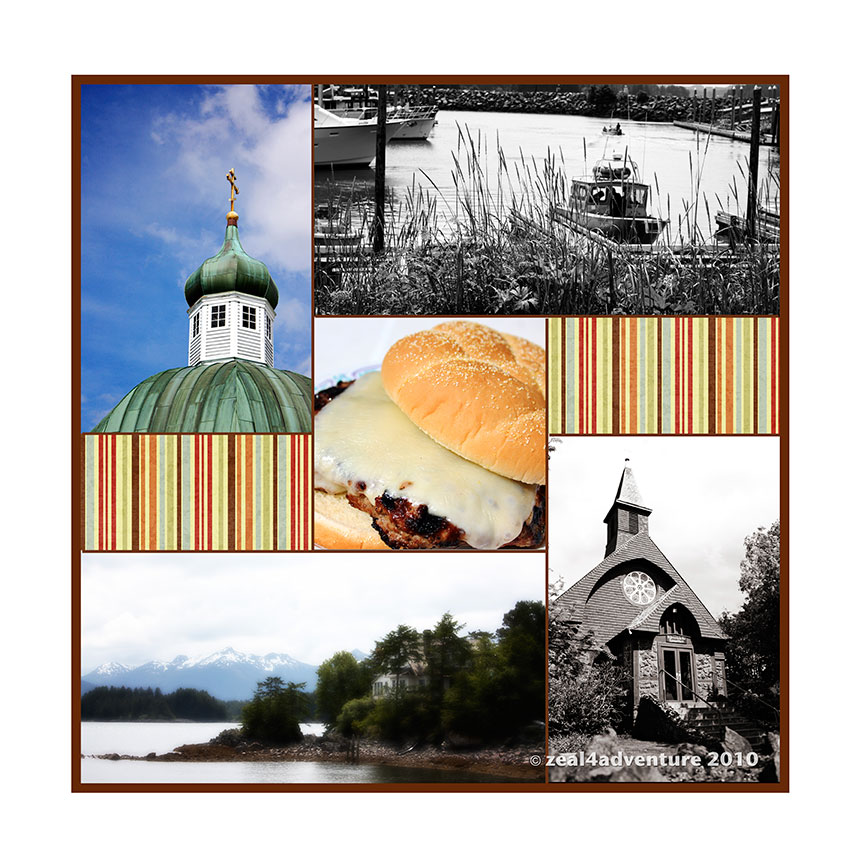
Nestled on Baranof Island and protected by a myriad of small-forested islands, Sitka is a town not lacking in character.  Aside from it being home to native Tlinglits with the cultures still being practiced today, it was also the capital of Russia-America until its transfer to the U.S. in 1867.  It is in Castle Hill that the Russian flag was lowered and the American flag raised.

Easily managed by foot, we walked around town browsing through shops, walking along the harbor.

The first Russian church built in America, St. Michael’s Cathedral is a picturesque focal point in Sitka, topped by its magnificent onion-shaped dome.  And in addition to many historical sights and museums, as in many of Alaska towns, Sitka has a wide range of outdoor activities… fishing, kayaking, hiking, biking…
Oh and that focal photo?  That’s my way of taking my hat off to one of the best tasting, juiciest burger I’ve ever had.  Not exactly a “burger person”, this particular one called me at first sight and am I glad I listened.   😉

Hop on over to Little Red House for more fun mosaics.

Haines

Credits:  Papers – Grand Intentions Kit Stripe paper; Cre8 Mini Kit Blue Solid paper, both by Jessica Sprague;  Overlay – J Crowley Beautiful Evidence Overlay 2

In a town where eagles sometimes outnumber people, it was no surprise to me that there was only 1 restaurant serving lunch that day and it had to be Mexican.  As much as I like experiencing local fares wherever I am, I had to grant A this favor.  He had Mexican (burritos, tacos…) perhaps 15 out of the 17 days he spent on the Colorado River rafting the Grand Canyon, pure torture if you don’t like Mexican all that much.  So he refused to enter no matter how hard I tried luring him with the wonderful smell of carnitas, which I love.  No amount of sweet talk worked so after walking around town looking for another restaurant, I gave in a trekked back to the ship, which in truth had far more choices anyway.  All’s well that ends well.  We spent the rest of the day enjoying the ships amenities… the heated lounge bed at the spa.   😉
Eagles and Muskegs

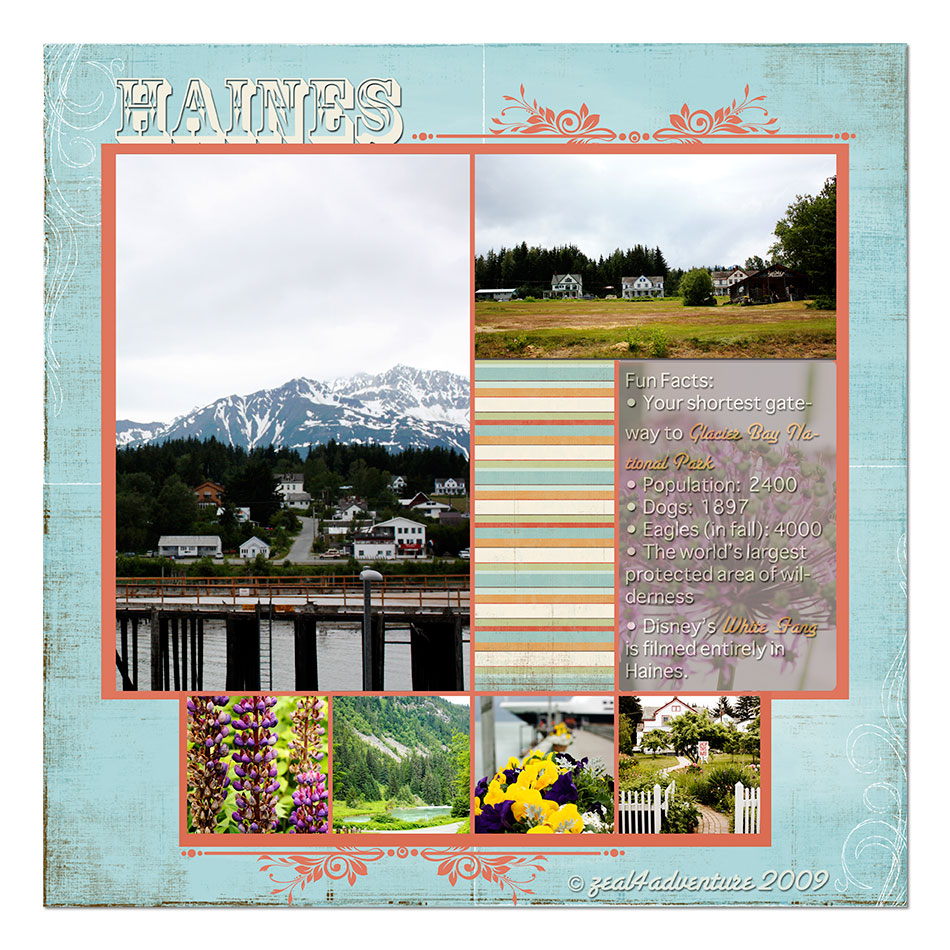
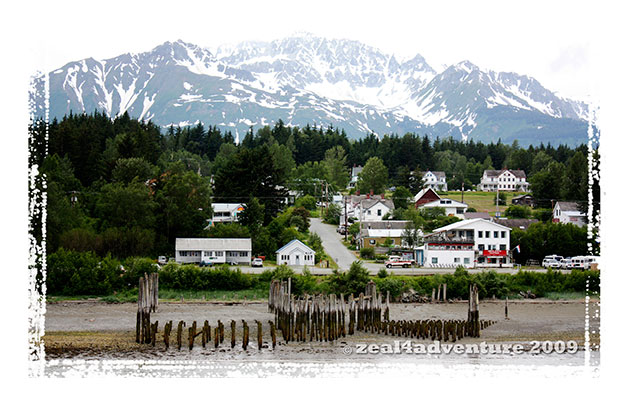
Our journey continues on to Haines.

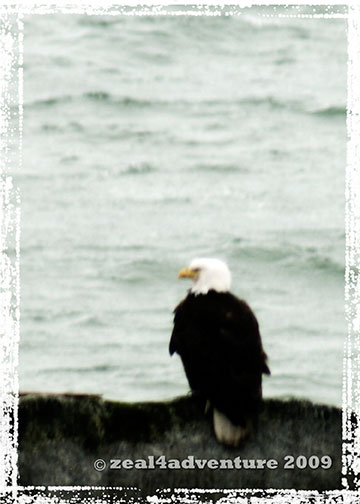
And here we went around with a naturalist bringing us through the “Valley of the Eagles” to view Haines’ most popular wildlife, the bald eagle hence the christening.

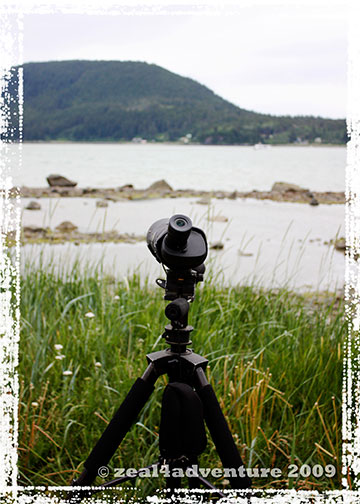
Powerful spotting scopes afford up close views of the eagle and other wildlife.  One can also take photo through the scope.

Year round resident eagles total approximately 400 but the population swells to at least 4,000 in the fall months of October – December.  More than the 2,400 locals residing in this small town.

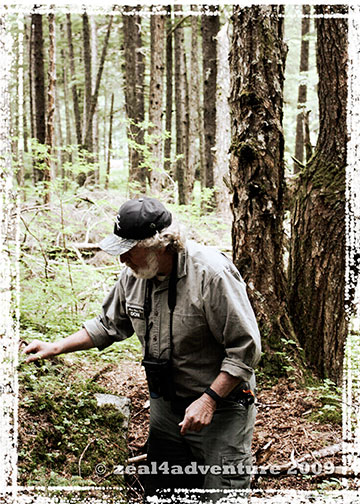
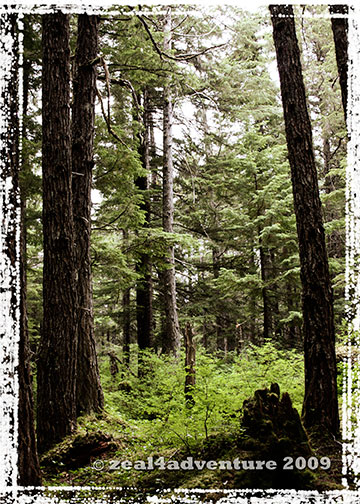
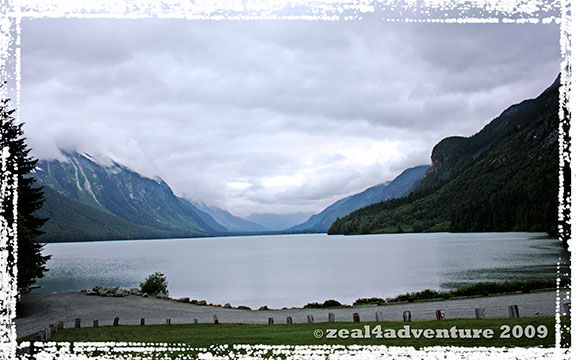
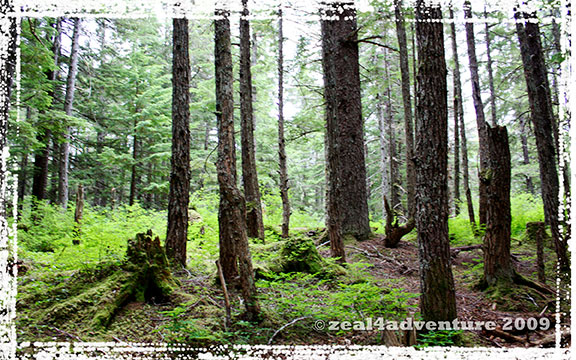
We then stopped along the shore of a picturesque mountain lake before walking through an ancient muskeg beneath hemlock and spruce trees.  Coming from the Philippines, I’ve trekked many a tropical rainforest and experiencing the sights, sounds and scents of a temperate rainforest was a morning well spent.

Temperate rainforests are less humid, cooler and has more sunlight coming through making it more pleasant to walk through, to compare with the rainforest I know.

I noticed though that moss and algae covers more grounds and trunks in a temperate forest.

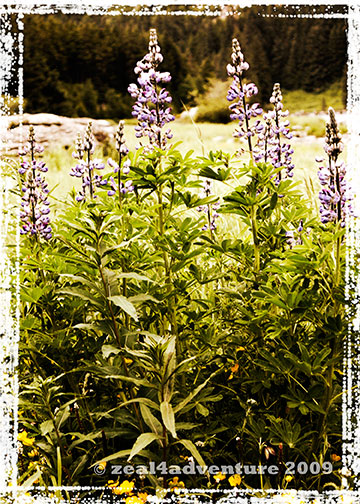
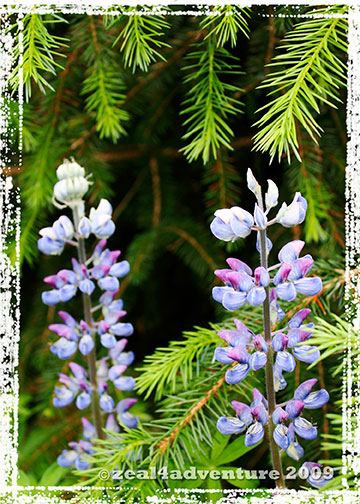
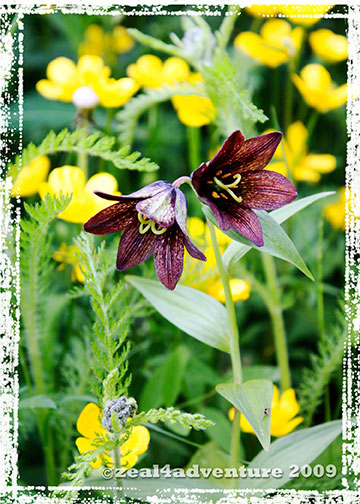
Some wildflower shots around Haines.

Firewood

Nootka Lupine

Chocolate Lily

Halibut on Creek Street

Scenic Sunday

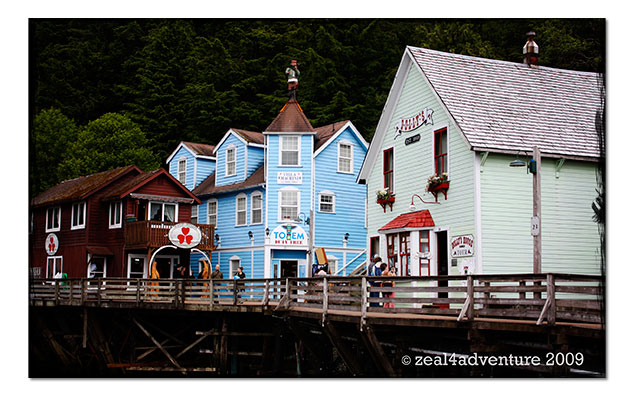
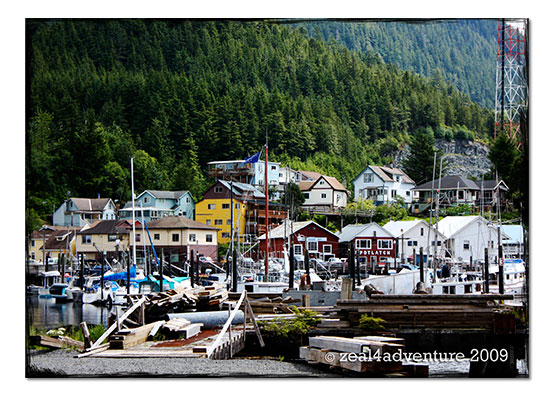
What caught my eye when we got to town from Saxman Village was a lovely row of wooden buildings resting on pilings above Ketchikan creek.   Guess where we headed after the lumberjack show?

Once an infamous “red light district”, the heart of downtown Ketchikan has today turned into galleries and restaurants, mostly original buildings with lots of stories to tell.

One such is Dolly’s House catering once to “gentlemen seeking the company of women”.   😉

Known to sport anglers as a busy place year round for fishing for wild trout, Pacific salmon, and halibut (my favorite).

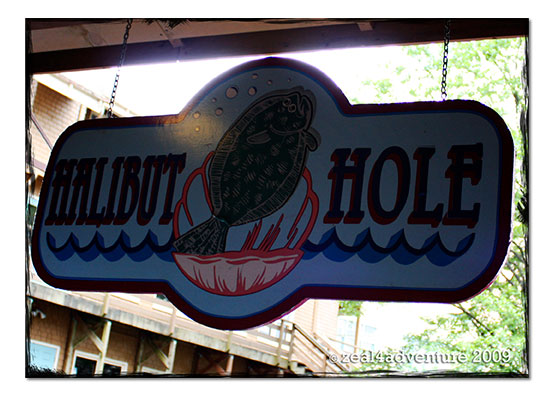
So, when we spotted Halibut Hole while browsing through shops along the boardwalk, we did not hesitate and went right in for a taste of their famous fish and chips before heading back to our ship.

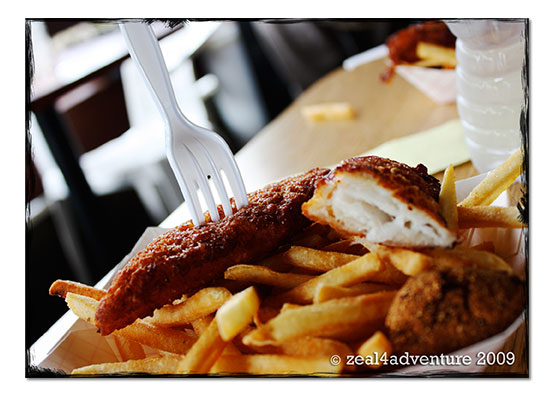
The halibut, which of course came most highly recommended, was what we had.  We were not disappointed.

Fish so juicy and tender deep-fried in delicious crispy batter.  That + a bowl of clam chowder, and we were a happy pair walking back to the pier.

They also serve salmon, clams and shrimp in the same crispy batter

It was a good “first day” off shore and I can tell you that it just gets better.  So stay tuned!

To see more beautiful scenes from around the world, go to Scenic Sunday.

Halibut Hole
7 Creek St.
(907)225-6152

Sweet Jasper

Scenic Sunday

Jasper

Credits:  Template:  Katy Larson Kiseed Studio;  Paper:  LivEdesign Sing4Spring PP3 and SP2;  Elements:  LivE S4S Spring String 2;  Alpha Tags:  LivE Sing4Spring Alpha Tags

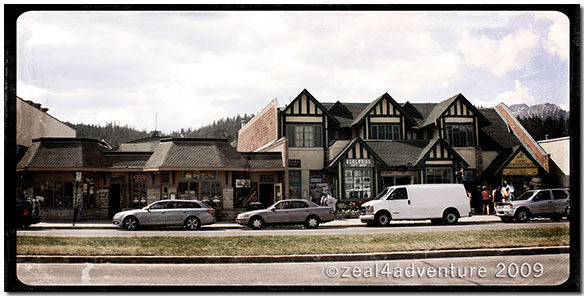
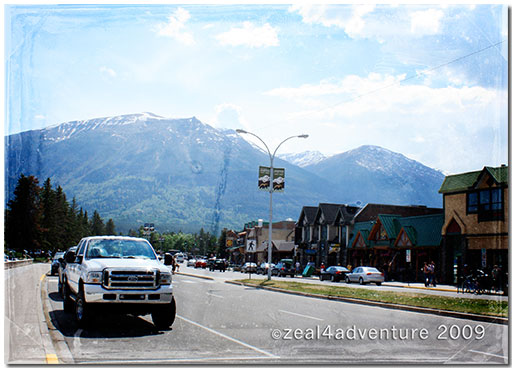
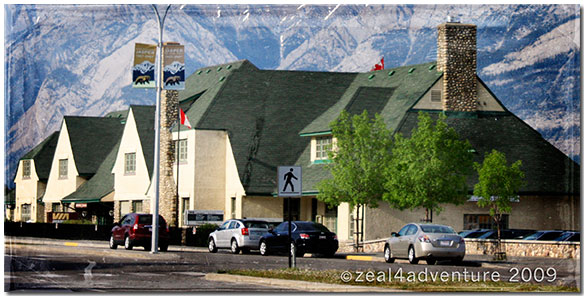
“Must not miss Jasper,” my well-traveled friend advices.  “It is a town you will adore.” Anyone who knows me knows that I love quaint, rugged towns and this little town where peaks crown the horizon in every direction is indeed a town I have regarded as one of my top picks.  The largest and the most northerly of Canada’s Rocky Mountain National Parks and one of the group of 4 national park and 3 provincial parks which together are designated by UNESCO as the “Canada Rocky Mountain Park World Heritage Site”.

Quieter then the 2 previous towns, Jasper feel more like a friendly small town than a tourist town.  It is because nearly one quarter of Jasper’s population is not dependent on tourism.  Canadian National, Canada’s largest railroad, employs hundreds of people who call Jasper home.

If you’re into small quaint towns (filled with abundant wildlife) as I am, this rugged, not-so-little piece of wilderness will become your favorite spot as well once experienced.  In my next few post, you’ll see why.  So consider this an intro to one of my favorite places.