Antonio’s

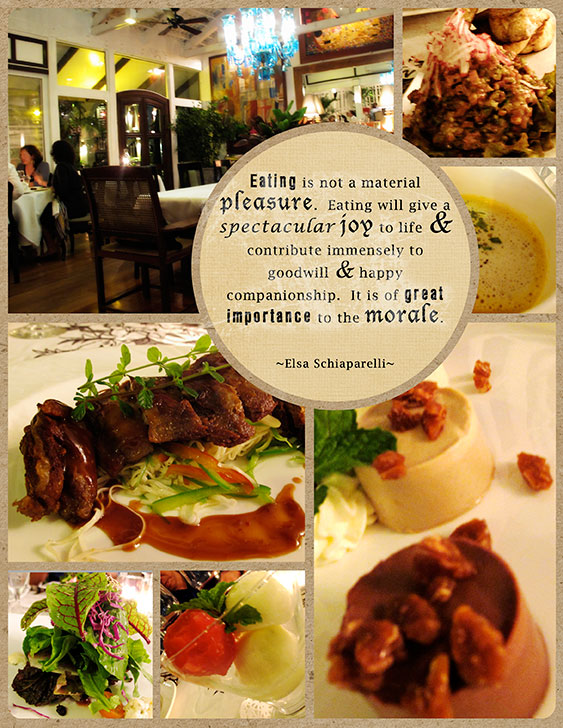
Clockwise:  One of the many dinning halls, Steak Tartare, Pumpkin or Squash Soup, Panna Cotta with Vanilla, Caramel and Chocolate Notes, Sorbet, House mesclun salad with blue cheese and Raspberry Vinaigrette dressing, Crispy Deboned Lamb Ribs.

One restaurant that never fails me is Antonio’s.  A lot has been written about the restaurant and its chef-owner Tony Boy Escalante and recently, it was named the 5th top restaurant in Asia by the Miele Guide.  It is in fact the only Philippine restaurant included on their Top 20 list for 2010/2011, sharing the stage with Hong Kong, Macau and Singapore on the top 5.

Most trips to Tagaytay would entail a sumptuous meal at Antonio’s, whether it be dinner or lunch.  Lovely food from starter to dessert, great service, throw in a welcoming ambience and you get an experience worth every buck each time.  Never fails.

Useful Info:

Antonio’s
Bgy. Neogan
Tagaytay City, Cavite
(0918) 899-2866


Of Preservation and Livelihood

We were running late, directions given were not very clear and so we took a wrong turn and ended up in Sampaloc Lake.
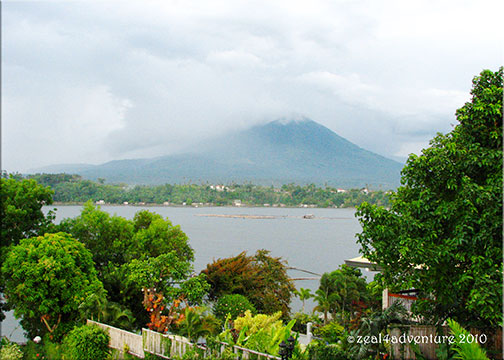
Sampaloc Lake taken from the balcony of Tahanan ni Aling Meding on a previous visit.

When we finally arrived at Sto. Angel, we saw our friends waiting by the roadside.  We turned into a parking lot and hurriedly parked, exchanged pleasantries and off we went, following Mang Tano, on a short trek as lunch was waiting for us.
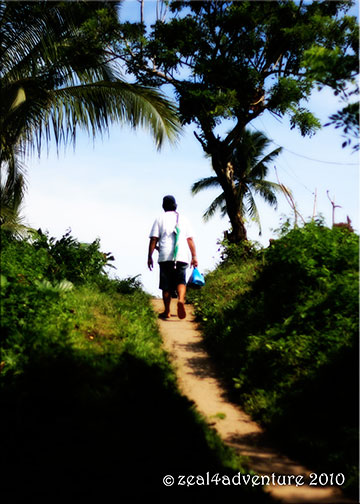
It was an easy trail and about 15 minutes later, the trail revealed a blue-green lake that is quite captivating.
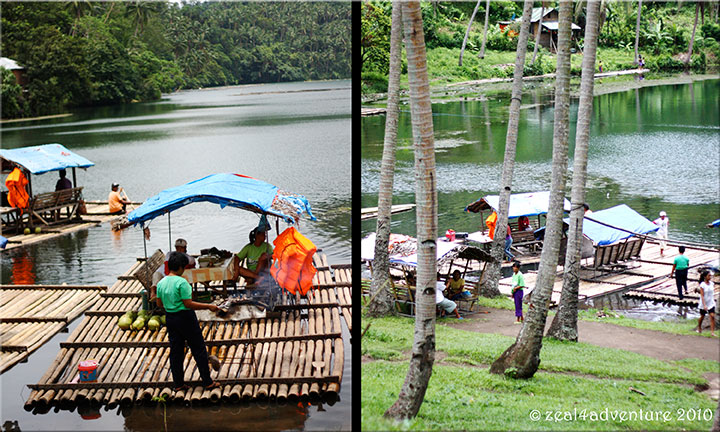
There were rafts positioned at the banks, one of which was reserved for us.  One can book with Aling Sion, Mang Tano’s wife a tour of the lake for P180 and if you add another P180, you get to enjoy a delectable lunch of
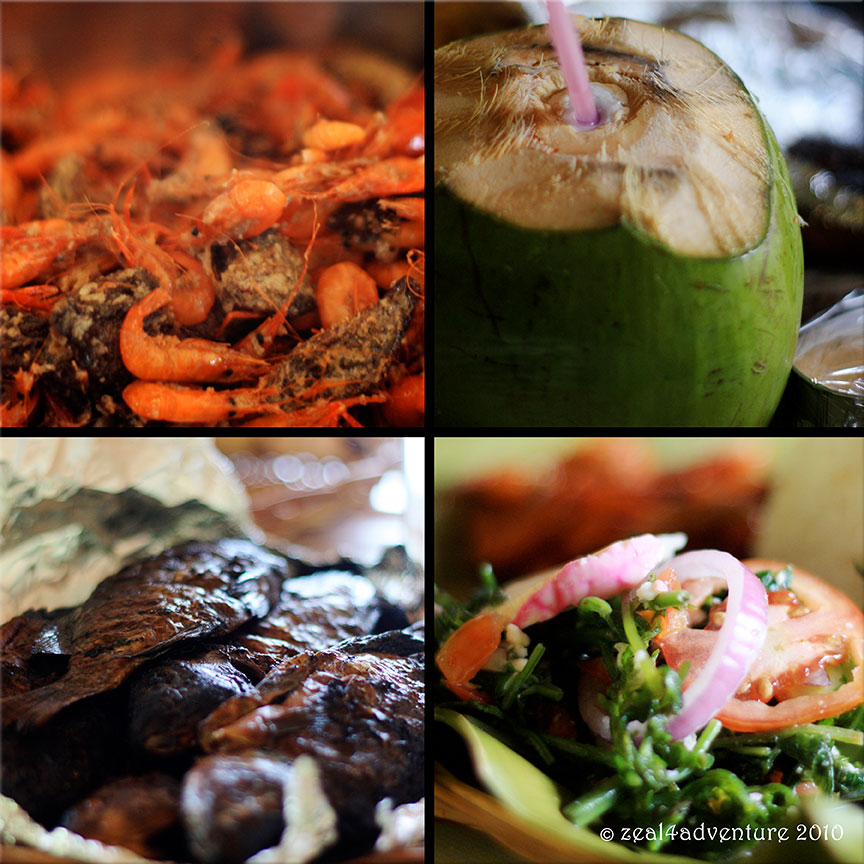
Clockwise:  Ginataang hipon, buko juice (coconut juice), pako (fiddlehead fern) salad, grilled tilapia.

pako salad, grilled tilapia and ginataang hipon (shrimps in coconut milk), all caught from the river and cooked fresh.
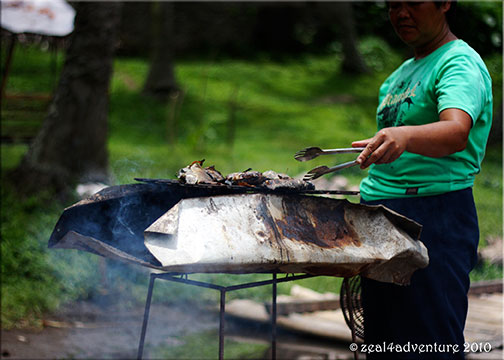
All meals are prepared by the fishermen’s wives which make up the Samahang Mangingisda sa Lawa ng Pandin (loosely translates to “Association of the Fishermen of Lake Pandin”).  The association was established as part of a preservation effort and at the same time help the residents earn a little bit of income on the side with the wives attending to the tourists.
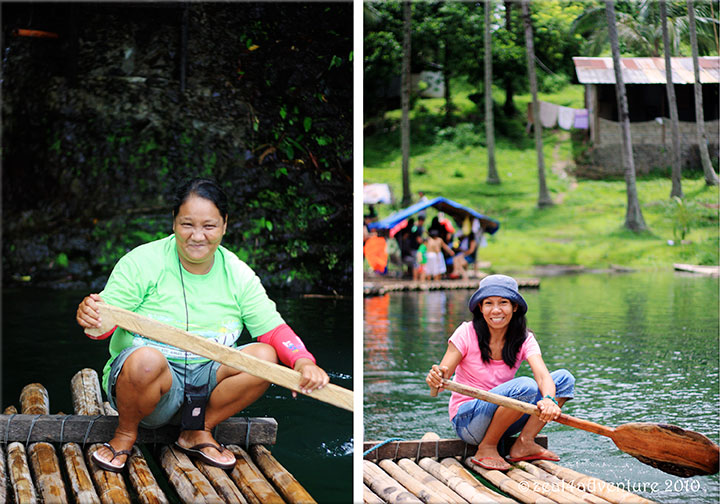
With the help of Mandy Mariño, the fishermen’s wives organized the “Tour of the Pandin Lake” personally paddling the rafts.
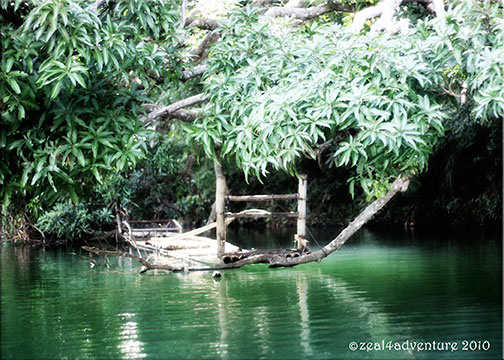
Today, it is the most pristine of the 7 lakes of San Pablo.  Although there is nothing much of the tour, it just takes you around the lake, stopping at a short uphill trail that leads to clearing where one can take a peek at its twin, Lake Yambo.
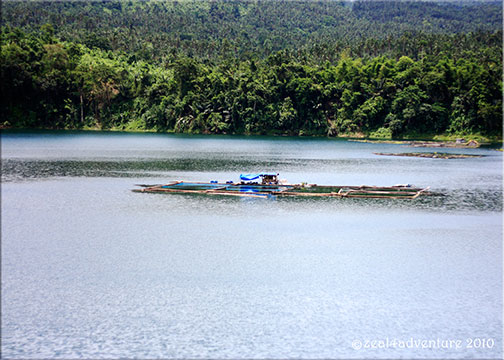
Yambo’s name was derived from its famous lengend of 2 lovers, Yambo and Pandin.
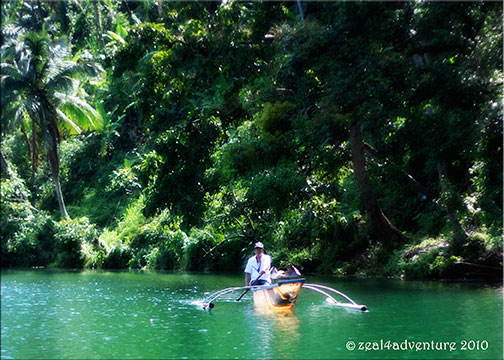
Both lakes are teeming with tilapia, carp, catfish, milkfish, shrimps and snails.
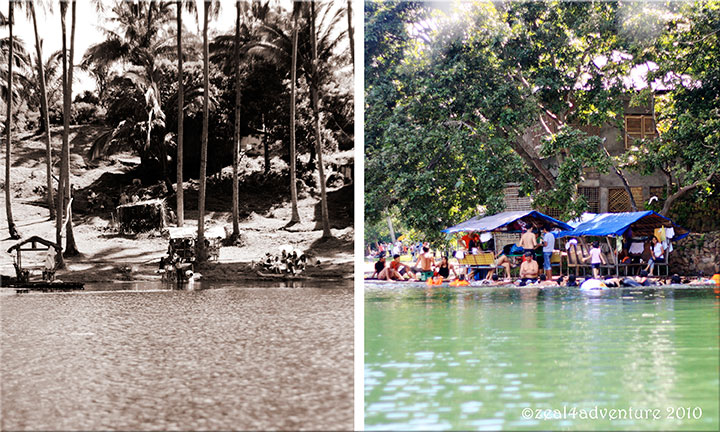
They are also suitable for swimming but just to avoid the hassle of changing afterwards, we skipped it and just enjoyed the lake, the company and the delightful lunch.

Note: This tour is likewise part of the Viaje del Sol route.

Getting There:

Along the National Highway going towards Lucena, you’ll reach a fork somewhere along San Pablo, take the left.  This will lead you to the town proper.  Go all the way till you reach the city hall, go pass the rotunda until you reach Sto. Angel.  Watch out for a sign. Ask around if you don’t see the Lake Pandin sign that would lead you to a parking lot.  The residents are very helpful and will point you to the right direction.

Contact detail:

Aling Sion
0929 9789565
 

Fresh from the Tree

Credits:  Papers by LivE Designs – UNR Grassy Sky and Lily Lines from the UNR_Naturally Free kit and PP2 from the Sing4Spring Paper Kit; Elements – Birdoodle, Brad set of 4 and Frame 1 from the Sing4Spring Elements kit.

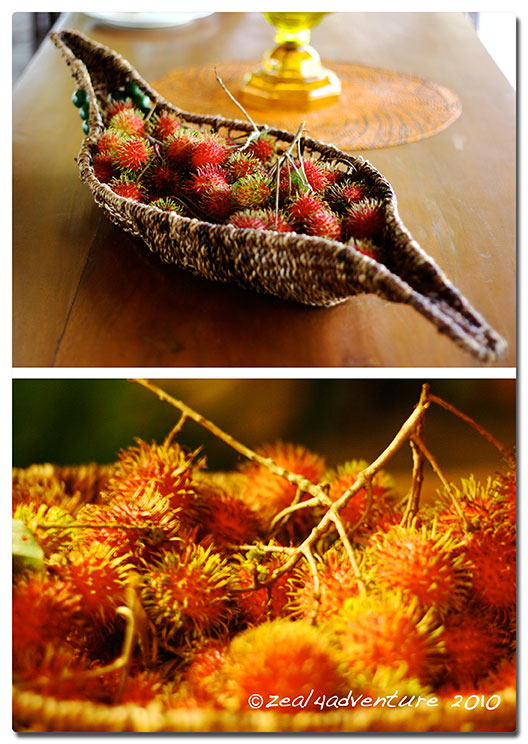
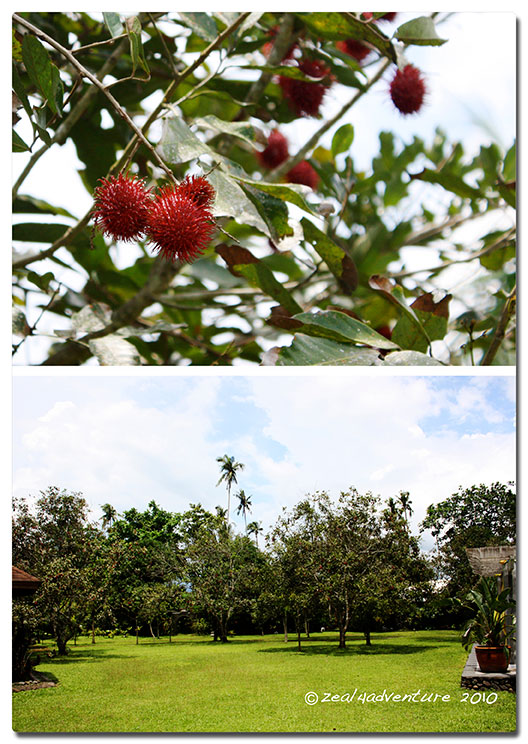
I am not particularly fond of rambutan, at least not in the same level of fondness I have for lychee and longan – rambutan’s close cousins.  But one glorious day I was given some that was fresh from the tree and it has gained a few notches on my gustatory scale.

This tropical fruit indegenous to Malaysia is a hairy bright red oval fruit about the size of a small hen’s egg.  Inside is a translucent grapelike flesh that is sweet and tastes a lot similar to but slightly acidic than that of the lychee.   The pit is what sometimes turns me off.  It annoys me much if the outer layer of the seed sticks to the flesh.  However after tasting the freshly picked fruit, I found out that a fresh produce does no such thing, and I learned to be less judgmental of the fruit.

July – October is harvest time for these sweet juicy fruit and last August, we were in San Pablo, Laguna for the Rambutan Festival where a kilo can go as low as P20 (US$ 0.50).

On our recent road trip, we checked in at Sitio de Amor, a great place to have fresh rambutans, either by personally picking them from their trees that is sprawled all over their garden or simply have it served right after picking during mealtime.

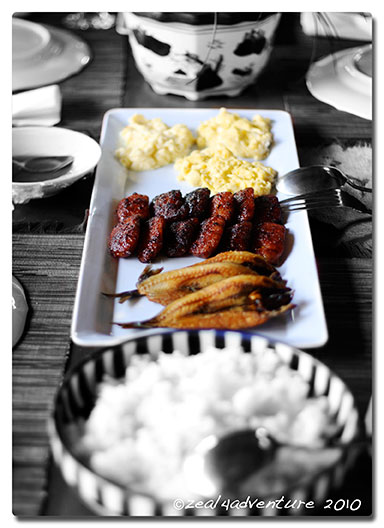
Our breakfast fare which include scrambled eggs, longganisa (local sausage) and a dried fried fish called Nora Aunor (no kidding!)

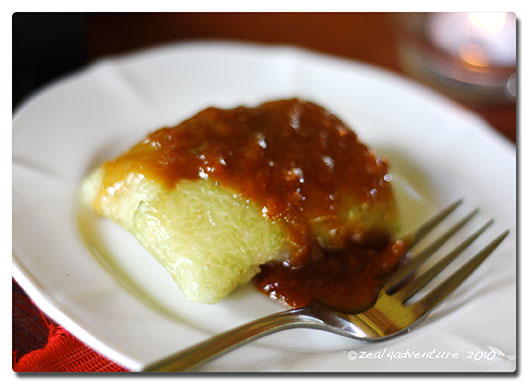
Glutinous rice cake topped with cane sugar (panocha) — the best in my opinion.

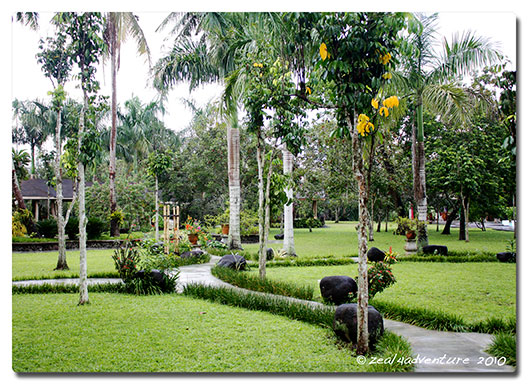
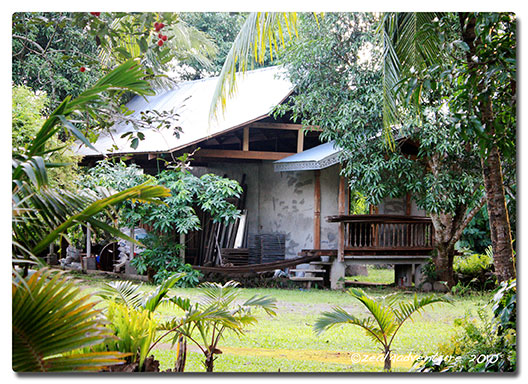
Sitio de Amor is a sprawling 4.5 hectare landscaped orchard situated near the Maharlika Highway.  Nestled between Mt. San Cristobal and Mt. Banahaw,

traversed by the Balanga River feeding into a lagoon where people can choose to take a dip.

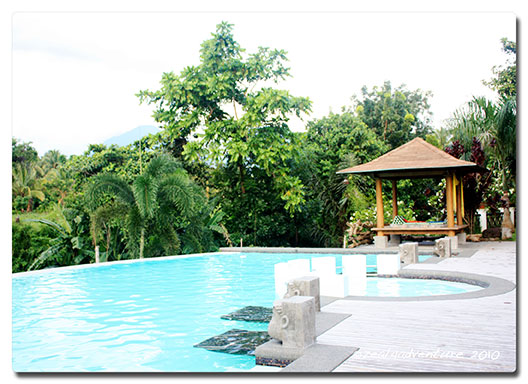
Another option is the infinity pool built by the owners of the resort, Jorge and Amor Bondad.  A weekend home turned resort, the Bondads are very hands-on in expanding and sprucing up this oasis of theirs.  In fact, when in their property, you will chance on Amor working in her garden, claiming the chore to be her stress buster.

Looks like more rooms coming up in the future.

Note: Sitio de Amor is part of the many destinations of Viaje del Sol.

Getting There:

Once you see Jardin de San Vicente along the Maharlika Highway, watch out for a sign that will lead you to the resort.

Sitio de Amor
Km 88.8 Maharlika Highway
Barangay San Antonio
San Pablo, Laguna
For reservations, call:  522-7340 ; 0918-9274346
Email:  sitiodeamor@yahoo.com

Ilocos UNESCO Pride

Three UNESCO World Heritage Site found in one region, that’s right, all found in Ilocos – Vigan City, Santa Maria Church both in Ilocos Sur and Paoay Church in Ilocos Norte.  That’s two out of four Baroque Churches in the Philippines inscribed in the UNESCO World Heritage list.  Can’t get any cultural than that — a perfect post to end this road trip series.  So without further ado:

Santa Maria Church

Along the western coast of the Ilocos Region, an hour drive south of Vigan is the town of Sta. Maria.  Somehow the Spaniards like building churches on top of hills because again on top of a hill overlooking the town, the blue sea and the verdant fields nearby is another World Heritage Site, the massively baroque Sta. Maria Church.  Built in 1769, this church was used as a fortress during the 1896 Philippine Revolution.  The church’s façade is not impressive but more striking and quite unique is the tower that is slightly tilted.

St. Augustine Church

Is also popularly known as Paoay Church visited by many due to its interesting architecture.  A unique example of Filipino architecture from the Spanish period, the main distinction though are its buttresses which supports its walls, 3 meters thick, from earthquake.  For that reason, it was cited as one of the most outstanding “earthquake baroque” structure.  Aside from its function however, I think the buttresses add a very Asian touch, almost reminding me of Balinese architecture.  The church is an example of east meets west architecture (Filipino, Asian and Spanish) which is uniquely Filipino, I think.

I hope you enjoyed Ilocos as much as I have.

Keeping Watch Through the Years

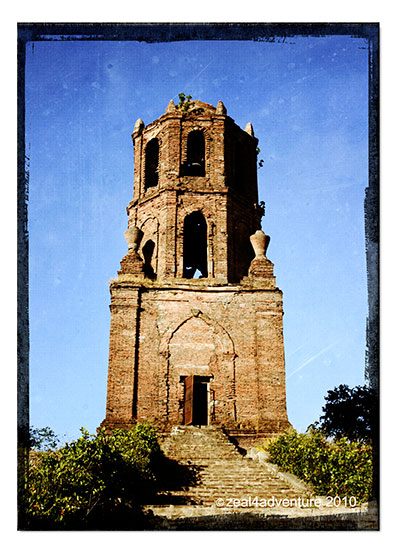
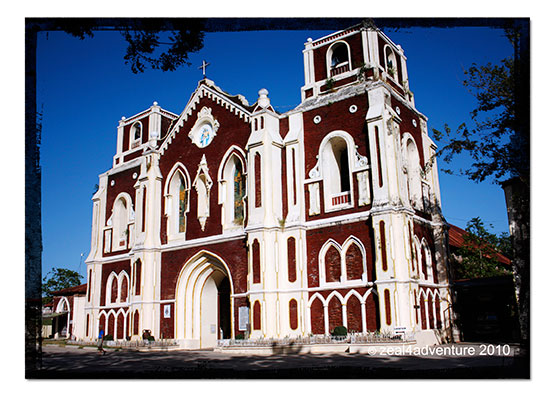
Just a stone’s throw away from Vigan is an old bell tower standing alone on a hill watching guard over the town of Bantay.

It is without a doubt one of the most dramatic belfries in the region (and one of my favorite) owing to a superb view of  the mountains of Abra

and exquisite sunsets bringing forth a golden charm to the brick and slime walls.

Also used as watchtower for invading enemy forces during World Wars I and II, it was constructed separately, as many Spanish churches are in Ilocos, from its main church, St. Augustine Parish Church, also known as Bantay Church.

Built in 1590 with design reminiscent of the Old Spanish architecture using local indigenous materials like brick and slime.

Damaged during World War II and was restored in the 1950s in neo-gothic design as seen today.

Scenic Sunday

A Peek at the Lives of the Crisologos

Credits:  Template by Jen Caputo;  Papers by Jessica Sprague Thank You Kindly kit

The Crisologos – one of the most prominent political families of Vigan, a principal political dynasty, so to speak.  The most popular street of Vigan was in fact named after them.  Their lives were filled with political drama and violence.

Floro Crisologo was a veteran and a long time congressman.  On Oct 18, 1970, while standing in line for communion, a lone gunman entered the church and shot him.  The assassin escaped during the chaos that ensued and the murder case remains unresolved to this day.  As rumors have it, it was politically motivated.

His wife Carmeling, once a Governor of Vigan, survived him.  She also had her fair share of political violence when she was ambushed in her car in 1961.  She lived to tell the tale.

Their son Bingbong on the other hand, served time in the Bilibid prison for burning down two villages in Ilocos Sur in 1970.  It was rumored that it was done in retaliation for the residents voted for his mother’s opponent.  Today, he is a congressman for a district in Quezon City.

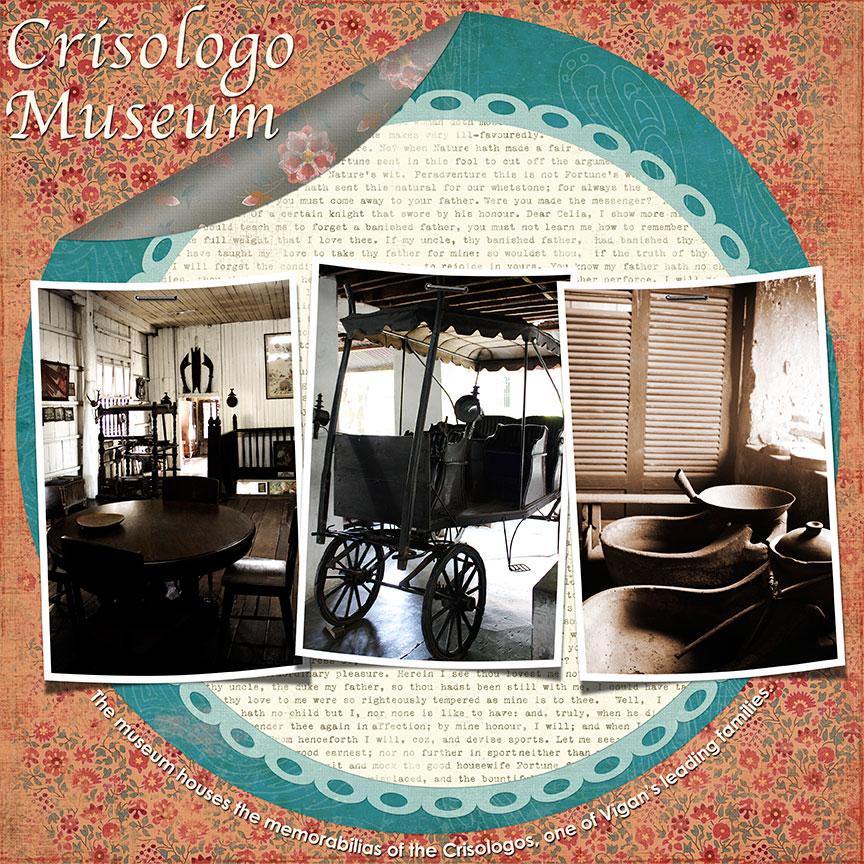
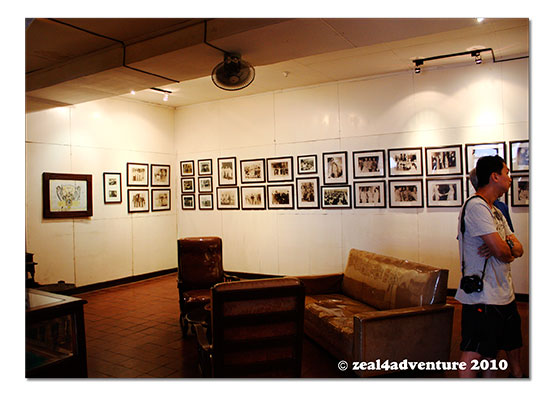
Housing the memorabilia and antique collections of this family is their ancestral home now turned museum, the Crisologo Museum. Truth be told, when compared to the well-kept Syquia Mansion, this was a let down and anti-climactic.

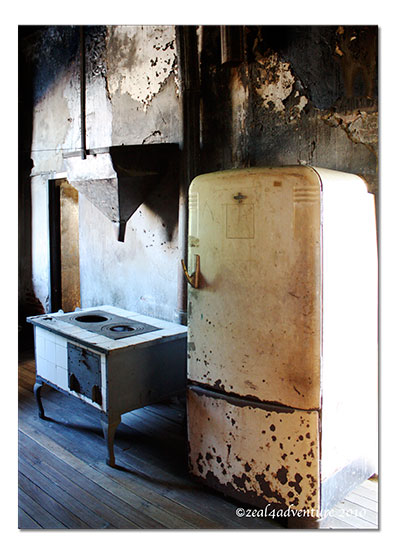
Did you ever own one of this?

Or this?

I hope not this.   🙂

A Tourism apprentice who knows very little about the family and its (very colorful) history took us around and when bombarded with questions, the poor girl couldn’t answer most of it.

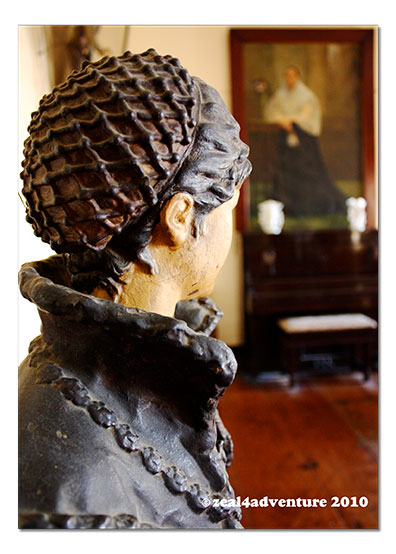
The house however, albeit not as well kept as the one of the Syquia’s, was interesting enough showcasing a lot of paintings and photos of the family.

Syquia Mansion

Credits:  Papers by Jessica Sprague Home Away From Home Paper kit.

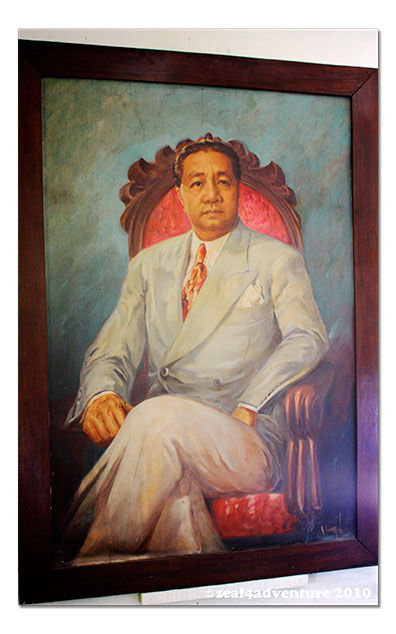
This colonial mansion built in 1830 at the corner of Quirino Blvd. and Salcedo St. is the ancestral home of Doña Alicia Syquia, wife of Philippine’s 6th president, the late Elpidio Quirino.

It is today a museum that offers free entrance to visitors.  In the house are 19th century furnishings, memorabilia and various photos, providing a glimpse to the man.

Doña Alicia did not live to become first lady however, because she was a casualty of World War II — she along with 3 of her children were killed by the Japanese.  Elpidio did not re-marry and his daughter, Doña Victoria served as First Lady.

The mansion had become the official residence of President Quirino thus claimed as the first Malacañang of the north.

A portrait of Doña Victoria graces the wall of the Receiving Room

A single wooden stairs leads to the receiving room on the 2nd floor where a replica of the Spolarium hangs.  Rumor has it that Juan Luna’s assistant painted the replica and this was what they referred to when the real Spolarium was restored.

The rooms are spacious with various doors linking one room from the other.  One can enter one door and exit another door leading to another room.

Capiz windows up close

The mansion was well kept and retains a lot of the 19th century details.

Glass window detail

I am a fan of Machuca tiles — flooring used in the Azotea

Looking out to the Azotea froma room (nice grill detail too).

The guide was very knowledgeable and equipped with many information.  Definitely a must see when in Vigan.

This is my entry to My World this week.  Click on the icon below for a glimpse of more worlds from around the globe.

Timeless Vigan

Ilocos Sur is where many culture and histories meet, all sharing space in this timeless city called Vigan – shrines, landmarks, museums, churches, ancestral homes, a cobbled-stoned street.  Inscribed in 1999 in the UNESCO World Heritage list, citing that, “Vigan represents a unique fusion of Asian buildings and construction with European colonial architecture and planning.”

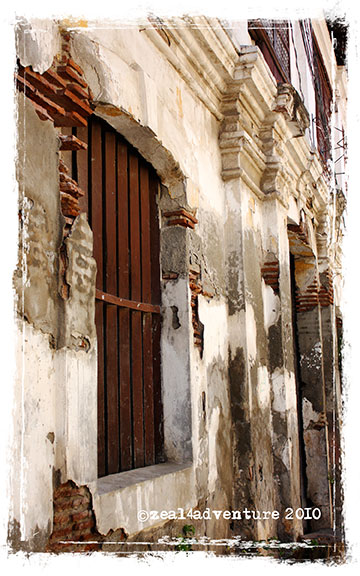
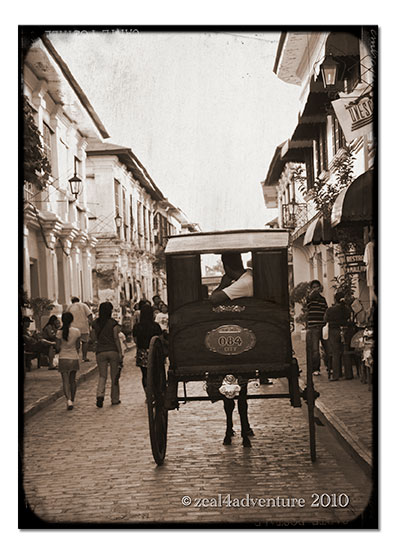
Established in the 16th century, Vigan is still the most intact example of a Spanish colonial town in Asia today.  It is best known for its cobbled-stone street, Calle Crisologo, lined with many old buildings that are intact, restored or in (dis)repair.

One can see remnants of the old-Spanish architecture throughout the center of the city.

Although the street is now busy with souvenir and curio shops, it still transports one back to the Vigan at its peak.  It is the oldest surviving Spanish colonial city in the country, not many of the historical buildings are left after WWII.

The old Vigan colonial houses, built mostly by rich Chinese traders, are made of thick brick walls and red clay.

They conduct their business on the ground floor and reside above.  It is a characteristic of Chinese culture and other Asian countries as well.  The resulting townscape is a unique display of a harmonious blend of Ilocano, Chinese and European elements, a unique display of the multi-culture nature of the Filipino society.

Captivated by colonial towns and its culture, this road trip all started with Vigan in mind.

From their longganisa and bagnets to their ancestral homes, we savored it all.

the street at night

We spent the 2 days walking up and down Calle Crisologo soaking in the heritage,

wondering how life was back in those elegant days of yore.  An interesting city albeit far from the capital with about 400 kilometers (that’s about 8 hours) of travel needed if you are coming from Manila.  Vigan is charming and I urge every Filipino to make a visit at least once in their life.   🙂

Not your typical McDonald’s facade

Al fresco dining in the evenings is a wonderful thing

Scenic Sunday