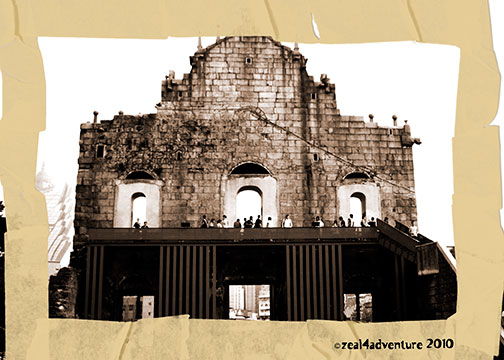
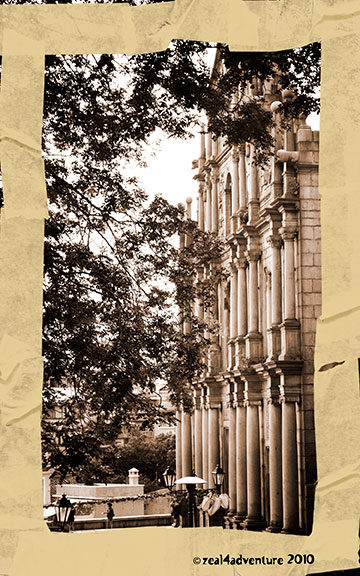
The Ruins of St. Paul’s (Ruínas de São Paulo)

The sixty-eight granite steps from the square will lead you to a façade of what was once the greatest cathedral in Macau.  Built from 1582-1602 by the Jesuits, the remains of St. Paul’s Cathedral was the largest Catholic Church in Asia at the time.

It is a fine example of Macau’s unique characteristic as a city of Europeans, Chinese and other Asian exchange.  Ruined by fire twice, ravaging the other buildings and destroying the church ad almost all the complex.  From 1990 – 1995 work was carried out to restore the back of the church, turning it into a museum.

Regarded today as the symbol of Macau, St. Paul’s ruins was considered the core area when the historical center of Macau was inscribed on the World Heritage list in 2005.  It is today one of Macau’s most famous landmark where music performances are held regularly.

If you enjoyed these sepia scenes, click image below for more.

The Real Macau

Beaches, ancestral Chinese villages and forested hills with nature trails… traditional countryside still exists in the islands of Taipa and Coloane.

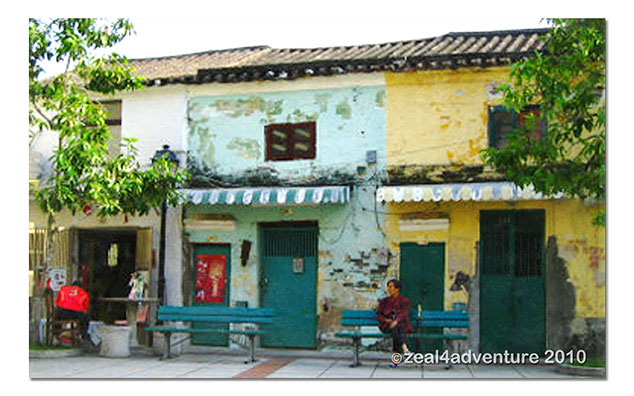
Here in the narrow streets and alleys with multi-hued buildings with peeling paints and stained walls lives the real Macau contrary to just a few meters away where The Venetian Macau Resort and Hotel stands.

Oblivious to the developments that will eventually comprise 14 resorts, the locals still while away time, chatting on benches around the square.

Although this rural part of Macau is slowly transforming into one of the biggest tourist destination in Asia, there still remains a section that is evidence to Macau’s centuries-old cultural heritage.  A quaint village on what was once Taipa Island’s southern shoreline.

Pak Tai Temple — one of the biggest temple of Taipa

Taipa Village or Tamzhai (in Cantonese) is still made up of Chinese shophouses, Portuguese-style offices, and temples all around.

Incense inside Pak Tai temple

A good place to learn about the history and culture of the area as there are plenty of them to explore.

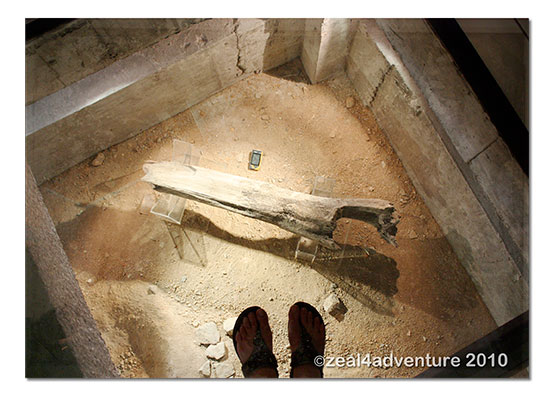
The museum of Taipa & Coloane History is a comprehensive exhibit of historical relics unearthed on Coloane,

The glass floor to view the relics from the basement

the stone architectural remains in the basement of the former Island Council Building.

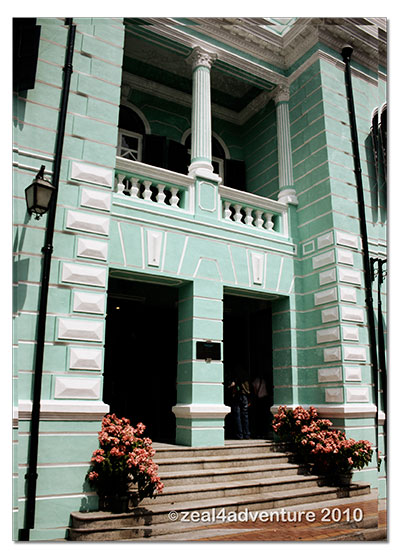
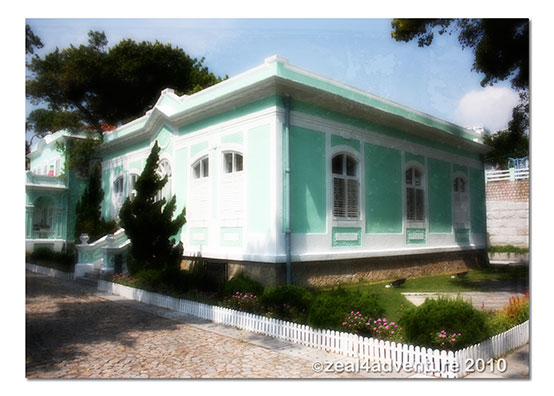
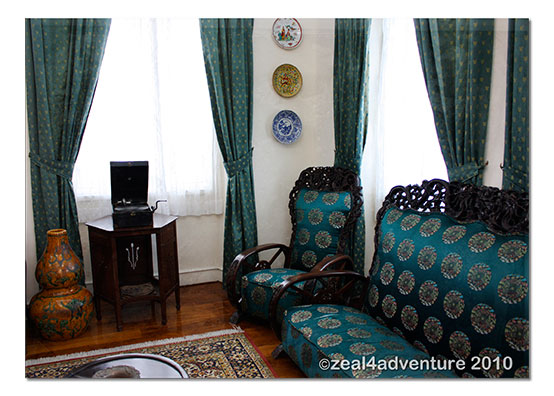
A few minutes walk to the east from the village is a waterfront area where remains a superb old colonial promenade, Avenida de Praia, complete with original houses.  The Taipa House Museum (or the Casas- Museu da Taipa)  shows a number of 20th century houses restored to depict details of turn-of-the-century domestic life of the Macanese families, highly religious, well-to-do but not extremely wealthy.

The Macanese House is one of macao’s typical houses in colonial style reminiscent of a period of Portuguese splendor characterized by frequent influx of the Portuguese, British, Mandarins and merchants in this tiny territory.

Carmo Church — 0ne of the eight views of Macau

Although Taipa’s northern shore is hardly worth a stop now, Taipa Village on the southern shore and Avenida de Praia is definitely a pleasant walk where faded mansions and wooden benches seem frozen in time.

Scenic Sunday

Five Reasons Why…

You should try Whitewater Rafting at least once in your life.

Credits:  Bannerwoman Designs Worn, Folded Edges, Judy Meibusch Doodle Dot elements, LivEdesigns SSunFun Alpha

Ever since my first rafting experience in 1999, I was hooked (see here, here and here).  I can’t count the number of times I’ve rafted the Chico, after all as they say, you never run the same river twice.  And I felt it time to share this exhilarating experience with my team.
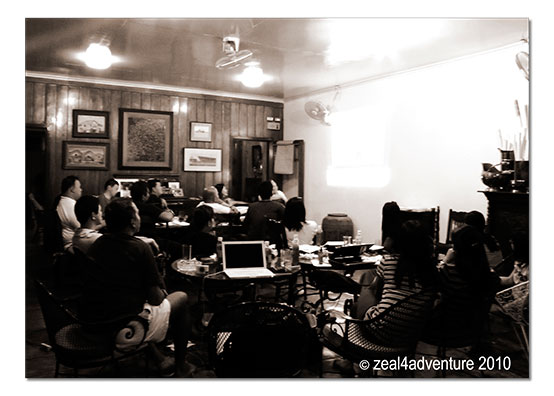
So for 3 days in January, we found ourselves in Tuguegarao slaving away, devising strategies for the year
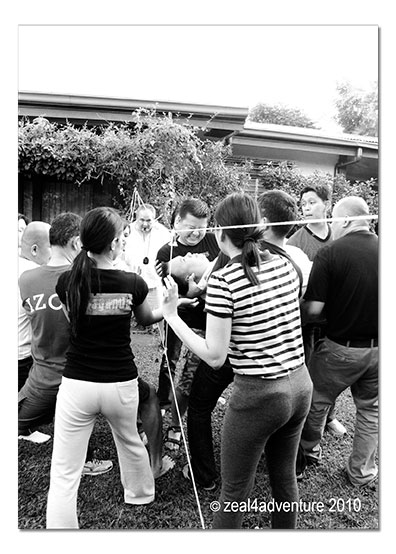
with a little bit of team building on the side.

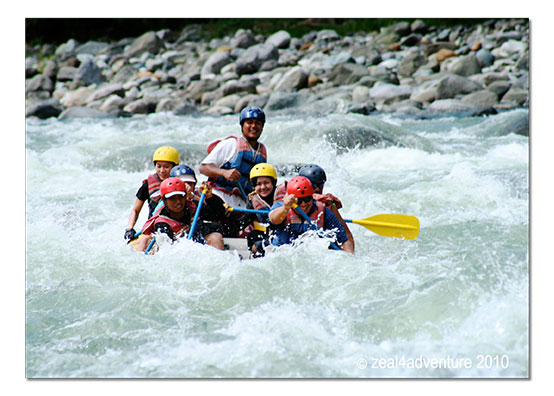
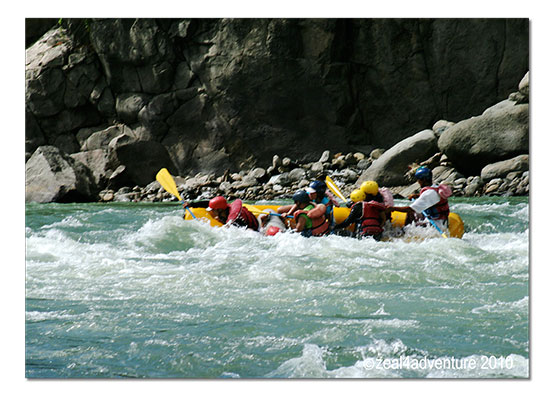
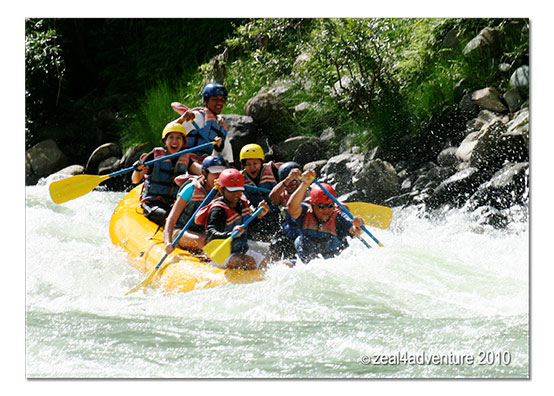
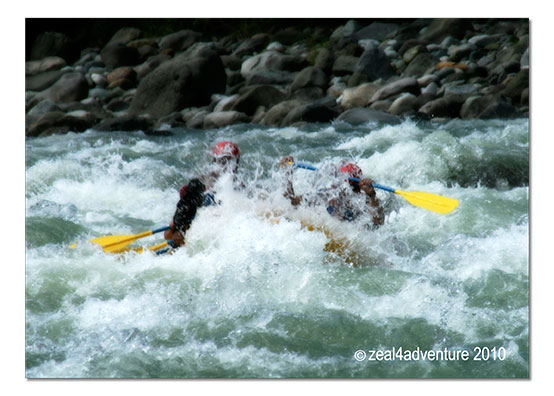
Then on day 3, we spent an adrenalin-filled day at the Chico River in Kalinga.  Here are insights gathered from this experience.

It’s Liberating

When was the last time you’ve tried something at least once in your life?  I am one to try almost anything (I say almost because I have yet to convince myself about bungee jumping) at least once.  Whitewater rafting may not be for everyone but you’ll never know unless you’ve tried it.

I’ve rafted with many first timers with sedentary lifestyles through the years and as often as not, they at the very least, had a blast and in numerous occasions, a wild side they never knew they had is kindled.
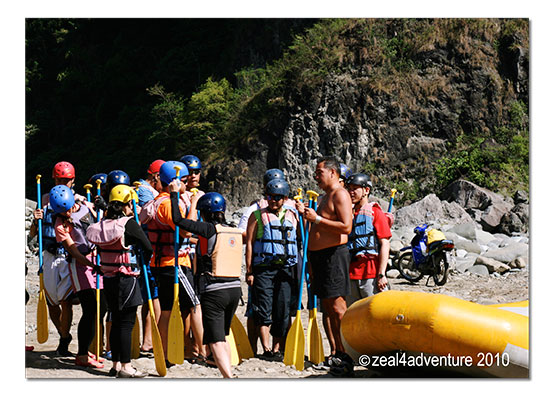
Anton Carag, charismatic mover and shaker of whitewater rafting since 1998 at the Chico

Many among my team were apprehensive before the run and listened intently to Anton Carag lecturing on proper paddling techniques, what to do when one falls off and how to get back on the raft.
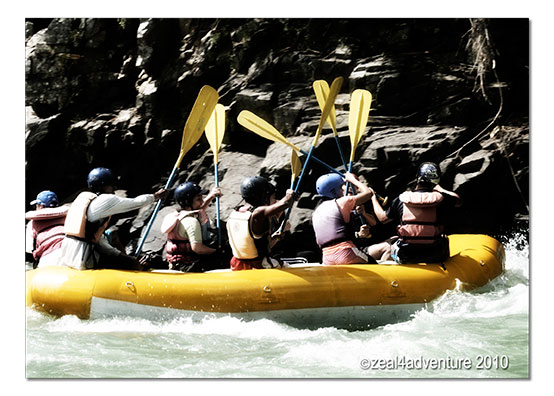
Doing a Hi-Five for a job well done

I saw how their fears transformed to confidence after the first few rapids.  They started to have fun.

Some even enjoyed the falls, bringing home stories of how they survived it etc.  It also helps to know that two internationally recognized wilderness specialists trained Anton and his team of guides some 10 years ago.

It Fosters Team Spirit

Rafting only works if everyone works as a team.  Listen to your leader and follow exactly the commands.  If the team fails to act as one, the raft may capsize.  If you’re not prepared to drink gallons of water, you probably don’t want this.   It’s also a hassle getting back on the raft and if the water’s low, you will most likely be going home with bumps and bruises as a remembrance from the river.  But hey, isn’t that proof of that adventurous spirit you thought you never had?  So listen to your guide and be in sync with your teammates.

It’s Actually Safe
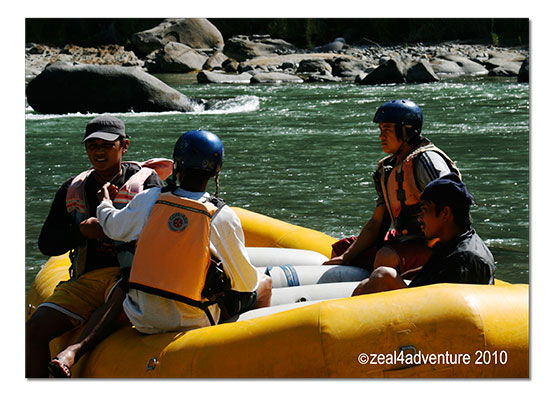
First of all, the guides (mostly natives of Kalinga) know the river like the back of their hands.  And to reiterate, top-notched, seasoned river guides with international experience trained most of them.  But in case you didn’t follow instructions or to put it nicely — misunderstood the guide’s instructions and you fall off or worse, the whole raft flips, not to worry because the equipments, most especially the vest you are wearing (I can only speak of AEPI’s as I am not familiar with the other outfitters) is US-certified safe.  This means that when you’re under, the vest is buoyant enough to carry you out.  Sometimes with a little help from you, but hey again, sometimes you need to work a little harder eh?

It promotes Eco-tourism

And provides jobs.  Whitewater rafting is part of the new adventure and eco-tourism that the Philippines have to offer.  Most of the guides used are from neighboring communities and the more tourists, more jobs and other business opportunities are not far behind.  It also teaches us to respect and appreciate Mother Nature.

It’s Gorgeous Out There
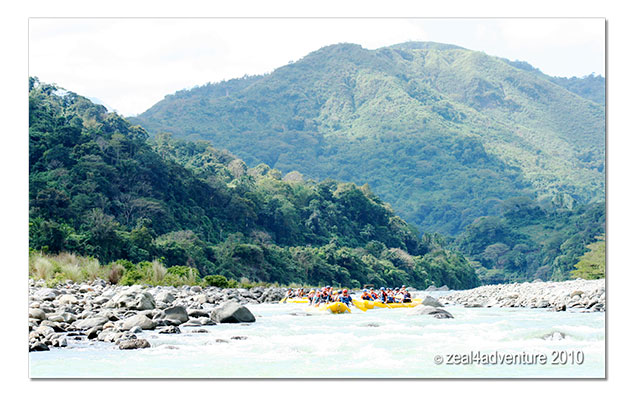
Spectacular views of the Cordillera Mountains coupled with beautiful riverbanks and clear waters (not always the case though) surrounds the whole stretch of the run.  Unspoiled.  Pristine.
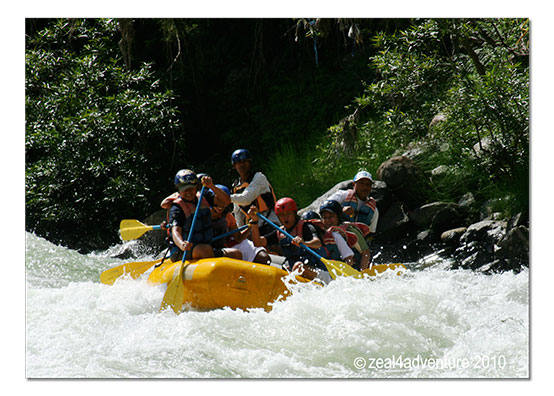
Except for raging rapids that never fails to stir up your adrenalin, the only other sounds you hear are chirpings of birds and the flow of the river.  Serenity in a most natural setting.
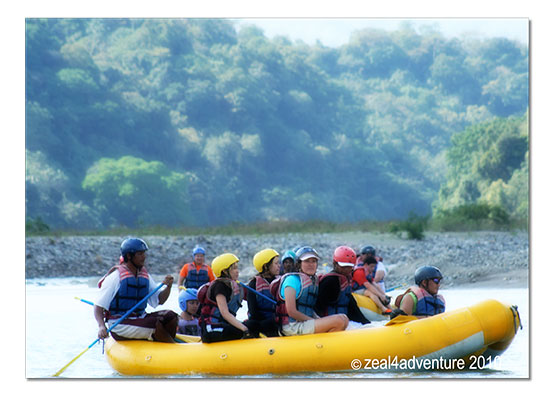
Excellent Food at Casa Carag

The 6th reason why you should try whitewater rafting with AEPI.  The food is just extraordinary.
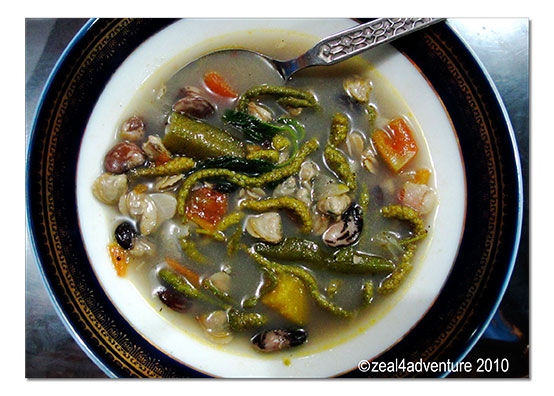
Nothing is ordinary, from the longganisa, Salinas and hot native chocolate for breakfast, to the local Ibanag dishes such as their pinakbet and inabraw.  It’s all good!

So, at the first chance of rain (which is sadly a long way off), book a package with AEPI and experience the ultimate adventure of your life.  Season starts in August and ends in February.

*  All photos at the river courtesy of AEPI.

Contact Details:
Anton Carag, Jr.
Mobile:  (63)917-532-7480
Landline: (6378)844-1298
Email:  aepi@whitewater.ph; anton@whitewater.ph; whitewater1ph@yahoo.com

Keeping Watch Through the Years

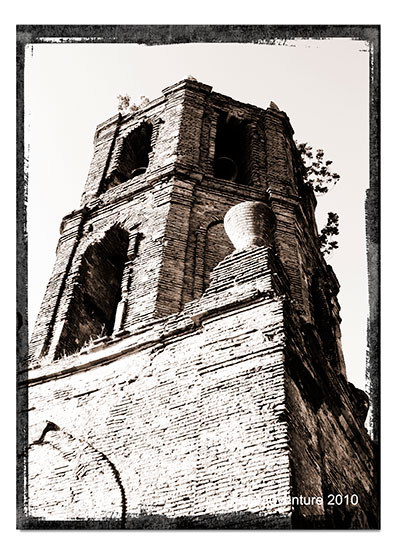
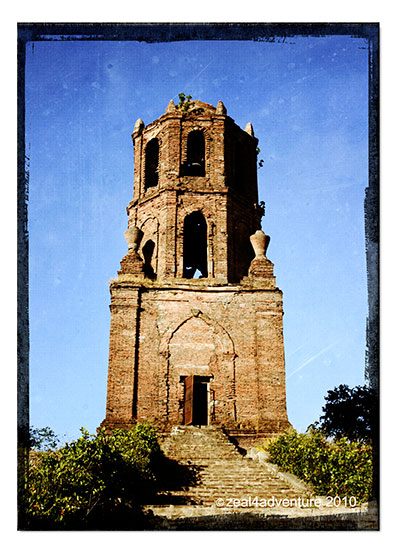
Just a stone’s throw away from Vigan is an old bell tower standing alone on a hill watching guard over the town of Bantay.
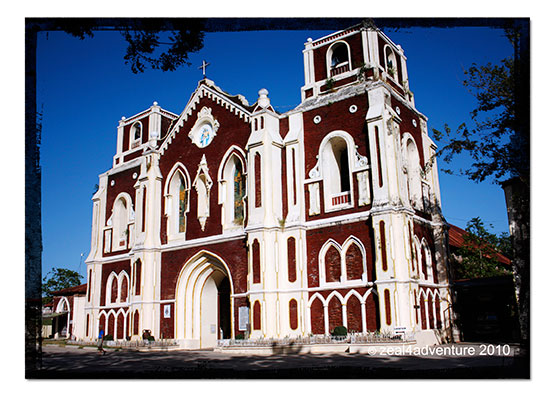
It is without a doubt one of the most dramatic belfries in the region (and one of my favorite) owing to a superb view of  the mountains of Abra

and exquisite sunsets bringing forth a golden charm to the brick and slime walls.

Also used as watchtower for invading enemy forces during World Wars I and II, it was constructed separately, as many Spanish churches are in Ilocos, from its main church, St. Augustine Parish Church, also known as Bantay Church.

Built in 1590 with design reminiscent of the Old Spanish architecture using local indigenous materials like brick and slime.

Damaged during World War II and was restored in the 1950s in neo-gothic design as seen today.

Scenic Sunday

Timeless Vigan

Ilocos Sur is where many culture and histories meet, all sharing space in this timeless city called Vigan – shrines, landmarks, museums, churches, ancestral homes, a cobbled-stoned street.  Inscribed in 1999 in the UNESCO World Heritage list, citing that, “Vigan represents a unique fusion of Asian buildings and construction with European colonial architecture and planning.”

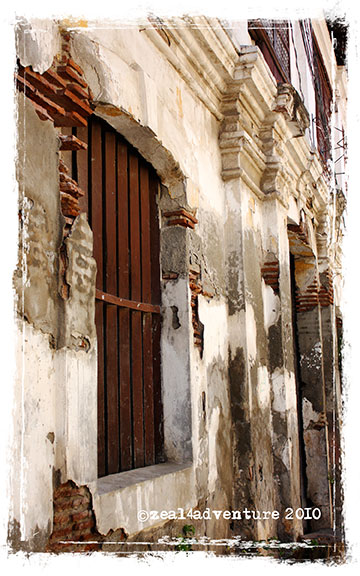
Established in the 16th century, Vigan is still the most intact example of a Spanish colonial town in Asia today.  It is best known for its cobbled-stone street, Calle Crisologo, lined with many old buildings that are intact, restored or in (dis)repair.

One can see remnants of the old-Spanish architecture throughout the center of the city.

Although the street is now busy with souvenir and curio shops, it still transports one back to the Vigan at its peak.  It is the oldest surviving Spanish colonial city in the country, not many of the historical buildings are left after WWII.

The old Vigan colonial houses, built mostly by rich Chinese traders, are made of thick brick walls and red clay.

They conduct their business on the ground floor and reside above.  It is a characteristic of Chinese culture and other Asian countries as well.  The resulting townscape is a unique display of a harmonious blend of Ilocano, Chinese and European elements, a unique display of the multi-culture nature of the Filipino society.

Captivated by colonial towns and its culture, this road trip all started with Vigan in mind.

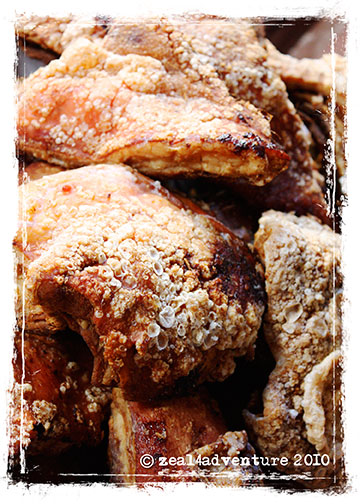
From their longganisa and bagnets to their ancestral homes, we savored it all.

the street at night

We spent the 2 days walking up and down Calle Crisologo soaking in the heritage,

wondering how life was back in those elegant days of yore.  An interesting city albeit far from the capital with about 400 kilometers (that’s about 8 hours) of travel needed if you are coming from Manila.  Vigan is charming and I urge every Filipino to make a visit at least once in their life.   🙂

Not your typical McDonald’s facade

Al fresco dining in the evenings is a wonderful thing

Scenic Sunday

Kapuluan Vista Resort

On my next trip to Maira-ira, this is where I am staying.  This road trip happened on a long weekend and we didn’t book early enough to secure us enough rooms.  The website photos lured me to this resort so even if we ended up staying somewhere else, we made it a point to have lunch here, just to see if we missed anything.

A far cry from where we stayed (that’s for sure!)

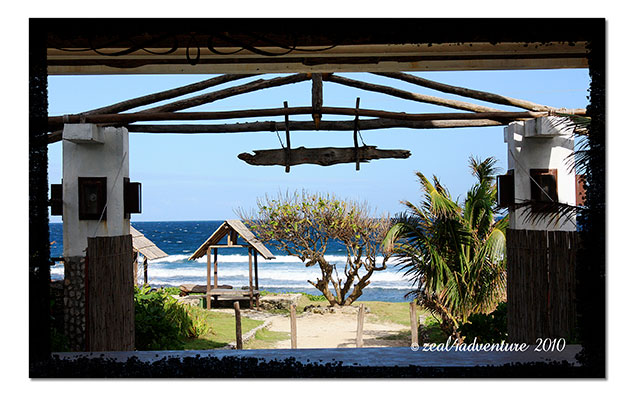
The entrance alone made me feel like weeping.  How could we have taken our sweet time, knowing that it was a long weekend?  Lesson learned – never underestimate even the remotest resort.  It was not so much the entrance (although it has a charm of its own, don’t you think?)

Great spot to laze around and finish your book

but the beach across the street almost tempted me to stay and savor my own solitude for a while.  But the tummy calls and so we ventured inside.

Once inside, we were greeted with modern minimalist lines, cogon (thatch) roofs and the use of bamboo here and there provided the local touch.

The pool invites for a dip and those lounge chairs lures us to laze around while we wait for our food.

No fancy fare but pretty good.

The outdoor massage area spells Tranquility (with a capital T).

Blue bancas on Blue Lagoon

Just a stone’s throw away from Blue Lagoon, Kapuluan Vista Resort is a haven for surfers really, the owners being surfers themselves.  The guests, while we were there were a mixture of locals and foreigners, surfers no doubt.

Still 1.5 hours away from Laoag and at least 15 km from Saud beach in Pagudpud, this resort out in the middle of nowhere is another hidden gem discovered.  And even if a surfer you are not, the cozy atmosphere is reason enough to stay a night or two.  A great place to recharge from the daily grind, if you ask me, and a return sometime in the near future is likely to happen.

How to get there:

There will be signboards on a spot where the road forks, also known as Gaoa (pronounced Gawa, I think).   It will be on the left side if you are traveling north.  Follow the road where the signboard leads, which will turn into a dusty stretch.  Before reaching the resort, there will be some settlements along the way.

Click below for more My World entries.

The Great Land That is Alaska

Credits:  Template by Crystal Wilkerson; Paper by Jessica Sprague.

“Alyeska” to the Aleut people means the great land and those who have visited would likely agree.  It is a vacation paradise, America’s last frontier, if you will.   Raw with a touch of exotic, Alaska is magnificent sceneries one after the other.  Our trip was rugged yet luxurious – thanks to our cruise ship extravagance, which balanced everything out.  Although more than half of the tourists came through a cruise ship, if I were to do it again, I would explore traveling by land to allow for longer stays in each town.  But if you are pressed for time and have constraints in budget, contrary to popular belief, taking a cruise is an economical way to cover Alaska.  Consider this:  you hit 3 birds in one stone, your means of transport, your accommodation and let’s not forget the overflowing sustenance offered on board.

My allure with Alaska started with the TV series, Northern Exposure.  Shown in the early to mid 90’s, it actually aroused my fascination to charming quaint towns such as Sagada and Banaue – closer to home rugged towns that I frequent.  Alaska was a far-fetched dream that came true.

Wildlife.  Humpback whales and bald eagles to be more specific thrive in Alaska.  This is an area full of wildlife as evidence in the wildlife and whale watching tours available in many towns.  Alaska is a perfect archetype of the great outdoors.  And if you are no stranger to this blog, you already know that I love the great outdoors, and the great wildlife.  Charming towns + great outdoors + wildlife galore = money and time well spent.

Feast to My Senses

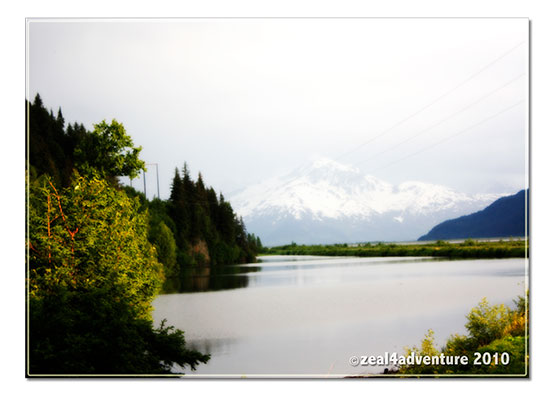
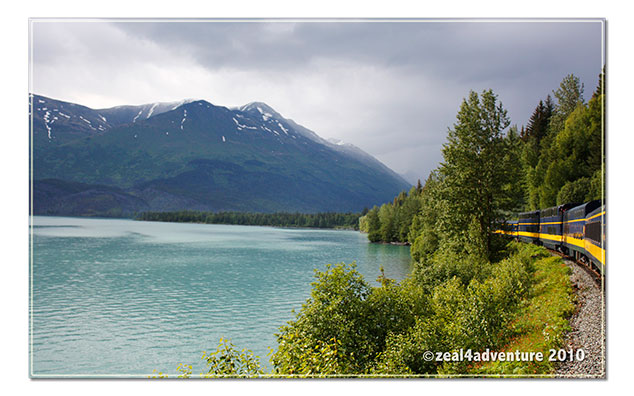
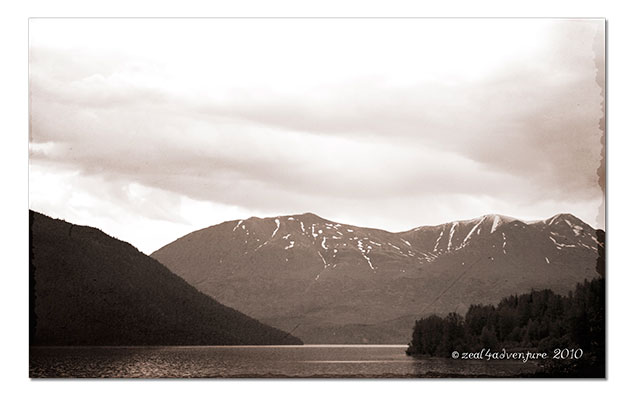
Winding through stretches of wilderness, passing through primeval forests of Sitka spruce and aqua colored river and lakes surrounded by towering mountains in slow-mo with Ennio Morricone scoring in the background is a scene that still plays in my mind 8 months after.  Yes, the stunning and equally dramatic scenery deserves no less than an Ennio Morricone score.

Here’s one of my favorite Morricone score:  Love Theme from Cinema Paradiso

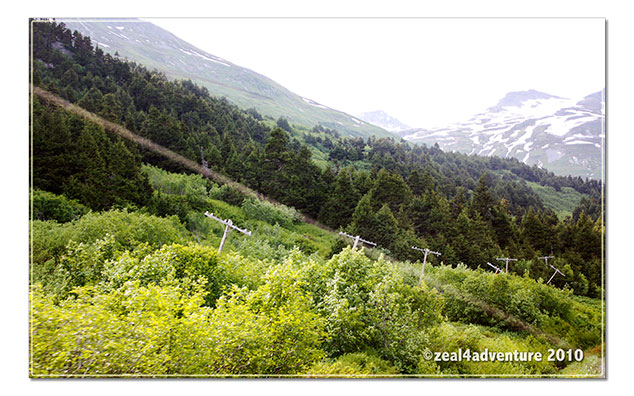
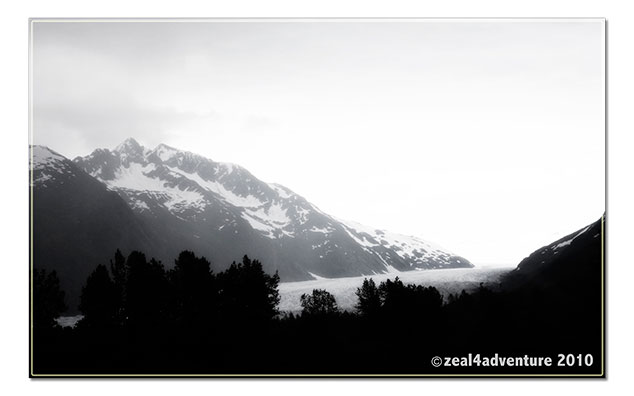
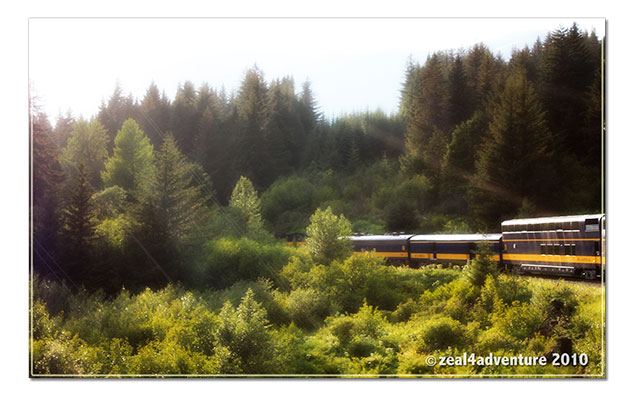
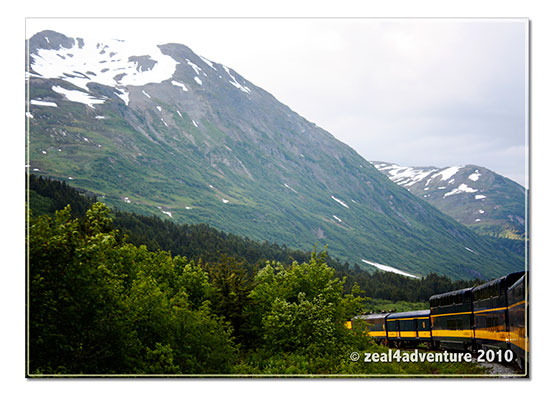
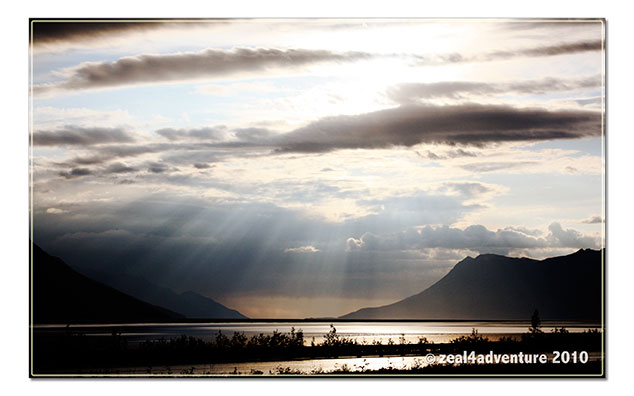
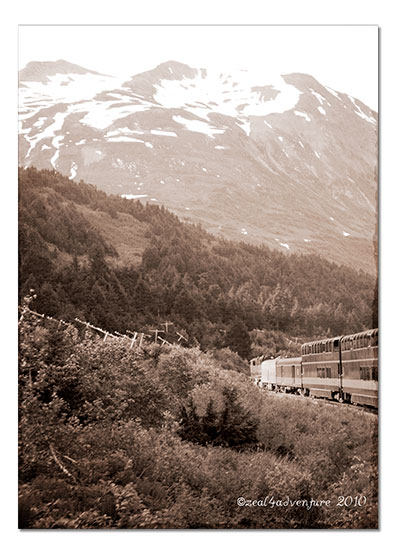
From the moment our journey started in Seward, it quickly began its climb through stunning forests, a string of massive glacier to lakes and river sceneries that only seem to escalate as the sun gets more golden on our approach to Anchorage.  Hands down, one of the finest voyages I’ve ever taken, a real feast to my senses.  The late Alaskan sunset (luckily) also meant good light for most of the trip, which resulted to this.

At some point, the tracks made a perfect U, which allowed for these shots:

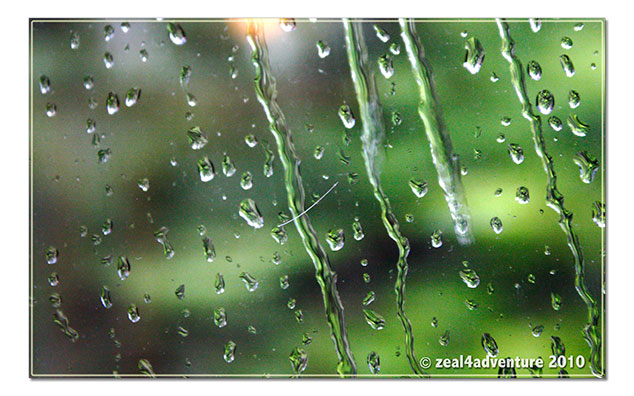
Yeah, it rained at one point too.

And last but not the least!  Some shots taken as we approached Anchorage at 10pm!

If you ever find yourself in Seward, Alaska, don’t think twice… book yourself a ticket at Alaska Railroad Corporation for the best scenic ride of your life.

Click icon below for more scenes from around the globe.

Scenic Sunday