Basco Jaunts: Quaint Little Café in Naidi Hills

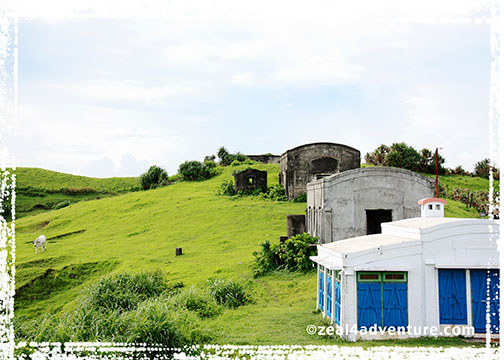
Heard one of the bunkers in Naidi Hills is now a café.  Open only after office hours because the owners have day jobs.  So I noted to self: to have dinner there tonight.
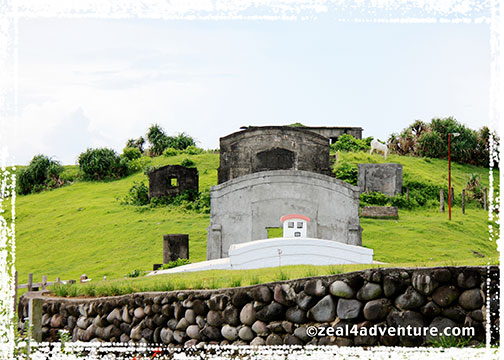
Naidi Hills used to just be a nice spot to chill and to watch the sunset, nothing there really except for the old bunkers.
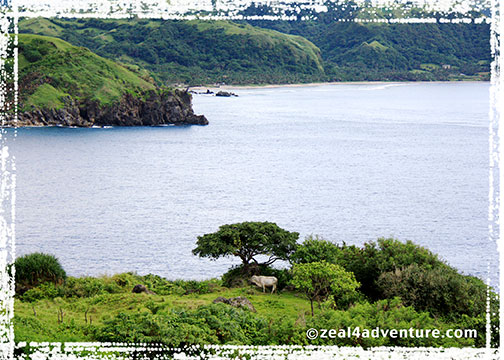
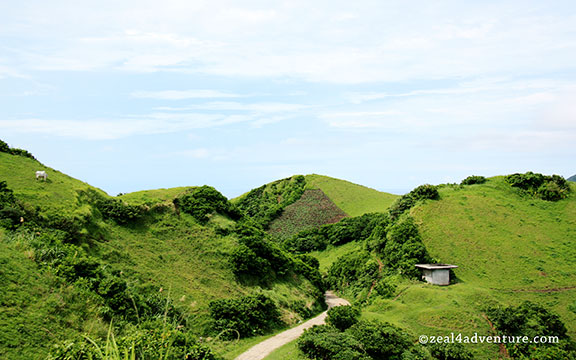
These bunkers, forever a fixture and leaves much to be desired, sits atop stunning rolling hills with equally stunning views of the town, Mt. Iraya and the bay.
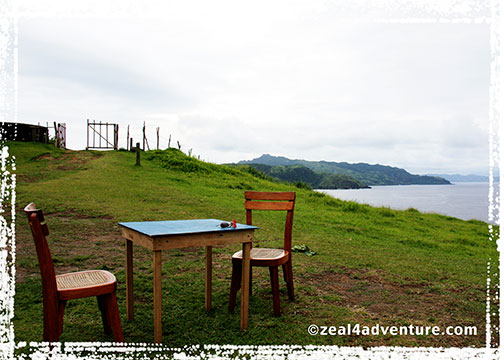
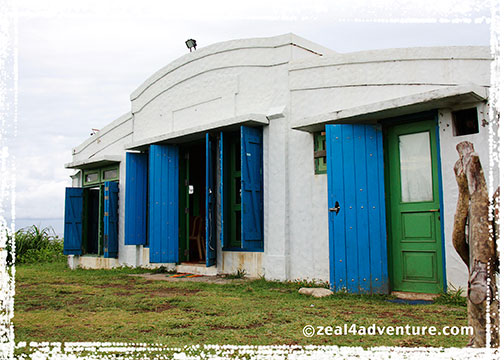
They couldn’t have picked a better site for the café, finally making good use of the old bunkers.
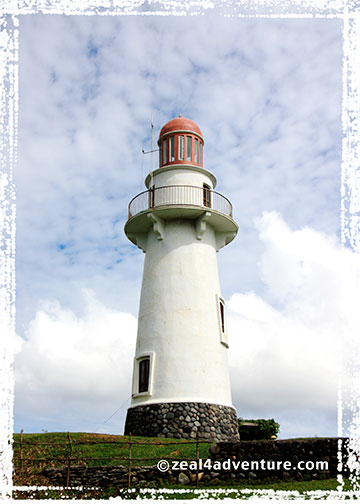
When I returned in 2007, a 6-storey lighthouse with a viewing deck on the 5th level was a new addition to the vicinity, adding to the Naidi Hills charm.
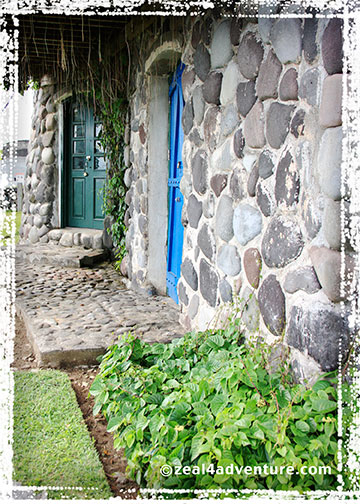
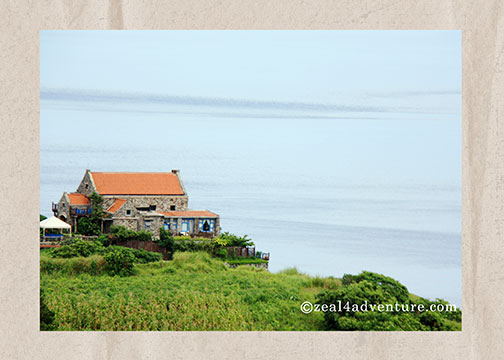
Built next to it is an Ivatan inspired house that was a guesthouse then, a souvenir shop now.  Guess the guesthouse didn’t pan out so well.
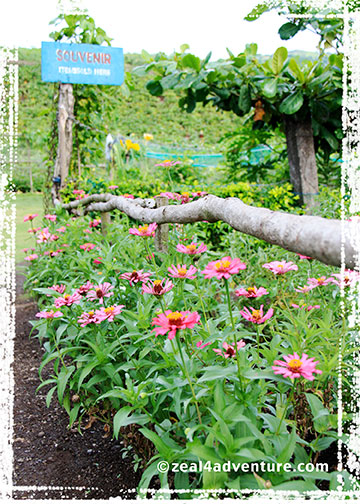
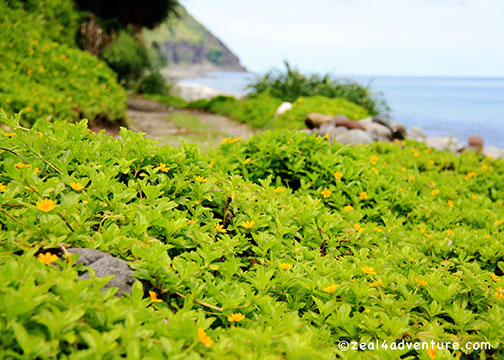
Rows of flowers grown near the house brightens up the already pretty site.

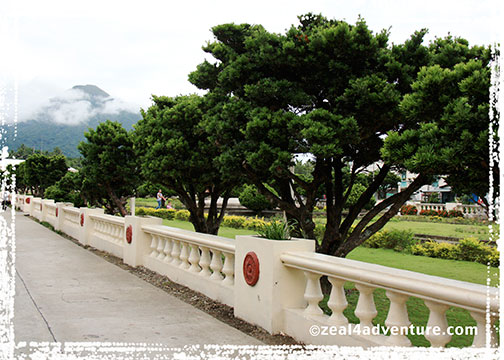
Mt. Iraya peeking out of the clouds as seen from the plaza.
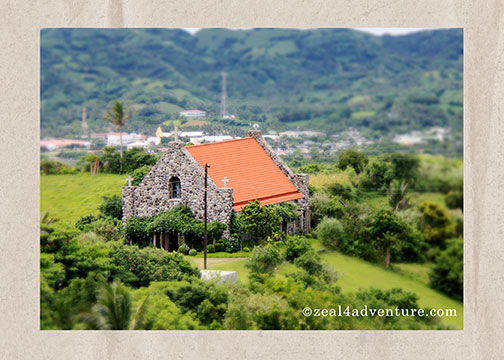
Just a short hike from the town plaza, we walked to dinner passing Sto. Domingo de Basco Church along the way.
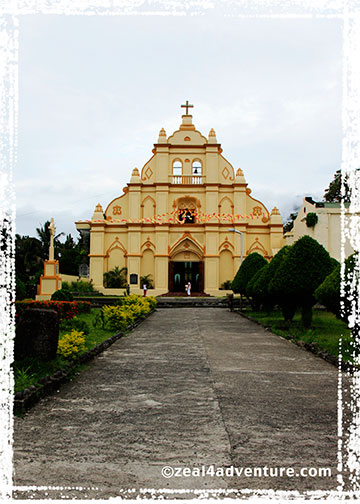
Established in 1783, making it the oldest church in Batanes, and perhaps one of the oldest in the Philippines.

Having had our share of coconut crabs in Itbayat already, lobsters were next on our list.

Kinilaw na isda (fish cooked in vinegar), a pako (fiddlehead fern) dish, and inihaw na baboy (grilled pork) complemented the sweet lobsters, steamed to perfection.
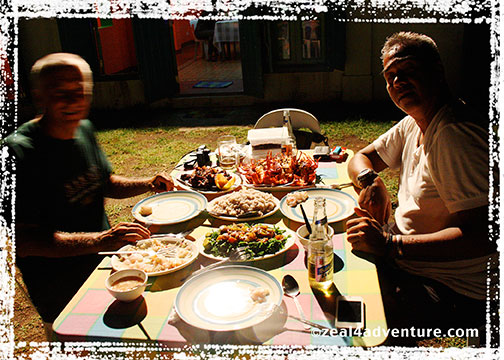
When evening came, the mood changed.  The spotlights puts focus on the dinner tables outside and the lighthouse dramatically provides the backdrop, bringing al fresco dining into a whole new level.

Setting ambience aside, Bunker Café is a delight in the food department.  Put pack ambience and the café is definitely a winner.

A must visit when in Batanes.

Basco Jaunts: Vayang Rolling Hills

Credits: Red overlay by Kari Holts or iKari Design.

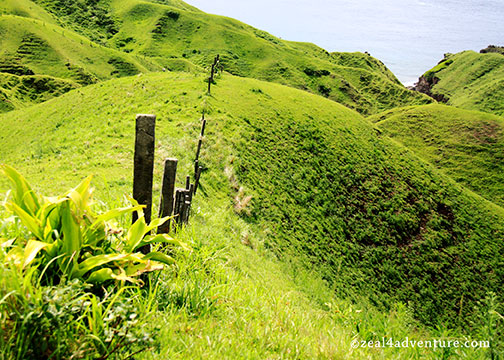
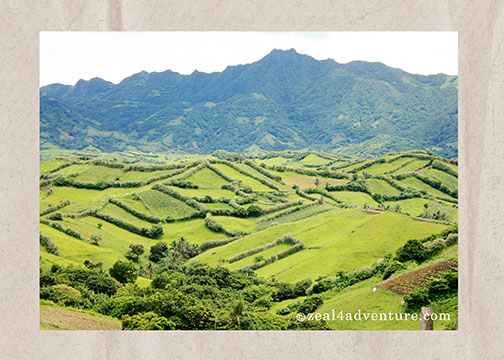
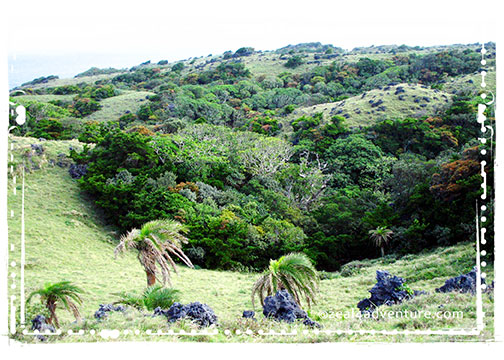
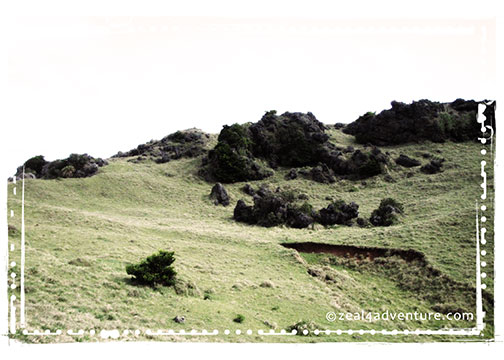
It is perhaps the most visited in Basco.  This place somewhat epitomizes Batanes in the minds of many… endless rolling hills, blue skies and magnificent views of the sea, the South China Sea.

The first time I made it here, I was mesmerized by the unfathomable vastness, how small one can feel within its green expanse.  In 1998, one has to walk up hills upon hills, no vans, no tricycles, and no paved roads.  You get there by walking on unpaved trail.

A trip to Batanes then needs at least 5 days for a complete walk through of Batan and Sabtang.  Those were the days – though I still get goosebumps, I think I like it better then. I can’t deny though that the comforts of today made it a pleasant revisit, especially on a hot summer’s day in May.

The scenery of Vayang is so immense no photo can capture exactly the true essence of the place.  Having said that, here’s an attempt on capturing even just a bit of its flavor and spirit.

Basco Jaunts: Valugan Bay

Credits:  Quickpage by Antonia Krajicek using the “4Ever” kit, a collaborative kit created by Jessica Sprague.com; Suede Alpha by Miss Behaving 2011.

From where we got off, I could hear the splash of the waves; the boulders hardly visible.

The sea is calmer in May.

The rambling of the rocks that hits the ocean floor becomes clearer when you are closer.

With picture-perfect spots scattered all over the islands, Batanes is easy to love.  To pinpoint one specific spot that I love the most is a tall order and perhaps impossible.

Valugan Bay though is so different from any beach I’ve seen, it has left indelible memories and has landed on my top 10 lists of favorites.

I’ve never come across any beach as dramatic as Valugan Bay.

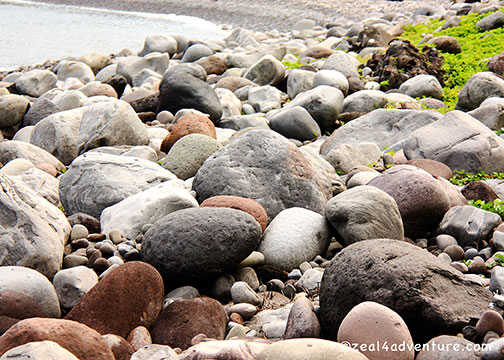
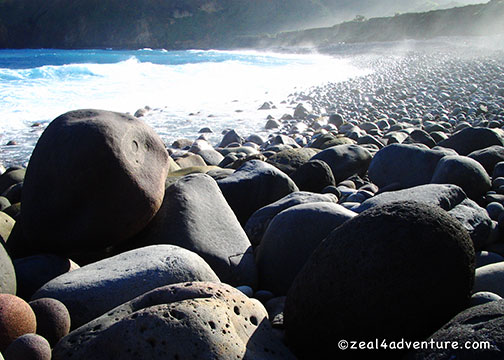
Spewed out by Mt. Iraya and polished through time by powerful waves of the Pacific Ocean, large multi colored rocks covers a kilometer stretch of beach

Taken February 2006 when the waves were larger.

and made more mystical by the ocean mist when waves are strong.

The rambling of the rocks soothes my senses every time I’m here.

The troubles of my world easily fades into a renewed spirit as God whispers through those ramblings that everything will be as polished as those beautiful rocks.   I could sit here forever.

Basco Jaunts: Radar Tukon and its Surroundings

Basco, despite being the smallest province of the Philippines, offers some of the best scenic and cultural landscapes in the country.

Often touted as the Ireland of Asia, this so-called last frontier is blessed with endless rolling hills, rugged terrain and spectacular views of both the China Sea and the Pacific Ocean.  Perhaps due to its isolation, tradition and culture remain pretty much intact.

Our hired tricycle meandered through the streets of Basco, taking us to some uphill climb through scenic pastureland, the sea and many hills.

We arrived at Radar Tukon where even the locals still love to hang.

What used to be a weather station in the American era houses Basco’s radar station today.

Up in a hill, the 360° view is awesome, perhaps one of the best in the island.

Not only is it a lovely sight and contributes much to the beauty and uniqueness of Batanes,

these hedgerows are there with a few more purposes.

They are there as a windbreaker, for land delineation, it prevents soil erosion, and sometimes serves as nesting ground for migratory birds.

The Tukon Church can be seen from the Radar Station.  Although we didn’t get to see it up close, much less enter it, I believe that the interior is as lovely as the exterior.

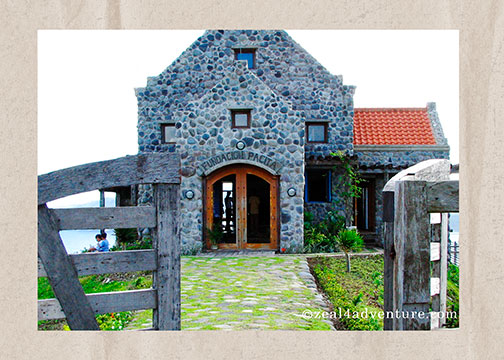
Inspired by the Ivatan stone house, this church was a recent project of the Abads, not only to give the communities nearby a church where they won’t have to walk far, but a wedding gift as well to his daughter who got married there recently.  The church, I read, have beautiful stained-glass windows, a ceiling of angels painted by the students of the late Pacita Abad and the best thing about this church is the spectacular view of both the South China Sea and the Pacific Ocean wherever one is seated.

Not far from Tukon church is a house sitting on top of a hill, overlooking the Pacific Ocean.

It was once the home-studio of the late Pacita Abad, an internationally acclaimed artist and sister to current Budget Secretary Florencio “Butch” Abad, now turned nature lodge.  Refurbished by Butch in her memory, the lodge is not only a pretty sight from afar.

It was in 2006 that I was there, it was still the art and culture center of the Jorge, Aurora and Pacita Abad Foundation.

Her works hanged on the walls and the design of the house, I suspect, characterizes that of the owner.  Today, I read that works of famous Filipino artists and emerging young Ivatan artists grace the walls of the rooms.

The view from the balcony in 2006.

Nature lodge aside, Fundacion Pacita is also the headquarters of the Pacita Abad Center for Arts.  The proceeds earned from the operations supports various projects, one of them is the restoration of Ivantan houses.

More of Basco in upcoming posts.  Stay tuned.

Torongan Cave: Not To Miss in Itbayat

When asked about the places I have liked the most in my travels, high up there with Africa, my answer would always include Batanes. When I look back at the adventures I had in this northernmost province of the Philippines,

our trek to Torongan cave in Itbayat was a highlight for sure… the state of wonderment, unforgettable.

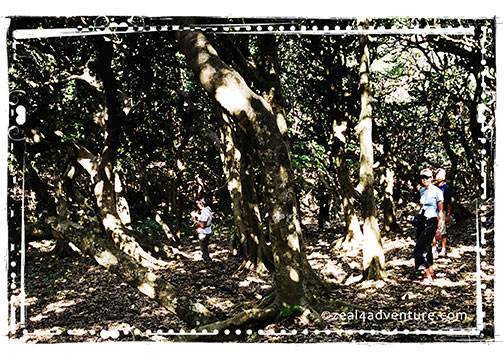
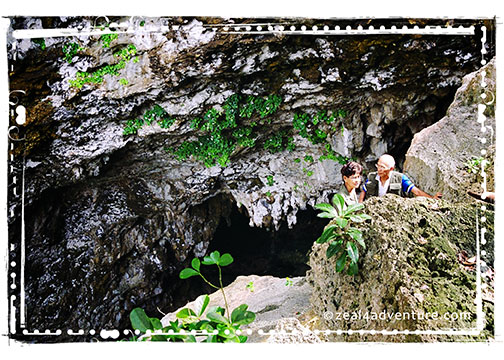
It was a 20-30 minute hike from a gate to the cave entrance, passing through a forest.

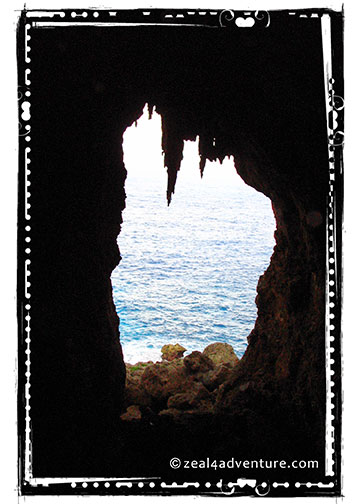
And from this spectacular cave entrance is a relatively easy walk down the large cavern leading to a wall that opens to the sea.

This opening is believed to be the entry point of the Austronesians from Taiwan to the island some 4000 years ago. An excavation done on Torongan cave in 2004 uncovered the oldest artifacts so far found in Batanes.
But it isn’t the cave per se that impressed me.  We exited the cave where we entered,

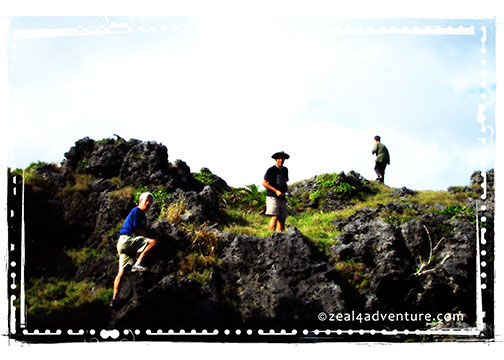
we walked further and found ourselves climbing up some boulders to a rocky pasture land,

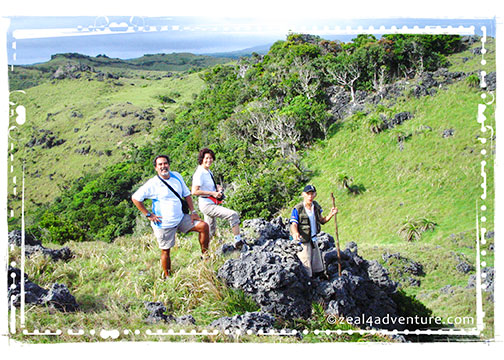
revealing the coast, and Dinem Island in the distance, a view so jaw-dropping beautiful.

The dramatic change in scenery atop the cave was an experience stuck in my memory to this day.

We wandered around in awe.

The view majestic at every turn.

Walking back, we passed through several ancient burial grounds shaped like a boat, albeit hard to discern.

If you have limited time in Itbayat, make Torongan cave your first stop and be awed.

A Trip to Y’ami: Philippine’s Northernmost Tip

A truck waits for us at the corner of Nanay Cano’s house.

It will be taking us to Paganaman Port where we will embark on a trip to Y’ami Island.   The northernmost island of Batanes, it is closer to Taiwan than it is to Aparri.  An idea I never really took seriously until an email came my way one day in March.  “He wasn’t joking”, I thought.

We had to trek down to the port with our drinking water and overnight kits.  It was a long way down.

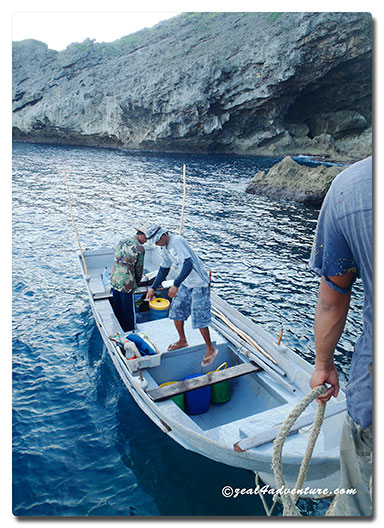
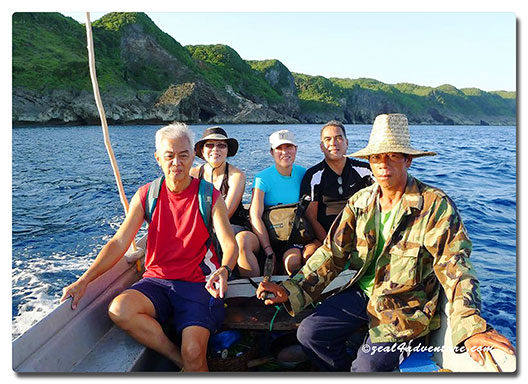
There it was waiting for us at the landing.  The boat, also called a falowa that Nanay Cano arranged for us was unbelievably small.

Could it really bring us safely to Y’ami on treacherous waters?  The sea was calmest in May, which was why this expedition happened then.  So along with treacherous waters is scorching sun.  That boat has no cover whatsoever.  So I ask myself for the nth time, how far do I go really?  Is this so-called adventure worth the trouble?

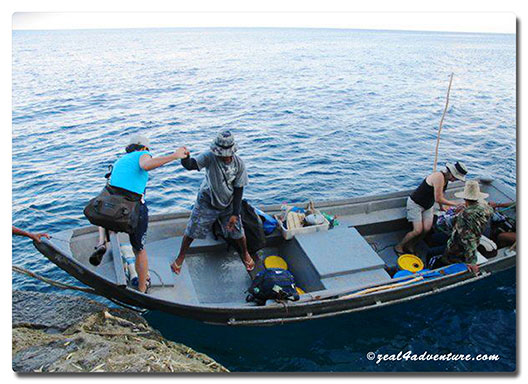
No one spoke a word when we reached the landing.  One by one, we got on the boat with much effort.  The water was rough, making it difficult to mount.  It was the biggest fishing boat on the island, we were told, costing us a mere P6,000 for the 2-day journey.

Looking back at Itbayat.

Composed of 3 major inhabited islands, Batan, Sabtang and Itbayat, Batanes also has smaller uninhatbited islands.  These are Siayan, Di-nem, Dequey, North, Mavudis, and Y’ami (also called Mavulis by locals).  Y’ami being the farthest, we will pass all these islands on the way.

The plan was to drop off our stuff at Siayan, the island closest to Itbayat.  Because Y’ami has no water source, we will stay the night at Siayan before heading back to Itbayat the next day.

The water became quite rough at one point, I wanted to get off with our stuff in Siayan but as fate would have it, the captain (they actually call him piloto) decided that we were light enough to travel the long haul.  Stopping at Siayan would take up time (you’ll soon find out why) and he’d rather be out of the water before late afternoon. If truth be told, the rough sea exhibited how capable our captain was and that there was nothing to fear.  One of us noticed that they only have one engine.  “What happens if the engine breaks”, he asked.  They shrugged, “we will use the sail”.  Simple as that!

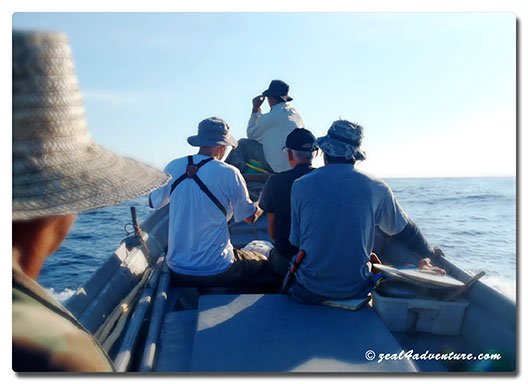
Am I glad there was no need for that.  Needless to say, the journey to Y’ami was grueling with me getting perhaps the lousiest seat – the middle seat with nothing to hold on to.  I slip and slide as the boat ride the waves.  The fiberglass boat is slippery when wet, leg room was limited, the sun scorching…

But the scenery along the way somewhat eased the uneasiness.

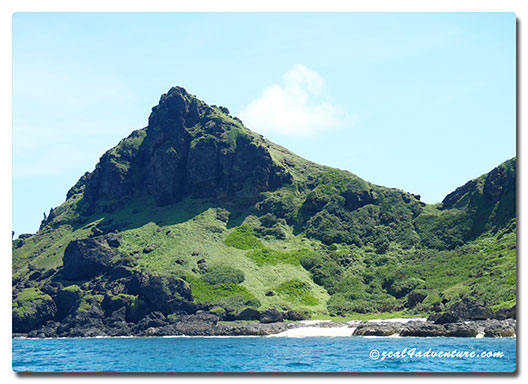
Three hours after we left Paganaman port, we see Y’ami in the distance. As we approach it, we realized that getting off was a problem.

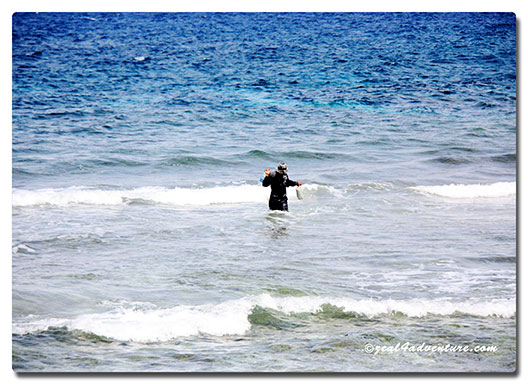
The water was too rough for a shore entry so we anchored far from shore and waded to the island.

“This better be worth it”, my thought balloon goes.

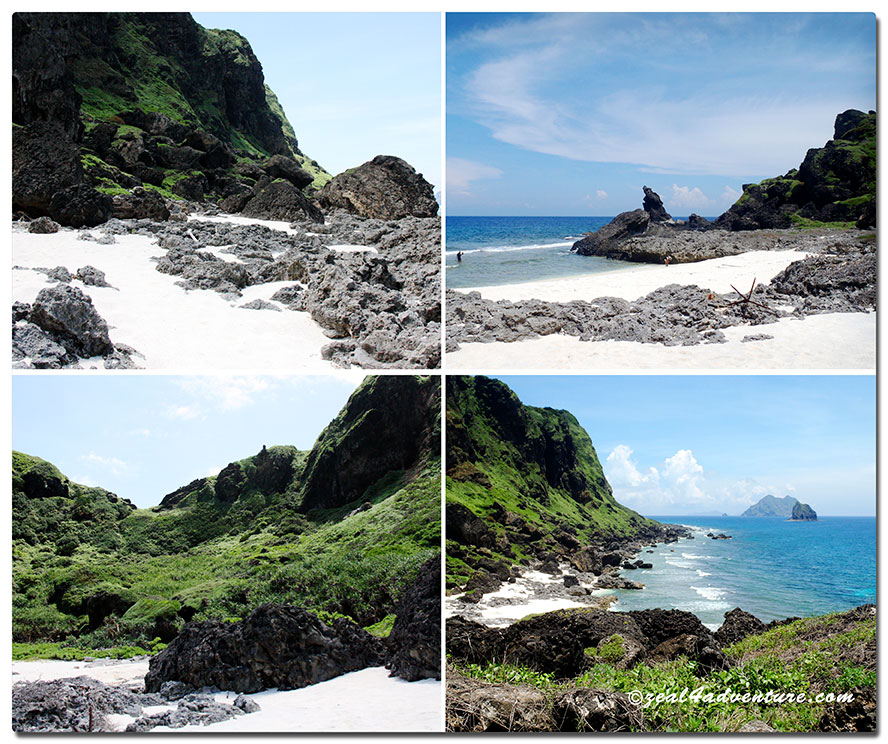
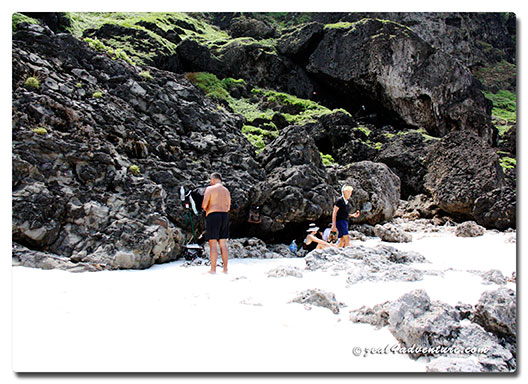
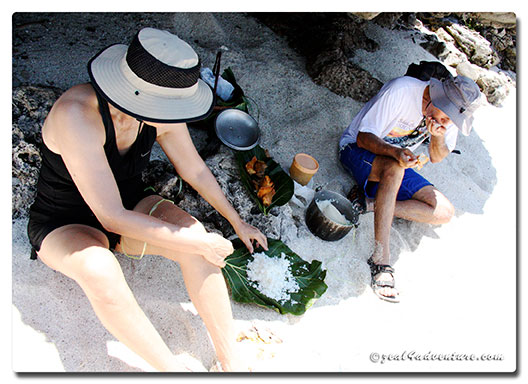
Under those rocks we found shelter from the scorching heat of mid-day sun.
And there we had lunch.

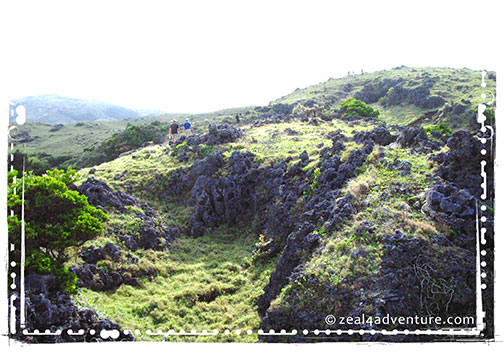
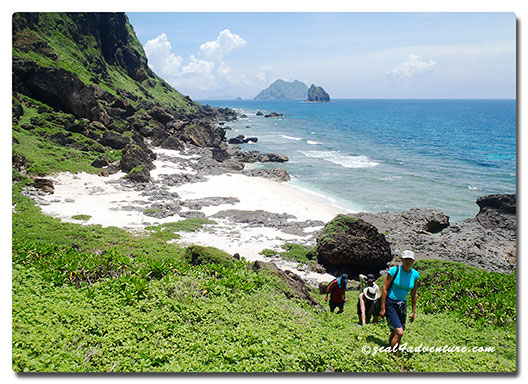
Trekking to the other side of the hill where there is some sort of landing, albeit on sharp rocks.

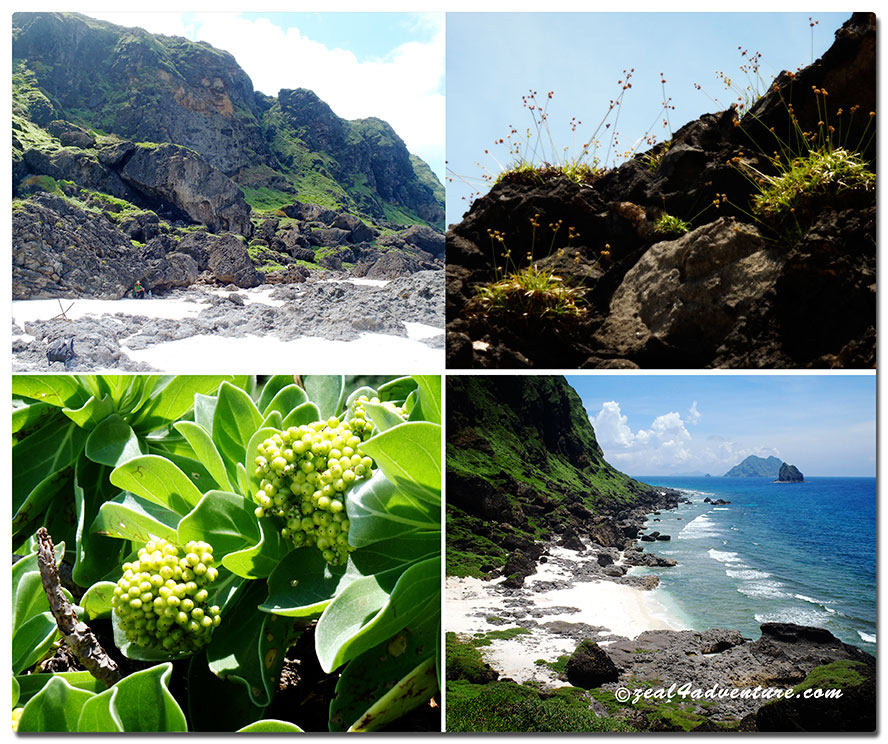
The island is beautiful, pure, unspoiled.  Sadly though, we saw a baby shark with its fins cut off from a fishing boat.

Except for some fishermen (including the corrupted ones) taking a break from fishing, hardly anyone sets foot in this uninhabited island.  It is, after all, a long way from home.

Batanes

Located more than 860 km from Manila, you can see Taiwan on a clear day.  The island looks more like the Scottish Highland.  Typhoons are common, hitting the archipelago between July and November.  The sheer isolation and location, in the middle of typhoon alley, keeps mass tourism at bay.

My journeys to Batanes have been a series of milestones.  I first set foot on this northernmost part of the Philippines, the home of the Ivatans, in 1997.  That trip started it all.  It catapulted my zeal for adventure.  I found myself back nine years after, this time to explore the farthest inhabited island of Batanes called Itbayat.  And very recently, another dream brought us back to this pretty corner of the world.  A new milestone to achieve.
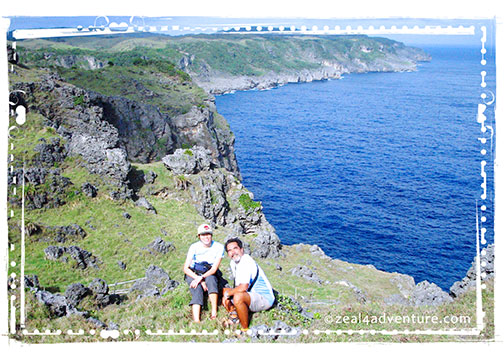
Batanes continue to enchant despite commercialization.  More frequent flights fetch more tourists albeit still miniscule compared to other destinations.  The size of the plane allowed to land at the Batanes airport prevents mass tourism from flocking in still.  With its rolling hills, ancient cultures, traditional stone houses, and breathtaking landscapes, Batanes is worth exploring again and again.  Let this post be a prelude to an ultimate adventure.  Stay tuned.

El Nido: Island Hop Day

“The best island destination of Southeast Asia” was how National Geographic Traveler Magazine sized up El Nido in its November-December 2007 issue.  And has since been dubbing it as one of the best travel destinations.  Alex Garland’s “The Beach was inspired by El Nido, many say.  The Amazing Race, Bourne Legacy… it’s becoming a Hollywood favorite as well and for good reason.

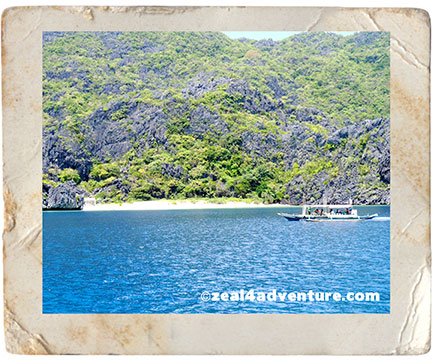
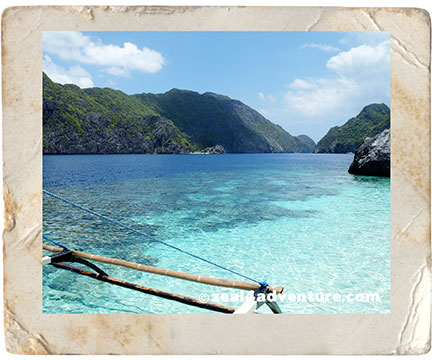
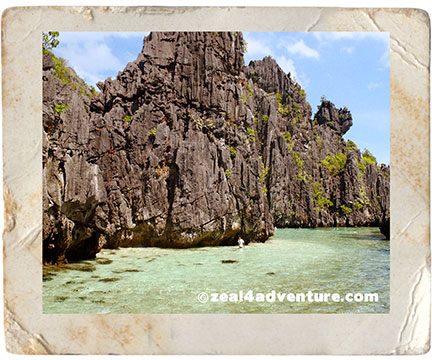
Majestic karst limestone formation, enchanting lagoons, marble cliffs, lush forest, white sandy beaches, clear blue waters, wonderful marine life… all these epitomizes the Philippines’ so called “Last Frontier”.

Shops along the main streets of the town center offer the same A to D island-hopping tours.  To be in El Nido and not do these tours is like going to an ice cream parlor and not have ice cream.

It is after all the gateway to Bacuit bay—

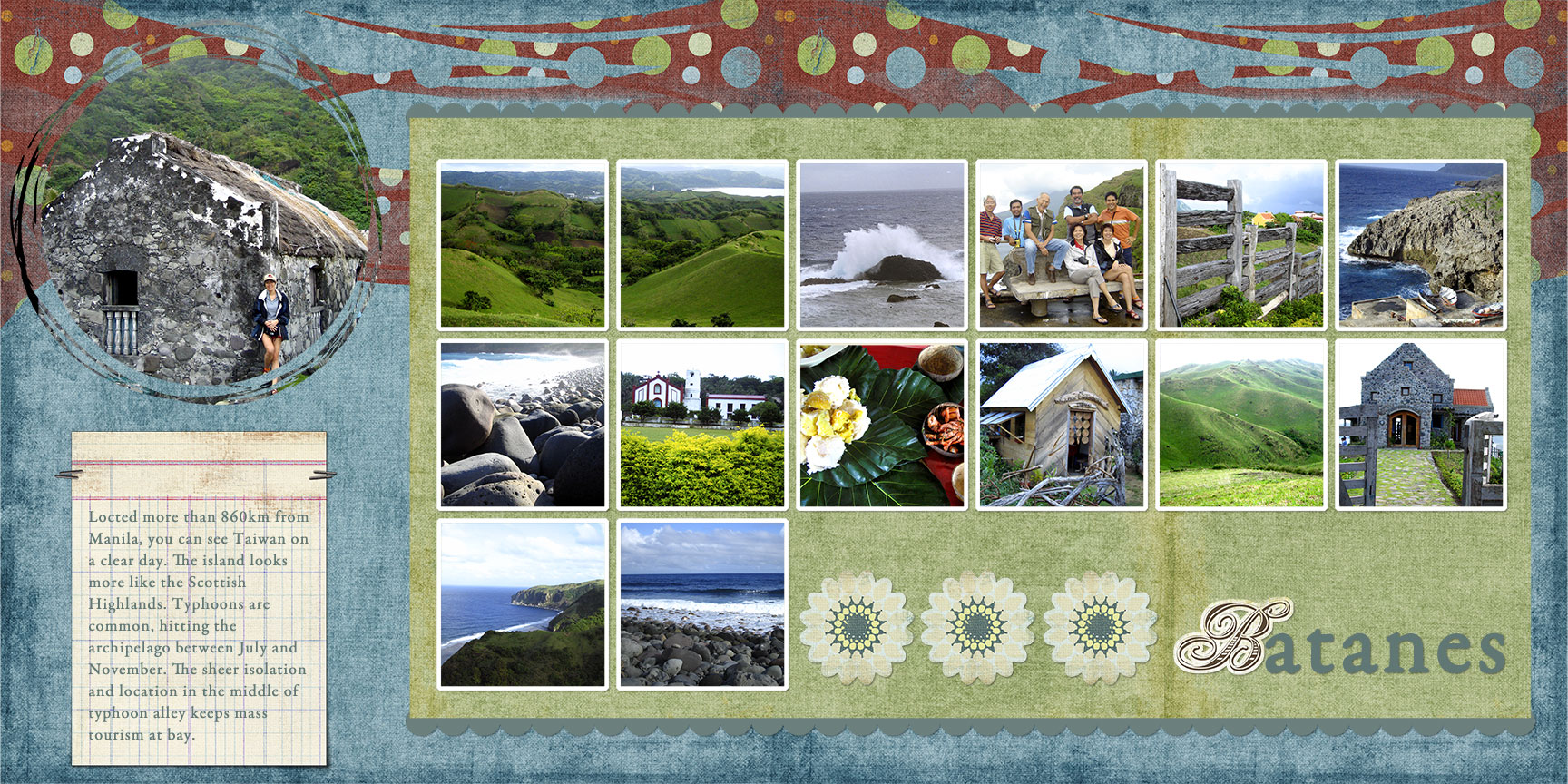
an exquisite nature gem scattered with limestone islands with stretches of white sand beaches and hidden coves.
Mang Rudy promised a good lunch in his tour and so, together with the French friends we met coming to El Nido, we booked a tour with him.

Tour C— because it was my favorite tour the last time and because the our French friends wanted to see “Secret Beach”.

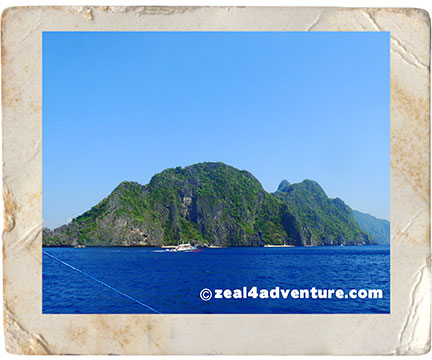
First on the agenda was Hidden Beach on Matinloc Island and the farthest from town.

Beautiful beach with lush vegetation hidden behind towering limestone cliffs hence the name.

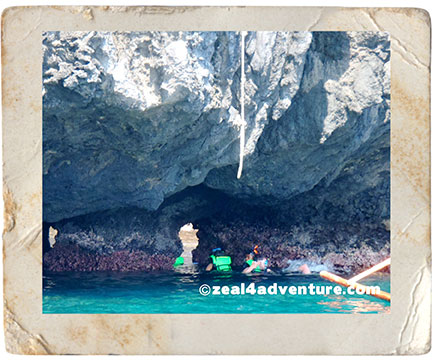
We did some snorkeling but didn’t step foot on the beach.

Matinloc Shrine, our next stop, is on one side of the island.

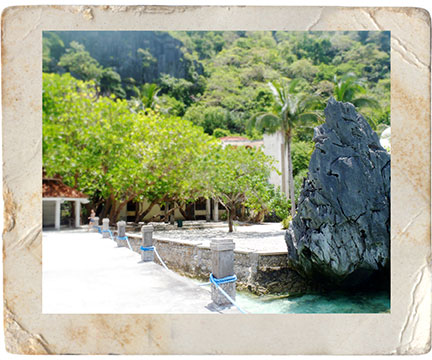
The shrine is a two-storey building towering in one corner and a concrete gazebo at the center of the site.  Abandoned, the shrine is not in good condition but remains part of the tour— most likely because of its remarkable scenery.

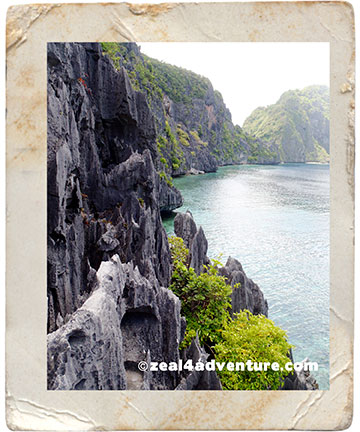
In front of the building stands a limestone cliff with a stunning view of the nearby Tapiutan Island and other beaches of the island.

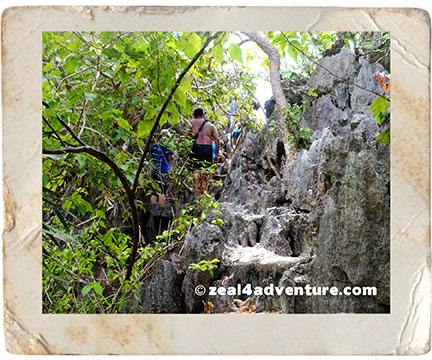
One has to climb the cliff to see the view while relatively easy; the sharp limestone edges can easily cut.  So be careful.

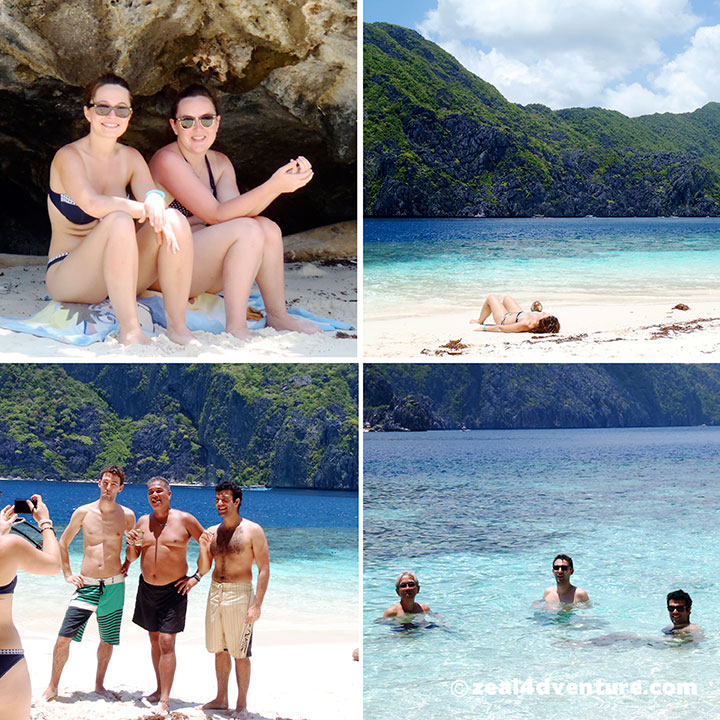
A beautiful tiny cove, Shumizu Island, which we had all to ourselves, was where we stopped for lunch.

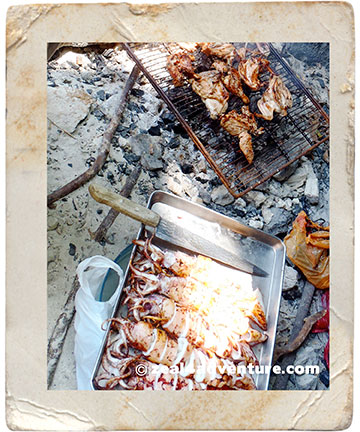
While the food was on the grill, we enjoyed the sun, sea and sand.

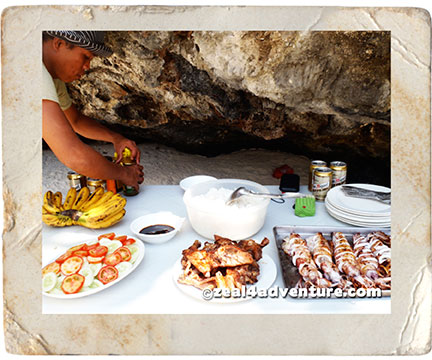
Lunch was a wonderful feast of grilled chicken and squid alongside a refreshing cucumber and tomato salad.

Thank you Mang Rudy, we were not disappointed.

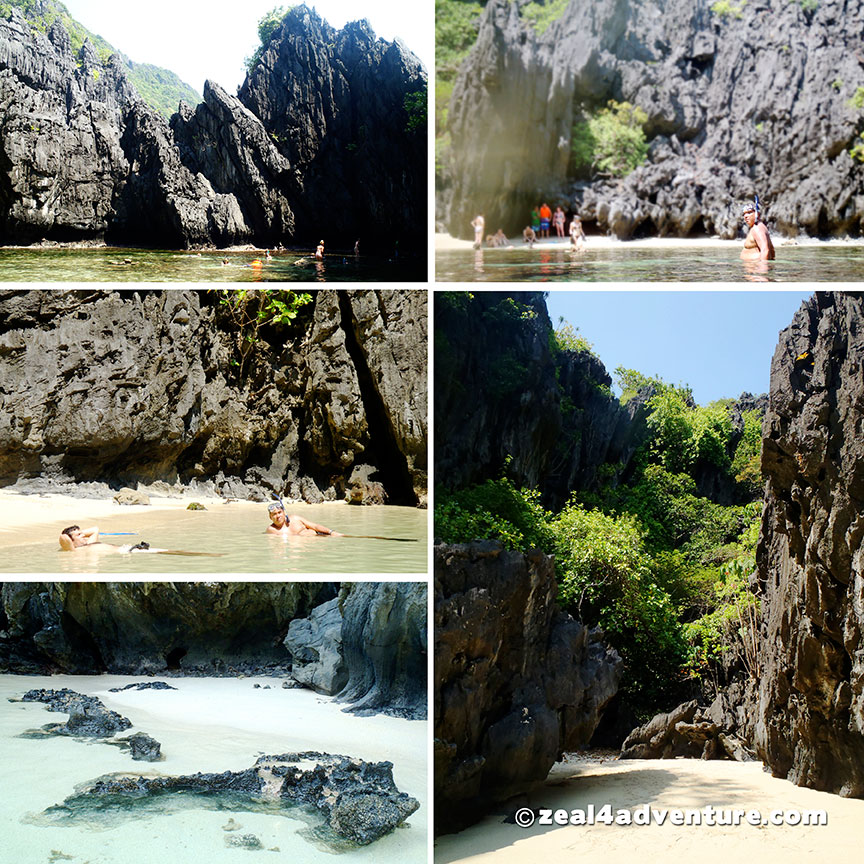
Matinloc Island has a Secret Beach.

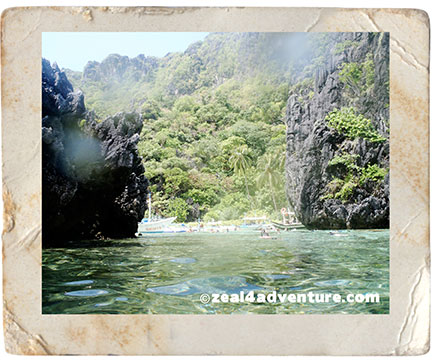
Inside the steep rock wall is an enchanting beach inaccessible by boat.

The only way to enter this secret beach is through a small crevice, which during high tide is submerged earning its name.  When submerged, one has to swim through the crevice underwater making the reveal more dramatic, truth to tell.

This particular beach is said to have been the inspiration to Alex Garland’s “The Beach”.  It is easy to understand why.

Inside those walls is another world, a secret paradise, if I may call it that.  It is a sight to behold and this, dear friends, is why Tour C became a favorite.

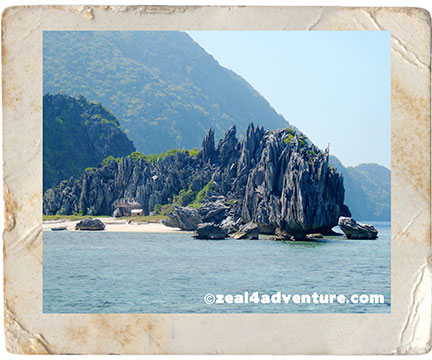
Fronting the Matinloc Shrine is Star Beach.  I particularly love the rock formation in front.

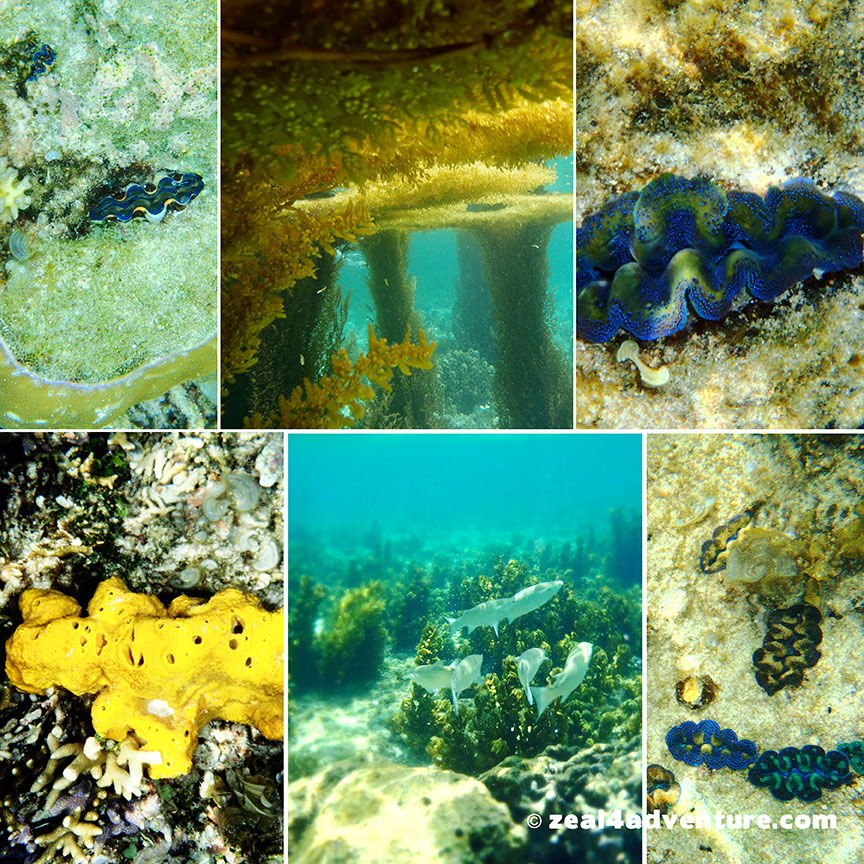
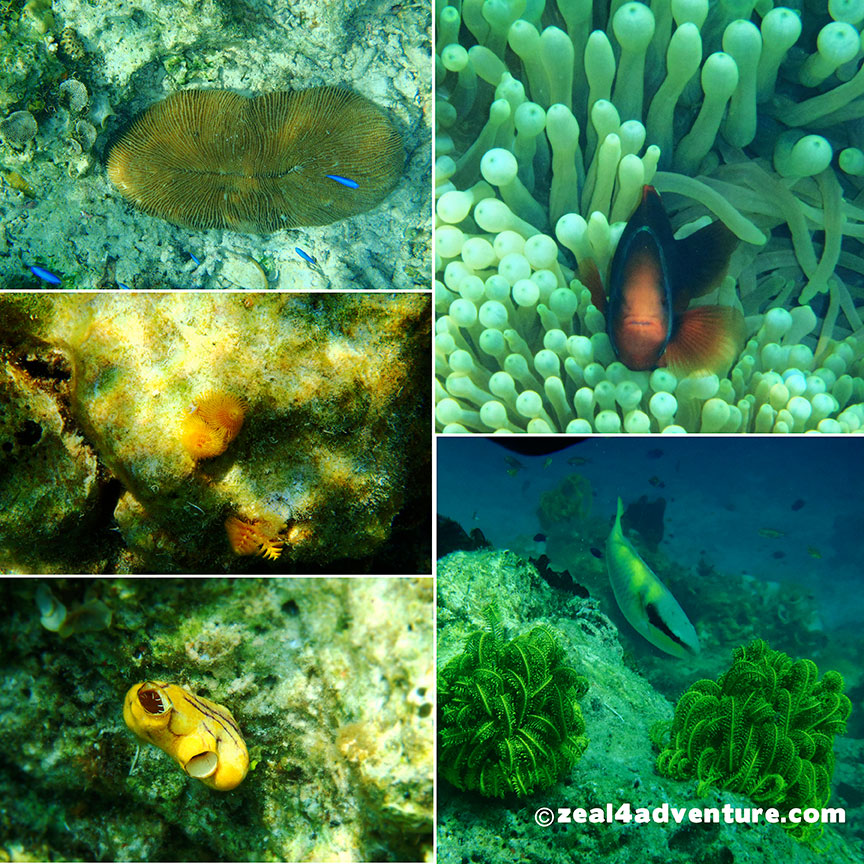
The reef nearby is a great snorkeling spot owing to good coral beds and the abundance of marine life.

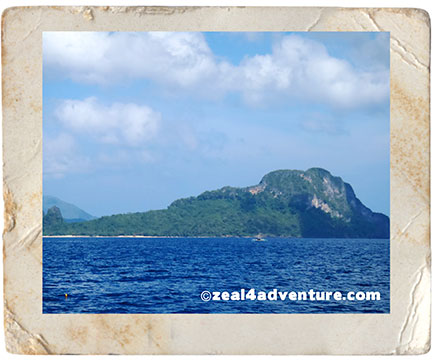
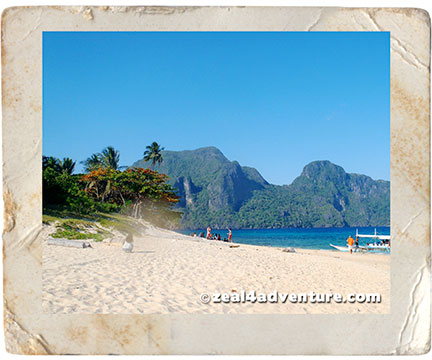
Capping this tour is a stop at Dimalicad Island, better known as Helicopter Island because of the shape it resembles from afar.

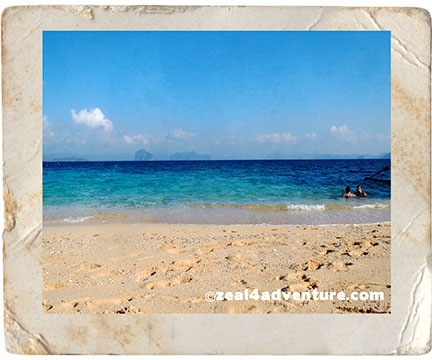
The long stretch of sparkling white sand beach makes it ideal for lounging around with a good book or sunbathing perhaps.
Although the water beckons for a swim, the waves can be strong for some.
They couldn’t have chosen a more perfect cap for the day.

Off To El Nido…

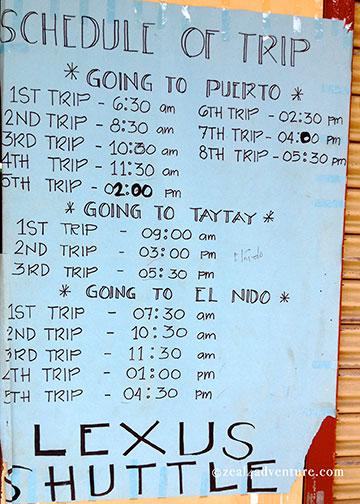
And so we got up early the next day, had breakfast, and before we knew it, the van we booked ahead to take us to El Nido came, earlier than expected.

The 5-hour ride was uneventful with several toilet stops along the way.  Except for the last stretch of unpaved road due to road repairs and widening – I’ll say about an hour left of travel time – the ride was pretty smooth albeit a bit cramp.  But vans are always a bit cramp.  I heard that the RoRo buses have more leg room so that perhaps might be a better option next time.

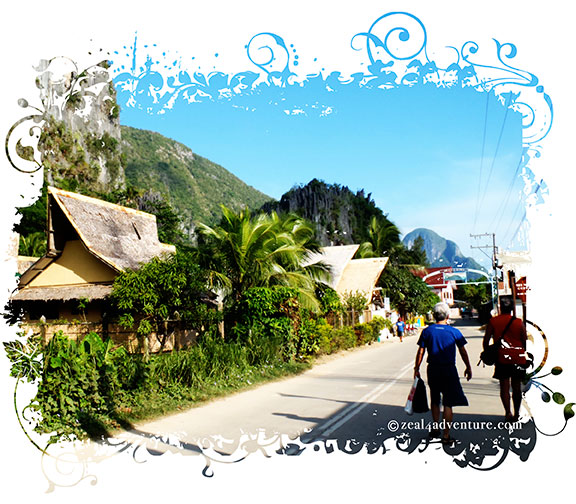
From the Lexus Company terminal at Calle Lising, a tricycle was the easiest way to get to the El Nido Viewdeck Inn;

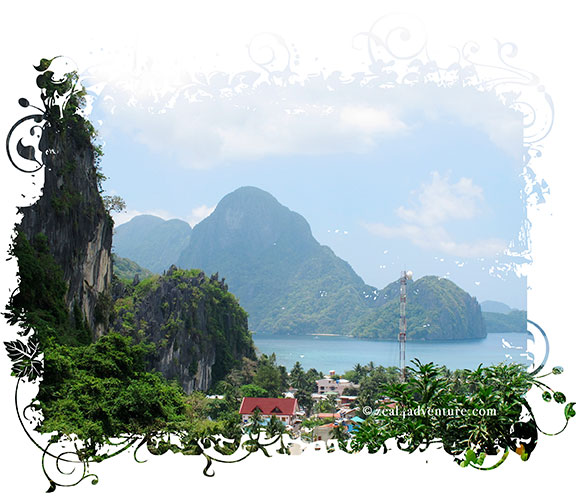
a bed and breakfast perched on a hill with a fantastic view of the town and has for its backdrop, limestone walls.
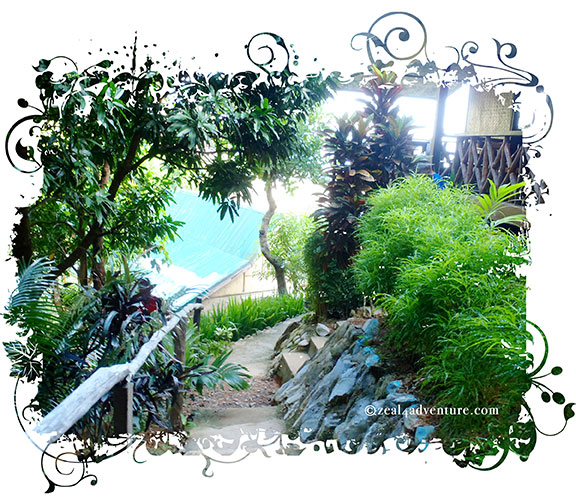
Just a few minutes away from the hustle and bustle of the town, the Viewdeck Inn provides serenity amidst mountains.  From the road, the inn welcomes with a series of steep steps, which leads to their reception area (a down side — if you may call it that — of accommodations set in the mountains).
We were led to climb more steps to get to our cottage and needless to say, we got a good workout during our 4-day stay — the upside, yes?   😉

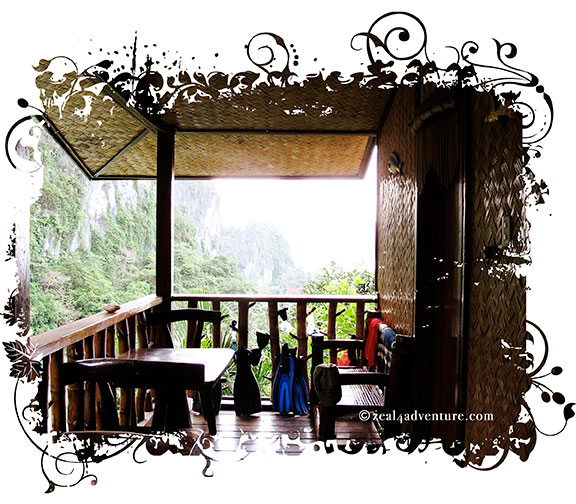
The room is basic with nothing to rave about save for that wonderful view from our balcony– this is what the place is all about after all.  Personally, the bonus is in the coffee.  No, it’s not the best coffee I’ve had; in fact it’s a 3-in-1, sometimes a 2-in-1 even.  That and a thermos of hot water awaits in our balcony just before we wake up.

A hot cup of coffee with a sunrise view is enough to charm me to pieces and forget that I am drinking instant.  Toast, jam and scrambled eggs –breakfast so simple, I love it – follows about half an hour later.

Before heading to town, we chat a bit with the guy at the reception.  Mang Rudy, as it turns out, owns and runs the place and when asked if he was the owner, smiling he says “hindi halata no?” (it’s not obvious right?).   Well, no Mang Rudy because you wear the oldest, most comfortable t-shirts and shorts, we thought you were the caretaker.  And that’s how he likes it.  He is the perfect host, taking great care of us and that’s how we like it.

Getting There:

Shuttle Services:
Fortwally Shuttle Services: (63) 917-276-2875 / (63) 921-311-8755
Eulen Joy Shuttle Van: (63) 949-449-8858 / (63) 926-699-8700
Lexus Company: (63) 917-585-9602

RoRo Bus:  
Puerto-El Nido:  (63) 908-920-2568
El Nido-Puerto: (63) 917-597-1182

Useful Info:

El Nido Viewdeck Inn
Mobile:  (63) 927-723-4067 / (63) 947-601-8599
Email:  inquiry@elnidoviewdeck.com / inquiry.viewdeck@yahoo.com
 

Kuang Si Falls

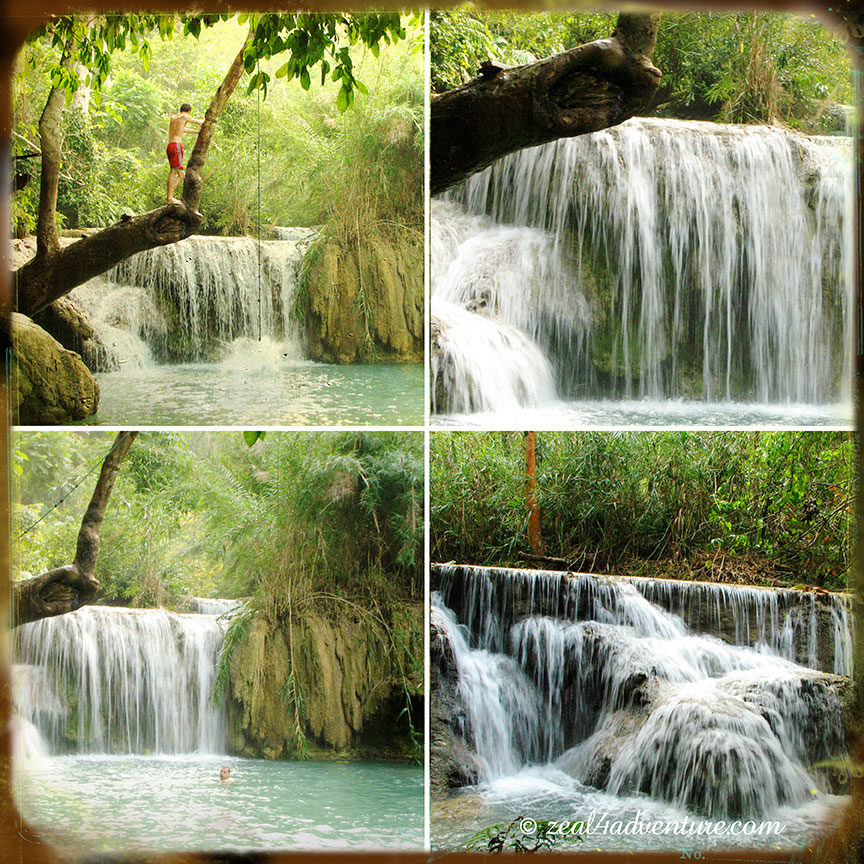
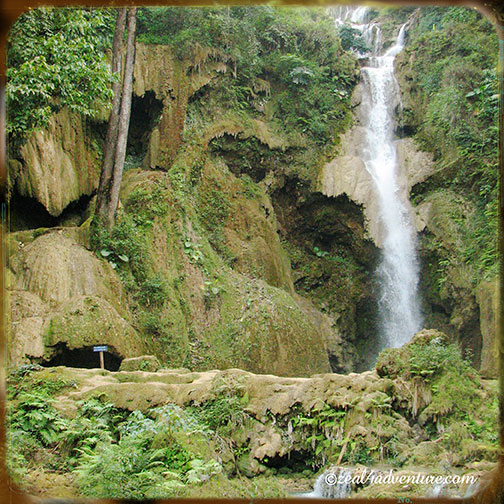
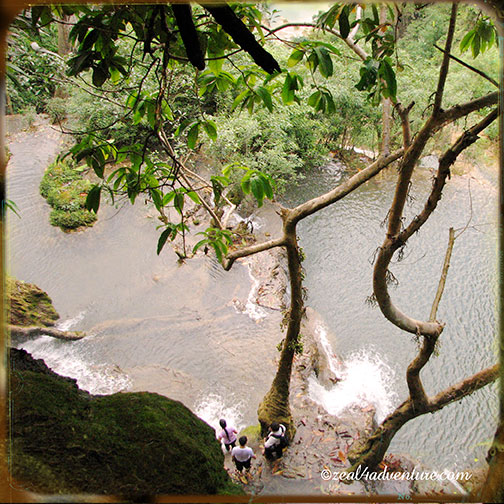
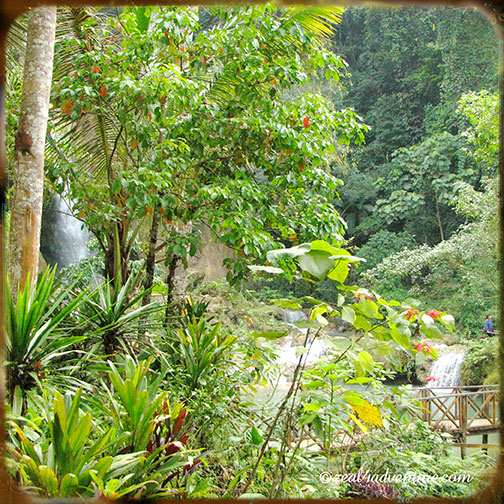
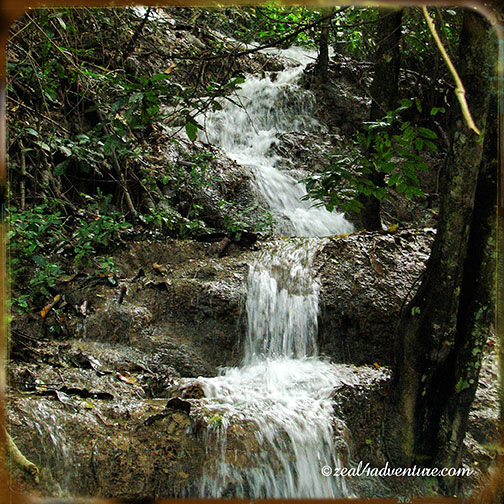
Picturesque and very accessible – Kuang Si falls, 29 km south of Luang Prabang, has become a popular attraction outside of the world heritage city.  Surrounded by lush forest, the falls is 3 tiered, all picture perfect.

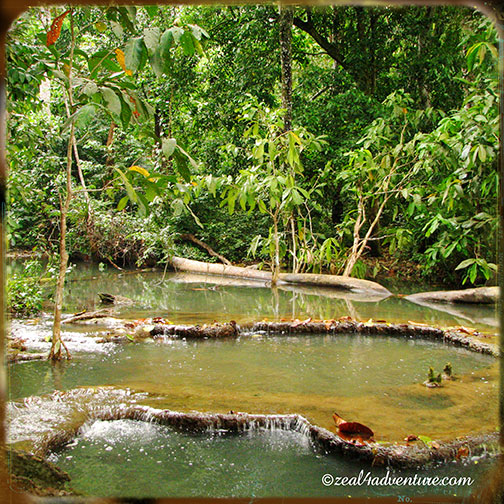
The breathtaking main falls is 60 meters high while the rest, equally stunning, are 1-3 meter cascades that creates small aquamarine pools.

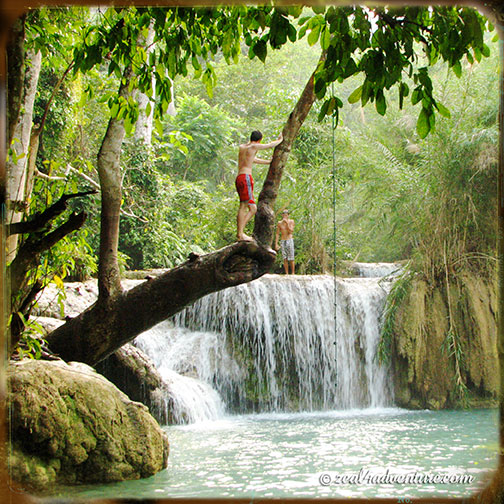
The water invites especially on a hot day, many take a dip, some even take to jumping off trees for some thrills.

A forest trail leads the top of the falls where you’ll find the source of the Kuang Si in a stream.

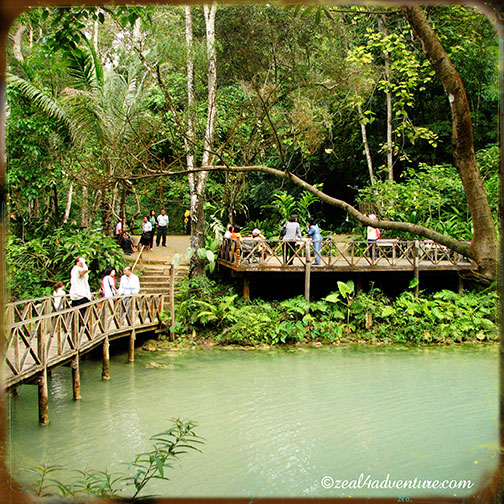
The surrounding area was developed into a lovely park with bridges, a picnic area with tables and even a changing room for those wanting to swim.  My journey to Kuang Si wasn’t as easy as taking a tuk-tuk to the entrance of the park.

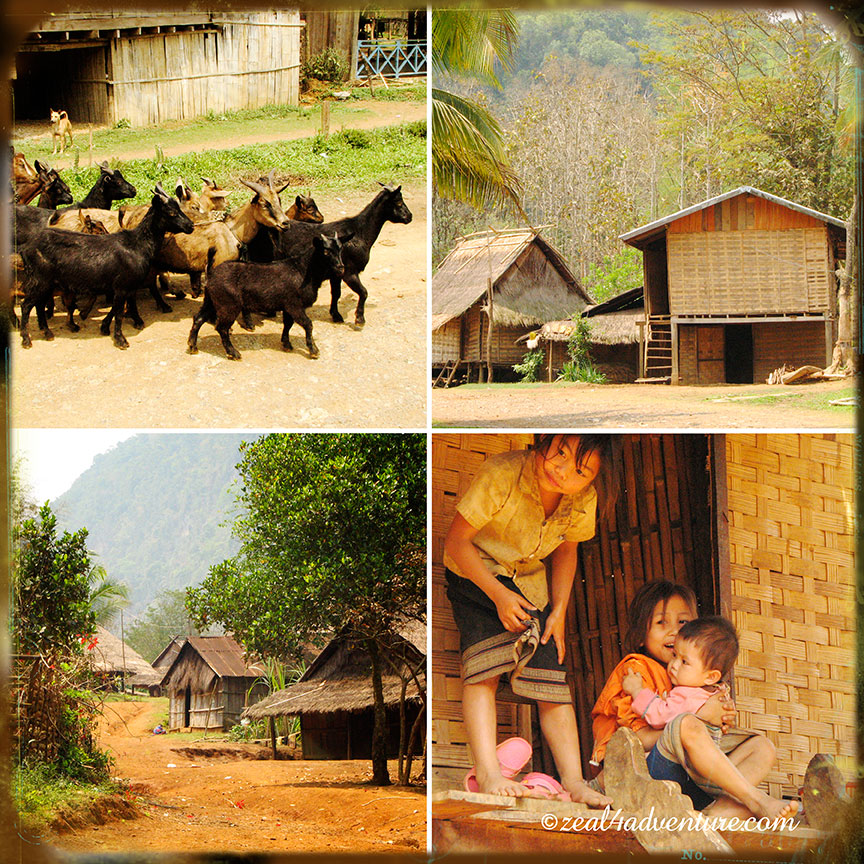
It started when a van picked us up and dropped us off (an hour later) at a Hmong community.

There we learned the difference between the Hmong as compared to the rural Lao lowlanders.  To get to the falls, we trekked through paddy fields and pineapple gardens before entering a rain forest.

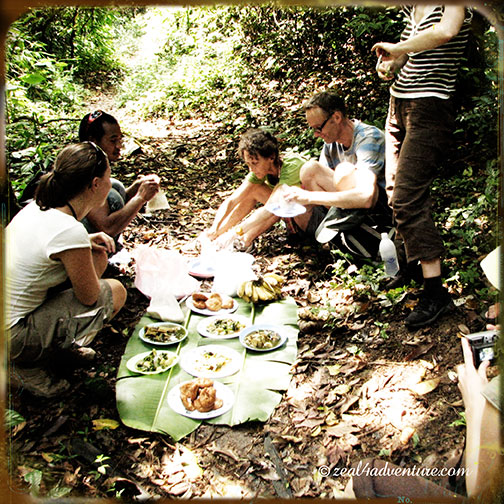
Halfway through our trek, we stopped for a simple Lao lunch prepared by the outfitter.

About 3 hours later, the hilly trail took us to a stream that we soon realized was the stream feeding the Kuang Si.

The view from the top looking down the pool below was spectacular.  Expecting to approach the falls the regular way from below, the realization of ending at the top was a wonderful surprise and quite memorable, truth to tell.

I made this trek 4 years ago with Green Discovery.  Spare an extra day for this if you can, it’s worth the effort.