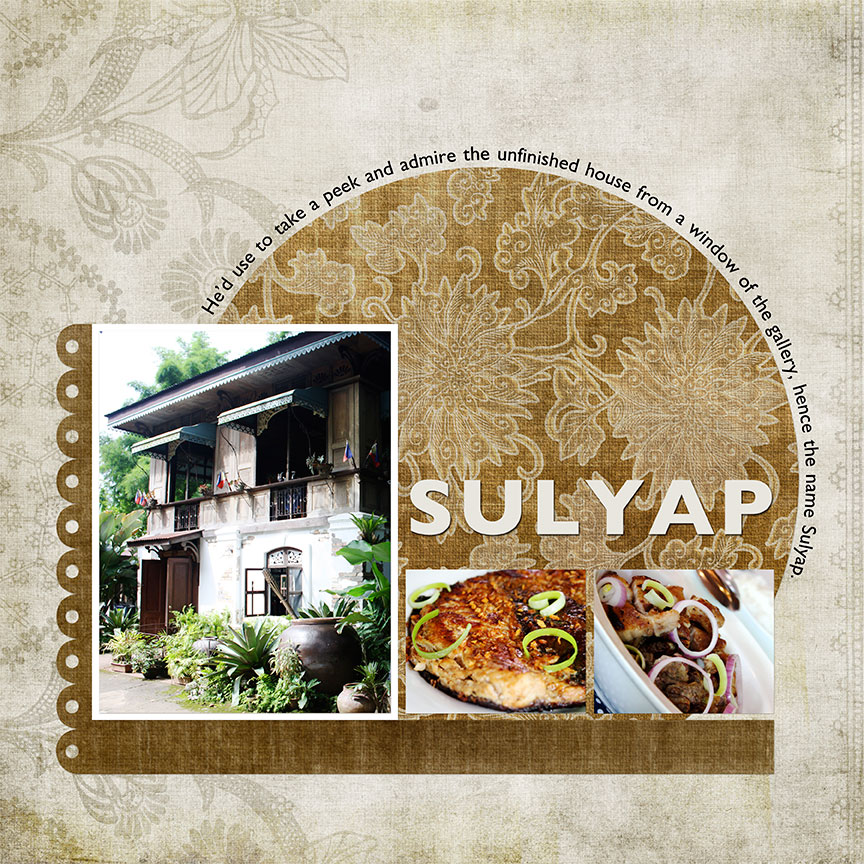
Sulyap

Credits:  Template by Jen Caputo’s ckapr08; Papers by LivE Designs Sing 4 Spring paper kit (PP4, PP6 and SP6)

A weekend road-trip just before it ended was capped by a wonderful lunch at a café oozing with charm.  Highly recommended by Jorge and Amor Bondad (of Sitio de Amor), we headed to Sulyap Café and Art Gallery before heading home.
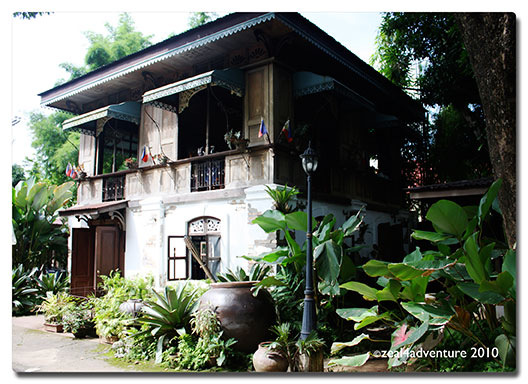
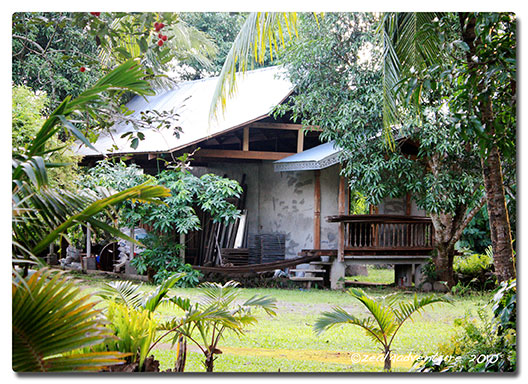
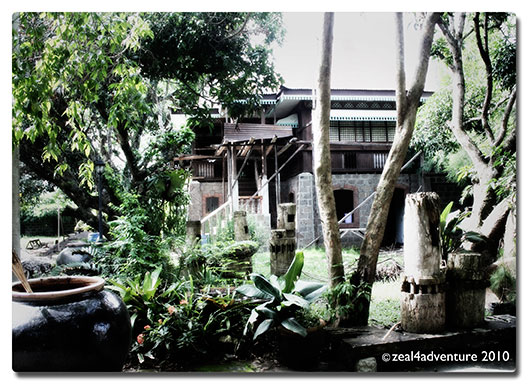
The café is a 2 story Spanish colonial house transported from Quezon and restored piece by piece at the Cocoland compound.

Gorgeous ceiling detail

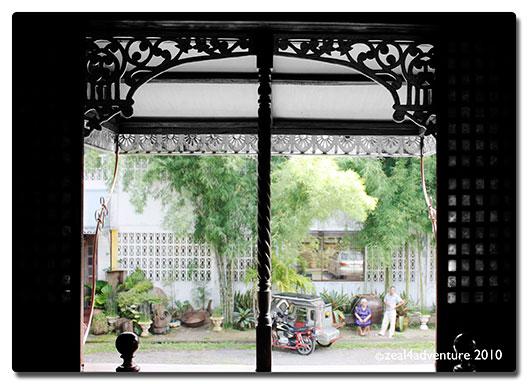
Lovely window details, a trademark of the old Spanish houses — overlooking the gallery.

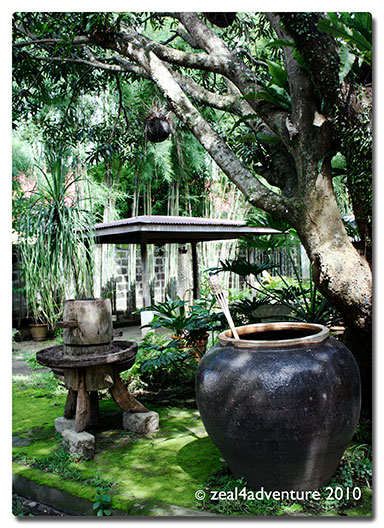
Did I say charming inside and out?
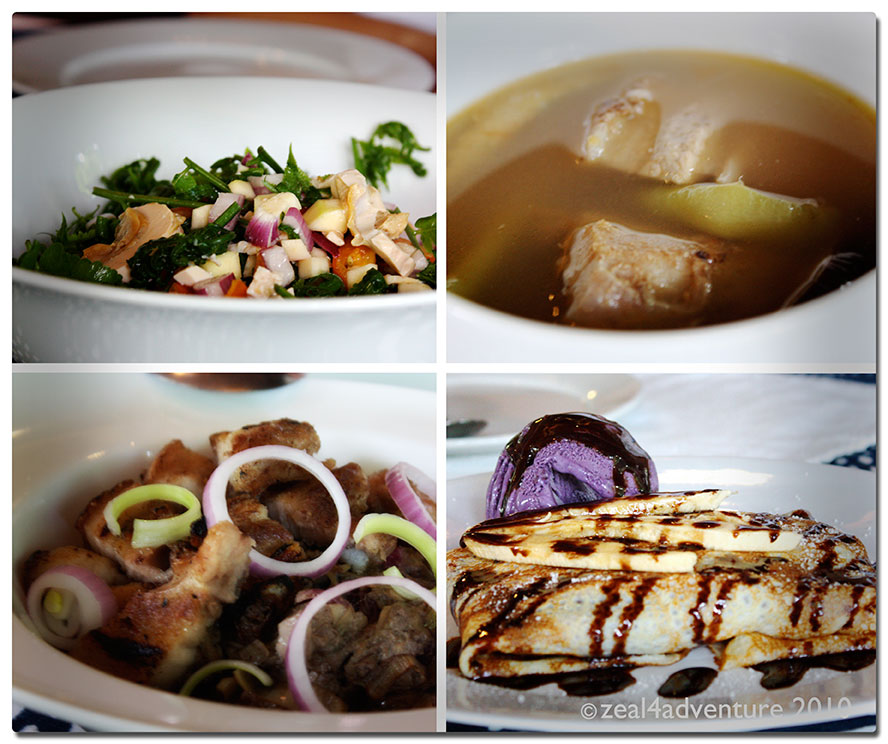
Clockwise:  Enseladang Pako (Fiddelhead fern salad), Sinigang na Liempo, Banana crepe, Kulawong Puso ng Saging (an original recipe of San Pablo city).

And the food… quite good and could merit a return in the future.
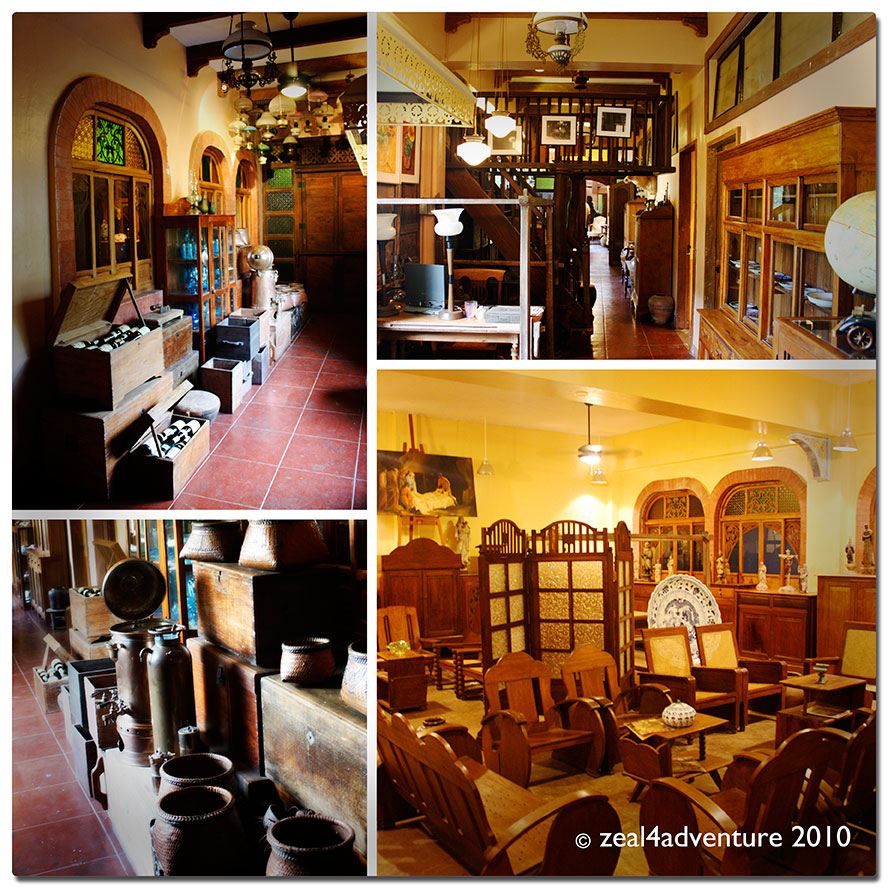
Across the café is the art gallery, which had pieces in various sizes, from furniture to plates and other collectibles.  This building used to be the Cocoland Hotel before proprietor Rommel Empalmado bought the compound.  He also recounted that prior to it being a hotel, it was a South Luzon College, which explained the school-like structure.

He also disclosed that when he was restoring the old house, being a lover of anything old, he’d use to take a peek (sinusulyap – sulyap in Filipino) and admire the unfinish house from a window of the gallery across, hence the name Sulyap.  Quite an endearing story, me thinks.
Rommel is currently building a bigger house in the other part of the compound, this time a bed and breakfast that he hopes to open by December – so watch out for this new lodging alternative in the Viaje del Sol circuit.
Definitely a gratifying end to our weekend getaway.

Getting There:

On the Maharlika Highway coming from Manila on the way to San Pablo, you’ll hit a fork, take the left road (that’s Colago Ave.), which would take you off the highway and lead you to San Pablo proper. You’ll come to an intersection with a stop light (Puregold Supermarket should be on the right corner), turn left on Cosico Ave.  Turn left 2 or 3 streets after (there should be a sign of Sulyap on the right that points to the street where you should turn).  The road will lead to the gate of the Cocoland compound.

Sulyap Cafe and Gallery
Brg. Del Remedio, Cocoland Compound,
San Pablo, Laguna
Tel no:  (049)562-9740 / 582-9735
Of Preservation and Livelihood

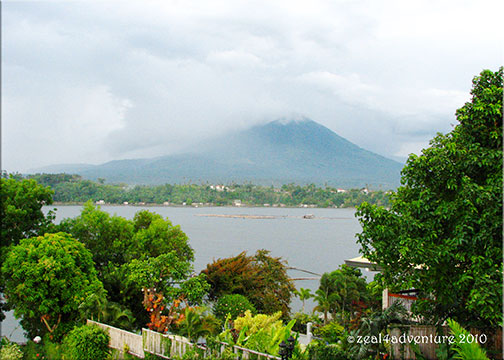
We were running late, directions given were not very clear and so we took a wrong turn and ended up in Sampaloc Lake.

Sampaloc Lake taken from the balcony of Tahanan ni Aling Meding on a previous visit.

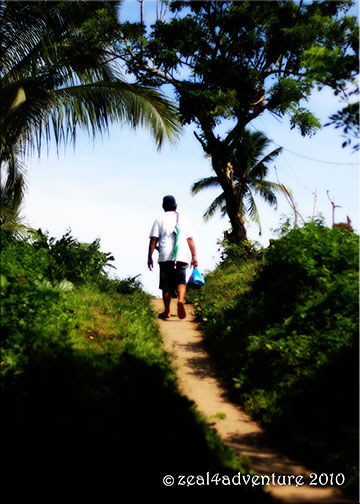
When we finally arrived at Sto. Angel, we saw our friends waiting by the roadside.  We turned into a parking lot and hurriedly parked, exchanged pleasantries and off we went, following Mang Tano, on a short trek as lunch was waiting for us.

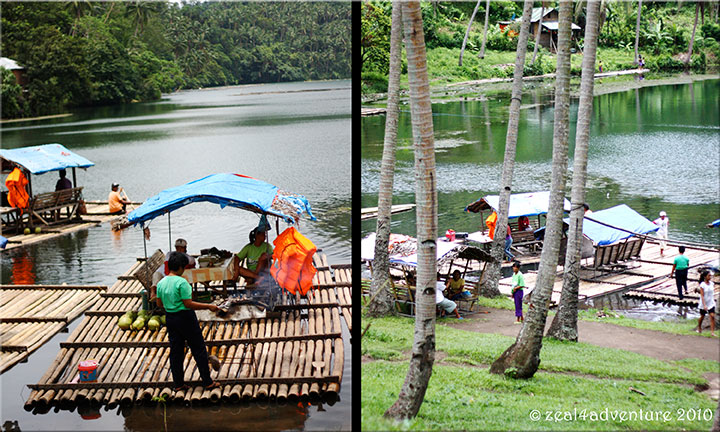
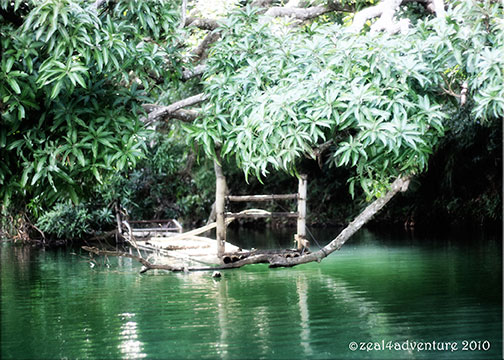
It was an easy trail and about 15 minutes later, the trail revealed a blue-green lake that is quite captivating.
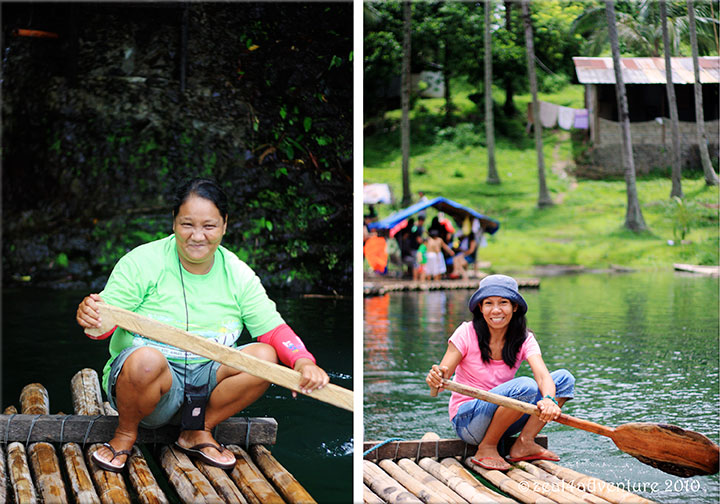
There were rafts positioned at the banks, one of which was reserved for us.  One can book with Aling Sion, Mang Tano’s wife a tour of the lake for P180 and if you add another P180, you get to enjoy a delectable lunch of

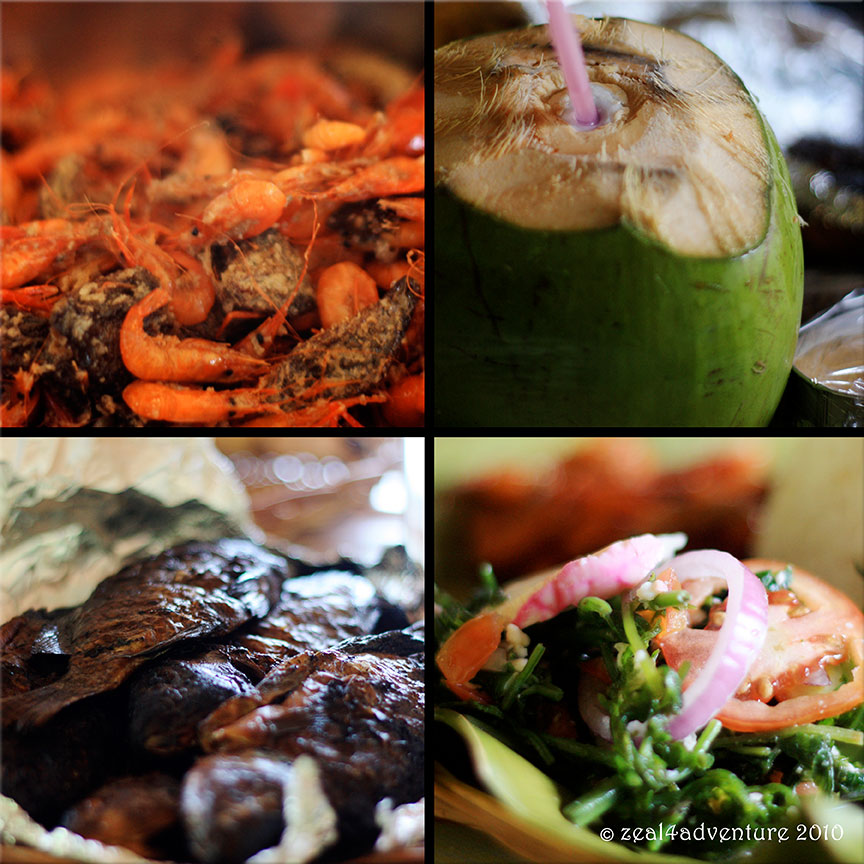
Clockwise:  Ginataang hipon, buko juice (coconut juice), pako (fiddlehead fern) salad, grilled tilapia.

pako salad, grilled tilapia and ginataang hipon (shrimps in coconut milk), all caught from the river and cooked fresh.

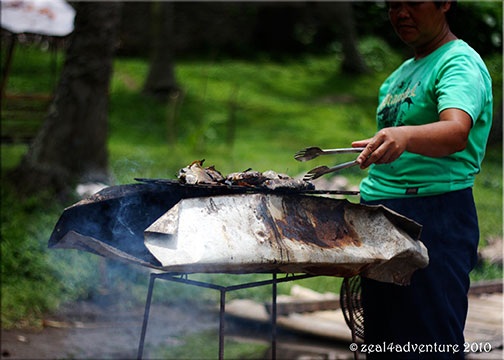
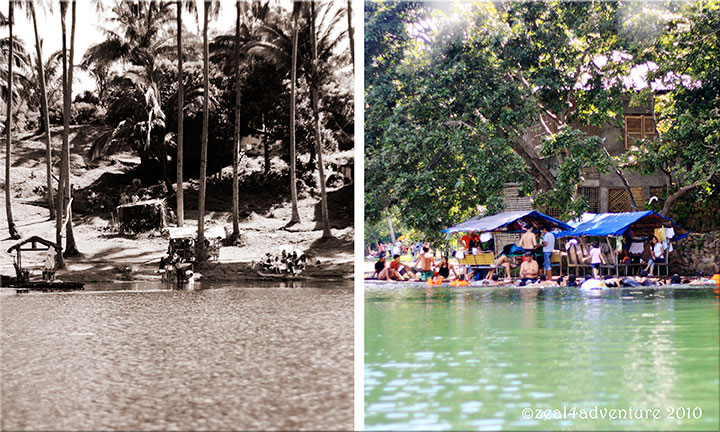
All meals are prepared by the fishermen’s wives which make up the Samahang Mangingisda sa Lawa ng Pandin (loosely translates to “Association of the Fishermen of Lake Pandin”).  The association was established as part of a preservation effort and at the same time help the residents earn a little bit of income on the side with the wives attending to the tourists.

With the help of Mandy Mariño, the fishermen’s wives organized the “Tour of the Pandin Lake” personally paddling the rafts.

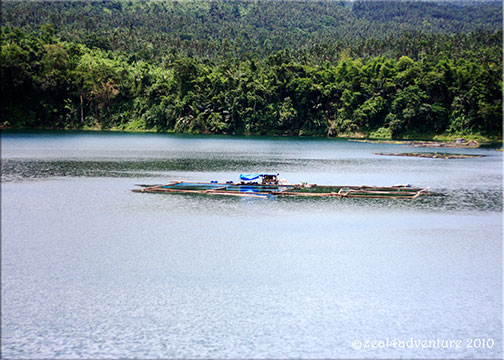
Today, it is the most pristine of the 7 lakes of San Pablo.  Although there is nothing much of the tour, it just takes you around the lake, stopping at a short uphill trail that leads to clearing where one can take a peek at its twin, Lake Yambo.

Yambo’s name was derived from its famous lengend of 2 lovers, Yambo and Pandin.

Both lakes are teeming with tilapia, carp, catfish, milkfish, shrimps and snails.

They are also suitable for swimming but just to avoid the hassle of changing afterwards, we skipped it and just enjoyed the lake, the company and the delightful lunch.

Note: This tour is likewise part of the Viaje del Sol route.

Getting There:

Along the National Highway going towards Lucena, you’ll reach a fork somewhere along San Pablo, take the left.  This will lead you to the town proper.  Go all the way till you reach the city hall, go pass the rotunda until you reach Sto. Angel.  Watch out for a sign. Ask around if you don’t see the Lake Pandin sign that would lead you to a parking lot.  The residents are very helpful and will point you to the right direction.

Contact detail:

Aling Sion
0929 9789565


Fresh from the Tree

Credits:  Papers by LivE Designs – UNR Grassy Sky and Lily Lines from the UNR_Naturally Free kit and PP2 from the Sing4Spring Paper Kit; Elements – Birdoodle, Brad set of 4 and Frame 1 from the Sing4Spring Elements kit.

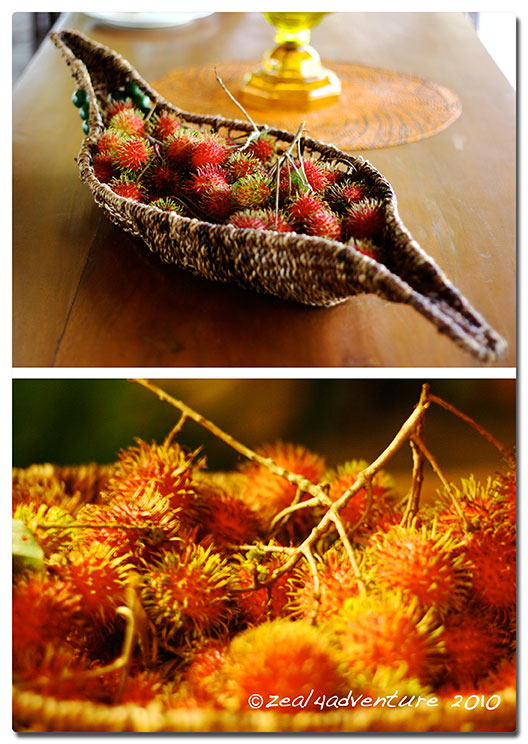
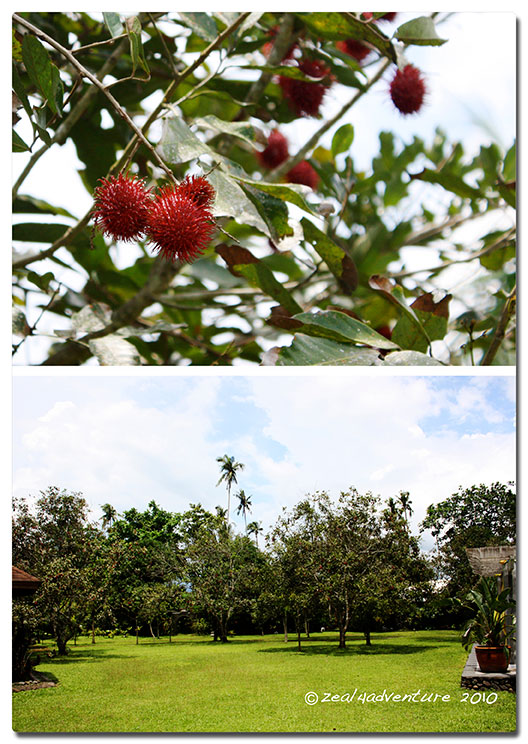
I am not particularly fond of rambutan, at least not in the same level of fondness I have for lychee and longan – rambutan’s close cousins.  But one glorious day I was given some that was fresh from the tree and it has gained a few notches on my gustatory scale.

This tropical fruit indegenous to Malaysia is a hairy bright red oval fruit about the size of a small hen’s egg.  Inside is a translucent grapelike flesh that is sweet and tastes a lot similar to but slightly acidic than that of the lychee.   The pit is what sometimes turns me off.  It annoys me much if the outer layer of the seed sticks to the flesh.  However after tasting the freshly picked fruit, I found out that a fresh produce does no such thing, and I learned to be less judgmental of the fruit.

July – October is harvest time for these sweet juicy fruit and last August, we were in San Pablo, Laguna for the Rambutan Festival where a kilo can go as low as P20 (US$ 0.50).

On our recent road trip, we checked in at Sitio de Amor, a great place to have fresh rambutans, either by personally picking them from their trees that is sprawled all over their garden or simply have it served right after picking during mealtime.

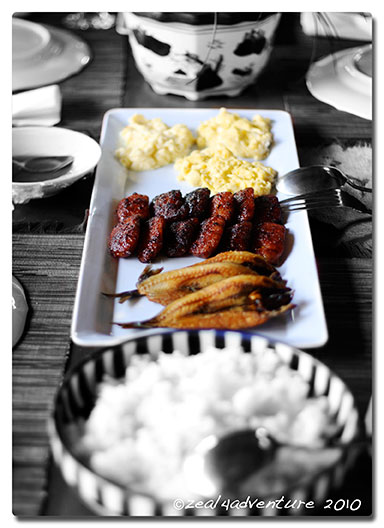
Our breakfast fare which include scrambled eggs, longganisa (local sausage) and a dried fried fish called Nora Aunor (no kidding!)

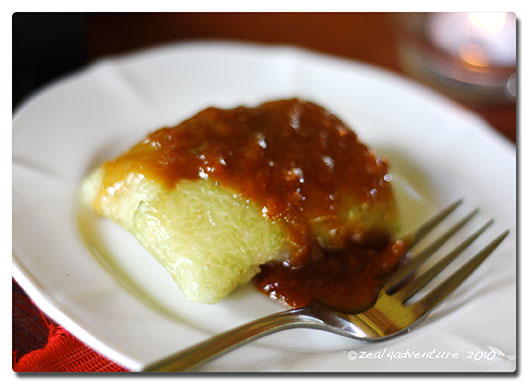
Glutinous rice cake topped with cane sugar (panocha) — the best in my opinion.

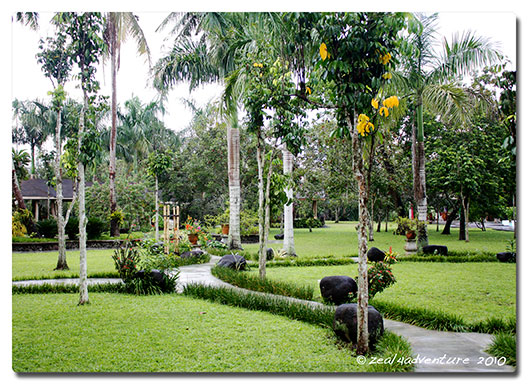
Sitio de Amor is a sprawling 4.5 hectare landscaped orchard situated near the Maharlika Highway.  Nestled between Mt. San Cristobal and Mt. Banahaw,

traversed by the Balanga River feeding into a lagoon where people can choose to take a dip.

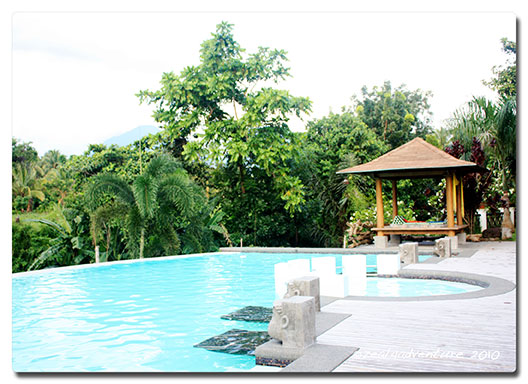
Another option is the infinity pool built by the owners of the resort, Jorge and Amor Bondad.  A weekend home turned resort, the Bondads are very hands-on in expanding and sprucing up this oasis of theirs.  In fact, when in their property, you will chance on Amor working in her garden, claiming the chore to be her stress buster.

Looks like more rooms coming up in the future.

Note: Sitio de Amor is part of the many destinations of Viaje del Sol.

Getting There:

Once you see Jardin de San Vicente along the Maharlika Highway, watch out for a sign that will lead you to the resort.

Sitio de Amor
Km 88.8 Maharlika Highway
Barangay San Antonio
San Pablo, Laguna
For reservations, call:  522-7340 ; 0918-9274346
Email:  sitiodeamor@yahoo.com

Temple of Heaven

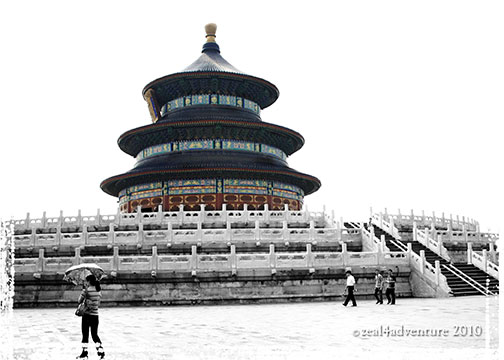
“The Temple of Heaven is a masterpiece of architecture and landscape design which simply and graphically illustrates a cosmogony of great importance for the evolution of one of the world’s great civilization.” – UNESCO World Heritage.

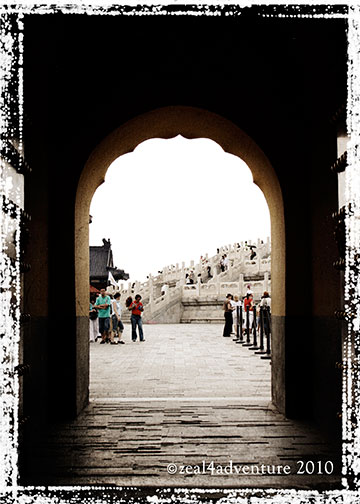
Inscribed as a UNESCO World Heritage Site since 1998, the Temple of Heaven is an extraordinary example of Chinese religious architecture.

Built in 1420, covering an area of 273 hectares, this temple traditionally was only for imperial use and commoners were not allowed to enter even the enormous park.

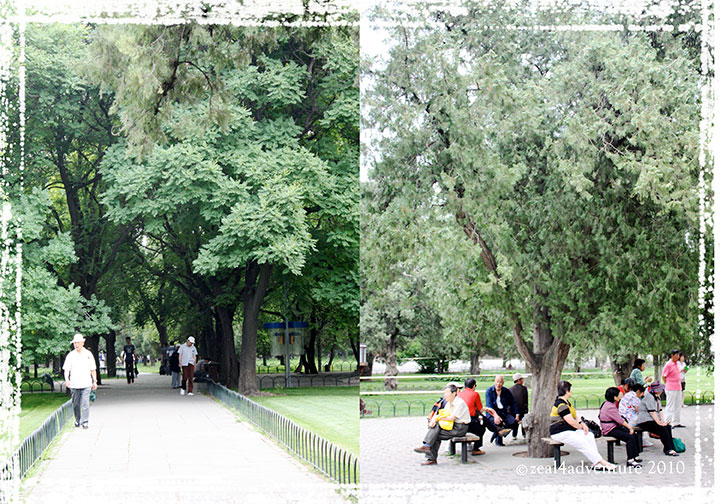
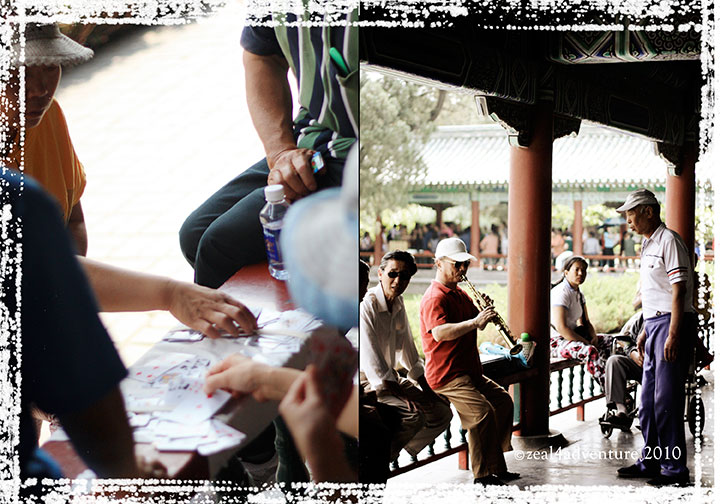
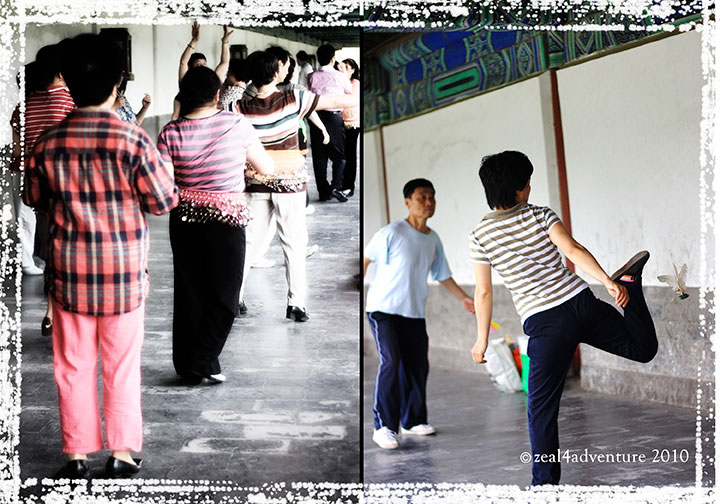
Today, it is one of the most popular parks among local people (mostly retired).

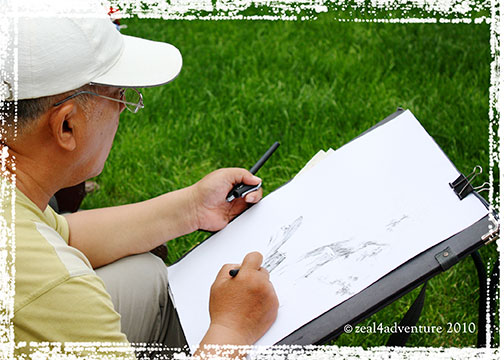
Many enjoy the park carrying out various activities from dancing to playing cards all day long.

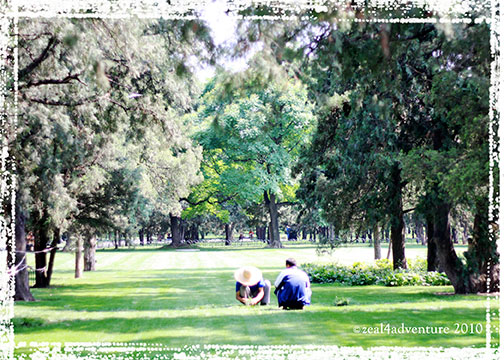
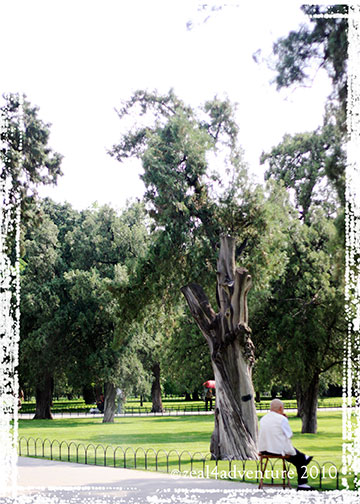
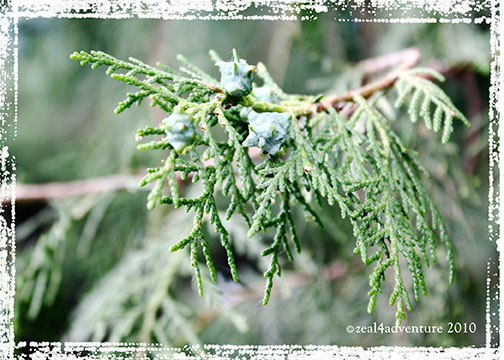
The park has more than 100,000 trees of various kind – some spotted were

ancient cypresses and

evergreen pines to name a few.


Beijing Good Eats

I love Chinese food.  I think I blogged about it once before but I will say it again… I love Chinese food.  What excited me no end about visiting China was the opportunity to have real authentic Chinese food.  And interesting Chinese food, we definitely had.   Most of our meals were marvelous but I failed to ask our guide what and where they were so I leave you with 2 (of the best I’ve had on this trip) well-known restaurants that had left a lasting impression.

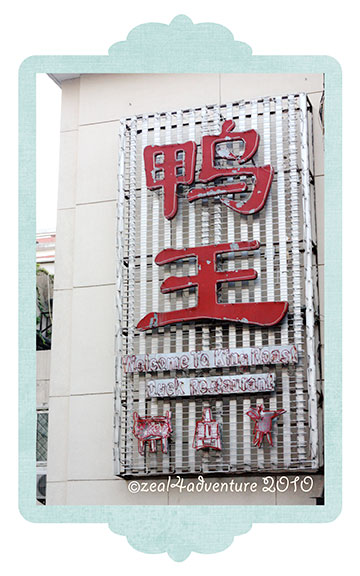
Ya Wang Roast Duck Restaurant

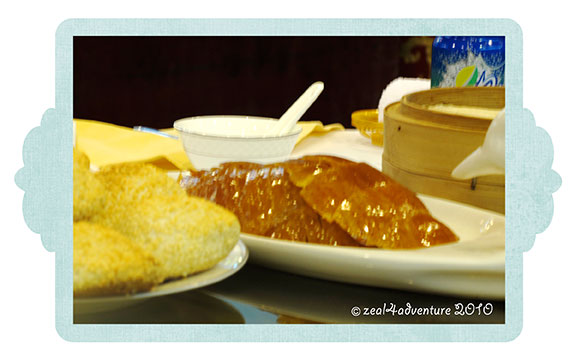
Peking Duck.  Absolutely my family’s favorite since I can remember.  And since we’re in Beijing, how could we not partake of what they consider their national dish?  And so to Ya Wang (Duck King) we went.  Whilst Quanjude and Dadong are favorites among tourists, we opted to go to a less famous but better (in my family’s opinion) tasting roast duck.

Ya Wang’s version did away with the fat and oiliness but kept the main feature of soft and crispy skin that melts in your mouth.  They say that they make sure that the ducks they serve are not too fat by growing their own ducks.  Also, the skin when carved into thin slivers has some meat on it, unlike the other establishments where they separate the skin from the meat. But it’s to each his own and I like it with some meat.

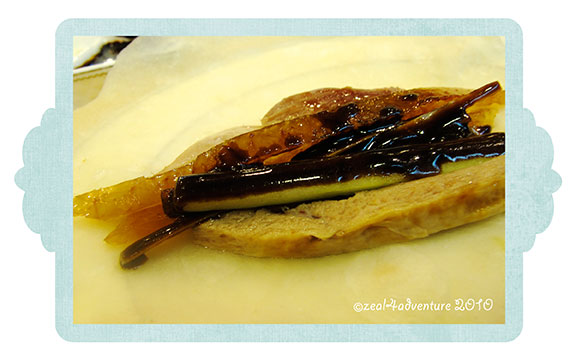
Crispy duck skin, duck meat, cucumber, scallions then topped with hoisin sauce…

Regardless, Peking Duck is a definite must try when in Beijing and Ya Wang is perhaps one of the best places to remember it by.

Xiao Nan Guo

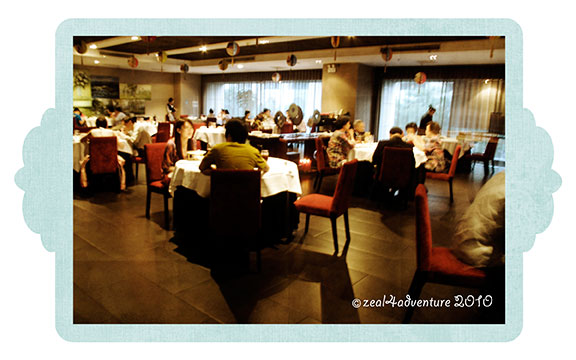
…is a famous chain from Shanghai that found its way to Beijing and Hong Kong.  A renowned restaurant serving Shanghai dishes.  Yes that’s right!  Nothing wrong with that, right?  This wonderful restaurant is modern and elegant featuring a blend of Eastern and Western details.  The food, traditional, served in a way that is more contemporary.  The owner along with her sister started a six-table restaurant in Shanghai 23 years ago beside a restaurant called Da Nan Guo (Big Southern Country) so they named theirs Small Southern Country –Xiao Nan Guo.  Today, this small southern country restaurant is not so small anymore with 7 branches in Shanghai alone, with several in Hong Kong and Beijing.  Some of my favorites:

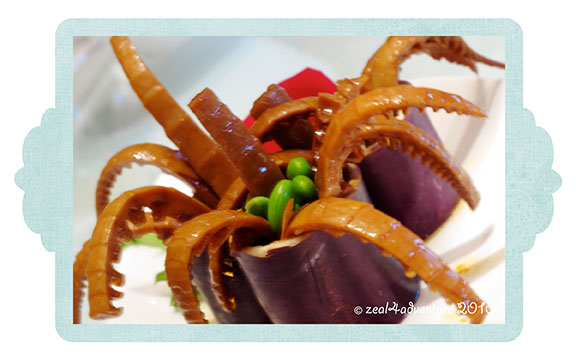
A lotus root appetizer

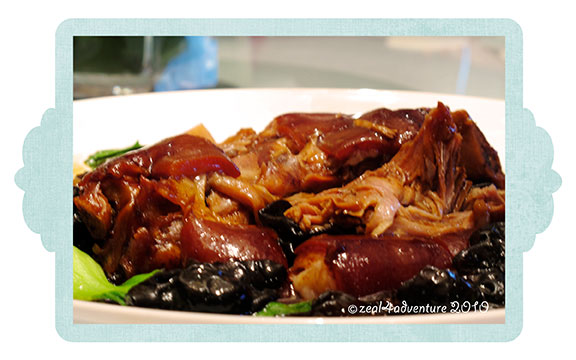
Hong Shao Rou (Red braised pork)

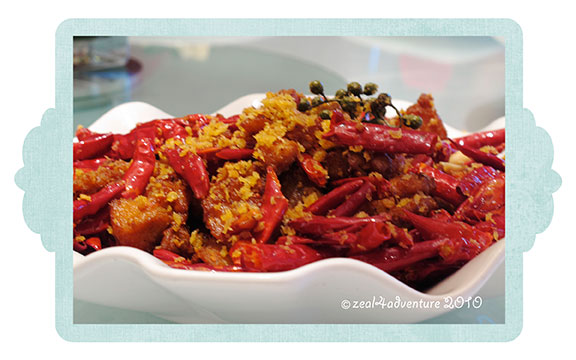
Szechuan styled fried chicken with chilies

Beijing, I found out could be a (Chinese) food lover’s happiness.  And if you feel that you have had too much…

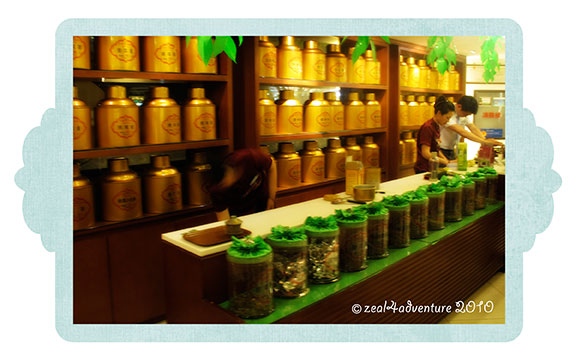
Head over to Ten Fu tea.  They have a wide selection of different kinds of quality tea. Definitely a haven for tea lovers.

Useful Information:

Ya Wang
77 Jiangning Lu,
near Fengyang Lu
Phone: +86 10 6271 1717
Xiao Nan Guo
2/F Jinbao Tower
89 Jinbao Jie, Dongcheng Center
Phone:  +86 10 8622-1717
Ten Fu’s Tea
150 Wangfujing Street,
Dongcheng, Beijing
Phone: +86 10 6527 1888


Xiao Long Bao: Dumpling of all Dumplings

Credits:  Quickpage by Joanne aka 2girlsand poodle from the You Are Awesome Kit.  Alpha by Scrapmatters.com Life Little Surprises kit.

If you haven’t heard of Xiao Long Bao, it’s about time that you do.  You absolutely must try this at least once in your life. This delectable steamed soup dumpling is named after the small bamboo basket it is steamed in.  Inside the dumpling are pockets of minced meat and gelatinized broth made of chicken, pork or cured ham.  When steamed, the gelatin melts inside the dumpling and the soup bursts into deliciousness in your mouth.

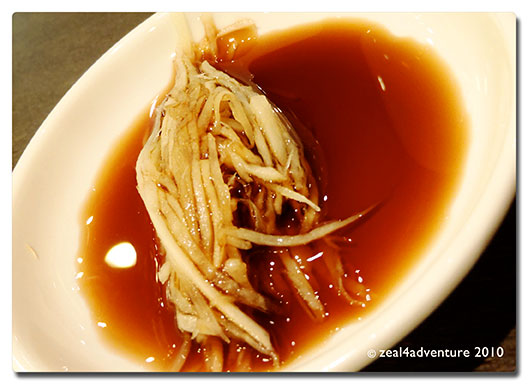
Best with vinegar and ginger slivers

The graceful way I eat this is to bite a small hole into the dumpling and sip out the juice before taking the whole dumpling.  A word of caution… wait a few minutes to cool the dumpling before devouring though – the last thing you want is to ruin the whole experience by burning yourself.

My first encounter with this Shanghainese specialty was in 1991, in Taiwan – the very first branch of Din Tai Fung, I recently learned.   And for a very long time, I could only dream of it.  It took me 10 long years to feast on these babies again, this time in Shanghai.  It took perhaps another 5 years for Xiao Long Bao to make its way to the Philippines.  Eat Well is a favorite and very recently, Crystal Jade opened its doors in Greenhills supposedly offering excellent xiao long baos.  The long line turned me off so I have yet to judge for myself.

Din Tai Fung. Singapore. Packed!

Recently however, I came full circle when a few months ago in Beijing and more recently in Singapore, I saw myself in Din Tai Fung for a treat of my favorite dumpling (and more).  Din Tai Fung has become known for their delectable dumplings for decades and opened up franchises in many Asian countries but sadly not in the Philippines (yet).  I saw that they’ve expanded their dumplings to more than just their signature Xiao Long Bao.  They now have chicken, fish and even a vegetarian dumpling.

Though I was a bit disappointed with the vegetarian dumplings, their signature dish remains to be my favorite and

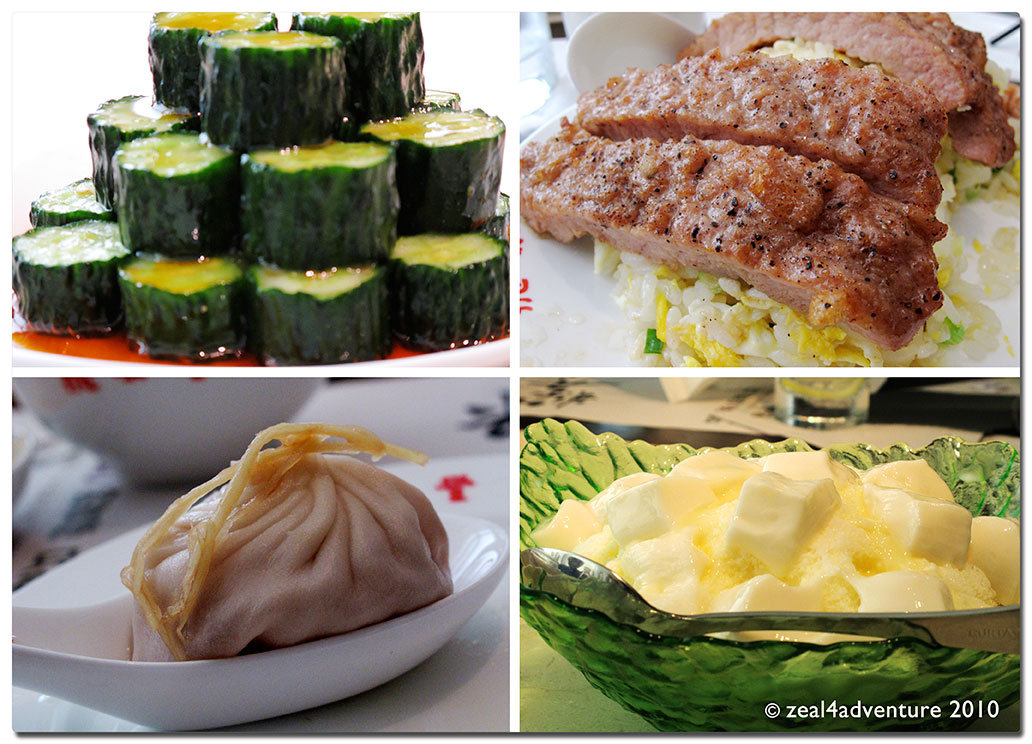
Clockwise:  Cucumber appetizer, Fried Pork Chops on fried rice, Almond Jelly on crushed ice, xiao long bao with vinegar and ginger slivers.

I so totally enjoyed their pork chops and almond jelly dessert.  So really even if XLB made them what they are today, it isn’t just all about dumplings at Din Tai Fung. If you find yourself in a neighborhood with  Din Tai Fung near you, don’t hesitate at all.  Click here to see where they are around the globe.

Where to get XLB in the Philippines:

Eat Well Delicious Kitchen (sounds tacky but they really serve up delicious meals)

At The Fort
Unit C, Ground Floor, Net Quad Building,
30th-31st St., Bonifacio Global City, Taguig
For Reservation and Pickup only: +632 856-9408
At Greenhills
Missouri St. cor. Connecticut St., Greenhills, San Juan, Metro Manila, Philippines
Phone Number: +632 722-8518


Crystal Jade
Unit 117-121 (near Haagen Dazs and Goodwill Bookstore)
V-Mall, Greenhills Shopping Center
Greenhills, San Juan City, Metro Manila

Phone Number: +632 570-6910, 570-6912


Bird’s Nest

I was glued to the set on August 8, 2008 as I watched in awe of the spectacle that Beijing presented to the thousands of spectators that streamed through the gates of the National Stadium and to millions of others that watched (like me) on television.  Amazed at how they could even begin to prepare for this night — the thousands of dancers, drummers, percussionists, martial art performers, musicians and various artists in full regalia, all performing to the hilt.  Put aside the performers, I was equally awed at the stunning latticework structure that lit beautifully and was made more arresting when the fireworks exploded in its midst.  I knew that one of these days; I will be looking at it up-close and personal.

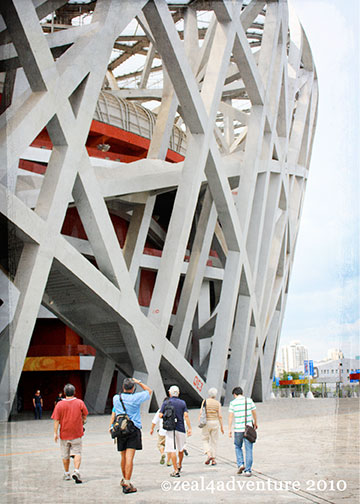
Two years later, we were entering a structure that is a feast to the eyes not only from afar, on TV but up-close as well.  This elliptical latticework has become an architectural landmark and an Olympic legacy.

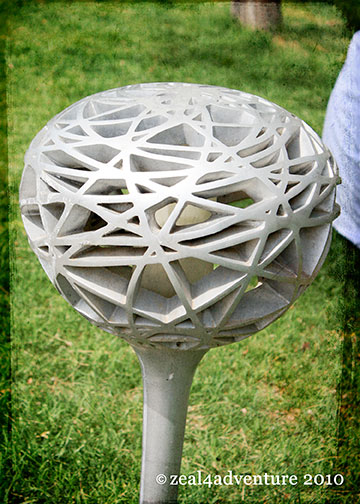
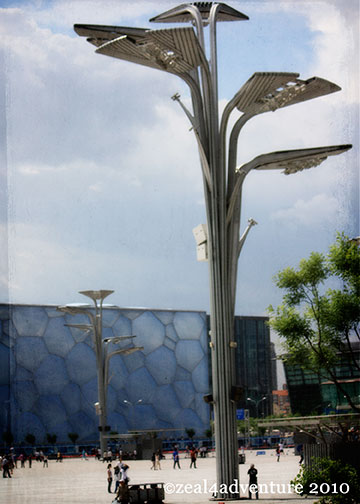
The latticework echoing even to the garden lights.

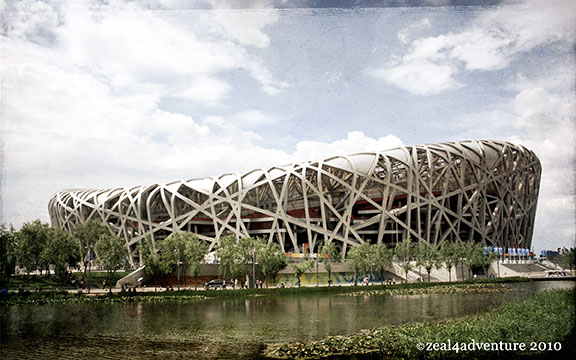
An aesthetic and engineering marvel.  We see as we enter that the grid-like framework serves as both façade and structure merging the walls and roof into one integrated system.

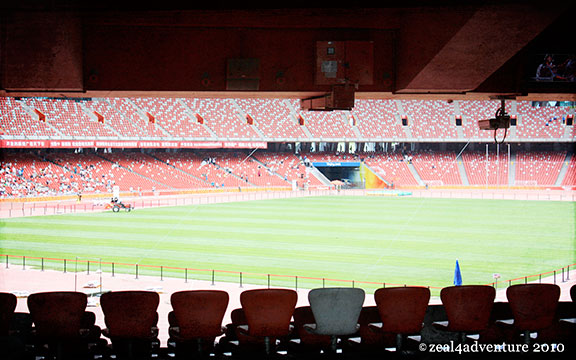
The Bird’s Nest, as it is has been fondly referred to, is the Beijing National Stadium.  Designed by Swiss architects Herzog and De Meuron, this futuristic stadium hosted (as the world knows) the 2008 Summer Olympics.

Today, aside from it being a tourist spot, it continues to host sport events and has become a large scale sports and entertainment facility for the Beijing residents.

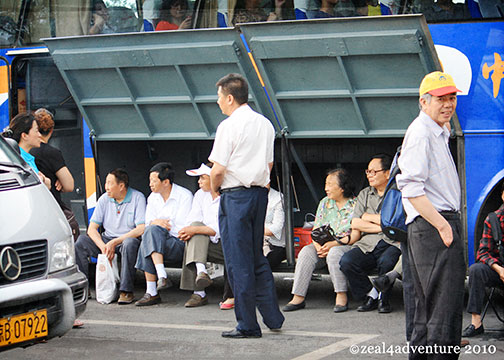
Tired local tourists

There seemed to be a lot of activities going on that day.  Aside from the visitors that flock in on a daily basis, there were athletes and other performers either rehearsing or practicing.

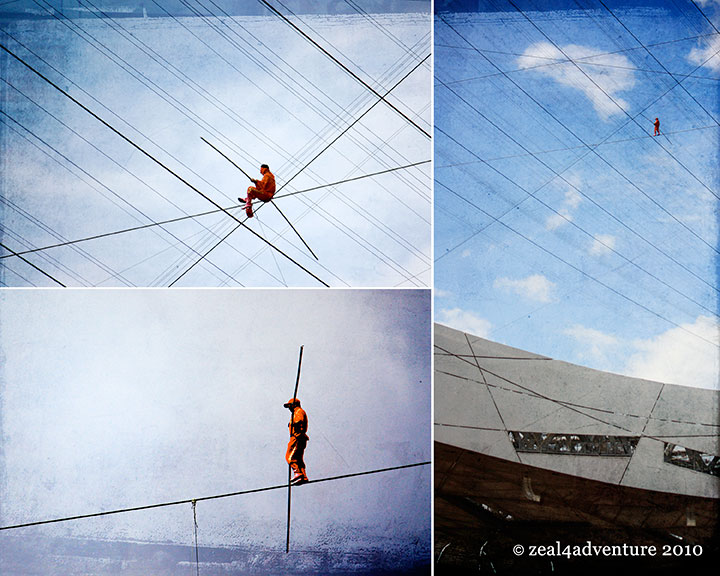
There even was a tightrope walker sans a net for entertainment, I think.  As it turned out, the guy hailed from Xinjiang, the Xinjiang Uygur Autonomous Region (Xin for short) located in Northwest China.

Alongside the Bird’s Nest, an aquatic center was built for the swimming and other water sports competition.  Also known as the Water Cube, the unique and inspired design was based on the way soap bubbles come together.  Before it closed for renovations after the Olympics, it became a ballet theater to host Swan Lake.  Last August, it opened its doors once again to the public, this time transforming into a water park.  At the time of my visit, it was still closed for renovations.


Beijing Acrobats

Credits:  LivE S4S Stitched Page Overlay, TW Lesson 2 paper, Laurie’s Ornament, KPertiet Storyboard Negatives.

China’s acrobatics are world-renowned and deservedly popular among Beijing’s visitors.  Young students that demonstrate extreme flexibility, dexterity and balance that boggle the mind perform today’s acrobatic shows.  If you have enough time, might as well witness a show.  Expect to “ooh” and “ahh” during the entire show as the young performers show off stunts such as: plate spinning, unicycling, juggling, Chinese yo-yo, etc.

Snippets from the show:

Where to watch:

Chao Yang Theater

Wansheng Theater

Tiandi Theater


Kind Words Costs Little But Worth Much

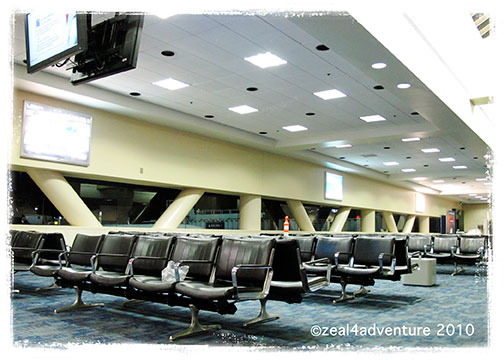
Have you ever spent the night at the airport involuntarily?  I had my Amazing Race moment except that I didn’t have a partner to share this horrible moment with me.  I don’t rant a lot, at least not about my travels because I believe that every experience (pleasant or not) is an experience to tell and learn from.  Even our mishap in Uganda was such a disaster but we chose to take it as it is.   I have eventually learned to laugh about this new mishap but not without a rant.

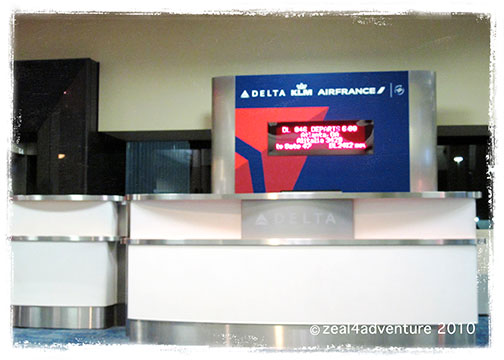
Barely an hour before my flight, my childhood friend M finally picked me up at my best friend’s house in San Carlos.  We were to embark on an extended weekend of fun with some high school buddies in NYC.  I made it through check-in, at least my baggage did.  I, on the other hand, was on stand-by.  It turned out, Delta overbooked the flight by 8 passengers, 6 volunteered to give up their seats, leaving 4 passengers fighting for the 2 available seats.  Since I was practically the last one in, I and another guy was the first one out.  Unbelievable!  I was dumbfounded as I hardly get bumped off.  I really wanted to raise hell but to whom?  My friend whom I hitched a ride with?  (We weren’t on the same flight as she was using her mileage, which was horrifically expensive).  Or perhaps to the Delta ground staff for overbooking?   It really wasn’t their fault… ok, it was partly M‘s fault but she more than made up for it in the end.   🙂  Anyway, Delta offered me a $400 voucher, which I have no use for because, “I don’t come to the US very often”, I told them.  I could give it to friends, they suggested.  I wanted a room but “all their affiliated hotels were booked due to a convention that week”, so they say.

I was really tired so I conceded and accepted the voucher.  I bared and grinned because at the end of the day, it was all my choice.  I took the red-eye flight because I wanted to arrive in the morning so I can make the most of my days in NYC.  I took Delta because it was the cheapest that I could find.  M was able to fly despite the lateness, was it because her ticket was 3x higher than mine?  As I always believe, you get what you pay for… and did I pay!!   😦

I wandered around the airport until everything started to close.  A nice Delta staff was kind enough to offer me blankets, at least.  It was getting cold as the passengers get on their respective flights.  Soon after, I was alone except for the security staff and the cleaners.  With the uncomfortable bucket seats, the noisy vacuum cleaner and crew talking sometimes even shouting at each other, sleep was a struggle.  It was the longest 5 hours I ever had.  But I wasn’t ranting (yet).

When morning (finally) came, the guy who also got bumped off told me his story after I left the counter.  They couldn’t print his voucher and a supervisor stepped in, it turned out that those who were involuntarily denied a flight had two options — cash or voucher.  Because they couldn’t print his voucher, they gave him CASH!  He told me to give it a try so I waited, and waited, and waited for a supervisor to appear and when he finally did, I asked him about it and he smugly looked at me and had the gall to suggest that I volunteered and didn’t have the right to ask for cash.  Can you believe that old guy?  I was (again) dumbfounded.  I told him that I definitely did not volunteer to give up my seat so I can spend the night at the airport, he looked at me (smugly still) and said that he couldn’t possibly give me what I wanted and I when I asked him why, he replied condescendingly, “because I do not carry that much cash with me”.  I was just too disgusted with this rude old guy and lest I miss my flight again, I felt it was pointless to argue this out.   He told me to try again in Detroit.  A sorry would have been more appropriate, I believe.  That’s customer service for you.

So dear readers, if you were involuntarily denied a seat, for some reason – ASK FOR OPTIONS –some airlines may have cash options.  If the ground staff can’t give you an answer, ask to speak to a supervisor.  Most of the time, the ground staff are not informed of these options too, as I learned.  Or better yet, avoid taking Delta if you can — their staff are downright rude.

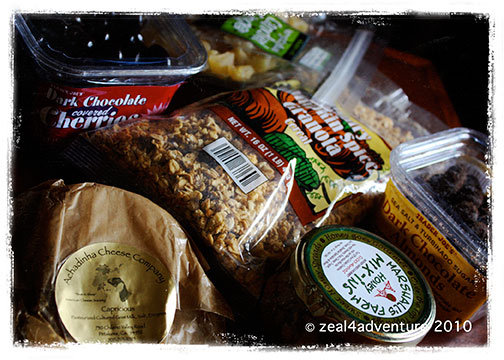
But all is not lost, my best friend may be taking a trip somewhere in the US soon courtesy of my $400 voucher.  NYC was incredible (more than a few posts is definitely coming up sometime in the future).  And my pantry is stuffed with these loots from San Francisco.

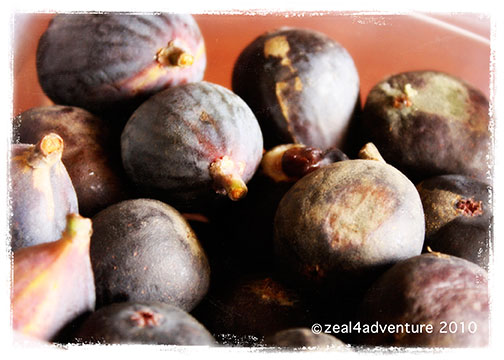
Glorious Figs!!

All my favorite things…

All’s well that ends well but as the saying goes… Acts of kindness may soon be forgotten, but the memory of an offense remains.


A Glimpse of Beijing’s Ancient Neighborhoods

A hutong is an architecture and structure unique to Beijing and visiting one of this (either by walking or a rickshaw) is one of Beijing’s attractions especially to people wanting to know more about its history.  Going around a hutong will let one experience the remnants of Beijing’s ancient culture.

In old China, there were clear definitions of what streets and lanes are.  A 36-meter-wide road was called a big street while an 18-meter-wide road was called a small street.  And a 9-meter-wide lane was called a hutong.

According to history records, these hutongs came to existence during the Yuan Dynasty when the Mongols – led by Genghis Khan, occupied Beijing.  The city had to be rebuilt after it was demolished during the take over, thereby creating hutongs.  The word “hutong” is Mongolian in origin, which means, “water well”.  People tend to gather where there is water so with the digging of new wells; new communities are not far behind.  Hutongs are alleys formed by lines of “Siheyuans” (traditional courtyard residences).

Hutongs were established surrounding the Imperial palaces throughout the Yuan, Ming and Qing Dynasties.

Since the mid- 20th century however, new roads and buildings have replaced many of the hutongs.  Some hutongs though still survive today, thanks to their local government’s protection policy.  Most in existence today date from the Ming (1368-1644) and Qing (1644-1911) dynasties.

Walking through the hutongs, it is common to see groups of elderly citizens playing cards, mahjong or Chinese chess together.

Also important to hutong life is the traditional foods sold in carts or small stalls.  These ancient neighborhoods today provide a glimpse of the life in old Beijing.  To live in a hutong would mean no baths and toilets in their homes.  Public baths and toilets are provided and imagine having to trudge your way to the toilet in the middle of the night at below zero degree.

And yet there are still many living in these ancient neighborhoods, perhaps it is the way of life these folks are accustomed to, real life as it has been for generations.