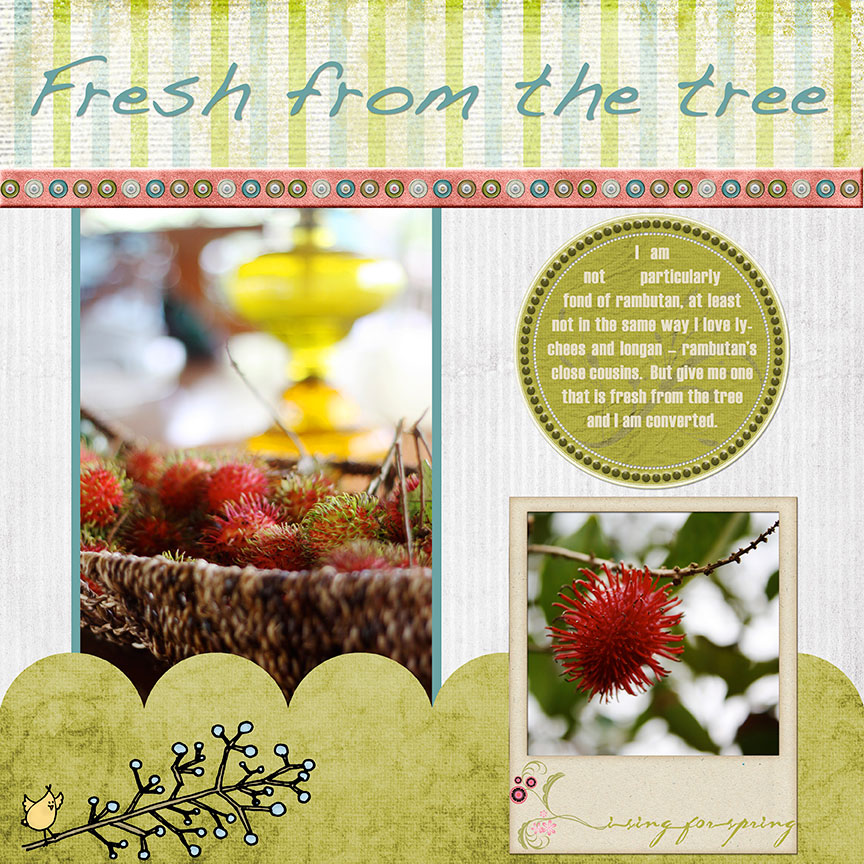
Fresh from the Tree

Credits:  Papers by LivE Designs – UNR Grassy Sky and Lily Lines from the UNR_Naturally Free kit and PP2 from the Sing4Spring Paper Kit; Elements – Birdoodle, Brad set of 4 and Frame 1 from the Sing4Spring Elements kit.

I am not particularly fond of rambutan, at least not in the same level of fondness I have for lychee and longan – rambutan’s close cousins.  But one glorious day I was given some that was fresh from the tree and it has gained a few notches on my gustatory scale.
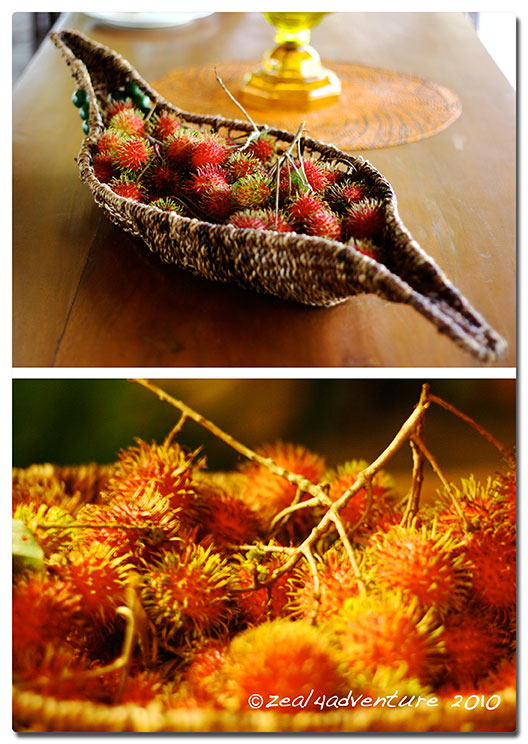
This tropical fruit indegenous to Malaysia is a hairy bright red oval fruit about the size of a small hen’s egg.  Inside is a translucent grapelike flesh that is sweet and tastes a lot similar to but slightly acidic than that of the lychee.   The pit is what sometimes turns me off.  It annoys me much if the outer layer of the seed sticks to the flesh.  However after tasting the freshly picked fruit, I found out that a fresh produce does no such thing, and I learned to be less judgmental of the fruit.
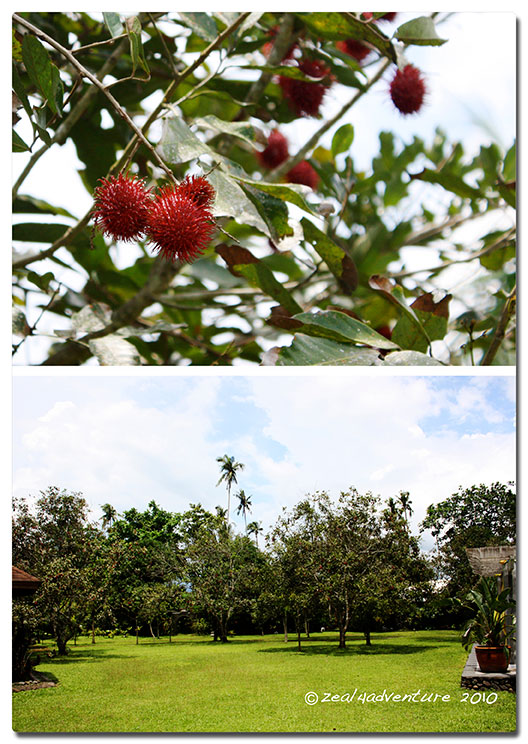
July – October is harvest time for these sweet juicy fruit and last August, we were in San Pablo, Laguna for the Rambutan Festival where a kilo can go as low as P20 (US$ 0.50).
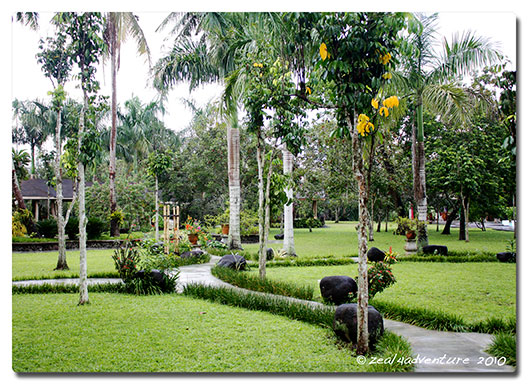
On our recent road trip, we checked in at Sitio de Amor, a great place to have fresh rambutans, either by personally picking them from their trees that is sprawled all over their garden or simply have it served right after picking during mealtime.
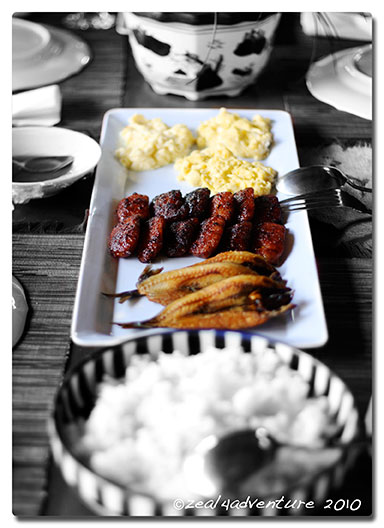
Our breakfast fare which include scrambled eggs, longganisa (local sausage) and a dried fried fish called Nora Aunor (no kidding!)
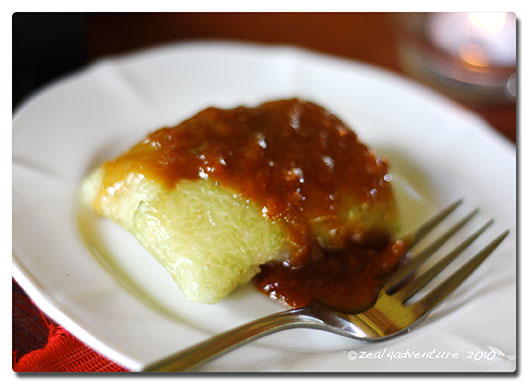
Glutinous rice cake topped with cane sugar (panocha) — the best in my opinion.

Sitio de Amor is a sprawling 4.5 hectare landscaped orchard situated near the Maharlika Highway.  Nestled between Mt. San Cristobal and Mt. Banahaw,

traversed by the Balanga River feeding into a lagoon where people can choose to take a dip.
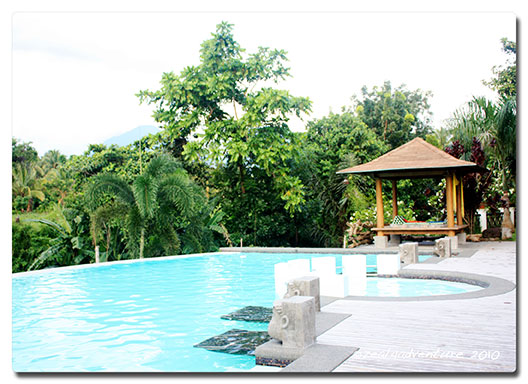
Another option is the infinity pool built by the owners of the resort, Jorge and Amor Bondad.  A weekend home turned resort, the Bondads are very hands-on in expanding and sprucing up this oasis of theirs.  In fact, when in their property, you will chance on Amor working in her garden, claiming the chore to be her stress buster.
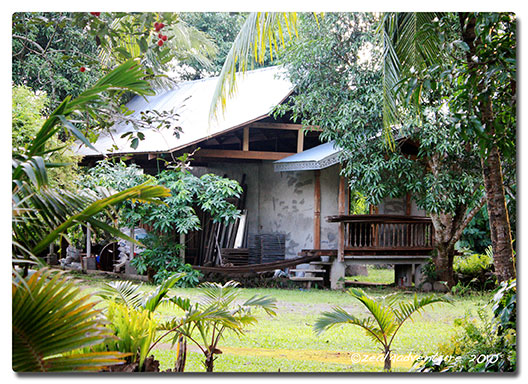
Looks like more rooms coming up in the future.

Note: Sitio de Amor is part of the many destinations of Viaje del Sol.

Getting There:

Once you see Jardin de San Vicente along the Maharlika Highway, watch out for a sign that will lead you to the resort.

Sitio de Amor
Km 88.8 Maharlika Highway
Barangay San Antonio
San Pablo, Laguna
For reservations, call:  522-7340 ; 0918-9274346
Email:  sitiodeamor@yahoo.com
A Museum of Art and Nature

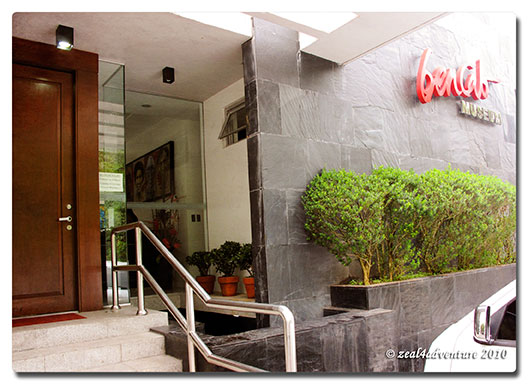
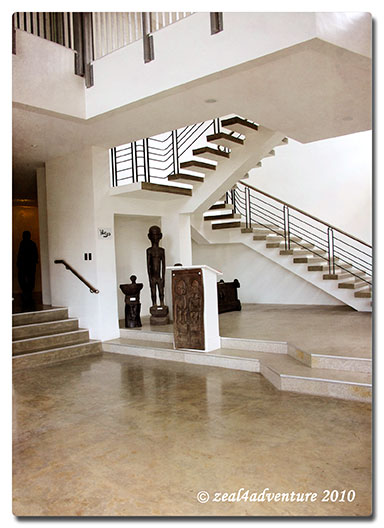
A short ride from the Baguio City center along Km 6, Asin Road stands a modern white building that is BenCab’s Museum.  A 4-hectare project of the National Artist for Visual Arts, Benedicto Reyes Cabrera, more popularly known as BenCab.

The Master of contemporary Philippine Arts traces his beginnings in Mabini where he painted and ran an art gallery with his elder brother Salvador Cabrera.  He then moved to London, gotten married to a British writer and eventually established for himself a name of international recognition.  When his marriage ended, he relocated to Baguio in 1988 and along with other artists formed the Baguio Arts Guild.  BenCab being a tenacious admirer and collector of Cordillera Arts also formed his own group of artists when he established the Tam-awan Village, an art center that promotes Cordillera traditions.

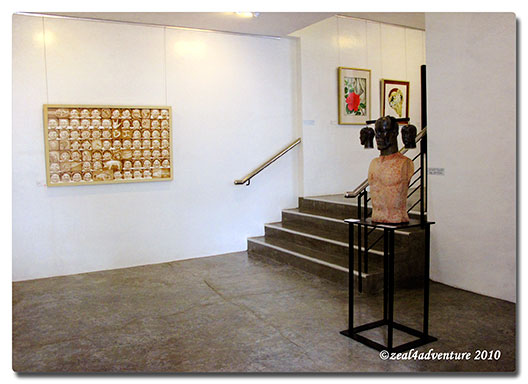
So it is to no surprise that aside from the BenCab Gallery, which presents a range of his works of different periods, sizes and styles,

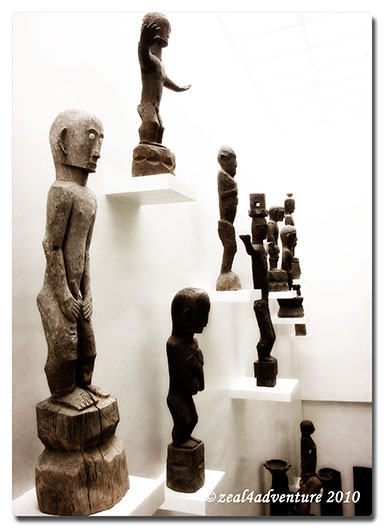
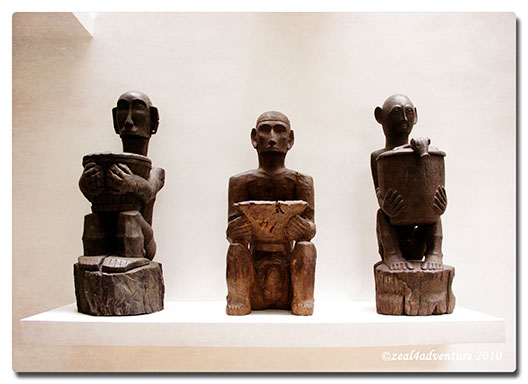
the museum also houses a Cordillera Gallery displaying a collection of tribal artifacts and indigenous crafts of the northern Luzon highlanders.

It also showcases artworks by contemporary Filipino artists – Cesar Legaspi, Anita Magsaysay-Ho, Fernando Zobel, Arturo Luz, Ed Borlongan to name a few.  A collection he accumulated through the years.

Aside from promoting art, a major part of its mission is to preserve, protect, and conserve its natural surroundings.  And how?

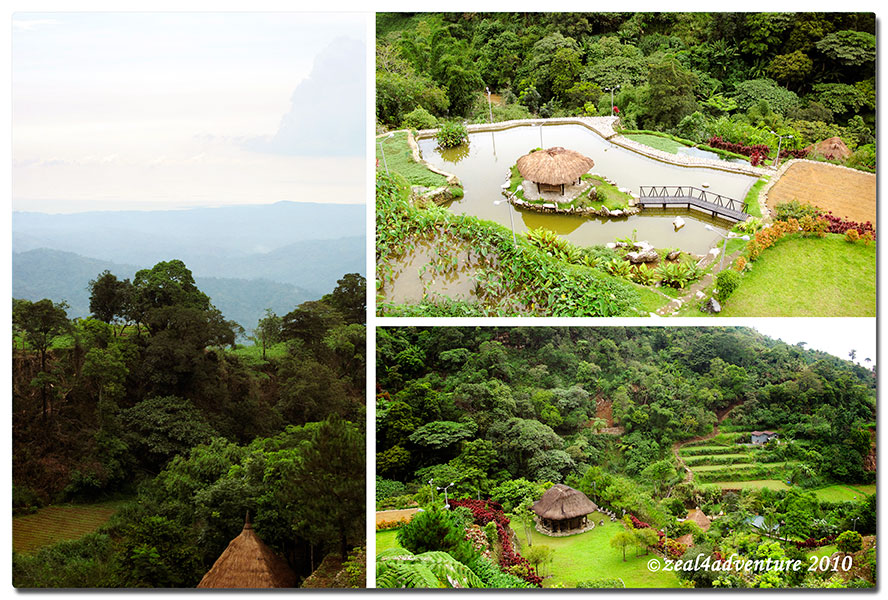
The museum commands a breathtaking view of the adjacent organic garden, its surrounding mountains and the South China Sea on the horizon.  Other sections of the estate features large ponds for ducks and a thatched-roof gazebo erected on a center island.

Café Sabel, serving cordillera coffee, tea and some food, is on the ground floor and overlooks all these.  Truly a remarkable man’s gift to a community he joined more than a decade ago.

A museum that is worth a visit opens its doors from Tuesday to Sunday, 9am-6pm.  Admission fee is P100 per head.

The Secret Is Out!

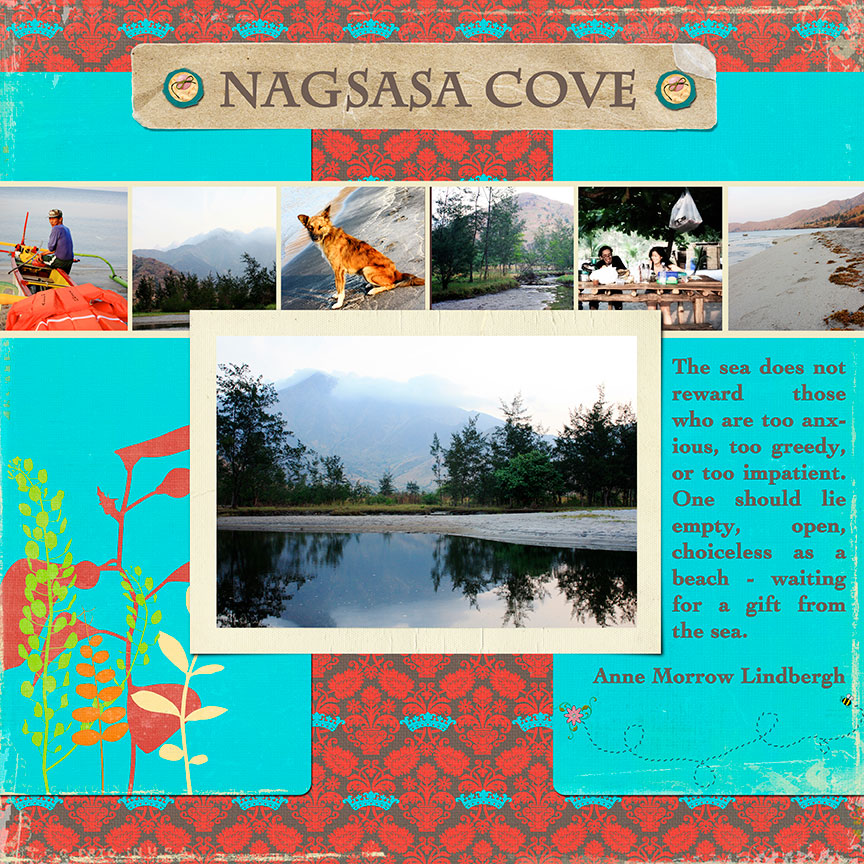
Tent… check, sleeping bag… check, therma rest… check, swimwear… check, sunblock… check, pasta, pasta sauce and chorizo… check… cook set… check and the list goes on.  These however, are the essentials needed for an overnight trip to Nagsasa Cove.

Credits: J. Sprague You are Awesome Paper kit (Blue Leaf & Brown Red), Framers; LivE’s Worn Kraft tag, Sing 4 Spring elements (Button Accent 02 & Fight of the Bbee)

My friend S had been itching to make a trip there ever since she learned of Nagsasa.  And so the weekend after our Northern Samar trip, we were up early, traveling north to what we thought was a secret paradise.  Punta de Uian Resort in San Antonio, Zambales to be exact.

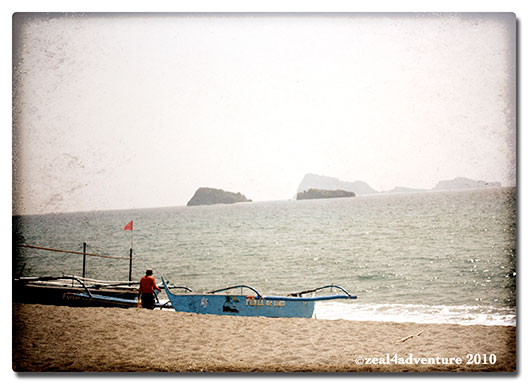
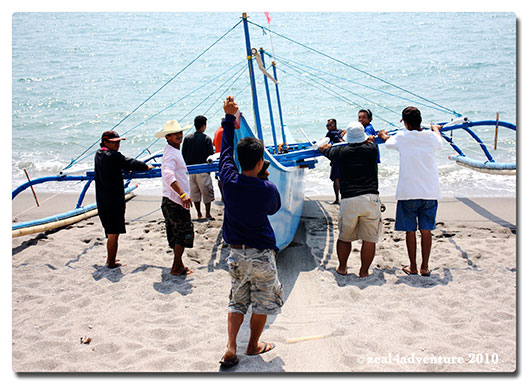
The boat we hired from Punta de Uian

A resort kind enough to take us to Nagsasa (for a fee, of course) even if it was not part of the trips they offer.

Off to Nagsasa…

Wondering why hire a boat through a resort?  I want my car parked safely in a parking lot while we camp out on a cove 8 kms away.   Better safe than sorry right?

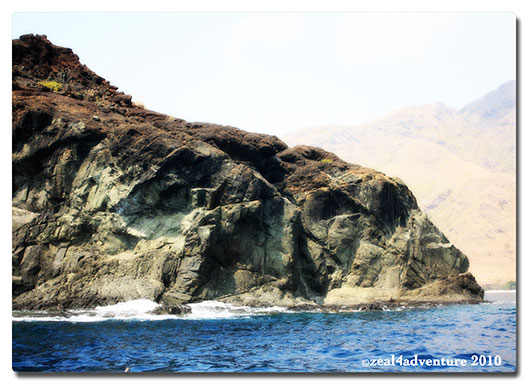
The view on our way

Nagsasa is supposedly less popular than Anawangin perhaps because it takes twice as long (about 45 mins) to get to Nagsasa from Pundaquit Beach.

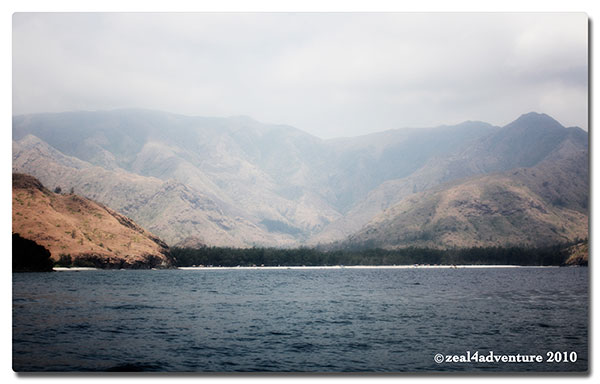
The approach

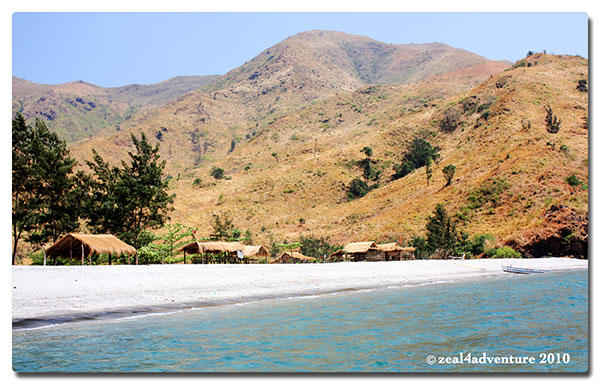
Arrival (looks empty)

So imagine how stunned we were at first to see scores of campers spread out on the crescent shaped stretch of beach, maybe having the same thoughts as ours, which is… “why are they all here?”

Water so still

Perhaps it was the long weekend and everyone who knows about Nagsasa had the same idea, or perhaps it is the magnificent paradise that makes it difficult to remain a secret for long.

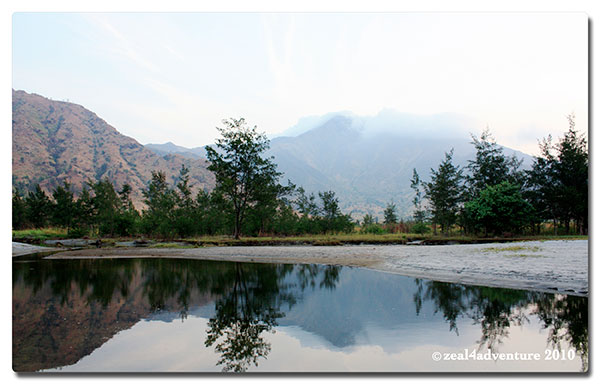
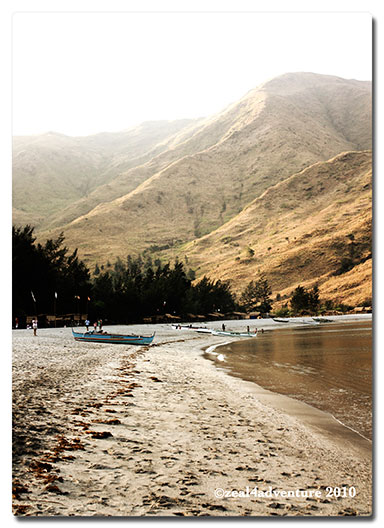
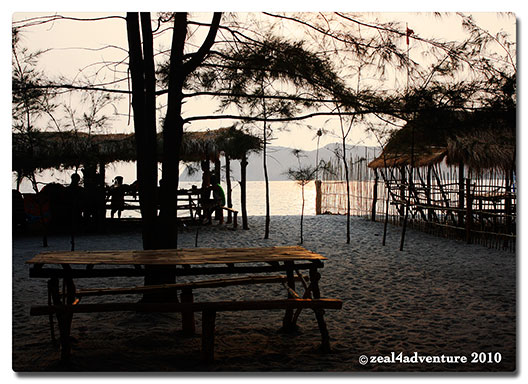
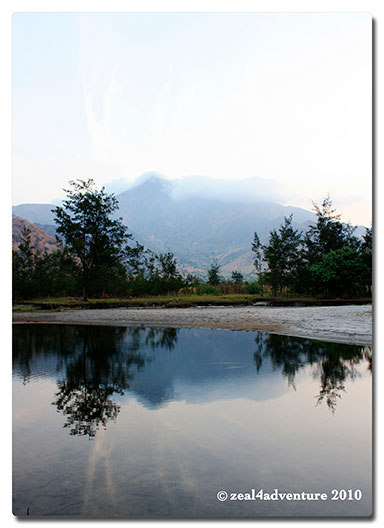
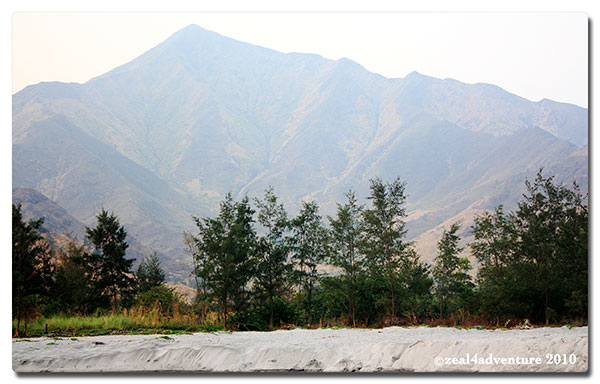
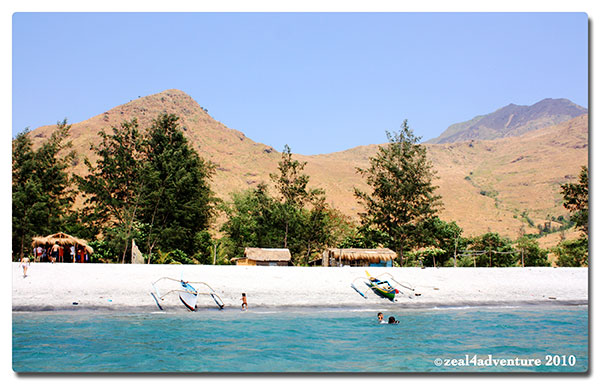
Whatever it is, we were happy to be among those who were enjoying this wondrous cove with breathtaking Mt. Nagsasa serving as backdrop to a pristine stretch of ash colored sand.

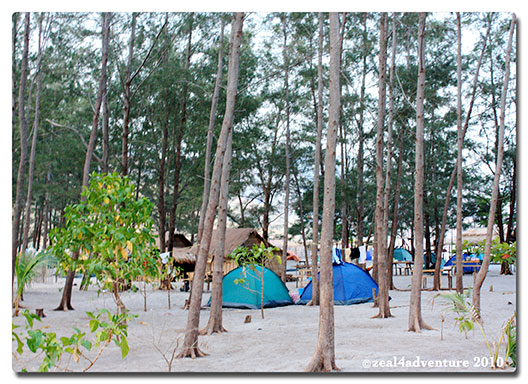
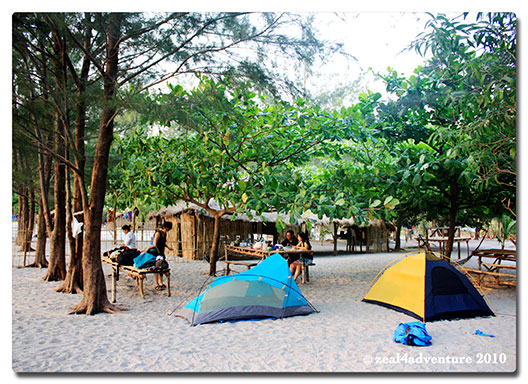
Once we got off the boat, we looked for our little corner, Mang Augusto and his family lives beside our campsite, making him the caretaker.

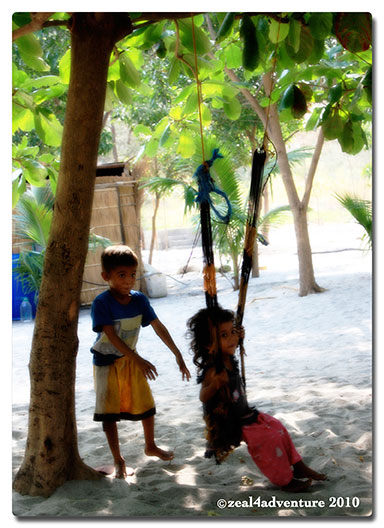
Siblings – Mang Augusto’s kids

We had a picnic table for our meals and our chit chats.

We also had a bathroom just at the back, which I truly appreciate, never mind that it didn’t have a light, what are headlamps for anyway?

Our starters:  Greek and Chinese — an obvious lack of coordination… yummy just the same.

After we settled, we pitched our tent and then prepared our meal… we burned our rice (it was not easy using the aluminum cook set, really!).  Mang Augusto’s wife cooked 2 kilos of rice for us for only P100 ($2).  Way too much for 5 so we had it for breakfast, lunch and dinner and there were still left overs.  So here’s the tip: don’t even bother to cook rice when you can have it cooked for you (for practically a song).   😉

Nagsasa (and Anawangin and perhaps others as well) emerged after the violent eruption of Mt Pinatubo in 1991.

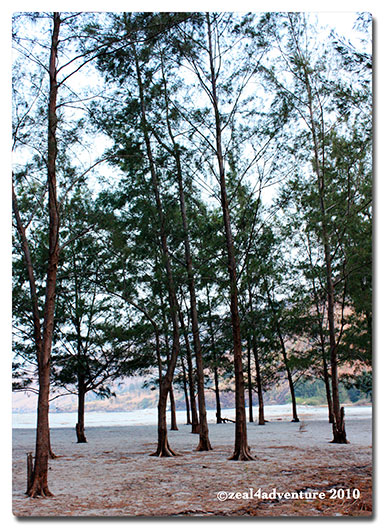
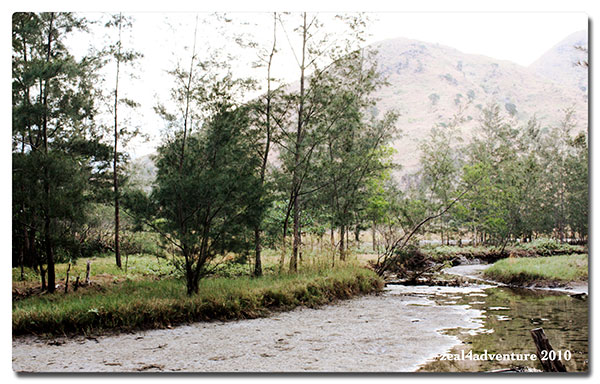
The eruption actually changed the landscape of Zambales producing these coves of ash sand beach lined with Agoho trees stretching inland, rendering a beach so impressive.

So how did such a tree find its way to this part?  It is said that these trees were non-existent prior to the eruption and that the seeds of the trees came from the ash expelled by Pinatubo.

Streams and waterfalls dry out during the summer

How amazing is our God to reward us with unexpected loveliness after nature spewed out its fury?  Perhaps it is His way of reminding us that like a rainbow after a storm, something beautiful invariably comes after a tragedy.  Ain’t that a comfort?

Here are more snaps at different times of the day.

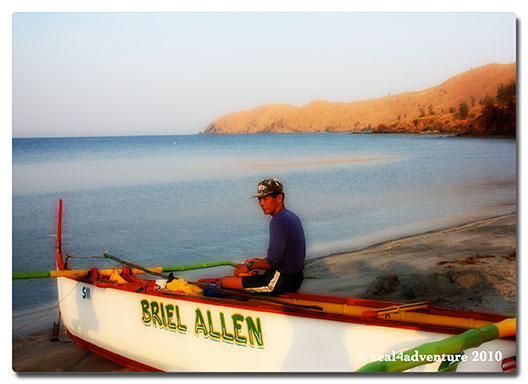
A bangkero (boatman) having breakfast

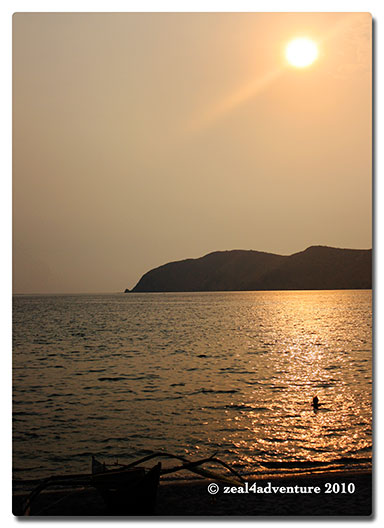
Sunset

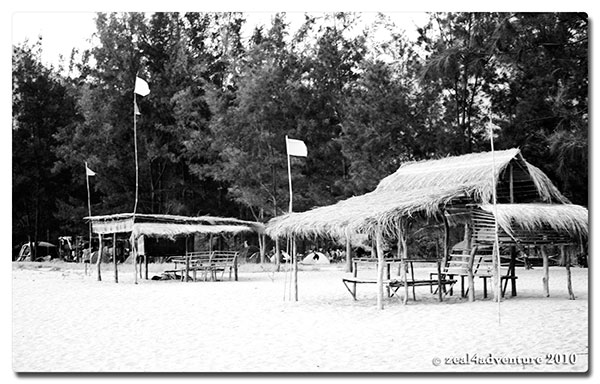
More huts for rent

At sunrise (I didn’t wake up early enough   😉 but pretty impressive just the same)

Mt. Nagsasa

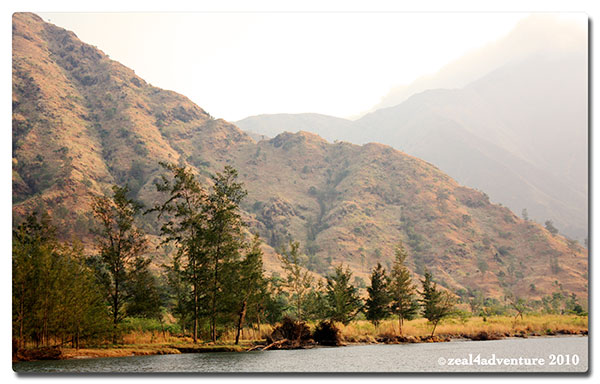
Nagsasa Cove from the boat

And I leave you with this last shot (simply magic)   🙂

Chillin’ at Baguio Country Club

Credits:  LivE Tape it up frames

My last hurrah before the rainy season sets in.  Sometimes one just need a good old fashion pause from the daily grind and the scorching heat of Manila.  So I go up to the mountains to chill.  The smell of pine, the log cabins and the scrumptious Baguio longganisa (local sausages)… they remind me of my childhood.   Happy to be here.   🙂

Happy Independence Day, Philippines!

A Must See

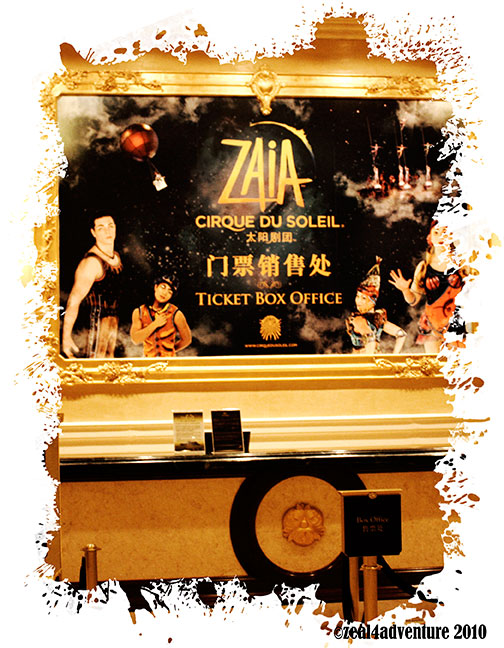
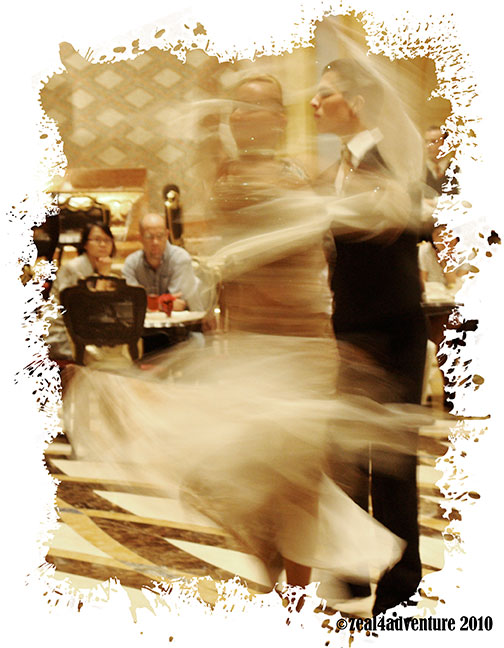
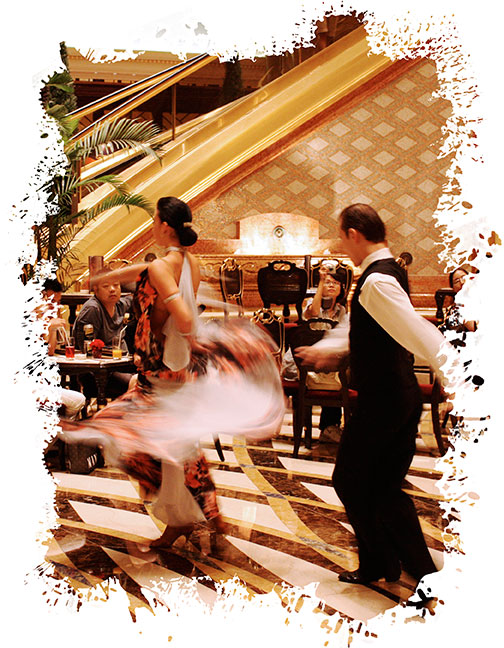
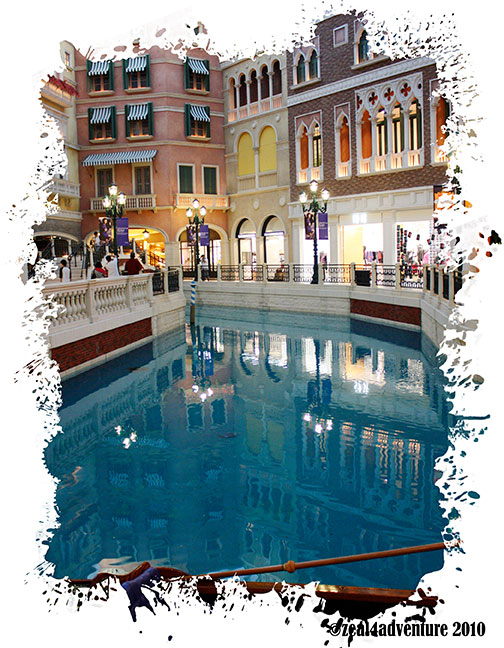
Cirque du Soleil.  Oh yes, O Manel was part of the lure but this 90-minute mega production was one major reason why I found my way back to Macau.  The award winning creation that began with a group of street performers in Quebec is known the world over for its innovative shows.  Zaia – the one staged at The Venetian Resort in Macau – is wall-to-wall with breathtaking aerial acrobatics, entrancing special effects and fluid dance and movements, that captivated me from the moment the stage lit up.

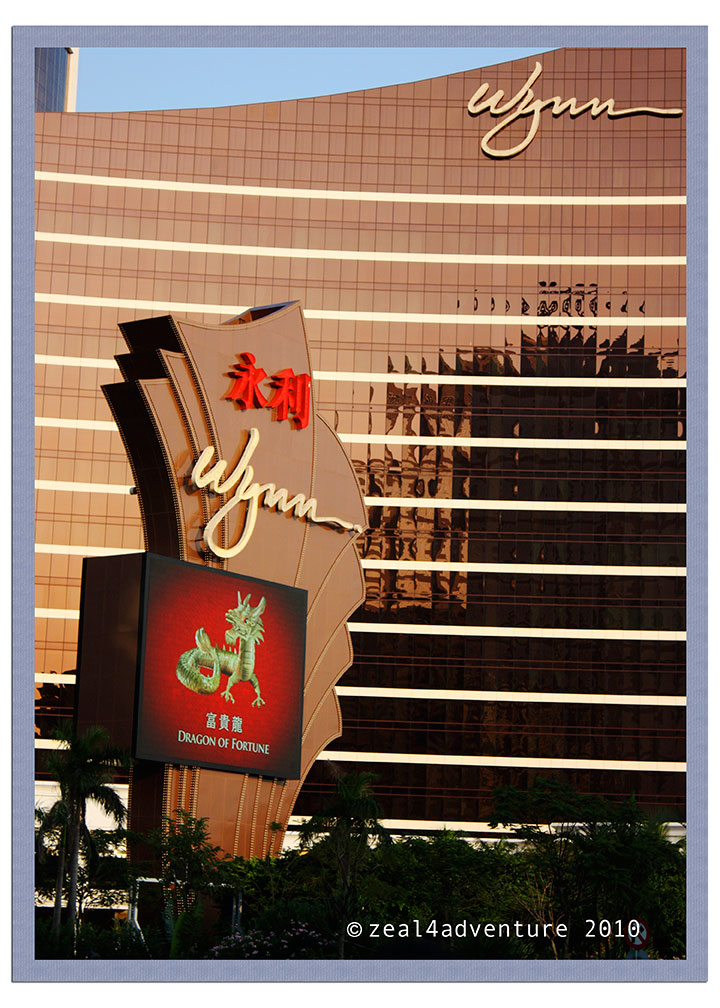
So to The Venetian we went just for this.  And while we were there, we might as well explore the much talked about Resort-Hotel that supposedly played a crucial role in transforming this once rural part of Macau – even sleepier than old Macau towns – into one of the biggest tourist destination in Asia.  It is home to Asia’s largest casino with 1,000 slot machines and over 600 gaming tables bustling 24/7.

Never a dull moment, The Venetian is filled to the brim with activities at every turn.

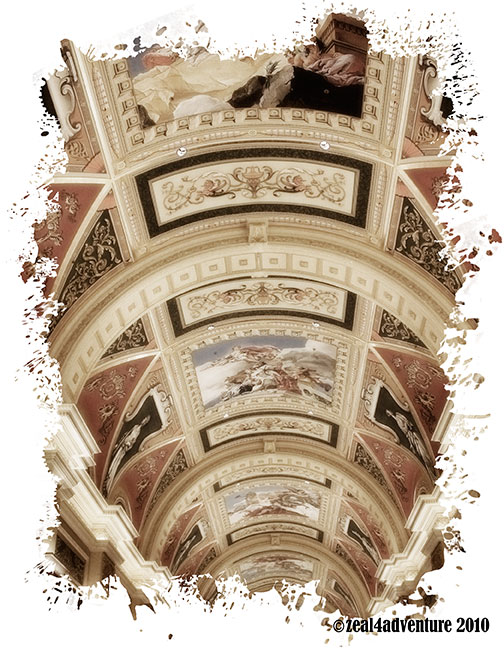
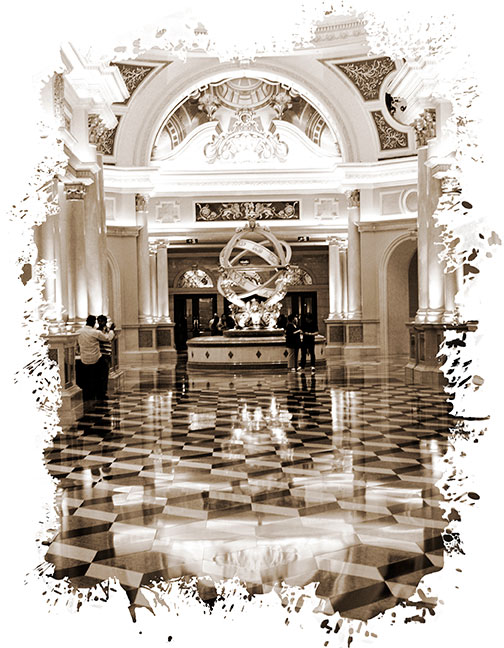
As one enters, one gets transported to lavishness, owing to its décor.  The resort boasts of 19 remarkable restaurants but because we were pressed for time, we settled for the food court, which in itself had quite an interesting selection.

We also found ourselves wandering around, browsing through boutiques and brand name outlets along the Grand Canal Shoppes.

The Venetian sits on Cotai strip, a 5.2 km section of reclaimed land that now links the 2 former islands of Coloane and Taipa in the Pearl River Delta just across from Peninsular Macau.

Getting There:

Complimentary Venetian shuttle buses depart throughout the day from the Macau Ferry Terminal, Border Get and Lotus Ferry Terminal to the Venetian Macau Hotel – Resort.   Sands Casino also provides shuttle buses between the 2 hotels.  For a more up to date schedule, click here.

Other useful information:

Book Cirque du Soleil online here.

Scenic Sunday

Making Good Use of Downtime

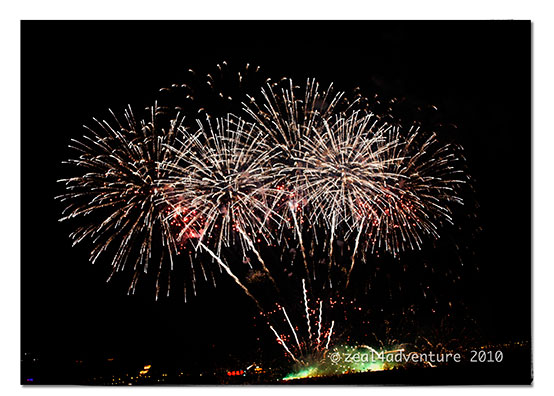
We were at the sea area in front of the Macau Tower early to catch the Annual Macau Fireworks Display contest.

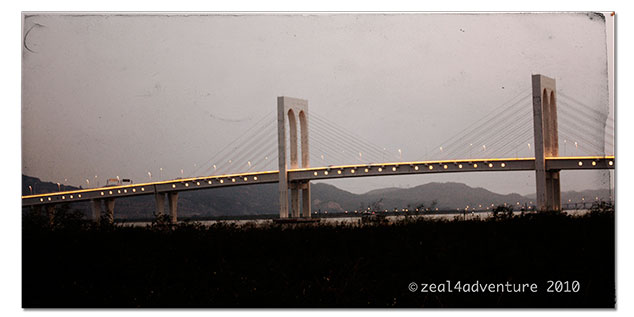
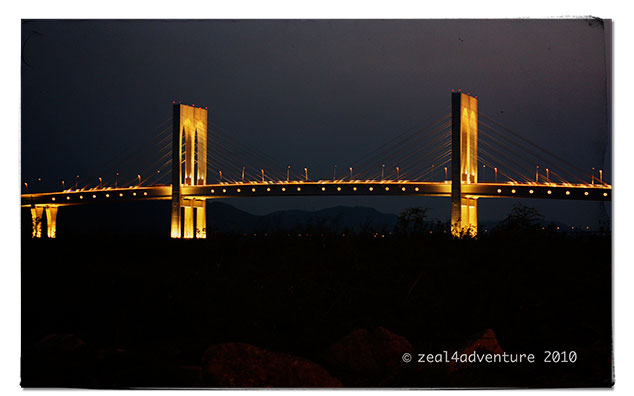
Early birds have its drawback… a long wait.  Its reward however outweighs it inconvenience.  Securing good front row seats afforded great captures of the fireworks and these series of shots of the Sai Van Bridge as the sun sets.

Once considered remote from Peninsular Macau, when they were accessible only by small ferries, the islands of Taipa and Coloane have developed as integrated suburbs since being linked to the mainland by 3 bridges.

One of them is Sai Van Bridge, opened in January of 2005.  It is the first cable-stayed bridge in Macau.  The double deck bridge has 6 lanes in the upper deck and 4 at the lower deck.

More of the fireworks in upcoming posts.  For more scenes from around the world click image below.

Scenic Sunday

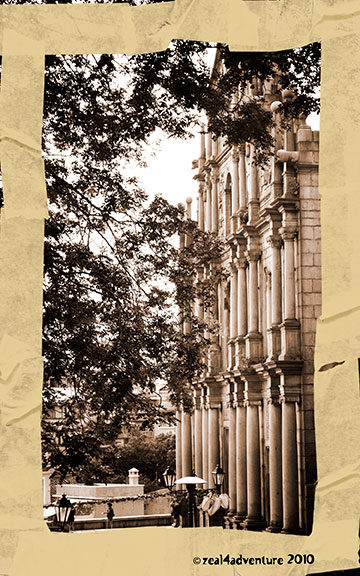
The Ruins of St. Paul’s (Ruínas de São Paulo)

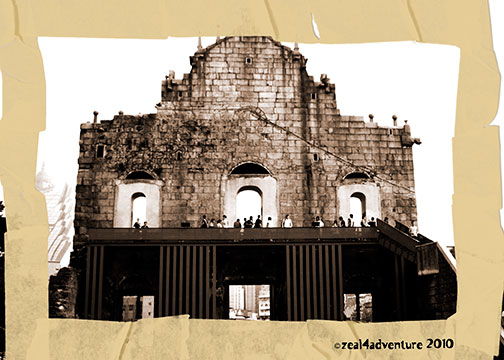
The sixty-eight granite steps from the square will lead you to a façade of what was once the greatest cathedral in Macau.  Built from 1582-1602 by the Jesuits, the remains of St. Paul’s Cathedral was the largest Catholic Church in Asia at the time.

It is a fine example of Macau’s unique characteristic as a city of Europeans, Chinese and other Asian exchange.  Ruined by fire twice, ravaging the other buildings and destroying the church ad almost all the complex.  From 1990 – 1995 work was carried out to restore the back of the church, turning it into a museum.

Regarded today as the symbol of Macau, St. Paul’s ruins was considered the core area when the historical center of Macau was inscribed on the World Heritage list in 2005.  It is today one of Macau’s most famous landmark where music performances are held regularly.

If you enjoyed these sepia scenes, click image below for more.

Oh Manuel!

It’s a funny thing about life; if you refuse to accept anything but the best, you often get it. – W. Somerset Maughem

Reservations were made and off we went to Taipa to lunch.  Those with insider knowledge or Macanese connections will head to Taipa for some great culinary experience.  Tucked away in a quiet street just on the edge of Taipa Village is one of Macau’s best-kept secret, a homey, welcoming hole in a wall called O’ Manel or more formally known as Manuel Cozinha Portuguesa.  Manuel Pena, a Portuguese and his Chinese wife owns this tiny restaurant that serves fantastic Portuguese food.

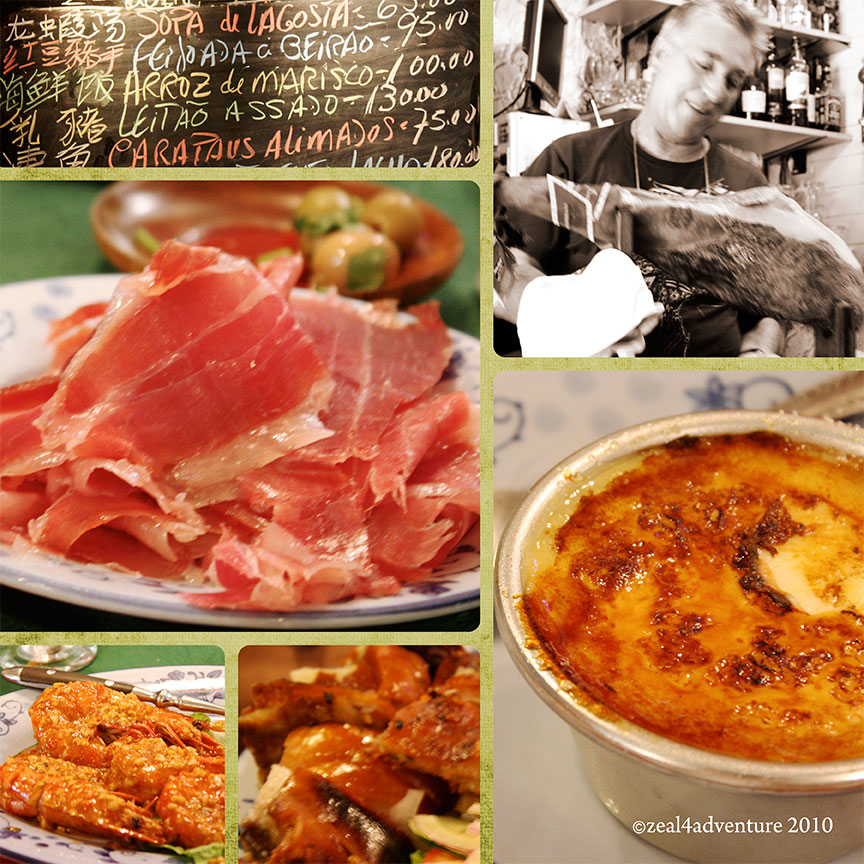
In his restaurant, Manuel waits on tables himself, supervises the preparation of the dishes and does the cooking himself, sometimes with the help of his wife.  There are no menus only a blackboard; in it written are the specialties for the day.

Clockwise:  menu board; Manuel Pena and his Pata Negra; Caramel Creme; Roasted Suckling Pig; one order of Pata Negra, sliced.

For starters, we had slices of Pata Negra (or jamon iberico in Spain), a favorite since I first tried it in Seville years ago.  So memorable this Pata Negra was during my first visit to this restaurant some 3 years back, I came back with that in mind.  Fresh fish and shellfish are found on virtually every Portuguese menu and it is not surprising that we were served Garlic Prawns and a wonderfully citrus Clams in lemon sauce with a hint of coriander.  Roast suckling pigs, popular in the north of Portugal came highly recommended.  We were ecstatic that it was perfectly roasted with skin that crackled so loud we ordered one more.

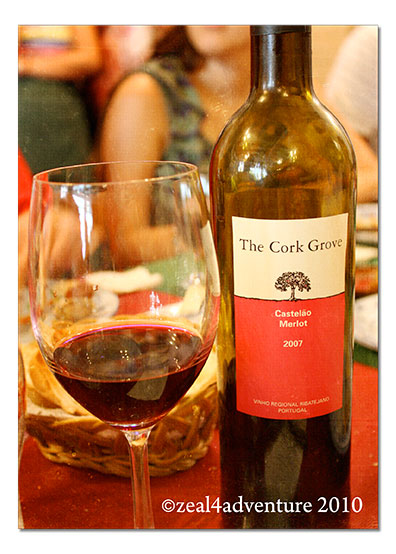
We washed all these down with a glass or two of this lovely Portuguese Merlot and capped this splendid meal with a most typical Portuguese dessert, Caramel Cream.  Mmmm…  overindulged, most definitely.

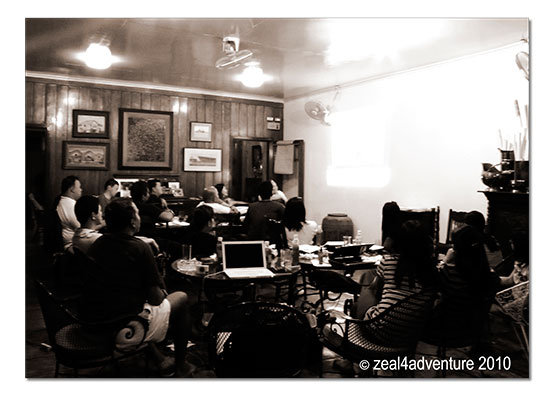
The restaurant when we entered

In less than thirty minutes

This small casual restaurant with its limited number of tables fills up quickly so book ahead.

Manuel Cozinha Portuguesa
Rua de Femão Mendes Pinto, N90 R/C
Taipa, Macau
For reservations call:  (853) 28827571 or 28825811

Five Reasons Why…

You should try Whitewater Rafting at least once in your life.

Credits:  Bannerwoman Designs Worn, Folded Edges, Judy Meibusch Doodle Dot elements, LivEdesigns SSunFun Alpha

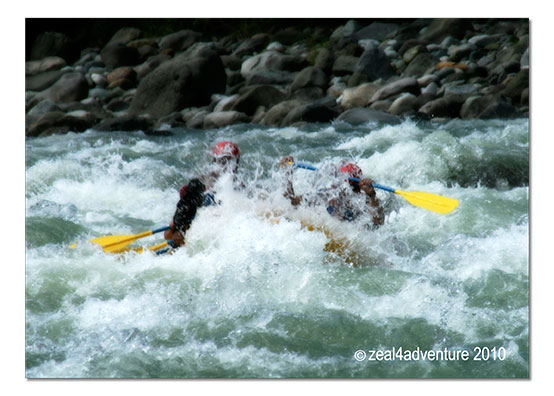
Ever since my first rafting experience in 1999, I was hooked (see here, here and here).  I can’t count the number of times I’ve rafted the Chico, after all as they say, you never run the same river twice.  And I felt it time to share this exhilarating experience with my team.

So for 3 days in January, we found ourselves in Tuguegarao slaving away, devising strategies for the year

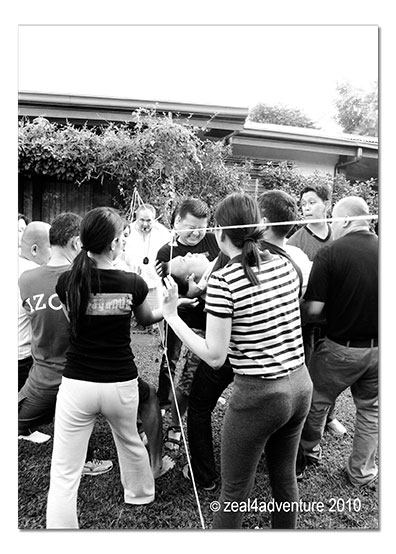
with a little bit of team building on the side.

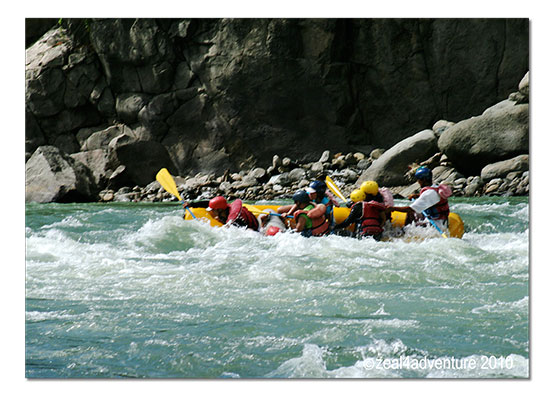
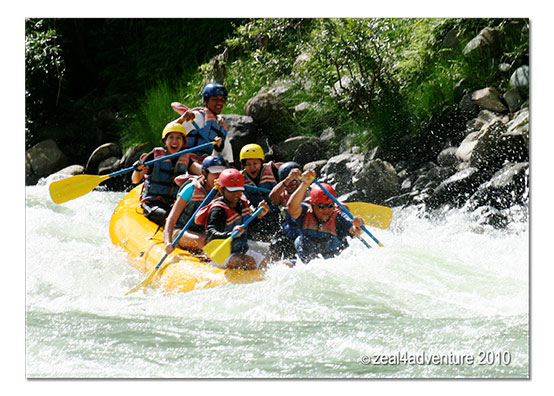
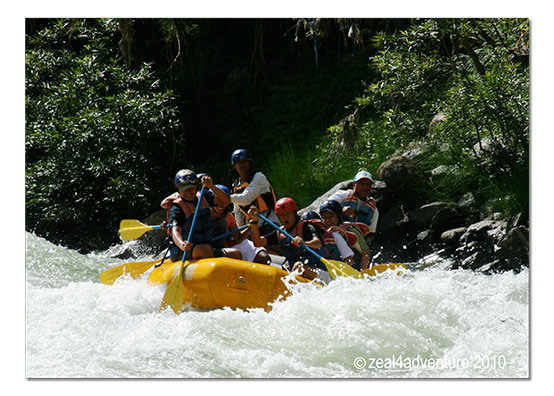
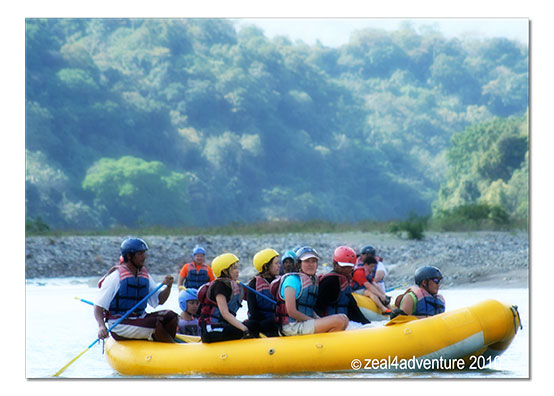
Then on day 3, we spent an adrenalin-filled day at the Chico River in Kalinga.  Here are insights gathered from this experience.

It’s Liberating

When was the last time you’ve tried something at least once in your life?  I am one to try almost anything (I say almost because I have yet to convince myself about bungee jumping) at least once.  Whitewater rafting may not be for everyone but you’ll never know unless you’ve tried it.

I’ve rafted with many first timers with sedentary lifestyles through the years and as often as not, they at the very least, had a blast and in numerous occasions, a wild side they never knew they had is kindled.

Anton Carag, charismatic mover and shaker of whitewater rafting since 1998 at the Chico

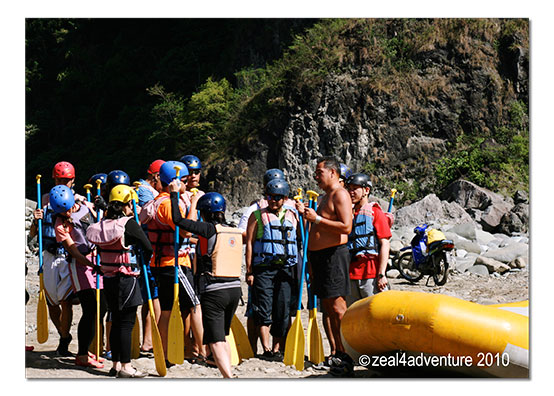
Many among my team were apprehensive before the run and listened intently to Anton Carag lecturing on proper paddling techniques, what to do when one falls off and how to get back on the raft.

Doing a Hi-Five for a job well done

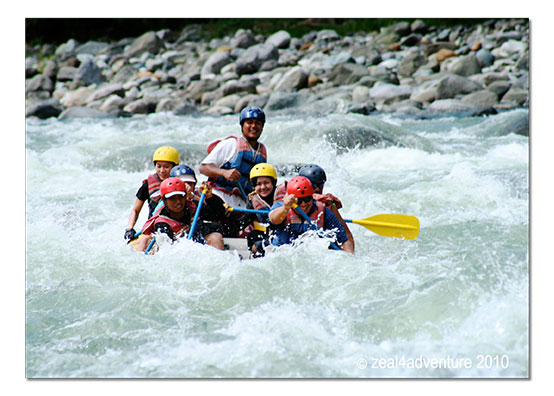
I saw how their fears transformed to confidence after the first few rapids.  They started to have fun.

Some even enjoyed the falls, bringing home stories of how they survived it etc.  It also helps to know that two internationally recognized wilderness specialists trained Anton and his team of guides some 10 years ago.

It Fosters Team Spirit

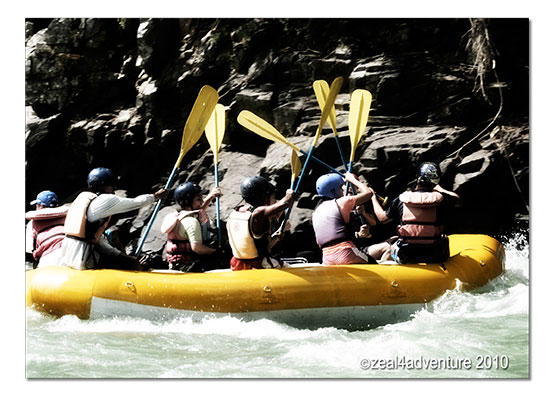
Rafting only works if everyone works as a team.  Listen to your leader and follow exactly the commands.  If the team fails to act as one, the raft may capsize.  If you’re not prepared to drink gallons of water, you probably don’t want this.   It’s also a hassle getting back on the raft and if the water’s low, you will most likely be going home with bumps and bruises as a remembrance from the river.  But hey, isn’t that proof of that adventurous spirit you thought you never had?  So listen to your guide and be in sync with your teammates.

It’s Actually Safe

First of all, the guides (mostly natives of Kalinga) know the river like the back of their hands.  And to reiterate, top-notched, seasoned river guides with international experience trained most of them.  But in case you didn’t follow instructions or to put it nicely — misunderstood the guide’s instructions and you fall off or worse, the whole raft flips, not to worry because the equipments, most especially the vest you are wearing (I can only speak of AEPI’s as I am not familiar with the other outfitters) is US-certified safe.  This means that when you’re under, the vest is buoyant enough to carry you out.  Sometimes with a little help from you, but hey again, sometimes you need to work a little harder eh?

It promotes Eco-tourism

And provides jobs.  Whitewater rafting is part of the new adventure and eco-tourism that the Philippines have to offer.  Most of the guides used are from neighboring communities and the more tourists, more jobs and other business opportunities are not far behind.  It also teaches us to respect and appreciate Mother Nature.

It’s Gorgeous Out There

Spectacular views of the Cordillera Mountains coupled with beautiful riverbanks and clear waters (not always the case though) surrounds the whole stretch of the run.  Unspoiled.  Pristine.

Except for raging rapids that never fails to stir up your adrenalin, the only other sounds you hear are chirpings of birds and the flow of the river.  Serenity in a most natural setting.

Excellent Food at Casa Carag

The 6th reason why you should try whitewater rafting with AEPI.  The food is just extraordinary.

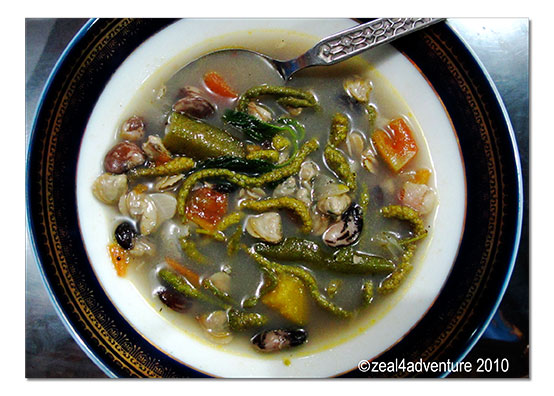
Nothing is ordinary, from the longganisa, Salinas and hot native chocolate for breakfast, to the local Ibanag dishes such as their pinakbet and inabraw.  It’s all good!

So, at the first chance of rain (which is sadly a long way off), book a package with AEPI and experience the ultimate adventure of your life.  Season starts in August and ends in February.

*  All photos at the river courtesy of AEPI.

Contact Details:
Anton Carag, Jr.
Mobile:  (63)917-532-7480
Landline: (6378)844-1298
Email:  aepi@whitewater.ph; anton@whitewater.ph; whitewater1ph@yahoo.com
Take A Stroll With Me

In Macau.  Not only is the center an urban area with an old city, it is a World Heritage site to boot.  Inscribed on 25th July 2005 by UNESCO, the Historic Centre of Macau is a product of cultural exchange between East and West.  It could be the oldest, most complete and consolidated selection of European architectural legacy standing intact on Chinese Territory.  The center spans 8 squares but 2 hours will only allow for 3 squares, a ruin, a church and a whole lot of eating and window-shopping.

From our hotel, we walked all the way, passing casinos, to our first square.
Senado Square

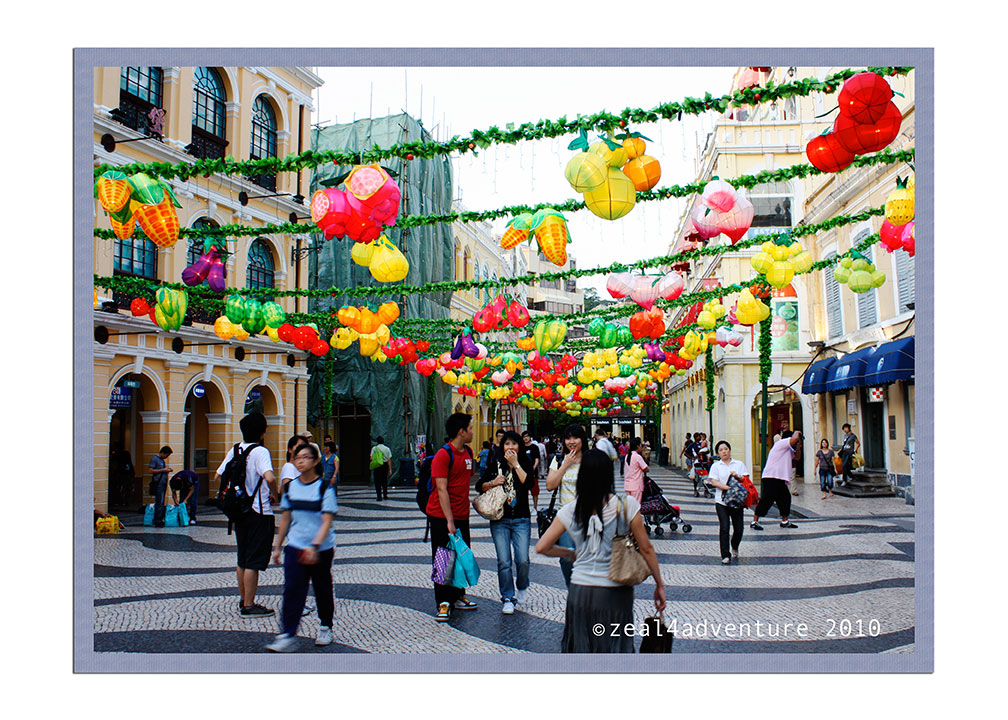
I would have loved a photo of an empty square to showcase the cobble-stoned grounds with exquisite black and white wave patterns.

Not to mention the pastel colored neo-classical buildings flanking the square on all sides giving it a Mediterranean atmosphere.

But Senado will not be Senado if it was not busy (at least on both times that I’ve been there).  It has been the center of Macau since the square was built sometime in the 19th century.

From the main road to the church of St. Dominic’s, the pavement extends and eventually leads to a different kind of city – the cathedral of St. Paul’s, now in ruins located on top of a hill, making the stroll a paradise with so much eye candy.
St. Dominic’s Church

Not too far from Senado Square is St. Dominic’s Square.

It is one of the most popular squares because it is close to where the shops and little food vendors are.

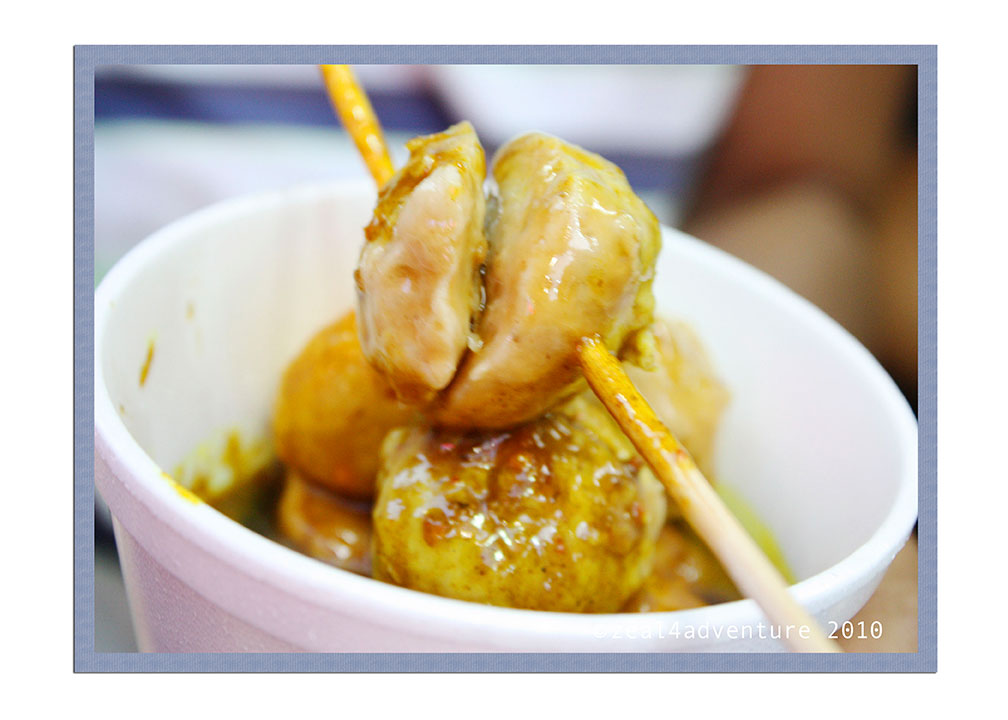
It was fun strolling through the shops gobbling through these tasty fishballs in satay sauce.

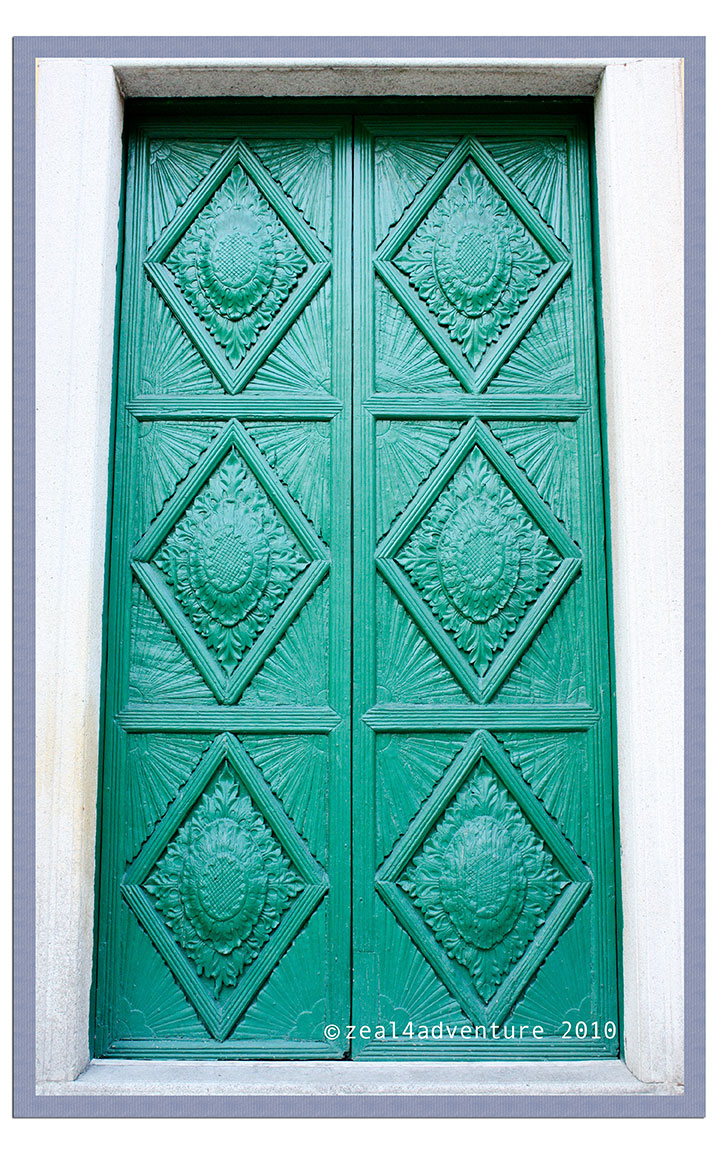
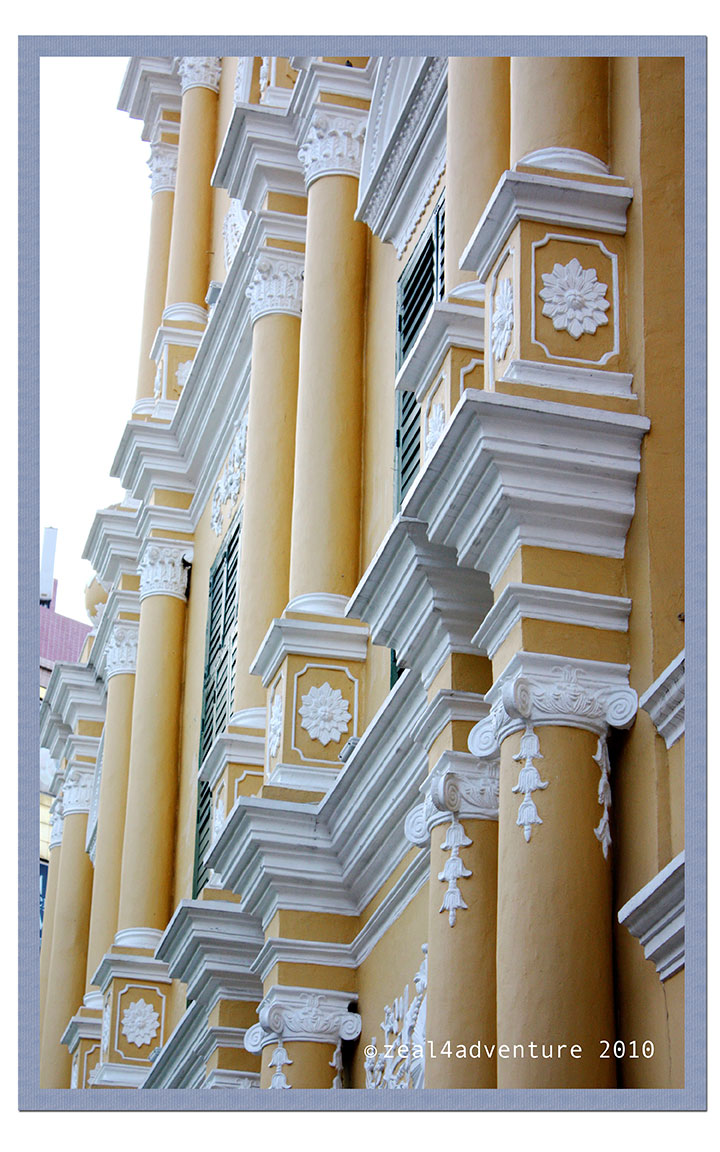
Standing on the square is an imposing façade of cream-colored stone with white stucco moldings and beautifully designed green doors.

The first church ever built in China; Dominican priest, originally constructed from wooden slats, built St. Dominic’s Church in the mid 16th century.  A far cry from what we see today.

The church has an interesting past swathed with drama and violence.  A military man was murdered at the altar during Mass because he supported the Spanish against the Portuguese.  There was also a time that the Dominicans sided with the Pope against Macau’s bishop.  When local soldiers tried to enforce an excommunication order on them, the friars locked themselves in the church for 3 days.  In 1834 the monastic order was suppressed and for a time, the church was used by the government as barracks, stable and office.

Pasteria Koi Kei

On our way to the ruins of St. Paul’s, we entered a small alley brimming with more little antique and food shops.

You’ve gotta taste these babies!

One that caught our eye was this food shop selling dried pork and beef fillet similar to a jerky but so much yummier.

A small storefront extends really deep inside.

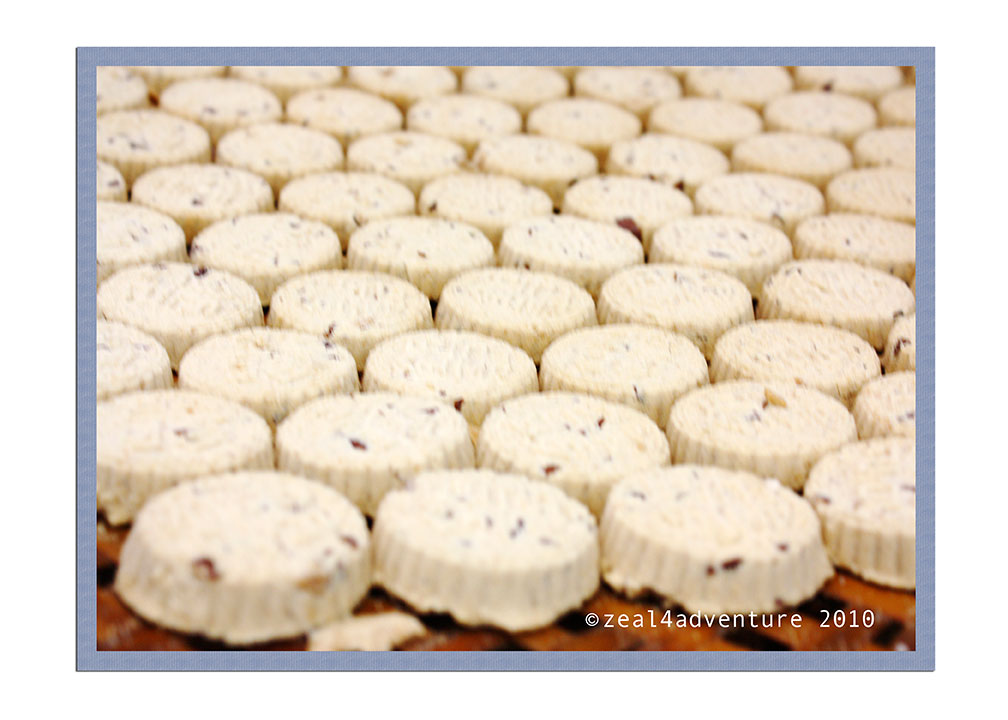
The biggest attraction though appeared to be their almond cookies.  Tracing its roots back to a cart selling only crunchy peanuts and ginger candies, Koi Kei put up its first store in 1997 and today it has gained recognition as the “most popular food souvenir” champion in Macau.  Like us, many bought items to take a taste of Macau home with them.

Sampling some egg rolls as they make ’em!  Great way to entice people to buy!

From peanut candies to almond cookies and egg rolls, Koi Kei Bakery is currently selling more than 300 varieties of products – almond cookies, egg rolls, crunchy peanut candies and the dried beef and pork fillet being among the more popular ones.

Ou Mun Cafe

After a good couple of hours, we were famished (even after all the goodies we bought and sampled).   In a cozy looking restaurant in one of the alleys in St. Dominic’s Square, I had a Bacalhau à bras – salted cod fish sautéed with potatoes, onion and eggs, in short, a bacalhau omelette.   🙂

The Cathedral in Cathedral Square

On our way back to our hotel, we passed another route and found ourselves in another square.  The façade of the Cathedral is simple but when lit at night, it transforms into something grandiose.  The present building stands on the site of several previous cathedrals, the original was the Church of Our Lady of Hope of St. Lazarus.  The first stone Cathedral, consecrated in the mid 1800s was almost destroyed in a typhoon 24 years later.  Extensive repair was done.  In 1937, the church was completely rebuilt.

Macau is not all about the gambling, you gotta admit though, they do add character to this urban area in an old city especially at night!

Ou Mun Café
12 Travessa de São Domingos, Macau
+853 2837 2207

Scenic Sunday