Negros Heritage (Part 2)

mwtwhite2

Part 1 here

The Ruins

ruins-facade

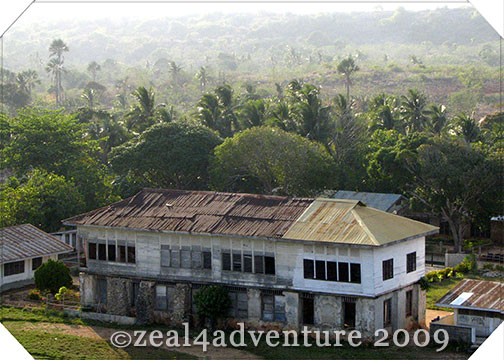
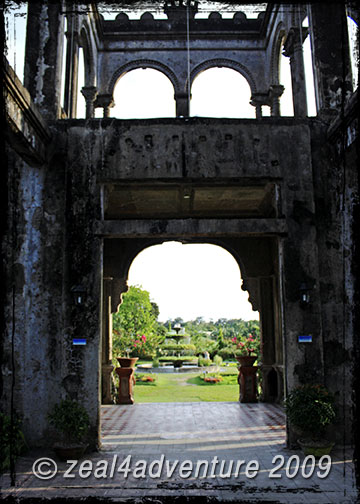
On an extensive and beautifully landscaped grounds lies this once lavish early 20th century concrete that showcases what is left of Don Mariano Ledesma Lacson’s ancestral home also in Talisay City.  This mansion has a lovely story and this sign tells it best.

structure-sign

shell-inspiredNotice the shell-inspired design at the top of the structure

It was said that out of depression and a broken heart, this mansion was built after the death of Don Mariano’s his first wife, Maria Braga, a Portuguese from Macau and became his residence with his unmarried children.  It had in it one of the finest furniture, chinaware, and decorative items as the father of Maria Braga was a captain of a ship that sailed across Europe and Asia.  He would bring with him these items.

columns

The massive and indestructible stonework almost stood against the inferno that engulfed the house in 1942.  The guerillas first ignited three drums of gasoline, which failed to even burn the 3-inch wooden floors.  On their second try, they had to mix three drums of used oil and a drum of gasoline which subsequently destroyed all the woodwork and brought down the roof as it burned for 3 days.
simborio

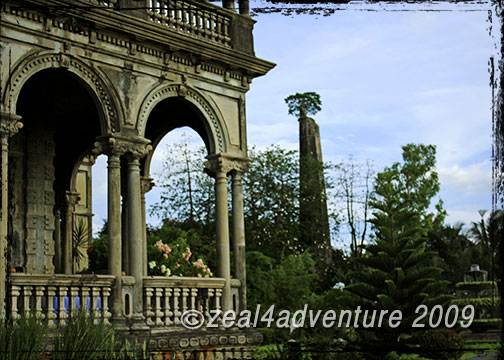
The mansion was built beside the sugar farm and at the background is a simborio.  It’s the local name for smoke stock or chimney.  It was a vent used for the muscovado mill.
fountain-from-inside

stairs

Fast forward to present day, Pacita Lopez Heredia won the 3.6-hectare farmland, which included this structure in a lottery held by the heirs when the vast plantation was partitioned among them.  The cost of rebuilding was so unfathomable, even the priests refused it when it was offered to them as a donation.

wine

That being the case, her son Raymond Heredia Javellana started rehabilitating the ruins in 2006 turning his family inheritance into a tourist attraction and café.  A dream come true for Javellana.

angled-golden-hour

golden-hour1

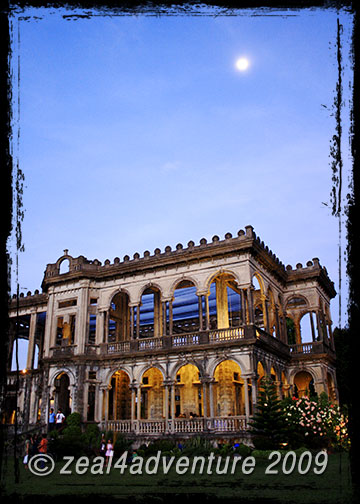
Even when reduced to skeletal frame, the 2-storey mansion is breathtaking especially when bathed in the golden glow of sunset.
ruins-at-dusk-2

Best enjoyed during dusk and if you stay a little longer, this is what you’ll see.
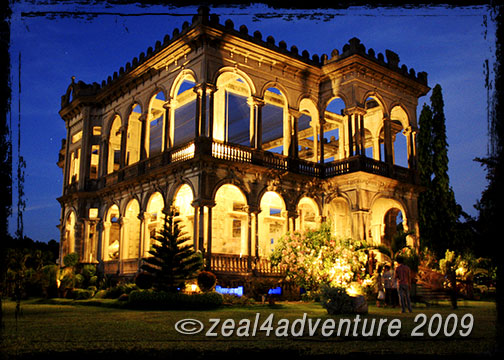
ruins-at-night

The Ruins opens daily from 8:30am to 8:00pm.  Fee is P25 per head.  It has a café and a mini gold course at the back garden.  For more information:  (034) 4952790.

grassy-ruins

Can you see that blurry image?   😯

To enjoy more worlds, click here

WS# 13: Having My Cake(s) and Eating It Too!

Life is uncertain.  Eat dessert first.  

— Ernestine Ulmer

 calea-sweet-indulgenceCredits:  Papers – jcrowley beautiful evidence papers pp4 and pp9;  Elements – Oscraps Moonrise flower gsass1, jcrowley beautiful eveidence label 13;  Alphas – Oscraps Moonrise Alpha

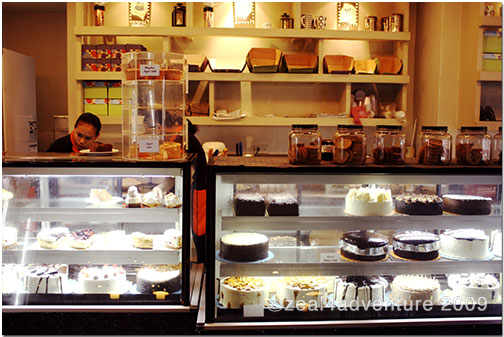
I need my sugar fix and yes, I sometimes eat dessert first or simply just dessert.  Heck life is short!  So imagine me in Calea, the most popular dessert place in Bacolod.  Like a kid in a candy store… my eyes go up and down, left to right, how do I pick one out of the 20 something choices?  I simply can’t.  So we were there 4 days out of the 5 that we spent in the Bacolod/Silay area.   😀

 calea

Not only is it town favorite, it has become the top pick of neighboring provinces and those in the know in Manila as well.  Blue polka dots boxes of Calea goodness, to bring home as “pasalubong” (gift), are normal sights at the airport.

 calea-choc-cake

Their best seller, the famous (moist) Chocolate Cake is special.  The icing so thick, it’s practically chewy!  Never had anything like it before. 

calea-white-lemon-pie

My personal favorite however, is their White Lemon Pie.   Loving anything citrusy and tart… Key Lime Pie, Lemon Merengue, Lemon Torte… this came as no surprise.  This pie has just the right blend of sweet and sour, the lemon filling and whipped cream makes perfect partners.

When you find yourself in Bacolod, please do not miss Calea.

Calea
Lourdes C Bldg.,
Lacson St., Bacolod City
Negros Occidental
(034)4338664


Negros Heritage (Part 1)

mwtwhite1

Back in the days when sugar barons own large pieces of land that makes a hacienda, Negros was the biggest sugar producer in the country.  The wealth of the island of Negros is from its volcanic soil, which is ideal for agriculture.  The collapse of the textile industry in the 19th century attracted Spaniards from Spain and Manila, the French and people from neighboring provinces, which started the sugar industry.   But what are known as the Negrense Hacienderos (sugar barons) are from its neighbor Ilo-ilo in origin and ancestry.

The expansion of the sugar industry in the 1850’s and the opening of the Suez canal flooded Bacolod with European fineries and artworks.  Baroque churches and sprawling mansions rose across the Negros landscape and Spanish culture blossomed in the tropics.

churchSilay’s most famous landmark is the Church of San Diego.

The Negrenses lived the good life in those days.  The golden years of the sugar magnate, however came to an end in the 1980’s and the sugar industry swiftly declined leaving many tycoons landless.

jison

Many however held on to their ancestral homes, turning them to galleries or museums.  Some actually still live in it like that of our hosts’ residence, where we stayed during our stay.  The house was once used as a set for Oro Plata, Mata, a well-acclaimed film of period setting.

Silay and its neighboring towns such as Talisay abound in well-preserved ancestral homes and aside from staying in one, we dropped in on some.  Come, let’s explore some of these houses together.

Balay ni Tana Dicang

One house that is in perhaps the best state of preservation is the stately 1880 “bahay-na-bato” (literally house of stone) of Don Efigenio Lizares y Tyeres and Doña Enrica “Dicang” Alunan y Labayon built in coral stone and various hardwood.  Engaged in the production of sugar and owning several haciendas, they built their 1st house of modest size, it however was burned down by the guerillas during World War I.  What is standing today is their 2nd house built in 1880 in Talisay, larger than the first hence the name Balay Dako (big house). The couple had seventeen children, Efigenio died in 1902, leaving his widow to raise fifteen children (2 died early) on her own for the next 4 decades.  Kapitana Dicang as she was popularly known (which was later shortened to just Tana Dicang) assumed the management of the haciendas and continued to acquire more.  She was an extremely enterprising lady, apart from being a great haciendera, she was a grocer, cigar manufacturer and a famous confectionery as well.  How she raised her children was one that was instilled in stern discipline in the family and her sons and daughters took her word as law.

tana-dicangThe bust of Don Efigenio and Tana Dicang

boyencyclopediaThat’s a set of encyclopedia.

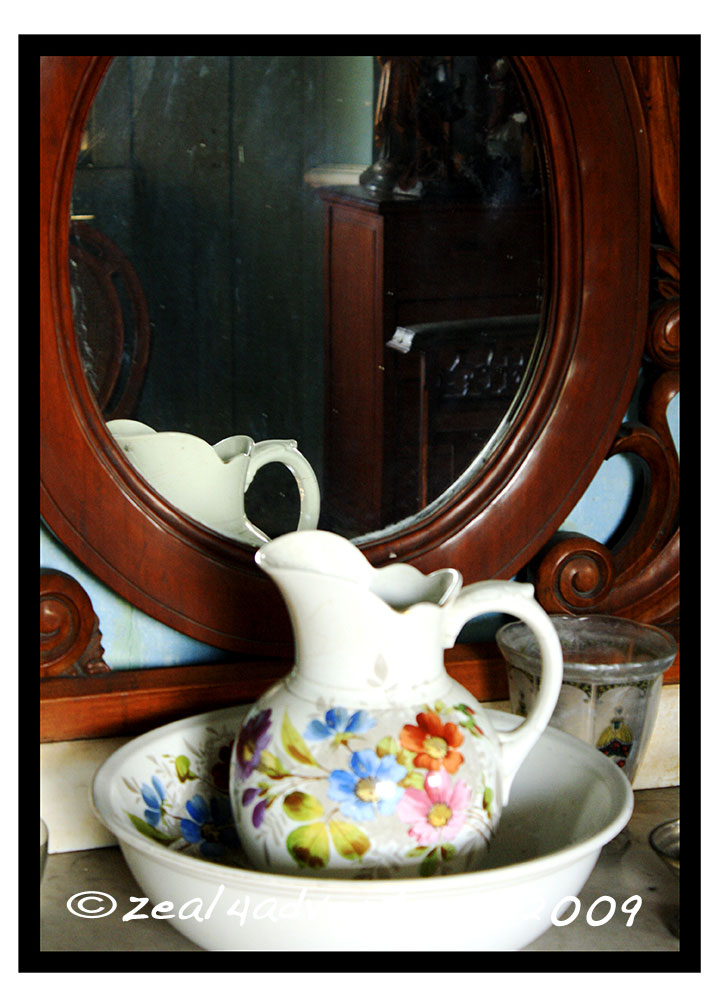
untitled-1washbasin1

capizWindows were made of capiz shells
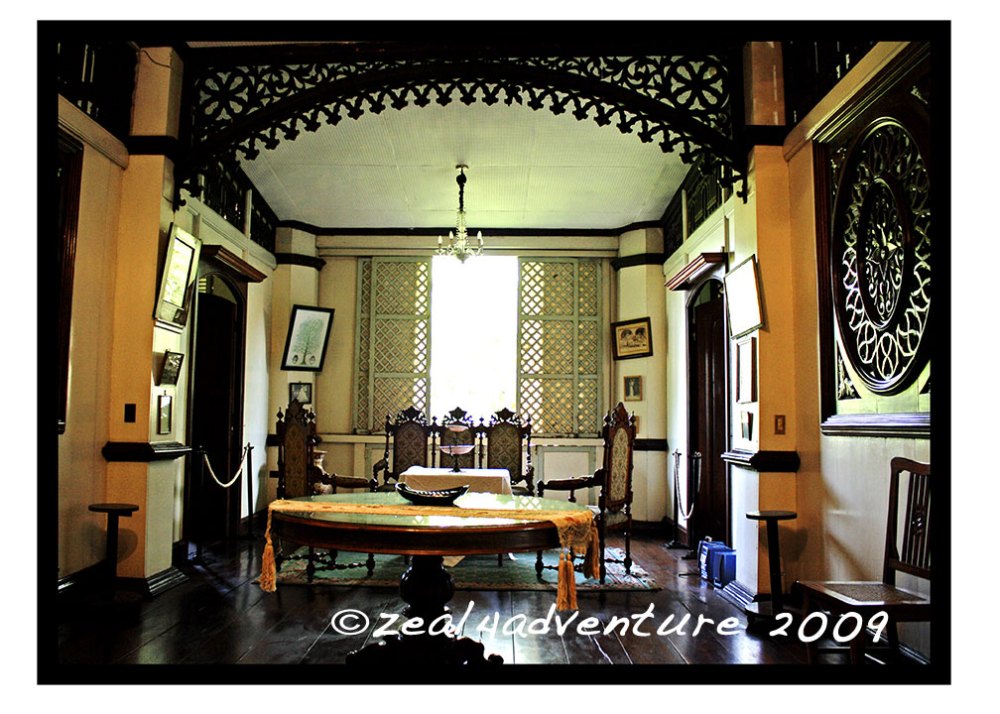
This recently opened balay, although not as famous as Balay Negrense, echoes the lifestyle of past splendor down to the chinas, furnitures and other accessories.

td-foyer

The ground floor houses K (for Kapitana) gallery and the stairway leads to the entrance hall on the 2nd floor.  The floors are from “balayong” wood custom cut – meaning the floor planks stretched from one point to the other in one piece.

td-window1

Balay ni Tana Dicang
36 Rizal St., Talisay City
Negros Occidental
For details call:  (34)4952104


More houses to come…  For a glimpse of other worlds, click here.

WS# 12: Inasal Nga Manok

inasal

That’s grilled chicken in Ilonggo and the pride of Bacolod.  Marinated with a reddish, sometimes yellowish hue from achuete (annatto seeds), this Bacolod delicacy is a hit not only in the south but has conquered the palates of Luzon as well, evident in the sprouting of several Bacolod Chicken Inasal food chains in Metro Manila.  Nothing is as authentic though as having it right where it originated.  And so we trekked to Chicken House and Chicken Deli (on different days, of course), the former slightly better than the latter but they say that the best would be the ones you find in Manukan Village.  Here, one gets the whole experience down to the “not so clean” eateries and al fresco dining sans ambience.  We however, never found our way there this time but not without trying, we simply ran out of days and time.  Another reason to return.

inasal-isol

Served by the parts in barbeque sticks, pecho (thigh), paa (leg) but the best (at least for me) is got to be the isol (ass).  Yes chicken ass!  Chicken House has the best, I was told and true enough, it perhaps was the best ass I’ve ever had.  Crunchy on the outside and tender and juice just how it should be on the inside.

This grilled chicken with a little bit of sinamak (Vinegar the ilonggo way- vinegar, garlic, ginger and chilies), soy sauce, calamansi (our local lime) and fresh sili labuyo (chili)= YUM!

Guintubdan

mwtwhite

Climb the mountains and get their good tidings.  Nature’s peace will flow into you as sunshine flows into tress.  The winds will blow their own freshness into you, and the storms their energy, while cares will drop off like autumn leaves.

John Muir

guintubdan-falls1

Credits:  Template – Bannerwoman Designs Jan 12 template; Papers – Oscraps Moonrise Papers:  awoll 4, dyoung 2, dyoung 3, dyoung 4, jcantrill 2, ninascraps 5, vickistegull

With the manifold of attractions this province has to offer, Negros Occidental has been earning its mark as a destination of choice of both local and foreign tourists.  With its heritage, cultural and nature destinations, it  appeals to all kinds of tourists.

kanlaon

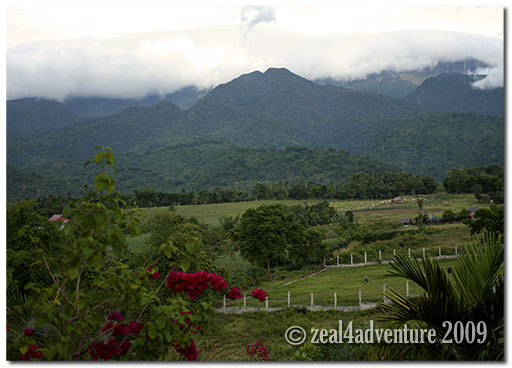
Soon as the plane landed, we headed west and spent the night at Rafael Salas Park for an early start the next day.  But before heading to Rafael Salas, we met up with our guide/organizer, Billy Torres, at his family’s vacation house overlooking the formidable volcano also known as Mt. Kanlaon.

kanlaon-sign

At the foot of Kanlaon serving as its gateway is Guintubdan, one reason why people find themselves in these lush hills.  The other reason is to take pleasure in the many waterfalls and scenic views of the park.  Half of the group went on to Mt. Kanlaon which would entail 8-10 hours of trekking to the summit, while the other half (of which I am part of) hiked to 4 of the many waterfalls Guintubdan has to offer.

guintubdan-hike

The trail was manageable with a few slippery areas, it being a rainforest.  At one point though, we crossed beautiful landscapes with tall pine trees, reminiscent of the Mountain Province.

guintubdan-falls-11

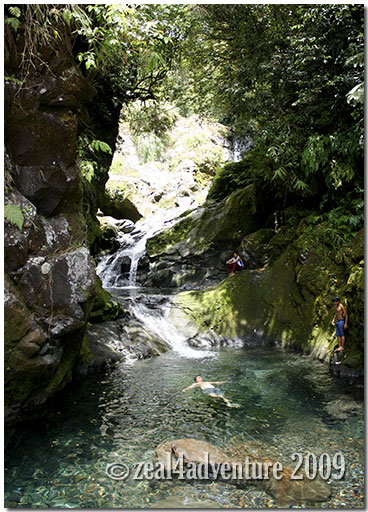
Because it was a long holiday break, there were loads of people with the same idea.  On the trail, young kids eager to reach the falls even overtook us.   Alas, the first falls was packed with people.  The second falls; in contrast to the first was pristine and oh-so inviting.

guintubdan-fall-4

Sadly however, the rusty stairs prevented us from getting closer, much less swim and so we settled on taking our lunch by the steps overlooking the grand falls.

guintubdan-falls-3

Coined after the word “tubod”, which means flowing water, flora, fauna and even waterfalls literally abound here.  Cool weather is brought about by high altitude and practically unspoiled nature and the best part of the hike was dipping into the sparkling, icy, cold water of the 3rd falls.  Best way to rejuvenate our, by then, tiring bodies.

guindtubdan-view-deck

The 4th falls which was a twin lake, we admired from a view deck, as it would take 2 more hours of downhill hike.  My bummed knee (which was why I opted not to conquer Mt. Kanlaon just yet) was just about to give up on me so we opted out and enjoyed it from afar.

Guintubdan was an impressive intro to our Negros adventure.

Explore more worlds here.

WS#11: Guapple Pie

Just got back from Easter (Holy Week, we call it) break that was brimming with adventure and new discoveries, from hiking to diving to feasting.

ws-11-guapple

But before I launch into the details, let me first share some Guapple Pie fresh from El Ideal Bakery.

ws11-guapple-slice

Made from guapples (a large guava variety), this piece of heaven is a great twist from the original (and very American) Apple Pie.  Tastes quite similar down to the cinnamon and the crumble, what makes the difference is the crunchy bite and the slight, distinct guava flavor that compliments rather than drowns in the cinnamon.

el-ideal

An institution and the pride of Silay, El Ideal is always a “must stop” when in Bacolod (or anywhere in Negros Occidental actually), more accessible these days with the Airport now just minutes away.  Certainly a great “pasalubong” (gift) from the city of Silay.

El Ideal
118 Rizal Street, Silay City,
Negros Occidental

Animals Have Right of Way

right-of-way1Credits: from Akilounedesigns:  Paper – kit so natural papier froisse, papier 9, papier 10, papier ray;  Embelishments – kit so natural branche, toiles.

In Lake Manyara in Tanzania, this one knew its rights.  It just stood there, fanning itself with its ears.  Quite captivating to watch and a great opportunity to photograph.  More on my safari adventures and the beautiful savannah.  Stay tuned.

Will be on holidays… I’ll be back soon with lots of stories in tow.  Happy Easter, everyone.


Uganda Mishaps

You get what you pay for. We were on a budget and we decided to take the bus to save some money. We could have asked the taxi driver to drive us there but it would cost us 4x more than if we took the bus…

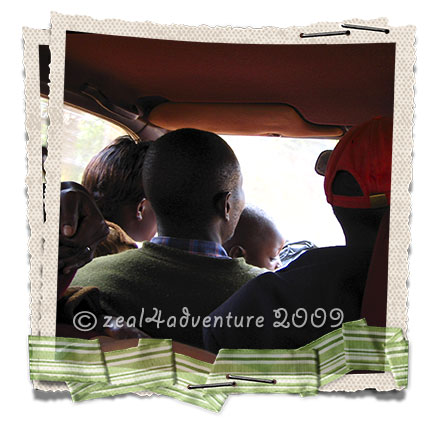
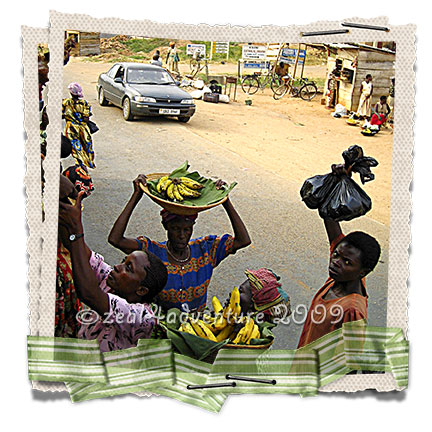
After our rafting stint in Kampala, we headed west. We took the wrong bus and ended up in a small town called Kamwenge with no inns to accommodate us. It was our first taste of the local Ugandan life. We should have been alarmed when we entered the bus and saw zero foreigners.

bus-to-kamwengeCredits:  Frame (for all photos)  by Sweet Shop – Cycle Carnival Frame

The trip was supposed to have taken 4 hours. 5 hours later, we realized we were nowhere near our destination.

kamwenge-enroute1

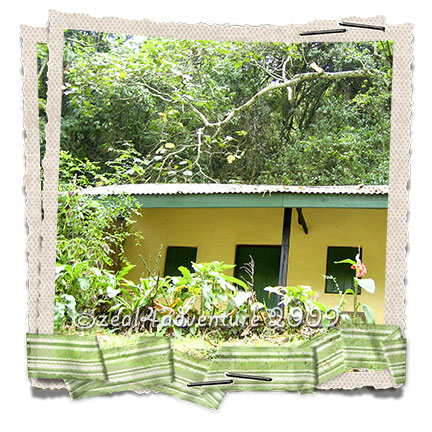
Along the way, I was scouting for places to sleep and can’t seem to spot any and as the town gets smaller and more remote, my fear gets bigger and more foreboding.

vendors

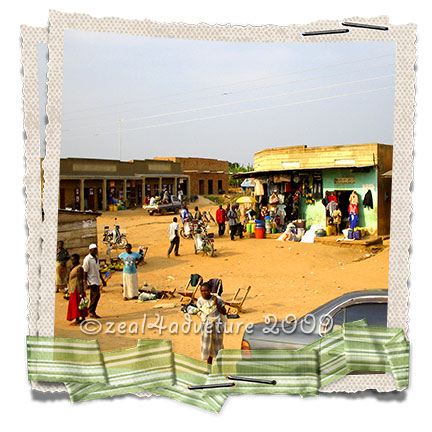
When we finally reached the end of the road, we got out, got our bags and tried to muster an act of normalcy, probably to no avail. The people were staring, probably wondering what brought these 2 Asians to their town (if they’ve even seen an Asian upclose and personal before). On the bus, dear boyfriend befriended a young local residing in the city, who was going to visit family. Dear boyfriend’s thought balloon – “I’ll force this young guy to take us home with him for the night!”   😯 He probably sensed it because he waited with us for a matatu (their version of our FX) and was I relieved when we were finally on our way to where we were supposed to be 6 hours ago. The driver even helped us find a good hostel, stayed with us until we were guaranteed a room. We were warned by friends to be careful in Africa and so far all we had experienced was kind accommodation from everyone.

OK, that was our scary moment, we also had our fair share of funny moments and one such moment was when we had to take a matatu in Fort Portal to Lake Nkuruba (near Kibale Forest, where the Chimpanzee tracking is). We were the first passengers and had to wait till the car got filled up.

squeeze

The matatu, a Corolla, finally left with all 10 of us – 5 passengers at the back and 5 in front including the driver – but not without a flat tire.

flat-tire1

Don’t ask me how we fit in that poor Corolla. It was hilarious! It didn’t help that dear boyfriend is a big guy and I refused to sit on anyone’s lap nor have any one sit on mine so one guy was practically standing (squatting was more like it!) all the way. Poor guy but I wasn’t budging.

lakeside-cabin

The misadventures did not stop there. In Lake Nkuruba, we booked for the lakeside cabin. It wasn’t what we (or rather I) envisioned it to be and the lake was practically the only thing that was going for us, at this point.

admiring-nkuruba

First of all, the bath is an outhouse on a hill. Secondly, there was no electricity, good thing we had headlamps. But the worst thing was when we were about to call it a day, (headlamp) lights out and all, as I lay down, head resting on my pillow, I felt something moved! MOVED! I was sharing a pillow with a bush rat! Let’s just say that the pillow (and the rat) got thrown out of the cabin, and I shared a pillow and a bed that night! The next day, we checked out and moved to a $45 room in Fort Portal.

So did we save? Learn from our lessons, my friends. If unsure, take a cab and be wary of super budget prices. As I said, you get what you pay for, as simple as that. Not their fault.

Despite the mishaps, this trip was exceptionally memorable (and on hindsight, quite enjoyable) precisely because of the risks we took.  The experience was all worth it.  No regrets. It’s all good!

A World Heritage Expedition

mwtwhite4

“We woke up to a perfect storm”, aptly described by a friend of the bad weather that welcomed us one morning as we approached the Sulu Seas on our way to Tubbataha Reefs National Marine Park, simply called Tubbataha.  The park was declared a National Marine Park in 1988 and a UNESCO enlisted World Heritage Site in 1994.

minerva1

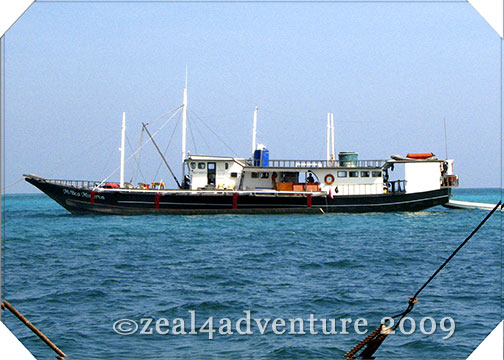
We were on an expedition on board the M/V Minerva, a research vessel owned and operated by WWF-Philippines, which opened the Cagayancillo micro-archipelago and Tubbataha Reefs to non-divers.  Yes NON-DIVERS.

Intrigued with Tubbataha, I’ve always wondered what it was all about.  “A must-see and a must-do especially if you are a diver”, I was told, which made me all the more attracted to it, never mind that I didn’t dive (then).  The hindrance was the cost and not to mention, the divers will be underwater while I will be left above, trying to get a glimpse of the world beneath (or so I thought).  So when I got hold of this offer to join the expedition… you guessed it, I jumped right at the chance.  Worth every centavo… good food

sunset

and awesome sunsets were just the tip of the iceberg.

cagayancillo

Cagayancillo was a discovery, but best of all, we were brought to snorkeling sites (as opposed to dive sites), and without having to don a scuba gear, we saw jacks (schools of ’em) in our face, sea turtles, even reef sharks, stingrays and barracudas owing to very clear visibility.  It was a turning point, so to speak.  Took up scuba diving soon after and turned out to be one of the best decision ever.   🙂

tubbataha

A reef ecosystem made of 2 atolls; Tubbataha is home to many marine species and is recognized as being probably the best diving in the Philippines and amongst the best in South East Asia.  Politically part of Cagayancillo, Palawan, the name Tubbataha comes from the dialect of the Samal, seafaring people of the Sulu region, and means “long exposed reef”.

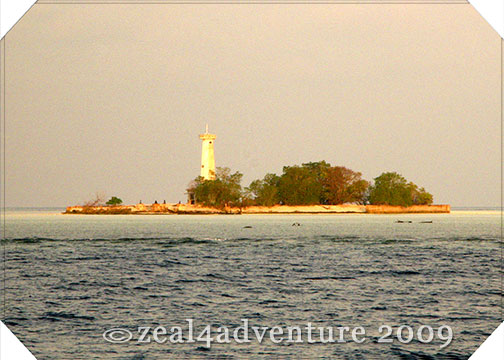
lighthouse

The remoteness of Tubbataha Reefs has been its greatest protector against our exploitation.  There are no permanent residents here and the reefs are only accessible by live-aboard dive boats.  Not exactly cheap and easy.

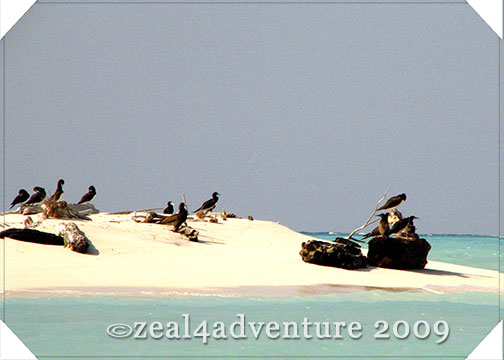
bird-island

Situated on the north face of the north atoll is a large reef popularly known as Bird Island due to the numerous “boobies” and “noodies” that nests in the islet.

bobbies1

We were greatly charmed by these critters from afar.  The nearest we could get to them is thru telephoto lenses as stepping foot on this island is reserved for rangers and researchers.  Be that as it may, it was the most spectacular sight I’ve seen as far as bird watching is concerned.

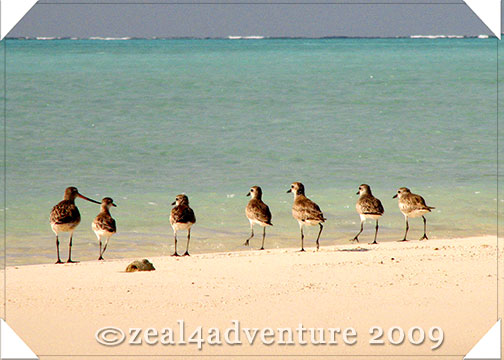
noody

A project of WWF-Philippines, it aims to encourage and demonstrate to the commercial tour operators that there is a market in the non-divers.  The hope is that with the support of such operators, Tubbataha Reefs will raise funds each year to pay for itself.

Enjoyed myself immensely that I went on the expedition twice.  The first time, as a paying volunteer (to check out the sites) and the second was when it ran its first commercial trip in 2007.

The expedition takes you to not 1 but 3 World Heritage Sites.  Aside from Tubbataha, the expedition kicks off and/or concludes with a trip to Miag-ao church and the Puerto Princesa Subterranean underground river.

For the 2009 trip details, click here.

I hope you enjoyed my world this week.  To enjoy more worlds, hop on over to My World Tuesday.

WS# 10: Finding Nemo

ws10-finding-nemoCredits:  Digital Couture Chipwglit Alphas, KPertiet Vintage text paper.

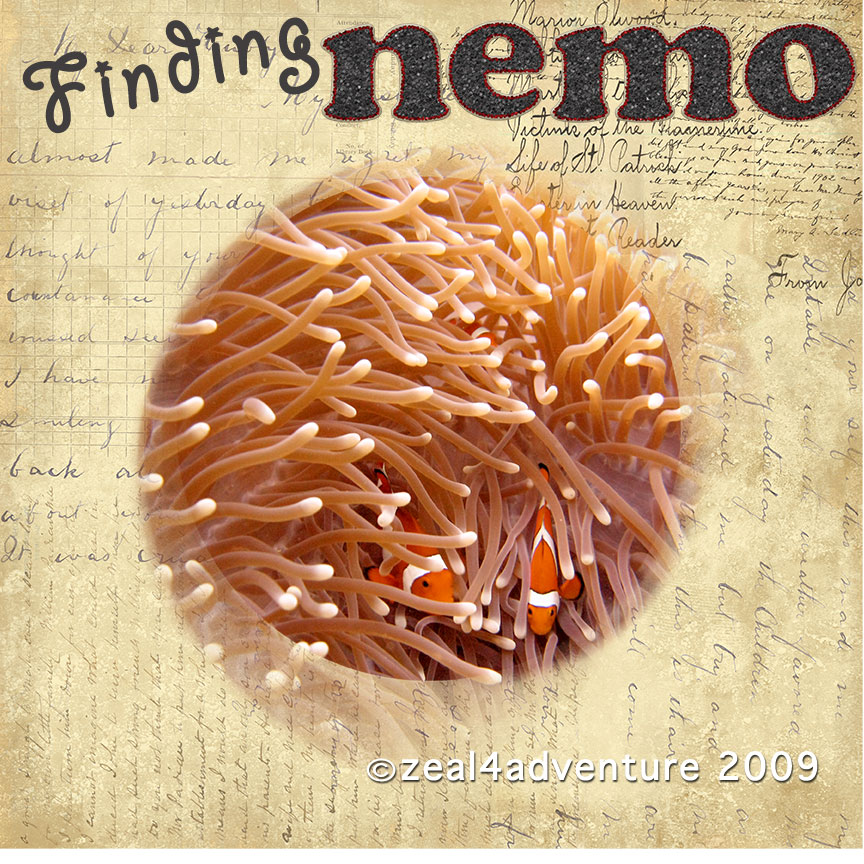
It’s summertime… yes it’s time to go diving again… and yes, that’s Nemo!

Nemo in the real (sea) world is called a clownfish.  They are a type of fish that lives in saltwater habitats.  It is also called an Anemone fish.  That bed of soft tentacles that sort of make up their home is called a Sea Anemone.  Clownfish live in a symbiotic relationship with certain sea anemones.  This means they benefit from living with the sea anemone, and the sea anemone benefits from the presence of the clownfish.  In the ocean, the clownfish are protected from predator fish by the stinging tentacles of the anemone, while the anemone receives protection from polyp-eating fish, which the clownfish chases away.

Clownfish have a few ocean predators, but their greatest threat is humans. People who catch clownfish and keep them as pets in aquariums are making a mistake. There are only ten out of more than one thousand types of anemone that are able to host these fish. Many people put the fish in a tank with the wrong anemone. In captivity, the clownfish can live from 3 to 5 years. In the wild, they live 6 to 10 years.

Clown fish live in sheltered reefs or in shallow lagoons, usually in pairs.  They live in warmer waters of the Pacific Ocean and Indian Ocean including the Philippines where this shot was taken, specifically in Anilao, Batangas.

Anilao, just 3-4 hours from Manila is a popular dive spot known worldwide.  The waters abound in marine life, corals and amazing diversity of fishes.  Because of its proximity, it has become one of my favorite weekend getaway.

I hope you had as great a weekend as I had!  Have a splendid week ahead!   🙂

Source: http://www.tolweb.org/treehouses/?treehouse_id=3390