A Taste of Ancient China

Credits:

Although the Tian An Men (Men meaning gate) Gate was built in 1417 during the Ming Dynasty to compliment the Forbidden City, what first came to mind as I was walking through the humungous complex was the 1989 protest known to the world as the Tiananmen Square Massacre.  This was where the heroic flight of thousands of young men and women played a crucial role in the events that ultimately led to the collapse of communism.

The largest city space in the world at 40,000 square meters the square was packed with people wandering about.  It held the monument of the National Heroes, the Great Hall of the People, the National Museum of China and the Mausoleum of Mao Zedong.  It also is the gate connecting to the Forbidden City, which sits on its north.

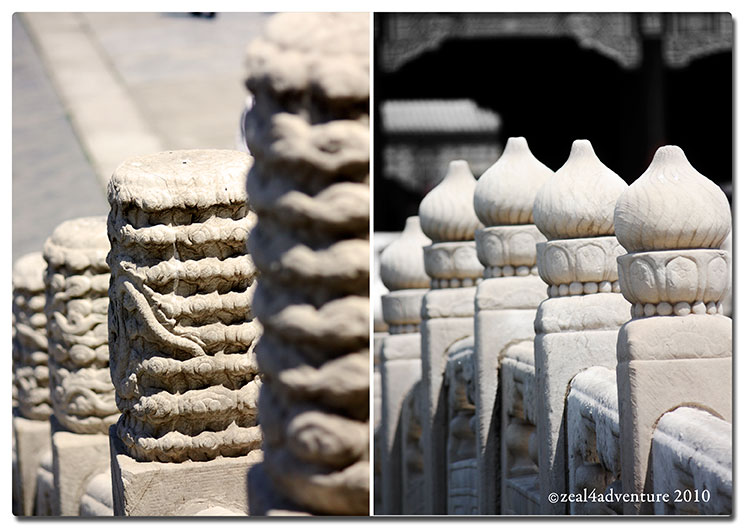
The large white marble column seen all around the square was constructed in 1420 as part of the Forbidden City ‘s grand design, which took 14 years to complete.

This Chinese inspired palace is located in the middle of Beijing and now houses the Palace Museum.  For almost 500 years (from the Ming Dynasty to the end of the Qing Dynasty), it served as the home of emperors and their households.  It likewise was the economic and political center of the Chinese government.  The construction began under the Ming Emperor Yongle in 1406 and is the largest and the most well preserved imperial residence in China today.

Walking through the city gives an idea of the grandiose lifestyle of the former emperors.  During these times, common Chinese were not allowed to enter the city at all, a big contrast to today’s millions of people entering daily.

The entrance of the Palace is through Tiananmen gate and once you reach the Wumen (Meridien Gate),

you enter the heart of the complex where you fall in line or wait for your guide to purchase your ticket.

It was chaotic and it continues to be so until you leave the complex.   The rooms are now off-limits and one can only take a peak from the outside, unlike a decade ago when one could actually enter and have a feel of the old splendor.  The price of commercialization, I guess.
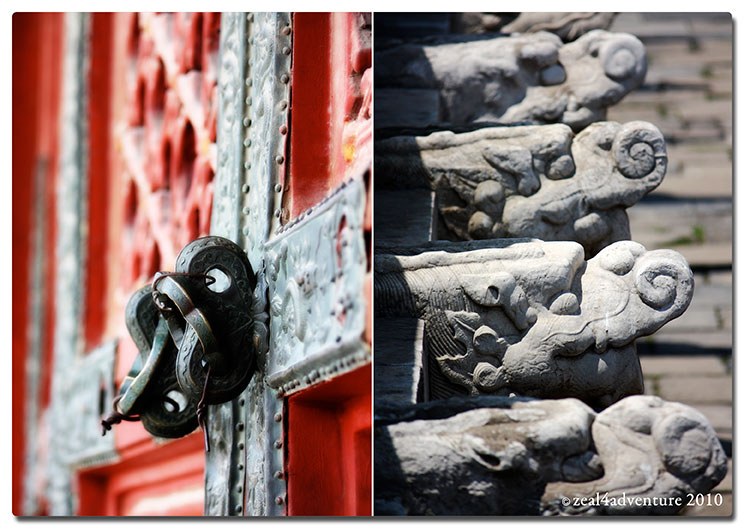
Despite the chaos, a visit to the Forbidden City is a must especially if it is your first time.

Because of the size, allow at least 3 hours to walk the complex, wear comfy walking shoes and best to get those audio guides for a thorough walk through.

Forbidden City
North of Tiananmen Square
Dong Cheng District
Opens from 8:30am – 4pm daily
Price:  ¥ 40-60 / ticket
The Art of Bargaining

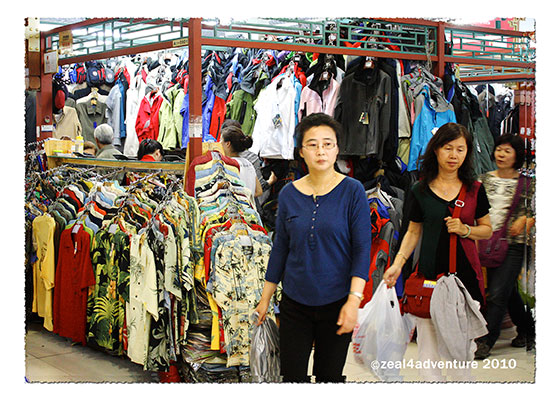
All these name brands that you of course know are fake but sometimes wonder if they really are.  They look and feel like the real thing.  You make eye contact and hold that shirt and ask, “how much?” then she types a price on a calculator that can’t possibly be right but validates what you already know.  So you pretend disbelief, and show a “you must be kidding” face. She goes, “how much you want?”  Then you offer a price 70% lower than what she asked for.  And then she gives you the same look you just gave her and adds, “you joking!”  You look her straight in the eye, “no”, you say.  Then she brings down the price a bit while you do not budge.  The game goes on for a bit longer; by this time her price is about 30% lower than her original quote.  You walk away and she grabs your arm and asks you once more, “how much you want?” in a more irritated manner, you try to break free and walk away, she follows and continues to ask, “how much you want? enough joking.” you tell her your price, which by now is 20% higher than your first offer, sometimes she will offer to a price a tad higher than yours and you finally compromise and concede.   Everyone’s happy; the vendor will even praise your bargaining skills.   Sometimes though they will walk away grudgingly and call you crazy.  Don’t fret, there are at least 500 stalls (the whole building is reported to have 1,500 stalls) with more or less the same merchandise and if you really like it, you can repeat the same exercise with another vendor.   After a few hours of this, you feel exhausted but happy.  You feel like a cup of coffee or a bottle of beer to reward you for a job well done.

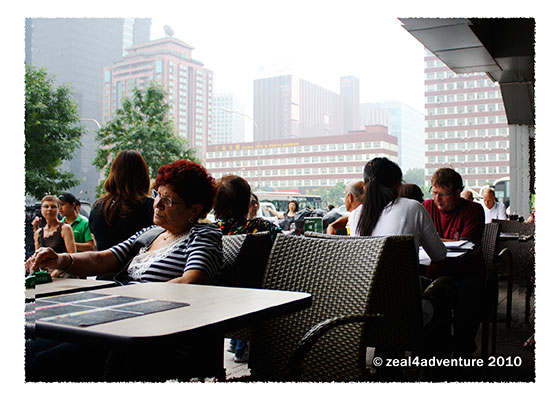
Many coffee shops and restaurant chains on the first floor

My mama always say, “They will never sell you anything at a loss, so don’t feel bad.”  You see she has been going back to the silk market and similar markets in Shanghai and Guangzhou for more than a decade.  She IS the expert when it comes to bargaining with the Chinese.  I take to heart her practical advice and oftentimes end up with a good bargain – that is if my impatience doesn’t get the better of me.  Here are some advices from the expert herself.
  1. Don’t want the item too much.  They are fakes after all.
  2. You will most likely find the same item in the stalls next door.
  3. Always start at least 70% below the asking price.
  4. Do not concede unless it is at least half the asking price.
  5. If you happen to break rule no. 1, then at least concede only if the price is 40% lower than their asking price.
  6. Bargain hard.
  7. Pretend to know what you’re doing, don’t be wishy-washy.
  8. Be prepared for some abuse, some will grab you and drag you back to their store, even if you’re already 3 stores down.

The Silk Market is a 5-story building that offers more than just silk.  There are garments, jackets, jeans, leather goods, shoes, bags, watches, handicrafts, jewelries, toys, you name it.  It opened its doors in 2005 replacing the original outdoor Xiu Shui Market.

Try it… it can be fun.  It’s a game not everyone can play well though but practice makes perfect.   😉

Useful Info:

The Silk Street Market
Chaoyang District, No 8 Xiu Shiu East Road
To get there: take the subway line 1 – Yong Anli Station

Beijing at Night

Credits:  Kitschy Digital (You are awesome kit) Chevron and Yellow Houndstooth papers, Knotty girl’s pp1 paper;  Caro 752 Marquee 1 & 2 brushes, KPertiet Grungy clusters and LivE Sing for Spring Page overlay;  LivE TW01 Tag;  K Pertiet Academic Alphas.

A “Snack Street” and a “Bar Street”, both alive till the wee hours of the morning, both swarming with street food – some made me squeamish while some whetted my appetite.  Two popular night scenes not to be missed when in Beijing.

Wangfujing Night Food Market

Just off Wangfujing St., located pretty much in the center of Beijing and a 10-minute walk from where we stayed.

After a hotpot dinner at a nearby mall, we walked along Wangfujing St., a portion of it is off limits to cars and other motor vehicles.

The food market was crowded with people, but they say this is quite normal as it is a famous snack street among locals and foreigners alike.  I was not prepared for what’s to come though.

The first few food stalls had as displays bugs and scorpions on a stick, bizarre foods that would probably delight Andrew Zimmern no end but not me.

Even beautiful sea creatures such as seahorses and starfishes.  I was horrified.  Poor creatures.  I now know that there are foods that I cannot eat, what a revelation!!  But not all food stalls are alike,

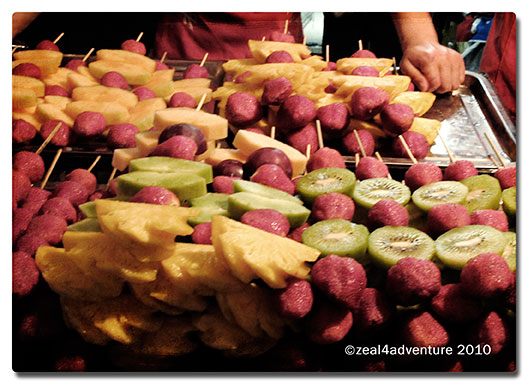
Candied fruits

there were others that had me wish we skipped the hotpot meal and went straight here.

Lamb Shawarma

There were wonderful smells of lamb kebabs, shawarmas, grilled meats, roasted chestnuts and many, many more.

A great place for a cheap sumptuous dinner, sans the bizarre foods of course.

Sanlitun Bar Street

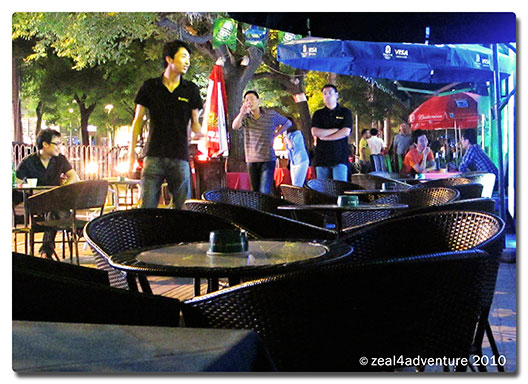
One of the best known bar street in Beijing, Sanlitun is located in Eastern Beijing in the Chaoyung District.

Hidden away in the small alleys of Sanlitun are many small bars and cafes.

This has been one of the most popular entertainment area for foreign expats, recounts my brother who used to work in Beijing in the late ‘90s.  What used to be a small street with bars has turned into stretches of bars and trendy restaurants.  Hardly recognizable, he says, as we weave through the streets in search of his favorite hangout spot 12 years ago.

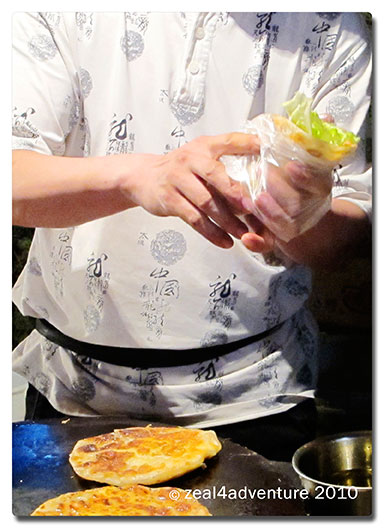
Before taking a cab back to our hotel, we came across this stall selling some sort of a wrap

made up of char siu pork and fried egg with some sort of sweet-savory sauce and lettuce to finish off.

Better then the breakfast offerings at the hotel.

Beijing : The Old Meets New

If the last time you were in Beijing was 15 years ago,

you’d also be surprised at how they have managed to preserve its ancient past even while it transforms into a modern metropolis.

Walking along Wangfujing Avenue, I notice a smattering of bicycles reminiscent of the Beijing I last saw, still pedaling down the streets but is more and more being replaced by cars and buses.

Modern buildings and malls line the streets of Beijing along side stunning ancient eastern architectures. The capital of China with 3,000 years of history is today a dynamic city where the old and new intermingles and is a magnet for local and foreign visitors. It remains the People’s Republic of China’s center of politics, culture and economics.

Great Wall

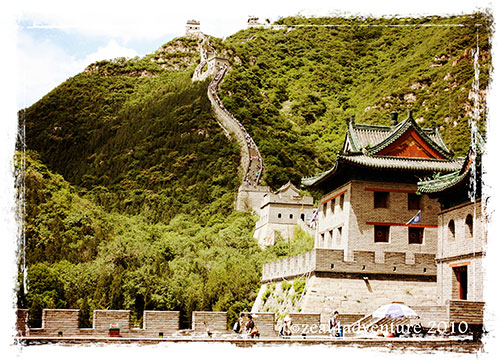
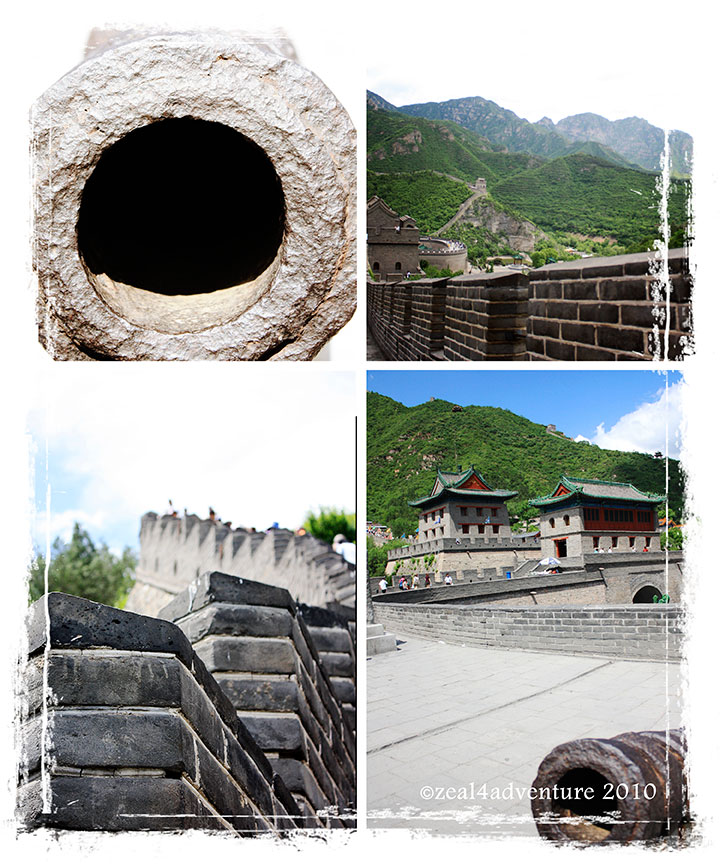
Great Wall – Juyongguan Pass

A visit to Beijing will never be complete without the imperative call to the Great Wall.  It was the reason for this trip putting aside the good eats, that is.  My nephew wanted to see the Great Wall, after taking it up in school and thus a family vacation was mounted.

Packed with tourists

So to Juyongguan Pass (also called Juyong Pass) we went one morning.  It is the nearest section of the Great Wall to Beijing, a little nearer than Badaling, the most popular section of the Great Wall.

Juyong Pass does not however escape the same glut of souvenir shops and a number of other tourist traps that Badaling has.  But if convenience, keeping transportation simple and time management is of importance, both these passes are the best places to get a feel of the walls’ more than 2,000 years history.  In fact, as early as the 13th century, the area of Juyong Pass was known for its beauty and was listed as one of the eight “great sights of Yanjing”.

Aside from its easy access, its steps starts off from the same level as the parking lot so there is no need to climb or take a cable car to reach the wall.

It however rises steeply on both sides of the gate

The view from mid-way to the 1st watchtower

Our goal that never was.

– a reason why we never even reached the first watchtower.

Once a strategic military garrison, this 20 kilometer-long valley,

stretching along the ridge of incredibly steep mountains was considered important in the defense of Beijing in the ancient China.  These mountains that flanks the valley can definitely be credited for the beauty of the pass.

If you are looking to see authentic “Ming Dynasty” walls though, this is not the place to be as a short expanse of the wall has been recently restored.  Simitai might be a better option since it is virtually unreconstructed and is listed as a UNESCO’s World Heritage Site.

More of Beijing in my next posts.   🙂

Scenic Sunday

Maa Shee Saw Yo (Delicious!)

Credits:  Kitschy Digitals – You Are Awesome Kit Plain and Yellow Houndstooth papers; JSprague Awesome Scallop tag

Twenty years ago, Korea to me meant underground shopping where overruns of well-known brands abound.

Itaewon

Today, these so-called underground shops albeit scarce still exists but no longer rule my interest.  More than lovely sceneries (which I only discovered on this trip), it’s the cuisine that got me fired up.  Korean food ranked high on my list of favorites ever since I stepped foot on their soil some twenty years ago.  The proliferation of Korean restos in my neck of the woods nurtured that fondness.  Lucky for us, we had great Korean hosts and night after night, we were treated with authentic Korean cuisine and more. And contrary to some reports, Koreans are very courteous people.   🙂

Some of my favorite dishes came to life and once again, I got to taste it from its source.

Bibimbap

Rice, meat, vegetables, an egg and chili paste.  Mixed together and I’m in heaven.  What I love best about this is the crusty rice at the bottom.  So better make sure that it is served in a hot stone bowl.

Chapchae

Usually served as a side dish in Korea but I can have it as a main dish anytime.  It can truly make my day.

Galbi Gui

The first time I tried this was in a small restaurant in Itaewon and I’ve never looked back.  A must have in every Korean dinners.  It is short ribs marinated in Korean Soy Sauce, garlic and sugar and then grilled, usually at the table.   Typically served with lettuce, which is used to wrap the beef in.  The hot bean paste called ssamjang sealed the deal for me.

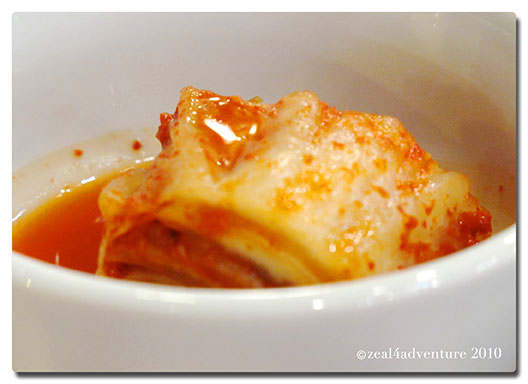
Kimchi

Funny how I sometimes crave for this when it wasn’t love at first taste…  nope, not at all!  It actually took a while for me to even like this stuff.  But what is Korean food without kimchi?

A Colorful Platter of 9 ingredients in Thin Crepe

This was interesting and a first encounter.  The platter came with thinly sliced fresh and pickled vegetables and mushrooms.  Gather a few of each and wrap with the crepe.  Maa shee saw yo!

It was a great trip to Korea even if it was actually work (and a bit of play).  The food capped it all, as usual.

The Best View in Seoul

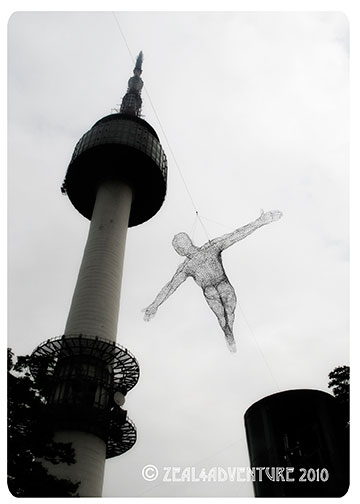
From ancient to modern.  The Namsan Tower of Seoul was built in 1969 as a communications tower.  It is today also an observations tower known as the N Seoul Tower when it opened its doors to the public in 1980.  It has since then become a must-see destination for those visiting the city.  The N Seoul Tower lies atop Mt. Namsan (hence the name) and stands 479m above sea level at its peak.  This art and cultural multiplex commands a spectacular view of the city on a good day.

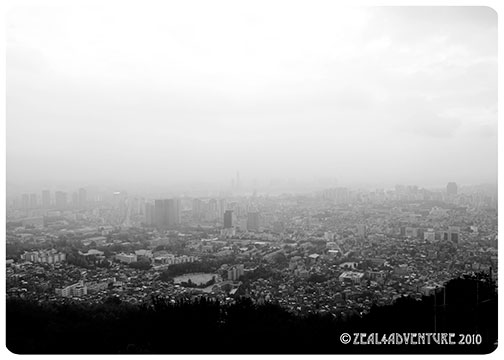
On a bad day such as the day we were there, the smog did not allow for clear view…   😦

For those residing in Seoul, it has turned into a trendy urban haven offering exciting things to do and see.   Imagine dining at a revolving 360˚ panoramic backdrop… ok it’s nothing new

but has anyone been to a toilet such as this?

On the same level, we admired the view while having our cuppa joe and this awesomely moist camembert muffin.  A two-thumbs up!!

Part of their effort to preserve the environment of Namsan is by banning private vehicles from entering the mountain since 2005.  One would have to walk up the hill, or take the cable car.  We opted to walk, which makes for a good exercise albeit pleasant due to the lush trees that shade the road ascending to the tower.

As you reach the entrance, a floating figure greets and on the side of the tower is a viewing deck or a terrace (as they call it)

with countless locks attached to the railing, conveying eternal love.

Supposedly an idea copied from the Tokyo Tower. Our guide disclosed that a friend of his has six padlocks going on seven attached on the many rails of the deck.

But… but…   😕  But I guess hope springs eternal.   😀

Chang Deok Gung: A Palace in Harmony with Nature

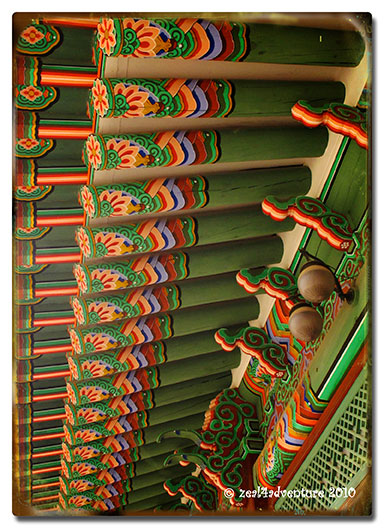
The ancient seat of Korean royalty has 5 major palaces in Seoul and some are definitely worth a visit.  Chang Deok Gung is one.  We visited the palace as recommended if given half a day sightseeing only.  Some chose to go shopping… not me.  Although Geong Bok Gung is the grandest palace and the seat of power for centuries, we didn’t go there because it would need more time to fully explore.

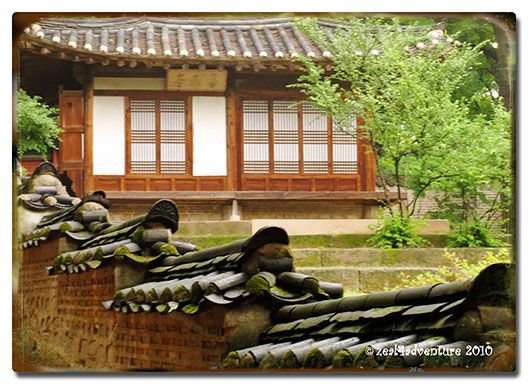
And even if Chang Deok Gung is 2nd only in importance to Gyeong Bok Gung, it was a favorite of many kings of the Joseon Dynasty, perhaps because it was built in harmony with nature.

The walls inside the palace were laid out freely, not imposing but rather blending with nature

and this earned the palace a UNESCO listing as World Heritage Site in 1997.

Both palaces were totally destroyed by fire during the Japanese invasion of 1592.  After the war, Gyeong Bok Gung was not rebuilt because its site was no longer considered auspicious.

Instead, Chang Deok Gung was restored in 1610 and served as main palace for the next 258 years, until Gyeong Bok Gung was finally rebuilt in 1868.

Some sites to note:

Seongjeongjeon – where the king handled routine state affairs.

Originally a hall for the king, but it was also used by queens to throw parties to honor elders and encourage customs of respecting one’s elders.

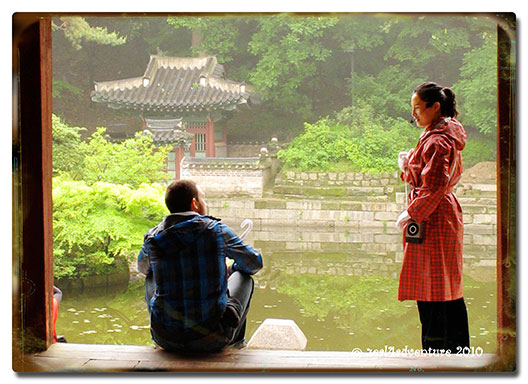
For leisure and relaxation, the royal family had a secret garden built.  The garden presents an unusually exquisite design adapted to the topography.

Buyongji lies in the heart of the Secret Garden.  A relatively open space used for retreats as well as for study.

A number of buildings were built around this rectangular pond.

Jondeojeong – this area is believed to have been the last to be added on to the Secret Garden.

The Palace in more detail:


Sliding In Some Exploring

Credits:  Template by Crystal; Scratchy overlay from JSprague’s Thank Ya Kindly kit; Papers:  Brown Solid, Dark Blue Solid, Green Solid, Red Solid, Engraved Birds (JSprague’s TW Kits), Trish Jones’ Radiant Essence.

Oftentimes work gets in the way of my adventures – that is not a good thing.  But sometimes it brings me out of town, out of the country even – and THAT is a good thing. Even if I spend a lot of the time confined in a conference, I try to squeeze a day or two (say the weekend before or after the official business meetings) to explore the area.  There are times though that I skip exploring altogether due to time constraint.  Not this time… this time, work brought me to Seoul and the meeting started on a Monday so yeah…

I decided to take it easy because I wasn’t traveling with my usual set of travel buddies and lest they kill me, taking it easy was the route to take.  First order of the day was brunch at Apgujeong-dong.

A residential and shopping district in one of the most affluent areas of Seoul, Apgujeong has luxury brand stores, home grown boutiques,

new trendy eateries and open-air cafes lining its streets.  Most offer ritzy atmosphere and high quality goods and services.

We meandered through the streets in search for coffee.  It was still early and because it was a Sunday perhaps, stores and restaurants open later than we are used to so we wandered into a Starbucks, just for that coffee fix.

Homemade-style fresh organic food — B.B. Cafe by Hanskin

The organic café that first caught my fancy does not open till 12nn and when we went back (at 12nn), they weren’t serving the pizza we were eyeing earlier until 2… go figure!

We ended up satisfying our pizza craving at Schadheli, not as charming at first glance, but cozy enough for us to notice.  We ordered a good ol’ reliable Margherita and it was good so we tried another flavor, this time we were more more adventurous.

This one had spicy chicken topping drizzled in honey… yes honey.  It complimented well with the “Korean-style” spicy chicken and the cheese.

They make a mean Vongole too.

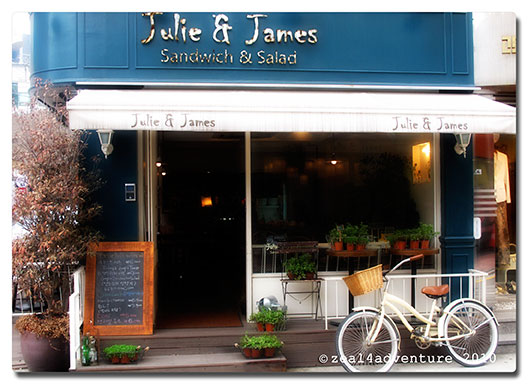
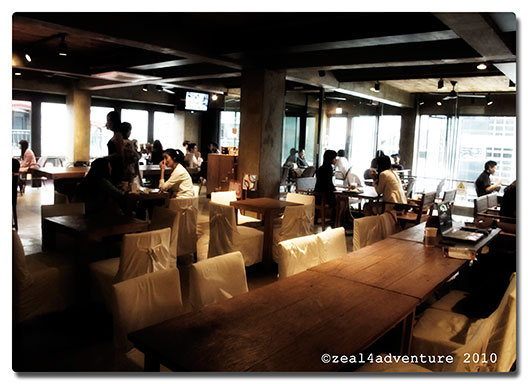
Koreans and their coffee, there must be something about it because coffee houses are seen in every corner, Starbucks and other international chains notwithstanding.  We walked into De Chocolate Coffee because we fancied the façade.

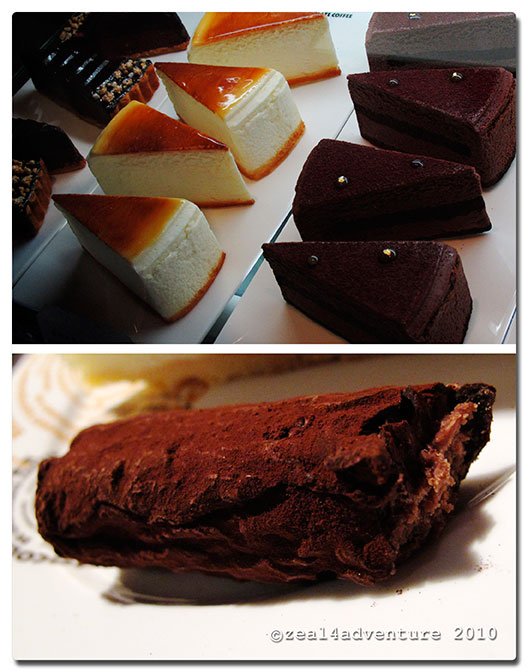
Coffee here was good, but the sweets… superb.

After that eating escapade interspersed with a little bit of shopping, we headed back to our hotel to get ready for the next order of the day… cocktails and then dinner.

A Museum of Art and Nature

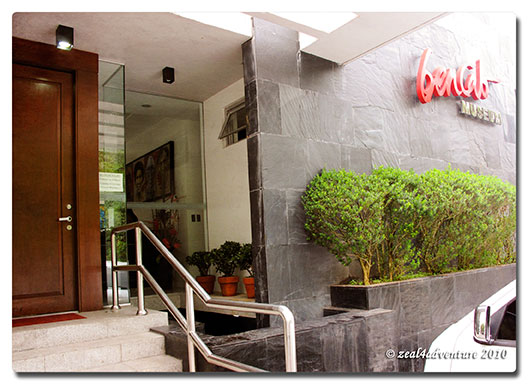
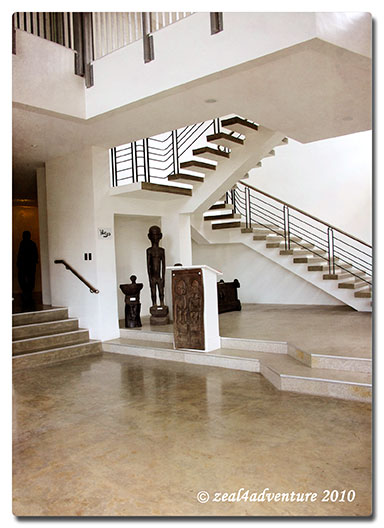
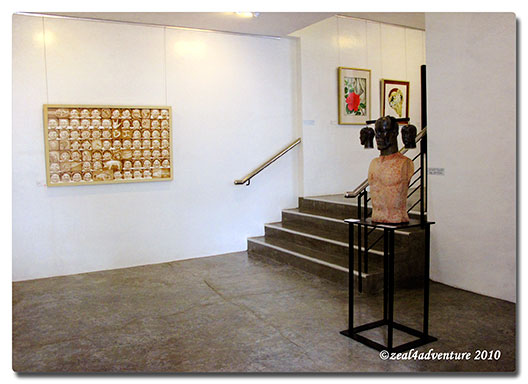
A short ride from the Baguio City center along Km 6, Asin Road stands a modern white building that is BenCab’s Museum.  A 4-hectare project of the National Artist for Visual Arts, Benedicto Reyes Cabrera, more popularly known as BenCab.

The Master of contemporary Philippine Arts traces his beginnings in Mabini where he painted and ran an art gallery with his elder brother Salvador Cabrera.  He then moved to London, gotten married to a British writer and eventually established for himself a name of international recognition.  When his marriage ended, he relocated to Baguio in 1988 and along with other artists formed the Baguio Arts Guild.  BenCab being a tenacious admirer and collector of Cordillera Arts also formed his own group of artists when he established the Tam-awan Village, an art center that promotes Cordillera traditions.

So it is to no surprise that aside from the BenCab Gallery, which presents a range of his works of different periods, sizes and styles,

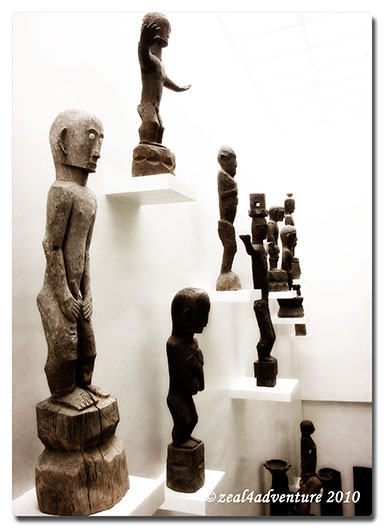
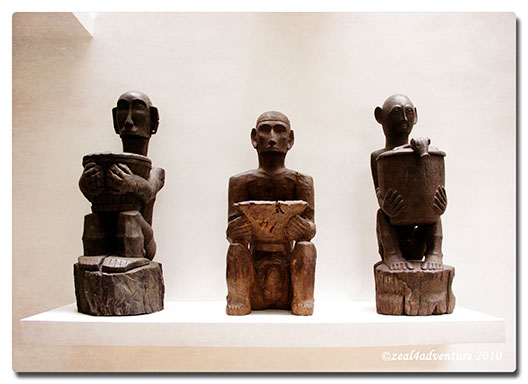
the museum also houses a Cordillera Gallery displaying a collection of tribal artifacts and indigenous crafts of the northern Luzon highlanders.

It also showcases artworks by contemporary Filipino artists – Cesar Legaspi, Anita Magsaysay-Ho, Fernando Zobel, Arturo Luz, Ed Borlongan to name a few.  A collection he accumulated through the years.

Aside from promoting art, a major part of its mission is to preserve, protect, and conserve its natural surroundings.  And how?

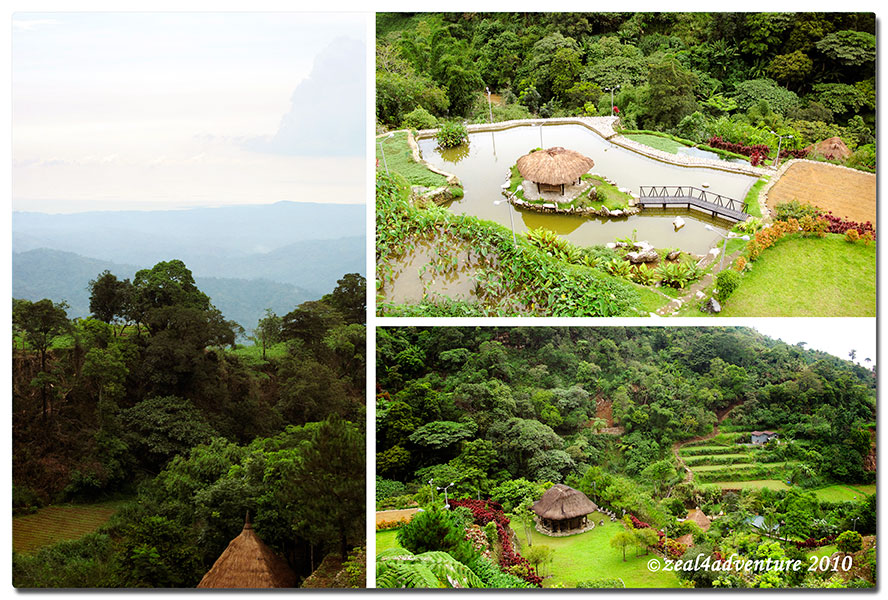
The museum commands a breathtaking view of the adjacent organic garden, its surrounding mountains and the South China Sea on the horizon.  Other sections of the estate features large ponds for ducks and a thatched-roof gazebo erected on a center island.

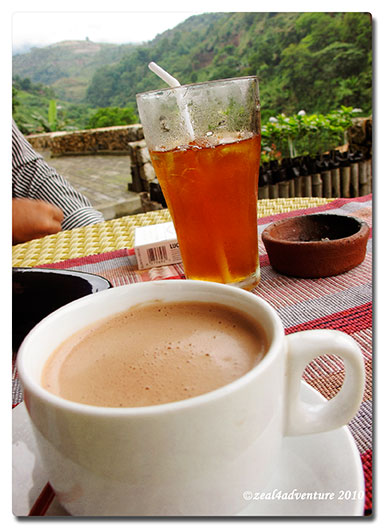
Café Sabel, serving cordillera coffee, tea and some food, is on the ground floor and overlooks all these.  Truly a remarkable man’s gift to a community he joined more than a decade ago.

A museum that is worth a visit opens its doors from Tuesday to Sunday, 9am-6pm.  Admission fee is P100 per head.

Back on Dry Land

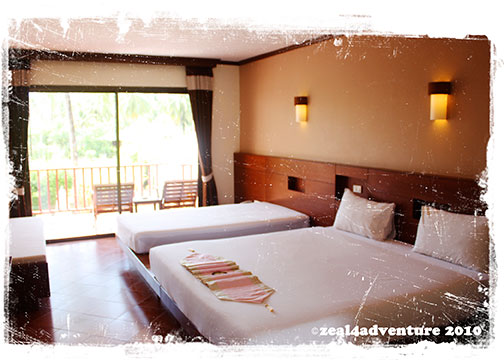
But more importantly, I can now bid goodbye to small and compact and say hello to big and spacious.

Bangniang Beach Resort is a newly renovated beach resort located in Khao Lak, a beautiful corner of the Andaman Sea and a popular jump-off point to the Similan Islands.

After 4 days of exploring the sea, it was time to do some land survey.

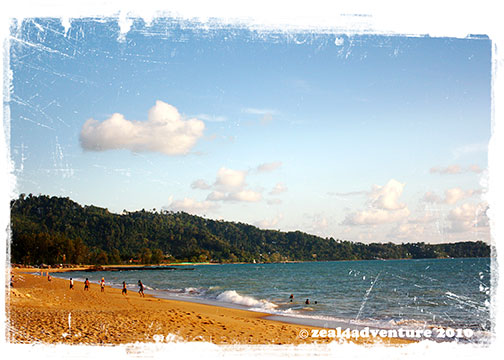
The resort is just a few minutes walk to Bangniang Beach

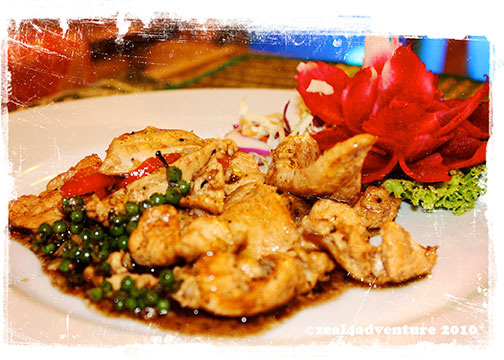
Chicken with Basil

and there, before we fly back tomorrow to the real world, we spent the rest of the day exploring more of what Thailand had to offer —  taste -wise.

Located just north of Phuket Island is one of Thailand’s most peaceful resort destination

—blessed with beautiful sunsets and

sprawled with natural and comfortable bungalows, cool beach restaurants and beach bars.  It offers an array of activities from fishing village excursions to waterfalls and cave hikes.  No less than three National Parks surrounds this resort town.  And if none of these activities excites, spending the day unwinding on the beach that seems to go on for miles, might be the answer.

This charming resort town shows very little signs that 6 years ago, more than 4,000 people died here when the tsunami struck its shores.  The only signs of that fateful day were

these warning street signs and

a police patrol vessel carried almost 2 kilometers inland (that fateful day) to where it sits today.  The boat was left where it landed and is now maintained as a memorial.

Khao Lak still remains relatively unknown and has not yet been intruded by the mainstream tourists, which makes this place ideal for those seeking quiet solitude.

Useful Information:

Bangniang Beach Resort
53/10 Moo 5 Khuk-Khak Takuapa
Phang-Nga 82190
Tel:  +(66)076 443 473-4
email:  reservation@bangniangbeach.com
Chongfah Resort Khao Lak
54/1 Moo 5, T.Kukkak, Takuapa District,
Phang Nga 82190 Thailand
Tel : (66 76) 486858

Scenic Sunday