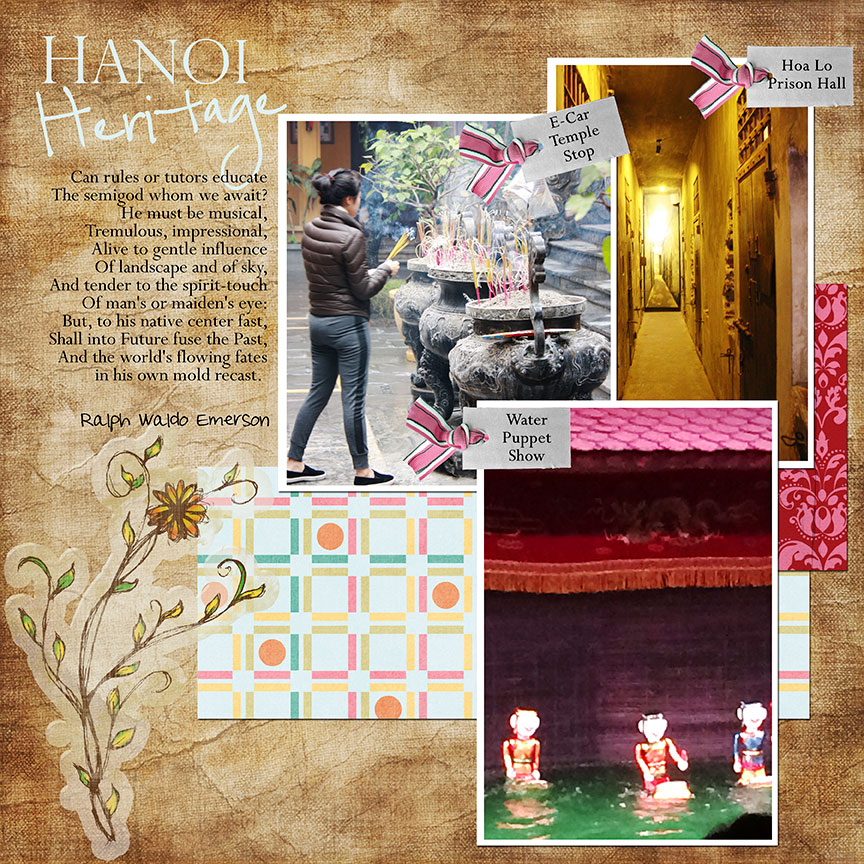
Hanoi Heritage

Hanoi-HeritageCredits: Papers by Shabby Miss Jenn Designs, Sahlin Studio and Scrapmuss Designs; Name Tag by Pri Rocha and Vellum Floral Sticker by Shabby Miss Jenn Designs

It was a quick trip to Hanoi… just four days. Got to admit, it was way too short, but a quick getaway was all we can spare. There will be a next time (that’s for sure) when I eventually make my way to Hoi An and Hue.

Before I end this short series on Hanoi, let me leave you with a few more cultural highlights to consider.

Water Puppetry

Not exactly an award-winning performance but it is a tradition that dates back as far as the 11th century and interesting insight into its theatre culture, which the Thang Long Water Puppet Theater attempts to keep alive.  A unique variation on the ancient Asian puppet tradition that involves the water, the Mua Roi Nuoc uses nature as the theme with ponds and flooded rice paddies after harvest in their acts to satisfy the spirits.
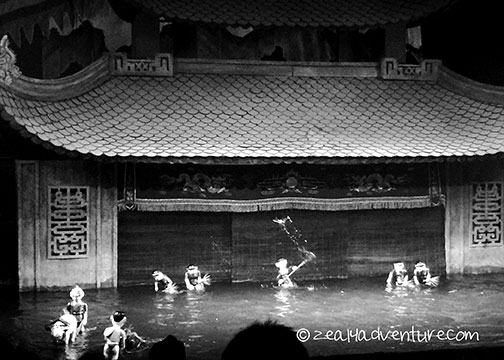
water-puppetThe puppeteer stand behind a screen and control the wooden and lacquered puppets through rods and string mechanism hidden beneath a waist deep pool that is also the stage.
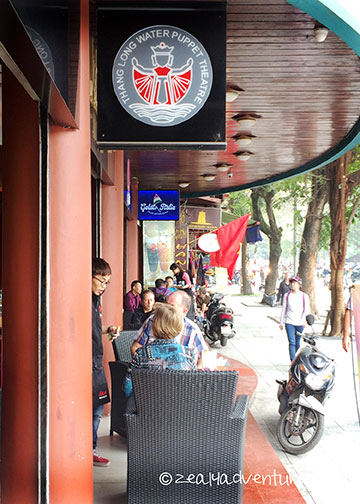
Thang-Long-Water-Puppet-TheaterLocated near the shores of Hoan Kiem Lake, the theater offers several performances every day from 16:15 to 21:15. Book in advance because it often gets filled. Most lodgings can help in that area.

Hoa Lo Prison

maison-centraleThis one piqued my interest. Popularly know as the Hanoi Hilton, this museum was once a prison. The Maison Centrale was first used by the French to house political prisoners, and later by the North Vietnam for prisoners of war. And because of this, the American POW sarcastically gave it its famous name.
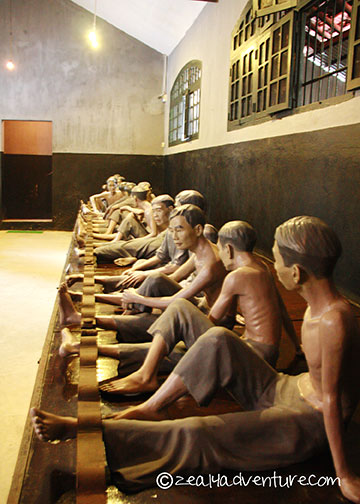
hoa-lo-prisonThe museum provided some insight on the gruesomeness that might have taken place in the POW camps. Guillotine and guns remained in the hall. Albeit gory, it was an engaging stop over from a day of wandering around the city.
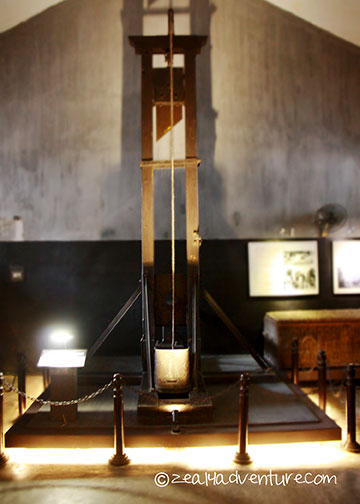
guillotineOne of the two guillotine that the French Colonialist used to behead revolutionary patriotic soldiers imprisoned in Hoa Lo Prison.
In Hanoi, most establishments have narrow frontages and are built beside each other; Hoa Lo Street is the only street with only one address – the prison. It occupies the length of Pho Hoa Lo, right at the corner of Pho Ha Ba Trung on the edge of the French Quarter.

Electric Cars
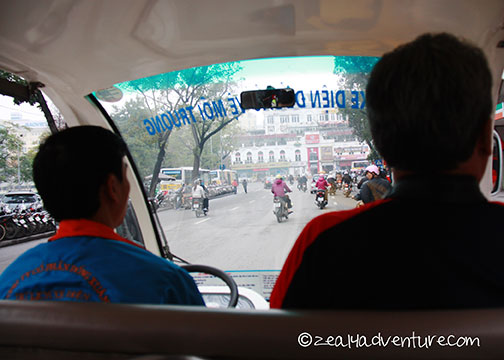
inside-the-e-carFor 15,000 VND, these cars are an easy and a green way to get a grip on the surroundings.
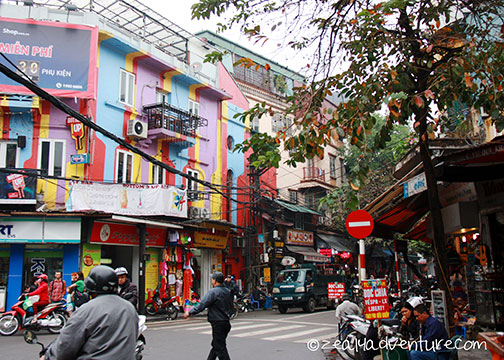
touring-by-e-carIt takes you to places of interests in the Old Quarter and Hoan Kiem Lake area, which provides a wonderful overview of the area and highlights sections you want to explore more. e-carsEach car can carry up to 7 passengers at one time and takes about 45 mins to an hour (depending how long you stop at each attraction).
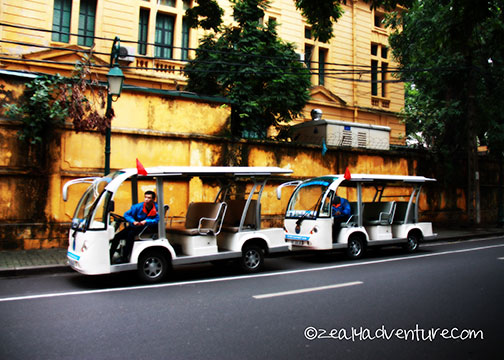
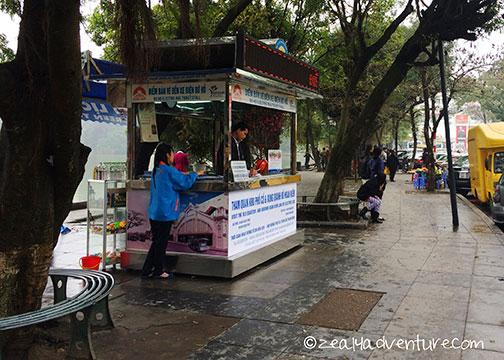
E-car-ticket-stallTickets are sold at a stall in Dinh Tien Hoang Street – the tree-lined boulevard right next to Hoan Kiem Lake, opposite the Thang Long Water Puppet Theater. With the number of e-cars parked nearby, it is easy to spot.

Vietnamese Brew
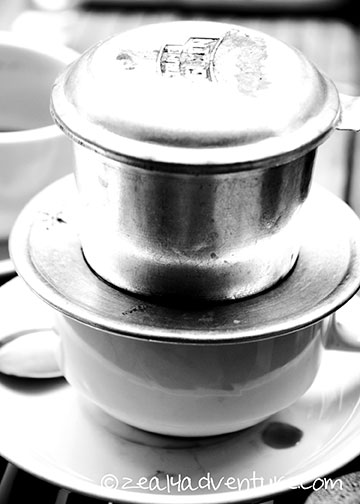
vietnamese-brewAnd if coffee is your thing, you know that you can’t pass a day without enjoying a cup of slow drip Vietnamese-style coffee, hot or cold.

Hanoi’s Charm

Lake-2

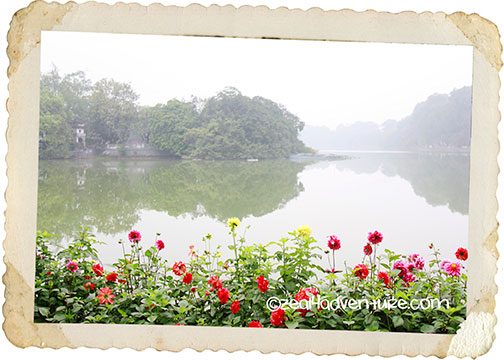
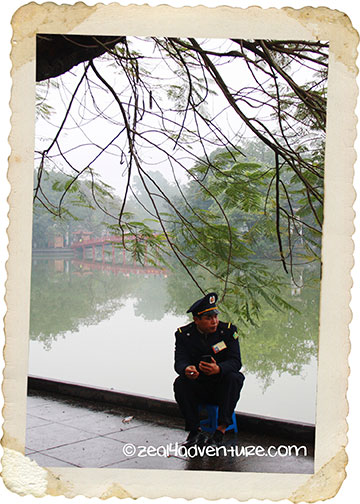
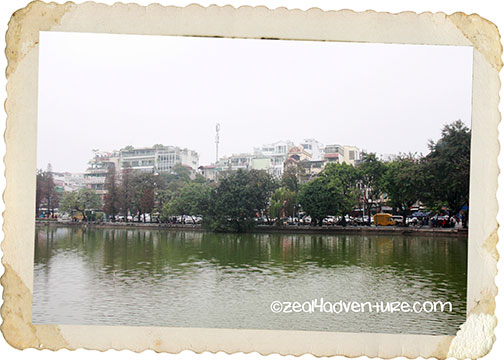
One reason I love Hanoi is this stunning lake. Serene, spellbinding, and picture-perfect – makes for a pleasant walk, and you will definitely walk by it more than once a day.  And because the Old Quarter surrounds it, it is a good reference point when navigating the city.

The-Old-Quarters

Hoan Kiem Lake is the heart of Hanoi.  Everything happens around it, from early morning workouts (think yoga, tai chi and even aerobics) to old men whiling away time playing mahjong and vendors selling their stuff.

Fruit-Vendors

crippled-vendor

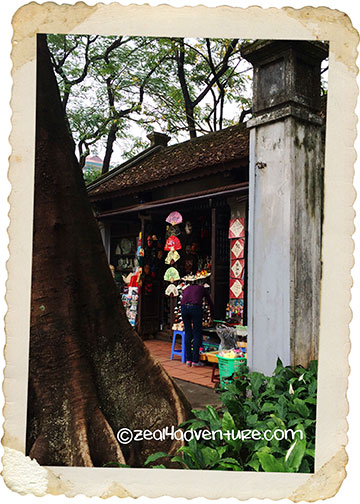
shops

Not to mention the wandering tourists that flock to this mesmerizing lake. Never a dull moment in this part of the city, that’s for sure.

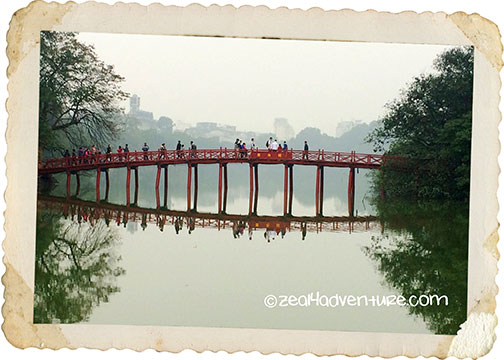
What makes the lake so smashing is the striking red bridge called The Huc Bridge leaping out of the serene blue-green water.

The-Huc-Bridge

It connects the shore to the Jade Island on the northern coast of the lake.

jade-island

On the island stands the Ngoc Son Temple (the Temple of the Jade Mountain).

Legend has it that in the mid 15th century, Heaven sent Emperor Le Loi a magical sword, which he used to battle against the neighboring countries, driving away the Chinese from Vietnam. When peace prevailed, a giant golden turtle grabbed the sword and disappeared in the depths of the lake (named Thuy Qua then) inspiring the name Hoan Kiem , which means Lake of the Restored Sword.
lake-3

lake-4

Hanoi At Night

We’re not big on night outs but the mere mention of a “beer corner” got our attention. We learned about it by chance at the hotel lobby and, of course, we had to go.
Beer Corner

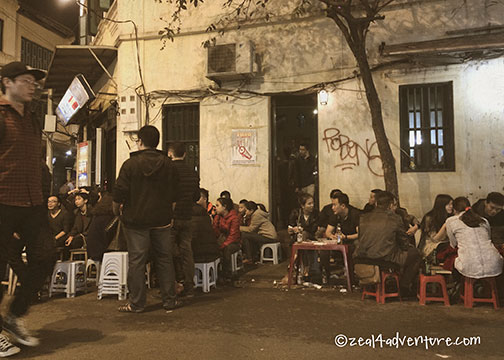
Hanoi’s Beer Corner is a strip of a makeshift outdoor bar that spills over from Luong Noc Quyen to Ta Hien Street.

outdoor-bar

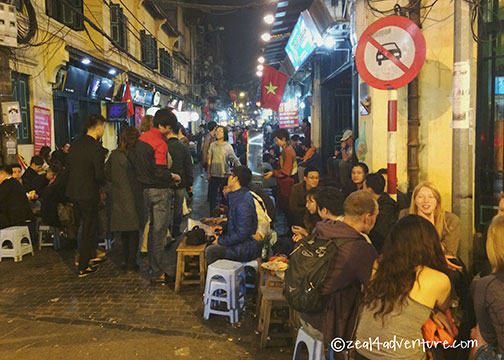
It is packed with people (locals and foreigners) sitting on small stools gathered around a little table on the street enjoying their beers. Many also people watch by sitting on stools facing the street.

beer-corner

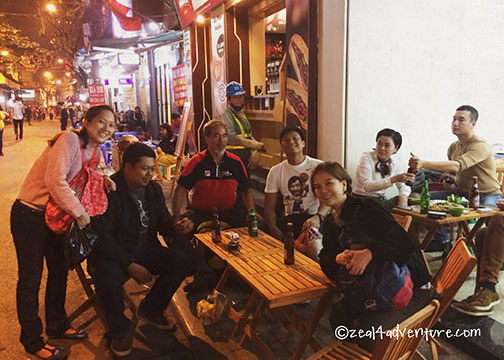
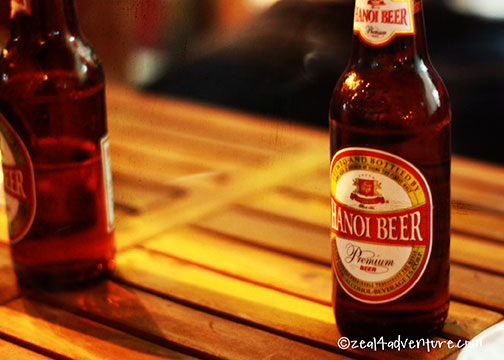
So there we were in our little corner, sitting (almost squatting) on small wooden chairs, enjoying our beer with food that keeps coming.

group

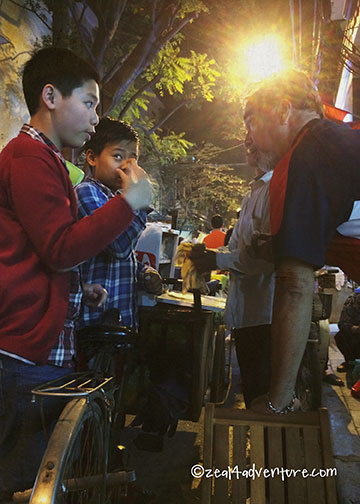
studentsInternational School student (out for a birthday party with friends) explains and recommends to Anton a street food.
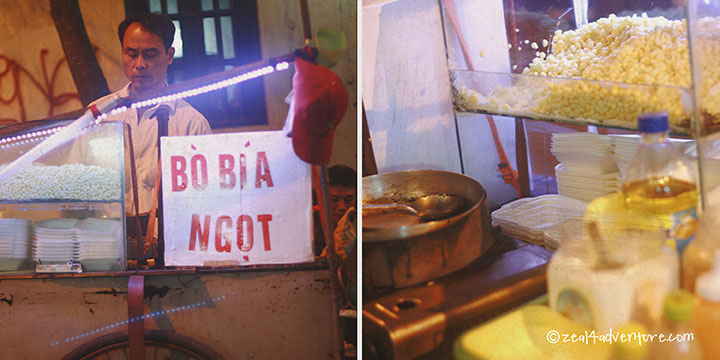
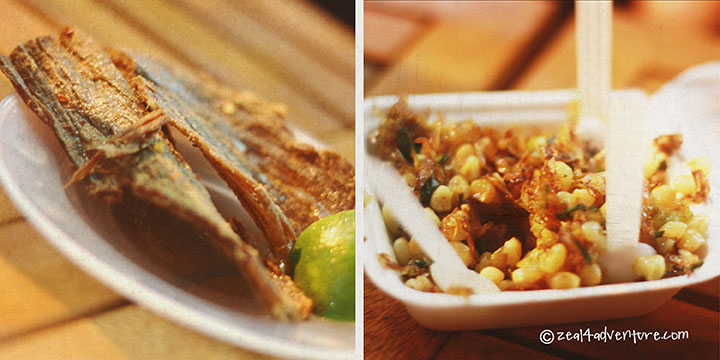
We chatted with locals who introduced us to a string of sumptuous street food from the various vendors that scatter the area offering local favorites.
bo-bia-ngot

street-food

hanoi-beer

Night Market

If you find yourself there on a weekend, before heading out to the Beer Corner, the weekend night market might interest you.

night-market

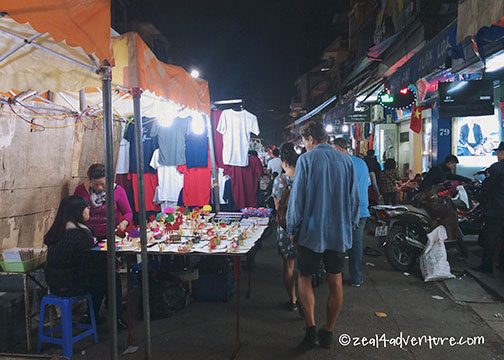
The Dong Xuan Night Market spreads along Hang Giay to Hang Dao Streets, splitting through the center of the Old Quarter. The streets transform into vehicle-free pedestrian lanes (but some motorbikes are seen navigating the streets still) as stalls are set up in the middle of the road.

ceramic-wares

friendly-vendor

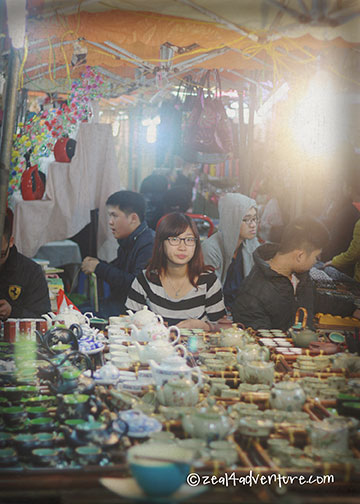
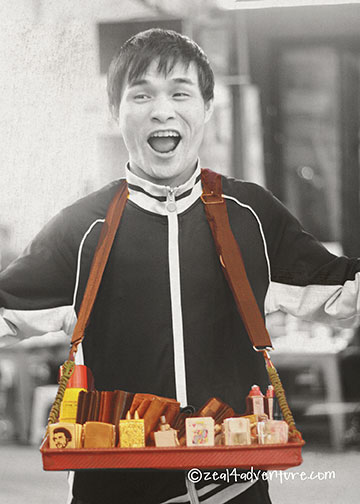
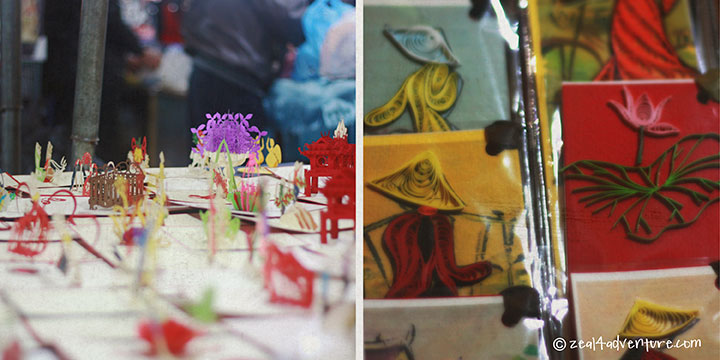
I find nothing spectacular with this market, truth to tell – you’ll find a myriad of stalls selling merchandise from clothes to souvenirs to food of all kinds. Having said that, it is still interesting to at least pass through, you never know what you might find – we did get a few of these.

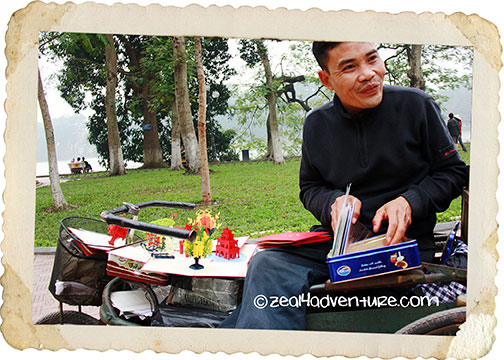
3D-cards-and-bookmarks

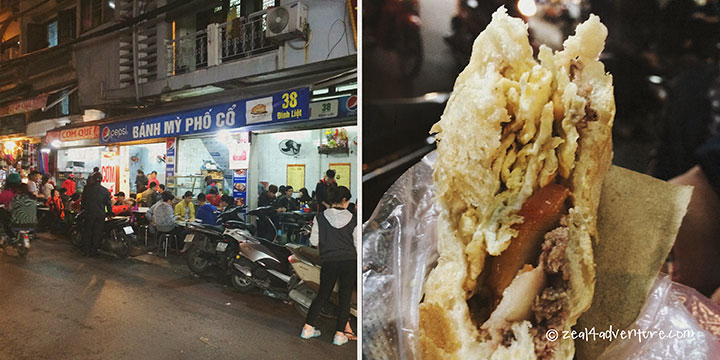
We went for a quick Banh Mi dinner before exploring the market

banh-miBanh Mi: A Vietnamese sandwich of a combination of pork, eggs, pâté on a baguette.  Usually found on small shops or stalls by the road.

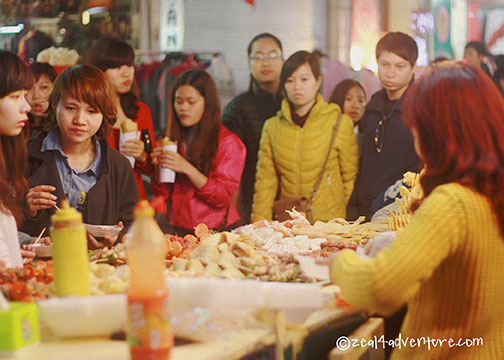
but what we should have done instead was to go there for the food.

food

It is a fabulous place to explore some street food.

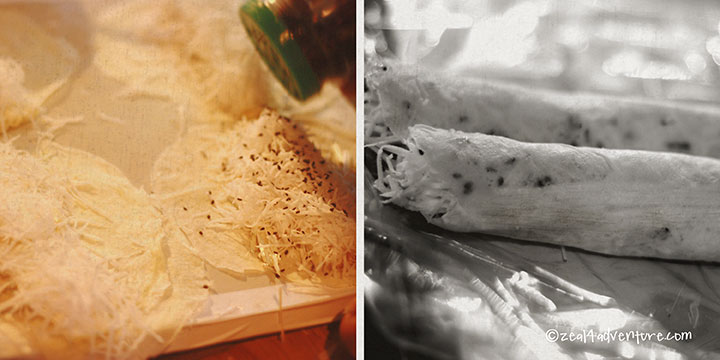
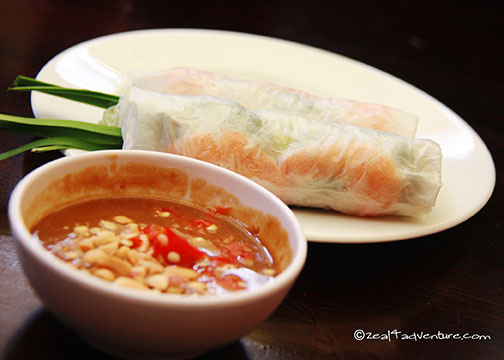
coconut-crepeShredded coconut flavoured with sugar and sesame seed, rolled in some sort of crêpe or a spring roll wrapper.  Can make for a lovely dessert.

View from the Top

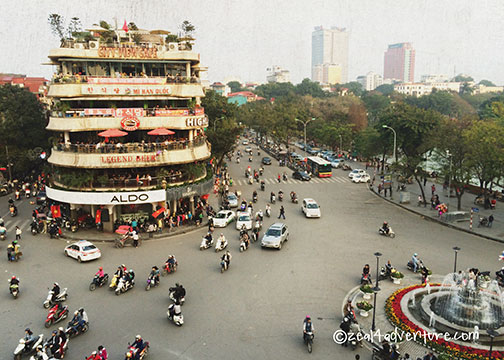
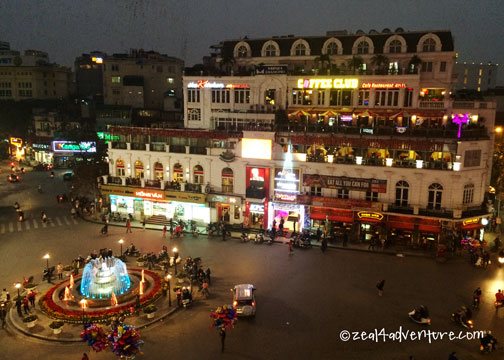
Our favorite spot to while away the time before dinner is at any of the terrace cafes atop a building overlooking Hoan Kiem Lake and the plaza below.

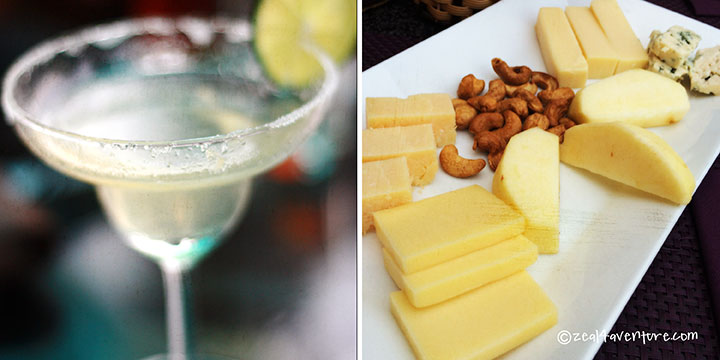
cocktails

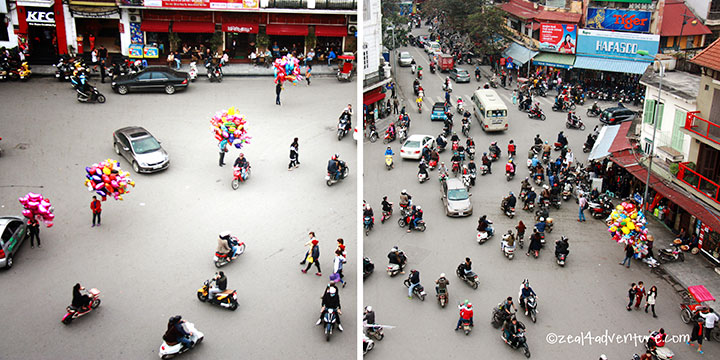
We like it because it is the best place to enjoy a few drinks while we amuse ourselves with the crazy traffic of Hanoi.

hanoi-trafficPedestrians, cars, vendors and motorbikes — all going their own way.

From my last visit 7 years ago, nothing much has changed (including the traffic) except for a few more cafes to choose from.

view-from-coffee-club

We were at the City View Cafe every night 7 years ago, but we made sure to check out the Coffee Club (under construction then) across so we could enjoy the view from a different perspective.

view-from-city-view-cafeUseful Info:

City View Cafe:  1-3-5 Dinh Tien Hoang Street, Hoan Kiem District

Coffee Club: 3B Le Thai To, Hang Trong Ward, Hoan Kiem District

Banh My Pho Co: 38 Dinh Liet Street, Hoan Kiem District

Streets of Hanoi: The French Quarter

The-French-QuarterCredits: 

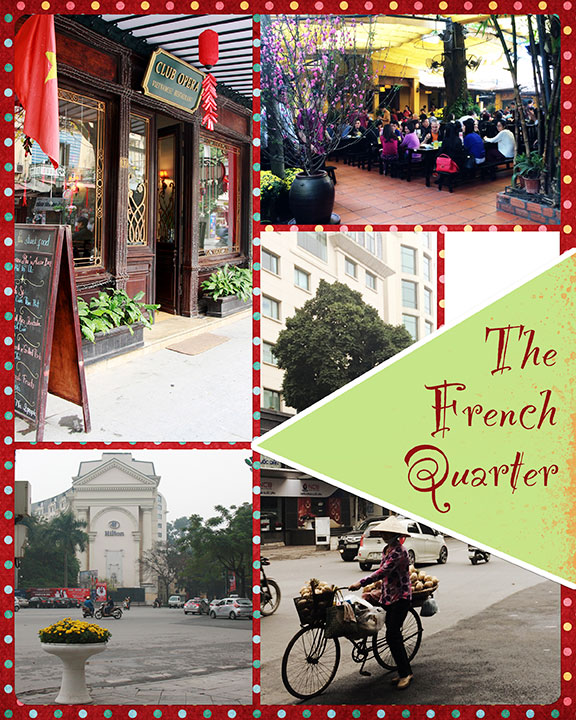
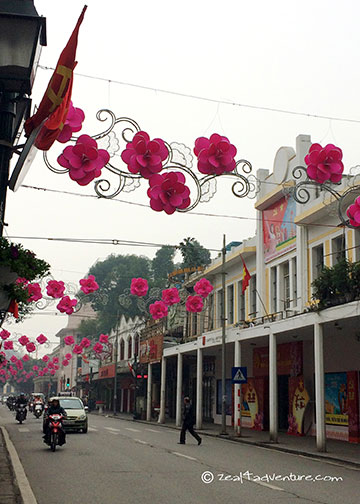
Ba Dinh District also called the French quarter is a pleasant interlude from the chaos of the Old Quarter (especially if you are staying in the Old Quarter like we were).

tree-lined-boulevard

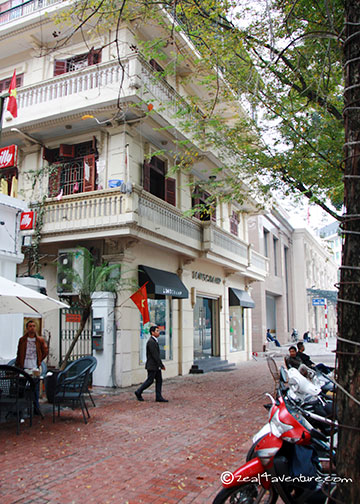
The area is home to wide tree-lined streets, French colonial buildings,

posh-hotel

posh hotels, fancy restaurants and swanky shops.

swanky-shops

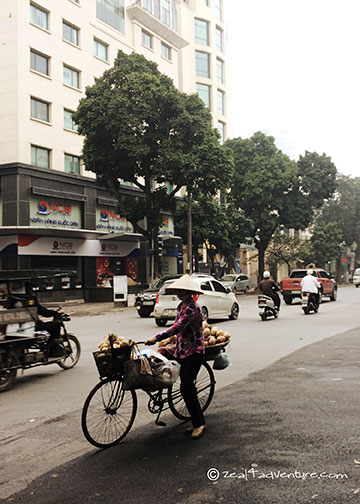
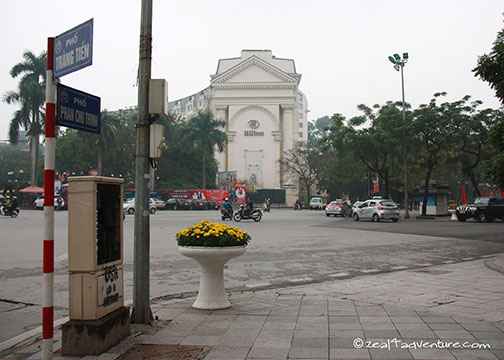
On our way to lunch, we walked through Trang Tien, the main artery of the French Quarter, walking pass (but never entered) the famous ice cream store, Kem Trang Tien.

Trang-Tien-Street

Elegant French style buildings and villas replaced the old Vietnamese buildings in this section (as the name suggests) when the French occupied Hanoi in the last 19th century.

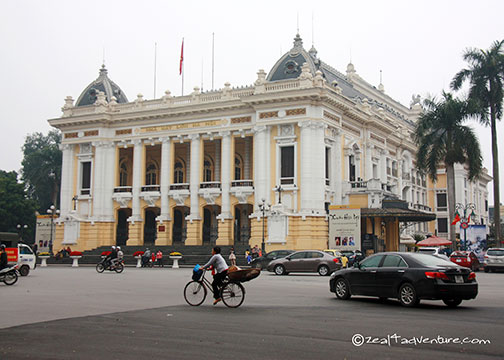
Opera-House

At the end of Trang Tien, on the August Revolutionary Square, the Hanoi Opera House, stand proudly as an architectural, political and cultural symbol of the capital.

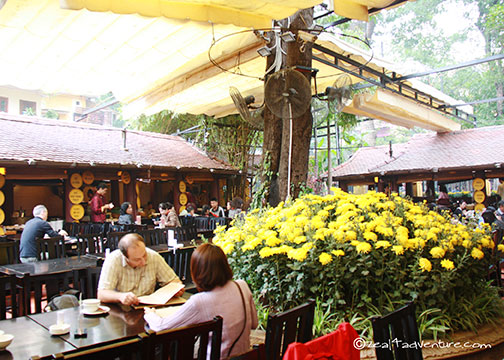
Lunch at Au Lac House along Tran Hung Dao was a pleasant default. We were headed to La Badiane (which we never got to try but came highly recommended) but were unfortunately closed for the day.   The reason is a blur to me now but because we were there during the Lunar New Year, it could be because of that, but I digress.

Au-Lac-House

So, just a few steps away from La Badiane is Au Lac House, a large French Style garden house built during the French colonial period restored into an elegant dining venue.

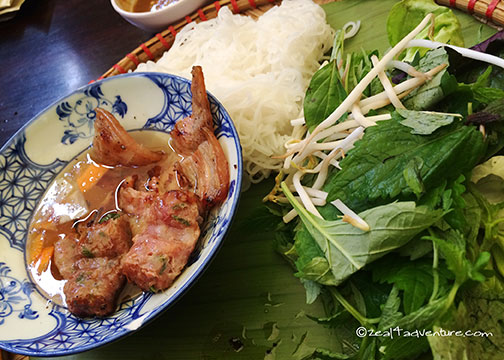
Bun-Cha

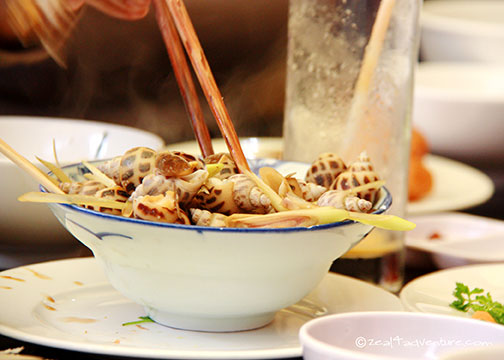
snails

The food was Vietnamese Specialty (a sudden mind-shift from the expected French lunch at La Badiane) and quite impressive too.  Truth to tell, Vietnam is always a gastronomical delight whether it be hole in a wall or high-end.

spring-rolls

You can walk through the different stations with your server and point and choose and the food will be prepared and served accordingly.

Au-Lac-interior

The beautiful house and stunning interior with old photographs were icing on our cake.

Useful Info:

Au Lac House13 Tran Hung Dao

Opera House:  1 Trang Tien, Hoan Kiem

Segovia: An immersion in Architecture and Historic Treasures

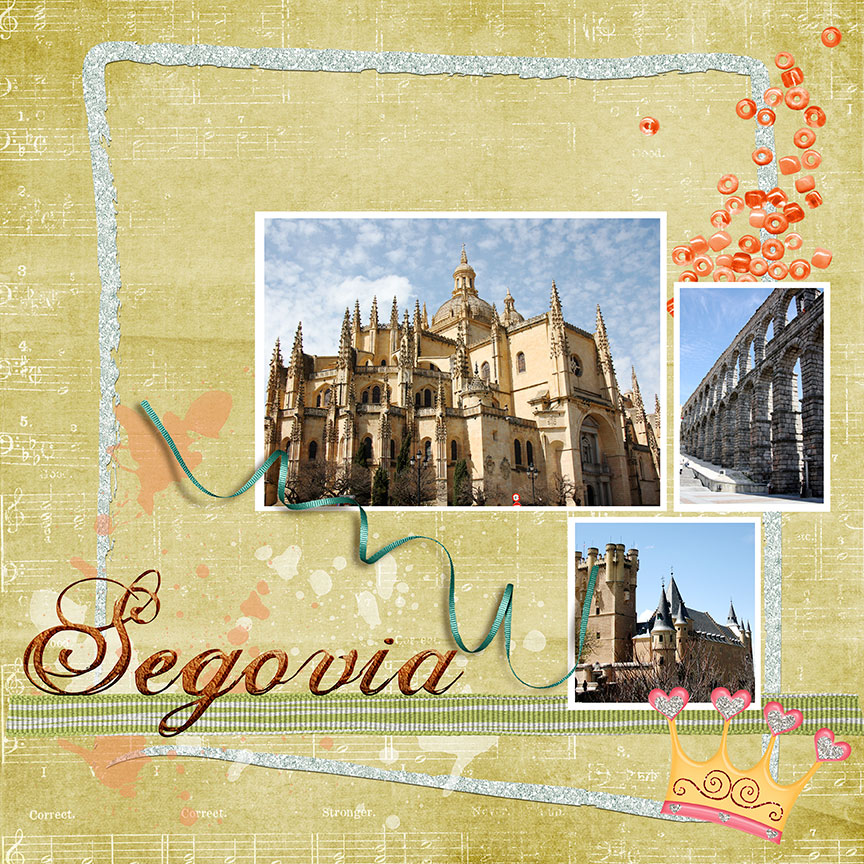
SegoviaCredits:  Elements by Haynay Designs, Plum Dumpling Designs, Pri Rocha, Sahlin Studio, Trixie Scarp Designs, Wimpy Chompers; Paper by Wimpy Chompers; Alpha by MissBehaving 2011

A visit to picturesque old city Segovia was an excellent way to cap off this month-long West Mediterranean trip. We spent the day exploring a castle, devouring a roasted suckling pig, taking lots of photographs and people watching.

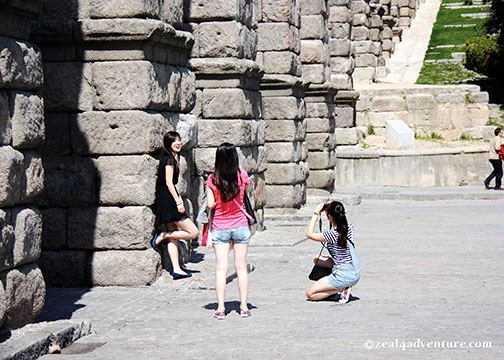
tourists

This once sleepy Castilian town had a lot to offer and had us in awe at every turn, suffice it to say that we had a fun stroll.

wandering

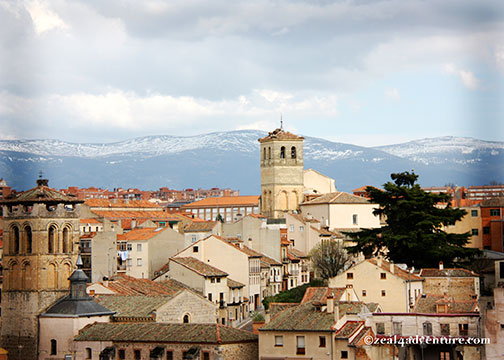
A UNESCO World Heritage City, visitors fill the twisting alleyways wandering around a multitude of historic buildings, churches, and monuments.

Located just 80 kilometers from Madrid, it is only a 30-minute high-speed train ride away. If you have the time, seize the opportunity and take a trip to the walled old town of Segovia.

town

It is a good way to travel back in time, explore the fascinating UNESCO World Heritage-listed city by foot.

The Aqueduct

aqueduct-2

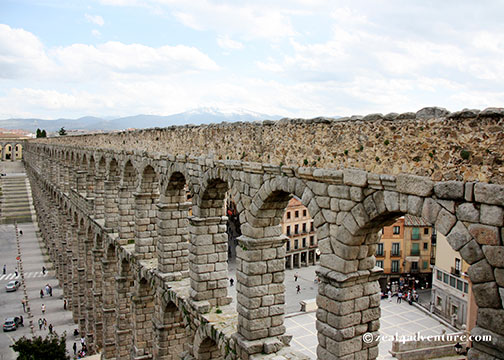
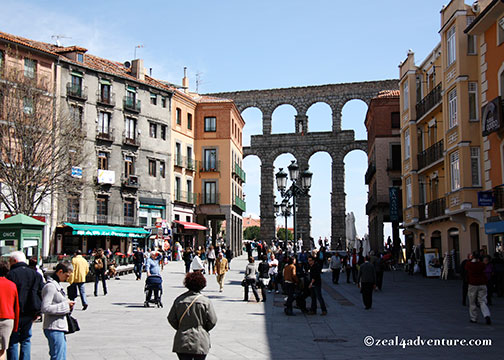
An impressive aqueduct built sometime in the 1st or 2nd century supplied water to the small town of Segovia, perched on a steep isolated hill and joined by two rivers.

aqueduct

The magnificent aqueduct bridge carried water from the Fuente Frio River traversing about 15km before entering this town.

Aqueduct-4Today its boasts of being one of the most significant and best-preserved works of Roman engineering on the Iberico Peninsula.

Segovia Cathedral

Cathedral

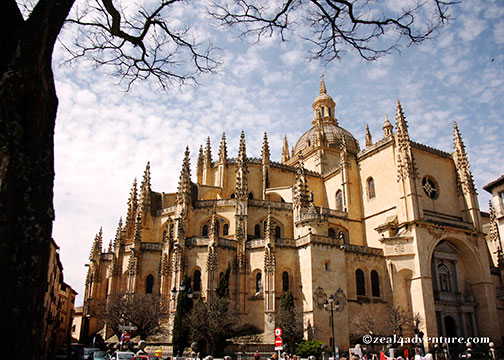
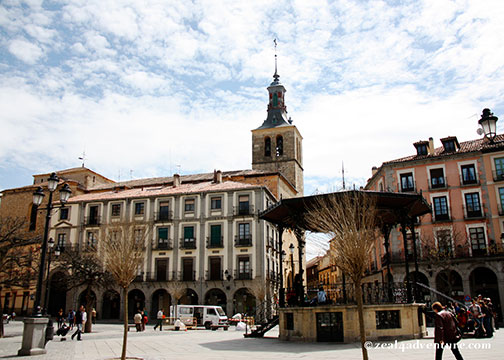
On the highest point in the old town, fronting the historic Plaza Mayor (Segovia’s main square) stands the Cathedral of Segovia, one of the last Gothic Cathedral built in Spain and Europe.

Plaza-Mayor-and-cathedral

The construction began in the early 16th century to replace an earlier cathedral destroyed during the war of the comuneros, a revolt against the King. I am awed by the details of this church.

cathedral-up-close

Alcazar

alcazar-2

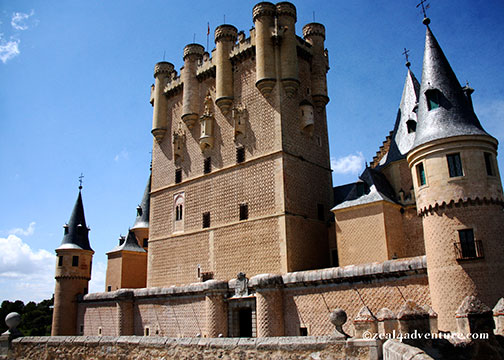
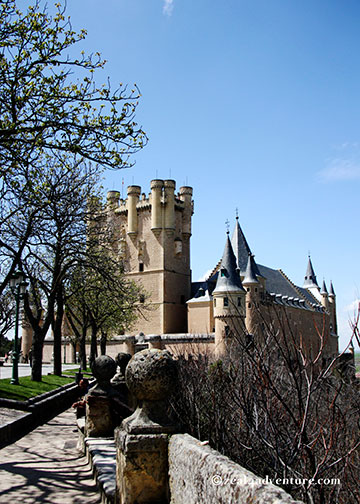
Now, this looks like a castle straight out of a Disney fairytale.

alcazar-4

The castle rises out on a rock between the confluence of the Eresma and Clamores Rivers, a testament to its original military status. Being the favorite residence for Kings of Castile, the Alcazar was transformed from a small castle into an extraordinary palace.

alcazar-3

It played a crucial role in Spanish history because it was used in various ways throughout history.

alcazar-interior-2

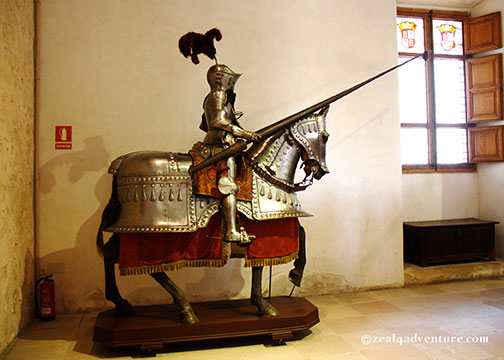
Originally built as a fortress, it had served as home to royals before it became a state prison, a Royal Artillery College, and a military academy. Currently, it is a museum and home to the Spanish General Military Archive.

Lunch at the Meson de Candido Restaurant

Plaza de Azoguejo 5, 40001  +34 921 425911

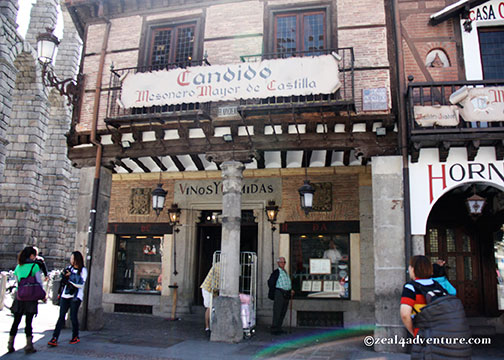
Meson-de-Candido

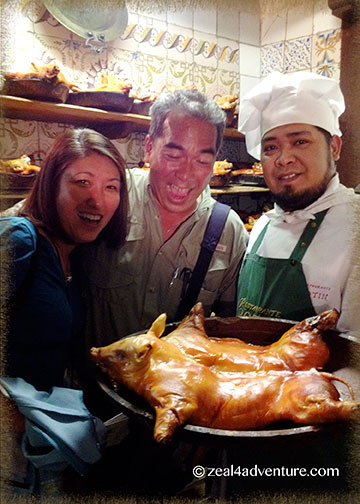
An attraction in itself, the restaurant was declared a national monument in 1941. Set in a delightful 18th-century building next to the aqueduct, it is most famous today for its wood-fire roasted suckling pig, cochinillo.

cochinillo-ritual

Served with a short speech and a ceremonial cutting of the pig with a plate,

cochinillo-ritual-2

this famous dish was a delight—crispy skin and flavorful and fork tender meat is hard to beat. Also, worth noting is their Sepulveda-Style Roasted Lamb.

Rich in architecture treasures, it was a joy to wander through this town. Presenting below a few more photos to delight in.

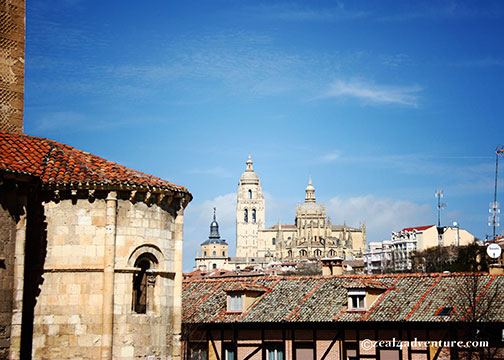
Segovia-CathedralThe Cathedral from afar.
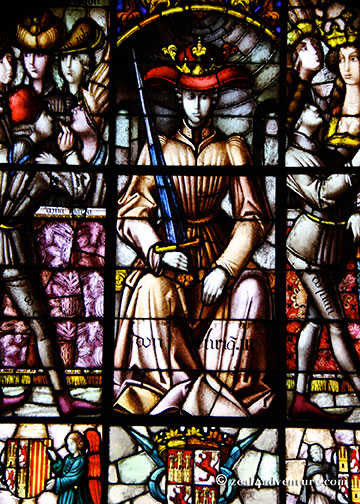
alcazar-interiorStained Glass wall at the Alcazar
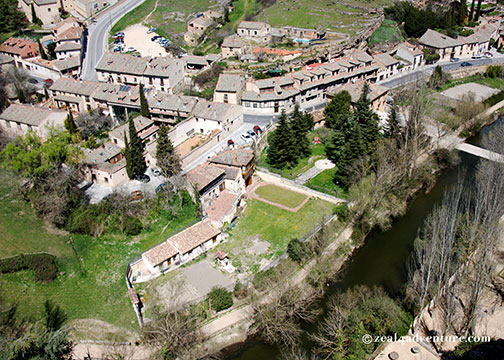
view-from-the-alcazarA view from the Alcazar
Aqueduct-3The Aqueduct up close
plaza-medina-del-campoPlaza Medina del Campo
Azoguejo-Square-2The Azoguejo Square with the Aqueduct as backdrop
Plaza-MayorPlaza Mayor of Segovia
from-the-castleA view from the castle
peddlersPeddlers line the periphery of the aqueduct
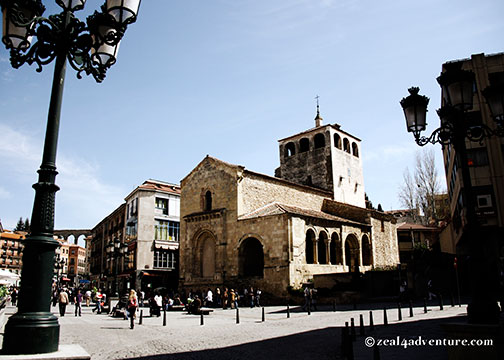
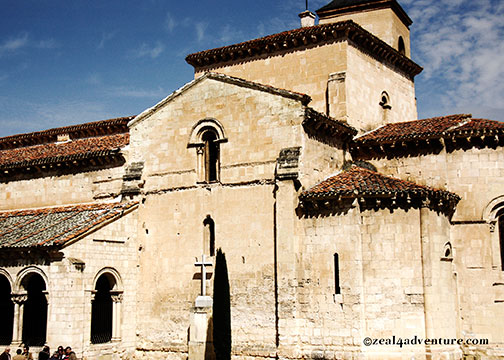
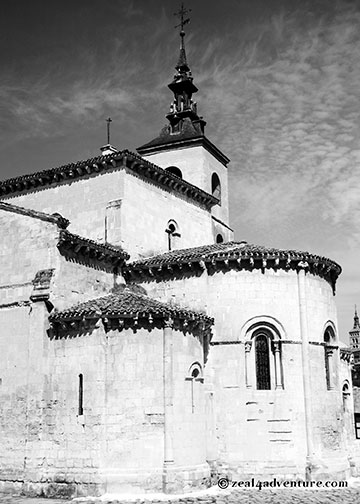
Iglesia-de-San-Martin-2Iglesia de San Martin
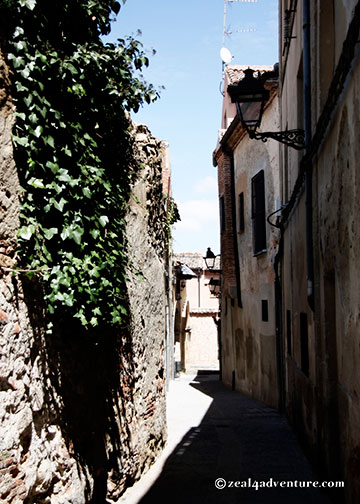
narrow-roadNarrow winding road of Segovia
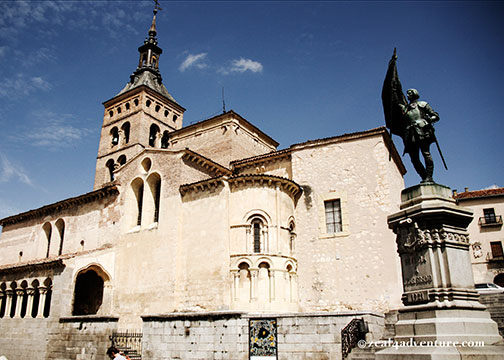
Iglesia-de-San-MartinIglesia de San Martin
Juan-BravoA statue of Juan Bravo: a leader of the rebel Comuneros in the Castilian Revolt of the Comuneros.

Bullfighting

arena

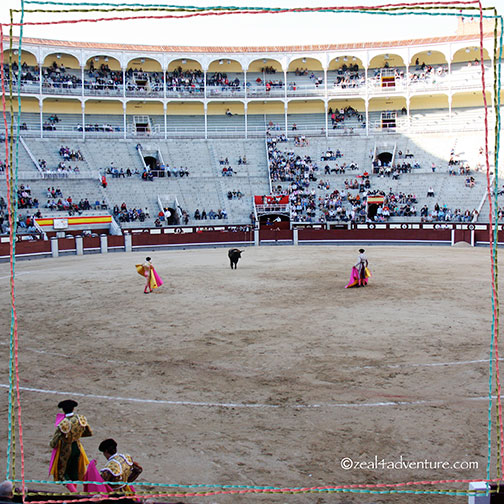
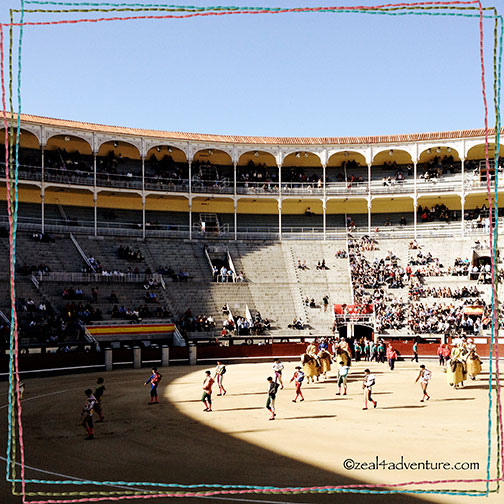
One April evening, enthusiast and curious tourists from around the world enter the massive arena of Las Ventas to witness a bullfight. I was there too, sitting in the Sombra (shaded) section, quite close to the action.

bullfighting

Bullfighting or a corrida is an ancient tradition that goes back four millennia, practiced by many different cultures. Three toreros (matadors) fighting six bulls, each with 6 assistants: two picadors (lancers) mounted on horseback, three banderilleros (flagmen) and a mozo de Espada (sword servant). Together, they form a cuadrillo or an entourage.

opening-parade

The trumpet sounds and in flamboyant bullfighter costumes, the entourage parades into the arena. The corrida starts with the first bull entering the field from the Puerta de las Toriles, where it waited.

Untitled-4

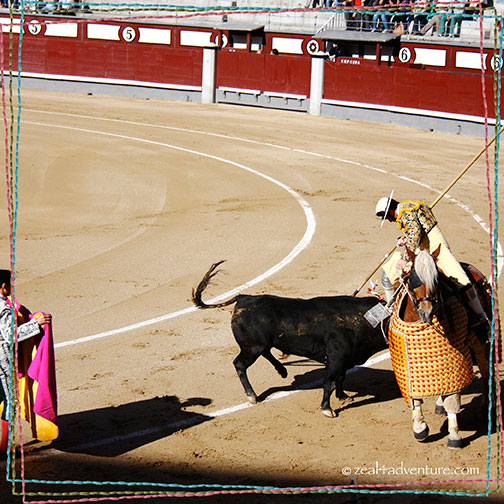
The picadors mounted on heavily padded horses follow. Bull attacks the horse, the picador stabs its neck, the bull weakens.

Untitled-3

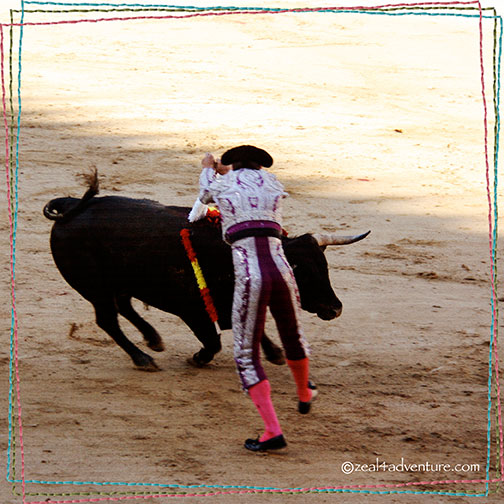
Then three banderilleros enters as the picadors leave, plants spiked flag sticks into the bull’s shoulder.

Untitled-2

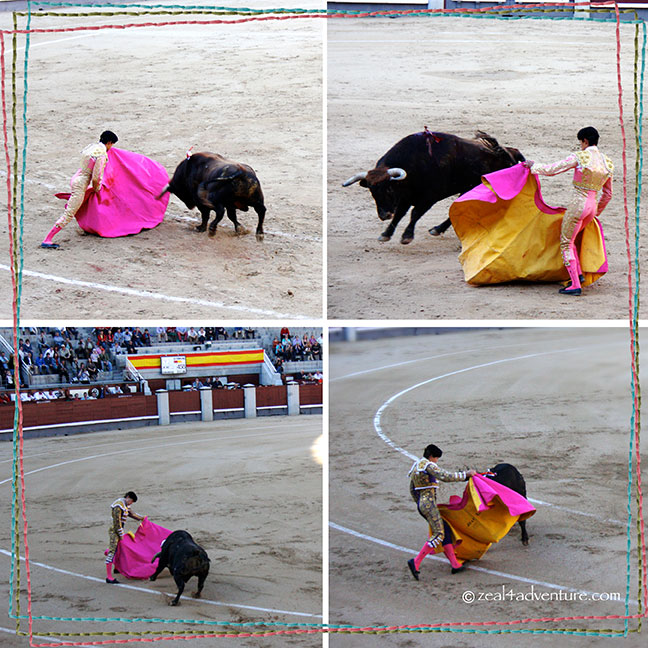
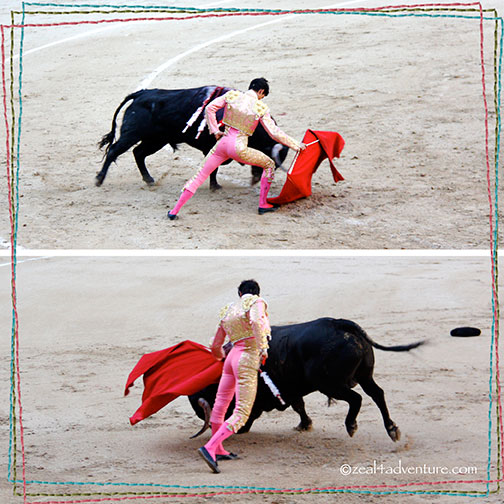
When the bull is deemed weak enough, the torero appears and works the bull with several runs at the cape. The whole spectacle comes to an end with the torero killing the bull with his sword. This was repeated six times.

Untitled-1

Did I enjoy it? Many times I cringed, especially when the puncture wasn’t clean. No, I will not watch it again. Just once, I told myself.   Hard as it may be to watch, I could not deny that it was a cultural experience hard to forget.

The Palawan Mystic and A Coupon

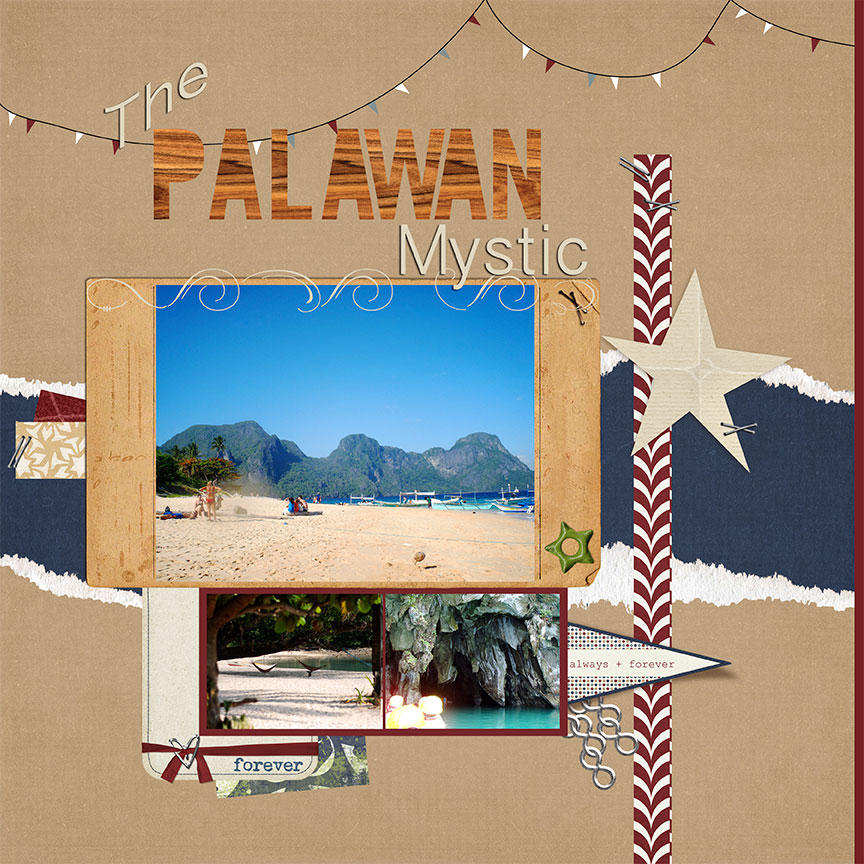
Mystic-PalawanCredits: A quick page template  was created by Michelle Seizys / Shell 

It’s the middle of summer and I’m at my desk staring at the computer itching to be somewhere but the metro. Just a week after a long weekend spent outdoors, I’m missing the outdoors already. That’s what summer can do to me. So I reminisce. Of toes sinking in the sand, of the cold waves taking me by surprise, of the sun warming my body after, and of the sea wind blowing me dry.

Speaking of last weekend, a friend’s daughter tagged along. She does not travel much around the Philippines and is excited to see another part of the country outside of where she lives, which is Manila, and where she has ties, which is Pampanga and Boracay. “Boracay,” she said, “is where I go if I want to get away.” She’s there once or twice a year and knows it like the back of her hand. She needs a change of scenery (I thought) so we brought her to the river.

Pinacanauan

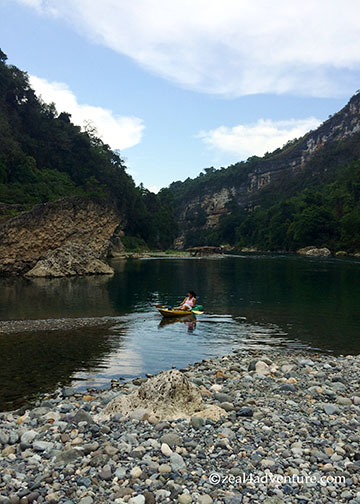
The Pinacanuan River in Peñablanca, Cagayan is a favorite in the area because it reminds of Palawan in a way.

The image in my mind of the sand and the sea usually come with karst limestone in the background.

El-Nido-Island-Hopping

Yes, Palawan. I love how it is diverse – white sand, blue sea, stunning landscape,

good-eats

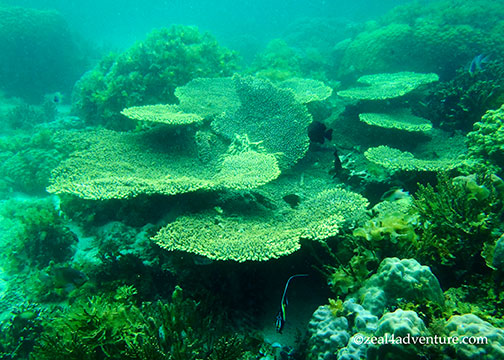
incredible food scene, breathtaking underwater world,

snorkeling-port-barton

dense forests, waterfalls, a world-heritage listed cave, etc.

waterfalls

El Nido is a top choice and will be for a while.

El-Nido-town

I love it for its charming town, its ruggedness, its simplicity, its raw yet sophisticated food options.

serene

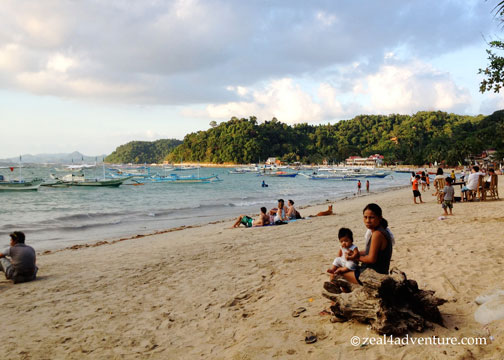
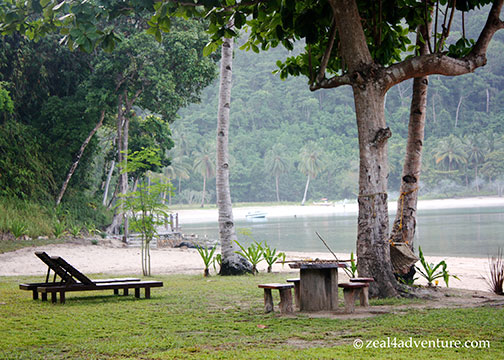
Then you have the outlying beaches of San Vicente off Port Barton for those who want to get away from it all—quiet, tranquil and serene.

If, like my niece, your idea of a getaway is limited to the same old stuff, a change of scenery will do you good. Why not Palawan? And here’s a chance.

For a limited time offer, Let’s Palawan is offering a $30 off on their packages. To avail, all you have to do is click on their “get a quote” page and type in this coupon code: zeal4adventureC003. I urge you to grab it if you can, try something new. Palawan will do you good.

Madrid: On Second Chances

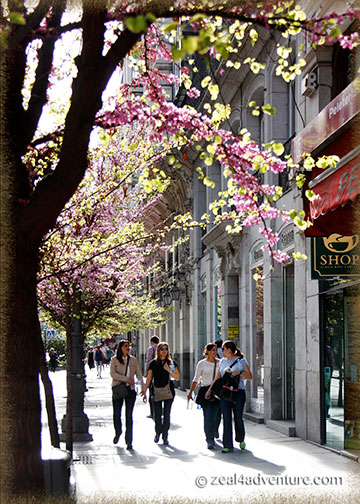
In the middle of Madrid’s historic center, his cab off limits, the driver dropped us off just outside a tree-lined, cobbled street.

tree-lined

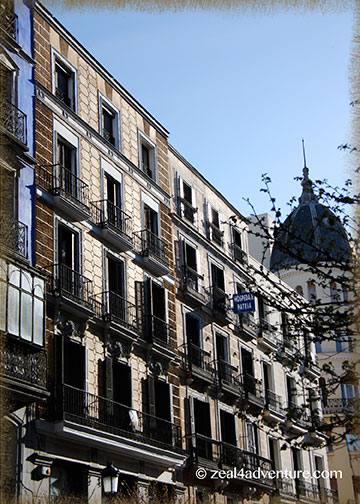
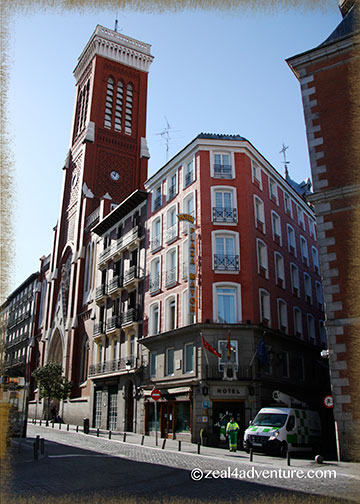
Across it is our hostal. Calle Mayor is filled with buildings of centuries past and within walking distance is Madrid’s main squares, Plaza Mayor, and Puerto del Sol.

calle-mayor

hostal-patria-2Hostal Patria

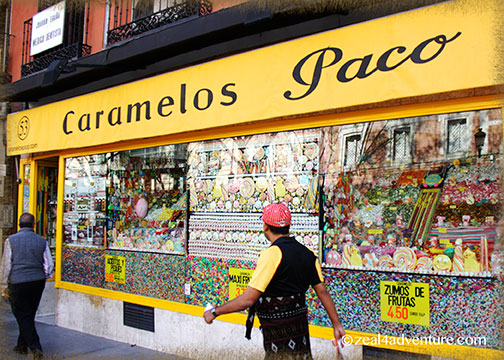
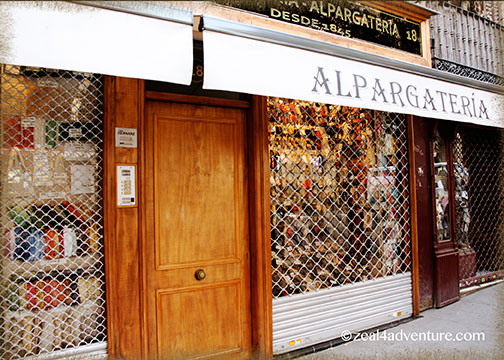
A good place to be, this part of the city is full of sprightly bars, restaurants, and shops, many of which are old and historical selling traditional goods.

traditional-stores

alpargateria

Definitely a perfect choice to get into its verve.

Madrid didn’t always dazzled. On a day trip en route to Seville some ten years ago, the capital of Spain failed to impress. Too cosmopolitan, my first impression was.

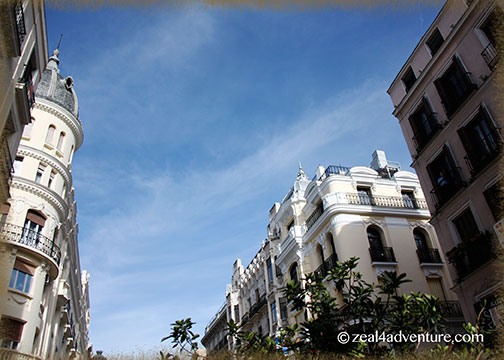
old-building

But highly developed as it has become, Madrid’s art, and cultural heritage remains Intact and very much alive. A few days in the capital and I warmed up, I allowed it to dazzle me with its vibrant vibe, the second time around. So how did it change my impression?

 La Plaza Mayor and People Watching

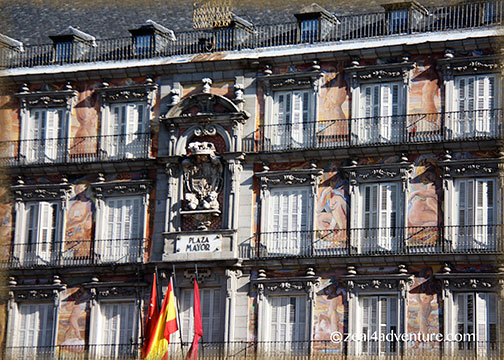
plaza-mayor

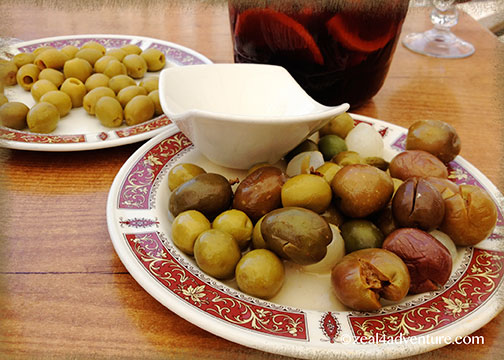
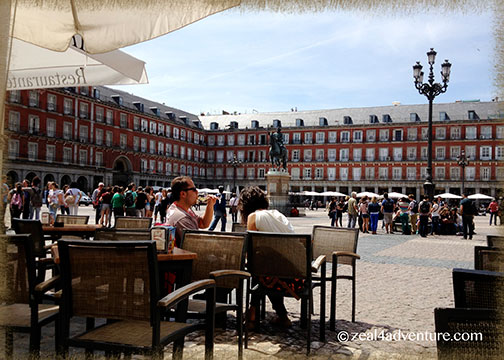
Although overpriced, Plaza Mayor is a marvelous place to while away time. We’d order a jug of sangria, a plate of olives and pass the time and people watch.

sangria-and-olives

people-watch-p-mayor

Built during Philip III’s reign (the Habsburg period), it used to be the center of festivities… bull fights, royal coronations, and executions. It is still used today for public celebrations and is one of the famous squares of Madrid. It is a beautiful square that measures 129 by 94 meters. Three-storey residential buildings surround it.

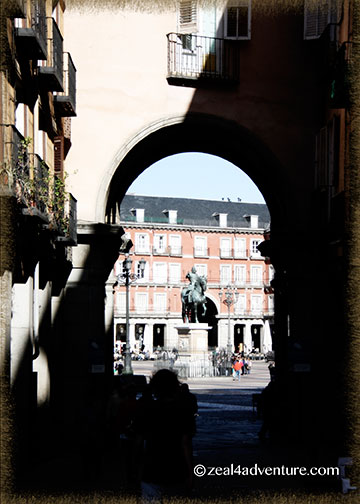
plaza-mayor-arch

A fire led to the plaza’s renovation in 1790. Architect Juan de Villanueva lowered the building fronts and enclosed the square at the corners by building nine archways. The Arco de Cuchilleros with its steep steps leading up to the square is the most arresting among the arches.

In Calle Cuchilleros, you’ll find Botin Restaurant—the oldest restaurant in the world according to the Guinness Book of Records. But more than its world record, do go for their specialty,

botin-restuarant

the Cochinillo Asado (roast suckling pig) and Cordero Asado (roast lamb). Superb.

Delightful Cheap Eats

museo-del-jamon-facade

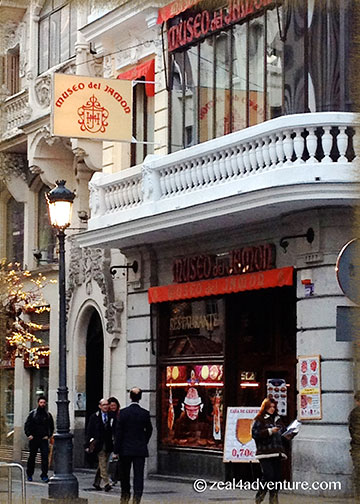
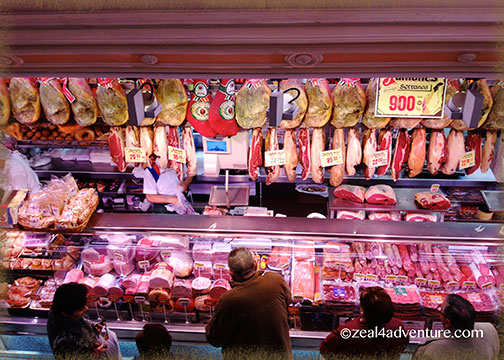
Museo del Jamon (Museum of Ham). Just by the name, you are lured, yes? Legs and legs of ham hang from its walls, calling us from afar. This was the first place, after checking in, we entered.

museo-de-jamon

It was jamon heaven and an excellent brunch it made. A block away from the hostal, we found it to be a great place to soak in the local scene while sampling different kinds of Spanish ham at very affordable prices. Beer comes with a round of free tapas already.

cerveseria-100-montaditos

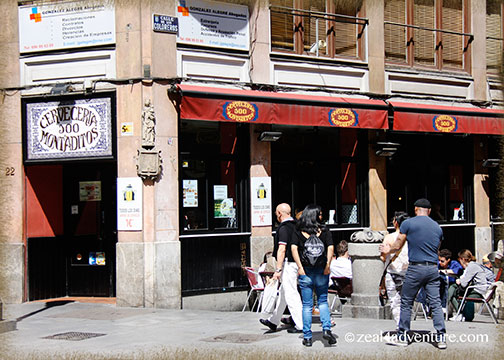
Another excellent venue for very affordable eats is Cerveceria 100 Montaditos. A fun place with many outlets across Spain, actually. A pint of beer and most sandwiches sell for €1. And these aren’t shoddy sandwiches either. How can you go wrong with that?

Mercado de San Miguel is my favorite.

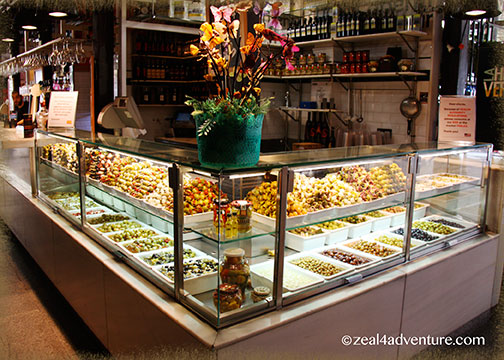
mercado-san-miguel

It’s a market and a tapas corner in one roof. Although somewhat of a tourist trap, I was captivated.

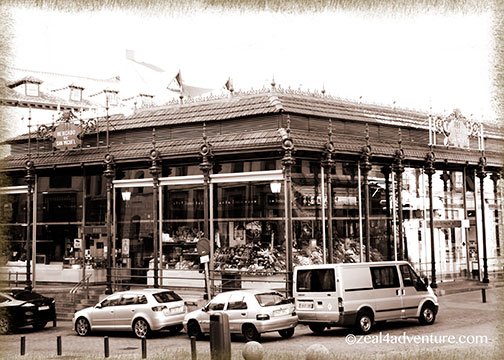
mercado-de-san-miguel-building

The vibrant atmosphere, the turn of the century building, which was rebuilt when the Belle Époque fell into disrepair, the tapas and various foods are good enough reasons to be trapped here.

tapas-at-mercado-san-miguel

It is described to be a culinary culture center that brings together the best traders, professionals and experts under one roof and I tend to agree. I truly enjoyed this place.

The Glorious Churros con Chocolate

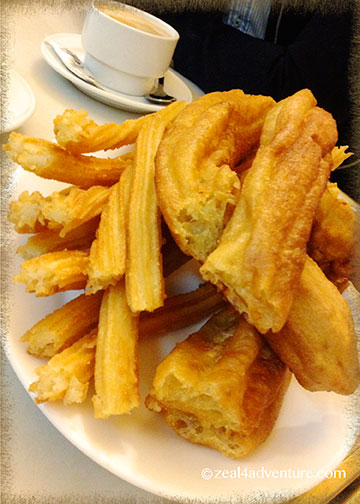
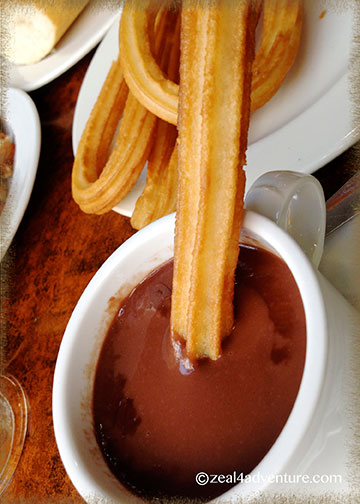
A favorite of the Spaniards, chocolate and churros, they take very seriously. Made of thick dark chocolate, Spanish hot chocolate is almost always paired with churros. The thickness and richness work well as a dip but to drink it after the churros are gone is not a bad thing too.

churros

Highly recommended in guidebooks and online searches are San Gines Chocolateria. Believed to be the oldest place serving chocolate and churros. We found our way there one morning, a line already forming. The menu, if there even is one, only has a handful of items: café con leche, fresh orange juice, and churros con chocolate caliente. There are 2 versions of the churros – the traditional kind (has 6-7 pieces per order) and the thicker kind called porras. Lighter, I preferred the traditional one.

Our hostal host, on the other hand, recommended to Cafeteria Los Pinchitos. It is, to him, the best churros con chocolate in town. “A secret among Madrileños,” he said.

los-pinchitos-churros

The churros are light, the outside crispy while the inside soft. The chocolate appeals more to my taste – not as thick as San Gines’ but creamier. The place lacks ambiance, typically traditional, and the service leaves much to be desired. But the food besides the churros and the chocolate are excellent.

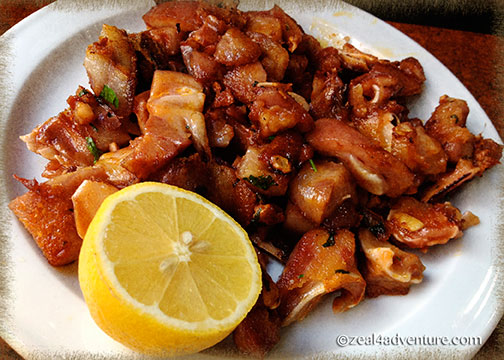
roasted-pork-earsOreja de Cerdo a la Plancha — Roasted Pork Ear 

Treasure Hunting at El Rastro

rastro

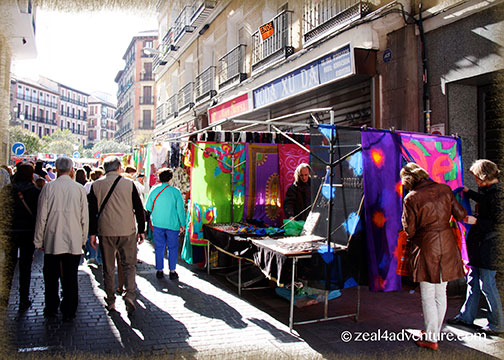
Unless it’s a flea market, a traditional market or a specialty market (for affordable art / conversational pieces that are easy to carry home), I try to avoid the shopping scene. But in Madrid, Sundays should be reserved for the flea market.

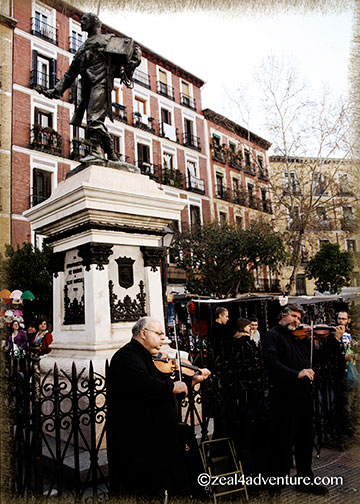
entertainment-at-the-rastroEntertainment at the Rastro

rastro-knick-knacks

The rastro is a street market from the medieval time.

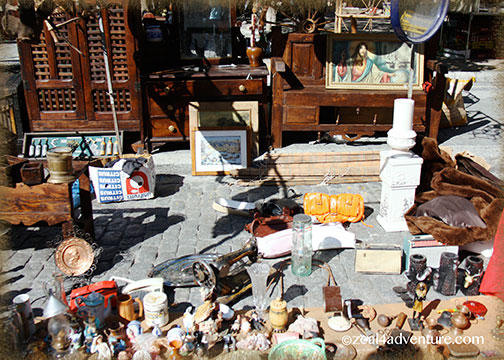
rastro-antique

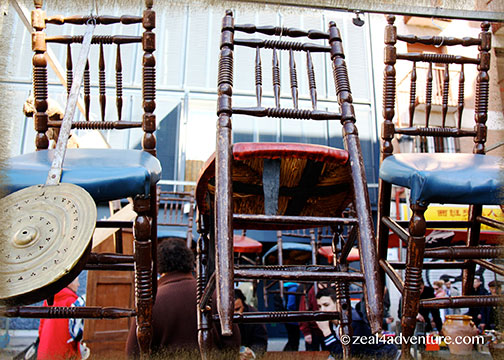
rastro-chairs

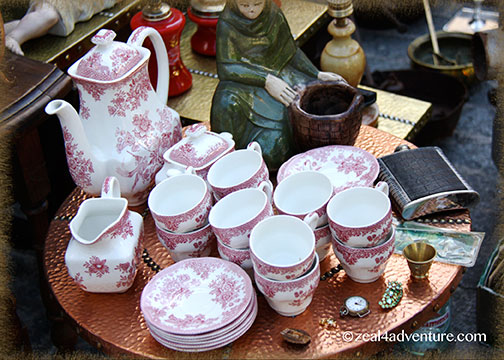
One can spend the whole morning looking at find practically anything, from books and toys, clothes, flowers, handicrafts, to antiques, paintings, and other works of art.

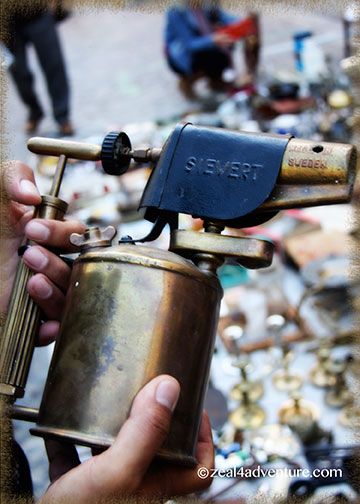
sievert-blow-torchA blowtorch made by Anton’s descendant.  How likely is that?

Held every Sunday and public holidays from 9am – 2pm, it takes up a large triangle area between Calle Embajadores and Ronda de Toledo, along Plaza de Cascorro and La Riberia de Curtidones.

 And suddenly I am charmed.

The Trek to the Underground River

Underground-RiverCredits: Papers by Plum Dumpling Designs, Pri Rocha, The Design Girl, Trixie Scap Design; Ribbon by Design by Tater, Red string with flowers by Graham Like the Cracker, and String wrap by Haynay Designs. 

Elusive in the past, I became disinterested and eventually gave up the idea of visiting Palawan’s famous Underground River. Then they re-opened the Jungle Trail.

Initially slated for December but due to unforeseen reasons, we moved our Puerto Princesa trip to January.  We planned to simply chill out, visit our favorite jaunts and catch up with friends. Then, the grand idea— “why not go to Sabang for the day so you can finally see the Underground River?” Anton to me.  Me to him,  “Ok, but we will trek to the cave.”

Sabang-Pier

The Sabang Pier is the main jump off point to the Underground River or The Puerto Princesa Subterranean River National Park, once also called the St. Paul Subterranean River. Yes, it has many names. A UNESCO World Heritage Site since 1999, the cave was provisionally chosen (through votes—and you know how we Filipinos can vote) as one of the 7 New Wonders of Nature in 2011.

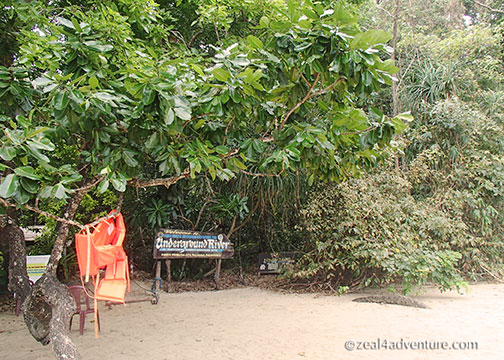
Entrance-from-the-shoreEntrance from the shore

The usual way to get there is to take a 15-20 minute boat ride (I estimate) from the pier.

There are two trails to the cave, The Monkey Trail, and the Jungle Trail. The former has been closed for a time now and the latter re-opened only last year. Having heard of the Monkey trail from friends who did it some 10 years back, I knew that I’d do it at some point. Well, the jungle trail, I reckon, is good enough.

crossingThe trek starts by crossing the mangrove.

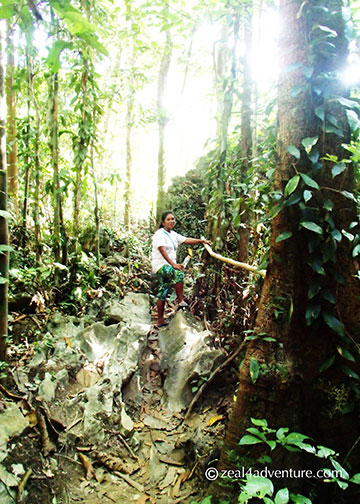
A recommended option for the active, the jungle trail meanders through a beautiful lush forest.

dwarfed-by-trees

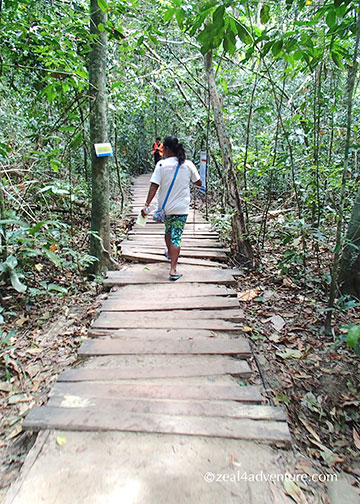
It lets you hike through ancient trees, well crafted wooden staircases, bridges and benches made from confiscated wood that adds character to the trail

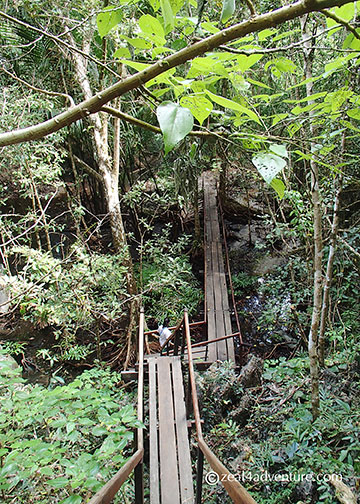
wooden-walkways

one-among-many-bridges

and at one point, limestone formations becomes backdrop behind the foliage.

limestone-backdrop

Not only does the pleasant 2-hour hike enhance the experience but it also gives jobs to the 20 or so Tagbanua indigenous community members.

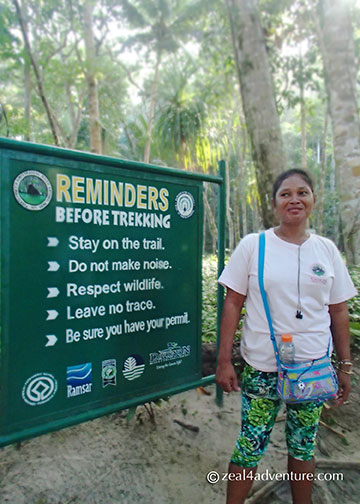
guide

reminder-before-the-trek

As “Park Wardens” they serve as guides and caretakers of the jungle.

path-to-the-riverthe path from the trail

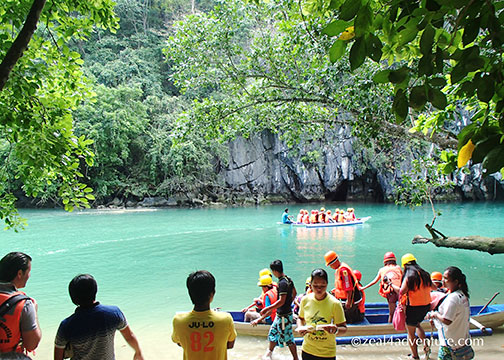
The Underground River itself was not a let down at all. Having heard of so many mixed reviews, expectations were low.

paddle-boatsWaiting in line to enter the cave.

But to my surprise, the chambers especially the one called “the cathedral,” towering some 800 meters high, impressed me.

inside-the-cave

Truth to tell though, I fell asleep some part of the way, perhaps due to exhaustion and the fact that the only thing lighting the way was a flashlight held by the person in front. Our guide was adept and quite engaging in providing intelligent albeit elementary information about what a cave system is.

lush-forest-2

My take on this experience: to go there just for the Underground River may not be worth the effort (it’s still a 2-hour ride to Sabang). The hikes makes the difference.  Having seen Sabang, I wish I had stayed a few nights to explore the quiet town.

Queluz

Plan to stop at nearby Queluz on your way back to Lisbon from Sintra.

IMG_9527

The national palace is worth the detour.  Be sure though to buy a ticket to Queluz, or you won’t be able to get off at your end destination. That was what happened to us when we decided mid-way to get off at Queluz instead of heading straight back. When we arrived at the Rossio station, the tickets we had were void, and we couldn’t get out. Apparently, the time started ticking once we got on the train and what should have taken 45 minutes took us 2 hours. We should have bought another ticket back to Rossio when we got off at Queluz — explained Mr. Operator. With many apologies, we asked to be freed with the promise of paying what was due. Kind Mr. Operator let us out, even waved our arrears. Smiling and shaking his head, I wonder how many mindless tourists did the same thing?

IMG_9542

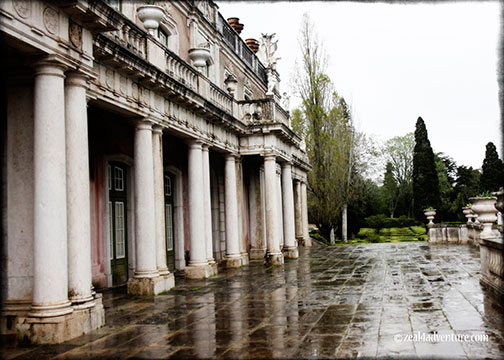
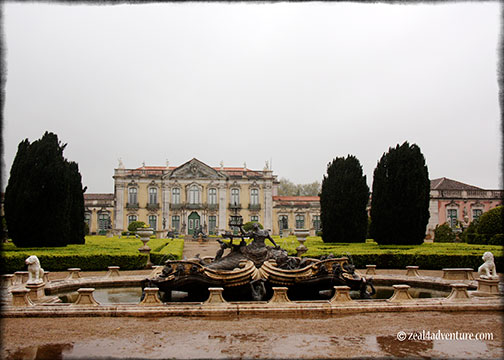
It was, however, worth the hassle. Queluz is a rather unremarkable suburb but its National Palace, in its pink Rococo glory, is a remarkable example of Portuguese Romantic architecture. Although smaller, it shares much of Versailles’ sense of grandeur in its ornate decorations and exquisite gardens.

IMG_9520

It is because Portuguese architect, Mateus Vicente Oliveira designed it in homage to the famous palace outside Paris France. Built as a summer retreat for Dom Pedro, the famous Duke of Braganza, who later married his niece, Queen Maria I.

IMG_9532

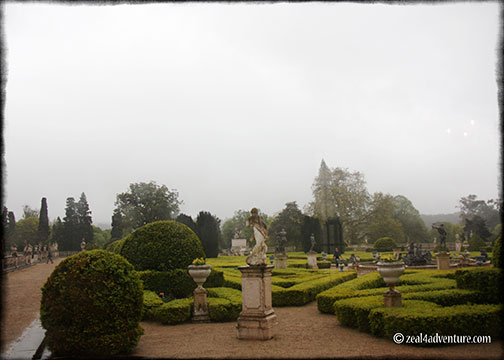
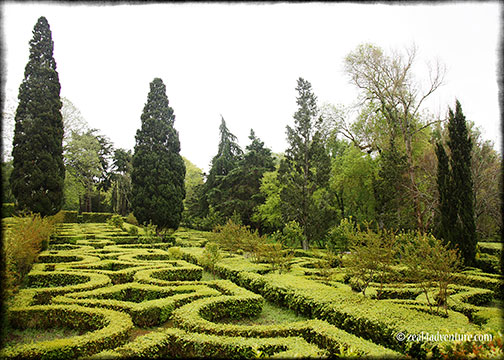
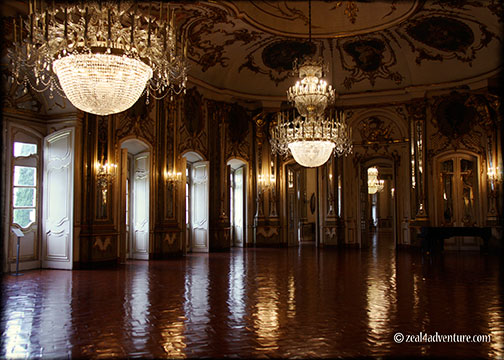
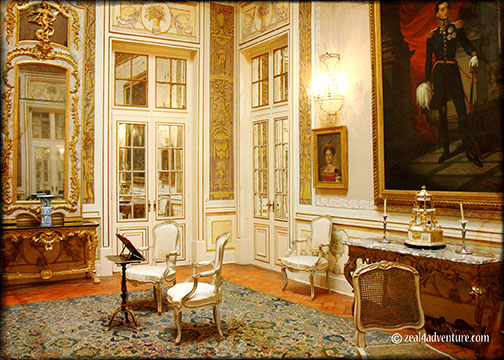
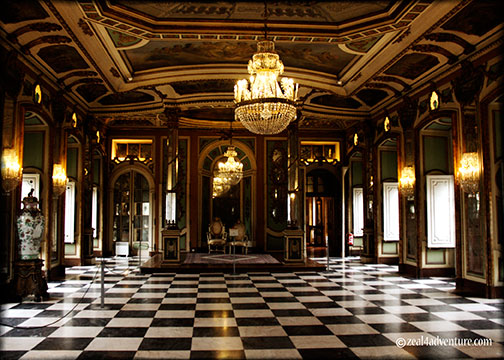
Famed for the glory of its gardens, which include a large topiary parterre, formal terraces and fountains at the rear of the palace. The interior’s attention to detail is no less than that of the exterior.

IMG_9509

IMG_9512

IMG_9523

The palace is a 10-minute walk from the Sintra train line, turning left out of the Queluz-Belas Station. Signs will lead you to a cobbled square with a statue of Queen Maria I. Facing directly into the plaza is the façade of the palace.