WS #8: Fresh Berry Goodness

Despite a crazy week in Baguio City, it was a weekend full of activities including swimming through a sea of people during the Panagbenga festivities.  This post however is not about the festival (that will be for another post) but about my visit to a wild bluberry plantation in Tublay and the strawberry capital of Baguio, La Trinidad.

strawberry-fields

Strawberries (and blueberries) are all-time favorites. Strawberries, however, tops the list especially if they are firm and sweet.  The strawberries that greeted us that day, probably just a few hours after harvest, looked so fresh and shiny, almost like plastic.  I had to restrain myself from eating the whole 2 kilos of it.

strawberries

The next town, Tublay where we dropped by a blueberry plantation, is just a few minutes away from Trinidad.  Not exactly the blueberries we are familiar with, these blueberries are tropical and thrive in less harsh weather.  As an aside, I learned that majority of blueberries flourish in harsh weather, the colder it is, the better for the blueberries.  Our blueberries are smaller and have less meat but that tiny piece of fruit is so bursting with flavor.  Because it is grown in the wild, supply is scarce.  It’s virtually gone even before harvest is completed.

bluberries

And the view is enough to make the trip worthwhile.

bluberry-view

Lucky for me, berries are said to contain phytochemicals and flavanoids that may help to prevent some diseases.  Eating a diet rich in blueberries, strawberries and other berries may help reduce your risk if several types of cancer.

For more weekend snapshots, click here.

Palanan On My Mind


mwtwhite

palanan-on-my-mindCredits:  Elements – scarlet hells media- JScollabed 2, Sclengeman- Carnival tag 2; Papers – hroselli carnival paper – turquoise, mlima – carnival paper, mmartin carnival paper

Travel doesn’t get much rugged than this. This remote province is only accessible by cargo ship, light aircraft or a trek of several days across the Sierra Madre mountain range. We opted to fly.  In June 2002, we found ourselves exploring Isabela’s best-kept secret, Palanan.   There were lagoons so blue, they called it Blue Lagoon (haha!), we likewise hiked to a really beautiful cascading waterfalls (name escapes me right now), and endless stretches of white sand beaches in the middle of nowhere with hardly anyone except for some occasional encounters with Dumagats fishing.


palanan-marlin

Declared a wilderness area in 1979, the Palanan Wilderness Area is home to several threatened bird species including the Philippine Eagle. Still inhabiting the Palanan coastline, the Dumagat’s lifestyle is relatively unchanged because of the area’s remoteness.

Its inaccessibility is both a hurdle and a lure to adventure-seekers.  Nestled in the farthest eastern corner of the province of Isabela, bounded by the Pacific Ocean.  Palanan is what I call P.A.R.A.D.I.S.E!

palanan1

Not only is it paradise, it has its fair share of history as well.  It was in Palanan that the Philippine-American war ended in Mar 23, 1901 when Emilio Aguinaldo was captured by American forces who gained access to Aguinaldo’s camp by pretending to surrender to the Filipinos.

An off the beaten path worth exploring.

For more That’s My World entries, head on to their site here.


Café By the Ruins

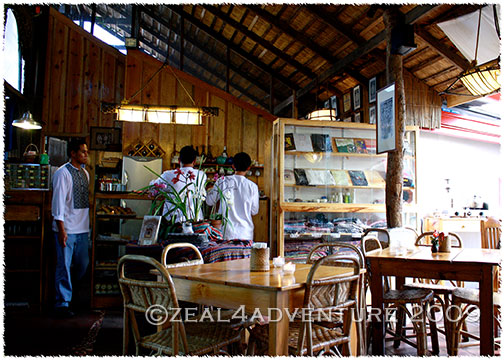
Whenever I find myself in Baguio, I make it a point to have a meal in this highland café across the street from Baguio City Hall.  I used to think that the ruins were from the big 1991 earthquake that changed Baguio.  Turned out that it used to be the pre-war residence of the governor of Benguet destroyed during WWII.  You’ll hardly find any ruins today for as you enter, you immediately notice the cozy native and artsy ambience.  Visitors may have a glimpse of its ruined past through the photos hanging on the walls.

cafe-by-the-ruins

Known for its organic cuisine, this café first opened its doors in 1988 originally meant to be a place to hangout among friends and artists but grew to be a bastion of the art community of Baguio and a favorite dining spot of both highlanders and lowlanders alike.

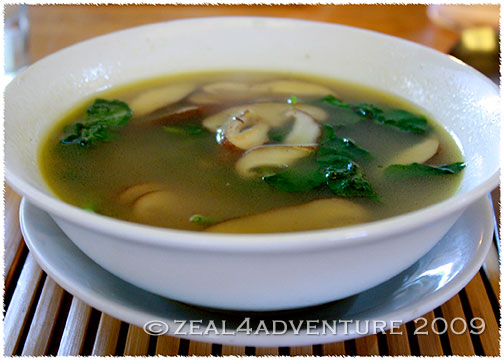
Last January, coming down from Sagada, we had a few hours in Baguio and where else did we tread?  It was a nice lunch of Forest Stream Soup – a delicious gingery broth with sautéed shitake and watercress.

forrest-soup

Tita Susie’s Crispy Tapa – something like crispy adobe in beef, served with mountain red rice.

crispy-tapa

A glass of Lassie with salt and pepper – different but lovely.

lassie

Ruins coffee – mountain coffee filtered with cardamon, topped with whipped cream, muscovado sugar stick and cinnamon powder – not the typical black (no cream, no sugar) coffee I that prefer, the cardamon piqued my fancy.  No regrets as the cardamon gave it a nice twist.

coffee

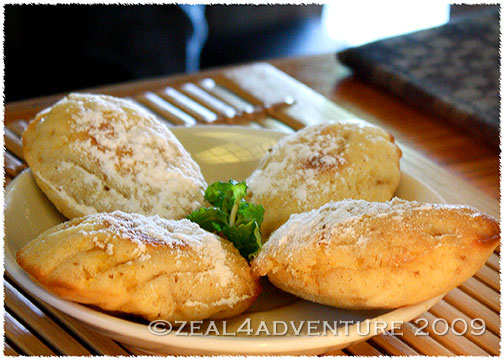
Madeleines – originally from France, this cookies seems more like a cake, soft and dense.

madeleines

And do not leave without trying some of their famous Camote bread which we partnered with Guava Jam and butter.  Yum!

bread

If you’re after ambience and organic dishes of the north, make sure to make your way to Café By the Ruins.  Their menu changes regularly depending on what’s in season in that part of the cordillera, although they also keep their best sellers such as Longganisang Hubad and Pinikpikan.

Oh and to keep with the topic, I’m off to Baguio tomorrow, by the way, just to chill and maybe enjoy some of the festivities of Panagbenga.  Have a nice weekend!

Useful details:

Café By the Ruins
23 Chuntug, Baguio City
Tel # 442-4010

PhotoHunt: Warm

photohunter7iq2

ph-warm-anawangin1

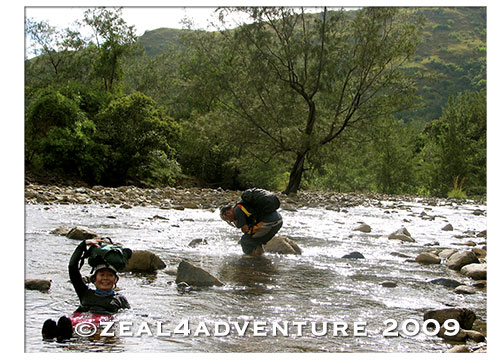
Alas we were bound to get a heat stroke on a really warm… er… hot day until we hit this stream, our savior.  The only way to cool off is to dip into the refreshing, cool stream fully clothed.  That said, the trek to Anawangin Cove, off Zambales is a gorgeous trail of grassland interspersed with meandering streams which then progresses to an Agojo (pine-like trees) forest as it gets closer to the beach.

The theme for this week’s photohunt is warm.  To join in the fun, go ahead and click here.

30 Random Things to Do in Sagada

sagada-random

I love the mountains.  I often find myself craving for the crisp fresh scent of pine air. Although that yearning is not always appeased, I do try to indulge every so often by spending a few days up in the mountains, sometimes Baguio will suffice but many a time it’s Sagada that I yearn for.  Many ask what I do when I’m there.  On many occasions, it’s just spent chilling out but there are so many activities worth exploring and here are some that came to mind (some still unchecked on my bucket list). Inspired by the 25 random things about you that is currently promulgating Facebook, here’s my random list of things to do in Sagada, except that I got carried away and came up with a list of 30.  This list covers an array of activities from chilling to thrilling and all the in betweens.  Do add to the list!   😉

  1. Hangout at the Basketball court near St. Mary’s Episcopal Church and get to know the locals and/or fellow travelers.
  2. Buy the best bread in Sagada at Masferre Inn.
  3. Explore Sumaging Cave or better yet, do the connection and traverse to Lumiang Cave.
  4. Trek to The Big Falls (Bomod-ok) passing through beautiful rice terraces.
  5. Take a dip in the icy-cold water of the Big Falls.
  6. Order the Pork Tenderloin specialty at Log Cabin.  One can’t leave without having tried it.
  7. Take an afternoon merienda of German Chocolate cake (best with coffee) at the Cooperative in front of St. Mary’s.
  8. Pay a visit to the Pottery workshop on your way to Lake Danum.  A bit pricey but the craftsmanship is first class.  Investing in at least a piece or two will not only make a superb souvenir, it fires up the sagada-coffeepotters to forge on as well.
  9. Get lost in Kiltepan and delight in the panoramic view of the terraces at the tower.
  10. Walk around town, visit the market especially on a Saturday, it’s market day.
  11. Ride top load (the roof of) a jeepney (if you’re coming from Bontoc).  It’s fun and less dusty.
  12. Pick up some Sagada coffee at 18 Days Coffee Roasters.
  13. Devour the fantastic yoghurt at Yogurt House.
  14. Climb the walls of Echo Valley.
  15. Or if you can’t climb, how about counting the hanging coffins at Echo Valley instead?
  16. Have the nummy Banana Crepes at Ganduyan Inn.
  17. Stay at Mapia-aw Pensione and enjoy the stunning view from your room or balcony.
  18. Or alternatively, get a cottage at St, Joseph and enjoy the privacy of your own place.
  19. Go orange picking at Rock Inn.
  20. Stop by Masferre Gallery to ogle at the awesome photos of Sagada taken in the 30’s, 40’s and 50’s by the late Eduardo Masferre. sagada-lemonpie
  21. Read a book while enjoying a piece of either the lemon or egg pie at the newest town fancy, Lemon Pie House.
  22. Wake up early and bike to Marlboro Country to try to catch a glimpse of the wild horses.
  23. Try itag, a cured meat similar to a slab of bacon, unsliced.  Best in soup, monggo or pancit.
  24. Conquer Mt. Ampacao and revel in the outstanding view once atop it.
  25. Enjoy a picnic of wine, cheese and some cold cuts while admiring the beauty of Echo Valley.
  26. Bike to Besao and witness the sunset, raved to be the best in that side of the cordillera.
  27. Get a massage at the privacy of your room or cottage.
  28. Play board or card games or simply relax beside the fireplace at either Mapia-Aw Pension or St. Joseph Resthouse.
  29. Go shopping at either Sagada Weaving or Ganduyan Store.  They have lovely locally produced items for keepsakes.
  30. Raft the Chico River from Dantay to Bontoc.  To do so, look for Steve Rogers – he’s not hard to find.

A Nature Park in the Metropolis

mwtsquare1

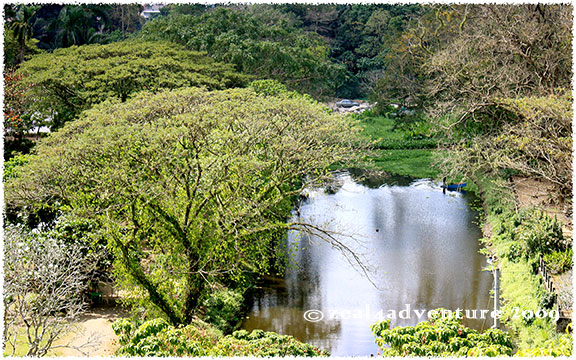
lmep-top-view

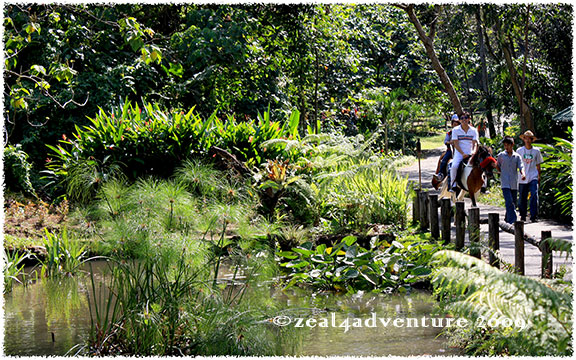
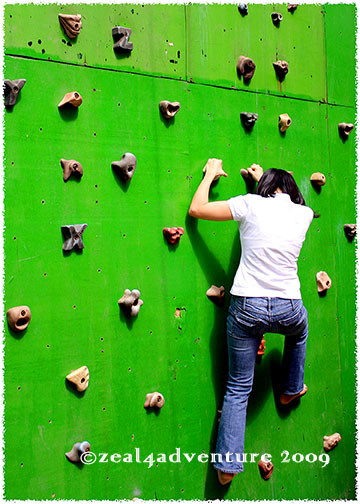
In the midst of the hustle and bustle of the city is an ecological park with lush trees, a lagoon an amphitheater, a pool, picnic area complete with cooking and grilling provisions, wall-climbing facilities and even a trail for a mini-horseback ride.

lmep-horseback

lmep-wallclimbing

La Mesa Ecopark is located in East Fairview Subdivision in the heart of the La Mesa Dam Watershed in Quezon City.  The overflow from the dam goes to the boating lagoon, which I suspect to be cleaner than other lagoons.

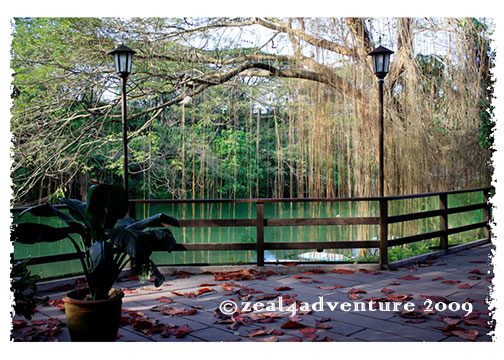
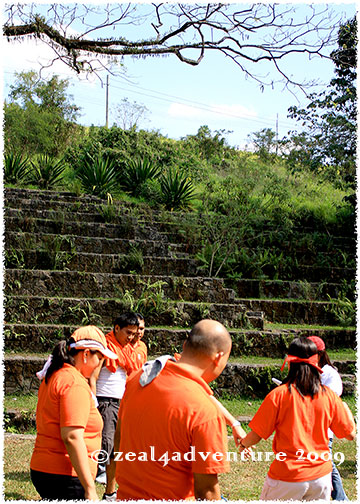
lmep-pavilion1This nature park is an alternative to posh urban resorts and is ideal for family excursions, company outing and team building activities.  Our recently concluded National Sales Conference had us running around the Eco-park with respective teams in tow racing to the finish line.

lmep-ampitheater1

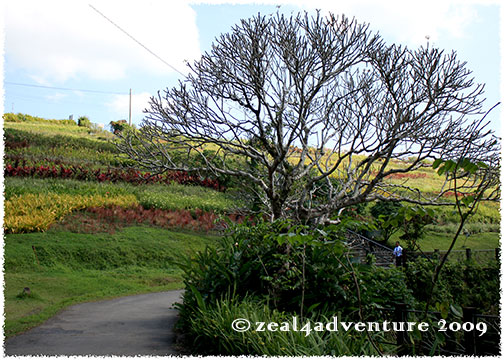
The pleasant surroundings played a significant part in the enjoyment.

lmep-tree

If you find yourself stumped for a place to bring the brood or your group or just to de-stress, think of the La Mesa Ecopark.  By visiting it, you have already contributed in saving the watershed and helped in the conservation of nature.  For more information, visit them here.

For a glimpse of other worlds, please visit That’s My World Tuesday.

WS# 6: Pundaquit Festival

Got invited to the opening of The 16th Pundaquit Festival on February 14 –Valentines Day.  Eager to get out of Manila traffic on V-day, we didn’t think twice.  We went.  We were initially thinking of an excursion to the Hot Air Balloon Festival at Clark, but later thought that shunning the crowd was a wiser course of action.  No regrets whatsoever.  When we entered the SCTeX, we already saw the cars and lines at the Hot Air Balloon area and we were pleased to be driving on.  Frankly speaking though, I was a wee bit envious because with the little that I saw as we passed Clark (I was the designated driver so I was just taking quick side glances), hinted the kite-flying exhibit to be quite interesting.  Perhaps an activity for next year.

pundaquit-garden

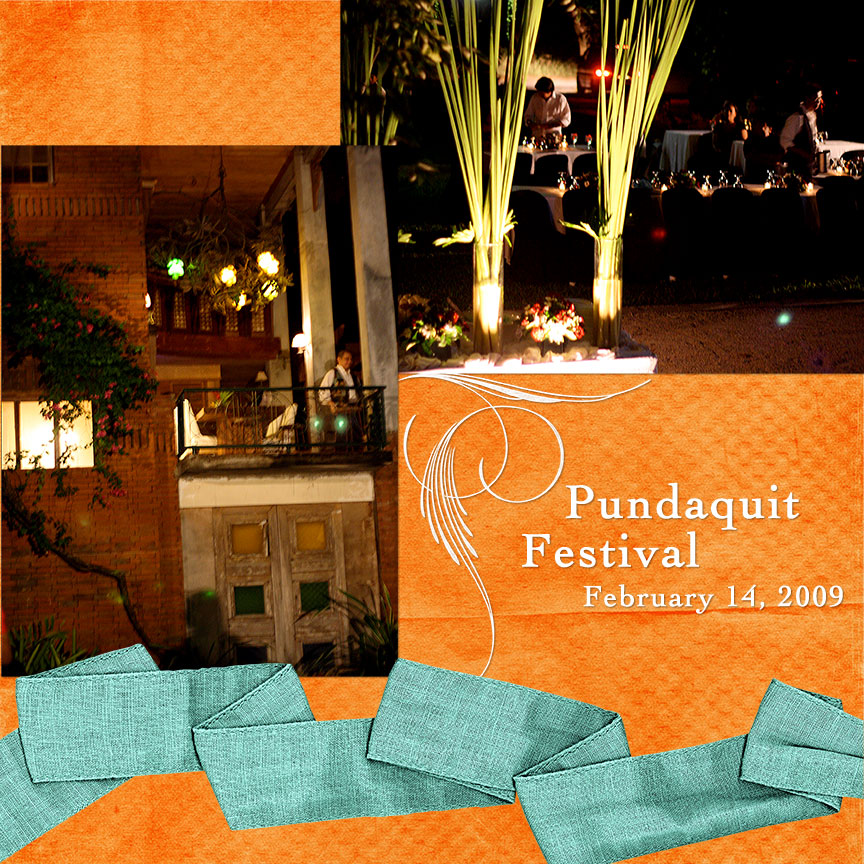
Credits:  Paper – Joyful Heart Designs Plain Jane – Orange;  Ribbon – Joyful Heart Design Plain Jane – Aqua Folded Ribbon

In San Antonio, Zambales, we almost missed the place because we arrive at exactly dinnertime and the entranceway was dark.  But as we entered the gate of Casa San Miguel, we were greeted with a dramatically lit garden with dinner tables set up all around.  It was an intimate affair with little fuss, but with an ambitious mission that has been going strong for the past 16 years.

julian

Casa San Miguel is set amid the Bolipata family’s Mango orchard nestled between Mt. Pundaquit and the sea.  Established in 1993 with Coke Bolipata at the helm, this place aims to bring art closer to the local folks, especially the children.  It nurtures them to discover their place in music and the visual arts.  Through the years, Casa San Miguel has not only been sheperding its students in music and the visual arts but it also is a venue for start up film maker to hone their crafts through its artistic settings.  The festival was established to celebrate the triumphant, albeit slow embrace of the town folks to the arts (in whatever form).

coke-julian

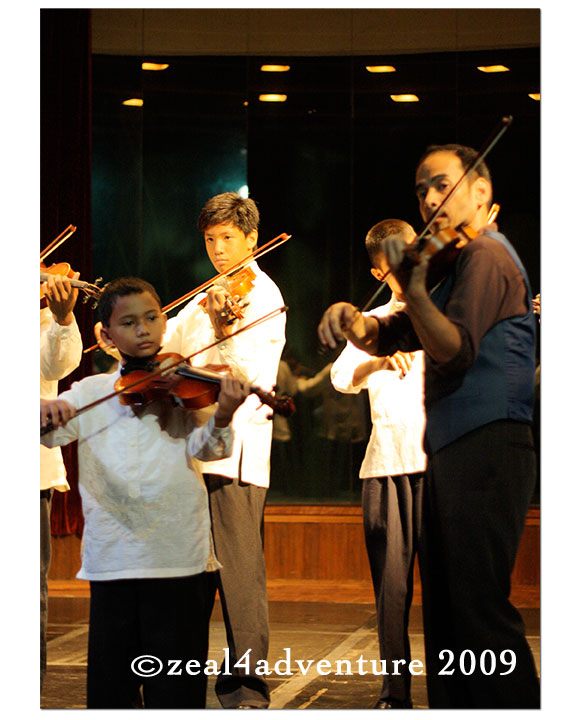
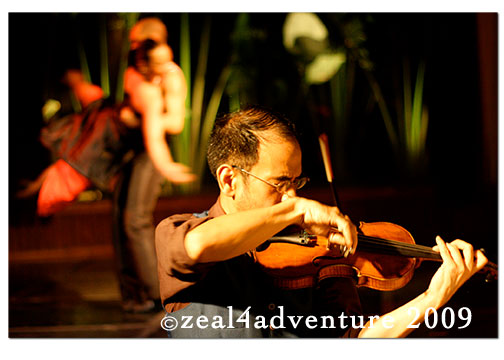
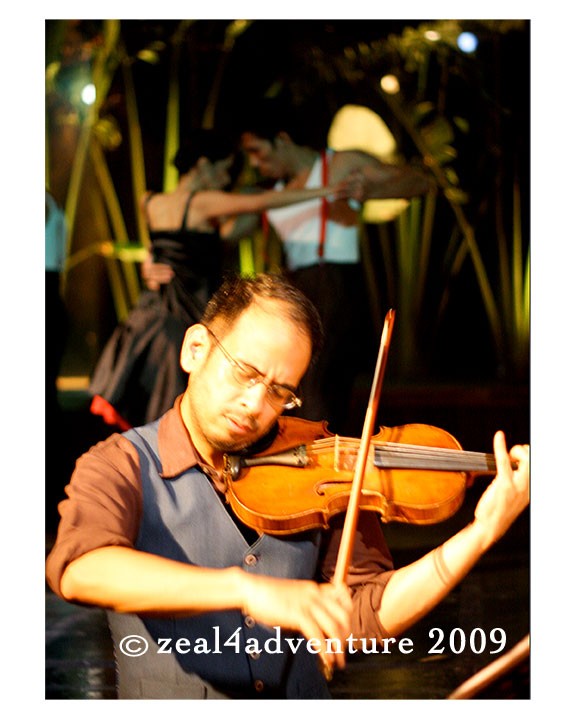
The show started with Coke introducing the Pundaquit Vertuosi, the fruit of Casa San Miguel.  This talented group of violin playing lads beautifully rendered the national anthem.  Coke then briefly shed light on the festival followed by an opening number with the boys with a solo from Julian (that cute little boy).  Then the actual show began with dancers dancing the (Argentinian) Tango to beautiful pieces played in strings lead by Coke himself.  Many of the pieces I can’t identify but all beautifully performed by both musicians and dancers.

coke-bcoke-b2
dancers

The Festival will run till May 31, mostly on Saturdays featuring various forms of art.  To know more about the festival, please visit their site.

PhotoHunt: Nautical

photohunter7iq1ph-nautical

The bow seems to be his favorite spot of the boat.  We took this motorized boat or what we call a banca from Bantayan Island to Malapascua Island, a popular dive site where thresher sharks abound.

ph-nautical-3

This boy, accompanies his dad and helps out by stirring the boat as it approaches the shore.

ph-nautical-21

This is my entry to this week’s PhotoHunt.  For have a glimpse of more photohunt entries, please visit them here.

Reminiscing Batanes

mwtsquare

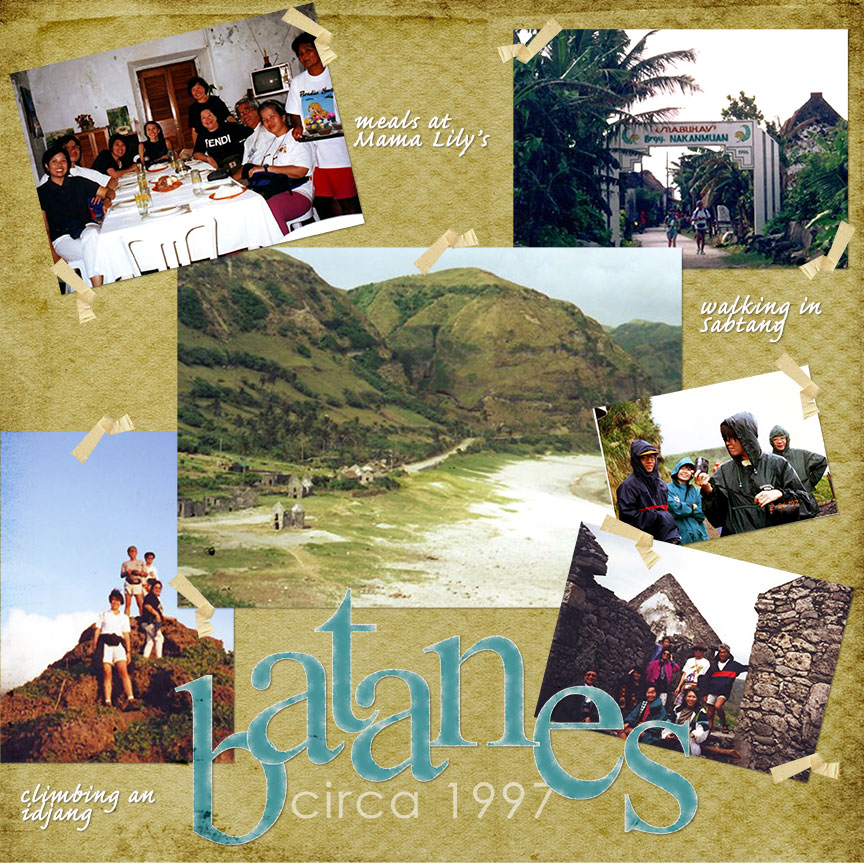
The first time I became aware of this group of islands called Batanes was when I saw this Filipino film –  “Hihintayin Kita sa Langit” which catapulted to stardom two established actors in my side of the world (and it just dated me too). Since then I became obsessed in stepping foot on this islands of the Ivatans.  In 1997, that obsession came to fruition.  It was my first taste of rugged travels.  I feel privileged to have witnessed the Batanes of before… before its commercialization to a certain degree, that is.  At that time, there was only one jeep going around the island of Batan.  So we walked almost everywhere, even climbed an idjang – a pre-hispanic mountain fortress where the locals sought refuge during tribal conflicts. There were only a few places to lodge; we stayed at Mama Lily’s.  It was clean and comfortable albeit spartan.  And because there were hardly any restaurants then, we’d have home cooked meals courtesy of our host.  Fortunately, she cooks and cooks well.

Getting to Sabtang is an adventure of its own.  The only way to get there is by boat or what they call falowa.  If the sea gets a bit rough, expect your inside to turn topsy turvy as well.  Expect to take the trip with chickens, goats and sometimes a cow… yes a cow!  We’d hike the whole island, spending the night camping in a school gym at Sumnanga; halfway around the island, then we’d walk back the next day to catch the falowa back to the main island, Batan.  Those were the days.
batanes-circa-97Credit: Paper – Joyful Hear Designs Plain Jane – Olive; Alpha – PDuncan Carnival Alpha; Element – Hoyfyl Heart Designs – Plain Jane Tape

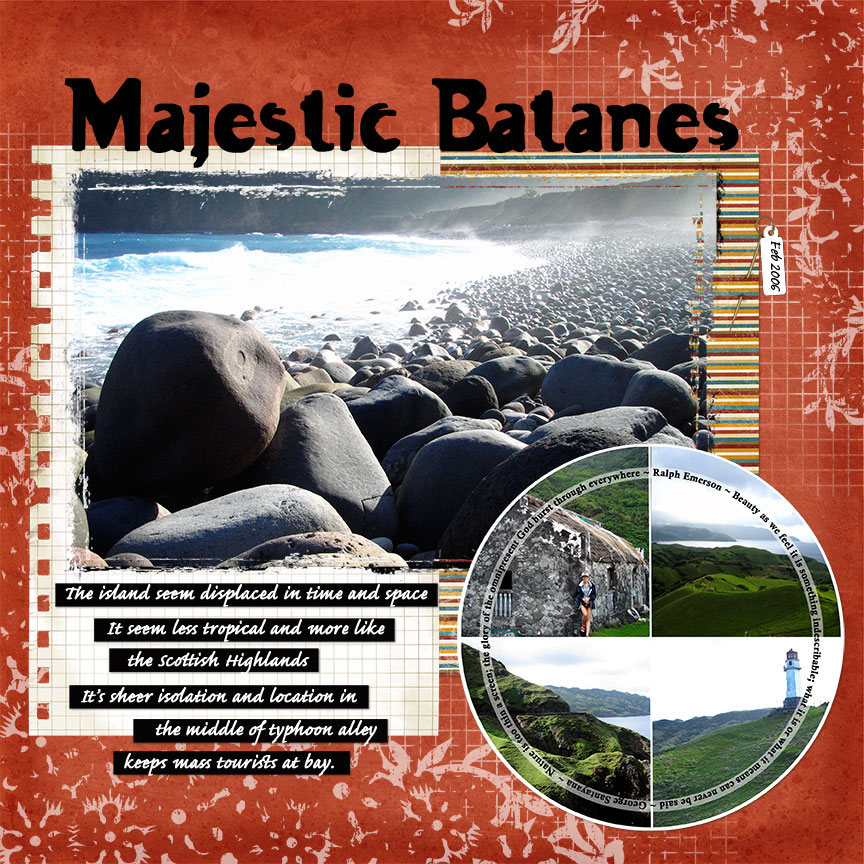
Nine years after my first Batanes encounter, I found myself back in 2006. There were evident changes – vehicles, more than one and more than one kind were now all over the island.  There were a lot more lodges and inns, some restaurants, even a pizza place but despite all this, it is still the Batanes I reveled in almost a decade ago.  Mama Lily has long migrated to the US and when I passed her house, fond memories (of her food actually) came flashing by.
batanes1Credits:  Alpha – Asman; Papers – KPertiet Cotton Easter – red; KPertiet King Me Paper; KPertiet Graph Note Paper; Overlay – KPertiet Graphic Sun Prints OV; Tag – KPertiet Stick Pon2 Red Tag; Template – JSprage 4 square template; Frame- JSprague Grunge Frame 1

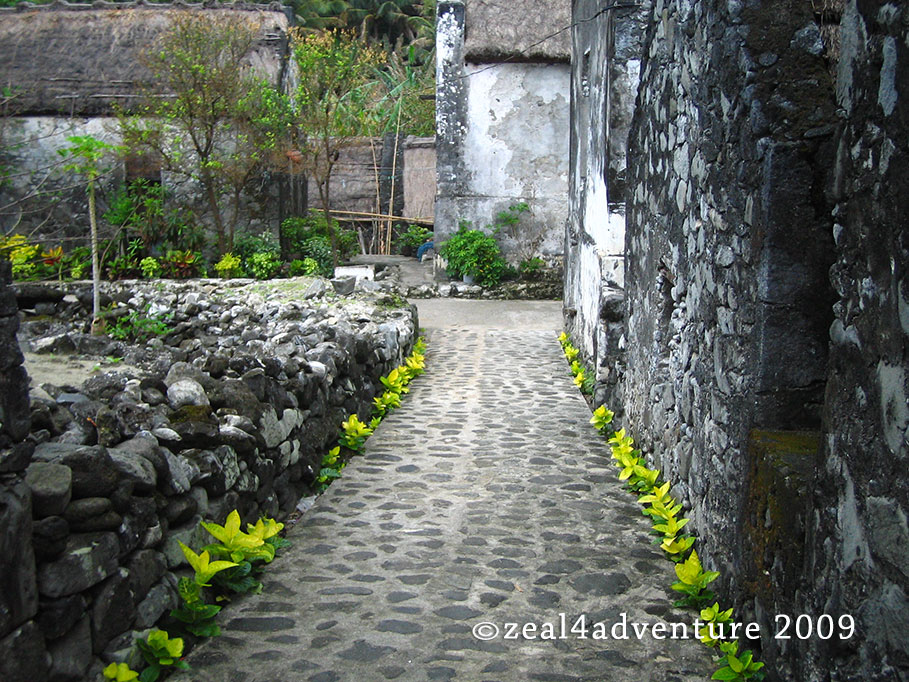
Sabtang, my favorite island of Batanes, has not progressed as much as Basco has.  The only way there is still by falowa (and still taking on both humans and animals).  Sabtang still leaves me breathless.  It makes you feel like you’re in another world.  Although you can now arrange for a vehicle to take you around the island, walking is still the main means especially among the locals.  Truth to tell, you get see more of the island by foot so if you can, take the vehicle up to a certain point (probably Chavayan) and hike the rest of the island.  Still no inns and only a few stores that offer food in the island, our contact in Basco, had someone cook dinner for us.  The food was great but we were so stirred by their warm reception.  Their pride was so evident as they talk about their island and simple cuisine (which consisted of a lot of root crops, turmeric and seafood, particularly lobster, crabs et al). Camping days are likewise over, the School of fisheries in Centro has dormitory rooms, albeit few and basic, indoors nevertheless.  I heard that there now exists a Sabtang Lodge, which I have yet to verify and see for myself.
chavayan_0828

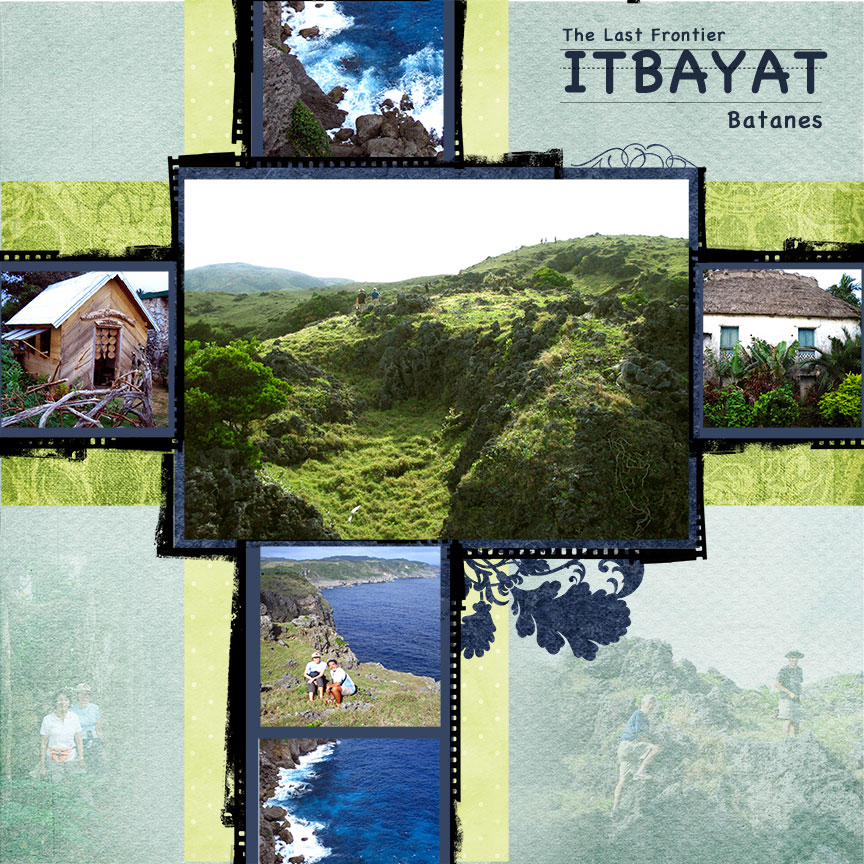
It is now possible to fly to Itbayat when the only way to get there before was by falowa – four hours of rough sea.  Sheer torture, I’m sure.  Itbayat, the farthest northern inhabited island, can be considered the Philippine’s last frontier.  Its rocky island is a great place for trekking.  We barely scratched the surface as we only did an overnight.  We visited a cave that led to a rocky hilltop overlooking the sea.  It was awesome and quite different from islands of Batan and Sabtang.  This needed going back to and we decided that this year would be a good time to go… well we tried.
itbayat-islandCredits: Paper – DJE PP3, Joyful Heart Designs Plain Jane-Seafoam, Scarlet Heels Media Carnival PP1; Frames – JSprague Flurish Frame, KPertiet Snap Frames; Element – Jack n Me Alpha blank

Needless to say, plans didn’t pull through. Why? You ask.  First, we found out that the airport where the planes takes off to Itbayat is currently under construction and there is still no solid plan as to its resumption.  And to my dismay, but to my friend, S‘s delight… you see, she had to back out of this trip because of this thing called work.  But I digress.  So to my dismay, when some (I wasn’t about to cancel) went to cancel their flights with Zest Air (formerly Asian Spirit), they found out that flights in February were still up in the air (no pun intended).  They revealed that their entire January flights were canceled due to aircraft shortage.  Unbelievable!  We didn’t have a sure flight to Batanes after all?  And we weren’t informed about it until someone went to cancel?  By that time SeaAir (the other Airline that flies to Batanes) was fully booked.  Hmmph!!  But it’s only February, you may wonder.  Well, we could if we really want to push it and go in March or April but I just love it there during the cool, breezy months.  It’s really the best time to go.  After summer comes typhoon, and you don’t want to be there at that time, believe you me! So perhaps next year and perhaps not with Zest Air.   😉

And that’s “the not so sad” tale of my recent Batanes trip that never was.   😕

This has been my entry to That’s My World Tuesday.  Go visit to see more.


Ibulao Ibulao

mwtnarrowbanner1

my-fix


This was taken in Ibulao River, Kiangan.  Not many have rafted or even know of this river (I think) and as the photos on the slideshow below exhibits, it is a fantastic 3 hours of rafting experience with a view so impressive.  An interesting place rich in history, Kiangan is believed to be the first human settlement in Ifugao.  This is also where Ifugao and American troops helped force General Yamashita to make his informal surrender in World War II.

We stayed in a charming hostel owned by the Kalugdans, I remember the food to be superb.  This was a special trip organized by Adventures and Expedition Philippines Inc. (AEPI) to explore the river.  They have since run several trips running the upper portion of the river.  Definitely worth a try.

This has been my entry to That’s My World.  Go visit and  find other worlds here.

Getting There:

Take either Autobus or Florida Bus Line to Banaue, get off at Kiangan.


Contact Details:

Auto Bus
Espana cornor Catalina,
Sampaloc, Manila
Phone:  735-8096

Bus fare:       P 460

Florida Bus Line
Sampaloc, Manila
Phones:  743-3809 / 731-5358 / 493-3667

Bus fare: P 450

Sleeping Arrangements:

Kalugdan Hostel, Kiangan
Ibulao Ibulao
Dra. Tess Kalugdan
0919-694-5964
totokalugdan@yahoo.com
 
Adventures & Expeditions Philippines Inc. (AEPI)
Anton Carag
0917-532-7480
whitewater1ph@yahoo.com